EP0199193A2 - Masses de moulage thermoplastiques de polycarbonates, polymérisats greffés et copolymérisats - Google Patents
Masses de moulage thermoplastiques de polycarbonates, polymérisats greffés et copolymérisats Download PDFInfo
- Publication number
- EP0199193A2 EP0199193A2 EP86104877A EP86104877A EP0199193A2 EP 0199193 A2 EP0199193 A2 EP 0199193A2 EP 86104877 A EP86104877 A EP 86104877A EP 86104877 A EP86104877 A EP 86104877A EP 0199193 A2 EP0199193 A2 EP 0199193A2
- Authority
- EP
- European Patent Office
- Prior art keywords
- weight
- methyl methacrylate
- parts
- molding compositions
- acrylonitrile
- Prior art date
- Legal status (The legal status is an assumption and is not a legal conclusion. Google has not performed a legal analysis and makes no representation as to the accuracy of the status listed.)
- Granted
Links
Images




Classifications
-
- C—CHEMISTRY; METALLURGY
- C08—ORGANIC MACROMOLECULAR COMPOUNDS; THEIR PREPARATION OR CHEMICAL WORKING-UP; COMPOSITIONS BASED THEREON
- C08G—MACROMOLECULAR COMPOUNDS OBTAINED OTHERWISE THAN BY REACTIONS ONLY INVOLVING UNSATURATED CARBON-TO-CARBON BONDS
- C08G64/00—Macromolecular compounds obtained by reactions forming a carbonic ester link in the main chain of the macromolecule
- C08G64/04—Aromatic polycarbonates
- C08G64/06—Aromatic polycarbonates not containing aliphatic unsaturation
- C08G64/08—Aromatic polycarbonates not containing aliphatic unsaturation containing atoms other than carbon, hydrogen or oxygen
- C08G64/085—Aromatic polycarbonates not containing aliphatic unsaturation containing atoms other than carbon, hydrogen or oxygen containing silicon
-
- C—CHEMISTRY; METALLURGY
- C08—ORGANIC MACROMOLECULAR COMPOUNDS; THEIR PREPARATION OR CHEMICAL WORKING-UP; COMPOSITIONS BASED THEREON
- C08L—COMPOSITIONS OF MACROMOLECULAR COMPOUNDS
- C08L69/00—Compositions of polycarbonates; Compositions of derivatives of polycarbonates
Definitions
- the molding compositions according to the invention insofar as they contain A, B1 and Cl, have only a single thermoplastic loss modulus maximum, which results in a significantly improved miscibility of the components compared to the prior art.
- the products according to the invention have a very uniform rubber distribution in the respective mixture, are characterized by very good toughness, thermal stability and a significantly improved heat resistance.
- Mixtures that contain components B.1 as components also have a matt surface.
- DT-AS 1 170 141 mixtures of 90-30% by weight of polycarbonate and 10-70% by weight of a graft polymer which is prepared from polybutadiene and a mixture of acrylonitrile and vinyl hydrocarbons are known.
- DT-AS 2 259 565 discloses polycarbonate / graft polymer copolymer (70-30 / 30-70 / 0-75% by weight) - mixtures, the graft polymers by polymerizing styrene, methyl methacrylate in combination with acrylonitrile and / or methyl methacrylate in one Rubber and the copolymers of 95-50% styrene, ⁇ -methylstyrene, methacrylate or mixtures thereof and 5-50% acrylonitrile, methyl methacrylate or mixtures thereof. These compositions have improved flow line strength.
- DOS 1 810 993 describes PC / graft polymer / copolymer mixtures, the vinyl aromatic compound to be used being predominantly ⁇ -methylstyrene. Mixtures of this type have a high heat resistance, but a lower impact strength than styrene / acrylonitrile systems.
- EP 89 540 describes polycarbonate mixtures of thermoplastic polycarbonates, polymers of C 1 -C 4 -alkyl esters of methacrylic acid and methyl methacrylate-grafted alkyl acrylate rubber. They are characterized by high aging resistance, thermal stability, good raw tone, high impact strength and homogeneous surface.
- Polycarbonate blends with products which are composed of more than two free-radically polymerizable monomers are e.g. described in JA 56 / 131-657, where a graft polymer composed of mixtures of styrene, vinyl toluene, methyl methacrylate, acrylonitrile, methyl acrylate, hydroxyethyl acrylate or ethyl methacrylate is used on a diene rubber.
- JA 57 / 185-340 contains polycarbonate mixtures, the copolymer being composed of 20-65% by weight of methyl methacrylate, 20-60% by weight of ⁇ -methylstyrene and 5-40% by weight of acrylonitrile.
- the products are characterized by high temperature stability, toughness and good processability.
- JA 57 / 168-937 describes Polycarbonatabmischungen containing copolymer as a product of aromatic vinyl compounds, cyano-containing vinyl compounds and alkyl esters of unsaturated Carboxylverbindun g en, and a graft polymer of these monomers, ethylene-propylene rubber.
- JA 57/040 536 mentions as a copolymer for a polycarbonate / graft polymer / copolymer mixture a product composed of 73-83% by weight of ⁇ -methylstyrene, 17 to 27% by weight of acrylonitrile and less than 10% by weight of methyl methacrylate .
- a heat-resistant, impact-resistant polycarbonate mixture which contains a copolymer of ⁇ -methylstyrene, acrylonitrile, methacrylic acid ester and / or styrene is described in JA 571147 535.
- Polycarbonates according to component A which are suitable according to the invention are both homopolycarbonates and copolycarbonates, the diphenols of the formula (Ia) being used only for the preparation of copolycarbonates with the diphenols of the formula (I), the proportion by weight of diphenols of the formula (Ia) in the Copolycarbonates in each case between 1 and 20% by weight, preferably between 1.5 and 15% by weight and in particular between 2 and 10% by weight, based in each case on the total weight of the diphenols of the formulas (I) and (Ia) used lies.
- diphenols of the formula (I) are either known from the literature or can be prepared by processes known from the literature; Polydiorganosiloxanes with hydroxy-aryloxy end groups according to Formula (Ia) are also known (see, for example, US Pat. No. 3,419,634) or can be prepared by methods known from the mineral.
- Suitable chain terminators are, for example, phenol, p-chlorophenol, p-tert-butylphenol or 2,4,6-tribromophenol, but also long-chain alkylphenols such as 4- (1,3-tetramethyl-butyl) phenol, according to DE-OS 2 842 005 or monoalkylphenols or dialkylphenols with a total of 8 to 20 carbon atoms in the alkyl substituents according to German patent application P-3506472.2 (Le A 23 654), such as, for example, p-nonylphenol, 3,5-di-tert.-butylphenol, p-tert.- Octylphenol, p-dodecylphenol, 2- (3,5-dimethyl-heptyl) phenol and 4- (3,5-dimethylheptyl) phenol.
- long-chain alkylphenols such as 4- (1,3-tetramethyl-butyl) phenol, according to DE-OS 2 8
- the polycarbonates according to component A which are suitable according to the invention have average weight average molecular weights (Mw, measured, for example, by ultracentrifugation or scattered light measurement) of 10,000 to 200,000, preferably 20,000 to 80,000.
- Mw average weight average molecular weights
- Suitable diphenols of the formula (I) are, for example, hydroquinone, resorcinol, 4,4'-dihydroxydiphenyl, 2,2-bis- (4- hydroxyphenyl) propane, 2,4-bis (9-hydroxyphenyl) -2-methylbutane, 1,1-bis (4-hydroxyphenyl) cyclohexane, 2,2-bis (3-chloro-4-hydroxyphenyl) propane, 2,2-bis (3,5-dichloro-4-hydroxyphenyl) propane and 2,2-bis (3,5-dibromo-4-hydroxyphenyl) propane.
- Preferred diphenols of the formula (I) are 2,2-bis (4-hydroxyphenyl) propane, 2,2-bis (3,5-dichloro-4-hydroxyphenyl) propane, 2,2-bis (3rd , 5-dibromo-4-hydroxyphenyl) propane and 1,1-bis (4-hydroxyphenyl) cyclohexane.
- Suitable diphenols of the formula (Ia) are those in which R is methyl, ethyl, eropyl, n-butyl, tert-butyl and phenyl.
- Preferred diphenols of the formula (Ia) are those of the formula (Ib) wherein the R's are the same and have the meaning given above, that is to say methyl, etc., and phenyl and "m" is in turn an integer between 5 and 100, preferably between 20 and 80.
- the diphenols of the formula (Ia) can be prepared, for example, from the corresponding bis-chlorine compounds (II) and the diphenols (1), for example according to US Pat. No. 3,419,634, column 3, in combination with US Pat. No. 3,182,662.
- polycarbonates according to component A which are suitable according to the invention can be branched in a known manner, and preferably by incorporating from 0.05 to 2.0 mol%, based on the sum of the diphenols used, of three or more than three-functional compounds, for example those with three or more than three phenolic OH groups.
- preferred polycarbonates are the copolycarbonates of bisphenol A with up to 15 mol%, based on the molar sum of diphenols, of 2,2-bis (3,5-dibromo-4-hydroxyphenyl) propane or the copolycarbonates of the diphenols of the formula (I) with 1 to 20% by weight of diphenols of the formula (Ia), preferably of the formula (Ib), based on the total weight of the diphenols (I) and (la), or (I ) and (Ib).
- Rubbers suitable for producing the graft polymers according to component B are, in particular, polybutadiene, butadiene / styrene copolymers with up to 30% by weight, based on the rubber weight, of a lower alkyl ester of acrylic or methacrylic acid (for example methyl methacrylate, ethyl acrylate, methyl acrylate or ethyl methacrylate).
- a lower alkyl ester of acrylic or methacrylic acid for example methyl methacrylate, ethyl acrylate, methyl acrylate or ethyl methacrylate.
- Other suitable rubbers are, for example, polyisoprene or polychloroprene.
- alkyl acrylate rubbers based on C 1 -C 8 -alkyl acrylates in particular ethyl, butyl, ethylhexyl acrylate.
- alkyl acrylate rubbers can optionally contain up to 30% by weight, based on the rubber weight, of monomers such as vinyl acetate, acrylonitrile, styrene, methyl methacrylate and / or vinyl ether in copolymerized form. These alkyl acrylate rubbers can also contain smaller amounts, preferably up to 5% by weight, based on the weight of the rubber, of crosslinking ethylenically unsaturated monomers.
- Such crosslinkers are, for example, alkylene diol di (meth) acrylates, polyester di (meth) acrylates, divinyibenzene, tri-vinylbenzene, triallyl cyanurate, allyl (meth) acrylate, butadiene or isoprene.
- alkyl acrylate rubbers are known.
- Acrylate rubbers as a graft base can also be products which contain a crosslinked diene rubber from one or more conjugated dienes, such as polybutadiene, or a copolymer of a conjugated diene with an ethylenically unsaturated monomer, such as styrene and / or acrylonitrile as the core.
- Other suitable rubbers are, for example, EPDM rubbers, ie rubbers made of ethylene, propylene and an unconjugated diene monomer.
- Preferred rubbers for the preparation of the graft polymers B.1 and B.2 are diene monomer and alkyl acrylate rubbers.
- the rubbers are present in the graft polymers B.1 and B.2 as at least partially crosslinked particles with an average particle size of 0.09 to 5 ⁇ m, in particular 0.1 to 1 ⁇ m.
- the graft polymers B are prepared by radical graft copolymerization of the monomer mixtures B.1.1 or B.2.1 and B.2.2 defined at the outset in the presence of the rubbers B.1.2 or B.2.3 to be grafted and are all known.
- Preferred production processes for the graft polymer list B are emulsion, solution, bulk or suspension polymerization.
- Particularly preferred graft polymers B.2 are the so-called ABS polymers.
- P-methylstyrene and halostyrene may be mentioned as core-substituted styrene.
- Preferred copolymers according to component C.2 are those of at least one monomer from the series styrene, ⁇ -methylstyrene, alkylated styrene, halostyrene according to C.2.1 with at least one monomer from the series acrylonitrile, methacrylonitrile, methyl methacrylate, maleic anhydride according to C.2.2.
- Copolymers according to components C.I. and C.2 are often formed in the graft polymerization to produce components B.1 and B.2 as by-products, especially when large amounts of monomers are grafted onto small amounts of rubber.
- copolymers according to component C are resinous, thermoplastic and rubber-free.
- Particularly preferred copolymers C.1. are those made from 34.5% by weight of ⁇ -methylstyrene, 55.5% by weight of methyl methacrylate and 10% by weight of acrylonitrile.
- Particularly preferred copolymers C.2 are those made from styrene with acrylonitrile and optionally with methyl methacrylate. Particularly preferred weight ratios in the thermoplastic copolymer C.2 are 60 to 80% by weight of C.2.1 and 40 to 20% by weight of C.2.2.
- the copolymers according to components C.1 and C.2 are known and can be prepared by radical polymerization, in particular by emulsion, suspension, solution or bulk polymerization.
- the copolymers according to components C.1 and C.2 preferably have molecular weights Mw (weight average, determined by light scattering or sedimentation) between 15,000 and 200,000.
- the molding compositions according to the invention can contain other additives known for polycarbonate / graft polymer / copolymer molding compositions, such as stabilizers, pigments, flow agents, flame retardants, mold release agents and / or antistatic agents in the customary amounts.
- additives known for polycarbonate / graft polymer / copolymer molding compositions such as stabilizers, pigments, flow agents, flame retardants, mold release agents and / or antistatic agents in the customary amounts.
- the molding compositions according to the invention containing components A, B, C and, if appropriate, other known additives, such as stabilizers, pigments, flow agents, flame retardants, mold release agents and / or antistatic agents, are prepared by mixing the respective constituents in a known manner and then at temperatures of 200 ° C to 330 ° C in conventional units such as internal kneaders, extruders or twin-screw extruders melt-compounded or melt-extruded.
- the present invention thus also relates to a process for the preparation of thermoplastic molding compositions comprising components A, B, C and, if appropriate, stabilizers, pigments, flow agents, flame retardants, mold release agents and / or antistatic agents, which is characterized in that components A, B , C and optionally stabilizers, pigments, flow agents, flame retardants, mold release agents and / or antistatic agents are mixed in a known manner and then melt-compounded or melt-extruded at temperatures of 200 ° C. to 330 ° C. in conventional units.
- the mixing of the individual components can be carried out in a known manner both successively and sumultaneously, both at about 20 ° C (room temperature) and at a higher temperature.
- molding compositions of the present invention can be used for the production of moldings of any kind.
- moldings can be produced by injection molding.
- moldings that can be produced are: Housing parts of all kinds (e.g. for household appliances such as juicers, coffee machines; mixers) or cover plates for the construction sector and parts for the motor vehicle sector. They are also used in the field of electrical engineering because they have very good electrical properties.
- Another form of processing is the production of molded articles by deep drawing from previously produced plates and foils.
- Particle size always means average particle diameter d 50 , determined by ultracentrifuge measurements according to W. Scholtan et al., Kolloid-Z u. Z. Polymers 250 (1972) 782-796.
- the determination of the siloxane content in the polydiorganosiloxane-polycarbonate block copolymer i.e. the proportion of the dimethylsiloxy units in% by weight, based on the total weight of the block copolymer, was carried out gravimetrically and by nuclear magnetic resonance spectrometry.
- the degree of polymerization Pn determined by determining the end group on the siloxane prepolymer (formula Ia) is given as the average siloxane block length.
- Copolycarbonate based on bisphenol A and 5% by weight polydimethylsiloxane of block length (P n ) 40, with a relative solution viscosity of 1.31, measured in CH 2 C1 2 at 25 ° C and a concentration of 0.5 g / 100 ml.
- thermoplastic copolymer of 34.5 ⁇ -methylstyrene, 55.5% by weight of methyl methacrylate and 10% by weight of acrylonitrile, with an intrinsic viscosity of [ ⁇ ] 0.56 d1 / g (measurement in dimethylformamide at 25 ° C) made by emulsion polymerization.
- the Vicat heat resistance was determined in accordance with DIN 53 460. f
- the Izod impact strength was determined on bars measuring 2.5 x 1/2 x 118 "in accordance with ASTM-D-256.
- the thermostability was determined using the Izod impact strength in accordance with ASTM-D-256 at 300 ° C. Injection molded test specimens.
- the surface quality was determined visually on spray bodies (sample plates measuring 60 x 40 x 2 mm), which were produced at a spraying temperature of 280 ° C.
- the molding compositions were produced on a 1.3-1 internal kneader at a temperature of 200-220 ° C.
- the test specimens were produced by injection molding at, unless otherwise noted, 260 ° C.
- the examples according to the invention show that by using the graft polymers B.1 and / or the copolymers C.1 according to the invention, mixtures are obtained which, in addition to excellent toughness, even at production temperatures of 300 ° C., have a heat resistance which is significantly higher than that of the prior art have.
- the use of the graft polymers B.1 according to the invention leads to moldings which have a matt surface.
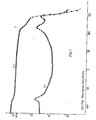
- the shear modulus curves of the comparative tests 7 and 8 are shown in FIGS. 1 and 3, and those of the tests 1 and 6 according to the invention are shown in FIGS. 2 and 4.
- the mixtures according to the invention have only a single thermoplastic loss modulus maximum in the range above 100 ° C. This suggests a significantly better miscibility of the components according to the invention.
- the shear modulus curves were obtained with a Rheometrics Dynamic (RDS 7700). This device works with a forced torsional vibration with a frequency of 1 Hz.
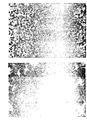
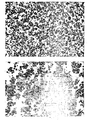
- FIG. 5 and FIGS. 6-9 show electron micrographs of ultrathin sections (OsO 4 contrasted) from comparative experiment 7 and experiments 1 to 4 according to the invention.
- the magnifications are each 7500: 1 in the upper image and 25000: 1 in the lower image of the figures . It is clear from the figures that by using the products Bla, Blb and / or C.1 according to the invention, a significantly more uniform distribution of the graft rubber in the mixture is achieved compared to the prior art, which also demonstrates an improved miscibility of the systems according to the invention.
Landscapes
- Chemical & Material Sciences (AREA)
- Health & Medical Sciences (AREA)
- Chemical Kinetics & Catalysis (AREA)
- Medicinal Chemistry (AREA)
- Polymers & Plastics (AREA)
- Organic Chemistry (AREA)
- Compositions Of Macromolecular Compounds (AREA)
Applications Claiming Priority (2)
| Application Number | Priority Date | Filing Date | Title |
|---|---|---|---|
| DE3514185 | 1985-04-19 | ||
| DE19853514185 DE3514185A1 (de) | 1985-04-19 | 1985-04-19 | Thermoplastische formmassen aus polycarbonaten, pfropfpolymerisaten und copolymerisaten |
Publications (3)
| Publication Number | Publication Date |
|---|---|
| EP0199193A2 true EP0199193A2 (fr) | 1986-10-29 |
| EP0199193A3 EP0199193A3 (en) | 1987-09-02 |
| EP0199193B1 EP0199193B1 (fr) | 1989-11-15 |
Family
ID=6268598
Family Applications (1)
| Application Number | Title | Priority Date | Filing Date |
|---|---|---|---|
| EP86104877A Expired EP0199193B1 (fr) | 1985-04-19 | 1986-04-09 | Masses de moulage thermoplastiques de polycarbonates, polymérisats greffés et copolymérisats |
Country Status (5)
| Country | Link |
|---|---|
| US (1) | US4683265A (fr) |
| EP (1) | EP0199193B1 (fr) |
| JP (1) | JPS61247754A (fr) |
| CA (1) | CA1272323A (fr) |
| DE (2) | DE3514185A1 (fr) |
Cited By (3)
| Publication number | Priority date | Publication date | Assignee | Title |
|---|---|---|---|---|
| EP0255641A3 (en) * | 1986-08-02 | 1988-07-06 | Bayer Ag | Thermoplastic moulding compositions from polycarbonates and tercopolymers |
| EP0260558A3 (en) * | 1986-09-17 | 1990-07-18 | Bayer Ag | Non-aging thermoplastic moulding composition with a good degree of toughness |
| EP0375648A3 (fr) * | 1988-12-19 | 1991-10-02 | Monsanto Europe S.A./N.V. | Compositions de résines |
Families Citing this family (13)
| Publication number | Priority date | Publication date | Assignee | Title |
|---|---|---|---|---|
| US5270385A (en) * | 1987-02-13 | 1993-12-14 | Bayer Aktiengesellschaft | Antistatic, thermoplastic moulding compounds based on aromatic polycarbonates and aromatic vinyl polymers |
| DE3704488A1 (de) * | 1987-02-13 | 1988-08-25 | Bayer Ag | Antistatische, thermoplastische formmassen auf basis von polycarbonaten und vinylaromatpolymerisaten |
| DE3707360A1 (de) * | 1987-03-07 | 1988-09-15 | Bayer Ag | Thermoplastische formmassen |
| DE3738109A1 (de) * | 1987-11-10 | 1989-05-18 | Bayer Ag | Mischungen von polycarbonaten mit siloxanhaltigen pfropfpolymerisaten |
| US4886855A (en) * | 1988-03-08 | 1989-12-12 | Borg-Warner Chemicals, Inc. | Polymer blends of polycarbonate styrene terpolymer and ABS resin |
| DE3808839A1 (de) * | 1988-03-17 | 1989-10-05 | Bayer Ag | Thermoplastische formmassen enthaltend spezielle copolymere |
| MX9102498A (es) * | 1990-12-14 | 1993-01-01 | Cyro Ind | Mezclas de multipolimeros de acrilico modificados con caucho, u policarbonatos; y metodo para la fabricacion de las mismas. |
| DE4121975A1 (de) * | 1991-07-03 | 1993-01-07 | Basf Ag | Thermoplastische formmassen auf der basis von polycarbonaten, styrol/acrylnitril-polymerisaten und polyolefinen |
| TW222660B (fr) * | 1992-02-25 | 1994-04-21 | Gen Electric | |
| US5336701A (en) * | 1992-09-28 | 1994-08-09 | General Electric Company | Process improvement for improved color reduced gloss thermoplastic compositions |
| US5536780A (en) * | 1993-08-20 | 1996-07-16 | General Electric Company | Process for the manufacture of low gloss resins |
| KR20000016155A (ko) | 1996-05-30 | 2000-03-25 | 스타르크, 카르크 | 개질용 알킬(메트)아크릴레이트-기재 공중합체를 함유하는폴리카르보네이트 및 스티렌/아크릴로니트릴 중합체 기재의열가소성 성형 재료 |
| DE102008036406A1 (de) * | 2008-08-05 | 2010-02-11 | Bayer Materialscience Ag | Modifizierte Polycarbonate mit verbesserten Oberflächeneigenschaften |
Family Cites Families (9)
| Publication number | Priority date | Publication date | Assignee | Title |
|---|---|---|---|---|
| ZA6807675B (fr) * | 1968-11-22 | |||
| DE2818679A1 (de) * | 1978-04-27 | 1979-10-31 | Bayer Ag | Thermoplastische formmassen |
| DE3277772D1 (en) * | 1981-09-09 | 1988-01-14 | Sumitomo Naugatuck | Thermoplastic composition |
| NL8105437A (nl) * | 1981-12-02 | 1983-07-01 | Stamicarbon | Polymeercompositie. |
| JPS5966450A (ja) * | 1982-10-07 | 1984-04-14 | Sumitomo Naugatuck Co Ltd | 熱可塑性樹脂組成物 |
| DE3334782A1 (de) * | 1983-04-19 | 1984-10-25 | Bayer Ag, 5090 Leverkusen | Verfahren zur herstellung von polydiorganosiloxanen mit hydroxyaryloxy-endgruppen |
| DE3332325A1 (de) * | 1983-09-08 | 1985-03-28 | Basf Ag, 6700 Ludwigshafen | Thermoplastische formmasse |
| DE3333721A1 (de) * | 1983-09-17 | 1985-04-04 | Bayer Ag, 5090 Leverkusen | Abs-polycarbonat-mischungen mit verbesserter flammwidrigkeit |
| US4530965A (en) * | 1984-02-10 | 1985-07-23 | Atlantic Richfield Company | Polymeric molding composition containing styrenic copolymer, polycarbonate and MBS polymer |
-
1985
- 1985-04-19 DE DE19853514185 patent/DE3514185A1/de not_active Withdrawn
-
1986
- 1986-04-07 US US06/848,587 patent/US4683265A/en not_active Expired - Fee Related
- 1986-04-09 EP EP86104877A patent/EP0199193B1/fr not_active Expired
- 1986-04-09 DE DE8686104877T patent/DE3666957D1/de not_active Expired
- 1986-04-17 CA CA000506900A patent/CA1272323A/fr not_active Expired - Lifetime
- 1986-04-18 JP JP61088438A patent/JPS61247754A/ja active Pending
Cited By (3)
| Publication number | Priority date | Publication date | Assignee | Title |
|---|---|---|---|---|
| EP0255641A3 (en) * | 1986-08-02 | 1988-07-06 | Bayer Ag | Thermoplastic moulding compositions from polycarbonates and tercopolymers |
| EP0260558A3 (en) * | 1986-09-17 | 1990-07-18 | Bayer Ag | Non-aging thermoplastic moulding composition with a good degree of toughness |
| EP0375648A3 (fr) * | 1988-12-19 | 1991-10-02 | Monsanto Europe S.A./N.V. | Compositions de résines |
Also Published As
| Publication number | Publication date |
|---|---|
| DE3666957D1 (en) | 1989-12-21 |
| CA1272323A (fr) | 1990-07-31 |
| EP0199193B1 (fr) | 1989-11-15 |
| EP0199193A3 (en) | 1987-09-02 |
| DE3514185A1 (de) | 1986-10-23 |
| US4683265A (en) | 1987-07-28 |
| JPS61247754A (ja) | 1986-11-05 |
Similar Documents
| Publication | Publication Date | Title |
|---|---|---|
| EP0260558B1 (fr) | Matière à mouler thermoplastique, stable au vieillissement et ayant une bonne ténacité | |
| EP0199193B1 (fr) | Masses de moulage thermoplastiques de polycarbonates, polymérisats greffés et copolymérisats | |
| EP0704488B2 (fr) | Compositions à mouler à base de polycarbonate ayant une ténacité améliorée | |
| EP0158931A1 (fr) | Compositions de moulage thermoplastiques à base de mélanges polycarbonate-polymère greffé | |
| EP0210510A1 (fr) | Compositions à mouler ayant une transformabilité améliorée | |
| EP0312929A2 (fr) | Compositions à mouler thermoplastiques, procédé pur leur préparation et leur utilisation | |
| EP0270950B1 (fr) | Masses à mouler thermoplastiques à base de polymère greffé spécial | |
| EP0224805B1 (fr) | Matières à mouler thermoplastiques de polycarbonate | |
| EP0179290B1 (fr) | Compositions de moulage thermoplastiques à stabilité dimensionnelle à chaud | |
| DE3619059A1 (de) | Leicht entformbare formmassen | |
| US4826918A (en) | Polycarbonate moulding composition with improved flow and processiblity | |
| EP0206006A1 (fr) | Compositions de moulage thermoplastiques ayant une résistance à la soudure de coalescence | |
| EP0337105B1 (fr) | Matière à mouler thermoplastique contenant des polycarbonates aliphatiques | |
| EP0278348B1 (fr) | Masses à mouler antistatiques thermoplastiques à base de polycarbonates et de copolymères greffés | |
| EP0224111A2 (fr) | Masses à mouler thermoplastiques à base de polycondensats segmentés d'oxyde de polyphénylène et de polycarbonate | |
| EP0456030A2 (fr) | Masse à mouler de polycarbonate-ABS | |
| EP0372336B1 (fr) | Masses à mouler de polycarbonate à haute résistance au choc | |
| EP0285984B1 (fr) | Composition thermoplastique à comportement amélioré de fissuration sous tension | |
| EP0207327B1 (fr) | Compositions de moulage thermoplastiques | |
| EP0176811B1 (fr) | Stabilateurs pour des compositions en ABS | |
| EP0255641B1 (fr) | Masses à mouler thermoplastiques à base de polycarbonates et de tercopolymères | |
| EP1151031B1 (fr) | Matieres moulables de polycarbonate presentant des proprietes antistatiques | |
| EP0601473A1 (fr) | Masses à mouler thermoplastiques à base de polycarbonates, de polymères greffés et de copolymères styrène/acrylonitrile | |
| EP0499927B1 (fr) | Masses à mouler résistant à l'essence | |
| DE3803458A1 (de) | Thermoplastische formmasse mit verbesserter fliessfaehigkeit und ihre verwendung |
Legal Events
| Date | Code | Title | Description |
|---|---|---|---|
| PUAI | Public reference made under article 153(3) epc to a published international application that has entered the european phase |
Free format text: ORIGINAL CODE: 0009012 |
|
| 17P | Request for examination filed |
Effective date: 19860409 |
|
| AK | Designated contracting states |
Kind code of ref document: A2 Designated state(s): DE FR GB IT NL |
|
| PUAL | Search report despatched |
Free format text: ORIGINAL CODE: 0009013 |
|
| AK | Designated contracting states |
Kind code of ref document: A3 Designated state(s): DE FR GB IT NL |
|
| 17Q | First examination report despatched |
Effective date: 19890426 |
|
| GRAA | (expected) grant |
Free format text: ORIGINAL CODE: 0009210 |
|
| AK | Designated contracting states |
Kind code of ref document: B1 Designated state(s): DE FR GB IT NL |
|
| ITF | It: translation for a ep patent filed | ||
| ET | Fr: translation filed | ||
| REF | Corresponds to: |
Ref document number: 3666957 Country of ref document: DE Date of ref document: 19891221 |
|
| GBT | Gb: translation of ep patent filed (gb section 77(6)(a)/1977) | ||
| PLBE | No opposition filed within time limit |
Free format text: ORIGINAL CODE: 0009261 |
|
| STAA | Information on the status of an ep patent application or granted ep patent |
Free format text: STATUS: NO OPPOSITION FILED WITHIN TIME LIMIT |
|
| 26N | No opposition filed | ||
| ITTA | It: last paid annual fee | ||
| PGFP | Annual fee paid to national office [announced via postgrant information from national office to epo] |
Ref country code: GB Payment date: 19920327 Year of fee payment: 7 Ref country code: FR Payment date: 19920327 Year of fee payment: 7 |
|
| PGFP | Annual fee paid to national office [announced via postgrant information from national office to epo] |
Ref country code: NL Payment date: 19920430 Year of fee payment: 7 |
|
| PG25 | Lapsed in a contracting state [announced via postgrant information from national office to epo] |
Ref country code: GB Effective date: 19930409 |
|
| PG25 | Lapsed in a contracting state [announced via postgrant information from national office to epo] |
Ref country code: NL Effective date: 19931101 |
|
| GBPC | Gb: european patent ceased through non-payment of renewal fee |
Effective date: 19930409 |
|
| NLV4 | Nl: lapsed or anulled due to non-payment of the annual fee | ||
| PG25 | Lapsed in a contracting state [announced via postgrant information from national office to epo] |
Ref country code: FR Effective date: 19931229 |
|
| REG | Reference to a national code |
Ref country code: FR Ref legal event code: ST |
|
| PGFP | Annual fee paid to national office [announced via postgrant information from national office to epo] |
Ref country code: DE Payment date: 19940314 Year of fee payment: 9 |
|
| PG25 | Lapsed in a contracting state [announced via postgrant information from national office to epo] |
Ref country code: DE Effective date: 19960103 |
|
| PG25 | Lapsed in a contracting state [announced via postgrant information from national office to epo] |
Ref country code: IT Free format text: LAPSE BECAUSE OF NON-PAYMENT OF DUE FEES;WARNING: LAPSES OF ITALIAN PATENTS WITH EFFECTIVE DATE BEFORE 2007 MAY HAVE OCCURRED AT ANY TIME BEFORE 2007. THE CORRECT EFFECTIVE DATE MAY BE DIFFERENT FROM THE ONE RECORDED. Effective date: 20050409 |