EP0204284A2 - Lipase - Google Patents
Lipase Download PDFInfo
- Publication number
- EP0204284A2 EP0204284A2 EP86107417A EP86107417A EP0204284A2 EP 0204284 A2 EP0204284 A2 EP 0204284A2 EP 86107417 A EP86107417 A EP 86107417A EP 86107417 A EP86107417 A EP 86107417A EP 0204284 A2 EP0204284 A2 EP 0204284A2
- Authority
- EP
- European Patent Office
- Prior art keywords
- enzyme
- lipase
- optimum
- molecular weight
- substrate
- Prior art date
- Legal status (The legal status is an assumption and is not a legal conclusion. Google has not performed a legal analysis and makes no representation as to the accuracy of the status listed.)
- Withdrawn
Links
Images



Classifications
-
- C—CHEMISTRY; METALLURGY
- C12—BIOCHEMISTRY; BEER; SPIRITS; WINE; VINEGAR; MICROBIOLOGY; ENZYMOLOGY; MUTATION OR GENETIC ENGINEERING
- C12N—MICROORGANISMS OR ENZYMES; COMPOSITIONS THEREOF; PROPAGATING, PRESERVING, OR MAINTAINING MICROORGANISMS; MUTATION OR GENETIC ENGINEERING; CULTURE MEDIA
- C12N9/00—Enzymes; Proenzymes; Compositions thereof; Processes for preparing, activating, inhibiting, separating or purifying enzymes
- C12N9/14—Hydrolases (3)
- C12N9/16—Hydrolases (3) acting on ester bonds (3.1)
- C12N9/18—Carboxylic ester hydrolases (3.1.1)
- C12N9/20—Triglyceride splitting, e.g. by means of lipase
-
- C—CHEMISTRY; METALLURGY
- C12—BIOCHEMISTRY; BEER; SPIRITS; WINE; VINEGAR; MICROBIOLOGY; ENZYMOLOGY; MUTATION OR GENETIC ENGINEERING
- C12N—MICROORGANISMS OR ENZYMES; COMPOSITIONS THEREOF; PROPAGATING, PRESERVING, OR MAINTAINING MICROORGANISMS; MUTATION OR GENETIC ENGINEERING; CULTURE MEDIA
- C12N1/00—Microorganisms; Compositions thereof; Processes of propagating, maintaining or preserving microorganisms or compositions thereof; Processes of preparing or isolating a composition containing a microorganism; Culture media therefor
- C12N1/20—Bacteria; Culture media therefor
- C12N1/205—Bacterial isolates
-
- C—CHEMISTRY; METALLURGY
- C12—BIOCHEMISTRY; BEER; SPIRITS; WINE; VINEGAR; MICROBIOLOGY; ENZYMOLOGY; MUTATION OR GENETIC ENGINEERING
- C12R—INDEXING SCHEME ASSOCIATED WITH SUBCLASSES C12C - C12Q, RELATING TO MICROORGANISMS
- C12R2001/00—Microorganisms ; Processes using microorganisms
- C12R2001/01—Bacteria or Actinomycetales ; using bacteria or Actinomycetales
- C12R2001/38—Pseudomonas
Definitions
- the present invention relates to a novel lipase having excellent heat resistance and an optimum pH at a high alkalinity as well as high activity on low-molecular monoesters and water-soluble esters.
- Lipase is a class of enzymes highlighted in recent years due to their usefulness in various applications as a digestive and a reagent for the determination of lipids in blood in therapy or medical science, as an enzyme for the decomposition of oils and fats in the manufacture of soaps and as an additive in detergents.
- a large number of enzymes are known to belong to the class of lipase and each of them has its own advantageous and disadvantageous properties so that it is desirable to develop a lipase enzyme having higher activity and larger versatility in many applications in respect of, for example, heat resistance and optimum pH.
- a lipase capable of withstanding a high temperature and having activity at a high alkalinity would be useful as an additive in alkaline detergents or in the decomposition of oils and fats at a high temperature.
- the inventors have previously proposed a method for obtaining an alkaline lipase by culturing bacteria of Pseudomonas fragi belonging to the genus of Pseudomonas (see Japanese Patent Publication 56-28517).
- the novel lipase of the present invention can be isolated in electrophoretically homogeneous form from the above mentioned enzyme product and is characterized by the chemical and physical properties described below.
- the chemical and physical properties, by which the inventive novel lipase is characterized, are as described below.
- the activity of the enzyme has been determined by the PVA emulsion method proposed by Yamada, et al. and described in Journal of the Agricultural Chemical Society of Japan, volume 36, page 860 (1962) with some modifications if not mentioned otherwise, taking an amount of the enzyme liberating a micro- equivalent of a fatty acid for 1 minute as one unit (U) (see Japanese Patent Publication 56-28517).
- the enzyme is highly active for the decomposition of various kinds of oils and fats occurring in nature as well as triolein, tributyrin, triacetin and the like.
- the enzyme also has good activity for the decomposition of monoesters such as methyl - oleate, butyl oleate and the like and water-soluble esters such as polyoxyethylene sorbitan fatty acid esters and the like.
- the optimum pH of the enzyme is 9.0.
- the enzyme has an optimum pH at a relatively high alkalinity.
- the optimum temperature of the enzyme is 65 to 70°C for an aqueous emulsion of olive oil as the substrate.
- the enzyme is stable at 4°C with a pH of 4.0 or higher, at 30°C with a pH of 6.5 or higher and at 50°C with a pH of 8.0 or higher.
- the enzyme is stable for 24 hours with a pH of 9.0 at a temperature up to 51°C but gradually deactivated at 51°C or higher.
- the enzyme is deactivated by Zn 2+ , Fe 2+ and F e 3+ , in particular, among metal ions and also deactivated by cationic surface active agents such as cetyl trimethyl ammonium bromide and the like.
- the activity of the enzyme is somewhat increased by sodium deoxycholate, sodium taurocholate and Triton X-100.
- the isoelectric point of the enzyme is at about pI 7 as determined by the method of isoelectric focusing using Ampholite as the carrier.
- the molecular weight of the enzyme is about 33,000 as determined by the method of SDS-electrophoresis according to the procedure proposed by Weber and Osborn, and about 32,500 as determined by the method of gel filtration using Sephadex G-100.
- the enzyme is obtained from Pseudomonas fragi 22.39B, of which a strain is deposited at Fermentation Research Institute, Agency of Industrial Science and Technology, Japan, as FERM P-1339 (FERM BP-1051).
- FIGURE 1 is a graph showing the activity of the enzyme as a function of pH
- FIGURE 2 is a graph showing the activity of the enzyme as a function of temperature
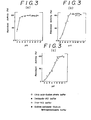
- FIGURES 3a, 3b and 3c are each a graph showing the pH stability of the enzyme
- FIGURE 4 is a graph showing the thermal stability of the enzyme.
- FIGURE 5 is a graph showing the isoelectric point of the enzyme
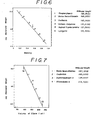
- FIGURE 6 is a diagram obtained in the SDS electrophoresis for the molecular weight determination of the enzyme
- FIGURE 7 is a diagram obtained in the gel filtration for the molecular weight determination of the enzyme
- FIGURE 8 is a chromatogram obtained in the purification procedure of the enzyme
- FIGURE 9 is an electrophoretic diagrams of the enzyme.
- the inventive lipase is not limited by the species of the microorganism which produces the enzyme provided that the microorganism is a bacterium belonging to the genus of Pseudomonas and capable of producing an enzyme having the above described characteristic chemical and physical properties.
- a particularly preferable microorganism is the above mentioned
- the culturing conditions of the microorganism producing the novel lipase of the invention are not particularly limitative and should be determined so as to ensure highest productivity of the desired enzyme.
- a typical procedure of the culturing method is disclosed in the Example of Japanese Patent Publication 56-28517.
- inventive lipase is purified by a suitable known method of, for example, a chromatography including ion exchange, gel filtration and the like. Following is a detailed description of the thus purified inventive novel lipase.
- the enzyme is active for the decomposition of the substrate, such as various kinds of esters and naturally occurring oils and fats.
- Tables 1-1 and 1-2 given below give the relative rate of decomposition of esters (Table 1-1) and naturally occurring oils and fats (Table 1-2) in % taking triolein and olive oil, respectively, as the reference.
- the lipase of the invention has an activity for the decomposition of not only triglycerides as a matter of course but also low-molecular monoesters exhibiting a good activity also as an esterase.
- the lipase also has an activity for the decomposition of water-soluble polyoxyethylene sorbitan fatty acid esters such as the Tween-type surface active agents. It is concluded accordingly that the lipase is active for the decomposition of carboxylate esters in general regardless of the solubility or insolubility thereof in water including glycerol fatty acid esters only as a part of the substrates.
- the kind of animals and plants also has little influence on the activity of the enzyme for the decomposition of naturally occurring oils and fats of animal or vegetable origin.
- the buffer solutions used for the control of the pH of the solution for the reaction included citric acid-sodium citrate buffer solutions having a pH of 5 to 6, imidazole-hydrochloric acid buffer solutions having a pH of 6 to 8, tris-hydrochloric acid buffer solutions having a pH of 8 to 10 and sodium carbonate- sodium hydrogen carbonate buffer solutions having a pH of a.5 to 10.5.
- the buffer solutions used for the test of the pH stability of the enzyme included citric acid-sodium citrate buffer solutions having a pH of 3 to 6, imidazole-hydrochloric acid buffer solutions having a pH of 6 to 8, tris-hydrochloric acid buffer solutions having a pH of 8 to 10.5 and sodium carbonate- sodium hydrogencarbonate buffer solutions having a pH of 9 to 11.
- the pH stability was tested by keeping a solution prepared by adding the purified enzyme into these buffer solutions in a concentration of 200 U/ml or about 100 pg/ml for 24 hours at a temperature of (a) 4°C, (b) 30°C or (c) 50°C and determining the residual activity of the enzyme to give the results shown in FIGURES 3a, 3b and 3c, respectively.
- the enzyme is stable at low temperatures over a wide range of pH from an acidity of pH 4.0 to alkalinity.
- the enzyme is also stable even at a relatively high temperature when the ph is within a range of neutrality to alkalinity.
- Thermal stability of the enzyme was tested by adding the purified enzyme to a 10 mM THB in a concentration of 200 U/ml or about 100 ⁇ g/ml and, while the solution was kept standing at a temperature of 35 to 72°C for a length of time of up to 3 days, by periodically determining the residual activity of the enzyme in the solution.
- the results are shown in FIGURE 4, from which it is understood that the enzyme was stable at a temperature lower than 51°C for at least 24 hours but gradually deactivated thereafter in the lapse of time. Deactivation of the enzyme at 51°C was not so rapid that almost about 50% of the residual activity is left even after 3 days at the temperature. When the temperature exceeded 56°C, however, the enzyme was deactivated at a relatively high velocity so that it could be concluded that the practical upper limit of the temperature for the thermal stability of the enzyme was 50 to 55°C.
- the isoelectric point of the enzyme was determined by the method of isoelectric focusing using Ampholite having a pH of 3.5 to 10 as the carrier.
- FIGURE 6 shows the results of the SDS electrophoresis undertaken according to the method of Weber and Osborn, from which a molecular weight of about 33,000 is obtained.
- the molecular weight markers used in this case included lysozyme having a molecular weight of 14,400, soybean trypsin inhibitor having a molecular weight of 21,500, carbonic anhydrase having a molecular weight of 31,000, ovalbumin having a molecular weight of 45,000, bovine serum albumin having a molecular weight of 66,200 and phosphorylase B having a molecular weight of 92,500.
- the dyed band of the enzyme under testing appeared between those of the carbonic anhydrase and ovalbumin and the molecular weight of the enzyme could be calculated from the gradient of the straight line giving the mobility as a function of molecular weight.
- the molecular weight of the enzyme was determined also by the method of gel filtration using a column having an inner diameter of 1.8 cm and a length of 90 cm filled with Sephadex G-100 after full equilibration with a 10 mM THB containing 0.2M of sodium chloride to give the results shown in FIGURE 7, from which a molecular weight of about 32,500 was obtained.
- the molecular weight markers used in the gel filtration included ribonuclease A having a molecular weight of 13,700, chymotrypsinogen A having a molecular weight of 25,000 ovalbumin having a molecular weight of 43,000 and bovine serum albumin having a molecular weight of 67,000.
- the enzyme was eluted between the chymotripsinogen A and ovalbumin and the molecular weight of the enzyme was calculated from the gradient of the straight line giving the eluate volume as a function of molecular weight.
- the good coincidence of the values obtained by the two different methods supported the conclusion that the molecular weight of the enzyme was about 33,000.
- the novel lipase of the invention also has a nature of esterase with a relatively high optimum temperature of 65 to 70°C and high thermal stability.
- the enzyme is very stable at neutrality to alkalinity having a high optimum pH.
- the enzyme has a high specific activity and is quite stable not only in a dry state but also in the form of an aqueous solution. Therefore, the enzyme is promisingly useful in various fields of applications as a reagent for clinical examination, as a decomposing agent of oils and fats, as an additive in detergents and so on.
- lipases As is known, several lipases have been reported as the products of bacterial species belonging to the genus of Pseudomonas including Ps. fluorescens, Ps. mefitica var. lipolytica, Ps. aeruginosa and Ps. fragi NRRL B-25.
- the lipase of the present invention can be distinguished from these known lipases without ambiguity in view of the comparison of the properties summarized below.
- triglycerides including tributyrin, triacetin and triolein, monoesters including methyl oleate and butyl oleate, and polyoxyethylene sorbitan fatty acid esters
- a strain of Ps. fragi 22.39B (FERM P-1339, FERM BP-1051) belonging to the genus of Pseudomonas was cultured under aeration for 2 days at 27°C in a culture medium in a jar of 150 liter capacity having a controlled pH of 7.0 and containing 1% of beaf tallow, 2% of soybean flour, 1% of corn steep liquor, 0.4% of peptone, 0.1% of ammonium sulfate, 0.05% of magnesium sulfate, 0.5% of calcium carbonate and 0.1% of dipotassium phosphate.
- the cultured broth was subjected to centrifugal separation at a velocity of 8000 rpm for 20 minutes to collect the supernatant.
- the clear liquid obtained as the supernatant in the centrifugal separation was acidified by adding hydrochloric acid to have a pH of 4.0 so that precipitates were formed in the solution and the precipitates were collected by centrifuge at 8000 rpm for 20 minutes. This procedure was carried out at 4°C.
- the thus collected precipitates were dissolved in a 10 mM tris-hydrochloric acid buffer solution having a pH of 9.0, referred to as THB hereinbelow, in a volume of one tenth of the supernatant as obtained by the centrifugal separation of the cultured broth and the solution was subjected to the fractionation with ammonium sulfate in the manner as follows.
- ammonium sulfate was added to the solution in a concentration of 20% saturation to precipitate a part of the dissolved substances in the solution other than the lipase and the precipitates w-re removed from the solution by centrifugation at 10,000 rpm for 20 minutes.
- the crude enzyme solution was adsorbed on DEAE-Toyopearl 650M gel in a chromatographic column after full equilibration with a 10 mM THB. After washing of the gel with a 10 mM THB to completely remove the unadsorbed materials, elution was performed by use of a 10 mM THB containing 0.5M of sodium chloride as the eluant. The eluate was collected and subjected to full dialysis against a 10 mM THB.
- FIGURE 9 illustrates the electrophoretic diagrams of the final product prepared by the above described purification procedure obtained by the disc electrophoresis at a pH of 9.5 using a 7% acrylamide gel and by the SDS electrophoresis using a 7.5% acrylamide gel.
- Table 4 shows the activity in units U, specific activity in U/mg protein and yield in % of the intermediate or product after each step of the purification.
Landscapes
- Life Sciences & Earth Sciences (AREA)
- Chemical & Material Sciences (AREA)
- Health & Medical Sciences (AREA)
- Engineering & Computer Science (AREA)
- Genetics & Genomics (AREA)
- Organic Chemistry (AREA)
- Zoology (AREA)
- Bioinformatics & Cheminformatics (AREA)
- Wood Science & Technology (AREA)
- Biotechnology (AREA)
- Medicinal Chemistry (AREA)
- Microbiology (AREA)
- Biomedical Technology (AREA)
- Biochemistry (AREA)
- General Engineering & Computer Science (AREA)
- General Health & Medical Sciences (AREA)
- Virology (AREA)
- Tropical Medicine & Parasitology (AREA)
- Molecular Biology (AREA)
- Enzymes And Modification Thereof (AREA)
- Preparation Of Compounds By Using Micro-Organisms (AREA)
Applications Claiming Priority (2)
| Application Number | Priority Date | Filing Date | Title |
|---|---|---|---|
| JP120400/85 | 1985-06-05 | ||
| JP60120400A JPS61280274A (ja) | 1985-06-05 | 1985-06-05 | 新規リパ−ゼ |
Publications (2)
| Publication Number | Publication Date |
|---|---|
| EP0204284A2 true EP0204284A2 (fr) | 1986-12-10 |
| EP0204284A3 EP0204284A3 (fr) | 1988-08-10 |
Family
ID=14785273
Family Applications (1)
| Application Number | Title | Priority Date | Filing Date |
|---|---|---|---|
| EP86107417A Withdrawn EP0204284A3 (fr) | 1985-06-05 | 1986-06-02 | Lipase |
Country Status (2)
| Country | Link |
|---|---|
| EP (1) | EP0204284A3 (fr) |
| JP (1) | JPS61280274A (fr) |
Cited By (18)
| Publication number | Priority date | Publication date | Assignee | Title |
|---|---|---|---|---|
| WO1988002775A1 (fr) * | 1986-10-17 | 1988-04-21 | Novo Industri A/S | Lipase a position non specifique a base d'especes de candida, procede de production, utilisation et procede a l'adn recombinant de production de ladite lipase |
| EP0331376A3 (fr) * | 1988-02-28 | 1990-05-16 | Amano Pharmaceutical Co., Ltd. | ADN recombinant, bactérie du genre pseudomonas le contenant et son utilisation dans un procédé de production de lipase |
| US5223169A (en) * | 1989-05-15 | 1993-06-29 | The Clorox Company | Hydrolase surfactant systems and their use in laundering |
| EP0571982A1 (fr) * | 1992-05-27 | 1993-12-01 | Showa Denko Kabushiki Kaisha | Lipase alkaline, méthode de sa production, microorganisme la produisant et détergent la contenant |
| US5273898A (en) * | 1986-10-17 | 1993-12-28 | Noro Nordisk A/S | Thermally stable and positionally non-specific lipase isolated from Candida |
| US5292448A (en) * | 1988-05-10 | 1994-03-08 | Lever Brothers Company, Division Of Conopco, Inc. | Enzymatic detergent composition |
| US5306636A (en) * | 1990-10-31 | 1994-04-26 | Kurita Water Industries Ltd. | Gene, vector and transformant for thermostable lipase and preparation of them and thermostable lipase |
| WO1994023052A1 (fr) * | 1993-04-02 | 1994-10-13 | Novo Nordisk A/S | PROCEDE D'HYDROLYSE D'ESTERS DE CHOLESTEROL AU MOYEN D'ESTERASE DE CHOLESTEROL DE $i(PSEUDOMONAS FRAGI) |
| WO1996012012A1 (fr) * | 1994-10-14 | 1996-04-25 | Solvay S.A. | Lipase, micro-organisme la produisant, procede de preparation de cette lipase et utilisation de celle-ci |
| US5846798A (en) * | 1993-09-01 | 1998-12-08 | Henkel Kommanditgesellschaft Auf Aktien | Multi-enzyme granules |
| US5904736A (en) * | 1995-04-28 | 1999-05-18 | Henkel Kommanditgesellschaft Auf Aktien | Cellulase-containing washing agents |
| US5972668A (en) * | 1994-06-28 | 1999-10-26 | Henkel Kommanditgesellschaft Auf Aktien | Production of multi-enzyme granules |
| US7098179B2 (en) | 2001-10-22 | 2006-08-29 | Henkel Kommanditgesellschaft Auf Aktien (Henkel Kgaa) | Cotton active, dirt removing urethane-based polymers |
| US7316995B2 (en) | 2003-02-10 | 2008-01-08 | Henkel Kommanditgesellschaft Auf Aktien | Detergents or cleaning agents comprising a water-soluble building block system and a cellulose derivative with dirt dissolving properties |
| US7375072B2 (en) | 2003-02-10 | 2008-05-20 | Henkel Kommanditgesellschaft Auf Aktien | Bleach-containing laundry detergents or cleaning compositions comprising water-soluble builder system and soil release-capable cellulose derivative |
| US7431739B2 (en) | 2005-06-08 | 2008-10-07 | Henkel Kommanditgesellschaft Auf Aktien | Boosting the cleaning performance of laundry detergents by polymer of styrene/methyl methacrylate/methyl polyethylene glycol |
| US7456143B2 (en) | 2002-12-20 | 2008-11-25 | Henkel Kommanditgesellschaft Auf Aktien (Henkel Kgaa) | Bleach-containing washing or cleaning agents containing a sulfate/silicate coated percarbonate |
| US8034123B2 (en) | 2005-06-08 | 2011-10-11 | Henkel Ag & Co., Kgaa | Boosting cleaning power of detergents by means of a polymer |
Families Citing this family (2)
| Publication number | Priority date | Publication date | Assignee | Title |
|---|---|---|---|---|
| JPH088859B2 (ja) * | 1987-10-26 | 1996-01-31 | 栗田工業株式会社 | シェードモナスkwi−56菌株 |
| JPH0829082B2 (ja) * | 1988-03-07 | 1996-03-27 | 栗田工業株式会社 | 新規リパーゼおよびその製法 |
-
1985
- 1985-06-05 JP JP60120400A patent/JPS61280274A/ja active Pending
-
1986
- 1986-06-02 EP EP86107417A patent/EP0204284A3/fr not_active Withdrawn
Cited By (21)
| Publication number | Priority date | Publication date | Assignee | Title |
|---|---|---|---|---|
| US5273898A (en) * | 1986-10-17 | 1993-12-28 | Noro Nordisk A/S | Thermally stable and positionally non-specific lipase isolated from Candida |
| WO1988002775A1 (fr) * | 1986-10-17 | 1988-04-21 | Novo Industri A/S | Lipase a position non specifique a base d'especes de candida, procede de production, utilisation et procede a l'adn recombinant de production de ladite lipase |
| EP0331376A3 (fr) * | 1988-02-28 | 1990-05-16 | Amano Pharmaceutical Co., Ltd. | ADN recombinant, bactérie du genre pseudomonas le contenant et son utilisation dans un procédé de production de lipase |
| US5290694A (en) * | 1988-02-28 | 1994-03-01 | Amano Pharmaceutical Co., Ltd. | Recombinant DNA, bacterium of the genus Pseudomonas containing it, and process for preparing lipase by using it |
| US5292448A (en) * | 1988-05-10 | 1994-03-08 | Lever Brothers Company, Division Of Conopco, Inc. | Enzymatic detergent composition |
| US5223169A (en) * | 1989-05-15 | 1993-06-29 | The Clorox Company | Hydrolase surfactant systems and their use in laundering |
| US5306636A (en) * | 1990-10-31 | 1994-04-26 | Kurita Water Industries Ltd. | Gene, vector and transformant for thermostable lipase and preparation of them and thermostable lipase |
| EP0571982A1 (fr) * | 1992-05-27 | 1993-12-01 | Showa Denko Kabushiki Kaisha | Lipase alkaline, méthode de sa production, microorganisme la produisant et détergent la contenant |
| WO1994023052A1 (fr) * | 1993-04-02 | 1994-10-13 | Novo Nordisk A/S | PROCEDE D'HYDROLYSE D'ESTERS DE CHOLESTEROL AU MOYEN D'ESTERASE DE CHOLESTEROL DE $i(PSEUDOMONAS FRAGI) |
| US6066486A (en) * | 1993-04-02 | 2000-05-23 | Novo Nordisk A/S | Method of hydrolyzing cholesterol esters by using a Pseudomonas fragi cholesterol esterase |
| US5846798A (en) * | 1993-09-01 | 1998-12-08 | Henkel Kommanditgesellschaft Auf Aktien | Multi-enzyme granules |
| US5972668A (en) * | 1994-06-28 | 1999-10-26 | Henkel Kommanditgesellschaft Auf Aktien | Production of multi-enzyme granules |
| BE1008998A3 (fr) * | 1994-10-14 | 1996-10-01 | Solvay | Lipase, microorganisme la produisant, procede de preparation de cette lipase et utilisations de celle-ci. |
| WO1996012012A1 (fr) * | 1994-10-14 | 1996-04-25 | Solvay S.A. | Lipase, micro-organisme la produisant, procede de preparation de cette lipase et utilisation de celle-ci |
| US5904736A (en) * | 1995-04-28 | 1999-05-18 | Henkel Kommanditgesellschaft Auf Aktien | Cellulase-containing washing agents |
| US7098179B2 (en) | 2001-10-22 | 2006-08-29 | Henkel Kommanditgesellschaft Auf Aktien (Henkel Kgaa) | Cotton active, dirt removing urethane-based polymers |
| US7456143B2 (en) | 2002-12-20 | 2008-11-25 | Henkel Kommanditgesellschaft Auf Aktien (Henkel Kgaa) | Bleach-containing washing or cleaning agents containing a sulfate/silicate coated percarbonate |
| US7316995B2 (en) | 2003-02-10 | 2008-01-08 | Henkel Kommanditgesellschaft Auf Aktien | Detergents or cleaning agents comprising a water-soluble building block system and a cellulose derivative with dirt dissolving properties |
| US7375072B2 (en) | 2003-02-10 | 2008-05-20 | Henkel Kommanditgesellschaft Auf Aktien | Bleach-containing laundry detergents or cleaning compositions comprising water-soluble builder system and soil release-capable cellulose derivative |
| US7431739B2 (en) | 2005-06-08 | 2008-10-07 | Henkel Kommanditgesellschaft Auf Aktien | Boosting the cleaning performance of laundry detergents by polymer of styrene/methyl methacrylate/methyl polyethylene glycol |
| US8034123B2 (en) | 2005-06-08 | 2011-10-11 | Henkel Ag & Co., Kgaa | Boosting cleaning power of detergents by means of a polymer |
Also Published As
| Publication number | Publication date |
|---|---|
| EP0204284A3 (fr) | 1988-08-10 |
| JPS61280274A (ja) | 1986-12-10 |
Similar Documents
| Publication | Publication Date | Title |
|---|---|---|
| EP0204284A2 (fr) | Lipase | |
| Sugihara et al. | Purification and characterization of a novel thermostable lipase from Bacillus sp. | |
| US5378623A (en) | Phospholipase A1, process for its preparation and the use thereof | |
| Sugiura et al. | Purification, crystallization and properties of triacylglycerol lipase from Pseudomonas fluorescens | |
| EP0287634B1 (fr) | Lipase a position non specifique a base d'especes de candida; procede de production et utilisation de ladite lipase | |
| Shabtai et al. | Production, purification, and properties of a lipase from a bacterium (Pseudomonas aeruginosa YS-7) capable of growing in water-restricted environments | |
| Doi et al. | Phospholipase C from Pseudomonas fluorescens | |
| Iwai et al. | The comparison of the properties of two lipases from Penicillium cyclopium Westring | |
| Doi et al. | Lysophospholipase of Escherichia coli. | |
| HANDELSMAN et al. | Production and characterization of an extracellular thermostable lipase from a thermophilic Bacillus sp. | |
| US5232846A (en) | Method for producing a thermostable lipoprotein lipase from streptomyces | |
| Dheeman et al. | Purification and properties of Amycolatopsis mediterranei DSM 43304 lipase and its potential in flavour ester synthesis | |
| Lotrakul et al. | Purification and characterization of lipase from Aeromonas sobria LP004 | |
| Alt et al. | Isolation of an inducible amidase from Pseudomonas acidovorans AE1 | |
| Sugiura et al. | Purification and properties of a Chromobacterium lipase with a high molecular weight | |
| NAKAGAWA et al. | Purification and some properties of intracellular esterase from Pseudomonas fluorescens | |
| EP0354551B1 (fr) | Lipase lipoprotéique thermostable, procédé pour sa production ainsi qu'un réactif pour déterminer des triglycérides la contenant | |
| Uwajima et al. | Purification and properties of cholesterol esterase from Pseudomonas fluorescens | |
| Taketani et al. | Purification and properties of sterol-ester hydrolase from Saccharomyces cerevisiae | |
| Choi et al. | Purification and characterization of a new inducible thermostable extracellular lipolytic enzyme from the thermoacidophilic archaeon Sulfolobus solfataricus P1 | |
| Petersen et al. | Purification and characterization of an extracellular lipase from Clostridium tetanomorphum | |
| JP3072579B2 (ja) | アルカリリパーゼ、それを生産する微生物およびアルカリリパーゼ含有洗剤組成物 | |
| Ray et al. | Specific soman-hydrolyzing enzyme activity in a clonal neuronal cell culture | |
| Tani et al. | Purification and characterization of the cholinesterase of Pseudomonas aeruginosa A-16 | |
| Boyce et al. | Purification and characterization of a long-chain acyl coenzyme A thioesterase from Rhodopseudomonas sphaeroides |
Legal Events
| Date | Code | Title | Description |
|---|---|---|---|
| PUAI | Public reference made under article 153(3) epc to a published international application that has entered the european phase |
Free format text: ORIGINAL CODE: 0009012 |
|
| AK | Designated contracting states |
Kind code of ref document: A2 Designated state(s): BE DE FR GB NL SE |
|
| PUAL | Search report despatched |
Free format text: ORIGINAL CODE: 0009013 |
|
| AK | Designated contracting states |
Kind code of ref document: A3 Designated state(s): BE DE FR GB NL SE |
|
| 17P | Request for examination filed |
Effective date: 19890202 |
|
| 17Q | First examination report despatched |
Effective date: 19900704 |
|
| STAA | Information on the status of an ep patent application or granted ep patent |
Free format text: STATUS: THE APPLICATION IS DEEMED TO BE WITHDRAWN |
|
| 18D | Application deemed to be withdrawn |
Effective date: 19901115 |
|
| RIN1 | Information on inventor provided before grant (corrected) |
Inventor name: KAMIMURA, MINORU Inventor name: CHIKANO, TAKAHIDE Inventor name: NISHIO, TOSHIYUKI |