EP0206367B1 - Verfahren zur Dimerisierung von ethylenisch ungesättigten Verbindungen - Google Patents
Verfahren zur Dimerisierung von ethylenisch ungesättigten Verbindungen Download PDFInfo
- Publication number
- EP0206367B1 EP0206367B1 EP86200706A EP86200706A EP0206367B1 EP 0206367 B1 EP0206367 B1 EP 0206367B1 EP 86200706 A EP86200706 A EP 86200706A EP 86200706 A EP86200706 A EP 86200706A EP 0206367 B1 EP0206367 B1 EP 0206367B1
- Authority
- EP
- European Patent Office
- Prior art keywords
- mol
- palladium
- mmol
- group
- methyl acrylate
- Prior art date
- Legal status (The legal status is an assumption and is not a legal conclusion. Google has not performed a legal analysis and makes no representation as to the accuracy of the status listed.)
- Expired - Lifetime
Links
- 150000001875 compounds Chemical class 0.000 title claims description 34
- 238000000034 method Methods 0.000 title claims description 32
- 238000006471 dimerization reaction Methods 0.000 title claims description 10
- BAPJBEWLBFYGME-UHFFFAOYSA-N Methyl acrylate Chemical compound COC(=O)C=C BAPJBEWLBFYGME-UHFFFAOYSA-N 0.000 claims description 104
- KDLHZDBZIXYQEI-UHFFFAOYSA-N Palladium Chemical compound [Pd] KDLHZDBZIXYQEI-UHFFFAOYSA-N 0.000 claims description 63
- AZQWKYJCGOJGHM-UHFFFAOYSA-N 1,4-benzoquinone Chemical compound O=C1C=CC(=O)C=C1 AZQWKYJCGOJGHM-UHFFFAOYSA-N 0.000 claims description 60
- VGGSQFUCUMXWEO-UHFFFAOYSA-N Ethene Chemical compound C=C VGGSQFUCUMXWEO-UHFFFAOYSA-N 0.000 claims description 38
- RIOQSEWOXXDEQQ-UHFFFAOYSA-N triphenylphosphine Chemical compound C1=CC=CC=C1P(C=1C=CC=CC=1)C1=CC=CC=C1 RIOQSEWOXXDEQQ-UHFFFAOYSA-N 0.000 claims description 35
- KAKZBPTYRLMSJV-UHFFFAOYSA-N Butadiene Chemical compound C=CC=C KAKZBPTYRLMSJV-UHFFFAOYSA-N 0.000 claims description 31
- 238000006243 chemical reaction Methods 0.000 claims description 28
- 229910052763 palladium Inorganic materials 0.000 claims description 27
- 125000004429 atom Chemical group 0.000 claims description 23
- 239000003446 ligand Substances 0.000 claims description 23
- 150000001450 anions Chemical class 0.000 claims description 15
- 125000004432 carbon atom Chemical group C* 0.000 claims description 14
- 150000003304 ruthenium compounds Chemical class 0.000 claims description 12
- 125000004435 hydrogen atom Chemical group [H]* 0.000 claims description 11
- 125000004433 nitrogen atom Chemical group N* 0.000 claims description 11
- 125000000217 alkyl group Chemical group 0.000 claims description 10
- 239000013522 chelant Substances 0.000 claims description 10
- 229910052757 nitrogen Inorganic materials 0.000 claims description 10
- 125000004437 phosphorous atom Chemical group 0.000 claims description 9
- 229910052709 silver Inorganic materials 0.000 claims description 7
- 239000004332 silver Substances 0.000 claims description 7
- 230000003197 catalytic effect Effects 0.000 claims description 6
- 239000005977 Ethylene Substances 0.000 claims description 5
- 150000003839 salts Chemical class 0.000 claims description 4
- 125000000391 vinyl group Chemical group [H]C([*])=C([H])[H] 0.000 claims description 4
- 125000002029 aromatic hydrocarbon group Chemical group 0.000 claims description 3
- 239000007791 liquid phase Substances 0.000 claims description 3
- 230000000737 periodic effect Effects 0.000 claims description 3
- 150000002894 organic compounds Chemical class 0.000 claims description 2
- 125000001997 phenyl group Chemical group [H]C1=C([H])C([H])=C(*)C([H])=C1[H] 0.000 claims description 2
- 125000001424 substituent group Chemical group 0.000 claims description 2
- 150000004057 1,4-benzoquinones Chemical class 0.000 claims 1
- 125000004453 alkoxycarbonyl group Chemical group 0.000 claims 1
- QQONPFPTGQHPMA-UHFFFAOYSA-N propylene Natural products CC=C QQONPFPTGQHPMA-UHFFFAOYSA-N 0.000 description 22
- 150000002148 esters Chemical class 0.000 description 18
- 239000000203 mixture Substances 0.000 description 18
- -1 silver fluoroborate Chemical compound 0.000 description 18
- 238000003756 stirring Methods 0.000 description 17
- QPJVMBTYPHYUOC-UHFFFAOYSA-N methyl benzoate Chemical compound COC(=O)C1=CC=CC=C1 QPJVMBTYPHYUOC-UHFFFAOYSA-N 0.000 description 16
- 239000000539 dimer Substances 0.000 description 15
- 230000007306 turnover Effects 0.000 description 14
- 125000000383 tetramethylene group Chemical group [H]C([H])([*:1])C([H])([H])C([H])([H])C([H])([H])[*:2] 0.000 description 13
- 239000002253 acid Substances 0.000 description 12
- 229910001494 silver tetrafluoroborate Inorganic materials 0.000 description 12
- VXNZUUAINFGPBY-UHFFFAOYSA-N 1-Butene Chemical compound CCC=C VXNZUUAINFGPBY-UHFFFAOYSA-N 0.000 description 9
- 150000007513 acids Chemical class 0.000 description 9
- 229910002666 PdCl2 Inorganic materials 0.000 description 8
- 229940095102 methyl benzoate Drugs 0.000 description 8
- 229910052707 ruthenium Inorganic materials 0.000 description 8
- NIXOWILDQLNWCW-UHFFFAOYSA-M Acrylate Chemical compound [O-]C(=O)C=C NIXOWILDQLNWCW-UHFFFAOYSA-M 0.000 description 7
- KJTLSVCANCCWHF-UHFFFAOYSA-N Ruthenium Chemical compound [Ru] KJTLSVCANCCWHF-UHFFFAOYSA-N 0.000 description 7
- DGEZNRSVGBDHLK-UHFFFAOYSA-N [1,10]phenanthroline Chemical compound C1=CN=C2C3=NC=CC=C3C=CC2=C1 DGEZNRSVGBDHLK-UHFFFAOYSA-N 0.000 description 7
- 230000000052 comparative effect Effects 0.000 description 7
- 125000004836 hexamethylene group Chemical class [H]C([H])([*:2])C([H])([H])C([H])([H])C([H])([H])C([H])([H])C([H])([H])[*:1] 0.000 description 7
- YJVFFLUZDVXJQI-UHFFFAOYSA-L palladium(ii) acetate Chemical compound [Pd+2].CC([O-])=O.CC([O-])=O YJVFFLUZDVXJQI-UHFFFAOYSA-L 0.000 description 7
- XYFCBTPGUUZFHI-UHFFFAOYSA-N Phosphine Chemical compound P XYFCBTPGUUZFHI-UHFFFAOYSA-N 0.000 description 5
- BQCADISMDOOEFD-UHFFFAOYSA-N Silver Chemical compound [Ag] BQCADISMDOOEFD-UHFFFAOYSA-N 0.000 description 5
- JUJWROOIHBZHMG-UHFFFAOYSA-N Pyridine Chemical compound C1=CC=NC=C1 JUJWROOIHBZHMG-UHFFFAOYSA-N 0.000 description 4
- 125000000118 dimethyl group Chemical group [H]C([H])([H])* 0.000 description 4
- 150000002430 hydrocarbons Chemical group 0.000 description 4
- 150000002941 palladium compounds Chemical class 0.000 description 4
- PIBWKRNGBLPSSY-UHFFFAOYSA-L palladium(II) chloride Chemical compound Cl[Pd]Cl PIBWKRNGBLPSSY-UHFFFAOYSA-L 0.000 description 4
- YBCAZPLXEGKKFM-UHFFFAOYSA-K ruthenium(iii) chloride Chemical compound [Cl-].[Cl-].[Cl-].[Ru+3] YBCAZPLXEGKKFM-UHFFFAOYSA-K 0.000 description 4
- OISVCGZHLKNMSJ-UHFFFAOYSA-N 2,6-dimethylpyridine Chemical compound CC1=CC=CC(C)=N1 OISVCGZHLKNMSJ-UHFFFAOYSA-N 0.000 description 3
- UHOVQNZJYSORNB-UHFFFAOYSA-N Benzene Chemical compound C1=CC=CC=C1 UHOVQNZJYSORNB-UHFFFAOYSA-N 0.000 description 3
- RTZKZFJDLAIYFH-UHFFFAOYSA-N Diethyl ether Chemical compound CCOCC RTZKZFJDLAIYFH-UHFFFAOYSA-N 0.000 description 3
- YXFVVABEGXRONW-UHFFFAOYSA-N Toluene Chemical compound CC1=CC=CC=C1 YXFVVABEGXRONW-UHFFFAOYSA-N 0.000 description 3
- RQNWIZPPADIBDY-UHFFFAOYSA-N arsenic atom Chemical group [As] RQNWIZPPADIBDY-UHFFFAOYSA-N 0.000 description 3
- CNFQJGLKUZBUBD-TXHUMJEOSA-N hexa-1,5-diene;(3e)-hexa-1,3-diene;(4e)-hexa-1,4-diene Chemical class CC\C=C\C=C.C\C=C\CC=C.C=CCCC=C CNFQJGLKUZBUBD-TXHUMJEOSA-N 0.000 description 3
- 238000011065 in-situ storage Methods 0.000 description 3
- VLKZOEOYAKHREP-UHFFFAOYSA-N n-Hexane Chemical compound CCCCCC VLKZOEOYAKHREP-UHFFFAOYSA-N 0.000 description 3
- LXNAVEXFUKBNMK-UHFFFAOYSA-N palladium(II) acetate Substances [Pd].CC(O)=O.CC(O)=O LXNAVEXFUKBNMK-UHFFFAOYSA-N 0.000 description 3
- 229910000073 phosphorus hydride Inorganic materials 0.000 description 3
- UGNWTBMOAKPKBL-UHFFFAOYSA-N tetrachloro-1,4-benzoquinone Chemical compound ClC1=C(Cl)C(=O)C(Cl)=C(Cl)C1=O UGNWTBMOAKPKBL-UHFFFAOYSA-N 0.000 description 3
- FRASJONUBLZVQX-UHFFFAOYSA-N 1,4-naphthoquinone Chemical compound C1=CC=C2C(=O)C=CC(=O)C2=C1 FRASJONUBLZVQX-UHFFFAOYSA-N 0.000 description 2
- ROFVEXUMMXZLPA-UHFFFAOYSA-N Bipyridyl Chemical class N1=CC=CC=C1C1=CC=CC=N1 ROFVEXUMMXZLPA-UHFFFAOYSA-N 0.000 description 2
- ZAMOUSCENKQFHK-UHFFFAOYSA-N Chlorine atom Chemical compound [Cl] ZAMOUSCENKQFHK-UHFFFAOYSA-N 0.000 description 2
- HEDRZPFGACZZDS-UHFFFAOYSA-N Chloroform Chemical compound ClC(Cl)Cl HEDRZPFGACZZDS-UHFFFAOYSA-N 0.000 description 2
- YNQLUTRBYVCPMQ-UHFFFAOYSA-N Ethylbenzene Chemical compound CCC1=CC=CC=C1 YNQLUTRBYVCPMQ-UHFFFAOYSA-N 0.000 description 2
- 229910004039 HBF4 Inorganic materials 0.000 description 2
- PVNIIMVLHYAWGP-UHFFFAOYSA-N Niacin Chemical compound OC(=O)C1=CC=CN=C1 PVNIIMVLHYAWGP-UHFFFAOYSA-N 0.000 description 2
- NBIIXXVUZAFLBC-UHFFFAOYSA-N Phosphoric acid Chemical compound OP(O)(O)=O NBIIXXVUZAFLBC-UHFFFAOYSA-N 0.000 description 2
- SMWDFEZZVXVKRB-UHFFFAOYSA-N Quinoline Chemical compound N1=CC=CC2=CC=CC=C21 SMWDFEZZVXVKRB-UHFFFAOYSA-N 0.000 description 2
- NINIDFKCEFEMDL-UHFFFAOYSA-N Sulfur Chemical compound [S] NINIDFKCEFEMDL-UHFFFAOYSA-N 0.000 description 2
- QAOWNCQODCNURD-UHFFFAOYSA-N Sulfuric acid Chemical compound OS(O)(=O)=O QAOWNCQODCNURD-UHFFFAOYSA-N 0.000 description 2
- 239000005864 Sulphur Substances 0.000 description 2
- WYURNTSHIVDZCO-UHFFFAOYSA-N Tetrahydrofuran Chemical compound C1CCOC1 WYURNTSHIVDZCO-UHFFFAOYSA-N 0.000 description 2
- 239000007983 Tris buffer Substances 0.000 description 2
- PYKYMHQGRFAEBM-UHFFFAOYSA-N anthraquinone Natural products CCC(=O)c1c(O)c2C(=O)C3C(C=CC=C3O)C(=O)c2cc1CC(=O)OC PYKYMHQGRFAEBM-UHFFFAOYSA-N 0.000 description 2
- 150000004056 anthraquinones Chemical class 0.000 description 2
- 125000006615 aromatic heterocyclic group Chemical group 0.000 description 2
- 125000003118 aryl group Chemical group 0.000 description 2
- IAQRGUVFOMOMEM-UHFFFAOYSA-N but-2-ene Chemical compound CC=CC IAQRGUVFOMOMEM-UHFFFAOYSA-N 0.000 description 2
- 239000000460 chlorine Substances 0.000 description 2
- 229910052801 chlorine Inorganic materials 0.000 description 2
- MVPPADPHJFYWMZ-UHFFFAOYSA-N chlorobenzene Chemical compound ClC1=CC=CC=C1 MVPPADPHJFYWMZ-UHFFFAOYSA-N 0.000 description 2
- HZGMNNQOPOLCIG-UHFFFAOYSA-N chrysene-5,6-dione Chemical compound C12=CC=CC=C2C(=O)C(=O)C2=C1C=CC1=CC=CC=C21 HZGMNNQOPOLCIG-UHFFFAOYSA-N 0.000 description 2
- RWGFKTVRMDUZSP-UHFFFAOYSA-N cumene Chemical compound CC(C)C1=CC=CC=C1 RWGFKTVRMDUZSP-UHFFFAOYSA-N 0.000 description 2
- NMQOICPWQBMMFF-GQCTYLIASA-N dimethyl (e)-2-methylpent-2-enedioate Chemical compound COC(=O)C\C=C(/C)C(=O)OC NMQOICPWQBMMFF-GQCTYLIASA-N 0.000 description 2
- QPFMISCWBTXLFC-UHFFFAOYSA-N dimethyl hex-2-enedioate Chemical compound COC(=O)CCC=CC(=O)OC QPFMISCWBTXLFC-UHFFFAOYSA-N 0.000 description 2
- CPSQPCGPYWRIPB-UHFFFAOYSA-N dimethyl hex-3-enedioate Chemical compound COC(=O)CC=CCC(=O)OC CPSQPCGPYWRIPB-UHFFFAOYSA-N 0.000 description 2
- WAMKWBHYPYBEJY-UHFFFAOYSA-N duroquinone Chemical compound CC1=C(C)C(=O)C(C)=C(C)C1=O WAMKWBHYPYBEJY-UHFFFAOYSA-N 0.000 description 2
- UQSQSQZYBQSBJZ-UHFFFAOYSA-N fluorosulfonic acid Chemical compound OS(F)(=O)=O UQSQSQZYBQSBJZ-UHFFFAOYSA-N 0.000 description 2
- 125000005843 halogen group Chemical group 0.000 description 2
- GUAWMXYQZKVRCW-UHFFFAOYSA-N n,2-dimethylaniline Chemical compound CNC1=CC=CC=C1C GUAWMXYQZKVRCW-UHFFFAOYSA-N 0.000 description 2
- VEAZEPMQWHPHAG-UHFFFAOYSA-N n,n,n',n'-tetramethylbutane-1,4-diamine Chemical compound CN(C)CCCCN(C)C VEAZEPMQWHPHAG-UHFFFAOYSA-N 0.000 description 2
- LQNUZADURLCDLV-UHFFFAOYSA-N nitrobenzene Chemical compound [O-][N+](=O)C1=CC=CC=C1 LQNUZADURLCDLV-UHFFFAOYSA-N 0.000 description 2
- NFHFRUOZVGFOOS-UHFFFAOYSA-N palladium;triphenylphosphane Chemical compound [Pd].C1=CC=CC=C1P(C=1C=CC=CC=1)C1=CC=CC=C1.C1=CC=CC=C1P(C=1C=CC=CC=1)C1=CC=CC=C1.C1=CC=CC=C1P(C=1C=CC=CC=1)C1=CC=CC=C1.C1=CC=CC=C1P(C=1C=CC=CC=1)C1=CC=CC=C1 NFHFRUOZVGFOOS-UHFFFAOYSA-N 0.000 description 2
- VLTRZXGMWDSKGL-UHFFFAOYSA-N perchloric acid Chemical compound OCl(=O)(=O)=O VLTRZXGMWDSKGL-UHFFFAOYSA-N 0.000 description 2
- UMJSCPRVCHMLSP-UHFFFAOYSA-N pyridine Natural products COC1=CC=CN=C1 UMJSCPRVCHMLSP-UHFFFAOYSA-N 0.000 description 2
- SMUQFGGVLNAIOZ-UHFFFAOYSA-N quinaldine Chemical compound C1=CC=CC2=NC(C)=CC=C21 SMUQFGGVLNAIOZ-UHFFFAOYSA-N 0.000 description 2
- JUDUFOKGIZUSFP-UHFFFAOYSA-M silver;4-methylbenzenesulfonate Chemical group [Ag+].CC1=CC=C(S([O-])(=O)=O)C=C1 JUDUFOKGIZUSFP-UHFFFAOYSA-M 0.000 description 2
- 239000001117 sulphuric acid Substances 0.000 description 2
- 235000011149 sulphuric acid Nutrition 0.000 description 2
- JOXIMZWYDAKGHI-UHFFFAOYSA-N toluene-4-sulfonic acid Chemical compound CC1=CC=C(S(O)(=O)=O)C=C1 JOXIMZWYDAKGHI-UHFFFAOYSA-N 0.000 description 2
- CCXTYQMZVYIQRP-UHFFFAOYSA-N tris(3-methoxyphenyl)phosphane Chemical compound COC1=CC=CC(P(C=2C=C(OC)C=CC=2)C=2C=C(OC)C=CC=2)=C1 CCXTYQMZVYIQRP-UHFFFAOYSA-N 0.000 description 2
- HUCQPHINKBNKRU-UHFFFAOYSA-N (4-methylphenyl)phosphane Chemical compound CC1=CC=C(P)C=C1 HUCQPHINKBNKRU-UHFFFAOYSA-N 0.000 description 1
- APPOKADJQUIAHP-UHMKDZKBSA-N (4e)-hexa-2,4-diene Chemical compound CC=C\C=C\C APPOKADJQUIAHP-UHMKDZKBSA-N 0.000 description 1
- WSLDOOZREJYCGB-UHFFFAOYSA-N 1,2-Dichloroethane Chemical compound ClCCCl WSLDOOZREJYCGB-UHFFFAOYSA-N 0.000 description 1
- LZDKZFUFMNSQCJ-UHFFFAOYSA-N 1,2-diethoxyethane Chemical compound CCOCCOCC LZDKZFUFMNSQCJ-UHFFFAOYSA-N 0.000 description 1
- HUBWRAMPQVYBRS-UHFFFAOYSA-N 1,2-phenylenebis(dimethylarsane) Chemical compound C[As](C)C1=CC=CC=C1[As](C)C HUBWRAMPQVYBRS-UHFFFAOYSA-N 0.000 description 1
- RYHBNJHYFVUHQT-UHFFFAOYSA-N 1,4-Dioxane Chemical compound C1COCCO1 RYHBNJHYFVUHQT-UHFFFAOYSA-N 0.000 description 1
- PUUSEBXRZWZXGU-UHFFFAOYSA-N 1,4-diphenyl-1,4-diphosphinane Chemical compound C1CP(C=2C=CC=CC=2)CCP1C1=CC=CC=C1 PUUSEBXRZWZXGU-UHFFFAOYSA-N 0.000 description 1
- LLZRSOPHIGKISM-UHFFFAOYSA-N 1,4-diphenylpiperazine Chemical compound C1CN(C=2C=CC=CC=2)CCN1C1=CC=CC=C1 LLZRSOPHIGKISM-UHFFFAOYSA-N 0.000 description 1
- NGIJJMGGBQUTPZ-UHFFFAOYSA-N 1-n,1-n,1-n',1-n'-tetraethylethane-1,1-diamine Chemical compound CCN(CC)C(C)N(CC)CC NGIJJMGGBQUTPZ-UHFFFAOYSA-N 0.000 description 1
- BYWLFMQINPBZEI-UHFFFAOYSA-N 10-methyl-5h-phenarsazinine Chemical compound C1=CC=C2[As](C)C3=CC=CC=C3NC2=C1 BYWLFMQINPBZEI-UHFFFAOYSA-N 0.000 description 1
- FILKGCRCWDMBKA-UHFFFAOYSA-N 2,6-dichloropyridine Chemical compound ClC1=CC=CC(Cl)=N1 FILKGCRCWDMBKA-UHFFFAOYSA-N 0.000 description 1
- DNKGIDURJINUOA-UHFFFAOYSA-N 2,9-dichloro-1,10-phenanthroline Chemical compound C1=C(Cl)N=C2C3=NC(Cl)=CC=C3C=CC2=C1 DNKGIDURJINUOA-UHFFFAOYSA-N 0.000 description 1
- OKDGRDCXVWSXDC-UHFFFAOYSA-N 2-chloropyridine Chemical compound ClC1=CC=CC=N1 OKDGRDCXVWSXDC-UHFFFAOYSA-N 0.000 description 1
- OFUFXTHGZWIDDB-UHFFFAOYSA-N 2-chloroquinoline Chemical compound C1=CC=CC2=NC(Cl)=CC=C21 OFUFXTHGZWIDDB-UHFFFAOYSA-N 0.000 description 1
- UYRPRYSDOVYCOU-UHFFFAOYSA-N 2-diphenylphosphanylbenzoic acid Chemical compound OC(=O)C1=CC=CC=C1P(C=1C=CC=CC=1)C1=CC=CC=C1 UYRPRYSDOVYCOU-UHFFFAOYSA-N 0.000 description 1
- HSBSUGYTMJWPAX-UHFFFAOYSA-N 2-hexenedioic acid Chemical class OC(=O)CCC=CC(O)=O HSBSUGYTMJWPAX-UHFFFAOYSA-N 0.000 description 1
- WCBWZBSYSCYPTM-UHFFFAOYSA-N 2-hydroxypropane-2-sulfonic acid Chemical compound CC(C)(O)S(O)(=O)=O WCBWZBSYSCYPTM-UHFFFAOYSA-N 0.000 description 1
- IWTFOFMTUOBLHG-UHFFFAOYSA-N 2-methoxypyridine Chemical compound COC1=CC=CC=N1 IWTFOFMTUOBLHG-UHFFFAOYSA-N 0.000 description 1
- SOKSKPNEBIDBOU-UHFFFAOYSA-N 3-(dimethylamino)benzenesulfonic acid Chemical compound CN(C)C1=CC=CC(S(O)(=O)=O)=C1 SOKSKPNEBIDBOU-UHFFFAOYSA-N 0.000 description 1
- PWRBCZZQRRPXAB-UHFFFAOYSA-N 3-chloropyridine Chemical compound ClC1=CC=CN=C1 PWRBCZZQRRPXAB-UHFFFAOYSA-N 0.000 description 1
- DHDHJYNTEFLIHY-UHFFFAOYSA-N 4,7-diphenyl-1,10-phenanthroline Chemical compound C1=CC=CC=C1C1=CC=NC2=C1C=CC1=C(C=3C=CC=CC=3)C=CN=C21 DHDHJYNTEFLIHY-UHFFFAOYSA-N 0.000 description 1
- HZZQDMGIGCTARB-UHFFFAOYSA-N 4,7-diphenyl-1,10-phenanthroline-2,3-disulfonic acid Chemical compound C=1C=CC=CC=1C1=C(S(O)(=O)=O)C(S(=O)(=O)O)=NC(C2=NC=C3)=C1C=CC2=C3C1=CC=CC=C1 HZZQDMGIGCTARB-UHFFFAOYSA-N 0.000 description 1
- KZVBBVPCVQEVQK-UHFFFAOYSA-N 4-(dimethylamino)benzenesulfonic acid Chemical compound CN(C)C1=CC=C(S(O)(=O)=O)C=C1 KZVBBVPCVQEVQK-UHFFFAOYSA-N 0.000 description 1
- UBSRTSGCWBPLQF-UHFFFAOYSA-N 4-chloro-2-(4-chloropyridin-2-yl)pyridine Chemical class ClC1=CC=NC(C=2N=CC=C(Cl)C=2)=C1 UBSRTSGCWBPLQF-UHFFFAOYSA-N 0.000 description 1
- QSNSCYSYFYORTR-UHFFFAOYSA-N 4-chloroaniline Chemical compound NC1=CC=C(Cl)C=C1 QSNSCYSYFYORTR-UHFFFAOYSA-N 0.000 description 1
- VJXRKZJMGVSXPX-UHFFFAOYSA-N 4-ethylpyridine Chemical compound CCC1=CC=NC=C1 VJXRKZJMGVSXPX-UHFFFAOYSA-N 0.000 description 1
- IMEVSAIFJKKDAP-UHFFFAOYSA-N 4-methoxy-2-(4-methoxypyridin-2-yl)pyridine Chemical class COC1=CC=NC(C=2N=CC=C(OC)C=2)=C1 IMEVSAIFJKKDAP-UHFFFAOYSA-N 0.000 description 1
- NBPGPQJFYXNFKN-UHFFFAOYSA-N 4-methyl-2-(4-methylpyridin-2-yl)pyridine Chemical class CC1=CC=NC(C=2N=CC=C(C)C=2)=C1 NBPGPQJFYXNFKN-UHFFFAOYSA-N 0.000 description 1
- XDUUQOQFSWSZSM-UHFFFAOYSA-N 5-chloro-1,10-phenanthroline Chemical compound C1=CC=C2C(Cl)=CC3=CC=CN=C3C2=N1 XDUUQOQFSWSZSM-UHFFFAOYSA-N 0.000 description 1
- JRLTTZUODKEYDH-UHFFFAOYSA-N 8-methylquinoline Chemical group C1=CN=C2C(C)=CC=CC2=C1 JRLTTZUODKEYDH-UHFFFAOYSA-N 0.000 description 1
- QTGRLXCDAWOXPD-SFECMWDFSA-N C/C(/C(/C)=N\C)=N/C Chemical compound C/C(/C(/C)=N\C)=N/C QTGRLXCDAWOXPD-SFECMWDFSA-N 0.000 description 1
- KZBUYRJDOAKODT-UHFFFAOYSA-N Chlorine Chemical compound ClCl KZBUYRJDOAKODT-UHFFFAOYSA-N 0.000 description 1
- 229910017981 Cu(BF4)2 Inorganic materials 0.000 description 1
- XDTMQSROBMDMFD-UHFFFAOYSA-N Cyclohexane Chemical compound C1CCCCC1 XDTMQSROBMDMFD-UHFFFAOYSA-N 0.000 description 1
- PIICEJLVQHRZGT-UHFFFAOYSA-N Ethylenediamine Chemical class NCCN PIICEJLVQHRZGT-UHFFFAOYSA-N 0.000 description 1
- 239000002841 Lewis acid Substances 0.000 description 1
- CERQOIWHTDAKMF-UHFFFAOYSA-M Methacrylate Chemical compound CC(=C)C([O-])=O CERQOIWHTDAKMF-UHFFFAOYSA-M 0.000 description 1
- SHCSFZHSNSGTOP-UHFFFAOYSA-N Methyl 4-pentenoate Chemical compound COC(=O)CCC=C SHCSFZHSNSGTOP-UHFFFAOYSA-N 0.000 description 1
- BZLVMXJERCGZMT-UHFFFAOYSA-N Methyl tert-butyl ether Chemical compound COC(C)(C)C BZLVMXJERCGZMT-UHFFFAOYSA-N 0.000 description 1
- KWYHDKDOAIKMQN-UHFFFAOYSA-N N,N,N',N'-tetramethylethylenediamine Chemical compound CN(C)CCN(C)C KWYHDKDOAIKMQN-UHFFFAOYSA-N 0.000 description 1
- 229930192627 Naphthoquinone Natural products 0.000 description 1
- SIOXPEMLGUPBBT-UHFFFAOYSA-N Picolinic acid Natural products OC(=O)C1=CC=CC=N1 SIOXPEMLGUPBBT-UHFFFAOYSA-N 0.000 description 1
- XTQDUYFNMKONNJ-UHFFFAOYSA-N [2-[bis(3-dimethylarsanylpropyl)arsanyl]phenyl]-bis(3-dimethylarsanylpropyl)arsane Chemical compound C[As](CCC[As](C1=C(C=CC=C1)[As](CCC[As](C)C)CCC[As](C)C)CCC[As](C)C)C XTQDUYFNMKONNJ-UHFFFAOYSA-N 0.000 description 1
- ROZSPJBPUVWBHW-UHFFFAOYSA-N [Ru]=O Chemical class [Ru]=O ROZSPJBPUVWBHW-UHFFFAOYSA-N 0.000 description 1
- 150000001252 acrylic acid derivatives Chemical class 0.000 description 1
- 125000002252 acyl group Chemical group 0.000 description 1
- 125000004423 acyloxy group Chemical group 0.000 description 1
- 150000001336 alkenes Chemical class 0.000 description 1
- 125000003545 alkoxy group Chemical group 0.000 description 1
- 125000002877 alkyl aryl group Chemical group 0.000 description 1
- 229910000147 aluminium phosphate Inorganic materials 0.000 description 1
- 229940111121 antirheumatic drug quinolines Drugs 0.000 description 1
- 239000007864 aqueous solution Substances 0.000 description 1
- 229910052785 arsenic Inorganic materials 0.000 description 1
- 125000003710 aryl alkyl group Chemical group 0.000 description 1
- QVGXLLKOCUKJST-UHFFFAOYSA-N atomic oxygen Chemical group [O] QVGXLLKOCUKJST-UHFFFAOYSA-N 0.000 description 1
- SRSXLGNVWSONIS-UHFFFAOYSA-N benzenesulfonic acid Chemical compound OS(=O)(=O)C1=CC=CC=C1 SRSXLGNVWSONIS-UHFFFAOYSA-N 0.000 description 1
- ISBBNYHOCIARJD-UHFFFAOYSA-N bis(2-diphenylphosphanylphenyl)-phenylphosphane Chemical compound C1=CC=CC=C1P(C=1C(=CC=CC=1)P(C=1C=CC=CC=1)C=1C(=CC=CC=1)P(C=1C=CC=CC=1)C=1C=CC=CC=1)C1=CC=CC=C1 ISBBNYHOCIARJD-UHFFFAOYSA-N 0.000 description 1
- 125000003178 carboxy group Chemical group [H]OC(*)=O 0.000 description 1
- 150000007942 carboxylates Chemical class 0.000 description 1
- 150000001735 carboxylic acids Chemical class 0.000 description 1
- 239000003054 catalyst Substances 0.000 description 1
- LDHQCZJRKDOVOX-NSCUHMNNSA-M crotonate Chemical compound C\C=C\C([O-])=O LDHQCZJRKDOVOX-NSCUHMNNSA-M 0.000 description 1
- 125000004093 cyano group Chemical group *C#N 0.000 description 1
- QHFFENCDDAJXOU-UHFFFAOYSA-N cyclohexa-3,5-diene-1,2-diimine Chemical compound N=C1C=CC=CC1=N QHFFENCDDAJXOU-UHFFFAOYSA-N 0.000 description 1
- ZXKWUYWWVSKKQZ-UHFFFAOYSA-N cyclohexyl(diphenyl)phosphane Chemical compound C1CCCCC1P(C=1C=CC=CC=1)C1=CC=CC=C1 ZXKWUYWWVSKKQZ-UHFFFAOYSA-N 0.000 description 1
- 239000004913 cyclooctene Substances 0.000 description 1
- URYYVOIYTNXXBN-UPHRSURJSA-N cyclooctene Chemical compound C1CCC\C=C/CC1 URYYVOIYTNXXBN-UPHRSURJSA-N 0.000 description 1
- ORICWOYODJGJMY-UHFFFAOYSA-N dibutyl(phenyl)phosphane Chemical compound CCCCP(CCCC)C1=CC=CC=C1 ORICWOYODJGJMY-UHFFFAOYSA-N 0.000 description 1
- 150000004816 dichlorobenzenes Chemical class 0.000 description 1
- WOXXEBQDZIBOSP-UHFFFAOYSA-N dimethyl 4-methylpent-2-enedioate Chemical compound COC(=O)C=CC(C)C(=O)OC WOXXEBQDZIBOSP-UHFFFAOYSA-N 0.000 description 1
- HASCQPSFPAKVEK-UHFFFAOYSA-N dimethyl(phenyl)phosphine Chemical compound CP(C)C1=CC=CC=C1 HASCQPSFPAKVEK-UHFFFAOYSA-N 0.000 description 1
- HKORDOWSFWBQKI-UHFFFAOYSA-N dimethyl(quinolin-8-yl)arsane Chemical compound C1=CN=C2C([As](C)C)=CC=CC2=C1 HKORDOWSFWBQKI-UHFFFAOYSA-N 0.000 description 1
- XNMQEEKYCVKGBD-UHFFFAOYSA-N dimethylacetylene Natural products CC#CC XNMQEEKYCVKGBD-UHFFFAOYSA-N 0.000 description 1
- XOJNEFQLMRCOMS-UHFFFAOYSA-N ditert-butyl(phenyl)phosphane Chemical compound CC(C)(C)P(C(C)(C)C)C1=CC=CC=C1 XOJNEFQLMRCOMS-UHFFFAOYSA-N 0.000 description 1
- 150000002170 ethers Chemical class 0.000 description 1
- 125000001495 ethyl group Chemical group [H]C([H])([H])C([H])([H])* 0.000 description 1
- 230000001747 exhibiting effect Effects 0.000 description 1
- 125000001153 fluoro group Chemical group F* 0.000 description 1
- 150000008282 halocarbons Chemical class 0.000 description 1
- 229930195733 hydrocarbon Natural products 0.000 description 1
- 125000001183 hydrocarbyl group Chemical group 0.000 description 1
- 239000012433 hydrogen halide Substances 0.000 description 1
- 229910000039 hydrogen halide Inorganic materials 0.000 description 1
- 125000002887 hydroxy group Chemical group [H]O* 0.000 description 1
- 230000003993 interaction Effects 0.000 description 1
- 239000000543 intermediate Substances 0.000 description 1
- 150000007517 lewis acids Chemical class 0.000 description 1
- 238000004519 manufacturing process Methods 0.000 description 1
- MBAHGFJTIVZLFB-SNAWJCMRSA-N methyl (e)-pent-2-enoate Chemical compound CC\C=C\C(=O)OC MBAHGFJTIVZLFB-SNAWJCMRSA-N 0.000 description 1
- KJALUUCEMMPKAC-ONEGZZNKSA-N methyl (e)-pent-3-enoate Chemical compound COC(=O)C\C=C\C KJALUUCEMMPKAC-ONEGZZNKSA-N 0.000 description 1
- FZIBCCGGICGWBP-UHFFFAOYSA-N methyl 3-methylbut-2-enoate Chemical compound COC(=O)C=C(C)C FZIBCCGGICGWBP-UHFFFAOYSA-N 0.000 description 1
- TVTLCZHNZKWYBL-UHFFFAOYSA-N methyl 3-methylbut-3-enoate Chemical compound COC(=O)CC(C)=C TVTLCZHNZKWYBL-UHFFFAOYSA-N 0.000 description 1
- 125000002496 methyl group Chemical group [H]C([H])([H])* 0.000 description 1
- UJNZOIKQAUQOCN-UHFFFAOYSA-N methyl(diphenyl)phosphane Chemical compound C=1C=CC=CC=1P(C)C1=CC=CC=C1 UJNZOIKQAUQOCN-UHFFFAOYSA-N 0.000 description 1
- LHTGBZMVHWJBQB-UHFFFAOYSA-N n,2-diethylaniline Chemical compound CCNC1=CC=CC=C1CC LHTGBZMVHWJBQB-UHFFFAOYSA-N 0.000 description 1
- IRMGPOUTEGABKC-UHFFFAOYSA-N n,n'-bis(4-methoxyphenyl)ethane-1,2-diimine Chemical compound C1=CC(OC)=CC=C1N=CC=NC1=CC=C(OC)C=C1 IRMGPOUTEGABKC-UHFFFAOYSA-N 0.000 description 1
- DMQSHEKGGUOYJS-UHFFFAOYSA-N n,n,n',n'-tetramethylpropane-1,3-diamine Chemical compound CN(C)CCCN(C)C DMQSHEKGGUOYJS-UHFFFAOYSA-N 0.000 description 1
- GCDQTHZYCHESCJ-UHFFFAOYSA-N n,n,n',n'-tetraphenylethane-1,2-diamine Chemical compound C=1C=CC=CC=1N(C=1C=CC=CC=1)CCN(C=1C=CC=CC=1)C1=CC=CC=C1 GCDQTHZYCHESCJ-UHFFFAOYSA-N 0.000 description 1
- KVBGVZZKJNLNJU-UHFFFAOYSA-N naphthalene-2-sulfonic acid Chemical compound C1=CC=CC2=CC(S(=O)(=O)O)=CC=C21 KVBGVZZKJNLNJU-UHFFFAOYSA-N 0.000 description 1
- 150000002791 naphthoquinones Chemical class 0.000 description 1
- 229960003512 nicotinic acid Drugs 0.000 description 1
- 235000001968 nicotinic acid Nutrition 0.000 description 1
- 239000011664 nicotinic acid Substances 0.000 description 1
- 150000002828 nitro derivatives Chemical class 0.000 description 1
- LYGJENNIWJXYER-UHFFFAOYSA-N nitromethane Chemical compound C[N+]([O-])=O LYGJENNIWJXYER-UHFFFAOYSA-N 0.000 description 1
- TVMXDCGIABBOFY-UHFFFAOYSA-N octane Chemical compound CCCCCCCC TVMXDCGIABBOFY-UHFFFAOYSA-N 0.000 description 1
- JRZJOMJEPLMPRA-UHFFFAOYSA-N olefin Natural products CCCCCCCC=C JRZJOMJEPLMPRA-UHFFFAOYSA-N 0.000 description 1
- 239000003960 organic solvent Substances 0.000 description 1
- 229910052760 oxygen Inorganic materials 0.000 description 1
- 239000001301 oxygen Substances 0.000 description 1
- 150000002940 palladium Chemical class 0.000 description 1
- RFLFDJSIZCCYIP-UHFFFAOYSA-L palladium(2+);sulfate Chemical compound [Pd+2].[O-]S([O-])(=O)=O RFLFDJSIZCCYIP-UHFFFAOYSA-L 0.000 description 1
- GPNDARIEYHPYAY-UHFFFAOYSA-N palladium(ii) nitrate Chemical compound [Pd+2].[O-][N+]([O-])=O.[O-][N+]([O-])=O GPNDARIEYHPYAY-UHFFFAOYSA-N 0.000 description 1
- QJPQVXSHYBGQGM-UHFFFAOYSA-N palladium;triphenylphosphane Chemical compound [Pd].C1=CC=CC=C1P(C=1C=CC=CC=1)C1=CC=CC=C1.C1=CC=CC=C1P(C=1C=CC=CC=1)C1=CC=CC=C1 QJPQVXSHYBGQGM-UHFFFAOYSA-N 0.000 description 1
- YIYBQIKDCADOSF-UHFFFAOYSA-N pent-2-enoic acid Chemical class CCC=CC(O)=O YIYBQIKDCADOSF-UHFFFAOYSA-N 0.000 description 1
- VLTRZXGMWDSKGL-UHFFFAOYSA-M perchlorate Inorganic materials [O-]Cl(=O)(=O)=O VLTRZXGMWDSKGL-UHFFFAOYSA-M 0.000 description 1
- 150000003003 phosphines Chemical class 0.000 description 1
- OJMIONKXNSYLSR-UHFFFAOYSA-N phosphorous acid Chemical compound OP(O)O OJMIONKXNSYLSR-UHFFFAOYSA-N 0.000 description 1
- 229910052698 phosphorus Inorganic materials 0.000 description 1
- 229920000642 polymer Polymers 0.000 description 1
- LEIZJJNFNQIIKH-UHFFFAOYSA-K propanoate;ruthenium(3+) Chemical compound [Ru+3].CCC([O-])=O.CCC([O-])=O.CCC([O-])=O LEIZJJNFNQIIKH-UHFFFAOYSA-K 0.000 description 1
- 125000004805 propylene group Chemical group [H]C([H])([H])C([H])([*:1])C([H])([H])[*:2] 0.000 description 1
- UZEMMOMRSHUTOA-UHFFFAOYSA-N pyridin-2-ylmethanimine Chemical class N=CC1=CC=CC=N1 UZEMMOMRSHUTOA-UHFFFAOYSA-N 0.000 description 1
- 150000003222 pyridines Chemical class 0.000 description 1
- 150000003248 quinolines Chemical class 0.000 description 1
- 150000004053 quinones Chemical class 0.000 description 1
- 239000012429 reaction media Substances 0.000 description 1
- 229910001925 ruthenium oxide Inorganic materials 0.000 description 1
- OJLCQGGSMYKWEK-UHFFFAOYSA-K ruthenium(3+);triacetate Chemical compound [Ru+3].CC([O-])=O.CC([O-])=O.CC([O-])=O OJLCQGGSMYKWEK-UHFFFAOYSA-K 0.000 description 1
- IREVRWRNACELSM-UHFFFAOYSA-J ruthenium(4+);tetrachloride Chemical compound Cl[Ru](Cl)(Cl)Cl IREVRWRNACELSM-UHFFFAOYSA-J 0.000 description 1
- GGCZERPQGJTIQP-UHFFFAOYSA-N sodium;9,10-dioxoanthracene-2-sulfonic acid Chemical compound [Na+].C1=CC=C2C(=O)C3=CC(S(=O)(=O)O)=CC=C3C(=O)C2=C1 GGCZERPQGJTIQP-UHFFFAOYSA-N 0.000 description 1
- 239000002904 solvent Substances 0.000 description 1
- 125000000547 substituted alkyl group Chemical group 0.000 description 1
- 125000003107 substituted aryl group Chemical group 0.000 description 1
- 125000005346 substituted cycloalkyl group Chemical group 0.000 description 1
- HXJUTPCZVOIRIF-UHFFFAOYSA-N sulfolane Chemical compound O=S1(=O)CCCC1 HXJUTPCZVOIRIF-UHFFFAOYSA-N 0.000 description 1
- XTHPWXDJESJLNJ-UHFFFAOYSA-N sulfurochloridic acid Chemical compound OS(Cl)(=O)=O XTHPWXDJESJLNJ-UHFFFAOYSA-N 0.000 description 1
- 229910021653 sulphate ion Inorganic materials 0.000 description 1
- YLQBMQCUIZJEEH-UHFFFAOYSA-N tetrahydrofuran Natural products C=1C=COC=1 YLQBMQCUIZJEEH-UHFFFAOYSA-N 0.000 description 1
- VXKWYPOMXBVZSJ-UHFFFAOYSA-N tetramethyltin Chemical compound C[Sn](C)(C)C VXKWYPOMXBVZSJ-UHFFFAOYSA-N 0.000 description 1
- ZTWIEIFKPFJRLV-UHFFFAOYSA-K trichlororuthenium;trihydrate Chemical compound O.O.O.Cl[Ru](Cl)Cl ZTWIEIFKPFJRLV-UHFFFAOYSA-K 0.000 description 1
- ITMCEJHCFYSIIV-UHFFFAOYSA-N triflic acid Chemical compound OS(=O)(=O)C(F)(F)F ITMCEJHCFYSIIV-UHFFFAOYSA-N 0.000 description 1
- 239000013638 trimer Substances 0.000 description 1
- RXLPLNLIQIQVDH-UHFFFAOYSA-N tris(2-diphenylphosphanylphenyl)phosphane Chemical compound C1=CC=CC=C1P(C=1C(=CC=CC=1)P(C=1C(=CC=CC=1)P(C=1C=CC=CC=1)C=1C=CC=CC=1)C=1C(=CC=CC=1)P(C=1C=CC=CC=1)C=1C=CC=CC=1)C1=CC=CC=C1 RXLPLNLIQIQVDH-UHFFFAOYSA-N 0.000 description 1
- IIOSDXGZLBPOHD-UHFFFAOYSA-N tris(2-methoxyphenyl)phosphane Chemical compound COC1=CC=CC=C1P(C=1C(=CC=CC=1)OC)C1=CC=CC=C1OC IIOSDXGZLBPOHD-UHFFFAOYSA-N 0.000 description 1
- COIOYMYWGDAQPM-UHFFFAOYSA-N tris(2-methylphenyl)phosphane Chemical compound CC1=CC=CC=C1P(C=1C(=CC=CC=1)C)C1=CC=CC=C1C COIOYMYWGDAQPM-UHFFFAOYSA-N 0.000 description 1
- RYXYUARTMQUYKV-UHFFFAOYSA-N tris(4-butylphenyl)phosphane Chemical compound C1=CC(CCCC)=CC=C1P(C=1C=CC(CCCC)=CC=1)C1=CC=C(CCCC)C=C1 RYXYUARTMQUYKV-UHFFFAOYSA-N 0.000 description 1
- IQKSLJOIKWOGIZ-UHFFFAOYSA-N tris(4-chlorophenyl)phosphane Chemical compound C1=CC(Cl)=CC=C1P(C=1C=CC(Cl)=CC=1)C1=CC=C(Cl)C=C1 IQKSLJOIKWOGIZ-UHFFFAOYSA-N 0.000 description 1
- GEPJPYNDFSOARB-UHFFFAOYSA-N tris(4-fluorophenyl)phosphane Chemical compound C1=CC(F)=CC=C1P(C=1C=CC(F)=CC=1)C1=CC=C(F)C=C1 GEPJPYNDFSOARB-UHFFFAOYSA-N 0.000 description 1
- UYUUAUOYLFIRJG-UHFFFAOYSA-N tris(4-methoxyphenyl)phosphane Chemical compound C1=CC(OC)=CC=C1P(C=1C=CC(OC)=CC=1)C1=CC=C(OC)C=C1 UYUUAUOYLFIRJG-UHFFFAOYSA-N 0.000 description 1
- 239000008096 xylene Substances 0.000 description 1
- 150000003738 xylenes Chemical class 0.000 description 1
Classifications
-
- C—CHEMISTRY; METALLURGY
- C07—ORGANIC CHEMISTRY
- C07C—ACYCLIC OR CARBOCYCLIC COMPOUNDS
- C07C2/00—Preparation of hydrocarbons from hydrocarbons containing a smaller number of carbon atoms
- C07C2/02—Preparation of hydrocarbons from hydrocarbons containing a smaller number of carbon atoms by addition between unsaturated hydrocarbons
- C07C2/04—Preparation of hydrocarbons from hydrocarbons containing a smaller number of carbon atoms by addition between unsaturated hydrocarbons by oligomerisation of well-defined unsaturated hydrocarbons without ring formation
- C07C2/06—Preparation of hydrocarbons from hydrocarbons containing a smaller number of carbon atoms by addition between unsaturated hydrocarbons by oligomerisation of well-defined unsaturated hydrocarbons without ring formation of alkenes, i.e. acyclic hydrocarbons having only one carbon-to-carbon double bond
- C07C2/08—Catalytic processes
- C07C2/26—Catalytic processes with hydrides or organic compounds
- C07C2/36—Catalytic processes with hydrides or organic compounds as phosphines, arsines, stilbines or bismuthines
-
- C—CHEMISTRY; METALLURGY
- C07—ORGANIC CHEMISTRY
- C07C—ACYCLIC OR CARBOCYCLIC COMPOUNDS
- C07C2/00—Preparation of hydrocarbons from hydrocarbons containing a smaller number of carbon atoms
- C07C2/02—Preparation of hydrocarbons from hydrocarbons containing a smaller number of carbon atoms by addition between unsaturated hydrocarbons
- C07C2/04—Preparation of hydrocarbons from hydrocarbons containing a smaller number of carbon atoms by addition between unsaturated hydrocarbons by oligomerisation of well-defined unsaturated hydrocarbons without ring formation
-
- C—CHEMISTRY; METALLURGY
- C07—ORGANIC CHEMISTRY
- C07C—ACYCLIC OR CARBOCYCLIC COMPOUNDS
- C07C67/00—Preparation of carboxylic acid esters
- C07C67/30—Preparation of carboxylic acid esters by modifying the acid moiety of the ester, such modification not being an introduction of an ester group
- C07C67/333—Preparation of carboxylic acid esters by modifying the acid moiety of the ester, such modification not being an introduction of an ester group by isomerisation; by change of size of the carbon skeleton
- C07C67/343—Preparation of carboxylic acid esters by modifying the acid moiety of the ester, such modification not being an introduction of an ester group by isomerisation; by change of size of the carbon skeleton by increase in the number of carbon atoms
- C07C67/347—Preparation of carboxylic acid esters by modifying the acid moiety of the ester, such modification not being an introduction of an ester group by isomerisation; by change of size of the carbon skeleton by increase in the number of carbon atoms by addition to unsaturated carbon-to-carbon bonds
-
- C—CHEMISTRY; METALLURGY
- C07—ORGANIC CHEMISTRY
- C07C—ACYCLIC OR CARBOCYCLIC COMPOUNDS
- C07C2531/00—Catalysts comprising hydrides, coordination complexes or organic compounds
- C07C2531/16—Catalysts comprising hydrides, coordination complexes or organic compounds containing coordination complexes
- C07C2531/22—Organic complexes
Definitions
- the invention relates to a process for the dimerization in the liquid phase by reaction of an ethylenically unsaturated compound of the general formula: in which ? represents a hydrogen atom, an alkyl group having not more than two carbon atoms, a vinyl group or a hydrocarbyloxycarbonyl group, with an ethylenically unsaturated compound of the general formula: in which R 2 represents a hydrogen atom or a hydrocarbyloxycarbonyl group, with the restriction that, when R1 represents an alkyl group, R 2 does not represent a hydrogen atom.
- the invention provides a process for the dimerization in the liquid phase by reaction of an ethylenically unsaturated compound of the general formula: in which R 1 represents a hydrogen atom, an alkyl group having not more than two carbon atoms, a vinyl group or a hydrocarbyloxycarbonyl group, with an ethylenically unsaturated compound of the general formula: in which R 2 represents a hydrogen atom or a hydrocarbyloxycarbonyl group, with the restriction that, when R 1 represents an alkyl group, R 2 does not represent a hydrogen atom, which process is carried out in the presence of a catalytic system formed by combining:-
- Palladium compounds which can be used in the process according to the invention are preferably soluble in the reaction medium or form in situ soluble compounds therein.
- suitable palladium compounds are palladium nitrate, palladium sulphate, palladium halides and palladium carboxylates, preferably carboxylates of carboxylic acids having not more than 12 carbon atoms per molecule.
- Palladium carboxylates, in particular palladium acetate, are preferably used.
- palladium complexes such as bis(2,4-pentane- dionato)palladium, bis(picolinato)palladium, tetrakis(triphenylphosphine)palladium, tetrakisacetonitrile palladium tetrafluoroborate, bis(tri-o-tolylphosphine)palladium acetate, bis(triphenylphosphine)palladium sulphate, palladium olefin complexes for instance di-w-chlorodichlorobis(ethylene)dipalladium ([Pd.C 2 H 4 .CI 2]2 ), and di- ⁇ -chlorodichlorobis(propylene)dipalladium ([Pd.CaHs.Cl 2]2 ), and palladium-hydride complexes.
- palladium complexes such as bis(2,4-pentane- dionato)palladium, bis(picolina
- Suitable ruthenium compounds are ruthenium(III)chloride, ruthenium(IV)chloride, ruthenium(III)chloride trihydrate, ruthenium oxides, ruthenium carboxylates such as ruthenium acetate or ruthenium propionate and ruthenium(III)trisacetylacetonate.
- the quantity of the palladium and/or ruthenium compound used may vary within wide ranges and is generally in the range between 10-s and 10-1 mol palladium and/or ruthenium compound per mol ethylenically unsaturated compound of formula I. A range between 10-s and 10- 2 mol palladium and/or ruthenium compound is preferred.
- Monodentate ligands which are used in the process of the invention comprise compounds containing one trivalent N or P atom as coordinating atom, which is preferably bonded to at least one aromatic hydrocarbon group or a compound containing a trivalent N atom, which is a member of a heterocyclic aromatic ring.
- Suitable monodentate ligands comprising a compound which contains a trivalent N or P atom bonded to at least one aromatic hydrocarbon group are N,N'-dialkylanilines and phosphines such as N,N'-dimethylaniline, N,N'-diethylaniline, N,N'-dibutylaniline, 4-chloro-N,N'-dimethylaniline, 4-ethoxy-N,N'-dimethylaniline, 4-dimethylaminobenzenesulphonic acid, 3-dimethylaminobenzenesulphonic acid, bis(1,1-dimethylethyl)phenylphosphine, dimethylphenylphosphine, cyclohexyldiphenylphosphine, dibutyl- phenylphosphine, methyldiphenylphosphine, triphenylphosphine, tris(4-tolylphosphine), tris(4-chlor
- Suitable monodentate ligands comprising a compound which contains a trivalent N atom being part of a heterocyclic aromatic ring are pyridines and quinolines such as pyridine, 2,6-dimethylpyridine, 4-ethylpyridine, 2-methoxypyridine, 2-chloropyridine, 3-chloropyridine, 2,6-dichloropyridine, 2-pyridine carboxylic acid, 3-pyridine carboxylic acid, quinoline, 2-methylquinoline and 2-chloroquinoline.
- pyridines and quinolines such as pyridine, 2,6-dimethylpyridine, 4-ethylpyridine, 2-methoxypyridine, 2-chloropyridine, 3-chloropyridine, 2,6-dichloropyridine, 2-pyridine carboxylic acid, 3-pyridine carboxylic acid, quinoline, 2-methylquinoline and 2-chloroquinoline.
- a monodentate ligand which comprises N,N'-dimethylaniline, triphenylphosphine, pyridine or the derivatives thereof is preferred.
- Very good results have been obtained with triphenylphosphine and with a triphenylphosphine, the phenyl groups of which carry one or more substituents, for example halogen atoms and/or alkyl, aryl, alkoxy, carboxy, carbalkoxy, acyl, trihalogenmethyl, cyano, dialkylami- no, sulphonylalkyl and alkanoyloxy groups.
- the quantity of monodentate ligand is suitably at least 2 mol per gram atom of palladium and/or ruthenium.
- a complex of palladium and/or ruthenium with the monodentate ligand may be prepared outside the vessel in which the dimerization is to be effected or, alternatively, in situ by simply adding a suitable compound of palladium, for example palladium acetate or palladium chloride, or of ruthenium, for example ruthenium trichloride, to the monodentate ligand, for example triphenylphosphine.
- non-coordinating anion is meant that little or no co-valent interaction takes place between the palladium or ruthenium and the anion (cf. British patent application No. 2,058,074).
- the non-coordinating anion is preferably derived from an acid having a pKa of less than 3 and, more preferably, less than 2, measured in aqueous solution at a temperature of 18 ° C.
- non-coordinating anions are derived from sulphonic acids and from acids that can be formed, possibly in situ, by interacting a Lewis acid such as, for example, BF 3 , AsF s , SbFs, PFs, TaF s or NbF s with a Broensted acid such as, for example, a hydrogen halide, in particular HF, fluorosulphonic acid, phosphoric acid or sulphuric acid.
- a Lewis acid such as, for example, BF 3 , AsF s , SbFs, PFs, TaF s or NbF s
- a Broensted acid such as, for example, a hydrogen halide, in particular HF, fluorosulphonic acid, phosphoric acid or sulphuric acid.
- acids of the latter type are fluorosilicic acid, HBF 4 , HPFs and HSbFs.
- usable anions are derived from sulphonic acids such as fluorosulphonic acid and
- a preferred group of anions are those derived from acids having the general formula III: wherein Z represents sulphur or chlorine and, if Z is chlorine, R represents oxygen and, if Z is sulphur, R represents an OH group or an optionally substituted hydrocarbon group.
- the anions of the compounds can be considered to be non-coordinating.
- the optionally substituted hydrocarbon group represented by R is preferably an alkyl, aryl, aralkyl or alkaryl group having 1 to 30, in particular 1 to 14, carbon atoms.
- the hydrocarbon group may, for example, be substituted with the halogen atoms, in particular fluorine atoms.
- suitable acids of the general formula III are perchloric acid, sulphuric acid, 2-hydroxypropane-2-sulphonic acid, benzenesulphonic acid, 1- and 2-naphthalenesulphonic acid, p-toluenesulphonic acid and trifluoromethanesulphonic acid, the last two acids being the most preferred.
- the molar ratio of silver and/or cupric salt having a non-coordinating anion to palladium and/or ruthenium compound is not critical and may vary within a wide range. Preferably, this molar ratio is in the range of from 1 to 50, and, more preferably, from 2 to 20.
- the process according to the present invention is particularly suitable for the dimerization of acrylate esters, R 1 and R 2 in the general formulas I and II, respectively, each representing a hydrocarbyloxycarbonyl group.
- the hydrocarbyl group in this ester may be an optionally substituted alkyl, optionally substituted cycloalkyl or optionally substituted aryl group and is preferably an alkyl group having not more than 4 carbon atoms. Very good results have been obtained with methyl acrylate.
- This compound can be quantitatively converted into dimers, i.e. dimethyl 2-hexenedioate, dimethyl 3-hexenedioate, dimethyl 2-methyl-2-pentenedioate and dimethyl 2-methyi-3-pentenedioate.
- the linearity of these esters being the sum of the amounts of the first and the second ester, calculated on the sum of the amounts of the four esters, is usually at least 92%.
- the quinone used in the present process may be, for example, a benzoquinone, a naphthoquinone, an anthraquinone or a chrysenequinone.
- suitable quinones are p-benzoquinone, anthraquinone, 1,4-naphthoquinone and 5,6-chrysenequinone.
- Very good results have been obtained with p-benzoquinone and substituted derivatives thereof, such as 2,3,5,6-tetrachlorobenzoquinone and 2,3,5,6-tetramethylbenzoquinone.
- the molar ratio of quinone to palladium and/or ruthenium compound is preferably in the range of from 100 to 0.1, but molar ratios below or above this range are not excluded. Usually this ratio is above 1.
- ethylene is reacted with 1,3-butadiene and a chelate ligand is also combined with the catalytic system, which chelate ligand comprises an organic compound containing as coordinating atoms at least two atoms of Group 5a of the Periodic Table of the Elements which are connected through a chain comprising 2 to 6 carbon atoms.
- chelate ligand comprises an organic compound containing as coordinating atoms at least two atoms of Group 5a of the Periodic Table of the Elements which are connected through a chain comprising 2 to 6 carbon atoms.
- the presence of this chelate ligand allows a rather high selectivity to linear hexadienes.
- the Periodic Table of the Elements mentioned herein refers to that shown on the inside of the cover of "Handbook of Chemistry and Physics", 61 st edition (1980-1981), CRC Press, Inc.
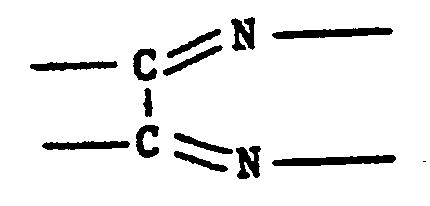
- Suitable compounds may be compounds containing two nitrogen atoms which are connected through a chain comprising 2 carbon atoms such as 1,2-ethanediamine compounds for example N,N,N',N'-tetramethyl-1,2-ethanediamine, N,N,N',N'-tetraethyl-2,2-ethanediamine and N,N,N',N'-tetraphenyl-1,2-ethanediamine, heterocyclic diamines for example 1,4-diphenylpiperazine, 1,4-dimethyl-1,4-dihydropyra- zine and compounds containing in the molecule a group of the formula: for example N,N'-1,2-ethanediylidenebisphenylamine, N,N'-1,2-ethanediylidenebis[4-chlorophe- nylamine], N,N'-1,2-ethanediylidenebis[4-methoxyphenylamine], N-substituted derivative
- Suitable compounds may be compounds containing two phosphorus atoms, or two arsenic atoms or optionally a phosphorus atom or an arsenic atom in combination with a nitrogen atom which are connected through a chain comprising 2 carbon atoms such as for example 1,2-ethanediylbisdiphenyl- phosphine, 1,2-ethenediylbisphenylphosphine, 1,2-ethynediylbisdiphenylphosphine, 1,2-ethanediylbis- di(trifluoromethyl)-phosphine, 1,2-phenylenebisdiphenylphosphine, 1,2-tetrafluorocyclobutenediylbis- diphenylphosphine, 1,2-hexafluorocyclopentenediylbisdiphenylphosphine, 1,2-octafluorocyclo- hexenediylbisdiphenylphosphine, 1,4-dipheny
- suitable compounds may be compounds containing at least two nitrogen atoms, phosphorus atoms or arsenic atoms connected through a chain comprising 3 to 5 carbon atoms such as for example N,N,N',N'-tetramethyl-1,3-propanediamine, N,N,N',N'-tetramethyl-1,4-butanediamine, 1,3-propanediyl- bisdiphenylphosphine, 1,4-butanediylbisdiphenylphosphine, bis(bis-3-dimethylarsinopropyl)arsine, tet- rakis(3-dimethylarsinopropyl)o-phenylenediarsine.
- the compounds preferably used in the catalytic system used in the process according to the invention are 1,10-phenanthroline and the derivatives thereof, 2,2'-bipyridyl and the derivatives thereof and bis- diphenylphosphine compounds in which the two phosphorus atoms are connected through a chain comprising 2 or 3 carbon atoms.
- the quantity of chelate ligands used in the catalytic system when reacting ethylene with 1,3-butadiene is at least 1.5 mol ligand per mol palladium and/or ruthenium and is preferably not higher than 25 mol ligand per gram atom palladium and/or ruthenium.
- the process according to the invention is suitably carried out in an aprotic organic solvent.
- suitable solvents are hydrocarbons such as hexane, cyclohexane, octane, cyclo-octene, benzene, toluene, the three xylenes, ethylbenzene and cumene, halogenated hydrocarbons such as chloroform, 1,2-dichloroethane, perfluoroalkanes, chlorobenzene and the three dichlorobenzenes, ethers such as tetrahydrofuran, diethyl ether, 3,6-dioxaoctane, methyl tert.-butyl ether and dioxane, esters such as methyl benzoate and the acrylic ester to be dimerized and nitro compounds such as nitromethane and nitrobenzene.
- hydrocarbons such as hexane, cyclohexane,
- the process according to the invention can be carried out at temperatures of up to 200 °C and preferably in the range between 20 °C and 135 °C.
- the pressure lies between 1 and 100 bar.
- the process according to the invention can be carried out batchwise, semi-continuously or continuously.
- the dimers consisted of dimethyl 2-hexenedioate, dimethyl 3-hexenedioate, dimethyl 2-methyl-2-pen- tenedioate and dimethyl 2-methyl-3-pentenedioate.
- the linearity is the molar percentage of the sum of the two hexenedioates, calculated on the sum of the four dimethyl esters.
- Example 1 By repeating Example 1 except that 3.0 mol of AgBF 4 was used, the results presented in Table 1 were obtained. Comparison with Example 1 shows that more AgBF 4 has increased the turnover.
- the autoclave was charged with methyl acrylate (30 ml), [P(C 6 H 5 ) 3 ] 2 PdCl 2 (0.5 mmol), AgBF 4 (3.0 mmol) and p-benzoquinone (2.0 mmol). Then, ethene was introduced until a partial pressure thereof of 40 bar was reached. After 5 h stirring at 70 ° C conversion of methyl acrylate was 85% (turnover 300 mol acrylate per gram atom Pd per h).
- the product mixture obtained consisted of 65 mol% (methyl 4-pentenoate plus methyl 3-pentenoate plus methyl 2-pentenoate plus methyl 3-methyl-2-butenoate plus methyl 3-methyl-3-butenoate), 30 mol% (1-butene plus 2-butene) and 5 mol% dimers of methyl acrylate, the content of pentenoates plus butenoates, calculated on total dimers derived from methyl acrylate being 93%.
- the linearity was 94%.
- Example 3 By repeating Example 3, except that the ethene was replaced with propene (30 ml), a conversion of 85% of methyl acrylate was observed (turnover 250 mol acrylate per gram atom Pd per h).
- the product mixture obtained consisted of 60 mol% dimeric esters derived from 1 mol of methyl acrylate and 1 mol of propene (linearity 90%) and 40 mol% dimeric esters derived from 2 mol of methyl acrylate. No dimers derived from 2 mol of propene had been formed.
- Example 3 By repeating Example 3, except that the ethene was replaced with 1-butene (30 ml), a conversion of 92% of methyl acrylate was observed (turnover 250 mol acrylate per gram atom Pd per h).
- the product mixture obtained consisted of 25 mol% dimeric esters derived from 1 mol of methyl acrylate and 1 mol of 1-butene (linearity 70%) and 75 mol% dimeric esters derived from 2 mol of methyl acrylate (linearity 94%). No dimers derived from 2 mol of 1-butene had been formed.
- the autoclave was charged with methyl benzoate (50 ml), [P(C 6 H 5 ) 3 ] 2 PdCl 2 (0.5 mmol), AgBF 4 (3.0 mmol), p-benzoquinone (2.0 mmol) and ethene (40 bar). After 2 h stirring at 70 ° C the turnover was 1500 mol ethene per gram atom Pd per h with a selectivity to linear butenes of 96% and to hexenes of 4%.
- the autoclave was charged with methyl acrylate (15 ml), sulfolane (30 ml), [P(C ⁇ Hs)s] 2 Pd CI 2 (0.5 mmol), AgBF 4 (3.0 mmol), p-benzoquinone (2.0 mmol) and propene (30 ml). After 5 h stirring at 75 °C the conversion of methyl acrylate was higher than 95% and the turnover more than 150 mol acrylate per gram atom Pd per h.
- the product mixture obtained contained 88 mol% dimeric esters derived from 1 mol of methyl acrylate and 1 mol of propene (linearity 75%) and 12 mol% dimeric esters derived from 2 mol of methyl acrylate.
- Example 7 By repeating Example 7, except that the AgBF 4 was replaced with silver tosylate (3.0 mmol) and 20 mmol of p-benzoquinone were present, a conversion of methyl acrylate of 95% was observed (turnover more than 150 mol acrylate per gram atom Pd per h).
- the product mixture obtained contained 90 mol% dimeric esters derived from 1 mol of methyl acrylate and 1 mol of propene (linearity 80%) and 10 mol% dimeric esters derived from 2 mol of methyl acrylate.
- the autoclave was charged with methyl benzoate (50 ml), [P(C 6 H 5 ) 3 ] 2 PdCl 2 (0.5 mmol), AgBF 4 (3.0 mmol), 1,10-phenanthroline (0.5 mmol), p-benzoquinone (2.0 mmol) and ethene (40 bar). After 5 h stirring at 70 °C the conversion of ethene was more than 95%, the turnover being more than 200 mol ethene per gram atom palladium per hour.
- the product mixture consisted of 80 mol% linear butenes, 18 mol% hexenes and 2 mol% octenes.
- the autoclave was charged with methyl benzoate (30 ml), palladium acetate (0.5 mmol), triphenylphosphine (1.0 mmol), AgCF 3 SO 3 (3.0 mmol), 1,10-phenanthroline (0.5 mmol), p-benzoquinone (20 mmol) and ethene (40 bar). After 5 h stirring at 70 ° C a conversion of ethene of more than 95% was observed.
- the product mixture consisted of 80 mol% linear butenes, 19 mol% hexenes and 1 mol% octenes.
- the autoclave was charged with methyl benzoate (50 ml), palladium(II) acetate (0.5 mmol), triphenylphosphine (1.0 mmol), 1,10-phenanthroline (0.5 mmol, cupric tosylate (3.0 mmol), p-benzoquinone (20 mmol) and ethene (40 bar). After 5 h stirring at 70 ° C the conversion of ethene was 25%. The product mixture consisted of 95 mol% linear butenes and 5 mol% hexenes.
- Example 7 By repeating Example 7, except that the p-benzoquinone was replaced with 2,3,5,6-tetramethylbenzoquinone, a conversion of methyl acrylate of 100% was observed; the turnover was more than 150 mol acrylate per gram atom Pd per h.
- the product mixture consisted of 85 mol% dimeric esters derived from 1 mol of methyl acrylate and 1 mol of propene (linearity 80%) and 15 mol% dimeric esters derived from 2 mol of methyl acrylate.
- the autoclave was charged with palladium(II) acetate (0.5 mmol), triphenylphosphine (1.0 mmol), AgCF 3 S0 3 (3.0 mmol), p-benzoquinone (20 mmol), 1,10-phenanthroline (0.5 mmol), 1,3-butadiene (10 mi) and ethene (40 bar).
- palladium(II) acetate 0.5 mmol
- triphenylphosphine 1.0 mmol
- AgCF 3 S0 3 3.0 mmol
- p-benzoquinone 20 mmol
- 1,10-phenanthroline 0.5 mmol
- 1,3-butadiene 10 mi
- ethene 40 bar
- the conversion of ethene was 25% and the turnover 50 mol ethene per gram atom Pd per h.
- Example 14 By repeating Example 14, except that 1.0 mol of 1,10-phenanthroiine was present, a product mixture was found consisting of 30 mol% linear hexadienes mainly trans 2,4-hexadiene and 70 mol% linear butenes.
- the autoclave was charged with methyl benzoate (50 ml), palladium(II) acetate (0.5 mmol), triphenylphosphine (1.0 mmol), 1,10-phenanthroline (0.5 mmol), AgCF 3 SO 3 (3.0 mmol) and ethene (40 bar). After 5 h stirring at 70 ° C the conversion of ethene was 70%, with a selectivity to linear butenes of 90% and to hexenes of 10%.
- the autoclave was charged with methyl benzoate (50 ml), [P(C 6 H 5 ) 3 ] 2 PdCl 2 (0.5 mmol), 1,10-phenanthroline (0.5 mmol), AgCF 3 SO 3 (3.0 mmol), p-benzoquinone (20 mmol), 1,3-butadiene (10 ml) and ethene (40 bar). After 5 h stirring at 70 ° C the turnover of ethene was 70 mol per gram atom palladium per hour.
- the product mixture consisted of equal molar amounts of linear hexadienes and linear butenes.
- the autoclave was charged with methyl acrylate (50 ml), [P(C 6 H 5 ) 3 ] 2 PdCl 2 (0.5 mmol), hydrated Cu(BF 4 ) 2 (3.0 mmol), p-benzoquinone (20 mmol) and ethene (40 bar). After 5 h stirring at 70 ° C the conversion of methyl acrylate was 50% and the turnover 500 mol acrylate per gram atom Pd per h.
- the product mixture consisted of 50 mol% linear butenes, 45 mol% dimeric esters from 1 mol of methyl acrylate and 1 mol of ethene (linearity 90%) and 5 mol% dimers of 2 mol of methyl acrylate.
- the autoclave was charged with methyl benzoate (50 ml), palladium(II) chloride (0.5 mmol), silver tosylate (3.0 mmol), p-benzoquinone (20 mmol) and ethene (40 bar). After 5 h stirring at 70 °C only a trace of products was found.
- the autoclave was charged with methyl acrylate (50 ml), 1,3-butadiene (10 ml), [P(C 6 H 5 ) 3 ] 2 PdCl 2 (0.5 mmol), AgBF 4 (3.0 mmol) and p-benzoquinone (20 mmol). After 5 h stirring at 70 ° C the conversion of 1,3-butadiene and methyl acrylate were 99% and 50%, respectively, with a selectivity to dimers of 1 mol of 1,3-butadiene and 1 mol of methyl acrylate of 50% (linearity 95%) and to dimers of 2 mol of methyl acrylate of 50% (linearity 94%).
- the autoclave was charged with methyl acrylate (50 ml), ruthenium trichloride (0.5 mmol), triphenylphosphine (1.0 mmol), AgBF 4 (3.0 mmol), p-benzoquinone (20 mmol) and ethene (40 bar). After 5 h stirring at 90 °C the turnover of methyl acrylate was 50 mol per gram atom Ru per h.
- the product mixture consisted of 60 mol% linear butenes, 30 mol% dimers of 1 mol of ethene and 1 mol of methyl acrylate and 10 mol% dimers of 2 mol of methyl acrylate.
- the autoclave was charged with methyl acrylate (50 ml), 1,3-butadiene (10 ml), ruthenium trichloride (0.7 mmol), triphenylphosphine (1.0 mmol), AgBF 4 (3.0 mmol) and 2,3,5,6-tetrachlorobenzoquinone (10 mmol). After 5 h stirring at 90 ° C the conversion of 1,3-butadiene was 50%. The product mixture consisted of 100% dimers of 1 mol of 1,3-butadiene and 1 mol of methyl acrylate (linearity 95%), no dimers of 2 mol of methyl acrylate being formed.
Landscapes
- Chemical & Material Sciences (AREA)
- Organic Chemistry (AREA)
- Chemical Kinetics & Catalysis (AREA)
- Organic Low-Molecular-Weight Compounds And Preparation Thereof (AREA)
- Low-Molecular Organic Synthesis Reactions Using Catalysts (AREA)
- Catalysts (AREA)
Claims (15)


Applications Claiming Priority (2)
| Application Number | Priority Date | Filing Date | Title |
|---|---|---|---|
| GB8515139 | 1985-06-14 | ||
| GB858515139A GB8515139D0 (en) | 1985-06-14 | 1985-06-14 | Preparation of unsaturated compounds |
Publications (3)
| Publication Number | Publication Date |
|---|---|
| EP0206367A2 EP0206367A2 (de) | 1986-12-30 |
| EP0206367A3 EP0206367A3 (en) | 1987-04-15 |
| EP0206367B1 true EP0206367B1 (de) | 1990-06-27 |
Family
ID=10580765
Family Applications (1)
| Application Number | Title | Priority Date | Filing Date |
|---|---|---|---|
| EP86200706A Expired - Lifetime EP0206367B1 (de) | 1985-06-14 | 1986-04-24 | Verfahren zur Dimerisierung von ethylenisch ungesättigten Verbindungen |
Country Status (6)
| Country | Link |
|---|---|
| US (1) | US4692548A (de) |
| EP (1) | EP0206367B1 (de) |
| JP (1) | JPH0772145B2 (de) |
| CA (1) | CA1269398A (de) |
| DE (1) | DE3672242D1 (de) |
| GB (1) | GB8515139D0 (de) |
Families Citing this family (8)
| Publication number | Priority date | Publication date | Assignee | Title |
|---|---|---|---|---|
| US4820802A (en) * | 1987-02-03 | 1989-04-11 | Shell Oil Company | Improved process of preparing carbon monoxide/olefin copolymer with ortho substituted phosphine catalyst composition. |
| DE4002008A1 (de) * | 1990-01-24 | 1991-07-25 | Henkel Kgaa | Olefinisch ungesaettigte addukte von propylen an mehrfach ungesaettigte fettsaeuren bzw. fettsaeureester, verfahren zu ihrer herstellung und ihre verwendung |
| DE4002012A1 (de) * | 1990-01-24 | 1991-07-25 | Henkel Kgaa | Olefinisch ungesaettigte addukte von ethylen an mehrfach ungesaettigte fettsaeuren bzw. fettsaeureester, verfahren zu ihrer herstellung und ihre verwendung |
| US5266665A (en) * | 1990-06-01 | 1993-11-30 | Monsanto Company | Metathesis polymerization catalyst and method of polymerizing cyclic olefins therewith |
| US5099048A (en) * | 1990-09-11 | 1992-03-24 | The University Of North Carolina At Chapel Hill | Rhodium-catalyzed olefin dimerization |
| US5099061A (en) * | 1990-09-11 | 1992-03-24 | The University Of North Carolina At Chapel Hill | Rhodium-catalyzed olefin dimerization |
| US5892101A (en) * | 1996-11-18 | 1999-04-06 | E. I. Du Pont De Nemours And Company | Cross-dimerization of olefins |
| DE69923816T2 (de) * | 1998-08-26 | 2006-02-09 | Takasago International Corp. | Dienverbindungen sowie Verfahren zu deren Herstellung |
Family Cites Families (10)
| Publication number | Priority date | Publication date | Assignee | Title |
|---|---|---|---|---|
| US3074999A (en) * | 1958-12-31 | 1963-01-22 | American Cyanamid Co | Preparation of dialkyl 2-methyleneglutarates |
| US3013066A (en) * | 1961-03-23 | 1961-12-12 | Du Pont | Dimerization of alpha olefins with a group viii noble metal salt |
| US3342853A (en) * | 1964-07-10 | 1967-09-19 | Rohm & Haas | Method for the preparation of acrylate dimers and trimers |
| DE2104626C2 (de) * | 1970-02-09 | 1982-07-29 | Mitsubishi Chemical Industries, Ltd., Tokyo | Verfahren zur Herstellung eines Additionsproduktes eines konjugierten Diens und einer Verbindung mit endständiger Venylgruppe |
| DE2249389A1 (de) * | 1971-10-14 | 1973-05-10 | Akad Wissenschaften Ddr | Verfahren zur katalytischen herstellung linearer monoungesaettigter dicarbonsaeurederivate |
| GB1355917A (en) * | 1972-10-27 | 1974-06-12 | Akad Wissenschaften Ddr | Process for the catalytic production of linear mono-unsaturated dicarboxylic acid derivatives |
| FR2524341A1 (fr) * | 1982-03-31 | 1983-10-07 | Centre Nat Rech Scient | Catalyseur de dimerisation et/ou de codimerisation de derives acryliques |
| US4451665A (en) * | 1982-12-30 | 1984-05-29 | E. I. Du Pont De Nemours And Company | Process for dimerizing acrylates and methacrylates |
| US4485256A (en) * | 1983-02-28 | 1984-11-27 | E. I. Du Pont De Nemours And Company | Dimerizing acrylates to hexenedioates using ruthenium compound catalysts |
| EP0170311B1 (de) * | 1984-07-30 | 1989-02-01 | Shell Internationale Researchmaatschappij B.V. | Verfahren zur Dimerisierung von Olefinen |
-
1985
- 1985-06-14 GB GB858515139A patent/GB8515139D0/en active Pending
-
1986
- 1986-04-24 DE DE8686200706T patent/DE3672242D1/de not_active Expired - Lifetime
- 1986-04-24 EP EP86200706A patent/EP0206367B1/de not_active Expired - Lifetime
- 1986-04-28 CA CA000507699A patent/CA1269398A/en not_active Expired - Fee Related
- 1986-05-14 US US06/862,927 patent/US4692548A/en not_active Expired - Lifetime
- 1986-06-12 JP JP61135090A patent/JPH0772145B2/ja not_active Expired - Lifetime
Non-Patent Citations (2)
| Title |
|---|
| CHEMICAL ABSTRACTS, vol. 102, no. 23, 10 June 1985, Columbus, OH (US); F.BOUACHIR et al.: "Cationic allylmetal complexes.Part 11. Cationic allylruthenium complexes by allyl group exchange", p. 612, no. 204095u * |
| CHEMICAL ABSTRACTS, vol. 92, 1980, Columbus, OH (US); H.PRACEJUS et al.: "Catalytic dimerization of acrylic acid derivativesin the presence of palladium complexes. Part 1. Effect of p-benzoquinone on thereaction", p. 602, no. 180647x * |
Also Published As
| Publication number | Publication date |
|---|---|
| JPH0772145B2 (ja) | 1995-08-02 |
| CA1269398A (en) | 1990-05-22 |
| GB8515139D0 (en) | 1985-07-17 |
| JPS61289046A (ja) | 1986-12-19 |
| US4692548A (en) | 1987-09-08 |
| EP0206367A2 (de) | 1986-12-30 |
| EP0206367A3 (en) | 1987-04-15 |
| DE3672242D1 (de) | 1990-08-02 |
Similar Documents
| Publication | Publication Date | Title |
|---|---|---|
| US3737475A (en) | Alpha-olefin production | |
| US3635937A (en) | Ethylene polymerization | |
| EP0188830B1 (de) | Verfahren zur Herstellung von Olefindimeren | |
| EP0128596B1 (de) | Verfahren zur Oligomerisierung von Äther | |
| US4634793A (en) | Process for the dimerization of olefins | |
| US4692548A (en) | Process for the preparation of unsaturated compounds | |
| GB1600525A (en) | Process for preparing unsaturated aliphatic acids or esters from aliphatic dienes | |
| EP0170311B1 (de) | Verfahren zur Dimerisierung von Olefinen | |
| US3803254A (en) | Process for producing oligomers of unsaturated compounds | |
| JPH0548218B2 (de) | ||
| GB2354959A (en) | Catalytic composition for oligomerisatin | |
| EP0008139B1 (de) | Verfahren zur Herstellung von 1,7-Octadien | |
| KR100245203B1 (ko) | 올레핀 제조 방법 | |
| EP0446301B1 (de) | Herstellung von biaryl-verbindungen | |
| Abeywickrema et al. | Oligomerization and isomerization of olefins by catalysts derived from nickel complexes of dithio-β-diketonates | |
| US6127590A (en) | Oxidative coupling of olefins and aromatics using a rhodium catalyst and a copper(II) redox agent | |
| EP0280373B1 (de) | Dimerisierungsverfahren für Olefine | |
| US3865892A (en) | Homogeneous disproportionation-dimerization of olefins | |
| US3933884A (en) | Process for preparing thiol esters | |
| CA1287838C (en) | Process for the preparation of unsaturated carboxylate esters | |
| US3458562A (en) | Palladium catalyzed reaction of 1,2-alkadienes with 1-alkynes | |
| EP0212729A2 (de) | Herstellungsverfahren von Diestern von Alkandicarbonsäuren | |
| EP0307026B1 (de) | Verfahren zur Herstellung eines Butens | |
| EP0341773B1 (de) | Verfahren zur Herstellung von Lactonen | |
| US3452090A (en) | Preparation of aroyl halides |
Legal Events
| Date | Code | Title | Description |
|---|---|---|---|
| PUAI | Public reference made under article 153(3) epc to a published international application that has entered the european phase |
Free format text: ORIGINAL CODE: 0009012 |
|
| AK | Designated contracting states |
Kind code of ref document: A2 Designated state(s): BE DE FR GB IT NL |
|
| PUAL | Search report despatched |
Free format text: ORIGINAL CODE: 0009013 |
|
| AK | Designated contracting states |
Kind code of ref document: A3 Designated state(s): BE DE FR GB IT NL |
|
| 17P | Request for examination filed |
Effective date: 19870806 |
|
| 17Q | First examination report despatched |
Effective date: 19890413 |
|
| GRAA | (expected) grant |
Free format text: ORIGINAL CODE: 0009210 |
|
| AK | Designated contracting states |
Kind code of ref document: B1 Designated state(s): BE DE FR GB IT NL |
|
| REF | Corresponds to: |
Ref document number: 3672242 Country of ref document: DE Date of ref document: 19900802 |
|
| ITF | It: translation for a ep patent filed | ||
| ET | Fr: translation filed | ||
| PLBE | No opposition filed within time limit |
Free format text: ORIGINAL CODE: 0009261 |
|
| STAA | Information on the status of an ep patent application or granted ep patent |
Free format text: STATUS: NO OPPOSITION FILED WITHIN TIME LIMIT |
|
| 26N | No opposition filed | ||
| ITTA | It: last paid annual fee | ||
| PGFP | Annual fee paid to national office [announced via postgrant information from national office to epo] |
Ref country code: FR Payment date: 19970225 Year of fee payment: 12 |
|
| PGFP | Annual fee paid to national office [announced via postgrant information from national office to epo] |
Ref country code: GB Payment date: 19970318 Year of fee payment: 12 |
|
| PGFP | Annual fee paid to national office [announced via postgrant information from national office to epo] |
Ref country code: BE Payment date: 19970403 Year of fee payment: 12 |
|
| PGFP | Annual fee paid to national office [announced via postgrant information from national office to epo] |
Ref country code: NL Payment date: 19970429 Year of fee payment: 12 |
|
| PGFP | Annual fee paid to national office [announced via postgrant information from national office to epo] |
Ref country code: DE Payment date: 19970513 Year of fee payment: 12 |
|
| PG25 | Lapsed in a contracting state [announced via postgrant information from national office to epo] |
Ref country code: GB Free format text: LAPSE BECAUSE OF NON-PAYMENT OF DUE FEES Effective date: 19980424 |
|
| PG25 | Lapsed in a contracting state [announced via postgrant information from national office to epo] |
Ref country code: FR Free format text: THE PATENT HAS BEEN ANNULLED BY A DECISION OF A NATIONAL AUTHORITY Effective date: 19980430 Ref country code: BE Free format text: LAPSE BECAUSE OF NON-PAYMENT OF DUE FEES Effective date: 19980430 |
|
| BERE | Be: lapsed |
Owner name: SHELL INTERNATIONALE RESEARCH MAATSCHAPPIJ B.V. Effective date: 19980430 |
|
| PG25 | Lapsed in a contracting state [announced via postgrant information from national office to epo] |
Ref country code: NL Free format text: LAPSE BECAUSE OF NON-PAYMENT OF DUE FEES Effective date: 19981101 |
|
| GBPC | Gb: european patent ceased through non-payment of renewal fee |
Effective date: 19980424 |
|
| NLV4 | Nl: lapsed or anulled due to non-payment of the annual fee |
Effective date: 19981101 |
|
| PG25 | Lapsed in a contracting state [announced via postgrant information from national office to epo] |
Ref country code: DE Free format text: LAPSE BECAUSE OF NON-PAYMENT OF DUE FEES Effective date: 19990202 |
|
| REG | Reference to a national code |
Ref country code: FR Ref legal event code: ST |
|
| PG25 | Lapsed in a contracting state [announced via postgrant information from national office to epo] |
Ref country code: IT Free format text: LAPSE BECAUSE OF NON-PAYMENT OF DUE FEES;WARNING: LAPSES OF ITALIAN PATENTS WITH EFFECTIVE DATE BEFORE 2007 MAY HAVE OCCURRED AT ANY TIME BEFORE 2007. THE CORRECT EFFECTIVE DATE MAY BE DIFFERENT FROM THE ONE RECORDED. Effective date: 20050424 |