EP0212129A2 - Verfahren zur Aktualisierung der Informationen in einem Adressenübersetzungspufferspeicher - Google Patents
Verfahren zur Aktualisierung der Informationen in einem Adressenübersetzungspufferspeicher Download PDFInfo
- Publication number
- EP0212129A2 EP0212129A2 EP86108415A EP86108415A EP0212129A2 EP 0212129 A2 EP0212129 A2 EP 0212129A2 EP 86108415 A EP86108415 A EP 86108415A EP 86108415 A EP86108415 A EP 86108415A EP 0212129 A2 EP0212129 A2 EP 0212129A2
- Authority
- EP
- European Patent Office
- Prior art keywords
- tlb
- page
- information
- virtual
- physical
- Prior art date
- Legal status (The legal status is an assumption and is not a legal conclusion. Google has not performed a legal analysis and makes no representation as to the accuracy of the status listed.)
- Granted
Links
Images


Classifications
-
- G—PHYSICS
- G06—COMPUTING OR CALCULATING; COUNTING
- G06F—ELECTRIC DIGITAL DATA PROCESSING
- G06F12/00—Accessing, addressing or allocating within memory systems or architectures
- G06F12/02—Addressing or allocation; Relocation
- G06F12/08—Addressing or allocation; Relocation in hierarchically structured memory systems, e.g. virtual memory systems
- G06F12/10—Address translation
- G06F12/1027—Address translation using associative or pseudo-associative address translation means, e.g. translation look-aside buffer [TLB]
- G06F12/1045—Address translation using associative or pseudo-associative address translation means, e.g. translation look-aside buffer [TLB] associated with a data cache
Definitions
- the disclosed invention relates in general to computers utilizing virtual addresses and physical addresses and relates more particularly to computers that utilize translation lookaside buffers (TLBs) in the translation of virtual addresses to physical addresses.
- TLBs translation lookaside buffers
- virtual addresses are utilized by the software to reference instructions and data whereas physical addresses are the actual physical locations in memory where the instructions and data are stored.
- the utilization of both types of addresses requires that there be a translation from virtual addresses to physical addresses so that an address referenced in software will result in access of the associated physical address.
- the space of virtual addresses will be much larger than the space of physical addresses.
- the virtual address and physical address spaces are.typically divided into equal size blocks of memory called pages so that the .translation from virtual address to physical address involves a translation of virtual page numbers to physical page numbers.
- a page directory (PDIR) provides the translation between virtual addresses and physical addresses.
- the page directory contains an entry for every physical page number that has been associated with a virtual page number. Therefore, direct use of the page directory to perform the translations is typically too slow.
- many computers utilize a cache memory referred to as a translation lookaside buffer (TLB) to assist in the translation of virtual addresses to physical addresses.
- TLB translation lookaside buffer
- cache memory An advantage of cache memory is that a memory access to it is typically much faster than a memory access to main memory. Typically, this increased access speed requires that the cache memory be small.
- the TLB cannot contain the entire page directory so that procedures need to be implemented to update the TLB.
- the page directory is accessed to determine the translation of this virtual page number to a physical page number and this information is entered into the TLB. Access to the page table can take on the order of fifty times longer than access to the TLB and therefore program execution speed is optimized by keeping the translations being actively utilized in the TLB.
- the physical memory consists of a backing memory (such as disc memory or tape memory), main memory and cache memory.
- the backing memory is typically larger than the main memory, thereby enabling larger programs to be implemented than if only main memory were available.
- part or all of a program is loaded into main memory at a given time.
- many computers utilize an additional memory called a cache memory.
- a cache memory is typically faster than main memory, but in order to achieve such increased speed it is also typically much smaller than main memory. Therefore, in a typical situation, only part of the program segment in main memory can be loaded from main memory into the cache memory.
- Program execution speed is optimized by keeping the TLB loaded with the translations for those virtual addresses that are currently being actively utilized.
- Memory caches are based on the assumption that, because a particular memory location has been referenced, that location and locations very close to it are very likely to be accessed in the near future. This property is referred to as locality. Therefore, the cache will contain data that was recently referenced and the TLB will contain translations associated with those pages.
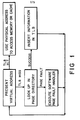
- FIG. 1 is illustrated the response to the presentation of a virtual address during program execution. If the translation for that virtual address is in the TLB (referred to as a TLB hit), then the associated physical address is derived from the TLB and is utilized to access physical memory. If the translation for that virtual address is not in the TLB (referred to as a TLB miss), then the translation for that virtual address is sought in the page directory. If the translation is in the page directory, then this information is inserted into the TLB and the virtual address is again presented. This time we are assured of a TLB hit so that the resulting physical address is used to access physical memory.
- TLB hit the translation for that virtual address is in the TLB
- TLB miss the translation for that virtual address is sought in the page directory. If the translation is in the page directory, then this information is inserted into the TLB and the virtual address is again presented. This time we are assured of a TLB hit so that the resulting physical address is used to access physical memory.
- the page fault handler needs to select which of the physical pages to reassign to the virtual address page currently being referenced.
- There are many algorithms for such a choice including first-in-first-out and least-recently-used algorithms. Because this entire process is more complicated than those routines typically implemented in microcode, the page fault handler is typically implemented in software. Microcode is typically kept simple so that it can fit into the relatively small and fast memories utilized to store microcode.
- the virtual address is again presented.
- the TLB does not yet have the translation so that there will be a TLB miss. Therefore, the translation is looked up in the page directory, the translation is inserted into the TLB and the virtual address is presented for a third time. This time a TLB hit is assured so that the resulting physical address is used to access physical memory.
- the above procedure has the disadvantage that it requires accessing the page directory twice. This is disadvantageous because looking up a translation in the page directory can take on the order of fifty times as long as looking up a translation in the TLB.
- a set of software instructions are introduced that enable the software to insert the translation directly into the TLB. This enables the page fault handler to insert the translation not only in the page directory, but also to insert the information into the TLB. Therefore, after completion of the page fault handler routine, instead of being assured that there will be a TLB miss, it is assured that there will be a TLB hit.
- the first of these instructions inserts the translation between the virtual page number and its associated physical page number.
- the second of these instructiorn inserts any protection information, flags or other information that is of use for verifying the legality of the access to the page.
- FIG 2 is illustrated a method of accessing entries in a translation lookaside buffer (TLB) in response to the presentation of a virtual address.
- the virtual address is loaded into a register 21.
- the lower L bits of the virtual address are the physical offset and indicate the line number of an entry within a virtual page containing 2 L lines.
- the remaining bits in register indicate the virtual page number.
- some algorithm is required to convert the virtual page number to an N bit number referred to as an index. In the particular embodiment presented in Figure 2, this is achieved by using the least significant N bits of the virtual page number.
- the remaining M bits of the virtual page number are referred to as a virtual tag.
- the index is used as an address to access the TLB.
- a comparator 23 compares the virtual tag from register 21 with M bits of the TLB to see if there is a match. In this particular embodiment, the M most significant bits of the TLB form the TLB tag. If there is a match, the output of comparator 23 is true indicating that there has been a TLB hit. Otherwise, the output of comparator 23 is false indicating that there is a TLB miss.
- P of the TLB bits of each TLB entry indicate the physical address for that entry. When there is a hit, these bits are used as the physical page number associated with the virtual address in register 21. The physical address is concatenated with this physical page number to produce the physical address.
- each TLB entry also contains a set of bits to hold other information for each physical page such as protection information and flags.
- FIG. 3 is shown how a physical address is utilized to access a cache memory 32.
- Each entry in cache memory 32 contains an M bit cache tag and a thirty-two bit segment of cache data. Which entry of cache 32 is selected is determined by the physical address loaded into a register 31.
- a 32 bit memory is utilized so that each entry contains four words of data. In order to select among these words, the lowest two bits of the physical address are used as an input to a multiplexer 34. The next N least significant bits are referred to as the cache memory index and are used to select the address accessed in the cache memory.
- a comparator 33 compares the M most significant bits of register 31 with the M most significant bits of the cache memory entry at the address indicated by the cache memory index.
- comparator 33 The output of comparator 33 is true, indicating that there has been a cache memory hit, if the tag of the physical address is the same as that of the entry accessed in the cache memory. Otherwise, the output of comparator 33 is false, indicating that the has been a cache miss.
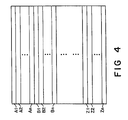
- Figure 4 is presented an embodiment of a page directory.
- a hashing algorithm can be used to convert a virtual address into a pointer that points to the first entry in the set to which that virtual address belongs.
- the various sets are indicated by the letters A, B, ... , Z.
- the entries in each set form a linked list so that, instead of having to search through the entire page directory to see if a given virtual page number has been entered into the page directory, only the entries in its associated set need to be checked sequentially. If all of the entries in the associated set have been checked and none match the virtual address being sought, then this indicates that there is a page fault.
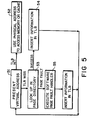
- FIG 5 is presented a flow diagram of a procedure utilizing the components illustrated in Figures 2-4 to respond to the presentation of a virtual address during program execution.
- the virtual address is presented by inserting the virtual address into register 21. If the translation for that virtual address is in the TLB (referred to as a TLB hit), then the associated physical address is derived from the TLB and is utilized in step 52 to access physical memory. If the translation for that virtual address is not in the TLB (referred to as a TLB miss), then in step 53 the translation for that virtual address is sought in the page directory. If the translation is in the page directory, then in step 54 this information is inserted into the TLB and the virtual address is again presented. This time we are assured of a TLB hit so that the resulting physical address is used to access physical memory.
- step 55 the virtual page that is referenced is assigned a physical page and this information is inserted into the page directory. If all physical pages had already been associated with other virtual pages, then the page fault handler needs to select which of the physical pages to reassign to the virtual address page currently being referenced. There are many algorithms for such a choice including first-in-first-out and least-recently-used algorithms. Because this entire process is more complicated than those routines typically implemented in microcode, the page fault handler is typically implemented in software.
- the software includes explicit instructions that insert information into the TLB.
- the direct and definitive result is that information is inserted into the TLB.
- information is inserted into the TLB only as an indirect result of certain software instructions. For example, when a virtual address is presented, the information in the TLB may or may not change depending on whether there is a TLB hit or a TLB miss. Thus, there is no definitive result on the TLB as a result of the presentation of the virtual address.
- Explicit control over entry of information into the TLB provides a much more flexible and efficient way to control the contents of the TLB.
- the explicit software instructions for entering data into the TLB enable this information to also be inserted into the TLB. This results in a more efficient method of updating the information in the TLB.
- the TLB entries can be made under control of the software. Also, TLB entries can be preloaded to guarantee that TLB faults will not occur during critical code sections or to improve the speed of operation by reducing the number of TLB misses.
- each TLB entry there will be more bits of information in each TLB entry than can be entered in response to a single software instruction. For example, in the preferred embodiment, only up to thirty-two bits of data can be moved in a single instruction cycle and all instructions are designed to operate in a single cycle. However, each TLB entry has more than thirty-two bits. Therefore, more than one explicit software instruction is required to enter all of the information.
- each TLB entry is a bit that indicates whether that entry is valid. Whenever that bit is set, the TLB tag for that entry will not be found by comparator 23 to match the virtual tag of any virtual address. This prevents that information from being used, but such invalid information will either be eventually marked valid when all of the information has been entered or will eventually be replaced as part of subsequent updates of the contents of the TLB.
- the virtual page number and the physical page number are inserted into the TLB.
- this instruction sets that entry invalid. This is done so that if the updating is interrupted at this point (for example, by a machine fault or by an external interrupt such as occur in a time shared environment), then this partial data will not be able to be utilized and create errors.
- this TLB entry When all of the information has been entered this TLB entry is marked valid.
- protection information is inserted that enables pages to be protected from unauthorized entry.
- the second instruction presents both the virtual address and the protection information so that the virtual address can be checked against the virtual address inserted by the °irst instruction to assure that no misinsertion of data 'occurs.
Landscapes
- Engineering & Computer Science (AREA)
- Theoretical Computer Science (AREA)
- Physics & Mathematics (AREA)
- General Engineering & Computer Science (AREA)
- General Physics & Mathematics (AREA)
- Memory System Of A Hierarchy Structure (AREA)
Applications Claiming Priority (2)
| Application Number | Priority Date | Filing Date | Title |
|---|---|---|---|
| US75039085A | 1985-06-28 | 1985-06-28 | |
| US750390 | 1985-06-28 |
Publications (3)
| Publication Number | Publication Date |
|---|---|
| EP0212129A2 true EP0212129A2 (de) | 1987-03-04 |
| EP0212129A3 EP0212129A3 (en) | 1990-05-30 |
| EP0212129B1 EP0212129B1 (de) | 1993-11-10 |
Family
ID=25017671
Family Applications (1)
| Application Number | Title | Priority Date | Filing Date |
|---|---|---|---|
| EP19860108415 Expired - Lifetime EP0212129B1 (de) | 1985-06-28 | 1986-06-20 | Verfahren zur Aktualisierung der Informationen in einem Adressenübersetzungspufferspeicher |
Country Status (4)
| Country | Link |
|---|---|
| EP (1) | EP0212129B1 (de) |
| JP (1) | JPH083805B2 (de) |
| CA (1) | CA1262287A (de) |
| DE (1) | DE3689276T2 (de) |
Cited By (4)
| Publication number | Priority date | Publication date | Assignee | Title |
|---|---|---|---|---|
| US5303359A (en) * | 1989-12-19 | 1994-04-12 | Nec Corporation | Arrangement for simultaneously translating logical page addresses to corresponding real ones in data processing system |
| EP0488819A3 (de) * | 1990-11-30 | 1994-04-13 | Toshiba Kk | |
| EP0669579A3 (de) * | 1994-02-24 | 1995-11-29 | Hewlett Packard Co | Kohärenzindexerzeugung für Ein-/Ausgabeanschluss. |
| DE4410060B4 (de) * | 1993-04-08 | 2006-02-09 | Hewlett-Packard Development Co., L.P., Houston | Übersetzungsvorrichtung zum Umsetzen einer virtuellen Speicheradresse in eine physikalische Speicheradresse |
Families Citing this family (6)
| Publication number | Priority date | Publication date | Assignee | Title |
|---|---|---|---|---|
| US8332598B2 (en) | 2005-06-23 | 2012-12-11 | Intel Corporation | Memory micro-tiling request reordering |
| US7765366B2 (en) | 2005-06-23 | 2010-07-27 | Intel Corporation | Memory micro-tiling |
| US7558941B2 (en) | 2005-06-30 | 2009-07-07 | Intel Corporation | Automatic detection of micro-tile enabled memory |
| US8253751B2 (en) | 2005-06-30 | 2012-08-28 | Intel Corporation | Memory controller interface for micro-tiled memory access |
| US8878860B2 (en) | 2006-12-28 | 2014-11-04 | Intel Corporation | Accessing memory using multi-tiling |
| GB2499168B (en) | 2010-11-26 | 2014-04-16 | Ibm | Cache coherency control method, system, and program |
Family Cites Families (4)
| Publication number | Priority date | Publication date | Assignee | Title |
|---|---|---|---|---|
| JPS5734586B2 (de) * | 1975-02-03 | 1982-07-23 | ||
| JPS6047622B2 (ja) * | 1981-09-30 | 1985-10-22 | 富士通株式会社 | 動的アドレス変換制御方式 |
| US4638426A (en) * | 1982-12-30 | 1987-01-20 | International Business Machines Corporation | Virtual memory address translation mechanism with controlled data persistence |
| JPS6095658A (ja) * | 1983-10-28 | 1985-05-29 | Toshiba Corp | 仮想記憶制御方法 |
-
1986
- 1986-05-28 JP JP61123188A patent/JPH083805B2/ja not_active Expired - Lifetime
- 1986-06-20 DE DE19863689276 patent/DE3689276T2/de not_active Expired - Lifetime
- 1986-06-20 EP EP19860108415 patent/EP0212129B1/de not_active Expired - Lifetime
- 1986-06-27 CA CA000512685A patent/CA1262287A/en not_active Expired
Cited By (7)
| Publication number | Priority date | Publication date | Assignee | Title |
|---|---|---|---|---|
| US5303359A (en) * | 1989-12-19 | 1994-04-12 | Nec Corporation | Arrangement for simultaneously translating logical page addresses to corresponding real ones in data processing system |
| AU648766B2 (en) * | 1989-12-19 | 1994-05-05 | Nec Corporation | Apparatus for simultaneously translating logical page addresses into corresponding real addresses in a data processing system |
| EP0488819A3 (de) * | 1990-11-30 | 1994-04-13 | Toshiba Kk | |
| US5446849A (en) * | 1990-11-30 | 1995-08-29 | Kabushiki Kaisha Toshiba | Electronic computer which executes squash branching |
| DE4410060B4 (de) * | 1993-04-08 | 2006-02-09 | Hewlett-Packard Development Co., L.P., Houston | Übersetzungsvorrichtung zum Umsetzen einer virtuellen Speicheradresse in eine physikalische Speicheradresse |
| EP0669579A3 (de) * | 1994-02-24 | 1995-11-29 | Hewlett Packard Co | Kohärenzindexerzeugung für Ein-/Ausgabeanschluss. |
| US5515522A (en) * | 1994-02-24 | 1996-05-07 | Hewlett-Packard Company | Coherence index generation for use by an input/output adapter located outside of the processor to detect whether the updated version of data resides within the cache |
Also Published As
| Publication number | Publication date |
|---|---|
| DE3689276D1 (de) | 1993-12-16 |
| DE3689276T2 (de) | 1994-02-24 |
| JPS623357A (ja) | 1987-01-09 |
| CA1262287A (en) | 1989-10-10 |
| EP0212129A3 (en) | 1990-05-30 |
| EP0212129B1 (de) | 1993-11-10 |
| JPH083805B2 (ja) | 1996-01-17 |
Similar Documents
| Publication | Publication Date | Title |
|---|---|---|
| US5060137A (en) | Explicit instructions for control of translation lookaside buffers | |
| US5724538A (en) | Computer memory address control apparatus utilizing hashed address tags in page tables which are compared to a combined address tag and index which are longer than the basic data width of the associated computer | |
| EP1096385B1 (de) | Verfahren und Vorrichtung zur Erzeugung einer Eingabeadresse | |
| EP0851357B1 (de) | Verfahren und Vorrichtung zur Vorladung von verschiedenen vorgegebenen Adressenübersetzungsattributen | |
| US6145064A (en) | Method of efficiently updating hashed page tables | |
| JP3618385B2 (ja) | データをバッファリングする方法およびそのシステム | |
| US6014732A (en) | Cache memory with reduced access time | |
| US5073851A (en) | Apparatus and method for improved caching in a computer system | |
| KR960001946B1 (ko) | 우선 변환 참조버퍼 | |
| US5526504A (en) | Variable page size translation lookaside buffer | |
| EP0813713B1 (de) | Adressenübersetzungsbuffer in einem rechnersystem | |
| US5282274A (en) | Translation of multiple virtual pages upon a TLB miss | |
| US5265227A (en) | Parallel protection checking in an address translation look-aside buffer | |
| US7913058B2 (en) | System and method for identifying TLB entries associated with a physical address of a specified range | |
| US6304944B1 (en) | Mechanism for storing system level attributes in a translation lookaside buffer | |
| US4774653A (en) | Hybrid hardware/software method and apparatus for virtual memory address translation using primary and secondary translation buffers | |
| JP3666689B2 (ja) | 仮想アドレス変換方法 | |
| US5555395A (en) | System for memory table cache reloads in a reduced number of cycles using a memory controller to set status bits in the main memory table | |
| EP0813709A1 (de) | Mikro-tlb mit parallelem zugriff zum beschleunigen der adressübersetzung | |
| CA2058259C (en) | Apparatus for increasing the number of hits in a translation lookaside buffer | |
| EP0212129B1 (de) | Verfahren zur Aktualisierung der Informationen in einem Adressenübersetzungspufferspeicher | |
| US5479629A (en) | Method and apparatus for translation request buffer and requestor table for minimizing the number of accesses to the same address | |
| EP0173909B1 (de) | LRU-Markiersteuerungsschaltung für look-aside Puffer | |
| US5341485A (en) | Multiple virtual address translation per computer cycle | |
| US6574698B1 (en) | Method and system for accessing a cache memory within a data processing system |
Legal Events
| Date | Code | Title | Description |
|---|---|---|---|
| PUAI | Public reference made under article 153(3) epc to a published international application that has entered the european phase |
Free format text: ORIGINAL CODE: 0009012 |
|
| AK | Designated contracting states |
Kind code of ref document: A2 Designated state(s): CH DE FR GB IT LI NL SE |
|
| PUAL | Search report despatched |
Free format text: ORIGINAL CODE: 0009013 |
|
| AK | Designated contracting states |
Kind code of ref document: A3 Designated state(s): CH DE FR GB IT LI NL SE |
|
| 17P | Request for examination filed |
Effective date: 19901129 |
|
| 17Q | First examination report despatched |
Effective date: 19911114 |
|
| GRAA | (expected) grant |
Free format text: ORIGINAL CODE: 0009210 |
|
| ITF | It: translation for a ep patent filed | ||
| AK | Designated contracting states |
Kind code of ref document: B1 Designated state(s): CH DE FR GB IT LI NL SE |
|
| REF | Corresponds to: |
Ref document number: 3689276 Country of ref document: DE Date of ref document: 19931216 |
|
| ET | Fr: translation filed | ||
| PLBE | No opposition filed within time limit |
Free format text: ORIGINAL CODE: 0009261 |
|
| STAA | Information on the status of an ep patent application or granted ep patent |
Free format text: STATUS: NO OPPOSITION FILED WITHIN TIME LIMIT |
|
| 26N | No opposition filed | ||
| EAL | Se: european patent in force in sweden |
Ref document number: 86108415.0 |
|
| NLS | Nl: assignments of ep-patents |
Owner name: HEWLETT-PACKARD COMPANY (A DELAWARE CORPORATION) |
|
| REG | Reference to a national code |
Ref country code: GB Ref legal event code: 732E |
|
| REG | Reference to a national code |
Ref country code: CH Ref legal event code: PFA Free format text: HEWLETT-PACKARD COMPANY TRANSFER- HEWLETT-PACKARD COMPANY, A DELAWARE CORPORATION Ref country code: CH Ref legal event code: NV Representative=s name: BOVARD AG PATENTANWAELTE |
|
| REG | Reference to a national code |
Ref country code: GB Ref legal event code: IF02 |
|
| PGFP | Annual fee paid to national office [announced via postgrant information from national office to epo] |
Ref country code: NL Payment date: 20050531 Year of fee payment: 20 |
|
| PGFP | Annual fee paid to national office [announced via postgrant information from national office to epo] |
Ref country code: GB Payment date: 20050615 Year of fee payment: 20 |
|
| PGFP | Annual fee paid to national office [announced via postgrant information from national office to epo] |
Ref country code: FR Payment date: 20050617 Year of fee payment: 20 |
|
| PGFP | Annual fee paid to national office [announced via postgrant information from national office to epo] |
Ref country code: SE Payment date: 20050621 Year of fee payment: 20 |
|
| PGFP | Annual fee paid to national office [announced via postgrant information from national office to epo] |
Ref country code: CH Payment date: 20050622 Year of fee payment: 20 |
|
| PGFP | Annual fee paid to national office [announced via postgrant information from national office to epo] |
Ref country code: IT Payment date: 20050629 Year of fee payment: 20 |
|
| REG | Reference to a national code |
Ref country code: GB Ref legal event code: PE20 |
|
| PGFP | Annual fee paid to national office [announced via postgrant information from national office to epo] |
Ref country code: DE Payment date: 20050801 Year of fee payment: 20 |
|
| PG25 | Lapsed in a contracting state [announced via postgrant information from national office to epo] |
Ref country code: GB Free format text: LAPSE BECAUSE OF EXPIRATION OF PROTECTION Effective date: 20060619 |
|
| PG25 | Lapsed in a contracting state [announced via postgrant information from national office to epo] |
Ref country code: NL Free format text: LAPSE BECAUSE OF EXPIRATION OF PROTECTION Effective date: 20060620 |
|
| REG | Reference to a national code |
Ref country code: CH Ref legal event code: PL |
|
| NLV7 | Nl: ceased due to reaching the maximum lifetime of a patent |
Effective date: 20060620 |
|
| EUG | Se: european patent has lapsed |