EP0213498A2 - Procédé de formation d'une couche d'alliage sur un substrat en alliage d'aluminium par application d'une poudre contenant un matériau d'alliage et du titane ou du manganèse et irradiation par laser à CO2 - Google Patents
Procédé de formation d'une couche d'alliage sur un substrat en alliage d'aluminium par application d'une poudre contenant un matériau d'alliage et du titane ou du manganèse et irradiation par laser à CO2 Download PDFInfo
- Publication number
- EP0213498A2 EP0213498A2 EP86111232A EP86111232A EP0213498A2 EP 0213498 A2 EP0213498 A2 EP 0213498A2 EP 86111232 A EP86111232 A EP 86111232A EP 86111232 A EP86111232 A EP 86111232A EP 0213498 A2 EP0213498 A2 EP 0213498A2
- Authority
- EP
- European Patent Office
- Prior art keywords
- powder
- alloy
- alloying
- aluminum alloy
- approximately
- Prior art date
- Legal status (The legal status is an assumption and is not a legal conclusion. Google has not performed a legal analysis and makes no representation as to the accuracy of the status listed.)
- Withdrawn
Links
Images





Classifications
-
- B—PERFORMING OPERATIONS; TRANSPORTING
- B23—MACHINE TOOLS; METAL-WORKING NOT OTHERWISE PROVIDED FOR
- B23K—SOLDERING OR UNSOLDERING; WELDING; CLADDING OR PLATING BY SOLDERING OR WELDING; CUTTING BY APPLYING HEAT LOCALLY, e.g. FLAME CUTTING; WORKING BY LASER BEAM
- B23K26/00—Working by laser beam, e.g. welding, cutting or boring
- B23K26/34—Laser welding for purposes other than joining
-
- B—PERFORMING OPERATIONS; TRANSPORTING
- B23—MACHINE TOOLS; METAL-WORKING NOT OTHERWISE PROVIDED FOR
- B23K—SOLDERING OR UNSOLDERING; WELDING; CLADDING OR PLATING BY SOLDERING OR WELDING; CUTTING BY APPLYING HEAT LOCALLY, e.g. FLAME CUTTING; WORKING BY LASER BEAM
- B23K26/00—Working by laser beam, e.g. welding, cutting or boring
- B23K26/0006—Working by laser beam, e.g. welding, cutting or boring taking account of the properties of the material involved
-
- B—PERFORMING OPERATIONS; TRANSPORTING
- B23—MACHINE TOOLS; METAL-WORKING NOT OTHERWISE PROVIDED FOR
- B23K—SOLDERING OR UNSOLDERING; WELDING; CLADDING OR PLATING BY SOLDERING OR WELDING; CUTTING BY APPLYING HEAT LOCALLY, e.g. FLAME CUTTING; WORKING BY LASER BEAM
- B23K26/00—Working by laser beam, e.g. welding, cutting or boring
- B23K26/14—Working by laser beam, e.g. welding, cutting or boring using a fluid stream, e.g. a jet of gas, in conjunction with the laser beam; Nozzles therefor
- B23K26/144—Working by laser beam, e.g. welding, cutting or boring using a fluid stream, e.g. a jet of gas, in conjunction with the laser beam; Nozzles therefor the fluid stream containing particles, e.g. powder
-
- B—PERFORMING OPERATIONS; TRANSPORTING
- B23—MACHINE TOOLS; METAL-WORKING NOT OTHERWISE PROVIDED FOR
- B23K—SOLDERING OR UNSOLDERING; WELDING; CLADDING OR PLATING BY SOLDERING OR WELDING; CUTTING BY APPLYING HEAT LOCALLY, e.g. FLAME CUTTING; WORKING BY LASER BEAM
- B23K26/00—Working by laser beam, e.g. welding, cutting or boring
- B23K26/20—Bonding
- B23K26/32—Bonding taking account of the properties of the material involved
-
- B—PERFORMING OPERATIONS; TRANSPORTING
- B23—MACHINE TOOLS; METAL-WORKING NOT OTHERWISE PROVIDED FOR
- B23K—SOLDERING OR UNSOLDERING; WELDING; CLADDING OR PLATING BY SOLDERING OR WELDING; CUTTING BY APPLYING HEAT LOCALLY, e.g. FLAME CUTTING; WORKING BY LASER BEAM
- B23K35/00—Rods, electrodes, materials, or media, for use in soldering, welding, or cutting
- B23K35/02—Rods, electrodes, materials, or media, for use in soldering, welding, or cutting characterised by mechanical features, e.g. shape
- B23K35/0222—Rods, electrodes, materials, or media, for use in soldering, welding, or cutting characterised by mechanical features, e.g. shape for use in soldering or brazing
- B23K35/0244—Powders, particles or spheres; Preforms made therefrom
-
- B—PERFORMING OPERATIONS; TRANSPORTING
- B23—MACHINE TOOLS; METAL-WORKING NOT OTHERWISE PROVIDED FOR
- B23K—SOLDERING OR UNSOLDERING; WELDING; CLADDING OR PLATING BY SOLDERING OR WELDING; CUTTING BY APPLYING HEAT LOCALLY, e.g. FLAME CUTTING; WORKING BY LASER BEAM
- B23K35/00—Rods, electrodes, materials, or media, for use in soldering, welding, or cutting
- B23K35/22—Rods, electrodes, materials, or media, for use in soldering, welding, or cutting characterised by the composition or nature of the material
- B23K35/24—Selection of soldering or welding materials proper
- B23K35/28—Selection of soldering or welding materials proper with the principal constituent melting at less than 950°C
-
- B—PERFORMING OPERATIONS; TRANSPORTING
- B23—MACHINE TOOLS; METAL-WORKING NOT OTHERWISE PROVIDED FOR
- B23K—SOLDERING OR UNSOLDERING; WELDING; CLADDING OR PLATING BY SOLDERING OR WELDING; CUTTING BY APPLYING HEAT LOCALLY, e.g. FLAME CUTTING; WORKING BY LASER BEAM
- B23K35/00—Rods, electrodes, materials, or media, for use in soldering, welding, or cutting
- B23K35/22—Rods, electrodes, materials, or media, for use in soldering, welding, or cutting characterised by the composition or nature of the material
- B23K35/24—Selection of soldering or welding materials proper
- B23K35/30—Selection of soldering or welding materials proper with the principal constituent melting at less than 1550°C
-
- B—PERFORMING OPERATIONS; TRANSPORTING
- B23—MACHINE TOOLS; METAL-WORKING NOT OTHERWISE PROVIDED FOR
- B23K—SOLDERING OR UNSOLDERING; WELDING; CLADDING OR PLATING BY SOLDERING OR WELDING; CUTTING BY APPLYING HEAT LOCALLY, e.g. FLAME CUTTING; WORKING BY LASER BEAM
- B23K35/00—Rods, electrodes, materials, or media, for use in soldering, welding, or cutting
- B23K35/22—Rods, electrodes, materials, or media, for use in soldering, welding, or cutting characterised by the composition or nature of the material
- B23K35/24—Selection of soldering or welding materials proper
- B23K35/30—Selection of soldering or welding materials proper with the principal constituent melting at less than 1550°C
- B23K35/302—Cu as the principal constituent
-
- B—PERFORMING OPERATIONS; TRANSPORTING
- B23—MACHINE TOOLS; METAL-WORKING NOT OTHERWISE PROVIDED FOR
- B23K—SOLDERING OR UNSOLDERING; WELDING; CLADDING OR PLATING BY SOLDERING OR WELDING; CUTTING BY APPLYING HEAT LOCALLY, e.g. FLAME CUTTING; WORKING BY LASER BEAM
- B23K35/00—Rods, electrodes, materials, or media, for use in soldering, welding, or cutting
- B23K35/22—Rods, electrodes, materials, or media, for use in soldering, welding, or cutting characterised by the composition or nature of the material
- B23K35/24—Selection of soldering or welding materials proper
- B23K35/30—Selection of soldering or welding materials proper with the principal constituent melting at less than 1550°C
- B23K35/3026—Mn as the principal constituent
-
- B—PERFORMING OPERATIONS; TRANSPORTING
- B23—MACHINE TOOLS; METAL-WORKING NOT OTHERWISE PROVIDED FOR
- B23K—SOLDERING OR UNSOLDERING; WELDING; CLADDING OR PLATING BY SOLDERING OR WELDING; CUTTING BY APPLYING HEAT LOCALLY, e.g. FLAME CUTTING; WORKING BY LASER BEAM
- B23K35/00—Rods, electrodes, materials, or media, for use in soldering, welding, or cutting
- B23K35/22—Rods, electrodes, materials, or media, for use in soldering, welding, or cutting characterised by the composition or nature of the material
- B23K35/24—Selection of soldering or welding materials proper
- B23K35/30—Selection of soldering or welding materials proper with the principal constituent melting at less than 1550°C
- B23K35/3033—Ni as the principal constituent
-
- B—PERFORMING OPERATIONS; TRANSPORTING
- B23—MACHINE TOOLS; METAL-WORKING NOT OTHERWISE PROVIDED FOR
- B23K—SOLDERING OR UNSOLDERING; WELDING; CLADDING OR PLATING BY SOLDERING OR WELDING; CUTTING BY APPLYING HEAT LOCALLY, e.g. FLAME CUTTING; WORKING BY LASER BEAM
- B23K35/00—Rods, electrodes, materials, or media, for use in soldering, welding, or cutting
- B23K35/22—Rods, electrodes, materials, or media, for use in soldering, welding, or cutting characterised by the composition or nature of the material
- B23K35/24—Selection of soldering or welding materials proper
- B23K35/30—Selection of soldering or welding materials proper with the principal constituent melting at less than 1550°C
- B23K35/3046—Co as the principal constituent
-
- B—PERFORMING OPERATIONS; TRANSPORTING
- B23—MACHINE TOOLS; METAL-WORKING NOT OTHERWISE PROVIDED FOR
- B23K—SOLDERING OR UNSOLDERING; WELDING; CLADDING OR PLATING BY SOLDERING OR WELDING; CUTTING BY APPLYING HEAT LOCALLY, e.g. FLAME CUTTING; WORKING BY LASER BEAM
- B23K35/00—Rods, electrodes, materials, or media, for use in soldering, welding, or cutting
- B23K35/22—Rods, electrodes, materials, or media, for use in soldering, welding, or cutting characterised by the composition or nature of the material
- B23K35/24—Selection of soldering or welding materials proper
- B23K35/32—Selection of soldering or welding materials proper with the principal constituent melting at more than 1550°C
-
- B—PERFORMING OPERATIONS; TRANSPORTING
- B23—MACHINE TOOLS; METAL-WORKING NOT OTHERWISE PROVIDED FOR
- B23K—SOLDERING OR UNSOLDERING; WELDING; CLADDING OR PLATING BY SOLDERING OR WELDING; CUTTING BY APPLYING HEAT LOCALLY, e.g. FLAME CUTTING; WORKING BY LASER BEAM
- B23K35/00—Rods, electrodes, materials, or media, for use in soldering, welding, or cutting
- B23K35/22—Rods, electrodes, materials, or media, for use in soldering, welding, or cutting characterised by the composition or nature of the material
- B23K35/24—Selection of soldering or welding materials proper
- B23K35/32—Selection of soldering or welding materials proper with the principal constituent melting at more than 1550°C
- B23K35/325—Ti as the principal constituent
-
- C—CHEMISTRY; METALLURGY
- C22—METALLURGY; FERROUS OR NON-FERROUS ALLOYS; TREATMENT OF ALLOYS OR NON-FERROUS METALS
- C22C—ALLOYS
- C22C14/00—Alloys based on titanium
-
- C—CHEMISTRY; METALLURGY
- C22—METALLURGY; FERROUS OR NON-FERROUS ALLOYS; TREATMENT OF ALLOYS OR NON-FERROUS METALS
- C22C—ALLOYS
- C22C19/00—Alloys based on nickel or cobalt
- C22C19/03—Alloys based on nickel or cobalt based on nickel
-
- C—CHEMISTRY; METALLURGY
- C22—METALLURGY; FERROUS OR NON-FERROUS ALLOYS; TREATMENT OF ALLOYS OR NON-FERROUS METALS
- C22C—ALLOYS
- C22C19/00—Alloys based on nickel or cobalt
- C22C19/07—Alloys based on nickel or cobalt based on cobalt
-
- C—CHEMISTRY; METALLURGY
- C22—METALLURGY; FERROUS OR NON-FERROUS ALLOYS; TREATMENT OF ALLOYS OR NON-FERROUS METALS
- C22C—ALLOYS
- C22C21/00—Alloys based on aluminium
-
- C—CHEMISTRY; METALLURGY
- C22—METALLURGY; FERROUS OR NON-FERROUS ALLOYS; TREATMENT OF ALLOYS OR NON-FERROUS METALS
- C22C—ALLOYS
- C22C21/00—Alloys based on aluminium
- C22C21/12—Alloys based on aluminium with copper as the next major constituent
-
- C—CHEMISTRY; METALLURGY
- C22—METALLURGY; FERROUS OR NON-FERROUS ALLOYS; TREATMENT OF ALLOYS OR NON-FERROUS METALS
- C22C—ALLOYS
- C22C22/00—Alloys based on manganese
-
- C—CHEMISTRY; METALLURGY
- C22—METALLURGY; FERROUS OR NON-FERROUS ALLOYS; TREATMENT OF ALLOYS OR NON-FERROUS METALS
- C22C—ALLOYS
- C22C30/00—Alloys containing less than 50% by weight of each constituent
-
- C—CHEMISTRY; METALLURGY
- C22—METALLURGY; FERROUS OR NON-FERROUS ALLOYS; TREATMENT OF ALLOYS OR NON-FERROUS METALS
- C22C—ALLOYS
- C22C9/00—Alloys based on copper
-
- C—CHEMISTRY; METALLURGY
- C22—METALLURGY; FERROUS OR NON-FERROUS ALLOYS; TREATMENT OF ALLOYS OR NON-FERROUS METALS
- C22C—ALLOYS
- C22C9/00—Alloys based on copper
- C22C9/05—Alloys based on copper with manganese as the next major constituent
-
- B—PERFORMING OPERATIONS; TRANSPORTING
- B23—MACHINE TOOLS; METAL-WORKING NOT OTHERWISE PROVIDED FOR
- B23K—SOLDERING OR UNSOLDERING; WELDING; CLADDING OR PLATING BY SOLDERING OR WELDING; CUTTING BY APPLYING HEAT LOCALLY, e.g. FLAME CUTTING; WORKING BY LASER BEAM
- B23K2103/00—Materials to be soldered, welded or cut
- B23K2103/08—Non-ferrous metals or alloys
-
- B—PERFORMING OPERATIONS; TRANSPORTING
- B23—MACHINE TOOLS; METAL-WORKING NOT OTHERWISE PROVIDED FOR
- B23K—SOLDERING OR UNSOLDERING; WELDING; CLADDING OR PLATING BY SOLDERING OR WELDING; CUTTING BY APPLYING HEAT LOCALLY, e.g. FLAME CUTTING; WORKING BY LASER BEAM
- B23K2103/00—Materials to be soldered, welded or cut
- B23K2103/08—Non-ferrous metals or alloys
- B23K2103/10—Aluminium or alloys thereof
Definitions
- the present invention relates to a method for forming an alloy layer upon a substrate metal which is an alloy of aluminum, and more particularly relates to such a method for forming an alloy layer upon a substrate metal, in which the layer is formed by the use of a CO 2 laser.
- the heating source which is utilized is a CO 2 type laser of the type which is conventionally used for metal processing and the like, and when the substrate metal material is aluminum alloy which is a typical metal alloy material the surface of parts made from which it is desirable to reinforce, because the aluminum alloy substrate material has a low electrical resistance it is not possible to easily fuse the surface portion of said aluminum alloy substrate material and the alloy material to be added thereto, and it is not in practice possible to form the desired reinforcing surface alloy layer.
- the laser absorption X is determined by the relationship where the electrical resistance of the metal material which is being irradiated by the CO 2 laser is " ⁇ ' (expressed in ⁇ centimeters) and the frequency of the electromagnetic radiation emitted by the laser is "w".
- a CO 2 laser emits thermal energy which is electromagnetic radiation in the near infrared wave band with a wave length of about 10.6 microns, and aluminum alloys generally have a low electrical resistance.
- the beam from the C0 2 laser is substantially completely reflected off the surface of the solid substrate aluminum alloy piece, and accordingly the absorption of said laser beam has a very low value, and it is in practice impracticable to heat up the surface of said substrate aluminum alloy piece sufficiently to cause fusing thereof.
- the ability of the alloy material to form a solid solution with the material of the metal substrate material (the so called "wettability" thereby) and the uniformity of the form of the compound which precipitates in the alloy layer are very important.
- the degree of solid solution of the alloy material can in principle be determined from conventional equilibrium state diagrams and various other research data, and it is desirable in order to form an appropriate alloy layer to make the degree of solid solution of the alloy material relatively high.
- the alloying material In order to prevent this phenomenon from occurring, or at least to mitigate the effects thereof, it is desirable to add to the alloying material an element which distriloutes the cornpounds uniformly in the aluminum that is the principal metal forming the matrix material or which produces eutectic crystals comsisting of aluminum and the alloying element, and in order to achieve this it is desirable that the alloy material should include a certain quantity of an element which has a relatively small difference of spccific gravity from aluminum.
- the inventors of the present invention considered the various problems detailed above in the case when an alloy layer is to be formed on the surface of an aluminum alloy substrate material, from the point of view of the desirability of utilizing a CO 2 laser as the heat source for melting and fusing together said alloy layer; and, as a result of various experimental researches to be detailed hereinafter, the present inventors have come to the knowledge that it is effective to include a proportion of either titanium or manganese along with the material that is to be alloyed with the aluminum alloy substrate material, for providing eutectic crystallization as described above.
- a method for forming an alloy layer on the surface of an aluminum alloy substrate comprising the steps of: (a) disposing an powder for alloying, containing a substance to be alloyed with said aluminum alloy substrate, and an element selected from the group consisting of titanium and manganese, upon the surface of said aluminum alloy substrate; and: (b) irradiating with a C0 2 laser said powder for alloying as disposed upon said surface of said said aluminum alloy substrate, so as to melt and fuse said powder for alloying and a surface portion of said aluminum alloy substrate and so as to alloy them together.
- the powder for alloying includes either titanium or manganese, in addition to the substance, such as for example stellite, copper or nickel, for being alloyed with the aluminum alloy substrate, thereby said powder for alloying has a relatively high electrical resistance as compared with the element for being alloyed with the substrate by itself; and thereby the absorption of the beam emitted by the laser by said powder for alloying is relatively high, and therefore said powder for alloying fuses and melts relatively easily.
- the laser beam absorption thereby is further enhanced, and as a result the surface portion of the aluminum alloy substrate is relatively easily fused.
- an alloy layer can be much more easily formed on the surface of the aluminum alloy substrate material block, and this alloy layer can be formed of a relatively excellent quality not substantially including any blow holes or other such defects.
- the fusing and the melting of the alloying powder can be performed relatively easily, as compared with the case when no such additive as the titanium or manganese is employed and the element to be alloyed with the aluminum alloy substrate is attempted to be alloyed by itself by laser irradiation with a CO 2 laser as was the case in the prior art, therefore it is possible to utilize as alloying powders powders including elements to be alloyed which cannot be very easily fused by a CO 2 laser, due to the increased efficacy of the process; and this wider possible range of choice for the element to be alloyed makes it possible to form alloy layers having a much wider range of desirable characteristics such as corrosion resistance or the like, as required for the surface portion of the aluminum alloy matrix metal.
- the above specified and other objects are more particularly attained by a method for forming an alloy layer on the surface of an aluminum alloy substrate as specified above, wherein said powder for alloying is a mixture of a powder of said substance to be alloyed with said aluminum alloy substrate and a powder of said element selected from the group consisting of titanium and manganese.
- the above specified and other objects are more particularly attained by a method for forming an alloy layer on the surface of an aluminum alloy substrate as specified above, wherein said powder for alloying is a powder of an alloy of said substance to be alloyed with said aluminum alloy substrate and said element selected from the group consisting of titanium and manganese.
- the content of titanium or manganese of the powder for alloying is too low, it becomes difficult to form the alloy layer properly. Therefore, according to one more particular specialization of the present invention, when a mixture of powders as specified above is utilized as the powder for alloying: if the added substance is titanium, the above specified and other objects are more particularly attained by a method for forming an alloy layer on the surface of an aluminum alloy substrate as specified above, wherein the titanium content of said powder for alloying is at least about 21%; and more preferably said titanium content of said powder for alloying will be at least about 35%; and even more preferably said titanium content of said powder for alloying will be at least about 41%; but, if the added substance is manganese, the above specified and other objects are more particularly attained by a method for forming an alloy layer on the surface of an aluminum alloy substrate as specified above, wherein the manganese content of said powder for alloy
- a powdered alloy as specified above when utilized as the powder for alloying: if the added substance is titanium, the above specified and other objects are more particularly attained by a method for forming an alloy layer on the surface of an aluminum alloy substrate as specified above, wherein the titanium content of said powder for alloying is at least about 15%; and more preferably said titanium content of said powder for alloying will be at least about 27%; and even more preferably said titanium content of said powder for alloying will be at least about 32%; but, if the added substance is manganese, the above specified and other objects are more particularly attained by a method for forming an alloy layer on the surface of an aluminum alloy substrate as specified above, wherein the manganese content of said powder for alloying is at least about 16%; and more preferably said manganese content of said powder for alloying will be at least about 28%; and even more preferably said manganese content of said powder for alloying will be at least about 34%.
- the above specified and other objects are more particularly attained by a method for forming an alloy layer on the surface of an aluminum alloy substrate as specified above, wherein the average particle size of the titanium powder included in said powder for alloying is not more than about -48 mesh; and more preferably said titanium particle average particle size will be not more than about -100 mesh; and even more preferably said titanium particle average particle size will be not more than between about -105 mesh and about -325 mesh; but, if the added substance is manganese, the above specified and other objects are more particularly attained by a method for forming an alloy layer on the surface of an aluminum alloy substrate as specified above, wherein the average particle size of the manganese powder included in said powder for alloying is not more than about -48 mesh; and more preferably said manganese particle average particle size will be not more than about -55 mesh; and even more preferably said manganese
- a powdered alloy as specified above when utilized as the powder for alloying: if the added substance is titanium, the above specified and other objects are more particularly attained by a method for forming an alloy layer on the surface of an aluminum alloy substrate as specified above, wherein the average particle size of the titanium powder included in said powder for alloying is not more than about -48 mesh; and more preferably said titanium particle average particle size will be not more than about -100 mesh; and even more preferably said titanium particle average particle size will be not more than between about -105 mesh and about -325 mesh; but, if the added substance is manganese, the above specified and other objects are more particularly attained by a method for forming an alloy layer on the surface of an aluminum alloy substrate as specified above, wherein the average particle size of the manganese powder included in said powder for alloying is not more than about -48 mesh; and more preferably said manganese particle average particle size will be not more than about -55 mesh; and even more preferably
- the alloy of said powder for alloying and said surface portion of said aluminum alloy substrate, as fused and melted by said CO 2 laser may be cooled and solidified principally by heat conduction to the main body of said aluminum alloy substrate. According to this, no special means is required for cooling said fused and molten portion, and yet said molten portion is relatively rapidly cooled, as a result of which the crystalline structure thereof is relatively fine, and therefore an alloy layer of high strength and good hardness can be formed on the surface of the aluminum alloy substrate material piece.
- said irradiation of said powder for alloying as disposed upon said surface of said aluminum alloy substrate by said CO 2 laser may be performed in an inert atmosphere.
- the inert atmosphere may be provided by a flux such as in the case of welding, but for positive results and to avoid envelopment and entangling of the work in slag, and to improve workability, it is preferable to employ an inert gas atmosphere composed of a gas such as argon or helium or the like, or indeed a vacuum atmosphere.
- said powder for alloying may be disposed upon said surface of said aluminum alloy substrate by being supplied in loose powder form thereonto into the path of the beam produced by said CO 2 laser.
- a carrier inert gas may be fed into said loose powder form supply of said powder for alloying.
- said powder for alloying may be disposed upon said surface of said aluminum alloy substrate by being applied thereon as a paste including a binder, such as for example an aqueous solution of polyvinyl alcohol or a mixture of acrylic and thinner.
- a paste including a binder such as for example an aqueous solution of polyvinyl alcohol or a mixture of acrylic and thinner.
- the application of such a paste upon said surface of said aluminum alloy substrate may be by application by a spatula or via a tube, and, in the case where the thickness of the alloy layer to be formed on the surface of the aluminum alloy substrate is small, said powder for alloying may be formed into a slurry by dispersal in a solvent such as for example an aqueous solution of polyvinyl alcohol, and then this slurry may be applied to the surface of the aluminum alloy substrate by painting with a brush or the like, by spraying, or by dipping.
- a solvent such as for example an aqueous solution of polyvinyl alcohol
- the thermal fusing process by the beam of the CO 2 laser it is preferable for the thermal fusing process by the beam of the CO 2 laser to be performed when it is ensured that the slurry contains substantially no water, i.e. after sufficient drying at an appropriate temperature range in an atmosphere such that pores are not produced in the surface portion of the slurry layer and such that said surface portion of the slurry layer is not substantially oxidized.
- titanium powder is used for admixture with the alloy material. This is the first of the two materials that have been found by the present inventors to be suitable for this application.
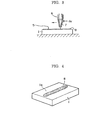
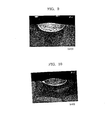
- Figs. 1 through 4 show successive stages of the general method of practice of the first set of preferred embodiments of the alloy layer on substrate forming method of the present invention.
- a first quantity designated as "A" of alloy powder was produced by evenly combining together in a weight ratio of approximately 1:1 a quantity of titanium powder of average particle size approximately -48 mesh and a quantity of stellite alloy powder (composition approximately 24% chromium, approximately 4% tungsten, approximately 8% nickel, approximately 0.5% silicon, approximately 01% boron, not more than 0.4% carbon, and balance substantially cobalt) of average particle size approximately -100 mesh.
- a second quantity designated as "B" of alloy powder was produced by evenly combining together in a weight ratio of approximately 1:1 a quantity of titanium powder of average particle size approximately -250 mesh and a quantity of similarly composed stellite alloy powder of average particle size approximately -100 mesh.
- alloy powder quantities "A” and "B” were, as will be seen, constituted so as to be suitable for practice of the two preferred embodiments of the method of the present invention included in the first set thereof. And for the practice of a comparison method, not according to the present invention, there was produced a quantity designated as "C" of a third powder, being similarly composed stellite powder only, of average particle size approximately -100 mesh. And, next, to each of these powders for alloying there was added a quantity of 5% aqueous solution of polyvinyl alcohol, to serve as a binder, and thus in each of the three cases there was formed a paste with a viscosity higher than that of water and lower than that of clay.
- substrate material test sample pieces 1 were prepared, each being a cuboidal block with dimensions approximately 70 mm x 40 mm x 10 mm, and being made of aluminum alloy of JIS (Japanese Industrial Standard) ADC-10. And, as shown in the side perspective view of Fig. 1 which shows the first stage of practice of these first set of preferred embodiments, on each of the 70 mm x 40 mm surfaces denoted as la of three of these four aluminum alloy substrate material pieces 1 there were laid two guide plates 2 and 3 of suitable material, of thickness about 1.0 mm, with their longer edges parallel to and confronting one another and separated by about 5 mm.
- JIS Japanese Industrial Standard
- each of the assemblies as shown in Fig. 1 was heated to a temperature of about 100°C in a drying oven and was maintained at said temperature for about 6ne hour; thus in each case the alloy powder paste quantity 4 was thoroughly dried.
- the two guide plates 2 and 3 were removed, to leave as shown in Fig. 2 in perspective view the block 1 of aluminum alloy substrate material with a strip layer 5 of the corresponding alloy powder laid along its 70 mm x 40 mm surface la parallel to and midway between the long sides thereof, said strip layer 5 being bound together and congealed to the block 1 by the hardened binder.
- said strip layer 5 had width about 5 mm, thickness about 1.0 mm, and length about 60 mm.
- a strip piece designated as "D” made of so called D-6k alloy material (composition approximately 30% chromium, approximately 4.5% tungsten, approximately 1.0% carbon, and balance substantially cobalt), of dimensions width about 5 mm, thickness about 0.5 mm, and length about 60 mm.
- a laser gun 6 was scanned in one pass along each of these strips 5 of material (either congealed alloy powder or strip material) for being alloyed with the substrate aluminum alloy block 1, from one end thereof to the other, while simultaneously a stream of argon gas was emitted from the end of said laser gun 6, said argon gas stream acting as a shield gas.
- the laser gun 6 was at this time operated so as to emit laser radiation, denoted in Fig. 3 as 7, and this process caused local heating of the strip 5 of material for alloying and melting thereof.
- the laser output was about 20 kilowatts; the output mode was multi mode; the beam pattern was elliptical, with the long diameter about 5 mm and the short diameter about 35 mm; the laser scanning speed was about 300 mm per minute; and the flow rate of the argon shield gas was about 35 liters per minute.
- a bead portion 8 of fused and melted together alloy material (powder or strip) and substrate aluminum alloy material was formed along the 70 mm x 40 mm surface la of each substrate material block 1, parallel to and midway between the long sides thereof. During this process, the molten portion was cooled rapidly, principally by absorption of the heat therein by the main body of the substrate material block 1.
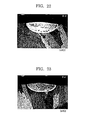
- Figs. 5 through 8 are plan views showing the bead portions 8 (i.e., the alloy layers) formed in each of the four cases described above, by employing the alloy materials "A", “B", “C”, and “D” respectively; thus, Figs. 5 and 6 were made according to the two preferred embodiments included in the first set of preferred embodiments of the alloy layer forming method of the present invention, by utilizing titanium powder mixed in with the stellite alloy material powder, while Figs. 7 and 8 were made by comparison methods not according to the present invention. Further, Figs.
- the alloy layer bead portion 8 was about 15 mm by about 4.8 mm in cross sectional dimensions, had surface hardness about 350 to 450, and had good surface appearance; in the case of the second one of said first set of preferred embodiments of the present invention which utilized the powder alloy material "B”, the alloy layer bead portion 8 was about 13 mm by about 4.4 mm in cross sectional dimensions, had surface hardness about 150 to 200, and likewise had good surface appearance; in the case of the first comparison method which utilized the powder alloy material "C” which contained only stellite powdcr but contained substantially no titanium powder, the alloy layer bead portion 8 was not properly formed, insofar as
- the laser fusing step performed during the practice of the second preferred embodiment of the method for forming an alloy layer on a substrate of the present invention is shown in side view in Fig. 11, in a similar manner to Fig.3 relating to the first preferred embodiment.
- this second preferred embodiment was performed as follows. Initially, a quantity of alloy powder was produced by powdering to approximately -100 mesh a quantity of titanium - copper alloy (composition approximately 80% copper, and balance substantially titanium). Next, a substrate material test sample piece 9 was prepared, of substantially the same dimensions of approximately 70 mm x 40 mm x 10 mm as in the case of the first set of preferred embodiments, and being made of aluminum alloy of JIS (Japanese Industrial Standard) AC2C.
- JIS Japanese Industrial Standard
- a C0 2 laser gun 10 was scanned in one pass along this substrate aluminum alloy block 9, from one end thereof to the other along the central portion of a 70 x 40 mm face 9a thereof and parallel to the 70 mm long sides of said face 9a, while simultaneously a stream of argon gas was emitted from the end of said laser gun 10, said argon gas stream acting as a shield gas; and, further, onto said upper face 9a of said alloy block 9 just into the path of said laser gun 10 and before it there was fed a steady stream of the above described alloy powder, a mass 12 of which was held in a hopper 11 a lower portion of which opened into an intermediate position along a downwardly sloping pipe 13 from which said alloy powder stream thus sifted and emerged, along with another admixture stream of argon gas which further was fed through said pipe 13 as a carrier gas.
- the laser gun 10 was at this time operated so as to emit laser radiation, denoted in Fig. 11 as 15, and this process caused local heating of the upper surface of the alloy block 9 and of the alloy powder just laid thereon, for fusingly alloying and melting thereof into a molten alloy layer 14 in the path of under and behind the laser gun 10, and said molten alloy layer hardened into a bead 16 trailing behind the laser gun 10.
- the laser gun output was about 2.0 kilowatts
- the output mode was multi mode
- the beam pattern was elliptical, with the long diameter about 5 mm and the short diameter about 35 mm
- the laser gun scanning speed was about 300 mm per minute
- the flow rate of the argon shield gas was about 35 liters per minute.
- Fig. 12 is a cross sectional optical photomicrograph view at an enlargement of 10X taken transversely through the bead portion 16 produced by said second preferred embodiment of the present invention alloy layer forming method.
- the portions showing up as black specks of black color in the alloy layer are agglomerations of inter metallic compounds formed between copper and titanium, and the portions of dark gray color are those portions which have a relatively high content of titanium.
- a central portion of the bead portion 16 illustrated in Fig. 12 was analyzed; and the composition thereof was found to be approximately 30% copper, approximately 10% titanium, and balance substantially aluminum.
- the third preferred embodiment of the method for forming an alloy layer on a substrate of the present invention was performed as follows. Initially, a quantity of alloy powder was produced by powdering to approximately -100 mesh a quantity of titanium - nickel alloy (composition approximately 20% nickel, and balance substantially titanium). And a substrate material test sample piece was prepared, of substantially the same dimensions of approximately 70 mm x 40 mm x 10 mm as in the case of the second preferred embodiment, and again being made of substantially the same type of aluminum alloy of JIS (Japanese Industrial Standard) AC2C.
- JIS Japanese Industrial Standard
- an alloy layer bead was formed in substantially the same manner as in the second preferred embodiment disclosed above, i.e. by scanning a C0 2 laser gun in one pass along an upper face of this substrate aluminum alloy block while simultaneously feeding a steady stream of the above described alloy powder onto said upper face of said alloy block just into the path of said laser gun, with the laser gun being operated so as to emit lascr radiation and so as to cause local heating of the upper surface of the alloy block and of the alloy powder just laid thereon for fusingly alloying and melting thereof into a molten alloy layer in the path of under and behind the laser gun, said molten alloy layer hardening into a bead trailing behind the laser gun.
- the parameters of this laser fusing process were as follows: the laser gun output was about 1.5 kilowatts; the output mode was multi mode; the beam pattern was elliptical, with the long diameter about 4 mm and the short diameter about 25 mm; the laser gun scanning speed was about 350 mm per minute; and the flow rate of the argon shield gas was about 35 liters per minute.
- Fig. 13 is a cross sectional optical photomicrograph view at an enlargement of 10X taken transversely through the bead portion produced by this third preferred embodiment of the present invention alloy layer forming method.
- the external appearance and tidyness of the bead is of good quality, and again an alloy layer with no substantial defects such as blow holes can be formed on the surface of the aluminum alloy substrate block.
- the portions showing up as specks of black color in the alloy layer are agglomerations of inter metallic compounds formed between nickel and titanium, while the portions of dark gray color are portions which have a relatively high content of titanium.
- a central portion of the bead portion 16 illustrated in Fig. 13 was analyzed; and the composition thereof was found to be approximately 25% nickel, approximately 10% titanium, and balance substantially aluminum.
- the fourth set of preferred embodiments of the method for forming an alloy layer on a substrate of the present invention were performed as follows. Initially, a set of seven quantities of alloy powder was produced by combining together in seven different weight ratios quantities of titanium powder the same as used in the first set of preferred embodiments (of average particle size approximately -250 mesh) and quantities of stellite alloy powder also the same as used in said first set of preferred embodiments. The titanium contents of these seven alloy powder quantities were respectively approximately 1%, approximately 11%, approximately 32%, approximately 50%, approximately 69%, approximately 89%, and approximately 97%.
- substrate material test sample pieces were prepared, each of substantially the same dimensions of approximately 70 mm x 40 mm x 10 mm as in the case of the previously described preferred embodiments, and again being made of substantially the same type of aluminum alloy of JIS (Japanese Industrial Standard) ADC-10.
- an alloy layer bead was formed in substantially the same manner as in the first preferred embodiment disclosed above, i.e. by laying a strip of the particular alloy powder along along an upper face of one of the substrate aluminum alloy blocks, said strip being congealed together and stuck to said substrate block upper face by the use of binder and by scanning a CO 2 laser gun along said alloy powder strip, with the laser gun being operated so as to emit laser radiation and so as to cause local heating of the upper surface of the alloy block and of the alloy powder strip laid thereon for fusingly alloying and melting thereof into a molten alloy layer in the path of under and behind the laser gun, said molten alloy layer hardening into a bead trailing behind the laser gun.
- the parameters of this laser fusing process were substantially as in the case of the first preferred embodiment described above.
- the alloying rate A (in percent) for each of the seven cases was then determined according to the following formula: where: A is the alloying rate; WO is the weight of the substrate aluminum alloy block alone, before alloying; Wl is the weight of the combination piece after the performance of the alloy layer forming method as described above, with sputter and the like removed; and Wa is the overall weight of the alloy powder quantity disposed on the surface of the substrate aluminum alloy block.
- Fig. 14 is a graph in which titanium content in. percent of the alloy powder is shown along the horizontal axis and the above defined alloying rate A in percent is shown along the vertical axis. From this graph it will be understood that, in this case that as alloy powder is used a mixture of a titanium powder and a stellite alloy powder, it is preferable for the titanium content of the alloy powder to be at least 21%; that particularly, in this case, in order for the method according to the present invention to form properly an appropriate alloy layer said alloy powder titanium content should be at least 35%; and that even more preferably said titanium content should be at least 41%.
- the fifth set of preferred embodiments of the method for forming an alloy layer on a substrate of the present invention were performed as follows. Initially, a set of seven quantities of alloy powder was produced by combining together in seven different wseven ratios quantities of titanium and quantities of stellite alloy, by fusing said titanium and stellite alloy together so as to alloy them together, and then by powdering the resulting alloy to an average particle size of approximately -100 mesh.
- the titanium contents of these seven alloy powder quantities were respectively approximately 2%, approximately 10%, approximately 21%, approximately 40%, approximately 70%, approximately 90%, and approximately 98%.
- substrate material test sample pieces were prepared, each of substantially the same dimensions of approximately 70 mm x 40 mm x 10 mm as in the case of the previously described preferred embodiments, and again being made of substantially the same type of aluminum alloy of JIS (Japanese Industrial Standard) ADC-10.
- an alloy layer bead was formed in substantially the same manner as in the first set of preferred embodiments disclosed above, i.e. by laying a strip of the particular alloy powder along along an upper face of one of the substrate aluminum alloy blocks, said strip being congealed together and stuck to said substrate block upper face by the use of binder and by scanning a CO 2 laser gun along said alloy powder strip, with the laser gun being operated so as to emit laser radiation and so as to cause local heating of the upper surface of the alloy block and of the alloy powder strip laid thereon for fusingly alloying and mclting thereof into a molten alloy layer in the path of under and behind the laser gun, said molten alloy layer hardening into a bead trailing behind the laser gun.
- the parameters of this laser fusing process were substantially as in the case of the first preferred embodiment described above.
- the alloying rate A (in percent) for each of the seven cases was then determined according to the formula described above.
- the results of these tests are shown by the seven light spots and the line drawn with reference thereto in the Fig. 14 graph. From this graph it will be understood that, in this case that as alloy powder is used a powdered form of a fused alloy of titanium and a stellite alloy, it is preferable for the titanium content of the alloy powder to be at least 15%; that particularly, in this case, in order for the method according to the present invention to form properly an appropriate alloy layer said alloy powder titanium content should be at least 27%; and that even more preferably said titanium content should be at least 32%.
- the sixth set of preferred embodiments of the method for forming an alloy layer on a substrate of the present invention were performed as follows. Initially, a set of nine quantities of alloy powder was produced by combining together in nine different weight ratios quantities of titanium powder the same as used in the first set of preferred embodiments (of average particle size approximately -250 mesh) and quantities of copper alloy powder having an average particle size approximately -100 mesh. The titanium contents of these nine alloy powder quantities were respectively approximately 2%, approximately 11%, approximately 21%, approximately 31%, approximately 41%, approximately 51%, approximately 68%, approximately 89%, and approximately 97%.
- Fig. 15 is a graph similar to the Fig.14 graph for the fourth and the fifth sets of preferred embodiments and relating to this sixth preferred embodiment set and to the seventh preferred embodiment set to be described shortly, in which again titanium content in percent of the alloy powder is shown along the horizontal axis and the above defined alloying rate A in percent is shown along the vertical axis. From this graph it will be understood that, in this case that as alloy powder is used a mixture of a titanium powder and a copper powder, it is preferable for the titanium content of the alloy powder to be at least 17%; and that particularly said titanium content should preferably be . at least 31%.
- the seventh set of preferred embodiments of the method for forming an alloy layer on a substrate of the present invention were performed as follows. Initially, a set of nine quantities of alloy powder was produced by combining together in nine different weight ratios quantities of titanium and quantities of copper, by fusing said titanium and copper together so as to alloy them together, and then by powdering the resulting alloy to an average particle size of approximately -100 mesh. The titanium contents of these nine alloy powder quantities were respectively approximately 2%, approximately 11%, approximately 22%, approximately 31%, approximately 41%, approximately 50%, approximately 70%, approximately 90%, and approximately 98%.
- the results of these tests are shown by the nine light spots and the line drawn with reference thereto in the Fig. 15 graph. From this graph it will be understood that, in this case that as alloy powder is used a powdered form of a fused alloy of titanium and copper, it is preferable for the titanium content of the alloy powder to be at least 4%; and that particularly, in this case, in order for the method according to the present invention to form properly an appropriate alloy layer, said alloy powder titanium content should be at least 11%.
- alloy powder was used either a mixture of a titanium powder and a copper powder or a powdered form of a fused alloy of titanium and copper
- the alloying rate was 100% or a high value relatively close to 100%; and it is surmised that this is due to the high solid solubility of copper in aluminum alloy.
- the eighth set of preferred embodiments of the method for forming an alloy layer on a substrate of the present invention were performed as follows. Initially, a set of seven quantities of alloy powder was produced by combining together in seven different weight ratios quantities of titanium powder the same as used in the first set of preferred embodiments (of average particle size approximately -250 mesh) and quantities of nickel alloy powder having an average particle size approximately -100 mesh. The titanium contents of these seven alloy powder quantities were respectively approximately 1%, approximately 12%, approximately 33%, approximately 50%, approximately 70%, approximately 90%, and approximately 98%.
- substrate material test sample pieces were prepared, each of substantially the same dimensions of approximately 70 mm x 40 mm x 10 mm as in the case of the previously described preferred embodiments, and again being made of substantially the same type of aluminum alloy of JIS (Japanese Industrial Standard) ADC-10. And, in each of the seven cases, an alloy layer bead was formed in substantially the same manner as in the first preferred embodiment disclosed above, i.e.
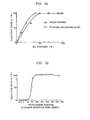
- Fig. 16 is a graph similar to the Fig. 14 and Fig. 15 graphs for the fourth through the seventh sets of preferred embodiments and relating to this eighth preferred embodiment set and to the ninth preferred embodiment set to be described shortly, in which again titanium content in percent of the alloy powder is shown along the horizontal axis and the above defined alloying rate A in percent is shown along the vertical axis.
- the titanium content of the alloy powder is at least 21%; that particularly, in this case, in order for the method according to the present invention to form properly an appropriate alloy layer said alloy powder titanium content should be at least 35%; and that even more preferably said titanium content should be at least 41%.
- the ninth set of preferred embodiments of the method for forming an alloy layer on a substrate of the present invention were performed as follows. Initially, a set of seven quantities of alloy powder was produced by combining together in seven different weight ratios quantities of titanium and quantities of nickel, by fusing said titanium and nickel together so as to alloy them together, and then by powdering the resulting alloy to an average particle size of approximately -100 mesh. The titanium contents of these seven alloy powder quantities were respectively approximately 2%, approximately 10%, approximately 22%, approximately 41%, approximately 72%, approximately 91%, and approximately 99%.
- substrate material test sample pieces were prepared, each again of substantially the same dimensions of approximately 70 mm x 40 mm x 10 mm as in the case of the previously described preferred embodiments, and again being made of substantially the same type of aluminum alloy of JIS (Japanese Industrial Standard) ADC-10. And, in each of the seven cases, an alloy layer bead was formed in substantially the same manner as in the first preferred embodiment disclosed above, i.e.
- the results of these tests are shown by the seven light spots and the line drawn with reference thereto in the Fig. 16 graph. From this graph it will be understood that, in this case that as alloy powder is used a powdered form of a fused alloy of titanium and nickel, it is preferable for the titanium content of the alloy powder to be at least 15%; that particularly, in this case, in order for the method according to the present invention to form properly an appropriate alloy layer said alloy powder titanium content should be at least 28%; and that even more preferably said titanium content should be at least 32%.
- the titanium content of the alloy powder in the case that as alloy powder is used a powder mixture of a titanium powder and a powder of an element to be alloyed with the aluminum alloy substrate block, it is preferable for the titanium content of the alloy powder to be at least 21%, more preferably at least 35%, and even more preferably at least 41%; while, in the alternative case that as alloy powder is used a powdered form of a fused alloy of titanium and said element to be alloyed with said aluminum alloy substrate block, it is preferable for the titanium content of the alloy powder to be at least 15%, more preferably at least 28%, and even more preferably at least 32%.
- the tenth set of preferred embodiments of the method for forming an alloy layer on a substrate of the present invention were performed as follows. Initially, a set of nine quantities of alloy powder was produced by combining together, in each case in a weight ratio of approximately 1:1, quantities of stellite alloy powder of the type used in the first set of preferred embodiments described above and having an average particle size approximately -100 mesh, and quantities of titanium powder of nine different average particle sizes, to wit: approximately -3.5 mesh, approximately -5 mesh, approximately -10 mesh, approximately -48 mesh, approximately -100 mesh, approximately -115 mesh, approximately -170 mesh, approximately -270 mesh, and approximately -325 mesh.
- Fig. 17 is a graph relating to this tenth preferred embodiment set in which average particle size in mesh of the alloy powder is shown along the horizontal axis and the above defined alloying rate A in percent is shown along the vertical axis. From this graph it will be understood that, in this case that as alloy powder is used a mixture of a titanium powder and a stellite powder, it is preferable for the average particle size of the titanium powder included in the alloy powder to be no more than about -48 mesh, more preferably no more than about -100 mesh, and even more preferably no more than about -105 to about -325 mesh. And it should be noted that, in the cases that the average particle size of the titanium powder included in the alloy powder was greater than or equal to about -10 mesh, it was not possible satisfactorily to dispose the alloying powder on the surface of the substrate aluminum alloy blocks.
- another set of nine quantities of alloy powder was produced by using quantities of a titanium - copper alloy (composition about 50% titanium, balance substantially copper) which had been ground into powder of nine different average particle sizes (unit mesh), to wit: approximately -3.5 mesh, approximately -5 mesh, approximately -10 mesh, approximately -48 mesh, approximately -100 mesh, approximately -115 mesh, approximately -170 mesh, approximately -270 mesh, and approximately -325 mesh.
- nine substrate material test sample pieces were prepared, each of substantially the same dimensions of approximately 70 mm x 40 mm x 10 mm as in the case of the previously described preferred embodiments, and again being made of substantially the same type of aluminum alloy of JIS (Japanese Industrial Standard) ADC-10.
- an alloy layer bead was formed in substantially the same manner as in the first preferred embodiment disclosed above, the parameters of this laser fusing process being substantially as in the case of said first preferred embodiment.
- the alloying rate A (in percent) for each of the nine cases was again determined according to the formula described above; and the results of these tests were found to be generally similar to those detailed above with regard to the tenth preferred embodiment and shown in Fig. 17.
- manganese powder is used for admixture with the alloy material. This is the second of the two materials that have been found by the present inventors to be suitable for this application.
- FIG. 1 through 4 can serve for describing said stages of said eleventh set of preferred embodiments set, since said eleventh set of preferred embodiments set does not differ in gross outward appearance from the first preferred embodiment set, but only by the materials utilized and by certain process parameters.
- a first quantity designated as "A" of alloy powder was produced by evenly combining together in a weight ratio of approximately 1:1 a quantity of manganese powder of average particle size approximately -48 mesh and a quantity of stellite alloy powder (composition approximately 24% chromium, approximately 4% tungsten, approximately 8% nickel, approximately 0.5% silicon, approximately 01% boron, not more than 0.4% carbon, and balance substantially cobalt) of average particle size approximately -100 mesh.
- a second quantity designated as "B" of alloy powder was produced by evenly combining together in a weight ratio of approximately 1:1 a quantity of manganese powder of average particle size approximately -250 mesh and a quantity of similarly composed stellite alloy powder of average particle size approximately -100 mesh.
- alloy powder quantities "A” and "B” were, as will be seen, constituted so as to be suitable for practice of the two preferred embodiments of the method of the present invention included in the eleventh set thereof. And for the practice of a comparison method, not according to the present invention, there was produced a quantity designated as "C" of a third powder, being similarly composed stellite powder only, of average particle size approximately -100 mesh. And, next, to each of these powders for alloying there was added a quantity of 5% aqueous solution of polyvinyl alcohol, to serve as a binder, and thus in each of the three cases there was formed a paste with a viscosity higher than that of water and lower than that of clay.
- substrate material test sample pieces 1 of the same type as described before were prepared, each being a cuboidal block with dimensions approximately 70 mm x 40 mm x 10 mm, and being made of aluminum alloy of JIS (Japanese Industrial Standard) ADC-10. And, as shown in the side perspective view of Fig. 1 which shows the first stage of practice of these eleventh set of preferred embodiments, on each of the 70 mm x 40 mm surfaces denoted as la of three of these four aluminum alloy substrate material pieces 1 there were laid two guide plates 2 and 3 of suitable material, of thickness about 1 mm, with their longer edges parallel to and confronting one another and separated by about 5 mm.
- JIS Japanese Industrial Standard
- each of the assemblies as shown in Fig. 1 was heated to a temperature of about 100°C in a drying oven and was maintained at said temperature for about one hour; thus in each case the alloy powder paste quantity 4 was thoroughly dried. Then, in each case, the two guide plates 2 and 3 were removed, to leave as shown in Fig. 2 in perspective view the block 1 of aluminum alloy substrate material with a strip layer 5 of the corresponding alloy powder laid along its 70 mm x 40 mm surface 1a parallel to and midway between the long sides thereof, said strip layer 5 being bound together and congealed to the block 1 by the hardened binder.
- said strip layer 5 had width about 5 mm, thickness about 1.0 mm, and length about 60 mm. Further, on the 70 mm x 40 mm surface la of the fourth aluminum alloy substrate material piece 1 there was laid, parallel to and midway between the long sides thereof, a strip piece designated as "D" made of so called D-6k alloy material (composition approximately 30% chromium, approximately 4.5% tungsten, approximately 1.0% carbon, and balance substantially cobalt), of dimensions width about 5 mm, thickness about 0.5 mm, and length about 60 mm.
- D D-6k alloy material
- a CO2 laser gun 6 was scanned in one pass along each of these strips 5 of material (either congealed alloy powder or strip material) for being alloyed with the substrate aluminum alloy block 1, from one end thereof to the other, while simultaneously a stream of argon gas was emitted from the end of said laser gun 6, said argon gas stream acting as a shield gas.
- the laser gun 6 was at this time operated so as to emit laser radiation, denoted in Fig. 3 as 7, and this process caused local heating of the strip 5 of material for alloying, and melting thereof.
- the laser output was about 2.0 kilowatts; the output mode was multi mode; the beam pattern was elliptical, with the long diameter about 5 mm and the short diameter about 3.5 mm; the laser scanning speed was about 300 mm per minute; and the flow rate of the argon shield gas was about 35 liters per minute.
- a bead portion 8 of fused and melted together alloy material (powder or strip) and substrate aluminum alloy material was formed along the 70 mm x 40 mm surface la of each substrate material block 1, parallel to and midway between the long sides thereof. During this process, the molten portion was cooled rapidly, principally by absorption of the heat therein by the main body of the substrate material block 1.
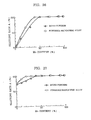
- Figs. 18 through 21 are plan views showing the bead portions 8 (i.e., the alloy layers) formed in each of the four cases described above, by employing the alloy materials "A", “B", “C”, and “D” respectively; thus, Figs. 18 and 19 were made according to the two preferred embodiments included in the eleventh set of preferred embodiments of the alloy layer forming method of the present invention, by utilizing manganese powder mixed in with the stellite alloy material powder, while Figs. 20 and 21 were made by comparison methods not according to the present invention (which in fact correspond to the comparison methods detailed with regard to the first set of preferred embodiments detailed earlier).
- Figs.22 and 23 are cross sectional photomicrograph views at enlargements of 10X taken transversely through the bead portions 8 produced by said eleventh set of preferred embodiments of the present invention alloy layer forming method utilizing the alloy materials "A" and "B", respectively.
- the alloy layer bead portion 8 was about 1.8 mm by about 52 mm in cross sectional dimensions, had surface hardness about 350 to 450, and had good surface appearance; in the case of the second one of said eleventh set of preferred embodiments of the present invention which utilized the powder alloy material "B", the alloy layer bead portion 8 was about 1.5 mm by about 4.8 mm in cross sectional dimensions, had surface hardness about 150 to 200, and likewise had good surface appearance; in the case of the first comparison method which utilized the powder alloy material "C” which contained only stellite powder but contained substantially no manganese powder, the alloy layer bead portion 8 was not properly formed, insofar as it could be determined had surface hardness about 85 to 95, and the surface appearance of the general area thereof was poor; and similarly, for the case of the second comparison method which utilized the strip alloy material "D” made of D-6k alloy, the alloy layer bead portion 8 was not
- the alloy material was only partially fused on the surface of the aluminum alloy substrate block, and the surface of said substrate block was not properly fused, so that a proper surface alloy layer was not formed, and large holes were everywhere generated in the bead portion 8, said bead portion 8 being further displaced far from its proper position.
- the laser fusing step performed during the practice of the twelfth preferred embodiment of the method for forming an alloy layer on a substrate of the present invention is substantially the same as described above with reference to the second preferred embodiment and shown in side view in Fig. 11; accordingly, this Fig. 11 will be used for explanation of this twelfth preferred embodiment, also, which differs from the second preferred embodiment only in the materials used and in certain process parameters.
- this twelfth preferred embodiment was performed as follows. Initially, a quantity of alloy powder was produced by powdering to approximately -100 mesh a quantity of manganese - copper alloy (composition approximately 80% copper, and balance substantially manganese).
- a substrate material test sample piece 9 was prepared, of substantially the same dimensions of approximately 70 mm x 40 mm x 10 mm as in the case of the eleventh set of preferred embodiments, and being made of aluminum alloy of JIS (Japanese Industrial Standard) AC2C.
- a CO 2 laser gun 10 was scanned in one pass along this substrate aluminum alloy block 9, from one end thereof to the other along the central portion of a 70 x 40 mm face 9a thereof and parallel to the 70 mm long sides of said face 9a, while simultaneously a stream of argon gas was emitted from the end of said laser gun 10, said argon gas stream acting as a shield gas; and, further, onto said upper face 9a of said alloy block 9 just into the path of said laser gun 10 and before it there was fed a steady stream of the above described alloy powder, a mass 12 of which was held in a hopper 11 a lower portion of which opened into an intermediate position along a downwardly sloping pipe 13 from which said alloy powder stream thus sifted and emerged, along with another admixture stream of argon gas which further was fed through said pipe 13 as a carrier gas.
- the laser gun 10 was at this time operated so as to emit laser radiation, denoted in Fig. 11 as 15, and this process caused local heating of the upper surface of the alloy block 9 and of the alloy powder just laid thereon,, for fusingly alloying and melting thereof into a molten alloy layer 14 in the path of under and behind the laser gun 10, and said molten alloy layer hardened into a bead 16 trailing behind the laser gun 10.
- the laser gun output was about 2.0 kilowatts
- the output mode was multi mode
- the beam pattern was elliptical, with the long diameter about 5 mm and the short diameter about 35 mm
- the laser gun scanning speed was about 300 mm per minute
- the flow rate of the argon shield gas was about 35 liters per minute.
- Fig. 24 is a cross sectional optical photomicrograph view at an enlargement of 10X taken transversely through the bead portion 16 produced by said twelfth preferred embodiment of the present invention alloy layer forming method.
- the portions showing up as black islands or specks of black color in the alloy layer are portions which are agglomerations of inter metallic compounds formed between copper and manganese, while the portions which show up as dark gray are those with a relatively high concentration of manganese.
- a central portion of the bead portion 16 illustrated in Fig. 24 was analyzed; and the composition thereof was found to be approximately 25% copper, approximately 12% manganese, and balance substantially aluminum.
- the thirteenth preferred embodiment of the method for forming an alloy layer on a substrate of the present invention was performed as follows. Initially, a quantity of alloy powder was produced by powdering to approximately -100 mesh a quantity of manganese - nickel alloy (composition approximately 20% nickel, and balance substantially manganese). And a substrate material test sample piece was prepared, of substantially the same dimensions of approximately 70 mm x 40 mm x 10 mm as in the case of the eleventh set of preferred embodiments and the twelfth preferred embodiment, and again being made of substantially the same type of aluminum alloy of JIS (Japanese Industrial Standard) AC2A as utilized in the twelfth preferred embodiment.
- JIS Japanese Industrial Standard
- an alloy layer bead was formed in substantially the same manner as in the twelfth preferred embodiment disclosed above, i.e. by scanning a CO 2 laser gun in one pass along an upper face of this substrate aluminum alloy block while simultaneously feeding a steady stream of the above described alloy powder onto said upper face of said alloy block just into the path of said laser gun, with the laser gun being operated so as to emit laser radiation and so as to cause local heating of the upper surface of the alloy block and of the alloy powder just laid thereon for fusingly alloying and melting thereof into a molten alloy layer in the path of under and behind the laser gun, said molten alloy layer hardening into a bead trailing behind the laser gun.
- the parameters of this laser fusing process were substantially as follows: the laser gun output was about 15 kilowatts; the output mode was multi mode; the beam pattern was elliptical, with the long diameter about 4 mm and the short diameter about 2.5 mm; the laser gun scanning speed was about 350 mm per minute; and the flow rate of the argon shield gas was about 35 liters per minute.
- Fig. 25 is a cross sectional optical photomicrograph view at an enlargement of 10X taken transversely through the bead portion produced by this thirteenth preferred embodiment of the present invention alloy layer forming method.
- the external appearance and tidyness of the bead is of good quality, and again an alloy layer with no substantial defects such as blow holes can be formed on the surface of the aluminum alloy substrate block.
- the portions showing up as islands of black color in the alloy layer are agglomerations of inter metallic compounds formed between nickel and manganese, and the dark gray portions are portions where the concentration of manganese is relatively high.
- a central portion of the bead portion 16 illustrated in Fig. 25 was analyzed; and the composition thereof was found to be approximately 10% nickel, approximately 18% manganese, and balance substantially aluminum.
- the fourteenth set of preferred embodiments of the method for forming an alloy layer on a substrate of the present invention were performed as follows. Initially, a set of seven quantities of alloy powder was produced by combining together in seven different weight ratios quantities of manganese powder the same as used in the eleventh set of preferred embodiments (of average particle size approximately -250 mesh) and quantities of stellite alloy powder also the same as used in said eleventh set of preferred embodiments. The manganese contents of these seven alloy powder quantities were respectively approximately 1%, approximately 11%, approximately 32%, approximately 51%, approximately 70%, approximately 90%, and approximately 97%.
- substrate material test sample pieces were prepared, each of substantially the same dimensions of approximately 70 mm x 40 mm x 10 mm as in the case of the previously described preferred embodiments, and again being made of substantially the same type of aluminum alloy of JIS (Japanese Industrial Standard) ADC-10 as in the eleventh set of preferred embodiments.
- JIS Japanese Industrial Standard
- an alloy layer bead was formed in substantially the same manner as in the eleventh set of preferred embodiments set disclosed above, i.e. by laying a strip of the particular alloy powder along along an upper face of one of the substrate aluminum alloy blocks, said strip being congealed together and stuck to said substrate block upper face by the use of binder and by scanning a CO 2 lascr gun along said alloy powder strip, with the laser gun being operated so as to emit laser radiation and so as to cause local heating of the upper surface of the alloy block and of the alloy powder strip laid thereon for fusingly alloying and melting thereof into a molten alloy layer in the path of under and behind the laser gun, said molten alloy layer hardening into a bead trailing behind the laser gun.
- the parameters of this laser fusing process were substantially as in the case of the eleventh set of preferred embodiments set described above.
- the alloying rate A (in percent) for each of the seven cases was then determined according to the formula explained above with regard to the fourth preferred embodiment set.
- Fig. 26 is a graph in which manganese content in percent of the alloy powder is shown along the horizontal axis and the above defined alloying rate A in percent is shown along the vertical axis. From this graph it will be understood that, in this case that as alloy powder is used a mixture of a manganese powder and a stellite alloy powder, it is preferable for the manganese content of the alloy powder to be at least 22%; that particularly, in this case, in order for the method according to the present invention to form properly an appropriate alloy layer said alloy powder manganese content should be at least 35%; and that even more preferably said manganese content should be at least 43%.
- the fifteenth set of preferred embodiments of the method for forming an alloy layer on a substrate of the present invention were performed as follows. Initially, a set of seven quantities of alloy powder was produced by combining together in seven different weight ratios quantities of manganese and quantities of stellite alloy, by fusing said manganese and stellite alloy together so as to alloy them together, and then by powdering the resulting alloy to an average particle size of approximately -100 mesh.
- the manganese contents of these seven alloy powder quantities were respectively approximately 2%, approximately 10%, approximately 22%, approximately 41%, approximately 72%, approximately 91%, and approximately 99%.
- substrate material test sample pieces were prepared, each of substantially the same dimensions of approximately 70 mm x 40 mm x 10 mm as in the case of the previously described preferred embodiments, and again being made of substantially the same type of aluminum alloy of JIS (Japanese Industrial Standard) ADC-10 as in the case of the eleventh set of preferred embodiments.
- JIS Japanese Industrial Standard
- an alloy layer bead was formed in substantially the same manner as in the first preferred embodiment disclosed above, i.e. by laying a strip of the particular alloy powder along along an upper face of one of the substrate aluminum alloy blocks, said strip being congealed together and stuck to said substrate block upper face by the use of binder and by scanning a CO 2 laser gun along said alloy powder strip, with the laser gun being operated so as to emit laser radiation and so as to cause local heating of the upper surface of the alloy block and of the alloy powder strip laid thereon for fusingly alloying and melting thereof into a molten alloy layer in the path of under and behind the laser gun, said molten alloy layer hardening into a bead trailing behind the laser gun.
- the parameters of this laser fusing process were substantially as in the case of the eleventh set of preferred embodiments described above.
- the alloying rate A (in percent) for each of the seven cases was then determined according to the formula described above.
- the results of these tests are shown by the seven light spots and the line drawn with reference thereto in the Fig. 26 graph. From this graph it will be understood that, in this case that as alloy powder is used a powdered form of a fused alloy of manganese and a stellite alloy, it is preferable for the manganese content of the alloy powder to be at least 16%; that particularly, in this case, in order for the method according to the present invention to form properly an appropriate alloy layer said alloy powder manganese content should be at least 28%; and that even more preferably said manganese content should be at least 34%.
- the sixteenth set of preferred embodiments of the method for forming an alloy layer on a substrate of the present invention were performed as follows. Initially, a set of nine quantities of alloy powder was produced by combining together in nine different weight ratios quantities of manganese powder the same as used in the eleventh set of preferred embodiments (of average particle size approximately -250 mesh) and quantities of copper alloy powder having an average particle size approximately -100 mesh. The manganese contents of these nine alloy powder quantities were respectively approximately 2%, approximately 11%, approximately 21%, approximately 32%, approximately 41%, approximately 53%, approximately 70%, approximately 90%, and approximately 97%.
- Fig. 27 is a graph similar to the Fig. 26 graph for the fourteenth and the fifteenth sets of preferred embodiments and relating to this sixteenth preferred embodiment set and to the seventeenth preferred embodiment set to be described shortly, in which again manganese content in percent of the alloy powder is shown along the horizontal axis and the above defined alloying rate A in percent is shown along the vertical axis. From this graph it will be understood that, in this case that as alloy powder is used a mixture of a manganese powder and a copper powder, it is preferable for the manganese content of the alloy powder to be at least 12%; and that particularly said manganese content should preferably be at least 28%.
- the seventeenth set of preferred embodiments of the method for forming an alloy layer on a substrate of the present invention were performed as follows. Initially, a set of nine quantities of alloy powder was produced by combining together in nine different weight ratios quantities of manganese and quantities of copper, by fusing said manganese and copper together so as to alloy them together, and then by powdering the resulting alloy to an average particle size of approximately -100 mesh.
- the manganese contents of these nine alloy powder quantities were respectively approximately 2%, approximately 11%, approximately 22%, approximately 32%, approximately 41%, approximately 51%, approximately 71%, approximately 91%, and approximately 98%.
- the results of these tests are shown by the nine light spots and the line drawn with reference thereto in the Fig. 27 graph. From this graph it will be understood that, in this case that as alloy powder is used a powdered form of a fused alloy of manganese and copper, it is preferable for the manganese content of the alloy powder to be at least 3%; and that particularly, in this case, in order for the method according to the present invention to form properly an appropriate alloy layer, said alloy powder manganese content should be at least 11%.
- alloy powder was used either a mixture of a manganese powder and a copper powder or a powdered form of a fused alloy of manganese and copper
- the alloying rate was 100% or a high value relatively close to 100%; and it is surmised that this is due to the high solid solubility of copper in aluminum alloy.
- the eighteenth set of preferred embodiments of the method for forming an alloy layer on a substrate of the present invention were performed as follows. Initially, a set of seven quantities of alloy powder was produced by combining together in seven different weight ratios quantities of manganese powder the same as used in the eleventh set of preferred embodiments (of average particle size approximately -250 mesh) and quantities of nickel alloy powder having an average particle size approximately -100 mesh. The manganese contents of these seven alloy powder quantities were respectively approximately 2%, approximately 11%, approximately 32%, approximately 50%, approximately 70%, approximately 90%, and approximately 97%.
- substrate material test sample pieces were prepared, each of substantially the same dimensions of approximately 70 mm x 40 mm x 10 mm as in the case of the previously described preferred embodiments, and again being made of substantially the same type of aluminum alloy of JIS (Japanese Industrial Standard) ADC-10 as in the case of the eleventh set of preferred embodiments. And, in each of the seven cases, an alloy layer bead was formed in substantially the same manner as in the eleventh set of preferred embodiments disclosed above, i.e.
- Fig. 28 is a graph similar to the Fig. 26 and Fig. 27 graphs for the fourteenth through the seventeenth sets of preferred embodiments and relating to this eighteenth preferred embodiment set and to the nineteenth preferred embodiment set to be described shortly, in which again manganese content in percent of the alloy powder is shown along the horizontal axis and the above defined alloying rate A in percent is shown along the vertical axis.
- the manganese content of the alloy powder is at least 22%; that particularly, in this case, in order for the method according to the present invention to form properly an appropriate alloy layer said alloy powder manganese content should be at least 37%; and that even more preferably said manganese content should be at least 43%.
- the nineteenth set of preferred embodiments of the method for forming an alloy layer on a substrate of the present invention were performed as follows. Initially, a set of seven quantities of alloy powder was produced by combining together in seven different weight ratios quantities of manganese and quantities of nickel, by fusing said manganese and nickel together so as to alloy them together, and then by powdering the resulting alloy to an average particle size of approximately -100 mesh. The manganese contents of these seven alloy powder quantities were respectively approximately 2%, approximately 10%, approximately 22%, approximately 41%, approximately 71%, approximately 91%, and approximately 99%.
- substrate material test sample pieces were prepared, each again of substantially the same dimensions of approximately 70 mm x 40 mm x 10 mm as in the case of the previously described preferred embodiments, and again being made of substantially the same type of aluminum alloy of JIS (Japanese Industrial Standard) ADC-10 as in the case of the eleventh set of preferred embodiments. And, in each of the seven cases, an alloy layer bead was formed in substantially the same manner as in the eleventh set of preferred embodiments disclosed above, i.e.
- the results of these tests are shown by the seven light spots and the line drawn with reference thereto in the Fig. 28 graph. From this graph it will be understood that, in this case that as alloy powder is used a powdered form of a fused alloy of manganese and nickel, it is preferable for the manganese content of the alloy powder to be at least 16%; that particularly, in this case, in order for the method according to the present invention to form properly an appropriate alloy layer said alloy powder manganese content should be at least 28%; and that even more preferably said manganese content should be at least 34%.
- the manganese content of the alloy powder in the case that as alloy powder is used a powder mixture of a manganese powder and a powder of an element to be alloyed with the aluminum alloy substrate block, it is preferable for the manganese content of the alloy powder to be at least 22%, more preferably at least 37%, and even more preferably at least 43%; while, in the alternative case that as alloy powder is used a powdered form of a fused alloy of manganese and said element to be alloyed with said aluminum alloy substrate block, it is preferable for the manganese content of the alloy powder to be at least 16%, more preferably at least 28%, and even more preferably at least 34%.
- the twentieth set of preferred embodiments of the method for forming an alloy layer on a substrate of the present invention were performed as follows. Initially, a set of ten quantities of alloy powder was produced by combining together, in each case in a weight ratio of approximately 1:1, quantities of stellite alloy powder of the type used in the eleventh set of preferred embodiments described above and having an average particle size approximately -100 mesh, and quantities of manganese powder of ten different average particle sizes, to wit: approximately -3.5 mesh, approximately -5 mesh, approximately -10 mesh, approximately -48 mesh, approximately -60 mesh, approximately -100 mesh, approximately -150 mesh, approximately -200 mesh, approximately -250 mesh, and approximately -325 mesh.
- Fig. 29 is a graph relating to this twentieth preferred embodiment set in which average particle size in mesh of the alloy powder is shown along the horizontal axis and the above defined alloying rate A in percent is shown along the vertical axis. From this graph it will be understood that, in this case that as alloy powder is used a mixture of a manganese powder and a stellite powder, it is preferable for the average particle size of the manganese powder included in the alloy powder to be no more than about -48 mesh, more preferably no more than about -55 mesh, and even more preferably no more than about -60 mesh. And it should be noted that, in the cases that the average particle size of the manganese powder included in the alloy powder was greater than or equal to about -10 mesh, it was not possible satisfactorily to dispose the alloying powder on the surface of the substrate aluminum alloy blocks.
- another set of ten quantities of alloy powder was produced by using quantities of a manganese - copper alloy (composition about 50% manganese, balance substantially copper) which had been ground into powder of ten different average particle sizes (unit mesh), to wit: approximately -35 mesh, approximately -5 mesh, approximately -10 mesh, approximately -48 mesh, approximately -60 mesh, approximately -100 mesh, approximately -150 mesh, approximately -200 mesh, approximately -250 mesh, and approximately -325 mesh.
- a manganese - copper alloy composition about 50% manganese, balance substantially copper
Landscapes
- Engineering & Computer Science (AREA)
- Mechanical Engineering (AREA)
- Chemical & Material Sciences (AREA)
- Materials Engineering (AREA)
- Metallurgy (AREA)
- Organic Chemistry (AREA)
- Physics & Mathematics (AREA)
- Optics & Photonics (AREA)
- Plasma & Fusion (AREA)
- Other Surface Treatments For Metallic Materials (AREA)
Applications Claiming Priority (4)
| Application Number | Priority Date | Filing Date | Title |
|---|---|---|---|
| JP178433/85 | 1985-08-13 | ||
| JP178432/85 | 1985-08-13 | ||
| JP60178432A JPS6238791A (ja) | 1985-08-13 | 1985-08-13 | Co↓2レ−ザによる合金層の形成方法 |
| JP60178433A JPS6238792A (ja) | 1985-08-13 | 1985-08-13 | Co↓2レ−ザによる合金層の形成方法 |
Publications (2)
| Publication Number | Publication Date |
|---|---|
| EP0213498A2 true EP0213498A2 (fr) | 1987-03-11 |
| EP0213498A3 EP0213498A3 (fr) | 1989-07-12 |
Family
ID=26498608
Family Applications (1)
| Application Number | Title | Priority Date | Filing Date |
|---|---|---|---|
| EP19860111232 Withdrawn EP0213498A3 (fr) | 1985-08-13 | 1986-08-13 | Procédé de formation d'une couche d'alliage sur un substrat en alliage d'aluminium par application d'une poudre contenant un matériau d'alliage et du titane ou du manganèse et irradiation par laser à CO2 |
Country Status (2)
| Country | Link |
|---|---|
| EP (1) | EP0213498A3 (fr) |
| AU (1) | AU6109586A (fr) |
Cited By (8)
| Publication number | Priority date | Publication date | Assignee | Title |
|---|---|---|---|---|
| US5182430A (en) * | 1990-10-10 | 1993-01-26 | Societe National D'etude Et De Construction De Moteurs D'aviation "S.N.E.C.M.A." | Powder supply device for the formation of coatings by laser beam treatment |
| CZ303078B6 (cs) * | 2000-02-28 | 2012-03-21 | Vaw Aluminium Ag | Povrchove legovaná válcovitá, cástecne válcovitá nebo dutá válcovitá konstrukcní soucást |
| WO2014120729A1 (fr) * | 2013-01-31 | 2014-08-07 | Siemens Energy, Inc. | Microrevêtement au laser à l'aide d'un métal et d'un flux en poudre |
| CN104399968A (zh) * | 2014-11-10 | 2015-03-11 | 中国矿业大学 | 一种用于连续式光纤激光表面合金化的钴基金属合金粉末 |
| US9315903B2 (en) | 2011-01-13 | 2016-04-19 | Siemens Energy, Inc. | Laser microcladding using powdered flux and metal |
| US11091831B1 (en) | 2020-02-04 | 2021-08-17 | Hamilton Sundstrand Corporation | Pulsed directed energy deposition based fabrication of hybrid titanium/aluminum material for enhanced corrosion resistance and strength |
| CN114289874A (zh) * | 2022-01-19 | 2022-04-08 | 苏州大学 | 一种高强焊缝的制备方法 |
| CN118726971A (zh) * | 2024-07-19 | 2024-10-01 | 西安热工研究院有限公司 | 一种提升铝化物熔覆涂层耐蚀性能的方法 |
Families Citing this family (3)
| Publication number | Priority date | Publication date | Assignee | Title |
|---|---|---|---|---|
| JPS6216894A (ja) * | 1985-07-17 | 1987-01-26 | Toyota Motor Corp | アルミニウム系母材への肉盛方法 |
| US4746540A (en) * | 1985-08-13 | 1988-05-24 | Toyota Jidosha Kabushiki Kaisha | Method for forming alloy layer upon aluminum alloy substrate by irradiating with a CO2 laser, on substrate surface, alloy powder containing substance for alloying and silicon or bismuth |
| JPS6254588A (ja) * | 1985-08-30 | 1987-03-10 | Toyota Motor Corp | セラミツク粒子分散アルミニウム合金複合層の形成方法 |
Family Cites Families (8)
| Publication number | Priority date | Publication date | Assignee | Title |
|---|---|---|---|---|
| US4401726A (en) * | 1974-01-07 | 1983-08-30 | Avco Everett Research Laboratory, Inc. | Metal surface modification |
| US4157923A (en) * | 1976-09-13 | 1979-06-12 | Ford Motor Company | Surface alloying and heat treating processes |
| DE2835332C2 (de) * | 1978-08-11 | 1982-06-24 | Messer Griesheim Gmbh, 6000 Frankfurt | Kolben mit einem Körper aus einer Aluminiumlegierung |
| US4382169A (en) * | 1981-03-24 | 1983-05-03 | Rabkin Daniil M | Weld deposition of metal other than aluminium onto aluminium-base alloy |
| WO1982003814A1 (fr) * | 1981-04-28 | 1982-11-11 | Plc Ae | Fabrication de piston |
| US4432313A (en) * | 1982-05-27 | 1984-02-21 | Trw Inc. | Aluminum base material with hard facing deposit |
| JPS60110851A (ja) * | 1983-09-27 | 1985-06-17 | Agency Of Ind Science & Technol | レ−ザ硬化法 |
| JPS61104063A (ja) * | 1984-10-24 | 1986-05-22 | Agency Of Ind Science & Technol | レ−ザ表面処理法 |
-
1986
- 1986-08-13 AU AU61095/86A patent/AU6109586A/en not_active Abandoned
- 1986-08-13 EP EP19860111232 patent/EP0213498A3/fr not_active Withdrawn
Cited By (10)
| Publication number | Priority date | Publication date | Assignee | Title |
|---|---|---|---|---|
| US5182430A (en) * | 1990-10-10 | 1993-01-26 | Societe National D'etude Et De Construction De Moteurs D'aviation "S.N.E.C.M.A." | Powder supply device for the formation of coatings by laser beam treatment |
| CZ303078B6 (cs) * | 2000-02-28 | 2012-03-21 | Vaw Aluminium Ag | Povrchove legovaná válcovitá, cástecne válcovitá nebo dutá válcovitá konstrukcní soucást |
| US9315903B2 (en) | 2011-01-13 | 2016-04-19 | Siemens Energy, Inc. | Laser microcladding using powdered flux and metal |
| WO2014120729A1 (fr) * | 2013-01-31 | 2014-08-07 | Siemens Energy, Inc. | Microrevêtement au laser à l'aide d'un métal et d'un flux en poudre |
| CN104399968A (zh) * | 2014-11-10 | 2015-03-11 | 中国矿业大学 | 一种用于连续式光纤激光表面合金化的钴基金属合金粉末 |
| CN104399968B (zh) * | 2014-11-10 | 2016-08-17 | 中国矿业大学 | 一种用于连续式光纤激光表面合金化的钴基金属合金粉末 |
| US11091831B1 (en) | 2020-02-04 | 2021-08-17 | Hamilton Sundstrand Corporation | Pulsed directed energy deposition based fabrication of hybrid titanium/aluminum material for enhanced corrosion resistance and strength |
| US11891684B2 (en) | 2020-02-04 | 2024-02-06 | Hamilton Sundstrand Corporation | Pulsed directed energy deposition based fabrication of hybrid titanium/aluminum material for enhanced corrosion resistance and strength |
| CN114289874A (zh) * | 2022-01-19 | 2022-04-08 | 苏州大学 | 一种高强焊缝的制备方法 |
| CN118726971A (zh) * | 2024-07-19 | 2024-10-01 | 西安热工研究院有限公司 | 一种提升铝化物熔覆涂层耐蚀性能的方法 |
Also Published As
| Publication number | Publication date |
|---|---|
| AU6109586A (en) | 1987-02-19 |
| EP0213498A3 (fr) | 1989-07-12 |
Similar Documents
| Publication | Publication Date | Title |
|---|---|---|
| EP0212938A2 (fr) | Procédé de formation d'une couche d'alliage sur un substrat en alliage d'aluminium par application d'une poudre contenant un matériau d'alliage et du bismuth et irradiation par laser à CO2 | |
| EP0221276B1 (fr) | Procédé pour la formation d'une couche composite par irradiation au laser de la surface d'un alliage d'alumimium | |
| Zhong et al. | Microstructural evolution in high power laser cladding of Stellite 6+ WC layers | |
| CN1846928B (zh) | 药芯焊条和形成气体痕迹减少的焊缝的方法 | |
| US10662518B2 (en) | Abrasion-resistant weld overlay | |
| KR101936164B1 (ko) | 레이저 용접용 용제 | |
| RU2682188C2 (ru) | Способ аддитивного изготовления деталей плавлением или спеканием частиц порошка с помощью высокоэнергетического пучка с порошками, адаптированными к целевой паре процесс/материал | |
| EP0213498A2 (fr) | Procédé de formation d'une couche d'alliage sur un substrat en alliage d'aluminium par application d'une poudre contenant un matériau d'alliage et du titane ou du manganèse et irradiation par laser à CO2 | |
| US20150336219A1 (en) | Composite materials and methods for laser manufacturing and repair of metals | |
| Pantelis et al. | Formation of wear resistant Al–SiC surface composite by laser melt–particle injection process | |
| CA2308743A1 (fr) | Flux pour brasage fort de materiaux metalliques difficiles ou mouilles | |
| JP2984344B2 (ja) | レーザ肉盛用Cu基合金粉末 | |
| JP2678804B2 (ja) | 鉄合金基材上に純Cu肉盛層を形成する方法 | |
| Marshall et al. | Hard‐particle Reinforced Composite Solders Part 1: Microcharacterisation | |
| US7727462B2 (en) | Method for meltless manufacturing of rod, and its use as a welding rod | |
| EP0145933B1 (fr) | Alliages à base d'aluminium pour le brasage fort à basse température | |
| DE3437983C1 (de) | Verfahren zum Aufbringen eines metallischen Schutzüberzuges auf ein metallisches Substrat | |
| JPS62101392A (ja) | 高密度エネルギ源を利用した鋳鉄材料に対する盛金法 | |
| JPS61296976A (ja) | 炭化物系セラミツク粒子分散金属複合層の形成方法 | |
| JPS59137194A (ja) | 高速サブマ−ジア−ク溶接用焼成型フラツクス | |
| JP2672243B2 (ja) | 片面サブマージアーク溶接用フラックス及びそれを使用した溶接方法 | |
| Mridha et al. | Effects of processing parameters on microstructures and properties of TIG melted surface layer of steel | |
| KR102916782B1 (ko) | 플럭스 코어형 와이어 및 금속 용접을 위한 상응하는 방법 | |
| JPS6238790A (ja) | Co↓2レ−ザによる合金層の形成方法 | |
| JPS6238789A (ja) | Co↓2レ−ザによる合金層の形成方法 |
Legal Events
| Date | Code | Title | Description |
|---|---|---|---|
| PUAI | Public reference made under article 153(3) epc to a published international application that has entered the european phase |
Free format text: ORIGINAL CODE: 0009012 |
|
| AK | Designated contracting states |
Kind code of ref document: A2 Designated state(s): DE FR GB IT |
|
| PUAL | Search report despatched |
Free format text: ORIGINAL CODE: 0009013 |
|
| AK | Designated contracting states |
Kind code of ref document: A3 Designated state(s): DE FR GB IT |
|
| STAA | Information on the status of an ep patent application or granted ep patent |
Free format text: STATUS: THE APPLICATION IS DEEMED TO BE WITHDRAWN |
|
| 18D | Application deemed to be withdrawn |
Effective date: 19900115 |
|
| RIN1 | Information on inventor provided before grant (corrected) |
Inventor name: KAWASAKI, MINORU Inventor name: TAKAGI, SOYA Inventor name: KATO, SHINJI Inventor name: MORI, KAZUHIKO |