EP0214648A2 - Désoxygénation et purification de liquides - Google Patents
Désoxygénation et purification de liquides Download PDFInfo
- Publication number
- EP0214648A2 EP0214648A2 EP86112474A EP86112474A EP0214648A2 EP 0214648 A2 EP0214648 A2 EP 0214648A2 EP 86112474 A EP86112474 A EP 86112474A EP 86112474 A EP86112474 A EP 86112474A EP 0214648 A2 EP0214648 A2 EP 0214648A2
- Authority
- EP
- European Patent Office
- Prior art keywords
- liquid
- oxygen
- fibers
- mixture
- hydrazine
- Prior art date
- Legal status (The legal status is an assumption and is not a legal conclusion. Google has not performed a legal analysis and makes no representation as to the accuracy of the status listed.)
- Withdrawn
Links
Images



Classifications
-
- C—CHEMISTRY; METALLURGY
- C02—TREATMENT OF WATER, WASTE WATER, SEWAGE, OR SLUDGE
- C02F—TREATMENT OF WATER, WASTE WATER, SEWAGE, OR SLUDGE
- C02F1/00—Treatment of water, waste water, or sewage
- C02F1/28—Treatment of water, waste water, or sewage by sorption
- C02F1/283—Treatment of water, waste water, or sewage by sorption using coal, charred products, or inorganic mixtures containing them
-
- C—CHEMISTRY; METALLURGY
- C02—TREATMENT OF WATER, WASTE WATER, SEWAGE, OR SLUDGE
- C02F—TREATMENT OF WATER, WASTE WATER, SEWAGE, OR SLUDGE
- C02F1/00—Treatment of water, waste water, or sewage
- C02F1/20—Treatment of water, waste water, or sewage by degassing, i.e. liberation of dissolved gases
-
- C—CHEMISTRY; METALLURGY
- C02—TREATMENT OF WATER, WASTE WATER, SEWAGE, OR SLUDGE
- C02F—TREATMENT OF WATER, WASTE WATER, SEWAGE, OR SLUDGE
- C02F1/00—Treatment of water, waste water, or sewage
- C02F1/28—Treatment of water, waste water, or sewage by sorption
- C02F1/288—Treatment of water, waste water, or sewage by sorption using composite sorbents, e.g. coated, impregnated, multi-layered
-
- C—CHEMISTRY; METALLURGY
- C02—TREATMENT OF WATER, WASTE WATER, SEWAGE, OR SLUDGE
- C02F—TREATMENT OF WATER, WASTE WATER, SEWAGE, OR SLUDGE
- C02F1/00—Treatment of water, waste water, or sewage
- C02F1/70—Treatment of water, waste water, or sewage by reduction
Definitions
- the present invention relates to the use of a layer of filter material including powdered activated carbon to enhance the removal of oxygen and impurities from a liquid containing hydrazine.
- Dissolved oxygen is often removed from feedwater and condensate to reduce the corrosion of metal surfaces in the boiler and condensate lines. Dissolved oxygen can enter the system with the feedwater or, for example, as a result of a pump seal leak or a condenser leak.
- Degasifiers and deaerators can be used to remove oxygen from the feedwater (which is preferably deionized) and the condensate.
- Oxygen can also be removed by adding chemical scavengers including hydrazine, a catalyzed hydrazine or a hydrazine derivative to the feedwater.
- Sodium sulfite is also an effective oxygen scavenger.
- sodium sulfite contributes to the build up of the total dissolved solids (TDS) in the water.
- TDS total dissolved solids
- the use of hydrazine or a hydrazine-like compound is a preferred means of removing oxygen from an aqueous solution.
- Hydrazine is a strong reducing agent that reacts with dissolved oxygen according to the following reaction: N2H4 + O2 ⁇ 2H2O + N2.
- the formation of hydrogen peroxide may be an intermediate step.
- the reaction is stoichiometric with unreacted hydrazine breaking down at high temperatures to form ammonia and nitrogen.
- hydrazine as a chemical oxygen scavenger has several advantages.
- hydrazine and oxygen form water and nitrogen which are relatively inert.
- hydrazine decomposes to form ammonia, which increases the pH in the boiler water and the condensate.
- ammonia increases the pH in the boiler water and the condensate.
- the use of hydrazine does not increase the total dissolved solids (TDS) in the solution.
- Power plants often add hydrazine to feedwater or condensate to maintain oxygen concentrations at about 20 parts per billion (ppb) with a residual hydrazine concentration of about 50 ppb.
- ppb parts per billion
- Hydrazine also reduces the concentration of metal oxides, such as red iron oxide, at the metal surface by the formation of magnetite.
- the reaction between hydrazine and oxygen is rather slow at ambient temperatures (about 20 degrees Centrigrade (C)) and at neutral pH values.
- the reaction rate is influenced significantly by both temperature and hydroxyl ion concentration.
- An optimum pH for the reaction is about 10.
- Various organic and organometallic additives are known to accelerate the reaction. Robinson, J.S., Corrosion Inhibitors, Recent Developments , Chemical Technology Review No. 132, Noyes Data Corporation, New Jersey (1979).
- Activated carbon is known to catalyze the reaction of hydrazine and oxygen. Ellis et al., The Reaction Between Hydrazine and Oxygen , Presented at the International Conference on Hydrazine and Water Treatment, Bouremouth, England (May 1957) and Houghton et al., The Use of Active Carbon with Hydrazine in the Treatment of Boiler Feed Water , Presented at the International Conference on Hydrazine and Water Treatment, Burnemouth, England (May 1957).
- Granular activated carbon, used in a packed bed is one means of reducing the reaction time required to reduce oxygen to low levels, as compared to the uncatalyzed reaction.
- hydrazine is added to a liquid containing dissolved oxygen and the liquid is passed through one or more beds of granular activated carbon to catalyze the reaction between the dissolved oxygen and hydrazine.
- a more efficient process for the removal of dissolved oxygen would include the use of a finely divided or powdered, rather than granular, activated carbon.
- finely divided materials tend to form densely packed beds.
- the method described herein involves treating an oxygen-containing solution with hydrazine in the presence of a precoat layer comprising a mixture of a filter aid material and powdered activated carbon.
- a precoat layer comprising a mixture of a filter aid material and powdered activated carbon.
- the activated carbon-containing precoat filter accelerates the hydrazine/oxygen reaction, even at ambient temperatures, to effectively remove oxygen at the precoat surface.
- oxygen can be removed from solutions to produce low levels of oxygen in the treated solution even at ambient temperatures
- suspended solids can be removed from solution and conductivity values of a solution can be reduced particularly when the activated carbon-containing precoat filter is used in conjunction with an ion exchange resin.
- precoat layer refers to a thin layer comprising a mixture of filter aid material and powdered activated carbon which is applied to a porous support means (or which is applied to a layer containing an active particulate material applied to a porous support means).
- the porous support means can be precoated with a slurry comprising the filter aid material in fibrous form and activated carbon in a finely divided or powdered state to form a precoat layer. Thereafter, the liquid can be passed through the precoat layer and the porous support means for purification.
- the porous support means can comprise a tubular or annular filter element, filter screen or filter bed.
- the porous support means may include wound layers of yarn or other strand material or various types of screening materials; examples of which are described in U.S. Patent Nos. 3,779,386, 4,269,707 and 4,293,414, each of which is assigned to the assignee of the present invention.
- the precoating step is accomplished as set forth in U.S. Patent No. 3,779,386, which patent is assigned to the assignee of the present invention and which is incorporated herein by reference.
- the precoat layer prepared in accordance with the present invention may be utilized as an overlay over other types of filter aid materials, or over ion exchange resins, such as described in U.S. Patent Nos. 3,250,702, 4,177,142 and 4,190,532, each of which is assigned to the assignee of this application and which are incorporated by reference.
- the present method can be used to supplement a conventional oxygen treatment apparatus to remove oxygen, particularly when oxygen removal is less than optimal, or in place of a conventional degasification or deaeration assembly.
- a precoat layer including powdered activated carbon is used as a catalyzing surface. With its increased exposed surface area relative to a deep bed containing a comparable amount of material, a lower effluent oxygen concentration at shorter reaction times is possible.
- the present invention relates to a method for removing oxygen from a liquid comprising the steps of adding hydrazine to a liquid, preferably an aqueous solution, containing dissolved oxygen; and passing the liquid through a porous support means having an activated carbon-containing precoat layer applied thereto.
- the precoat layer is applied to the porous support means at a dosage of from about 0.05 to 0.6 pounds per square foot.
- the precoat layer may be applied as described in U.S. Patent No. 4,238,334 to Halbfoster, which patent is assigned to the assignee of this application and which is incorporated herein by reference.
- the precoat layer comprises a mixture of from about 25 to 80 percent by weight of a fibrous filter aid material and powdered activated carbon.
- the powdered activated carbon catalyzes the reaction between the dissolved oxygen and the hydrazine so that oxygen is removed from the liquid. As demonstrated herein, the reaction proceeds rapidly at pH values from about 8 to 11, with a pH of about 10-10.5 being preferred.
- the powdered activated carbon comprises at least about 20 percent by weight of the precoat layer. In a more preferred embodiment, the powdered activated carbon comprises from about 30 to 55 percent by weight of the precoat layer.
- the filter aid material may include materials such as cellulose fibers, polyacrylonitrile fibers, Teflon fibers, nylon fibers, rayon fibers, orlon fibers, polypropylene fibers and polyvinyl chloride fibers.
- the dimensions of the fibers are not critical. However, it is often desirable to control the dimensions of the fibers to facilitate precoating onto the porous support means.
- the fibers of the filter aid material preferably have an average length of from about 10 to 1000 microns.
- the filter aid material comprises from about 40 to 60 percent by weight of cellulose fibers, based on the dry weight of the mixture comprising the precoat layer.
- the cellulose fibers are commercially available under the trade name Solka-Floc (from Brown Co., New York, NY).
- the mixture comprising the precoat layer can further include less than about 20 percent by weight, based on the dry weight of the mixture, of an active particulate material.
- active particulate materials include organic polymeric adsorbants, molecular sieves such as zeolite, adsorptive clays such as bentonite, zirconium oxide, zirconium phosphate, activated alumina, ferrous sulfide or diatomaceous earth.
- Suitable organic polymeric adsorbants include cation and anion exchange resins such as those marketed by Rohm and Haas Co., Philadelphia, PA and Dow Chemical Co., Midland, MI under the trade names Amberlite IRA 400 and Dowex 50, respectively, and mixtures thereof.
- the particle size of the active particulate material will depend upon the particular material being employed. When it is desired to maximize surface area, particles as small as one micron average particle size may be employed in accordance with the present invention. However, it should be understood that the present invention is operative with much larger particles, as large as 300 microns average particle diameter.
- this mixture of fibrous filter aid material and active particulate material may be deposited on a filter element or other suitable support to form a precoat layer.
- the mixture may be dewatered or dried and later resuspended prior to being deposited.
- the invention also includes a method for removing oxygen from a liquid comprising the steps of preparing a liquid slurry comprising a mixture of fibrous filter aid material and powdered activated carbon, wherein the filter aid material comprises about 25 to 80 percent by weight of the dry weight of the mixture; precoating a porous support means with the slurry to form a precoat layer; adding hydrazine to a liquid containing dissolved oxygen; and passing the liquid through the precoat layer and the porous support means to catalyze a reaction between the dissolved oxygen and the hydrazine whereby oxygen is removed from the liquid.
- an active particulate material may be applied as a first layer (an underlayer) to a porous support means. Thereafter, a second layer (an overlayer) of the present precoat may be applied over the underlayer.
- the resulting bilayered precoat may be used as described herein to reduce the oxygen concentration of a liquid via the activated carbon-containing overlayer, while the underlayer removes impurities including metal ions, for example, sodium ions, potassium ions, calcium ions, magnesium ions and the like from the liquid.
- the underlayer may contain the previously described active particulate materials which, of course, include cation and anion exchange resins (and mixtures thereof) recognized by those familiar with ion exchange and water purification technology.
- the invention also relates to a method for removing hydrazine from a liquid comprising the steps of adding oxygen, such as air or oxygen-containing mixtures (in liquid or gaseous form), to the liquid containing hydrazine; and passing the liquid through a porous support means having a precoat layer of this invention applied thereto.
- oxygen such as air or oxygen-containing mixtures (in liquid or gaseous form)
- Table 1 compares the time required for hydrazine to reduce oxygen under various conditions.
- the data and results in Table 1 are a compilation of information from literature sources (lines 1-4) and from studies conducted according to the present invention (line 5).
- reaction times were on the order of several to 100 hours; and even then the reaction is not complete.
- an organic catalyst such as Amerzine reduces the time required for complete reaction to about ten minutes.
- An activated carbon packed bed reduces the reaction time at room temperature to about 16 seconds for partial removal, and on the order of half a minute or a minute for complete reaction.
- use of a treated powdered activated carbon precoat according to the present invention results in complete reaction in less than about 4 seconds at room temperature.
- the inlet stream flows into a vessel 12 containing a precoat element 14 preferably formed of a stainless steel mesh, through the precoat element, and out of the vessel through a center outlet 16 located near the lower portion of the precoat element.
- a layer of precoat material 18 is applied to the element by recirculating flow from a precoat slurry tank 20, through the precoat element and back to the tank.
- Conventional valves and controls are provided to control the system.
- the precoat used herein is a commercially available Ecosorb C product (commercially available from The Graver Company, Union, NJ) which was selected for its high carbon content.
- the Ecosorb C product selected contains about 51 percent powdered activated carbon, about 48 percent cellulose fibers (Solka-Floc) and about 1 percent finely divided anion exchange resin in the chloride form. All feed chemicals used herein were ACS reagent grade or the equivalent. For pH adjustment, ammonia and sodium hydroxide from Fisher Scientific, Co., Pittsburgh, PA were used.
- Oxygen was measured using a polarographic type sensor which was accurate to about 0.5 ppb.
- the make-up water or deionized feedwater and condensate service studies were performed on-site at a major power utility.
- the precoat pilot plant was placed after the vessel or vessels containing the anion exchange resin to take advantage of the elevated pH.
- the water was treated after passage from the condenser outlet without any prior treatment.
- Table 2 shows the various operating conditions of each study.
- the reaction rate is influenced significantly by both pH and temperature, with or without a catalyst.
- Sexsmith et al. The Use of Catalyzed Hydrazine in Steam Generating Systems , Presented at the 1972 International Water Conference, Pittsburgh, Pennsylvania (October 1972).
- Previous investigators have demonstrated a pH between 9 and 10 as optimum (Ellis et al. and Sexsmith et al., id. ).
- a pH value of 10 to 10.5 was found to be optimum.
- Increasing the pH much above 10.5 improved oxygen removal only slightly.
- performance increased with increasing temperature over the entire range encountered in the course of this study, i.e., from about 19 degrees C to about 48 degrees C.
- the effluent oxygen concentration was dependent on both the flow rate and the thickness of the precoat layer. Adjusting either one to increase the contact time resulted in a lower effluent oxygen concentration.
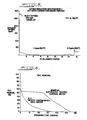
- Figures 4A and 4B show the results of additional studies that were performed to determine the effluent quality possible during continuous operation of the system over an extended period of time.
- the inlet feedwater in each case was an air saturated R.O. treated well water at a temperature of 19 to 23 degrees C.
- the pH was adjusted using sodium hydroxide, and hydrazine was added at a rate sufficient to maintain a residual hydrazine concentration of about 0.5 to 1 ppm.
- a pH change has a more significant effect on oxygen removal when the precoat filter is used for longer periods of time in a continuous process.
- Table 4 summarizes the results of on-site testing at a major power utility using make-up deionized feedwater.
- Treatment of the deionized feedwater included passing the feedwater through clarification and anthracite filters, followed by passage through cation, anion and mixed bed ion exchange resins.
- a vacuum degasifier was positioned after the vessel holding the cation exchange resin to reduce carbon dioxide loading on the anion exchange resin.
- oxygen concentrations ranged from about 100 to about 300-400 micromhos (city water).
- the vessel containing the precoat filter was placed after the vessel holding the anion exchange resin of the demineralizer plant to take advantage of the elevated pH. Conductivity testing was performed both with and without the degasifier of the demineralizer plant in operation.
- a precoat dosage of 0.4 pounds of precoat per square foot of the precoat filter and a flow rate of 1 to 2 gallons per minute (gpm) per square foot were chosen as a compromise between maximum oxygen removal, realistic precoat dosage and treatment throughput. These represent contact times of about 7.2 and 2.6 seconds, respectively.
- Results show that feedwater that is either relatively saturated (5-7 ppm) or contains low concentrations (0.5 ppm) of oxygen can be reduced to low levels of oxygen under these conditions. Reduction of high oxygen concentrations is more sensitive to pH, temperature and precoat age than the reduction low oxygen concentrations.
- Condensate operation involves higher temperatures (usually less than about 200°F) and lower oxygen concentrations (ppb levels rather than ppm levels) than the treatment of deionized feedwater, with more stringent restrictions on conductivity values.
- a higher operating flow rate (usually less than about 10 gpm per square foot) and a lower precoat dosage (for example, less than about 0.4 pounds per square foot) are therefore both possible and desirable, especially if the activated carbon-containing precoat is to be used on existing condensate treatment equipment.
- the precoat filter assembly including the previously described Ecosorb C product was placed at the condenser outlet, before treatment.
- the preferred placement of the precoat layer is at the condenser outlet or at the condensate storage tank.
- condensate pH ranged from about 7.8 to about 8.4, and the temperature of the solution was from about 40 to 48 degrees C.
- Oxygen concentration was somewhat high for condensate at this point, about 300 ppb to 400 ppb. Hydrazine was maintained at a much lower residual concentration than in the treatment of deionized feedwater since many plants require a hydrazine residual in the condensate of no greater than 50 ppb.
- Table 5 summarizes the results of condensate service, using precoats coated at 0.1 and 0.2 pounds per square foot. Flow rates were varied from about 2.0 to 4.0 gpm per square foot, which represents a range of contact times from about 0.5 to 1.8 seconds. An Ecosorb C-containing precoat filter was used.
- Ecosorb C includes about 1 percent of an anion exchange resin in the chloride form as an active particulate material. It may be preferred, however, in certain condensate polishing applications to use an anion exchange resin in the hydroxide form to minimize the concentration of chloride ions in the solution.
- Suitable anion exchange resins include Amberlite IRA 400 (Rohm and Haas Co., Philadelphia, PA) and Dower SBR (Dow Chemical Co., Midland, MI).
- anion exchange resin in the hydroxide form as a component of the mixture that forms the precoat layer, anion exchange resin is in intimate contact with the powdered activated carbon. This has the effect of increasing the pH of the aqueous solution in the immediate vicinity of the activated carbon to promote the hydrazine/oxygen reaction.
- a precoat layer may be used when it is desired to remove oxygen from a liquid by reaction with hydrazine (a reaction that proceeds best at relatively high pH values of about 8 to 11) without raising the pH of the bulk liquid.
- oxygen may be removed from the liquid with hydrazine at ambient temperatures and at relatively neutral pH values (less than 8) without adding electrolytes to the liquid.
- Activated carbon may be used to remove organic compounds from water. Adsorption is dependent upon the nature of the particular organic compound being treated; the molecular weight, polarity, and branching of the organic compound; and on the physical form of the carbon.
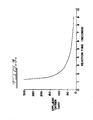
- Figure 6 shows the TOC removal with time during two of the oxygen reduction studies.
- the inlet feedwater comprised well water contaminated with about 0.5 ppm to 1.0 ppm of low molecular weight halocarbons and was pretreated by reverse osmosis.
- R.O. effluent contained about 0.25 ppm organic carbon, which is nominal with resulting molecular weight cutoff of 200.
- the inlet feedwater comprised anthracite-treated cation/anion exchange effluents containing about 0.5 ppm carbon.
- Inlet water to the anthracite had originally contained 2 ppm carbon with almost no reduction by the anthracite filters.
- Inlet water to the precoat filter contained only 0.5 ppm carbon which indicated removal of organic compounds by the ion exchange units. Subsequent reduction in the reduction of organic compounds by the precoat was about 50 precent, which lasted for about 2 days, and then dropped off to substantially no removal after 4 days of operation.
- the precoat filter of the present invention may also be used to remove hydrazine from liquids. In certain applications, such as condensate polishing, a residual hydrazine concentration is desirable. However, in other applications it may be preferred to have no hydrazine in the circulating liquid or aqueous solution.
- an inlet means may be provided before the precoat layer to add oxygen to an oxygen-depleted, circulating liquid.
- the added oxygen can react with the residual hydrazine upon passage through the precoat layer.
- hydrazine is removed from the liquid and the liquid has a residual oxygen concentration.
- the method for removing hydrazine from a liquid comprises the steps of adding oxygen to the liquid containing hydrazine; and passing the liquid through a porous support means having a precoat layer of this invention applied thereto.
- the residual hydrazine and oxygen concentrations can be strictly regulated using a precoat layer of this invention.
- a precoat layer applied at a dosage of about 0.4 pounds per square foot was used herein. Higher dosages are possible but are limited by the physical dimension of the equipment together with operating costs. The highest precoat dosage used in these examples was 0.6 pounds per square foot.
- Oxygen removal at low temperatures is also sensitive to both pH and hydrazine.
- a pH of about 9.5 to 10.0 is required depending on the actual temperature.
- An excess of hydrazine (about 1 ppm) seems to be required.
- Ideal placement of the precoat filter is after an anion exchanger to take advantage of the resulting higher pH. If necessary, ammonia or caustic can be used to adjust the pH, but this is limited by conductivity and/or cation loading constraints.
- the precoat system can be operated at a high flow rate (3 to 4 gpm per square foot) and with a low precoat dosage of about 0.1 pounds per square foot.
- the pH seems less critical, and good results are obtained at pH values as low as 7.7.
- the required hydrazine residual is less than 60 ppb. Under these conditions, an effluent oxygen concentration of less than 1 ppb is achieved.
- the carbon used in Ecosorb-C has a low silica and ash content. However, under adverse conditions (low flow rate and high temperature) effluent silica or conductivity throw may be of concern.
- An underlayer of a mixture of a cation exchange resin in the ammonium or hydrogen form and an anion exchange resin in the hydroxide form can be used to insure against conductivity or silica leakage.
- TOC may be partially reduced to varying degrees by the precoat layer. On a once through basis, the reduction would be less than ideal. However, with a recirculating loop or sidestream treatment, sufficient TOC reduction in the condensate may be achieved. This would be dependent on flow rate and the source of organic contaminants. This type of application may be particularly effective in the treatment of radioactive waste.
Landscapes
- Life Sciences & Earth Sciences (AREA)
- Hydrology & Water Resources (AREA)
- Engineering & Computer Science (AREA)
- Environmental & Geological Engineering (AREA)
- Water Supply & Treatment (AREA)
- Chemical & Material Sciences (AREA)
- Organic Chemistry (AREA)
- Removal Of Specific Substances (AREA)
- Solid-Sorbent Or Filter-Aiding Compositions (AREA)
- Water Treatment By Sorption (AREA)
- Separation Using Semi-Permeable Membranes (AREA)
Applications Claiming Priority (2)
| Application Number | Priority Date | Filing Date | Title |
|---|---|---|---|
| US774939 | 1985-09-11 | ||
| US06/774,939 US4629571A (en) | 1985-09-11 | 1985-09-11 | Deoxygenation and purification of liquids |
Publications (2)
| Publication Number | Publication Date |
|---|---|
| EP0214648A2 true EP0214648A2 (fr) | 1987-03-18 |
| EP0214648A3 EP0214648A3 (fr) | 1988-12-28 |
Family
ID=25102770
Family Applications (1)
| Application Number | Title | Priority Date | Filing Date |
|---|---|---|---|
| EP86112474A Withdrawn EP0214648A3 (fr) | 1985-09-11 | 1986-09-09 | Désoxygénation et purification de liquides |
Country Status (7)
| Country | Link |
|---|---|
| US (1) | US4629571A (fr) |
| EP (1) | EP0214648A3 (fr) |
| JP (1) | JPS6261695A (fr) |
| AU (1) | AU581321B2 (fr) |
| CA (1) | CA1250506A (fr) |
| ES (1) | ES8801166A1 (fr) |
| MX (1) | MX164605B (fr) |
Families Citing this family (12)
| Publication number | Priority date | Publication date | Assignee | Title |
|---|---|---|---|---|
| US4851130A (en) * | 1988-11-30 | 1989-07-25 | Pfizer Inc. | Oxygen removal with carbon catalyzed erythorbate or ascorbate |
| US5346624A (en) * | 1993-01-11 | 1994-09-13 | The Graver Company | Method and apparatus for treatment of aqueous solutions |
| US5585171A (en) * | 1993-01-11 | 1996-12-17 | Graver Chemical | Adsorbent filter bed with pliant and stiff members |
| US5500185A (en) * | 1994-07-29 | 1996-03-19 | Southern California Edison | Deoxygenation process |
| US5993673A (en) * | 1998-09-24 | 1999-11-30 | Arco Chemical Technology, L.P. | Purification process |
| GB0011277D0 (en) * | 2000-05-11 | 2000-06-28 | Univ Robert Gordon | Apparatus and method for de-oxygenating a fluid |
| JPWO2003022425A1 (ja) * | 2001-09-10 | 2004-12-24 | クラレケミカル株式会社 | 複合粒状体及びその製造方法 |
| US7931815B2 (en) * | 2005-09-15 | 2011-04-26 | New Technology Ventures, Inc. | Method for reducing oxygen content of fluid streams containing sulfur compounds |
| JP5422525B2 (ja) * | 2010-09-03 | 2014-02-19 | 株式会社東芝 | 排水処理方法 |
| BR112014015381A2 (pt) * | 2011-12-22 | 2017-06-13 | 3M Innovative Properties Co | meio de filtração compreendendo um sulfeto metálico |
| US9458027B2 (en) | 2013-06-19 | 2016-10-04 | New Technology Ventures, Inc. | Sulfided iron (II) compound and method of manufacture |
| US9023237B2 (en) | 2013-06-19 | 2015-05-05 | New Technology Ventures, Inc. | Highly active nano iron catalyst for the absorption of hydrogen sulfide |
Family Cites Families (8)
| Publication number | Priority date | Publication date | Assignee | Title |
|---|---|---|---|---|
| GB869751A (en) * | 1957-05-16 | 1961-06-07 | Sutcliffe Speakman And Company | Treatment of water |
| US3674686A (en) * | 1970-02-24 | 1972-07-04 | Laval Turbine | Filter precoating method |
| DE2529647C3 (de) * | 1975-07-03 | 1979-12-06 | Bayer Ag, 5090 Leverkusen | Verfahren zur Reinigung von Abwässern der Hydrazinherstellung |
| US4190532A (en) * | 1976-06-11 | 1980-02-26 | Ecodyne Corporation | Charged filter aid material and ion exchange bed |
| US4238334A (en) * | 1979-09-17 | 1980-12-09 | Ecodyne Corporation | Purification of liquids with treated filter aid material and active particulate material |
| NL8103640A (nl) * | 1980-08-12 | 1982-03-01 | Regehr Ulrich | Tegenstroomkoeltoren, in het bijzonder terugkoel-koeltoren voor stoomkrachtinstallaties. |
| US4574071A (en) * | 1983-09-30 | 1986-03-04 | Westinghouse Electric Corp. | Process for removing dissolved oxygen from water using hydrazine |
| US4556492A (en) * | 1983-12-16 | 1985-12-03 | Ecolochem, Inc. | Deoxygenation process |
-
1985
- 1985-09-11 US US06/774,939 patent/US4629571A/en not_active Expired - Fee Related
-
1986
- 1986-05-22 CA CA000509777A patent/CA1250506A/fr not_active Expired
- 1986-06-17 AU AU58781/86A patent/AU581321B2/en not_active Ceased
- 1986-06-18 ES ES556196A patent/ES8801166A1/es not_active Expired
- 1986-07-17 MX MX316286A patent/MX164605B/es unknown
- 1986-08-06 JP JP61185011A patent/JPS6261695A/ja active Pending
- 1986-09-09 EP EP86112474A patent/EP0214648A3/fr not_active Withdrawn
Also Published As
| Publication number | Publication date |
|---|---|
| AU581321B2 (en) | 1989-02-16 |
| EP0214648A3 (fr) | 1988-12-28 |
| MX164605B (es) | 1992-09-07 |
| JPS6261695A (ja) | 1987-03-18 |
| ES8801166A1 (es) | 1987-12-16 |
| ES556196A0 (es) | 1987-12-16 |
| CA1250506A (fr) | 1989-02-28 |
| AU5878186A (en) | 1987-03-12 |
| US4629571A (en) | 1986-12-16 |
Similar Documents
| Publication | Publication Date | Title |
|---|---|---|
| Lalezary‐Craig et al. | Optimizing the removal of Geosmin and 2‐methylisoborneol by powdered activated carbon | |
| US4294706A (en) | Process for treating waste water | |
| Lee et al. | Activated carbon adsorption of humic substances | |
| Najm et al. | Using powdered activated carbon: a critical review | |
| US5980716A (en) | Water treatment apparatus for a fuel cell system | |
| US4276180A (en) | Industrial waste-water reuse by selective silica removal over activated alumina | |
| US7311842B2 (en) | Lignocellulose-based anion-adsorbing medium (LAM) and process for making and using same for the selective removal of phosphate and arsenic anionic contaminants from aqueous solutions | |
| EP0214648A2 (fr) | Désoxygénation et purification de liquides | |
| US5512182A (en) | Process for removing trace amounts of ammonia-containing compounds from aqueous streams | |
| JP2001215294A (ja) | 復水脱塩装置 | |
| JP2007527311A (ja) | 過塩素酸イオンのようなオシキアニオンのイオン交換樹脂上での生分解 | |
| GB2043045A (en) | Process for treating ammonia- containing waste water | |
| JP3319053B2 (ja) | フッ化物含有水の処理方法 | |
| Kim et al. | Competitive adsorption of trace organics on membranes and powdered activated carbon in powdered activated carbon-ultrafiltration system | |
| JPH0638953B2 (ja) | 高純度水の製造装置 | |
| US4151079A (en) | Regeneration of ion exchange resins | |
| US4267057A (en) | Water treatment for selective removal of nitrates | |
| JPS6336890A (ja) | 高純度水の製造装置 | |
| JP2001179252A (ja) | 酸化性物質低減純水製造方法及び装置 | |
| JP3715570B2 (ja) | 水中ラジウムの除去方法 | |
| US4985150A (en) | Water treatment using oxidized coal | |
| CN114426370A (zh) | 一种炼油废水的净化工艺和装置及应用 | |
| KR100764904B1 (ko) | 이온교환체를 이용한 세슘 또는 스트론튬의 방사성 핵종 제거방법 | |
| JPH05305297A (ja) | 有機物含有酸性排水の処理装置 | |
| Li et al. | Integrating Membrane Filtration and a Fluidized‐Bed Pellet Reactor for Hardness Removal |
Legal Events
| Date | Code | Title | Description |
|---|---|---|---|
| PUAI | Public reference made under article 153(3) epc to a published international application that has entered the european phase |
Free format text: ORIGINAL CODE: 0009012 |
|
| AK | Designated contracting states |
Kind code of ref document: A2 Designated state(s): CH DE FR GB IT LI |
|
| PUAL | Search report despatched |
Free format text: ORIGINAL CODE: 0009013 |
|
| AK | Designated contracting states |
Kind code of ref document: A3 Designated state(s): CH DE FR GB IT LI |
|
| 17P | Request for examination filed |
Effective date: 19890628 |
|
| 17Q | First examination report despatched |
Effective date: 19900627 |
|
| STAA | Information on the status of an ep patent application or granted ep patent |
Free format text: STATUS: THE APPLICATION IS DEEMED TO BE WITHDRAWN |
|
| 18D | Application deemed to be withdrawn |
Effective date: 19910723 |
|
| RIN1 | Information on inventor provided before grant (corrected) |
Inventor name: SALEM, ELI Inventor name: KUNIN, ROBERT |