EP0218323B1 - Dérivés de 2-propadienyl-pénicilline et intermédiaires - Google Patents
Dérivés de 2-propadienyl-pénicilline et intermédiaires Download PDFInfo
- Publication number
- EP0218323B1 EP0218323B1 EP86305814A EP86305814A EP0218323B1 EP 0218323 B1 EP0218323 B1 EP 0218323B1 EP 86305814 A EP86305814 A EP 86305814A EP 86305814 A EP86305814 A EP 86305814A EP 0218323 B1 EP0218323 B1 EP 0218323B1
- Authority
- EP
- European Patent Office
- Prior art keywords
- group
- formula
- amino
- protected
- hydrogen
- Prior art date
- Legal status (The legal status is an assumption and is not a legal conclusion. Google has not performed a legal analysis and makes no representation as to the accuracy of the status listed.)
- Expired - Lifetime
Links
- 0 CC*(C(C)=CC)N Chemical compound CC*(C(C)=CC)N 0.000 description 18
- HTQJGGGPLKSZKR-UHFFFAOYSA-N CC(C)C(C)CCCN Chemical compound CC(C)C(C)CCCN HTQJGGGPLKSZKR-UHFFFAOYSA-N 0.000 description 1
Classifications
-
- C—CHEMISTRY; METALLURGY
- C07—ORGANIC CHEMISTRY
- C07K—PEPTIDES
- C07K5/00—Peptides containing up to four amino acids in a fully defined sequence; Derivatives thereof
- C07K5/04—Peptides containing up to four amino acids in a fully defined sequence; Derivatives thereof containing only normal peptide links
- C07K5/06—Dipeptides
- C07K5/06139—Dipeptides with the first amino acid being heterocyclic
-
- A—HUMAN NECESSITIES
- A61—MEDICAL OR VETERINARY SCIENCE; HYGIENE
- A61P—SPECIFIC THERAPEUTIC ACTIVITY OF CHEMICAL COMPOUNDS OR MEDICINAL PREPARATIONS
- A61P31/00—Antiinfectives, i.e. antibiotics, antiseptics, chemotherapeutics
- A61P31/04—Antibacterial agents
-
- C—CHEMISTRY; METALLURGY
- C07—ORGANIC CHEMISTRY
- C07D—HETEROCYCLIC COMPOUNDS
- C07D499/00—Heterocyclic compounds containing 4-thia-1-azabicyclo [3.2.0] heptane ring systems, i.e. compounds containing a ring system of the formula:, e.g. penicillins, penems; Such ring systems being further condensed, e.g. 2,3-condensed with an oxygen-, nitrogen- or sulfur-containing hetero ring
-
- C—CHEMISTRY; METALLURGY
- C12—BIOCHEMISTRY; BEER; SPIRITS; WINE; VINEGAR; MICROBIOLOGY; ENZYMOLOGY; MUTATION OR GENETIC ENGINEERING
- C12N—MICROORGANISMS OR ENZYMES; COMPOSITIONS THEREOF; PROPAGATING, PRESERVING, OR MAINTAINING MICROORGANISMS; MUTATION OR GENETIC ENGINEERING; CULTURE MEDIA
- C12N1/00—Microorganisms; Compositions thereof; Processes of propagating, maintaining or preserving microorganisms or compositions thereof; Processes of preparing or isolating a composition containing a microorganism; Culture media therefor
- C12N1/14—Fungi; Culture media therefor
- C12N1/145—Fungi isolates
-
- C—CHEMISTRY; METALLURGY
- C12—BIOCHEMISTRY; BEER; SPIRITS; WINE; VINEGAR; MICROBIOLOGY; ENZYMOLOGY; MUTATION OR GENETIC ENGINEERING
- C12P—FERMENTATION OR ENZYME-USING PROCESSES TO SYNTHESISE A DESIRED CHEMICAL COMPOUND OR COMPOSITION OR TO SEPARATE OPTICAL ISOMERS FROM A RACEMIC MIXTURE
- C12P37/00—Preparation of compounds having a 4-thia-1-azabicyclo [3.2.0] heptane ring system, e.g. penicillin
-
- C—CHEMISTRY; METALLURGY
- C12—BIOCHEMISTRY; BEER; SPIRITS; WINE; VINEGAR; MICROBIOLOGY; ENZYMOLOGY; MUTATION OR GENETIC ENGINEERING
- C12R—INDEXING SCHEME ASSOCIATED WITH SUBCLASSES C12C - C12Q, RELATING TO MICROORGANISMS
- C12R2001/00—Microorganisms ; Processes using microorganisms
- C12R2001/645—Fungi ; Processes using fungi
- C12R2001/80—Penicillium
- C12R2001/82—Penicillium chrysogenum
-
- Y—GENERAL TAGGING OF NEW TECHNOLOGICAL DEVELOPMENTS; GENERAL TAGGING OF CROSS-SECTIONAL TECHNOLOGIES SPANNING OVER SEVERAL SECTIONS OF THE IPC; TECHNICAL SUBJECTS COVERED BY FORMER USPC CROSS-REFERENCE ART COLLECTIONS [XRACs] AND DIGESTS
- Y02—TECHNOLOGIES OR APPLICATIONS FOR MITIGATION OR ADAPTATION AGAINST CLIMATE CHANGE
- Y02P—CLIMATE CHANGE MITIGATION TECHNOLOGIES IN THE PRODUCTION OR PROCESSING OF GOODS
- Y02P20/00—Technologies relating to chemical industry
- Y02P20/50—Improvements relating to the production of bulk chemicals
- Y02P20/55—Design of synthesis routes, e.g. reducing the use of auxiliary or protecting groups
Definitions
- This invention relates to new penicillin compounds and to processes for their production.
- Penicillins are widely used for the treatment of diseases caused by pathogenic bacteria in human beings and animals. Although the effectiveness of these antibiotics is acknowledged, it is recognized that there is a need for new, improved, active compounds, for example to avoid the problems of allergy or the development of resistance in bacteria associated with the use of existing penicillins.
- thiazolidine ring in penicillins may be substituted with an allenyl group to produce a novel class of compounds which have antibiotic activity and/or are of interest as intermediates for the production of penicillins with antibiotic activity.
- One aspect of this invention is directed to penicillin antibiotics (and the immediate precursors therefor) of the formulas or or a mixture of the two.
- Ri, R 2 , and R z in the above formulas are as defined below.
- Another aspect of the invention encompasses intermediates to the above penicillins of the formula and the corresponding disulphide intermediates of the formula wherein R 2a , R 4 , and R s are as defined below.
- a further aspect of the invention is a process for making the compounds of Formula A 1 and A 2 above, wherein in the Formulas R 2 is a group of the formula wherein R 6 is a group of the formula or and also wherein R 2 and R 5 are hydrogen;
- R 1 represents hydrogen or a methyl group
- R 2 represents hydrogen, an amino-protecting group or a C, to C 20 acyl group
- R z is a carboxy-protecting group or hydrogen; or a salt thereof.
- R 2 represents an amino-protecting group it may be, for example, a C, to C 20 acyl group used for protecting amino groups such as a group R 3 in which R 3 represents a C 7 to C 20 aralkyl (e.g. benzyl), a C 7 to C 20 aryloxyalkyl (e.g. phenoxymethyl) or an optionally substituted C 1 to C 6 alkyl, C 1 to C 6 alkoxy, or C, to C 6 group.
- aralkyl e.g. benzyl
- aryloxyalkyl e.g. phenoxymethyl
- Substituents that may be present on the group R 2 include for example carboxyl and amino groups.
- Ci to C 20 acyl group represented by R 2 refers to the acyl moieties (other than those traditionally used as amino-protecting groups) which have been bonded to the C-6 amino group of penicillins, the C-7 amino group of cephalosporins, 1-oxadethiacephalosporins or 1-carbacephalosporins, and the C-3 amino of monocyclic ⁇ -lactams (such as the azthreonam series).
- the "C 1 to C 20 acyl group” can be optionally interrupted by heteroatoms. Examples of such acyl groups can be found in references such as "Cephalosporins and Penicillins, Chemistry and Biology” edited by Edwin W. Flynn, Academic Press, New York, 1972 and “Chemistry and Biology of ⁇ -Lactam Antibiotics” edited by Robert B. Morin and Marvin Gorman, Vols. 1, 2, and 3, Academic Press, New York, 1982.
- C 1 to C 20 acyl groups at R 2 can also be found in M. Yoshioka et al., U.S. Patent No. 4,478,997, issued October 23, 1984, B. R. Belleau et al., U.S. Patent No. 4,172,199, issued October 23, 1979, T. Kamiya et al., U.S. Patent No. 4,472,300, issued September 18, 1984, (especially columns 25 through 36) all of which are herein incorporated by reference.
- Additional examples of "acyl groups derived from a C, to C 20 carboxylic acid” can be found in Koster et al., U.S. Patent No. 4,478,749, issued October 23, 1984.
- C 1 to C 20 acyl groups of R 2 include groups wherein R 2 is a group of the formula wherein R s is
- halogen or halo denotes a fluoro, chloro, bromo or iodo atom.
- C 1 to C 3 alkyl indicates a methyl, ethyl, n-propyl, or iso-propyl group.
- C 1 to C 4 alkyl embraces the groups indicated by the term “Ci to C 3 alkyl” plus the n-butyl, iso-butyl, sec-butyl, and tert-butyl groups.
- C 1 to C 6 alkyl denotes such radicals as methyl, ethyl, n-propyl, iso-propyl, n-butyl, sec-butyl, tert-butyl, amyl, tert-amyl, hexyl and the like.
- the preferred "Ci to C s alkyl” group is methyl.
- C to C 6 substituted alkyl denotes the above C 1 to Cs alkyl groups that are substituted by one or two halogen, hydroxy, protected hydroxy, amino, protected amino, C 1 to C 7 acyloxy, nitro, carboxy, protected carboxy, carbamoyl, carbamoyloxy, cyano, methylsulfonylamino or C, to C 4 alkoxy groups.
- the substituted alkyl groups may be substituted once or twice with the same or with different substituents.
- Examples of the above substituted alkyl groups include the cyanomethyl, nitromethyl, hydroxymethyl, trityloxymethyl, propionyloxymethyl, aminomethyl, carboxymethyl, allyloxycarbonylmethyl, allyloxycar- bonylaminomethyl, carbamoyloxymethyl, methoxymethyl, ethoxymethyl, t-butoxymethyl, acetoxymethyl, chloromethyl, bromomethyl, iodomethyl, 6-hydroxyhexyl, 2,4-dichloro(n-butyl), 2-amino(iso-propyl), 2-car- bamoyloxyethyl and the like.
- a preferred group of examples within the above "C 1 to C s substituted alkyl” group includes the substituted methyl group, in other words, a methyl group substituted by the same substituents as the "Ci to C 6 substituted alkyl” group.
- the substituted methyl group include groups such as hydroxymethyl, protected hydroxymethyl, (e.g., tetrahydropyranyloxymethyl), acetoxymethyl, carbamoyloxymethyl, chloromethyl, bromomethyl and iodomethyl.
- C 1 to C 4 alkoxy denotes groups such as methoxy, ethoxy, n-propoxy, iso- propoxy, n-butoxy, t-butoxy and like groups.
- C 1 to C 7 acyloxy denotes herein groups such as formyloxy, acetoxy, propionyloxy, butyryloxy, pentanoyloxy, hexanoyloxy, heptanoyloxy, and the like.
- C 1 to C 4 alkylsulfonyl indicates groups such as methylsulfonyl, ethylsulfonyl, n-propylsulfonyl, iso- butylsulfonyl, and the like.
- N-((Ci to C 4 alkanoyl)amino) includes groups such as formylamino, acetylamino, n-propionylamino and iso-butyrylamino moieties.
- N-((Ci to C 4 alkyl)-sulfonylamino) examples include the N-(methylsulfonylamino), N-(ethylsulfonylamino), N-((iso-propyl)sulfonylamino), and the N-((n-butyl)sulfonylamino) groups.
- hydroxy-protecting group refers to a readily cleavable group bonded to a hydroxyl group, such as the formyl, chloroacetyl, tetrahydropyranyl, 2-methoxyprop-2-yl, 1-ethoxyeth-1-yl, methoxymethyl, p-methoxyethoxymethyl, methylthiomethyl, t-butyl, t-amyl, trityl, 4-methoxytrityl, 4,4'-dimethoxytrityl, 4,4',4"- trimethoxytrityl, benzyl, p-nitrobenzyl, allyl, trimethylsilyl, (t-butyl)dimethylsilyl, and the 2,2,2-trichloroethoxycarbonyl groups.
- hydroxy-protecting groups are described by C.B. Reese and E. Haslam, "Protective Groups in Organic Chemistry", J.G.W. McOmie, Ed., Plenum Press, New York, N.Y., 1973, Chapters 3 and 4, respectively, and T.W. Greene, "Protective Groups in Organic Synthesis", John Wiley and Sons, New York, N.Y., 1981, Chapters 2 and 3.
- Some preferred hydroxy-protecting groups are the trityl group and the tetrahydropyranyl group.
- hydroxyl groups substituted by such hydroxy-protecting groups are referred to herein as "protected hydroxy" groups.
- Ci to C 4 alkanoyl examples include groups such as the formyl, acetyl, n-propionyl, iso-propionyl, n-butyryl, and iso-butyryl groups.
- substituted phenyl examples include a mono- or di(halo)phenyl group such as 4-chlorophenyl, 2,6-dichlorophenyl, 2,5-dichlorophenyl, 3,4-dichlorophenyl, 3-chlorophenyl, 3-bromophenyl, 4-bromophenyl, 3,4-dibromophenyl, 3-chloro-4-fluorophenyl, 4-iodophenyl, 2-fluorophenyl, and the like; a mono- or di(hydroxy)phenyl group such as 4-hydroxyphenyl, 3-hydroxyphenyl, 2,4-dihydroxyphenyl, the protected-hydroxy derivatives thereof, and the like; a nitrophenyl group such as the 3-or 4-nitrophenyl group; a cyanophenyl group, for example, 4-cyanophenyl; a mono- or di(amino)phenyl group such as 4-a
- substituted phenyl represents disubstituted phenyl groups wherein the susbtituents are different, for example, 3-methyl-4-hydroxyphenyl, 3-chloro-4-aminophenyl, 2-methoxy-4-bromophenyl, 4-ethyl-2-aminophenyl, 3-hydroxy-4-nitrophenyl, 2-hydroxy-4-carboxyphenyl, and the like.
- Preferred substituted phenyl groups include the 2- and 3-(trifluoromethyl)phenyl, the 4-hydroxyphenyl, the 2-(aminomethyl)phenyl, the 3-(N-(methylsulfonylamino))-phenyl, and 3-(N-(ethylsulfonylamino))phenyl groups.
- the compounds of Formula (1) may form salts with bases, for example inorganic base salts such as alkali metal salts (e.g. sodium and potassium salts) and alkaline earth metal salts (e.g. calcium salts); amino acid salts (e.g. lysine and arginine salts); and organic base salts (e.g. procaine, phenylethylbenzylamine, dibenzylethylenediamine, ethanolamine, diethanolamine and N-methylglucosamine salts).
- the compounds may also form salts with acids.
- Such salts include acid addition salts, e.g. formed with hydrochloric, hydrobromic, sulphuric, nitric, phosphoric, formic and trifluoroacetic acids.
- salts of compounds of Formula (1) will desirably he physiologically acceptable salts.
- Compounds according to the invention have been found to exhibit antibiotic activity, in particular against strains of Staphylococcus aureus.
- the compounds may be of use in the treatment of a variety of diseases caused by pathogenic bacteria in human beings and animals, such as respiratory tract infections and urinary tract infections.
- the compounds of the invention are also useful as intermediates for the production of penicillins with antibiotic activity.
- the compounds of the invention may be formulated in any convenient way, by analogy with other antibiotics.
- the invention therefore includes within its scope pharmaceutical compositions comprising an antibiotic compound in accordance with the invention adapted for use in human or veterinary medicine.
- Such compositions may be presented for use in conventional manner with the aid of any necessary pharmaceutical carriers or excipients.
- the antibiotic compounds according to the invention may be formulated for injection and may be presented in unit dose form, in ampoules, or in multidose containers, if necessary with an added preservative.
- the compositions may also take such forms as suspensions, solutions, or emulsions in oily or aqueous vehicles, and may contain formulatory agents such as suspending, stabilizing and/or dispersing agents.
- the active ingredient may be in powder form for reconstitution with a suitable vehicle, e.g. sterile pyrogen-free water, before use.
- compositions may also be presented in a form suitable for absorption by the gastro-intestinal tract, for example, tablets, capsules, syrups or suspensions for oral administration, and suppositories.
- compositions for veterinary medicine may, for example, be formulated as intramammary preparations in either long acting or quick-release bases.
- compositions may contain from 0.1% upwards, e.g. 0.1-99% of the active material, depending on the method of administration.
- each unit will preferably contain 50 to 2000 mg of the active ingredient, e.g. 250 to 500 mg.
- the daily dosage for adult human treatment will preferably range from 250 to 5000 mg e.g. 500 to 2000 mg per day, depending inter alia on the nature of the infection and the route and frequency of administration.
- intravenous or intramuscular administration will be employed, for example using 500 to 2500 mg per day of the active ingredient in adult human treatment.
- antibiotic compounds according to the invention may be administered in combination with other therapeutic agents such as antibiotics, for example other penicillins or cephalosporins.
- the compounds according to the invention may be prepared by a number of processes, as described in the following wherein R, is as defined for general Formula (1).
- Suitable salts of the compounds of Formula (2) include salts with inorganic or organic bases e.g. alkali metal, alkaline earth metal and amine salts and, when R 2a contains an amino group, salts with acids, e.g. acid addition salts.
- the isopenicillin N synthetase may be derived from a microorganism which produces the enzyme, such as a species of the genus Acremonium, Streptomyces or Penicillium.
- Particularly suitable species which may be employed to provide the desired isopenicillin N synthetase activity include Acremonium chrysogenum, for example strains IMI 237183, ATCC 20339, ATCC 14553, ATCC 36255, ATCC 48272, and NRRL 11418; Streptomyces cattleya, for example strain NRRL 8057, Streptomyces lipmanii, for example strain NRRL 3584 and Streptomyces clavuligerus, for example strains ATCC 27064 and NRRL 3585; and Penicillium chrysogenum, for example strain NRRL 1951. Selectants or mutants of the strains mentioned above may also be employed.
- a particularly preferred strain is Acremonium chrysogenum IMI 237183 or a selectant or mutant thereof.
- the term 'selectant' means a strain of the microorganism derived from colony selected from the parent strain which has been cultivated in such a way as to provide a strain having one or more properties which are qualitatively or quantitatively different from those of the parent strain e.g. resistance to substances produced in fermentation.
- a selectant may, of course, be a spontaneous mutant of the parent microorganism, but in some it may not be.
- mutant strains will include any mutant strain which arises either spontaneously or as a result of the action of an external agent, which may be either deliberately applied or otherwise.
- Mutant strains may be produced by a variety of methods including the use of ionizing radiation (e.g., u.v. light, X-and y-rays) chemicals (e.g., nitrous oxide, hydroxylamine, pyrimidine base analogues such as 5-bromouracil, acridines, alkylating agents such as mustard gas, hydrogen peroxide, phenols, and formaldehyde) heat and genetic techniques (e.g. recombination, transduction, transformation, lysogenisation, lysogenic conversion, and selective techniques for spontaneous mutants).
- ionizing radiation e.g., u.v. light, X-and y-rays
- chemicals e.g., nitrous oxide, hydroxylamine, pyrimidine base analogues such as 5-bromouraci
- the substrate of Formula (2) may be incubated with a preparation of the enzyme, optionally in buffer solution, at, for example 0-40 C, preferably 20 to 30. C, at a pH preferably in the range 6 to 9, e.g., in the range 7.0 to 8.0.
- reducing agents e.g. dithiothreitol, for example at a concentration of from 1 to 5mM, ferrous ions (e.g. provided by ferrous sulphate) at a concentration of from 0.1 to 1mM and ascorbate ions (e.g. provided by ascorbic acid) at a concentration of from 1 to 5mM, and oxygen.
- catalase may be added to the reaction mixture, for example 1000-5000 (e.g. 3000) Sigma units/ml.
- reaction may be quenched by, for example, the addition of solvents such as acetone, and any precipitated protein removed e.g. by centrifugation.
- solvents such as acetone
- desired compound of the invention may then be recovered using conventional techniques such as solvent extraction.
- the isopenicillin N synthetase preparation used in the process may be obtained from the fermentation of a microorganism which produces the enzyme.
- the fermentation may be performed using methods well known in the art for example those described by Fawcett et al (1975) Biochem. J. 151, 741-746, Fawcett et al. (1976) Biochem. J. 157, 651-660, and O'Sullivan et al. (1979) Biochem. J. 179, 47-52.
- the synthetase preparation used in the process will generally be a cell-free extract obtained from the fermentation using conventional methods for the isolation and purification of enzymes. Where the enzyme is cell-bound it may be released for use by conventional techniques such as grinding with glass beads, homogenisation or sonication after suspension of the cells in a suitable buffer.
- the crude enzyme preparation may if desired be purified further using well-known methods, such as fractional precipitation techniques, using for example a salt such as protamine sulphate or ammonium sulphate, and batch or column chromatography with ion-exchange celluloses, affinity adsorbents or molecular sieves.
- the enzyme may be employed in an immobilized form, e.g., by insolubilization or entrapment thereof on, or in, a suitable matrix.
- an extract of the enzyme may be covalently bound or linked to an otherwise inert inorganic or organic polymer, entrapped on or in, a fibre, or on, or in, a membrane or polymer such as polyacrylamide gel, absorbed on an ion-exchange resin, cross-linked with a reagent such as gluteraldehyde, or occluded in an envelope such as a bead.
- Immobilised synthetases of these types may advantageously be employed both in batch processes, after which the enzyme may be reused, and continuous flow processes wherein substrates pass through a column containing the immobilized enzyme.
- Intermediates of Formula (2) may be prepared by deprotection of a compound of Formula (3) (wherein R 2b is as defined for R 2a in Formula (2) except that amino, hydroxy and carboxyl groups where present are protected (e.g., as p-methoxybenzyloxycarbonylamino and p-methoxybenzyloxycarbonyl groups), R 4 is a p-methoxybenzyl group, and R s is a diphenylmethyl group) using for example trifluoroacetic acid in the presence of anisole at an elevated temperature e.g., the reflux temperature.
- R 2b is as defined for R 2a in Formula (2) except that amino, hydroxy and carboxyl groups where present are protected (e.g., as p-methoxybenzyloxycarbonylamino and p-methoxybenzyloxycarbonyl groups), R 4 is a p-methoxybenzyl group, and R s is a diphenylmethyl group) using for example trifluoro
- a further aspect of the instant invention is a compound of the formula wherein:
- Intermediates of Formula (3) may be prepared by reaction of a compound of Formula (4) with a compound of Formula (5) (wherein "Ts" represents p-toluenesulphonyl) in the presence of a coupling agent such as 1- ethoxycarbonyl-2-ethoxy-1,2-dihydroquinoline and a base e.g., triethylamine in a suitable solvent e.g., dichloromethane.
- a coupling agent such as 1- ethoxycarbonyl-2-ethoxy-1,2-dihydroquinoline and a base e.g., triethylamine in a suitable solvent e.g., dichloromethane.
- the intermediates of Formula (5) may be prepared from the compounds of Formula (6) (where Ry is t-butyloxycarbonyl) by reaction with p-toluenesulphonic acid in a solvent such as ether.
- the compounds of Formula (6) may be prepared from an iodoalanine of Formula (7) by reaction with triphenyl propargyl tin and azobisisobutyronitrile in benzene.
- the disulphides (Formula 2A) of the intermediates of Formula (2) may be prepared by oxidation of the corresponding sulphide using for example oxygen.
- a compound of Formula (1) in which R 2 is hydrogen may be prepared from a corresponding compound of Formula (1) in which R 2 is an acylamino group by deacylation.
- the reaction may be effected using a nitrosyl halide such as nitrosyl chloride, at a temperature of from -30 to +20° C conveniently in a solvent such as acetonitrile.
- a compound of Formula (1) where R 2 is an acylamino group may be prepared by acylation of a corresponding compound in which R 2 is hydrogen.
- Acylation may be effected using an acid or an activated derivative or ester thereof.
- Suitable activated derivatives include acid halides particularly acid chlorides or bromides and acid anhydrides.
- Acylations employing acid halides may be effected in aqueous or non-aqueous reaction media, conveniently at temperatures of from -50 to + 5 0° C, preferably -40 to +30° C, if desired in the presence of an acid binding agent such as a tertiary amine (e.g., triethylamine) an inorganic base (e.g., sodium bicarbonate) or an oxirane (e.g., ethylene oxide or propylene oxide).
- an acid binding agent such as a tertiary amine (e.g., triethylamine)
- an inorganic base e.g., sodium bicarbonate
- an oxirane e.g., ethylene oxide or propylene oxide
- Suitable reaction media include aqueous ketones e.g., acetone, aqueous alcohols e.g., ethanol, esters e.g., ethyl acetate, halogenated hydrocarbons e.g., methylene chloride, amides such as dimethylacetamide nitriles such as acetonitrile, or mixtures of two or more such solvents.
- aqueous ketones e.g., acetone
- aqueous alcohols e.g., ethanol
- esters e.g., ethyl acetate
- halogenated hydrocarbons e.g., methylene chloride
- amides such as dimethylacetamide nitriles such as acetonitrile, or mixtures of two or more such solvents.
- Acylations employing acids are desirably conducted in the presence of a condensing agent for example a carbodiimide such as N,N'-dicyclohexylcarbodiimide; a carbonyl compound such as carbonyldiimidazole; or an isoxazolium salt such as N-ethyl-5-phenylisoxazolium perchlorate.
- a condensing agent for example a carbodiimide such as N,N'-dicyclohexylcarbodiimide; a carbonyl compound such as carbonyldiimidazole; or an isoxazolium salt such as N-ethyl-5-phenylisoxazolium perchlorate.
- Suitable anhydrides include symmetrical anhydrides or mixed anhydrides (e.g. formed with pivalic acid or with a haloformate such as a lower alkylhaloformate).
- Mixed anhydrides may also be formed with phosphorus acids (for example phosphoric or phosphorous acids), sulphuric acid or an aliphatic sulphonic acid.
- Esters may conveniently be formed in situ using, for example, 1-hydroxybenzotriazole in the presence of a condensing agent as set out above. Alternatively, the ester may be preformed.
- Acylation reactions involving the free acids or anhydrides or esters thereof as described above are desirably effected in an anhydrous reaction medium, e.g. methylene chloride, tetrahydrofuran, dimethylformamide or acetonitrile.
- anhydrous reaction medium e.g. methylene chloride, tetrahydrofuran, dimethylformamide or acetonitrile.
- the above acylation reactions may be carried out in the presence of a catalyst such as 4-dimethylaminopyridine.
- any sensitive groups e.g. amino, or carboxyl groups
- Conventional protection methods may be used, for example as described in "Protective Groups In Organic Chemistry” Ed. J.F.N. McOmie (Plenum Press, 1973).
- suitable amino protecting groups are aralkyl groups such as triphenylmethyl and acyl groups such as chloroacetyl.
- Suitable carboxyl protecting groups include aralkyl groups e.g. benzyl. The protecting group may thereafter be removed in any convenient way which does not cause breakdown of the desired compound e.g. triphenylmethyl and benzyl groups may be removed by hydrolysis under acidic or basic conditions as appropriate, and chloroacetyl groups may be removed by treatment with thiourea.
- HPLC high performance liquid chromatography
- Acremonium chrysogenum IMI 237183 was grown as described by Fawcett et al, Biochem. J., 1976, 157, 651-660, except that distilled water was used instead of tap water.
- Mycelia (96 hours old/about 10 hours from the beginning of stationary phase) were harvested by filtration through a double-layer of cheese cloth, (this, and all subsequent steps described below were carried out at 2-4°), resuspended in distilled water (3 x v/w) and suction-dried through Whatman filter paper (No. 52).
- the resulting mycelia were suspended in 50mM Tris-HCI buffer, pH 8.0, (3 x v/w) and disrupted in a Dyno Mill (Willy A Bacofen AG Maschinenfabrik, Basel) with 0.25mm glass beads (500m1 stirred at 3000 r.p.m. in a 600ml head).
- protamine sulphate solution (6% w/v in distilled water) was added to the homogenate and the resulting solution stirred for 20 minutes then centrifuged at 10,000g for 30 minutes. The supernatant was collected and ammonium sulphate was added to 55% saturation. The solution was centrifuged (10,000g for 30 min) the supernatant was collected and ammonium sulphate was added to 85% saturation. The resulting precipitate was recovered (centrifugation at 10,000g for 45 minutes) and dissolved in a minimum amount of Tris-HCI buffer (50mM, pH 7.5, containing 0.015% w/v sodium azide), to obtain a protein concentration of about 40mg/ml.
- Tris-HCI buffer 50mM, pH 7.5, containing 0.015% w/v sodium azide
- the protein solution (80ml) was loaded onto a coarse Sephadex G-75 (Pharmacia) column (3.7cm x 110cm) which had been pre-equilibrated with the same Tris-HCI buffer and the fractions with isopenicillin N synthetase activity were collected, pooled and loaded directly onto a DEAE-Sepharose CL-6B column (5cm x 11.5cm) which had been pre-equilibrated with Tris-HCI buffer (50mM, pH 7.5, containing 0.015% w/v sodium azide).
- Tris-HCI buffer 50mM, pH 7.5, containing 0.015% w/v sodium azide
- the column was washed with about 500ml of 50mM, NaCl in the same Tris-HCI buffer then subjected to a gradient elution of NaCl in buffer (50mM - 250mM, total volume 800ml, linear gradient), enzyme activity being eluted at about 100mM NaCI.
- the enzyme solution obtained from the column was suitable for direct use.
- N-[(1,1-Dimethylethoxy)carbonyl]-3-iodo-D-alanine diphenylmethyl ester (481 mg), triphenyl propargyl tin (780mg) and azobisisobutyronitrile (AIBN) (0.15eq) were dissolved in dry degassed benzene (2ml) and the solution was refluxed under nitrogen at 80° for 18h. Fresh quantities of tin reagent (1 eq) and AIBN (10mg) were added after 4, 8 and 12h.
- the reaction mixture was divided equally into 3 pots and each was incubated at 27° for 1h on a shaker (250 r.p.m.). Dithiothreitol (30 ⁇ l containing 2mmol) was added to each pot after 15 min. At the end of 1h the reaction was stopped by adding acetone (70% v/v) and the precipitated protein was removed by centrifugation (20,000 r.p.m. for 5 min.). Acetone in the supernatant was aspirated away under nitrogen and the remaining aqueous phase was freeze dried.
Landscapes
- Chemical & Material Sciences (AREA)
- Organic Chemistry (AREA)
- Life Sciences & Earth Sciences (AREA)
- Health & Medical Sciences (AREA)
- Engineering & Computer Science (AREA)
- Zoology (AREA)
- Genetics & Genomics (AREA)
- Wood Science & Technology (AREA)
- General Health & Medical Sciences (AREA)
- Bioinformatics & Cheminformatics (AREA)
- Biochemistry (AREA)
- Biotechnology (AREA)
- Medicinal Chemistry (AREA)
- General Engineering & Computer Science (AREA)
- Microbiology (AREA)
- General Chemical & Material Sciences (AREA)
- Chemical Kinetics & Catalysis (AREA)
- Mycology (AREA)
- Molecular Biology (AREA)
- Proteomics, Peptides & Aminoacids (AREA)
- Botany (AREA)
- Biophysics (AREA)
- Tropical Medicine & Parasitology (AREA)
- Virology (AREA)
- Biomedical Technology (AREA)
- Public Health (AREA)
- Communicable Diseases (AREA)
- Oncology (AREA)
- Veterinary Medicine (AREA)
- Animal Behavior & Ethology (AREA)
- Pharmacology & Pharmacy (AREA)
- Nuclear Medicine, Radiotherapy & Molecular Imaging (AREA)
- Pharmaceuticals Containing Other Organic And Inorganic Compounds (AREA)
- Organic Low-Molecular-Weight Compounds And Preparation Thereof (AREA)
- Preparation Of Compounds By Using Micro-Organisms (AREA)
Claims (16)


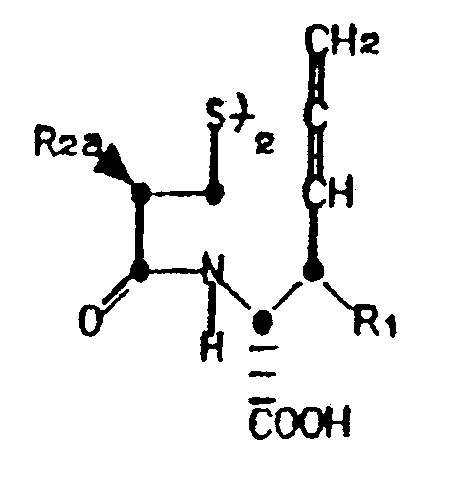

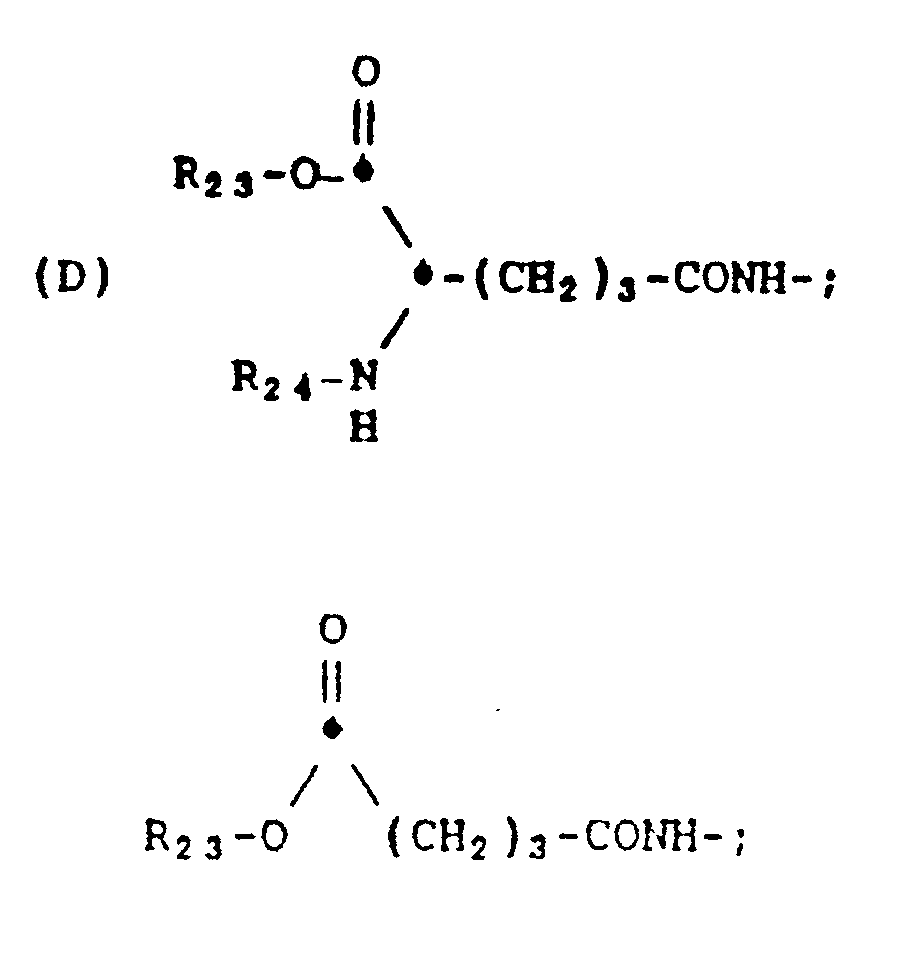


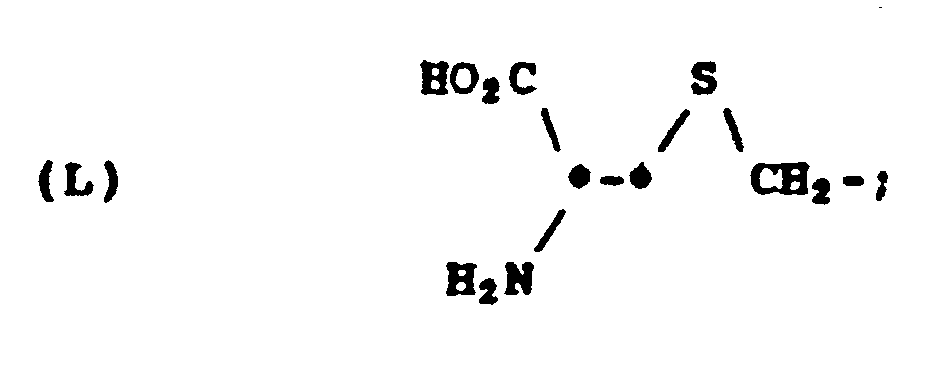
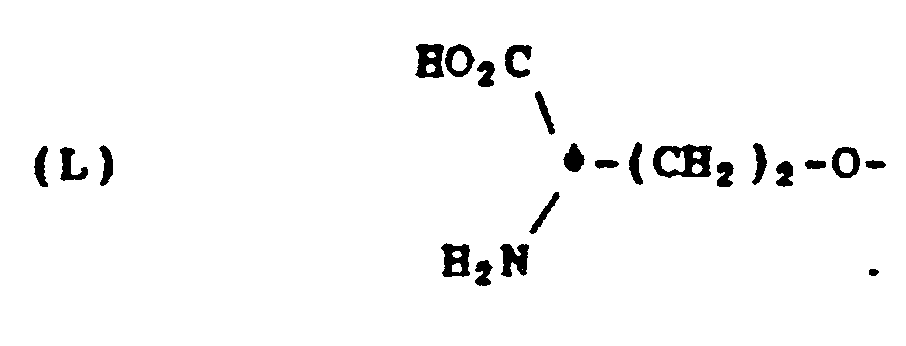
Certains exemples particuliers de groupes acyle en Ci à C20 pour R2 comprennent des groupes dans lesquels R2 est un groupe de la formule 2-(amino-protégé)thiazol-4-yle;


W est un amino, un amino protégé, un carboxy, un carboxy protégé ou un sulfonato;




Priority Applications (1)
| Application Number | Priority Date | Filing Date | Title |
|---|---|---|---|
| AT86305814T ATE69231T1 (de) | 1985-07-31 | 1986-07-29 | 2-propadienylpenicillin-derivate und zwischenprodukte. |
Applications Claiming Priority (2)
| Application Number | Priority Date | Filing Date | Title |
|---|---|---|---|
| GB8519264 | 1985-07-31 | ||
| GB858519264A GB8519264D0 (en) | 1985-07-31 | 1985-07-31 | Chemical compounds |
Publications (2)
| Publication Number | Publication Date |
|---|---|
| EP0218323A1 EP0218323A1 (fr) | 1987-04-15 |
| EP0218323B1 true EP0218323B1 (fr) | 1991-11-06 |
Family
ID=10583100
Family Applications (1)
| Application Number | Title | Priority Date | Filing Date |
|---|---|---|---|
| EP86305814A Expired - Lifetime EP0218323B1 (fr) | 1985-07-31 | 1986-07-29 | Dérivés de 2-propadienyl-pénicilline et intermédiaires |
Country Status (7)
| Country | Link |
|---|---|
| US (1) | US4769325A (fr) |
| EP (1) | EP0218323B1 (fr) |
| JP (1) | JP2572751B2 (fr) |
| AT (1) | ATE69231T1 (fr) |
| CA (1) | CA1333369C (fr) |
| DE (1) | DE3682360D1 (fr) |
| GB (1) | GB8519264D0 (fr) |
Families Citing this family (2)
| Publication number | Priority date | Publication date | Assignee | Title |
|---|---|---|---|---|
| US4666835A (en) * | 1986-04-29 | 1987-05-19 | Baldwin Jack E | 2-vinylpenams and process |
| IT1224252B (it) * | 1988-04-08 | 1990-09-26 | Sclavo Spa | Metodo di protezione del gruppo carbossilico nella chimica dei composti beta lattamici |
Citations (1)
| Publication number | Priority date | Publication date | Assignee | Title |
|---|---|---|---|---|
| GB2052486A (en) * | 1979-05-17 | 1981-01-28 | Massachusetts Inst Technology | Isopenicillins |
Family Cites Families (8)
| Publication number | Priority date | Publication date | Assignee | Title |
|---|---|---|---|---|
| US4172199A (en) | 1975-01-02 | 1979-10-23 | Bristol-Myers Company | O-2-isocephem-4-carboxylic acid derivatives as antibacterial agents |
| US4478997A (en) | 1977-02-15 | 1984-10-23 | Shionogi & Co., Ltd. | 1-Oxadethiacepham compounds |
| DE2732283A1 (de) * | 1977-07-16 | 1979-01-25 | Bayer Ag | Beta-lactam-verbindungen |
| US4472300A (en) | 1977-12-07 | 1984-09-18 | Fujisawa Pharmaceutical Co., Ltd. | Azetidinone derivatives and process for preparation thereof |
| JPS5856188Y2 (ja) * | 1978-09-14 | 1983-12-24 | 冨士シ−ル工業株式会社 | 包装用容器 |
| JPS5521939U (fr) * | 1978-07-31 | 1980-02-13 | ||
| JPS5587539A (en) * | 1978-12-26 | 1980-07-02 | Fuji Seal Ind Co Ltd | Bag body and its preparation |
| US4478749A (en) | 1981-03-30 | 1984-10-23 | E. R. Squibb & Sons, Inc. | 2-Oxo-1-(substituted phosphorous)azetidines |
-
1985
- 1985-07-31 GB GB858519264A patent/GB8519264D0/en active Pending
-
1986
- 1986-07-28 US US06/891,434 patent/US4769325A/en not_active Expired - Fee Related
- 1986-07-29 DE DE8686305814T patent/DE3682360D1/de not_active Expired - Fee Related
- 1986-07-29 EP EP86305814A patent/EP0218323B1/fr not_active Expired - Lifetime
- 1986-07-29 CA CA000514832A patent/CA1333369C/fr not_active Expired - Fee Related
- 1986-07-29 AT AT86305814T patent/ATE69231T1/de not_active IP Right Cessation
- 1986-07-30 JP JP61179793A patent/JP2572751B2/ja not_active Expired - Lifetime
Patent Citations (1)
| Publication number | Priority date | Publication date | Assignee | Title |
|---|---|---|---|---|
| GB2052486A (en) * | 1979-05-17 | 1981-01-28 | Massachusetts Inst Technology | Isopenicillins |
Non-Patent Citations (1)
| Title |
|---|
| Remington's Pharmaceutical Sciences, 15th Ed., 1975, p. 466 * |
Also Published As
| Publication number | Publication date |
|---|---|
| GB8519264D0 (en) | 1985-09-04 |
| EP0218323A1 (fr) | 1987-04-15 |
| ATE69231T1 (de) | 1991-11-15 |
| US4769325A (en) | 1988-09-06 |
| JP2572751B2 (ja) | 1997-01-16 |
| JPS6339882A (ja) | 1988-02-20 |
| DE3682360D1 (de) | 1991-12-12 |
| CA1333369C (fr) | 1994-12-06 |
Similar Documents
| Publication | Publication Date | Title |
|---|---|---|
| US4775670A (en) | 2-oxo-1-azetidinesulfonic acid salts | |
| KR860001289B1 (ko) | β-락탐 항생제의 제조방법 | |
| EP0447118B1 (fr) | 3-Tétrazolylthiométhyl céphalosporine antibiotiques | |
| CA2013391A1 (fr) | Composes | |
| US4529698A (en) | Process for preparing a 2-oxo-1-azetidinesulfonic acid salt | |
| US4769325A (en) | 2-(Allenyl)penicillins | |
| US4555363A (en) | Process for the preparation of β-lactam compounds | |
| KR900002042B1 (ko) | 3-치환된 세팔로스포린의 제조방법 | |
| EP0191989B1 (fr) | Dérivés de l'isoxazole à activité antibiotique, leur préparation et leur application | |
| GB1560532A (en) | Cepham and penam compounds | |
| US4082912A (en) | Certain 7-acylamido-3-(2-carboxyalkyl-2,3-dihydro-s-triazolo[4,3-b]pyridazin-3-on-6-ylmethyl)-3-cephem-4-carboxylic acids their salts and easily hydrolyzed esters | |
| EP0122158A2 (fr) | Dérivés de benzothiénylcéphalosporines | |
| US4918070A (en) | Cephalosporin derivatives and antibacterial agents | |
| NO802713L (no) | Fremgangsmaate til fremstilling av racemiske eller optisk aktive cefalosporin-analoge karbacefemforbindelser eller farmaseutisk akseptable salter derav | |
| US4666835A (en) | 2-vinylpenams and process | |
| JPH0354953B2 (fr) | ||
| EP0150458B1 (fr) | Dérivés de céphalosporine | |
| US4604386A (en) | 3-(alkynylalkyloxy) cephalosporins | |
| IL44578A (en) | History of N-Aloxy) or Paneoxy (Aloxycarbonyl Cephalosporin C and their preparation | |
| US4596777A (en) | Process for preparing (3S)-3-[[[2-(protected or unprotected amino)-4-thiazolyl]acetyl]amino]-2-oxo-1-azetidinesulfonic acid and 4-substituted derivatives thereof | |
| JPS6034957A (ja) | 2−置換メチレン−2−(2−アミノチアゾ−ル−4−イル)酢酸誘導体及びその製造方法 | |
| KR930001405B1 (ko) | 2-(4-치환아미노-3-옥소-이속사졸리디닐)-5-옥소-2-테트라히드로푸란카르복실산 유도체의 제조방법 | |
| JPH0240669B2 (fr) | ||
| US4472300A (en) | Azetidinone derivatives and process for preparation thereof | |
| US4198506A (en) | 2-Carboxyalkyl-2,3-dihydro-6-mercapto-s-triazolo[4,3-b]-pyridazin-3-ones |
Legal Events
| Date | Code | Title | Description |
|---|---|---|---|
| PUAI | Public reference made under article 153(3) epc to a published international application that has entered the european phase |
Free format text: ORIGINAL CODE: 0009012 |
|
| 17P | Request for examination filed |
Effective date: 19860802 |
|
| AK | Designated contracting states |
Kind code of ref document: A1 Designated state(s): AT BE CH DE FR GB IT LI NL SE |
|
| 17Q | First examination report despatched |
Effective date: 19890727 |
|
| GRAA | (expected) grant |
Free format text: ORIGINAL CODE: 0009210 |
|
| AK | Designated contracting states |
Kind code of ref document: B1 Designated state(s): AT BE CH DE FR GB IT LI NL SE |
|
| REF | Corresponds to: |
Ref document number: 69231 Country of ref document: AT Date of ref document: 19911115 Kind code of ref document: T |
|
| ET | Fr: translation filed | ||
| ITF | It: translation for a ep patent filed | ||
| REF | Corresponds to: |
Ref document number: 3682360 Country of ref document: DE Date of ref document: 19911212 |
|
| PLBE | No opposition filed within time limit |
Free format text: ORIGINAL CODE: 0009261 |
|
| STAA | Information on the status of an ep patent application or granted ep patent |
Free format text: STATUS: NO OPPOSITION FILED WITHIN TIME LIMIT |
|
| 26N | No opposition filed | ||
| EAL | Se: european patent in force in sweden |
Ref document number: 86305814.5 |
|
| PGFP | Annual fee paid to national office [announced via postgrant information from national office to epo] |
Ref country code: GB Payment date: 19990609 Year of fee payment: 14 |
|
| PGFP | Annual fee paid to national office [announced via postgrant information from national office to epo] |
Ref country code: SE Payment date: 19990616 Year of fee payment: 14 |
|
| PGFP | Annual fee paid to national office [announced via postgrant information from national office to epo] |
Ref country code: FR Payment date: 19990617 Year of fee payment: 14 |
|
| PGFP | Annual fee paid to national office [announced via postgrant information from national office to epo] |
Ref country code: BE Payment date: 19990625 Year of fee payment: 14 |
|
| PGFP | Annual fee paid to national office [announced via postgrant information from national office to epo] |
Ref country code: CH Payment date: 19990705 Year of fee payment: 14 |
|
| PGFP | Annual fee paid to national office [announced via postgrant information from national office to epo] |
Ref country code: AT Payment date: 19990712 Year of fee payment: 14 |
|
| PGFP | Annual fee paid to national office [announced via postgrant information from national office to epo] |
Ref country code: NL Payment date: 19990727 Year of fee payment: 14 |
|
| PGFP | Annual fee paid to national office [announced via postgrant information from national office to epo] |
Ref country code: DE Payment date: 19990915 Year of fee payment: 14 |
|
| PG25 | Lapsed in a contracting state [announced via postgrant information from national office to epo] |
Ref country code: GB Free format text: LAPSE BECAUSE OF NON-PAYMENT OF DUE FEES Effective date: 20000729 Ref country code: AT Free format text: LAPSE BECAUSE OF NON-PAYMENT OF DUE FEES Effective date: 20000729 |
|
| PG25 | Lapsed in a contracting state [announced via postgrant information from national office to epo] |
Ref country code: SE Free format text: LAPSE BECAUSE OF NON-PAYMENT OF DUE FEES Effective date: 20000730 |
|
| PG25 | Lapsed in a contracting state [announced via postgrant information from national office to epo] |
Ref country code: LI Free format text: LAPSE BECAUSE OF NON-PAYMENT OF DUE FEES Effective date: 20000731 Ref country code: CH Free format text: LAPSE BECAUSE OF NON-PAYMENT OF DUE FEES Effective date: 20000731 Ref country code: BE Free format text: LAPSE BECAUSE OF NON-PAYMENT OF DUE FEES Effective date: 20000731 |
|
| BERE | Be: lapsed |
Owner name: BASAK AMIT Effective date: 20000731 Owner name: BALDWIN JACK EDWARD Effective date: 20000731 |
|
| PG25 | Lapsed in a contracting state [announced via postgrant information from national office to epo] |
Ref country code: NL Free format text: LAPSE BECAUSE OF NON-PAYMENT OF DUE FEES Effective date: 20010201 |
|
| REG | Reference to a national code |
Ref country code: CH Ref legal event code: PL |
|
| EUG | Se: european patent has lapsed |
Ref document number: 86305814.5 |
|
| GBPC | Gb: european patent ceased through non-payment of renewal fee |
Effective date: 20000729 |
|
| PG25 | Lapsed in a contracting state [announced via postgrant information from national office to epo] |
Ref country code: FR Free format text: LAPSE BECAUSE OF NON-PAYMENT OF DUE FEES Effective date: 20010330 |
|
| NLV4 | Nl: lapsed or anulled due to non-payment of the annual fee |
Effective date: 20010201 |
|
| REG | Reference to a national code |
Ref country code: FR Ref legal event code: ST |
|
| PG25 | Lapsed in a contracting state [announced via postgrant information from national office to epo] |
Ref country code: DE Free format text: LAPSE BECAUSE OF NON-PAYMENT OF DUE FEES Effective date: 20010501 |
|
| PG25 | Lapsed in a contracting state [announced via postgrant information from national office to epo] |
Ref country code: IT Free format text: LAPSE BECAUSE OF NON-PAYMENT OF DUE FEES;WARNING: LAPSES OF ITALIAN PATENTS WITH EFFECTIVE DATE BEFORE 2007 MAY HAVE OCCURRED AT ANY TIME BEFORE 2007. THE CORRECT EFFECTIVE DATE MAY BE DIFFERENT FROM THE ONE RECORDED. Effective date: 20050729 |