EP0223031A2 - Taktsynchronisation in einem verteilten Datenverarbeitungssystem - Google Patents
Taktsynchronisation in einem verteilten Datenverarbeitungssystem Download PDFInfo
- Publication number
- EP0223031A2 EP0223031A2 EP86113660A EP86113660A EP0223031A2 EP 0223031 A2 EP0223031 A2 EP 0223031A2 EP 86113660 A EP86113660 A EP 86113660A EP 86113660 A EP86113660 A EP 86113660A EP 0223031 A2 EP0223031 A2 EP 0223031A2
- Authority
- EP
- European Patent Office
- Prior art keywords
- processor
- clock
- value
- processors
- synch signal
- Prior art date
- Legal status (The legal status is an assumption and is not a legal conclusion. Google has not performed a legal analysis and makes no representation as to the accuracy of the status listed.)
- Withdrawn
Links
Images

Classifications
-
- G—PHYSICS
- G06—COMPUTING OR CALCULATING; COUNTING
- G06F—ELECTRIC DIGITAL DATA PROCESSING
- G06F1/00—Details not covered by groups G06F3/00 - G06F13/00 and G06F21/00
- G06F1/04—Generating or distributing clock signals or signals derived directly therefrom
- G06F1/14—Time supervision arrangements, e.g. real time clock
Definitions
- This invention relates to a method for synchronising clocks in a set of processors interconnected in a distributed system and to a system which operates in accordance with said method.
- a different method must be devised if the intention is to measure the time elapsed between two events of a distributed computation. For instance, if an event e p occurs on a processor p and another event e q occurs on a different processor q, it is practically impossible for q to instantaneously read its hardware clock when the remote event e p occurs. Indeed, the sending of a message from p to q that notifies the occurrence of e p entails a random transmission delay that makes it impossible for q to exactly know the value displayed by q's hardware clock at the instant when e p occurred in p. Hence, q (and by a similar argument p) cannot compute exactly the time elapsed between e p and e q by relying only on their own clocks.
- the prior art has accomplished approximate clock synchronisation in a distributed system by causing each processor, having a clock to be synchronised, to gather information from other processors in the system and based on gathered information to generate a preferred local clock value.
- This system is most often based on an averaging algorithm that generates the average value of all the clocks in the system.
- To continually cause each processor in the system to adjust its clock to an individually generated average requires a great deal of communication among processors and complicated algorithms to provide fault tolerance.
- Halpern et al The method steps taught by Halpern et al include (a) forming an ordered list of node identities and replicating the list at each node; (b) broadcasting a time value with its unforgeable signature to all nodes including itself by the first node on the list; and (c) multiple message exchanging of the time value among the nodes under a protocol wherein: (1) each node accepts the time value as valid and sets its clock forward if the time value is received within an interval predetermined as a function of the number of signatures, (2) otherwise repeating steps (b) and (c) as modified by broadcasting another time value from the next listed node in order.
- the Halpern et al patent provides a discussion of the prior art and is incorporated by reference for that purpose.
- a continuation-in-part of the Halpern et al patent, Serial No. 06/560,082 (US -A- 4,584,643), filed December 9, 1983, also assigned to the present applicants, is likewise incorporated by reference.
- Halpern et al inventions are relatively complicated algorithms that suffer the limitations that they require a great deal of communication among processors in the system and do not provide for efficient join of additional processors.
- the Halpern et al invention does provide fault tolerance which is recognised as an important attribute of clock synchronisation systems.
- one of the main objectives of a system for providing clock synchronisations in a distributed processing system is that the method must be practical in the face of faults which are reasonably likely to occur in distributed processing systems.
- P the set of processors of a distributed system
- L the set of communication links between the processors in P.
- Processors and links undergo certain state transitions in response to service requests.
- a link (p,q) ⁇ L that joins processor p ⁇ P to processor q ⁇ P delivers a message to q if p so requests.
- a processor p computes a given function if its user so requests.
- System components such as processors and communication links, are non-faulty if to any incoming service request they respond in a manner consistent with their specification.
- Service specifications prescribe the state transition that a component should undergo in response to a service request and the real time interval within which the transition should occur.
- a component failure occurs when a component does not deliver the service requested in the manner specified.
- the cause of a failure is a fault.
- Three general fault classes can be described as follows. (1) A fault that causes a component never to respond to a service request is termed an omission fault. (2) A fault that causes a component to deliver a requested service either too early or too late (i.e. outside the real time interval specified) is a timing fault.
- a timing fault that causes a late service delivery is termed a performance (or late timing) fault.
- a timing fault that leads to an earlier than specified service delivery is termed a race (or early timing) fault.
- a fault that causes a component to deliver a service that is different from the one requested is termed a By
- Typical examples of omission faults are processor crashes, hardware clocks that stop running, link breakdowns, processors that occasionally do not relay messages they should, and links that sometimes lose messages.
- a hardware clock that runs at a speed that exceeds 1+ ⁇ is an example of a race fault.
- An example of Byzantine fault is an undetectable message corruption on a link because of electro-magnetic noise, or because of human sabotage.
- the method according to the present invention for synchronising a plurality of local clocks in a distributed processor system comprises the steps of: - diffusing from a processor with a preferred clock value (for instance, a processor having a fastest correct clock) a synch signal indicating the preferred clock value to the other processors in the system; and - adjusting at the other processors in the system the local clocks in response to the synch signal such that the difference between the local clock values for each pair of processors in the system is bounded.
- a preferred clock value for instance, a processor having a fastest correct clock
- the processor with a preferred clock value could for instance be the processor having the fastest correct clock.
- a start signal indicating that synchronisation is desired can be generated to initiate the diffusing of the synch signal on the connection of additional processors to the system or at synchronisation intervals.
- the present invention enables clock synchronisation to be performed in a distributed processing system in a manner that is tolerant of any number of omission faults (e.g. processor crashes, link crashes, occasional message losses) and performance faults (e.g. overloaded processors, slow links) that do not partition the communications network of the distributed processing system. Also, the present method enables an arbitrary number of simultaneous connections of additional processors to the system, termed processor joins, to be handled.
- the present invention provides a method for maintaining approximately synchronised clocks in a distributed system.
- the protocol maintains on each correctly functioning processor p a logical clock C p which measures the passage of real time with an accuracy comparable to that of a hardware clock and which, at any instant t, displays a local clock time C p (t) that is within some known bound DMAX of the local clock times displayed by any other logical clock C q running on any correct system processor q.
- This relationship can be symbolically represented as follows: for all t and all correct processors p & q:
- Such logical clocks allow one to measure with an apriori known accuracy the time that elapses between events which occur on distinct processors.
- a logical clock is maintained by periodically computing an adjustment function for a hardware clock.
- Two different solutions to the problem of implementing the logical clocks are described.
- the first solution uses a discrete adjustment function that is non-continuous, and hence requires in the preferred embodiment the maintenance of several logical clocks at each node in the system.
- the second solution uses an essentially continuous adjustment function that eliminates the need for maintaining multiple logical clocks.
- Each processor in the distributed processing system includes a hardware clock which is used with the adjustment function discussed above to compute the logical clock according to the present invention.
- a hardware clock consists of an oscillator that generates a cyclic waveform at a uniform rate, and a counting register that records the number of cycles elapsed since the start of the clock.
- the hardware clocks of the processors that compose the system are driven by quartz crystal controlled oscillators that are highly stable and accurate. The use of this type of clocks is very common in the modern computer architectures like the IBM 4300 and 3080 series.
- a correct quartz clock may drift from real time at a rate of at most 10 ⁇ 6 seconds per second.
- a hardware clock can fail by stopping, speeding up, or slowing down. If a detectable failure affects a hardware clock, any attempt at reading its value terminates with a clock-error exception in the preferred system as described in the IBM System/370: Principles of Operations, GA22-7000-8, 1981. For example, if the counting register that composes a clock is self-checking, the occurrence of a fault within it will generate (with a high probability) a clock-error signal. In many hardware architectures, an undetectable oscillator failure such as a sharp increase in oscillator frequency (e.g. because of a mechanical deformation of the quartz crystal) rapidly leads to a series of timing mismatches in interpreting processor instructions that soon result in a processor crash. Thus, as a practical matter, a clock synchronisation system need not address all possible kinds of clock faults. Rather, it is sufficient in many distributed systems if the clock synchronisation method operates in the presence of omission and performance faults, and of processor joins.
- HC(t) denote the value displayed by a hardware clock HC of of some processor at some real time t.
- Clocks can be characterised as follows in typical systems.
- a correct hardware clock HC of a processor measures the passage of time between any two successive real time instants t1 and t2 correctly: (1+ ⁇ ) ⁇ 1(t2-t1) ⁇ HC(t2) - HC(t1) ⁇ (1+ ⁇ )(t2-t1)
- correct clocks are within a linear envelope of real time (which runs by definition with speed 1).
- a hardware clock that is in a detectable erroneous state signals a clock-error exception whenever an attempt to read its value is made. It is likely that a clock error occurrence is detectable. The occurrence of clock errors is very unlikely.
- any two non-faulty active processors in P are linked by at least one chain of non-faulty links and non-faulty intermediate processors. That is, as a practical matter (A3) It is unlikely that a partition of the system of non-faulty processors and links will occur during clock synchronisation if there exist enough redundant links among the processors in the system.
- the clock synchronisation protocol ensures the following three properties in the preferred embodiment: (C1) For any two non-faulty joined processors p,q ⁇ P, the logical clocks C p and C q indicating the current logical time should be synchronised within some apriori known bound DMAX (for maximum deviation): for all t and any pair of correct processor p & q:
- C2 The logical clocks of joined non-faulty processors should read values within a linear envelope of real time.
- the present method is based on the following consequence of observations (A2, A3, A4): If at real time t a correct processor p ⁇ P diffuses a message containing its clock time T to all other processors, and any correct processor q ⁇ P sets its clock to T upon receipt of the message from p, then the clocks of all correct processors will indicate times within ndel ⁇ (1+ ⁇ ) by real time t+ndel.
- processor p sends a new message on all outgoing links and any processor q that receives a new message on some link, relays it on all outgoing links excluding the link to the sending processor p. Diffusion of a synchronisation message is called a synch wave.
- processor crashes or joins In the absence of processor crashes or joins, one could use a predefined synchroniser processor to generate synch waves. If processor crashes are possible, and they certainly are, then the existence of a unique synchroniser becomes a single point of failure. It is thus better to distribute the role of synchroniser among a set of more than one or all processors. In the preferred embodiment therefore, more than one or all processors are able to initiate a synch wave by generating a start signal if they discover that PER clock time units have elapsed since the last synchronisation occurred, or if they receive a start signal from a joining processor. If several synch waves are initiated by distinct processors with close clocks, then one of them will “win” and propagate to all processors of the system. If clocks are never to be set back, then one has to chose as the "winning" wave the wave generated by the processor with the fastest clock.
- Synch waves will have to be generated also when new processors join a cluster of already synchronised processors in order to synchronise the new processors with the old processors.
- a joiner p will send a special "new" message (or join start signal) to all its neighbours, forcing them to initiate synch waves.
- the neighbours of these neighbours either propagate these waves, if their clocks are slower than the clocks of the wave initiators, or generate new synch waves, if their clocks are faster.
- a "winning" synch wave is generated in this way by some processor with the fastest clock. When this propagates to all the other processors, including the ones that are joining, they will all synchronise their clocks within ndel(1+ ⁇ ).
- the "initialise” operation (C.initialise, line 4) initialises the time displayed by C to 0.
- the operation “adjust(L,T:Time)” (C.adjust(L,T), e.g. line 14) adjusts the local clock value L currently displayed by C so that after PER time units C will show the same time as a logical clock which currently shows time T.
- the operation “read” (C.read, line 10) reads the current value displayed by C.
- the operation “duration(T:Time)” (line 11, Fig. 2; line 10, Fig. 3) returns the number of time units elapsed since a previous time T. Two different ways of implementing the Logical-Clock data type are described below with reference to Figs. 2 and 3.
- the Timer data type has a unique operation "measure(T:Time)" (TP.measure(PER), line 25). If TP is a Timer instance, the meaning of invoking the operation TP.measure(T) is "ignore all previous TP.measure calls and signal a Timeout condition T clock time units from now.” Thus, if after invoking TP.measure(100) at time 200, a new invocation is made at time 250, no Timeout condition occurs at time 300. If no other invocation of TP.measure is made between 250 and 349, then a Timeout condition occurs at time 350.
- TP and TJ for convenience, although a single timer would be sufficient. The former is used to measure the maximum time interval which can elapse between periodic resynchronisations. The latter is used to time the join process.
- the protocol Time-Manager also uses the variables L and T.
- Variable L is used to store the value of the local logical clock in response to the "C.read” operation (e.g. line 10).
- the variable T indicates the time value received in a synch signal.
- variables s and s′ which are natural numbers are used to indicate the sequence number of the synch signal being operated on.
- the variable s is stored at each local processor and s′ indicates the synch sequence number received in a synch signal from another processor.
- the variable "joined” is a Boolean true or false indicating whether a given processor is joined to the system such that its logical clock has been synchronised to the other processors in the system.
- the variable "l” is a variable identifying a communication link across which a synch wave is received or transmitted.
- the protocol uses the following communication primitives: receive(m,l) that receives a message m on some link and returns the identity l of that link, forward(m,l) which sends a message m on all outgoing links excluding l, and send-all(m) that sends a message m on all outgoing links.
- a local synch wave sequence number s and the current local clock C are initialised to 0 (line 4).
- a join phase that lasts for 2 ⁇ NDEL time units begins with the sending of a special join start signal on all outgoing links (line 5).
- the "joined" Boolean variable is false (line 4); during the join phase, nothing can be said about how close the local clock is to other clocks of the network being joined.
- "joined” becomes true and measurements of delays elapsed between distributed uted event occurrences can begin.
- the Timer TJ measures elapsed time from the occurrence of the join start signal to generate a timeout after 2xNDEL time units, at which time "joined” is set true (line 21).
- the Time-manager can be awakened by three kinds of events: a join start signal that arrives from a neighbour that joins on a link l (line 8); a message belonging to a synch wave numbered s′ announcing that the time is T and which arrives on a link l (line 10); and a timeout condition generated by the Timers TJ (as discussed above) and TP (lines 21, 23).
- the Time Manager Upon the reception of a synch signal having a sequence number s′ and a time value T across a link l, the Time Manager sets the variable L to the value of the local logical clock (line 10). The Time Manager then performs one of four steps depending on the state of the received sequence number s′, the state of the local sequence number s, and the value of the received clock T as compared to the value of the local logical clock L.
- the received synch signal is ignored and the system loops to wait for another start signal or synch signal or timeout condition (line 12).
- the Time Manager adjusts the value of the local clock so that after PER time units it will read the same value as a logical clock which currently shows T and the sequence number and received clock value are forwarded on all outgoing links except the link from which the synch signal was received (line 14).
- the local sequence number is set to the received sequence number s′ and the sequence number and the value of the local clock L are sent on all outgoing links (line 16).
- the local sequence number s is set to the received sequence number s′, the local logical clock C is set such that after PER time units its value will read the same value as a logical clock indicating T now, and the sequence number s′ and the value of the received clock T are forwarded on all outgoing links except the link from which the synch signal was received (line 18).
- the third type of event which awakens the Time Manager is the timeout TP which occurs in response to the "TP.measure(PER)" instruction on line 25.
- the Time Manager at the processor where the timeout occurred increments its local sequence number by one, sets the variable L to the value of the local logical clock and adjusts the logical clock such that after PER time units it will show the same time as a logical clock currently showing the value L.
- a synch signal is generated having the updated sequence number and the value of the local logical clock on all outgoing links (line 23).
- the timeout condition becomes true if a period of more than PER time units (as measured on the local clock) has elapsed since the last join or periodic synchronisation without receiving any new join start signal or significant "(s′,T)" message (line 23).
- the new wave is not a winning wave, then there have been several simultaneous wave propagations initiated by several independent processors.
- the clocks of these processors must already be less than ndel(1+ ⁇ ) time units apart, and all the processors which accept messages belonging to these waves will also set their clocks accordingly, so that in the end, all joined clocks are brought within ndel (1+ ⁇ ) from each other.
- logical clocks are corrected at synchronisation intervals, so they advance discontinuously. If we want to use a logical clock C to measure how much time elapses between two successive events e1 and e2, this discontinuity while the measurement is in progress will introduce an error in the measurement. On the other hand, if we want to keep logical clocks synchronised, we must adjust them from time to time.
- a discrete logical clock as being the result of adding a constant adjustment value to a hardware clock (we call such clocks discrete because they are advanced by discrete quantities; this is in contrast with having continuous clock adjustments, as described with reference to Fig. 3).
- T s time interval between two successive synchronisations a synchronisation epoch
- we can represent the logical clocks that were current during successive synchronisation epochs that have started at times T s , s 1,2,... by pairs (T s ,A s ), where A s is the adjustment used for computing the current time during epoch s.
- the logical clock i.e.
- s 0,1,2,... ⁇ (line 2) to denote the history function that associates the starting times T s of successive synch epochs s with the adjustments A s current during those epochs.
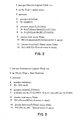
- Discrete-Logical-Clock abstract data type (line 1) that manages the correspondence between synch epochs and constant adjustments is given in Fig. 2.
- the "initialise” procedure initialises the logical time to 0 (lines 4, 5).
- the "adjust” procedure (lines 6,7,8) adds to the history function S the adjustment valid in the new epoch starting at time T received in a synch signal.
- the constant adjustment for the new epoch is equal to the adjustment valid in the previous epoch augmented by the difference in clock readings T-L (line 7).
- this procedure also deletes from the history S all information concerning past synch epochs (B, C) in S where B is beyond the TMAX delay limit to be measured (line 8).
- the "read” function (lines 9,10) adds to the adjustment A s of the current synch epoch the value HC of the hardware clock. If a clock error is detected, abortion of the task using the data type follows.
- the function "read” returns the time of the continuous logical clock data type which is equal to HC+N+m ⁇ HC. However, if a clock error occurs, then the function aborts (line 9).
- Fig. 3 The implementation of the Continuous-Logical-Clock data type is shown in Fig. 3. As discussed above, it provides a simple linear interpolation which leads to the gradual adjustment of the local logical clock so that it approaches a preferred clock value toward the end of adjustment interval PER.
- the present invention provides a method for maintaining logical clocks at each correctly functioning processor in a distributed processing system that is simple to implement and robust in the presence of faults which, as a practical matter, are likely to occur in such distributed systems.
- the method is particularly useful in the closely coupled, high end processor environment where processor clocks have error checking circuitry which cause error signals to be generated in response to clock failures.
Landscapes
- Engineering & Computer Science (AREA)
- Theoretical Computer Science (AREA)
- Physics & Mathematics (AREA)
- General Engineering & Computer Science (AREA)
- General Physics & Mathematics (AREA)
- Synchronisation In Digital Transmission Systems (AREA)
- Hardware Redundancy (AREA)
Applications Claiming Priority (2)
| Application Number | Priority Date | Filing Date | Title |
|---|---|---|---|
| US79904785A | 1985-11-18 | 1985-11-18 | |
| US799047 | 1985-11-18 |
Publications (2)
| Publication Number | Publication Date |
|---|---|
| EP0223031A2 true EP0223031A2 (de) | 1987-05-27 |
| EP0223031A3 EP0223031A3 (de) | 1990-04-04 |
Family
ID=25174914
Family Applications (1)
| Application Number | Title | Priority Date | Filing Date |
|---|---|---|---|
| EP86113660A Withdrawn EP0223031A3 (de) | 1985-11-18 | 1986-10-03 | Taktsynchronisation in einem verteilten Datenverarbeitungssystem |
Country Status (2)
| Country | Link |
|---|---|
| EP (1) | EP0223031A3 (de) |
| JP (1) | JPS62120567A (de) |
Cited By (5)
| Publication number | Priority date | Publication date | Assignee | Title |
|---|---|---|---|---|
| EP0327083A3 (de) * | 1988-02-05 | 1991-07-17 | Licentia Patent-Verwaltungs-GmbH | Vorrichtung zum Betrieb von absoluten Echtzeituhren in einem eine Zentraluhr und Teilnehmer enthaltenden Prozesssteuersystem |
| WO1998006021A1 (en) * | 1996-08-08 | 1998-02-12 | Tandem Computers Incorporated | Method for keeping accurate time in a computer system |
| DE19832440A1 (de) * | 1998-07-18 | 2000-01-20 | Alcatel Sa | Synchronisationsverfahren, primärer Referenztaktgenerator und Netzelement für ein synchrones digitales Nachrichtenübertragungsnetz |
| AT501510A1 (de) * | 2004-07-19 | 2006-09-15 | Univ Wien Tech | Dezentrale fehlertolerante taktgenerierung in vlsi chips |
| US8089991B2 (en) | 2006-09-06 | 2012-01-03 | Nxp B.V. | Network and method for clock synchronization of clusters in a time triggered network |
Family Cites Families (7)
| Publication number | Priority date | Publication date | Assignee | Title |
|---|---|---|---|---|
| SE347826B (de) * | 1970-11-20 | 1972-08-14 | Ericsson Telefon Ab L M | |
| JPS5599630A (en) * | 1979-01-25 | 1980-07-29 | Toshiba Corp | Time correction method |
| JPS6057082B2 (ja) * | 1980-08-30 | 1985-12-13 | 横河電機株式会社 | 複数の計算機間の同期方法 |
| JPS58119070A (ja) * | 1982-01-06 | 1983-07-15 | Toshiba Corp | 複合電子計算機の制御方法 |
| JPS58168173A (ja) * | 1982-03-30 | 1983-10-04 | Mitsubishi Electric Corp | デ−タ処理装置 |
| US4531185A (en) * | 1983-08-31 | 1985-07-23 | International Business Machines Corporation | Centralized synchronization of clocks |
| US4709347A (en) * | 1984-12-17 | 1987-11-24 | Honeywell Inc. | Method and apparatus for synchronizing the timing subsystems of the physical modules of a local area network |
-
1986
- 1986-10-03 EP EP86113660A patent/EP0223031A3/de not_active Withdrawn
- 1986-11-18 JP JP61273108A patent/JPS62120567A/ja active Pending
Cited By (7)
| Publication number | Priority date | Publication date | Assignee | Title |
|---|---|---|---|---|
| EP0327083A3 (de) * | 1988-02-05 | 1991-07-17 | Licentia Patent-Verwaltungs-GmbH | Vorrichtung zum Betrieb von absoluten Echtzeituhren in einem eine Zentraluhr und Teilnehmer enthaltenden Prozesssteuersystem |
| WO1998006021A1 (en) * | 1996-08-08 | 1998-02-12 | Tandem Computers Incorporated | Method for keeping accurate time in a computer system |
| DE19832440A1 (de) * | 1998-07-18 | 2000-01-20 | Alcatel Sa | Synchronisationsverfahren, primärer Referenztaktgenerator und Netzelement für ein synchrones digitales Nachrichtenübertragungsnetz |
| AT501510A1 (de) * | 2004-07-19 | 2006-09-15 | Univ Wien Tech | Dezentrale fehlertolerante taktgenerierung in vlsi chips |
| AT501510B1 (de) * | 2004-07-19 | 2009-05-15 | Univ Wien Tech | Dezentrale fehlertolerante taktgenerierung in vlsi chips |
| US7791394B2 (en) | 2004-07-19 | 2010-09-07 | Technische Universitat Wien | Decentralised fault-tolerant clock pulse generation in VLSI chips |
| US8089991B2 (en) | 2006-09-06 | 2012-01-03 | Nxp B.V. | Network and method for clock synchronization of clusters in a time triggered network |
Also Published As
| Publication number | Publication date |
|---|---|
| JPS62120567A (ja) | 1987-06-01 |
| EP0223031A3 (de) | 1990-04-04 |
Similar Documents
| Publication | Publication Date | Title |
|---|---|---|
| Cristian et al. | Clock synchronization in the presence of omission and performance failures, and processor joins | |
| US6199169B1 (en) | System and method for synchronizing time across a computer cluster | |
| US4937741A (en) | Synchronization of fault-tolerant parallel processing systems | |
| US4531185A (en) | Centralized synchronization of clocks | |
| Kopetz et al. | Fault-tolerant membership service in a synchronous distributed real-time system | |
| Cristian | Probabilistic clock synchronization | |
| Arvind | Probabilistic clock synchronization in distributed systems | |
| US7334014B2 (en) | Consistent time service for fault-tolerant distributed systems | |
| US5041966A (en) | Partially distributed method for clock synchronization | |
| US20020129290A1 (en) | Method and system for time synchronization | |
| EP0135764A2 (de) | Taktsynchronisation in einem verteilten Rechnernetz | |
| US5001730A (en) | Clock synchronization algorithm for address independent networks | |
| JPH10509294A (ja) | データ入出力間に予め設定されたタイミング関係を設けたシステム並びにこのようなシステムの送信機及び受信機 | |
| EP1691251B1 (de) | Synchronisation mehrerer Betriebsflugprogramme | |
| US5504878A (en) | Method and apparatus for synchronizing plural time-of-day (TOD) clocks with a central TOD reference over non-dedicated serial links using an on-time event (OTE) character | |
| US6801951B1 (en) | System and method for fault-tolerant clock synchronization using interactive convergence | |
| Daliot et al. | Self-stabilizing byzantine agreement | |
| GB2241411A (en) | Improved synchronization technique | |
| JPS62120567A (ja) | 分散処理システムのクロツク同期方法 | |
| JP3671782B2 (ja) | 信号位相調整回路 | |
| JPH11512898A (ja) | クロック選択器システム | |
| Koopman et al. | Time division multiple access without a bus master | |
| US20040215992A1 (en) | Method, apparatus, and computer program product for implementing time synchronization correction in computer systems | |
| Budhiraja et al. | Early-stopping distributed bidding and applications | |
| Garofalakis et al. | Tentative and definite distributed computations: an optimistic approach to network synchronization |
Legal Events
| Date | Code | Title | Description |
|---|---|---|---|
| PUAI | Public reference made under article 153(3) epc to a published international application that has entered the european phase |
Free format text: ORIGINAL CODE: 0009012 |
|
| AK | Designated contracting states |
Kind code of ref document: A2 Designated state(s): DE FR GB IT |
|
| 17P | Request for examination filed |
Effective date: 19870818 |
|
| PUAL | Search report despatched |
Free format text: ORIGINAL CODE: 0009013 |
|
| AK | Designated contracting states |
Kind code of ref document: A3 Designated state(s): DE FR GB IT |
|
| STAA | Information on the status of an ep patent application or granted ep patent |
Free format text: STATUS: THE APPLICATION HAS BEEN WITHDRAWN |
|
| 18W | Application withdrawn |
Withdrawal date: 19910328 |
|
| R18W | Application withdrawn (corrected) |
Effective date: 19910328 |
|
| RIN1 | Information on inventor provided before grant (corrected) |
Inventor name: AGHILI, HOUTAN Inventor name: STRONG, HOVEY RAYMOND Inventor name: CRISTIAN, FLAVIN ILIE |