EP0227530B1 - Aufzeichnungsverfahren mit Ergänzung und Wiedergabe von Daten auf einem nicht-löschbaren, in Sektoren formatierten Aufzeichnungsträger - Google Patents
Aufzeichnungsverfahren mit Ergänzung und Wiedergabe von Daten auf einem nicht-löschbaren, in Sektoren formatierten Aufzeichnungsträger Download PDFInfo
- Publication number
- EP0227530B1 EP0227530B1 EP86402637A EP86402637A EP0227530B1 EP 0227530 B1 EP0227530 B1 EP 0227530B1 EP 86402637 A EP86402637 A EP 86402637A EP 86402637 A EP86402637 A EP 86402637A EP 0227530 B1 EP0227530 B1 EP 0227530B1
- Authority
- EP
- European Patent Office
- Prior art keywords
- sector
- information
- field
- data
- data information
- Prior art date
- Legal status (The legal status is an assumption and is not a legal conclusion. Google has not performed a legal analysis and makes no representation as to the accuracy of the status listed.)
- Expired - Lifetime
Links
Images

Classifications
-
- G—PHYSICS
- G11—INFORMATION STORAGE
- G11B—INFORMATION STORAGE BASED ON RELATIVE MOVEMENT BETWEEN RECORD CARRIER AND TRANSDUCER
- G11B27/00—Editing; Indexing; Addressing; Timing or synchronising; Monitoring; Measuring tape travel
- G11B27/10—Indexing; Addressing; Timing or synchronising; Measuring tape travel
- G11B27/19—Indexing; Addressing; Timing or synchronising; Measuring tape travel by using information detectable on the record carrier
- G11B27/28—Indexing; Addressing; Timing or synchronising; Measuring tape travel by using information detectable on the record carrier by using information signals recorded by the same method as the main recording
- G11B27/30—Indexing; Addressing; Timing or synchronising; Measuring tape travel by using information detectable on the record carrier by using information signals recorded by the same method as the main recording on the same track as the main recording
- G11B27/3027—Indexing; Addressing; Timing or synchronising; Measuring tape travel by using information detectable on the record carrier by using information signals recorded by the same method as the main recording on the same track as the main recording used signal is digitally coded
-
- G—PHYSICS
- G11—INFORMATION STORAGE
- G11B—INFORMATION STORAGE BASED ON RELATIVE MOVEMENT BETWEEN RECORD CARRIER AND TRANSDUCER
- G11B20/00—Signal processing not specific to the method of recording or reproducing; Circuits therefor
- G11B20/10—Digital recording or reproducing
- G11B20/12—Formatting, e.g. arrangement of data block or words on the record carriers
- G11B20/1217—Formatting, e.g. arrangement of data block or words on the record carriers on discs
- G11B20/1252—Formatting, e.g. arrangement of data block or words on the record carriers on discs for discontinuous data, e.g. digital information signals or computer program data
-
- G—PHYSICS
- G11—INFORMATION STORAGE
- G11B—INFORMATION STORAGE BASED ON RELATIVE MOVEMENT BETWEEN RECORD CARRIER AND TRANSDUCER
- G11B20/00—Signal processing not specific to the method of recording or reproducing; Circuits therefor
- G11B20/10—Digital recording or reproducing
- G11B20/18—Error detection or correction; Testing, e.g. of drop-outs
- G11B20/1833—Error detection or correction; Testing, e.g. of drop-outs by adding special lists or symbols to the coded information
-
- G—PHYSICS
- G11—INFORMATION STORAGE
- G11B—INFORMATION STORAGE BASED ON RELATIVE MOVEMENT BETWEEN RECORD CARRIER AND TRANSDUCER
- G11B27/00—Editing; Indexing; Addressing; Timing or synchronising; Monitoring; Measuring tape travel
- G11B27/02—Editing, e.g. varying the order of information signals recorded on, or reproduced from, record carriers
- G11B27/031—Electronic editing of digitised analogue information signals, e.g. audio or video signals
- G11B27/034—Electronic editing of digitised analogue information signals, e.g. audio or video signals on discs
-
- G—PHYSICS
- G11—INFORMATION STORAGE
- G11B—INFORMATION STORAGE BASED ON RELATIVE MOVEMENT BETWEEN RECORD CARRIER AND TRANSDUCER
- G11B7/00—Recording or reproducing by optical means, e.g. recording using a thermal beam of optical radiation by modifying optical properties or the physical structure, reproducing using an optical beam at lower power by sensing optical properties; Record carriers therefor
- G11B7/004—Recording, reproducing or erasing methods; Read, write or erase circuits therefor
- G11B7/0045—Recording
-
- G—PHYSICS
- G11—INFORMATION STORAGE
- G11B—INFORMATION STORAGE BASED ON RELATIVE MOVEMENT BETWEEN RECORD CARRIER AND TRANSDUCER
- G11B2220/00—Record carriers by type
- G11B2220/20—Disc-shaped record carriers
-
- G—PHYSICS
- G11—INFORMATION STORAGE
- G11B—INFORMATION STORAGE BASED ON RELATIVE MOVEMENT BETWEEN RECORD CARRIER AND TRANSDUCER
- G11B2220/00—Record carriers by type
- G11B2220/20—Disc-shaped record carriers
- G11B2220/21—Disc-shaped record carriers characterised in that the disc is of read-only, rewritable, or recordable type
- G11B2220/215—Recordable discs
- G11B2220/218—Write-once discs
-
- G—PHYSICS
- G11—INFORMATION STORAGE
- G11B—INFORMATION STORAGE BASED ON RELATIVE MOVEMENT BETWEEN RECORD CARRIER AND TRANSDUCER
- G11B2220/00—Record carriers by type
- G11B2220/20—Disc-shaped record carriers
- G11B2220/25—Disc-shaped record carriers characterised in that the disc is based on a specific recording technology
- G11B2220/2537—Optical discs
Definitions
- the present invention relates to a method of writing with updating and reading information on a non-erasable support organized into sectors.
- Non-erasable media are used especially for archiving large information because they are inexpensive. These media tend to be used more and more in applications for archiving files and scanned documents.
- the digital optical disc is an example of a non-erasable medium organized into sectors. On such a support, it is possible to write information at any time, on any sector, but it is no longer possible to modify this sector afterwards.
- Such a medium is said to be of “WORM” type (for “Write Once Read Many”, ie single writing, multiple reading).
- WORM Write Once Read Many
- These “WORM” type media are very well suited for archiving data which However, even in archiving applications, it is necessary to keep certain information up to date, such as lists or indexes allowing access to archived data.
- a commonly accepted solution consists in associating with the non-erasable support an erasable support in which the information which can evolve is memorized.
- This solution has two major drawbacks. Firstly, the loss of the information contained in the erasable medium can prevent any access to the information contained in the non-erasable medium; this is the case when the erasable medium contains the lists or the indexes allowing access to the archived data. Secondly, since the non-erasable support can only function with the information contained in the erasable support, these two supports must be permanently associated, for example during transport or storage.
- the method described makes it possible to update small amounts of information, such as pointers.
- This method has however two important defects which are, on the one hand, that the new information is recorded at the expense of the error correcting code, which can quickly lead to rendering the entire sector unusable, and that on the other hand
- this method can only be carried out at the level of the control unit of the non-erasable support, that is to say by the manufacturer himself.
- the object of the invention is to remedy the drawbacks of known methods for updating information on a non-erasable medium.
- the purpose of the method of the invention is in particular to allow the recording of any number of successive modifications, without degrading the information.
- the method of the invention consists in adding chaining information to the data information to be stored in order to logically link a set of sectors containing initial data information and its various successive updates.
- the sector is considered to be an indivisible entity for write and read operations.
- the information allowing the chaining of the sectors is written at the same time as the data information, which makes it possible to eliminate the difficulties indicated in the article, already cited, entitled "dynamic data structure on optical disc" due to the fact that the writing operation re of a pointer in a sector is dissociated from the operation of writing data information in this sector.
- the pointer contained in the chaining zone is registered, at the same time as the data information of the sector, with an address value designating a free sector, which can be used for updating data information day.
- no free sector is reserved in the case where the data information contained in a sector is declared non-modifiable.
- the subject of the request is a method for writing information on a non-erasable medium organized into sectors, each sector comprising at least one synchronization field, one data field, one length field, one field. address which may contain an address to designate a free sector if a data item is updated and a redundancy field, process in which a synchronization code is entered in the synchronization field, data information in the data field and the length of said data information in the length field, said method being characterized in that a type field is also provided in which a type code is entered to indicate whether the data information is fixed or can be put up to date, by entering, in the address field, there is an address code to designate a free sector if said data information can be updated, said free sector and thus reserved for a possible update of the data information, or else a predetermined value if said data information is fixed, the recording in all the fields of the sector being made by a single writing operation the code of redundancy entered in the redundancy field taking into account at least the contents of the data,
- redundancy field is meant that a space is reserved in each sector for storing one or more redundancy bits. It should be remembered, and this is well known to those skilled in the art, that these redundancy bits are not necessarily consecutive over the sector but that they can be distributed over the entire length of the sector, in particular by interleaving with data from other fields in the sector. This is the case for example when the redundancy bits are produced by a Hamming code applied to the data corresponding to the concatenation of the information of the data fields, of length, of type and of address.
- the invention also relates to a reading method for the restitution of the information stored on the non-erasable support.
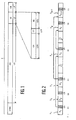
- FIG. 1 shows the various pieces of information which are written in a sector S of the non-erasable support, on the assumption that the redundancy bits are consecutive.
- the information stored at the head of the sector S is SYNC synchronization information to allow the read-write head of the non-erasable support control means to position itself correctly at the start of the sector for a read operation.
- the sector S also includes a data field CD, a chaining field CC and a redundancy field CR.
- the respective lengths of these information fields are noted LD, LC and LR.
- the redundancy field receives a standard error correcting code which takes account of the data contained in the data and chaining fields.
- the chaining field CC decomposes itself into three information fields: an address field CA, a field of type CT and a field of length CL. These different fields have respective lengths LCA, LCT and LCL.
- the CA address field contains a pointer to designate another sector of the non-erasable medium. This other sector is used when it is necessary to update the information contained in the CD data field of sector S.
- the CT type field is used to indicate whether the data information contained in the CD data field is likely to be updated. This data field can therefore contain at least two values, one indicating that the data information m in the CD data field cannot be modified, and the other indicates that this data can be modified.
- the update operation may consist only of replacing the obsolete information. A unique type code indicating the update is then sufficient.
- the update can correspond as well to the replacement of the obsolete information, or by the addition of information which comes to supplement the initial information. In this case, two update type codes are required.
- the last information field of a sector S is the length field CL. This field contains a value indicating the length of the data information stored in the CD field.
- the length LD of the data field CD and the length LC of the chaining field CC can be respectively equal to 1020 bytes and 4 bytes.
- These 4 bytes, or 32 bits, can for example be distributed as follows: 20 bits for the address field, or 2 20 possible sector addresses, 10 bits for the field of length CL or 210 bytes, which corresponds to the maximum length of the information contained in the CD data field, and 2 bits for the type field.
- FIG. 2 shows a possible state of a non-erasable medium in which information D 1 , D 2 and D 3 were initially stored, the data information D 1 and D 3 having been subsequently updated.
- the non-erasable support consists of a consecutive series of sectors. In the case of a digital optical disc, this series of sectors forms a spiral path on the surface of the disc.
- the sectors S 1 , S 2 , S 3 respectively receive data information Di, D 2 and D 3 .
- the recording of data information in a sector is accompanied, during the same writing operation, by the recording of the length of this data information in the length field CL of said sector, of the type of this information. in the CT type field of said sector and the registration of a pointer in the CA address field of said sector.
- the data information entered in a sector, during the first write operation on the non-erasable medium, can be information liable to be updated or information which cannot be modified.
- the type T code provides information on the nature of the sector.
- the sectors Si and Ss in FIG. 2 contain information capable of being updated while the sector S 2 contains information which cannot be modified.
- the type code "00" designates the second case and the type code "01" designates the first case.
- the pointer which is stored in a sector is only useful if the information contained in this sector can be modified. This value is therefore indifferent in the case where the type T has the value "00". Any predetermined value can therefore be entered in the sector address field in this case.
- the pointer is used to designate a free sector in which, if necessary, the update information can be stored.
- the designated free sector can simply be the first free sector of the series of sectors of the non-erasable support.
- the write operation on the sector S n is analogous to the write operation on the sector S 1 , that is to say that the values of all the fields of the sector are written simultaneously.
- the data fields CD and of length CL respectively receive the information D n and the length of this information.
- the address field CA receives a pointer designating a free sector of the non-erasable medium.
- the CT type field receives a value indicating that the information D n replaces the information Di which has become obsolete.
- the value of this type code is for example "11".
- the replacement of one piece of data information with another is a first possibility for updating.
- Another possibility is to supplement the stored data information with another data information, the initial data information being retained.
- data information Dp complements the data information D n .
- the writing of the additional data information Dp is done in the sector Sp designated by the pointer contained in the address field of the sector S n whose information must be completed.
- the write operation in this sector Sp is analogous to the write operation which consists in rem place obsolete information, the only difference being in the value entered in the CT type field.
- the value of the type code is for example equal to "10".
- FIG. 3 represents a flow diagram of this writing method.
- This flowchart comprises operation steps represented by a rectangle with one input and one output, and interrogation or test steps represented by a diamond with one input and at least two outputs, the different outputs corresponding to the different possible responses to the test. All of these steps are between a start step 2 and an end step 4.
- the writing process begins with the start step 2, followed by operation 6 consisting in defining the values to be entered in the data, length and type fields of a sector.
- the process continues with test 20 which analyzes the value of the type T.
- test 20 is followed by operation 10.
- Two free sectors are allocated, the first to receive the information defined in operation 6, the second designated by the pointer registered in the address field of the first sector to allow possible updating of the data information contained in this first sector.
- the writing process successively comprises test 22, operation 12, operation 14, test 24, then operation 18 if the response to test 24 is positive, or operation 16 then again operation 14 and test 24, if the response to test 24 is negative.
- the object of test 22 is to check whether this condition is fulfilled. If this is not the case, an error code is issued and the updating of the data information cannot be carried out.
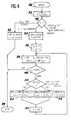
- the read operation of a sector S depends on the value of the CT type field of this sector. This value is determined during operation 30. The test 46 on the value of the type field is then executed.
- the read operation continues with operation 32; the data sought INF is contained in the data field CD of the sector S and its length L is equal to the value of the length field CL of the sector S. The read operation is terminated.
- the reading requires traversing the chain of the sectors containing the successive updates .
- This reading begins with operation 34 which assigns the data information contained in the data field of the sector S to a variable INF.
- This variable is stored in a working memory during the read operation.
- a variable L is defined to indicate the length of the data of the variable INF. This variable L is initialized with the value of the length field CL of the sector S.
- the following operation is the operation 36 for initializing two loop variables, a variable So with the sector S and a variable i with the value 1.
- the successor S 1 of the initial sector So is then determined by operation 38.
- the address of this successor is the value contained in the address field CA of the sector So.
- the test 48 is applied to the sector Si to know if it is free or not. If the sector Si is free, it is because it constitutes the last sector of the chain of sectors starting with the sector So; the reading is therefore finished. If the sector S 1 is not free, it is because it contains information for updating the data information contained in the variable INF.
- This data information is normally data information intended to replace (if type T has the value "11"), or to be added to (if type T has the value "10"), the data information already read in the previous sectors and stored in the variable INF.
- the object of test 50 is precisely to determine the type T of the sector Si. The values of type "00" and "01" are considered as errors.
- the variables INF and L are updated by operation 40. This consists in adding to the data information already contained in the variable INF, the information of data contained in the data field CD of the sector Si, and to add to the value L the value of the field of length CL of the sector S 1 .
- the variables INF and L are updated according to operation 42. This consists in deleting in the variable INF the data information corresponding to the field of CD data from sector So, antecedent of Si, and add the data information contained in the CD data field of sector Si.
- the variable L is modified in the same direction.
- the loop index i is incremented by operation 44 and the continuous processing by operation 38 for the next sector of the chain.
- the operation is repeated until the sector Si read during operation 38 is a free sector. The reading is then finished.
- the variable INF contains the data information sought; its length is equal to L.
Landscapes
- Engineering & Computer Science (AREA)
- Signal Processing (AREA)
- Multimedia (AREA)
- General Engineering & Computer Science (AREA)
- Signal Processing For Digital Recording And Reproducing (AREA)
- Optical Recording Or Reproduction (AREA)
Claims (3)
Applications Claiming Priority (2)
| Application Number | Priority Date | Filing Date | Title |
|---|---|---|---|
| FR8517670A FR2591015B1 (fr) | 1985-11-29 | 1985-11-29 | Procede d'ecriture avec mise a jour et de lecture d'informations sur un support non effacable organise en secteurs |
| FR8517670 | 1985-11-29 |
Publications (2)
| Publication Number | Publication Date |
|---|---|
| EP0227530A1 EP0227530A1 (de) | 1987-07-01 |
| EP0227530B1 true EP0227530B1 (de) | 1990-08-01 |
Family
ID=9325270
Family Applications (1)
| Application Number | Title | Priority Date | Filing Date |
|---|---|---|---|
| EP86402637A Expired - Lifetime EP0227530B1 (de) | 1985-11-29 | 1986-11-27 | Aufzeichnungsverfahren mit Ergänzung und Wiedergabe von Daten auf einem nicht-löschbaren, in Sektoren formatierten Aufzeichnungsträger |
Country Status (5)
| Country | Link |
|---|---|
| US (1) | US4807205A (de) |
| EP (1) | EP0227530B1 (de) |
| JP (1) | JPH0652619B2 (de) |
| DE (1) | DE3673142D1 (de) |
| FR (1) | FR2591015B1 (de) |
Families Citing this family (57)
| Publication number | Priority date | Publication date | Assignee | Title |
|---|---|---|---|---|
| JP2521907B2 (ja) * | 1986-04-25 | 1996-08-07 | ソニー株式会社 | ファイル構築方法 |
| EP0325823A1 (de) * | 1988-01-26 | 1989-08-02 | Laserdrive Ltd. | Datenspeicherungsverfahren |
| US5491807A (en) * | 1989-03-20 | 1996-02-13 | International Business Machines Corporation | System and method for worm volume management of new and updated data files using variable threshold block addresses |
| JP3060460B2 (ja) * | 1989-05-15 | 2000-07-10 | ソニー株式会社 | デイスク、デイスク記録装置及びデイスク記録再生装置 |
| US5233576A (en) * | 1989-10-25 | 1993-08-03 | Hewlett-Packard Company | Multi-function optical disk drive and media |
| DE69026571T2 (de) * | 1989-10-25 | 1996-09-12 | Hewlett Packard Co | System mit einer multifunktionalen Platte und derselben Antrieb |
| JP2998161B2 (ja) * | 1990-01-17 | 2000-01-11 | 富士通株式会社 | 記録媒体の同期信号読取方法及び装置 |
| US5265230A (en) * | 1990-08-29 | 1993-11-23 | Hewlett-Packard Company | Method and apparatus for determining sector status in a data storage device by writing a status of read-only, writable, or obliterated in an error recovery area of each sector |
| JP3315711B2 (ja) * | 1990-09-17 | 2002-08-19 | ヒューレット・パッカード・カンパニー | 磁気光学ディスクデータ記憶装置の書き込み管理システム及び方法 |
| US5375128A (en) * | 1990-10-18 | 1994-12-20 | Ibm Corporation (International Business Machines Corporation) | Fast updating of DASD arrays using selective shadow writing of parity and data blocks, tracks, or cylinders |
| JPH08106735A (ja) * | 1994-10-04 | 1996-04-23 | Sony Corp | 再生装置 |
| US6580871B1 (en) * | 1997-04-08 | 2003-06-17 | Koninklijke Philips Electronics N.V. | Device and method for recording an information signal in a record carrier in which a temporary store is formed on the record carrier, the temporary store being continuously overwritten with the information signal |
| TWI286744B (en) | 2002-09-26 | 2007-09-11 | Lg Electronics Inc | Method for managing defective area on write-once optical recording medium, and optical recording medium using the same |
| KR20040027259A (ko) * | 2002-09-26 | 2004-04-01 | 엘지전자 주식회사 | 1 회 기록 가능한 광디스크의 디펙트 영역 관리방법 |
| AU2003264977B2 (en) * | 2002-09-26 | 2009-03-26 | Lg Electronics Inc. | Optical disc, method and apparatus for managing a defective area on an optical disc of write once type |
| US7233550B2 (en) | 2002-09-30 | 2007-06-19 | Lg Electronics Inc. | Write-once optical disc, and method and apparatus for recording management information on write-once optical disc |
| KR20040028469A (ko) * | 2002-09-30 | 2004-04-03 | 엘지전자 주식회사 | 1 회 기록 가능한 광디스크의 디펙트 영역 관리방법 |
| JP2006510160A (ja) | 2002-12-11 | 2006-03-23 | エルジー エレクトロニクス インコーポレーテッド | 追記型光ディスクへの上書きの管理方法及び装置 |
| ATE462184T1 (de) | 2002-12-11 | 2010-04-15 | Lg Electronics Inc | Überschreibverfahren und informationsaufzeichnungsverfahren für eine einmalig beschreibbare optische diskette |
| US7372788B2 (en) * | 2003-01-14 | 2008-05-13 | Lg Electronics Inc. | Method for managing defective area on write-once optical recording medium, and optical recording medium using the same |
| TWI314315B (en) * | 2003-01-27 | 2009-09-01 | Lg Electronics Inc | Optical disc of write once type, method, and apparatus for managing defect information on the optical disc |
| US7672204B2 (en) * | 2003-01-27 | 2010-03-02 | Lg Electronics Inc. | Optical disc, method and apparatus for managing a defective area on an optical disc |
| US20040160799A1 (en) * | 2003-02-17 | 2004-08-19 | Park Yong Cheol | Write-once optical disc, and method and apparatus for allocating spare area on write-once optical disc |
| US7643390B2 (en) | 2003-02-21 | 2010-01-05 | Lg Electronics Inc. | Write-once optical recording medium and defect management information management method thereof |
| US7499383B2 (en) * | 2003-02-21 | 2009-03-03 | Lg Electronics Inc. | Write-once optical disc and method for managing spare area thereof |
| US7188271B2 (en) * | 2003-02-25 | 2007-03-06 | Lg Electronics Inc. | Write-once optical disc, and method and apparatus for recording management information on write-once optical disc |
| US7675828B2 (en) * | 2003-02-25 | 2010-03-09 | Lg Electronics Inc. | Recording medium having data structure for managing at least a data area of the recording medium and recording and reproducing methods and apparatuses |
| TWI291168B (en) * | 2003-02-25 | 2007-12-11 | Lg Electronics Inc | Defect management method for optical recording medium and optical recording medium using the same |
| BRPI0318160B1 (pt) * | 2003-03-04 | 2016-05-31 | Lg Electronics Inc | método para gravação em meio de gravação óptica, aparelho para gravação em e reprodução de um meio de gravação óptica e meio de gravação óptica |
| TWI328805B (en) | 2003-03-13 | 2010-08-11 | Lg Electronics Inc | Write-once recording medium and defective area management method and apparatus for write-once recording medium |
| EP1623422A1 (de) * | 2003-05-09 | 2006-02-08 | LG Electronics Inc. | Aufzeichnungsmedium mit einer datenstruktur zur verwaltung mindestens eines datenbereichs des aufzeichnungsmediums und aufzeichnungs- und wiedergabeverfahren und vorrichtungen |
| MY141431A (en) * | 2003-05-09 | 2010-04-30 | Lg Electronics Inc | Recording medium having data structure for managing at least a data area of the recording medium and recording and reproducing methods and apparatuses |
| TWI405191B (zh) * | 2003-05-09 | 2013-08-11 | Lg Electronics Inc | 單寫型光碟及由單寫型光碟回復碟片管理資訊的方法與裝置 |
| MXPA05012044A (es) * | 2003-05-09 | 2006-02-03 | Lg Electronics Inc | Disco optico de una sola escritura, metodo y aparato par recuperacion de informacion de administracion de disco del disco optico de una sola escritura. |
| JP4533892B2 (ja) * | 2003-07-04 | 2010-09-01 | エルジー エレクトロニクス インコーポレイティド | 追記型光ディスクの上書きを管理する方法及び装置 |
| DE602004020992D1 (de) | 2003-07-14 | 2009-06-18 | Lg Electronics Inc | Einmalbeschreibbarer optischer datenträger, verfahren und vorrichtung zum aufzeichnen von verwaltungsinformationen auf einem einmalbeschreibbaren optischen datenträger |
| KR101014703B1 (ko) * | 2003-07-15 | 2011-02-21 | 엘지전자 주식회사 | 광디스크의 결함영역 관리방법 및 광디스크의 기록방법과기록재생장치 |
| KR20050009031A (ko) * | 2003-07-15 | 2005-01-24 | 엘지전자 주식회사 | 1회 기록 가능한 광디스크 및 광디스크의 관리정보 기록방법 |
| US7313065B2 (en) * | 2003-08-05 | 2007-12-25 | Lg Electronics Inc. | Write-once optical disc, and method and apparatus for recording/reproducing management information on/from optical disc |
| ES2341859T3 (es) | 2003-08-05 | 2010-06-29 | Lg Electronics, Inc. | Disco optico de escritura unica y metodo y aparato para grabar/reproducir informacion de gestion en/desde el disco optico. |
| BRPI0414213A (pt) * | 2003-09-08 | 2006-10-31 | Lg Electronics Inc | método e aparelho de gerenciar meio fìsico de gravação e meio fìsico de gravação |
| KR101049137B1 (ko) * | 2003-09-08 | 2011-07-15 | 엘지전자 주식회사 | 1회 기록가능한 광디스크, 및 1회 기록가능한광디스크상에서 관리 정보를 기록하는 방법 및 장치 |
| EP1665261B1 (de) | 2003-09-08 | 2013-11-27 | LG Electronics Inc. | Einmal beschreibbarer optischer datenträger und verfahren und vorrichtung zum aufzeichnen von managementinformationen auf dem einmal beschreibbaren optischen datenträger |
| KR100964685B1 (ko) * | 2003-10-20 | 2010-06-21 | 엘지전자 주식회사 | 1회 기록가능한 광디스크 및 광디스크의 기록재생방법과기록재생장치 |
| KR101024916B1 (ko) * | 2004-03-19 | 2011-03-31 | 엘지전자 주식회사 | 1회 기록 가능한 고밀도 광디스크의 데이터 기록 방법 및장치 |
| KR101113866B1 (ko) | 2004-03-19 | 2012-03-02 | 엘지전자 주식회사 | 기록매체내에 기록되는 데이터 구조 및 데이터 기록방법과기록장치 |
| KR101049117B1 (ko) * | 2004-06-08 | 2011-07-14 | 엘지전자 주식회사 | 1회 기록 가능한 광디스크 및 광디스크의 관리정보 기록방법, 디스크 클로징 방법 및 기록재생 장치 |
| KR101014727B1 (ko) * | 2004-06-23 | 2011-02-16 | 엘지전자 주식회사 | 1회 기록 가능한 광디스크의 중첩 기록 방법 및 장치 |
| KR101041811B1 (ko) | 2004-08-02 | 2011-06-17 | 엘지전자 주식회사 | 광 저장매체의 기록 재생 방법 및 장치 |
| KR101012378B1 (ko) * | 2004-08-16 | 2011-02-09 | 엘지전자 주식회사 | 광 저장매체의 기록 재생 방법 및 장치 |
| KR101215370B1 (ko) * | 2004-09-14 | 2012-12-26 | 엘지전자 주식회사 | 기록매체 및 기록매체의 기록 재생 방법 및 장치 |
| CN101095192B (zh) * | 2004-09-14 | 2010-05-26 | Lg电子株式会社 | 在记录介质上记录和再现数据的方法和设备 |
| US7613874B2 (en) | 2004-10-14 | 2009-11-03 | Lg Electronics, Inc. | Recording medium, and a method and apparatus for overwriting data in the same |
| US7512044B2 (en) * | 2005-02-15 | 2009-03-31 | International Business Machines Corporation | System and method for enabling efficient small writes to WORM storage |
| KR101227485B1 (ko) * | 2005-11-25 | 2013-01-29 | 엘지전자 주식회사 | 기록매체 및 기록매체의 결함관리 정보 기록방법과기록장치 |
| KR20070058292A (ko) * | 2005-12-02 | 2007-06-08 | 엘지전자 주식회사 | 기록매체, 기록매체 기록재생 방법 및 장치와 기록매체클로징 방법 |
| US7818637B2 (en) * | 2006-07-19 | 2010-10-19 | Panasonic Corporation | Apparatus for formatting information storage medium |
Family Cites Families (11)
| Publication number | Priority date | Publication date | Assignee | Title |
|---|---|---|---|---|
| GB1383105A (en) * | 1971-06-07 | 1975-02-05 | Ibm | Data processing system |
| GB1577133A (en) * | 1976-03-19 | 1980-10-22 | Rca Corp | Video information record and playback apparatus |
| US4375091A (en) * | 1978-06-30 | 1983-02-22 | Discovision Associates | Method and apparatus for information retrieval from an optically readable storage medium |
| US4506355A (en) * | 1981-08-24 | 1985-03-19 | Discovision Associates | Method and apparatus for information retrieval from an optically readable storage medium |
| US4307418A (en) * | 1979-10-12 | 1981-12-22 | Rca Corporation | Video disc player system for correlating stylus position with information previously detected from disc |
| NL8004598A (nl) * | 1980-08-14 | 1982-03-16 | Philips Nv | Werkwijze voor het inschrijven in, respektievelijk uitlezen uit, een registratiedragerlichaam, van sektorsgewijs georganiseerde informatie, en inrichting daarvoor. |
| JPS5832236A (ja) * | 1981-08-18 | 1983-02-25 | Matsushita Electric Ind Co Ltd | 光学的記録再生装置 |
| DE3277512D1 (en) * | 1981-12-01 | 1987-11-26 | Matsushita Electric Industrial Co Ltd | Optical recording and reproducing disc |
| US4545043A (en) * | 1982-05-21 | 1985-10-01 | At&T Bell Laboratories | Announcement system message playback arrangement |
| JPH0812743B2 (ja) * | 1983-06-30 | 1996-02-07 | 株式会社東芝 | ディスク装置 |
| JPS60196854A (ja) * | 1984-03-19 | 1985-10-05 | Olympus Optical Co Ltd | 情報検索システム |
-
1985
- 1985-11-29 FR FR8517670A patent/FR2591015B1/fr not_active Expired
-
1986
- 1986-11-26 US US06/935,277 patent/US4807205A/en not_active Expired - Lifetime
- 1986-11-27 EP EP86402637A patent/EP0227530B1/de not_active Expired - Lifetime
- 1986-11-27 DE DE8686402637T patent/DE3673142D1/de not_active Expired - Lifetime
- 1986-11-28 JP JP61282188A patent/JPH0652619B2/ja not_active Expired - Fee Related
Also Published As
| Publication number | Publication date |
|---|---|
| EP0227530A1 (de) | 1987-07-01 |
| DE3673142D1 (de) | 1990-09-06 |
| FR2591015A1 (fr) | 1987-06-05 |
| FR2591015B1 (fr) | 1989-05-12 |
| JPH0652619B2 (ja) | 1994-07-06 |
| US4807205A (en) | 1989-02-21 |
| JPS62145574A (ja) | 1987-06-29 |
Similar Documents
| Publication | Publication Date | Title |
|---|---|---|
| EP0227530B1 (de) | Aufzeichnungsverfahren mit Ergänzung und Wiedergabe von Daten auf einem nicht-löschbaren, in Sektoren formatierten Aufzeichnungsträger | |
| EP0263014B1 (de) | Verfahren zur Dateiverwaltung mit einem Nur-Lese-Informationsträger | |
| BE1001068A4 (fr) | Methode d'ouverture rapide de fichiers a disques identifies par la denomination de chemins. | |
| EP0546048B1 (de) | Ein verfahren und eine vorrichtung für speicherung der information in einem speicher und ihre benutzung in speicherkarten | |
| EP0258104B1 (de) | Verfahren zum Definieren und Modifizieren einer Teilung in einem Speicherraum eines nicht-löschbaren Trägers | |
| US10671294B2 (en) | Recalling files stored on a tape | |
| EP0020983A1 (de) | Speichersystem mit einer serienmässigen Speichervorrichtung | |
| FR2913785A1 (fr) | Gestion de memoire tampon circulaire | |
| JPS62110674A (ja) | メモリ−デイスクのダイレクトリ更新方法 | |
| FR2799286A1 (fr) | Unite personnalisee de donnees locales | |
| FR2861208A1 (fr) | Procede et systeme pour parametrer la vitesse d'ecriture d'une unite optique | |
| EP3182292A1 (de) | Verfahren zur vorhersage einer dateninformation, die vorab in einen cache-speicher geladen werden muss | |
| FR3055992A1 (fr) | Gestion d'index dans une memoire flash | |
| US6665784B2 (en) | Method for writing and reading data to and from a compact disc media | |
| FR2715486A1 (fr) | Procédé de comparaison de fichiers informatiques. | |
| WO2014060096A1 (fr) | Procédé de gestion d'une mémoire flash | |
| EP0604311B1 (de) | Dateienverwaltungsverfahren, Aufzeichnungsmedium und Rechnersystem dafür | |
| Maier | Using write-once memory for database storage | |
| EP0376384A1 (de) | Informationsübermittlungseinrichtung unter Verwendung von statistischer Kodierung, Sende- und Empfangsteil für eine solche Anordnung | |
| EP0838053A1 (de) | Verfahren und gerät zur evolution eines programmes in rom | |
| JPH09115246A (ja) | 情報記録方法及び情報記録装置並びに記録媒体 | |
| US20080098050A1 (en) | Defect Management for Storage Media | |
| CA2452672A1 (fr) | Procede de modification des donnees d'une carte a memoire lors d'une transaction | |
| FR2720529A1 (fr) | Procédé pour la sauvegarde de l'image des données d'une unité de stockage et son transfert vers une unité de sauvegarde. | |
| FR2765360A1 (fr) | Dispositif de commande pour lecteurs de cd-rom |
Legal Events
| Date | Code | Title | Description |
|---|---|---|---|
| PUAI | Public reference made under article 153(3) epc to a published international application that has entered the european phase |
Free format text: ORIGINAL CODE: 0009012 |
|
| AK | Designated contracting states |
Kind code of ref document: A1 Designated state(s): DE GB |
|
| 17P | Request for examination filed |
Effective date: 19871205 |
|
| 17Q | First examination report despatched |
Effective date: 19890425 |
|
| GRAA | (expected) grant |
Free format text: ORIGINAL CODE: 0009210 |
|
| AK | Designated contracting states |
Kind code of ref document: B1 Designated state(s): DE GB |
|
| REF | Corresponds to: |
Ref document number: 3673142 Country of ref document: DE Date of ref document: 19900906 |
|
| GBT | Gb: translation of ep patent filed (gb section 77(6)(a)/1977) | ||
| PGFP | Annual fee paid to national office [announced via postgrant information from national office to epo] |
Ref country code: GR Payment date: 19901221 Year of fee payment: 4 |
|
| PLBE | No opposition filed within time limit |
Free format text: ORIGINAL CODE: 0009261 |
|
| STAA | Information on the status of an ep patent application or granted ep patent |
Free format text: STATUS: NO OPPOSITION FILED WITHIN TIME LIMIT |
|
| 26N | No opposition filed | ||
| REG | Reference to a national code |
Ref country code: GB Ref legal event code: IF02 |
|
| PGFP | Annual fee paid to national office [announced via postgrant information from national office to epo] |
Ref country code: GB Payment date: 20041026 Year of fee payment: 19 Ref country code: DE Payment date: 20041026 Year of fee payment: 19 |
|
| PG25 | Lapsed in a contracting state [announced via postgrant information from national office to epo] |
Ref country code: GB Free format text: LAPSE BECAUSE OF NON-PAYMENT OF DUE FEES Effective date: 20051127 |
|
| PG25 | Lapsed in a contracting state [announced via postgrant information from national office to epo] |
Ref country code: DE Free format text: LAPSE BECAUSE OF NON-PAYMENT OF DUE FEES Effective date: 20060601 |
|
| GBPC | Gb: european patent ceased through non-payment of renewal fee |
Effective date: 20051127 |