EP0228810A1 - Méthode d'immuno-essai enzymatique pour le facteur de croissance épidermique - Google Patents
Méthode d'immuno-essai enzymatique pour le facteur de croissance épidermique Download PDFInfo
- Publication number
- EP0228810A1 EP0228810A1 EP86309181A EP86309181A EP0228810A1 EP 0228810 A1 EP0228810 A1 EP 0228810A1 EP 86309181 A EP86309181 A EP 86309181A EP 86309181 A EP86309181 A EP 86309181A EP 0228810 A1 EP0228810 A1 EP 0228810A1
- Authority
- EP
- European Patent Office
- Prior art keywords
- antibody
- hegf
- growth factor
- epidermal growth
- enzyme
- Prior art date
- Legal status (The legal status is an assumption and is not a legal conclusion. Google has not performed a legal analysis and makes no representation as to the accuracy of the status listed.)
- Granted
Links
- 102000004190 Enzymes Human genes 0.000 title claims description 22
- 108090000790 Enzymes Proteins 0.000 title claims description 22
- 229940116977 epidermal growth factor Drugs 0.000 title claims description 10
- 238000003018 immunoassay Methods 0.000 title claims description 10
- 102000009024 Epidermal Growth Factor Human genes 0.000 title claims description 5
- 101800003838 Epidermal growth factor Proteins 0.000 title claims description 5
- VBEQCZHXXJYVRD-GACYYNSASA-N uroanthelone Chemical compound C([C@@H](C(=O)N[C@H](C(=O)N[C@@H](CS)C(=O)N[C@@H](CC(N)=O)C(=O)N[C@@H](CS)C(=O)N[C@H](C(=O)N[C@@H]([C@@H](C)CC)C(=O)NCC(=O)N[C@@H](CC=1C=CC(O)=CC=1)C(=O)N[C@@H](CO)C(=O)NCC(=O)N[C@@H](CC(O)=O)C(=O)N[C@@H](CCCNC(N)=N)C(=O)N[C@@H](CS)C(=O)N[C@@H](CCC(N)=O)C(=O)N[C@@H]([C@@H](C)O)C(=O)N[C@@H](CCCNC(N)=N)C(=O)N[C@@H](CC(O)=O)C(=O)N[C@@H](CC(C)C)C(=O)N[C@@H](CCCNC(N)=N)C(=O)N[C@@H](CC=1C2=CC=CC=C2NC=1)C(=O)N[C@@H](CC=1C2=CC=CC=C2NC=1)C(=O)N[C@@H](CCC(O)=O)C(=O)N[C@@H](CC(C)C)C(=O)N[C@@H](CCCNC(N)=N)C(O)=O)C(C)C)[C@@H](C)O)NC(=O)[C@H](CO)NC(=O)[C@H](CC(O)=O)NC(=O)[C@H](CC(C)C)NC(=O)[C@H](CO)NC(=O)[C@H](CCC(O)=O)NC(=O)[C@@H](NC(=O)[C@H](CC=1NC=NC=1)NC(=O)[C@H](CCSC)NC(=O)[C@H](CS)NC(=O)[C@@H](NC(=O)CNC(=O)CNC(=O)[C@H](CC(N)=O)NC(=O)[C@H](CC(C)C)NC(=O)[C@H](CS)NC(=O)[C@H](CC=1C=CC(O)=CC=1)NC(=O)CNC(=O)[C@H](CC(O)=O)NC(=O)[C@H](CC=1C=CC(O)=CC=1)NC(=O)[C@H](CO)NC(=O)[C@H](CO)NC(=O)[C@H]1N(CCC1)C(=O)[C@H](CS)NC(=O)CNC(=O)[C@H]1N(CCC1)C(=O)[C@H](CC=1C=CC(O)=CC=1)NC(=O)[C@H](CO)NC(=O)[C@@H](N)CC(N)=O)C(C)C)[C@@H](C)CC)C1=CC=C(O)C=C1 VBEQCZHXXJYVRD-GACYYNSASA-N 0.000 title claims description 5
- 229940116978 human epidermal growth factor Drugs 0.000 claims abstract description 13
- 102000004316 Oxidoreductases Human genes 0.000 claims abstract description 10
- 108090000854 Oxidoreductases Proteins 0.000 claims abstract description 10
- 239000012530 fluid Substances 0.000 claims abstract description 7
- 101500025419 Homo sapiens Epidermal growth factor Proteins 0.000 claims abstract description 6
- GVUGOAYIVIDWIO-UFWWTJHBSA-N nepidermin Chemical compound C([C@@H](C(=O)N[C@@H]([C@@H](C)CC)C(=O)NCC(=O)N[C@@H](CCC(O)=O)C(=O)N[C@@H](CCCNC(N)=N)C(=O)N[C@@H](CS)C(=O)N[C@@H](CCC(N)=O)C(=O)N[C@@H](CC=1C=CC(O)=CC=1)C(=O)N[C@@H](CCCNC(N)=N)C(=O)N[C@@H](CC(O)=O)C(=O)N[C@@H](CC(C)C)C(=O)N[C@@H](CCCCN)C(=O)N[C@@H](CC=1C2=CC=CC=C2NC=1)C(=O)N[C@@H](CC=1C2=CC=CC=C2NC=1)C(=O)N[C@@H](CCC(O)=O)C(=O)N[C@@H](CC(C)C)C(=O)N[C@@H](CCCNC(N)=N)C(O)=O)NC(=O)CNC(=O)[C@@H](NC(=O)[C@@H](NC(=O)[C@H](CS)NC(=O)[C@H](CC(N)=O)NC(=O)[C@H](CS)NC(=O)[C@H](C)NC(=O)[C@H](CC=1C=CC(O)=CC=1)NC(=O)[C@H](CCCCN)NC(=O)[C@H](CC(O)=O)NC(=O)[C@H](CC(C)C)NC(=O)[C@H](C)NC(=O)[C@H](CCC(O)=O)NC(=O)[C@@H](NC(=O)[C@H](CC=1C=CC(O)=CC=1)NC(=O)[C@H](CCSC)NC(=O)[C@H](CS)NC(=O)[C@@H](NC(=O)CNC(=O)[C@H](CC(O)=O)NC(=O)[C@H](CC=1NC=NC=1)NC(=O)[C@H](CC(C)C)NC(=O)[C@H](CS)NC(=O)[C@H](CC=1C=CC(O)=CC=1)NC(=O)CNC(=O)[C@H](CC(O)=O)NC(=O)[C@H](CC=1NC=NC=1)NC(=O)[C@H](CO)NC(=O)[C@H](CC(C)C)NC(=O)[C@H]1N(CCC1)C(=O)[C@H](CS)NC(=O)[C@H](CCC(O)=O)NC(=O)[C@H](CO)NC(=O)[C@H](CC(O)=O)NC(=O)[C@H](CO)NC(=O)[C@@H](N)CC(N)=O)C(C)C)[C@@H](C)CC)C(C)C)C(C)C)C1=CC=C(O)C=C1 GVUGOAYIVIDWIO-UFWWTJHBSA-N 0.000 claims abstract description 6
- 238000000034 method Methods 0.000 claims description 12
- 102000003992 Peroxidases Human genes 0.000 claims description 10
- 108040007629 peroxidase activity proteins Proteins 0.000 claims description 10
- 239000012634 fragment Substances 0.000 claims description 9
- 239000007791 liquid phase Substances 0.000 claims description 5
- 239000007790 solid phase Substances 0.000 claims description 5
- 241001465754 Metazoa Species 0.000 claims description 4
- 108060003951 Immunoglobulin Proteins 0.000 claims description 2
- 238000002649 immunization Methods 0.000 claims description 2
- 230000003053 immunization Effects 0.000 claims description 2
- 102000018358 immunoglobulin Human genes 0.000 claims description 2
- 229940072221 immunoglobulins Drugs 0.000 claims description 2
- 238000006243 chemical reaction Methods 0.000 abstract description 10
- 230000000694 effects Effects 0.000 abstract description 4
- 230000035945 sensitivity Effects 0.000 abstract description 4
- 238000003556 assay Methods 0.000 description 23
- 229940088598 enzyme Drugs 0.000 description 20
- 239000000243 solution Substances 0.000 description 17
- FAPWRFPIFSIZLT-UHFFFAOYSA-M Sodium chloride Chemical compound [Na+].[Cl-] FAPWRFPIFSIZLT-UHFFFAOYSA-M 0.000 description 14
- MHAJPDPJQMAIIY-UHFFFAOYSA-N Hydrogen peroxide Chemical compound OO MHAJPDPJQMAIIY-UHFFFAOYSA-N 0.000 description 12
- 239000008363 phosphate buffer Substances 0.000 description 11
- 238000002360 preparation method Methods 0.000 description 11
- 108091003079 Bovine Serum Albumin Proteins 0.000 description 10
- TWRXJAOTZQYOKJ-UHFFFAOYSA-L Magnesium chloride Chemical compound [Mg+2].[Cl-].[Cl-] TWRXJAOTZQYOKJ-UHFFFAOYSA-L 0.000 description 10
- 210000002700 urine Anatomy 0.000 description 10
- PXIPVTKHYLBLMZ-UHFFFAOYSA-N Sodium azide Chemical compound [Na+].[N-]=[N+]=[N-] PXIPVTKHYLBLMZ-UHFFFAOYSA-N 0.000 description 8
- 239000000872 buffer Substances 0.000 description 8
- 239000011324 bead Substances 0.000 description 7
- 229940098773 bovine serum albumin Drugs 0.000 description 7
- 210000004027 cell Anatomy 0.000 description 7
- 239000011780 sodium chloride Substances 0.000 description 7
- 238000001514 detection method Methods 0.000 description 6
- 125000000524 functional group Chemical group 0.000 description 6
- -1 polyethylene Polymers 0.000 description 6
- 210000002966 serum Anatomy 0.000 description 6
- 108010005774 beta-Galactosidase Proteins 0.000 description 5
- 210000004369 blood Anatomy 0.000 description 5
- 239000008280 blood Substances 0.000 description 5
- 239000003153 chemical reaction reagent Substances 0.000 description 5
- 229910001629 magnesium chloride Inorganic materials 0.000 description 5
- 239000000203 mixture Substances 0.000 description 5
- 241000699666 Mus <mouse, genus> Species 0.000 description 4
- 239000004793 Polystyrene Substances 0.000 description 4
- 229920005654 Sephadex Polymers 0.000 description 4
- 239000012507 Sephadex™ Substances 0.000 description 4
- 102000005936 beta-Galactosidase Human genes 0.000 description 4
- 210000001124 body fluid Anatomy 0.000 description 4
- 239000010839 body fluid Substances 0.000 description 4
- 239000000969 carrier Substances 0.000 description 4
- 150000001875 compounds Chemical class 0.000 description 4
- 229920002223 polystyrene Polymers 0.000 description 4
- 239000011541 reaction mixture Substances 0.000 description 4
- 239000000523 sample Substances 0.000 description 4
- 239000000126 substance Substances 0.000 description 4
- GEYOCULIXLDCMW-UHFFFAOYSA-N 1,2-phenylenediamine Chemical compound NC1=CC=CC=C1N GEYOCULIXLDCMW-UHFFFAOYSA-N 0.000 description 3
- QTBSBXVTEAMEQO-UHFFFAOYSA-N Acetic acid Chemical compound CC(O)=O QTBSBXVTEAMEQO-UHFFFAOYSA-N 0.000 description 3
- ZMXDDKWLCZADIW-UHFFFAOYSA-N N,N-Dimethylformamide Chemical compound CN(C)C=O ZMXDDKWLCZADIW-UHFFFAOYSA-N 0.000 description 3
- 229920002684 Sepharose Polymers 0.000 description 3
- HEMHJVSKTPXQMS-UHFFFAOYSA-M Sodium hydroxide Chemical compound [OH-].[Na+] HEMHJVSKTPXQMS-UHFFFAOYSA-M 0.000 description 3
- NMHMNPHRMNGLLB-UHFFFAOYSA-N phloretic acid Chemical compound OC(=O)CCC1=CC=C(O)C=C1 NMHMNPHRMNGLLB-UHFFFAOYSA-N 0.000 description 3
- 239000000047 product Substances 0.000 description 3
- 102000004169 proteins and genes Human genes 0.000 description 3
- 108090000623 proteins and genes Proteins 0.000 description 3
- 238000012360 testing method Methods 0.000 description 3
- NHBKXEKEPDILRR-UHFFFAOYSA-N 2,3-bis(butanoylsulfanyl)propyl butanoate Chemical compound CCCC(=O)OCC(SC(=O)CCC)CSC(=O)CCC NHBKXEKEPDILRR-UHFFFAOYSA-N 0.000 description 2
- QKNYBSVHEMOAJP-UHFFFAOYSA-N 2-amino-2-(hydroxymethyl)propane-1,3-diol;hydron;chloride Chemical compound Cl.OCC(N)(CO)CO QKNYBSVHEMOAJP-UHFFFAOYSA-N 0.000 description 2
- XQXPVVBIMDBYFF-UHFFFAOYSA-N 4-hydroxyphenylacetic acid Chemical compound OC(=O)CC1=CC=C(O)C=C1 XQXPVVBIMDBYFF-UHFFFAOYSA-N 0.000 description 2
- ZNZYKNKBJPZETN-WELNAUFTSA-N Dialdehyde 11678 Chemical class N1C2=CC=CC=C2C2=C1[C@H](C[C@H](/C(=C/O)C(=O)OC)[C@@H](C=C)C=O)NCC2 ZNZYKNKBJPZETN-WELNAUFTSA-N 0.000 description 2
- JLTDJTHDQAWBAV-UHFFFAOYSA-N N,N-dimethylaniline Chemical compound CN(C)C1=CC=CC=C1 JLTDJTHDQAWBAV-UHFFFAOYSA-N 0.000 description 2
- 241000283973 Oryctolagus cuniculus Species 0.000 description 2
- 102000057297 Pepsin A Human genes 0.000 description 2
- 108090000284 Pepsin A Proteins 0.000 description 2
- 206010035226 Plasma cell myeloma Diseases 0.000 description 2
- 239000012980 RPMI-1640 medium Substances 0.000 description 2
- QAOWNCQODCNURD-UHFFFAOYSA-N Sulfuric acid Chemical compound OS(O)(=O)=O QAOWNCQODCNURD-UHFFFAOYSA-N 0.000 description 2
- IQFYYKKMVGJFEH-XLPZGREQSA-N Thymidine Chemical compound O=C1NC(=O)C(C)=CN1[C@@H]1O[C@H](CO)[C@@H](O)C1 IQFYYKKMVGJFEH-XLPZGREQSA-N 0.000 description 2
- 238000001042 affinity chromatography Methods 0.000 description 2
- BFNBIHQBYMNNAN-UHFFFAOYSA-N ammonium sulfate Chemical compound N.N.OS(O)(=O)=O BFNBIHQBYMNNAN-UHFFFAOYSA-N 0.000 description 2
- 229910052921 ammonium sulfate Inorganic materials 0.000 description 2
- 235000011130 ammonium sulphate Nutrition 0.000 description 2
- QVGXLLKOCUKJST-UHFFFAOYSA-N atomic oxygen Chemical compound [O] QVGXLLKOCUKJST-UHFFFAOYSA-N 0.000 description 2
- 239000007853 buffer solution Substances 0.000 description 2
- 125000003178 carboxy group Chemical group [H]OC(*)=O 0.000 description 2
- 230000008878 coupling Effects 0.000 description 2
- 238000010168 coupling process Methods 0.000 description 2
- 238000005859 coupling reaction Methods 0.000 description 2
- 201000010099 disease Diseases 0.000 description 2
- 208000037265 diseases, disorders, signs and symptoms Diseases 0.000 description 2
- 239000000839 emulsion Substances 0.000 description 2
- 230000005284 excitation Effects 0.000 description 2
- 239000012894 fetal calf serum Substances 0.000 description 2
- 238000005194 fractionation Methods 0.000 description 2
- 108010074605 gamma-Globulins Proteins 0.000 description 2
- 238000002523 gelfiltration Methods 0.000 description 2
- 239000011521 glass Substances 0.000 description 2
- 239000001963 growth medium Substances 0.000 description 2
- FDGQSTZJBFJUBT-UHFFFAOYSA-N hypoxanthine Chemical compound O=C1NC=NC2=C1NC=N2 FDGQSTZJBFJUBT-UHFFFAOYSA-N 0.000 description 2
- 230000016784 immunoglobulin production Effects 0.000 description 2
- 238000011534 incubation Methods 0.000 description 2
- 230000002452 interceptive effect Effects 0.000 description 2
- 238000005259 measurement Methods 0.000 description 2
- 239000002609 medium Substances 0.000 description 2
- 201000000050 myeloid neoplasm Diseases 0.000 description 2
- 229910052760 oxygen Inorganic materials 0.000 description 2
- 239000001301 oxygen Substances 0.000 description 2
- 229940111202 pepsin Drugs 0.000 description 2
- 238000009666 routine test Methods 0.000 description 2
- 125000006850 spacer group Chemical group 0.000 description 2
- 210000004988 splenocyte Anatomy 0.000 description 2
- 239000012086 standard solution Substances 0.000 description 2
- 239000000758 substrate Substances 0.000 description 2
- 230000036325 urinary excretion Effects 0.000 description 2
- UFFVWIGGYXLXPC-UHFFFAOYSA-N 1-[2-(2,5-dioxopyrrol-1-yl)phenyl]pyrrole-2,5-dione Chemical class O=C1C=CC(=O)N1C1=CC=CC=C1N1C(=O)C=CC1=O UFFVWIGGYXLXPC-UHFFFAOYSA-N 0.000 description 1
- TVZGACDUOSZQKY-LBPRGKRZSA-N 4-aminofolic acid Chemical compound C1=NC2=NC(N)=NC(N)=C2N=C1CNC1=CC=C(C(=O)N[C@@H](CCC(O)=O)C(O)=O)C=C1 TVZGACDUOSZQKY-LBPRGKRZSA-N 0.000 description 1
- YUDPTGPSBJVHCN-DZQJYWQESA-N 4-methylumbelliferyl beta-D-galactoside Chemical compound C1=CC=2C(C)=CC(=O)OC=2C=C1O[C@@H]1O[C@H](CO)[C@H](O)[C@H](O)[C@H]1O YUDPTGPSBJVHCN-DZQJYWQESA-N 0.000 description 1
- 206010000599 Acromegaly Diseases 0.000 description 1
- DWRXFEITVBNRMK-UHFFFAOYSA-N Beta-D-1-Arabinofuranosylthymine Natural products O=C1NC(=O)C(C)=CN1C1C(O)C(O)C(CO)O1 DWRXFEITVBNRMK-UHFFFAOYSA-N 0.000 description 1
- 102100026189 Beta-galactosidase Human genes 0.000 description 1
- 241000283707 Capra Species 0.000 description 1
- 241000700199 Cavia porcellus Species 0.000 description 1
- 208000014311 Cushing syndrome Diseases 0.000 description 1
- 229920001353 Dextrin Polymers 0.000 description 1
- 239000004375 Dextrin Substances 0.000 description 1
- 206010016654 Fibrosis Diseases 0.000 description 1
- 108090000604 Hydrolases Proteins 0.000 description 1
- 102000004157 Hydrolases Human genes 0.000 description 1
- 206010020850 Hyperthyroidism Diseases 0.000 description 1
- UGQMRVRMYYASKQ-UHFFFAOYSA-N Hypoxanthine nucleoside Natural products OC1C(O)C(CO)OC1N1C(NC=NC2=O)=C2N=C1 UGQMRVRMYYASKQ-UHFFFAOYSA-N 0.000 description 1
- 241001262617 Japonica Species 0.000 description 1
- 229910019142 PO4 Inorganic materials 0.000 description 1
- 108090000526 Papain Proteins 0.000 description 1
- ISWSIDIOOBJBQZ-UHFFFAOYSA-N Phenol Chemical compound OC1=CC=CC=C1 ISWSIDIOOBJBQZ-UHFFFAOYSA-N 0.000 description 1
- 239000004698 Polyethylene Substances 0.000 description 1
- 239000002202 Polyethylene glycol Substances 0.000 description 1
- 239000004365 Protease Substances 0.000 description 1
- 241000700159 Rattus Species 0.000 description 1
- 208000007107 Stomach Ulcer Diseases 0.000 description 1
- 229920004890 Triton X-100 Polymers 0.000 description 1
- 239000013504 Triton X-100 Substances 0.000 description 1
- 238000011481 absorbance measurement Methods 0.000 description 1
- 239000008351 acetate buffer Substances 0.000 description 1
- 239000002253 acid Substances 0.000 description 1
- 239000002671 adjuvant Substances 0.000 description 1
- 150000001299 aldehydes Chemical class 0.000 description 1
- 238000011091 antibody purification Methods 0.000 description 1
- 210000000628 antibody-producing cell Anatomy 0.000 description 1
- 239000000427 antigen Substances 0.000 description 1
- 102000036639 antigens Human genes 0.000 description 1
- 108091007433 antigens Proteins 0.000 description 1
- 210000003567 ascitic fluid Anatomy 0.000 description 1
- IQFYYKKMVGJFEH-UHFFFAOYSA-N beta-L-thymidine Natural products O=C1NC(=O)C(C)=CN1C1OC(CO)C(O)C1 IQFYYKKMVGJFEH-UHFFFAOYSA-N 0.000 description 1
- 230000036765 blood level Effects 0.000 description 1
- 210000001185 bone marrow Anatomy 0.000 description 1
- 201000011510 cancer Diseases 0.000 description 1
- 229920002678 cellulose Polymers 0.000 description 1
- 239000001913 cellulose Substances 0.000 description 1
- 238000005119 centrifugation Methods 0.000 description 1
- 230000001684 chronic effect Effects 0.000 description 1
- 230000007882 cirrhosis Effects 0.000 description 1
- 208000019425 cirrhosis of liver Diseases 0.000 description 1
- 239000007979 citrate buffer Substances 0.000 description 1
- 238000010367 cloning Methods 0.000 description 1
- 238000005345 coagulation Methods 0.000 description 1
- 230000015271 coagulation Effects 0.000 description 1
- 238000004737 colorimetric analysis Methods 0.000 description 1
- 239000012141 concentrate Substances 0.000 description 1
- 238000007796 conventional method Methods 0.000 description 1
- 239000003431 cross linking reagent Substances 0.000 description 1
- UFULAYFCSOUIOV-UHFFFAOYSA-N cysteamine Chemical compound NCCS UFULAYFCSOUIOV-UHFFFAOYSA-N 0.000 description 1
- 235000019425 dextrin Nutrition 0.000 description 1
- 150000001991 dicarboxylic acids Chemical class 0.000 description 1
- 125000005442 diisocyanate group Chemical group 0.000 description 1
- 238000003113 dilution method Methods 0.000 description 1
- 238000004945 emulsification Methods 0.000 description 1
- 238000006911 enzymatic reaction Methods 0.000 description 1
- 238000011156 evaluation Methods 0.000 description 1
- 238000005558 fluorometry Methods 0.000 description 1
- 230000004927 fusion Effects 0.000 description 1
- 210000004051 gastric juice Anatomy 0.000 description 1
- 201000005917 gastric ulcer Diseases 0.000 description 1
- 238000001641 gel filtration chromatography Methods 0.000 description 1
- 239000007986 glycine-NaOH buffer Substances 0.000 description 1
- 239000003102 growth factor Substances 0.000 description 1
- 238000009434 installation Methods 0.000 description 1
- 238000005342 ion exchange Methods 0.000 description 1
- 238000004255 ion exchange chromatography Methods 0.000 description 1
- 238000002372 labelling Methods 0.000 description 1
- HOVAGTYPODGVJG-UHFFFAOYSA-N methyl beta-galactoside Natural products COC1OC(CO)C(O)C(O)C1O HOVAGTYPODGVJG-UHFFFAOYSA-N 0.000 description 1
- 238000002156 mixing Methods 0.000 description 1
- 230000007935 neutral effect Effects 0.000 description 1
- 238000011580 nude mouse model Methods 0.000 description 1
- QYSGYZVSCZSLHT-UHFFFAOYSA-N octafluoropropane Chemical compound FC(F)(F)C(F)(F)C(F)(F)F QYSGYZVSCZSLHT-UHFFFAOYSA-N 0.000 description 1
- 210000001819 pancreatic juice Anatomy 0.000 description 1
- 229940055729 papain Drugs 0.000 description 1
- 235000019834 papain Nutrition 0.000 description 1
- 210000003200 peritoneal cavity Anatomy 0.000 description 1
- 239000012071 phase Substances 0.000 description 1
- NBIIXXVUZAFLBC-UHFFFAOYSA-K phosphate Chemical compound [O-]P([O-])([O-])=O NBIIXXVUZAFLBC-UHFFFAOYSA-K 0.000 description 1
- 239000010452 phosphate Substances 0.000 description 1
- 239000002504 physiological saline solution Substances 0.000 description 1
- 229920002401 polyacrylamide Polymers 0.000 description 1
- 229920000573 polyethylene Polymers 0.000 description 1
- 229920001223 polyethylene glycol Polymers 0.000 description 1
- 239000002244 precipitate Substances 0.000 description 1
- 125000002924 primary amino group Chemical group [H]N([H])* 0.000 description 1
- 201000009395 primary hyperaldosteronism Diseases 0.000 description 1
- 238000000746 purification Methods 0.000 description 1
- 230000002285 radioactive effect Effects 0.000 description 1
- 238000003127 radioimmunoassay Methods 0.000 description 1
- AHTFMWCHTGEJHA-UHFFFAOYSA-N s-(2,5-dioxooxolan-3-yl) ethanethioate Chemical compound CC(=O)SC1CC(=O)OC1=O AHTFMWCHTGEJHA-UHFFFAOYSA-N 0.000 description 1
- 210000003296 saliva Anatomy 0.000 description 1
- 238000000926 separation method Methods 0.000 description 1
- CIJQGPVMMRXSQW-UHFFFAOYSA-M sodium;2-aminoacetic acid;hydroxide Chemical compound O.[Na+].NCC([O-])=O CIJQGPVMMRXSQW-UHFFFAOYSA-M 0.000 description 1
- 210000000952 spleen Anatomy 0.000 description 1
- 210000004989 spleen cell Anatomy 0.000 description 1
- 239000007929 subcutaneous injection Substances 0.000 description 1
- 238000010254 subcutaneous injection Methods 0.000 description 1
- JJAHTWIKCUJRDK-UHFFFAOYSA-N succinimidyl 4-(N-maleimidomethyl)cyclohexane-1-carboxylate Chemical compound C1CC(CN2C(C=CC2=O)=O)CCC1C(=O)ON1C(=O)CCC1=O JJAHTWIKCUJRDK-UHFFFAOYSA-N 0.000 description 1
- 239000000725 suspension Substances 0.000 description 1
- 150000003573 thiols Chemical class 0.000 description 1
- 229940104230 thymidine Drugs 0.000 description 1
Images
Classifications
-
- G—PHYSICS
- G01—MEASURING; TESTING
- G01N—INVESTIGATING OR ANALYSING MATERIALS BY DETERMINING THEIR CHEMICAL OR PHYSICAL PROPERTIES
- G01N33/00—Investigating or analysing materials by specific methods not covered by groups G01N1/00 - G01N31/00
- G01N33/48—Biological material, e.g. blood, urine; Haemocytometers
- G01N33/50—Chemical analysis of biological material, e.g. blood, urine; Testing involving biospecific ligand binding methods; Immunological testing
- G01N33/74—Chemical analysis of biological material, e.g. blood, urine; Testing involving biospecific ligand binding methods; Immunological testing involving hormones or other non-cytokine intercellular protein regulatory factors such as growth factors, including receptors to hormones and growth factors
Definitions
- the present invention relates to an enzyme immunoassay method for human epidermal growth factor.
- hEGF Human epidermal growth factor
- body fluids saliva, gastric juice, pancreatic juice and bone marrow fluid.
- the urinary excretion and blood level of hEGF are known to increase in such disease as hyperthyroidism, acromegaly and Cushing's syndrome and decrease in chronic cirrhosis and gastric ulcer. It is also known that the urinary excretion of hEGF increases in certain types of malignant tumor (Hirata et al., Folia Endocrinologica Japonica, 59 , 1930-1934, 1983; Hirata, Y et al., Horm. Metab. Res., 15 , 261-162, 1983). To know the hEGF amounts in the body fluids of patients with these diseases provides clinically useful information.
- the enzyme immunoassay established by the present inventors which uses beta-galactosidase-labelled antibodies, encounters no problems in assaying urine samples, which have high hEGF contents, since the detection limit is 0.2 mg/ml.
- other body fluids than urine all have very low hEGF contents, so that they cannot be assayed as they are.
- said assay method is disadvantageous in that in assaying hEGF in blood samples, the assay is disturbed by galactosidase-like enzymes occuring in the blood.
- the present inventors studied intensively in an attempt to overcome the problems which may be encountered in the enzyme immunoassay using beta-galactosidase-labelled antibodies and, as a result, found that the hEGF detection sensitivity of the enzyme immunoassay using antibodies coupled to beta-galactosidase largely depends on the kind of the enzyme used for antibody labelling and, surprisingly, further found that the assay sensitivity for hEGF is 100-500 times increased when antibodies coupled to an oxidoreductase such as peroxidase are used.
- the present invention is based on the above new findings and provides an enzyme immunoassay method for epidermal growth factor in a fluid sample, which comprises reacting immobilized anti-human epidermal growth factor antibody with the fluid sample and then with oxidoreductase-labelled anti-human growth factor antibody, separating the solid phase from the liquid phase, and assaying the enzyme either in the solid phase or in the liquid phase so separated.
- the gist of the invention lies in first causing binding of hEGF in samples to anti-hEGF antibody coupled to an insoluble carrier in the manner of antigen-antibody reaction, further causing binding of the reaction product to an anti-hEGF antibody-coupled oxidoreductase and assaying the activity of the bound or unbound oxidoreductase to thereby determine the hEGF amounts in the samples.
- samples low in hhEGF content can be assayed without troublesome procedure for concentration or removal of interfering substance. Furthermore, when peroxidase is used as the enzyme, and a substrate capable of developing color in the visible region, such as ortho-phenylenediamine, is used as the substrate for determining enzyme activity, hEGF can be assayed with the naked eye without using any expensive apparatus.
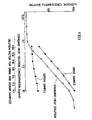
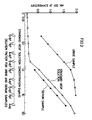
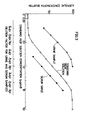
- Fig. 1, Fig. 2 and Fig.3 each shows the hEGF assay results obtained in Reference Example 1, Example 1 and Example 2, respectively.
- the anti-hEGF antibody can be obtained, for example, in the following manner: A warm-blooded animal other than human, which is capable of antibody production, for example guinea pig, rabbit, rat, mouse or goat, is immunized with hEGF as antigen by a conventional method, the blood is collected, the antiserum is separated and the antibody is purified.
- conventional purification means can be used.
- the antiserum is separated by fractionation with ammonium sulfate and then purified and collected by ion exchange or gel filtration. Protein A affinity chromatography by which the antibody is adsorbed specifically may also be used.
- a further possible method of anti-hEGF antibody preparation comprises causing fusion between spleen cells from a warm-blooded, hEGF-immunized animal other than human and myeloma cells, picking out anti-hEGF antibody-producing fused cells and recovering monoclonal anti-hEGF antibodies.
- the mouse is used in particular.
- the spleen is excised from an hEGF-immunized BALB/C mouse and a simple splenocyte suspension is prepared in an appropriate medium.
- splenocytes are then fused with mouse-derived myeloma cells, for example SP2/0, at 37°C in a culture medium, for example RPMI1640, containing 40-50% of polyethylene glycol and then fused cells are selectively cultivated in a culture medium containing hypoxanthine, aminopteridine, thymidine and fetal calf serum. Further cloning by the limiting dilution method using thymocytes of BALB/C as feeder cells leads to separation of anti-hEGF antibody-producing cells.
- a culture medium for example RPMI1640
- These cells are further cultivated in an appropriate medium, for example in RPMI1640 medium containing fetal calf serum and a monoclonal anti-hEGF antibody is recovered from the culture broth by fractionation with ammonium sulfate, ion exchange, gel filtration or affinity chromatography. It is also possible to obtain a monoclonal anti-hEGF antibody from the ascitic fluid obtained by transplanting anti-hEGF antibody-producing fused cells into the peritoneal cavity of a histocompatible animal or a nude mouse.
- antibodies may be used not only in the form of immunoglobulins but also in a fragment form, for example in the form of F(ab′)2 obtainable by antibody treatment with papain or in the form of Fab′ obtainable by further reduction or in the form of F(ab)2 obtainable of antibody treatment with pepsin.
- these antibodies can be used in the form of immobilized antibodies attached to insoluble carriers or in the form of labelled antibodies coupled to an oxidoreductase.
- insoluble carriers serving for antibody immobilization are polyethylene, glass, polyacrylamide, cellulose and dextrin.
- the anti-hEGF antibodies are physically or chemically bound to the surface of such carriers. hEGF in samples is adsorbed on these carriers in the manner of antigen-antibody reaction.
- Polystyrene is a particularly preferable antibody-binding carrier since it has high antibody-adsorbing capacity.
- an oxidoreductase is used as the enzyme.
- peroxidase which is an oxidoreductase
- an appropriate spacer or functional group may be introduced into the enzyme in advance.
- dialdehyde compounds, amino acid compounds, dicarboxylic acid compounds, diamine compounds, thiocarboxylic acid compounds, derivatives of these, S-acetylmercaptosuccinic anhydride and 2-aminoethanethiol may be used for introduction of one or more aldehyde, carboxyl, amino, thiol and other functional groups by the intermediary of spacers. It is also possible to introduce one or more functional groups into anti-hEGF antibody using the above reagents instead of introduction into the enzyme.
- the peroxidase-labelled antibody can be prepared by using a crosslinking reagent capable of binding the enzyme and antibody together making the best of the amino, hydroxyl and/or carboxyl group occurring therein and/or the functional group or groups introduced.
- a crosslinking reagent capable of binding the enzyme and antibody together making the best of the amino, hydroxyl and/or carboxyl group occurring therein and/or the functional group or groups introduced. Examples are dialdehyde compounds, dicarboxylic acid compounds, diisocyanate compounds, maleimide carboxylic acid compounds, dimaleimide compounds, thicarboxylic acid compounds, and reactive derivatives of these.
- An appropriate one can be selected depending on the functional groups participating in the enzyme-antibody coupling.
- a fluid sample is first reacted with immobilized hEGF antibody in 50-5,000 ⁇ l of a buffer solution for 12-24 hours. Then an excess of enzyme- labelled antibody is added and reaction is allowed to proceed for 1-12 hours. Thereafter, the solid phase, namely immobilized hEGF antibody-hEGF-enzyme-labeled antibody complex, is separated from the liquid phase, and one of the phases is assayed for enzyme activity.
- the enzyme activity determination may be carried out by an appropriate known method based on the properties of the oxidoreductase.
- the component consumed or formed by the enzymatic reaction may be quantitatively determined electrochemically by means of an electrode, such as an oxygen electrode or a hydrogen peroxide electrode.
- hydrogen peroxide can be assayed by colorimetry or fluorometry using a color reagent system for hydrogen peroxide, such as 4-aminoantipyrin and phenol or dimethylaniline, or 3-methyl-2-benzothiazoline and dimethylaniline or ortho-phenylenediamine, or a fluorescence reagent such as p-hydroxyphenylacetic acid or 3-(p-hydroxyphenyl)propionic acid.
- a color reagent system for hydrogen peroxide such as 4-aminoantipyrin and phenol or dimethylaniline, or 3-methyl-2-benzothiazoline and dimethylaniline or ortho-phenylenediamine
- a fluorescence reagent such as p-hydroxyphenylacetic acid or 3-(p-hydroxyphenyl)propionic acid.
- color reagents is
- hEGF was prepared from human urine by the method described in Japanese Kokai Tokkyo Koho 58-219124 and U. S. Patent 4,528,186.
- hEGF 0.5 mg
- physiological saline an equal volume of Freund's complete adjuvant
- the mixture emulsion was injected into a rabbit at several sites on the back, followed by three subcutaneous injections of the same emulsion in the same dose at 2-week intervals.
- the anti-hEGF antibody-containing antiserum obtained in (1) was applied to a column packed with Sepharose 4B carrying protein A immobilized thereon to thereby cause ⁇ -globulin to be adsorbed thereon. Then the column was washed well with 0.1 M phosphate buffer containing 0.15 M NaCl (pH 8.0) and then ⁇ -globulin was eluted from the column with 1 M acetic acid. The eluate was purified by dialyzing against 0.05 M Tris hydrochloride buffer (pH 8.5).
- the thus-purified anti-hEGF antibody solution was adjusted to a concentration of 200 ⁇ g per milliliter and distributed in 150- ⁇ l portions into the wells of a 96-well polystyrene microplate (for EIA; product of Nunc, Denmark), and the antibody was immobilized by incubation at 37°C for 30 minutes
- the plate was washed well with 0.1 M phosphate buffer (pH 7.0) containing 0.1 M NaCl, 0.1% bovine albumin, 0.1% NaN3 and 1 mM MgCl2 to give a plate with anti-hEGF antibody immobilized thereon.
- a 10-mg portion of the purified anti-hEGF antibody prepared in (2) was digested with pepsin (Boehringer Mannheim-Yamanouchi, Japan) in 0.1 M acetate buffer (pH 4.5). The digest was purified on a Sephadex G-100 (Pharmacia Japan) column and then deprived of undigested antibody by passing a Sepharose column with protein A immobilized thereon.
- pepsin Boehringer Mannheim-Yamanouchi, Japan
- the thus-obtained F(ab′)2 fragment was reduced with 2-mercaptoethanolamine and purified on a Sephadex G-25 (Pharmacia) column to give an Fab′ fragment solution
- a saturated N,N′-o-phenylenedimaleimide solution (1 ml) was added to 1 ml of the Fab′ fragment solution, the mixture was incubated at 30°C for 15 minutes and immediately thereafter applied to a Sephadex G-25 column, and the initial eluate was collected and concentrated to l ml.
- To the concentrate was added 0.5 mg of beta-D-galactosidase ( ⁇ -D-galactoside hydrolase, EC 3.2.1.23; Boehringer Mannheim-Yamanouchi, Japan).
- reaction mixture was made neutral by addition of l N NaOH. After further addition of bovine serum albumin, the mixture was allowed to stand overnight.
- the reaction mixture was purified on Sepharose CL-6B (Pharmacia Japan) equibrated with 0.1 M phosphate buffer (pH 7.0) containing 0.3 M NaCl, 0.1% bovine serum albumin, 0.1% NaN3 and 1 mM MgCl2.
- Purified hEGF was dissolved in a series of concentrations within the range of 0.01 ng to 50 ng per milliliter in 0.1 M phosphate buffer (pH 7.0) containing 0.1 M NaCl, 0.1% bovine serum albumin, 0.1% NaN3 and 1 mM NaCl2 and the solutions were used as standard solutions.
- a 150- ⁇ l portion of each standard hEGF solution was added to a well of the microplate with anti-hEGF immobilized thereon as prepared in (2). After overnight standing at room temperature, each well was washed with a buffer, 0.2 milliunit of beta-galactosidase-coupled antibody in solution was added to each well and the reaction was allowed to proceed overnight at room temperature.
- Peroxidase (2 mg; special reagent for enzyme immunoassay; Nordic, Netherlands) was dissolved in 0.3 ml of 0.1 M phosphate buffer (pH 6.0). To the solution was added a 20- ⁇ l N,N-dimethylformamide solution of 1.6 mg of N-succinimidyl 4-(N-maleimidomethyl)cyclohexane-1-carboxylate (Wako Pure Chemical Industries). The mixture was incubated at 60°C for 30 minutes.
- reaction mixture was subjected to gel filtration using a Sephadex G-25 column equilibrated with 0.1 M phosphate b ffer (pH 6.0) to give a maleimidated peroxidase solution. Thereto was added 2.86 mg of the Fab′ fragment of anti-hEGF antibody as described in Reference Example 1-(3). After 30 minutes of reaction at 4°C, the reaction mixture was purified on a column packed with Ultrogel Ac44 (Pharmacia) equilibrated with 0.1 M phosphate buffer (pH 6.0). Thus was obtained peroxidase-coupled Fab′ fragment.
- hEGF Purified hEGF was dissolved in concentrations of 0.01 pg to 50 pg per milliliter in 0.1 M phosphate buffer (pH 7.0) containing 0.1 M NaCl, 0.1% bovine serum albumin and 1 mM MgCl2.
- the solutions thus prepared were used as standard hEGF, solutions.
- a 150- ⁇ l portion of each standard solution was added to a well of the microplate with anti-hEGF antibody immobilized thereon as prepared in (2). After standing overnight at room temperature, each well was washed with a buffer, 150 ⁇ l of a buffer containing 4.3 ng of the peroxidase-coupled Fab′ fragment prepared in (3) was added and the reaction was allowed to proceed at room temperature for 6 hours.
- each well was washed well with a buffer. Thereafter, 150 ⁇ l of 0.1 M citrate buffer (pH 5.0) containing 400 ⁇ g/ml of o-phenylenediamine and 0.01% hydrogen peroxide was added to each well and the reaction was allowed to proceed at 25°C for 1 hour, followed by addition of 25 ⁇ l of 8 N sulfuric acid and absorbance measurement at 492 nm on a multiscanning photometer (Titertek; Flow, USA). The results thus obtained are Shown in Fig. 2. The detection limit was 0.5 pg/ml. Assay of hEGF in human urine and serum samples was attempted using this assay system. The actual assay curves for these samples were in parallel with the standard hEGF assay curve. The hEGF contents in the urine and serum samples were 25 ng/ml and 580 pg/ml, respectively.
- Polystyrene beads (3.2 mm in diameter; Immunobeads; Bio-Rad, Japan) were immersed in a 0.2 mg/ml solution of the purified anti-hEGF IgG described in Reference Example 1-(2) in 0.05 M Tris-hydrochloride buffer (pH 8.5). After allowing to stand at room temperature for 30 minutes, the beads were taken out and washed with 0.1 M phosphate buffer (pH 7.0) and then with 0.1 M phosphate buffer (pH 7.0) containing 0.3 M NaCl, 0.1% bovine serum albumin, 0.1% NaN3 and 1 mM MgCl2. Thus were obtained beads with antibody immobilized thereon.
- Standard hEGF solutions were prepared by dissolving purified hEGF, in concentrations of 0.01 pg to 50 pg per milliliter, in 0.1 M phosphate buffer (pH 7) containing 0.1 M NaCl, 0.1% bovine serum albumin and 1 mM MgCl2. Each standard hEGF solution (100 ⁇ l) was added to a glass test tube (1.0 ⁇ 10.0 cm) containing one of the beads with antibody immobilized thereon as prepared in (2). After overnight standing at 4°C, the beads were washed with 0.1 M phosphate buffer (pH 7.0) containing 0.1% bovine serum albumin.
- the reaction was then terminated by addition of 200 ⁇ l of 0.1 M glycine-NaOH buffer (pH 10.3) and the fluorescence intensity was measured on a fluorometer (Hitachi model 650-60) at the excitation wavelength of 320 nm and the measurement wavelength of 405 nm.
- the results thus obtained are shown in Fig. 3.
- the detection limit was 0.1 pg/ml.
- Assay of hEGF in human urine and serum samples was attempted using this assay system. The actual assay curves for these samples were in parallel with the standard hEGF assay curve and the hEGF contents in the urine and serum samples were found to be 17 ng/ml and 323 pg/ml, respectively.
Landscapes
- Life Sciences & Earth Sciences (AREA)
- Health & Medical Sciences (AREA)
- Molecular Biology (AREA)
- Engineering & Computer Science (AREA)
- Immunology (AREA)
- Chemical & Material Sciences (AREA)
- Biomedical Technology (AREA)
- Urology & Nephrology (AREA)
- Hematology (AREA)
- Microbiology (AREA)
- Analytical Chemistry (AREA)
- Biotechnology (AREA)
- Endocrinology (AREA)
- Food Science & Technology (AREA)
- Medicinal Chemistry (AREA)
- Physics & Mathematics (AREA)
- Cell Biology (AREA)
- Biochemistry (AREA)
- General Health & Medical Sciences (AREA)
- General Physics & Mathematics (AREA)
- Pathology (AREA)
- Measuring Or Testing Involving Enzymes Or Micro-Organisms (AREA)
- Medicines Containing Antibodies Or Antigens For Use As Internal Diagnostic Agents (AREA)
Applications Claiming Priority (2)
| Application Number | Priority Date | Filing Date | Title |
|---|---|---|---|
| JP60265822A JPH0799369B2 (ja) | 1985-11-25 | 1985-11-25 | 上皮細胞増殖因子の酵素免疫測定法 |
| JP265822/85 | 1985-11-25 |
Publications (2)
| Publication Number | Publication Date |
|---|---|
| EP0228810A1 true EP0228810A1 (fr) | 1987-07-15 |
| EP0228810B1 EP0228810B1 (fr) | 1990-07-11 |
Family
ID=17422536
Family Applications (1)
| Application Number | Title | Priority Date | Filing Date |
|---|---|---|---|
| EP19860309181 Expired EP0228810B1 (fr) | 1985-11-25 | 1986-11-25 | Méthode d'immuno-essai enzymatique pour le facteur de croissance épidermique |
Country Status (3)
| Country | Link |
|---|---|
| EP (1) | EP0228810B1 (fr) |
| JP (1) | JPH0799369B2 (fr) |
| DE (1) | DE3672591D1 (fr) |
Cited By (2)
| Publication number | Priority date | Publication date | Assignee | Title |
|---|---|---|---|---|
| EP0446100A3 (en) * | 1990-02-27 | 1992-02-26 | Fidia S.P.A. | Method for the quantitative determination of the biologically active form of the human nerve growth factor in protein liquids |
| AU774802B2 (en) * | 2000-10-31 | 2004-07-08 | Japan As Represented By President Of Niigata University | Diagnostic kit for schizophrenia |
Family Cites Families (7)
| Publication number | Priority date | Publication date | Assignee | Title |
|---|---|---|---|---|
| US4233402A (en) * | 1978-04-05 | 1980-11-11 | Syva Company | Reagents and method employing channeling |
| US4220450A (en) * | 1978-04-05 | 1980-09-02 | Syva Company | Chemically induced fluorescence immunoassay |
| DE3048884A1 (de) * | 1980-12-23 | 1982-07-15 | Boehringer Mannheim Gmbh, 6800 Mannheim | Verfahren zur enzymimmunobestimmung in heterogener phase |
| JPH0822821B2 (ja) * | 1985-01-21 | 1996-03-06 | 雪印乳業株式会社 | モノクローナル抗上皮成長因子抗体及びその使用法 |
| JPS6229598A (ja) * | 1985-07-30 | 1987-02-07 | Wakunaga Pharmaceut Co Ltd | 抗上皮細胞成長因子モノクロ−ナル抗体 |
| JPS6242059A (ja) * | 1985-08-17 | 1987-02-24 | Wakunaga Pharmaceut Co Ltd | ヒト上皮細胞成長因子の免疫化学的測定法 |
| JPS6247554A (ja) * | 1985-08-28 | 1987-03-02 | Wakunaga Pharmaceut Co Ltd | ヒト上皮細胞成長因子の免疫化学的測定法及びそのためのキツト |
-
1985
- 1985-11-25 JP JP60265822A patent/JPH0799369B2/ja not_active Expired - Lifetime
-
1986
- 1986-11-25 EP EP19860309181 patent/EP0228810B1/fr not_active Expired
- 1986-11-25 DE DE8686309181T patent/DE3672591D1/de not_active Expired - Lifetime
Non-Patent Citations (5)
| Title |
|---|
| CHEMICAL ABSTRACTS, vol. 103, no. 7, August 19, 1985, Columbus, Ohio, USA HAYASHI et al. "A sensitive twosite enzyme immunoassay for human epidermal growth factor (urogastrone) page 59, column 2, abstract no. 48 309e * |
| CHEMICAL ABSTRACTS, vol. 88, no. 9, February 27, 1978, Columbus, Ohio, USA R.H.STARKEY et al. "Radioimmunoassay of human epidermal growth factor" page 174, column 1, abstract no. 59 868j * |
| CHEMICAL ABSTRACTS, vol. 89, no. 7, August 14, 1978, Columbus, Ohio, USA G.E.DAILEY et al. "Homologous radioimmunoassay for human epidermal growth factor (urogastrone)" page 258, column 1, abstract no. 55 933z * |
| CHEMICAL ABSTRACTS, vol. 90, no. 19, May 7, 1979, Columbus, Ohio, USA R.L.LADDA et al. "radioreceptor assay for epidermal growth factor" page 260, column 2, abstract no. 148 024q * |
| CHEMICAL ABSTRACTS, vol. 91, no. 9, August 27, 1979, Columbus, Ohio, USA H.GREGORY et al. "Urogastrone-epidermal growth factor" page 289, column 2, abstract no. 71 082t * |
Cited By (3)
| Publication number | Priority date | Publication date | Assignee | Title |
|---|---|---|---|---|
| EP0446100A3 (en) * | 1990-02-27 | 1992-02-26 | Fidia S.P.A. | Method for the quantitative determination of the biologically active form of the human nerve growth factor in protein liquids |
| AU774802B2 (en) * | 2000-10-31 | 2004-07-08 | Japan As Represented By President Of Niigata University | Diagnostic kit for schizophrenia |
| EP1331481A4 (fr) * | 2000-10-31 | 2005-06-29 | Japan Government | Trousse destinee au diagnostic de la schizophrenie |
Also Published As
| Publication number | Publication date |
|---|---|
| JPH0799369B2 (ja) | 1995-10-25 |
| JPS62124460A (ja) | 1987-06-05 |
| DE3672591D1 (de) | 1990-08-16 |
| EP0228810B1 (fr) | 1990-07-11 |
Similar Documents
| Publication | Publication Date | Title |
|---|---|---|
| US4434236A (en) | Immunoassay wherein labeled antibody is displaced from immobilized analyte-analogue | |
| US4661444A (en) | Homogeneous immunoassays employing double antibody conjugates comprising anti-idiotype antibody | |
| US6326159B1 (en) | Receptors for immune complexes | |
| US5545530A (en) | Process for measuring analyte in sample | |
| IE890683L (en) | Method for determination of a polyvalent substance using an immunoaggregate | |
| EP0307754A2 (fr) | Procédé pour l'obtention d'une réparaton de fragments d'anticorps libre de papaine | |
| EP0124366B1 (fr) | Méthode pour la détermination des ligands biologiques | |
| EP0566205A1 (fr) | Procédé pour l'élimination des réactions non-spécifiques dans des essais immunologiques | |
| NISHIMURA et al. | Enzyme immunoassay for cuprozinc-superoxide dismutase in serum and urine | |
| CA2025266A1 (fr) | Anticorps monoclonal nucleocapsidique anti-hcg-.beta., sa production et son utilisation | |
| EP0088974A2 (fr) | Essai immunologique homogène avec un anti-réactif marqué monoclonal | |
| EP1271152A1 (fr) | Technique d'investigation du cancer par epreuve biologique d'un autoanticorps contre mdm2 et reactif | |
| FI78787C (fi) | Immunometrisk metod foer bestaemning av en hapten. | |
| EP0310413B1 (fr) | Anticorps immobilisés | |
| EP0096463A1 (fr) | Demi-molécules d'immunoglobulines et procédé de production d'anticorps hybrides | |
| EP0396801A1 (fr) | Méthode facile pour le dosage immunologique | |
| JP3667434B2 (ja) | 免疫測定に用いる非特異反応抑制剤、非特異反応抑制方法および測定キット | |
| US4816390A (en) | Immunochemical assay of carcinoembryonic antigen and reagent therefor | |
| JPH0693835B2 (ja) | 酵素不活性で免疫活性のβ‐ガラクトシダーゼ‐突然変異蛋白質、その製法、血清蛋白質の免液学的測定法及び酵素イムノアツセイ用試薬 | |
| EP0228810B1 (fr) | Méthode d'immuno-essai enzymatique pour le facteur de croissance épidermique | |
| US4812395A (en) | Method for detecting enzymatic activity using particle agglutination | |
| EP0109078A1 (fr) | Essai immunochimique de la gonadotropine chorionique humaine et son réactif | |
| CA2281262C (fr) | Anticorps monoclonal anti-medullasine humaine, processus de production et dosage immunologique utilisant cet anticorps moinoclonal | |
| US5137807A (en) | Method for determining beta-subunit of human prolyl 4-hydroxylase by immunoassay to detect hepatic disease | |
| EP0132292A2 (fr) | Méthode de mesure de ligands biologiques |
Legal Events
| Date | Code | Title | Description |
|---|---|---|---|
| PUAI | Public reference made under article 153(3) epc to a published international application that has entered the european phase |
Free format text: ORIGINAL CODE: 0009012 |
|
| AK | Designated contracting states |
Kind code of ref document: A1 Designated state(s): CH DE FR GB IT LI |
|
| 17P | Request for examination filed |
Effective date: 19871126 |
|
| 17Q | First examination report despatched |
Effective date: 19890413 |
|
| GRAA | (expected) grant |
Free format text: ORIGINAL CODE: 0009210 |
|
| ITF | It: translation for a ep patent filed | ||
| AK | Designated contracting states |
Kind code of ref document: B1 Designated state(s): CH DE FR GB IT LI |
|
| REF | Corresponds to: |
Ref document number: 3672591 Country of ref document: DE Date of ref document: 19900816 |
|
| ET | Fr: translation filed | ||
| PLBE | No opposition filed within time limit |
Free format text: ORIGINAL CODE: 0009261 |
|
| STAA | Information on the status of an ep patent application or granted ep patent |
Free format text: STATUS: NO OPPOSITION FILED WITHIN TIME LIMIT |
|
| 26N | No opposition filed | ||
| ITTA | It: last paid annual fee | ||
| PGFP | Annual fee paid to national office [announced via postgrant information from national office to epo] |
Ref country code: LU Payment date: 19940531 Year of fee payment: 9 |
|
| EPTA | Lu: last paid annual fee | ||
| PGFP | Annual fee paid to national office [announced via postgrant information from national office to epo] |
Ref country code: GB Payment date: 19971103 Year of fee payment: 12 |
|
| PGFP | Annual fee paid to national office [announced via postgrant information from national office to epo] |
Ref country code: FR Payment date: 19971128 Year of fee payment: 12 |
|
| PGFP | Annual fee paid to national office [announced via postgrant information from national office to epo] |
Ref country code: DE Payment date: 19980120 Year of fee payment: 12 |
|
| PGFP | Annual fee paid to national office [announced via postgrant information from national office to epo] |
Ref country code: CH Payment date: 19980128 Year of fee payment: 12 |
|
| PG25 | Lapsed in a contracting state [announced via postgrant information from national office to epo] |
Ref country code: GB Free format text: LAPSE BECAUSE OF NON-PAYMENT OF DUE FEES Effective date: 19981125 |
|
| PG25 | Lapsed in a contracting state [announced via postgrant information from national office to epo] |
Ref country code: LI Free format text: LAPSE BECAUSE OF NON-PAYMENT OF DUE FEES Effective date: 19981130 Ref country code: CH Free format text: LAPSE BECAUSE OF NON-PAYMENT OF DUE FEES Effective date: 19981130 |
|
| GBPC | Gb: european patent ceased through non-payment of renewal fee |
Effective date: 19981125 |
|
| REG | Reference to a national code |
Ref country code: CH Ref legal event code: PL |
|
| PG25 | Lapsed in a contracting state [announced via postgrant information from national office to epo] |
Ref country code: FR Free format text: LAPSE BECAUSE OF NON-PAYMENT OF DUE FEES Effective date: 19990730 |
|
| REG | Reference to a national code |
Ref country code: FR Ref legal event code: ST |
|
| PG25 | Lapsed in a contracting state [announced via postgrant information from national office to epo] |
Ref country code: DE Free format text: LAPSE BECAUSE OF NON-PAYMENT OF DUE FEES Effective date: 19990901 |
|
| PG25 | Lapsed in a contracting state [announced via postgrant information from national office to epo] |
Ref country code: IT Free format text: LAPSE BECAUSE OF NON-PAYMENT OF DUE FEES;WARNING: LAPSES OF ITALIAN PATENTS WITH EFFECTIVE DATE BEFORE 2007 MAY HAVE OCCURRED AT ANY TIME BEFORE 2007. THE CORRECT EFFECTIVE DATE MAY BE DIFFERENT FROM THE ONE RECORDED. Effective date: 20051125 |