EP0230384B1 - Verfahren und Apparat für die Speicherung von Wasserstoff bei niedriger Temperatur - Google Patents
Verfahren und Apparat für die Speicherung von Wasserstoff bei niedriger Temperatur Download PDFInfo
- Publication number
- EP0230384B1 EP0230384B1 EP87300386A EP87300386A EP0230384B1 EP 0230384 B1 EP0230384 B1 EP 0230384B1 EP 87300386 A EP87300386 A EP 87300386A EP 87300386 A EP87300386 A EP 87300386A EP 0230384 B1 EP0230384 B1 EP 0230384B1
- Authority
- EP
- European Patent Office
- Prior art keywords
- hydrogen
- transition metal
- storage medium
- activated carbon
- carbon
- Prior art date
- Legal status (The legal status is an assumption and is not a legal conclusion. Google has not performed a legal analysis and makes no representation as to the accuracy of the status listed.)
- Expired - Lifetime
Links
Images


Classifications
-
- C—CHEMISTRY; METALLURGY
- C01—INORGANIC CHEMISTRY
- C01B—NON-METALLIC ELEMENTS; COMPOUNDS THEREOF; METALLOIDS OR COMPOUNDS THEREOF NOT COVERED BY SUBCLASS C01C
- C01B3/00—Hydrogen; Gaseous mixtures containing hydrogen; Separation of hydrogen from mixtures containing it; Purification of hydrogen; Reversible storage of hydrogen
- C01B3/0005—Reversible storage of hydrogen, e.g. by hydrogen getters or electrodes
- C01B3/001—Reversible storage of hydrogen, e.g. by hydrogen getters or electrodes characterised by the uptaking media; Treatment thereof
- C01B3/0078—Composite solid storage media, e.g. mixtures of polymers and metal hydrides, coated solid compounds or structurally heterogeneous solid compounds
-
- C—CHEMISTRY; METALLURGY
- C01—INORGANIC CHEMISTRY
- C01B—NON-METALLIC ELEMENTS; COMPOUNDS THEREOF; METALLOIDS OR COMPOUNDS THEREOF NOT COVERED BY SUBCLASS C01C
- C01B3/00—Hydrogen; Gaseous mixtures containing hydrogen; Separation of hydrogen from mixtures containing it; Purification of hydrogen; Reversible storage of hydrogen
- C01B3/0005—Reversible storage of hydrogen, e.g. by hydrogen getters or electrodes
-
- F—MECHANICAL ENGINEERING; LIGHTING; HEATING; WEAPONS; BLASTING
- F17—STORING OR DISTRIBUTING GASES OR LIQUIDS
- F17C—VESSELS FOR CONTAINING OR STORING COMPRESSED, LIQUEFIED OR SOLIDIFIED GASES; FIXED-CAPACITY GAS-HOLDERS; FILLING VESSELS WITH, OR DISCHARGING FROM VESSELS, COMPRESSED, LIQUEFIED, OR SOLIDIFIED GASES
- F17C11/00—Use of gas-solvents or gas-sorbents in vessels
- F17C11/005—Use of gas-solvents or gas-sorbents in vessels for hydrogen
-
- Y—GENERAL TAGGING OF NEW TECHNOLOGICAL DEVELOPMENTS; GENERAL TAGGING OF CROSS-SECTIONAL TECHNOLOGIES SPANNING OVER SEVERAL SECTIONS OF THE IPC; TECHNICAL SUBJECTS COVERED BY FORMER USPC CROSS-REFERENCE ART COLLECTIONS [XRACs] AND DIGESTS
- Y02—TECHNOLOGIES OR APPLICATIONS FOR MITIGATION OR ADAPTATION AGAINST CLIMATE CHANGE
- Y02E—REDUCTION OF GREENHOUSE GAS [GHG] EMISSIONS, RELATED TO ENERGY GENERATION, TRANSMISSION OR DISTRIBUTION
- Y02E60/00—Enabling technologies; Technologies with a potential or indirect contribution to GHG emissions mitigation
- Y02E60/30—Hydrogen technology
- Y02E60/32—Hydrogen storage
Definitions
- This invention relates to the storage of hydrogen, and is especially directed to a method and apparatus for storing hydrogen in high surface area activated carbon.
- Hydrogen has become increasingly attractive as a secondary energy source as the price of petroleum increases and its availability wanes. Hydrogen is particularly interesting as a secondary fuel because it has the highest energy density per unit weight of any chemical fuel, because it can be easily produced by electrolysis of water, and because it can be used directly in a variety of energy converters from turbines and reciprocating internal combustion engines to fuel cells.
- cryogenic storage of hydrogen on activated carbon is considered a cost-effective storage mechanism.
- this method does have certain drawbacks, including low storage capacity per kilogram of storage medium, the need to maintain cryogenic temperatures, and the need for a pressure vessel containing the carbon storage medium to withstand high pressures, e.g. 5 to 7 MPa (50 to 70 atmospheres).
- the storage temperature of the hydrogen can involve mere chilling of the gas to a cold temperature range, as distinguished from cryogenic temperatures, and can involve operating the storage system at pressures from 0.1MPa (1 atmosphere) to 5MPa (50 atmospheres), but optionally at 4.2 MPa (42 atmospheres).
- MACS Metal-Assisted Cold Storage
- the hydrogen uptake capacity is also increased if the carbon is somewhat basic, i.e., having a pH above 7.0, with significantly improved performance for a pH between 8.0 and 11.0.
- the pH is measured by dispersing about 200 mg of carbon in about 30 ml of distilled water and then agitating the suspension for about 10 minutes. The suspension is allowed to settle and the liquor's pH is measured using a suitable meter.
- the storage capacity is increased with increasing pH, a pH of 9 to 10 indicating a significant increase in terms of grams H per kilogram carbon.
- These carbons have great porosity, and readily accept the dispersion of palladium, platinum, nickel or other Group VIII transition metal, the metal being dispersed as tiny microcrystals throughout the carbon, as opposed to existing as a surface coating.
- the transition metals are not themselves specifically active chemically, as to not disturb the hydroxyl, aldehyde, carbonyl, carboxyl, or other active groups that are present on the surface of activated carbon. It is believed that these active groups play an important role in the adsorption of the dissociated hydrogen.
- MACS While verified experimentally for Pd/C and Pt/C examples is not limited,only to those examples. More generally, there must be an activated carbon hydrogen acceptor and the dispersed Group VIII transition metal for dissociation of the hydrogen, the acceptor being capable of chemisorbing or physisorbing the dissociated hydrogen. These metals and acceptors may be mixed within one another, or the dispersed metal may be supported on the surface of the hydrogen acceptor.
- the MACS system should be properly prepared by a suitable activation procedure to ensure maximal uptake capacity for hydrogen sorption.
- dehydration and reduction of the MACS storage medium should be carried out before the medium is employed for hydrogen storage.
- an optimum activation temperature that will not damage the intrinsic properties and structure of the MACS storage medium.
- Experimental results indicate that the activation temperature should not exceed about 373K for the reduction phase of activation, as higher temperatures can reduce the medium's adsorption capacity for hydrogen.
- an activation procedure of this invention has been developed in which the oxidized dispersed metal is reduced and at the same time some water is entrained in the storage medium as a promoter for the enhancement of hydrogen sorption. To acheive this, the activation reduction procedure is carried out in static hydrogen at atmospheric pressure.
- the invention also includes, storage apparatus for carrying out the new method of storing hydrogen, the apparatus comprising a pressure vessel with a filling of a storage medium that consists primarily of high surface area activated carbon with an active Group VIII transition metal dispersed in elemental and particulate form onto the activated carbon; means for supplying hydrogen to the vessel under a pressure of at least 105 Pa (one bar); and cooling means for maintaining the storage medium at a temperature below 293K.
- the metal is a transition metal from Group VIII, and can be selected from one of the families Ni, Pd, Pt; Co, Rh, Ir; or Fe, Ru, Os.
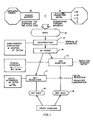
- the MACS storage medium 12, which may thus consist of activated carbon and 5% by weight of the transition metal, is placed in a suitable refrigerable pressure vessel, and is prepared or activated by carrying out dehydration and reduction.
- a dehydration step 13 removes impurities, principally moisture, from the MACS storage medium 12. This may be carried out prior to contacting with hydrogen, by flowing inert gas through the medium for dehydrating the same.
- evacuation with moderate heat (323K) application has been found to be effective. Selection of an optimum temperature is critical in dehydration as well as in reduction. In order to preserve the activity and the intrinsic sorptive properties of a carbon/transition-metal MACS medium, a temperature below 373K should be observed. Normal dehydration temperature is 323K.
- the evacuation and heating cycle is carried out for several hours, and preferably overnight.
- an inert-gas purge step 14 is carried out. This may involve flowing hydrogen for a period of time below 373K, then flowing the inert gas over the medium for an additional period of time below 373K, and then cooling the storage medium to a temperature in the cold temperature range.
- helium gas is introduced and is flow cycled through the MACS vessel until the weight of the MACS material is determined to be constant. The temperature during the helium purge is also held at 323K. Then, the vessel is again evacuated, and the reduction phase, which can be either dry reduction or wet reduction, is carried out.
- Reduction is an important step in activation procedures for hydrogen sorption and transfer because it restores the power of the metal particles, which have been allowed to oxidize in the open air.
- a MACS storage medium formed of metal on activated carbon heated above 373K can cause catalyst sintering (massive growth of the metal particles) with the possibility of pore blocking.
- catalyst sintering massive growth of the metal particles
- dry reduction This reduction in flowing hydrogen is called dry reduction because the water produced is removed during the reduction phase.
- dry MACS The material treated as described above.
- wet reduction step 17 the reduction is carried out under quiescent conditions, i.e., using static hydrogen at atmospheric pressure.
- Wet reduction entrains some water as a promoter which enhances the transfer of hydrogen. Water is a reduction product, and the water has a co-catalytic effect on the enhancement of hydrogen transfer from the metal to the carbon.
- the temperature for this phase is also maintained at 323K.
- the material treated in wet reduction is called "wet MACS" 18.
- the reduction phases 15 or 17 in the activation of the MACS storage medium are critical to maximize hydrogen storage and release.
- Weight loss during the reduction is related to the reaction for Pd/carbon MACS: PdO + H2 ⁇ Pd + H2O
- Wet MACS storage medium 18 also shows considerable enhancement for hydrogen storage. With water acting as a promoter, more hydrogen is adsorbed on the wet MACS than on the dry MACS.
- the amount of hydrogen uptake on wet MACS is a function of charging time.
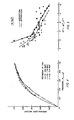
- the relationship of hydrogen uptake to charging time for wet and dry 5% Pd/C MACS is shown in Fig. 2. Hydrogen continues to be adsorbed on the wet MACS even after the temperature reaches an equilibrium value, whereas hydrogen adsorption on dry MACS stops at that equilibrium value. For four hour charging times on wet MACS, 40% more hydrogen is adsorbed at 77K. At 85K, there was 20% enhancement after 20 minutes of charging.
- Table-3 shows that similar amounts of water per unit weight of the MACS (about 0.5 g to 0.6 g water/kg MACS) are entrained, although the amount of water produced during the wet reduction depends somewhat on the metal loading.
- the rate of hydrogen adsorption on wet MACS at equilibrium is fairly constant. This indicates that there are more active sites available on the support than are used in dry MACS or carbon storage systems, and thus much more hydrogen can be adsorbed.
- Table-4 shows that the activated carbon has a total unit surface area factor of 1167 m2/g which corresponds to 5.75 x 1025 active storage sites for each kilogram of MACS material, and that the total number of sites required to accommodate hydrogen in an adsorbed monolayer is 7.46 x 1024 sites/kg of MACS.
- the water seems to function as a "bridge" by which heat transfer as well as mass transfer is enhanced.
- the water effect on wet MACS systems makes it more practicable if one employs cold temperatures (between 78K and room temperature) rather than cryogenic temperature (below 78K) for charging of the MACS with hydrogen.
- Fig. 3 is a normalized plot, depicting hydrogen uptake as a function of temperature while the charging pressure was maintained at a constant 105Pa (one atmosphere).
- Fig. 4 is also a normalized plot showing the dependence of adsorbed hydrogen uptake on pressure at 78K. All the tested MACS storage media adsorb comparable percentages of hydrogen at a given temperature and pressure. The similarity in the shape of the isotherms indicates that all MACS materials have similar kinetics and that the difference in total hydrogen uptake is principally due to the effect of the transition metal, which alters only the activation energy barrier but not the reaction kinetics.
- surface adsorption may be represented by the following mechanism:
- r a k a [A] ⁇ [M] - [A ⁇ S] ⁇ - k d [A S] (3)
- [A] and [S] denote the concentration of the component and sites, respectively
- [A ⁇ S] denotes the concentration of occupied sites
- [M] is the maximum concentration of available sites.
- the basis for determining the desorption kinetics follows a parallel methodology to that used to obtain the adsorption kinetics.
- Examples of carbon storage and Pd/C MACS media are a follows:
- the basis carbon was the Englehard Carbon product mentioned above. These were pretreated in identical manners as dry MACS and as wet MACS. A comparison of these examples will be made with reference to the Tables and to the charts of the Drawings.
- Figs. 5 and 6 are Arrhenius plots of the adsorption/desorption rates for 1% Pd/carbon and carbon, respectively. What emerges from these results is the existence of two regions in the Arrhenius plot of 1% Pd/carbon corresponding to an initial slower hydrogen uptake followed by a more rapid hydrogen uptake. Between 77 K and 173 K and between 173 K and 273 K there are two linear regions which indicate two binding states for hydrogen on MACS material. For activated carbon alone (Fig. 6) only a single linear region is seen. Table-5 summarizes the kinetic parameters E a , E d , A a , and A d over two temperature ranges for the adsorption/desorption processes.
- FIG. 7 shows the absolute weight change due to the hydrogen uptake at 77K for carbon, 1% Pd/carbon and 5%Pd/carbon after identical activation and charging procedures.
- the role of pressure is not linear, however, and the effect of added pressure diminishes as pressure increases, although the total hydrogen uptake capacity increases with pressure.
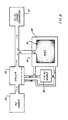
- a hydrogen source 20 for example a cathode of an electrolytic cell, supplies hydrogen gas through a chiller 22 to a previously activated storage cell 24.
- the latter has an inner Pressure vessel 26 filled with a MACS material, for example palladium-carbon.
- An outer jacket 28 surrounds the inner vesel and can be filled with a refrigerant or with a liquefied inert gas or liquid nitrogen to keep the MACS material in the desired cold temperature range.
- a liquid nitrogen source 30 cycles nitrogen to the chiller 22 and to the jacket 28 of the storage cell 24.
- the hydrogen is supplied, either directly from the source 20 or indirectly after having been released from storage in the cell 24, to an energy converter 32.
- the latter can be e.g., a fuel cell which combines the hydrogen with oxygen to produce electricity, or can be a turbine or internal combustion engine.
- TABLE 3 Water Entrainment Water Produced mg/kg sample Water Entrained mg/kg sample 1%Pd/carbon 1.02 0.52 5%Pd/carbon 2.49 0.62
Landscapes
- Chemical & Material Sciences (AREA)
- Engineering & Computer Science (AREA)
- Organic Chemistry (AREA)
- Chemical Kinetics & Catalysis (AREA)
- Combustion & Propulsion (AREA)
- Inorganic Chemistry (AREA)
- Mechanical Engineering (AREA)
- General Engineering & Computer Science (AREA)
- Hydrogen, Water And Hydrids (AREA)
- Solid-Sorbent Or Filter-Aiding Compositions (AREA)
- Catalysts (AREA)
Claims (22)
- Verfahren zur Speicherung von Wasserstoff durch Inberührungbringen von gasförmigem Wasserstoff mit einem Speichermedium, das aus einem Aktivkohlenstoff mit einem großen Oberflächenbereich gebildet ist, und Physisorbieren des Wasserstoffs auf dem Speichermedium, bei welchem der sorbierte Wasserstoff gespeichert wird, indem der Druck bei oder oberhalb von einem Bar (10⁵ Pa) gehalten und die Temperatur des Mediums in einem kalten Temperaturbereich unterhalb 293K gehalten wird, dadurch gekennzeichnet, daß der Aktivkohlenstoff ein Aktivübergangsmetall der Gruppe VIII umfaßt, welches auf seine Oberfläche in elementarer und Partikelform dispergiert ist, wobei das Übergangsmetall imstande ist, den Wasserstoff zu dissoziieren.
- Verfahren nach Anspruch 1, dadurch gekennzeichnet, daß das Übergangsmetall in dem Kohlenstoff als kleine Teilchen im Größenbereich von 5 bis 20 nm dispergiert ist.
- Verfahren nach Anspruch 1, dadurch gekennzeichnet, daß das Übergangsmetall aus der Familie bestehend aus Ni, Pd und Pt ausgewählt ist.
- Verfahren nach Anspruch 1, dadurch gekennzeichnet, daß das Übergangsmetall aus der Familie bestehend aus Co, Rh und Ir ausgewählt ist.
- Verfahren nach Anspruch 1, dadurch gekennzeichnet, daß das Übergangsmetall aus der Familie bestehend aus Fe, Ru und Os ausgewählt ist.
- Verfahren nach einem der vorhergehenden Ansprüche, dadurch gekennzeichnet, daß das Speichermedium aus Aktivkohlenstoff und 5 Gew.-% des Übergangsmetalls besteht.
- Verfahren nach einem der vorhergehenden Ansprüche, dadurch gekennzeichnet, daß der Aktivkohlenstoff einen Oberflächenbereichsfaktor von mindestens 1000 m²/g aufweist.
- Verfahren nach einem der vorhergehenden Ansprüche, dadurch gekennzeichnet, daß das Speichermedium vor dem Inberührungbringen mit Wasserstoff durch das Strömenlassen eines inerten Gases durch das Medium zur Dehydratisierung desselben hergestellt wird.
- Verfahren nach Anspruch 8, dadurch gekennzeichnet, daß die Herstellung des Speichermediums das Strömenlassen von Wasserstoff während eines Zeitraums unterhalb 373K, dann das Strömenlassen des inerten Gases über das Medium während eines zusätzlichen Zeitraums unterhalb 373K und anschließendem Abkühlen des Speichermediums auf eine Temperatur in dem kalten Temperaturbereich, umfaßt.
- Verfahren nach einem der vorhergehenden Ansprüche, dadurch gekennzeichnet, daß das Aufrechterhalten der Temperatur in dem kalten Temperaturbereich das Kühlen des Mediums mit flüssigen Stickstoff umfaßt.
- Verfahren nach einem der vorhergehenden Ansprüche, dadurch gekennzeichnet, daß der Aktivkohlenstoff mit großen Oberflächenbereich einen pH-Wert, der basisch ist, aufweist.
- Verfahren nach Anspruch 11, dadurch gekennzeichnet, daß der Kohlenstoff einen pH-Wert von zwischen 9 und 10 aufweist.
- Verfahren nach einem der vorhergehenden Ansprüche, dadurch gekennzeichnet, daß das Aufrechterhalten des Drucks während eines Beschickungszeitraums von vier Stunden durchgeführt wird.
- Verfahren nach einem der vorhergehenden Ansprüche, dadurch gekennzeichnet, daß der Druck unterhalb von 50 Bar (85 MPa) aufrechterhalten wird.
- Verfahren nach Anspruch 14, dadurch gekennzeichnet, daß der Druck bei einem Bar (10⁵ Pa) aufrechterhalten wird.
- Speichervorrichtung zur Durchführung des Verfahrens nach einem der vorhergehenden Ansprüche, dadurch gekennzeichnet, daß die Vorrichtung einen Druckbehälter (26) mit einer Füllung eines Speichermediums, das vor allem aus Aktivkohle mit einem großen Oberflächenbereich mit einem Aktivübergangsmetall der Gruppe VIII, das in elementarer und Teilchenform auf dem Aktivkohlenstoff dispergiert ist, eine Einrichtung zum Zuführen des Wasserstoffs zum Behälter unter einem Druck von wenigstens 10⁵ Pa (einem Bar) und eine Kühlvorrichtung (22, 30) zum Aufrechterhalten des Speichermittels bei einer Temperatur unterhalb 293K umfaßt.
- Vorrichtung nach Anspruch 16, dadurch gekennzeichnet, daß die Kühleinrichtung (22) eine Einrichtung umfaßt, um das Speichermedium (26) auf die Temperatur von flüssigem Stickstoff zu kühlen.
- Vorrichtung nach Anspruch 16 oder 17, dadurch gekennzeichnet, daß das Übergangsmetall aus der Familie bestehend aus Ni, Pd und Pt ausgewählt ist.
- Vorrichtung nach Anspruch 16 oder 17, dadurch gekennzeichnet, daß das Übergangsmetall aus der Familie bestehend aus Co, Rh und Ir ausgewählt ist.
- Vorrichtung nach Anspruch 16 oder 17, dadurch gekennzeichnet, daß das Übergangsmetall aus der Familie bestehend aus Fe, Ru und Os ausgewählt ist.
- Vorrichtung nach Anspruch 16 oder 20, dadurch gekennzeichnet, daß das Speichermedium aus Aktivkohlenstoff und 5 Gew.-% des Übergangsmetalls besteht.
- Vorrichtung nach Anspruch 16 oder 20, dadurch gekennzeichnet, daß der Aktivkohlenstoff einen Oberflächenbereichsfaktor von mindestens 1000 m²/g aufweist.
Applications Claiming Priority (2)
| Application Number | Priority Date | Filing Date | Title |
|---|---|---|---|
| US06/819,844 US4716736A (en) | 1986-01-17 | 1986-01-17 | Metal assisted carbon cold storage of hydrogen |
| US819844 | 1986-01-17 |
Publications (3)
| Publication Number | Publication Date |
|---|---|
| EP0230384A2 EP0230384A2 (de) | 1987-07-29 |
| EP0230384A3 EP0230384A3 (en) | 1988-09-21 |
| EP0230384B1 true EP0230384B1 (de) | 1992-04-08 |
Family
ID=25229234
Family Applications (1)
| Application Number | Title | Priority Date | Filing Date |
|---|---|---|---|
| EP87300386A Expired - Lifetime EP0230384B1 (de) | 1986-01-17 | 1987-01-16 | Verfahren und Apparat für die Speicherung von Wasserstoff bei niedriger Temperatur |
Country Status (4)
| Country | Link |
|---|---|
| US (1) | US4716736A (de) |
| EP (1) | EP0230384B1 (de) |
| JP (1) | JPH0822721B2 (de) |
| DE (1) | DE3778039D1 (de) |
Families Citing this family (48)
| Publication number | Priority date | Publication date | Assignee | Title |
|---|---|---|---|---|
| US4821907A (en) * | 1988-06-13 | 1989-04-18 | The United States Of America As Represented By The Administrator Of The National Aeronautics And Space Administration | Surface tension confined liquid cryogen cooler |
| DE3925694A1 (de) * | 1989-08-03 | 1991-02-07 | Ruiter Ernest De | Wasserstoffspeicher |
| JP3164579B2 (ja) * | 1989-09-13 | 2001-05-08 | キヤノン株式会社 | 水素貯蔵体 |
| US4960450A (en) * | 1989-09-19 | 1990-10-02 | Syracuse University | Selection and preparation of activated carbon for fuel gas storage |
| US5372619A (en) * | 1992-10-14 | 1994-12-13 | Ucar Carbon Technology Corporation | Method for storing methane using a halogenating agent treated activated carbon |
| US5385876A (en) * | 1993-01-27 | 1995-01-31 | Syracuse University | Activated carbons molecularly engineered |
| US5360461A (en) * | 1993-08-23 | 1994-11-01 | United Technologies Corporation | Polymeric storage bed for hydrogen |
| US5614460A (en) * | 1995-08-23 | 1997-03-25 | Syracuse University | Microporous carbons for fuel gas storage |
| EP0847304A4 (de) * | 1995-08-23 | 1999-10-27 | Univ Syracuse | Mikroporoses kohlenstoffverbundmaterial zur lagerung von flüssiggas |
| US5895518A (en) * | 1996-04-23 | 1999-04-20 | Sandia Corporation | Synthesis of alloys with controlled phase structure |
| US6428922B2 (en) * | 1998-04-07 | 2002-08-06 | Eveready Battery Company, Inc. | Electrochemical cell incorporating an external hydrogen removing agent |
| US6406750B1 (en) * | 1999-05-28 | 2002-06-18 | Osaka Municipal Government | Process of forming catalyst nuclei on substrate, process of electroless-plating substrate, and modified zinc oxide film |
| SG109408A1 (en) * | 1999-06-04 | 2005-03-30 | Univ Singapore | Method of reversibly storing h2, and h2-storage system based on metal-doped carbon-based materials |
| US6159538A (en) * | 1999-06-15 | 2000-12-12 | Rodriguez; Nelly M. | Method for introducing hydrogen into layered nanostructures |
| US6225257B1 (en) | 1999-09-14 | 2001-05-01 | Niagara Mohawk Power Corporation | Post-carbonization treatment of microporous carbons for enhancement of methane and natural gas storage properties |
| AU2001241179A1 (en) * | 2000-03-16 | 2001-09-24 | Sony Corporation | Carbonaceous material for hydrogen storage and method for preparation thereof, carbonaceous material having hydrogen absorbed therein and method for preparationthereof, cell and fuel cell using carbonaceous material having hydrogen absorbe d therein |
| US7037622B2 (en) * | 2000-03-16 | 2006-05-02 | Sony Corporation | Carbonaceous material for hydrogen storage and method for preparation thereof, carbonaceous material having hydrogen absorbed therein and method for preparation thereof, cell and fuel cell using carbonaceous material having hydrogen absorbed therein |
| AU2001241181A1 (en) * | 2000-03-16 | 2001-09-24 | Sony Corporation | Carbonaceous material for hydrogen storage and method for preparation thereof, carbonaceous material having hydrogen absorbed therein and method for preparationthereof, cell and fuel cell using carbonaceous material having hydrogen absorbe d therein |
| WO2001068526A1 (en) * | 2000-03-16 | 2001-09-20 | Sony Corporation | Carbonaceous material for hydrogen storage and method for preparation thereof, carbonaceous material having hydrogen absorbed therein and method for preparation thereof, cell and fuel cell using carbonaceous material having hydrogen absorbed therein |
| WO2001089684A1 (en) * | 2000-05-23 | 2001-11-29 | Sony Corporation | Method of producing hydrogen occluding material and hydrogen occluding/discharging device |
| US6508866B1 (en) * | 2000-07-19 | 2003-01-21 | Ergenics, Inc. | Passive purification in metal hydride storage apparatus |
| US6596055B2 (en) * | 2000-11-22 | 2003-07-22 | Air Products And Chemicals, Inc. | Hydrogen storage using carbon-metal hybrid compositions |
| US7718144B2 (en) * | 2002-02-20 | 2010-05-18 | Monzyk Bruce F | Photolytic cell for providing physiological gas exchange |
| US7094276B2 (en) * | 2001-09-28 | 2006-08-22 | Kabushiki Kaisha Toyota Chuo Kenkyusho | Hydrogen storage material and hydrogen storage apparatus |
| US7169489B2 (en) * | 2002-03-15 | 2007-01-30 | Fuelsell Technologies, Inc. | Hydrogen storage, distribution, and recovery system |
| US20030234010A1 (en) * | 2002-06-25 | 2003-12-25 | Redmond Scott D. | Methods and apparatus for converting internal combustion engine (ICE) vehicles to hydrogen fuel |
| US6748748B2 (en) | 2002-06-10 | 2004-06-15 | Nanomix, Inc. | Hydrogen storage and supply system |
| US6701790B2 (en) * | 2002-06-13 | 2004-03-09 | Mykrolis Corporation | Temperature regulator for use with a pressure sensing device |
| US7011768B2 (en) * | 2002-07-10 | 2006-03-14 | Fuelsell Technologies, Inc. | Methods for hydrogen storage using doped alanate compositions |
| US6991773B2 (en) * | 2002-08-19 | 2006-01-31 | Nanomix, Inc. | Boron-oxide and related compounds for hydrogen storage |
| US20040065171A1 (en) * | 2002-10-02 | 2004-04-08 | Hearley Andrew K. | Soild-state hydrogen storage systems |
| US7029517B2 (en) * | 2003-11-06 | 2006-04-18 | General Electric Company | Devices and methods for hydrogen storage and generation |
| US7115247B2 (en) * | 2003-09-30 | 2006-10-03 | General Electric Company | Hydrogen storage compositions and methods of manufacture thereof |
| WO2005032709A2 (en) * | 2003-09-30 | 2005-04-14 | General Electric Company | Hydrogen storage compositions and methods of manufacture thereof |
| US7175826B2 (en) * | 2003-12-29 | 2007-02-13 | General Electric Company | Compositions and methods for hydrogen storage and recovery |
| US7316788B2 (en) * | 2004-02-12 | 2008-01-08 | Battelle Memorial Institute | Materials for storage and release of hydrogen and methods for preparing and using same |
| US7963116B2 (en) * | 2004-02-12 | 2011-06-21 | Battelle Memorial Institute | Bulk-scaffolded hydrogen storage and releasing materials and methods for preparing and using same |
| JP5010807B2 (ja) * | 2005-02-08 | 2012-08-29 | 本田技研工業株式会社 | 水素吸着材の活性化方法 |
| US7213409B1 (en) * | 2005-07-14 | 2007-05-08 | The United States Of America As Represented By The Secretary Of The Navy | Reconfigurable hydrogen transfer heating/cooling system |
| US20070181440A1 (en) * | 2006-02-03 | 2007-08-09 | Streich Philip V | Long term, low cost renewably-generated hydrogen storage device and system for farmhouse heating and crop drying |
| US7611566B2 (en) * | 2006-05-15 | 2009-11-03 | Gm Global Technology Operations, Inc. | Direct gas recirculation heater for optimal desorption of gases in cryogenic gas storage containers |
| DE102008023481B4 (de) * | 2008-05-14 | 2013-10-10 | Fraunhofer-Gesellschaft zur Förderung der angewandten Forschung e.V. | Wärmeleitfähige Komposit-Adsorbentien sowie Verfahren zu deren Herstellung und deren Verwendung |
| US8567233B2 (en) * | 2008-06-24 | 2013-10-29 | Nippon Steel & Sumitomo Metal Corporation | Gas charge container, atom probe apparatus, and method for analyzing hydrogen position in material |
| TWI369246B (en) * | 2008-07-25 | 2012-08-01 | Iner Aec Executive Yuan | High capacity hydrogen sotrage material and method of making the same |
| KR101138570B1 (ko) * | 2010-08-27 | 2012-05-10 | 삼성전기주식회사 | 전기 화학 커패시터 |
| IN2010MU02862A (de) | 2010-10-15 | 2014-12-21 | ||
| WO2014062470A1 (en) | 2012-10-19 | 2014-04-24 | California Institute Of Technology | Nanostructured carbon materials for adsorption of methane and other gases |
| JP6281394B2 (ja) * | 2013-06-03 | 2018-02-21 | 株式会社デンソー | 蓄冷熱交換器 |
Family Cites Families (10)
| Publication number | Priority date | Publication date | Assignee | Title |
|---|---|---|---|---|
| US3300992A (en) * | 1964-11-03 | 1967-01-31 | Pittsburgh Activated Carbon Co | High vacuum pumping with impregnated adsorbents |
| NL6906305A (de) * | 1969-01-24 | 1970-10-27 | ||
| NL155630B (nl) * | 1970-03-06 | 1978-01-16 | Philips Nv | Inrichting voor het omzetten van calorische in mechanische energie, in het bijzonder een heetgasmotor. |
| US4165569A (en) * | 1975-04-21 | 1979-08-28 | Billings Energy Corporation | Hydride storage and heat exchanger system and method |
| US4229196A (en) * | 1976-04-13 | 1980-10-21 | The United States Of America As Represented By The Administrator Of The National Aeronautics And Space Administration | Atomic hydrogen storage method and apparatus |
| DE2855413A1 (de) * | 1978-12-21 | 1980-07-10 | Siemens Ag | Speichermaterial fuer wasserstoff |
| JPS5933521B2 (ja) * | 1979-09-18 | 1984-08-16 | インターナシヨナルビジネス マシーンズ コーポレーシヨン | 水素貯蔵媒体 |
| US4249654A (en) * | 1979-09-25 | 1981-02-10 | Helversen Frederick D | Hydrogen storage apparatus |
| US4433063A (en) * | 1981-01-19 | 1984-02-21 | Mpd Technology Corporation | Hydrogen sorbent composition |
| DE3216917A1 (de) * | 1982-05-06 | 1983-11-24 | Thyssen Industrie Ag, 4300 Essen | Wasserstoff-hydridspeicher |
-
1986
- 1986-01-17 US US06/819,844 patent/US4716736A/en not_active Expired - Lifetime
-
1987
- 1987-01-16 DE DE8787300386T patent/DE3778039D1/de not_active Expired - Lifetime
- 1987-01-16 EP EP87300386A patent/EP0230384B1/de not_active Expired - Lifetime
- 1987-01-17 JP JP62008849A patent/JPH0822721B2/ja not_active Expired - Lifetime
Also Published As
| Publication number | Publication date |
|---|---|
| JPH0822721B2 (ja) | 1996-03-06 |
| US4716736A (en) | 1988-01-05 |
| JPS62216901A (ja) | 1987-09-24 |
| DE3778039D1 (de) | 1992-05-14 |
| EP0230384A3 (en) | 1988-09-21 |
| EP0230384A2 (de) | 1987-07-29 |
Similar Documents
| Publication | Publication Date | Title |
|---|---|---|
| EP0230384B1 (de) | Verfahren und Apparat für die Speicherung von Wasserstoff bei niedriger Temperatur | |
| Palczewska | Catalytic reactivity of hydrogen on palladium and nickel hydride phases | |
| EP1209119B1 (de) | Wasserstoffspeicherung, die Kohlenstoff-Metall Hybridzusammensetzungen verwendet | |
| EP0773062B1 (de) | Verfahren zur Herstellung eines Materials mit immobilisierten ultrafeinen Goldpartikeln | |
| US7175826B2 (en) | Compositions and methods for hydrogen storage and recovery | |
| US6528441B1 (en) | Hydrogen storage composition and method | |
| Williams et al. | Segregation of co‐adsorbed species: Hydrogen and carbon monoxide on the (111) surface of rhodium | |
| Ulmer et al. | Performance improvement of V–Fe–Cr–Ti solid state hydrogen storage materials in impure hydrogen gas | |
| EP0414573A1 (de) | Katalysator für die Dampfreformierung von Kohlenwasserstoffen und Verfahren für seine Herstellung | |
| Schlapbach et al. | Hydrogen for novel materials and devices | |
| JPH09210295A (ja) | ガスの貯蔵方法 | |
| EP0686010A1 (de) | Isolierten vakuummantel geeignet für flüssigkeit-enthaltende thermoflaschen, insbesonders für wasser und/oder organische flüssigkeiten | |
| US20100247424A1 (en) | Hydrogen storage in nanoporous inorganic networks | |
| Philpott et al. | Metal membranes for hydrogen diffusion and catalysis | |
| Garcia-Garcia et al. | H2/D2 isotopic exchange: A tool to characterize complex hydrogen interaction with carbon-supported ruthenium catalysts | |
| WO2003048036A1 (en) | A hydrogen storage material including a modified tim-n2 alloy | |
| US7014952B2 (en) | Hydrogen-storing carbonaceous material and method for producing the same, hydrogen-stored carbonaceous material and method for producing the same and battery and fuel cell using hydrogen-stored carbonaceous material | |
| Han et al. | Dual functionality of LaNi5 metal hydride as a catalyst for toluene hydrogenation | |
| Takezawa et al. | Interaction of nitrogen and carbon monoxide on iron synthetic ammonia catalysts | |
| CN1131582A (zh) | 二氧化碳加氢甲烷化过程的催化剂及其制备方法 | |
| WO1993022236A1 (en) | Gas storage using transition metal dichalcogenides | |
| Palczewska | Catalytic properties of metal hydrides | |
| Snijder et al. | Kinetics of hydrogen absorption and desorption in LaNi5‐xAlx slurries | |
| Giner et al. | The catalytic activity of nickel and nickel boride for formic acid decomposition | |
| GB2416137A (en) | Preparation of a gold catalyst |
Legal Events
| Date | Code | Title | Description |
|---|---|---|---|
| PUAI | Public reference made under article 153(3) epc to a published international application that has entered the european phase |
Free format text: ORIGINAL CODE: 0009012 |
|
| AK | Designated contracting states |
Kind code of ref document: A2 Designated state(s): DE FR GB IT NL |
|
| PUAL | Search report despatched |
Free format text: ORIGINAL CODE: 0009013 |
|
| AK | Designated contracting states |
Kind code of ref document: A3 Designated state(s): DE FR GB IT NL |
|
| 17P | Request for examination filed |
Effective date: 19890309 |
|
| 17Q | First examination report despatched |
Effective date: 19900619 |
|
| GRAA | (expected) grant |
Free format text: ORIGINAL CODE: 0009210 |
|
| AK | Designated contracting states |
Kind code of ref document: B1 Designated state(s): DE FR GB IT NL |
|
| PG25 | Lapsed in a contracting state [announced via postgrant information from national office to epo] |
Ref country code: IT Free format text: LAPSE BECAUSE OF FAILURE TO SUBMIT A TRANSLATION OF THE DESCRIPTION OR TO PAY THE FEE WITHIN THE PRE;WARNING: LAPSES OF ITALIAN PATENTS WITH EFFECTIVE DATE BEFORE 2007 MAY HAVE OCCURRED AT ANY TIME BEFORE 2007. THE CORRECT EFFECTIVE DATE MAY BE DIFFERENT FROM THE ONE RECORDED.SCRIBED TIME-LIMIT Effective date: 19920408 Ref country code: NL Effective date: 19920408 Ref country code: FR Effective date: 19920408 |
|
| REF | Corresponds to: |
Ref document number: 3778039 Country of ref document: DE Date of ref document: 19920514 |
|
| EN | Fr: translation not filed | ||
| NLV1 | Nl: lapsed or annulled due to failure to fulfill the requirements of art. 29p and 29m of the patents act | ||
| PG25 | Lapsed in a contracting state [announced via postgrant information from national office to epo] |
Ref country code: GB Effective date: 19930116 |
|
| PLBE | No opposition filed within time limit |
Free format text: ORIGINAL CODE: 0009261 |
|
| STAA | Information on the status of an ep patent application or granted ep patent |
Free format text: STATUS: NO OPPOSITION FILED WITHIN TIME LIMIT |
|
| 26N | No opposition filed | ||
| GBPC | Gb: european patent ceased through non-payment of renewal fee |
Effective date: 19930116 |
|
| PGFP | Annual fee paid to national office [announced via postgrant information from national office to epo] |
Ref country code: DE Payment date: 20000117 Year of fee payment: 14 |
|
| PG25 | Lapsed in a contracting state [announced via postgrant information from national office to epo] |
Ref country code: DE Free format text: LAPSE BECAUSE OF NON-PAYMENT OF DUE FEES Effective date: 20011101 |