EP0238276A2 - Membranes et leur procédé de fabrication - Google Patents
Membranes et leur procédé de fabrication Download PDFInfo
- Publication number
- EP0238276A2 EP0238276A2 EP87302205A EP87302205A EP0238276A2 EP 0238276 A2 EP0238276 A2 EP 0238276A2 EP 87302205 A EP87302205 A EP 87302205A EP 87302205 A EP87302205 A EP 87302205A EP 0238276 A2 EP0238276 A2 EP 0238276A2
- Authority
- EP
- European Patent Office
- Prior art keywords
- membrane
- polymers
- process according
- polysulfones
- polymer
- Prior art date
- Legal status (The legal status is an assumption and is not a legal conclusion. Google has not performed a legal analysis and makes no representation as to the accuracy of the status listed.)
- Withdrawn
Links
Images


Classifications
-
- B—PERFORMING OPERATIONS; TRANSPORTING
- B01—PHYSICAL OR CHEMICAL PROCESSES OR APPARATUS IN GENERAL
- B01D—SEPARATION
- B01D71/00—Semi-permeable membranes for separation processes or apparatus characterised by the material; Manufacturing processes specially adapted therefor
- B01D71/06—Organic material
- B01D71/52—Polyethers
- B01D71/522—Aromatic polyethers
- B01D71/5223—Polyphenylene oxide, phenyl ether polymers or polyphenylethers
-
- B—PERFORMING OPERATIONS; TRANSPORTING
- B01—PHYSICAL OR CHEMICAL PROCESSES OR APPARATUS IN GENERAL
- B01D—SEPARATION
- B01D67/00—Processes specially adapted for manufacturing semi-permeable membranes for separation processes or apparatus
- B01D67/0002—Organic membrane manufacture
- B01D67/0009—Organic membrane manufacture by phase separation, sol-gel transition, evaporation or solvent quenching
- B01D67/0011—Casting solutions therefor
-
- B—PERFORMING OPERATIONS; TRANSPORTING
- B01—PHYSICAL OR CHEMICAL PROCESSES OR APPARATUS IN GENERAL
- B01D—SEPARATION
- B01D67/00—Processes specially adapted for manufacturing semi-permeable membranes for separation processes or apparatus
- B01D67/0081—After-treatment of organic or inorganic membranes
- B01D67/0093—Chemical modification
-
- B—PERFORMING OPERATIONS; TRANSPORTING
- B01—PHYSICAL OR CHEMICAL PROCESSES OR APPARATUS IN GENERAL
- B01D—SEPARATION
- B01D69/00—Semi-permeable membranes for separation processes or apparatus characterised by their form, structure or properties; Manufacturing processes specially adapted therefor
- B01D69/02—Semi-permeable membranes for separation processes or apparatus characterised by their form, structure or properties; Manufacturing processes specially adapted therefor characterised by their properties
-
- B—PERFORMING OPERATIONS; TRANSPORTING
- B01—PHYSICAL OR CHEMICAL PROCESSES OR APPARATUS IN GENERAL
- B01D—SEPARATION
- B01D69/00—Semi-permeable membranes for separation processes or apparatus characterised by their form, structure or properties; Manufacturing processes specially adapted therefor
- B01D69/04—Tubular membranes
-
- B—PERFORMING OPERATIONS; TRANSPORTING
- B01—PHYSICAL OR CHEMICAL PROCESSES OR APPARATUS IN GENERAL
- B01D—SEPARATION
- B01D2323/00—Details relating to membrane preparation
- B01D2323/30—Cross-linking
Definitions
- the present invention relates to novel microporous membranes and a method for making them.
- Microporous membranes with pore size varying from 0.01 to 10 microns are known in the literature, but are generally easily fouled and/or relatively hydrophobic, or weak and hydrophilic, compacting at high pressures and difficult to produce with high porosity and/or well defined surface pores.
- Materials commonly used for making microfilters are polycarbonates, polyamides (nylon 6, nylon 6,6, nylon 610, nylon 13). polysulfones, cellulose derivatives (for example, cellulose, cellulose diacetate, cellulose triacetate, cellulose nitrate), polyacrylonitrile and copolymers, polypropylene, polytetrafluoroethylene, alumina, silica, carbon, polyvinylidene fluoride, high and low density polyethylene, polypropylene, polystyrene, polyvinyl chloride, acrylonitrile-butadiene-styrene terpolymers, styrene-acrylonitrile and styrene-butadiene copolymers, polyvinylacetate, polyvinylidene chloride, ethylene-vinylacetate copolymers, ethylene-acrylic copolymers, polymethylacrylates, and oxidation polymers such as polyphenyleneoxide.
- the present invention provides microporous membranes and a procedure for making them, which overcome these shortcomings of the current state of art.
- a process for preparing a microporous membrane which comprises casting the membrane from a solution comprising a mixture of at least one pore-forming polymer and at least one film-forming polymer, and a solvent for the mixture of polymers, wherein the at least one pore-forming polymer is one which if cast alone would contract to form either large pores or a non-uniform distribution of material.
- the solution preferably comprises a water-miscible solvent and the membrane is gelled in water, or in an aqueous solution or mixture. Additionally, the solution may comprise a liquid which is a non-solvent for the mixture of polymers, and/or a salt.
- the membrane may be cast onto a discrete support and may optionally be subsequently removed therefrom, or it may be extended, e.g. in the form of a hollow fiber or tubelet.
- At least one polymer used in forming the membrane comprises reactive functions such as e.g. those selected from the group consisting of halogens, glycidyl, isocyanato, isothiocyanato, amino, hydroxyl and sulfhydryl, which are incorporated in the membrane structure.
- reactive functions such as e.g. those selected from the group consisting of halogens, glycidyl, isocyanato, isothiocyanato, amino, hydroxyl and sulfhydryl, which are incorporated in the membrane structure.
- the reactive halogens, glycidyl, isocyanato or isothiocyanato for example, are reacted with a monomeric or polymeric substance containing one or more reactive groups selected from reactive primary amino, secondary amino, tertiary amino, OH and SH groups.
- Such a substance may be, for example, a tertiary amine, in which case the reaction product will be a membrane containing quaternary ammonium groups.
- the substance may be at least one polymer containing -NH-, OH or SH groups, when the reaction product will be a cross-linked membrane; in this context, it is to be understood that in such -NH- groups, one free valency is attached to the at least one polymer, and the other free valency is attached to a hydrogen atom, a substituent group, or the at least one polymer.
- the substance containing one or more reactive groups may be synthetic or natural and may be biologically active or inactive. Where the substance is biologically active it may be monomeric, oligomeric or polymeric.
- the membrane may contain primary amino, secondary amino, tertiary amino, hydroxyl or sulfhydryl groups, then it may be reacted with monomers or polymers containing e.g. functions selected from the group consisting of reactive halogens, glycidyl, isocyanato and isothiocyanato. These monomers or polymers may also contain anionic or cationic groups, or ether groups.
- the resultant membrane may contain hydrophilic and/or anionic and/or cationic groups on its external and internal surfaces.
- the membrane per se which is preparable by the above-described process of the invention.
- the membrane is composed of at least two different polymers, at least one of which is a film former, and at least another of which is a pore former which if cast alone would form large pores or a non-uniform distribution of material; and as to structure, the membrane comprises a microporous surface of well defined pore shapes, which surface is integrally and continuously connected to a pore support of the same material as the surface, in which pore support there exists a non-exact distribution of materials. It is moreover preferred that the pores occupy not less than about 10%, and preferably not less than about 50%, of the area of the microporous surface.
- the membrane may possess a structure which approximates to that of an array of sintered particles; the pores may be of relatively larger cross-sectional area on the microporous surface and taper to relatively smaller cross-section towards the interior of the membrane.
- the majority of the pores may be characterized by one or more of the following characteristics, namely: relatively larger cross-sectional area on the microporous surface and tapering to a relatively smaller cross-section towards the interior of the membrane; and/or a cross-sectional shape at said surface approximating to circles or ellipses, or the segments, crescents or annuli derived from such circles or ellipses; and/or diameters which lie within the range of from 0.01 to 20 microns, preferably from 0.01 to 10 microns.
- the invention also extends to the membrane of the invention, mounted on a discrete support layer.
- the process of the invention involves the mixing of 2 types of polymer in a water miscible solvent(s); the polymer solvent solution is preferably cast on a support and immersed into an aqueous bath.
- the resulting membrane contains a majority of micropores which may vary between 0.01 and 10u, as a function of the parameters described below.
- One essential component in the mixture is one or more hydrophobic pore-forming polymers.
- the suitability of this component to function as described herein is, that if cast alone, it will contract on the support to form large pores (greater than 1 micron in its largest dimension, preferably greater than 10 microns and most preferably greater than 50 microns), or it will give rise to a non-uniform distribution of material, portions of which are isolated on the support.
- the function of the other essential polymer component within the membrane is to form a stronger film and to retain and control the pore extension properties of the pore-forming polymer.
- pore-forming polymers examples include halomethylated polyphenyleneoxide (for example, bromomethylated, 2,6 dimethyl polyphenylene oxide), brominated polyphenylene oxide, polystyrene derivatives, halomethylated polystyrene, nitropolystyrene, perfluoro polymers, silicone polymers (for example, polydimethylsiloxane, polymethyl ethylsiloxane). nitrated polyphenyleneoxide, nitrated polysulfones, polyisobutylenes, polyisoprenes, and halogenated polysulfones.
- film-forming polymers examples include addition, condensation and oxidation polymers such as polysulfones, sulfonated polysulfones, chloromethylated polysulfones, polyvinyl chloride, polyvinylidene chloride, polytetrafluoroethylene based copolymers, polychlorotrifluoroethylene, polyvinylidene fluoride and its copolymers with hexafluoropropylene or chlorotrifluoroethylene, polyacrylonitrile (and copolymers of acrylonitrile with vinyl acetate, acrylic and methacrylic acid), nylon 6, nylon 6,6, polyether sulfones, polysulfones made with Bisphenol A, polyimideamides, polyamides, polyetherphenylketones, polyimides, polyepoxy compounds, polycarbonates and oxidation polymers, e.g. polyphenylene oxides.
- condensation and oxidation polymers such as polysulfones, s
- Viscosity As controlled by polymer concentration, polymer molecular weight, solvent, temperature and additives such as nonsolvents and salts.
- high viscosity solutions produce small pore sizes, as they decrease flow or movement of the pore-forming polymer. Viscosities in the range of 50 to 50,000 cps may be used, preferably 100 to 30,000 and most preferred 200 to 20,000 cps.
- the viscosity is a function of the molecular weight of the different polymers. For a given concentration and solvent high molecular weight polymers will give higher viscosities.
- the molecular weight may be chosen, so that the concentration of polymer(s) for achieving the desired viscosity ranges is not less than 5% nor more than 60% or preferably between 8 to 40% or most preferred, between 15 to 35% of material.
- the temperature of the casting solution may vary between -60°C and 200°C, but is preferably within the range of between 0 and 100°C, more preferably between 4 and 90°C.
- the polymers are dissolved in a solvent which is water miscible, and which dissolves the polymer components completely or partially.
- the solubility of the polymers may be a function of temperature, and temperatures for dissolution and for maintaining solubility may vary from -60 to 20°C, preferably between 0 to 95°C.
- the solution may be cast hot, or alternatively it may be cooled and then cast.
- Preferred solvents for the polymers are N-methypyrrolidone, pyrrolidine, pyrrolidine, dimethylsulfoxide, dimethylacetamide, and dimethylformamide.
- solvents may also contain nonsolvents such as e.g. acetone, ethanol, methanol, butanol, ethyl acetate, water, formamide and ethylene glycol and/or hydrophilic polymers and/or salts such as LiHCO3, LiCl, MgCl2, MgClO4, ZnCl2, ZnBr2, ZnI2 (and other materials well known within the state of the art).
- the salts and nonsolvents may be used to control viscosity and may affect pore size and distribution.
- the solutions may be case on a porous support material woven or nonwoven and left on the said material for additional strength, such as polyolefin nonwovens, polyester nonwoven, polyfluoro fabric, cellulosics, polyethylene, polypropylene, nylons, vinyl chloride homo- and co-polymers, polystyrene, polyesters such as polyethylene terephthalate, glass fibers, ceramics and porous metal.
- a porous support material woven or nonwoven and left on the said material for additional strength
- polyolefin nonwovens such as polyolefin nonwovens, polyester nonwoven, polyfluoro fabric, cellulosics, polyethylene, polypropylene, nylons, vinyl chloride homo- and co-polymers, polystyrene, polyesters such as polyethylene terephthalate, glass fibers, ceramics and porous metal.
- the solutions may be cast as flat sheets and removed from the support or they may be cast as hollow fibers or tubelets without the need of support.
- the membrane When supported, the membrane may be in a tubular configuration or in a flat sheet plate and frame, or the flat sheet may be wound into a spiral wound configuration or formed into a pleated cartridge.
- the tubular configuration may be formed by winding a preformed flat sheet and sealing the overlap via heat, adhesives or ultrasound or it may be formed by casting into a continuously forming tube and gelling immediately, such that both tube casting and gelling are carried out in series and continuously. Simultaneously with the winding operation or subsequently, a further woven or non-woven support layer may be wound so as to provide the tubular configuration with additional mechanical strength.
- the cast solution once spread upon the support into the desired shape may be exposed in an evaporation step of up to about 24 hours and then immersed in an aqueous bath containing only water or water with surfactants, and/or salts and/or polymer solvents and/or hydrophilic polymers.
- aqueous bath containing only water or water with surfactants, and/or salts and/or polymer solvents and/or hydrophilic polymers. Examples of such water and aqueous combinations can be found in many of the patents cited herein, as well as in references mentioned therein and in NL 8104496. It is one of the advantages of the present invention, that the membrane may be formed without high concentration of solvents in the aqueous gelling bath. However, such an approach embodying the use of solvents is not excluded.
- the solution to be filtered should be filtered by crossflow or stationary application.
- cross flow the mixture, dispersion or solution is passed over the surface of the membrane and a pressure is applied.
- the flow over the membranes may vary from laminar to turbulent and the transmembrane pressure may be from 4 psi to 300 psi, preferably 5 to 250 psi and most preferably 10 to 50 psi.
- a back pressure may be applied continuously or periodically as required by configuration and application.
- Microporous membranes may be used for filtration and/or clarification of liquids, mixtures, suspensions or dispersions. They may also be used as supports for biologically active molecules (e.g. enzymes).
- biologically active molecules e.g. enzymes
- the rejection of particles or suspended matter is a function of pore size and charge on the membrane and particle. Because of dielectric or electrostatic interactions, particles or organisms smaller than the steric pore size may be retained. Based on this mechanism, filters are available with charged groups, on the surface and within their pores (Knight et al. European Patent Application 0 050 864); charges are attached to the membrane by crosslinking a charged monomer or polymer to the membrane's internal and external surface. It is emphasized that this approach does not reduce flow through rate.
- charging may be carried out by a similar procedure, but alternatively if one of the polymers is reactive, e.g. if in the case of haloalkylated polyphenyleneoxides or polysulfones, then the halogen atom may be substituted with groups containing cationic, anionic or neutral hydrophilic functions.
- groups containing cationic, anionic or neutral hydrophilic functions are alkyl (1 to 8 carbons branched or linear, saturated and unsaturated) or aromatic radicals containing ionic groups, such as sulfate, sulfonic, carboxylic acids, ammonium groups, and also phosphonium and sulfonium groups, as well as primary, secondary and tertiary amines and hydroxyl groups.
- Ion exchange capacities of 0.05 to 5 eq./Kg. can be achieved.
- Particularly advantageous are quaternary ammonium and/or carboxyl and/or sulfonic groups, depending on the purpose for which the membrane is to be applied.
- the alkyl or aromatic radical may be bonded to the polymer by primary, secondary or tertiary or quaternary amine, ether (-O-), sulfhydryl (-S-), carbonyl (-CO-), sulfone (-SO2-), carboxyl (-O-CO-), amido (-NH-CO-), and thiocarbamido (-NH-CS-).
- the membrane may be modified by reacting the reactive polymer component with polymers from solutions into which it is immersed.
- hydrophilic polymers are used to coat the microporous membrane substrate.
- the preferred polymers are polyfunctional oligomers or polymers which contain active hydrogen atoms bound to nitrogen, oxygen or sulfur atoms.
- the nitrogen atoms may be present as aliphatic (acyclic or cyclic), aromatic, or heterocyclic amino groups which can be primary, secondary or tertiary. Or alternatively, but less preferred, they may be polymers containing hydroxyl or thio functions. Examples of such polymers are polyethyleneimine (M.W. 150-1,000,000), which can be partially alkylated or otherwise modified, polyvinylamine (M.W.1000 to 2,000,000), polyvinyl alcohol (M.W.
- polyvinyl alcohol polyvinyl-aniline
- polybenzylamines polyvinyl mercaptan
- polymers of hydroxyalkyl and aminoalkyl acrylates or methacrylates e.g. 2-hydroxyethyl or 2-aminoethyl methacrylates
- polyvinylimidazoline amine modified polyepihalohydrin
- polydiallylamine derivatives polymers containing piperidine rings (described in GB 2,027,614)
- amino polysulfones amino polyarylene oxides (e.g.
- polystyrene resin polystyrene resin
- polyamidepolyamine - epichlorohydrin condensation products polyamidepolyamine - epichlorohydrin condensation products
- hydrophilic amines containing polymers described in EP 8945 and the condensation products of dicyandiamide, amine salts (ammonium chloride) and formaldehyde (US 3,290,310).
- the above polymers may be in part a copolymer or a polymer containing other monomeric units, block polymers or graft polymers. If they are copolymers, the other monomeric units may or may not contain ionic groups (-SO3 -COO, -NR3).
- Examples are copolymers of styrenesulfonate(sodium salt)vinylaniline, 2-aminoethylmethacrylate/acrylic acid vinylaniline/vinylbenzyltrimethylammoniumchloride or vinylamine/vinylsulfonate.
- Preferred polymers are polyvinylalcohols, cellulose derivatives, polyvinylamines, polyvinylanilines, polypiperidines, polydiallylamine derivatives or amine modified polymers on the basis of epoxides or epihalogenohydrins as well as the copolymers exemplified above.
- One especially preferred polymer comprises polyaliphatic (acyclic or cyclic) amines.
- Polyethyleneimine is an example of this group.
- the range of molecular weights may be between 150 to 2,000,000 but preferably between 1000 and 200,000 and most preferred between 10,000 and 70,000.
- Low molecular weight polymers or oligomers (150 to 1000) may be used, but the increase in solute rejection of the final membrane is not as great when higher molecular weight polymers are used.
- water soluble amphoteric or block mosaic polymers containing both cationic and anionic groups, together with a reactive function (for example, NH2 or OH groups) for reaction with the polyfunctional cross-linking agents are useful for forming a mixed charge membrane.
- a reactive function for example, NH2 or OH groups
- An example of such a coating polymer is poly(vinylamine-vinyl-sulfonate) or partially quaternized derivatives.
- Water is the preferred solvent for the aforementioned molecules, though other solvents such as low molecular weight alcohols or ketones may be used alone or in combination with water.
- the range of polymer concentration may be from 0.1 to 80%, but preferably between 1 and 30%, and most preferred between 1.0 and 15%. Liquid polymers can be used without solvents that are as pure (100%) agents, too.
- the concentration of polymer needed to achieve optimum rejection and flux characteristics is a function of polymer M.W. and molecular dimensions, membrane porosity and pore size, temperature, time of immersion, pH and subsequent washing steps. These factors (together with a rinse step after immersion) control the thickness of the polymer layer deposited on the membrane.
- the temperature of the polymer solution during membrane immersion may vary from 0 to 90°C.
- the optimum temperature is a function of absorption rates.
- the time of immersion may vary between 1 minute to 48 hours as a function of the temperature, pH, concentration and the M.W. dimensions and solution properties of the coating polymer. For example, at a pH of 8.0 and R.T. 10% polyethyleneimine in water coats a polysulfone membrane in 1 to 5 minutes, adequately for the practice of this invention.
- poly(aminostyrene) should be used for 1 hour in immersion to achieve optimum flux/rejection characteristics.
- the thus coated membranes may be further modified chemically to alter the hydrophilic/hydrophobic balance, or to crosslink the coating by one or more of the many different procedures known in the technical literature. Examples of such procedures may be found in EP 0 050 864 and EP 0 114 286.
- a membrane is provided with a microporous surface of well-defined pore shapes, which is integrally and continuously connected to a pore support of the same material.
- This support is shaped in a non-exact distribution of materials, but may in the preferred case approach an array of sintered particles.
- the interchannel spaces (interstices) may be of the same size, or greater than the pore openings on the surface, but in the preferred case they would be smaller.
- the approach to a sintered particle arrangement enhances compaction stability, while the large pore on the surface allows for high flux.
- the shape of the pore opening may be spherical, elliptical, a concentric annulus, or may appear as different "moon phases".
- the exact shape is a function of the polymer components, molecular weight, temperature of the casting solution and gelling bath, relative humidity and evaporation time prior to immersion.
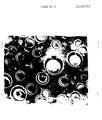
- a 14.5% bromomethylated polyphenylene oxide with 10% polysulfone (in NMP solvent) upon gelling in water gives spherical shaped pores with ledges (Fig. 1), while the same bromomethylated polyphenylene oxide in 95:5 acrylonitrile-vinyl acetate copolymer gives annular-like concentric shaped openings (Fig. 2).
- a cross section of the bromomethylated polyphenyleneoxide and polysulfone shows that the integral support for the microporous structure has many irregular nodules, approaching a sintered particle configuration (Fig. 3).
- Example 1 is repeated with 7.5% of the bromomethylated PPO instead of 14.5%.
- the flux is reduced to 4266, showing the importance of the proportion of PPO derivative in determining pore size and distribution, and thus flux, though this membrane is still included within the invention.
- Example 1 is repeated, using 10% poly(acrylnitrile-vinylacetate) (95:5) instead of polysulfone.
- the flux of this membrane at 2 atm. was 1250 1./m2/hr.
- a SEM of the surface (Fig. 2) reveals concentric sphere pores on the surface.
- Example 1 was repeated, but instead of polysulfone, polyvinylidene fluoride (PVF2) (MW 70,000) is used.
- PVF2 polyvinylidene fluoride
- the PPO derivative and PVF2 are dissolved separately and then mixed to give the concentrations of Example 1.
- the cloudy solution is cast and gelled in a water bath.
- the resultant flux is 13,760 1./m.2/hr at 2 atm.
- Example 4 If Example 4 is repeated, but a sulfonated PPO derivative is used (1.2 meq. -SO3H groups/g.), the resulting membrane has a flux of 36 1./m2.hr. This demonstrates the importance of the chemical composition of the chosen polymer.
- Example 1 is repeated, using chloromethylated(1.4 meq./g.)-polysulfone instead of polysulfone.
- the solution is heated to solubilize the polymers and then cast.
- the resulting water flux is 15,040 1./m2/hr. If PPO is used instead of bromomethylated PPO, the flux is 5920 1./m.2/hr.
- Example 1 is repeated, using a Bisphenol A-epichlorohydrin condensate polymer (MW 20,000) instead of polysulfone.
- the resultant membrane had a water flux of 8000 1./m2/hr.
- the membranes of Examples 1, 3 and 6 are immersed in a solution of 5% triethylamine and heated at 60°C for two days.
- the resultant membranes had a cation exchange capacity of 1.6, 1.7, 2.3 meq. cationic group/g., respectively.
- Example 8 was repeated, using in place of triethylamine, polyethyleneimine with an average molecular weight of 600 daltons.
- the resultant membranes had an amine content of 1.2, 1.0, and 2.2 meq./g., respectively, following removal of unbound polymer by washing for 24 hours.
- the resultant membranes were no longer soluble in N-methylpyrrolidone, dimethylformamide or dimethylsulfoxide.
- liquid poly(chlorotrifluoroethylene) (PCFE) is used as the pore forming polymer.
- PCFE poly(chlorotrifluoroethylene)
- the resultant flux is 8050 l./m.2/hr. If the concentration of polysulfone is increased to 15%, the flux is then 2000 l./m.2/hr.
- polydimethylsiloxane liquid is used with the polysulfone used in Example 10.
- a casting solution of 25% polydimethylsiloxane and 5% polysulfone gives a membrane with a flux of 1750 l./m.2/hr.
- Example 1 is repeated using instead of polysulfone, cellulose acetate, MW 15,000, with an acetate content of 39.4%.
- the resultant membrane had a flux of 3400 l./m.2/hr.
- the membrane was subjected to pH 10 in aqueous medium for one week, to hydrolyze the acetate groups.
- the resultant membrane was hydrophilic and had a water flux of 7620 l./m.2/hr.
- Example 12 is repeated with polyvinyl acetate instead of cellulose acetate.
- the resultant membrane after hydrolysis had a flux of 2660 l./m.2/hr.
- the hydroxyl groups resulting from the hydrolysis of the acetate were subsequently reacted with 4-(4,6-dichloro-1,3,5-triazin-2-yl)aminobenzenesulfonic acid to give an anionic membrane.
- a 0.5M phosphate buffer solution pH 7.0
- 6 mg./ml. chymotrypsin and 7 mg./ml. phenyl propionate as inhibitor was applied with a 0.1 Atm. pressure difference.
- the membrane was washed throughly with water. It was then placed in a pressure cell and washed with water, 10 -3 HC1 (to break up the enzyme-inhibitor complex) and buffer, until no UV absorbance or enzymatic activity were detected in the washings.
- the membrane was then tested for enzymatic activity by driving through the membrane under various pressures, and at a temperature of about 26°C, 0.05M solutions of the following: (a) N-benzoyl-L-tyrosine ethyl ester in 30% EtOH - 70% tris buffer at pH 7.8; (b) N-acetyl-L-tryptophan methyl ester in tris buffer at pH 7.8, containing 0.05M CaCl2; and (c) N-acetyl-DL-phenylalanine ethyl ester in tris buffer at pH 7.8, containing 0.05M CaCl2. In all cases, hydrolysis of the specified compounds was observed.
- Example 1 is repeated, except that the PPO is nitrated with concentrated nitric acid, instead of being bromomethylated.
- the resultant membrane had a water flux of 5600 l./m.2/hr.
Landscapes
- Chemical & Material Sciences (AREA)
- Chemical Kinetics & Catalysis (AREA)
- Engineering & Computer Science (AREA)
- Manufacturing & Machinery (AREA)
- Inorganic Chemistry (AREA)
- Dispersion Chemistry (AREA)
- Separation Using Semi-Permeable Membranes (AREA)
- Manufacture Of Porous Articles, And Recovery And Treatment Of Waste Products (AREA)
- Moulding By Coating Moulds (AREA)
Applications Claiming Priority (2)
| Application Number | Priority Date | Filing Date | Title |
|---|---|---|---|
| IL78169 | 1986-03-17 | ||
| IL78169A IL78169A0 (en) | 1986-03-17 | 1986-03-17 | Novel membranes and process for making them |
Publications (2)
| Publication Number | Publication Date |
|---|---|
| EP0238276A2 true EP0238276A2 (fr) | 1987-09-23 |
| EP0238276A3 EP0238276A3 (fr) | 1988-08-17 |
Family
ID=11056600
Family Applications (1)
| Application Number | Title | Priority Date | Filing Date |
|---|---|---|---|
| EP87302205A Withdrawn EP0238276A3 (fr) | 1986-03-17 | 1987-03-16 | Membranes et leur procédé de fabrication |
Country Status (4)
| Country | Link |
|---|---|
| US (1) | US4761233A (fr) |
| EP (1) | EP0238276A3 (fr) |
| JP (1) | JPS63165111A (fr) |
| IL (1) | IL78169A0 (fr) |
Cited By (6)
| Publication number | Priority date | Publication date | Assignee | Title |
|---|---|---|---|---|
| US4915301A (en) * | 1988-11-15 | 1990-04-10 | International Flavors & Fragrances, Inc. | Container with sorbent member and microporous membrane for dispensing vapor from volatile liquid |
| WO1992018609A1 (fr) * | 1991-04-12 | 1992-10-29 | Vito | Membranes sur lesquelles et/ou dans lesquelles sont immobilises des microorganismes, leur procede de production, reacteur les comportant, et procede consistant a les utiliser, notamment pour l'elimination de metaux ou la degradation de composes organiques xenobiotiques |
| GB2322134A (en) * | 1997-01-30 | 1998-08-19 | Pci Membrane Systems Ltd | Polymer membrane |
| US6013511A (en) * | 1993-11-05 | 2000-01-11 | Vito | Precipitating metals or degrading xenobiotic organic compounds with membrane immobilized microorganisms |
| EP1808221A4 (fr) * | 2004-10-18 | 2008-06-18 | Kurita Water Ind Ltd | Agent renforçateur de rapport de blocage pour membrane perméable, procédé d augmentation du rapport de blocage, membrane perméable et procédé de traitement d eau |
| JP2016027108A (ja) * | 2014-06-30 | 2016-02-18 | ポール・コーポレーションPallCorporation | 架橋セルロース系膜 |
Families Citing this family (34)
| Publication number | Priority date | Publication date | Assignee | Title |
|---|---|---|---|---|
| US5055631A (en) * | 1990-07-11 | 1991-10-08 | Exxon Research & Engineering Company | Sulfonated polysulfone membranes for aromatics/saturates separation |
| US5159130A (en) * | 1990-07-11 | 1992-10-27 | Exxon Research And Engineering Company | Polysulfone membranes for aromatics/saturates separation |
| US5096586A (en) * | 1990-08-28 | 1992-03-17 | Regents Of The University Of California | Membranes having selective permeability |
| US5403895A (en) * | 1993-04-07 | 1995-04-04 | The University Of North Carolina At Chapel Hill | Synthesis of aminated PVCs by controlled reaction with piperazine |
| ATE295223T1 (de) * | 1994-03-04 | 2005-05-15 | Pall Corp | Gross-porige membranen aus synthetischen polymeren |
| US6103414A (en) * | 1995-12-28 | 2000-08-15 | The Research Foundation Of State University Of The New York | Blend membranes based on sulfonated poly(phenylene oxide) for polymer electrochemical cells |
| US5700844A (en) * | 1996-04-09 | 1997-12-23 | International Business Machines Corporation | Process for making a foamed polymer |
| US5895263A (en) * | 1996-12-19 | 1999-04-20 | International Business Machines Corporation | Process for manufacture of integrated circuit device |
| CA2231077A1 (fr) | 1997-03-04 | 1998-09-04 | Guojun Liu | Matiere polymerique et procede de production de cette derniere |
| DE870534T1 (de) | 1997-04-09 | 1999-05-20 | Societe Des Ceramiques Techniques, Bazet | Makroporöser Träger mit einem Permeabilitätsgradient und Methode zu dessen Herstellung |
| US5883219A (en) * | 1997-05-29 | 1999-03-16 | International Business Machines Corporation | Integrated circuit device and process for its manufacture |
| US6083393A (en) * | 1997-10-27 | 2000-07-04 | Pall Corporation | Hydrophilic membrane |
| US6039872A (en) * | 1997-10-27 | 2000-03-21 | Pall Corporation | Hydrophilic membrane |
| US6093636A (en) * | 1998-07-08 | 2000-07-25 | International Business Machines Corporation | Process for manufacture of integrated circuit device using a matrix comprising porous high temperature thermosets |
| US6333141B1 (en) | 1998-07-08 | 2001-12-25 | International Business Machines Corporation | Process for manufacture of integrated circuit device using inorganic/organic matrix comprising polymers of three dimensional architecture |
| US6399666B1 (en) | 1999-01-27 | 2002-06-04 | International Business Machines Corporation | Insulative matrix material |
| RU2158625C1 (ru) * | 1999-03-23 | 2000-11-10 | ТОО фирма "Родник" | Способ получения фторполимерных мембран для фильтрации жидкостей |
| US6277512B1 (en) | 1999-06-18 | 2001-08-21 | 3M Innovative Properties Company | Polymer electrolyte membranes from mixed dispersions |
| EP1289636B1 (fr) * | 2000-06-03 | 2005-06-15 | Membrana GmbH | Membrane polyamide a stabilite renforcee a l'hydrolyse et son procede de production |
| DE10047719A1 (de) * | 2000-09-27 | 2002-04-11 | Basf Ag | Hydrophile, offenzellige, elastische Schaumstoffe auf Basis von Melamin/Formaldehyd-Harzen, ihre Herstellung und ihre Verwendung in Hygieneartikeln |
| US20030038081A1 (en) * | 2001-08-14 | 2003-02-27 | I-Fan Wang | High strength asymmetric cellulosic membrane |
| US8147732B2 (en) * | 2004-01-20 | 2012-04-03 | Porous Power Technologies, Llc | Highly microporous polymers and methods for producing and using the same |
| US20100166961A1 (en) * | 2004-01-20 | 2010-07-01 | Beard Kirby W | Production of high porosity open-cell membranes |
| US20080237117A1 (en) * | 2007-03-30 | 2008-10-02 | Vishal Bansal | Coated asymmetric membrane system having oleophobic and hydrophilic properties |
| US7608186B2 (en) * | 2007-03-30 | 2009-10-27 | General Electric Company | Coated asymmetric membrane system having oleophobic and hydrophilic properties |
| US20100062186A1 (en) * | 2008-09-10 | 2010-03-11 | Peiffer Dennis G | Ultra-thin polymeric membrane |
| US20100222489A1 (en) * | 2009-02-27 | 2010-09-02 | Jiang Dayue D | Copolymer composition, membrane article, and methods thereof |
| JP5681166B2 (ja) * | 2009-03-31 | 2015-03-04 | スリーエム イノベイティブ プロパティズ カンパニー | 疎水性モノマー、疎水的に誘導体化された支持体、並びにその製造及び使用方法 |
| KR101040572B1 (ko) * | 2010-10-11 | 2011-06-16 | 대한민국 | 셀룰로오스 나노섬유를 이용한 다공성 분리막 및 그 제조방법 |
| US8752714B2 (en) * | 2011-03-01 | 2014-06-17 | Dow Global Technologies Llc | Sulfonated poly (aryl ether) membrane including blend with phenyl amine compound |
| CN102580573B (zh) * | 2012-03-01 | 2013-12-25 | 天津工业大学 | 一种全氟聚合物中空纤维膜的制备方法 |
| BR112015019360B1 (pt) * | 2013-04-17 | 2022-09-06 | Dow Global Technologies Llc | Artigo manufaturado com silicone e agente deslizante de amida de ácido graxo |
| DK3500357T3 (da) * | 2016-08-18 | 2023-03-27 | Nx Filtration Holding B V | Fremgangsmåde til fremstilling af positivt ladede membraner |
| CN116474574B (zh) * | 2023-04-04 | 2025-12-02 | 浙江工业大学 | 一种兼具一价阴离子选择性和耐溶剂性阴离子交换膜 |
Family Cites Families (9)
| Publication number | Priority date | Publication date | Assignee | Title |
|---|---|---|---|---|
| FR2331602A1 (fr) * | 1975-11-14 | 1977-06-10 | Rhone Poulenc Ind | Compositions a base de polymeres du type polysulfone pour membranes d'osmose inverse |
| JPS5831204B2 (ja) * | 1980-03-10 | 1983-07-05 | 日東電工株式会社 | ポリスルホン半透膜 |
| DE3028213C2 (de) * | 1980-07-25 | 1990-12-06 | Akzo Gmbh, 5600 Wuppertal | Verfahren zur Herstellung einer Ultrafiltrationsmembran aus Polyamid und daraus hergestellte Membran |
| DE3149976A1 (de) * | 1981-12-17 | 1983-06-30 | Hoechst Ag, 6230 Frankfurt | Makroporoese asymmetrische hydrophile membran aus synthetischem polymerisat |
| SE446505B (sv) * | 1982-11-16 | 1986-09-22 | Gambro Dialysatoren | Membran samt sett att framstella detta |
| US4530703A (en) * | 1983-06-30 | 1985-07-23 | Monsanto Company | Cross-linked polyarylene oxide membranes |
| DE3342824A1 (de) * | 1983-11-26 | 1985-06-05 | Seitz-Filter-Werke Theo & Geo Seitz GmbH und Co, 6550 Bad Kreuznach | Verfahren zum herstellen von filterelementen auf polysulfon-basis |
| US4693985A (en) * | 1984-08-21 | 1987-09-15 | Pall Corporation | Methods of concentrating ligands and active membranes used therefor |
| DE3478088D1 (en) * | 1984-10-15 | 1989-06-15 | Shell Int Research | Process for producing dense membranes |
-
1986
- 1986-03-17 IL IL78169A patent/IL78169A0/xx unknown
-
1987
- 1987-03-10 US US07/024,327 patent/US4761233A/en not_active Expired - Fee Related
- 1987-03-16 EP EP87302205A patent/EP0238276A3/fr not_active Withdrawn
- 1987-03-17 JP JP62062313A patent/JPS63165111A/ja active Pending
Cited By (9)
| Publication number | Priority date | Publication date | Assignee | Title |
|---|---|---|---|---|
| US4915301A (en) * | 1988-11-15 | 1990-04-10 | International Flavors & Fragrances, Inc. | Container with sorbent member and microporous membrane for dispensing vapor from volatile liquid |
| WO1992018609A1 (fr) * | 1991-04-12 | 1992-10-29 | Vito | Membranes sur lesquelles et/ou dans lesquelles sont immobilises des microorganismes, leur procede de production, reacteur les comportant, et procede consistant a les utiliser, notamment pour l'elimination de metaux ou la degradation de composes organiques xenobiotiques |
| US6013511A (en) * | 1993-11-05 | 2000-01-11 | Vito | Precipitating metals or degrading xenobiotic organic compounds with membrane immobilized microorganisms |
| GB2322134A (en) * | 1997-01-30 | 1998-08-19 | Pci Membrane Systems Ltd | Polymer membrane |
| GB2322134B (en) * | 1997-01-30 | 2000-10-11 | Pci Membrane Systems Ltd | Membrane |
| EP1808221A4 (fr) * | 2004-10-18 | 2008-06-18 | Kurita Water Ind Ltd | Agent renforçateur de rapport de blocage pour membrane perméable, procédé d augmentation du rapport de blocage, membrane perméable et procédé de traitement d eau |
| US8025159B2 (en) | 2004-10-18 | 2011-09-27 | Kurita Water Industries Ltd. | Agent for increasing rejection with a permeable membrane, process for increasing the rejection, permeable membrane and process for water treatment |
| JP2016027108A (ja) * | 2014-06-30 | 2016-02-18 | ポール・コーポレーションPallCorporation | 架橋セルロース系膜 |
| KR101730519B1 (ko) * | 2014-06-30 | 2017-04-26 | 폴 코포레이션 | 가교된 셀룰로오스성 막 |
Also Published As
| Publication number | Publication date |
|---|---|
| IL78169A0 (en) | 1986-07-31 |
| US4761233A (en) | 1988-08-02 |
| JPS63165111A (ja) | 1988-07-08 |
| EP0238276A3 (fr) | 1988-08-17 |
Similar Documents
| Publication | Publication Date | Title |
|---|---|---|
| US4761233A (en) | Novel membranes and process for making them | |
| EP0394193B1 (fr) | Membranes revêtues | |
| US8057574B2 (en) | Membrane post treatment | |
| KR101256361B1 (ko) | 여과성이 개선된 미세여과 멤브레인 | |
| US4767645A (en) | Composite membranes useful for the separation of organic compounds of low molecular weight from aqueous inorganic salts containing solutions | |
| US5032282A (en) | Solvent-stable semipermeable composite membranes | |
| US6183640B1 (en) | Highly asymmetric anionic membranes | |
| HK1006157B (en) | Coated membranes | |
| US5304307A (en) | Chargedasymmetric mosaic membrances | |
| US20030038081A1 (en) | High strength asymmetric cellulosic membrane | |
| Strathmann et al. | 1.4 Basic aspects in polymeric membrane preparation | |
| EP2144695A1 (fr) | Membranes poreuses modifiées, procédés de modification des pores de membrane, et leurs procédés d'utilisation | |
| US5024765A (en) | Composite membranes and processes using them | |
| US5151182A (en) | Polyphenylene oxide-derived membranes for separation in organic solvents | |
| US6258272B1 (en) | Internal hydrophilic membranes from blended anionic copolymers | |
| JP3145093B2 (ja) | 溶剤安定複合膜 | |
| EP0476875A2 (fr) | Procédé pour la purification et la concentration de produits biologiques actifs | |
| EP0574957B1 (fr) | Membranes dérivées d'acrylonitrile et de fluorure de polyvinylidène | |
| EP1149624B1 (fr) | Membranes anioniques hautement asymmetriques | |
| JP4689790B2 (ja) | アニオンコポリマーブレンドの内部親水性膜 | |
| EP1149625B1 (fr) | Membranes totalement hydrophiles à partir de mélanges de copolymères anioniques | |
| EP0860199B1 (fr) | Procédé de fabrication d'une membrane | |
| JPH0628704B2 (ja) | 乾燥▲ろ▼過膜 | |
| JPH02139020A (ja) | 異方性を有する微孔性濾過膜の製造方法 | |
| JP2001310116A (ja) | 高非対称性陰イオン膜 |
Legal Events
| Date | Code | Title | Description |
|---|---|---|---|
| PUAI | Public reference made under article 153(3) epc to a published international application that has entered the european phase |
Free format text: ORIGINAL CODE: 0009012 |
|
| AK | Designated contracting states |
Kind code of ref document: A2 Designated state(s): CH DE FR GB IT LI NL |
|
| PUAL | Search report despatched |
Free format text: ORIGINAL CODE: 0009013 |
|
| AK | Designated contracting states |
Kind code of ref document: A3 Designated state(s): CH DE FR GB IT LI NL |
|
| 17P | Request for examination filed |
Effective date: 19890202 |
|
| 17Q | First examination report despatched |
Effective date: 19890608 |
|
| STAA | Information on the status of an ep patent application or granted ep patent |
Free format text: STATUS: THE APPLICATION IS DEEMED TO BE WITHDRAWN |
|
| 18D | Application deemed to be withdrawn |
Effective date: 19891019 |
|
| RIN1 | Information on inventor provided before grant (corrected) |
Inventor name: LINDER, CHARLES Inventor name: PERRY, MORDECHAY Inventor name: KETRARO, REUVEN |