EP0243775A2 - Préparation de polyuréthanes thermoplastiques réticulables par irradiation et leur utilisation - Google Patents
Préparation de polyuréthanes thermoplastiques réticulables par irradiation et leur utilisation Download PDFInfo
- Publication number
- EP0243775A2 EP0243775A2 EP87105461A EP87105461A EP0243775A2 EP 0243775 A2 EP0243775 A2 EP 0243775A2 EP 87105461 A EP87105461 A EP 87105461A EP 87105461 A EP87105461 A EP 87105461A EP 0243775 A2 EP0243775 A2 EP 0243775A2
- Authority
- EP
- European Patent Office
- Prior art keywords
- acrylate
- und
- compounds
- methacrylate
- oder
- Prior art date
- Legal status (The legal status is an assumption and is not a legal conclusion. Google has not performed a legal analysis and makes no representation as to the accuracy of the status listed.)
- Granted
Links
Images
Classifications
-
- C—CHEMISTRY; METALLURGY
- C08—ORGANIC MACROMOLECULAR COMPOUNDS; THEIR PREPARATION OR CHEMICAL WORKING-UP; COMPOSITIONS BASED THEREON
- C08F—MACROMOLECULAR COMPOUNDS OBTAINED BY REACTIONS ONLY INVOLVING CARBON-TO-CARBON UNSATURATED BONDS
- C08F299/00—Macromolecular compounds obtained by interreacting polymers involving only carbon-to-carbon unsaturated bond reactions, in the absence of non-macromolecular monomers
- C08F299/02—Macromolecular compounds obtained by interreacting polymers involving only carbon-to-carbon unsaturated bond reactions, in the absence of non-macromolecular monomers from unsaturated polycondensates
- C08F299/06—Macromolecular compounds obtained by interreacting polymers involving only carbon-to-carbon unsaturated bond reactions, in the absence of non-macromolecular monomers from unsaturated polycondensates from polyurethanes
Definitions
- thermoplastic polyurethanes TPU
- granules can then be processed in the customary manner to give moldings, such as cables, hoses, profiles and extrusion blow moldings.
- the molded articles are cross-linked by high-energy ß and / or v rays, preferably by electron beams (ß rays), using optimal radiation doses. Shaped articles which are characterized by increased heat resistance, heat pressure resistance, solvent resistance, low coefficient of friction and in particular by non-dripping in the flame are then obtained.
- the processes are preferably carried out continuously in the strip casting process, but in particular in (reaction) screw machines or in (reaction) kneaders.
- the polyurethane elastomers containing acrylate and / or methacrylate crosslinking agents are cooled preferably in liquid baths, in particular in water.
- the granules are dried and can then be processed into a wide variety of molded articles, in particular hoses, cable jackets, profiles, injection molded articles and molded articles.
- thermoplastic polyurethanes are then crosslinked by crosslinking with V and / or ⁇ rays, particularly preferably by means of electron beams ( ⁇ rays).
- ⁇ rays electron beams
- special properties of thermoplastic polyurethanes are obtained, which are otherwise not or not easily accessible.
- the heat resistance of cable sheaths increases from 100 ° C to 200 to 220 ° C.
- the moldings are then better resistant to solvents in polar media such as methylene chloride or tetrahydrofuran and the coefficient of friction of these moldings is reduced.
- polyurethane elastomers without the addition of a crosslinker do not give the property improvements mentioned when irradiated, but rather show strong polymer degradation.
- polyurethanes which have (meth) acrylates incorporated via functional groups in the polyurethane molecule give significantly poorer properties and are not preferred here.
- EP-A 144 065 describes a dipping process for producing light and / or UV-crosslinkable polyurethane safety glass.
- the polyurethanes are mostly based on an aliphatic isocyanate.
- the films obtained in this way must be subjected to a very complex immersion process in order to allow the unsaturated compounds based on polyfunctional acrylates or methacrylates used for crosslinking to penetrate with the addition of initiators such as benzophenone derivatives which can be activated by (UV) radiation.
- the crosslinkers are only on the surface of the film. This method only results in a very thin layer that can be cross-linked with UV light.
- polyurethane moldings can be produced according to the claimed method, which have any layer thicknesses, contain acrylates and / or methacrylates evenly distributed within the molding and experience rapid and intensive crosslinking by ß and / or ⁇ rays.
- EP-A 48 913 describes polyurethanes (with terminal or pendant) double bonds which are suitable for the production of photopolymerizable recording materials, for example for printing plates and photoresist materials, which are then crosslinked by light / UV rays.
- the photopolymerizable Polyurethanes are obtained by reacting NCO prepolymers based on polyether-diisocyanate with built-in bisacrylic ester diols in solution. They can additionally contain a low molecular weight acrylic or methacrylic ester of a di- or polyhydric alcohol as polymerizable compounds. In addition, they contain photoinitiators and are usually photopolymerized with UV light, although electron, X-ray and laser radiation are also mentioned as actinic radiation.
- the content of photopolymerizable compounds in the photopolymerizable mixture, which may also contain polymeric binders, is generally 20 to 100, preferably 30 to 60,% by weight.
- the prior art also describes a number of methods of building polyurethanes in solution which contain ethylenically unsaturated groups via compounds which can be incorporated. These polyurethanes, preferably dissolved in excess ethylenically unsaturated monomers, are free-radically crosslinked (with e.g. peroxides) to form coatings (see U.S. Patents 4,097,439, 4,073,828, 3,641,199 and 4,153,776).
- DE-OS 34 12 002 describes a process for the production of an extrudable, crosslinking agent-containing, electron beam crosslinkable material based on thermoplastic polyurethane elastomers, in which the crosslinking agent required for the crosslinking of the polyurethane elastomer granules in liquid form and in such an amount is poured onto the surface of conventional granules so that the crosslinking agent can diffuse completely into the granulate particles of the polyurethane after a predetermined period of time until the surface of these particles appears dry again. The granulate can then be processed by means of an extruder without the risk of lump formation due to the granule particles sticking together.
- the amount of crosslinking agent is so great that the radiation dose to be applied for the crosslinking only has to be so high that the polymer chain does not degrade in the extruded material with a loss of strength of the polyurethane material.
- the polyfunctional, unsaturated compounds used as crosslinking agents in amounts of up to 40% by weight are, for example, acrylates or methacrylates, allyl compounds, dimaleimides, epoxidized, polyfunctional or other bifunctional unsaturated compounds.
- EP-A 80 665 describes a process for the production of flat, crosslinkable structures by feeding a thermoplastic, prefabricated polymer, for example polyurethane or butadiene acrylonitrile copolymer, in a twin-screw extruder, melting it, in the second zone with low-viscosity, ethylenically unsaturated compounds as crosslinking promoters (e.g. (meth) acrylates of 1- or polyfunctional alcohols), crosslinking aids such as peroxides and photoactivators and possibly other additives such as antioxidants are mixed at temperatures up to 220 ° C, the mixture is degassed and discharged via slot nozzles and finally via heated roller pairs to the desired layer thickness.
- crosslinking promoters e.g. (meth) acrylates of 1- or polyfunctional alcohols
- crosslinking aids such as peroxides and photoactivators and possibly other additives such as antioxidants are mixed at temperatures up to 220 ° C, the mixture is degassed and discharged
- NCO prepolymers (based on polyether diols and tolylene diisocyanates) are reacted with certain, installable bisacrylic ester diols in solvents such as toluene or tetrahydrofuran, optionally with the addition of catalyst or peroxide starters.
- solvents such as toluene or tetrahydrofuran, optionally with the addition of catalyst or peroxide starters.
- the solvents are removed during the shaping and, if appropriate, the moldings are then crosslinked.
- the polymers can also be crosslinked in solution, the highly crosslinked rubber crushed and molded in the compression molding process at elevated temperatures.
- DE-OS 34 44 500 claims flame-retardant, electrical or optical cables, the at least outer layer of the cable sheath of which consists entirely or partially of radiation-crosslinked polyurethane.
- a so-called ether type has proven to be the most advantageous, since in addition to the other appearance necessary for the invention, such a type is particularly resistant to bacterial attack and resistant to hydrolysis.
- the elastomeric, crosslinking-containing polyurethanes there are very specific production parameters to adhere to.
- the mixing ratio must be set in defined ranges.
- care must be taken during the production of the thermoplastic polyurethanes that no interfering crosslinking takes place during this production process. That is why the PUR elastomers should not contain any peroxides or photoactivators.
- the crosslinked moldings which can be produced from the polyurethanes according to the invention are intended to show special properties which are partly new for polyurethane (PUR) elastomers, e.g. improved hydrolysis resistance, improved heat resistance, improved solvent resistance, improved compression set (compression set), improved coefficient of friction, no susceptibility to stress cracking and, in particular, no dripping in the flame.
- PUR polyurethane
- the process is preferably carried out continuously, be it by continuous admixing of the crosslinking agents E) to the PUR elastomer melt in extruders or the like. or preferably in reaction processes in which the crosslinking agents are metered into the starting materials for the production of polyurethane or during the reaction.
- Continuous processes correspond to the belt casting processes known per se or the reaction screw processes or reaction kneading processes, preferably using self-intermeshing twin-screw screw machines or screw kneaders, so-called co-kneaders.
- the process is particularly characterized in that the monomeric acrylate and / or methacrylate compounds E) are predominantly hydroxyl-free, predominantly non-installable esters of acrylic and / or methacrylic acid aliphatic, cycloaliphatic or araliphatic monoalcohols with at least 6 carbon atoms in the alcohol residue, but preferably diols and / or polyols with 3 or more hydroxyl groups or ethoxylation and / or propoxylation products of the alcohols with 2 to 6 moles of ethylene oxide and / or propylene oxide.
- the monomeric acrylate and / or methacrylate compounds E) are acrylic acid and / or methacrylic acid esters of diols having 4 to 12 carbon atoms or of tri- or tetraalcohols, in particular butanediol-1, 4-acrylate, butanediol bismethacrylate t particularly but Trimethylolpropantrisacrylat, trimethylolpropane trimethacrylate but pentaerythritol tetraacrylate or pentaerythritol tetramethacrylate.
- the crosslinking agents E) are dissolved together with inhibitors and / or stabilizers F) in the starting component A) and then the (preferably continuous) polyurethane elastomer formation reaction is carried out, or the crosslinking agents E) and / or inhibitors F) and optionally parts are used component A) or B) in the continuous PU elastomer formation reaction to the reacting mixture, preferably after the OH / NCO polyaddition reaction has largely expired.
- reactive groups such as hydroxyl, primary and / or secondary amino, SH, carboxyl and / or other reactive groups, e.g. Hydrazide groups with molecular weights of 400-20,000, in particular 800-4,000, into consideration.
- These are, for example, bifunctional hydroxypolyesters, hydroxypolylactones, hydroxypolyethers, hydroxypolythioethers, hydroxypolyesteramides, hydroxypolycarbonates, hydroxyacetals or vinyl polymers with hydroxyl groups or other end groups or compounds already containing urethane and / or urea groups.
- they can also contain minor amounts of aromatic dicarboxylic acids, especially phthalic acid and optionally also terephthalic acid, and their hydrogenation products.
- higher molecular weight polyamino compounds preferably with primary aromatic amino groups
- Preferred representatives are produced, for example, by hydrolysis of corresponding NCO prepolymers based on higher molecular weight polyhydroxy compounds and excess aromatic diisocyanates by (preferably basic) hydrolysis. Examples of these processes are given in DE-OS 2 948 419, DE-OS 3 039 600, DE-OS 3 112 118, EP-A 61 627, EP-A 71 132 and EP-A 97 869.
- the first-mentioned patent also mentions other prior art processes for producing aromatic amino compounds of higher molecular structure, known as aminopolyethers, as are suitable for the process according to the invention. Further manufacturing processes are described in DE-AS 1 694 152, FR-PS 1 415 317 or DE-AS 1 155 907.
- polyols A Particularly preferred as polyols A) are adipic acid polyesters or caprolactone diols or polycarbonate diols, optionally in a mixture with polyethers; adipic acid polyeslers with the diols 1,4-butanediol and / or 1,6-hexanediol are very particularly preferred.
- the chain extenders B) to be used according to the invention are known per se and are described, for example, in DE-OS 23 02 564, 24 23 764, 25 49 372, 24 02 840, 24 57 387 and 28 54 384.
- These are in particular low molecular weight polyalcohols, preferably diols, diamines, in particular aromatic diamines, hydrazines and hydrazide derivatives. Diethyl-toluenediamines or isophoronediamine may be mentioned as diamines.
- Amino alcohols such as ethanolamine, diethanolamine, N-methyldiethanolamine, 3-aminopropanol or compounds such as hydrazine (hydrate) or Carbodihydrazide are suitable according to the invention.
- Preferred chain extenders are diols such as, for example, ethylene glycol, di- and triethylene glycol, 1,6-hexanediol and hydroquinone-di- ⁇ -hydroxyethyl ether, and particularly preferably 1,4-butanediol, optionally in mixtures with other diols, in particular 1,6-hexanediol .
- the molecular weight of the chain extenders is 32 to 399, preferably 62 to 220.
- monofunctional compounds in minor proportions can also be used as so-called chain terminators.
- chain terminators examples are monoalcohols such as butanol, 2-ethylhexanol, isobutyl alcohol, octanol-1, stearyl alcohol or monoamines such as aniline, dibutylamine, N-methylstearylamine, piperidine or N, N-dimethylhydrazine.
- Diisocyanates C) to be used according to the invention are the aliphatic, cycloaliphatic, araliphatic, aromatic and heterocyclic diisocyanates of the prior art which are known per se. They are listed in detail in the publications described under A) and B).
- Diisocyanates preferred according to the invention are hexamethylene diisocyanate, isophorone diisocyanate, naphthylene-1,5-diisocyanate, tetramethyl-xylylene diisocyanate, 3,3'-dimethyl-4,4'-diisocyanatodiphenyl (TODI), 1,4-diisocyanatobenzene and the correspondingly hydrogenated product, tolylene diisocyanates and especially the diphenylmethyl diisocyanate isomers.
- TODI 3,3'-dimethyl-4,4'-diisocyanatodiphenyl
- the diisocyanates mentioned can optionally be used together up to about 15 mol-X (based on diisocyanate) of a higher-functionality polyisocyanate; however, the amount of the higher-functionality polyisocyanate must be limited so that a meltable or thermoplastic polyurethane elastomer is obtained.
- a larger amount of higher-functional isocyanates generally has to be compensated for by using on average less than difunctional hydroxyl or amino compounds or else monoisocyanates, so that chemical crosslinking of the product which is too extensive is avoided. Examples of higher-functional isocyanates and monofunctional compounds can also be found in the prior art cited above.
- Examples include monoamines such as butylamine or dibutylamine, hydroxylamine, stearylamine, N-methylstearylamine, pyrrolidone or tetrahexylamine or butanone oxime, and monoalcohols such as butanol-1, 2-ethylhexanol-1, dodecanol-1, isobutanol or tert-butanol, cyclohexanol or Ethylene glycol monomethyl ether mentioned. These blends are not in the preferred range.
- organic metal compounds in particular organic tin, lead and titanium compounds, e.g. Tin-II-acetate, tin-II-ethylhexoate, dibutyltin dilaurate or lead acetate.
- Waxes or oils are used as release agents, further e.g. Long-chain compounds with carboxyl, ester, amide, urethane or urea groups and also silicones, such as those listed as release agents, for example in DE-OS 2 204 470.
- reaction components A) to C) for the polyurethanes are generally chosen in the process according to the invention such that the NCOIOH equivalent ratio of isocyanate to OH compounds is between 0.9 and 1.2, preferably 0.98 and 1.08 lies.
- Hydroxyalkyl containing one or more hydroxyl groups per molecule are much less preferred methacrylates.
- examples include: monofunctional hydroxyl derivatives (less preferred) such as hydroxyethyl acrylate, 2-hydroxyethyl methacrylate, 2-hydroxypropyl acrylate, 2-hydroxypropyl methacrylate, 3-hydroxypropyl acrylate, 3-hydroxypropyl methacrylate, 4-hydroxybutyl acrylate, 4-hydroxybutyl methacrylate, 3-chloro-acrylate, 3-chloro-acrylate, 3-chloro-acrylate 3-chloro-2-hydroxypropyl methacrylate, 6-hydroxyhexyl acrylate, 6-hydroxyhexyl methacrylate.
- Suitable compounds having an OH group and two or more (meth) acrylate radicals such as glycerol, -dimethylmethacrylat t trimethylolpropane diacrylate, trimethylolpropane dimethacrylate, pentaerythritol triacrylate, pentaerythritol trimethacrylate, as well as the esters of acrylic acid or methacrylic acid of ethoxylated or propoxylated alcohols.
- Acrylic compounds with only one hydroxyl group should only be used in minor amounts [ ⁇ 10, preferably ⁇ 4 mol-X an (E)], otherwise the chain can be broken too strongly in the polyurethane.
- di- and polyacrylates with two OH or NH groups e.g. the monoacrylic esters of glycerol, trimethylolpropane, pentaerythritol, or the monoacrylic esters of ethoxylates or propoxylates of these polyols are used.
- Hydroxyamines which are prepared by stoichiometric reaction of dialkanolamines such as diethanol or diisopropanolamine with diisocyanates such as 2,4-tolylene diisocyanate or isophorone diisocyanate, and hydroxyalkyl acrylates, for example hydroxyethyl or propyl acrylate or methacrylate, the reaction being carried out in such a way that the hydroxyalkyl acrylate is carried out in one step the diisocyanate and then the reaction product thereof in one second stage is reacted with the dialkanolamine, are also not suitable as sole components E). They should only be used together with at least 50, preferably at least 80% by weight of esters of acrylic or methacrylic acid of di- or polyols free of hydroxyl and / or amino groups.
- polyacrylates or polymethacrylates such as butanediol acrylate, butanediol methacrylate, but in particular trimethylolpropane triacrylate, trimethylolpropane trimethacrylate, pentaerythritol tetraacrylate or pentaerythritol tetramethacrylate and the corresponding alkoxylation products containing from 2 to 6 moles of ethylene oxide and / or propylene oxide, of trimethylolpropane or pentaerythritol to preferably substantially complete esterification with acrylic or methacrylic acid.
- polyacrylates or polymethacrylates such as butanediol acrylate, butanediol methacrylate, but in particular trimethylolpropane triacrylate, trimethylolpropane trimethacrylate, pentaerythritol tetraacrylate or pentaerythritol tetramethacryl
- the non-functional di- and / or polyacrylates are preferably acrylate or methacrylate before the pure hydroxy-functional acrylates or methacrylates t which is less suitable elastomers or even less good properties in the radiation-crosslinked products arise.
- the technical crosslinkers such as trimethylolpropane tris methacrylate or pentaerythritol tetraacrylate, do not contain minor admixtures of compounds which are not completely esterified, e.g. Trimethylolpropane bis methacrylate or pentaerythritol trisacrylate.
- Such technical mixtures can nevertheless be used well according to the invention insofar as they contain, in particular, predominant amounts of completely esterified polyacrylates.
- the polyurethane components in an amount of 3 to 24 wt. -X, preferably 5 to 15% by weight, can be added.
- the compounds E) and / or F) are added to the individual components, preferably the higher molecular weight compounds A) or the chain extenders B).
- the compounds E) and F) can also be added at the beginning of the reaction mixture or, preferably at later reaction times, added to the already reacting polyurethane mixture, preferably towards the end of the polyurethane reaction.
- the polyurethane reaction is preferably carried out continuously in one step e.g. after the belt process (casting process) according to DE-OS 32 24 324 or in twin-shaft reaction screws according to, for example, DE-OS 2 854 409.
- crosslinker-containing PU materials are preferably suitable:
- the time period can be reduced at approximately maximum temperatures; after sufficient solidification, quenching in liquids can then take place.
- the polyurethane reaction is preferably started at relatively high temperatures (e.g. to 220-240 ° C), after the polyurethane melt has formed in the following segments (e.g. to 180-210 ° C), component E ) metered in and then further discharged quickly while cooling the temperature by cooling.
- relatively high temperatures e.g. to 220-240 ° C
- component E metered in and then further discharged quickly while cooling the temperature by cooling.
- residence times of less than 5 minutes, less than 3, preferably minutes, obtained after registration of the crosslinking component E) in liquid baths then cooled mass to safe temperatures (about ⁇ 140 ° C) and preferably then granulated.
- the components are implemented in a stage in accordance with DE-OS 28 54 409 in a self-cleaning twin-screw kneading extruder. Temperatures are from 140 to 230 °, preferably 170 ° to 210 °, is maintained and the reaction mixture min within a short time of ⁇ 5, preferably in less than 3 minutes, less than 140 ° C, preferably cooled to below 130 P C, or deterred.
- the continuously forming polyurethane elastomers from components A) to D) are after the maximum reaction temperature in the front part of the extruder, then at the preferred, low temperatures below 230 °, the acrylate or methacrylate compounds as crosslinking components in the rear Part of the reaction screw extruder in liquid form and mixed in and then quenched to temperatures below 140 ° within less than 5 minutes, preferably less than 3 minutes after the addition of the crosslinking component E).
- Reaction kneaders such as continuously conveying CO kneaders, for example from Buss, can also be used as mixing devices for the continuously carried out reaction and, if appropriate, later added crosslinker component.
- PUR elastomers (granules) which are still easy to process, but have already undergone a change in their structure in such a way that a noticeable improvement in the PU elastomer properties is observed even without radiation crosslinking.
- prefabricated PUR granulate is melted in the front part of the twin-screw extruder and the crosslinker component E), if appropriate together with F), is metered continuously into the melt (if the temperature profile drops). After a residence time of ⁇ 5 minutes, the mixture is discharged and cooled rapidly, preferably in liquid baths such as water, and then granulated.
- thermoplastics such as Extruders, injection molding machines, extrusion blow molding systems, calenders, film blowing systems, deep-drawing systems, but preferably on continuously operating systems, e.g. Extruding, processing.
- the radiation crosslinked extrudates can also be particularly preferred in electrical applications, such as Outer sheathing or fiber optic applications are used, especially if it is to be flame-resistant versions.
- thermoplastic, radiation-crosslinkable PU elastomers according to the invention
- the dewatered polyester diol a. with stirring at a temperature of about 110 ° C, the components b. and c. admitted.
- the temperature of the polyol mixture drops to 100 ° C.
- the diisocyanate (MDI) melted at 60 ° C. is then added with vigorous stirring and mixed with the polyol until the urethane reaction starts. (Increase in viscosity).
- the reaction mixture is poured into a 80-100 ° C hot tub with a Teflon pad and heated at 110 ° C for about half an hour. The fur is then cut into strips and granulated. A maximum reaction temperature of 1600C is not exceeded during manufacture.
- the PU elastomer obtained is uncrosslinked and can further be processed thermoplastically and shows good mechanical strength values. If a higher temperature, e.g. Reached 150 ° C (by using a higher temperature of the starting materials), the mechanical values of the elastomer decrease very strongly (see Example 1-0).
- the granules sprayed into shaped bodies (2 mm plates) after irradiation with electrons at a dose of 15 to 30 Mrad have the properties described in Table 1.
- a Van de Graaf generator is used for the irradiation.
- the formulations 1B to 1H listed in Table 2 also belong to the adducts according to the invention.
- the preparation is carried out as in Example 1A, with the exception of Example 1H.
- the TPU was produced according to the prepolymer process described in German Patent No. DE-PS 1 940 181 (less preferred).
- Examples 1B and 1C are variations in the amount of TRIM.
- the operating temperature is varied according to Example 1A.
- Examples 1F to 1G represent variations of the acrylates (E).
- experiment 1H the PU base was changed.
- thermoplastic, radiation-crosslinkable polyurethane elastomers described in experiments 1A to 1H can be processed thermoplastically on commercially available injection molding machines and extruders. After irradiation, they have significantly different properties in some points compared to non-crosslinked polyurethane elastomers (see example IK), in particular the high-temperature behavior is improved, the compression set is significantly cheaper and the thermal expansion test according to VDE 047, paragraph 615, which is important for the cable industry, is partly without every permanent stretch passed. In contrast, uncrosslinked, thermoplastic polyurethane elastomers tear in this test during the heating phase.
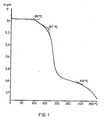
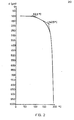
- thermomechanical analysis TMA- see Fig. 1.
- Fig. 1 shows thermomechanical measurements on test 1A with a calorific value of 5 K / min. recorded with a sample thickness of 0.85 mm and a load of 0.05 N at temperatures between 0 and 350 ° C. The penetration depth d is plotted on the ordinate.
- FIG. 2 The second softening point in comparative example K (FIG. 2) is 142.5 ° C., compared to 157 ° C. in example 1A according to the invention (see in FIG. 1).
- the third softening point of Example 1A is completely absent in the example not according to the invention; the sample is without resistance to penetration before reaching 200 ° C.
- the solvent sensitivity of the cross-linked polyurethanes is significantly lower (approx. 50%) compared to non-cross-linked comparative approaches.
- Examples 1I to 1P belong to the examples not according to the invention and are listed in Table 4. The mechanical properties are shown in Table 5.
- test specimen of the radiation-crosslinked, thermoplastic polyurethane from batch 1-K which was produced without a radiation-crosslinkable additive, broke after a short time in the thermal expansion test and shows a significantly poorer behavior both in the thermomechanical analysis and in the shear modulus curve in the range of higher temperatures, as the inventive example 1-A. After storage in DMF at 120 ° C for 15 h, the sample is dissolved.
- the batch I contains a urethane-containing, installable dihydroxyacrylate as crosslinking component.
- Batch 1-L in which the trimethylolpropane trimethacrylate was replaced by triallyl cyanurate, shows no difference to batch 1-K both in the thermal expansion test and in storage.
- batch 1-M the amount of trimethylolpropane trimethacrylate is too small to show an improvement over batch 1-K.
- Batch 1-N contains butenediol as the double bond component. This was built into the polyurethane instead of the butane diol chain extender. In addition to very low basic strengths, this approach shows no change compared to approach 1-K.
- batch 1-P the inhibitor 2,6-di-t-butyl-4-methylphenol was omitted.
- thermoplastic PU elastomers according to the invention Continuous production of the thermoplastic PU elastomers according to the invention on a twin-shaft kneader in the reaction
- a twin-screw kneading machine of the type ZSK 53 V from Werner & Pfleiderer, Stuttgart, with a self-cleaning shaft stock and a kneading element content of approx. 20% is used.
- the process section consists of 12 separately heatable housings, the length of the process section corresponds to approximately 20 times the shaft diameter.
- the residence times of the reaction melt in the screw machine are generally 0.3 to 5, preferably 0.5 to 3, minutes.
- the temperature of the screw housing is between approx. 60 and 220 ° C (approx. 80 to 250 ° C in the inlet zone;: approx. 150 to 220 ° C in the middle of the extruder and approx. 80 to 200 ° C in the discharge zone). Maximum temperatures of 2 220 ° C, in particular 2 210 ° C, are preferred.
- the melt emerging from the extruder is quenched and comminuted by methods known per se nert. It is important that the reaction mixture is cooled to temperatures of ⁇ 140 ° C. (preferably 130 ° C.) within 5 minutes (preferably 3 minutes) after the addition of the acrylate.
- the polyester diol a) is metered from the 120 ° C. hot feed tank into the housing 2 of a twin-shaft kneading machine via a gear pump.
- the butanediol b) from room temperature is also metered into the housing 2 via a small piston pump.
- Component c) is introduced as a powder via a dosing screw into housing 1.
- Component d) is introduced into the housing 1 via a gear pump at room temperature.
- MDI, component e) is pumped at a temperature of 60 ° C via a gear pump in housing 2. The following housing temperatures were set on the screw machine:
- thermoplastic, uncrosslinked polyurethane elastomer obtained has, after processing on conventional injection molding machines and extruders with subsequent radiation crosslinking under the conditions listed in Example 1A, the properties described in Table 6). These were measured on test panels as well as on extruded and irradiated cables. Processing on an extruder customary for TPU processing runs smoothly. A homogeneous knot-free extrudate is obtained.
- thermoplastic polyurethane elastomer in granular form is used, which corresponds to the recipe from Example 1A without trimethylolpropane trimethacrylate addition.
- the granules are used in a twin-screw extruder with a ZSK 53 V kneading disc from Werner & Pfleiderer (extruder as in Example 2A).
- the temperature profile on the twin-screw extruder is as follows:
- the TPU granulate was introduced into the housing via a shaking channel.
- the trimethylolpropane trimethacrylate was fed into the housing 6 of the extruder via a peristaltic pump at room temperature.
- the proportions were 90.91 parts by weight of the polyurethane elastomers and 9.09 parts by weight with acrylate crosslinker.
- the residence time of the melt after the feed of the acrylate is set as short as possible and is 0.3 to 3 minutes (different settings were made between these residence times, which did not result in any significant differences).
- the crosslinker-containing polyurethane melt discharged from the extruder is quickly quenched to temperatures of ⁇ 130 ° C by direct entry into water baths and then crushed into granules.
- thermoplastic polyurethane elastomer cross-linked with a radiation dose of 20 Mrad from Example 2B are shown in Table 7.
Landscapes
- Chemical & Material Sciences (AREA)
- Health & Medical Sciences (AREA)
- Chemical Kinetics & Catalysis (AREA)
- Medicinal Chemistry (AREA)
- Polymers & Plastics (AREA)
- Organic Chemistry (AREA)
- Polyurethanes Or Polyureas (AREA)
- Compositions Of Macromolecular Compounds (AREA)
- Processes Of Treating Macromolecular Substances (AREA)
- Polymerisation Methods In General (AREA)
- Graft Or Block Polymers (AREA)
Applications Claiming Priority (2)
| Application Number | Priority Date | Filing Date | Title |
|---|---|---|---|
| DE19863613790 DE3613790A1 (de) | 1986-04-24 | 1986-04-24 | Verfahren zur herstellung von thermoplastischen polyurethanen fuer die strahlenvernetzung und ihre verwendung |
| DE3613790 | 1986-04-24 |
Publications (3)
| Publication Number | Publication Date |
|---|---|
| EP0243775A2 true EP0243775A2 (fr) | 1987-11-04 |
| EP0243775A3 EP0243775A3 (en) | 1988-07-27 |
| EP0243775B1 EP0243775B1 (fr) | 1990-01-03 |
Family
ID=6299377
Family Applications (1)
| Application Number | Title | Priority Date | Filing Date |
|---|---|---|---|
| EP87105461A Expired - Lifetime EP0243775B1 (fr) | 1986-04-24 | 1987-04-13 | Préparation de polyuréthanes thermoplastiques réticulables par irradiation et leur utilisation |
Country Status (5)
| Country | Link |
|---|---|
| US (1) | US4762884A (fr) |
| EP (1) | EP0243775B1 (fr) |
| JP (1) | JPS62257920A (fr) |
| CA (1) | CA1313285C (fr) |
| DE (2) | DE3613790A1 (fr) |
Families Citing this family (33)
| Publication number | Priority date | Publication date | Assignee | Title |
|---|---|---|---|---|
| US5190825A (en) * | 1987-06-16 | 1993-03-02 | Saint-Gobain Vitrage | Adhesive layer used in the manufacture of laminated glazings, method of manufacturing and laminated glazings comprising such layer |
| US4948859A (en) * | 1988-10-28 | 1990-08-14 | Minnesota Mining And Manufacturing Company | Extruder polymerization of polyurethanes |
| US5047495A (en) * | 1989-08-28 | 1991-09-10 | The G. F. Goodrich Company | Polyurethane for flexible fuel containers |
| AT403287B (de) * | 1992-05-08 | 1997-12-29 | Danubia Petrochem Polymere | Verwendung von aus polyolefinen und thermoplastischen polyurethanen bestehenden formteilen zur hochfrequenzschweissung |
| US5498782A (en) * | 1993-09-08 | 1996-03-12 | Union Carbide Chemicals & Plastics Technology Corporation | Distortion control additives for ultraviolet-curable compositions |
| US6127505A (en) * | 1995-02-02 | 2000-10-03 | Simula Inc. | Impact resistant polyurethane and method of manufacture thereof |
| US6008296A (en) * | 1995-04-19 | 1999-12-28 | Optima, Inc. | Optical terpolymer of polyisocyanate, polythiol and polyene monomers |
| US6521164B1 (en) | 1996-02-06 | 2003-02-18 | Parker-Hannifin Corporation | Injection-moldable thermoplastic polyurethane elastomer |
| US5811506A (en) * | 1997-02-03 | 1998-09-22 | Simula Inc. | Extrudable thermoplastic elastomeric urea-extended polyurethane |
| US6258917B1 (en) | 1996-05-21 | 2001-07-10 | Simula, Inc. | Extrudable thermoplastic elastomeric urea-extended polyurethane |
| US6656550B1 (en) | 1996-10-08 | 2003-12-02 | Alan M. Zamore | Dilatation device of uniform outer diameter |
| DE69732121T2 (de) * | 1996-10-08 | 2005-12-01 | Alan Zamore | Umwandlung von thermoplastischen zu duroplastischen polymeren durch bestrahlung |
| US7728049B2 (en) * | 1996-10-08 | 2010-06-01 | Zamore Alan M | Irradiation conversion of thermoplastic to thermoset polymers |
| US5900444A (en) * | 1996-10-08 | 1999-05-04 | Zamore; Alan | Irradiation conversion of thermoplastic to thermoset polyurethane |
| US7749585B2 (en) | 1996-10-08 | 2010-07-06 | Alan Zamore | Reduced profile medical balloon element |
| US5863466A (en) * | 1997-02-06 | 1999-01-26 | Mor; Ebrahim | Electrostatic dissipative composition |
| US5932353A (en) * | 1997-12-19 | 1999-08-03 | Basf Corporation | Rigid thermoplastic article having soft covering |
| US6558732B1 (en) * | 1998-11-18 | 2003-05-06 | Alan M. Zamore | Process for producing an implantable apparatus comprising a biomedical device coated with crosslinked TPU |
| US7026377B1 (en) | 2001-08-31 | 2006-04-11 | Mayco Plastics | High performance fiber reinforced thermoplastic resin, method and apparatus for making the same |
| JP2003096140A (ja) * | 2001-09-20 | 2003-04-03 | Nitto Denko Corp | 複合フィルムおよび粘着シート |
| US6855771B2 (en) * | 2002-10-31 | 2005-02-15 | Grant Doney | Process for making block polymers or copolymers from isotactic polypropylene |
| DE602006006663D1 (de) * | 2005-03-24 | 2009-06-18 | Medtronic Inc | Modifizierung von thermoplastischen polymeren |
| DE102005036520A1 (de) * | 2005-04-26 | 2006-11-09 | Osram Opto Semiconductors Gmbh | Optisches Bauteil, optoelektronisches Bauelement mit dem Bauteil und dessen Herstellung |
| DE102005044540A1 (de) * | 2005-09-17 | 2007-03-22 | Abb Patent Gmbh | Elektrisches Installationsschaltgerät |
| CN101466755B (zh) * | 2006-06-14 | 2013-04-24 | 亨茨曼国际有限公司 | 可交联热塑性聚氨酯 |
| US8501390B2 (en) * | 2006-06-27 | 2013-08-06 | Xiper Innovations, Inc. | Laser engravable flexographic printing articles based on millable polyurethanes, and method |
| ES2620361T3 (es) * | 2008-05-19 | 2017-06-28 | Lubrizol Advanced Materials, Inc. | Poliuretanos termoplásticos con buena resistencia a los combustibles |
| EP2492316B1 (fr) * | 2010-01-09 | 2015-07-29 | Klarity Medical & Equipment (GZ) Co., Ltd | Matériau thermoplastique basse température et son procédé de préparation |
| US8861167B2 (en) | 2011-05-12 | 2014-10-14 | Global Plasma Solutions, Llc | Bipolar ionization device |
| JP5321721B2 (ja) * | 2011-08-19 | 2013-10-23 | 富士ゼロックス株式会社 | 樹脂材料 |
| US20140166148A1 (en) * | 2012-12-10 | 2014-06-19 | Buergofol GmbH | Multilayer Film |
| JP7102085B2 (ja) * | 2016-08-25 | 2022-07-19 | ビーエーエスエフ ソシエタス・ヨーロピア | 熱安定性を有するポリウレタン材料 |
| JP7359520B2 (ja) * | 2018-02-22 | 2023-10-11 | ビーエーエスエフ ソシエタス・ヨーロピア | 優れた熱変形耐性および引裂伸びを有するポリウレタンベースのポリマー材料 |
Family Cites Families (14)
| Publication number | Priority date | Publication date | Assignee | Title |
|---|---|---|---|---|
| US3624045A (en) * | 1965-10-22 | 1971-11-30 | Raychem Corp | Crosslinked heat recoverable thermoplastic polyurethanes |
| US3641199A (en) * | 1969-07-07 | 1972-02-08 | Rohm & Haas | Urethane elastomer with active hydrogen containing monoethylenical unsaturated monomer |
| DE1964834A1 (de) * | 1969-12-24 | 1971-07-01 | Bayer Ag | Verfahren zur Herstellung von Polyurethan-Elastomeren |
| US4073828A (en) * | 1976-04-12 | 1978-02-14 | Ici Americas Inc. | Ethylenically unsaturated monomer solutions containing urylated linear polyester/polyurethane resins |
| US4097439A (en) * | 1977-02-08 | 1978-06-27 | E. I. Du Pont De Nemours And Company | Polyurethane coating composition curable by addition polymerization |
| US4153776A (en) * | 1978-03-28 | 1979-05-08 | Ppg Industries, Inc. | Amide-modified urethane acrylate radiation curable compounds and coating compositions and methods of making same |
| DE2817456A1 (de) * | 1978-04-21 | 1979-10-31 | Bayer Ag | Verfahren zur herstellung von thermoplastischen polyurethanelastomeren |
| DE3036694A1 (de) * | 1980-09-29 | 1982-06-03 | Hoechst Ag, 6000 Frankfurt | Gummielastische, ethylenisch ungesaettigte polyurethane und dieselben enthaltendes durch strahlung polymerisierbares gemisch |
| CA1145881A (fr) * | 1980-11-17 | 1983-05-03 | Som N. Khanna | Interpolymeres de polyurethanes et addition de monomeres polymerisables |
| JPS5894431A (ja) * | 1981-11-28 | 1983-06-04 | バスフ アクチェン ゲゼルシャフト | 高い厚さ精度及び安定性を有する反応性平面状成形体の製法 |
| DE3208987A1 (de) * | 1982-03-12 | 1983-10-27 | Metallgesellschaft Ag, 6000 Frankfurt | Verfahren zur nachverbrennung von brennbaren bestandteilen in abgasen von drehrohroefen |
| US4507458A (en) * | 1983-04-14 | 1985-03-26 | Takeda Chemical Industries, Ltd. | Urethane acrylate compositions |
| JPS60115441A (ja) * | 1983-11-29 | 1985-06-21 | 旭硝子株式会社 | 積層安全ガラス |
| DE3444500A1 (de) * | 1984-05-24 | 1985-11-28 | kabelmetal electro GmbH, 3000 Hannover | Schwer entflammbares elektrisches oder optisches kabel |
-
1986
- 1986-04-24 DE DE19863613790 patent/DE3613790A1/de not_active Withdrawn
-
1987
- 1987-04-13 DE DE8787105461T patent/DE3761310D1/de not_active Expired - Lifetime
- 1987-04-13 EP EP87105461A patent/EP0243775B1/fr not_active Expired - Lifetime
- 1987-04-14 CA CA000534711A patent/CA1313285C/fr not_active Expired - Fee Related
- 1987-04-20 US US07/040,428 patent/US4762884A/en not_active Expired - Fee Related
- 1987-04-23 JP JP62098796A patent/JPS62257920A/ja active Pending
Also Published As
| Publication number | Publication date |
|---|---|
| DE3613790A1 (de) | 1987-10-29 |
| JPS62257920A (ja) | 1987-11-10 |
| US4762884A (en) | 1988-08-09 |
| EP0243775A3 (en) | 1988-07-27 |
| CA1313285C (fr) | 1993-01-26 |
| EP0243775B1 (fr) | 1990-01-03 |
| DE3761310D1 (de) | 1990-02-08 |
Similar Documents
| Publication | Publication Date | Title |
|---|---|---|
| EP0243775B1 (fr) | Préparation de polyuréthanes thermoplastiques réticulables par irradiation et leur utilisation | |
| EP0135111B1 (fr) | Polyuréthanes thermoplastiques à haute stabilité contre la chaleur à base de diisocyanate de naphthylène, procédé de leur préparation et leur utilisation | |
| DE69227245T2 (de) | Einkomponentige, thermoplastische polyurethanplastisolzusammensetzung | |
| DE2248382C2 (de) | Polyurethan-Elastomere, deren Herstellung und Verwendung | |
| EP1927608B1 (fr) | Polyuréthanes thermoplastiques auto extinguibles, procédé pour leur fabrication et leur utilisation | |
| DE1222669B (de) | Verfahren zur Herstellung von Polyurethanen unter Formgebung | |
| DE10020163A1 (de) | Aliphatische thermoplastische Polyurethane und ihre Verwendung | |
| DE102005039933A1 (de) | Verfahren zur Herstellung von thermoplastisch verarbeitbaren Polyurethanen | |
| DE10115224C1 (de) | Lichtstabile thermoplastische Polyurethane, Verfahren zu ihrer Herstellung und ihre Verwendung | |
| DE2854407A1 (de) | Thermoplastischer chemiewerkstoff und verfahren zu seiner herstellung | |
| DE19755545A1 (de) | Verfahren zur Herstellung von thermoplastischen Polyurethanelastomeren | |
| DE19924090C1 (de) | Verfahren zur kontinuierlichen Herstellung von thermoplastisch verarbeitbaren Polyurethanen mit verbessertem Erweichungsverhalten | |
| DE19800287A1 (de) | Aliphatische sinterfähige thermoplastische Polyurethanformmassen mit reduzierter mechanischer Festigkeit | |
| DE10061067C1 (de) | Kontinuierliches Verfahren zur Herstellung von thermoplastisch verarbeitbaren Polyurethanelastomeren mit definiertem und standardisiertem Schmelze-Fließ-Verhalten und hoher Thermostabilität | |
| DE2823350C2 (de) | Verfahren zur Beschichtung eines Gegenstandes aus vulkanisiertem Polyalkylengummi | |
| EP0021323B1 (fr) | Procédé pour la préparation de polyuréthanne-urées | |
| DE19520731A1 (de) | Thermoplastische Polyurethanharnstoff-Elastomere | |
| EP1458779B1 (fr) | Polyurethannes thermoplastiques a base d'isocyanates aliphatiques | |
| EP0195899A1 (fr) | Procédé de préparation de corps moulés mats, non-bloquants à paroi mince à partir d'élastomères de polyuréthane linéaires thermoplastiques contenant des produits de polyaddition et leur utilisation | |
| DE2259614A1 (de) | Polyurethane und verfahren zu deren herstellung | |
| DE2708820A1 (de) | Thermoplastische polyurethan-elastomere | |
| DE2708821A1 (de) | Polyurethan-elastomere | |
| DE19816525A1 (de) | Verfahren zur Herstellung von thermoplastischen Polyurethanen | |
| CH635851A5 (de) | Zweiphasiges perlpolymer und verfahren zu dessen herstellung. | |
| EP0922719B1 (fr) | Procédé de préparation de produits de polyaddition d'isocyanates |
Legal Events
| Date | Code | Title | Description |
|---|---|---|---|
| PUAI | Public reference made under article 153(3) epc to a published international application that has entered the european phase |
Free format text: ORIGINAL CODE: 0009012 |
|
| 17P | Request for examination filed |
Effective date: 19870413 |
|
| AK | Designated contracting states |
Kind code of ref document: A2 Designated state(s): BE CH DE FR GB IT LI NL |
|
| PUAL | Search report despatched |
Free format text: ORIGINAL CODE: 0009013 |
|
| AK | Designated contracting states |
Kind code of ref document: A3 Designated state(s): BE CH DE FR GB IT LI NL |
|
| 17Q | First examination report despatched |
Effective date: 19881027 |
|
| GRAA | (expected) grant |
Free format text: ORIGINAL CODE: 0009210 |
|
| AK | Designated contracting states |
Kind code of ref document: B1 Designated state(s): BE CH DE FR GB IT LI NL |
|
| REF | Corresponds to: |
Ref document number: 3761310 Country of ref document: DE Date of ref document: 19900208 |
|
| ET | Fr: translation filed | ||
| GBT | Gb: translation of ep patent filed (gb section 77(6)(a)/1977) | ||
| ITF | It: translation for a ep patent filed | ||
| PLBE | No opposition filed within time limit |
Free format text: ORIGINAL CODE: 0009261 |
|
| STAA | Information on the status of an ep patent application or granted ep patent |
Free format text: STATUS: NO OPPOSITION FILED WITHIN TIME LIMIT |
|
| 26N | No opposition filed | ||
| PGFP | Annual fee paid to national office [announced via postgrant information from national office to epo] |
Ref country code: DE Payment date: 19920327 Year of fee payment: 6 |
|
| PGFP | Annual fee paid to national office [announced via postgrant information from national office to epo] |
Ref country code: GB Payment date: 19920402 Year of fee payment: 6 |
|
| PGFP | Annual fee paid to national office [announced via postgrant information from national office to epo] |
Ref country code: FR Payment date: 19920417 Year of fee payment: 6 |
|
| PGFP | Annual fee paid to national office [announced via postgrant information from national office to epo] |
Ref country code: BE Payment date: 19920423 Year of fee payment: 6 |
|
| ITTA | It: last paid annual fee | ||
| PGFP | Annual fee paid to national office [announced via postgrant information from national office to epo] |
Ref country code: NL Payment date: 19920430 Year of fee payment: 6 |
|
| PGFP | Annual fee paid to national office [announced via postgrant information from national office to epo] |
Ref country code: CH Payment date: 19920513 Year of fee payment: 6 |
|
| PG25 | Lapsed in a contracting state [announced via postgrant information from national office to epo] |
Ref country code: GB Effective date: 19930413 |
|
| PG25 | Lapsed in a contracting state [announced via postgrant information from national office to epo] |
Ref country code: LI Effective date: 19930430 Ref country code: CH Effective date: 19930430 Ref country code: BE Effective date: 19930430 |
|
| BERE | Be: lapsed |
Owner name: BAYER A.G. Effective date: 19930430 |
|
| PG25 | Lapsed in a contracting state [announced via postgrant information from national office to epo] |
Ref country code: NL Effective date: 19931101 |
|
| GBPC | Gb: european patent ceased through non-payment of renewal fee |
Effective date: 19930413 |
|
| NLV4 | Nl: lapsed or anulled due to non-payment of the annual fee | ||
| PG25 | Lapsed in a contracting state [announced via postgrant information from national office to epo] |
Ref country code: FR Effective date: 19931229 |
|
| REG | Reference to a national code |
Ref country code: CH Ref legal event code: PL |
|
| PG25 | Lapsed in a contracting state [announced via postgrant information from national office to epo] |
Ref country code: DE Effective date: 19940101 |
|
| REG | Reference to a national code |
Ref country code: FR Ref legal event code: ST |
|
| PG25 | Lapsed in a contracting state [announced via postgrant information from national office to epo] |
Ref country code: IT Free format text: LAPSE BECAUSE OF NON-PAYMENT OF DUE FEES;WARNING: LAPSES OF ITALIAN PATENTS WITH EFFECTIVE DATE BEFORE 2007 MAY HAVE OCCURRED AT ANY TIME BEFORE 2007. THE CORRECT EFFECTIVE DATE MAY BE DIFFERENT FROM THE ONE RECORDED. Effective date: 20050413 |