EP0256424B1 - Fragments homogènes recombinants d'interféron immunisant et compositions pharmaceutiques les contenant - Google Patents
Fragments homogènes recombinants d'interféron immunisant et compositions pharmaceutiques les contenant Download PDFInfo
- Publication number
- EP0256424B1 EP0256424B1 EP87111281A EP87111281A EP0256424B1 EP 0256424 B1 EP0256424 B1 EP 0256424B1 EP 87111281 A EP87111281 A EP 87111281A EP 87111281 A EP87111281 A EP 87111281A EP 0256424 B1 EP0256424 B1 EP 0256424B1
- Authority
- EP
- European Patent Office
- Prior art keywords
- immune interferon
- expression
- recombinant immune
- fragment
- nucleotide sequence
- Prior art date
- Legal status (The legal status is an assumption and is not a legal conclusion. Google has not performed a legal analysis and makes no representation as to the accuracy of the status listed.)
- Expired - Lifetime
Links
Images






Classifications
-
- C—CHEMISTRY; METALLURGY
- C07—ORGANIC CHEMISTRY
- C07K—PEPTIDES
- C07K14/00—Peptides having more than 20 amino acids; Gastrins; Somatostatins; Melanotropins; Derivatives thereof
- C07K14/435—Peptides having more than 20 amino acids; Gastrins; Somatostatins; Melanotropins; Derivatives thereof from animals; from humans
- C07K14/52—Cytokines; Lymphokines; Interferons
-
- C—CHEMISTRY; METALLURGY
- C07—ORGANIC CHEMISTRY
- C07K—PEPTIDES
- C07K14/00—Peptides having more than 20 amino acids; Gastrins; Somatostatins; Melanotropins; Derivatives thereof
- C07K14/435—Peptides having more than 20 amino acids; Gastrins; Somatostatins; Melanotropins; Derivatives thereof from animals; from humans
- C07K14/52—Cytokines; Lymphokines; Interferons
- C07K14/555—Interferons [IFN]
- C07K14/57—IFN-gamma
-
- A—HUMAN NECESSITIES
- A61—MEDICAL OR VETERINARY SCIENCE; HYGIENE
- A61P—SPECIFIC THERAPEUTIC ACTIVITY OF CHEMICAL COMPOUNDS OR MEDICINAL PREPARATIONS
- A61P29/00—Non-central analgesic, antipyretic or antiinflammatory agents, e.g. antirheumatic agents; Non-steroidal antiinflammatory drugs [NSAID]
-
- A—HUMAN NECESSITIES
- A61—MEDICAL OR VETERINARY SCIENCE; HYGIENE
- A61P—SPECIFIC THERAPEUTIC ACTIVITY OF CHEMICAL COMPOUNDS OR MEDICINAL PREPARATIONS
- A61P31/00—Antiinfectives, i.e. antibiotics, antiseptics, chemotherapeutics
- A61P31/12—Antivirals
-
- A—HUMAN NECESSITIES
- A61—MEDICAL OR VETERINARY SCIENCE; HYGIENE
- A61P—SPECIFIC THERAPEUTIC ACTIVITY OF CHEMICAL COMPOUNDS OR MEDICINAL PREPARATIONS
- A61P35/00—Antineoplastic agents
-
- C—CHEMISTRY; METALLURGY
- C12—BIOCHEMISTRY; BEER; SPIRITS; WINE; VINEGAR; MICROBIOLOGY; ENZYMOLOGY; MUTATION OR GENETIC ENGINEERING
- C12N—MICROORGANISMS OR ENZYMES; COMPOSITIONS THEREOF; PROPAGATING, PRESERVING, OR MAINTAINING MICROORGANISMS; MUTATION OR GENETIC ENGINEERING; CULTURE MEDIA
- C12N15/00—Mutation or genetic engineering; DNA or RNA concerning genetic engineering, vectors, e.g. plasmids, or their isolation, preparation or purification; Use of hosts therefor
- C12N15/09—Recombinant DNA-technology
-
- A—HUMAN NECESSITIES
- A61—MEDICAL OR VETERINARY SCIENCE; HYGIENE
- A61K—PREPARATIONS FOR MEDICAL, DENTAL OR TOILETRY PURPOSES
- A61K38/00—Medicinal preparations containing peptides
Definitions
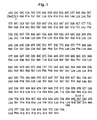
- the present invention relates to homogeneous recombinant human immune interferon fragments having 6 to 11 amino acids deleted at the carboxy terminus as compared to full-length mature recombinant human immune interferon (amino acid sequence shown in Figure 1).
- the invention also relates to replicable microbial expression vehicles comprising a nucleotide sequence encoding a recombinant immune interferon fragment defined above, to microorganisms transformed with these expression vehicles and to processes for the preparation of said interferon fragments and said microorganisms.
- the invention further relates to pharmaceutical compositions containing one or more of these recombinant immune interferon fragments and to the use of these recombinant immune interferon fragments and pharmaceutical compositions for the treatment of various disease states.
- Natural human immune interferon is produced upon mitogenic stimulation of lymphocytes. It exhibits antiviral and anti-proliferative activity. This activity is pH 2 labile.
- the functional form of the immune interferon may be a multimer, most likely a dimer, a trimer or a tetramer (Pestka et al., J. Biol. Chem. 258, 9706-9709 [1983]).
- immune interferon is encoded in the human genome by a single gene which codes for a precursor-polypeptide of 166 amino acid residues (Derynck et al., Nucleic Acids Res. 10, 3605-3615 [1982]). Post-translational processing was believed to result in a polypeptide comprising 146 amino acids and having a Cys-Tyr-Cys-Gln-... N-terminal sequence.
- This signal peptide is cleaved off upon post-translational processing, together with the methionine derived from the translational start signal leading to methionine-free mature immune interferon consisting of 146 amino acids.
- Prokaryotic hosts are not able to cleave the signal peptide in front of the human immune interferon precursor polypeptide at the right position. Therefore the coding sequence for the signal peptide in the immune interferon gene has to be removed by genetic engineering in order to express the immune interferon in mature form.
- the ATG codon directly in front of the coding sequence for the mature polypeptide results in the N-terminal methionine present in recombinant human immune interferon.
- immune interferon purified from induced human peripheral blood lymphocytes consists of a polypeptide having 143 amino acid residues, lacking the Cys-Tyr-Cys- sequence and having a pyroglutamate residue at its N-terminus. Some heterogeneity at the carboxy terminus was observed. Reengineering of the original recombinant immune interferon gene led to expression vectors coding for mature recombinant immune interferon comprising these 143 amino acids and having as outlined above an additional methionine at the N-terminus.
- these immune interferon fragments have been generated only by limited tryptic digestion. Trypsin catalyzes the hydrolysis of peptide bonds, whose carbonyl function is donated by a basic amino acid, usually arginine or lysine. There are 20 lysine residues and 8 arginine residues in the amino acid sequence of immune interferon. The amount of the individual fragments generated by trypsin depends on the accessibility of the peptide bond which has to be cut to generate the fragment.
- the immune interferon fragments of the present invention having non-basic C-terminal amino acids like serine, glutamine, methionine, leucine or phenylalanine cannot be generated by tryptic digestion. This may be the reason why only immune interferon fragments with 125, 129, 131 and 139 amino acids, having either lysine or arginine as C-terminal amino acid are exemplified in European Patent Application No. 146 354.
- compositions containing one or more of the recombinant immune interferon fragments of the present invention can be used for the treatment of various disease states. Examples of such disease states are: viral infections, neoplastic diseases or rheumatoid arthritis.
- the present invention therefore provides homogeneous recombinant immune interferon fragments exhibiting a specific antiviral activity higher than mature recombinant immune interferon and having the amino acid sequence
- x is a methionine and Y is a glutamine residue or X is hydrogen and Y is a glutamine or a pyroglutamate residue, and Z is
- X is hydrogen and Y is a glutamine or a pyroglutamate residue
- Z is These homogeneous recombinant immune interferon fragments have a significant higher biological activity compared to mature recombinant human immune interferon, that means to a full-length recombinant immune interferon consisting of 143 amino acids, having either a glutamine or a pyroglutamate residue at position 1 of its amino acid sequence.
- the full-length recombinant immune interferon may contain optionally an additional methionine residue as 144th amino acid at its N-terminus.
- the additional methionine residue derives from the mRNA translational start signal AUG which codes for the amino acid methionine as outlined above. In expression systems like E.coli this methionine is not always processed away.
- the additional N-terminal methionine has been found not to impair the biological activity of most recombinant polypeptides (Winnacker, in "Gene und Klone", p. 255, VCH, Weinheim, Germany [1985]).
- the recombinant immune interferon fragments of the present invention may be in multimerized form, preferably they are present as dimers, trimers or tetramers.
- the recombinant immune interferon fragments of the present invention can be used to prepare pharmaceutical compositions consisting of a significantly reduced amount of said recombinant immune interferon fragments as compared to the amount of mature recombinant human immune interferon needed, to obtain essentially the same antiviral activity and a physiological compatible carrier.
- Such pharmaceutical compositions are useful for the treatment of various disease states. It is understood that amino acid substitutions, particularly single amino acid substitutions in the recombinant immune interferon fragments disclosed herein, giving rise to variants of the recombinant immune interferon fragments having higher specific activity compared to mature recombinant human immune interferon are possible. It is within the state of the art to introduce such substitutions in a recombinant polypeptide.
- the present invention includes all recombinant immune interferon fragments having 6 to 11 amino acids deleted at the C-terminus as compared to a full-length mature recombinant human immune interferon or modifications and allelic variations thereof, which fragments exhibit biological activity greater than the full-length mature recombinant human immune interferon.
- the invention also provides replicable microbial expression vehicles comprising a nucleotide sequence encoding a recombinant immune interferon fragment operably linked to an expression control sequence and microorganisms transformed with such an expression vehicle. Moreover it provides pharmaceutical compositions containing one or more recombinant immune interferon fragments and a physiological compatible carrier.
- the invention further relates to processes for the preparation of recombinant immune interferon fragments through recombinant DNA technology, to processes for the preparation of a microorganism transformed with a replicable microbial expression vehicle mentioned above and to methods for the preparation of pharmaceutical compositions containing such recombinant immune interferon fragments. Furthermore the invention relates to the use of these interferon fragments and corresponding pharmaceutical compositions for the treatment of various disease states.
- the restriction endonuclease sites indicated in Fig. 2 are overlined and the region under control of RBSII,Sphi encoding a dihydrofolate reductase polypeptide is underlined.
- pBR322 entity of pDS8/RBSII,Sphl is schematically shown, where the given numbers refer to the nucleotide sequence of pBR322 (J.G. Sutcliffe, Cold Spring Harbor, Symp. Quant. Biol. 43, pp. 77-90 [1979]).
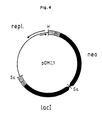
- the restriction endonuclease sites indicated in Fig. 4 are overlined and the coding regions for neomycin phosphotransferase (neo) and lac repressor (lacl) are underlined.
- fragment 1 containing the gene for mature recombinant human immune interferon (rIFN-y) starting from plasmid pRC23/IFI-900 containing the gene coding for a recombinant human interferon consisting of 146 amino acids, having Cys-Tyr-Cys- as N-terminal sequence.
- fragments F(-6), F(-8) and F(-11) into the EcoRl- and Hindlll- cleavage sites of pDS8/RBSII,Sphl resulting in plasmids pIFN- ⁇ (-6), pIFN- ⁇ (-8) and pIFN- ⁇ (-11).
- the fragments F(-7), F(-9) and F(-10) were integrated in similar way resulting in plasmids pIFN- ⁇ (-7), pIFN- ⁇ (-9) and pIFN- ⁇ (-10).
- Antiviral activity in relation to the carboxyterminal sequence of IFN-y is given in the one letter code described by Dayhoff et al., ("Atlas of Protein Sequence and Structure", M.O. Dayhoff, ed., Vol. 5, p. 17, Natl. Biomed. Res. Found., Silver Spring, Maryland, U.S.A., [1979]) on the abscissa.
- the antiviral activity exhibited by the recombinant immune interferon fragments identified on the abscissa by the number of amino acids deleted at the carboxyterminus in comparison to the full-length mature recombinant human immune interferon (identified by "O") are plotted on the ordinate. Each point represents the geometric mean titer of at least six independent determinations. Bars indicate the corresponding 95 % confidence limits.
- recombinant immune interferon fragments can be prepared by selection of a suitable plasmid containing a full-length copy of the human immune interferon gene or allelic variants thereof. Translational stop codons can then be introduced in the region of the gene coding for the C-terminus of immune interferon either by site directed mutagenesis as described by Smith et al. (in "Genetic Engineering” 3, 1-32 [1981], J.K. Setlow, A. Hollaender eds., Plenum Press, New York) or by removing a suitable restriction fragment from this region and by replacing this restriction fragment with a synthetic DNA fragment coding for the desired C-terminus of the recombinant immune interferon fragment.
- the DNA sequence coding for the recombinant immune interferon fragment can be inserted in a replicable microbial expression vehicle, comprising an origin of replication, a promoter or promoter-operator and a sequence encoding a ribosomal binding site (RBS).
- a replicable microbial expression vehicle comprising an origin of replication, a promoter or promoter-operator and a sequence encoding a ribosomal binding site (RBS).
- Suitable replicable expression vehicles can be found in Maniatis et al. (supra) or in the examples of the present invention.
- Preferred replicable expression vehicles comprising a nucleotide sequence encoding a recombinant immune interferon fragment operably linked to an expression control sequence are pIFN- ⁇ (-6), p)FN--y(-7), pIFN- ⁇ (-8), pIFN--y(-9), pIFN--y(-10) and piFN--y(-11), wherein the coding sequence of the recombinant immune interferon fragments are integrated in the expression vector pDS8/RBSII,Sphl (Fig.2).
- E.coli M15 pDMI,1 a strain of E.coli (E.coli DZ291) transformed with plasmid pDMI,1 (Fig. 4) which plasmid encodes the lac repressor.
- the resulting E.coli M15 pDS8/RBSII,Sphl; pDMl,1) was deposited on August 6, 1986 at the Deutsche Sammlung von Mikroorganismen (DSM) its accession number being DSM 3809.
- the methods for the construction of the expression vehicles coding for the recombinant immune interferon fragments IFN-y(-6), pIFN--y(-7), IFN-y(-8), IFN-y(-9), IFN- ⁇ (-10), and )FN-y(-11) are outlined in detail in the examples. Based on these examples it is within the skills of an artisan in the field to construct expression vehicles capable of expressing the recombinant immune interferon fragments of the present invention.
- the replicable expression vehicles capable of expressing recombinant immune interferon fragments are then transformed into a suitable host organism by the specific procedure described in the examples or as described by Maniatis et al. (supra).
- the recombinant immune interferon fragments may be in glycosylated form or not.
- Preferred host organisms include Escherichia coli (e.g. strain M15 or strain W3110 [ATCC No. 27325]), Bacillus subtilis and so forth.
- the most preferred host organism of this invention is E.coli strain M15 mentioned above.
- the process of the invention can be carried out in a variety of ways, depending upon the nature of the construction of the expression vectors and upon the growth characteristics of the host.
- the host organism will be grown under conditions which are favorable for the production of large quantities of cells.
- suitable inducers or derepressors in the growth medium or a temperature-shift cause the control sequence supplied with such DNA sequence to become active, permitting the transcription and translation of the coding sequence.
- the expression of the gene coding for the recombinant immune interferon fragment is inhibited by the lac repressor.
- the interferon gene is derepressed by the addition of isopropyl- ⁇ -D-thiogalactopyranoside (IPTG).
- IPTG isopropyl- ⁇ -D-thiogalactopyranoside
- the protein produced by the recombinant cell can be released by lysing the cell by conventional means well known in the art. The particular means of lysing will depend upon the host cell utilized. In the present invention lysing the cells with guanidium-hydrochloride is preferred.
- the homogeneous recombinant immune interferon fragments of the present invention can be purified by any known method, such as by precipitation with ammonium sulfate, dialysis to remove salts (under normal or vacuum pressure), gel filtration, chromatography, preparative flat-bed iso-electric focusing, gel electrophoresis, high performance liquid chromatography, ion exchange chromatography, gel filtration and reverse phase chromatography, and affinity chromatography and the like, or by using monoclonal or polyclonal antibodies.
- the homogeneous recombinant immune interferon fragments obtained are essentially free of other proteins as can be judged by SDS-polyacrylamidgel electrophoresis or HPLC analysis.
- the recombinant immune interferon fragments may form dimers, trimers or tetramers, that means that the purified recombinant immune interferon fragments may be present as a combination of two, three or four such fragments.
- the nature of the combining mechanism is unclear.
- Antiviral activities of the recombinant immune interferon fragments IFN-y(-6), IFN-y(-7), IFN-y(-8), IFN-y(-9), IFN- ⁇ (-10), and IFN-,y(-11) were determined in a bioassay based on reduction of the cytopathic effect as described by Rubinstein et al. (J. Virol. 37, 755-758 [1981]). Human amnion cells (FL-cells) and Sindbis virus as a challenge virus were used. Samples were prediluted to about 1000 units/ml and titrated on a microtiter plate in duplicate. A full-length mature recombinant immune interferon [sequence in Fig. 1] preparation (lot No.
- IFN-y(-4) and IFN-y(-5) were constructed either as described above, e.g. IFN-y(-4) and IFN-y(-5), or by limited proteolysis of full-length mature recombinant immune interferon, e.g. IFN--y(-14) was prepared using mouse submaxillary gland "Arg C" protease, which cleaves proteins specifically at the carboxylic side of arginine (Schenkein et al., Arch. Biochem. Biophys. 182, 64-70 [1977]), whereas IFN--y(-18) was prepared using the fibrinolytic enzyme plasmin.
- the immune interferon fragments IFN-y(-8), IFN-y(-9), IFN-y(-10) and IFN- ⁇ (-11) exhibited a remarkably higher antiproliferative activity and increased immunoregulatory activities.
- the antiproliferative activity can be determined by measuring the inhibitory action of the different immune interferons on the incorporation of radioactively labeled thymidine into cellular DNA.
- Three malignant cell lines (U 937, BS 14, LLC 1) and one normal fibroblast line (AG 1523, passage no. 6-10) were used.
- U 937 is a myelomonocytic leukemia cell line
- BS 14 was derived from a patient with malignant melanoma
- LLC 1 from a patient with lung cancer.
- the cells were plated in 96 microwell plates in RPMI 1640 supplemented with 10% fetal calf serum, 1% L-glutamin (200 mM), 1% pencillin (100 u/ml) - streptomycin (100 ⁇ g/ml), 1% non-essential amino acids (100 x) and 1% sodium pyruvate (100 mM) at different densities according to their individual growth curves: 20'000 cells/ml for U 937 and AG 1523, 1'000 cells/ml for BS 14 and LLC 1. The cells were allowed to adhere for 24 hours. Mature recombinant immune interferon (rIFN- ⁇ ) and immune interferon fragment IFN- ⁇ (-10) respectively were then added to the wells.
- rIFN- ⁇ Mature recombinant immune interferon
- IFN- ⁇ (-10) immune interferon fragment IFN- ⁇ (-10) respectively were then added to the wells.
- Negative control plates were treated with medium alone, whereas for the positive controls, adriamycin was used in a concentration ranging from 10- 8 to 10- 6 M. Two days later 3 H-thymidine was added to a final concentration of 1 ⁇ Ci/well. After further 18 hours of incubation the cells were harvested and thymidine incorporation was determined as described by Carr et al. (Cell. Immunol. 5, 21-29 [1972]). It was found that a 14 times lower amount of immune interferon fragment IFN- ⁇ (-10) is needed to obtain the same antiproliferative activity on AG 1523 cells as mature recombinant immune interferon (rIFN- ⁇ ). Similarly a 5 times, 3 times and 6 times lower amount of IFN--y(-10) was found to be needed to obtain the same antiproliferative activity as rIFN- ⁇ on U 937, BS 14 and LLC 1 cells, respectively.
- Immune interferon is known to mediate several immunoregulatory functions. It appears to be one of the macrophage-activating factors (MAF).
- the macrophage activation was measured in two different ways. Normal human macrophages obtained according to Talmadge et al. (Eur. J. Immunol. 16, 1471-1477 [1986]-), were activated by the different forms of immune interferon described in the present application. The oxidative burst was measured in terms of enhancement of peroxide release as described by Pick et al. (J. Immunol. Methods 46, 211-226 [1981]), whereas the induction of the bactericidal activity of the macrophages was measured as described by Peck et al. (J. Immunol.
- the purified recombinant immune interferon fragments of the present invention or mixtures thereof can be used for the preparation of pharmaceutical compositions.
- These pharmaceutical compositions contain a significantly reduced amount of said interferon fragments(s), as compared to the amount of mature recombinant human immune interferon needed to obtain essentially the same antiviral activity and a physiological compatible carrier.
- This reduced amount is based on the significant higher specific antiviral activity (in units/mg) displayed by the recombinant immune interferon fragments (see Table 1).
- this reduced amount was calculated using the values for the specific antiviral activity given in Table 1. The reduced amount is about:
- the pharmaceutical compositions can be made up in any conventional form including: a) a solid form for oral administration such as tablets, capsules, pills, powders, granules, and the like; b) a liquid form for oral administration such as solutions, syrups, suspensions, elixirs and the like; c) preparations for parenteral administration such as sterile solutions, suspensions or emulsions; and d) preparations for topical administrations such as solutions, suspensions, ointments, creams, gels, micronized powders, aerosols and the like.
- the pharmaceutical preparations may be sterilized and/or may contain adjuvants such as preservatives, stabilizers, wetting agents, emulsifiers, salts for varying the osmotic pressure and/or buffers.
- Parenteral dosage forms may be infusions or injectable solutions which can be injected intravenously or intramuscularly. These preparations can also contain other medicinally active substances. Additional additives such as preservatives, stabilizers, emulsifying agents, buffers and the like may be added in accordance with accepted practices of pharmaceutical compounding.
- compositions containing a recombinant immune interferon fragment can be used for the treatment of viral infections, of neoplastic diseases or of rheumatoid arthritis.
- compositions of the invention may be administered in pharmaceutically acceptable oral, injectable or topical composition and modes. Dosage and dose rate may parallel that currently being used in clinical applications of the known interferons, typically about 10 6 units daily.
- These pharmaceutical compositions of the invention contain said recombinant immune interferon fragments in association with a compatible pharmaceutically acceptable carrier material. Any conventional carrier material can be utilized.
- the carrier material can be an organic or inorganic inert carrier material suitable for enteral, percutaneous or parenteral administration. Suitable carriers include water, gelatin, gum arabic, lactose, starch, magnesium stearate, talc, vegetable oils, polyalkylene-glycols, petroleum jelly and the like.
- the pharmaceutical preparations may contain other pharmaceutically active agents. Additional additives such as flavoring agents, preservatives, stabilizers, emulsifying agents, buffers and the like may be added in accordance with accepted practices of pharmaceutical compounding.
- pDS8/RBSII, Sphl was chosen for the expression of mature recombinant human immune interferon and the recombinant immune interferon fragments of the present invention.
- the above mentioned vector contains as an expression control sequence the regulatable promotor/operator element P N25 x /0 (Stüber et al., EMBO J. 3, 3143-3148 [1984]) and the ribosomal binding site RBSII,Sphl.
- This ribosomal binding site has been derived via DNA-synthesis matching the ribosomal binding site under control of E.coli phage T5 promoter P G25 (R. Gentz, Ph.D. Thesis, University of Heidelberg, FRG [1984]).
- the above mentioned vector can only be stably maintained in E.coli if the promoter/operator element is repressed via binding of the lac repressor to the operator entity of P N25 x /0 .
- the lac repressor is encoded by the lacl gene.
- P N25 x /0 is efficiently repressed only if sufficient amounts of repressor molecules are present. Therefore the lacl q allel was used, which contains a mutant promoter resulting in an increased expression of the repressor gene.
- the lacl q allel is contained in plasmid pDMI,1 (Fig. 4).
- This plasmid carries in addition to the lacl gene the neo-gene, conferring resistance to kanamycin as a selective marker.
- Plasmid pDMI,1 is compatible with the expression vector pDS8/RBSII,Sphl.
- E.coli cells to be transformed with expression vectors based on pDS8/RBSII,Sphl have to harbour pDMI,1 to ensure stable maintenance of the expression vector. Induction of expression in this system is easily achieved by addition of IPTG to the medium at the desired cell density.
- pDS8/RBSII,Sphl The part of pDS8/RBSII,Sphl (Fig. 2) between the sites for restriction endonucleases Xbal and Xhol containing the region required for DNA replication and maintenance of the plasmid in the cell and the entire gene for ⁇ -lactamase conferring resistance to ampicillin is derived from plasmid pBR322 (Bolivar et al., Gene 2, 95-113 [(1977]; Sutcliffe supra).
- the remaining part of the plasmid carries the regulatable promoter/operator element P N25 x /0 (Stüber et al., supra) followed by the ribosomal binding site RBSII,SphI which is part of an EcoRI/BamHI fragment, by the coding region for dihydrofolate reductase of mouse AT-3000 cell line (Chang et al., Nature 275, 617-624 [1978]; Masters et al., Gene 21, 59-63 [1983]), by the terminator to of Escherichia coli phage Lambda (Schwarz et al., Nature 272, 410-414 [1978]), by the promoter-free gene for chloramphenicol acetyltransferase (Marcoli et al., FEBS Letters 110, 11-14 [1980]) and by the terminator T1 of the Escherichia coli rrnB operon (Brosius et
- Plasmid pDMI,1 (Fig. 4) carries the gene for neomycin phosphotransferase from transposon Tn5 (Beck et al., Gene 19, 327-336 [1982]) conferring resistance to kanamycin and the lacl gene (Farabaugh, Nature 274, 765-76 9 [1 978]) with the promoter mutation I q (Calos, Nature 274, 762-765 [1978]) encoding the lac- repressor. Furthermore, pDMI,1 contains a region of plasmid pACYC184 (Chang et al., J.Bacteriol. 134, 1141-1156 [1978]) carrying the information necessary for its replication and stable maintenance in E.coli
- the IFN-y gene was adapted to the ribosomal binding site RBSII,Sphi (Fig. 6).
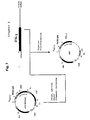
- the fragment encoding IFN- ⁇ was isolated and integrated into pDS8/RBSII,Sphl resulting in plasmid pGLS (Fig. 7).
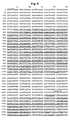
- the synthetic oligonucleotide fragments are shown in Fig. 6.
- the oligonucleotide fragments themselves were prepared simultaneously on a multisynthesizer as described in European Patent Application No. A1 181 491 published on 21.5.86) using controlled pore glass (CPG) as support material (Kiefer et al., Immunol. Meth. 3, 69-83 [1985]; Sproat et al., Tetrahedr. Lett 24, 5771-5774 [1983]; Adams et al., J. Am. Chem. Soc. 105, 6 6 1-663 [1983]).
- the lyophilised oligonucleoti des were dissolved in water for 1 hour at 4° C to give a DNA concentration of 100 nmole/ml.
- each oligonucleotide 150 pmoles of each oligonucleotide were kinased with 1 ⁇ l of [ 32 P]-ATP (2 pmoles, 5000 Ci/mmol), 1 U T4-polynucleotide kinase (Gibco-BRL,Basel) in 10 ⁇ l 50mM Tris-HCI pH 8.5, 10 mM MgCl 2 , for 10 min at 37° C. All reactions were chased by the addition of 1 ⁇ l of 5mM ATP. The reactions were stopped by heating the samples for 7 min at 65 ° C.
- the pellet was dissolved in T4-ligase buffer (50 mM Tris/HCI pH 7.8, 10 mM MgCl 2 , 10 mM DTT, 500 ⁇ M ATP. 25 pmoles of the phosphorylated oligonucleotides comprising the Sphl-Ndel adapter 1 (Fig. 6) in 1 x ligase buffer were added to a final volume of 25 ⁇ l. Ligations were carried out at 22 °C for 3 hours using 1 ⁇ l DNA-ligase (1 Weiss-unit, Boehringer, Mannheim). The ligation was stopped by incubating the sample for 7 min. at 65° C.
- the DNA was precipitated with ethanol, dried as described above and then resuspended in 50 ⁇ l Ncol digestion buffer (50 mM Tris-HCI, pH 8, 10 mM MgC1 2 50 mM NaCi, 50 mM KCI), 10 U Ncol (BRL-Gibco, Basle) were added and the sample was incubated for 1 hr at 37 C.
- the restriction enzyme was inactivated by heating the sample for 7 min at 65 C. After a phenol extraction the DNA was precipitated and dried as described above.
- the pellet was dissolved in 20 ⁇ l Klenow-buffer (50 mM Tris-HCI, pH 7.2, 10 mM MgSO 4 , 100 ⁇ M DTT) and dATP, dGTP, dCTP and dTTP were added to a final concentration of 100 ⁇ M (total reaction volume: 30 ⁇ l). Klenow-enzyme (1 unit, Boehringer Mannheim) was added and the sample was incubated for 1 hr at 22° C. The reaction was stopped by adding 2 ⁇ l of 0.25M EDTA.
- the mixture was extracted once with phenol and the DNA was precipitated as described above and then resuspended in Sphl-digestion buffer (50 mM Tris-HCI, pH 7.5, 6mM MgCl 2 , 50 mM NaCI, 6mM 2-mercaptoethanol). After addition of 10 U Sphl (BRL-Gibco, Basle) the sample was incubated for 1 h at 37°C. The digestion was stopped by heating the sample for 7 min at 65 C, followed by one phenol extraction. The DNA was now precipitated and dried as described above.
- Sphl-digestion buffer 50 mM Tris-HCI, pH 7.5, 6mM MgCl 2 , 50 mM NaCI, 6mM 2-mercaptoethanol.
- 10 U Sphl BBL-Gibco, Basle
- the digestion was stopped by heating the sample for 7 min at 65 C, followed by one phenol extraction.
- the DNA was now precipitated and dried as described above.
- the DNA-pellet was dissolved in 10 ⁇ l gel loading buffer and the DNA fragments electrophoretically separated on a 6% polyacrylamide gel containing 0.5 x Tris-acetate-buffer (40 mM Tris-HCI), 20 mM sodium acetate, 2 mM EDTA, pH 7.8). After staining with ethidiumbromid (0.5 ⁇ l/ml) the bands were visualized under 300 nm UV-light.
- the DNA-band encoding the IFN-y gene was cut out of the gel with a scalpel. Marker DNA was phage ⁇ X digested with HaeIII (Gibco-BRL, Basle).
- the gel piece was transferred in a 4x4 mm well in an 0.7% agarose gel containing TBE-buffer (90 mM Tris-borate, 90 mM boric acid, 3 mM EDTA, pH 8.3).
- TBE-buffer 90 mM Tris-borate, 90 mM boric acid, 3 mM EDTA, pH 8.3
- the well was sealed with liquid 0.7% agarose in IxTBE in order to give a homogenous electrical field.
- a piece of NA45 membrane Scholeicher and Schuell, Dassel, BRD
- the strip with the DNA was then washed with distilled water and transferred into an Eppendorf tube containing 250 ⁇ l of 1.5M lithium acetate, 50 mM Tris-HCI pH 8.0 and 10 mM EDTA.
- the DNA was eluted for 20 min at 65°C with occasional vortexing.
- the membrane strip was removed from the tube and the sample was once extracted with 200 ⁇ l phenol that was saturated with IM Tris pH 8.0. After spinning the samples for 10 min at 12.000 rpm in a microcentrifuge the supernatant containing the DNA was withdrawn.
- the DNA was precipitated on dry ice for 10 min after adding 20 ⁇ l of 5M lithium acetate and 440 ⁇ l isopropanol.
- the DNA was pelleted for 10 min at 12.000 rpm in a microcentrifuge. The pellet was washed with 80% ethanol and dried in vacuo. The pellet was dissolved in 10 ⁇ l of TE-buffer (10 mM Tris-HCI pH 7.6, 1 mM EDTA).
- the Scal/Sphl fragment of pDS8/RBSII,Sphl containing parts of the cat gene, terminator T1 the replication origin, the bla gene, the promoter P N25 x /0 and the ribosomal binding site RBSII,Sphl was isolated via electrophoresis in 1% agarose gels and electrophoretically transfered onto NA45 membranes. Subsequent elution, ethanol precipitation and resuspension in 100 ⁇ l TE-buffer was done as described above. About 1 pmol of the vector fragment was obtained.
- 2 ⁇ l vector fragment was ligated with 2 ⁇ l insert DNA (fragment 1) in ligase buffer (see above) containing 1 ⁇ l DNA-ligase (1 Weiss-unit, Boehringer, Mannheim) in a total volume of 20 ⁇ l. Ligations were carried out at 22 C for 3 hours. A control ligation with no insert DNA added was done in parallel. The ligations were stopped by heating the samples for 7 min at 65° C. The competent E.coli M15 cells used for the transformation were prepared using the method of Morrison (Methods Enzymol. 68, 326-331 [1979]).
- the ligation mixtures were added to 200 ⁇ l thawed competent E.coli M15 cells harbou ring plasmid pDMI,1.
- the samples were placed on ice for 30 min followed by a 2 min incubation at 42° C.
- After adding 0.5 ml of LB-medium the samples were incubated for 90 min in a 37°C waterbath.
- the cells were then centrifuged for 30 sec at 12.000 rpm in a microcentrifuge.
- the supernatants were withdrawn and the pellets were suspended in 100 ⁇ l LB-medium and plated on LB-agar plates containing 100 ⁇ g/ml ampicillin plus 25 ⁇ g/ml kanamycin.
- the plates were incubated overnight at 37° C.
- the final pellets were dissolved in 200 ⁇ l TE-buffer. 4 ⁇ l were digested with Sphl and Xbal to release the fragment containing the INF-y gene with the terminator T1. All DNA samples analysed released the fragment of the expected size of about 1 kb. These plasmids were named pGLS.
- the double-stranded circular plasmid DNA was sequenced using a primer endlabeled with [ ⁇ - 32 P]-ATP.
- the primer contains the nucleotides from position 199-218 of pDS8/RBSII,Sphl and ends therefore 6 nucleotides in front of the ATG of the Sphl-site.
- 15 ⁇ l of the isolated DNA were precipitated with ethanol and washed once with 80% ethanol. After drying the pellet for 2 min in a Speed vac concentrator the pellet was dissolved in 8 ⁇ l 1/4 TE-buffer.
- ligase buffer 1 U of T4-DNA-ligase
- ligations were performed in a total volume of 25 ⁇ l at 22° C for 12 hours. The reactions were stopped by heating the samples for 7 min at 65 C. After ethanol precipitation the DNA pellets were resuspended in "core buffer” and digested with 15 U EcoRl and 20 U Hindlll for 2 hours at 37° C in a volume of 50 ⁇ l. After heat inactivation, phenol extraction, treatment with ether and ethanol precipitation, the samples were dissolved in 10 ⁇ l gel loading buffer and electrophoresed on a 6% polyacrylamide gel. The DNA bands were visualized under 300 nm UV-light.
- the bands containing the IFN- ⁇ genes were cut out of the gel and electrophoresed on a NA45 membrane as described above.
- the marker DNA used was phage ⁇ X-DNA digested with Haelll. The DNA's were eluted as described and named F(-6), F(-7), F(-8), F(-9), F(-10) and F(-11) respectively.
- Example 3B 10 ⁇ l of the vector fragment and one half of the amount of each isolated fragments F(-6), F(-7), F(-8), F(-9), F(-10) and F(-11) obtained in Example 3B were ligated in parallel in a volume of 20 ⁇ l with 1 unit T4- ligase at 22° C for 3 hours. A control ligation with no insert DNA added was done in parallel. The ligation were stopped by heating the samples for 7 min at 65° C.
- Transformations were carried out as described by Morrison (supra) using E.coli M15 harbouring plasmid pDMI.1.
- the cells were plated on LB-agar plates containing 100 ⁇ l/ml ampicillin and 25 ⁇ g/ml kanamycin as described above. The plates were incubated overnight at 37° C.
- the plasmids containing fragment F(-6) were named pIFN- ⁇ (-6), whereas the plasmids harbouring F(-7), F(-8), F(-9), F(-10) and F(-11) were named pIFN- ⁇ (-7), pIFN- ⁇ (-8), pIFN- ⁇ (-9), pIFN- ⁇ (-10) and pIFN- ⁇ (-11), respectively.
- These plasmids are expression vectors for the genes coding for the recombinant immune interferon fragments IFN-y(-6), IFN-y(-7), IFN-y(-8), IFN-y(-9), IFN-y(-10) and IFN- ⁇ (-11), respectively (Fig. 10).
- modified IFN- ⁇ genes are expressed in E.coli in high amounts, they were expressed in E.coli M15 (pDMI,1) transformed with either pIFN- ⁇ (-6), pIFN- ⁇ (-7), pIFN- ⁇ (-8), pIFN- ⁇ (-9), pIFN- ⁇ (-10) or pIFN- ⁇ (-11) and the total cellular protein was analysed by SDS-polyacrylamide gel electrophoresis.
- E.coli M15 cells containing plasmid pDMI,1 were transformed with either pIFN- ⁇ (-6), pIFN- ⁇ (-7), pIFN- ⁇ (-8), pIFN- ⁇ (-9), pIFN- ⁇ (-10) or pIFN- ⁇ (-11) and in parallel with pGLS as a control.
- the transformants were grown in LB-medium containing 100 ⁇ g/ml ampicillin and 25 ⁇ g/ ⁇ l kanamycin. At an optical density at 600 nm of about 0.7 the cultures were induced with IPTG (final concentration 1 mM). After additional 6 hours of incubation the cells were harvested by centrifugation.
- the gel showed that the recombinant immune interferon fragments IFN-y(-6), IFN-y(-7), IFN-y(-8), IFN-y(-9), IFN- ⁇ (-10) and IFN- 7 (-11) are produced in E.coli in higher amounts than the full-length recombinant mature immune interferon, despite the fact that all proteins are under the control of the same expression control sequence.
- All recombinant immune interferon fragments were purified to homogeneity by the following method: Recombinant E.coli cells containing an expression vector for a recombinant immune interferon fragment were grown as indicated above. After induction with IPTG and additional 6 hours of incubation the cells were centrifuged (4000 x g, 10 min, 4 ⁇ C). The supernatant was discarded. Desintegration of the cells (100 g) was performed with 7M guanidine-hydrochloride in 0.01 M sodium borate buffer pH 8.0 (300 ml). The resulting suspension was stirred for 1 hour at 4 C.
- the solubilized recombinant immune interferon fragment was separated from the insoluble particles by centrifugation (10'000 x g, 30 min, 4°C).
- the supernatant was diluted with a 10-fold volume of 0.15M sodium borate pH 8.0 and the remaining particles were sedimented by centrifugation as before.
- 360 g silica gel 100 (particle size 0.063-0.200 mm) was added to the crude extract. The suspension was stirred gently to avoid sedimentation. After one hour, the stirring was stopped. Upon formation of a sediment the supernatant was discarded and the sediment transferred to a column (0 5 cm, length 17.5 cm).
- the silica gel in the column was washed with 1 M NaCl in 0.01 M sodiumborate pH 8.0 (flow-rate 6 ml/min).
- the recombinant immune interferon fragment was eluted with 0.5M tetramethylammonium chloride and 0.7M ammonium sulfate in 0.01 M sodium borate buffer pH 8.0 (flow-rate 6 ml/min).
- the eluate was immediately pumped on a Phenyl-Sepharose Fast-Flow column (0 5 cm, length 21 cm; Pharmacia, Prototyp gel KK33904) which had been equilibrated with 0.5M tetramethylammonium chloride and 0.7M ammonium sulfate in 0.01 M sodium borate buffer pH 8.0 (flow-rate 6 ml/min).
- the recombinant immune interferon fragment was found in the flow through, whereas the contaminating proteases were adsorbed by the matrix.
- the column was regenerated by washing the matrix with 0.01 M sodium borate buffer pH 8.0.
- the recombinant immune interferon fragment eluted from the Phenyl-Sepharose column was adsorbed on a Phenyl-Sepharose CL-4B column (0 5 cm, length 21 cm, Pharmacia) equilibrated with 0.7M ammonium sulfate in 0.01 M sodium borate buffer pH 8.0.
- the column was washed extensively and the recombinant immune interferon fragment was eluted with a 4 hour linear gradient against 0.01 M sodium borate buffer pH 8.0.
- the eluate was diluted with a 4-fold volume of water and applied on a Fractogel TSK CM-650 (M) column (0 2,6 cm, length 18 cm; Merck) equilibrated with pyrogen free 0.05M sodium phosphate buffer pH 6.0 (flow-rate 4 ml/min).
- the recombinant immune interferon fragment was eluted using a linear NaCI-gradient of 0-0.6M NaCI.
- the recombinant immune interferon fragment fraction was applied on a Sephadex G-50 superfine column (0 5 cm, length 85 cm; Pharmacia), equilibrated with 0.05M sodium phosphate buffer, pH 7.5 (pyrogenfree). The flow-rate was adjusted to 2 ml/min.
- the recombinant immune interferon fragments purified in this way were found to be homogeneous upon RP-18 HPLC analysis and SDS-polyacryl amide gel electrophoresis.
- the purified proteins were digested with Staphylococcus aureus V8 protease.
- the C-terminal peptides were isolated on RP-18 HPLC, lyophilized, hydrolyzed in HCI and subjected to amino acid analysis. The expected amino acids were found in the hydrolysate.
- the recombinant immune interferon fragment was found to be stable for several month upon storage at 4 C.
Landscapes
- Health & Medical Sciences (AREA)
- Life Sciences & Earth Sciences (AREA)
- Chemical & Material Sciences (AREA)
- Organic Chemistry (AREA)
- General Health & Medical Sciences (AREA)
- Medicinal Chemistry (AREA)
- Genetics & Genomics (AREA)
- Zoology (AREA)
- Molecular Biology (AREA)
- Nuclear Medicine, Radiotherapy & Molecular Imaging (AREA)
- General Chemical & Material Sciences (AREA)
- Pharmacology & Pharmacy (AREA)
- Animal Behavior & Ethology (AREA)
- Chemical Kinetics & Catalysis (AREA)
- Public Health (AREA)
- Veterinary Medicine (AREA)
- Biophysics (AREA)
- Engineering & Computer Science (AREA)
- Biochemistry (AREA)
- Biomedical Technology (AREA)
- Wood Science & Technology (AREA)
- General Engineering & Computer Science (AREA)
- Proteomics, Peptides & Aminoacids (AREA)
- Gastroenterology & Hepatology (AREA)
- Biotechnology (AREA)
- Bioinformatics & Cheminformatics (AREA)
- Toxicology (AREA)
- Plant Pathology (AREA)
- Communicable Diseases (AREA)
- Virology (AREA)
- Microbiology (AREA)
- Oncology (AREA)
- Physics & Mathematics (AREA)
- Pain & Pain Management (AREA)
- Rheumatology (AREA)
- Medicines That Contain Protein Lipid Enzymes And Other Medicines (AREA)
- Preparation Of Compounds By Using Micro-Organisms (AREA)
- Peptides Or Proteins (AREA)
- Micro-Organisms Or Cultivation Processes Thereof (AREA)
Claims (21)


Priority Applications (1)
| Application Number | Priority Date | Filing Date | Title |
|---|---|---|---|
| AT87111281T ATE67783T1 (de) | 1986-08-13 | 1987-08-04 | Homogene rekombinante immun-interferon-fragmente und diese enthaltende pharmazeutische zusammensetzungen. |
Applications Claiming Priority (2)
| Application Number | Priority Date | Filing Date | Title |
|---|---|---|---|
| GB8619725 | 1986-08-13 | ||
| GB868619725A GB8619725D0 (en) | 1986-08-13 | 1986-08-13 | Homogenous interferon fragments |
Publications (2)
| Publication Number | Publication Date |
|---|---|
| EP0256424A1 EP0256424A1 (fr) | 1988-02-24 |
| EP0256424B1 true EP0256424B1 (fr) | 1991-09-25 |
Family
ID=10602667
Family Applications (1)
| Application Number | Title | Priority Date | Filing Date |
|---|---|---|---|
| EP87111281A Expired - Lifetime EP0256424B1 (fr) | 1986-08-13 | 1987-08-04 | Fragments homogènes recombinants d'interféron immunisant et compositions pharmaceutiques les contenant |
Country Status (21)
| Country | Link |
|---|---|
| EP (1) | EP0256424B1 (fr) |
| JP (1) | JPS6349098A (fr) |
| KR (1) | KR880002996A (fr) |
| AR (1) | AR244808A1 (fr) |
| AT (1) | ATE67783T1 (fr) |
| AU (1) | AU607930B2 (fr) |
| DE (1) | DE3773295D1 (fr) |
| DK (1) | DK377787A (fr) |
| ES (1) | ES2051714T3 (fr) |
| FI (1) | FI873512A7 (fr) |
| GB (1) | GB8619725D0 (fr) |
| GR (1) | GR3003417T3 (fr) |
| HU (1) | HU202920B (fr) |
| IE (1) | IE60670B1 (fr) |
| IL (1) | IL83474A0 (fr) |
| MC (1) | MC1847A1 (fr) |
| NO (1) | NO174631C (fr) |
| NZ (1) | NZ221374A (fr) |
| PH (1) | PH27432A (fr) |
| PT (1) | PT85538B (fr) |
| ZA (1) | ZA875819B (fr) |
Cited By (5)
| Publication number | Priority date | Publication date | Assignee | Title |
|---|---|---|---|---|
| US6958388B2 (en) | 2001-04-06 | 2005-10-25 | Maxygen, Aps | Interferon gamma polypeptide variants |
| US7038015B2 (en) | 2001-04-06 | 2006-05-02 | Maxygen Holdings, Ltd. | Interferon gamma polypeptide variants |
| US7230081B1 (en) | 1999-11-12 | 2007-06-12 | Maxygen Holdings, Ltd. | Interferon gamma conjugates |
| US7232562B2 (en) | 1999-11-12 | 2007-06-19 | Maxygen Holdings Ltd. | E38N interferon gamma polypeptide variants |
| US7524931B2 (en) | 2002-07-03 | 2009-04-28 | Maxygen Holdings Ltd. | Full-length interferon gamma polypeptide variants |
Families Citing this family (7)
| Publication number | Priority date | Publication date | Assignee | Title |
|---|---|---|---|---|
| JP2969461B2 (ja) * | 1988-07-23 | 1999-11-02 | 株式会社林原生物化学研究所 | ヒトγ−インターフェロンとその製造方法並びに用途 |
| DE3730331A1 (de) * | 1987-09-10 | 1989-03-30 | Basf Ag | Neue polypeptide, verfahren zur herstellung, die vektoren dafuer und arzneimittel daraus |
| DE69104619T2 (de) * | 1990-08-31 | 1995-04-13 | Schering Corp | Verwendungsmethoden von humanem Gammainterferon 4-134. |
| DE4036856C1 (fr) * | 1990-11-19 | 1992-05-27 | Fraunhofer-Gesellschaft Zur Foerderung Der Angewandten Forschung Ev, 8000 Muenchen, De | |
| US6258550B1 (en) | 1993-04-23 | 2001-07-10 | Virginia Commonwealth University | Polypeptides that include conformation-constraining groups which flank a protein-protein interaction site |
| US7959910B2 (en) | 2000-07-31 | 2011-06-14 | Biolex Therapeutics, Inc. | C-terminally truncated interferon alpha variants |
| US20060024272A1 (en) * | 2004-07-29 | 2006-02-02 | Large Scale Biology Corporation | C-terminally truncated interferon |
Family Cites Families (11)
| Publication number | Priority date | Publication date | Assignee | Title |
|---|---|---|---|---|
| JPH0788398B2 (ja) * | 1983-10-17 | 1995-09-27 | サントリー株式会社 | 新規生理活性ポリペプチドおよびその製造法 |
| US4855238A (en) * | 1983-12-16 | 1989-08-08 | Genentech, Inc. | Recombinant gamma interferons having enhanced stability and methods therefor |
| JPS60172999A (ja) * | 1983-12-20 | 1985-09-06 | Suntory Ltd | 新規な塩基性ポリペプチドおよびその製造法 |
| US4758656A (en) * | 1983-12-26 | 1988-07-19 | Kyowa Hakko Kogyo Co., Ltd. | Novel human interferon-gamma polypeptide derivative |
| DE3414831A1 (de) * | 1984-04-19 | 1985-10-31 | Hoechst Ag, 6230 Frankfurt | Herstellung von polypeptiden mit human-gammainterferon-aktivitaet |
| WO1985005618A1 (fr) * | 1984-06-06 | 1985-12-19 | Takeda Chemical Industries, Ltd. | Procede de preparation de derives de l'interferon |
| IL75302A0 (en) * | 1984-06-06 | 1985-09-29 | Takeda Chemical Industries Ltd | Novel polypeptide and production thereof |
| JPS6124599A (ja) * | 1984-07-11 | 1986-02-03 | Kyowa Hakko Kogyo Co Ltd | 新規ヒトインタ−フエロン−rポリペプチド誘導体 |
| JPS6163696A (ja) * | 1984-09-05 | 1986-04-01 | Asahi Chem Ind Co Ltd | 新しいペプチド |
| JPS61108397A (ja) * | 1984-10-31 | 1986-05-27 | Green Cross Corp:The | インタ−フエロン−γ蛋白質の製造法 |
| JPS62289600A (ja) * | 1986-02-18 | 1987-12-16 | Kanegafuchi Chem Ind Co Ltd | インタ−フエロン−γ及びその製造方法 |
-
1986
- 1986-08-13 GB GB868619725A patent/GB8619725D0/en active Pending
-
1987
- 1987-07-20 DK DK377787A patent/DK377787A/da not_active Application Discontinuation
- 1987-08-04 EP EP87111281A patent/EP0256424B1/fr not_active Expired - Lifetime
- 1987-08-04 AT AT87111281T patent/ATE67783T1/de not_active IP Right Cessation
- 1987-08-04 ES ES87111281T patent/ES2051714T3/es not_active Expired - Lifetime
- 1987-08-04 DE DE8787111281T patent/DE3773295D1/de not_active Expired - Lifetime
- 1987-08-06 ZA ZA875819A patent/ZA875819B/xx unknown
- 1987-08-07 IL IL83474A patent/IL83474A0/xx unknown
- 1987-08-07 NZ NZ221374A patent/NZ221374A/xx unknown
- 1987-08-07 AU AU76686/87A patent/AU607930B2/en not_active Ceased
- 1987-08-10 HU HU873605A patent/HU202920B/hu not_active IP Right Cessation
- 1987-08-10 KR KR1019870008728A patent/KR880002996A/ko not_active Ceased
- 1987-08-10 MC MC871905A patent/MC1847A1/fr unknown
- 1987-08-11 AR AR87308409A patent/AR244808A1/es active
- 1987-08-12 NO NO873389A patent/NO174631C/no unknown
- 1987-08-12 JP JP62200128A patent/JPS6349098A/ja active Pending
- 1987-08-12 IE IE216087A patent/IE60670B1/en not_active IP Right Cessation
- 1987-08-12 PH PH35656A patent/PH27432A/en unknown
- 1987-08-13 PT PT85538A patent/PT85538B/pt not_active IP Right Cessation
- 1987-08-13 FI FI873512A patent/FI873512A7/fi not_active IP Right Cessation
-
1991
- 1991-12-20 GR GR91402115T patent/GR3003417T3/el unknown
Non-Patent Citations (2)
| Title |
|---|
| T. Arakawa et al, B.B.R.C., 136(2), 679-684 (1986) * |
| T. Arakawa et al. J. Biol. Chem. 261 (8), 8534-8539 (1986) * |
Cited By (8)
| Publication number | Priority date | Publication date | Assignee | Title |
|---|---|---|---|---|
| US7230081B1 (en) | 1999-11-12 | 2007-06-12 | Maxygen Holdings, Ltd. | Interferon gamma conjugates |
| US7232562B2 (en) | 1999-11-12 | 2007-06-19 | Maxygen Holdings Ltd. | E38N interferon gamma polypeptide variants |
| US7504237B2 (en) | 1999-11-12 | 2009-03-17 | Maxygen Holdings Ltd. | Polynucleotides encoding interferon gamma polypeptides |
| US6958388B2 (en) | 2001-04-06 | 2005-10-25 | Maxygen, Aps | Interferon gamma polypeptide variants |
| US7038015B2 (en) | 2001-04-06 | 2006-05-02 | Maxygen Holdings, Ltd. | Interferon gamma polypeptide variants |
| US7390638B2 (en) | 2001-04-06 | 2008-06-24 | Maxygen Holdings, Ltd. | S99T C-11 Truncated polynucleotides encoding interferon gamma polypeptide variants |
| US7419805B2 (en) | 2001-04-06 | 2008-09-02 | Maxygen Holdings, Ltd. | Polynucleotides encoding S99T interferon gamma polypeptide variants and means of expression |
| US7524931B2 (en) | 2002-07-03 | 2009-04-28 | Maxygen Holdings Ltd. | Full-length interferon gamma polypeptide variants |
Also Published As
| Publication number | Publication date |
|---|---|
| KR880002996A (ko) | 1988-05-13 |
| PH27432A (en) | 1993-06-21 |
| PT85538B (pt) | 1990-06-29 |
| GR3003417T3 (en) | 1993-02-17 |
| HU202920B (en) | 1991-04-29 |
| IE60670B1 (en) | 1994-08-10 |
| NO174631C (no) | 1994-06-08 |
| HUT47148A (en) | 1989-01-30 |
| GB8619725D0 (en) | 1986-09-24 |
| FI873512L (fi) | 1988-02-14 |
| FI873512A7 (fi) | 1988-02-14 |
| NZ221374A (en) | 1990-07-26 |
| FI873512A0 (fi) | 1987-08-13 |
| AU7668687A (en) | 1988-05-19 |
| IE872160L (en) | 1988-02-13 |
| EP0256424A1 (fr) | 1988-02-24 |
| ES2051714T3 (es) | 1994-07-01 |
| IL83474A0 (en) | 1988-01-31 |
| PT85538A (en) | 1987-09-01 |
| MC1847A1 (fr) | 1988-09-30 |
| AR244808A1 (es) | 1993-11-30 |
| DK377787D0 (da) | 1987-07-20 |
| AU607930B2 (en) | 1991-03-21 |
| NO873389L (no) | 1988-02-15 |
| JPS6349098A (ja) | 1988-03-01 |
| NO174631B (no) | 1994-02-28 |
| ATE67783T1 (de) | 1991-10-15 |
| ZA875819B (en) | 1988-02-15 |
| DK377787A (da) | 1988-02-14 |
| NO873389D0 (no) | 1987-08-12 |
| DE3773295D1 (de) | 1991-10-31 |
Similar Documents
| Publication | Publication Date | Title |
|---|---|---|
| AU638309B2 (en) | Process for enzymatical cleavage of recombinant proteins by means of iga proteases | |
| EP0077670B1 (fr) | Interféron humain immunisé | |
| US4456748A (en) | Hybrid human leukocyte interferons | |
| US4678751A (en) | Hybrid human leukocyte interferons | |
| EP0051873B1 (fr) | Interférons hybrides de leucocytes humains, procédés pour leur production microbiologique, intermédiaires pour ceux-ci et compositions les contenant | |
| CA1341569C (fr) | Production microbienne d'interferon associe a des fibroblastes humains | |
| US6482613B1 (en) | Microbial production of mature human leukocyte interferons | |
| US5096705A (en) | Human immune interferon | |
| JP4131554B2 (ja) | 疎水性ポリペプチドの細菌生産 | |
| EP0200986B1 (fr) | Recombinant interleukine-1 humain | |
| HU202921B (en) | Process for producing coding dns for human tumor necrosis factor the corresponding polypeptide with utilizing them and pharmaceutical compositions containing this polypeptide as active component | |
| EP0256424B1 (fr) | Fragments homogènes recombinants d'interféron immunisant et compositions pharmaceutiques les contenant | |
| US5582824A (en) | Recombinant DES-CYS-TYR-CYS human immune interferon | |
| CA2004261A1 (fr) | Interleukine-6 synthetique | |
| IL76699A (en) | Recombinant human tumor necrosis factor, its production and pharmaceutical compositions containing it | |
| US4816566A (en) | Polypeptides having interferon activity | |
| US7642072B2 (en) | Optimized interferon-beta gene | |
| AT393690B (de) | Homogene, rekombinante immun-interferonfragmente | |
| JP2675294B2 (ja) | ヒト腫瘍壊死因子 | |
| JPH064673B2 (ja) | ハイブリド型ヒト白血球インタフエロン | |
| EP0353516A2 (fr) | Méthode de préparation de la bêta-interleukine-1 humaine recombinante en forme homogène |
Legal Events
| Date | Code | Title | Description |
|---|---|---|---|
| PUAI | Public reference made under article 153(3) epc to a published international application that has entered the european phase |
Free format text: ORIGINAL CODE: 0009012 |
|
| 17P | Request for examination filed |
Effective date: 19870822 |
|
| AK | Designated contracting states |
Kind code of ref document: A1 Designated state(s): AT BE CH DE ES FR GB GR IT LI LU NL SE |
|
| RAP1 | Party data changed (applicant data changed or rights of an application transferred) |
Owner name: F. HOFFMANN-LA ROCHE AG |
|
| 17Q | First examination report despatched |
Effective date: 19900208 |
|
| GRAA | (expected) grant |
Free format text: ORIGINAL CODE: 0009210 |
|
| AK | Designated contracting states |
Kind code of ref document: B1 Designated state(s): AT BE CH DE ES FR GB GR IT LI LU NL SE |
|
| REF | Corresponds to: |
Ref document number: 67783 Country of ref document: AT Date of ref document: 19911015 Kind code of ref document: T |
|
| REF | Corresponds to: |
Ref document number: 3773295 Country of ref document: DE Date of ref document: 19911031 |
|
| ITF | It: translation for a ep patent filed | ||
| ET | Fr: translation filed | ||
| PLBE | No opposition filed within time limit |
Free format text: ORIGINAL CODE: 0009261 |
|
| STAA | Information on the status of an ep patent application or granted ep patent |
Free format text: STATUS: NO OPPOSITION FILED WITHIN TIME LIMIT |
|
| 26N | No opposition filed | ||
| REG | Reference to a national code |
Ref country code: GR Ref legal event code: FG4A Free format text: 3003417 |
|
| EPTA | Lu: last paid annual fee | ||
| REG | Reference to a national code |
Ref country code: ES Ref legal event code: FG2A Ref document number: 2051714 Country of ref document: ES Kind code of ref document: T3 |
|
| PGFP | Annual fee paid to national office [announced via postgrant information from national office to epo] |
Ref country code: GB Payment date: 19940719 Year of fee payment: 8 |
|
| PGFP | Annual fee paid to national office [announced via postgrant information from national office to epo] |
Ref country code: BE Payment date: 19940722 Year of fee payment: 8 |
|
| PGFP | Annual fee paid to national office [announced via postgrant information from national office to epo] |
Ref country code: ES Payment date: 19940728 Year of fee payment: 8 |
|
| PGFP | Annual fee paid to national office [announced via postgrant information from national office to epo] |
Ref country code: LU Payment date: 19940801 Year of fee payment: 8 |
|
| PGFP | Annual fee paid to national office [announced via postgrant information from national office to epo] |
Ref country code: FR Payment date: 19940810 Year of fee payment: 8 |
|
| PGFP | Annual fee paid to national office [announced via postgrant information from national office to epo] |
Ref country code: CH Payment date: 19940815 Year of fee payment: 8 |
|
| PGFP | Annual fee paid to national office [announced via postgrant information from national office to epo] |
Ref country code: SE Payment date: 19940817 Year of fee payment: 8 |
|
| PGFP | Annual fee paid to national office [announced via postgrant information from national office to epo] |
Ref country code: DE Payment date: 19940819 Year of fee payment: 8 |
|
| PGFP | Annual fee paid to national office [announced via postgrant information from national office to epo] |
Ref country code: GR Payment date: 19940830 Year of fee payment: 8 |
|
| PGFP | Annual fee paid to national office [announced via postgrant information from national office to epo] |
Ref country code: NL Payment date: 19940831 Year of fee payment: 8 Ref country code: AT Payment date: 19940831 Year of fee payment: 8 |
|
| EAL | Se: european patent in force in sweden |
Ref document number: 87111281.9 |
|
| PG25 | Lapsed in a contracting state [announced via postgrant information from national office to epo] |
Ref country code: LU Free format text: LAPSE BECAUSE OF NON-PAYMENT OF DUE FEES Effective date: 19950804 Ref country code: GB Effective date: 19950804 Ref country code: AT Effective date: 19950804 |
|
| PG25 | Lapsed in a contracting state [announced via postgrant information from national office to epo] |
Ref country code: SE Effective date: 19950805 Ref country code: ES Free format text: LAPSE BECAUSE OF THE APPLICANT RENOUNCES Effective date: 19950805 |
|
| PG25 | Lapsed in a contracting state [announced via postgrant information from national office to epo] |
Ref country code: LI Effective date: 19950831 Ref country code: CH Effective date: 19950831 Ref country code: BE Effective date: 19950831 |
|
| PG25 | Lapsed in a contracting state [announced via postgrant information from national office to epo] |
Ref country code: GR Free format text: THE PATENT HAS BEEN ANNULLED BY A DECISION OF A NATIONAL AUTHORITY Effective date: 19960228 |
|
| BERE | Be: lapsed |
Owner name: F. HOFFMANN-LA ROCHE A.G. Effective date: 19950831 |
|
| PG25 | Lapsed in a contracting state [announced via postgrant information from national office to epo] |
Ref country code: NL Effective date: 19960301 |
|
| GBPC | Gb: european patent ceased through non-payment of renewal fee |
Effective date: 19950804 |
|
| REG | Reference to a national code |
Ref country code: CH Ref legal event code: PL |
|
| PG25 | Lapsed in a contracting state [announced via postgrant information from national office to epo] |
Ref country code: FR Effective date: 19960430 |
|
| REG | Reference to a national code |
Ref country code: GR Ref legal event code: MM2A Free format text: 3003417 |
|
| NLV4 | Nl: lapsed or anulled due to non-payment of the annual fee |
Effective date: 19960301 |
|
| PG25 | Lapsed in a contracting state [announced via postgrant information from national office to epo] |
Ref country code: DE Effective date: 19960501 |
|
| EUG | Se: european patent has lapsed |
Ref document number: 87111281.9 |
|
| REG | Reference to a national code |
Ref country code: FR Ref legal event code: ST |
|
| REG | Reference to a national code |
Ref country code: ES Ref legal event code: FD2A Effective date: 19991102 |
|
| PG25 | Lapsed in a contracting state [announced via postgrant information from national office to epo] |
Ref country code: IT Free format text: LAPSE BECAUSE OF NON-PAYMENT OF DUE FEES;WARNING: LAPSES OF ITALIAN PATENTS WITH EFFECTIVE DATE BEFORE 2007 MAY HAVE OCCURRED AT ANY TIME BEFORE 2007. THE CORRECT EFFECTIVE DATE MAY BE DIFFERENT FROM THE ONE RECORDED. Effective date: 20050804 |