EP0257310A1 - Aus Mikrokapseln mit verzögerter Freisetzung hergestellte Tabletten - Google Patents
Aus Mikrokapseln mit verzögerter Freisetzung hergestellte Tabletten Download PDFInfo
- Publication number
- EP0257310A1 EP0257310A1 EP87110714A EP87110714A EP0257310A1 EP 0257310 A1 EP0257310 A1 EP 0257310A1 EP 87110714 A EP87110714 A EP 87110714A EP 87110714 A EP87110714 A EP 87110714A EP 0257310 A1 EP0257310 A1 EP 0257310A1
- Authority
- EP
- European Patent Office
- Prior art keywords
- microcapsules
- sustained release
- coating
- accordance
- tablet
- Prior art date
- Legal status (The legal status is an assumption and is not a legal conclusion. Google has not performed a legal analysis and makes no representation as to the accuracy of the status listed.)
- Granted
Links
Images



Classifications
-
- A—HUMAN NECESSITIES
- A61—MEDICAL OR VETERINARY SCIENCE; HYGIENE
- A61K—PREPARATIONS FOR MEDICAL, DENTAL OR TOILETRY PURPOSES
- A61K9/00—Medicinal preparations characterised by special physical form
- A61K9/20—Pills, tablets, discs, rods
- A61K9/2072—Pills, tablets, discs, rods characterised by shape, structure or size; Tablets with holes, special break lines or identification marks; Partially coated tablets; Disintegrating flat shaped forms
- A61K9/2077—Tablets comprising drug-containing microparticles in a substantial amount of supporting matrix; Multiparticulate tablets
- A61K9/2081—Tablets comprising drug-containing microparticles in a substantial amount of supporting matrix; Multiparticulate tablets with microcapsules or coated microparticles according to A61K9/50
-
- A—HUMAN NECESSITIES
- A61—MEDICAL OR VETERINARY SCIENCE; HYGIENE
- A61K—PREPARATIONS FOR MEDICAL, DENTAL OR TOILETRY PURPOSES
- A61K9/00—Medicinal preparations characterised by special physical form
- A61K9/0002—Galenical forms characterised by the drug release technique; Application systems commanded by energy
- A61K9/0007—Effervescent
Definitions
- the present invention relates to sustained release microcapsules which can be formulated into the form of a compressed tablet.
- the present invention further relates to tablets of sustained release microcapsules which may be in a form for chewable administration.
- the present invention further relates to tablets of sustained release microcapsules in a form which permits rapid disintegration and effervescence upon addition to water so that the microcapsules are orally administered as an aqueous suspension.
- Sustained release medications are well known and are very desirable in order to permit a single dose of medicament to remain effective over a period of time up to twelve hours or more. Generally, this is accomplished by means of a gelatin capsule which contains a plurality of microcapsules of medicament, each capsule being coated with a sustained release coating which permits the medicament to be slowly released through the coating of the microcapsule.
- the microcapsules may contain a plurality of different coatings, so that some of the coatings dissolve almost immediately, some do not dissolve for a number of hours, and some of the coatings prevent release of medicament for many hours.
- Gelatin capsules containing medicament have fallen into disrepute in recent years, as they are subject to tampering. Foreign substances can be placed into such gelatin capsules, with unfortunate consequences. Accordingly, dosage forms are being sought which will avoid the use of capsules. This is particularly difficult with respect to sustained release medicaments, because conventional microcapsules are known to break if subjected to the pressures required to form a tablet. If the microcapsules break, then all of the medicament is released immediately, and there is no sustained release effect.
- Some prior art tablets achieve sustained release by mixing the drug directly with an excipient which prevents breakup of the tablets in the gastric juices or intestinal fluids so that the tablet itself slowly breaks down and releases the active ingredient over a period of time.
- formulating the drug with a spongy polymer, such as methyl cellulose will form a sustained release tablet which gradually releases active ingredient from the polymer.
- Such galenical forms have the disadvantage, however, of providing high concentrations of active principle at the spot where the tablet rests; in some cases, this can cause an ulcer or other complications. It is preferred that the tablet break up shortly after administration so as to cause the active principle to disperse and not be too heavily concentrated at one place while still achieving sustained release. No simple and effective way to attain this object has yet been found in the prior art.
- coated particles of medicament When such coated particles of medicament are compressed into a tablet, the wide range of sizes and irregular shapes of the coated particles permit sufficient compression to form a tablet without causing the coating of the medicament particles to break.
- the present invention resides in a particular galenical form of administration of medicament.
- the particular medicament which is microencapsulated and formed into a tablet in accordance with the present invention may be totally arbitrarily selected.
- the utility of the present invention does not rely on the particular properties of the material being encapsulated, but rather on the particular size of the particles being encapsulated and the type of coating applied thereto.
- the active ingredient need not be a pharmaceutical, but may be any material which is desirably released over a period of time, such as a flavoring substance or an indicator substance.
- Those medicaments which are most well suited to the present invention are those which are presently sold in gelatin capsules of encapsulated sustained release drug. These include appetite suppressors, such as phenylpropanolamine, antihistamines such as are present in the commercial product sold under the trademark CONTAC, sustained release aspirin, sustained release acetaminophen, ampicillin, ibuprofen, theophylline, and others. This list is merely exemplary, and the present invention is to be in no way limited by the particular active material present therein.
- the particles of the active ingredient should be chosen to have a size which enables all of the coated particles to be below about 400 microns in diameter, and preferably between about 30 and 250 microns. Furthermore, the size should be selected to be well distributed within the entire size range. By using a wide range of different sizes of particles, which particles are of irregular shape and which shape remains irregular after coating because of the thin nature of the coating, the coated powder becomes well packed during compression, thereby minimizing breakage.
- Ethyl cellulose is generally designated by suppliers thereof by viscosity and ethoxy content. The viscosity designation is standardized to be measured in centipoises for a 5% by weight concentration in 80:20 toluene:ethanol at 25°C on a sample which has been dried 30 minutes at l00°C. Throughout the present specification and claims, reference to viscosity of the ethyl cellulose will mean viscosity measured in accordance with the preceding standard.
- a viscosity of l00 substantially eliminates all breakage of the microcapsules upon compression into tablets, as can be seen from Figure l.
- the use of lower viscosity ethyl cellulose decreases the flexibility of the coatings.
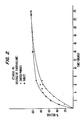
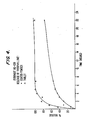
- Figure 2 shows the use of ethyl cellulose with a viscosity of 45. While the results are not as good as those shown in Figure l, they are substantially better than those of Figure 3, in which the ethyl cellulose viscosity was l0 and Figure 4, in which an acrylic resin sustained release coating was used.
- a viscosity as low as about 25 is still considered to be within the ambit of the present invention.
- Ethyl cellulose is conventionally manufactured in various ethoxyl types.
- medium-type products have an ethoxyl content of 45-46.8%
- standard-type has an ethoxyl content of 47.5-49.5%
- industrial-type has an ethoxyl content of 49.0-52.0%. While standard-type is preferred and used in the present examples, the amount of ethoxyl content does not effect the compressibility properties of the coatings of the present invention.
- ethyl cellulose has conventionally been used to form sustained release coatings for medicaments, there had never been any reason to believe that the polymer chain length of the starting ethyl cellulose would have any effect on the release properties of the final product. In fact, there is no difference in the sustained release properties of medicaments in powder form between those coated with ethyl cellulose with a viscosity of l0 and those coated with ethyl cellulose of viscosity l00. Conventionally, ethyl cellulose of a viscosity of 7 to l0 was used because of its ease of handling and solubility. Prior to the time of the present invention there was no incentive to use ethyl cellulose of a viscosity greater than l0 in sustained release coatings.
- the results relating to the substantial absence of breakage after compression obtained by means of the present invention are substantially independent of the type and amount of plasticizer used with the ethyl cellulose.
- 5-l5% of plasticizer is preferably used to further enhance the elasticity of the coating.
- An even greater amount of plasticizer, up to about 30% of the ethyl cellulose coating, can also be used if desired.
- Any conventional pharmaceutically acceptable plasticizer may be used, such as castor oil, dibutyl phthalate, polyethylene glycols, polypropylene glycol, citric acid esters, triacetin, etc.
- Other conventional plasticizers may also be used for their known film plasticizing properties.
- the specific nature of the coating material is not critical as long as sufficient plasticizer is present to permit the required degree of flexibility of the coating.
- any conventional sustained release coating such as the acrylic resin coatings sold under the trademark Eudragit RS or RL, may be used, as can ethyl cellulose and other known sustained release coatings.
- the present invention is not to be limited to the particular coating used on the particles of active principle.
- plasticizer it is important that a relatively high percentage of plasticizer be used in the coating in order to permit sufficient flexibility to prevent substantial breakage during compression.
- the specific amount of plasticizer will, of course, vary depending on the nature of the coating and the particular plasticizer used. The amount may be readily determined empirically by testing the release characteristics of the tablets formed. If the medicament is being released too quickly, then more plasticizer should be used. On the other hand release characteristics are also a function of the thickness of the coating. When substantial amounts of plasticizer are used, the sustained released capacity of the coating diminishes. Thus, the thickness of the coating may be increased slightly to make up for an increase in the amount of plasticizer. It should seldom be necessary, however, to use an amount of coating which exceeds about 20 percent of the total weight of the final product.
- the plasticizer will be present in an amount of about l5 to 30 percent of the sustained release material in the coating, preferably 20 to 25 percent and the amount of coating will be from l0 to 25 percent of the weight of active material, preferably l5 to 20 percent.
- plasticizer Any conventional pharmaceutically acceptable plasticizer may be used. While castor oil is exemplified herein, the present invention is not limited thereto and other conventional plasticizers may be used for their known film plasticizing properties. Examples of other plasticizers include dibutyl phthalate, polyethylene glycols, polylpropylene glycol, citric acid esters, triacetin, etc.
- the coating may be applied to the powder by techniques known per se in the prior art.
- the present invention does not reside in the particular technique of coating.
- the preferred method of coating the particles is by a fluidized bed technique using, for example, a Uni-Glatt fluidized bed powder coating apparatus.
- any acceptable solvent such as acetone, isopropanol, methanol, ethanol, chloroform, carbon tetrachloride, etc.
- glidants such as magnesium stearate, talc or Aerosil 200 can be added to the coating formula.
- the particular solvent and glidant and the amount used have no effect on the compressibility properties of the microcapsule, with which the present invention is concerned.
- the coated particles may be compressed into tablets directly or with the addition of conventional binders, fillers, diluents, excipients, flavoring agents, lubricants, etc. Any such pharmaceutically acceptable material may be present, although it is preferred that excipients be avoided which prevent disintegration of the tablets, after administration, into their constituent coated particles. On the contrary, it may be preferred to use an excipient which causes prompt disintegration of the tablets, after administration, into many disperse centers of drug release.
- Known excipients which may be used for such purposes include starch and microcrystalline cellulose. Other known excipients and carriers useful for this purpose may also be used.
- small amounts of acids such as organic acids, preferably fumaric acid and bases, such as mild bases, preferably sodium bicarbonate, may be used and flavoring substances, such as sucrose, may also be added.
- excipients and flavorings, binders, fillers, etc. are preferably thoroughly mixed with the coated particles prior to tableting. It is not necessary or desirable to sandwich the particles between layers of excipient.
- the material When the material is ready to be compressed into tablets, it may be formed into tablets by any conventional tableting apparatus.
- microcapsules below about 300 microns are administered in the form of a chewable tablet. Because of the very small size of the capsules, it has been discovered that very few capsules are actually broken during the act of mastication of the tablet. Thus, it is possible to administer a sustained release medicine in the form of a chewable tablet. Most conventional coated particles in commercial encapsulated microcapsules have a size range between 600 and l000 microns. If these are chewed, there will be substantial breakage causing immediate release of what may be an overdose of medication and what is usually a very distinctive and unpleasant medicament taste. When using particles below about 300 microns, the taste of the medicament may be thoroughly masked, even upon chewing, because the particles are small enough to pass into the curves and depressions of the teeth and thus avoid substantial breakage.
- microcapsules below about 300 microns each are the fact that they pass through the stomach without delay in the stomach. Because of their small size, the coated drug particles are transferred immediately into the intestines with the speed of a liquid. They need not even be enteric coated, as the vast majority will quickly pass directly into the intestine without releasing the active principle in the stomach. Larger conventional size microcapsules remain for a much longer period in the stomach, thus preventing quick release of the medicament in the intestines. Using smaller particles permits the active principle to reach the blood stream faster.
- Ethocel l00 Seven hundred grams of theophylline, having a crystal size ranging from 74 to 250 microns, were coated in a modified Uni-Glatt powder coater with the following coating mixture: Ethocel l00, Dow Chemical Co. 40 grams Acetone 2200 ml Isopropanol 550 ml Castor oil l4 grams Magnesium stearate l4 grams Ethocel l00 is ethyl cellulose with a viscosity of l00 cps.
- the coating conditions were as follows:
- the final product contained 80 ⁇ 0.5% theophylline.
- One gram of the coated theophylline was mixed with 250 mg corn starch powder, and 250 mg of this mixture was directly compressed into tablets under l.5 ton pressure.
- Example l The procedure of Example l was followed except that the following coating mixture was used: Ethocel 45, Dow Chemical Co. l40 grams Acetone l750 ml Isopropanol 40 ml Castor oil l4 g Magnesium stearate l4 g Ethocel 45 is ethyl cellulose with a viscosity of 45 cps. Figure 2 shows the dissolution results. Lowering of the viscosity to 45 caused faster release of some of the theophylline after tableting, showing that minor breakage occurred, although, in acceptable amounts compared to conventionally used ethyl cellulose or acrylic resin coatings.
- Example l The procedure of Example l was followed except that the following coating mixture was used: Ethocel l0, Dow Chemical Co. l40 grams Acetone l400 ml Isopropanol 300 ml Castor oil l4 g Magnesium stearate l4 g Ethocel l0 is ethyl cellulose with a viscosity of l0 cps. Fig. 3 shows the dissolution results. The curves show substantial breakage of the microcapsules upon compression.
- Example l The procedure of Example l was followed except that the following coating mixture was used: Eudragit RS-l00, Rohm Pharma, Germany l40 grams Acetone 790 ml Isopropanol 960 ml Polyethylene glycol 6000 l4 g Magnesium stearate l4 g Eudragit RS-l00 is a copolymer of acrylic acid and methacrylic acid resins. The results of the dissolution are shown in Figure 4. The curves show substantial breakage of the microcapsules upon compression.
- Theophylline is coated with Ethocel l00 in the same manner as described in Example l.
- the coated theophylline is combined into the following composition before tableting: Coated theophylline (prepared in Example l) 60 g Avicel l02 (microcrystalline cellulose) 32 g Sodium starch glycolate 2 g Corn starch powder l.5 g Fumaric acid powder l g Sodium bicarbonate powder l g Sucrose powder 2 g
- This mixture is directly compressed in a commercial tableting machine to a tablet of about l5 s.c. hardness. Upon being dropped into a cup of water the tablet immediately disintegrates and begins to effervesce. The effervescence causes the microcapsules to remain in suspension. Because of the microencapsulation the suspension has no taste of theophylline.
- acetaminophen paracetamol
- ethyl cellulose having a viscosity of l0, obtained from Dow Chemical Company.
- the spraying solution comprised an 8 percent solution of the ethyl cellulose in 90 percent acetone-l0 percent ethanol. To this was added castor oil as plasticizer in an amount equal to 20 percent of the ethyl cellulose present.
- the spraying conditions were as follows:
- the coated acetaminophen was sieved to particle sizes between 74-2l0 microns. Attention was paid to ensure a good mix of particles of different sizes within that range. 400 mg of the coated particles were mixed with l00 mg of starch and the mixture was compressed in a hand press to l.5 tons to produce 500 mg tablets.
- the release characteristics of the tablets obtained in this example were tested by placing a tablet in 50 ml of simulated intestinal fluid.
- the tablet disintegrated within 5 to l0 seconds into many microcapsules. Similar disintegration was observed when such a tablet was added to simulated gastric fluid.
- the release pattern of acetaminophen, in vitro in simulated intestinal fluid was measured. The results are shown in the drawing.
- the uncoated drug showed l00 percent release of the drug within a very short period of time.
- Coated drug, but not tableted, showed that release of the drug continued for about 24 hours with half of the drug being released in approximately l0 hours. After compression the drug was released for a total of about l6 hours with half of the drug being released after about 5 hours.
- An acrylic resin coating polymer may be prepared by dissolving l70 gms Eudragit RS-l00 (Rohm Pharma, Germany) dissolved in isopropyl alcohol (60%) and acetone (40%).
- Eudragit RS-l00 is a sustained release acrylic resin preparation which is poorly permeable. The final polymer concentration was 8%. To this solution is added 0.5 gms of pigment (Blue Lake ZLT 2), l7 gms talc, and 8.5 gms magnesium stearate and 34 gms castor oil as plasticizer.
- One kg theophylline, crystal size between 44-800 ⁇ is coated with the acrylic resin polymer using a modified Glatt fluidized bed coating instrument (UniGlatt).
- the theophylline powder is fluidized and coated with the polymer.
- Technical details of the coating process are: Air Flap: 25% Inlet air temp.: 50°C Outlet (product) temp.: 35°C Spraying air pressure: l.5 bar Pneumatic pressure: 6 bars
- the coated powder is sieved with a regular dual-purpose laboratory sieve shaker (Ari J. Levi Ltd.) and different fractions collected.
- microcapsules in the 50-250 ⁇ range may be compressed into tablets in the same manner described with respect to Example 6.
- microcapsules were sampled to evaluate their size. They were sized with a regular dual-purpose laboratory sieve shaker (Ari J. Levi Ltd). The results were as follow:
- the artificial mouth used in this test was a plastic artificial mouth model manufactured by Frasaco having upper and lower jaws with teeth of natural size and configuration.
- results of this test provide further evidence of the superior results obtainable using the preferred microcapsule size when preparing a dosage form designed to be ingested with mastication as compared to the use of microcapsules of the commercial size, particularly when the coating is a sustained release coating.
Landscapes
- Health & Medical Sciences (AREA)
- Epidemiology (AREA)
- Bioinformatics & Cheminformatics (AREA)
- Chemical & Material Sciences (AREA)
- Medicinal Chemistry (AREA)
- Pharmacology & Pharmacy (AREA)
- Engineering & Computer Science (AREA)
- Life Sciences & Earth Sciences (AREA)
- Animal Behavior & Ethology (AREA)
- General Health & Medical Sciences (AREA)
- Public Health (AREA)
- Veterinary Medicine (AREA)
- Medicinal Preparation (AREA)
Applications Claiming Priority (2)
| Application Number | Priority Date | Filing Date | Title |
|---|---|---|---|
| US889775 | 1986-07-28 | ||
| US06/889,775 US4710384A (en) | 1986-07-28 | 1986-07-28 | Sustained release tablets made from microcapsules |
Publications (2)
| Publication Number | Publication Date |
|---|---|
| EP0257310A1 true EP0257310A1 (de) | 1988-03-02 |
| EP0257310B1 EP0257310B1 (de) | 1992-01-08 |
Family
ID=25395767
Family Applications (1)
| Application Number | Title | Priority Date | Filing Date |
|---|---|---|---|
| EP87110714A Expired EP0257310B1 (de) | 1986-07-28 | 1987-07-24 | Aus Mikrokapseln mit verzögerter Freisetzung hergestellte Tabletten |
Country Status (5)
| Country | Link |
|---|---|
| US (1) | US4710384A (de) |
| EP (1) | EP0257310B1 (de) |
| JP (1) | JP2601660B2 (de) |
| CA (1) | CA1312283C (de) |
| DE (1) | DE3775858D1 (de) |
Cited By (11)
| Publication number | Priority date | Publication date | Assignee | Title |
|---|---|---|---|---|
| EP0355247A3 (en) * | 1988-08-22 | 1990-12-12 | Ss Pharmaceutical Co., Ltd. | Compressed-molded preparations |
| US5211957A (en) * | 1988-03-25 | 1993-05-18 | Ciba-Geigy Corporation | Solid rapidly disintegrating dosage form |
| EP0584594A1 (de) | 1992-08-06 | 1994-03-02 | Gerhard Dr. Gergely | Leicht einnehmbare brausende Manteltablette |
| WO1995027482A1 (en) * | 1994-04-06 | 1995-10-19 | Elan Corporation, Plc | Effervescent pharmaceutical formulations containing controlled release biodegradable microcapsules |
| AT400299B (de) * | 1988-03-25 | 1995-11-27 | Ciba Geigy Ag | Feste schnell zerfallende brausetabletten von diclofenac(salzen) zur herstellung wässriger suspensionen zur peroralen applikation, beschichtete diclofenac(salz)teilchen hiefür, verfahren zur herstellung dieser brausetabletten und ihre verwendung |
| WO1999001112A1 (en) * | 1997-07-01 | 1999-01-14 | Astra Aktiebolag (Publ) | Multiple unit effervescent dosage form |
| RU2171673C1 (ru) * | 2000-11-28 | 2001-08-10 | Комиссарова Ирина Алексеевна | Фармацевтическая композиция и способ ее получения |
| WO2003032998A1 (fr) * | 2001-10-15 | 2003-04-24 | Mitsubishi Pharma Corporation | Particules fines a liberation prolongee et procede de fabrication |
| EP1125586A4 (de) * | 1998-10-26 | 2003-06-11 | Tanabe Seiyaku Co | Partikel mit verlängerter freisetzung |
| EP0723437B1 (de) * | 1994-07-08 | 2004-09-08 | AstraZeneca AB | Aus mehreren einzeleinheiten zusammengesetztes pharmazeutisches präparat, das einen protonenpumpeninhibitor enthält |
| US7074428B2 (en) | 2000-06-30 | 2006-07-11 | Astellas Pharma Inc. | Quick disintegrating tablet in buccal cavity and manufacturing method thereof |
Families Citing this family (100)
| Publication number | Priority date | Publication date | Assignee | Title |
|---|---|---|---|---|
| IE55745B1 (en) * | 1983-04-06 | 1991-01-02 | Elan Corp Plc | Sustained absorption pharmaceutical composition |
| US4882167A (en) * | 1983-05-31 | 1989-11-21 | Jang Choong Gook | Dry direct compression compositions for controlled release dosage forms |
| JPS60100516A (ja) * | 1983-11-04 | 1985-06-04 | Takeda Chem Ind Ltd | 徐放型マイクロカプセルの製造法 |
| US4937076A (en) * | 1984-08-10 | 1990-06-26 | Combe Incorporated | Chewable aspirin and buffering material tablet and method for producing same |
| DE3440288C2 (de) * | 1984-11-05 | 1987-03-12 | Gergely, Gerhard, Dr.-Ing., Wien | Pharmazeutische Zubereitung mit einem Gehalt an Ibuprofen sowie Verfahren zu ihrer Herstellung |
| EP0190833B1 (de) * | 1985-02-07 | 1991-03-27 | Takeda Chemical Industries, Ltd. | Verfahren zur Herstellung von Mikrokapseln |
| US4971791A (en) * | 1985-08-26 | 1990-11-20 | The Procter & Gamble Company | Taste masking compositions |
| US5286489A (en) * | 1985-08-26 | 1994-02-15 | The Procter & Gamble Company | Taste masking compositions |
| US4837032A (en) * | 1986-02-04 | 1989-06-06 | Farval Ag | Theophylline sustained release tablet |
| IL78017A (en) * | 1986-03-03 | 1989-06-30 | Yissum Res Dev Co | Sustained release tablets of theophylline |
| GB8618811D0 (en) * | 1986-08-01 | 1986-09-10 | Approved Prescription Services | Sustained release ibuprofen formulation |
| US4800087A (en) * | 1986-11-24 | 1989-01-24 | Mehta Atul M | Taste-masked pharmaceutical compositions |
| US5084278A (en) * | 1989-06-02 | 1992-01-28 | Nortec Development Associates, Inc. | Taste-masked pharmaceutical compositions |
| US5064656A (en) * | 1989-11-14 | 1991-11-12 | Dr. Gergely & Co. | Uncoated pharmaceutical reaction tablet |
| JP3011752B2 (ja) * | 1990-10-23 | 2000-02-21 | フロイント産業株式会社 | 徐放性製剤およびその製造方法 |
| US5120349A (en) * | 1990-12-07 | 1992-06-09 | Landec Labs, Inc. | Microcapsule having temperature-dependent permeability profile |
| JPH04230625A (ja) * | 1990-12-27 | 1992-08-19 | Standard Chem & Pharmaceut Corp Ltd | 噴霧乾燥したジクロフェナクナトリウムを含み腸溶性の被覆を有するマイクロカプセルからなる微分散した錠剤組成物の製造方法 |
| US5300305A (en) * | 1991-09-12 | 1994-04-05 | The Procter & Gamble Company | Breath protection microcapsules |
| FI942765L (fi) * | 1991-12-11 | 1994-06-10 | Procter & Gamble | Setyylipyridiniumkloridi ja domifeenibromidi orgaanisessa liottimessa |
| TW333456B (en) | 1992-12-07 | 1998-06-11 | Takeda Pharm Ind Co Ltd | A pharmaceutical composition of sustained-release preparation the invention relates to a pharmaceutical composition of sustained-release preparation which comprises a physiologically active peptide. |
| US5458888A (en) * | 1994-03-02 | 1995-10-17 | Andrx Pharmaceuticals, Inc. | Controlled release tablet formulation |
| US5639475A (en) * | 1995-02-03 | 1997-06-17 | Eurand America, Incorporated | Effervescent microcapsules |
| US6858589B2 (en) | 1996-01-25 | 2005-02-22 | Pharmacy And Therapeutic Advisory Consultancy Pty Ltd | Methods of and compositions for potentiating the action of agents active on cell wall sites of the susceptible bacteria |
| WO1998024410A2 (en) * | 1996-12-03 | 1998-06-11 | Schering-Plough Kabushiki Kaisha | Controlled release matrix tablet and method for its preparation |
| FR2766089B1 (fr) * | 1997-07-21 | 2000-06-02 | Prographarm Lab | Comprime multiparticulaire perfectionne a delitement rapide |
| KR20010034770A (ko) | 1998-04-17 | 2001-04-25 | 우에하라 아끼라 | 멀티플 유닛 타입 서방성 정제 |
| KR100554924B1 (ko) | 1998-05-18 | 2006-03-03 | 다케다 야쿠힌 고교 가부시키가이샤 | 구강내 붕괴 정제 |
| US6368625B1 (en) | 1998-08-12 | 2002-04-09 | Cima Labs Inc. | Orally disintegrable tablet forming a viscous slurry |
| US6410052B1 (en) | 1999-03-30 | 2002-06-25 | Purdue Research Foundation | Tea catechins in sustained release formulations as cancer specific proliferation inhibitors |
| US6428818B1 (en) | 1999-03-30 | 2002-08-06 | Purdue Research Foundation | Tea catechin formulations and processes for making same |
| US6551617B1 (en) | 2000-04-20 | 2003-04-22 | Bristol-Myers Squibb Company | Taste masking coating composition |
| PT1276470E (pt) | 2000-04-20 | 2007-08-13 | Novartis Ag | Composição de revestimento para dissimular o sabor |
| CN1315638C (zh) * | 2000-06-20 | 2007-05-16 | 株式会社三和化学研究所 | 有核成型品及其制造方法和装置 |
| US20070208087A1 (en) * | 2001-11-02 | 2007-09-06 | Sanders Virginia J | Compounds, compositions and methods for the treatment of inflammatory diseases |
| US20030068375A1 (en) | 2001-08-06 | 2003-04-10 | Curtis Wright | Pharmaceutical formulation containing gelling agent |
| US7097868B2 (en) * | 2001-08-23 | 2006-08-29 | Bio-Dar Ltd. | Stable coated microcapsules |
| US6592901B2 (en) * | 2001-10-15 | 2003-07-15 | Hercules Incorporated | Highly compressible ethylcellulose for tableting |
| US6602911B2 (en) | 2001-11-05 | 2003-08-05 | Cypress Bioscience, Inc. | Methods of treating fibromyalgia |
| US20060165683A1 (en) | 2001-12-05 | 2006-07-27 | Gerard Karsenty | Methods and compositions for control of bone formation via modulation of sympathetic tone |
| US20040260076A1 (en) * | 2002-10-11 | 2004-12-23 | Castillo Gerardo M. | Isolation, purification and synthesis of procyanidin B2 and uses thereof |
| US7488496B2 (en) * | 2002-03-06 | 2009-02-10 | Christer Rosen | Effervescent compositions comprising bisphosphonates and methods related thereto |
| EP2277503B1 (de) | 2002-03-06 | 2014-02-12 | EffRx Pharmaceuticals SA | Brausetabletten, enthaltend Bisphosphonate |
| AR039170A1 (es) * | 2002-03-28 | 2005-02-09 | Bio Dar Ltd | Co-granulos de dha y romero y metodos de uso |
| WO2003101927A1 (en) | 2002-05-31 | 2003-12-11 | Proteotech, Inc. | Compounds, compositions and methods for the treatment of amyloid diseases and synucleinopathies such as alzheimer's disease, type 2 diabetes, and parkinson's disease |
| US8829198B2 (en) | 2007-10-31 | 2014-09-09 | Proteotech Inc | Compounds, compositions and methods for the treatment of beta-amyloid diseases and synucleinopathies |
| US8916598B2 (en) | 2003-05-30 | 2014-12-23 | Proteotech Inc | Compounds, compositions, and methods for the treatment of β-amyloid diseases and synucleinopathies |
| US20100331380A1 (en) * | 2009-06-29 | 2010-12-30 | Esposito Luke A | Compounds, Compositions, and Methods for the Treatment of Beta-Amyloid Diseases and Synucleinopathies |
| US7060854B2 (en) * | 2003-06-24 | 2006-06-13 | Medicinova, Inc. | Process for making polymorphic form A of 4-[6-acetyl-3-[3-(4-acetyl-3-hydroxy-2-propylphenylthio)propoxy]-2-propylphenoxy]butyric acid |
| US7064146B2 (en) * | 2003-06-24 | 2006-06-20 | Medicinova, Inc. | Pharmaceutical compositions of isolated orthorhombic crystalline 4-[6-acetyl-3-[3-(4-acetyl-3-hydroxy-2-propylphenylthio)propoxy]-2-propylphenoxy]butyric acid and methods of use |
| PL1720540T3 (pl) | 2004-02-18 | 2008-11-28 | Gpc Biotech Ag | Satraplatyna do leczenia odpornych i opornych nowotworów |
| EP1765292B1 (de) | 2004-06-12 | 2017-10-04 | Collegium Pharmaceutical, Inc. | Gegen missbrauch gesicherte arzneimittelformulierungen |
| NZ588432A (en) | 2004-09-17 | 2012-03-30 | Whitehead Biomedical Inst | Compounds, Compositions and Methods of Inhibiting Alpha-Synuclein Toxicity |
| ES2327840T3 (es) | 2004-12-23 | 2009-11-04 | Gpc Biotech Ag | Derivados de acido escuarico con actividad antiproliferativa. |
| US8481565B2 (en) | 2004-12-27 | 2013-07-09 | Eisai R&D Management Co., Ltd. | Method for stabilizing anti-dementia drug |
| EP1880027B1 (de) | 2005-05-02 | 2014-02-19 | Cold Spring Harbor Laboratory | Zusammenstellung und verfahren zur krebsdiagnose mit hilfe des mir17-92 cluster |
| US20080058282A1 (en) | 2005-08-30 | 2008-03-06 | Fallon Joan M | Use of lactulose in the treatment of autism |
| US8492428B2 (en) * | 2005-09-20 | 2013-07-23 | Mayo Foundation For Medical Education And Research | Small-molecule botulinum toxin inhibitors |
| US7994220B2 (en) | 2005-09-28 | 2011-08-09 | Cypress Bioscience, Inc. | Milnacipran for the long-term treatment of fibromyalgia syndrome |
| EP2007373A4 (de) * | 2006-03-29 | 2012-12-19 | Foldrx Pharmaceuticals Inc | Hemmung der alpha-synuclein-toxizität |
| WO2007138606A2 (en) * | 2006-06-01 | 2007-12-06 | Dexcel Pharma Technologies Ltd. | Multiple unit pharmaceutical formulation |
| EP1914234A1 (de) * | 2006-10-16 | 2008-04-23 | GPC Biotech Inc. | Pyrido[2,3-d]pyrimidinen und ihre Verwendung als kinase Inhibitoren |
| EP2019101A1 (de) * | 2007-07-26 | 2009-01-28 | GPC Biotech AG | Pyrazol[3,4-d]pyrimidin-4-one nützlich als Kinase-Inhibitor |
| WO2009012263A2 (en) * | 2007-07-18 | 2009-01-22 | The Trustees Of Columbia University In The City Of New York | Tissue-specific micrornas and compositions and uses thereof |
| US20110026010A1 (en) | 2007-08-09 | 2011-02-03 | Dwight Sherod Walker | Optical Coherence Tomographic Analysis |
| US20090264421A1 (en) * | 2007-10-05 | 2009-10-22 | Bible Keith C | Methods and Compositions for Treating Cancer |
| WO2009111611A2 (en) * | 2008-03-05 | 2009-09-11 | Proteotech Inc. | Compounds, compositions and methods for the treatment of islet amyloid polypeptide (iapp) accumulation in diabetes |
| MX2008010233A (es) * | 2008-03-10 | 2009-11-10 | Eurodrug Lab B V | Composicion de liberacion modificada, que comprende doxofilina. |
| US8658163B2 (en) | 2008-03-13 | 2014-02-25 | Curemark Llc | Compositions and use thereof for treating symptoms of preeclampsia |
| US8084025B2 (en) | 2008-04-18 | 2011-12-27 | Curemark Llc | Method for the treatment of the symptoms of drug and alcohol addiction |
| EP2112152A1 (de) | 2008-04-22 | 2009-10-28 | GPC Biotech AG | Dihydropteridinones als Plk-Inhibitoren |
| EP2112150B1 (de) | 2008-04-22 | 2013-10-16 | Forma Therapeutics, Inc. | Verbesserte Raf-Inhibitoren |
| ES2732453T3 (es) | 2008-07-01 | 2019-11-22 | Curemark Llc | Métodos y composiciones para el tratamiento de síntomas de trastornos neurológicos y de salud mental |
| CA3050530A1 (en) | 2009-01-06 | 2010-07-15 | Galenagen, Llc | Compositions and methods for the treatment or prevention of staphylococcus aureus infections and for the eradication or reduction of staphylococcus aureus on surfaces |
| JP2012514604A (ja) | 2009-01-06 | 2012-06-28 | キュレロン リミテッド ライアビリティ カンパニー | 大腸菌(E.coli)による経口感染の治療または予防のための組成物および方法 |
| US9056050B2 (en) | 2009-04-13 | 2015-06-16 | Curemark Llc | Enzyme delivery systems and methods of preparation and use |
| US9050276B2 (en) | 2009-06-16 | 2015-06-09 | The Trustees Of Columbia University In The City Of New York | Autism-associated biomarkers and uses thereof |
| US8404728B2 (en) | 2009-07-30 | 2013-03-26 | Mayo Foundation For Medical Education And Research | Small-molecule botulinum toxin inhibitors |
| EP2325185A1 (de) | 2009-10-28 | 2011-05-25 | GPC Biotech AG | Plk-Inhibitor |
| US10668060B2 (en) | 2009-12-10 | 2020-06-02 | Collegium Pharmaceutical, Inc. | Tamper-resistant pharmaceutical compositions of opioids and other drugs |
| WO2012051567A2 (en) | 2010-10-15 | 2012-04-19 | The Trustees Of Columbia University In The City Of New York | Obesity-related genes and their proteins and uses thereof |
| MX362974B (es) | 2011-04-21 | 2019-02-28 | Curemark Llc | Compuestos para el tratamiento de alteraciones neuropsiquiatricas. |
| RU2011122942A (ru) | 2011-06-08 | 2012-12-20 | Общество С Ограниченной Ответственностью "Асинэкс Медхим" | Новые ингибиторы киназ |
| US10039777B2 (en) | 2012-03-20 | 2018-08-07 | Neuro-Lm Sas | Methods and pharmaceutical compositions of the treatment of autistic syndrome disorders |
| US10350278B2 (en) | 2012-05-30 | 2019-07-16 | Curemark, Llc | Methods of treating Celiac disease |
| US9732038B2 (en) | 2012-06-14 | 2017-08-15 | Mayo Foundation For Medical Education And Research | Pyrazole derivatives as inhibitors of STAT3 |
| US9682123B2 (en) | 2013-12-20 | 2017-06-20 | The Trustees Of Columbia University In The City Of New York | Methods of treating metabolic disease |
| US20170042806A1 (en) | 2015-04-29 | 2017-02-16 | Dexcel Pharma Technologies Ltd. | Orally disintegrating compositions |
| EP3347486A4 (de) | 2015-09-09 | 2019-06-19 | The Trustees of Columbia University in the City of New York | Reduktion von er-mam-lokalisierten app-c99 und verfahren zur behandlung der alzheimer-krankheit |
| US10076494B2 (en) | 2016-06-16 | 2018-09-18 | Dexcel Pharma Technologies Ltd. | Stable orally disintegrating pharmaceutical compositions |
| WO2017222575A1 (en) | 2016-06-23 | 2017-12-28 | Collegium Pharmaceutical, Inc. | Process of making more stable abuse-deterrent oral formulations |
| WO2018071814A1 (en) | 2016-10-14 | 2018-04-19 | The Trustees Of Columbia University In The City Of New York | Methods of treating alcohol abuse disorder |
| AU2018250823A1 (en) | 2017-04-10 | 2019-10-17 | Curemark, Llc | Compositions for treating addiction |
| WO2019005874A1 (en) | 2017-06-26 | 2019-01-03 | The Trustees Of Columbia University In The City Of New York | CHOLINERGIC AGONISM FOR THE TREATMENT OF PANCREATIC CANCER |
| KR102197938B1 (ko) * | 2018-11-23 | 2021-01-04 | 연세대학교 산학협력단 | 복수 노즐을 포함한 다류체 정전분무 방식을 이용한 적혈구 형상 나노 구조체의 제조 방법 |
| EP3712127A1 (de) | 2019-03-22 | 2020-09-23 | Deutsches Krebsforschungszentrum | Neuartige inhibitoren der histon-deacetylase 10 |
| JP2022524887A (ja) | 2019-03-22 | 2022-05-10 | ドイチェス クレブスフォルシュングスツェントルム | ヒストンデアセチラーゼ10の新規の阻害剤 |
| EP4021479A2 (de) | 2019-08-27 | 2022-07-06 | Tonix Pharma Limited | Modifizierte ttf2-polypeptide |
| US11541009B2 (en) | 2020-09-10 | 2023-01-03 | Curemark, Llc | Methods of prophylaxis of coronavirus infection and treatment of coronaviruses |
| CN112402380A (zh) * | 2020-11-19 | 2021-02-26 | 上海应用技术大学 | 一种含石杉碱甲微胶囊的缓释微丸及其制备方法 |
| CN112812355B (zh) * | 2020-12-31 | 2022-09-23 | 厦门天生爱科技有限公司 | 一种具有缓释挥发性中草药有效成分的功能高分子发泡材料、制备方法和用途 |
Citations (5)
| Publication number | Priority date | Publication date | Assignee | Title |
|---|---|---|---|---|
| US3488418A (en) * | 1965-11-18 | 1970-01-06 | Sterling Drug Inc | Sustained relief analgesic composition |
| US3887700A (en) * | 1969-11-28 | 1975-06-03 | Aspro Nicholas Ltd | Analgesic formulations |
| WO1984002843A1 (en) * | 1983-01-26 | 1984-08-02 | Egyt Gyogyszervegyeszeti Gyar | Process for the preparation of sustained release pharmaceutical compositions having a high active ingredient content |
| EP0153104A2 (de) * | 1984-02-10 | 1985-08-28 | Benzon Pharma A/S | Dosierungsform eine Vielzahl mit einer Diffusionshülle überzogener Einheiten enthaltend |
| WO1986004817A1 (en) * | 1985-02-19 | 1986-08-28 | Key Pharmaceuticals, Inc. | Controlled release potassium chloride |
Family Cites Families (10)
| Publication number | Priority date | Publication date | Assignee | Title |
|---|---|---|---|---|
| US3325365A (en) * | 1963-04-02 | 1967-06-13 | Ciba Geigy Corp | Enteric composition for tablet compression coating |
| US3341416A (en) * | 1963-12-11 | 1967-09-12 | Ncr Co | Encapsulation of aspirin in ethylcellulose and its product |
| US3400185A (en) * | 1965-04-08 | 1968-09-03 | Bristol Myers Co | Agglomeration of smaller pharmaceutical particles into larger microspherules and enteic-coating thereof |
| US3495988A (en) * | 1968-03-06 | 1970-02-17 | Leslie L Balassa | Encapsulation of aromas and flavors |
| US4016254A (en) * | 1972-05-19 | 1977-04-05 | Beecham Group Limited | Pharmaceutical formulations |
| BE791458A (fr) * | 1972-07-31 | 1973-05-16 | Merck & Co Inc | Produit microencapsule |
| FR2236483B1 (de) * | 1973-07-12 | 1976-11-12 | Choay Sa | |
| US4113816A (en) * | 1973-07-12 | 1978-09-12 | Choay S.A. | Process for the manufacture of layered tablets incorporating controlled-release microcapsules |
| US3911099A (en) * | 1974-01-23 | 1975-10-07 | Defoney Brenman Mayes & Baron | Long-acting articles for oral delivery and process |
| US4316884A (en) * | 1979-01-25 | 1982-02-23 | Adria Laboratories, Inc. | Sustained release pharmaceutical formulation |
-
1986
- 1986-07-28 US US06/889,775 patent/US4710384A/en not_active Expired - Lifetime
-
1987
- 1987-07-24 DE DE8787110714T patent/DE3775858D1/de not_active Expired - Lifetime
- 1987-07-24 EP EP87110714A patent/EP0257310B1/de not_active Expired
- 1987-07-27 CA CA000543094A patent/CA1312283C/en not_active Expired - Fee Related
- 1987-07-27 JP JP62187485A patent/JP2601660B2/ja not_active Expired - Lifetime
Patent Citations (5)
| Publication number | Priority date | Publication date | Assignee | Title |
|---|---|---|---|---|
| US3488418A (en) * | 1965-11-18 | 1970-01-06 | Sterling Drug Inc | Sustained relief analgesic composition |
| US3887700A (en) * | 1969-11-28 | 1975-06-03 | Aspro Nicholas Ltd | Analgesic formulations |
| WO1984002843A1 (en) * | 1983-01-26 | 1984-08-02 | Egyt Gyogyszervegyeszeti Gyar | Process for the preparation of sustained release pharmaceutical compositions having a high active ingredient content |
| EP0153104A2 (de) * | 1984-02-10 | 1985-08-28 | Benzon Pharma A/S | Dosierungsform eine Vielzahl mit einer Diffusionshülle überzogener Einheiten enthaltend |
| WO1986004817A1 (en) * | 1985-02-19 | 1986-08-28 | Key Pharmaceuticals, Inc. | Controlled release potassium chloride |
Cited By (11)
| Publication number | Priority date | Publication date | Assignee | Title |
|---|---|---|---|---|
| US5211957A (en) * | 1988-03-25 | 1993-05-18 | Ciba-Geigy Corporation | Solid rapidly disintegrating dosage form |
| AT400299B (de) * | 1988-03-25 | 1995-11-27 | Ciba Geigy Ag | Feste schnell zerfallende brausetabletten von diclofenac(salzen) zur herstellung wässriger suspensionen zur peroralen applikation, beschichtete diclofenac(salz)teilchen hiefür, verfahren zur herstellung dieser brausetabletten und ihre verwendung |
| EP0355247A3 (en) * | 1988-08-22 | 1990-12-12 | Ss Pharmaceutical Co., Ltd. | Compressed-molded preparations |
| EP0584594A1 (de) | 1992-08-06 | 1994-03-02 | Gerhard Dr. Gergely | Leicht einnehmbare brausende Manteltablette |
| WO1995027482A1 (en) * | 1994-04-06 | 1995-10-19 | Elan Corporation, Plc | Effervescent pharmaceutical formulations containing controlled release biodegradable microcapsules |
| EP0723437B1 (de) * | 1994-07-08 | 2004-09-08 | AstraZeneca AB | Aus mehreren einzeleinheiten zusammengesetztes pharmazeutisches präparat, das einen protonenpumpeninhibitor enthält |
| WO1999001112A1 (en) * | 1997-07-01 | 1999-01-14 | Astra Aktiebolag (Publ) | Multiple unit effervescent dosage form |
| EP1125586A4 (de) * | 1998-10-26 | 2003-06-11 | Tanabe Seiyaku Co | Partikel mit verlängerter freisetzung |
| US7074428B2 (en) | 2000-06-30 | 2006-07-11 | Astellas Pharma Inc. | Quick disintegrating tablet in buccal cavity and manufacturing method thereof |
| RU2171673C1 (ru) * | 2000-11-28 | 2001-08-10 | Комиссарова Ирина Алексеевна | Фармацевтическая композиция и способ ее получения |
| WO2003032998A1 (fr) * | 2001-10-15 | 2003-04-24 | Mitsubishi Pharma Corporation | Particules fines a liberation prolongee et procede de fabrication |
Also Published As
| Publication number | Publication date |
|---|---|
| EP0257310B1 (de) | 1992-01-08 |
| JPH0272113A (ja) | 1990-03-12 |
| US4710384A (en) | 1987-12-01 |
| CA1312283C (en) | 1993-01-05 |
| JP2601660B2 (ja) | 1997-04-16 |
| DE3775858D1 (de) | 1992-02-20 |
Similar Documents
| Publication | Publication Date | Title |
|---|---|---|
| EP0257310B1 (de) | Aus Mikrokapseln mit verzögerter Freisetzung hergestellte Tabletten | |
| US11147772B2 (en) | Timed, pulsatile release systems | |
| EP0459695B1 (de) | Arzneimittel mit geschmackabdeckenden Überzügen für verzögerte Wirkstofffreigabe | |
| US5552152A (en) | Taste masking of ibuprofen by fluid bed coating | |
| CA1264296A (en) | Formulations providing three distinct releases | |
| JP3350559B2 (ja) | 活性成分を含有する予め成形された微小粒子より製造される機械的に安定でかつ容易に分解し得る錠剤 | |
| CN101862297B (zh) | 一种非水溶性药物的缓释微丸、其缓释口腔崩解片及其制备方法 | |
| CN1747723B (zh) | 含活性成分混合物的组合物及其制备方法 | |
| JPH072635B2 (ja) | 新規医薬製剤およびその製造方法 | |
| JPH01250314A (ja) | 徐放性製剤 | |
| Ilhan et al. | Mini tablets: A short review-revision | |
| US20150050336A1 (en) | Taste Masking System For Non-Plasticizing Drugs | |
| IE840146L (en) | Pinacidil preparation | |
| US8927025B2 (en) | Alcohol-resistant metoprolol-containing extended-release oral dosage forms | |
| US20130171256A1 (en) | Alcohol-resistant extended release dosage forms comprising venlafaxine | |
| AU2013273835B2 (en) | Timed, pulsatile release systems | |
| JPH02193914A (ja) | マトリックス型持続性製剤 | |
| HK1107522B (en) | Taste masking system for non-plasticizing drugs | |
| HK1135612B (en) | Taste masking system for non-plasticizing drugs | |
| MXPA01002821A (en) | Multiple unit controlled food effect-independent release pharmaceutical preparations and method for preparing the same |
Legal Events
| Date | Code | Title | Description |
|---|---|---|---|
| PUAI | Public reference made under article 153(3) epc to a published international application that has entered the european phase |
Free format text: ORIGINAL CODE: 0009012 |
|
| AK | Designated contracting states |
Kind code of ref document: A1 Designated state(s): AT BE CH DE ES FR GB GR IT LI LU NL SE |
|
| RBV | Designated contracting states (corrected) |
Designated state(s): CH DE FR GB IT LI |
|
| 17P | Request for examination filed |
Effective date: 19880830 |
|
| 17Q | First examination report despatched |
Effective date: 19900716 |
|
| GRAA | (expected) grant |
Free format text: ORIGINAL CODE: 0009210 |
|
| AK | Designated contracting states |
Kind code of ref document: B1 Designated state(s): CH DE FR GB IT LI |
|
| ET | Fr: translation filed | ||
| ITF | It: translation for a ep patent filed | ||
| REF | Corresponds to: |
Ref document number: 3775858 Country of ref document: DE Date of ref document: 19920220 |
|
| PLBI | Opposition filed |
Free format text: ORIGINAL CODE: 0009260 |
|
| 26 | Opposition filed |
Opponent name: KLINGE PHARMA GMBH Effective date: 19921008 Opponent name: ROEHM GMBH Effective date: 19921005 |
|
| PLBN | Opposition rejected |
Free format text: ORIGINAL CODE: 0009273 |
|
| STAA | Information on the status of an ep patent application or granted ep patent |
Free format text: STATUS: OPPOSITION REJECTED |
|
| 27O | Opposition rejected |
Effective date: 19950720 |
|
| PGFP | Annual fee paid to national office [announced via postgrant information from national office to epo] |
Ref country code: CH Payment date: 20000621 Year of fee payment: 14 |
|
| PG25 | Lapsed in a contracting state [announced via postgrant information from national office to epo] |
Ref country code: LI Free format text: LAPSE BECAUSE OF NON-PAYMENT OF DUE FEES Effective date: 20010731 Ref country code: CH Free format text: LAPSE BECAUSE OF NON-PAYMENT OF DUE FEES Effective date: 20010731 |
|
| REG | Reference to a national code |
Ref country code: GB Ref legal event code: IF02 |
|
| REG | Reference to a national code |
Ref country code: CH Ref legal event code: PL |
|
| PGFP | Annual fee paid to national office [announced via postgrant information from national office to epo] |
Ref country code: GB Payment date: 20020701 Year of fee payment: 16 |
|
| PGFP | Annual fee paid to national office [announced via postgrant information from national office to epo] |
Ref country code: FR Payment date: 20020717 Year of fee payment: 16 |
|
| PGFP | Annual fee paid to national office [announced via postgrant information from national office to epo] |
Ref country code: DE Payment date: 20020924 Year of fee payment: 16 |
|
| PG25 | Lapsed in a contracting state [announced via postgrant information from national office to epo] |
Ref country code: GB Free format text: LAPSE BECAUSE OF NON-PAYMENT OF DUE FEES Effective date: 20030724 |
|
| PG25 | Lapsed in a contracting state [announced via postgrant information from national office to epo] |
Ref country code: DE Free format text: LAPSE BECAUSE OF NON-PAYMENT OF DUE FEES Effective date: 20040203 |
|
| GBPC | Gb: european patent ceased through non-payment of renewal fee |
Effective date: 20030724 |
|
| PG25 | Lapsed in a contracting state [announced via postgrant information from national office to epo] |
Ref country code: FR Free format text: LAPSE BECAUSE OF NON-PAYMENT OF DUE FEES Effective date: 20040331 |
|
| REG | Reference to a national code |
Ref country code: FR Ref legal event code: ST |
|
| PG25 | Lapsed in a contracting state [announced via postgrant information from national office to epo] |
Ref country code: IT Free format text: LAPSE BECAUSE OF NON-PAYMENT OF DUE FEES;WARNING: LAPSES OF ITALIAN PATENTS WITH EFFECTIVE DATE BEFORE 2007 MAY HAVE OCCURRED AT ANY TIME BEFORE 2007. THE CORRECT EFFECTIVE DATE MAY BE DIFFERENT FROM THE ONE RECORDED. Effective date: 20050724 |