EP0260227B1 - Colorants réactifs de la série des dioxazines, leur préparation et leur emploi - Google Patents
Colorants réactifs de la série des dioxazines, leur préparation et leur emploi Download PDFInfo
- Publication number
- EP0260227B1 EP0260227B1 EP87810514A EP87810514A EP0260227B1 EP 0260227 B1 EP0260227 B1 EP 0260227B1 EP 87810514 A EP87810514 A EP 87810514A EP 87810514 A EP87810514 A EP 87810514A EP 0260227 B1 EP0260227 B1 EP 0260227B1
- Authority
- EP
- European Patent Office
- Prior art keywords
- formula
- reactive dye
- propylene
- substituted
- dye according
- Prior art date
- Legal status (The legal status is an assumption and is not a legal conclusion. Google has not performed a legal analysis and makes no representation as to the accuracy of the status listed.)
- Expired - Lifetime
Links
- 239000000985 reactive dye Substances 0.000 title claims description 32
- 238000002360 preparation method Methods 0.000 title description 6
- PPSZHCXTGRHULJ-UHFFFAOYSA-N dioxazine Chemical compound O1ON=CC=C1 PPSZHCXTGRHULJ-UHFFFAOYSA-N 0.000 title description 4
- -1 sulfo, phenyl Chemical group 0.000 claims description 133
- 238000000034 method Methods 0.000 claims description 18
- 125000002887 hydroxy group Chemical group [H]O* 0.000 claims description 14
- 238000004043 dyeing Methods 0.000 claims description 13
- 125000000020 sulfo group Chemical group O=S(=O)([*])O[H] 0.000 claims description 13
- 229910052736 halogen Inorganic materials 0.000 claims description 12
- 150000002367 halogens Chemical class 0.000 claims description 12
- UFHFLCQGNIYNRP-UHFFFAOYSA-N Hydrogen Chemical compound [H][H] UFHFLCQGNIYNRP-UHFFFAOYSA-N 0.000 claims description 9
- 125000003277 amino group Chemical group 0.000 claims description 9
- 125000002496 methyl group Chemical group [H]C([H])([H])* 0.000 claims description 9
- 125000001997 phenyl group Chemical group [H]C1=C([H])C([H])=C(*)C([H])=C1[H] 0.000 claims description 9
- 239000001257 hydrogen Substances 0.000 claims description 8
- 229910052739 hydrogen Inorganic materials 0.000 claims description 8
- 125000004178 (C1-C4) alkyl group Chemical group 0.000 claims description 7
- SQYUJKVKVFILNB-UHFFFAOYSA-N methyl 2-amino-4-[(2,5-dichlorophenyl)carbamoyl]benzoate Chemical compound C1=C(N)C(C(=O)OC)=CC=C1C(=O)NC1=CC(Cl)=CC=C1Cl SQYUJKVKVFILNB-UHFFFAOYSA-N 0.000 claims description 6
- 125000001424 substituent group Chemical group 0.000 claims description 6
- 125000003178 carboxy group Chemical group [H]OC(*)=O 0.000 claims description 5
- 239000000460 chlorine Substances 0.000 claims description 4
- 229910052801 chlorine Inorganic materials 0.000 claims description 4
- 150000001875 compounds Chemical class 0.000 claims description 4
- VMKJWLXVLHBJNK-UHFFFAOYSA-N cyanuric fluoride Chemical compound FC1=NC(F)=NC(F)=N1 VMKJWLXVLHBJNK-UHFFFAOYSA-N 0.000 claims description 4
- 238000004519 manufacturing process Methods 0.000 claims description 4
- 229920003043 Cellulose fiber Polymers 0.000 claims description 3
- 125000004397 aminosulfonyl group Chemical group NS(=O)(=O)* 0.000 claims description 3
- 125000002490 anilino group Chemical group [H]N(*)C1=C([H])C([H])=C([H])C([H])=C1[H] 0.000 claims description 3
- 125000004573 morpholin-4-yl group Chemical group N1(CCOCC1)* 0.000 claims description 3
- QQONPFPTGQHPMA-UHFFFAOYSA-N propylene Natural products CC=C QQONPFPTGQHPMA-UHFFFAOYSA-N 0.000 claims description 3
- 125000000229 (C1-C4)alkoxy group Chemical group 0.000 claims description 2
- RJSYPKWVIJGNLO-UHFFFAOYSA-N CCOClOC Chemical group CCOClOC RJSYPKWVIJGNLO-UHFFFAOYSA-N 0.000 claims description 2
- 125000003917 carbamoyl group Chemical group [H]N([H])C(*)=O 0.000 claims description 2
- 125000001309 chloro group Chemical group Cl* 0.000 claims description 2
- 125000004956 cyclohexylene group Chemical group 0.000 claims description 2
- 125000004805 propylene group Chemical group [H]C([H])([H])C([H])([*:1])C([H])([H])[*:2] 0.000 claims description 2
- 125000004769 (C1-C4) alkylsulfonyl group Chemical group 0.000 claims 1
- 150000002431 hydrogen Chemical group 0.000 claims 1
- 125000004435 hydrogen atom Chemical group [H]* 0.000 claims 1
- 239000000975 dye Substances 0.000 description 29
- 150000003254 radicals Chemical class 0.000 description 27
- 239000000243 solution Substances 0.000 description 13
- HEMHJVSKTPXQMS-UHFFFAOYSA-M Sodium hydroxide Chemical compound [OH-].[Na+] HEMHJVSKTPXQMS-UHFFFAOYSA-M 0.000 description 12
- 229920000742 Cotton Polymers 0.000 description 10
- 229910052757 nitrogen Inorganic materials 0.000 description 9
- XLYOFNOQVPJJNP-UHFFFAOYSA-N water Substances O XLYOFNOQVPJJNP-UHFFFAOYSA-N 0.000 description 9
- FAPWRFPIFSIZLT-UHFFFAOYSA-M Sodium chloride Chemical compound [Na+].[Cl-] FAPWRFPIFSIZLT-UHFFFAOYSA-M 0.000 description 8
- 125000000217 alkyl group Chemical group 0.000 description 8
- 238000009833 condensation Methods 0.000 description 8
- 230000005494 condensation Effects 0.000 description 8
- 239000004744 fabric Substances 0.000 description 8
- 150000001412 amines Chemical class 0.000 description 7
- HIMMCCJEMMCUJS-UHFFFAOYSA-N 4-fluorotriazine Chemical group FC1=CC=NN=N1 HIMMCCJEMMCUJS-UHFFFAOYSA-N 0.000 description 6
- CDBYLPFSWZWCQE-UHFFFAOYSA-L Sodium Carbonate Chemical compound [Na+].[Na+].[O-]C([O-])=O CDBYLPFSWZWCQE-UHFFFAOYSA-L 0.000 description 6
- 239000000835 fiber Substances 0.000 description 6
- AFBPFSWMIHJQDM-UHFFFAOYSA-N N-methylaniline Chemical compound CNC1=CC=CC=C1 AFBPFSWMIHJQDM-UHFFFAOYSA-N 0.000 description 5
- 239000002253 acid Substances 0.000 description 5
- 239000002657 fibrous material Substances 0.000 description 5
- OJGMBLNIHDZDGS-UHFFFAOYSA-N N-Ethylaniline Chemical compound CCNC1=CC=CC=C1 OJGMBLNIHDZDGS-UHFFFAOYSA-N 0.000 description 4
- GLUUGHFHXGJENI-UHFFFAOYSA-N Piperazine Chemical compound C1CNCCN1 GLUUGHFHXGJENI-UHFFFAOYSA-N 0.000 description 4
- 125000003545 alkoxy group Chemical group 0.000 description 4
- 238000006243 chemical reaction Methods 0.000 description 4
- 238000004040 coloring Methods 0.000 description 4
- 239000003599 detergent Substances 0.000 description 4
- RZXMPPFPUUCRFN-UHFFFAOYSA-N p-toluidine Chemical compound CC1=CC=C(N)C=C1 RZXMPPFPUUCRFN-UHFFFAOYSA-N 0.000 description 4
- 239000011780 sodium chloride Substances 0.000 description 4
- 210000002268 wool Anatomy 0.000 description 4
- JYEUMXHLPRZUAT-UHFFFAOYSA-N 1,2,3-triazine Chemical compound C1=CN=NN=C1 JYEUMXHLPRZUAT-UHFFFAOYSA-N 0.000 description 3
- JJYPMNFTHPTTDI-UHFFFAOYSA-N 3-methylaniline Chemical compound CC1=CC=CC(N)=C1 JJYPMNFTHPTTDI-UHFFFAOYSA-N 0.000 description 3
- 0 C*1n*(F)n*(*)n1 Chemical compound C*1n*(F)n*(*)n1 0.000 description 3
- PXGOKWXKJXAPGV-UHFFFAOYSA-N Fluorine Chemical compound FF PXGOKWXKJXAPGV-UHFFFAOYSA-N 0.000 description 3
- OKKJLVBELUTLKV-UHFFFAOYSA-N Methanol Chemical compound OC OKKJLVBELUTLKV-UHFFFAOYSA-N 0.000 description 3
- 239000004952 Polyamide Substances 0.000 description 3
- XSQUKJJJFZCRTK-UHFFFAOYSA-N Urea Natural products NC(N)=O XSQUKJJJFZCRTK-UHFFFAOYSA-N 0.000 description 3
- 230000002378 acidificating effect Effects 0.000 description 3
- 125000001931 aliphatic group Chemical group 0.000 description 3
- 239000003513 alkali Substances 0.000 description 3
- 125000003282 alkyl amino group Chemical group 0.000 description 3
- 239000007864 aqueous solution Substances 0.000 description 3
- 125000004429 atom Chemical group 0.000 description 3
- 238000009835 boiling Methods 0.000 description 3
- 229920002678 cellulose Polymers 0.000 description 3
- 239000001913 cellulose Substances 0.000 description 3
- 239000003795 chemical substances by application Substances 0.000 description 3
- 150000005125 dioxazines Chemical class 0.000 description 3
- 229910052731 fluorine Inorganic materials 0.000 description 3
- 239000011737 fluorine Substances 0.000 description 3
- 239000000203 mixture Substances 0.000 description 3
- 230000007935 neutral effect Effects 0.000 description 3
- RNVCVTLRINQCPJ-UHFFFAOYSA-N o-toluidine Chemical compound CC1=CC=CC=C1N RNVCVTLRINQCPJ-UHFFFAOYSA-N 0.000 description 3
- 229920002647 polyamide Polymers 0.000 description 3
- 125000002924 primary amino group Chemical group [H]N([H])* 0.000 description 3
- RMVRSNDYEFQCLF-UHFFFAOYSA-N thiophenol Chemical compound SC1=CC=CC=C1 RMVRSNDYEFQCLF-UHFFFAOYSA-N 0.000 description 3
- DNETUDOCFOQUPO-UHFFFAOYSA-N 1-amino-4-(sulfamoylamino)benzene Chemical compound NC1=CC=C(NS(N)(=O)=O)C=C1 DNETUDOCFOQUPO-UHFFFAOYSA-N 0.000 description 2
- RUFPHBVGCFYCNW-UHFFFAOYSA-N 1-naphthylamine Chemical compound C1=CC=C2C(N)=CC=CC2=C1 RUFPHBVGCFYCNW-UHFFFAOYSA-N 0.000 description 2
- KDSNLYIMUZNERS-UHFFFAOYSA-N 2-methylpropanamine Chemical compound CC(C)CN KDSNLYIMUZNERS-UHFFFAOYSA-N 0.000 description 2
- MKARNSWMMBGSHX-UHFFFAOYSA-N 3,5-dimethylaniline Chemical compound CC1=CC(C)=CC(N)=C1 MKARNSWMMBGSHX-UHFFFAOYSA-N 0.000 description 2
- DTNODBHGOLWROS-UHFFFAOYSA-N 3-amino-4-methylbenzenesulfonic acid Chemical compound CC1=CC=C(S(O)(=O)=O)C=C1N DTNODBHGOLWROS-UHFFFAOYSA-N 0.000 description 2
- HVBSAKJJOYLTQU-UHFFFAOYSA-N 4-aminobenzenesulfonic acid Chemical compound NC1=CC=C(S(O)(=O)=O)C=C1 HVBSAKJJOYLTQU-UHFFFAOYSA-N 0.000 description 2
- ALYNCZNDIQEVRV-UHFFFAOYSA-N 4-aminobenzoic acid Chemical compound NC1=CC=C(C(O)=O)C=C1 ALYNCZNDIQEVRV-UHFFFAOYSA-N 0.000 description 2
- QGZKDVFQNNGYKY-UHFFFAOYSA-N Ammonia Chemical compound N QGZKDVFQNNGYKY-UHFFFAOYSA-N 0.000 description 2
- PAYRUJLWNCNPSJ-UHFFFAOYSA-N Aniline Chemical compound NC1=CC=CC=C1 PAYRUJLWNCNPSJ-UHFFFAOYSA-N 0.000 description 2
- IJGRMHOSHXDMSA-UHFFFAOYSA-N Atomic nitrogen Chemical compound N#N IJGRMHOSHXDMSA-UHFFFAOYSA-N 0.000 description 2
- BVKZGUZCCUSVTD-UHFFFAOYSA-M Bicarbonate Chemical class OC([O-])=O BVKZGUZCCUSVTD-UHFFFAOYSA-M 0.000 description 2
- WKBOTKDWSSQWDR-UHFFFAOYSA-N Bromine atom Chemical compound [Br] WKBOTKDWSSQWDR-UHFFFAOYSA-N 0.000 description 2
- ZAMOUSCENKQFHK-UHFFFAOYSA-N Chlorine atom Chemical compound [Cl] ZAMOUSCENKQFHK-UHFFFAOYSA-N 0.000 description 2
- ROSDSFDQCJNGOL-UHFFFAOYSA-N Dimethylamine Chemical compound CNC ROSDSFDQCJNGOL-UHFFFAOYSA-N 0.000 description 2
- LFQSCWFLJHTTHZ-UHFFFAOYSA-N Ethanol Chemical compound CCO LFQSCWFLJHTTHZ-UHFFFAOYSA-N 0.000 description 2
- QUSNBJAOOMFDIB-UHFFFAOYSA-N Ethylamine Chemical compound CCN QUSNBJAOOMFDIB-UHFFFAOYSA-N 0.000 description 2
- KRHYYFGTRYWZRS-UHFFFAOYSA-N Fluorane Chemical compound F KRHYYFGTRYWZRS-UHFFFAOYSA-N 0.000 description 2
- YLQBMQCUIZJEEH-UHFFFAOYSA-N Furan Chemical compound C=1C=COC=1 YLQBMQCUIZJEEH-UHFFFAOYSA-N 0.000 description 2
- AEMRFAOFKBGASW-UHFFFAOYSA-N Glycolic acid Chemical compound OCC(O)=O AEMRFAOFKBGASW-UHFFFAOYSA-N 0.000 description 2
- KFZMGEQAYNKOFK-UHFFFAOYSA-N Isopropanol Chemical compound CC(C)O KFZMGEQAYNKOFK-UHFFFAOYSA-N 0.000 description 2
- LSDPWZHWYPCBBB-UHFFFAOYSA-N Methanethiol Chemical compound SC LSDPWZHWYPCBBB-UHFFFAOYSA-N 0.000 description 2
- BAVYZALUXZFZLV-UHFFFAOYSA-N Methylamine Chemical compound NC BAVYZALUXZFZLV-UHFFFAOYSA-N 0.000 description 2
- YNAVUWVOSKDBBP-UHFFFAOYSA-N Morpholine Chemical compound C1COCCN1 YNAVUWVOSKDBBP-UHFFFAOYSA-N 0.000 description 2
- LRHPLDYGYMQRHN-UHFFFAOYSA-N N-Butanol Chemical compound CCCCO LRHPLDYGYMQRHN-UHFFFAOYSA-N 0.000 description 2
- NQRYJNQNLNOLGT-UHFFFAOYSA-N Piperidine Chemical compound C1CCNCC1 NQRYJNQNLNOLGT-UHFFFAOYSA-N 0.000 description 2
- JUJWROOIHBZHMG-UHFFFAOYSA-N Pyridine Chemical compound C1=CC=NC=C1 JUJWROOIHBZHMG-UHFFFAOYSA-N 0.000 description 2
- SMWDFEZZVXVKRB-UHFFFAOYSA-N Quinoline Chemical compound N1=CC=CC2=CC=CC=C21 SMWDFEZZVXVKRB-UHFFFAOYSA-N 0.000 description 2
- DKGAVHZHDRPRBM-UHFFFAOYSA-N Tert-Butanol Chemical compound CC(C)(C)O DKGAVHZHDRPRBM-UHFFFAOYSA-N 0.000 description 2
- YTPLMLYBLZKORZ-UHFFFAOYSA-N Thiophene Chemical compound C=1C=CSC=1 YTPLMLYBLZKORZ-UHFFFAOYSA-N 0.000 description 2
- 150000008044 alkali metal hydroxides Chemical class 0.000 description 2
- 125000005115 alkyl carbamoyl group Chemical group 0.000 description 2
- 125000005153 alkyl sulfamoyl group Chemical group 0.000 description 2
- MDFFNEOEWAXZRQ-UHFFFAOYSA-N aminyl Chemical class [NH2] MDFFNEOEWAXZRQ-UHFFFAOYSA-N 0.000 description 2
- RWZYAGGXGHYGMB-UHFFFAOYSA-N anthranilic acid Chemical compound NC1=CC=CC=C1C(O)=O RWZYAGGXGHYGMB-UHFFFAOYSA-N 0.000 description 2
- 239000007900 aqueous suspension Substances 0.000 description 2
- 125000003710 aryl alkyl group Chemical group 0.000 description 2
- 150000005840 aryl radicals Chemical class 0.000 description 2
- CREXVNNSNOKDHW-UHFFFAOYSA-N azaniumylideneazanide Chemical group N[N] CREXVNNSNOKDHW-UHFFFAOYSA-N 0.000 description 2
- IOJUPLGTWVMSFF-UHFFFAOYSA-N benzothiazole Chemical compound C1=CC=C2SC=NC2=C1 IOJUPLGTWVMSFF-UHFFFAOYSA-N 0.000 description 2
- WGQKYBSKWIADBV-UHFFFAOYSA-N benzylamine Chemical compound NCC1=CC=CC=C1 WGQKYBSKWIADBV-UHFFFAOYSA-N 0.000 description 2
- GDTBXPJZTBHREO-UHFFFAOYSA-N bromine Substances BrBr GDTBXPJZTBHREO-UHFFFAOYSA-N 0.000 description 2
- 229910052794 bromium Inorganic materials 0.000 description 2
- BTANRVKWQNVYAZ-UHFFFAOYSA-N butan-2-ol Chemical compound CCC(C)O BTANRVKWQNVYAZ-UHFFFAOYSA-N 0.000 description 2
- 125000000484 butyl group Chemical group [H]C([*])([H])C([H])([H])C([H])([H])C([H])([H])[H] 0.000 description 2
- 125000004432 carbon atom Chemical group C* 0.000 description 2
- 150000004649 carbonic acid derivatives Chemical class 0.000 description 2
- 125000002915 carbonyl group Chemical group [*:2]C([*:1])=O 0.000 description 2
- 239000007859 condensation product Substances 0.000 description 2
- MGNCLNQXLYJVJD-UHFFFAOYSA-N cyanuric chloride Chemical compound ClC1=NC(Cl)=NC(Cl)=N1 MGNCLNQXLYJVJD-UHFFFAOYSA-N 0.000 description 2
- 125000000753 cycloalkyl group Chemical group 0.000 description 2
- PAFZNILMFXTMIY-UHFFFAOYSA-N cyclohexylamine Chemical compound NC1CCCCC1 PAFZNILMFXTMIY-UHFFFAOYSA-N 0.000 description 2
- JQVDAXLFBXTEQA-UHFFFAOYSA-N dibutylamine Chemical compound CCCCNCCCC JQVDAXLFBXTEQA-UHFFFAOYSA-N 0.000 description 2
- DNJIEGIFACGWOD-UHFFFAOYSA-N ethanethiol Chemical compound CCS DNJIEGIFACGWOD-UHFFFAOYSA-N 0.000 description 2
- 125000001495 ethyl group Chemical group [H]C([H])([H])C([H])([H])* 0.000 description 2
- 125000005843 halogen group Chemical group 0.000 description 2
- 125000005842 heteroatom Chemical group 0.000 description 2
- ZSIAUFGUXNUGDI-UHFFFAOYSA-N hexan-1-ol Chemical compound CCCCCCO ZSIAUFGUXNUGDI-UHFFFAOYSA-N 0.000 description 2
- 229910000040 hydrogen fluoride Inorganic materials 0.000 description 2
- ZXEKIIBDNHEJCQ-UHFFFAOYSA-N isobutanol Chemical compound CC(C)CO ZXEKIIBDNHEJCQ-UHFFFAOYSA-N 0.000 description 2
- 125000000959 isobutyl group Chemical group [H]C([H])([H])C([H])(C([H])([H])[H])C([H])([H])* 0.000 description 2
- 125000001449 isopropyl group Chemical group [H]C([H])([H])C([H])(*)C([H])([H])[H] 0.000 description 2
- 239000000463 material Substances 0.000 description 2
- 229960005141 piperazine Drugs 0.000 description 2
- SUVIGLJNEAMWEG-UHFFFAOYSA-N propane-1-thiol Chemical compound CCCS SUVIGLJNEAMWEG-UHFFFAOYSA-N 0.000 description 2
- 125000001436 propyl group Chemical group [H]C([*])([H])C([H])([H])C([H])([H])[H] 0.000 description 2
- WGYKZJWCGVVSQN-UHFFFAOYSA-N propylamine Chemical compound CCCN WGYKZJWCGVVSQN-UHFFFAOYSA-N 0.000 description 2
- 150000003839 salts Chemical class 0.000 description 2
- BHRZNVHARXXAHW-UHFFFAOYSA-N sec-butylamine Chemical compound CCC(C)N BHRZNVHARXXAHW-UHFFFAOYSA-N 0.000 description 2
- 239000000344 soap Substances 0.000 description 2
- 235000017550 sodium carbonate Nutrition 0.000 description 2
- 229910000029 sodium carbonate Inorganic materials 0.000 description 2
- 239000001488 sodium phosphate Substances 0.000 description 2
- 239000007858 starting material Substances 0.000 description 2
- CWERGRDVMFNCDR-UHFFFAOYSA-N thioglycolic acid Chemical compound OC(=O)CS CWERGRDVMFNCDR-UHFFFAOYSA-N 0.000 description 2
- UMGDCJDMYOKAJW-UHFFFAOYSA-N thiourea Chemical compound NC(N)=S UMGDCJDMYOKAJW-UHFFFAOYSA-N 0.000 description 2
- XFNJVJPLKCPIBV-UHFFFAOYSA-N trimethylenediamine Natural products NCCCN XFNJVJPLKCPIBV-UHFFFAOYSA-N 0.000 description 2
- QJGHJWKPZQIOSN-UHFFFAOYSA-N (4-aminophenyl)methanesulfonic acid Chemical compound NC1=CC=C(CS(O)(=O)=O)C=C1 QJGHJWKPZQIOSN-UHFFFAOYSA-N 0.000 description 1
- XVCKCCODMHCXJD-UHFFFAOYSA-N (4-aminophenyl)urea Chemical compound NC(=O)NC1=CC=C(N)C=C1 XVCKCCODMHCXJD-UHFFFAOYSA-N 0.000 description 1
- ODIGIKRIUKFKHP-UHFFFAOYSA-N (n-propan-2-yloxycarbonylanilino) acetate Chemical compound CC(C)OC(=O)N(OC(C)=O)C1=CC=CC=C1 ODIGIKRIUKFKHP-UHFFFAOYSA-N 0.000 description 1
- BCMCBBGGLRIHSE-UHFFFAOYSA-N 1,3-benzoxazole Chemical compound C1=CC=C2OC=NC2=C1 BCMCBBGGLRIHSE-UHFFFAOYSA-N 0.000 description 1
- 125000004955 1,4-cyclohexylene group Chemical group [H]C1([H])C([H])([H])C([H])([*:1])C([H])([H])C([H])([H])C1([H])[*:2] 0.000 description 1
- ULHFFAFDSSHFDA-UHFFFAOYSA-N 1-amino-2-ethoxybenzene Chemical compound CCOC1=CC=CC=C1N ULHFFAFDSSHFDA-UHFFFAOYSA-N 0.000 description 1
- BMVXCPBXGZKUPN-UHFFFAOYSA-N 1-hexanamine Chemical compound CCCCCCN BMVXCPBXGZKUPN-UHFFFAOYSA-N 0.000 description 1
- HYZJCKYKOHLVJF-UHFFFAOYSA-N 1H-benzimidazole Chemical compound C1=CC=C2NC=NC2=C1 HYZJCKYKOHLVJF-UHFFFAOYSA-N 0.000 description 1
- IKKUKDZKIIIKJK-UHFFFAOYSA-N 2,2-diethoxyethanol Chemical compound CCOC(CO)OCC IKKUKDZKIIIKJK-UHFFFAOYSA-N 0.000 description 1
- NAZDVUBIEPVUKE-UHFFFAOYSA-N 2,5-dimethoxyaniline Chemical compound COC1=CC=C(OC)C(N)=C1 NAZDVUBIEPVUKE-UHFFFAOYSA-N 0.000 description 1
- HZAXFHJVJLSVMW-UHFFFAOYSA-N 2-Aminoethan-1-ol Chemical compound NCCO HZAXFHJVJLSVMW-UHFFFAOYSA-N 0.000 description 1
- XNWFRZJHXBZDAG-UHFFFAOYSA-N 2-METHOXYETHANOL Chemical compound COCCO XNWFRZJHXBZDAG-UHFFFAOYSA-N 0.000 description 1
- RFCQDOVPMUSZMN-UHFFFAOYSA-N 2-Naphthalenethiol Chemical compound C1=CC=CC2=CC(S)=CC=C21 RFCQDOVPMUSZMN-UHFFFAOYSA-N 0.000 description 1
- GRGSHONWRKRWGP-UHFFFAOYSA-N 2-amino-4-sulfobenzoic acid Chemical compound NC1=CC(S(O)(=O)=O)=CC=C1C(O)=O GRGSHONWRKRWGP-UHFFFAOYSA-N 0.000 description 1
- ZMCHBSMFKQYNKA-UHFFFAOYSA-N 2-aminobenzenesulfonic acid Chemical compound NC1=CC=CC=C1S(O)(=O)=O ZMCHBSMFKQYNKA-UHFFFAOYSA-N 0.000 description 1
- UHGULLIUJBCTEF-UHFFFAOYSA-N 2-aminobenzothiazole Chemical compound C1=CC=C2SC(N)=NC2=C1 UHGULLIUJBCTEF-UHFFFAOYSA-N 0.000 description 1
- MLFIYYDKLNZLAO-UHFFFAOYSA-N 2-aminoethane-1,1-diol Chemical compound NCC(O)O MLFIYYDKLNZLAO-UHFFFAOYSA-N 0.000 description 1
- ICSNLGPSRYBMBD-UHFFFAOYSA-N 2-aminopyridine Chemical compound NC1=CC=CC=N1 ICSNLGPSRYBMBD-UHFFFAOYSA-N 0.000 description 1
- AKCRQHGQIJBRMN-UHFFFAOYSA-N 2-chloroaniline Chemical compound NC1=CC=CC=C1Cl AKCRQHGQIJBRMN-UHFFFAOYSA-N 0.000 description 1
- VKPPFDPXZWFDFA-UHFFFAOYSA-N 2-chloroethanamine Chemical compound NCCCl VKPPFDPXZWFDFA-UHFFFAOYSA-N 0.000 description 1
- IRRIDSMXMHAYOV-UHFFFAOYSA-N 2-ethoxy-5-methoxyaniline Chemical compound CCOC1=CC=C(OC)C=C1N IRRIDSMXMHAYOV-UHFFFAOYSA-N 0.000 description 1
- BPGIOCZAQDIBPI-UHFFFAOYSA-N 2-ethoxyethanamine Chemical compound CCOCCN BPGIOCZAQDIBPI-UHFFFAOYSA-N 0.000 description 1
- ZNQVEEAIQZEUHB-UHFFFAOYSA-N 2-ethoxyethanol Chemical compound CCOCCO ZNQVEEAIQZEUHB-UHFFFAOYSA-N 0.000 description 1
- MLPVBIWIRCKMJV-UHFFFAOYSA-N 2-ethylaniline Chemical compound CCC1=CC=CC=C1N MLPVBIWIRCKMJV-UHFFFAOYSA-N 0.000 description 1
- ASUDFOJKTJLAIK-UHFFFAOYSA-N 2-methoxyethanamine Chemical compound COCCN ASUDFOJKTJLAIK-UHFFFAOYSA-N 0.000 description 1
- JBIJLHTVPXGSAM-UHFFFAOYSA-N 2-naphthylamine Chemical compound C1=CC=CC2=CC(N)=CC=C21 JBIJLHTVPXGSAM-UHFFFAOYSA-N 0.000 description 1
- 125000000094 2-phenylethyl group Chemical group [H]C1=C([H])C([H])=C(C([H])=C1[H])C([H])([H])C([H])([H])* 0.000 description 1
- WGTASENVNYJZBK-UHFFFAOYSA-N 3,4,5-trimethoxyamphetamine Chemical compound COC1=CC(CC(C)N)=CC(OC)=C1OC WGTASENVNYJZBK-UHFFFAOYSA-N 0.000 description 1
- VIUDTWATMPPKEL-UHFFFAOYSA-N 3-(trifluoromethyl)aniline Chemical compound NC1=CC=CC(C(F)(F)F)=C1 VIUDTWATMPPKEL-UHFFFAOYSA-N 0.000 description 1
- ZBMRNGRPUAFPMH-UHFFFAOYSA-N 3-amino-4-sulfobenzoic acid Chemical compound NC1=CC(C(O)=O)=CC=C1S(O)(=O)=O ZBMRNGRPUAFPMH-UHFFFAOYSA-N 0.000 description 1
- GSCPDZHWVNUUFI-UHFFFAOYSA-N 3-aminobenzamide Chemical compound NC(=O)C1=CC=CC(N)=C1 GSCPDZHWVNUUFI-UHFFFAOYSA-N 0.000 description 1
- ZAJAQTYSTDTMCU-UHFFFAOYSA-N 3-aminobenzenesulfonic acid Chemical compound NC1=CC=CC(S(O)(=O)=O)=C1 ZAJAQTYSTDTMCU-UHFFFAOYSA-N 0.000 description 1
- XFDUHJPVQKIXHO-UHFFFAOYSA-N 3-aminobenzoic acid Chemical compound NC1=CC=CC(C(O)=O)=C1 XFDUHJPVQKIXHO-UHFFFAOYSA-N 0.000 description 1
- CUYKNJBYIJFRCU-UHFFFAOYSA-N 3-aminopyridine Chemical compound NC1=CC=CN=C1 CUYKNJBYIJFRCU-UHFFFAOYSA-N 0.000 description 1
- PNPCRKVUWYDDST-UHFFFAOYSA-N 3-chloroaniline Chemical compound NC1=CC=CC(Cl)=C1 PNPCRKVUWYDDST-UHFFFAOYSA-N 0.000 description 1
- WEZAHYDFZNTGKE-UHFFFAOYSA-N 3-ethoxyaniline Chemical compound CCOC1=CC=CC(N)=C1 WEZAHYDFZNTGKE-UHFFFAOYSA-N 0.000 description 1
- FAXDZWQIWUSWJH-UHFFFAOYSA-N 3-methoxypropan-1-amine Chemical compound COCCCN FAXDZWQIWUSWJH-UHFFFAOYSA-N 0.000 description 1
- FRKPCXYPIHAOFI-UHFFFAOYSA-N 3-methylaniline Chemical compound [CH2]C1=CC=CC(N)=C1 FRKPCXYPIHAOFI-UHFFFAOYSA-N 0.000 description 1
- KRLKXOLFFQWKPZ-UHFFFAOYSA-N 4-(bromomethyl)pyridine Chemical compound BrCC1=CC=NC=C1 KRLKXOLFFQWKPZ-UHFFFAOYSA-N 0.000 description 1
- IMUUNYPYNWXUBO-UHFFFAOYSA-N 4-aminobenzene-1,3-disulfonic acid Chemical compound NC1=CC=C(S(O)(=O)=O)C=C1S(O)(=O)=O IMUUNYPYNWXUBO-UHFFFAOYSA-N 0.000 description 1
- NUKYPUAOHBNCPY-UHFFFAOYSA-N 4-aminopyridine Chemical compound NC1=CC=NC=C1 NUKYPUAOHBNCPY-UHFFFAOYSA-N 0.000 description 1
- WUBBRNOQWQTFEX-UHFFFAOYSA-N 4-aminosalicylic acid Chemical compound NC1=CC=C(C(O)=O)C(O)=C1 WUBBRNOQWQTFEX-UHFFFAOYSA-N 0.000 description 1
- WDFQBORIUYODSI-UHFFFAOYSA-N 4-bromoaniline Chemical compound NC1=CC=C(Br)C=C1 WDFQBORIUYODSI-UHFFFAOYSA-N 0.000 description 1
- QSNSCYSYFYORTR-UHFFFAOYSA-N 4-chloroaniline Chemical compound NC1=CC=C(Cl)C=C1 QSNSCYSYFYORTR-UHFFFAOYSA-N 0.000 description 1
- WXNZTHHGJRFXKQ-UHFFFAOYSA-N 4-chlorophenol Chemical compound OC1=CC=C(Cl)C=C1 WXNZTHHGJRFXKQ-UHFFFAOYSA-N 0.000 description 1
- CCTYPJQEYODILW-UHFFFAOYSA-N 4-ethenyl-n-ethylaniline Chemical compound CCNC1=CC=C(C=C)C=C1 CCTYPJQEYODILW-UHFFFAOYSA-N 0.000 description 1
- IMPPGHMHELILKG-UHFFFAOYSA-N 4-ethoxyaniline Chemical compound CCOC1=CC=C(N)C=C1 IMPPGHMHELILKG-UHFFFAOYSA-N 0.000 description 1
- GBWNQBBVSVGAAL-UHFFFAOYSA-N 5-aminobenzene-1,3-disulfonic acid Chemical compound NC1=CC(S(O)(=O)=O)=CC(S(O)(=O)=O)=C1 GBWNQBBVSVGAAL-UHFFFAOYSA-N 0.000 description 1
- WREVVZMUNPAPOV-UHFFFAOYSA-N 8-aminoquinoline Chemical compound C1=CN=C2C(N)=CC=CC2=C1 WREVVZMUNPAPOV-UHFFFAOYSA-N 0.000 description 1
- 244000025254 Cannabis sativa Species 0.000 description 1
- 235000012766 Cannabis sativa ssp. sativa var. sativa Nutrition 0.000 description 1
- 235000012765 Cannabis sativa ssp. sativa var. spontanea Nutrition 0.000 description 1
- VEXZGXHMUGYJMC-UHFFFAOYSA-N Hydrochloric acid Chemical compound Cl VEXZGXHMUGYJMC-UHFFFAOYSA-N 0.000 description 1
- HQABUPZFAYXKJW-UHFFFAOYSA-N N-butylamine Natural products CCCCN HQABUPZFAYXKJW-UHFFFAOYSA-N 0.000 description 1
- ISWSIDIOOBJBQZ-UHFFFAOYSA-N Phenol Chemical compound OC1=CC=CC=C1 ISWSIDIOOBJBQZ-UHFFFAOYSA-N 0.000 description 1
- WUGQZFFCHPXWKQ-UHFFFAOYSA-N Propanolamine Chemical compound NCCCO WUGQZFFCHPXWKQ-UHFFFAOYSA-N 0.000 description 1
- WTKZEGDFNFYCGP-UHFFFAOYSA-N Pyrazole Chemical compound C=1C=NNC=1 WTKZEGDFNFYCGP-UHFFFAOYSA-N 0.000 description 1
- CZPWVGJYEJSRLH-UHFFFAOYSA-N Pyrimidine Chemical compound C1=CN=CN=C1 CZPWVGJYEJSRLH-UHFFFAOYSA-N 0.000 description 1
- NINIDFKCEFEMDL-UHFFFAOYSA-N Sulfur Chemical compound [S] NINIDFKCEFEMDL-UHFFFAOYSA-N 0.000 description 1
- 150000003855 acyl compounds Chemical group 0.000 description 1
- 125000004442 acylamino group Chemical group 0.000 description 1
- 230000010933 acylation Effects 0.000 description 1
- 238000005917 acylation reaction Methods 0.000 description 1
- 125000004453 alkoxycarbonyl group Chemical group 0.000 description 1
- 125000004448 alkyl carbonyl group Chemical group 0.000 description 1
- 125000004390 alkyl sulfonyl group Chemical group 0.000 description 1
- 125000004414 alkyl thio group Chemical group 0.000 description 1
- 125000002947 alkylene group Chemical group 0.000 description 1
- 229960004050 aminobenzoic acid Drugs 0.000 description 1
- 229960004909 aminosalicylic acid Drugs 0.000 description 1
- 229910021529 ammonia Inorganic materials 0.000 description 1
- QKZIVVMOMKTVIK-UHFFFAOYSA-N anilinomethanesulfonic acid Chemical compound OS(=O)(=O)CNC1=CC=CC=C1 QKZIVVMOMKTVIK-UHFFFAOYSA-N 0.000 description 1
- 125000001691 aryl alkyl amino group Chemical group 0.000 description 1
- 125000001769 aryl amino group Chemical group 0.000 description 1
- 125000003118 aryl group Chemical group 0.000 description 1
- 125000004104 aryloxy group Chemical group 0.000 description 1
- QVGXLLKOCUKJST-UHFFFAOYSA-N atomic oxygen Chemical compound [O] QVGXLLKOCUKJST-UHFFFAOYSA-N 0.000 description 1
- 125000001797 benzyl group Chemical group [H]C1=C([H])C([H])=C(C([H])=C1[H])C([H])([H])* 0.000 description 1
- 239000011230 binding agent Substances 0.000 description 1
- 239000006172 buffering agent Substances 0.000 description 1
- WQAQPCDUOCURKW-UHFFFAOYSA-N butanethiol Chemical compound CCCCS WQAQPCDUOCURKW-UHFFFAOYSA-N 0.000 description 1
- 235000009120 camo Nutrition 0.000 description 1
- 239000004202 carbamide Substances 0.000 description 1
- 125000001589 carboacyl group Chemical group 0.000 description 1
- 125000002837 carbocyclic group Chemical group 0.000 description 1
- 229910052799 carbon Inorganic materials 0.000 description 1
- 235000005607 chanvre indien Nutrition 0.000 description 1
- 239000003086 colorant Substances 0.000 description 1
- 125000004093 cyano group Chemical group *C#N 0.000 description 1
- 125000006310 cycloalkyl amino group Chemical group 0.000 description 1
- VKIRRGRTJUUZHS-UHFFFAOYSA-N cyclohexane-1,4-diamine Chemical compound NC1CCC(N)CC1 VKIRRGRTJUUZHS-UHFFFAOYSA-N 0.000 description 1
- HPXRVTGHNJAIIH-UHFFFAOYSA-N cyclohexanol Chemical compound OC1CCCCC1 HPXRVTGHNJAIIH-UHFFFAOYSA-N 0.000 description 1
- 125000000113 cyclohexyl group Chemical group [H]C1([H])C([H])([H])C([H])([H])C([H])(*)C([H])([H])C1([H])[H] 0.000 description 1
- HPNMFZURTQLUMO-UHFFFAOYSA-N diethylamine Chemical compound CCNCC HPNMFZURTQLUMO-UHFFFAOYSA-N 0.000 description 1
- 238000009792 diffusion process Methods 0.000 description 1
- BNIILDVGGAEEIG-UHFFFAOYSA-L disodium hydrogen phosphate Chemical compound [Na+].[Na+].OP([O-])([O-])=O BNIILDVGGAEEIG-UHFFFAOYSA-L 0.000 description 1
- 229910000397 disodium phosphate Inorganic materials 0.000 description 1
- 235000019800 disodium phosphate Nutrition 0.000 description 1
- 239000002270 dispersing agent Substances 0.000 description 1
- 238000001035 drying Methods 0.000 description 1
- 230000000694 effects Effects 0.000 description 1
- 125000006125 ethylsulfonyl group Chemical group 0.000 description 1
- 238000010016 exhaust dyeing Methods 0.000 description 1
- 229960004979 fampridine Drugs 0.000 description 1
- 238000001914 filtration Methods 0.000 description 1
- 150000005694 halopyrimidines Chemical group 0.000 description 1
- 239000011487 hemp Substances 0.000 description 1
- 125000000623 heterocyclic group Chemical group 0.000 description 1
- 238000009413 insulation Methods 0.000 description 1
- 238000010409 ironing Methods 0.000 description 1
- 238000002955 isolation Methods 0.000 description 1
- JJWLVOIRVHMVIS-UHFFFAOYSA-N isopropylamine Chemical compound CC(C)N JJWLVOIRVHMVIS-UHFFFAOYSA-N 0.000 description 1
- 239000010985 leather Substances 0.000 description 1
- NCBZRJODKRCREW-UHFFFAOYSA-N m-anisidine Chemical compound COC1=CC=CC(N)=C1 NCBZRJODKRCREW-UHFFFAOYSA-N 0.000 description 1
- 125000000956 methoxy group Chemical group [H]C([H])([H])O* 0.000 description 1
- 125000004170 methylsulfonyl group Chemical group [H]C([H])([H])S(*)(=O)=O 0.000 description 1
- 229910000403 monosodium phosphate Inorganic materials 0.000 description 1
- 235000019799 monosodium phosphate Nutrition 0.000 description 1
- PEMGGJDINLGTON-UHFFFAOYSA-N n-(3-aminophenyl)acetamide Chemical compound CC(=O)NC1=CC=CC(N)=C1 PEMGGJDINLGTON-UHFFFAOYSA-N 0.000 description 1
- CHMBIJAOCISYEW-UHFFFAOYSA-N n-(4-aminophenyl)acetamide Chemical compound CC(=O)NC1=CC=C(N)C=C1 CHMBIJAOCISYEW-UHFFFAOYSA-N 0.000 description 1
- LAMTXWQPHWUMLX-UHFFFAOYSA-N n-butan-2-ylaniline Chemical compound CCC(C)NC1=CC=CC=C1 LAMTXWQPHWUMLX-UHFFFAOYSA-N 0.000 description 1
- MBSPOYRKNIDVOA-UHFFFAOYSA-N n-ethyl-4-fluoroaniline Chemical compound CCNC1=CC=C(F)C=C1 MBSPOYRKNIDVOA-UHFFFAOYSA-N 0.000 description 1
- ZXENOWJVIYGKAZ-UHFFFAOYSA-N n-ethyl-4-hexylaniline Chemical compound CCCCCCC1=CC=C(NCC)C=C1 ZXENOWJVIYGKAZ-UHFFFAOYSA-N 0.000 description 1
- HKRYIGLRNALIOB-UHFFFAOYSA-N n-ethyl-4-octylaniline Chemical compound CCCCCCCCC1=CC=C(NCC)C=C1 HKRYIGLRNALIOB-UHFFFAOYSA-N 0.000 description 1
- OXHJCNSXYDSOFN-UHFFFAOYSA-N n-hexylaniline Chemical compound CCCCCCNC1=CC=CC=C1 OXHJCNSXYDSOFN-UHFFFAOYSA-N 0.000 description 1
- CDZOGLJOFWFVOZ-UHFFFAOYSA-N n-propylaniline Chemical compound CCCNC1=CC=CC=C1 CDZOGLJOFWFVOZ-UHFFFAOYSA-N 0.000 description 1
- 125000000449 nitro group Chemical group [O-][N+](*)=O 0.000 description 1
- QJGQUHMNIGDVPM-UHFFFAOYSA-N nitrogen group Chemical group [N] QJGQUHMNIGDVPM-UHFFFAOYSA-N 0.000 description 1
- VMPITZXILSNTON-UHFFFAOYSA-N o-anisidine Chemical compound COC1=CC=CC=C1N VMPITZXILSNTON-UHFFFAOYSA-N 0.000 description 1
- 229910052760 oxygen Inorganic materials 0.000 description 1
- 239000001301 oxygen Substances 0.000 description 1
- BHAAPTBBJKJZER-UHFFFAOYSA-N p-anisidine Chemical compound COC1=CC=C(N)C=C1 BHAAPTBBJKJZER-UHFFFAOYSA-N 0.000 description 1
- 238000009980 pad dyeing Methods 0.000 description 1
- WXWCDTXEKCVRRO-UHFFFAOYSA-N para-Cresidine Chemical compound COC1=CC=C(C)C=C1N WXWCDTXEKCVRRO-UHFFFAOYSA-N 0.000 description 1
- 229920000728 polyester Polymers 0.000 description 1
- 239000004814 polyurethane Substances 0.000 description 1
- 229920002635 polyurethane Polymers 0.000 description 1
- QBIAZVPERXOGAL-UHFFFAOYSA-N prop-1-ene-1,3-diamine Chemical group NCC=CN QBIAZVPERXOGAL-UHFFFAOYSA-N 0.000 description 1
- BDERNNFJNOPAEC-UHFFFAOYSA-N propan-1-ol Chemical compound CCCO BDERNNFJNOPAEC-UHFFFAOYSA-N 0.000 description 1
- KJRCEJOSASVSRA-UHFFFAOYSA-N propane-2-thiol Chemical compound CC(C)S KJRCEJOSASVSRA-UHFFFAOYSA-N 0.000 description 1
- UMJSCPRVCHMLSP-UHFFFAOYSA-N pyridine Natural products COC1=CC=CN=C1 UMJSCPRVCHMLSP-UHFFFAOYSA-N 0.000 description 1
- LJXQPZWIHJMPQQ-UHFFFAOYSA-N pyrimidin-2-amine Chemical compound NC1=NC=CC=N1 LJXQPZWIHJMPQQ-UHFFFAOYSA-N 0.000 description 1
- XMIAFAKRAAMSGX-UHFFFAOYSA-N quinolin-5-amine Chemical compound C1=CC=C2C(N)=CC=CC2=N1 XMIAFAKRAAMSGX-UHFFFAOYSA-N 0.000 description 1
- RJSRSRITMWVIQT-UHFFFAOYSA-N quinolin-6-amine Chemical compound N1=CC=CC2=CC(N)=CC=C21 RJSRSRITMWVIQT-UHFFFAOYSA-N 0.000 description 1
- 230000009257 reactivity Effects 0.000 description 1
- 239000004627 regenerated cellulose Substances 0.000 description 1
- 238000006798 ring closing metathesis reaction Methods 0.000 description 1
- 238000005185 salting out Methods 0.000 description 1
- 239000013535 sea water Substances 0.000 description 1
- 125000002914 sec-butyl group Chemical group [H]C([H])([H])C([H])([H])C([H])(*)C([H])([H])[H] 0.000 description 1
- ORFSSYGWXNGVFB-UHFFFAOYSA-N sodium 4-amino-6-[[4-[4-[(8-amino-1-hydroxy-5,7-disulfonaphthalen-2-yl)diazenyl]-3-methoxyphenyl]-2-methoxyphenyl]diazenyl]-5-hydroxynaphthalene-1,3-disulfonic acid Chemical compound COC1=C(C=CC(=C1)C2=CC(=C(C=C2)N=NC3=C(C4=C(C=C3)C(=CC(=C4N)S(=O)(=O)O)S(=O)(=O)O)O)OC)N=NC5=C(C6=C(C=C5)C(=CC(=C6N)S(=O)(=O)O)S(=O)(=O)O)O.[Na+] ORFSSYGWXNGVFB-UHFFFAOYSA-N 0.000 description 1
- AJPJDKMHJJGVTQ-UHFFFAOYSA-M sodium dihydrogen phosphate Chemical compound [Na+].OP(O)([O-])=O AJPJDKMHJJGVTQ-UHFFFAOYSA-M 0.000 description 1
- LJRGBERXYNQPJI-UHFFFAOYSA-M sodium;3-nitrobenzenesulfonate Chemical compound [Na+].[O-][N+](=O)C1=CC=CC(S([O-])(=O)=O)=C1 LJRGBERXYNQPJI-UHFFFAOYSA-M 0.000 description 1
- 238000001694 spray drying Methods 0.000 description 1
- 238000010025 steaming Methods 0.000 description 1
- 238000003860 storage Methods 0.000 description 1
- 239000000126 substance Substances 0.000 description 1
- 229950000244 sulfanilic acid Drugs 0.000 description 1
- 229910052717 sulfur Inorganic materials 0.000 description 1
- 239000011593 sulfur Substances 0.000 description 1
- 239000000725 suspension Substances 0.000 description 1
- 210000004243 sweat Anatomy 0.000 description 1
- XOAAWQZATWQOTB-UHFFFAOYSA-N taurine Chemical compound NCCS(O)(=O)=O XOAAWQZATWQOTB-UHFFFAOYSA-N 0.000 description 1
- 125000000999 tert-butyl group Chemical group [H]C([H])([H])C(*)(C([H])([H])[H])C([H])([H])[H] 0.000 description 1
- YBRBMKDOPFTVDT-UHFFFAOYSA-N tert-butylamine Chemical compound CC(C)(C)N YBRBMKDOPFTVDT-UHFFFAOYSA-N 0.000 description 1
- 239000004753 textile Substances 0.000 description 1
- 125000003396 thiol group Chemical group [H]S* 0.000 description 1
- 229930192474 thiophene Natural products 0.000 description 1
- 125000002023 trifluoromethyl group Chemical group FC(F)(F)* 0.000 description 1
- 238000005406 washing Methods 0.000 description 1
- 230000004584 weight gain Effects 0.000 description 1
- 235000019786 weight gain Nutrition 0.000 description 1
Classifications
-
- C—CHEMISTRY; METALLURGY
- C09—DYES; PAINTS; POLISHES; NATURAL RESINS; ADHESIVES; COMPOSITIONS NOT OTHERWISE PROVIDED FOR; APPLICATIONS OF MATERIALS NOT OTHERWISE PROVIDED FOR
- C09B—ORGANIC DYES OR CLOSELY-RELATED COMPOUNDS FOR PRODUCING DYES, e.g. PIGMENTS; MORDANTS; LAKES
- C09B62/00—Reactive dyes, i.e. dyes which form covalent bonds with the substrates or which polymerise with themselves
- C09B62/02—Reactive dyes, i.e. dyes which form covalent bonds with the substrates or which polymerise with themselves with the reactive group directly attached to a heterocyclic ring
- C09B62/04—Reactive dyes, i.e. dyes which form covalent bonds with the substrates or which polymerise with themselves with the reactive group directly attached to a heterocyclic ring to a triazine ring
-
- C—CHEMISTRY; METALLURGY
- C09—DYES; PAINTS; POLISHES; NATURAL RESINS; ADHESIVES; COMPOSITIONS NOT OTHERWISE PROVIDED FOR; APPLICATIONS OF MATERIALS NOT OTHERWISE PROVIDED FOR
- C09B—ORGANIC DYES OR CLOSELY-RELATED COMPOUNDS FOR PRODUCING DYES, e.g. PIGMENTS; MORDANTS; LAKES
- C09B62/00—Reactive dyes, i.e. dyes which form covalent bonds with the substrates or which polymerise with themselves
- C09B62/002—Reactive dyes, i.e. dyes which form covalent bonds with the substrates or which polymerise with themselves with the linkage of the reactive group being alternatively specified
- C09B62/0025—Specific dyes not provided for in groups C09B62/004 - C09B62/018
-
- C—CHEMISTRY; METALLURGY
- C09—DYES; PAINTS; POLISHES; NATURAL RESINS; ADHESIVES; COMPOSITIONS NOT OTHERWISE PROVIDED FOR; APPLICATIONS OF MATERIALS NOT OTHERWISE PROVIDED FOR
- C09B—ORGANIC DYES OR CLOSELY-RELATED COMPOUNDS FOR PRODUCING DYES, e.g. PIGMENTS; MORDANTS; LAKES
- C09B62/00—Reactive dyes, i.e. dyes which form covalent bonds with the substrates or which polymerise with themselves
- C09B62/02—Reactive dyes, i.e. dyes which form covalent bonds with the substrates or which polymerise with themselves with the reactive group directly attached to a heterocyclic ring
- C09B62/04—Reactive dyes, i.e. dyes which form covalent bonds with the substrates or which polymerise with themselves with the reactive group directly attached to a heterocyclic ring to a triazine ring
- C09B62/043—Reactive dyes, i.e. dyes which form covalent bonds with the substrates or which polymerise with themselves with the reactive group directly attached to a heterocyclic ring to a triazine ring containing two or more triazine rings linked together by a non-chromophoric link
-
- C—CHEMISTRY; METALLURGY
- C09—DYES; PAINTS; POLISHES; NATURAL RESINS; ADHESIVES; COMPOSITIONS NOT OTHERWISE PROVIDED FOR; APPLICATIONS OF MATERIALS NOT OTHERWISE PROVIDED FOR
- C09B—ORGANIC DYES OR CLOSELY-RELATED COMPOUNDS FOR PRODUCING DYES, e.g. PIGMENTS; MORDANTS; LAKES
- C09B62/00—Reactive dyes, i.e. dyes which form covalent bonds with the substrates or which polymerise with themselves
- C09B62/44—Reactive dyes, i.e. dyes which form covalent bonds with the substrates or which polymerise with themselves with the reactive group not directly attached to a heterocyclic ring
- C09B62/4401—Reactive dyes, i.e. dyes which form covalent bonds with the substrates or which polymerise with themselves with the reactive group not directly attached to a heterocyclic ring with two or more reactive groups at least one of them being directly attached to a heterocyclic system and at least one of them being directly attached to a non-heterocyclic system
- C09B62/4403—Reactive dyes, i.e. dyes which form covalent bonds with the substrates or which polymerise with themselves with the reactive group not directly attached to a heterocyclic ring with two or more reactive groups at least one of them being directly attached to a heterocyclic system and at least one of them being directly attached to a non-heterocyclic system the heterocyclic system being a triazine ring
- C09B62/4405—Dioxazine dyes
-
- D—TEXTILES; PAPER
- D06—TREATMENT OF TEXTILES OR THE LIKE; LAUNDERING; FLEXIBLE MATERIALS NOT OTHERWISE PROVIDED FOR
- D06P—DYEING OR PRINTING TEXTILES; DYEING LEATHER, FURS OR SOLID MACROMOLECULAR SUBSTANCES IN ANY FORM
- D06P1/00—General processes of dyeing or printing textiles, or general processes of dyeing leather, furs, or solid macromolecular substances in any form, classified according to the dyes, pigments, or auxiliary substances employed
- D06P1/38—General processes of dyeing or printing textiles, or general processes of dyeing leather, furs, or solid macromolecular substances in any form, classified according to the dyes, pigments, or auxiliary substances employed using reactive dyes
Definitions
- the present application relates to new improved reactive dioxazine dyes which are particularly suitable for dyeing cellulose-containing fiber materials by the exhaust dyeing process and which give wet and lightfast dyeings in pure, bright blue tones, and processes for the preparation of these dyes and their use for dyeing and printing on textile materials.
- Possible substituents R are e.g. Methyl, ethyl, propyl, isopropyl, butyl, isobutyl, sec.-butyl, tert.-butyl, methoxy, ethoxy, propyloxy, isopropyloxy, butyloxy, isobutyloxy, sec.-butyloxy, tert.-butyloxy, fluorine, chlorine, bromine, Carboxy, carbamoyl, N-methylcarbamoyl, N-ethylcarbamoyl, N, N-dimethylcarbamoyl, N, N-diethylcarbamoyl, methylsulfonyl, ethylsulfonyl, sulfamoyl, N-methylsulfamoyl, N-ethylsulfamoyl, N-dimethylsulfamoyloyl and N.
- C 1-4 alkyl is for R 1 and R 2 in formula (2) a straight-chain or branched alkyl radical, which can also be substituted, for example by halogen, hydroxyl, cyano, sulfo or sulfato.
- Examples include: methyl, ethyl, propyl, isopropyl, butyl, isobutyl, sec-butyl, tert-butyl, ⁇ -chloroethyl, ⁇ -hydroxyethyl, ⁇ -hydroxybutyl, ⁇ -cyanoethyl, sulfomethyl, ⁇ -sulfoethyl and ⁇ -Sulfatoethyl.
- the bridge link A can be straight-chain or branched and, as indicated above, be further substituted.
- Examples of A are: 1,2- and 1,3-propylene, 2-hydroxy-1,3-propylene, 1- and 2-phenyl-1,3-propylene, 2- (4'-sulfophenyl) - 1,3-propylene, 1,4-, 2,3- and 2,4-butylene, 2-methyl-1,3-propylene, 1-chloro-2,3-propylene, 2,3-diphenyl-1, 4-butylene, 1,3-cyclohexylene, 1,4-cyclohexylene, 4-methyl-1,3-cyclohexylene, 2-methyl-1,3-cyclohexylene, 5,5-dimethyl-1,3-cyclohexylene, 2- Methyl 1,4-cyclohexylene, 4-6-dimethyl-1,3-cyclohexylene, 4-methyl-1,2-cyclohexylene and 1,4-piperazine diyl.
- the reactive radical Y is a low molecular weight alkanoyl or alkylsulfonyl radical which is substituted by a removable atom or a removable group, a low molecular weight alkenoyl or alkenesulfonyl radical which is optionally substituted by a removable atom or a removable group via a carbonyl or sulfonyl group Atom or a fissile group
- a low molecular weight alkanoyl or alkylsulfonyl radical which is substituted by a removable atom or a removable group
- a low molecular weight alkenoyl or alkenesulfonyl radical which is optionally substituted by a removable atom or a removable group via a carbonyl or sulfonyl group Atom or a fissile group
- Substituted carbo- or heterocyclic 4-, 5- or 6-ring-containing radical or a triazine or pyrimidine radical which is
- reactive radicals are a six-membered heterocyclic radical containing halogen atoms, such as a halotriazine or halopyrimidine radical, or an aliphatic acyl radical, such as a halogenopropionyl or haloacryloyl radical, or a ⁇ -haloethyl-sulfonyl, ⁇ -sulfatoethyl-sulfonyl or Vinyl sulfonyl group.
- halogen atoms such as a halotriazine or halopyrimidine radical
- an aliphatic acyl radical such as a halogenopropionyl or haloacryloyl radical
- a ⁇ -haloethyl-sulfonyl, ⁇ -sulfatoethyl-sulfonyl or Vinyl sulfonyl group such as a six-membered heterocyclic radical containing halogen atoms,
- the reactive radical Y is preferably a halotriazine or halopyrimidine radical or the radical of a fiber-reactive acyl compound which is bonded to the -N (R 2 ) group via the carbonyl group, for example an ⁇ , ⁇ -dibromopropionyl radical.
- Y also means reactive radicals which are bonded to the -N (R 2 ) group via a bridge member, for example alkylcarbonyl.
- the Y radical can carry a substituent which itself contains a fiber-reactive radical.
- halotriazine radicals come into consideration, to which a vinylsulfonyl radical or an equivalent group, for example ⁇ -chloroethylsulfonyl, is bonded via an aliphatic, aromatic mixed, aliphatic-aromatic or heterocyclic bridge member.
- a bridge member which can stand for Y and the corresponding fluorotriazine residues.
- the reactive radicals Y are furthermore preferably chlorotriazine or Fluorotriazine residues which contain a non-fiber-reactive substituent, for example -NH 2 , ß-sulfoethylamino, ⁇ -hydroxyethylamino, N, N-di-ß-hydroxyethylamino, phenylamino, N-ethyl-N-phenylamino, m-sulfophenylamino, p-sulfophenylamino, morpholino , Methoxy, isopropoxy or the like; and halopyrimidine residues, for example the 2,4-difluoropyrimidyl (6) residue and the 2,4-difluoro-5-chloropyrimidyl (6) residue.
- a non-fiber-reactive substituent for example -NH 2 , ß-sulfoethylamino, ⁇ -hydroxyethylamino, N
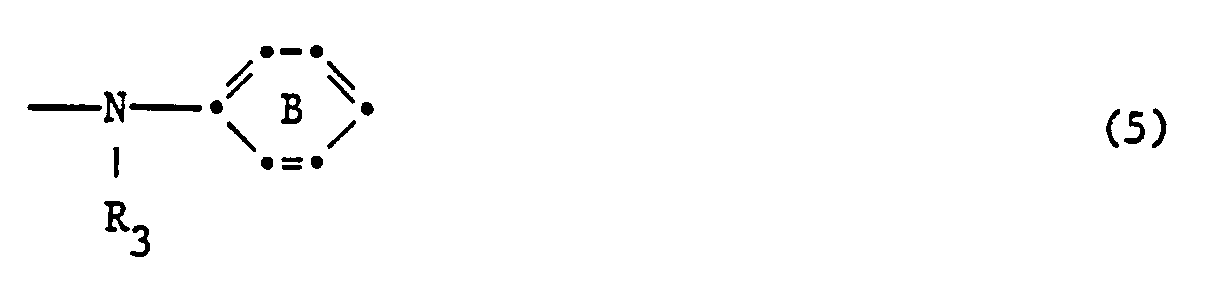
- Substituted amino groups Z are: alkylamino, N, N-dialkylamino, cycloalkylamino, N, N-dicycloalkylamino, aralkylamino, arylamino groups, mixed substituted amino groups such as N-alkyl-N-cyclohexylamino and N-alkyl -N-arylamino groups, furthermore amino groups which contain heterocyclic radicals which may have further fused-on carbocyclic rings, and also amino groups in which the amino nitrogen atom is a member of an N-heterocyclic ring which optionally contains further heteroatoms.
- alkyl radicals mentioned above can be straight-chain or branched, low molecular weight or higher molecular weight; alkyl radicals having 1 to 6 carbon atoms are preferred; suitable cycloalkyl, aralkyl and aryl radicals are, in particular, cyclohexyl, benzyl, phenethyl, phenyl and naphthyl radicals; heterocyclic radicals are especially furan, thiophene, pyrazole, pyridine, pyrimidine, quinoline, benzimidazole, benzothiazole and benzoxazole; and as amino groups in which the amino nitrogen atom is a member of an N-heterocyclic ring, preference is given to residues of six-membered N-heterocyclic compounds which may contain nitrogen, oxygen and sulfur as further heteroatoms.
- alkyl, cycloalkyl, aralkyl and aryl radicals mentioned above, the heterocyclic radicals and the N-heterocyclic rings can be further substituted, for example by: halogen, white fluorine, chlorine and bromine, nitro, cyano, trifluoromethyl, sulfamoyl, carbamoyl, C. 1-4 alkyl, C 1-4 alkoxy, acylamino groups such as acetylamino, ureido, hydroxyl, carboxyl, sulfomethyl and sulfo.
- Examples of the amino radical Z in formula (4) are: -NH 2 , methylamino, ethylamino, propylamino, isopropylamino, butylamino, hexylamino, ⁇ -methoxyethylamino, y-methoxypropylamino, ⁇ -ethoxyethylamino, N, N-dimethylamino, N, N-diethylamino, ⁇ -chloroethylamino, ⁇ -cyanopropylamino, ⁇ -carboxyethylamino, sulfomethylamino, ⁇ -sulfoethylamino, ⁇ -hydroxyethylamino, 'N, N-di-ß-hydroxyethylamino, y-hydroxypropylamino, benzylamino, phenylamino , N-methyl-N-phenylamino, N-ethyl
- the preparation of the reactive dyes of the formula (1) is characterized in that dioxazine compounds of the formula wherein R, n and m have the meanings given under formula (1), one X is an H 2 N group and the other X is a radical of the formula is with a reactive component of the formula condensed.
- a halogen atom on the triazine ring can be replaced by an amino, alkoxy, aryloxy, alkylthio or arylthio radical by previous or subsequent condensation with an amino, hydroxy or mercapto compound.
- amino, hydroxy and mercapto compounds include the following: ammonia, methylamine, dimethylamine, ethylamine, diethylamine, propylamine, isopropylamine, butylamine, dibutylamine, isobutylamine, sec-butylamine, tert-butylamine, hexylamine, methoxyethylamine, Ethoxyethylamine, methoxypropylamine, chloroethylamine, hydroxyethylamine, dihydroxyethylamine, hydroxypropylamine, aminoethanesulfonic acid, ⁇ -sulfatoethylamine, benzylamine, phenethylamine, cyclohexylamine, N-methylaminobenzene, N-ethylaminobenzene, N-propylaminobenzene, nobenzobutyl, n-isobutylbenzene, n-iso
- the individual process steps can be carried out in a different order, and in some cases also simultaneously. Different process variants are possible. In general, the implementation is carried out step by step.
- halotriazines are condensed with the amino, hydroxy or mercapto compounds mentioned in a manner known per se, preferably in the presence of alkaline agents.
- the preferred method of preparation of the reactive dye according to n) is characterized in that a dioxazine compound of the formula wherein X is a radical of the formula is, with the compound of the formula obtained by monocondensation of 2,4,6-trifluoro-s-triazine and aniline-2,5-disulfonic acid condensed.
- the condensation of 2,4,6-trifluoro-s-triazine with the dioxazine compounds of the formula (1) is preferably carried out in aqueous solution or suspension, at low temperatures, preferably between 0 ° and 5 ° C. and in the case of weakly acidic, neutral to weak alkaline pH.
- the hydrogen fluoride liberated during the condensation is advantageously continuously neutralized by adding aqueous alkali metal hydroxides, carbonates or bicarbonates.
- the free amines or their salts, preferably in the form of the hydrochloride, are used for the further reaction of the fluorotriazine dyes thus obtained or for the reaction of 2,4,6-trifluoro-s-triazine with amines.
- the reaction is carried out at temperatures between about 0 and 40 ° C., preferably between 5 and 25 ° C., with the addition of acid-binding agents, preferably sodium carbonate, in a pH range from 2 to 8, preferably 5 to 6.5.
- the condensation of the fluorotriazine with an amine can take place before or after the condensation of the fluorotriazine with a dioxazine of the formula (1).
- the condensation of the fluorotriazine with an amine is preferably carried out in aqueous solution or suspension, at low temperature and at a slightly acidic to neutral pH.
- the hydrogen fluoride liberated during the condensation is advantageously neutralized by the continuous addition of aqueous alkali metal hydroxides, carbonates or bicarbonates.
- the dioxazine compounds of the formula (1) used as starting materials, in which one X is an H 2 N group and the other X is a radical of the formula (8), are obtained in a conventional manner by ring closure from the anil of the formula produced.
- the reactive dyes of the formula (1) can be isolated and turned into usable, dry dye preparations are processed.
- the isolation is preferably carried out at the lowest possible temperatures by salting out and filtering.
- the filtered dyes can optionally be dried after addition of couping agents and / or buffering agents, for example after addition of a mixture of equal parts of mono- and disodium phosphate; drying is preferably carried out at temperatures which are not too high and under reduced pressure.
- the dry preparations according to the invention can be produced directly, ie without intermediate insulation of the dyes, by spray drying the entire production mixture.
- the reactive radical Y contains a substituent which is or contains a fiber-reactive leaving group, or which can take effect in the manner of fiber-reactive leaving groups.
- Fiber-reactive compounds are to be understood as those which react with the hydroxyl groups of cellulose, the amino, carboxy, hydroxyl and thiol groups in wool and silk, or with the amino and possibly carboxy groups of synthetic polyamides to form a covalent chemical bond capital.
- the reactive dyes of the formula (1) are suitable for dyeing and printing a wide variety of materials, such as silk, leather, wool, polyamide fibers and polyurethanes, and in particular cellulose-containing fiber materials of all kinds.
- Such fiber materials are, for example, natural cellulose fiber, such as cotton, linen and hemp, as well as pulp and regenerated cellulose.
- the reactive dyes of formula (1) are also suitable for dyeing or printing fibers containing hydroxyl groups which are contained in blended fabrics, e.g. of mixtures of cotton with polyester fibers or polyamide fibers.
- the dyes according to the invention can be applied to the fiber material and fixed on the fiber in various ways, in particular in the form of aqueous dye solutions and printing pastes.
- They are suitable both for the exhaust process and for dyeing according to the pad dyeing process, according to which the goods are impregnated with aqueous, optionally salt-containing dye solutions, and the dyes are fixed after an alkali treatment or in the presence of alkali, if appropriate with the action of heat. They are particularly suitable for the so-called cold residence process, after which the dye is applied to the foulard together with the alkali and is then fixed by storage at room temperature for several hours. After fixation, the dyeings and prints are thoroughly rinsed with cold and hot water, if appropriate with the addition of a dispersing agent which promotes the diffusion of the unfixed portions.
- the reactive dyes of the formula (1) are notable for high reactivity and good fixing power. They can therefore be used at low dyeing temperatures using the pull-out dyeing process and only require short steaming times with the pad-steam process.
- the degrees of fixation are high and the unfixed portions can be easily washed out, the difference between the degree of exhaustion and the degree of fixation being remarkably small, i.e. the soap loss is very low.
- the active dyes of the formula (1) are also suitable for printing, especially on cotton, and also for printing nitrogen-containing fibers, e.g. of blended fabrics containing wool, silk or wool.
- the dyeings and prints on cellulose fiber materials produced with the dyes according to the invention have a high color strength and high fiber-dye binding stability, both in the acidic and in the alkaline range, furthermore good light fastness and very good wet fastness properties, such as washing, water and sea water -, Dyeing and sweat fastness, as well as good pleating fastness, ironing fastness and rubbing fastness.
- the dye thus obtained has the formula and colors a pure blue ⁇ max 616 nm).
- Example 1 If an equivalent amount of 2-methylaniline-5-sulfonic acid is used in Example 1 instead of aniline-2,5-disulfonic acid, a similar dye is obtained.
- Example 1 If the chromophore used in Example 1 is replaced by a corresponding amount of the 2,9-dichloro compound and the procedure followed as in Example 1, a dye of the formula is obtained of cotton in reddish blue tones.
- Example 1 If the 1,3-diamino-propane bridge member is replaced by 1,4-diaminocyclohexane in Example 1 and the procedure is otherwise as described in Example 1, a dye of the putative formula is obtained of cotton in blue tones.
- Example 1 If, in Example 1, the 1,3-diamino-propane bridge member is replaced by piperazine and the procedure is otherwise as described in Example 1, a dye of the putative formula is obtained
- Example 2 2 parts of the dye obtained in Example 1 are dissolved in 100 parts of water with the addition of 0.5 part of sodium m-nitrobenzenesulfonate. A cotton fabric is impregnated with the solution obtained so that it increases by 75% in weight, and then dried.
- the fabric is impregnated with a 20 ° warm solution containing 5 grams of sodium hydroxide and 300 grams of sodium chloride per liter, squeezed to 75% weight gain, the dye is dampened for 30 seconds at 100 to 101 °, rinsed, soaped in for a quarter of an hour a 0.3% boiling solution of an ion-free detergent, rinses and dries.
- the solution is added to 1900 parts of cold water, 60 parts of sodium chloride are added and 100 parts of a cotton fabric are added to this dye bath.
- the temperature is raised to 60 °, after 30 minutes 40 parts of soda ash and another 60 Parts of sodium chloride are added. The temperature is kept at 60 ° for 30 minutes, rinsed and the soap is then soaped for 15 minutes in a 0.3% boiling solution of an ion-free detergent, rinsed and dried.
- Example 2 4 parts of the reactive dye prepared in Example 1 are dissolved in 50 parts of water. 50 parts of a solution are added, which contains 5 g of sodium hydroxide and 10 g of calcined soda per liter. A cotton fabric is padded with the solution obtained so that it increases by 70% of its weight, and then wound onto a drum. The cotton fabric is stored for 3 to 12 hours at room temperature. The dyed goods are then rinsed, soaped at the boil with a nonionic detergent for a quarter of an hour, rinsed again and dried. A blue color is obtained with good fastness properties.
Landscapes
- Chemical & Material Sciences (AREA)
- Organic Chemistry (AREA)
- Engineering & Computer Science (AREA)
- Textile Engineering (AREA)
- Coloring (AREA)
- Nitrogen And Oxygen Or Sulfur-Condensed Heterocyclic Ring Systems (AREA)
Claims (19)




Applications Claiming Priority (2)
| Application Number | Priority Date | Filing Date | Title |
|---|---|---|---|
| CH366686 | 1986-09-12 | ||
| CH3666/86 | 1986-09-12 |
Publications (2)
| Publication Number | Publication Date |
|---|---|
| EP0260227A1 EP0260227A1 (fr) | 1988-03-16 |
| EP0260227B1 true EP0260227B1 (fr) | 1991-01-16 |
Family
ID=4260895
Family Applications (1)
| Application Number | Title | Priority Date | Filing Date |
|---|---|---|---|
| EP87810514A Expired - Lifetime EP0260227B1 (fr) | 1986-09-12 | 1987-09-07 | Colorants réactifs de la série des dioxazines, leur préparation et leur emploi |
Country Status (5)
| Country | Link |
|---|---|
| US (1) | US4841049A (fr) |
| EP (1) | EP0260227B1 (fr) |
| JP (1) | JP2512493B2 (fr) |
| KR (1) | KR960000168B1 (fr) |
| DE (1) | DE3767416D1 (fr) |
Families Citing this family (21)
| Publication number | Priority date | Publication date | Assignee | Title |
|---|---|---|---|---|
| JPH07116376B2 (ja) * | 1987-01-07 | 1995-12-13 | 住友化学工業株式会社 | ジオキサジン化合物及びそれを用いて繊維材料を染色又は捺染する方法 |
| EP0356014B1 (fr) * | 1988-08-17 | 1994-11-30 | Zeneca Limited | Colorants réactifs |
| DE3833864A1 (de) * | 1988-10-05 | 1990-04-12 | Hoechst Ag | Verfahren zum einphasigen bedrucken von cellulosefasern mit triphendioxazin-reaktivfarbstoffen |
| PT92518B (pt) * | 1988-12-10 | 1995-08-09 | Sumitomo Chemical Co | Processo para a preparacao de compostos de dioxazina simetricos uteis como tintas fibro-reactivas |
| US5272267A (en) * | 1989-02-01 | 1993-12-21 | Sumitomo Chemical Company, Limited | Asymmetric dioxazine compounds having a triazinyl bridging group and a method of production and use thereof |
| JP2671476B2 (ja) * | 1989-02-09 | 1997-10-29 | 住友化学工業株式会社 | 非対称ジオキサジン化合物およびそれを用いて繊維材料を染色又は捺染する方法 |
| JP2671477B2 (ja) * | 1989-02-09 | 1997-10-29 | 住友化学工業株式会社 | 非対称ジオキサジン化合物およびそれを用いて繊維材料を染色又は捺染する方法 |
| GB2228738B (en) * | 1989-02-24 | 1992-06-17 | Sandoz Ltd | Anionic dioxazine compounds |
| DE3906778A1 (de) * | 1989-03-03 | 1990-09-06 | Hoechst Ag | Wasserloesliche faserreaktive farbstoffe, verfahren zu ihrer herstellung und ihre verwendung |
| GB9022540D0 (en) * | 1989-11-16 | 1990-11-28 | Ici Plc | Compound |
| GB8925900D0 (en) * | 1989-11-16 | 1990-01-04 | Ici Plc | Reactive dyes |
| EP0499588A1 (fr) * | 1991-02-15 | 1992-08-19 | Ciba-Geigy Ag | Colorants réactifs, procédé pour leur préparation et leur utilisation |
| DE4415692A1 (de) * | 1994-05-04 | 1995-11-09 | Hoechst Ag | Wasserlösliche Triphendioxazinverbindungen, Verfahren zu deren Herstellung und ihre Verwendung als Farbstoffe |
| DE4415780A1 (de) * | 1994-05-05 | 1995-11-09 | Bayer Ag | Triphendioxazin-Reaktivfarbstoffe |
| TW506993B (en) | 1999-03-15 | 2002-10-21 | Ciba Sc Holding Ag | Reactive dyes, processes for their preparation and process for dyeing or printing a fibre material |
| EP1036825B1 (fr) * | 1999-03-15 | 2004-05-06 | Ciba SC Holding AG | Colorants réactifs, procédé pour leur préparation et leur utilisation |
| CN1313542C (zh) * | 2001-11-07 | 2007-05-02 | 西巴特殊化学品控股有限公司 | 纤维活性染料,它们的制备和它们的用途 |
| US7905928B2 (en) * | 2007-10-25 | 2011-03-15 | Huntsman International Llc | Reactive dyes, processes for their preparation and their use |
| PE20140674A1 (es) | 2011-04-07 | 2014-06-19 | Huntsman Adv Mat Switzerland | Tintes reactivos con fibras y su preparacion |
| JP5341155B2 (ja) * | 2011-09-02 | 2013-11-13 | 富士フイルム株式会社 | レーザー彫刻用レリーフ印刷版原版、並びに、レリーフ印刷版及びその製版方法 |
| TR201901642T4 (tr) | 2012-06-15 | 2019-02-21 | Huntsman Adv Mat Switzerland | Fiber reaktif boyalar, hazırlanışları ve kullanımları. |
Family Cites Families (15)
| Publication number | Priority date | Publication date | Assignee | Title |
|---|---|---|---|---|
| DE1265698C2 (de) * | 1961-05-06 | 1968-11-07 | Hoechst Ag | Verfahren zur Erzeugung von nassechten Faerbungen und Drucken |
| GB1450746A (en) * | 1974-01-31 | 1976-09-29 | Ici Ltd | Tripendioxazine dyestuffs |
| GB1477071A (en) * | 1975-01-13 | 1977-06-22 | Ici Ltd | Reactive dioxazine dyestuffs |
| EP0084718B1 (fr) * | 1982-01-27 | 1986-04-16 | Imperial Chemical Industries Plc | Colorants triphènedioxaziniques |
| EP0101665A3 (fr) * | 1982-08-19 | 1984-10-10 | Ciba-Geigy Ag | Colorants réactifs de la série des dioxazines, leur préparation et leur utilisation |
| DE3336362A1 (de) * | 1983-10-06 | 1985-04-18 | Bayer Ag, 5090 Leverkusen | Triphendioxazin-reaktivfarbstoffe |
| DE3341886A1 (de) * | 1983-11-19 | 1985-05-30 | Bayer Ag, 5090 Leverkusen | Basische triphendioxazinfarbstoffe, ihre herstellung und verwendung |
| DE3344254A1 (de) * | 1983-12-07 | 1985-06-20 | Bayer Ag, 5090 Leverkusen | Triphendioxazinfarbstoffe |
| DE3344472A1 (de) * | 1983-12-08 | 1985-06-20 | Bayer Ag, 5090 Leverkusen | Basische triphendioxazinfarbstoffe, ihre herstellung und verwendung |
| DE3439755A1 (de) * | 1984-04-05 | 1985-10-17 | Bayer Ag, 5090 Leverkusen | Triphendioxazin-farbstoffe |
| DE3423581A1 (de) * | 1984-06-27 | 1986-01-09 | Bayer Ag, 5090 Leverkusen | Reaktivfarbstoffe |
| DE3426727A1 (de) * | 1984-07-20 | 1986-01-23 | Hoechst Ag, 6230 Frankfurt | Wasserloesliche triphendioxazin-verbindungen, verfahren zu ihrer herstellung und ihre verwendung als farbstoffe |
| DE3510612A1 (de) * | 1985-03-23 | 1986-09-25 | Bayer Ag, 5090 Leverkusen | Triphendioxazin-farbstoffe |
| JPH0618359A (ja) * | 1992-07-01 | 1994-01-25 | Mitsubishi Electric Corp | 模型内挿式風洞天秤 |
| JP3379982B2 (ja) * | 1993-02-25 | 2003-02-24 | 積水ハウス株式会社 | 住宅外壁への瓦葺き庇当り部防水構造 |
-
1987
- 1987-09-03 US US07/092,798 patent/US4841049A/en not_active Expired - Lifetime
- 1987-09-07 DE DE8787810514T patent/DE3767416D1/de not_active Expired - Lifetime
- 1987-09-07 EP EP87810514A patent/EP0260227B1/fr not_active Expired - Lifetime
- 1987-09-10 KR KR1019870010006A patent/KR960000168B1/ko not_active Expired - Fee Related
- 1987-09-10 JP JP62225445A patent/JP2512493B2/ja not_active Expired - Lifetime
Also Published As
| Publication number | Publication date |
|---|---|
| US4841049A (en) | 1989-06-20 |
| EP0260227A1 (fr) | 1988-03-16 |
| DE3767416D1 (de) | 1991-02-21 |
| JP2512493B2 (ja) | 1996-07-03 |
| JPS6375066A (ja) | 1988-04-05 |
| KR960000168B1 (ko) | 1996-01-03 |
| KR880004044A (ko) | 1988-06-01 |
Similar Documents
| Publication | Publication Date | Title |
|---|---|---|
| EP0735113B1 (fr) | Mélanges de colorants réactifs et leur utilisation | |
| EP0260227A1 (fr) | Colorants réactifs de la série des dioxazines, leur préparation et leur emploi | |
| EP0076782A2 (fr) | Colorants réactifs, leur préparation et leur utilisation | |
| EP0101665A2 (fr) | Colorants réactifs de la série des dioxazines, leur préparation et leur utilisation | |
| CH634341A5 (de) | Reaktivfarbstoffe und deren herstellung. | |
| EP0131542B1 (fr) | Colorants réactifs, leur préparation et leur utilisation | |
| EP0132223B1 (fr) | Colorants réactifs, leur préparation et leur utilisation | |
| EP0036838B1 (fr) | Colorants azoiques, leur préparation et leur utilisation | |
| EP0458743A2 (fr) | Colorants réactifs, procédés de leur préparation et leur utilisation | |
| EP0120807B1 (fr) | Colorants réactifs, leur préparation et leur utilisation | |
| EP0177445B1 (fr) | Colorants réactifs, leur préparation et leur utilisation | |
| EP0131545B1 (fr) | Colorants réactifs, leur préparation et leur utilisation | |
| EP0485336B1 (fr) | Mélanges de colorants réactifs, procédé pour leur préparation et leur utilisation | |
| EP0261079A1 (fr) | Colorants réactifs, leur préparation et leur emploi | |
| EP0073178A1 (fr) | Colorants réactifs, leur préparation et leur utilisation | |
| EP0474596B1 (fr) | Colorants réactifs, procédé de leur préparation et leur utilisation | |
| EP0627471A1 (fr) | Colorants reactifs | |
| DE2819787A1 (de) | Neue farbstoffe, deren herstellung und verwendung | |
| EP1041121B1 (fr) | Colorants, leur procédé de préparation et leur utilisation | |
| EP0083052B1 (fr) | Colorants réactifs disazoiques, procédé pour leur préparation et leur utilisation pour la teinture ou l'impression de matières fibreuses contenant des groupes hydroxyles ou de l'azote | |
| EP0889098A2 (fr) | Colorants azoiques, procédépour leur préparation et leur utilisation | |
| JP2773888B2 (ja) | 反応染料、その製造方法およびその使用 | |
| DE19636483C2 (de) | Wasserlösliche Azoverbindungen, Verfahren zu ihrer Herstellung und ihre Verwendung als Farbstoffe | |
| EP0507822A1 (fr) | Composes azoiques, leur procede de production et leur utilisation comme colorants. | |
| EP0069376A2 (fr) | Complexes de cuivre de composés monoazoiques, procédé pour leur préparation et leur utilisation comme colorants |
Legal Events
| Date | Code | Title | Description |
|---|---|---|---|
| PUAI | Public reference made under article 153(3) epc to a published international application that has entered the european phase |
Free format text: ORIGINAL CODE: 0009012 |
|
| 17P | Request for examination filed |
Effective date: 19870909 |
|
| AK | Designated contracting states |
Kind code of ref document: A1 Designated state(s): BE CH DE FR GB IT LI |
|
| 17Q | First examination report despatched |
Effective date: 19891016 |
|
| GRAA | (expected) grant |
Free format text: ORIGINAL CODE: 0009210 |
|
| AK | Designated contracting states |
Kind code of ref document: B1 Designated state(s): BE CH DE FR GB IT LI |
|
| ET | Fr: translation filed | ||
| REF | Corresponds to: |
Ref document number: 3767416 Country of ref document: DE Date of ref document: 19910221 |
|
| GBT | Gb: translation of ep patent filed (gb section 77(6)(a)/1977) | ||
| ITF | It: translation for a ep patent filed | ||
| PLBE | No opposition filed within time limit |
Free format text: ORIGINAL CODE: 0009261 |
|
| STAA | Information on the status of an ep patent application or granted ep patent |
Free format text: STATUS: NO OPPOSITION FILED WITHIN TIME LIMIT |
|
| 26N | No opposition filed | ||
| REG | Reference to a national code |
Ref country code: CH Ref legal event code: PUE Owner name: CIBA-GEIGY AG TRANSFER- CIBA SC HOLDING AG |
|
| BECN | Be: change of holder's name |
Effective date: 19961129 |
|
| REG | Reference to a national code |
Ref country code: FR Ref legal event code: TP |
|
| REG | Reference to a national code |
Ref country code: GB Ref legal event code: 732E |
|
| REG | Reference to a national code |
Ref country code: CH Ref legal event code: PFA Free format text: CIBA SC HOLDING AG TRANSFER- CIBA SPECIALTY CHEMICALS HOLDING INC. |
|
| REG | Reference to a national code |
Ref country code: FR Ref legal event code: CD |
|
| REG | Reference to a national code |
Ref country code: GB Ref legal event code: IF02 |
|
| PGFP | Annual fee paid to national office [announced via postgrant information from national office to epo] |
Ref country code: FR Payment date: 20020820 Year of fee payment: 16 |
|
| PGFP | Annual fee paid to national office [announced via postgrant information from national office to epo] |
Ref country code: GB Payment date: 20020903 Year of fee payment: 16 |
|
| PGFP | Annual fee paid to national office [announced via postgrant information from national office to epo] |
Ref country code: BE Payment date: 20021028 Year of fee payment: 16 |
|
| PGFP | Annual fee paid to national office [announced via postgrant information from national office to epo] |
Ref country code: CH Payment date: 20030806 Year of fee payment: 17 |
|
| PGFP | Annual fee paid to national office [announced via postgrant information from national office to epo] |
Ref country code: DE Payment date: 20030825 Year of fee payment: 17 |
|
| PG25 | Lapsed in a contracting state [announced via postgrant information from national office to epo] |
Ref country code: GB Free format text: LAPSE BECAUSE OF NON-PAYMENT OF DUE FEES Effective date: 20030907 |
|
| PG25 | Lapsed in a contracting state [announced via postgrant information from national office to epo] |
Ref country code: BE Free format text: LAPSE BECAUSE OF NON-PAYMENT OF DUE FEES Effective date: 20030930 |
|
| BERE | Be: lapsed |
Owner name: *CIBA SPECIALTY CHEMICALS HOLDING INC. Effective date: 20030930 |
|
| GBPC | Gb: european patent ceased through non-payment of renewal fee |
Effective date: 20030907 |
|
| PG25 | Lapsed in a contracting state [announced via postgrant information from national office to epo] |
Ref country code: FR Free format text: LAPSE BECAUSE OF NON-PAYMENT OF DUE FEES Effective date: 20040528 |
|
| REG | Reference to a national code |
Ref country code: FR Ref legal event code: ST |
|
| PG25 | Lapsed in a contracting state [announced via postgrant information from national office to epo] |
Ref country code: LI Free format text: LAPSE BECAUSE OF NON-PAYMENT OF DUE FEES Effective date: 20040930 Ref country code: CH Free format text: LAPSE BECAUSE OF NON-PAYMENT OF DUE FEES Effective date: 20040930 |
|
| PG25 | Lapsed in a contracting state [announced via postgrant information from national office to epo] |
Ref country code: DE Free format text: LAPSE BECAUSE OF NON-PAYMENT OF DUE FEES Effective date: 20050401 |
|
| REG | Reference to a national code |
Ref country code: CH Ref legal event code: PL |
|
| PG25 | Lapsed in a contracting state [announced via postgrant information from national office to epo] |
Ref country code: IT Free format text: LAPSE BECAUSE OF NON-PAYMENT OF DUE FEES;WARNING: LAPSES OF ITALIAN PATENTS WITH EFFECTIVE DATE BEFORE 2007 MAY HAVE OCCURRED AT ANY TIME BEFORE 2007. THE CORRECT EFFECTIVE DATE MAY BE DIFFERENT FROM THE ONE RECORDED. Effective date: 20050907 |