EP0263025A2 - Fraktionen, die Antigene spezifisch für Herpesvirus Typ-1(HSV-1) und Typ-2(HSV-2) enthalten, Verfahren zur Isolierung dieser Fraktionen und diagnostisches Verfahren spezifisch für HSV-1 und/oder HSV-2 mit Hilfe dieser Fraktionen - Google Patents
Fraktionen, die Antigene spezifisch für Herpesvirus Typ-1(HSV-1) und Typ-2(HSV-2) enthalten, Verfahren zur Isolierung dieser Fraktionen und diagnostisches Verfahren spezifisch für HSV-1 und/oder HSV-2 mit Hilfe dieser Fraktionen Download PDFInfo
- Publication number
- EP0263025A2 EP0263025A2 EP87402162A EP87402162A EP0263025A2 EP 0263025 A2 EP0263025 A2 EP 0263025A2 EP 87402162 A EP87402162 A EP 87402162A EP 87402162 A EP87402162 A EP 87402162A EP 0263025 A2 EP0263025 A2 EP 0263025A2
- Authority
- EP
- European Patent Office
- Prior art keywords
- hsv
- fractions
- sucrose
- specific
- cells
- Prior art date
- Legal status (The legal status is an assumption and is not a legal conclusion. Google has not performed a legal analysis and makes no representation as to the accuracy of the status listed.)
- Granted
Links
Images




Classifications
-
- G—PHYSICS
- G01—MEASURING; TESTING
- G01N—INVESTIGATING OR ANALYSING MATERIALS BY DETERMINING THEIR CHEMICAL OR PHYSICAL PROPERTIES
- G01N33/00—Investigating or analysing materials by specific methods not covered by groups G01N1/00 - G01N31/00
- G01N33/48—Biological material, e.g. blood, urine; Haemocytometers
- G01N33/50—Chemical analysis of biological material, e.g. blood, urine; Testing involving biospecific ligand binding methods; Immunological testing
- G01N33/53—Immunoassay; Biospecific binding assay; Materials therefor
- G01N33/569—Immunoassay; Biospecific binding assay; Materials therefor for microorganisms, e.g. protozoa, bacteria, viruses
- G01N33/56983—Viruses
- G01N33/56994—Herpetoviridae, e.g. cytomegalovirus, Epstein-Barr virus
-
- A—HUMAN NECESSITIES
- A61—MEDICAL OR VETERINARY SCIENCE; HYGIENE
- A61K—PREPARATIONS FOR MEDICAL, DENTAL OR TOILETRY PURPOSES
- A61K39/00—Medicinal preparations containing antigens or antibodies
- A61K39/12—Viral antigens
-
- A—HUMAN NECESSITIES
- A61—MEDICAL OR VETERINARY SCIENCE; HYGIENE
- A61K—PREPARATIONS FOR MEDICAL, DENTAL OR TOILETRY PURPOSES
- A61K39/00—Medicinal preparations containing antigens or antibodies
- A61K39/12—Viral antigens
- A61K39/245—Herpetoviridae, e.g. herpes simplex virus
-
- C—CHEMISTRY; METALLURGY
- C07—ORGANIC CHEMISTRY
- C07K—PEPTIDES
- C07K14/00—Peptides having more than 20 amino acids; Gastrins; Somatostatins; Melanotropins; Derivatives thereof
- C07K14/005—Peptides having more than 20 amino acids; Gastrins; Somatostatins; Melanotropins; Derivatives thereof from viruses
-
- A—HUMAN NECESSITIES
- A61—MEDICAL OR VETERINARY SCIENCE; HYGIENE
- A61K—PREPARATIONS FOR MEDICAL, DENTAL OR TOILETRY PURPOSES
- A61K39/00—Medicinal preparations containing antigens or antibodies
- A61K2039/555—Medicinal preparations containing antigens or antibodies characterised by a specific combination antigen/adjuvant
- A61K2039/55511—Organic adjuvants
- A61K2039/55566—Emulsions, e.g. Freund's adjuvant, MF59
-
- A—HUMAN NECESSITIES
- A61—MEDICAL OR VETERINARY SCIENCE; HYGIENE
- A61K—PREPARATIONS FOR MEDICAL, DENTAL OR TOILETRY PURPOSES
- A61K39/00—Medicinal preparations containing antigens or antibodies
-
- C—CHEMISTRY; METALLURGY
- C12—BIOCHEMISTRY; BEER; SPIRITS; WINE; VINEGAR; MICROBIOLOGY; ENZYMOLOGY; MUTATION OR GENETIC ENGINEERING
- C12N—MICROORGANISMS OR ENZYMES; COMPOSITIONS THEREOF; PROPAGATING, PRESERVING, OR MAINTAINING MICROORGANISMS; MUTATION OR GENETIC ENGINEERING; CULTURE MEDIA
- C12N2710/00—MICROORGANISMS OR ENZYMES; COMPOSITIONS THEREOF; PROPAGATING, PRESERVING, OR MAINTAINING MICROORGANISMS; MUTATION OR GENETIC ENGINEERING; CULTURE MEDIA dsDNA viruses
- C12N2710/00011—Details
- C12N2710/16011—Herpesviridae
- C12N2710/16611—Simplexvirus, e.g. human herpesvirus 1, 2
- C12N2710/16622—New viral proteins or individual genes, new structural or functional aspects of known viral proteins or genes
-
- C—CHEMISTRY; METALLURGY
- C12—BIOCHEMISTRY; BEER; SPIRITS; WINE; VINEGAR; MICROBIOLOGY; ENZYMOLOGY; MUTATION OR GENETIC ENGINEERING
- C12N—MICROORGANISMS OR ENZYMES; COMPOSITIONS THEREOF; PROPAGATING, PRESERVING, OR MAINTAINING MICROORGANISMS; MUTATION OR GENETIC ENGINEERING; CULTURE MEDIA
- C12N2710/00—MICROORGANISMS OR ENZYMES; COMPOSITIONS THEREOF; PROPAGATING, PRESERVING, OR MAINTAINING MICROORGANISMS; MUTATION OR GENETIC ENGINEERING; CULTURE MEDIA dsDNA viruses
- C12N2710/00011—Details
- C12N2710/16011—Herpesviridae
- C12N2710/16611—Simplexvirus, e.g. human herpesvirus 1, 2
- C12N2710/16634—Use of virus or viral component as vaccine, e.g. live-attenuated or inactivated virus, VLP, viral protein
Definitions
- the present invention relates to obtaining fractions containing specific antigens of the herpes virus type 1 (HSV-1) and type 2 (HSV-2), and more particularly of the gC glycoprotein of HSV-1 and of HSV-2 gD glycoprotein, as well as the use of these fractions for the differentiated diagnosis of HSV-1 and HSV-2 infections.
- HSV-1 herpes virus type 1
- HSV-2 type 2
- Types 1 (HSV-1) and 2 (HSV-2) of the herpes virus can be differentiated by their antigenic profile (Dowdle et al, 1967, Journal of Immunology, 99, p.974-980), and by their genetic composition (Ludwig et al, 1972, Virology, 49, p.95-101).
- the structural polypeptides of the virus are incorporated into cell membranes (Norrild et al, 1979, Journal of Virology, 32, p.741-748); among these polypeptides, the specific glycoproteins of the virus will form targets for humoral and cytotoxic immune responses (Norrild, 1980, Current Topics in Microbiology and Immunology, 90, p.67-106).
- the serological determination of the types 1 and 2 viruses responsible for the immunological response can be based on the detection of antibodies directed against one or more of these glycoproteins.
- HSV-1 or HSV-2 viruses exhibit a very large intertypical cross-reactivity (Hampar and Martos, 1973, Immunological relationships, p.221-259 in AS Kaplan, The Herpes viruses).
- This strong cross-reactivity between the HSV-1 and HSV-2 viruses constitutes the main problem in the serodiagnosis of infections with the herpes virus, this problem being due to the difficulty of obtaining viral antigens having a sufficient degree of specificity to allow a differentiated diagnosis.
- the gC and gD glycoproteins are highly immunogenic and constitute the target antigens present in the viral envelopes and on the surface of infected cells (Norrild, 1980, Current Topics in Microbiology and Immunology 90, p.67-106). Although it was thought that the HSV-1 gC glycoprotein had only specific epitopes specific to the serotype, it has been shown recently that this glycoprotein can also have antigenic determinants responsible for cross-reactions (Zweig et al, 1983, Journal of Virology 47, p. 185-192; Zezulak et al, 1983, Journal of Virology 47 , p.553-562).
- HSV-1 and HSV-2 polypeptides express cross-reactive antigenic determinants, as well as type-specific antigenic determinants (Pereira et al, 1980, Infection and Immunity 29, p.724-732; Showalter et al, 1981, Infection and Immunity 34, p.684-692; Pereira et al, 1982, Infection and Immunity 35, p. 363-367; Zweig et al, 1983, Journal of Virology 47, p.185-192).
- EP 0 183 215 proposes a method for the determination of anti-herpes virus antibodies by a passive agglutination test, but the latter is unable to distinguish between infections by HSV-1 or by HSV- 2 and the sensitivity of the test is also very low.
- the ELISA technique is an immunoenzymatic method of antibody titration: an antigen fixed on a solid support binds with the specific antibody contained in the biological medium to be tested and the immun-complex obtained is detected by a labeled anti-species antibody by an enzyme; an enzyme-specific substrate is then added, the degradation of which by the enzyme reveals a colored product detected in an appropriate manner.
- McEwen (Analytical Biochemistry, vol. 20, No. 1, July 1967, p. 114-149) has developed a method of calculating erythrocyte sedimentation rate of particles in sucrose density gradients, wherein it calculates coefficient of sedimentation of a particle in a linear sucrose gradient, using the formula in which Z0 is the concentration of the solute corresponding to the extrapolation of the concentration of the linear gradient of of the solute at radius zero, Z1 and Z2 are respectively the maximum and minimum percentages of the sucrose gradient of the solute expressed by weight relative to the total weight of the solute, r1 and r2 are respectively the minimum radial distances (top of the centrifuge tube) and maximum (bottom of the centrifuge tube) relative to the centrifuge axis (r1 and r2 are specific for each type of device used).
- the calculation of the concentration of sucrose at the centrifugation axis, when r 0, determines the sign of the value of Z0, and generally this value is negative.
- the sedimentation of a protein from the initial position Z y (minimum percentage of the sucrose gradient) to a new position Z x (percentage of the sucrose gradient where the protein is detected at the end of the centrifugation) depends of the difference between the two values Z x and Z y , expressed by two corresponding values of "integral time" I2 and I1, calculated using the McEwen Tables according to the density of the particle (in general we admit densities from 1.3 to 1.4 for most proteins), temperature and Z0 value.
- the object of the present invention is therefore to provide a process for obtaining fractions containing specific antigens of the herpes virus type 1 (HSV-1) and type 2 (HSV-2), and more particularly HSV-1 gC glycoprotein and HSV-2 gD glycoprotein, which method responds better to the needs of the practice than the methods of obtaining previously known antigenic fractions, in particular in that it is specific, reliable, inexpensive , and allows obtaining antigenic fractions with a high degree of specificity, for the implementation of a differentiated diagnostic test for an infection with the herpes virus, which is capable of determining with precision an infection by HSV-1 or by HSV- 2.
- the subject of the present invention is fractions containing antigens specific respectively for the herpes virus type 1 (HSV-1) and the herpes virus type 2 (HSV-2), characterized in that they contain polypeptides having a molecular weight, determined by electrophoresis, of the order of 125,000 daltons respectively for the HSV-1 polypeptide and of the order of 46,000 daltons for the HSV-2 polypeptide, in that said polypeptides react positively, respectively with rabbit antiserum, or of another mammal, anti-HSV-1 and with rabbit antiserum, or of another mammal, anti-HSV-2 monospecific and in that said polypeptides are identified by immunoblotting as the HSV-1 gC glycoprotein for the 125,000 dalton polypeptide and as the HSV-2 gD glycoprotein for the 46,000 dalton polypeptide.
- HSV-1 herpes virus type 1
- HSV-2 herpes virus type 2
- said antigenic fractions are obtained by centrifugation in a linear gradient of sucrose or of another suitable medium, of a suspension of virus HSV-1 and / or HSV-2 intra- or extracellular, previously lysed and disaggregated, the conditions of said centrifugation being determined as a function of the sedimentation coefficient calculated for each of the specific antigens of the type concerned (1 or 2).
- the suspension of HSV-1 and / or HSV 2 virus is itself obtained from a culture of mammalian cells infected with HSV-1 and HSV-2, centrifuged to provide a soluble fraction which, after being lysed and disaggregated, is subjected to the above process of centrifugation in a sucrose gradient.
- said antigenic fractions have a protein concentration of the order of 200 to 300 ⁇ g / ml.
- the present invention also relates to a method for the isolation of the fractions containing the specific antigens HSV-1 and / or HSV-2, defined in the above, characterized in that cells of an appropriate mammal are infected , with cultures of HSV-1 and / or HSV-2 viruses, in which the virus multiplies until the lysis of at least a significant proportion of the cells, in that the remaining cells are lysed by treatment with agents appropriate chemicals, then their wall is disintegrated by physical treatment, in particular by ultrasound, and they are subjected to centrifugation, in that the supernatant solution is centrifuged in a linear gradient of sucrose or of another suitable medium, and in that the fractions containing the specific antigens HSV-1 and / or HSV-2 are recovered by any appropriate means.
- the virus cultures include both the viral suspensions obtained after complete lysis of the cells, as well as the cultures of cells containing the virus, and that a mixture of infected cells and virus released from lysed cells.
- the polypeptides endowed with antigenic properties HSV-1 and / or HSV-2 contained in the above-mentioned antigenic fractions are isolated on a linear gradient of sucrose or of another suitable medium. , determined according to their calculated sedimentation coefficient.
- the sedimentation coefficient is calculated according to the formula in which ⁇ I represents the difference between two extreme integral sedimentation values estimated as a function of the density of the protein, the temperature and the concentration of the sucrose solute, in which w represents the centrifugation speed and in which t represents the time.
- the calculated sedimentation coefficient is between 9 and 9.6 S for the glycoprotein gC.
- the calculated sedimentation coefficient is between 4.3 and 4.5 S for the gD glycoprotein.
- the linear sucrose gradient for the isolation of the specific fractions HSV-1 and / or HSV-2 is carried out at sucrose concentrations of between 6 and 27% by weight total sucrose solution.
- the concentration of sucrose necessary to isolate the gC glycoprotein from HSV-1 is preferably between 10 and 27% of the total weight of the sucrose solution.
- the concentration of sucrose necessary to isolate the gD glycoprotein from HSV-2 is preferably between 6 and 19% of the total weight of the sucrose solution.
- the fractions containing the specific antigens HSV-1 and / or HSV-2 are identified separately by electrophoresis and immunoblotting, each fraction being respectively collected in the fraction of solute containing from 6 to 10% of sucrose relative to the total weight of the solution of sucrose for the polypeptide of 46,000 daltons, and in the fraction of solute containing from 20 to 27% of sucrose by relative to the total weight of the sucrose solution for the 125,000 dalton polypeptide.
- the present invention further relates to a method for diagnosing infections with the herpes virus of types 1 or 2, by determination of anti-HSV-1 and / or anti-HSV-2 antibodies in a biological medium, characterized in that fractions containing the specific antigens HSV-1 and / or HSV-2 in accordance with the present invention are brought into contact, suitably fixed on an appropriate solid support, with the biological medium presumed to contain anti-HSV-1 and / or anti-HSV-2 antibody examined, in that the immune complex obtained in the case where anti-HSV-1 and / or anti-HSV-2 antibodies are actually present, is detected by an anti-species antibody labeled with an enzyme, in the presence of a specific substrate for the enzyme.
- the fractions containing the specific antigens HSV-1 and / or HSV-2 are fixed on said support at dilutions advantageously between 0.375 and 6 ⁇ g of proteins per ml.
- the solid support is chosen from the group of supports comprising in particular microplates, tubes, red blood cells, polystyrene beads and nitrocellulose sheets.
- the present invention also relates to a set, or kit, for diagnosis, for determining, in bodily fluids, anti-HSV-1 and / or anti-HSV-2 antibodies, which comprises as main components: - an appropriate quantity, optionally subdivided into unit doses, of various dilutions of fractions in accordance with the present invention containing the specific antigens HSV-1 and of fractions containing the specific antigens HSV-2; - an appropriate quantity, possibly subdivided into unit doses, sufficient for the previous determination, of anti-species antibodies labeled with an enzyme, for the revelation of the antigen-antibody reaction between the antibody to be determined and the corresponding specific antigen; - Optionally an appropriate quantity of buffers, diluents, reagents, necessary for the implementation of the diagnostic method in accordance with the present invention.
- RL Rabbit kidney primary cells
- HSV-1 and HSV-2 herpes virus type 1 (HSV-1) and type 2 (HSV-2) (ATCC strains VR / 733 and VR / 734 respectively) at a multiplicity of infection (MOI) equal to 0.01 infectious virus particle per ml.
- MOI multiplicity of infection
- the viral stock is obtained in the extracellular culture liquid when the virus has lyzed all of the cells.
- the culture liquid is then centrifuged at 1000 g for 10 minutes and the supernatant is distributed into 2 ml aliquots and frozen at -70 ° C.
- the RL monolayer cells lysed between 3+ and 4+ 24 hours after infection are washed twice in cold PBS (137 mM NaCl, 3 mM KCl, 8 mM Na2HPO4, 2 mM KH2PO4, pH 7.4 ) containing protease inhibitors such as tosyl-lysyl-chloromethyl ketone, p-hydroxy mercuribenzoate and phenylmethylsulfonyl fluoride (Sigma Chemicals) at a final concentration of 1 mM.
- protease inhibitors such as tosyl-lysyl-chloromethyl ketone, p-hydroxy mercuribenzoate and phenylmethylsulfonyl fluoride (Sigma Chemicals) at a final concentration of 1 mM.
- the cells are scraped in 0.020 M cold glycine and 0.0076 M Tris buffer (pH 8.6) containing 3% (vol./vol.) Of Triton X-100 and protease inhibitors as indicated above.
- Tris buffer pH 8.6
- the lysed cells are disintegrated by ultrasound (18 kc / sec, twice for 15 seconds on ice), then centrifuged at 1000 g for 10 minutes.
- the supernatants are centrifuged at 100,000 g for one hour.
- the supernatant of the antigen preparations for HSV-1 and HSV-2 and control cells are sampled and stored at -70 ° C.
- the protein concentration in the soluble fractions is determined by the modified Lowry method (Journal of Biological Chemistry 192: 265-275)) to carry out the measurement in so lutions containing Triton X-100 (Dulley and Grieve, 1975, Analytical Biochemistry 64: 136-141); the protein concentration of the solubilized antigen preparations is adjusted to 10 mg / ml.
- the gradients are then centrifuged for 24 hours (40,000 revolutions / minute, + 5 ° C, SW 41 Ti rotor, Bechman) and then 0.4 ml of fractions containing the specific antigens are collected which will be subjected to immunoelectrophoresis using a cross rocket with an intermediate gel (Portocala et al., 1983, Analysis of centrifugation gradients by fused rocket immunoelectrophoresis, 82, p.587-597).
- Polyspecific anti-HSV-1 and anti-HSV-2 antibodies are obtained after infection of rabbits by successive subcutaneous injections of antigen preparations (from the infected RL cells of Example 1) mixed in equal volume with l 'incomplete Freund's adjuvant (2 x 0.1 ml); injections are given once a month for 12 months.
- the rabbit immunoglobulins are then purified (Harboe and Ingild, 1973, Scandinavian Journal of Immunology 2 (suppl.1): 161-164) and their concentration adjusted to 40 mg / l.
- the anti-HSV-1 and anti-HSV-2 antibodies are placed in 1% of HSB agarose gel (Litex, Denmark) with Tris-tricine buffer (9.7 g Tris, 4.3 g Tricine, 0, 92 g of calcium lactate, 0.2 g of NaN3, pH 8.6) and 1% (vol./vol.) Of Triton X-100.
- Tris-tricine buffer 9.7 g Tris, 4.3 g Tricine, 0, 92 g of calcium lactate, 0.2 g of NaN3, pH 8.6
- Triton X-100 Triton X-100.
- the quantity of solubilized antigen used is 7 ⁇ l for rocket immunoelectrophoresis and 20 ⁇ l for cross-rocket immunoelectrophoresis.
- the operation takes place under the following conditions: 1.5 V / cm for 18 hours at 16 ° C (Axelsen, 1973, Scandinavian Journal of Immunology 2 (suppl.1): p.71-77). The results are shown in
- Figure 1 shows a rocket immunoelectrophoresis with an intermediate gel of a fractionated HSV-1 antigen preparation. 29 fractions were analyzed, from fraction 1 on the left to fraction 29 located on the far right.
- the antibodies present in the intermediate gel G i come from hyperimmune rabbit serum vis-à-vis HSV-2 (25 ⁇ l / cm2) and in the reference gel Gr, there is the hyperimmune rabbit serum vis-à-vis of HSV-1 (10 ⁇ l / cm2).
- the gel was colored with brilliant Coomassie blue.
- Figure 2 shows a rocket immunoelectrophoresis with an intermediate gel of a fractionated HSV-2 antigen preparation. 29 fractions were analyzed, from fraction 30 on the left to fraction 59 located on the far right.
- the antibodies present in the intermediate gel G i come from rabbit serum hyperimmune with respect to HSV-1 (25 ⁇ l / cm2) and in the reference gel Gr, there is the rabbit serum hyperimmune with respect to of HSV-2 (10 ⁇ l / cm2).
- the gel was colored with brilliant Coomassie blue.
- Rocket immunoelectrophoresis with an intermediate gel of HSV-1 or HSV-2 antigens reveals the distribution of an identified antigen in the reference gel (which is superimposed on the intermediate gel) and the degree of contamination with other antigens (intermediate gel) of these fractions. Control cell preparations do not give peaks in the reference gel.
- the fractions which show peaks in the reference gel are the fractions containing the specific antigens.
- the protein concentration of each fraction varies from 200 to 300 ⁇ g / ml.
- Z1 and Z2 are respectively 10 and 27%.
- Table I shows the values of I2 and I1 calculated according to the McEwen Tables for a value of Z x of 19% and a value of Z y of 10%, and the sedimentation coefficient obtained for densities of proteins equal to 1.3 and 1.4.
- Z1 and Z2 are 6 and 19% respectively.
- Table II shows the I2 and I1 values calculated from the McEwen Tables for a value of Z x of 10% and a value of Z y of 6%, and the sedimentation coefficient obtained for protein densities equal to 1.3 and 1.4.
- EXAMPLE 4 Determination of the molecular weight of the glycoproteins gC of HSV-1 and gD of HSV-2.
- Confluent monolayers of RL cells are infected according to the procedure of Example 1 at an MOI of 5. Then these cells are labeled 4 to 20 hours after infection, either with 10 ⁇ Ci of 35S-methionine per ml (1.370 Ci / mmol) coming from a medium containing 0.05% in concentration of cold methionine, or with 0.8 ⁇ Ci of D- (1-14C) -glucosamine per ml (54 mCi / mmol) coming from a medium containing 10% of glucose (the radioisotopes come from the Company Amersham, England).
- Type-specific antigens labeled as described above are subjected to cross-rocket immunoelectrophoresis through an intermediate gel. 15 peaks are cut and collected in the reference gel and the polypeptides contained in these peaks are eluted in 400 ⁇ l of a 0.06 M Tris-H3PO4 buffer (pH 6.9) containing 2% (by weight / vol.) sodium dodecyl sulfate (SDS) and 2.5% (vol./vol.) 2-mercaptoethanol (Norrild et al., 1977, Analytical Biochemistry 81: 432-441).
- Radiolabelled proteins are visualized by autora diography carried out on a Kodak-X Omat S film and exposed for 4 to 6 days at a temperature of -70 ° C. The results are shown in Figures 3, 4 and 5 attached.
- Figure 3 shows a cross-rocket immunoelectrophoresis through an intermediate gel of preparations of fractionated HSV-1 and HSV-2 antigens.
- Band (a) corresponds to a fraction containing the specific antigen of the HSV-2 type.
- the antibodies present in the intermediate gel G i come from anti-HSV-1 hyperimmune rabbit serum, as prepared in Example 2 (25 ⁇ l / cm2) and in the reference gel G r , the rabbit serum is found anti-HSV-2 hyperimmune (15 ⁇ l / cm2).
- Band (b) corresponds to the fraction containing the specific antigen of the HSV-1 type.
- the antibodies present in the intermediate gel G i come from anti-HSV-2 hyperimmune rabbit serum (25 ⁇ l / cm2) and in the reference gel G r , there is anti-HSV-1 hyperimmune rabbit serum (15 ⁇ l / cm2).
- the gels are colored with brilliant Coomassie blue.
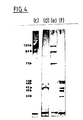
- Figure 4 shows an autoradiogram of SDS-PAGE.
- the peptides present in the viral antigen solutions are analyzed by cross-rocket immunoelectrophoresis and solubilization.
- lane (c) 20 ⁇ l of specific HSV-1 antigen labeled with 35S-methionine precipitated in the reference gel containing 15 ⁇ l / cm2 of rabbit anti-HSV-1 antibodies
- lane (d) 20 ⁇ l of specific HSV-2 antigen labeled with 35S-methionine precipitated in the reference gel containing 15 ⁇ l / cm2 of rabbit anti-HSV-2 antibodies.
- Figure 5 shows an autoradiogram of glycoproteins, labeled as indicated at the beginning of this example, separated by electrophoresis, originating from RL cells infected with HSV-1 in the case of band (h) and by HSV-2 in the case of band (i); the band (g) corresponds to the molecular weight markers, which are proteins labeled with carbon 14. The molecular weights of the proteins are indicated in kilodaltons to the left of the three bands of this Figure.
- the viral polypeptides which have precipitated [FIG. 4, bands (c) and (d)], are identified by their molecular weights estimated by electrophoretic migration relative to the standard proteins which mark molecular weight.
- the 125,000 dalton polypeptide, band (c) is identified as corresponding to the HSV-1 gC glycoprotein (Spear, 1976, Journal of Virology 17: 991-1008).
- the 95,000 dalton polypeptide also seen on this band probably represents a precursor of the gC glycoprotein, which is also precipitated in cross-rocket immunoelectrophoresis, by rabbit anti-HSV-1 hyperimmune sera, because the existence of common antigenic determinants.
- the 46,000 dalton polypeptide, band (d), is identified as corresponding to the HSV-2 gD glycoprotein, and for the same reasons as above, there is a 42,000 dalton polypeptide which is probably a precursor of the gD glycoprotein.
- Lanes (e) and (f) in Figure 4 show that the fractions containing type-specific antigens also include three or four antigens common to both types of virus.
- the radiolabelling of the viral glycoproteins by D- (1-14C) -glucosamine and the autoradiography of the glycoproteins separated by electrophoresis (FIG. 5) effectively show that the gD glycoprotein of HSV-2 (band i) has a molecular weight of 46,000. daltons and that the HSV-1 gC glycoprotein (h-band) has a molecular weight of 125,000 daltons.
- EXAMPLE 5 Correspondence between the polypeptides of 46,000 and 125,000 daltons and the glycoproteins gC of HSV-1 and gD of HSV-2.
- polypeptides collected from cells infected with HSV-1, by HSV-2, as well as control cells, are separated by electrophoresis on 7.5% polyacrylamide gel, as described in Example 4, then the proteins are transferred onto a nitrocellulose sheet (pore size: 0.22 m) at 220 mA and 60 V for 2 hours, using a Bio-Rad transfer cell (Towbin et al, 1979, Proceedings of the National Academy of Science, USA 79: 4350-4354). Before reacting the proteins with the corresponding monospecific antisera, the nitrocellulose sheets are blocked with PBS containing 3% bovine serum albumin.
- FIG. 6 shows the reaction, after transfer to the nitrocellulose sheet, between the polypeptides of HSV-1, of HSV-2 and of control cells and, on the one hand, the monospecific antiserum anti-polypeptide of 125,000 daltons, bands (j), (k), and (l), and on the other hand the 46,000 dalton anti-polypeptide monospecific antiserum, bands (m), (n) and (o).
- Lanes (j) and (m) correspond to the HSV-1 polypeptides
- bands (k) and (n) correspond to the control cell polypeptides
- bands (l) and (o) correspond to the HSV-2 polypeptides.
- the molecular weights are given to the left of the bands, in kilodaltons.
- Lanes (j) and (l) correspond to the reaction between the HSV-1 and HSV-2 polypeptides respectively, and the 125,000 dalton anti-polypeptide monospecific antiserum.
- This serum reacts strongly with the 125,000 dalton polypeptide of HSV-1, as shown in strip (j), and weakly with a 67,000 dalton polypeptide common to HSV-1 and HSV-2, as shown in strip ( l).
- the denaturation of certain antigenic determinants in the presence of SDS could contribute to the detection of the 67,000 dalton polypeptide common to HSV-1 and HSV-2 by the monospecific anti-HSV-1 antiserum.
- Lanes (m) and (o) correspond to the reaction between the polypeptides of HSV-1 and HSV-2 respectively and the monospecific antiserum anti-polypeptide of 46,000 daltons. The strongest reaction is observed in this case with the 46,000 dalton polypeptide of HSV-2, as shown in band (o), and a weak reaction is observed with a 60,000 dalton polypeptide such as shows it the strip (m).
- polypeptides of 125,000 and 46,000 daltons are identified as being respectively the glycoprotein gC of HSV-1 and the glycoprotein gD of HSV-2.
- anti-HSV-1 and anti-HSV-2 antibodies-immunoglobulins G (IgG) in human serum is carried out on polystyrene microtiter plates (Immunological Plates, Nunc, 1-96F, Denmark).
- the specific antigens of each of the two types diluted in 0.05 M carbonate buffer (pH 9.6), are respectively fixed on the plates by incubation at 4 ° C overnight. These plates are then washed twice in PBS-Tween 20 (0.05%), and 100 ⁇ l of PBS-Tween 20 (0.05%) containing 1% bovine serum albumin are added to each well in order to avoid non-specific links.
- the plates are incubated for one hour at 37 ° C., washed twice with PBS-Tween 20 (0.05%), then 120 ⁇ l of serum diluted in PBS-Tween 20 (0.05) is added to each well. %) containing 1% bovine serum albumin (the successive serum dolutions are multiplied by 2, and range from 1: 150 to 1: 19200).
- Each plate includes series of wells containing positive and negative test sera.
- the plates are incubated at 37 ° C. for two hours in a room in a humid atmosphere and washed four times in PBS-Tween, as above.
- a human anti-globulin IgG immunoglobulin is conjugated to horseradish peroxidase specific for the ⁇ chains (Dako, Denmark), and diluted 1: 1000 in PBS-Tween containing 1% bovine serum albumin. 120 ⁇ l of this conjugated antiserum are added to each well and incubated at 37 ° C for 1 hour in a humid chamber. After having washed the plates four times in PBS-Tween 20, 200 ⁇ l of substrate solution (10 mg of o-phenylenediamine, 0.03% H2O2 added immediately before use in 100 ml) are added to each well.
- substrate buffer at pH 5 containing 25.7 ml of 0.2 M disodium phosphate, 24.3 ml of 0.1 M citric acid, and 50 ml of deionized water).
- the reaction is completed by adding 50 ⁇ l per well of 3N HCl after 20 minutes.
- the absorbance is then measured at a wavelength of 492 nm on a Titertek Multiskan device (Flow Laboratories, England).
- Negative control sera are used to determine a limit value, defined as the mean specific absorbance of negative control sera increased by 3 standard deviations from this mean. Any serum with a specific absorbance above this limit value is considered positive for anti-virus antibodies.
- the IgM antibodies against Epstein-Barr virus were determined by an indirect immunofluorescence technique, using P3HR1 cells fixed on microscope slides and antibodies against human goat IgM, conjugated with fluorescein isothiocyanate at a dilution of 1: 100 (Pasteur Diagnostic France).
- the ELISA method was used with 3 anti-CMV sera, 3 anti-VZV sera or 3 anti-EBV sera, in the presence of fractions containing the specific antigens HSV-1 and HSV-2 ( Figure 8). No positive reaction was found in these sera, which clearly shows the specificity of the 2 antigenic fractions for the herpes virus.
- a serum is classified as negative for anti-virus antibodies if the absorbance values (at 492 nm) are less than 0.2, and for CSFs if these absorbance values are less than 0.15.
- Patients who are infected with HSV-1 or HSV-2 show responses to both homologous and heterologous antigens.
- Patients infected with HSV-1 have a strong specific type response, so the percentage of sera positive for the heterologous HSV-2 antigen is 4.5% compared to the total number of sera positive for with respect to the HSV-1 homologous antigen, and the percentage of LCR positive with respect to the HSV-2 heterologous antigen is 0% relative to the total number of LCR positive with respect to l HSV-1 homologous antigen (results are shown in Tables III and IV).
- patients infected with HSV-2 have a very strong common type response with regard to the sera, thus the percentage of sera positive with respect to the heterologous antigen HSV-1 is 71.4%. relative to the total number of sera positive with respect to the homologous antigen HSV-2, this response of common type being zero with regard to the CRL (the results are shown in Tables III and IV).
- LCR examined are negative with regard to the two antigens. LCRs are examined at dilutions ranging from 1:20 to 1: 2,560.
Landscapes
- Health & Medical Sciences (AREA)
- Life Sciences & Earth Sciences (AREA)
- Virology (AREA)
- Chemical & Material Sciences (AREA)
- Immunology (AREA)
- General Health & Medical Sciences (AREA)
- Medicinal Chemistry (AREA)
- Molecular Biology (AREA)
- Microbiology (AREA)
- Engineering & Computer Science (AREA)
- Mycology (AREA)
- Urology & Nephrology (AREA)
- Organic Chemistry (AREA)
- Veterinary Medicine (AREA)
- Public Health (AREA)
- Animal Behavior & Ethology (AREA)
- Biomedical Technology (AREA)
- Epidemiology (AREA)
- Pharmacology & Pharmacy (AREA)
- Hematology (AREA)
- Biochemistry (AREA)
- Biotechnology (AREA)
- Cell Biology (AREA)
- Physics & Mathematics (AREA)
- Analytical Chemistry (AREA)
- General Physics & Mathematics (AREA)
- Pathology (AREA)
- Gastroenterology & Hepatology (AREA)
- Food Science & Technology (AREA)
- Proteomics, Peptides & Aminoacids (AREA)
- Biophysics (AREA)
- Genetics & Genomics (AREA)
- Tropical Medicine & Parasitology (AREA)
- Peptides Or Proteins (AREA)
- Micro-Organisms Or Cultivation Processes Thereof (AREA)
- Measuring Or Testing Involving Enzymes Or Micro-Organisms (AREA)
- Preparation Of Compounds By Using Micro-Organisms (AREA)
Priority Applications (1)
| Application Number | Priority Date | Filing Date | Title |
|---|---|---|---|
| AT87402162T ATE91081T1 (de) | 1986-09-30 | 1987-09-29 | Fraktionen, die antigene spezifisch fuer herpesvirus typ-1(hsv-1) und typ-2(hsv-2) enthalten, verfahren zur isolierung dieser fraktionen und diagnostisches verfahren spezifisch fuer hsv-1 und/oder hsv-2 mit hilfe dieser fraktionen. |
Applications Claiming Priority (2)
| Application Number | Priority Date | Filing Date | Title |
|---|---|---|---|
| GR862472A GR862472B (en) | 1986-09-30 | 1986-09-30 | Determination of antibodies specific of hsv-1 herpes or hsv-2 in human serum with the elisa technic using the specific antigen of hsv-1 or hsv-2 type in semi - clean form |
| GR862472 | 1986-09-30 |
Publications (3)
| Publication Number | Publication Date |
|---|---|
| EP0263025A2 true EP0263025A2 (de) | 1988-04-06 |
| EP0263025A3 EP0263025A3 (en) | 1989-05-31 |
| EP0263025B1 EP0263025B1 (de) | 1993-06-30 |
Family
ID=10925186
Family Applications (1)
| Application Number | Title | Priority Date | Filing Date |
|---|---|---|---|
| EP19870402162 Expired - Lifetime EP0263025B1 (de) | 1986-09-30 | 1987-09-29 | Fraktionen, die Antigene spezifisch für Herpesvirus Typ-1(HSV-1) und Typ-2(HSV-2) enthalten, Verfahren zur Isolierung dieser Fraktionen und diagnostisches Verfahren spezifisch für HSV-1 und/oder HSV-2 mit Hilfe dieser Fraktionen |
Country Status (4)
| Country | Link |
|---|---|
| EP (1) | EP0263025B1 (de) |
| AT (1) | ATE91081T1 (de) |
| DE (1) | DE3786384T2 (de) |
| GR (1) | GR862472B (de) |
Cited By (3)
| Publication number | Priority date | Publication date | Assignee | Title |
|---|---|---|---|---|
| US5656457A (en) * | 1989-05-12 | 1997-08-12 | Ciba Corning Diagnostics Corporation | DNA sequence for the unique sequence herpes simplex virus type 2-glycoprotein G protein and method of expressing said unique sequence of HSV-2gG |
| WO1998007033A1 (en) * | 1996-08-16 | 1998-02-19 | Abbott Laboratories | Improved western blot test for the identification of antibodies specific against the hcmv virus |
| WO2011132078A2 (en) | 2010-04-23 | 2011-10-27 | Genomic Vision | Diagnosis of viral infections by detection of genomic and infectious viral dna by molecular combing |
Family Cites Families (5)
| Publication number | Priority date | Publication date | Assignee | Title |
|---|---|---|---|---|
| US4374127A (en) * | 1977-09-19 | 1983-02-15 | Merck & Co., Inc. | Herpes sub unit vaccine |
| US4341754A (en) * | 1980-01-24 | 1982-07-27 | Vanderbilt University | Diagnostic reagent for herpes simplex virus encephalitis |
| US4430437A (en) * | 1980-08-27 | 1984-02-07 | The United States Of America As Represented By The Department Of Health And Human Services | Test methods employing monoclonal antibodies against Herpes simplex virus types 1 and 2 nucleocapsids proteins |
| GB2115109B (en) * | 1982-02-17 | 1985-04-17 | Massey Ferguson Perkins Ltd | Vent valve |
| NZ209308A (en) * | 1983-08-30 | 1991-08-27 | Genentech Inc | Vaccine against hsv involving a truncated membrane-free derivative of a membrane-bound protein |
-
1986
- 1986-09-30 GR GR862472A patent/GR862472B/el unknown
-
1987
- 1987-09-29 DE DE87402162T patent/DE3786384T2/de not_active Expired - Fee Related
- 1987-09-29 AT AT87402162T patent/ATE91081T1/de active
- 1987-09-29 EP EP19870402162 patent/EP0263025B1/de not_active Expired - Lifetime
Cited By (6)
| Publication number | Priority date | Publication date | Assignee | Title |
|---|---|---|---|---|
| US5656457A (en) * | 1989-05-12 | 1997-08-12 | Ciba Corning Diagnostics Corporation | DNA sequence for the unique sequence herpes simplex virus type 2-glycoprotein G protein and method of expressing said unique sequence of HSV-2gG |
| US5665537A (en) * | 1989-05-12 | 1997-09-09 | Chiron Diagnostics Corporation | Herpes simplex virus type 2-glycoprotein G proteins and polypeptides |
| WO1998007033A1 (en) * | 1996-08-16 | 1998-02-19 | Abbott Laboratories | Improved western blot test for the identification of antibodies specific against the hcmv virus |
| US6287760B1 (en) | 1996-08-16 | 2001-09-11 | Abbott Laboratories | Western blot test for the identification of antibodies specific against the HCMV virus |
| WO2011132078A2 (en) | 2010-04-23 | 2011-10-27 | Genomic Vision | Diagnosis of viral infections by detection of genomic and infectious viral dna by molecular combing |
| EP3000900A1 (de) | 2010-04-23 | 2016-03-30 | Genomic Vision | Nachweis von hpv-dna-umlagerungen |
Also Published As
| Publication number | Publication date |
|---|---|
| DE3786384D1 (de) | 1993-08-05 |
| ATE91081T1 (de) | 1993-07-15 |
| EP0263025A3 (en) | 1989-05-31 |
| DE3786384T2 (de) | 1994-02-03 |
| GR862472B (en) | 1986-10-09 |
| EP0263025B1 (de) | 1993-06-30 |
Similar Documents
| Publication | Publication Date | Title |
|---|---|---|
| EP0277437B1 (de) | Hepatitis NANB-viraler Stoff, Antigen und immunologisches Reagenz | |
| FI97426B (fi) | Menetelmä ihmisen papilloomaviruksen (HPV) toteamiseksi diagnostista käyttöä varten | |
| IE58321B1 (en) | Isolation of proteins of HTLV-III, serological detection of antibodies to HTLV-III in sera of patients with aids and pre-aids conditions, and detection of HTLV-III infection bi/immuno-assays using HTLV-III infection by immuno-assays using HTLV-III and its proteins | |
| Dubois-Dalcq et al. | Acute multiple sclerosis: electron-microscopic evidence for and against a viral agent in the plaques | |
| JPH0646196B2 (ja) | サイトメガロウイルスの検定のための診断系 | |
| JPH0614053B2 (ja) | ヒトサイトメガロウィルス特異的IgMの検出方法及びそのための手段 | |
| EP0518756A1 (de) | Verfahren zum Nachweis einer Rinderdiarrhoevirusinfektion, Nukleotidsequenz das kodiert für ein Eiweiss, induziert durch eine Infektion mit diesem Virus und rekombinierte Eiweisse und Antigene daraus folgend | |
| Rose et al. | Human cellular immune response to measles virus polypeptides | |
| US6183754B1 (en) | Anticytomegalovirus monoclonal antibodies and processes for the in vitro diagnosis of infections by human cytomegaloviruses and a protein-kinase inducible by cytomegaloviruses and recognizable by aforesaid monoclonal antibodies | |
| JPS63159762A (ja) | 口内微生物の評価方法 | |
| EP0263025B1 (de) | Fraktionen, die Antigene spezifisch für Herpesvirus Typ-1(HSV-1) und Typ-2(HSV-2) enthalten, Verfahren zur Isolierung dieser Fraktionen und diagnostisches Verfahren spezifisch für HSV-1 und/oder HSV-2 mit Hilfe dieser Fraktionen | |
| Salim et al. | Anti‐corticosteroid antibodies in AIDS patients | |
| FR2576107A1 (fr) | Procede de recherche d'anticorps et equipement ou kit pour la mise en oeuvre de ce procede | |
| Ghadiminejad et al. | Evidence for the cell‐surface localization of antigens cross‐reacting with the “mitochondrial antibodies” of primary biliary cirrhosis | |
| Hornsleth et al. | Detection by ELISA of IgG‐subclass‐specific antibodies in primary respiratory syncytial (RS) virus infections | |
| EP0084013A2 (de) | Antiherpes Hybridzellinien der Maus, Verfahren zu ihrer Gewinnung, nicht neutralisierende Antiherpes monoklonale Antikörper und ihre biologischen Verwendungen | |
| Wonsit et al. | Enzyme-linked immunosorbent assay based on monoclonal and polyclonal antibodies for the detection of Entamoeba histolytica antigens in faecal specimens | |
| Hofmann et al. | Humoral and cellular responses to Pneumocystis carinii, CMV, and herpes simplex in patients with AIDS and in controls | |
| Chiodi et al. | Measles IgM antibodies in cerebrospinal fluid and serum in subacute sclerosing panencephalitis | |
| Hacham et al. | Enzyme-linked immunosorbent assay for detection of virus-specific IgM antibodies to varicella-zoster virus | |
| Baig et al. | Cells producing antibody to measles and herpes simplex virus in cerebrospinal fluid and blood of patients with multiple sclerosis and controls | |
| EP1135684B1 (de) | VERBESSERTE SPEZIFITÄT IN DER DETEKTION DER ANTI-RUBELLA IgM ANTIKÖRPER | |
| US6767709B1 (en) | Immunoassay of human medullasin and diagnosis of multiple sclerosis using the same | |
| JP2001509676A (ja) | Hhv−8▲上+▼リンパ腫細胞の確立,産生されるウイルス,抗体,診断方法およびhhv−8感染の検出のためのキット | |
| FR2609807A2 (fr) | Reactifs immunologiques pour la detection de l'hepatite virale nanb, leurs procedes de preparation et leurs applications dans des procedes de detection de l'hepatite virale nanb et en tant qu'agents therapeutiques |
Legal Events
| Date | Code | Title | Description |
|---|---|---|---|
| PUAI | Public reference made under article 153(3) epc to a published international application that has entered the european phase |
Free format text: ORIGINAL CODE: 0009012 |
|
| AK | Designated contracting states |
Kind code of ref document: A2 Designated state(s): AT BE CH DE ES FR GB GR IT LI LU NL SE |
|
| PUAL | Search report despatched |
Free format text: ORIGINAL CODE: 0009013 |
|
| AK | Designated contracting states |
Kind code of ref document: A3 Designated state(s): AT BE CH DE ES FR GB GR IT LI LU NL SE |
|
| 17P | Request for examination filed |
Effective date: 19890908 |
|
| 17Q | First examination report despatched |
Effective date: 19910620 |
|
| GRAA | (expected) grant |
Free format text: ORIGINAL CODE: 0009210 |
|
| AK | Designated contracting states |
Kind code of ref document: B1 Designated state(s): AT BE CH DE ES FR GB GR IT LI LU NL SE |
|
| PG25 | Lapsed in a contracting state [announced via postgrant information from national office to epo] |
Ref country code: IT Free format text: LAPSE BECAUSE OF FAILURE TO SUBMIT A TRANSLATION OF THE DESCRIPTION OR TO PAY THE FEE WITHIN THE PRESCRIBED TIME-LIMIT;WARNING: LAPSES OF ITALIAN PATENTS WITH EFFECTIVE DATE BEFORE 2007 MAY HAVE OCCURRED AT ANY TIME BEFORE 2007. THE CORRECT EFFECTIVE DATE MAY BE DIFFERENT FROM THE ONE RECORDED. Effective date: 19930630 Ref country code: SE Effective date: 19930630 Ref country code: AT Effective date: 19930630 Ref country code: NL Effective date: 19930630 |
|
| REF | Corresponds to: |
Ref document number: 91081 Country of ref document: AT Date of ref document: 19930715 Kind code of ref document: T |
|
| REF | Corresponds to: |
Ref document number: 3786384 Country of ref document: DE Date of ref document: 19930805 |
|
| PG25 | Lapsed in a contracting state [announced via postgrant information from national office to epo] |
Ref country code: LU Free format text: LAPSE BECAUSE OF NON-PAYMENT OF DUE FEES Effective date: 19930930 |
|
| PG25 | Lapsed in a contracting state [announced via postgrant information from national office to epo] |
Ref country code: ES Free format text: LAPSE BECAUSE OF FAILURE TO SUBMIT A TRANSLATION OF THE DESCRIPTION OR TO PAY THE FEE WITHIN THE PRESCRIBED TIME-LIMIT Effective date: 19931011 |
|
| GBT | Gb: translation of ep patent filed (gb section 77(6)(a)/1977) |
Effective date: 19931008 |
|
| REG | Reference to a national code |
Ref country code: GR Ref legal event code: FG4A Free format text: 3009127 |
|
| NLV1 | Nl: lapsed or annulled due to failure to fulfill the requirements of art. 29p and 29m of the patents act | ||
| PLBE | No opposition filed within time limit |
Free format text: ORIGINAL CODE: 0009261 |
|
| STAA | Information on the status of an ep patent application or granted ep patent |
Free format text: STATUS: NO OPPOSITION FILED WITHIN TIME LIMIT |
|
| 26N | No opposition filed | ||
| PGFP | Annual fee paid to national office [announced via postgrant information from national office to epo] |
Ref country code: FR Payment date: 20001030 Year of fee payment: 14 |
|
| PGFP | Annual fee paid to national office [announced via postgrant information from national office to epo] |
Ref country code: DE Payment date: 20001110 Year of fee payment: 14 |
|
| PGFP | Annual fee paid to national office [announced via postgrant information from national office to epo] |
Ref country code: GB Payment date: 20001115 Year of fee payment: 14 |
|
| PGFP | Annual fee paid to national office [announced via postgrant information from national office to epo] |
Ref country code: CH Payment date: 20001116 Year of fee payment: 14 |
|
| PGFP | Annual fee paid to national office [announced via postgrant information from national office to epo] |
Ref country code: GR Payment date: 20001129 Year of fee payment: 14 |
|
| PGFP | Annual fee paid to national office [announced via postgrant information from national office to epo] |
Ref country code: BE Payment date: 20001130 Year of fee payment: 14 |
|
| PG25 | Lapsed in a contracting state [announced via postgrant information from national office to epo] |
Ref country code: GB Free format text: LAPSE BECAUSE OF NON-PAYMENT OF DUE FEES Effective date: 20010929 |
|
| PG25 | Lapsed in a contracting state [announced via postgrant information from national office to epo] |
Ref country code: GR Free format text: LAPSE BECAUSE OF NON-PAYMENT OF DUE FEES Effective date: 20010930 Ref country code: CH Free format text: LAPSE BECAUSE OF NON-PAYMENT OF DUE FEES Effective date: 20010930 Ref country code: BE Free format text: LAPSE BECAUSE OF NON-PAYMENT OF DUE FEES Effective date: 20010930 Ref country code: LI Free format text: LAPSE BECAUSE OF NON-PAYMENT OF DUE FEES Effective date: 20010930 |
|
| REG | Reference to a national code |
Ref country code: GB Ref legal event code: IF02 |
|
| BERE | Be: lapsed |
Owner name: INSTITUT PASTEUR HELLENIQUE Effective date: 20010930 |
|
| PG25 | Lapsed in a contracting state [announced via postgrant information from national office to epo] |
Ref country code: DE Free format text: LAPSE BECAUSE OF NON-PAYMENT OF DUE FEES Effective date: 20020501 |
|
| REG | Reference to a national code |
Ref country code: CH Ref legal event code: PL |
|
| GBPC | Gb: european patent ceased through non-payment of renewal fee |
Effective date: 20010929 |
|
| PG25 | Lapsed in a contracting state [announced via postgrant information from national office to epo] |
Ref country code: FR Free format text: LAPSE BECAUSE OF NON-PAYMENT OF DUE FEES Effective date: 20020531 |
|
| REG | Reference to a national code |
Ref country code: FR Ref legal event code: ST |