EP0263172B1 - Proteinanaloge des gewebs-plasminogenaktivators - Google Patents
Proteinanaloge des gewebs-plasminogenaktivators Download PDFInfo
- Publication number
- EP0263172B1 EP0263172B1 EP87903044A EP87903044A EP0263172B1 EP 0263172 B1 EP0263172 B1 EP 0263172B1 EP 87903044 A EP87903044 A EP 87903044A EP 87903044 A EP87903044 A EP 87903044A EP 0263172 B1 EP0263172 B1 EP 0263172B1
- Authority
- EP
- European Patent Office
- Prior art keywords
- tpa
- protein
- fragment
- analogue
- plasminogen activator
- Prior art date
- Legal status (The legal status is an assumption and is not a legal conclusion. Google has not performed a legal analysis and makes no representation as to the accuracy of the status listed.)
- Expired - Lifetime
Links
Images


Classifications
-
- C—CHEMISTRY; METALLURGY
- C12—BIOCHEMISTRY; BEER; SPIRITS; WINE; VINEGAR; MICROBIOLOGY; ENZYMOLOGY; MUTATION OR GENETIC ENGINEERING
- C12N—MICROORGANISMS OR ENZYMES; COMPOSITIONS THEREOF; PROPAGATING, PRESERVING, OR MAINTAINING MICROORGANISMS; MUTATION OR GENETIC ENGINEERING; CULTURE MEDIA
- C12N9/00—Enzymes; Proenzymes; Compositions thereof; Processes for preparing, activating, inhibiting, separating or purifying enzymes
- C12N9/14—Hydrolases (3)
- C12N9/48—Hydrolases (3) acting on peptide bonds (3.4)
- C12N9/50—Proteinases, e.g. Endopeptidases (3.4.21-3.4.25)
- C12N9/64—Proteinases, e.g. Endopeptidases (3.4.21-3.4.25) derived from animal tissue
- C12N9/6421—Proteinases, e.g. Endopeptidases (3.4.21-3.4.25) derived from animal tissue from mammals
- C12N9/6424—Serine endopeptidases (3.4.21)
- C12N9/6456—Plasminogen activators
- C12N9/6459—Plasminogen activators t-plasminogen activator (3.4.21.68), i.e. tPA
-
- C—CHEMISTRY; METALLURGY
- C07—ORGANIC CHEMISTRY
- C07K—PEPTIDES
- C07K1/00—General methods for the preparation of peptides, i.e. processes for the organic chemical preparation of peptides or proteins of any length
- C07K1/107—General methods for the preparation of peptides, i.e. processes for the organic chemical preparation of peptides or proteins of any length by chemical modification of precursor peptides
- C07K1/113—General methods for the preparation of peptides, i.e. processes for the organic chemical preparation of peptides or proteins of any length by chemical modification of precursor peptides without change of the primary structure
- C07K1/1133—General methods for the preparation of peptides, i.e. processes for the organic chemical preparation of peptides or proteins of any length by chemical modification of precursor peptides without change of the primary structure by redox-reactions involving cystein/cystin side chains
-
- C—CHEMISTRY; METALLURGY
- C07—ORGANIC CHEMISTRY
- C07K—PEPTIDES
- C07K14/00—Peptides having more than 20 amino acids; Gastrins; Somatostatins; Melanotropins; Derivatives thereof
- C07K14/195—Peptides having more than 20 amino acids; Gastrins; Somatostatins; Melanotropins; Derivatives thereof from bacteria
- C07K14/305—Peptides having more than 20 amino acids; Gastrins; Somatostatins; Melanotropins; Derivatives thereof from bacteria from Micrococcaceae (F)
- C07K14/31—Peptides having more than 20 amino acids; Gastrins; Somatostatins; Melanotropins; Derivatives thereof from bacteria from Micrococcaceae (F) from Staphylococcus (G)
-
- C—CHEMISTRY; METALLURGY
- C12—BIOCHEMISTRY; BEER; SPIRITS; WINE; VINEGAR; MICROBIOLOGY; ENZYMOLOGY; MUTATION OR GENETIC ENGINEERING
- C12Y—ENZYMES
- C12Y304/00—Hydrolases acting on peptide bonds, i.e. peptidases (3.4)
- C12Y304/21—Serine endopeptidases (3.4.21)
- C12Y304/21069—Protein C activated (3.4.21.69)
-
- A—HUMAN NECESSITIES
- A61—MEDICAL OR VETERINARY SCIENCE; HYGIENE
- A61K—PREPARATIONS FOR MEDICAL, DENTAL OR TOILETRY PURPOSES
- A61K38/00—Medicinal preparations containing peptides
-
- Y—GENERAL TAGGING OF NEW TECHNOLOGICAL DEVELOPMENTS; GENERAL TAGGING OF CROSS-SECTIONAL TECHNOLOGIES SPANNING OVER SEVERAL SECTIONS OF THE IPC; TECHNICAL SUBJECTS COVERED BY FORMER USPC CROSS-REFERENCE ART COLLECTIONS [XRACs] AND DIGESTS
- Y02—TECHNOLOGIES OR APPLICATIONS FOR MITIGATION OR ADAPTATION AGAINST CLIMATE CHANGE
- Y02A—TECHNOLOGIES FOR ADAPTATION TO CLIMATE CHANGE
- Y02A50/00—TECHNOLOGIES FOR ADAPTATION TO CLIMATE CHANGE in human health protection, e.g. against extreme weather
- Y02A50/30—Against vector-borne diseases, e.g. mosquito-borne, fly-borne, tick-borne or waterborne diseases whose impact is exacerbated by climate change
Definitions
- This invention is in the fields of genetic and protein engineering.
- Tissue plasminogen activator is a key enzyme in a naturally occurring system by which mammals dissolve blood clots. Its value as a therapeutic agent, especially in the emergency treatment of coronary arterial or other vascular occlusions is widely recognized.
- tPA is a serine protease which catalyzes the conversion of the inactive protein plasminogen into plasmin, the active form. Plasmin then dissolves the fibrin clot.
- tPA can bind specifically to fibrin molecules thus limiting its proteolytic action to the location of the clot.
- urokinase which is also derived from mammalian sources
- streptokinase which is derived from bacteria
- tPA Human tPA has been prepared in highly purified form from human melanoma cells by Rijken and Collen, J. Biochem . (1981) 256 :7035-7041.
- Melanoma tPA (mtPA) is an approximately 68 kd protein which is highly glycosylated. Glycosylation is not believed to be essential to activity because enzymatic deglycosylation by endoglycosidase F does not reduce the activity of the protein, and tPA prepared from melanoma cells grown in the presence of the glycosylation inhibitor tunicamycin retains activity.
- tPA complete amino acid sequence of tPA has been deduced from the cDNA sequence. See Pennica, D. et al, Nature (1983) 301 :214-221. Recombinant forms of tPA have been produced in bacteria and in mammalian cells using appropriate control DNA sequences ligated to tPA cDNA (made from melanoma cell mRNA). The resulting protein product has the same amino acid sequence as the secreted protein from the melanoma cells.
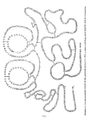
- Naturally occurring human tPA has the amino acid sequence and putative secondary structure shown in Figure 1.
- the figure also shows the signal sequences which are absent in the mature tPA protein.
- the sequence of the mature protein is considered to begin at position 1 designated in the figure and contains 527 amino acids.
- the mature protein is thought to be composed of three major domains.
- the N-terminal 1-80 (approx) amino acids are designated the finger region.
- the sequence between approximately amino acid 80 and amino acid 270 is held in a double kringle conformation by six disulfide bonds.
- the kringle region is putatively involved in the fibrin binding properties of tPA.
- the portion of the molecule responsible for the enzymatic action of tPA --the catalytic domain-- is the region of amino acids 270-527 approximately. This portion of the molecule appears to have the characteristics of a serine protease.
- tPA tPA-like protein
- kringle structures have also been found in prothrombin, plasminogen and urokinase.
- the catalytic domain has some homology to the bovine serine proteases trypsin, chymotrypsin, and plasmin.
- the tPA precursor zymogen is cleaved in vivo between the arginine at position 275 and the isoleucine residue at 276. Cleavage results in conversion of the zymogen to the active form of tPA.
- the tPA protein is especially susceptible to improper folding because it contains 35 cysteine amino acid residues which are capable of forming disulfide bonds so as to stabilize whatever three dimensional structure, correct or incorrect, is generated in the expression system.
- Production of foreign proteins in mammalian cells generally results in forms of the proteins which more accurately reflect their native conformations, but mammalian cell production is expensive and more difficult to control.
- tPA tissue plasminogen activator
- the tPA analogues* can a) consist of substantially only a catalytic fragment of tPA; or b) consist of a catalytic fragment of tPA linked to a polypeptide which provides a desirable or enhanced property or function in addition to the catalytic function, provided that the polypeptide in combination with the catalytic fragment forms a molecule which can be refolded efficiently.
- the analogue is of lower molecular weight than tPA.
- Preferred polypeptides provide for one or more of the following properties: i) fibrin binding activity; ii) enhanced expression of the tPA analogue in a particular expression system (either prokaryotic or eukaryotic); iii) stabilization of the catalytic fragment in vivo ; and iv) increased biological half-life of the analogue in vivo .
- tPA analogue means a molecule other than tPA itself which comprises a catalytic fragment of tPA and which may include either an endogenous (tPA derived) or exogeneous (non-tPA) polypeptide which may have fibrin binding activity.
- the tPA analogues of this invention comprise essentially only a catalytic fragment of tPA which contains the active enzyme sites for proteolysis.
- Analogues of this type have only the proteolytic properties of tPA.
- the preferred catalytic fragment is a fragment of human tPA encompassing amino acids 262-527.
- the tPA analogues comprise a functional catalytic region and a second region which provides any or all of the properties described above.
- the catalytic fragment of such analogues is derived from the tPA molecule.
- the fibrin binding fragment of the analogues is derived from non-tPA fibrin binding polypeptides, i.e., exogenous polypeptide proteins or protein fragments which provide the analogue with fibrin binding capability and optionally other properties as enumerated above.
- the exogenous fragment can be of eukaryotic or prokaryotic origin.
- An example of exogenous fibrin binding moiety of eukaryotic origin is the antigen binding domain (Fab) of an antifibrin immunoglobulin (Ig).
- Fab antigen binding domain
- prokaryotic fibrin binding polypeptides are the B domain of protein A, other domains of protein A, and fibrin binding domains of protein G.
- the tPA analogues are produced by recombinant DNA techniques. Although the analogues can be expressed in eukaryotic host cell systems, the preferred analogues designed for the more economical and convenient expression in prokaryotic host cell systems, e.g., E . coli . Thus, especially preferred tPA analogues are prokaryctic "leader" segments, such as the B domain of Protein A, which provide fibrin binding activity along with other advantageous properties.
- leader prokaryctic "leader" segments, such as the B domain of Protein A, which provide fibrin binding activity along with other advantageous properties.
- tPA analogues comprising a tPA catalytic fragment linked to the B domain of Protein A have fibrinolytic activity and fibrin binding activity; they are efficiently expressed in prokaryotic host cells; and in comparison to natural tPA, they have higher solubility in physiological fluids and a longer half life in vivo .
- the polydeoxynucleotides encoding the analogue are constructed and operably linked to control sequences of a suitable DNA expression vector.
- the recombinant vector is then used to transform the host cell.
- the transformed host cell is then cultured to produce the analogue which is then isolated from the host cell.
- a catalytic fragment of human tissue plasminogen activator comprised of amino acid residues 262-527 of human tPA.
- the invention provides an analogue of tissue plasminogen activator (tPA) of the formula: H2N - X - CF262 ⁇ 527 - COOH wherein CF262 ⁇ 527 is a catalytic fragment of human tPA spanning amino acid residues 262-527 and X is a polypeptide which binds fibrin and is not derived from tPA.
- tPA tissue plasminogen activator
- tissue plasminogen activator of the formula: H2N - (F B ProA ) n - L - CF tPA -COOH wherein CF tPA represents a catalytic fragment of tPA comprising residues 262-527; F B ProA represents the B domain of Protein A; n is an integer from 1-5; and L represents a peptide bond or an oligopeptide linker separating F B and CF tPA .
- the invention provides an analogue of tissue plasminogen activator of the formula: H2N - X - CF tPA -COOH wherein CF is a catalytic fragment of human tPA and X is a fibrin binding polypeptide not derived from tPA.
- a fibrin binding domain of Protein A present in single or multiple units fused to a catalytic fragment of tissue plasminogen activator comprising residues 262-527.
- a synthetic gene encoding human tissue plasminogen activator comprising codons compatible with the E. coli codon bias and containing two different gene-unique non-native recognition sites for a restriction endonuclease located so as to provide for endonuclease cleavage of the gene into three fragments of about equal length.
- Figure 1 shows the primary and secondary structure of tPA including the 37 amino acid signal peptide.
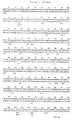
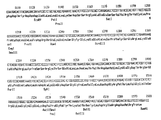
- Figure 2 (a and b) shows the complete DNA sequence of a preferred embodiment of the synthetic tPA gene.
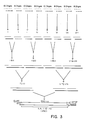
- Figure 3 is a schematic representation of the synthesis and ligation of the tPA 1 gene from precursor oligonucleotides.
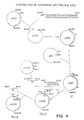
- Figure 4 is a schematic for construction of expression vectors containing F B -CF tPA and F B -F B -CF tPA gene constructs.
- Figure 5 is a scheme for construction of an expression vector containing first kringle-CF tPA gene construct.
- Figure 6 shows the construction of a tPA analogue containing a hybrid kringle.
- Figure 7 shows the nucleotide sequence of a DNA construct encoding a tPA analogue comprising the B domain of protein A linked to a catalytic fragment of tPA and the amino acid sequence of the analogue.
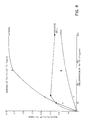
- Figure 8 shows the results of a fibrin binding assay for F B -F B -CF tPA analogue.
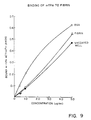
- Figure 9 shows the binding of mtPA to fibrin.
- the tPA analogues of this invention comprise "recombinant" protein molecules which have the fibrinolytic activity of tPA and optionally the capability to bind to fibrin.
- the molecules are designed for highly efficient production in prokaryotes, especially E . coli .
- the molecules are of lower molecular weight than natural tPA (one characteristic that provides for more efficient refolding and reactivation upon isolation from prokaryotic cells).
- the analogues comprise essentially only a catalytic fragment (designated CF) of tPA.
- the preferred catalytic fragment is the portion of natural human tPA encompassing amino acids 262-527 inclusive, i.e., the portion of the tPA molecule ranging from the serine/threonine residues 262 and 263 (which link the catalytic fragment to the second kringle of tPA) to the C-terminal proline residue.
- This preferred catalytic fragment can potentially form six intramolecular disulfide bonds which can aid in proper conformational folding of the catalytic fragment and stabilization of its structure (See Figure 1).
- the tPA analogues comprise the CF linked to a polypeptide, a protein or a protein fragment which helps stabilize the catalytic fragment, enhance expression of CF in a desired system and/or potentiate fibrinolytic activity of the catalytic fragment.
- the tPA analogues have a fibrin binding capability. They comprise a catalytic fragment of tPA linked (either directly or through an intermediate polypeptide linker) to polypeptide protein or protein fragment which confers fibrin binding specificity.
- the polypeptide which provides fibrin binding specificity is derived from exogenous amino acid sequences, either eukaryotic or prokaryotic, such as the B domain of protein A.
- the catalytic fragment of tPA (designated CF tPA ) is linked to a polypeptide which confers i) fibrin binding capability; ii) increased solubility with respect to natural tPA in physiological fluids; iii) high expression in prokaryotic system; iv) increased biological half-life in vivo .
- the B domain of Protein A is an example of a prokaryotic polypeptide which when linked to CF tPA provides a tPA analogue which has fibrinolytic and fibrin binding activity but is superior to natural tPA in that it can be expressed more efficiently in a prokaryotic host and has greater stability in physiological fluids and a longer half life in vivo .
- the tPA analogues of this invention can be represented by the formula: H2N - X - L - CF - COOH
- CF represents a catalytic fragment of tPA.
- the preferred catalytic fragment is the fragment CF tPA encompassing amino acids 262-527 of natural human tPA L taken together with X represents a bond (thereby defining a catalytic factor), or L individually represents a peptide bond linking a polypeptide, a protein or a protein fragment X to CF tPA or L represents an oligopeptide linker of desired structure and function linking X to CF tPA .
- L can be the cleavage site for Factor X a . Incorporation of this site into the analogues provides for proteolytic cleavage of X and CF tPA at the site.
- the designation X represents a polypeptide, protein or protein fragment generally smaller in size than the complete finger/ kringle region of tPA, linked (as a continuous polypeptide chain) to the catalytic fragment CF tPA either directly or via an oligopeptide linker L. (In preferred embodiments, when L is present, the combined size of X and L is of lower molecular weight than the complete finger/kringle region of tPA).
- X can be a "leader sequence" which provides for a more stable and/or more efficiently expressed tPA analogue.
- the polypeptide X is a fibrin binding polypeptide.
- X is selected from exogenous polypeptides sequences (those not found in tPA) of prokaryotic and/or eukaryotic origin which provide fibrin binding activity.
- exogenous polypeptides sequences (those not found in tPA) of prokaryotic and/or eukaryotic origin which provide fibrin binding activity.
- An example of an exogenous eukaryotic protein fragment is the antigen binding domain of an immunoglobulin molecule which specifically bind fibrin.
- Exogenous polypeptides may be chosen also from prokaryotic protein sequences which bind fibrin thereby providing a molecule comprising a prokaryotic "leader" linked to CF tPA .
- a preferred prokaryotic polypeptide is the B domain of protein A which, suprisingly, has been found to provide fibrin binding specificity when joined to a catalytic fragment of tPA.
- the B domain of protein A also provides for enhanced expression of the CF tPA in E . coli ; it provides a molecule with greater solubility (more easily recoverable from expression host) than natural tPA. It also provides for a longer biological half life in vivo .
- the B domain represents an especially preferred prokaryotic polypeptide for construction of analogues of this invention.
- other domains of protein A such as the B, C, or D domains, may also provide a fibrin binding capability as well as other desirable properties.
- These protein domains may be present in single or multiple units.
- Analogues containing the B domain of protein A can be represented by the formula: H2N-(F B ProA ) n - CF tPA - COOH
- CF tPA signifies a catalytic fragment of tPA, preferably the tPA catalytic fragment spanning amino acid residues 262-527 inclusive.
- F B ProA designates the B domain of protein A. Modified forms of the B domain can be used to enhance the specificity of fibrin binding and to reduce undesired immunogenicity of the segment.
- Multiple, sequentially aligned F B ProA units may be attached to CF tPA as indicated by the subscript n.
- the number of F B ProA units may range from 1 to 5, most preferably, n is 1 or 2.
- Analogues comprising the B domain of protein A linked to a catalytic fragment of tPA exhibit fibrinolytic activity which is plasminogen dependent and which can be completely neutralized by antibody against tPA. These analogues bind fibrin directly. Further, (F B ProA ) n - CF tPA analogues are less hydrophobic than natural tPA and, thus, may be suitable for intramuscular routes of administration.
- the tPA analogues of this invention are designed to be produced by recombinant DNA techniques.
- the analogues can be expressed in prokaryotic host cell systems by standard techniques.
- Polydeoxynucleotides encoding the desired analogues can be constructed by conventional techniques of gene synthesis and gene splicing as set forth in more detail below.
- Double stranded DNA constructs encoding the tPA analogues can be represented, in 5' to 3' orientation, as follows: 5' [DNA encoding X] - DNA encoding CF tPA 3' The brackets indicate that DNA encoding X is optional.
- the contruct contains optionally a first DNA sequence encoding X and a second DNA sequence encoding CF tPA .
- a oligodeoxynucleotide encoding a linker oligopeptide L is interposed between the DNA sequence encoding X and the DNA sequence encoding CF tPA . Nucleotides may be added to the 5' and 3' terminals of these constructs to provide restriction enzyme recognition sites for convenient insertion of the construct into DNA vectors.
- DNA sequences encoding this portion of the analogue can be obtained from clonal cell lines harboring the DNA sequence.
- the cell lines can be obtained from commercial sources and the DNA sequence can be obtained by standard techniques of gene cloning.
- the polydeoxnucleotide can be synthesized by standard procedures such as the phosphotriester and phosphite triester techniques.
- DNA encoding the tPA derived fragments, e.g., CF tPA can be obtained from DNA sequences encoding tPA.
- Figure 5 shows the entire deoxynucleotide sequence of a gene construct encoding the analogue: F B ProA - CF tPA .
- the amino acid sequence of the analogue is also given.
- DNA sequences encoding the tPA-derived portions of the analogues are obtained from a synthetic tPA gene.
- a synthetic tPA gene which encodes human tPA.
- the synthetic gene has been designed to be compatible with the E . coli codon bias for efficient expression.
- the synthetic DNA fragment encodes a protein having tPA activity and contains inherent characteristics which permit facile manipulation of subgenic DNA fragments.
- the preferred gene encodes a protein with an N-terminal serine (after the methionine corresponding to the start codon) although a useful variant is a fragment which contains three additional N-terminal amino acids, Gly-Ala-Arg, which precede the N-terminal serine exhibited by most native mature tPA, and which are sometimes retained by the mature sequence in the extracted protein.
- the gene is bounded by additional short segments of DNA if necessary to provide start and stop codons for translation and to provide convenient restriction sites.
- the gene will contain approximately 3 x 527, or 1581 base pairs, with a few additional base pairs at each terminus.
- the preferred tPA gene construct is shown in Figure 2. It is prepared as set forth below in Example 1. The synthetic gene bears an additional 9 base pairs including the ATG start codon at the upstream end, and an additional 2 base pairs to complete the stop codon at the downstream terminus. By appropriate codon selection, the fragment is bounded by EcoRI and Bam H1 restriction sites. Additional restriction sites were designed into the molecule as shown in Figure 2.
- restriction sites unique to individual cassette are included, thus permitting clean excision of shorter portions of the molecule.
- the sub-cassette fragments can be excised and rearranged to provide DNA constructs encoding a desired tPA fragment.
- the genetic constructs encoding the tPA analogues can be assembled and expressed by conventional recombinant DNA techniques.
- DNA sequences are cleaved using restriction enzymes which are commercially available. The conditions of cleavage as to pH, time, temperature, concentration of enzyme are typically specified by the manufacturer. After each incubation, the enzyme is removed by extraction, for example, with phenol/chloroform and the nucleic acid fraction is recovered by precipitation with ethanol. Size separation of the cleaved fragments may be performed using standard agarose or polyacrylamide gel electrophoresis techniques as described in Methods in Enzymology (1980) 65 :499-560. Fragments may be blunted if desired by treating with E .
- coli DNA polymerase I (klenow fragment) in the presence of the four deoxynucleotide triphosphates (dNTPs) using ambient temperature for about 30 minutes in 50mM Tris.HCl pH 7.6, 50 mM NaCl, 6 mM MgCl2, 6 mM DDT and 5-10 uM of the dNTPs.
- the extent of fill-in at the sticky ends may be, of course, regulated by appropriate choice of the dNTPs. Treatment under appropriate conditions with S1 nuclease removes single stranded portions.
- Ligations are performed using T4-DNA ligase at pH 7.5 in Tris buffer, under conditions recommended by the manufacturer.
- Sequencing uses either the dideoxy method of Sanger, F., et al, Proc Natl Acad Sci (USA) (1977) 74 :5463, as further described by Messing, et al, Nucleic Acids Res (1981) 9 :309 or by method of Maxam, et al, Methods in Enzymology (1980) 65 :499.
- Transformation of DNA vectors into E . coli or other prokaryotes is performed as described by Cohen, S.N., Proc Natl Acad Sci (USA) (1972) 69 :110; for mammalian cells transformations are by the method of Graham and Van der Eb. Virology (1978) 52 :546.
- the DNA constructs encoding the tPA analogues can be expressed in prokaryotic expression systems.
- the preferred prokaryotic host is E . coli , although other bacterial strains such as Bacillus, Pseudomonas, or other Gram-positive or Gram-negative bacteria can also be used.
- a DNA construct encoding the desired tPA analogue is linked to control systems compatible with the host and disposed on a suitable DNA expression vector which is capable of replication in the host cell.
- the DNA expression vector comprises, in order, a promoter of bacterial or phage origin, a ribosome binding site, a translational initiation signal, the DNA construct-encoding the tPA analog (see above), a translation termination site, and a terminator.
- the vector also carries a gene encoding a selectable marker.
- Common plasmid vectors include those derived from pBR322 and the pUC series. Charon 4 lambda phage is a frequently employed phage vector.
- Control sequences include promoter and ribosome binding site encoding sequences. A variety of such control sequences are available, most commonly the beta-lactamase (penicillinase) and lactose (lac) promoter systems (Chang et. al. Nature (1977) 198 :106) and the tryptophan (trp) promoter system (Goeddel, et. al, Nucleic Acids Research (1980) 8 :4057). Composite promoters containing elements of both the trp and lac promoter systems are also available. For the expression of F B -CF and F B -F B -CF constructs the trp and tac promoters are preferred.
- Eukaryotic microbes may also be used for expression of the analogues, most commonly laboratory strains of Saccharomyces cerevisiae , or Baker's yeast.
- yeast control systems and vectors are available, including those which are promoters for the synthesis of glycolytic enzymes (Hess, et al. J. Adv. Enzyme Req. (1968) 7 :149; Holland, et al, Biochemistry (1978) 17 :4900).
- Yeast vectors employing the 2 micron origin of replication are suitable as transfer vectors (see, for example, Broach, J.R., Methods Enzymol. (1983) 101 :307).
- Tissue culture cell lines immortalized from mammalian or other higher organisms can also been used as recombinant hosts.
- Such cell lines include Chinese hamster ovary (CHO), Vero, HeLa, and Cos cells.
- the Cos cell system is used for transient expression, while CHO cells typically integrate transformed DNA into the chromosome.
- Suitable mammalian vectors are generally based on viral origins of replication and control sequences Most commonly used are the simian virus 40 (SV40) promoters and replicon (Fiers, et al, Nature (1978) 273 :113) and similar systems derived from Adenovirus 2, bovine papilloma virus, or avian sarcoma virus.
- SV40 simian virus 40
- the tPA analogues expressed as heterologous protein in host cell systems can be purified and renatured by standard techniques for isolation and renaturation.
- an improved technique for isolation and renaturation of protein from E . coli cells as set forth below (and in further detail in the Exemplification) can be used.
- E . coli cells containing heterologous protein (tPA analogue) are lysed in a standard buffer and the cellular components are sedimented by, for example, centrifugation.
- the cells are resuspended and washed in a buffer containing 20-40% (preferably 25%) sucrose.
- the cells are then washed in a buffer containing 20-40% sucrose and a detergent such as deoxycholate.
- Insoluble, heterologous protein (generally present in the form of inclusion bodies) is solubilized by extraction with a buffer containing a strong denaturant such as 2-8M urea (preferably 4M urea) or 6-8M guanidine. HCl.
- the protein is subjected to sulphitolysis and then renatured in a buffer containing reduced and oxidized glutathione in approximately a 10 to 1 molar ratio.
- the renatured protein can then be dialyzed to remove the denaturant.
- the renatured tPA analogue can further be purified by chromatographic steps such as gel filtration and/or affinity chromtography.
- tPA analogues can be synthesized by procedures of chemical protein synthesis such as the solid phase procedure of Merrifield.
- tPA1 base pairs encoding the initiation site and amino acids 1-173
- tPA2 base pairs encoding and amino acids 174-346
- tPA3 base pairs encoding amino acids 347-527 and stop codon.
- tPA1 required the synthesis of 70 oligonucleotides de novo : the entire tPA gene required the synthesis of 215 oligonucleotides.
- Described below is a typical oligonucleotide synthesis by the phosphite method, involving the use of automatic synthesizer and the "in situ" activation of the phosphite nucleotide intermediates.
- the phosphite method is the method of choice, being suitable to automation.
- Anhydrous acetronitrile and 2,6 lutidine were prepared by distillation from calcium hydride and stored over activated molecular sieves.
- the 5'-DMT-N-protected deoxyribonucleosides were prepared by standard methods and lyophilized from 1,4 dioxane prior to use.
- Chloro-diisopropylaminomethoxy phosphine was purchased from American Bionuclear.
- an oven-dried septum bottle was charged with 10ml of anhydrous acetonitrile, 0.6ml of 2,6 lutidine and 0.2ml of chloro-N, N-diisopropylamino phosphine.
- a 1 mmol portion of lyophilized 5'-DMT-N-protected deoxyribonucleoside was dissolved in 5ml of anhydrous acetonitrile and injected into the reaction vessel.
- the nucleoside vial was washed with an additional 5 ml of acetonitrile and the wash solution was injected into the reaction vessel.
- Oligonucleotide synthesis was carried out on a silica solid support using the automated synthesizer described below.
- the instrument consisted of a series of pneumatic three-way valves, 120v solenoids and a pump. Sole- noid operation was effected via BSR-X10 switches under control of a Commodore 64 computer equipped with a VIC controller (Genesis Computer Corporation). The minimum configuration required by the protocol described above would utilize 10 valves, 5 solenoid units and 10 BSR switches. We have enhanced the capability of the instrument by the addition of valves to provide for on-line catalyst mixing, recycling of reagents, collection of DMT solution during deblocking and multicolumn sequential synthesis.
- the control software was written in BASIC and utilized a machine language subroutine to effect valve operation.
- the menu-driven software allowed for creation and storage of various synthesis protocols, completely automated synthesis, and full manual override of all functions. Protocols were created in response to machine prompts and allowed the use of phosphotriester or phosphite methods as well as on-column phosphitylation of the growing oligonucleotide. Additionally, the ability to run in a stop-flow mode allowed the use of smaller quantities reagents than required in continuous flow operation.
- the synthesis subroutine prompts the use to input the desired protocol, sequence, and other data required for printout of production records. At any time during the synthesis, the user may escape to the manual overide subroutine, operate any of the valves and return to the synthesis.
- Oligonucleotide cleavage and deprotection was effected by the standard two-step procedure consisting of treatment with 2:1:1 dioxane/triethylamine/thiophenol, followed by overnight treatment with concentrated ammonia at 55°C. The resulting solution was evaporated to dryness and dissolved in 1ml of 3:1 water/ethanol.
- oligonucleotide solution Purification was carried out by streaking 0.15ml of the crude oligonucleotide solution on a 20x20 cm Kieselgel 60 TLC plate and eluting with 5.75:3.25:10 n-propanol/concentrated ammonia/water. The product band was visualized under UV, scraped from the TLC plate and eluted with 3:1 water/ethanol.
- the purified oligonucleotides were checked for the correct size homogeneity by gel electrophoresis of 0.05 OD sample on polyacrylamide gel with .5X TBE buffer and 7M urea. The gel was stained with ethidium bromide and visualized under UV light.
- tPAI The three genes, tPAI, II, and III were obtained by the enzymatic ligation (DNA-ligase) of oligonucleotides, each using a similar ligation approach.
- the general scheme of tPAI gene ligation is shown in Figure 3.
- the tPA I gene was constructed from 70 oligonucleotides. Eight large gene fragments, I to VIII, were synthesized from oligonucleotides by 5' phosphorylation followed by enzymatic ligation. Phosphorylation was carried out at 37°C for 1 hr in a reaction mixture containing oligonucleotides (1.2 ug of each), 1mM ATP, T4 phosphorylase kinase (1.3 units/ug DNA), 70mM Tris.HCl, pH 7.6, 10mM MgCl2, and 5mM dithiothreitol.
- Ligation of the phosphorylated oligonucleotides was carried out at 15°C for 2 hr in a reaction mixture containing 0.075 mM ATP, T4 DNA ligase (1.5 unit/ug DNA), 50mM Tris.HCl, pH 7.8, 10mM MgCl2, 20mM dithiothreitol, and 50 ug/ml BSA.
- the DNA fragments were resolved by electrophoresis on 8% polyacrylamide gels in the Trisborate-EDTA buffer system described by Maniatis et al . ( Proc. Natl. Acad. Sci. USA , 72 , 1184, 1975).
- the synthetic tPAI gene was inserted into the EcoRI and BamHI sites of pUC8 (Viera and Messing, Gene , 19 , 259, 1982).
- pUC8 (6 ug) was digested at 37°C in a 40 ul reaction mixture containing BamHI (32 units), 6mM Tris.HCl, pH 7.9, 6mM MgCl2, 150mM NaCl, and 3mg/ml BSA. After one hour, 6 ul of 1M Tris.HCl, pH 7.5, and 40 units of EcoRI were added to the digestion mixture. The volume was adjusted to 60 ul with sterile water, and the digestion was allowed to proceed at 37°C for an additional hour.
- the DNA fragments were resolved by electrophoresis on a 6% polyacrylamide gel. The large fragment was sliced from the gel and was electroeluted. The synthetic tPA in gene (30ng) and the large EcoRI/BamHI fragment of pUC8 (100ng) were combined and treated with T4 DNA ligase. The ligation mixture was used to transform competent E . coli K12 JM83 cells. Competent cells were prepared by using the calcium chloride method described by Maniatis et al . supra . Transformants were selected by plating on LB agar (Maniatis et al ., supra ) containing 50 ug/ml ampicillin.
- Plasmids were isolated from small cultures of transformed bacteria by using a modification of the method of Birnboim and Doly ( Nucl. Acids Res ., 7 , 1513, 1979) as described by Maniatis et al ., supra . Purified plasmids were screened for the presence of the 530 base pair tPAI gene insert by polyacrylamide gel electrophoresis after digeston with EcoRI and BamHI . Large scale preparations of plasmids containing the tPAI gene insert were carried out by using the alkaline lysis method of Birnboim and Doly, supra .
- the DNA sequence of the cloned tPAI gene was determined by the dideoxy chain termination method (Sanger et al ., Proc. Natl. Acad. Sci . USA , 74 , 5463, 1977).
- pUC8 plasmid containing the gene was cleaved with EcoRI and BamHI, and the gene insert was purified by gel electrophoresis.
- the tPAI gene was inserted into the EcoRI and BamHI sites of M13 mp 18 and mp 19 (Messing, supra ). Single stranded M13 templates were prepared by using the method of Schreier and Cortese ( J. Mol. Biol ., 129 , 169, 1979).
- the sequencing of the synthetic gene was done on the 6 fragments that were used as building blocks of the tPA gene; thus, errors were eliminated before the whole molecule was completely assembled.
- a second sequencing analysis was performed after completion of the construction in order to assure that no deletions had occurred during the multiple steps of assembly. While the shorter fragments can be directly sequenced after cloning into the master cloning sites of the m13 phage genome using the m13 oligonucleotide primer to initiate the polymerase reaction, the whole gene is too large to be sequenced in one reaction. Therefore, internal primers were used that had been chosen from oligonucleotides of tPA retained from the synthesis of the gene and spaced at appropriate intervals. These intervals were approximately 250bps which allowed sufficient overlapping of the sequences.
- the construction of the plasmid for the direct expression of catalytic fragment was facilitated by the ligation of a ScaI to BamHI fragment from pF80, a plasmid which contained the entire tPA gene, and a synthetic EcoRI to ScaI DNA to a cut pUC plasmid to form pI46.
- the resultant CF gene, an EcoRI to BamHI fragment was inserted into a pKK (obtained from Pharmacia; see J. Brosius, PNAS 81 6929, 1984) expression vector to form pI97.
- the catalytic fragment was directly expressed under the control of the tac promoter ( Figure 4).
- an EcoRI to NarI fragment containing the F B nucleotide sequences and isolated from pH116, (a pUC vector containing Fb sequence) and a synthetic NarI to ScaI linker were inserted into pI97 cut with the restriction enzymes, EcoRI and ScaI ( Figure 4) to form pH128.
- the use of the synthetic linker deleted the initiation codon and joined the F B polypeptide directly to the first amino acid (ser) of the catalytic fragment.
- the F B dimer catalytic fragment (F B -F B -CF) was constructed by opening the F B -CF gene at the unique MluI site in the F B coding region and inserting an MluI fragment derived from a dimer of F B coding sequences ( Figure 4) to form pI100.
- a synthetic NarI to ScaI DNA fragment was inserted into pI46, which was a plasmid containing the gene for the catalytic fragment, to form pP1.
- the complete gene was isolated in two DNA fragments: EcoRI to SacI and ScaI to PstI nucleotide sequences. These two fragments were inserted into a pKK expression vector as pP5 under the control of the tac promoter.
- the NarI to NarI fragment in the two kringle regions was deleted ( Figure 5).
- two DNA fragments: a EcoRI to NarI and a NarI to BamHI nucleotide sequences were ligated into pUC8, digested by restriction enzymes, EcoRI and BamHI.
- the resultant gene was then isolated in two pieces: a EcoRI to HindIII fragment and a HindIII to PstI fragment, and inserted into the expression vector to fuse with the trp leader by a three-factor ligation.
- the tPA analogue containing only one kringle region was constructed by deleting the second kringle (Figure 6).
- the vector was pUC with tPA 123, cut at SphI and BamHI, dropping out tPA2 and tPA3.
- a fragment containing part of tPA2 was isolated between PstI (at 789 bps) and BamHI (at 1051 bps). These fragments were ligated after addition of two strands of synthetic DNA, CBM # 2014 and CBM # 2015; synthetic spH1 to Pst1 linker).
- the resulting construct was deficient of the tPA3 domain.
- the single kringle analog was completed by combining in pUC a fragment, bearing only the first kringle, spanning from EcoRI (at 1 bps) to AvaI (formerly at 1042 bps), and another fragment containing tPA3 from AvaI (1042 bps, partial digest) to SalI (1599 bps).
- Competent E . coli K12 RB791 obtained from Jurgen Vrosius, see, PNAS 81 6929-6933, 1984
- Competent E . coli K12 RB791 were mixed on ice with 50 ng of the tPA encoding plasmids for 30 min followed by heat shock at 40°C for 2-3 min and then grown on 1 ml LB medium without antibiotics for 30 min.
- the cells were spun down and resuspended in 100 ul LB medium, and then transferred to agar containing 20 ug/ml tetracycline. Resistant colonies were picked, grown in LB medium, and induced by the addition of 10 g/ml indole acrylic acid (IAA).
- IAA 10 g/ml indole acrylic acid
- the cells were harvested 5-10 hours after induction and the cell paste was dissolved in 6 M guanidine.HCl containing 25 mM Tris.HCl buffer, pH 8.0, 0.15 M NaCl, 1 mM EDTA, and sonicated briefly. The sonicate was dialyzed vs the same buffer without guanidine. Aprotinin (10 units/ml) was added during during dialysis to protect the protein from E . coli serine proteases.
- fibrinolytic assay was conducted on each crude extract before and after dialysis; cells without DNA encoding the catalytic region of tPA showed no fibrinolytic activity. Thus, fibrinolysis could not be attributed to nonspecific proteases in the E . coli extract.
- a frozen E . coli stock containing the desired plasmid was inoculated into 200 ml of LB broth, containing 10 g/l tryptone, 5 g/l yeast extract, 5 g/l NaCl and 1 ml/l of a tetracycline stock (10 mg/ml of 95% ethanol and 5% isopropanol) in a 1 liter baffled shaker flask.
- the culture was incubated on a rotating platform at 200 rpm for 17 hours at 37 C.
- the overnight culture was inoculated into 10 liters of 1 g/l Na2HPO4 7H2O, 8 g/l glucose, 5 g/l casein hydrolysate, 5 g/l NaCl, 3 g/l KH2PO4, 1 g/l NH4CL, 1 ml/l 1 M MgSO4, 0.5 ml/l 1% trytophan in glacial acetic acid, 0.1 ml/l 1M CaCl2, 1.5 ml/l of a trace mineral mix (27 g/l FeCl3.6H2O, 1.3 g/l ZnCl2, 2 g/l CoCl2.6H2O, 2 g/l NaMoO4.2H2O, 1 g/l CaCl2.2H2O, 1.3 g/l CoCl2.2H2O), 0.5 g/l H3BO3 and 100 ml of concentrated HCl) and 2 ml of 10 mg/ml tetracycline, pH
- the bacterial culture was agitated at 300 rpm and incubated at 37 C.
- the pH of the culture medium was maintained in the range of 6.85 to 7.15 by the addition of either a solution of 10% phosphoric acid or a stock of 1M NH4OH.
- the culture was sparged with air at a flow rate of 10 liter per min.
- the cells were centrifuged at 8000 rpm for 10 minutes. After removing the supernatant, the cell pellet was resuspended in 10 ml of 25 mM Tris.HCl, pH 8.0 and again incubated on ice for 10 minutes. 20 KIU per ml of aprotinin or 0.5 mM PMSF was added to the cell preparation to inhibit protease. To lyse the cells, 1 mg of lysozyme was added to the cell suspension and mixed by vortexing. After incubation on ice for 5 minutes the cells were broken by sonication, 3 x 1 minute bursts separated by 1 minute intervals. Then, the inclusion bodies and cell debris were pelleted at 17,000 rpm for 20 minutes at 4 C. The inclusion body preparation was be stored at -80 C or used immediately.
- Protein can be sequentially extracted from the inclusion body preparation by resuspension into 10ml of 25 mM Tris.HCl, 10 mM EDTA, pH 8.0; 10 ml of 25 mM Tris.HCl, 10 mM EDTA, containing 1% Triton® X-100 or 0.5% sodium deoxycholate; 10 ml of 25 mM Tris.HCl, 10 mM EDTA, pH 8.0, containing 2 to 4 M urea; 10 ml of 25 mM Tris.HCl; 10 mM EDTA, pH 8.0, containing 6 to 8 M guanidine.HCl; and finally 10 ml of 25 mM Tris.HCl, 10 mM EDTA, 6-8 M guanidine.HCl, 1% B-mercaptoethanol, pH 8.0.
- Protein solution was diluted into 6 to 7 M guanidine.HCl, 25 mM Tris.HCl, 10 mM EDTA, pH 8.0, containing 20 mg/ml sodium sulphite and 10 mg/ml sodium tetrathionate.
- the optimal protein concentration for sulphitolysis was determined to be 125 ug/ml.
- the protein solution was incubated at room temperature for at least 15 hours.
- the protein was diluted into a renaturation buffer consisting of 25 mM Tris.HCl, 10 mM EDTA, 0.01% tween, 1 M guanidine.HCl, 1 mM reduced glutathione and 0.1 mM oxidized glutathione, pH 8.3 to 8.5.
- the renaturation of protein was allowed to proceed at 22 C for 7 to 24 hours. After renaturation, the guanidine-HCl has to be removed immediately by dialysis to retain the biological activity.
- Both F B -CF and F B -F B -CF were partially purified by immunoaffinity chromatography on a PAM-2 column (American Diagnostica, Conn).
- PAM-2 is a monoclonal antibody specific for two-chain m-tPA. 10 mg of antibody were coupled to 1.5 ml of CNBr activated Sepharose® 4B. About 1 to 2 mg of refolded catalytic fragments were allowed to pass through the column at a flow rate of less than 30 ml per hour at room temperature. Adsorption of the catalytic fragments to the immobilized antibody could also be facilitated by incubating the protein with the beads overnight at 4 C on a rotating platform. The column was then washed with 10 bed volume of 20 mM Tris.
- a 0.5% plasminogen-rich bovine fibrinogen solution was prepared by dissolving the fibrinogen powder (75% clottable, Miles Scientific) in 50 mM Tris.HCl, 90 mM NaCl, 0.01% sodium azide (optional), pH 7.5, at 37 C. The fibrinogen was then cooled to 4C by incubation on ice. To 10 ml of the cooled solution, 0.18 ml of a 20 U/ml bovine thrombin solution (CalBiochem) was added. Immediately after the thrombin was thoroughly mixed with the fibrinogen, the solution was poured onto a assay plate. The fibrinogen was allowed to clot at room temperature for about 30 minutes.
- Wells were coated with fibrinogen or bovine serum albumin (BSA) by drying 200 ul of a 10 mg/ml solution in a 96-well plate.
- the fibrinogen was then converted into fibrin by incubation with 4 munits of thrombin in 100 ul of phosphate buffered saline, pH 7.2 (PBS) at 37 C for 1 hour.
- PBS phosphate buffered saline
- F B -F B -CF as indicated in Figure 8 were then added to the well in 100 ul PBS and incubated at 37 C for 2 hours to facilitate binding. After incubation, the supernatant was removed and the wells were then washed once with 100 ul PBS. The amount of bound and unbound F B -F B -CF were determined by chromogenic assay.
- the molecular weights of the active catalytic fragments were estimated by zymographic analysis.
- An 11% SDS polyacrylamide gel containing 0.1% gelatin and 1.5 units of plasminogen was prepared. Electrophoresis was allowed to proceed at 4 C for 3 to 4 hours, at 10 mamp per gel. Then, the gel was incubated with shaking at room temperature in 2.5% Triton® X-100 to remove the SDS in the gel so as to restore the biological activity of the catalytic fragments. The gel was then incubated in 0.1 M glycine.HCl, pH 8.3 at 37°C for 3 hours. After the incubation, the gel was stained with Bio-rad protein reagent diluted 1:8 with deionized H2O.
- the choice of detergent used in the second wash depended on the solubility of the catalytic fragment.
- the protein in the inclusion bodies could besolubilized under the same conditions when they are purified from the cells. Cells expressing other catalytic fragments cannot withstand this treatment.
- a weaker detergent such as 1% Zwittergent 3-16 (Z-16) or deoxycholate was used without solubilization of the inclusion bodies before lysis of the cells.
- Deoxycholate has an added advantage over the other detergent in that it is dialyzable. The prewash with detergent before lysis of the cells removed considerable amounts of contaminating proteins.
- the concentration of protein was generally maintained low.
- the concentration of protein was kept at 1 ug/ml in the presence of 1 M guanidine.HCl after sulphitolysis.
- the total concentration of glutathione and the ratio of the reduced and oxidized forms influenced dramatically the rate of protein renaturation.
- the time to reach maximal refolding was reduced from 7 to 1 or 2 hours when the total glutathione concentration was increased from 1.1 mM to 11 mM.
- the concentration of glutathione was kept at 1.1 mM.
- maximal refolding was achieved when the ratio of the reduced to the oxidized form of glutathione is maintained at ten.
- Partial purification of F B -CF and F B -F B -CF can be achieved by immunoaffinity chromatography (PAM-2).
- PAM-2 is a murine monoclonal antibody which will reacts with the two-chain m-tPA with a binding con- stant of M.
- chromatography After chromatography, a ten-fold increase in specific activity of F B -F B -CF can be achieved.
- the column can selectively enrich biologically active molecules.
- no enhancement in specific activity of F B -CF can be achieved by the PAM-2 chromatography.
- the molecular weights of tPA and the catalytic fragments were estimated by zymographic analysis.
- the molecular weights of r-tPA, CF, F B -CF and F B -F B -CF were estimated to be 71,000, 27,500, 31,000 and 41,000 daltons respectively.
- Figure 8 indicates the extent of binding of F B -F B -CF to fibrin immobilized on microtiter plates. In contrast, much less F B -F B -CF binds to bovine serum albumin. In fact, BSA inhibits the non-specific binding of F B -F B -CF to the uncoated well of the 96-well plate. F B -F B -CF does not bind fibrinogen. In order to ascertain whether F B -F B is, indeed, the moiety responsible for the binding of F B -F B -CF to fibrin, a F B tetramer was used to compete for binding.
- Fb-Fb--CF In order to determine the in vivo biological half-life of Fb-Fb-CF in rabbit, Fb-Fb--CF (0.8 mg per kilogram body weight) was injected into New Zealand White rabbits via the femoral vein. Via the femoral artery, blood samples were collected in 3.8% sodium citrate, pH 8.3, at 30 min intervals for three hours. After removing the blood cells by centrifugation, the Fb-Fb-CF activity in the plasma samples was determined by chromogenic assay, using S2251 as the substrate. The biological half-life of Fb-Fb-CF was estimated to be 93 minutes in rabbits. The biological half-life of natural tPA has been reported to be 10-12 minutes. (Beebe, D.P. and Aronson, D.L., Thrombosis Research 46 , 663-674, 1984.)
- the tPA analogues of this invention are useful as thrombolytic agents.
- the tPA analogues can be formulated into injectable, thrombolytic compositions.
- a purified tPA analogue can be mixed with a conventional excipient for injection, e.g., a buffer, a filler, a stabilizer or the like.
- a conventional excipient for injection e.g., a buffer, a filler, a stabilizer or the like.
- the analogues are administered intravenously; however, analogues comprising F B domain of protein A linked to a catalytic fragment may be suitable for intramuscular administration because they are less hydrophobic than the natural molecule.
Landscapes
- Chemical & Material Sciences (AREA)
- Organic Chemistry (AREA)
- Health & Medical Sciences (AREA)
- Life Sciences & Earth Sciences (AREA)
- Genetics & Genomics (AREA)
- General Health & Medical Sciences (AREA)
- Biochemistry (AREA)
- Engineering & Computer Science (AREA)
- Bioinformatics & Cheminformatics (AREA)
- Wood Science & Technology (AREA)
- Medicinal Chemistry (AREA)
- Molecular Biology (AREA)
- Zoology (AREA)
- General Engineering & Computer Science (AREA)
- Biomedical Technology (AREA)
- Biophysics (AREA)
- Proteomics, Peptides & Aminoacids (AREA)
- Chemical Kinetics & Catalysis (AREA)
- General Chemical & Material Sciences (AREA)
- Analytical Chemistry (AREA)
- Gastroenterology & Hepatology (AREA)
- Biotechnology (AREA)
- Microbiology (AREA)
- Medicines That Contain Protein Lipid Enzymes And Other Medicines (AREA)
- Enzymes And Modification Thereof (AREA)
- Medicines Containing Material From Animals Or Micro-Organisms (AREA)
- Micro-Organisms Or Cultivation Processes Thereof (AREA)
- Peptides Or Proteins (AREA)
Claims (14)
- Ein katalytisches Fragment von menschlichem Gewebe-Plasminogenaktivator, bestehend aus Aminosäure-Resten
262-527 von menschlichem tPA. - Ein Analoges des Gewebe-Plasminogenaktivators (tPA) der Formel:
H₂N - X - CF₂₆₂₋₅₂₇ - COOH
worin CF₂₆₂₋₅₂₇ ein katalytisches Fragment von menschlichem tPA ist, das sich über Aminosäure-Reste 262-527 erstreckt, und X ein Polypeptid ist, das Fibrin bindet und nicht von tPA abgeleitet ist. - Ein tPA-Analoges, wie es in Anspruch 2 angegeben ist, bei dem X ein Fibrin bindendes Polypeptid ist, das von einem eukaryotischen Organismus abgeleitet ist und nicht von tPA abgeleitet ist.
- Ein tPA-Analoges, wie es in Anspruch 2 angegeben ist, bei dem X ein Fibrin bindendes Polypeptid ist, das nicht von einem eukaryotischen Organismus abgeleitet ist.
- Ein tPA-Analoges, wie es in Anspruch 4 angegeben ist, bei dem X eine Fibrin bindende Domäne von Protein A ist, die in Einfach-oder Mehrfach-Einheiten vorliegt.
- Ein tPA-Analoges, wie es in Anspruch 5 angegeben ist, bei dem X eine B-Domäne von Protein A ist, die in Einfach- oder Mehrfach-Einheiten vorliegt.
- Eine Fibrin bindende Domäne von Protein A, die in Einfach- oder Mehrfach-Einheiten, geschmolzen an ein katalytisches Fragment von Gewebe-Plasminogenaktivator, das Reste 262-527 umfaßt, vorliegt.
- Ein Analoges vom Gewebe-Plasminogenaktivator (tPA) der Formel:
H₂N - (FB ProA)n - L - CFtPA -COOH
worin CFtPA ein katalytisches Fragment von tPA darstellt, das Reste 262-527 umfaßt;
FB ProA die B-Domäne von Protein A darstellt;
n eine ganze Zahl von 1 bis 5 ist und
L eine Peptid-Bindung oder einen Oligopeptid-Linker darstellt, der FB und CFtPA trennt. - Ein Analoges des Gewebe-Plasminogenaktivators mit der Formel:
H₂N - X - CFtPA -COOH
worin CF ein katalytisches Fragment von menschlichem tPA ist und X ein Fibrin bindendes Polypeptid ist, das nicht von tPA abgeleitet ist. - Ein isoliertes DNA-Fragment, das ein Polypeptid nach Ansprüchen 1 bis 9 kodiert.
- Ein Expressionsvektor, der eine DNA-Sequenz nach Anspruch 10 enthält.
- Eine Zelle, die durch eine isolierte DNA-Sequenz nach Anspruch 10 transformiert ist.
- Ein synthetisches Gen, das einen menschlichen Gewebeplasminogenaktivator (tPA) kodiert, das Codone umfaßt, die mit der E. coli Codonbevorzugung kompatibel sind und zwei unterschiedliche gen-einheitliche nicht-native Erkennungsstellen für eine Restriktionsendonuclease enthält, die so gelegen sind, daß sie für Endonucleasespaltung des Gens in drei Fragmente von etwa gleicher Länge sorgen.
- Ein synthetisches Gen, das menschlichen Gewebe-Plasminogenaktivator kodiert, mit der in Figur 2 gezeigten Deoxynucleotid-Sequenz.
Priority Applications (1)
| Application Number | Priority Date | Filing Date | Title |
|---|---|---|---|
| AT87903044T ATE90967T1 (de) | 1986-03-28 | 1987-03-26 | Proteinanaloge des gewebs-plasminogenaktivators. |
Applications Claiming Priority (4)
| Application Number | Priority Date | Filing Date | Title |
|---|---|---|---|
| US84554186A | 1986-03-28 | 1986-03-28 | |
| US845541 | 1986-03-28 | ||
| US2933687A | 1987-03-23 | 1987-03-23 | |
| US29336 | 2001-12-20 |
Related Child Applications (1)
| Application Number | Title | Priority Date | Filing Date |
|---|---|---|---|
| EP91112398.2 Division-Into | 1991-07-24 |
Publications (2)
| Publication Number | Publication Date |
|---|---|
| EP0263172A1 EP0263172A1 (de) | 1988-04-13 |
| EP0263172B1 true EP0263172B1 (de) | 1993-06-23 |
Family
ID=26704839
Family Applications (1)
| Application Number | Title | Priority Date | Filing Date |
|---|---|---|---|
| EP87903044A Expired - Lifetime EP0263172B1 (de) | 1986-03-28 | 1987-03-26 | Proteinanaloge des gewebs-plasminogenaktivators |
Country Status (5)
| Country | Link |
|---|---|
| EP (1) | EP0263172B1 (de) |
| AT (1) | ATE90967T1 (de) |
| AU (1) | AU7282687A (de) |
| DE (1) | DE3786317T2 (de) |
| WO (1) | WO1987005934A1 (de) |
Families Citing this family (15)
| Publication number | Priority date | Publication date | Assignee | Title |
|---|---|---|---|---|
| ES2031826T3 (es) * | 1985-12-23 | 1993-01-01 | Chiron Corporation | Procedimiento para producir nuevos peptidos activadores del plasminogeno. |
| CA1339445C (en) * | 1986-11-12 | 1997-09-09 | The General Hospital Corporation | Recombinant hybrid immunoglobulin molecules and method of use |
| GB8705377D0 (en) * | 1987-03-07 | 1987-04-08 | Beecham Group Plc | Compounds |
| GB8711957D0 (en) * | 1987-05-20 | 1987-06-24 | Beecham Group Plc | Compounds |
| US5149533A (en) * | 1987-06-04 | 1992-09-22 | Zymogenetics, Inc. | Modified t-PA with kringle-/replaced by another kringle |
| US5302390A (en) * | 1987-07-01 | 1994-04-12 | Beecham Group Plc | Hybrid proteins of human plasminogen and human t-PA, pharmaceutical compositions and methods of treatment |
| JPH02438A (ja) * | 1987-10-09 | 1990-01-05 | Collaborative Res Inc | 修飾した低分子量プラスミノーゲン活性化因子およびその製造方法 |
| US5582862A (en) | 1988-04-04 | 1996-12-10 | General Hospital Corporation | Antibodies that bind to α2-antiplasmin crosslinked to fibrin which do not inhibit plasma α2-antiplasmin |
| US5372812A (en) * | 1988-04-04 | 1994-12-13 | The General Hospital Corporation | Composition and method for acceleration of clot lysis |
| WO1989012098A1 (en) * | 1988-06-03 | 1989-12-14 | Celltech Limited | Hybrid proteins |
| IE69054B1 (en) * | 1988-07-20 | 1996-08-07 | Schering Ag | Vampire bat salivary plasminogen activators |
| US5811265A (en) * | 1988-08-19 | 1998-09-22 | The General Hospital Corporation | Hybrid immunoglobulin-thrombolytic enzyme molecules which specifically bind a thrombus, and methods of their production and use |
| US5609869A (en) * | 1988-08-19 | 1997-03-11 | The General Hospital Corporation | Hybrid immunoglobulin-thrombolytic enzyme molecules which specifically bind a thrombus, and methods of their production and use |
| DE3942580A1 (de) * | 1989-12-22 | 1991-06-27 | Basf Ag | Verfahren zur herstellung von hirudin |
| US20030017147A1 (en) * | 1996-09-20 | 2003-01-23 | Guy L Reed | Composition and method for enhancing fibrinolysis |
Citations (2)
| Publication number | Priority date | Publication date | Assignee | Title |
|---|---|---|---|---|
| WO1987003906A1 (en) * | 1985-12-20 | 1987-07-02 | The Upjohn Company | Tissue plasminogen activator (tpa) analogs |
| EP0234051A1 (de) * | 1986-02-17 | 1987-09-02 | Stichting Centraal Laboratorium van de Bloedtransfusiedienst van het Nederlandse Rode Kruis | Gewebeplasminogen-Aktivator-Mutant, dafür kodierende rekombinante genetische Information und Verfahren zur Herstellung dieser Mutanten, deren Verwendung und pharmazeutische Zusammensetzungen |
Family Cites Families (1)
| Publication number | Priority date | Publication date | Assignee | Title |
|---|---|---|---|---|
| GR79202B (de) * | 1982-05-05 | 1984-10-22 | Genentech Inc |
-
1987
- 1987-03-26 AT AT87903044T patent/ATE90967T1/de not_active IP Right Cessation
- 1987-03-26 DE DE87903044T patent/DE3786317T2/de not_active Expired - Fee Related
- 1987-03-26 EP EP87903044A patent/EP0263172B1/de not_active Expired - Lifetime
- 1987-03-26 AU AU72826/87A patent/AU7282687A/en not_active Abandoned
- 1987-03-26 WO PCT/US1987/000760 patent/WO1987005934A1/en not_active Ceased
Patent Citations (2)
| Publication number | Priority date | Publication date | Assignee | Title |
|---|---|---|---|---|
| WO1987003906A1 (en) * | 1985-12-20 | 1987-07-02 | The Upjohn Company | Tissue plasminogen activator (tpa) analogs |
| EP0234051A1 (de) * | 1986-02-17 | 1987-09-02 | Stichting Centraal Laboratorium van de Bloedtransfusiedienst van het Nederlandse Rode Kruis | Gewebeplasminogen-Aktivator-Mutant, dafür kodierende rekombinante genetische Information und Verfahren zur Herstellung dieser Mutanten, deren Verwendung und pharmazeutische Zusammensetzungen |
Non-Patent Citations (3)
| Title |
|---|
| FEBS Letters, vol. 189, no.1, September 1985, Elsevier Science Publishers B.V. (Biomedical Division) (Amsterdam, NL) H. Kagitani et al "Expression in E. coli of finger-domain lacking tissue-type plasminogen activator with high fibrin affinity", pages 145-149 * |
| Proceedings of the National Academy of Sciences of the USA, vol. 83, no.13, July 1986 (Washington, US), A.J. Van Zonneveld et al. "Autonomous functions of structural domains on human tissue-type plasminogen activator", pages 4670-4674 * |
| Thrombos. Haemostas, vol. 54, no. 4, part 4 (1985), ref. no. 22 * |
Also Published As
| Publication number | Publication date |
|---|---|
| ATE90967T1 (de) | 1993-07-15 |
| EP0263172A1 (de) | 1988-04-13 |
| WO1987005934A1 (en) | 1987-10-08 |
| DE3786317T2 (de) | 1994-02-03 |
| DE3786317D1 (de) | 1993-07-29 |
| AU7282687A (en) | 1987-10-20 |
Similar Documents
| Publication | Publication Date | Title |
|---|---|---|
| EP0263172B1 (de) | Proteinanaloge des gewebs-plasminogenaktivators | |
| JP2610783B2 (ja) | ポリクリングルプラスミノーゲン活性化因子をコードする遺伝子およびそれを含有するベクター | |
| KR950000303B1 (ko) | 조직 플라스미노겐 활성화 인자(tpa) 상사체를 제조하는 방법 | |
| JP2713467B2 (ja) | バンパイアバット唾液プラスミノーゲン賦活体 | |
| EP0200451B1 (de) | Proteaseresistente Urokinase-Zusammensetzung, deren Herstellung und Verwendung | |
| KR970001237B1 (ko) | 신규 조직 플라스미노겐 활성제 | |
| EP0234051B1 (de) | Gewebeplasminogen-Aktivator-Mutant, dafür kodierende rekombinante genetische Information und Verfahren zur Herstellung dieser Mutanten, deren Verwendung und pharmazeutische Zusammensetzungen | |
| JP2641875B2 (ja) | ハイブリッドタンパク質 | |
| EP1024192B1 (de) | Thromben-spezifische Streptokinasen mit veränderten plasminogen-aktivierenden Eigenschaften und ein Verfahren zu deren Herstellung | |
| Tang et al. | An efficient system for production of recombinant urokinase-type plasminogen activator | |
| US5700677A (en) | Protein analogues of tissue plasminogen activator | |
| Nelles et al. | Characterization of Domain Deletion and/or Duplication Mutants of a Recombinant Chimera of Tissue-Type Plasminogen Activator and Urokinase-Type Plasminogen Activator (rt-PA/u-PAI) | |
| CA2000408A1 (en) | Production of human prourokinase | |
| JP2769541B2 (ja) | 平衡型構成誘導性転写系 | |
| US5266474A (en) | Balanced inducible transcription system | |
| ES2219685T3 (es) | Mutante del inhibidor del tipo erythrina caffra y empleo de dicho mutante para la purificacion de las serinproteasas. | |
| EP0316068A1 (de) | Modifizierter Plasminogenaktivator mit niedrigem Molekulargewicht und Verfahren zu seiner Herstellung | |
| KR100206731B1 (ko) | 에리트리나 카프라 유래 재조합 억제인자를 이용한 세린 프로테아제의 정제방법 | |
| JP2518832B2 (ja) | 変形された組織プラスミノ−ゲンアクチベ−タ− | |
| WO1991002065A1 (en) | Cell culture methods for producing activated protein c | |
| US5958722A (en) | Use of recombinant inhibitor from Erythrina caffra for purifying serine proteases | |
| JPH04234988A (ja) | ヒトプロラクチン−プロテインa融合蛋白発現遺伝子 | |
| MXPA99000966A (en) | Plasminogen activator capable of being activated by thrombin |
Legal Events
| Date | Code | Title | Description |
|---|---|---|---|
| PUAI | Public reference made under article 153(3) epc to a published international application that has entered the european phase |
Free format text: ORIGINAL CODE: 0009012 |
|
| AK | Designated contracting states |
Kind code of ref document: A1 Designated state(s): AT BE CH DE FR GB IT LI LU NL SE |
|
| 17P | Request for examination filed |
Effective date: 19880314 |
|
| RAP1 | Party data changed (applicant data changed or rights of an application transferred) |
Owner name: A. MENARINI INDUSTRIE FARMACEUTICHE RIUNITE S.R.L Owner name: CREATIVE BIOMOLECULES, INC. |
|
| RIN1 | Information on inventor provided before grant (corrected) |
Inventor name: COHEN, CHARLES M. Inventor name: WU, GAY-MAY Inventor name: ALVARADO-URBINA, GABRIEL Inventor name: KECK, PETER C. Inventor name: OPPERMANN, HERMANN Inventor name: PANG, ROY HO LOI Inventor name: CREA, ROBERTO |
|
| 17Q | First examination report despatched |
Effective date: 19910117 |
|
| GRAA | (expected) grant |
Free format text: ORIGINAL CODE: 0009210 |
|
| AK | Designated contracting states |
Kind code of ref document: B1 Designated state(s): AT BE CH DE FR GB IT LI LU NL SE |
|
| REF | Corresponds to: |
Ref document number: 90967 Country of ref document: AT Date of ref document: 19930715 Kind code of ref document: T |
|
| XX | Miscellaneous (additional remarks) |
Free format text: TEILANMELDUNG 91112398.2 EINGEREICHT AM 26/03/87. |
|
| ITF | It: translation for a ep patent filed | ||
| REF | Corresponds to: |
Ref document number: 3786317 Country of ref document: DE Date of ref document: 19930729 |
|
| ET | Fr: translation filed | ||
| EPTA | Lu: last paid annual fee | ||
| PLBE | No opposition filed within time limit |
Free format text: ORIGINAL CODE: 0009261 |
|
| STAA | Information on the status of an ep patent application or granted ep patent |
Free format text: STATUS: NO OPPOSITION FILED WITHIN TIME LIMIT |
|
| 26N | No opposition filed | ||
| EAL | Se: european patent in force in sweden |
Ref document number: 87903044.3 |
|
| PGFP | Annual fee paid to national office [announced via postgrant information from national office to epo] |
Ref country code: LU Payment date: 19950201 Year of fee payment: 9 |
|
| PGFP | Annual fee paid to national office [announced via postgrant information from national office to epo] |
Ref country code: FR Payment date: 19950210 Year of fee payment: 9 Ref country code: CH Payment date: 19950210 Year of fee payment: 9 |
|
| PGFP | Annual fee paid to national office [announced via postgrant information from national office to epo] |
Ref country code: SE Payment date: 19950213 Year of fee payment: 9 |
|
| PGFP | Annual fee paid to national office [announced via postgrant information from national office to epo] |
Ref country code: AT Payment date: 19950215 Year of fee payment: 9 |
|
| PGFP | Annual fee paid to national office [announced via postgrant information from national office to epo] |
Ref country code: BE Payment date: 19950221 Year of fee payment: 9 |
|
| PGFP | Annual fee paid to national office [announced via postgrant information from national office to epo] |
Ref country code: DE Payment date: 19950227 Year of fee payment: 9 |
|
| PGFP | Annual fee paid to national office [announced via postgrant information from national office to epo] |
Ref country code: GB Payment date: 19950228 Year of fee payment: 9 |
|
| PGFP | Annual fee paid to national office [announced via postgrant information from national office to epo] |
Ref country code: NL Payment date: 19950331 Year of fee payment: 9 |
|
| PG25 | Lapsed in a contracting state [announced via postgrant information from national office to epo] |
Ref country code: LU Free format text: LAPSE BECAUSE OF NON-PAYMENT OF DUE FEES Effective date: 19960326 Ref country code: GB Effective date: 19960326 Ref country code: AT Effective date: 19960326 |
|
| PG25 | Lapsed in a contracting state [announced via postgrant information from national office to epo] |
Ref country code: SE Effective date: 19960327 |
|
| PG25 | Lapsed in a contracting state [announced via postgrant information from national office to epo] |
Ref country code: LI Effective date: 19960331 Ref country code: CH Effective date: 19960331 Ref country code: BE Effective date: 19960331 |
|
| BERE | Be: lapsed |
Owner name: A. MENARINI INDUSTRIE FARMACEUTICHE RIUNITE S.R.L Effective date: 19960331 Owner name: CREATIVE BIOMOLECULES INC. Effective date: 19960331 |
|
| PG25 | Lapsed in a contracting state [announced via postgrant information from national office to epo] |
Ref country code: NL Effective date: 19961001 |
|
| GBPC | Gb: european patent ceased through non-payment of renewal fee |
Effective date: 19960326 |
|
| REG | Reference to a national code |
Ref country code: CH Ref legal event code: PL |
|
| PG25 | Lapsed in a contracting state [announced via postgrant information from national office to epo] |
Ref country code: FR Effective date: 19961129 |
|
| NLV4 | Nl: lapsed or anulled due to non-payment of the annual fee |
Effective date: 19961001 |
|
| PG25 | Lapsed in a contracting state [announced via postgrant information from national office to epo] |
Ref country code: DE Effective date: 19961203 |
|
| EUG | Se: european patent has lapsed |
Ref document number: 87903044.3 |
|
| REG | Reference to a national code |
Ref country code: FR Ref legal event code: ST |
|
| PG25 | Lapsed in a contracting state [announced via postgrant information from national office to epo] |
Ref country code: IT Free format text: LAPSE BECAUSE OF NON-PAYMENT OF DUE FEES Effective date: 20050326 |