EP0268548A2 - Verbesserte Ketoreduktion von Carbacyclinzwischenprodukten - Google Patents
Verbesserte Ketoreduktion von Carbacyclinzwischenprodukten Download PDFInfo
- Publication number
- EP0268548A2 EP0268548A2 EP87730147A EP87730147A EP0268548A2 EP 0268548 A2 EP0268548 A2 EP 0268548A2 EP 87730147 A EP87730147 A EP 87730147A EP 87730147 A EP87730147 A EP 87730147A EP 0268548 A2 EP0268548 A2 EP 0268548A2
- Authority
- EP
- European Patent Office
- Prior art keywords
- bicyclo
- hydroxy
- atoms
- octane
- group
- Prior art date
- Legal status (The legal status is an assumption and is not a legal conclusion. Google has not performed a legal analysis and makes no representation as to the accuracy of the status listed.)
- Granted
Links
- XZFRIPGNUQRGPI-WLPVIMDJSA-N Carbacyclin Chemical compound C1\C(=C\CCCC(O)=O)C[C@@H]2[C@@H](/C=C/[C@@H](O)CCCCC)[C@H](O)C[C@@H]21 XZFRIPGNUQRGPI-WLPVIMDJSA-N 0.000 title description 7
- 239000000543 intermediate Substances 0.000 title description 4
- 125000004432 carbon atom Chemical group C* 0.000 claims abstract description 19
- 238000000034 method Methods 0.000 claims abstract description 14
- 125000000217 alkyl group Chemical group 0.000 claims abstract description 7
- 150000003839 salts Chemical class 0.000 claims abstract description 7
- UFHFLCQGNIYNRP-UHFFFAOYSA-N Hydrogen Chemical compound [H][H] UFHFLCQGNIYNRP-UHFFFAOYSA-N 0.000 claims abstract description 6
- 229910052739 hydrogen Inorganic materials 0.000 claims abstract description 6
- 239000001257 hydrogen Substances 0.000 claims abstract description 6
- 125000001997 phenyl group Chemical group [H]C1=C([H])C([H])=C(*)C([H])=C1[H] 0.000 claims abstract description 6
- 125000006701 (C1-C7) alkyl group Chemical group 0.000 claims abstract description 4
- NZTVVUIIJPWANB-UHFFFAOYSA-N 3,3a,4,5,6,6a-hexahydro-2h-pentalen-1-one Chemical class C1CCC2C(=O)CCC21 NZTVVUIIJPWANB-UHFFFAOYSA-N 0.000 claims abstract description 4
- 125000003342 alkenyl group Chemical group 0.000 claims abstract description 4
- WKBOTKDWSSQWDR-UHFFFAOYSA-N Bromine atom Chemical compound [Br] WKBOTKDWSSQWDR-UHFFFAOYSA-N 0.000 claims abstract description 3
- GDTBXPJZTBHREO-UHFFFAOYSA-N bromine Substances BrBr GDTBXPJZTBHREO-UHFFFAOYSA-N 0.000 claims abstract description 3
- 229910052794 bromium Inorganic materials 0.000 claims abstract description 3
- 229910052684 Cerium Inorganic materials 0.000 claims description 14
- GWXLDORMOJMVQZ-UHFFFAOYSA-N cerium Chemical compound [Ce] GWXLDORMOJMVQZ-UHFFFAOYSA-N 0.000 claims description 14
- 239000012279 sodium borohydride Substances 0.000 claims description 12
- 229910000033 sodium borohydride Inorganic materials 0.000 claims description 12
- 238000002360 preparation method Methods 0.000 claims description 6
- 239000007858 starting material Substances 0.000 claims description 4
- VEXZGXHMUGYJMC-UHFFFAOYSA-M Chloride anion Chemical compound [Cl-] VEXZGXHMUGYJMC-UHFFFAOYSA-M 0.000 claims description 3
- 125000000304 alkynyl group Chemical group 0.000 claims description 3
- 239000003638 chemical reducing agent Substances 0.000 claims description 3
- 101500021084 Locusta migratoria 5 kDa peptide Proteins 0.000 claims description 2
- 125000002947 alkylene group Chemical group 0.000 claims description 2
- TVMXDCGIABBOFY-UHFFFAOYSA-N octane Chemical class CCCCCCCC TVMXDCGIABBOFY-UHFFFAOYSA-N 0.000 claims description 2
- 125000006193 alkinyl group Chemical group 0.000 abstract 1
- YMWUJEATGCHHMB-UHFFFAOYSA-N Dichloromethane Chemical compound ClCCl YMWUJEATGCHHMB-UHFFFAOYSA-N 0.000 description 30
- -1 2,2-dimethyl-trimethylene-dioxy Chemical group 0.000 description 22
- 239000000203 mixture Substances 0.000 description 21
- WYURNTSHIVDZCO-UHFFFAOYSA-N Tetrahydrofuran Chemical compound C1CCOC1 WYURNTSHIVDZCO-UHFFFAOYSA-N 0.000 description 18
- 238000006722 reduction reaction Methods 0.000 description 18
- QTBSBXVTEAMEQO-UHFFFAOYSA-N Acetic acid Chemical compound CC(O)=O QTBSBXVTEAMEQO-UHFFFAOYSA-N 0.000 description 15
- XEKOWRVHYACXOJ-UHFFFAOYSA-N Ethyl acetate Chemical compound CCOC(C)=O XEKOWRVHYACXOJ-UHFFFAOYSA-N 0.000 description 15
- OKKJLVBELUTLKV-UHFFFAOYSA-N Methanol Chemical compound OC OKKJLVBELUTLKV-UHFFFAOYSA-N 0.000 description 15
- HEDRZPFGACZZDS-UHFFFAOYSA-N Chloroform Chemical compound ClC(Cl)Cl HEDRZPFGACZZDS-UHFFFAOYSA-N 0.000 description 14
- VLKZOEOYAKHREP-UHFFFAOYSA-N n-Hexane Chemical compound CCCCCC VLKZOEOYAKHREP-UHFFFAOYSA-N 0.000 description 13
- 239000000047 product Substances 0.000 description 12
- 150000001875 compounds Chemical class 0.000 description 11
- 238000006243 chemical reaction Methods 0.000 description 9
- YLQBMQCUIZJEEH-UHFFFAOYSA-N tetrahydrofuran Natural products C=1C=COC=1 YLQBMQCUIZJEEH-UHFFFAOYSA-N 0.000 description 9
- FAPWRFPIFSIZLT-UHFFFAOYSA-M Sodium chloride Chemical compound [Na+].[Cl-] FAPWRFPIFSIZLT-UHFFFAOYSA-M 0.000 description 8
- 230000015572 biosynthetic process Effects 0.000 description 8
- PMZURENOXWZQFD-UHFFFAOYSA-L Sodium Sulfate Chemical compound [Na+].[Na+].[O-]S([O-])(=O)=O PMZURENOXWZQFD-UHFFFAOYSA-L 0.000 description 7
- 229910052938 sodium sulfate Inorganic materials 0.000 description 7
- 235000011152 sodium sulphate Nutrition 0.000 description 7
- 238000003786 synthesis reaction Methods 0.000 description 7
- XLYOFNOQVPJJNP-UHFFFAOYSA-N water Substances O XLYOFNOQVPJJNP-UHFFFAOYSA-N 0.000 description 7
- VYPSYNLAJGMNEJ-UHFFFAOYSA-N Silicium dioxide Chemical compound O=[Si]=O VYPSYNLAJGMNEJ-UHFFFAOYSA-N 0.000 description 6
- HIFJCPQKFCZDDL-ACWOEMLNSA-N iloprost Chemical compound C1\C(=C/CCCC(O)=O)C[C@@H]2[C@@H](/C=C/[C@@H](O)C(C)CC#CC)[C@H](O)C[C@@H]21 HIFJCPQKFCZDDL-ACWOEMLNSA-N 0.000 description 6
- 229960002240 iloprost Drugs 0.000 description 6
- 125000006239 protecting group Chemical group 0.000 description 6
- 239000000741 silica gel Substances 0.000 description 6
- 229910002027 silica gel Inorganic materials 0.000 description 6
- LFQSCWFLJHTTHZ-UHFFFAOYSA-N Ethanol Chemical compound CCO LFQSCWFLJHTTHZ-UHFFFAOYSA-N 0.000 description 5
- 238000010511 deprotection reaction Methods 0.000 description 5
- 238000004128 high performance liquid chromatography Methods 0.000 description 5
- 239000002904 solvent Substances 0.000 description 5
- CSCPPACGZOOCGX-UHFFFAOYSA-N Acetone Chemical compound CC(C)=O CSCPPACGZOOCGX-UHFFFAOYSA-N 0.000 description 4
- RTZKZFJDLAIYFH-UHFFFAOYSA-N Diethyl ether Chemical compound CCOCC RTZKZFJDLAIYFH-UHFFFAOYSA-N 0.000 description 4
- UIIMBOGNXHQVGW-UHFFFAOYSA-M Sodium bicarbonate Chemical compound [Na+].OC([O-])=O UIIMBOGNXHQVGW-UHFFFAOYSA-M 0.000 description 4
- 238000007792 addition Methods 0.000 description 4
- 238000004587 chromatography analysis Methods 0.000 description 4
- 150000002576 ketones Chemical class 0.000 description 4
- 125000002496 methyl group Chemical group [H]C([H])([H])* 0.000 description 4
- 239000011780 sodium chloride Substances 0.000 description 4
- GPWNWKWQOLEVEQ-UHFFFAOYSA-N 2,4-diaminopyrimidine-5-carbaldehyde Chemical compound NC1=NC=C(C=O)C(N)=N1 GPWNWKWQOLEVEQ-UHFFFAOYSA-N 0.000 description 3
- ZMXDDKWLCZADIW-UHFFFAOYSA-N N,N-Dimethylformamide Chemical compound CN(C)C=O ZMXDDKWLCZADIW-UHFFFAOYSA-N 0.000 description 3
- YXFVVABEGXRONW-UHFFFAOYSA-N Toluene Chemical compound CC1=CC=CC=C1 YXFVVABEGXRONW-UHFFFAOYSA-N 0.000 description 3
- ZMANZCXQSJIPKH-UHFFFAOYSA-N Triethylamine Chemical compound CCN(CC)CC ZMANZCXQSJIPKH-UHFFFAOYSA-N 0.000 description 3
- 230000000052 comparative effect Effects 0.000 description 3
- KPUWHANPEXNPJT-UHFFFAOYSA-N disiloxane Chemical class [SiH3]O[SiH3] KPUWHANPEXNPJT-UHFFFAOYSA-N 0.000 description 3
- 238000005259 measurement Methods 0.000 description 3
- 239000002243 precursor Substances 0.000 description 3
- 238000010405 reoxidation reaction Methods 0.000 description 3
- MAUUNYHAXGTMMQ-AMXXQSRZSA-N 4-[(2e)-2-[(3as,4s,5r,6as)-5-hydroxy-4-[(3s,4s)-3-hydroxy-4-methylnona-1,6-diynyl]-3,3a,4,5,6,6a-hexahydro-1h-pentalen-2-ylidene]ethoxy]butanoic acid Chemical compound C1\C(=C/COCCCC(O)=O)C[C@@H]2[C@@H](C#C[C@@H](O)[C@@H](C)CC#CCC)[C@H](O)C[C@@H]21 MAUUNYHAXGTMMQ-AMXXQSRZSA-N 0.000 description 2
- IAZDPXIOMUYVGZ-UHFFFAOYSA-N Dimethylsulphoxide Chemical compound CS(C)=O IAZDPXIOMUYVGZ-UHFFFAOYSA-N 0.000 description 2
- VEXZGXHMUGYJMC-UHFFFAOYSA-N Hydrochloric acid Chemical compound Cl VEXZGXHMUGYJMC-UHFFFAOYSA-N 0.000 description 2
- KEAYESYHFKHZAL-UHFFFAOYSA-N Sodium Chemical compound [Na] KEAYESYHFKHZAL-UHFFFAOYSA-N 0.000 description 2
- 239000003153 chemical reaction reagent Substances 0.000 description 2
- ARUGKOZUKWAXDS-SEWALLKFSA-N cicaprost Chemical compound C1\C(=C/COCC(O)=O)C[C@@H]2[C@@H](C#C[C@@H](O)[C@@H](C)CC#CCC)[C@H](O)C[C@@H]21 ARUGKOZUKWAXDS-SEWALLKFSA-N 0.000 description 2
- 229950000634 cicaprost Drugs 0.000 description 2
- 239000012043 crude product Substances 0.000 description 2
- DMEGYFMYUHOHGS-UHFFFAOYSA-N cycloheptane Chemical group C1CCCCCC1 DMEGYFMYUHOHGS-UHFFFAOYSA-N 0.000 description 2
- 230000000694 effects Effects 0.000 description 2
- 230000002906 microbiologic effect Effects 0.000 description 2
- CTSLXHKWHWQRSH-UHFFFAOYSA-N oxalyl chloride Chemical compound ClC(=O)C(Cl)=O CTSLXHKWHWQRSH-UHFFFAOYSA-N 0.000 description 2
- 235000017557 sodium bicarbonate Nutrition 0.000 description 2
- 229910000030 sodium bicarbonate Inorganic materials 0.000 description 2
- 229910000104 sodium hydride Inorganic materials 0.000 description 2
- 239000012312 sodium hydride Substances 0.000 description 2
- 238000003756 stirring Methods 0.000 description 2
- FPGGTKZVZWFYPV-UHFFFAOYSA-M tetrabutylammonium fluoride Chemical compound [F-].CCCC[N+](CCCC)(CCCC)CCCC FPGGTKZVZWFYPV-UHFFFAOYSA-M 0.000 description 2
- SCNABLXMVKQZKB-UHFFFAOYSA-N (3-methyl-2-oxohept-5-ynyl)phosphonic acid Chemical compound CC#CCC(C)C(=O)CP(O)(O)=O SCNABLXMVKQZKB-UHFFFAOYSA-N 0.000 description 1
- XWINTIYZNFKOSA-INWVCZEQSA-N (3aS,4S,5R,6aR)-5-hydroxy-4-[(E,3S)-3-hydroxy-4-methyloct-1-en-6-ynyl]-3,3a,4,5,6,6a-hexahydro-1H-pentalen-2-one Chemical compound O[C@H]1[C@H]([C@H]2CC(C[C@H]2C1)=O)\C=C\[C@H](C(CC#CC)C)O XWINTIYZNFKOSA-INWVCZEQSA-N 0.000 description 1
- JUCNAWKJCWIZTQ-GEAQNNLSSA-N (3as,4s,5r,6ar)-5-hydroxy-4-[(e,3s)-3-hydroxyoct-1-enyl]-3,3a,4,5,6,6a-hexahydro-1h-pentalen-2-one Chemical compound C1C(=O)C[C@@H]2[C@H](/C=C/[C@@H](O)CCCCC)[C@H](O)C[C@@H]21 JUCNAWKJCWIZTQ-GEAQNNLSSA-N 0.000 description 1
- PNHBRYIAJCYNDA-VQCQRNETSA-N (4r)-6-[2-[2-ethyl-4-(4-fluorophenyl)-6-phenylpyridin-3-yl]ethyl]-4-hydroxyoxan-2-one Chemical compound C([C@H](O)C1)C(=O)OC1CCC=1C(CC)=NC(C=2C=CC=CC=2)=CC=1C1=CC=C(F)C=C1 PNHBRYIAJCYNDA-VQCQRNETSA-N 0.000 description 1
- QOLHWXNSCZGWHK-BWBORTOCSA-N (6r,7r)-1-[(4s,5r)-4-acetyloxy-5-methyl-3-methylidene-6-phenylhexyl]-4,7-dihydroxy-6-(11-phenoxyundecylcarbamoyloxy)-2,8-dioxabicyclo[3.2.1]octane-3,4,5-tricarboxylic acid Chemical compound C([C@@H](C)[C@H](OC(C)=O)C(=C)CCC12[C@@H]([C@@H](OC(=O)NCCCCCCCCCCCOC=3C=CC=CC=3)C(O1)(C(O)=O)C(O)(C(O2)C(O)=O)C(O)=O)O)C1=CC=CC=C1 QOLHWXNSCZGWHK-BWBORTOCSA-N 0.000 description 1
- AEBWATHAIVJLTA-UHFFFAOYSA-N 1,2,3,3a,4,5,6,6a-octahydropentalene Chemical compound C1CCC2CCCC21 AEBWATHAIVJLTA-UHFFFAOYSA-N 0.000 description 1
- ZKPFRIDJMMOODR-UHFFFAOYSA-N 2-Methyloctanal Chemical compound CCCCCCC(C)C=O ZKPFRIDJMMOODR-UHFFFAOYSA-N 0.000 description 1
- IUVCFHHAEHNCFT-INIZCTEOSA-N 2-[(1s)-1-[4-amino-3-(3-fluoro-4-propan-2-yloxyphenyl)pyrazolo[3,4-d]pyrimidin-1-yl]ethyl]-6-fluoro-3-(3-fluorophenyl)chromen-4-one Chemical compound C1=C(F)C(OC(C)C)=CC=C1C(C1=C(N)N=CN=C11)=NN1[C@@H](C)C1=C(C=2C=C(F)C=CC=2)C(=O)C2=CC(F)=CC=C2O1 IUVCFHHAEHNCFT-INIZCTEOSA-N 0.000 description 1
- KXNYMHOSEXSVQU-UHFFFAOYSA-N C1C2CC3OCCOC3C2CC1OC(=O)C1=CC=CC=C1 Chemical compound C1C2CC3OCCOC3C2CC1OC(=O)C1=CC=CC=C1 KXNYMHOSEXSVQU-UHFFFAOYSA-N 0.000 description 1
- QBXVXKRWOVBUDB-GRKNLSHJSA-N ClC=1C(=CC(=C(CN2[C@H](C[C@H](C2)O)C(=O)O)C1)OCC1=CC(=CC=C1)C#N)OCC1=C(C(=CC=C1)C1=CC2=C(OCCO2)C=C1)C Chemical compound ClC=1C(=CC(=C(CN2[C@H](C[C@H](C2)O)C(=O)O)C1)OCC1=CC(=CC=C1)C#N)OCC1=C(C(=CC=C1)C1=CC2=C(OCCO2)C=C1)C QBXVXKRWOVBUDB-GRKNLSHJSA-N 0.000 description 1
- 229940126559 Compound 4e Drugs 0.000 description 1
- PMPVIKIVABFJJI-UHFFFAOYSA-N Cyclobutane Chemical compound C1CCC1 PMPVIKIVABFJJI-UHFFFAOYSA-N 0.000 description 1
- XDTMQSROBMDMFD-UHFFFAOYSA-N Cyclohexane Chemical compound C1CCCCC1 XDTMQSROBMDMFD-UHFFFAOYSA-N 0.000 description 1
- RGSFGYAAUTVSQA-UHFFFAOYSA-N Cyclopentane Chemical compound C1CCCC1 RGSFGYAAUTVSQA-UHFFFAOYSA-N 0.000 description 1
- LVZWSLJZHVFIQJ-UHFFFAOYSA-N Cyclopropane Chemical compound C1CC1 LVZWSLJZHVFIQJ-UHFFFAOYSA-N 0.000 description 1
- 101000841267 Homo sapiens Long chain 3-hydroxyacyl-CoA dehydrogenase Proteins 0.000 description 1
- 102100029107 Long chain 3-hydroxyacyl-CoA dehydrogenase Human genes 0.000 description 1
- OMXTWOUJFYBBFC-PCSKSHCJSA-N [(1'S,2'R,3'aR,6'aS)-1'-[(Z,3S,4S)-2-bromo-3-hydroxy-4-methylnon-1-en-6-ynyl]spiro[1,3-dioxolane-2,5'-2,3,3a,4,6,6a-hexahydro-1H-pentalene]-2'-yl] benzoate Chemical compound Br\C(=C/[C@@H]1[C@H]2CC3(C[C@H]2C[C@H]1OC(C1=CC=CC=C1)=O)OCCO3)\[C@H]([C@H](CC#CCC)C)O OMXTWOUJFYBBFC-PCSKSHCJSA-N 0.000 description 1
- 238000010306 acid treatment Methods 0.000 description 1
- 239000003463 adsorbent Substances 0.000 description 1
- IYABWNGZIDDRAK-UHFFFAOYSA-N allene Chemical group C=C=C IYABWNGZIDDRAK-UHFFFAOYSA-N 0.000 description 1
- 235000021152 breakfast Nutrition 0.000 description 1
- 244000309464 bull Species 0.000 description 1
- 230000003197 catalytic effect Effects 0.000 description 1
- KIGALSBMRYYLFJ-UHFFFAOYSA-N chloro-(2,3-dimethylbutan-2-yl)-dimethylsilane Chemical compound CC(C)C(C)(C)[Si](C)(C)Cl KIGALSBMRYYLFJ-UHFFFAOYSA-N 0.000 description 1
- KOPOQZFJUQMUML-UHFFFAOYSA-N chlorosilane Chemical class Cl[SiH3] KOPOQZFJUQMUML-UHFFFAOYSA-N 0.000 description 1
- 229940125773 compound 10 Drugs 0.000 description 1
- 229940125872 compound 4d Drugs 0.000 description 1
- 125000002704 decyl group Chemical group [H]C([H])([H])C([H])([H])C([H])([H])C([H])([H])C([H])([H])C([H])([H])C([H])([H])C([H])([H])C([H])([H])C([H])([H])* 0.000 description 1
- 230000006866 deterioration Effects 0.000 description 1
- ZNKWHSAIKLCIFO-UHFFFAOYSA-N dimethyl 2-oxoheptyl phosphate Chemical compound CCCCCC(=O)COP(=O)(OC)OC ZNKWHSAIKLCIFO-UHFFFAOYSA-N 0.000 description 1
- 125000000118 dimethyl group Chemical group [H]C([H])([H])* 0.000 description 1
- 238000001035 drying Methods 0.000 description 1
- 125000001495 ethyl group Chemical group [H]C([H])([H])C([H])([H])* 0.000 description 1
- 230000002349 favourable effect Effects 0.000 description 1
- 150000004688 heptahydrates Chemical class 0.000 description 1
- 125000003187 heptyl group Chemical group [H]C([*])([H])C([H])([H])C([H])([H])C([H])([H])C([H])([H])C([H])([H])C([H])([H])[H] 0.000 description 1
- 150000004678 hydrides Chemical class 0.000 description 1
- 239000005457 ice water Substances 0.000 description 1
- 125000000959 isobutyl group Chemical group [H]C([H])([H])C([H])(C([H])([H])[H])C([H])([H])* 0.000 description 1
- 125000004491 isohexyl group Chemical group C(CCC(C)C)* 0.000 description 1
- 125000001972 isopentyl group Chemical group [H]C([H])([H])C([H])(C([H])([H])[H])C([H])([H])C([H])([H])* 0.000 description 1
- 125000001449 isopropyl group Chemical group [H]C([H])([H])C([H])(*)C([H])([H])[H] 0.000 description 1
- ZLVXBBHTMQJRSX-VMGNSXQWSA-N jdtic Chemical compound C1([C@]2(C)CCN(C[C@@H]2C)C[C@H](C(C)C)NC(=O)[C@@H]2NCC3=CC(O)=CC=C3C2)=CC=CC(O)=C1 ZLVXBBHTMQJRSX-VMGNSXQWSA-N 0.000 description 1
- 239000000463 material Substances 0.000 description 1
- 125000004108 n-butyl group Chemical group [H]C([H])([H])C([H])([H])C([H])([H])C([H])([H])* 0.000 description 1
- 125000001280 n-hexyl group Chemical group C(CCCCC)* 0.000 description 1
- 125000000740 n-pentyl group Chemical group [H]C([H])([H])C([H])([H])C([H])([H])C([H])([H])C([H])([H])* 0.000 description 1
- 125000004123 n-propyl group Chemical group [H]C([H])([H])C([H])([H])C([H])([H])* 0.000 description 1
- 125000001971 neopentyl group Chemical group [H]C([*])([H])C(C([H])([H])[H])(C([H])([H])[H])C([H])([H])[H] 0.000 description 1
- 125000001400 nonyl group Chemical group [H]C([*])([H])C([H])([H])C([H])([H])C([H])([H])C([H])([H])C([H])([H])C([H])([H])C([H])([H])C([H])([H])[H] 0.000 description 1
- 125000002347 octyl group Chemical group [H]C([*])([H])C([H])([H])C([H])([H])C([H])([H])C([H])([H])C([H])([H])C([H])([H])C([H])([H])[H] 0.000 description 1
- 239000012074 organic phase Substances 0.000 description 1
- 238000000746 purification Methods 0.000 description 1
- 239000000376 reactant Substances 0.000 description 1
- 230000035484 reaction time Effects 0.000 description 1
- 125000002914 sec-butyl group Chemical group [H]C([H])([H])C([H])([H])C([H])(*)C([H])([H])[H] 0.000 description 1
- 238000000926 separation method Methods 0.000 description 1
- 239000000126 substance Substances 0.000 description 1
- 125000000999 tert-butyl group Chemical group [H]C([H])([H])C(*)(C([H])([H])[H])C([H])([H])[H] 0.000 description 1
- MHYGQXWCZAYSLJ-UHFFFAOYSA-N tert-butyl-chloro-diphenylsilane Chemical compound C=1C=CC=CC=1[Si](Cl)(C(C)(C)C)C1=CC=CC=C1 MHYGQXWCZAYSLJ-UHFFFAOYSA-N 0.000 description 1
Classifications
-
- C—CHEMISTRY; METALLURGY
- C07—ORGANIC CHEMISTRY
- C07D—HETEROCYCLIC COMPOUNDS
- C07D317/00—Heterocyclic compounds containing five-membered rings having two oxygen atoms as the only ring hetero atoms
- C07D317/08—Heterocyclic compounds containing five-membered rings having two oxygen atoms as the only ring hetero atoms having the hetero atoms in positions 1 and 3
- C07D317/72—Heterocyclic compounds containing five-membered rings having two oxygen atoms as the only ring hetero atoms having the hetero atoms in positions 1 and 3 spiro-condensed with carbocyclic rings
-
- C—CHEMISTRY; METALLURGY
- C07—ORGANIC CHEMISTRY
- C07C—ACYCLIC OR CARBOCYCLIC COMPOUNDS
- C07C405/00—Compounds containing a five-membered ring having two side-chains in ortho position to each other, and having oxygen atoms directly attached to the ring in ortho position to one of the side-chains, one side-chain containing, not directly attached to the ring, a carbon atom having three bonds to hetero atoms with at the most one bond to halogen, and the other side-chain having oxygen atoms attached in gamma-position to the ring, e.g. prostaglandins ; Analogues or derivatives thereof
- C07C405/005—Analogues or derivatives having the five membered ring replaced by other rings
- C07C405/0075—Analogues or derivatives having the five membered ring replaced by other rings having the side-chains or their analogues or derivatives attached to a condensed ring system
- C07C405/0083—Analogues or derivatives having the five membered ring replaced by other rings having the side-chains or their analogues or derivatives attached to a condensed ring system which is only ortho or peri condensed, e.g. carbacyclins
-
- C—CHEMISTRY; METALLURGY
- C07—ORGANIC CHEMISTRY
- C07D—HETEROCYCLIC COMPOUNDS
- C07D319/00—Heterocyclic compounds containing six-membered rings having two oxygen atoms as the only ring hetero atoms
- C07D319/04—1,3-Dioxanes; Hydrogenated 1,3-dioxanes
- C07D319/08—1,3-Dioxanes; Hydrogenated 1,3-dioxanes condensed with carbocyclic rings or ring systems
Definitions
- the invention relates to a new process for the reduction of 15-ketocarbacyclin intermediates (PG nomenclature) in the presence of cerium III salts.
- the reduction of the 15-keto group to the 15 ⁇ -hydroxy group is a very important step.
- the reduction with easily accessible reagents such as sodium borohydride leads to a mixture with the undesirable 15 ⁇ -hydroxy isomer.
- the two isomers must be separated from each other by chromatography. (For economic reasons, the 15 ⁇ -isomer must be oxidized back to the starting ketone and reduced again and separated into the 15-isomers, etc.). The more effort required for the separation (adsorbent, amount of solvent), the higher the 15 ⁇ -hydroxy isomer that has to be separated off.
- the 15-keto group ( 3a , Scheme 1) can also be reduced microbiologically (to 4a ).
- the effort involved in carrying out a microbiological reduction, working up and purifying the product until the removal of undesired accompanying substances is very complex.
- the microbiological reduction cannot be carried out in the Cicaprost and Eptaprost intermediate stage 1 .
- 3b can be prepared in a much simpler manner than the previous precursor 3a by the simultaneous synthesis of 3 ⁇ -hydroxy-cis-bicyclo [3.3.0] octan-7-one-2 ⁇ -carboxylic acid methyl ester derivatives, in particular the 7,7-neopentyl ketal .
- the ketone 3c obtainable from the THP ether precursors leads to less good yields and to an unsatisfactory 16-diastereomer distribution in the sodium borohydride reduction.
- the 15 isomers can only be separated after the protective groups have been split off, which makes it more difficult to utilize the 15 ⁇ component by reoxidation.
- the route via 3c is therefore less favorable than via 3b .
- the object was therefore to improve the chemical reduction of the 15-keto group in the synthesis of carbacyclin analogs with regard to the yield of 15 ⁇ -hydroxy product and in the case of the iloprost synthesis also with regard to the 16-diastereomer composition.
- the invention thus relates to a process for the preparation of ⁇ -hydroxy-bicyclo [3.3.0] octane derivatives of the formula I.
- the increase in yield is therefore more than 100% if the protective group effect is taken into account.
- 1c is prepared analogously to the preparation of 1a from the carbaldehyde described in Example A 1.
- the same methods which are suitable for the use of the compounds 2a and 2b are suitable for the use of the compound 2c obtained.
- the protective groups are split off in analogy to A 3, for example.
- the high yield in the reduction of 3b to 4b according to the invention has the consequence that the 16-methyl-diastereomer distribution is also correct, with which the reoxidation of the 15 ⁇ -OH portion can be omitted, the chromatography is facilitated and an easily accessible starting material for the synthesis of iloprost can be used.
- (+) - 3 ⁇ -Hydroxy-7,7- (2,2-dimethyl-trimethylene-dioxy) -cis-bicyclo [3.3.0] octane-2 ⁇ -carboxylic acid methyl ester produced, for example, according to German application P 36 38 758.4 according to those of H. Wetter and K. Oertle. Tetrahedron Letters 26 , 5515 (1985) or by S. Hanessian and P. Lavallee, Can. J. Chem. 53 , 2975 (1975) transferred the process into the silyl ether and the carboxylic acid methyl ester group in analogy to those of K. Mori and M. Tsuji.
- Thexyl-dimethyl-chlorosilane and tert-butyl-diphenyl-chlorosilane are used as silyl chlorides.
- the deprotection from the compound 4d obtained takes place in analogy to example A 3.
- the deprotection will generally take place in succession.
- the silyl ether is cleaved, for example, with tetrabutylammonium fluoride in tetrahydrofuran and the ketal under the conditions of Example A 3.
- the steps can be interchanged. In all cases, connection 5 is created .
- cerium III chloride significantly increases the 15 ⁇ -hydroxy content in the reduction of compounds of the formula II.
- Sodium borohydride and cerium 3-chloride are preferred because they are readily available in large quantities. However, the reduction could also be carried out with other borohydrides and other cerium 3 salts, provided that these do not decompose under the reaction conditions.
- Cerium 3-chloride is preferred, which can be used both anhydrous and as a hydrate or solution.
- Suitable solvents have sufficient solubility for the reactants and do not react with them in the selected temperature range.
- Methanol is preferred; can be used alone or in a mixture: ethanol, tetrahydrofuran, dimethylformamide and others, optionally with the addition of water.
- 3b is made from (1S, 2S, 3R, 5R) -3-tert-butyldimethylsilyloxy-7,7- (2,2-dimethyltrimethylenedioxy) -2-hydroxy-methyl-bicyclo [3.3 .0] octane ( 6 ) prepared (Example A1 and A2).
- the protective groups can be removed by acid treatment to form the already known 5 .
- the method can also be extended to the series represented by formulas 8 and 9 with the naturally configured lower chain (example 7).
- the starting material 8 is produced according to Example A 4.
- the reduction product 9 is used for the synthesis of unsubstituted carbacyclin 11 by deprotection according to Example A 5 to give the compound 10 .
- the preparation of carbacyclin from 10 has already been described by Kojima et al. Chem. Pharm. Bull. 33, 2588 (1985).
- X denotes a straight-chain or branched-chain alkylene radical with 1-7 C atoms
- R, R1, R2 and R3 as C1-C7-alkyl are methyl, ethyl, n-propyl, isopropyl, n-butyl, isobutyl, sec-butyl, tert-butyl, n-pentyl, isopentyl, sec.- Pentyl, neopentyl, n-hexyl, isohexyl, heptyl, etc. understood.
- D as an alkyl group with 1-10 carbon atoms means, in addition to the abovementioned alkyl radicals, octyl, nonyl, decyl and the associated branched isomers.
- D as an alkenyl group with 1-10 carbon atoms is preferred
- D as an alkynyl group with 1-10 carbon atoms means, for example
- Example 3a 2.278 g of the nonpolar product obtained according to Example 3a are dissolved in 9 ml of tetrahydrofuran, 32.5 ml of acetic acid and 17.5 ml of water and heated at 45 ° C. for 4 hours. Then distilled off in vacuo. finally with the addition of toluene, takes up in dichloromethane, extracted with water, dried with sodium sulfate, concentrated in vacuo and chromatographed on silica gel with hexane / ethyl acetate mixtures.
- the reaction is carried out as described under a), but without cerium 3-chloride.
- the amount of sodium borohydride must be increased.
- the isomers are obtained in a ratio of 40:60.
- the reaction is carried out as described under a), but without cerium 3-chloride and with an increased amount of sodium borohydride.
- the reaction is carried out as described under a), but without cerium 3 chloride and with an increased amount of sodium borohydride.
Landscapes
- Chemical & Material Sciences (AREA)
- Organic Chemistry (AREA)
- Organic Low-Molecular-Weight Compounds And Preparation Thereof (AREA)
- Indole Compounds (AREA)
- Heterocyclic Compounds That Contain Two Or More Ring Oxygen Atoms (AREA)
- Pyrane Compounds (AREA)
Abstract
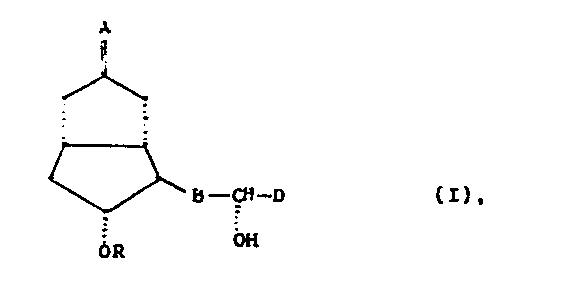
A den 2bindigen Rest -O-X-O- mit X als gerad- oder verzweigtkettigem Alkylen mit 1 - 7 C-Atomen oder die Reste =CH-(CH₂)₃-COORʹ, =CH-CH₂-O-CH₂-COORʹ oder =CH-(CH₂)₃-O-CH₂-CH₂-COORʹ mit Rʹ als C₁-C₇-Alkyl bedeutet,
R den Rest

B eine trans-CH=C(X)-Gruppe mit X als Wasserstoff oder Brom, wobei sich die trans-Konfiguration auf die C-Kette bezieht, und
D eine Alkylgruppe mit 1 - 10 C-Atomen, eine Alkenylgruppe mit 1 - 10 C-Atomen oder eine Alkinylgruppe mit 1 - 10 C-ATomen bedeuten
dadurch gekennzeichnet, daß man Keto-bicyclo[3.3.0]octan-Derivate der Formel II
Description
- Die Erfindung betrifft ein neues Verfahren zur Reduktion von 15-Ketocarbacyclin-Zwischenprodukten (PG-Nomenklatur) in Gegenwart von Cer-III-Salzen.
- Bei den Synthesen der pharmakologisch wirksamen Carbacyclin-Analogen Iloprost, Cicaprost bzw. Eptaprost ist die Reduktion der 15-Ketogruppe zur 15α-Hydroxygruppe eine sehr wichtige Stufe. Die Reduktion mit technisch leicht zugänglichen Reagenzien wie Natriumborhydrid führt zu einem Gemisch mit dem unerwünschten 15β-Hydroxy-Isomeren. Die beiden Isomeren müssen durch Chromatographie voneinander getrennt werden. (Aus wirtschaftlichen Gründen muß das 15β-Isomere zum Ausgangsketon zurückoxidiert und erneut reduziert und in die 15-Isomeren getrennt werden usw.). Der zur Trennung erforderliche Aufwand (Adsorbens, Lösungsmittelmenge) ist um so höher, je mehr 15β-Hydroxy-Isomeres abgetrennt werden muß.
- Nach den bisherigen Verfahren ist der Anteil an unerwünschten 15β-Hydroxy-Isomeren stets hoch, soweit es sich um die Reduktion mit einfachen Hydrid-Reagenzien handelt.
- Zudem wird Iloprost, das ein Diastereomeren-Gemisch der 16-Methylverbindungen im Verhältnis 16α:16β = 54:46 darstellt, über diesen Weg bisher nur erhalten, wenn die oben erwähnte Rückoxidation ein- bis zweimal durchgeführt wird und alle nach Reduktion und Chromatographie erhaltenen 15α-Hydroxyprodukte (die für sich unterschiedliche Diastereomeren-Zusammensetzungen aufweisen) vereint weiterverarbeitet werden. Die chemische Reduktion erfordert, wie man unschwer erkennen kann, einen außerordentlich hohen Aufwand.
- Bei der Iloprost-Synthese kann die 15-Ketogruppe (3a, Schema 1) auch mikrobiologisch reduziert werden (zu 4a). Der Aufwand der Durchführung einer mikrobiologischen Reduktion, der Aufarbeitung und der Aufreinigung des Produkts bis zur Abtrennung unerwünschter Begleitstoffe ist jedoch sehr aufwendig.
- Bei der Cicaprost- und Eptaprost-Zwischenstufe 1 ist die mikrobiologische Reduktion nicht durchführbar.
- Sie läßt sich auch bei 3b nicht durchführen. 3b ist durch die gleichzeitige angemeldeten Synthesen über 3α-Hydroxy-cis-bicyclo[3.3.0]octan-7-on-2β-carbonsäuremethylester-Derivate, insbesondere das 7,7-Neopentylketal, auf wesentlich einfachere Weise als die bisherige Vorstufe 3a herstellbar.

- Das aus den THP-ether-Vorstufen (an Stelle der erwähnten Silylether) erhältliche Keton 3c führt bei der Natriumborhydrid-Reduktion zu weniger guten Ausbeuten und zu einer unbefriedigenden 16-Diastereomeren-Verteilung. Zudem lassen sich die 15-Isomeren erst nach Abspaltung der Schutzgruppen trennen, was die Verwertbarkeit des 15β-Anteils durch Rückoxidation erschwert. Der Weg über 3c ist daher ungünstiger als über 3b.
- Es bestand daher die Aufgabe, die chemische Reduktion der 15-Ketogruppe bei der Synthese von Carbacyclin-Analoga bezüglich der Ausbeute an 15α-Hydroxy-Produkt und bei der Iloprost-Synthese auch hinsichtlich der 16-Diastereomeren-Zusammensetzung zu verbessern.
- Die Erfindung betrifft somit ein Verfahren zur Herstellung von α-Hydroxy-bicyclo[3.3.0]octan-Derivaten der Formel I
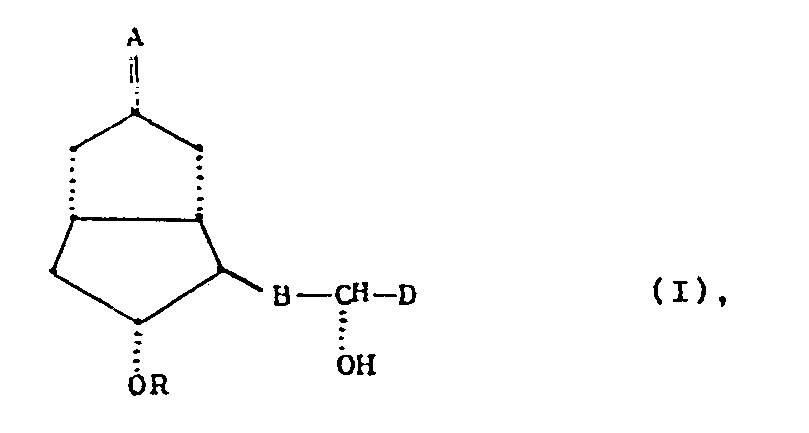
A den 2bindigen Rest -O-X-O- mit X als gerad- oder verzweigt kettigem Alkylen mit 1 - 7 C-Atomen oder die Reste =CH-(CH₂)₃-COORʹ, =CH-CH₂-O-CH₂-COORʹ oder =CH-(CH₂)₃-O-CH₂-CH₂-COORʹ mit Rʹ als C₁-C₇-Alkyl bedeutet,
R den Rest
B eine trans-CH=C(X)-Gruppe mit X als Wasserstoff oder Brom, wobei sich die trans-Konfiguration auf die C-Kette bezieht, und
D eine Alkylgruppe mit 1 - 10 C-Atomen, eine Alkenylgruppe mit 1 - 10 C-Atomen oder eine Alkinylgruppe mit 1-10 C-Atomen bedeuten,
dadurch gekennzeichnet, daß man Keto-bicyclo[3.3.0]octan-Derivate der Formel II
- Bei der Lösung der Aufgabe sind zwei Effekte wichtig, die einzeln, besonders aber miteinander kombiniert, vorteilhaft sind:
-

- Die Ausbeuteerhöhung beträgt somit mehr als 100 %, wenn man den Schutzgruppeneffekt mit berücksichtigt.
- Die Herstellung von 1c erfolgt in Analogie zur Herstellung von 1a aus dem im Beispiel A 1 beschriebenen Carbaldehyd.
- Zur Verwendung der erhaltenen Verbindung 2c eignen sich die gleichen Verfahren, die zur Verwendung der Verbindungen 2a und 2b geeignet sind. Die Abspaltung der Schutzgruppen erfolgt in Analogie zum Beispiel A 3.
- Hierzu zählt besonders der Frstz der bisher eingesetzten 11-Ester durch 11-Silylether.

- Die hohe Ausbeute bei der erfindungsgemäßen Reduktion von 3b zu 4b hat zur Folge, daß auch die 16-Methyl-Diastereomeren-Verteilung richtig ist, womit die Rückoxidation des 15β-OH-Anteils entfallen kann, die Chromatographie erleichtert wird und ein gut zugängliches Ausgangsmaterial für die Synthese von Iloprost verwendet werden kann.
- (+)-3α-Hydroxy-7,7-(2,2-dimethyl-trimethylendioxy)-cis-bicyclo[3.3.0]octan-2β-carbonsäure-methylester, hergestellt z.B. nach der deutschen Anmeldung P 36 38 758.4, wird nach den von H. Wetter und K. Oertle. Tetrahedron Letters 26, 5515 (1985) bzw. von S. Hanessian und P. Lavallee, Can. J. Chem. 53, 2975 (1975) angegebenen Verfahren in die Silylether überführt und die Carbonsäure-methylester-Gruppe in Analogie zu den von K. Mori und M. Tsuji. Tetrahedron 42, 435 (1986) beschriebenen Bedingungen, jedoch bis -40°C, reduziert. Die weitere Umsetzung erfolgt wie in den Beispielen A 1 und A 2 beschrieben. Als Silylchloride werden Thexyl-dimethyl-chlorsilan und tert.-Butyl-diphenyl-chlorsilan eingesetzt.
- Die Schutzgruppenabspaltung aus der erhaltenen Verbindung 4d erfolgt in Analogie zum Beispiel A 3. Bei der Verbindung 4e wird die Schutzgruppenabspaltung im allgemeinen nacheinander erfolgen. Der Silylether wird z.B. mit Tetrabutylammoniumfluorid in Tetrahydrofuran gespalten und das Ketal unter den Bedingungen des Beispiels A 3. Die Schritte können vertauscht werden. In allen Fällen entsteht die Verbindung 5.
- Der Zusatz von Cer-3-chlorid bei der Reduktion von 15-Keto-prostaglandin Zwischenprodukten ist bekannt (J.-L. Luche, J. Amer. Chem. Soc. 100, 2226 (1978), J.C.S. Chem. Comm. 1978, 601). Er dient jedoch dazu, unerwünschte 1,4-Additionen, d.h. die Reduktion der C₁₃-C₁₄-Doppelbindung, zu vermeiden. Über eine Verbesserung des 15α/β-Verhältnisses in den Produkten ist bisher nichts bekannt. Man findet im Gegenteil bei der Anwendung dieser Arbeitstechnik häufig keine Veränderung eher eine Verschlechterung der Ausbeute an 15α-Hydroxy-Produkten, wie in der folgenden Übersicht an zwei Beispielen dargestellt wird.

- Es ist daher überraschend, daß Cer-III-chlorid den 15α-Hydroxy-Anteil bei der Reduktion von Verbindungen der Formel II deutlich steigert.
- Bevorzugt werden Ausgangsmaterialien, die sich aus gut zugänglichen Carbacyclin-Vorstufen unter Verwendung handelsüblicher und ausreichend stabiler Schutzgruppen herstellen lassen. Die Anwendung der erfindungsgemäßen Reaktion soll durch diese Auswahl jedoch nicht eingeschränkt werden.
- Natriumborhydrid und Cer-3-chlorid werden deshalb bevorzugt verwendet, weil sie leicht in großer Menge erhältlich sind. Die Reduktion ließe sich jedoch auch mit anderen Borhydriden und anderen Cer-3-Salzen durchführen, soweit sich diese unter den Reaktionsbedingungen nicht zersetzen.
- Natriumborhydrid muß in mindestens stöchiometrischen Mengen eingesetzt, Cer-3-Salze können dagegen auch auf katalytische Mengen beschränkt werden. Bevorzugt ist Cer-3-chlorid, das sowohl wasserfrei als auch als Hydrat oder Lösung verwendet werden kann.
- Geeignete Lösungsmittel besitzen eine ausreichende Löslichkeit für die Reaktionspartner und reagieren im gewählten Temperaturbereich nicht mit ihnen. Bevorzugt ist Methanol; weiter können für sich oder im Gemisch verwendet werden: Ethanol, Tetrahydrofuran, Dimethylformamid und andere, gegebenenfalls unter Zusatz von Wasser.
- Niedrige Temperaturen (-100 bis 0 °C) fördern die Bildung von 15α-Hydroxy-Isomeren. Die Reaktionszeiten betragen je nach Wahl der Reaktionsbedingungen zwischen wenigen Minuten bis zu einigen Stunden.
- Die Herstellung von 1a und 3a sowie die Umsetzung der Verbindungen 2a, 4a und 5 zu Carbacyclin-Analogen ist bekannte (1a, 2a: Europäische Patentanmeldung 119 949; 3a, 4a, 5: Europäische Patentschrift 11 591).
- 3b wird in Analogie zu bekannten Verfahren (Schema 2) aus (1S,2S,3R,5R)-3-tert.-Butyldimethylsilyloxy-7,7-(2,2-dimethyltrimethylendioxy)-2-hydroxy-methyl-bicyclo[3.3.0]octan (6) hergestellt (Beispiel A1 und A2). Im Reduktionsprodukt 4b lassen sich durch Säurebehandlung die Schutzgruppen unter Bildung des bereits bekannten 5 entfernen.

- Das Verfahren läßt sich auch auf die durch die Formeln 8 und 9 repräsentierte Reihe mit der natürlich konfigurierten unteren Kette ausdehnen (Beispiel 7).

- Die Herstellung des Ausgangsmaterials 8 erfolgt gemäß Beispiel A 4.
- Die Verwendung des Reduktionsprodukts 9 zur Synthese von unsubstituiertem Carbacyclin 11 erfolgt durch Schutzgruppenabspaltung gemäß Beispiel A 5 zur Verbindung 10. Die Herstellung von Carbacyclin aus 10 wurde bereits von Kojima et al. Chem. Pharm. Bull. 33, 2588 (1985) beschrieben.
- Wenn X einen geradkettigen oder verzweigtkettigen Alkylenrest mit 1 - 7 C-Atomen bedeutet, so sind damit folgende Reste gemeint:
-(CH₂)n- mit n = 1 - 7 (Methylen, Ethylen, Tri-, Tetra-, Penta-, Hexa- und Heptamethylen), -C(CH₃)₂-, -CH(CH₃)-, -CH(CH₃)-CH₂-, -C(CH₃)₂-CH₂-, -CH₂-CH(CH₃)-, CH₂-C(CH₃)₂-, -CH₂-CH(CH₃)-CH₂-, -CH₂-C(CH₃)₂-CH₂-, -CH(C₂H₅)-, -C(C₂H₅)₂-, -CH(C₂H₅)-CH₂-, -C(C₂H₅)₂-CH₂, -CH₂-CH(C₂H₅)-, -CH₂-C(C₂H₅)₂-, -CH₂-CH(C₂H₅)-CH₂-, -CH₂-C(C₂H₅)₂- usw. - Unter R, R₁, R₂ und R₃ als C₁-C₇-Alkyl werden Methyl, Ethyl, n-Propyl, Isopropyl, n-Butyl, Isobutyl, sek.-Butyl, tert.-Butyl, n-Pentyl, Isopentyl, sek.-Pentyl, Neopentyl, n-Hexyl, Isohexyl, Heptyl usw. verstanden.
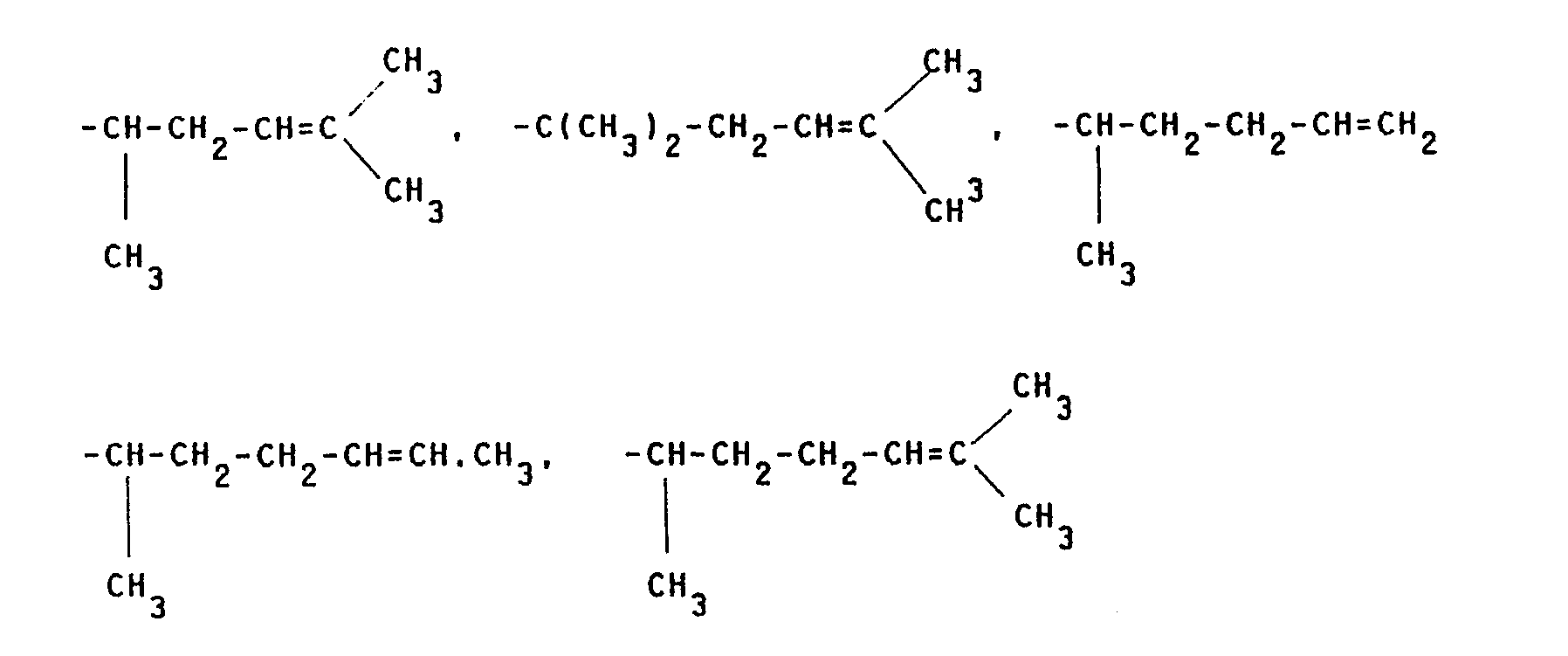
- D als Alkylgruppe mit 1 - 10 C-Atomen bedeutet außer den vorgenannten Alklyresten noch Octyl, Nonyl, Decyl und die dazugehörigen verzweigten Isomeren.
- D als Alkenylgruppe mit 1 - 10 C-Atomen bedeutet bevorzugt

- Die folgenden Ausführungsbeispiele sollen die Erfindung näher erläutern:
- Man löst 1.38 g Oxalylchlorid in 20 ml Dichlormethan, kühlt auf -60 °C ab und versetzt mit 1.87 g Dimethylsulfoxid in 6 ml Dichlormethan. Nach 10 Minuten fügt man eine Lösung von 2,886 g (-)-(1S,2S,3R,5R)-7,7-(2,2-Dimethyltrimethylendioxy)-3-tert.butyldimethylsilyloxy-2-hydroxymethyl-bicyclo[3.3.0]octan in 13 ml Dichlormethan zu und rührt 30 Minuten. Dann tropft man 2,42 g Triethylamin in 5 ml Dichlormethan dazu. Nach 2 Stunden läßt man auf 0 °C erwärmen, fügt 260 ml Eiswasser zu, trennt die organische Phase ab, wäscht sie mit Natriumchlorid-Lösung. Nach Trocknen mit Natriumsulfat und Entfernen des Lösungsmittels im Vakuum erhält man ca. 3.0 g der Titelverbindung als Rohprodukt, das ohne weitere Reinigung verwendet werden kann.
- Man suspendiert 0,447 g Natriumhydrid (55 %) in 39 ml Tetrahydrofuran, kühlt im Eisbad und versetzt mit 2,58 g racemischem 3-Methyl-2-oxo-hept-5-in-yl-phosphonsäuredimethylester öin 20 ml Tetrahydrofuran. Man rührt 20 Minuten und gibt dann die 3.0 g des im Beispiel A 1 erhaltenen Carbaldehyds in 39 ml Tetrahydrofuran dazu. Nach 3 Stunden bei Eisbadtemperatur und 45 Minuten bei Raumtemperatur neutralisiert man mit Essigsäure, konzentriert im Vakuum, nimmt in Dichlormethan auf, wäscht mit Natriumhydrogencarbonat und Natriumchlorid-Lösung, trocknet mit Natriumsulfat, entfernt das Lösungsmittel und chromatographiert den Rückstand an Kieselgel mit Hexan-Ethylacetat-Gemischen. Man erhält 3,68 g Produkt mit [α]D + 1,0°, [α]₃₆₅ +26,6° (CHCl₃. c=1), das zur weiteren Umsetzung geeignet ist.
- Man löst 2,278 g des gemäß Beispiel 3a erhaltenen unpolaren Produkts in 9 ml Tetrahydrofuran, 32,5 ml Essigsäure und 17,5 ml Wasser und erwärmt für 4 Stunden auf 45 °C. Dann destilliert man im Vakuum ab. zum Schluß unter Toluol-Zusatz, nimmt in Dichlormethan auf, extrahiert mit Wasser, trocknet mit Natriumsulfat, konzentriert im Vakuum und chromatographiert an Kieselgel mit Hexan-Ethylacetat-Gemischen. Man erhält 1,26 g der Titelverbindung, die chromatographisch und spektroskopisch identisch ist mit Material nach dem frühre beschriebenen Syntheseweg, die für die Herstellung von Iloprost erforderliche Zusammensetzung der 16-Diastereomeren aufweist und dessen Enantiomerenreinheit (bestimmt durch HPLC der MTPA-Ester) größer als 99 % ist.
- Man suspendiert 113 mg Natriumhydrid (55 %) in 10 ml Tetrahydrofuran und versetzt bei 20°C mit 630 mg 2-Oxo-heptyl-phosphonsäure-dimethylester in 4,5 ml Tetrahydrofuran. Man rührt 30 Minuten und gibt dann 1,0 g des wie in Beispiel A 1 erhaltenen Carbaldehyds in 9 ml Tetrahydrofuran dazu. Nach 5 Stunden neutralisiert man mit Essigsäure, konzentriert im Vakuum, nimmt in Dichlormethan auf, wäscht mit Natriumchlorid-Lösung, trocknet mit Natriumsulfat, entfernt das Lösungsmittel und chromatographiert den Rückstand an Kieselgel mit Hexan/tert.-Butyl-methylether-Gemischen. Man erhält 1,19 g Produkt mit [α]D + 2,3° (Chloroform, c=1).
- Man löst 0,54 g des gemäß Beispiel 7 erhaltenen unpolaren Produkts in 9 ml Ethanol, versetzt mit 6 ml Wasser und 0,06 ml konz. Salzsäure und rührt für 3 Stunden bei RAumtemperatur. Dann neutralisiert man mit Natriumhydrogencarbonat, destilliert im Vakuum ab, nimmt in Ethylacetat auf, extrahiert mit Natriumchlorid-Lösung, trocknet mit Natriumsulfat, konzentriert im Vakuum und chromatographiert an Kieselgel mit Hexan/Ethylacetat-Gemischen. Man erhält 0.27 g der Titelverbindung mit [α]D -11,2° (Methanol, c=1). Kojima et al (l. c.) geben -11,5° (Methanol, c=1) an.
- Man löst 107,53 g (1S,2S,3R,5R)-2-[(1Z)(4S)-2-Brom-4-methyl-3-oxo-non-1-en-6-inyl]-7,7-ethylendioxy-3-benzoyloxy-bicyclo[3.3.0]-octan in 2 l Methanol, kühlt auf -40 °C ab, versetzt mit 11,68 g Cer-3-chlorrid-heptahydrat, rührt 15 Minuten, trägt dann 12,37 g Natriumborhydrid in Portionen ein, rührt 30 Minuten, tropft Aceton im Überschuß dazu, rührt weitere 30 Minuten, neutralisiert mit Essigsäure, erwärmt und destilliert im Vakuum ab. Man löst den Rückstand in Dichlormetahn und Wasser, wäscht mit Wasser, trocknet mit Natriumsulfat, konzentriert im Vakuum und chromatographiert an Kieselgel mit Dichlormethan/Ethylacetat-Gemischen.
- Man erhält 55,2 g der Titelverbindung als unpolares Isomeres neben 47,0 g des polareren 3ʹR-Isomeren (15α:15β = 54:46).
- Man führt die Umsetzunög wie unter a) beschrieben, jedoch ohne Cer-3-chlorid, durch. Um vollständige Umsetzung zu erzielen, muß die Natriumborhydrid Menge erhöht werden. Man erhält die Isomeren im Verhältnis 40:60.
- Man setzt 56.5 g (1S,2S,3R,5R)-2-[(Z)(3S,4S,)2-Brom-4-methyl-3-oxo-non-1-en-6-inyl]-7,7-(2,2-dimethyl-trimethylendioxy)-3-(4-phenylbenzoyloxy)-bicyclo[3.3.0]octan nach den Bedingungen von Beispiel 1 mit 5.28 g Natriumborhydrid in Gegenwart von 4,96 g Cer-3-chlorid heptahydrat um und erhält 30,06 g der unpolareren 3ʹS-Verbindung neben 23,62 g der polareren 3ʹR-Verbindung (15α:15β = 56:44).
- Man führt die Umsetzung wie unter a) beschrieben, jedoch ohne Cer-3-chlorid und mdit erhöhter Natriumborhydrid-Menge durch. Man erhält die Isomeren im Verhältnis 15α:15β = 46:54.
- 3,50 g des Ketons aus Beispiel A 2 löst man in 100 ml Methanol und kühlt auf -75 °C. Man gibt 2,76 g Cer-3-chlorid-heptahydrat zu, rührt 1 Stunde, versetzt mit 0,51 g Natriumborhydrid und rührt weitere 45 Minuten bei -75 °C. Nach Zugabe von Aceton wird langsam erwärmt, mit Essigsäure neutralisiert und im Vakuum konzentriert. Man löst den Rückstand in Dichlormethan, extrahiert mit Wasser, trocknet mit Natriumsulfat uönd konzentriert im Vakuum. Man chromatographiert an Kieselgel mit Hexan/tert.-Butylmethylether-Gemischen und erhält 2,52 g der Titelverbindung [unpolares Isomeres, [α]D + 8,8°, [α]₃₆₅ + 24.2° (CHCl₃. c=1)] und 0,25 g des polareren 3ʹR-Isomeren.
- HPLC-Messungen zeigen, daß in der Titelverbindung die Methylisomeren im Verhältnis α:β = 54:46 vorliegen.
- Man führt die Umsetzung wie unter a) beschrieben, jedoch ohne Cer-3-chlorid und mit erhöhter Natriumborhydrid-Menge durch. Man erhält die Isomeren im Verhältnis 3ʹS:3ʹR = 74:26.
- Im 3ʹS-Anteil liegen die Methylisomeren im Verhältnis α:β = 59:41 vor.
- Man reduziert 106,0 g (1S,2S,3R,5R)-2-[(1Z) (3S)-2-Brom-4-methyl-3-oxo-non-1-en-6-inyl]-7,7-(2,2-dimethyl-trimethylen-dioxy)-3-(4-tert.-butyl-dimethyl-silyloxy-bicyclo[3.3.0]octan gemäß Beispiel 3. Im Rohprodukt liegen die 15α/15β-Isomeren nach HPLC im Verhältnis 88,9 : 11,1 vor. Bei der Auftrennung des Gemisches durch Chromatographie erhält man 92,2 g des unpolareren 15α-Hydroxy-Isomeren [α]D + 21° (Chloroform, c=1) und 8,0 g des polareren 15β-Hydroxy-Isomeren.
- 4,5 g (1S,2S,3R,5R)-7,7-(2,2-Dimethyl-trimethylendioxy)-3-(2,3-di-methyl-but-2 -yl)-dimethyl-silyloxy-2[(4RS) (1E)-4-methyl-3-oxo-oct-1-en-6-inyl]bicyclo[3.3.0]octan werden gemäß Beispiel 3a) reduziert. Man erhält 3,16 g des unpolaren 15α-Hydroxy-Isomeren [α]D +3,0° (Chloroform, c=1), 0,65 g des polaren 15β-Hydroxy-Isomeren und 0,57 g Mischfraktionen.
- HPLC-Messungen nach Abspaltung der Schutzgruppen zeigen, daß die Methylisomeren im Verhältnis α:β = 54:46 vorliegen.
- 3,0 g (1S,2S,3R,5R)-7,7-(2,2-Dimethyl-trimethylendioxy)-3-tert.-butyl-diphenyl-silyloxy-2-[(4RS) (1E)-4-methyl-3-oxo-oct-1-en-6-inyl]bicyclo[3.3.0]oxtan werden gemäß Beispiel 3a) reduziert. Man erhält 2,60 g des unpolaren 15α-Hydroxy-Isomeren [α]D +21,1° (Chloroform, c=1) und 0,35 g des polaren 15β-Hydroxy-Isomeren, das noch etwas 15α-Hydroxy-Isomeres enthält.
- HPLC-Mesungen nach Abspaltung der Schutzgruppen zeigen, daß die Methyliosmeren im Verhältnis α:β = 53:47 vorliegen.
- 10, 0 g des in Beispiel A 4 erhaltenen Ketons werden gemäß Beispiel 3a) reduziert. Man erhält 8,05 g der unpolaren 15α-Hydroxy-Verbindung mit [α]D -3,5° (Chloroform, c=1) neben 1,30 g des polaren 15β-Hydroxy-Isomeren.
Claims (4)

A den 2bindigen Rest -O-X-O- mit X als gerad- oder verzweigtkettigem Alkylen mit 1 - 7 C-Atomen oder die Reste =CH-(CH₂)₃-COORʹ, =CH-CH₂-O-CH₂-COORʹ oder =CH-(CH₂)₃-O-CH₂-CH₂-COORʹ mit Rʹ als C₁-C₇-Alkyl bedeutet,
R den Rest

B eine trans-CH=C(X)-Gruppe mit X als Wasserstoff oder Brom, wobei sich die trans-Konfiguration auf die C-Kette bezieht, und
D eine Alkylgruppe mit 1 - 10 C-Atomen, eine Alkenylgruppe mit 1 - 10 C-Atomen oder eine Alkinylgruppe mit 1 - 10 C-Atomen bedeuten
dadurch gekennzeichnet, daß man Keto-bicyclo[3.3.0]octan-Derivate der Formel II

Priority Applications (1)
| Application Number | Priority Date | Filing Date | Title |
|---|---|---|---|
| AT87730147T ATE66472T1 (de) | 1986-11-13 | 1987-11-12 | Verbesserte ketoreduktion von carbacyclinzwischenprodukten. |
Applications Claiming Priority (2)
| Application Number | Priority Date | Filing Date | Title |
|---|---|---|---|
| DE19863638761 DE3638761A1 (de) | 1986-11-13 | 1986-11-13 | Verbesserte ketoreduktion von carbacyclinzwischenprodukten |
| DE3638761 | 1986-11-13 |
Publications (3)
| Publication Number | Publication Date |
|---|---|
| EP0268548A2 true EP0268548A2 (de) | 1988-05-25 |
| EP0268548A3 EP0268548A3 (en) | 1988-06-22 |
| EP0268548B1 EP0268548B1 (de) | 1991-08-21 |
Family
ID=6313861
Family Applications (1)
| Application Number | Title | Priority Date | Filing Date |
|---|---|---|---|
| EP87730147A Expired - Lifetime EP0268548B1 (de) | 1986-11-13 | 1987-11-12 | Verbesserte Ketoreduktion von Carbacyclinzwischenprodukten |
Country Status (15)
| Country | Link |
|---|---|
| US (1) | US5200530A (de) |
| EP (1) | EP0268548B1 (de) |
| JP (1) | JP2596575B2 (de) |
| AT (1) | ATE66472T1 (de) |
| AU (1) | AU610101B2 (de) |
| CA (1) | CA1326238C (de) |
| CS (1) | CS271479B2 (de) |
| DD (1) | DD265623A5 (de) |
| DE (2) | DE3638761A1 (de) |
| ES (1) | ES2038205T3 (de) |
| GR (1) | GR3002974T3 (de) |
| HU (1) | HU199447B (de) |
| IE (1) | IE59349B1 (de) |
| WO (1) | WO1988003527A1 (de) |
| ZA (1) | ZA878504B (de) |
Cited By (1)
| Publication number | Priority date | Publication date | Assignee | Title |
|---|---|---|---|---|
| WO1990003974A1 (de) * | 1988-10-13 | 1990-04-19 | Schering Aktiengesellschaft Berlin Und Bergkamen | (1s, 2s, 3r, 5r)-2-[(3s)-2-halogen-3-hydroxy-1-alken(inyl)]-3-trialkylsilyloxy-7,7-(2,2-dimethyl-trimethylendioxy)-bicyclo[3.3.0]octan-verbindungen und verfahren zu deren herstellung |
Families Citing this family (3)
| Publication number | Priority date | Publication date | Assignee | Title |
|---|---|---|---|---|
| DE3638757A1 (de) * | 1986-11-13 | 1988-05-26 | Schering Ag | Neues verfahren zur herstellung von optisch aktiven carbacyclin-zwischenstufen |
| FR2763777B1 (fr) | 1997-05-22 | 1999-08-13 | Sgs Thomson Microelectronics | Circuit de commande d'une membrane vibrante |
| US7232920B2 (en) * | 2003-04-22 | 2007-06-19 | Biocon | Process for stereoselective reduction of β-ketoesters |
Family Cites Families (5)
| Publication number | Priority date | Publication date | Assignee | Title |
|---|---|---|---|---|
| DE3225288A1 (de) * | 1982-07-02 | 1984-01-19 | Schering AG, 1000 Berlin und 4709 Bergkamen | Neue carbacycline, verfahren zu ihrer herstellung und ihre verwendung als arzneimittel |
| CA1252780A (en) * | 1983-07-26 | 1989-04-18 | Kazuo Koyama | Carbacyclin derivatives, process for their preparation and compositions containing them |
| JPS60172941A (ja) * | 1984-02-16 | 1985-09-06 | Sankyo Co Ltd | カルバサイクリン類 |
| US4522949A (en) * | 1983-10-20 | 1985-06-11 | E. R. Squibb & Sons, Inc. | 7-Oxabicycloheptane substituted prostaglandin interphenylene analogs useful as cardiovascular agents |
| DE3405181A1 (de) * | 1984-02-10 | 1985-08-22 | Schering AG, 1000 Berlin und 4709 Bergkamen | Neue carbacycline, verfahren zu ihrer herstellung und ihre verwendung als arzneimittel |
-
1986
- 1986-11-13 DE DE19863638761 patent/DE3638761A1/de not_active Withdrawn
-
1987
- 1987-11-05 DD DD87308710A patent/DD265623A5/de not_active IP Right Cessation
- 1987-11-06 CS CS877982A patent/CS271479B2/cs not_active IP Right Cessation
- 1987-11-12 AU AU82363/87A patent/AU610101B2/en not_active Ceased
- 1987-11-12 US US07/772,762 patent/US5200530A/en not_active Expired - Lifetime
- 1987-11-12 HU HU875805A patent/HU199447B/hu unknown
- 1987-11-12 WO PCT/DE1987/000519 patent/WO1988003527A1/de not_active Ceased
- 1987-11-12 IE IE304887A patent/IE59349B1/en not_active IP Right Cessation
- 1987-11-12 DE DE8787730147T patent/DE3772332D1/de not_active Expired - Lifetime
- 1987-11-12 ZA ZA878504A patent/ZA878504B/xx unknown
- 1987-11-12 AT AT87730147T patent/ATE66472T1/de not_active IP Right Cessation
- 1987-11-12 JP JP62506740A patent/JP2596575B2/ja not_active Expired - Lifetime
- 1987-11-12 EP EP87730147A patent/EP0268548B1/de not_active Expired - Lifetime
- 1987-11-12 CA CA000551617A patent/CA1326238C/en not_active Expired - Lifetime
- 1987-11-12 ES ES198787730147T patent/ES2038205T3/es not_active Expired - Lifetime
-
1991
- 1991-10-23 GR GR91401608T patent/GR3002974T3/el unknown
Cited By (3)
| Publication number | Priority date | Publication date | Assignee | Title |
|---|---|---|---|---|
| WO1990003974A1 (de) * | 1988-10-13 | 1990-04-19 | Schering Aktiengesellschaft Berlin Und Bergkamen | (1s, 2s, 3r, 5r)-2-[(3s)-2-halogen-3-hydroxy-1-alken(inyl)]-3-trialkylsilyloxy-7,7-(2,2-dimethyl-trimethylendioxy)-bicyclo[3.3.0]octan-verbindungen und verfahren zu deren herstellung |
| EP0366216A1 (de) * | 1988-10-13 | 1990-05-02 | Schering Aktiengesellschaft | (1S,2S,3R,5R)-2-[(3S)-2-Halogen-3-hydroxy-1-alken(inyl)]3-trialkyl-silyloxy-7,7-(2,2-dimethyl-trimethyl-enoxy)-bicyclo[3.3.0]octan-Verbindungen und Verfahren zu deren Herstellung |
| US5288878A (en) * | 1988-10-13 | 1994-02-22 | Schering Aktiengesellschaft | (1S,2S,3R,5R)-2-[(3S)-2-halo-3-hydroxy-1-alken(ynyl)]-3-trialkylsilyloxy-7,7-(2,2-dimethyl-trimethylenedioxy)bicyclo[3.3.0]octane compounds and processes for their preparation |
Also Published As
| Publication number | Publication date |
|---|---|
| CA1326238C (en) | 1994-01-18 |
| IE59349B1 (en) | 1994-02-09 |
| DE3638761A1 (de) | 1988-05-26 |
| IE873048L (en) | 1988-05-13 |
| ATE66472T1 (de) | 1991-09-15 |
| ZA878504B (en) | 1988-05-04 |
| EP0268548A3 (en) | 1988-06-22 |
| GR3002974T3 (en) | 1993-01-25 |
| WO1988003527A1 (fr) | 1988-05-19 |
| EP0268548B1 (de) | 1991-08-21 |
| AU610101B2 (en) | 1991-05-16 |
| HU199447B (en) | 1990-02-28 |
| CS798287A2 (en) | 1989-09-12 |
| DE3772332D1 (de) | 1991-09-26 |
| US5200530A (en) | 1993-04-06 |
| JP2596575B2 (ja) | 1997-04-02 |
| JPH01501390A (ja) | 1989-05-18 |
| ES2038205T3 (es) | 1993-07-16 |
| AU8236387A (en) | 1988-06-01 |
| DD265623A5 (de) | 1989-03-08 |
| CS271479B2 (en) | 1990-10-12 |
| HUT46901A (en) | 1988-12-28 |
Similar Documents
| Publication | Publication Date | Title |
|---|---|---|
| EP0011591B1 (de) | Neue Prostanderivate, ihre Herstellung und sie enthaltende Arzneimittel | |
| EP0002234B1 (de) | Neue Prostacyclinderivate, ihre Herstellung und Anwendung | |
| EP0051558B1 (de) | Prostacyclinderivate, Verfahren zu ihrer Herstellung und ihre Verwendung als Arzneimittel | |
| EP0563358B1 (de) | 9-substituierte bicyclo [3.3.0]octan-derivate verwendbar als txa2-antagonisten | |
| EP0268548B1 (de) | Verbesserte Ketoreduktion von Carbacyclinzwischenprodukten | |
| FR2573759A1 (fr) | Composes derives du cholecalciferol et leur procede de preparation, composition pharmaceutique et utilisation desdits composes dans la preparation de cette composition | |
| EP0062902B1 (de) | 2,3,4-Trinor-m-inter-phenylen-prostaglandin-Derivate, Verfahren zu deren Herstellung sowie diese Verbindungen enthaltende pharmazeutische Präparate | |
| EP0013955B1 (de) | Neue Analoga von Prostacyclin, deren Zwischenprodukte, Verfahren zu ihrer Herstellung sowie sie enthaltende Arzneimittel | |
| US4424376A (en) | Prostacyclin intermediates | |
| EP0015227A1 (de) | Neue Prostacyclin-Derivate und Verfahren zu ihrer Herstellung | |
| EP0051597B1 (de) | Neue prostacyclinderivate und ihre herstellung | |
| EP0031426B1 (de) | 7-Oxo-PGI2-derivate, Verfahren zu deren Herstellung sowie diese Verbindungen enthaltende pharmazeutische Präparate | |
| EP0284547B1 (de) | 6-Oxoprostaglandin-E-Derivate, Verfahren zu ihrer Herstellung und Arzneimittel | |
| EP0063538B1 (de) | Neue Prostaglandine und Prostacycline, Verfahren zu ihrer Herstellung und ihre Verwendung als Arzneimittel | |
| EP0270481B1 (de) | Neues Verfahren zur Herstellung von optisch aktiven Carbacyclin-Zwischenprodukten | |
| EP0051557B1 (de) | 5-Cyan-prostacyclinderivate, Verfahren zu ihrer Herstellung und ihrer Verwendung als Arzneimittel | |
| US4311644A (en) | Method for preparing 10,10-difluoro prostacyclin intermediates and new compounds produced thereby | |
| EP0008077B1 (de) | Neue Prostaglandinderivate in der Delta-2-PGF2 und Delta-2-PGE2-Reihe, Verfahren zu deren Herstellung und ihre Verwendung als Arzneimittel | |
| EP0261185B1 (de) | 7-oxoprostacyclinderivate und verfahren zu ihrer herstellung | |
| US4362872A (en) | 6,6-Difluoro-5-hydroxy-4-(3-oxoalk-1-enyl)hexahydro cyclopenta[b] furan-2-ols | |
| EP0113311B1 (de) | 5-Fluorcarbacycline, Verfahren zu ihrer Herstellung und ihre Verwendung als Arzneimittel | |
| EP0098794B1 (de) | Neue Carbacycline, Verfahren zu ihrer Herstellung und ihre Verwendung als Arzneimittel | |
| US4317906A (en) | Method for preparing 10,10-difluoro prostacyclins | |
| EP0059146A1 (de) | Arzneimittel, abgeleitet von 3-Hydroxy-dodecahydro-benz(e)inden-7-on, Produkte, abgeleitet von 3-Hydroxy-dodecahydro-benz(e)inden-7-on und Verfahren zu ihrer Herstellung | |
| EP0059307A1 (de) | Verfahren zur Herstellung von 2-Oxabicyclo(3.3.0)octanderivaten und danach erhältliche Produkte |
Legal Events
| Date | Code | Title | Description |
|---|---|---|---|
| PUAI | Public reference made under article 153(3) epc to a published international application that has entered the european phase |
Free format text: ORIGINAL CODE: 0009012 |
|
| PUAL | Search report despatched |
Free format text: ORIGINAL CODE: 0009013 |
|
| 17P | Request for examination filed |
Effective date: 19871119 |
|
| AK | Designated contracting states |
Kind code of ref document: A2 Designated state(s): AT BE CH DE ES FR GB GR IT LI LU NL SE |
|
| AK | Designated contracting states |
Kind code of ref document: A3 Designated state(s): AT BE CH DE ES FR GB GR IT LI LU NL SE |
|
| 17Q | First examination report despatched |
Effective date: 19900406 |
|
| GRAA | (expected) grant |
Free format text: ORIGINAL CODE: 0009210 |
|
| AK | Designated contracting states |
Kind code of ref document: B1 Designated state(s): AT BE CH DE ES FR GB GR IT LI LU NL SE |
|
| REF | Corresponds to: |
Ref document number: 66472 Country of ref document: AT Date of ref document: 19910915 Kind code of ref document: T |
|
| REF | Corresponds to: |
Ref document number: 3772332 Country of ref document: DE Date of ref document: 19910926 |
|
| ITF | It: translation for a ep patent filed | ||
| ET | Fr: translation filed | ||
| GBT | Gb: translation of ep patent filed (gb section 77(6)(a)/1977) | ||
| PLBE | No opposition filed within time limit |
Free format text: ORIGINAL CODE: 0009261 |
|
| STAA | Information on the status of an ep patent application or granted ep patent |
Free format text: STATUS: NO OPPOSITION FILED WITHIN TIME LIMIT |
|
| 26N | No opposition filed | ||
| REG | Reference to a national code |
Ref country code: GR Ref legal event code: FG4A Free format text: 3002974 |
|
| REG | Reference to a national code |
Ref country code: ES Ref legal event code: FG2A Ref document number: 2038205 Country of ref document: ES Kind code of ref document: T3 |
|
| EPTA | Lu: last paid annual fee | ||
| EAL | Se: european patent in force in sweden |
Ref document number: 87730147.3 |
|
| PGFP | Annual fee paid to national office [announced via postgrant information from national office to epo] |
Ref country code: LU Payment date: 19951001 Year of fee payment: 9 |
|
| PGFP | Annual fee paid to national office [announced via postgrant information from national office to epo] |
Ref country code: AT Payment date: 19951012 Year of fee payment: 9 |
|
| PGFP | Annual fee paid to national office [announced via postgrant information from national office to epo] |
Ref country code: GR Payment date: 19951013 Year of fee payment: 9 Ref country code: SE Payment date: 19951013 Year of fee payment: 9 |
|
| PGFP | Annual fee paid to national office [announced via postgrant information from national office to epo] |
Ref country code: BE Payment date: 19951016 Year of fee payment: 9 |
|
| PG25 | Lapsed in a contracting state [announced via postgrant information from national office to epo] |
Ref country code: LU Free format text: LAPSE BECAUSE OF NON-PAYMENT OF DUE FEES Effective date: 19961112 Ref country code: AT Effective date: 19961112 |
|
| PG25 | Lapsed in a contracting state [announced via postgrant information from national office to epo] |
Ref country code: SE Effective date: 19961113 |
|
| PG25 | Lapsed in a contracting state [announced via postgrant information from national office to epo] |
Ref country code: BE Effective date: 19961130 |
|
| BERE | Be: lapsed |
Owner name: SCHERING A.G. BERLIN UND BERGKAMEN Effective date: 19961130 |
|
| PG25 | Lapsed in a contracting state [announced via postgrant information from national office to epo] |
Ref country code: GR Free format text: THE PATENT HAS BEEN ANNULLED BY A DECISION OF A NATIONAL AUTHORITY Effective date: 19970531 |
|
| REG | Reference to a national code |
Ref country code: GR Ref legal event code: MM2A Free format text: 3002974 |
|
| EUG | Se: european patent has lapsed |
Ref document number: 87730147.3 |
|
| REG | Reference to a national code |
Ref country code: GB Ref legal event code: IF02 |
|
| PGFP | Annual fee paid to national office [announced via postgrant information from national office to epo] |
Ref country code: NL Payment date: 20061013 Year of fee payment: 20 |
|
| PGFP | Annual fee paid to national office [announced via postgrant information from national office to epo] |
Ref country code: GB Payment date: 20061016 Year of fee payment: 20 |
|
| PGFP | Annual fee paid to national office [announced via postgrant information from national office to epo] |
Ref country code: CH Payment date: 20061017 Year of fee payment: 20 |
|
| PGFP | Annual fee paid to national office [announced via postgrant information from national office to epo] |
Ref country code: DE Payment date: 20061025 Year of fee payment: 20 |
|
| PGFP | Annual fee paid to national office [announced via postgrant information from national office to epo] |
Ref country code: ES Payment date: 20061121 Year of fee payment: 20 |
|
| PGFP | Annual fee paid to national office [announced via postgrant information from national office to epo] |
Ref country code: IT Payment date: 20061130 Year of fee payment: 20 |
|
| REG | Reference to a national code |
Ref country code: CH Ref legal event code: PFA Owner name: SCHERING AKTIENGESELLSCHAFT, BERLIN & BERGKAMEN Free format text: SCHERING AKTIENGESELLSCHAFT, BERLIN & BERGKAMEN#MUELLERSTRASSE 170-178 POSTFACH 65 03 11#D-13303 BERLIN (DE) -TRANSFER TO- SCHERING AKTIENGESELLSCHAFT, BERLIN & BERGKAMEN#MUELLERSTRASSE 170-178 POSTFACH 65 03 11#D-13303 BERLIN (DE) |
|
| REG | Reference to a national code |
Ref country code: GB Ref legal event code: PE20 |
|
| REG | Reference to a national code |
Ref country code: CH Ref legal event code: PL |
|
| NLV7 | Nl: ceased due to reaching the maximum lifetime of a patent |
Effective date: 20071112 |
|
| PG25 | Lapsed in a contracting state [announced via postgrant information from national office to epo] |
Ref country code: NL Free format text: LAPSE BECAUSE OF EXPIRATION OF PROTECTION Effective date: 20071112 |
|
| REG | Reference to a national code |
Ref country code: ES Ref legal event code: FD2A Effective date: 20071113 |
|
| PG25 | Lapsed in a contracting state [announced via postgrant information from national office to epo] |
Ref country code: GB Free format text: LAPSE BECAUSE OF EXPIRATION OF PROTECTION Effective date: 20071111 Ref country code: ES Free format text: LAPSE BECAUSE OF EXPIRATION OF PROTECTION Effective date: 20071113 |
|
| PGFP | Annual fee paid to national office [announced via postgrant information from national office to epo] |
Ref country code: FR Payment date: 20061002 Year of fee payment: 20 |