EP0269977B1 - Cellulases alcalines et micro-organismes capables de les produire - Google Patents
Cellulases alcalines et micro-organismes capables de les produire Download PDFInfo
- Publication number
- EP0269977B1 EP0269977B1 EP87117314A EP87117314A EP0269977B1 EP 0269977 B1 EP0269977 B1 EP 0269977B1 EP 87117314 A EP87117314 A EP 87117314A EP 87117314 A EP87117314 A EP 87117314A EP 0269977 B1 EP0269977 B1 EP 0269977B1
- Authority
- EP
- European Patent Office
- Prior art keywords
- activity
- optimum
- influences
- range
- medium
- Prior art date
- Legal status (The legal status is an assumption and is not a legal conclusion. Google has not performed a legal analysis and makes no representation as to the accuracy of the status listed.)
- Expired - Lifetime
Links
Images






Classifications
-
- C—CHEMISTRY; METALLURGY
- C12—BIOCHEMISTRY; BEER; SPIRITS; WINE; VINEGAR; MICROBIOLOGY; ENZYMOLOGY; MUTATION OR GENETIC ENGINEERING
- C12N—MICROORGANISMS OR ENZYMES; COMPOSITIONS THEREOF; PROPAGATING, PRESERVING, OR MAINTAINING MICROORGANISMS; MUTATION OR GENETIC ENGINEERING; CULTURE MEDIA
- C12N9/00—Enzymes; Proenzymes; Compositions thereof; Processes for preparing, activating, inhibiting, separating or purifying enzymes
- C12N9/14—Hydrolases (3)
- C12N9/24—Hydrolases (3) acting on glycosyl compounds (3.2)
- C12N9/2402—Hydrolases (3) acting on glycosyl compounds (3.2) hydrolysing O- and S- glycosyl compounds (3.2.1)
- C12N9/2405—Glucanases
- C12N9/2434—Glucanases acting on beta-1,4-glucosidic bonds
- C12N9/2437—Cellulases (3.2.1.4; 3.2.1.74; 3.2.1.91; 3.2.1.150)
-
- C—CHEMISTRY; METALLURGY
- C12—BIOCHEMISTRY; BEER; SPIRITS; WINE; VINEGAR; MICROBIOLOGY; ENZYMOLOGY; MUTATION OR GENETIC ENGINEERING
- C12N—MICROORGANISMS OR ENZYMES; COMPOSITIONS THEREOF; PROPAGATING, PRESERVING, OR MAINTAINING MICROORGANISMS; MUTATION OR GENETIC ENGINEERING; CULTURE MEDIA
- C12N1/00—Microorganisms; Compositions thereof; Processes of propagating, maintaining or preserving microorganisms or compositions thereof; Processes of preparing or isolating a composition containing a microorganism; Culture media therefor
- C12N1/20—Bacteria; Culture media therefor
- C12N1/205—Bacterial isolates
-
- C—CHEMISTRY; METALLURGY
- C12—BIOCHEMISTRY; BEER; SPIRITS; WINE; VINEGAR; MICROBIOLOGY; ENZYMOLOGY; MUTATION OR GENETIC ENGINEERING
- C12Y—ENZYMES
- C12Y302/00—Hydrolases acting on glycosyl compounds, i.e. glycosylases (3.2)
- C12Y302/01—Glycosidases, i.e. enzymes hydrolysing O- and S-glycosyl compounds (3.2.1)
- C12Y302/01004—Cellulase (3.2.1.4), i.e. endo-1,4-beta-glucanase
-
- C—CHEMISTRY; METALLURGY
- C12—BIOCHEMISTRY; BEER; SPIRITS; WINE; VINEGAR; MICROBIOLOGY; ENZYMOLOGY; MUTATION OR GENETIC ENGINEERING
- C12R—INDEXING SCHEME ASSOCIATED WITH SUBCLASSES C12C - C12Q, RELATING TO MICROORGANISMS
- C12R2001/00—Microorganisms ; Processes using microorganisms
- C12R2001/01—Bacteria or Actinomycetales ; using bacteria or Actinomycetales
- C12R2001/07—Bacillus
-
- Y—GENERAL TAGGING OF NEW TECHNOLOGICAL DEVELOPMENTS; GENERAL TAGGING OF CROSS-SECTIONAL TECHNOLOGIES SPANNING OVER SEVERAL SECTIONS OF THE IPC; TECHNICAL SUBJECTS COVERED BY FORMER USPC CROSS-REFERENCE ART COLLECTIONS [XRACs] AND DIGESTS
- Y10—TECHNICAL SUBJECTS COVERED BY FORMER USPC
- Y10S—TECHNICAL SUBJECTS COVERED BY FORMER USPC CROSS-REFERENCE ART COLLECTIONS [XRACs] AND DIGESTS
- Y10S435/00—Chemistry: molecular biology and microbiology
- Y10S435/8215—Microorganisms
- Y10S435/822—Microorganisms using bacteria or actinomycetales
- Y10S435/832—Bacillus
Definitions
- This invention relates to novel alkaline cellulases and also to microorganisms which are able to produce the same, belong to the genus Bacillus , and grow up in a neutral medium.
- cellulases which are cellulose-decomposing enzymes, has been made for the purpose of effectively utilizing biomass resources and particularly, cellulose resources.
- a diversity of strains have been isolated as cellulase-producing fungi or bacteria including, for example, not only molds of the genera Aspergillus , Penicillium , Trichoderma , Fusarium , Humicola , Acremonium and the like, but also bacteria of the genera Pseudomonas , Cellulomonas , Ruminococcus , Bacillus and the like and actinomycetes of the genera Streptomyces , Thermoactinomyces and the like.
- cellulases for biomass have not been frequently utilized on an industrial scale.
- alkaline cellulase used herein is intended to mean one whose optimum pH is in an alkaline range
- alkali-resistant cellulase means one whose optimum pH is in a neutral or an acidic range, but which has a satisfactory activity as compared with an activity at an optimum pH and is maintained stable in an alkaline range.
- neutral means a pH range of from 6 to 8
- alkaline means a higher pH range.
- alkaline cellulases and alkali-resistant cellulases usable in detergent compositions for clothes only several methods have been proposed. These methods include, for example, a method of collecting cellulase A by cultivation of alkalophilic bacilli belonging to the genus Bacillus (Japanese Patent Publication No. 50-28515), a method of producing alkaline cellulase 301-A by cultivation of alkalophilic bacteria belonging to the genus Cellulomonas (Japanese Patent Application Laid-open No. 58-224686), a method of producing carboxymethyl cellulase by cultivation of alkalophilic Bacillus No. 1139 (Fukumori, F., Kudo T.
- Bacillus sp. KSM-635 (FERM P-8872), which is one of alkalophilic bacteria, can efficiently product alkaline cellulase K which is suitable as an ingredient for detergents for clothes and that proper selection of cultivation conditions enables one to enhance the productivity and conduct industrial fermentation production of the alkaline cellulase.
- the cultivation conditions of the Bacillus sp. KSM-635 are not always advantageous from an industrial point of view. More particularly, an alkalophilic strain should be cultivated under alkaline pH conditions during the cultivation. A so-called alkaline fermentation process using alkalophilic strains has just been started, and a full knowledge on the physiological and biochemical properties of these alkalophilic microorganisms has not been obtained. Thus, difficulties have been involved in the preparation of media and the manner of cultivation sufficient to effect the industrial production by fermentation.
- the true alkaline cellulases of the afore-described documents which have an optimum pH in an alkaline region are enzymes which are produced by Bacillus N1 strain, N2 strain and N3 strain (Japanese Patent Publication No. 50-28515) and have optimum pHs of 8 to 9, 9 and 8 to 9, respectively, an enzyme produced by Bacillus No. 1139 and having an optimum pH of 9, and alkaline cellulase K produced by Bacillus sp. KSM-635 and having an optimum pH of 10 (Japanese Patent Application No. 61-257776).
- alkaline cellulase which have an optimum pH in an alkaline region and can be suitably formulated in detergent compositions and which have a wide working pH range.
- the alkaline cellulases may be produced from strains generated by using the gene recombinant technique, in which the strains growing up in a neutral region are employed as host cells and corresponding cellulase genes are cloned.
- the strains growing up in a neutral region are employed as host cells and corresponding cellulase genes are cloned.
- the present inventors have investigated to produce such alkaline cellulases from microorganisms in the natural field and, as a result, have found that, from a series of microorganisms belonging to the gene Bacillus growing in neutral media, the intended alkaline cellulases are readily produced.
- Alkaline cellulases according to the invention are as defined in claims 1 to 6 and typically have the following enzymatic properties:
- microorganisms capable of producing the alkaline cellulases of the invention include strains isolated from the soils of Haga-gun and Nikko-shi in Tochigi, Japan.
- strains have the following mycological properties. It will be noted that the classification of the strains is carried out using the following medium Nos. 1 to 25 (in which values are by wt%).
- Bacillus sp. KSM-580 has a size of the body of 0.4 - 0.8 micrometers x 1.5 - 5.0 micrometers, and has a cylindrical or elliptical endospore (0.4 - 0.8 micrometers x 0.8 - 1.2 micrometers) at the terminal of the body.
- the bacillus has marginal flagellas and is mobile.
- the Gram's staining is positive. Not aciduric.
- the alkalophilic microorganisms grow in alkaline media having a pH not less than 8 and cannot grow up in a neutral or lower pH region, whereas the strains of the invention are able to grow in a weakly acidic to alkaline region (pH 5 -10).
- the strains of the invention can be determined as ordinary microorganisms belong to the genus Bacillus , which grow under neutral conditions.
- KSM-580 may be Bacillus licheniformis .
- the comparison between the strain of the present invention and known strains belonging to the Bacillus licheniformis reveals that the KSM-580 strain is different from those known strains with respect to the reducibility of nitrates.
- the above known strains cannot produce at least alkaline cellulases, and thus the strain of the present invention is considered as a novel strain.
- KSM-425 may be Bacillus circulans .
- the comparison between known strains belonging to the circulanital and the strain of the invention demonstrates a difference in the capability of the hydrolysis of gelatin. Moreover, the above known strains do not produce alkaline cellulases. Thus, the KSM-425 is considered as a novel strain.
- KSM-521 and KSM-522 strains may be Bacillus pumilus .
- known strains belonging to Bacillus pumilus do not produce at least alkaline cellulases.
- the KSM-521 and KSM-522 are considered as novel strains.
- the present inventors deposited these strains to Fermentation Research Institute of Japan as follows. Bacillus sp. KSM-580 as FERM BP-1511 Bacillus sp. KSM-425 as FERM BP-1505 Bacillus sp. KSM-521 as FERM BP-1507 Bacillus sp. KSM-522 as FERM BP-1512
- Bacillus sp. KSM-580 as FERM BP-1511
- Bacillus sp. KSM-425 as FERM BP-1505
- Bacillus sp. KSM-521 as FERM BP-1507 Bacillus sp. KSM-522 as FERM BP-1512
- the medium should preferably have suitable amounts of carbon and nitrogen sources to be utilized. These carbon and nitrogen sources are not critical.
- nitrogen sources examples include corn gluten meal, soybean flour, corn steep liquor, casamino acid, yeast extract, Pharmamedia, sardine meal, meat extract, peptone, Hypro, Ajipower, corn soybean meal, coffee grounds, cotton seed oil cake, Cultivator, Amiflex, Ajipron, Zest, Ajix and the like.
- the carbon sources include, for example, plant fibers such as chaff, wheat-gluten bread, filter paper, ordinary papers, sawdust and the like, wasted theriac, invert sugar, CMC, Avicel, cellulose cotton, xylan, pectin and the like.
- utilizable carbon sources include, for example, arabinose, xylose, glucose, mannose, fructose, maltose, sucrose, lactose, trehalose, mannitol, sorbitol, inositol, glycerin, soluble starch and the like
- utilizable organic acids include, for example, citric acid, acetic acid and the like.
- phosphoric acid and inorganic salts such as of Mg2+, Ca2+, Mn2+, Zn2+, Co2+, Na+, K+ and the like, and inorganic and organic trace nutrient sources may be appropriately added.
- An intended alkaline cellulase can be collected from the thus obtained culture product and purified according to ordinary techniques of collecting and purifying enzymes. More particularly, the fungus bodies can be removed from a culture broth or solution by ordinary solid-liquid separation techniques such as centrifugal separation, filtration and the like, thereby obtaining a crude enzyme solution.
- This crude enzyme solution may be used as it is, or may be separated by salting-out, precipitation, ultrafiltration or the like to obtain a crude enzyme.
- the crude enzyme is subsequently purified by crystallization by any known methods to obtain a purified enzyme.
- the alkaline cellulase K-522 may be further separated into novel alkaline cellulases E-II and E-III.
- the alkaline cellulase K-522 is fractionally purified by a suitable combination of a hydroxyapatite chromatography, an ion exchange chromatography using DEAE-Sephadex® (Pharmacia Inc.), DEAE-cellulose or the like, and a molecular sieve gel chromatography using Sephadex®, Biogel® (Bio-Rad Laboratories Inc.) and the like.
- alkaline cellulases of the present invention have the following enzymatic properties. It will be noted that the enzymatic activity is measured according to the following procedure using the following buffer solutions.
- 0.1 ml of an enzyme solutin was added to 0.9 ml of a base solution comprising 10 mg of CMC (A-01L, by Sanyo Kokusaku Pulp Co., Ltd., Japan) and 100 ⁇ mols of each of the buffer solutions (McIlvaine, phosphoric acid, glycine-NaOH and the like), followed by reaction at 30°C for 20 minutes.
- the buffer solutions McIlvaine, phosphoric acid, glycine-NaOH and the like
- the resulting reducing sugar was quantitatively determined according to the 3,5-dinitrosalicylic acid (DNS) method. More particularly, 1.0 ml of the DNS reagent was added to 1.0 ml of the reaction solution and heated at 100°C for 5 minutes for color development.
- the enzyme strength was expressed as one unit which was an amount of the enzyme sufficient to produce a reducing sugar corresponding to 1 ⁇ mol of glucose under the above conditions for 1 minute.
- a suitable amount of CMCase was acted on 1.0 ml of a reaction solution containing 0.1 ⁇ mol of PNPC (Sigma Co., Ltd.) and 100 ⁇ mols of a phosphate buffer solution (pH 7.0) at 30°C, to which 0.3 ml of 1M Na2CO3 and 1.7 ml of deionized water were added successively, followed by subjecting the resultant released p-nitrophenol to colorimetry at 400 nm.
- the enzyme strength was expressed as one unit which was an amount of the enzyme sufficient to release 1 ⁇ mol of p-nitrophenol under the above conditions for 1 minute.
- a suitable amount of an enzyme solution was added to 2.0 ml of a reaction solution containing 20 mg of Avicel (Merck Inc.) and 200 ⁇ mols of a phosphate buffer solution (pH 7.0), followed by shaking for reaction at 30°C at 250 r.p.m. After completion of the reaction, the solution was cooled and centrifugally separated (5°C, 3000 r.p.m., 20 minutes), and 1.0 ml of the resultant supernatant liquid was subjected to quantitative determination of reducing sugar according to the 3,5-dinitro-salicylic acid (DNS) method.
- NDS 3,5-dinitro-salicylic acid
- the above procedure was repeated for a cellulose powder decomposition activity using cellulose powder (Toyo Filter Paper Co., Ltd.) and for a filter paper decomposition activity using a filter paper (filter paper for examination of the cellulase activity, Toyo No. 51-specific).
- the enzyme strength was expressed by one unit which was an amount of the enzyme sufficient to produce reducing sugar corresponding to 1 ⁇ mol of glucose under the above conditions for 1 minute.
- CMCase A suitable amount of CMCase was acted on a 1.0 ml reaction solution containing 10 mg of cellobiose (Kanto Chem. Co., Ltd.) and 100 ⁇ mols of a phosphate buffer solution (pH 7.0) for an appropriate time, and then treated at 100°C for 2 minutes, thereby inactivating the enzyme. Thereafter, the amount of the resultant glucose was measured by the Mutarotase-GOD method (glucose C-test, Wako Junyaku Ind. Co., Ltd.). The enzyme strength was expressed by one unit which was an amount of the enzyme sufficient to produce 2 ⁇ mols of glucose under the above conditions for 1 minute.
- This enzyme has activity not only on CMC, but also on cellulose powder, Avicel® and filter paper.
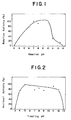
- the working pH ranges very widely from 3 to 12.5 and the optimum pH is in the wide range of 7 to 10. In a range of 4.5 to 10.5, the relative activity is not less than 50% of the activity in the optimum pH range. Accordingly, this enzyme is believed to exhibit a satisfactory activity at the most alkaline side among known alkaline cellulases studied up to now (Fig. 1).
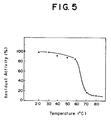
- the working temperature was in a wide range of from 15 to 80°C and the optimum temperature was found to be 65°C. In a temperature range of from 50 to 75°C, the activity was 50% or higher of the activity at the optimum temperature (Fig. 3).
- the molecular weight of the present enzyme was measured according to the gel filtration method using Sephadex® G-100, with the result that it was about 18,000 and 50,000.
- the present enzyme was subjected to determination of influences of various metal ions (Al3+, Fe3+, Ca2+, Cd2+, Co2+, Cr2+, Cu2+, Fe2+, Hg2+, Mn2+, Mo2+, Ni2+, Pb2+, Zn2+, Li+, K+, and Na+) by permitting the ions to coexist at the time of the measurement of the activity (in which the concentratin of K+ or Na+ was 50 mM and the concentration of other ions was 1 mM). As a result, it was found that the activity was inhibited with Hg2+, but was more enhanced with Ba2+, Ca2+, Co2+ and Cd2+.
- various metal ions Al3+, Fe3+, Ca2+, Cd2+, Co2+, Cr2+, Cu2+, Fe2+, Hg2+, Mn2+, Mo2+, Ni2+, Pb2+, Zn2+, Li+, K+, and Na
- Influences of various surface active agents e.g. LAS, AS, ES, AOS, alpha-SFE, SAS, soap and polyoxyethylene secondary alkyl ether
- the present enzyme was treated with a 0.05% solution of each surface active agent at 30°C for 15 minutes and subjected to the measurement of activity. As a result, the activity was not inhibited by any surface active agents. In addition, the inhibition of the activity was not recognized when using sodium dodecylsulfate which was a potential detergent.
- Proteinases for detergents such as, for example, API-21® (Showa Denko Co., Ltd.), Maxatase® (Gist Co., Ltd.) and Alkalase® (Novo Co., Ltd.), were allowed to coexist at the time of the measurement of the activity (0.1 mg/ml) to determine their influences. It was found that the enzyme had a high resistance to these proteinases.
- Chelating agents such as EDTA, EGTA, sodium tripolyphosphate, zeolite and citric acid were allowed to coexist at the time of the measurement of the activity, with the result that no inhibition was recognized.
- This enzyme has activity not only on CMC, but also on cellulose powder, Avicel®, filter paper, PNPC and cellobiose.
- the working pH ranges very widely from 3.5 to 12.5 and the optimum pH is in the wide range of 8 to 10. In a range of 5.5 to 10.5, the relative activity is not less than 50% of the activity in the optimum pH range. Accordingly, this enzyme is believed to exhibit a satisfactory activity at the most alkaline side among known alkaline cellulases studied up to now (Fig. 6).
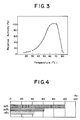
- the residual activity was measured after keeping the enzyme at different pHs at 30°C for 1 hour to determine the pH stability. As a result, it was found that the enzyme was very stable and was not inactivated at a pH of 5 to 11. In a pH of from 3 to 12, an activity of about 50% or over was maintained. Thus, the present enzyme is satisfactorily stable in a high alkaline region (Fig. 7).
- the working temperature was in a wide range of from 15 to 75°C and the optimum temperature was found to be 50°C. In a temperature range of from 35 to 55°C, the activity was 50% or higher of the activity at the optimum temperature (Fig. 8).
- the molecular weight of the present enzyme was measured according to the gel filtration method using Sephadex® G-100, with the result that it was about 35,000.
- the present enzyme was subjected to determination of influences of various metal ions (Al3+, Fe3+, Ca2+, Cd2+, Co2+, Cr2+, Cu2+, Fe2+, Hg2+, Mn2+, Mo2+, Ni2+, Pb2+, Zn2+, Li+, K+, and Na+) by permitting the ions to coexist at the time of the measurement of the activity (in which the concentration of K+ or Na+ was 50 mM and the concentration of the other ions was 1 mM). As a result, it was found that the activity was inhibited by Hg2+ and Ba2+, but was more enhanced by Co2+.
- various metal ions Al3+, Fe3+, Ca2+, Cd2+, Co2+, Cr2+, Cu2+, Fe2+, Hg2+, Mn2+, Mo2+, Ni2+, Pb2+, Zn2+, Li+, K+, and Na+
- Influences of various surface active agents e.g. LAS, AS, ES, AOS, alpha-SFE, SAS, soap and polyoxyethylene secondary alkyl ether
- the present enzyme was treated with a 0.05% solution of each surface active agent at 30°C for 15 minutes and subjected to the measurement of activity. As a result, the activity was not inhibited by any surface active agents. In addition, the inhibition of the activity was not recognized when using sodium dodecylsulfate which was a potential detergent.
- Proteinases for detergents such as, for example, API-21® (Showa Denko Co., Ltd.), Maxatase® (Gist Co., Ltd.) and Alkalase® (Novo Co., Ltd.), were allowed to coexist at the time of the measurement of the activity (0.1 mg/ml) to determine their influences. It was found that the enzyme had a high resistance to these proteinases.
- Chelating agents such as EDTA, EGTA, sodium tripolyphosphate, zeolite and citric acid were allowed to coexist at the time of the measurement of the activity, with the result that no inhibition was recognized.
- This enzyme has activity not only on CMC, but also on cellulose powder, Avicel, filter paper, p-nitrophenyl cellobioside and cellobiose.
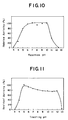
- the working pH ranges very widely from 3 to 12.5 and the optimum pH is in the wide range of 7 to 10. In a range of 4.5 to 10.5, the relative activity is not less than 50% of the activity in the optimum pH range. Accordingly, this enzyme is believed to exhibit a satisfactory activity at the most alkaline side among known alkaline cellulases studies up to now (Fig. 10).
- the residual activity was measured after keeping the enzyme at different pHs at 30°C for 1 hour to determine the pH stability. As a result, it was found that the enzyme was very stable and was not inactivated at a pH of 5 to 12. In a pH of from 4.5 to 12.5, an activity of about 50% or over was maintained. Thus, the present enzyme is satisfactorily stable in a high alkaline region (Fig. 11).
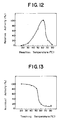
- the working temperature was in a wide range of from 15 to 80°C and the optimum temperature was found to be 60°C. In a temperature range of from 45 to 65°C, the activity was 50% or higher of the activity at the optimum temperature (Fig. 12).
- the molecular weight of the present enzyme was measured according to the gel filtration method using Sephadex® G-100, with the result that it was about 31,000.
- the present enzyme was subjected to determination of influences of various metal ions (Al3+, Fe3+, Ba2+, Ca2+, Cd2+, Co2+, Cr2+, Cu2+, Fe2+, Hg2+, Mn2+, Mo2+, Ni2+, Pb2+, Zn2+, Li+, K+, and Na+) by permitting the ions to coexist at the time of the measurement of the activity (in which the concentratin of K+ or Na+ was 50 mM and the concentration of the other ions was 1 mM). As a result, it was found that the activity was inhibited by Hg2+, but was more enhanced by Ca2+.
- various metal ions Al3+, Fe3+, Ba2+, Ca2+, Cd2+, Co2+, Cr2+, Cu2+, Fe2+, Hg2+, Mn2+, Mo2+, Ni2+, Pb2+, Zn2+, Li+, K+, and Na+
- Influences of various surface active agents e.g. LAS, AS, ES, AOS, alpha-SFE, SAS, soap and polyoxyethylene secondary alkyl ether
- the present enzyme was treated with a 0.05% solution of each surface active agent at 30°C for 15 minutes and subjected to the measurement of activity. As a result, the activity was rarely inhibited by any surface active agents. In addition, the inhibition of the activity was not recognized when using sodium dodecylsulfate which was a potential detergent.
- Proteinases for detergents such as, for example, API-21® (Showa Denko Co., Ltd.), Maxatase® (Gist Co., Ltd.) and Alkalase® (Novo Co., Ltd.), were allowed to coexist at the time of the measurement of the activity (0.1 mg/ml) to determine their influences. It was found that the enzyme had a high resistance to these proteinases.
- Chelating agents such as EDTA, EGTA, sodium tripolyphosphate, zeolite and citric acid were allowed to coexist at the time of the measurement of the activity, with the result that little inhibition was recognized.
- This enzyme has activity not only on CMC, but also on cellulose powder, phosphoric acid-swollen cellulose, alkali-swollen cellulose, Avicel®, filter paper and PNPC.
- the working pH ranges very widely from 3 to 12.5 and the optimum pH is in the side range of 7 to 10. In a range of 4.5 to 10.5, the relative activity is not less than 50% of the activity in the optimum pH range. Accordingly, this enzyme is believed to exhibit a satisfactory activity at the most alkaline side among known alkaline cellulases studied upto now (Fig. 14).
- the residual activity was measured after keeping the enzyme at different pHs at 30°C for 1 hour to determine the pH stability. As a result, it was found that the enzyme was very stable and was not inactivated at a pH of 5 to 12. In a pH of from 4.5 to 12.5, an activity of about 50% or over was maintained. Thus, the present enzyme is satisfactorily stable in a high alkaline region (Fig. 15).
- the working temperature was in a wide range of from 15 to 80°C and the optimum temperature was found to be 60°C. In a temperature range of from 45 to 65°C, the activity was 50% or higher of the activity at the optimum temperature (Fig. 16).
- the molecular weight of the present enzyme was measured according to the gel filtration method using Bio-Gel® P-150 (Bio-Rad Laboratories Co., Ltd.), with the result that it was about 35,000.
- the present enzyme was subjected to determination of influences of various metal ions (Al3+, Fe3+, Ba2+, Ca2+, Cd2+, Co2+, Cr2+, Cu2+, Fe2+, Hg2+, Mn2+, Mo2+, Ni2+, Pb2+, Zn2+, Li+, K+, and Na+) by permitting the ions to coexist at the time of the measurement of the activity (in which the concentratin of K+ or Na+ was 50 mM and the concentration of the other ions was 1 mM). As a result, it was found that the activity was inhibited by Hg2+.
- various metal ions Al3+, Fe3+, Ba2+, Ca2+, Cd2+, Co2+, Cr2+, Cu2+, Fe2+, Hg2+, Mn2+, Mo2+, Ni2+, Pb2+, Zn2+, Li+, K+, and Na+
- Influences of various surface active agents e.g. LAS, AS, ES, AOS, alpha-SFE, SAS, soap and polyoxyethylene secondary alkyl ether
- the present enzyme was treated with a 0.05% solution of each surface active agent at 30°C for 15 minutes and subjected to the measurement of activity. As a result, the activity was rarely inhibited by any surface active agents. In addition, the inhibition of the activity was not recognized when using sodium dodecylsulfate which was a potential detergent.
- Proteinases for detergents such as, for example, API-21® (Showa Denko Co., Ltd.), Maxatase® (Gist Co., Ltd.) and Alkalase® (Novo Co., Ltd.), were allowed to coexist at the time of the measurement of the activity (0.1 mg/ml) to determine their influences. It was found that the enzyme had a high resistance to these proteinases.
- Chelating agents such as EDTA, EGTA, sodium tripolyphosphate, zeolite and citric acid were allowed to coexist at the time of the measurement of the activity, with the result that little inhibition was recognized.
- This enzyme has activity not only a main activity on CMC, but also an activity on cellulose swollen with about 4% phosphoric acid. Moreover, it has a slight decomposition activity on xylan, inulin and lichenan, but has little activity on cellulose powder, Avicel®, filter paper, PNPC and cellobiose.
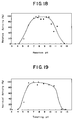
- the working pH ranges very widely from 4 to 12.5 and the optimum pH is in the wide range of 7 to 10. In a range of 5.5 to 11, the relative activity is not less than 50% of the activity in the optimum pH range. Accordingly, this enzyme is believed to exhibit a satisfactory activity at the most alkaline side among known alkaline cellulases studied upto now (Fig. 18).
- the residual activity was measured after keeping the enzyme at different pHs at 0°C for 24 hours to determine the pH stability. As a result, it was found that the enzyme was very stable and was not inactivated at a pH of 6 to 11. In a pH of from 5.5 to 11.5, an activity of about 50% or over was maintained. Thus, the present enzyme is satisfactorily stable in a high alkaline region (Fig. 19).
- the working temperature was in a wide range of from 10 to 80°C and the optimum temperature was found to be 50°C. In a temperature range of from 30 to 65°C, the activity was 50% or higher of the activity at the optimum temperature (Fig. 20).
- the molecular weight of the present enzyme was measured according to the gel filtration method using Bio-Gel® P-100 (Bio-Rad Laboratories Co., Ltd.), with the result that it was about 34,000. With an SDS-polyacrylamide gel electrophoresis, the molecular weight was about 61,000 (Fig. 23).
- the present enzyme was subjected to determination of influences of various metal ions
- the present enzyme was subjected to (Al3+, Fe3+, Ba2+, Ca2+, Cd2+, Co2+, Cu2+, Fe2+, Hg2+, Mn2+, Mg2+, Ni2+, Pb2+, Zn2+, Li+, K+ and Na+) by permitting the ions to coexist at the time of the measurement of the activity (in which the concentration of K+ or Na+ was 50 mM and the concentration of the other ions was 1 mM). As a result, it was found that the activity was inhibited with Hg2+ and enhanced with Co2+.
- Proteinases for detergents such as, for example API-21® (Showa Denko Co., Ltd.), Maxatase® (Gist Co., Ltd.) and Alkalase® (Novo Co., Ltd.), were allowed to coexist at the time of the measurement of the activity (0.1 mg/ml) to determine their influences. It was found that the enzyme had a high resistance to these proteinases as shown in Table 2.
- Table 2 Proteinase Residual Activity (%) nil 100 Alkalase 111 API-21 115 Maxatase 120
- Chelating agents such as EDTA, EGTA, sodium tripolyphosphate, zeolite and citric acid were allowed to coexist at the time of the measurement of the activity, with the result that little inhibition was recognized.
- the present enzyme was subjected to measurement of UV absorption spectrum. As a result, it was found that it had a maximum absorption at about 280 nm with a shoulder absorption being shown at 290 nm by a differential absorption spectrum (Fig. 24).
- This enzyme has not only a main activity on CMC, but also an activity on cellulose swollen with about 4.5% phosphoric acid. Moreover, it has a slight decomposition activity on xylan, lichenan and the like, but has little activity on cellulose powder, Avicel, filter paper, PNPC and cellobiose.
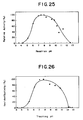
- the working pH ranges very widely from 4 to 12.5 and the optimum pH is in the wide range of 7 to 9. In a range of 6 to 10.5, the relative activity is not less than 50% of the activity in the optimum pH range. Accordingly, this enzyme is believed to exhibit a satisfactory activity at the most alkaline side among known alkaline cellulases studies up to now (Fig. 25).
- the residual activity was measured after keeping the enzyme at different pHs at 5°C for 24 hours to determine the pH stability. As a result, it was found that the enzyme was very stable and was not inactivated at a pH of 6 to 10. In a pH of from 5.7 to 11.5, an activity of about 50% or over was maintained. Thus, the present enzyme is satisfactorily stable in a high alkaline region (Fig. 26).
- the working temperature was in a wide range of from 10 to 80°C and the optimum temperature was found to be 50°C. In a temperature range of from 30 to 62°C, the activity was 50% or higher of the activity at the optimum temperature (Fig. 27).
- the molecular weight of the present enzyme was measured according to the gel filtration method using Bio-Gel® P-100 (Bio-Rad Laboratories Co., Ltd.), with the result that it was about 35,000. With an SDS-polyacrylamide gel electrophoresis, the molecular weight was about 61,000 (Fig. 23).
- the present enzyme was subjected to determination of influences of various metal ions (Al3+, Fe3+, Ca2+, Co2+, Cr2+, Cu2+, Fe2+, Hg2+, Mg2+, Mn2+, Ni2+, Pb2+, Zn2+, K+, and Na+) by permitting the ions to coexist at the time of the measurement of the activity (in which the concentration of K+ or Na+ was 50 mM and the concentration of the other ions was 1 mM). As a result, it was found that the activity was inhibited with Hg2+ and enhanced with Co2+.
- various metal ions Al3+, Fe3+, Ca2+, Co2+, Cr2+, Cu2+, Fe2+, Hg2+, Mg2+, Mn2+, Ni2+, Pb2+, Zn2+, K+, and Na+
- Proteinases for detergents such as, for example API-21® (Showa Denko Co., Ltd.), Maxatase® (Gist Co., Ltd.) and Alkalase® (Novo Co., Ltd.), were allowed to coexist (0.1 mg/ml) at the time of the measurement of the activity to determine their influences. It was found that the enzyme had a high resistance to these proteinases as shown in Table 4. Table 4 Proteinase Residual Activity (%) nil 100 Alkalase 94 API-21 106 Maxatase 103
- Chelating agents such as EDTA, EGTA, sodium tripolyphosphate, zeolite and citric acid were allowed to coexist at the time of the measurement of the activity, with the result that little inhibition was recognized.
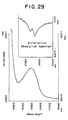
- the present enzyme was subjected to measurement of a UV absorption spectrum. As a result, it was found that it had a maximum absorption at about 280 nm with a shoulder absorption being shown at 290 nm by a differential absorption spectrum (Fig. 29).
- alkaline cellulases of the invention have an optimum pH at a higher level (pH 10) than known alkaline cellulases and are very stable over a wide pH range.
- alkaline cellulase K-580 has, in a wide pH range of from 4.5 to 10.5, an activity not less than 50% of the activity at the optimum pH, and is very stable in a pH range of from 4.5 to 12.
- Alkaline cellulase K-425 has also, in a wide pH range of from 5.5 to 10.5, an activity of not less than 50% of the activity at the optimum oH, and is very stable in a pH range of from 5 to 11.
- alkaline cellulases K-521 and K-522 have, respectively, an optimum pH in a wide range of from 7.0 to 10 and is very stable in a wide range.
- the alkaline cellulases E-II and E-III derived from the alkaline cellulase K-522 have, respectively, higher optimum pHs (of 10 and 9) than known alkaline cellulases. In addition, they have, respectively, wide optimum pH ranges of 7.0 to 10 and 7.0 to 9 are very stable in such wide ranges.
- alkaline cellulases are rarely inhibited with ingredients ordinarily formulated in detergents such as, for example, surface active agents, proteinases, chelating agents and the like. Accordingly, the present enzymes can be conveniently used in detergent compositions.
- microorganisms of the invention grow under neutral conditions, so that it is possible to industrially produce alkaline cellulases more easily than in the case using alkalophilic strains.
- a spoonful (about 0.5 g) of the soil obtained at Ichikai-machi, Haga-gun, Tochigi-ken, Japan was suspended in a sterilized physiological saline solution and thermally treated at 80°C for 10 minutes.
- the supernatant liquid of the thermally treated solution was appropriately diluted and applied to an agar medium for isolation (medium 1), followed by cultivation at 30°C for 3 days to form colonies.
- Colonies around which a transparent zone was formed on the basis of the dissolution of CMC were selected to collect CMCase-producing microorganisms belonging to the genus Bacillus .
- the thus collected microorganisms were inoculated into a liquid medium as medium 2 and subjected to shaking culture at 30°C for 3 days.
- Bacillus sp. KSM-580 strain Bacillus sp. KSM-425 strain
- Bacillus sp. KSM-521 strain Medium 1 CMC 2% Polypeptone 0.5 Yeast extract 0.05 KH2PO4 0.1 Na2HPO4.12H2O 0.25 MgSO4.7H2O 0.02 Agar 0.75 pH 6.8
- the Bacillus sp. KSM-580 strain obtained in Example 1 was inoculated into the liquid medium 2 of Example 1, followed by shaking culture at 30°C for 3 days. After completion of the culture, the bacillus cells were centrifugally removed to obtain a crude enzyme solution. 3 liters of ethanol was added to 1 liter of the crude enzyme solution in dry ice/ethanol and the resultant precipitate was centrifugally removed, followed by freeze-drying to obtain 11 g of alkaline cellulase K-580 (specific activity* 33 units/g) as a dry powder. * The enzyme activity was a value at a pH of 9.
- the Bacillus sp. KSM-580 strain was inoculated into a medium of the same composition as the liquid medium 2 of Example 1 except that CMC was replaced by sucrose and polypeptone was replaced by 7% of a corn steep liquor (CSL), followed by shaking culture at 30°C for 2 days.
- the resultant culture product was subjected to centrifugal separation and the resulting supernatant liquid was, in turn, subjected to measurement of the CMCase activity. As a result, the activity was 60 units/liter.
- the Bacillus sp. KSM-425 strain obtained in Example 1 was inoculated into the liquid medium 2 of Example 1 and shake-cultured at 30°C for 3 days. After completion of the culture, the bacillus cells were centrifugally removed to obtain a crude enzyme solution. 3 liters of ethanol was added to 1 liter of the crude enzyme solution in dry ice/ethanol, and the resultant precipitate was centrifugally removed and freeze-dried to obtain 10 g of alkaline cellulase K-425 (specific activity* 10 units/g) as a dry powder. * The enzyme activity was a value measured at a pH of 9.
- the Bacillus sp. KSM-425 strain was inoculated into a medium of the same composition as the liquid medium 2 of Example 1 except that CMC was replaced by sucrose and polypeptone was replaced by 7% CSL, followed by shaking culture at 30°C for 2 days.
- the culture product was centrifugally separated and the resultant supernatant liquid was subjected to measurement of the CMCase activity. As a result, the activity was 160 units/liter.
- the Bacillus sp. KSM-521 strain obtained in Example 1 was inoculated into the liquid medium 2 of Example 1 and shake-cultured at 30°C for 3 days. After completion of the culture, the bacillus cells were centrifugally removed to obtain a crude enzyme solution. 3 liters of ethanol was added to 1 liter of the crude enzyme solution in dry ice/ethanol, and the resultant precipitated was centrifugally separated and freeze-dried to obtain 9 g of alkaline cellulase K-521 (specific activity* 20 units/g) as a dry powder. * The enzyme activity was a value measured at a pH of 9 herein and hereinafter.
- the KSM-521 strain was inoculated into a medium of the same composition as the liquid medium 2 of Example 1 except that CMC was replaced by 1% sucrose and polypeptone was replaced by 7% CSL, followed by shaking culture at 30°C for 2 days.
- the culture product was centrifugally separated and the resultant supernatant liquid was subjected to measurement of the CMCase activity. As a result, it was found that the activity was 100 units/liter.
- a spoonful (0.5 g) of the soil obtained at Nikko-shi, Tochigi-ken, Japan was taken and suspended in a sterilized saline solution, followed by repeating the procedure of Example 1, thereby obtaining KSM-522 strain (FERM BP-1512) of the invention.
- the Bacillus sp. KSM-522 strain obtained in Example 8 was inoculated into the liquid medium of Example 1 and shake-cultured at 30°C for 3 days. After the culture, the bacillus cells were centrifugally separated to obtain a crude solution. 3 liters of ethanol was added to 1 liter of the crude enzyme solution in dry ice/ethanol, and the resultant precipitate was centrifugally separated and freeze-dried to obtain 8 g of alkaline cellulase K-522 (specific activity* 23 units/g) as a dry powder. * The enzyme activity was a value measured at a pH of 9.
- the KSM-522 strain was inoculated into a medium of the same composition as the liquid medium 2 of Example 1 except that CMC was replaced by 1% sucrose and polypeptone was replaced by 7% CSL, followed by shaking culture at a temperature of 30°C for 2 days.
- the culture product was centrifugally separated and the resultant supernatant liquid was subjected to measurement of the CMCase activity, with the result that the activity was 150 units/liter.
- Example 10 5 liters of the supernatant obtained in Example 10 was purified according to the following procedure.
- the enzyme was adsorbed in a column having a size of 3.2 x 33 cm (equilibrated with a 10mM phosphate buffer solution wiht a pH of 7), followed by linearly increasing the concentration of NaCl from 0 to 300 mM for eluation.
- the fractions of from 533 to 580 from which the fraction of E-I had been removed were collected and further purified.
- the fractions were adsorbed in a column with a size of 2.5 x 13 cm (equilibrated with a 10 mM phosphate buffer solution with a pH of 7), after which the concentration of the phosphate was icreased from 10 to 200 mM linearly to obtain an alkaline cellulase fraction (a mixture of E-II and E-III).
- the procedure of (3) was repeated (in which the concentration of NaCl was increased linearly from 70 to 200 mM) to collect alkaline cellulase E-II with the residue being subjected to the sixth step.
- the sixth step was effected similar to (3) or (5) but the gradient in concentration of NaCl was further lowered by changing from 90 to 150 mM for elution, therby isolating the alkaline cellulase E-III.
- the thus purified alkaline cellulases E-II and E-III were subjected to polyacrylamide electrophoresis by a usual manner and further to Coomassie Brilliant Blue dyeing and silver staining, by which it was confirmed that the respective cellulases gave a single band.
- the alkaline cellulases E-II and E-III obtained in Example 11 were subjected to SDS-polyacrylamide gel electrophoresis by a usual manner. The results are shown in Fig. 23. From the results, it was found that the alkaline cellulases E-II and E-III each had a molecular weight of about 61,000.
- the alkaline cellulase E-II had a molecular weight of about 34,000 and the alkaline cellulase E-III had a molecular weight of about 35,000.
Landscapes
- Chemical & Material Sciences (AREA)
- Life Sciences & Earth Sciences (AREA)
- Health & Medical Sciences (AREA)
- Organic Chemistry (AREA)
- Engineering & Computer Science (AREA)
- Wood Science & Technology (AREA)
- Genetics & Genomics (AREA)
- Bioinformatics & Cheminformatics (AREA)
- Zoology (AREA)
- General Health & Medical Sciences (AREA)
- Biochemistry (AREA)
- Biotechnology (AREA)
- General Engineering & Computer Science (AREA)
- Biomedical Technology (AREA)
- Medicinal Chemistry (AREA)
- Microbiology (AREA)
- Tropical Medicine & Parasitology (AREA)
- Virology (AREA)
- Molecular Biology (AREA)
- Enzymes And Modification Thereof (AREA)
- Micro-Organisms Or Cultivation Processes Thereof (AREA)
- Detergent Compositions (AREA)
Claims (10)
- Procédé pour l'obtention des cellulases alcalines K-580, K-425, K-521 et K-522 (EII et EIII) caractérisé en ce qu'il comprend les opérations suivantes:a) la mise en culture d'une souche de Bacillus espèce KSM-580 (FERM BP-1511), de Bacillus espèce KSM-425 (FERM BP-1505), de Bacillus espèce KSM-521 (FERM BP-1507) et de Bacillus espèce KSM-522 (FERM BP-1512), respectivement, dans un milieu convenable contenant des sources de carbone et d'azote ainsi que de l'acide phosphorique et des sels inorganiques de cations métalliques choisis parmi Mg²⁺, Ca²⁺, Mn²⁺, Zn²⁺, Co²⁺, Na⁺ et K⁺ ;b) l'élimination des corps bactériens du bouillon ou de la solution de culture par une technique de séparation solide-liquide appropriée, afin d'obtenir une solution enzymatique brute;c) soumettre la solution enzymatique ainsi obtenue à une précipitation par addition de sel, une précipitation ou une ultrafiltration, en vue de séparer l'enzyme brute;d) la purification de l'enzyme brute pour obtenir une enzyme purifiée.
- Procédé selon la revendication 1, caractérisé en ce que la souche utilisée lors de l'étape (a) est le Bacillus espèce KSM-580 (FERM BP-1511) et la cellulase obtenue est la cellulase alcaline K-580 qui présente les propriétés enzymatiques suivantes :(1) Activité
Agit sur les matériaux cellulosiques incluant la carboxyméthylcellulose (CMC), la cellulose, le papier filtre et l'Avicel® , en entraînant leur dissolution, et générant ainsi des sucres réducteurs tels que le glucose;(2) Spécificité vis-à-vis du substrat
Agit non seulement sur la CMC, mais également sur la poudre de cellulose, l'Avicel® et le papier filtre;(3) pH de travail et pH optimal
L'intervalle du pH de travail va de 3 à 12,5 et le pH optimal s'échelonne de 7 à 10 avec une activité relative observée dans la gamme de 4,5 à 10,5 non inférieure à 50 % de l'activité enregistrée au pH optimal ;(4) Stabilité au pH
Très stable et n'est pas inactivée à un pH de 4,5 à 12; son activité se maintient à un niveau non inférieur à 50 % à un pH de 3,5 à 12,5 ;(5) Température optimale
La température de travail se situe dans un intervalle étendu allant de 15 à 80°C, la température optimale étant de 65°C. Dans l'intervalle allant de 50 à 75°C, l'activité n'est pas inférieure à 50 % de ce qu'elle est à la température optimale;(6) Poids moléculaire
Les pics de poids moléculaire se situent à environ 18 000 et environ 50 000 (tels que déterminés par une technique de filtration sur gel employant le Séphadex® G100);(7) Influence des ions métalliques
Inhibée par Hg²⁺ et activée par Ba²⁺, Ca²⁺, Co²⁺ et Cd²⁺;(8) Influence des agents tensio-actifs
Il y a rarement inhibition de l'activité par LAS, AS, ES, AOS, alpha-SFE, SAS et les savons et les éthers d'alkyle secondaire polyoxyéthylènés ;(9) Résistance aux protéases
Résistante aux protéases ;(10) Influence des agents complexants
Il n'y a pas d'inhibition de l'activité par l'EDTA, l'EGTA, l'acide citrique, le tripolyphosphate de sodium et la zéolite. - Procédé selon la revendication 1, caractérisé en ce que la souche utilisée lors de l'étape (a) est le Bacillus espèce KSM-425 (FERM BP-1505) et la cellulase obtenue est la cellulase alcaline K-425 qui présente les propriétés enzymatiques suivantes :(1)Activité
Agit sur les matériaux cellulosiques incluant la carboxyméthylcellulose (CMC), la cellulose, le papier filtre et l'Avicel® en entraînant leur dissolution, et générant ainsi des sucres réducteurs tels que le glucose;(2) Spécificité vis-à-vis du substrat
Agit non seulement sur la CMC, mais également sur la poudre de cellulose, l'Avicel® , le papier filtre, la p-nitrophénylcellobioside (PNPC) et la cellobiose;(3) pH de travail et pH optimal
L'intervalle du pH de travail va de 3,5 à 12,5 et le pH optimal s'échelonne de 8 à 10 avec une activité relative observée dans la gamme de 5,5 à 10,5 non inférieure à 50% de l'activité enregistrée au pH optimal ;(4) Stabilité au pH
Très stable et n'est pas inactivée à un pH de 5 à 11; son activité se maintient à un niveau non inférieur à 50 % à un pH de 3 à 12;(5) Température optimale
La température de travail se situe dans un intervalle étendu allant de 15 à 75°C, la température optimale étant de 50°C. Dans l'intervalle allant de 35 à 55°C, l'activité n'est pas inférieure à 50 % de ce qu'elle est à la température optimale;(6) Poids moléculaire
Environ 35 000 (tel que déterminé par une technique de filtration sur gel employant le Séphadex® G100);(7) Influence des ions métalliques
Inhibée par Hg²⁺ et Ba²⁺ et activée par Co²⁺;(8) Influence des agents tensio-actifs
Il y a rarement inhibition de l'activité par LAS, AS, ES, AOS, alpha-SFE, SAS et le savon et les éthers d'alkyle secondaire polyoxyéthylènés ;(9) Résistance aux protéases
Résistante aux protéases(10) Influence des agents complexants
Il n'y a pas d'inhibition de l'activité par l'EDTA, l'EGTA, l'acide citrique, le tripolyphosphate de sodium et la zéolite. - Procédé selon la revendication 1, caractérisé en ce que la souche utilisée lors de l'étape (a) est le Bacillus espèce KSM-521 (FERM BP-1507) et la cellulase obtenue est la cellulase alcaline K-521 qui présente les propriétés enzymatiques suivantes :(1) Activité
Agit sur les matériaux cellulosiques incluant la CMC, la cellulose, le papier filtre et l'Avicel® en entraînant leur dissolution, et générant ainsi des sucres réducteurs tels que le glucose;(2) Spécificité vis-à-vis du substrat
Agit non seulement sur la CMC, mais également sur la poudre de cellulose, l'Avicel® , le papier filtre, la PNPC et la cellobiose;(3) pH de travail et pH optimal
L'intervalle du pH de travail va de 3 à 12,5 et le pH optimal s'échelonne de 7 à 10 avec une activité relative observée dans la gamme de 4,5 à 10,5 non inférieure à 50% de l'activité enregistrée au pH optimal ;(4) Stabilité au pH
Très stable et n'est pas inactivée à un pH de 5 à 12; son activité se maintient à un niveau non inférieur à 50 % à un pH de 4,5 à 12,5;(5) Température optimale
La température de travail se situe dans un intervalle étendu allant de 15 à 80°C, la température optimale étant de 60°C. Dans l'intervalle allant de 45 à 65°C, l'activité n'est pas inférieure à 50 % de ce qu'elle est à la température optimale;(6) Poids moléculaire
Environ 31 000 (tel que déterminé par une technique de filtration sur gel employant le Séphadex® G100);(7) Influence des ions métalliques
Inhibée par Hg²⁺ et activée par Ca²⁺;(8) Influence des agents tensio-actifs
Il y a rarement inhibition de l'activité par LAS, AS, ES, AOS, alpha-SFE, SAS et les savons et les éthers d'alkyle secondaire polyoxyéthylènés ;(9) Résistance aux protéases
Résistante aux protéases ;(10) Influence des agents complexants
Il n'y a pas d'inhibition de l'activité par l'EDTA, l'EGTA, l'acide citrique, le tripolyphosphate de sodium et la zéolite. - Procédé selon la revendication 1, caractérisé en ce que la souche utilisée lors de l'étape (a) est le Bacillus espèce KSM-522 (FERM BP-1512) et la cellulase obtenue est la cellulase alcaline K-522 qui présente les propriétés :(1) Activité
Agit sur les matériaux cellulosiques incluant la CMC, la cellulose, le papier filtre et l'Avicel® en entraînant leur dissolution, et générant ainsi des sucres réducteurs tels que le glucose;(2) Spécificité vis-à-vis du substrat
Agit non seulement sur la CMC, mais également sur la poudre de cellulose, la cellulose gonflée par l'acide phosphorique, la cellulose gonflée par les substances alcalines, l'Avicel® , le papier filtre et la PNPC;(3) pH de travail et pH optimal
L'intervalle du pH de travail va de 3 à 12,5 et le pH optimal s'échelonne de 7 à 10 avec une activité relative observée dans la gamme de 4,5 à 10,5 non inférieure à 50% de l'activité enregistrée au pH optimal ;(4) Stabilité au pH
Très stable et n'est pas inactivée à un pH de 5 à 12; son activité se maintient à un niveau non inférieur à 50 % à un pH de 4,5 à 12,5;(5) Température optimale
La température de travail se situe dans un intervalle étendu allant de 15 à 80°C, la température optimale étant de 60°C. Dans l'intervalle allant de 45 à 65°C, l'activité n'est pas inférieure à 50 % de ce qu'elle est à la température optimale;(6) Poids moléculaire
Environ 35 000 (tel que déterminé par une technique de filtration sur gel employant le Bio-Gel® P-150);(7) Influence des ions métalliques
Inhibée par Hg²⁺;(8) Influence des agents tensio-actifs
Il y a rarement inhibition de l'activité par LAS, AS, ES, AOS, alpha-SFE, SAS et les savons et les éthers d'alkyle secondaire polyoxyéthylènés ;(9) Résistance aux protéases
Résistante aux protéases(10) Influence des agents complexants
Il n'y a pas d'inhibition de l'activité par l'EDTA, l'EGTA, l'acide citrique, le tripolyphosphate de sodium et la zéolite. - Procédé selon la revendication 5, caractérisé en ce que la cellulase alcaline KSM-522 est encore séparée en deux autres cellulases alcalines EII et EIII, par fractionnement chromatographique comprenant la chromatographie sur hydroxyapatite, la chromatographie échangeuse d'ions et la chromatographie sur tamis moléculaire.
- Procédé selon la revendicaiton 6, caractérisé en ce que la cellulase alcaline E II présente les propriétés enzymatiques suivantes:(1) Activité
Agit sur les matériaux cellulosiques incluant la CMC, et la cellulose gonflée par l'acide phosphorique en entraînant leur dissolution, et générant ainsi des sucres réducteurs tels que le glucose;(2) Spécificité vis-à-vis du substrat
Agit non seulement sur la CMC et la cellulose gonflée par l'acide phosphorique, mais aussi légèrement sur le xylane, l'inuline et le lichénane;(3) pH de travail et pH optimal
L'intervalle du pH de travail va de 4 à 12,5 et le pH optimal s'échelonne de 7 à 10;(4) Stabilité au pH
Elle n'est pas inactivée à pH allant de 6 à 10 lorsqu'elle est maintenue à 5°C pendant 24 heures;(5) Température optimale
La température de travail se situe dans un intervalle étendu allant de 10 à 80°C, la température optimale étant de 50°C ;(6) Poids moléculaire
Environ 34 000 (tel que déterminé par une technique de filtration sur gel employant le Bio-Gel® P-100);(7) Influence des ions métalliques
Inhibée par Hg²⁺ et activée par Co²⁺;(8) Influence des agents tensio-actifs
Il y a rarement inhibition de l'activité par LAS, AS, ES, AOS, alpha-SFE, SAS et les savons et les éthers d'alkyle secondaire polyoxyéthylènés ;(9) Résistance aux protéases
Résistante aux protéases ;(10) Influence des agents complexants
Il n'y a pas d'inhibition de l'activité par l'EDTA, l'EGTA, l'acide citrique, le tripolyphosphate de sodium et la zéolite. - Procédé selon la revendicaiton 6, caractérisé en ce que la cellulase alcaline E III présente les propriétés enymatiques suivantes:(1) Activité
Agit sur les matériaux cellulosiques incluant la CMC, et la cellulose gonflée par l'acide phosphorique en entraînant leur dissolution, et générant ainsi des sucres réducteurs tels que le glucose;(2) Spécificité vis-à-vis du substrat
Agit non seulement sur la CMC et la cellulose gonflée par l'acide phosphorique, mais aussi légèrement sur le xylane et le lichénane;(3) pH de travail et pH optimal
L'intervalle du pH de travail va de 4 à 12,5 et le pH optimal s'échelonne de 7 à 9;(4) Stabilité au pH
Elle n'est pas inactivée à un pH allant de 6 à 10 lorsqu'elle est maintenue à 5°C pendant 24 heures;(5) Température de travail et température optimale
La température de travail se situe dans l'intervalle allant de 10 à 80°C, la température optimale étant de 50°C ;(6) Poids moléculaire
Environ 35 000 (tel que déterminé par une technique de filtration sur gel employant le Bio-Gel P-100);(7) Influence des ions métalliques
Inhibée par Hg²⁺ et activée par Co²⁺;(8) Influence des agents tensio-actifs
Il y a rarement inhibition de l'activité par LAS, AS, ES, AOS, alpha-SFE, SAS et les savons et les éthers d'alkyle secondaire polyoxyéthylènés ;(9) Résistance aux protéases
Résistante aux protéases ;(10) Influence des agents complexants
Il n'y a pas d'inhibition de l'activité par l'EDTA, l'EGTA, l'acide citrique, le tripolyphosphate de sodium et la zéolite.
Applications Claiming Priority (20)
| Application Number | Priority Date | Filing Date | Title |
|---|---|---|---|
| JP282970/86 | 1986-11-27 | ||
| JP28297086 | 1986-11-27 | ||
| JP283742/86 | 1986-11-28 | ||
| JP28374286A JPH0655140B2 (ja) | 1986-11-28 | 1986-11-28 | アルカリセルラーゼ |
| JP28374386 | 1986-11-28 | ||
| JP283744/86 | 1986-11-28 | ||
| JP28374486 | 1986-11-28 | ||
| JP283743/86 | 1986-11-28 | ||
| JP5764487A JPS63240785A (ja) | 1986-11-27 | 1987-03-12 | アルカリセルラーゼ及びその製造法 |
| JP57644/87 | 1987-03-12 | ||
| JP6744287A JPS63240786A (ja) | 1986-11-28 | 1987-03-20 | アルカリセルラーゼの製造法 |
| JP67442/87 | 1987-03-20 | ||
| JP6859787A JPS63240777A (ja) | 1986-11-28 | 1987-03-23 | アルカリセルラ−ゼを産生する微生物 |
| JP68597/87 | 1987-03-23 | ||
| JP19414387A JP2651577B2 (ja) | 1987-08-03 | 1987-08-03 | アルカリセルラーゼe−▲iii▼ |
| JP194143/87 | 1987-08-03 | ||
| JP194140/87 | 1987-08-03 | ||
| JP19414087A JPH0732707B2 (ja) | 1987-08-03 | 1987-08-03 | アルカリセルラーゼ |
| JP194142/87 | 1987-08-03 | ||
| JP19414287A JP2651576B2 (ja) | 1987-08-03 | 1987-08-03 | アルカリセルラーゼe−▲ii▼ |
Publications (3)
| Publication Number | Publication Date |
|---|---|
| EP0269977A2 EP0269977A2 (fr) | 1988-06-08 |
| EP0269977A3 EP0269977A3 (en) | 1989-03-08 |
| EP0269977B1 true EP0269977B1 (fr) | 1994-06-01 |
Family
ID=27580029
Family Applications (1)
| Application Number | Title | Priority Date | Filing Date |
|---|---|---|---|
| EP87117314A Expired - Lifetime EP0269977B1 (fr) | 1986-11-27 | 1987-11-24 | Cellulases alcalines et micro-organismes capables de les produire |
Country Status (7)
| Country | Link |
|---|---|
| US (1) | US4962030A (fr) |
| EP (1) | EP0269977B1 (fr) |
| DE (1) | DE3789940T2 (fr) |
| ES (1) | ES2056807T3 (fr) |
| HK (1) | HK48195A (fr) |
| MY (1) | MY102262A (fr) |
| SG (1) | SG28337G (fr) |
Cited By (5)
| Publication number | Priority date | Publication date | Assignee | Title |
|---|---|---|---|---|
| US7098179B2 (en) | 2001-10-22 | 2006-08-29 | Henkel Kommanditgesellschaft Auf Aktien (Henkel Kgaa) | Cotton active, dirt removing urethane-based polymers |
| US7316995B2 (en) | 2003-02-10 | 2008-01-08 | Henkel Kommanditgesellschaft Auf Aktien | Detergents or cleaning agents comprising a water-soluble building block system and a cellulose derivative with dirt dissolving properties |
| US7375072B2 (en) | 2003-02-10 | 2008-05-20 | Henkel Kommanditgesellschaft Auf Aktien | Bleach-containing laundry detergents or cleaning compositions comprising water-soluble builder system and soil release-capable cellulose derivative |
| US7431739B2 (en) | 2005-06-08 | 2008-10-07 | Henkel Kommanditgesellschaft Auf Aktien | Boosting the cleaning performance of laundry detergents by polymer of styrene/methyl methacrylate/methyl polyethylene glycol |
| US7456143B2 (en) | 2002-12-20 | 2008-11-25 | Henkel Kommanditgesellschaft Auf Aktien (Henkel Kgaa) | Bleach-containing washing or cleaning agents containing a sulfate/silicate coated percarbonate |
Families Citing this family (27)
| Publication number | Priority date | Publication date | Assignee | Title |
|---|---|---|---|---|
| US4943532A (en) * | 1986-12-05 | 1990-07-24 | Kao Corporation | Alkali-resistant cellulases and microorganisms capable of producing same |
| DE3751270T2 (de) * | 1986-12-05 | 1996-01-18 | Kao Corp | Alkali-resistente Cellulasen und Mikroorganismen, fähig zu ihrer Herstellung. |
| US4822516A (en) * | 1986-12-08 | 1989-04-18 | Kao Corporation | Detergent composition for clothing incorporating a cellulase |
| MY105832A (en) * | 1989-06-02 | 1995-01-30 | Kao Corp | Alkaline cellulase, microorganism producing the same, and process for producing the same. |
| US5120463A (en) * | 1989-10-19 | 1992-06-09 | Genencor International, Inc. | Degradation resistant detergent compositions based on cellulase enzymes |
| DK16490D0 (da) * | 1990-01-19 | 1990-01-19 | Novo Nordisk As | Enzym |
| JP2859393B2 (ja) * | 1990-07-24 | 1999-02-17 | ノボ ノルディスク アクティーゼルスカブ | セルラーゼ及びその製造法 |
| US5232851A (en) * | 1990-10-16 | 1993-08-03 | Springs Industries, Inc. | Methods for treating non-dyed and non-finished cotton woven fabric with cellulase to improve appearance and feel characteristics |
| DE4226162A1 (de) * | 1991-08-16 | 1993-02-18 | Sandoz Ag | Stabiles enzympraeparat |
| US6300122B1 (en) | 1991-12-20 | 2001-10-09 | Genencor International | Method for applying enzyme to non-finished cellulosic-containing fabrics to improve appearance and feel characteristics |
| US5352243A (en) * | 1992-02-28 | 1994-10-04 | Genencor International, Inc. | Methods of enhancing printing quality of pigment compositions onto cotton fabrics |
| US5691295A (en) * | 1995-01-17 | 1997-11-25 | Cognis Gesellschaft Fuer Biotechnologie Mbh | Detergent compositions |
| DE4422433A1 (de) * | 1994-06-28 | 1996-01-04 | Cognis Bio Umwelt | Mehrenzymgranulat |
| AU4298796A (en) * | 1994-12-22 | 1996-07-10 | Novo Nordisk A/S | An enzyme preparation with cellulytic activity |
| US5888800A (en) * | 1995-08-10 | 1999-03-30 | Henkel Kommanditgesellschaft Auf Aktien | Expression systems for commercial production of cellulase and xylanase in Bacillus subtilis and Bacillus licheniformis |
| US5789227A (en) * | 1995-09-14 | 1998-08-04 | Lockheed Martin Energy Systems, Inc. | Processing of cellulosic material by a cellulase-containing cell-free fermentate produced from cellulase-producing bacteria, ATCC 55702 |
| DE19725508A1 (de) | 1997-06-17 | 1998-12-24 | Clariant Gmbh | Wasch- und Reinigungsmittel |
| DE19914811A1 (de) | 1999-03-31 | 2000-10-05 | Henkel Kgaa | Enzym- und bleichaktivatorhaltige Wasch- und Reinigungsmittel |
| JP4417608B2 (ja) * | 2002-04-25 | 2010-02-17 | 花王株式会社 | 変異アルカリセルラーゼ |
| EP1867707B1 (fr) * | 2006-06-16 | 2011-09-07 | The Procter & Gamble Company | Compositions de lavage |
| WO2010059796A2 (fr) * | 2008-11-20 | 2010-05-27 | E. I. Du Pont De Nemours And Company | Procédé de préparation d'une solution de sucres par saccharification chimique et enzymatique combinée d'une biomasse enrichie en polysaccharides |
| US8524474B2 (en) * | 2008-11-20 | 2013-09-03 | E I Du Pont De Nemours And Company | Process for producing a concentrated sugar solution by enzymatic saccharification of polysaccharide enriched biomass |
| WO2010065908A2 (fr) * | 2008-12-05 | 2010-06-10 | Catchmark Jeffrey M | Compositions de biomolécule dégradables |
| WO2011047047A2 (fr) * | 2009-10-13 | 2011-04-21 | The Penn State Research Foundation | Composites contenant des polypeptides attachés à des polysaccharides et des molécules |
| JP5858945B2 (ja) | 2012-03-15 | 2016-02-10 | アークレイ株式会社 | 酵素を用いた測定方法 |
| EP3024887B1 (fr) | 2013-07-26 | 2023-11-22 | The Penn State Research Foundation | Procédé pour préparation des compositions et revêtements polymères |
| CN115851546B (zh) * | 2022-12-22 | 2025-04-15 | 山东隆科特酶制剂有限公司 | 一株产碱性纤维素酶的短小芽孢杆菌 |
Family Cites Families (10)
| Publication number | Priority date | Publication date | Assignee | Title |
|---|---|---|---|---|
| JPS5028515B2 (fr) * | 1971-09-30 | 1975-09-16 | ||
| US3868271A (en) | 1973-06-13 | 1975-02-25 | Ibm | Method of cleaning a glass substrate by ionic bombardment in a wet active gas |
| JPS5639191B2 (fr) * | 1973-11-10 | 1981-09-11 | ||
| JPS58224686A (ja) | 1982-06-25 | 1983-12-27 | Teruhiko Beppu | 新規なアルカリセルラ−ゼ301−a及びその製造法 |
| JPS5949279A (ja) | 1982-09-16 | 1984-03-21 | Hitachi Ltd | カラ−受像管 |
| JPS6036240A (ja) | 1983-08-03 | 1985-02-25 | Canon Inc | 自動シ−ト送り装置 |
| JPS6023158A (ja) | 1984-06-12 | 1985-02-05 | 松下電器産業株式会社 | 包装用バンド結合具 |
| JP2544094B2 (ja) | 1984-07-04 | 1996-10-16 | 花王株式会社 | アルカリ性セルラ−ゼの製造法 |
| JPS61257776A (ja) | 1985-05-09 | 1986-11-15 | Matsumoto Seiki Kk | 研削研摩具 |
| US4822516A (en) * | 1986-12-08 | 1989-04-18 | Kao Corporation | Detergent composition for clothing incorporating a cellulase |
-
1987
- 1987-11-24 DE DE3789940T patent/DE3789940T2/de not_active Expired - Fee Related
- 1987-11-24 SG SG1995903654A patent/SG28337G/en unknown
- 1987-11-24 ES ES87117314T patent/ES2056807T3/es not_active Expired - Lifetime
- 1987-11-24 EP EP87117314A patent/EP0269977B1/fr not_active Expired - Lifetime
- 1987-11-27 US US07/126,005 patent/US4962030A/en not_active Expired - Lifetime
- 1987-12-03 MY MYPI87003152A patent/MY102262A/en unknown
-
1995
- 1995-03-30 HK HK48195A patent/HK48195A/en not_active IP Right Cessation
Cited By (5)
| Publication number | Priority date | Publication date | Assignee | Title |
|---|---|---|---|---|
| US7098179B2 (en) | 2001-10-22 | 2006-08-29 | Henkel Kommanditgesellschaft Auf Aktien (Henkel Kgaa) | Cotton active, dirt removing urethane-based polymers |
| US7456143B2 (en) | 2002-12-20 | 2008-11-25 | Henkel Kommanditgesellschaft Auf Aktien (Henkel Kgaa) | Bleach-containing washing or cleaning agents containing a sulfate/silicate coated percarbonate |
| US7316995B2 (en) | 2003-02-10 | 2008-01-08 | Henkel Kommanditgesellschaft Auf Aktien | Detergents or cleaning agents comprising a water-soluble building block system and a cellulose derivative with dirt dissolving properties |
| US7375072B2 (en) | 2003-02-10 | 2008-05-20 | Henkel Kommanditgesellschaft Auf Aktien | Bleach-containing laundry detergents or cleaning compositions comprising water-soluble builder system and soil release-capable cellulose derivative |
| US7431739B2 (en) | 2005-06-08 | 2008-10-07 | Henkel Kommanditgesellschaft Auf Aktien | Boosting the cleaning performance of laundry detergents by polymer of styrene/methyl methacrylate/methyl polyethylene glycol |
Also Published As
| Publication number | Publication date |
|---|---|
| SG28337G (en) | 1995-09-18 |
| EP0269977A3 (en) | 1989-03-08 |
| DE3789940T2 (de) | 1995-02-02 |
| HK48195A (en) | 1995-04-07 |
| EP0269977A2 (fr) | 1988-06-08 |
| DE3789940D1 (de) | 1994-07-07 |
| MY102262A (en) | 1992-05-15 |
| ES2056807T3 (es) | 1994-10-16 |
| US4962030A (en) | 1990-10-09 |
Similar Documents
| Publication | Publication Date | Title |
|---|---|---|
| US4962030A (en) | Alkaline cellulases and microorganisms capable of producing same | |
| EP0339550B1 (fr) | Cellulase alcaline et procédé pour sa préparation | |
| EP0458162B1 (fr) | Cellulase résistante à la protéinase, microorganisme la produisant et son procédé de production | |
| EP0265832B1 (fr) | Cellulases alkalines et microorganismes pour leur production | |
| EP0270974B1 (fr) | Cellulases résistant aux alcalis et micro-organismes capables de les produire | |
| EP0415397B1 (fr) | Pullulanase alcaline, microorganisme la produisant et procédé de production de cet enzyme | |
| US4943532A (en) | Alkali-resistant cellulases and microorganisms capable of producing same | |
| EP0418835B1 (fr) | Nouvelle pullulanase Y alcaline à activité alpha amylase, microorganisme la produisant et procédé de production de cette enzyme | |
| EP0337009B1 (fr) | Mutant résistant à l'inhibiteur de synthèse des membranes cellulaires et méthode pour sa production | |
| JP2651576B2 (ja) | アルカリセルラーゼe−▲ii▼ | |
| JP2651577B2 (ja) | アルカリセルラーゼe−▲iii▼ | |
| JP2509538B2 (ja) | アルカリ耐性セルラ―ゼを産生する微生物 | |
| GB2232983A (en) | Alkaline cellulase extracted Bacillus | |
| JP2509533B2 (ja) | アルカリ耐性セルラ―ゼを産生する微生物 | |
| PH26265A (en) | Alkaline cellulases and microorganisms capable of producing same | |
| JP2509535B2 (ja) | アルカリ耐性セルラ―ゼを産生する微生物 | |
| JPH0371878B2 (fr) | ||
| JPH0655140B2 (ja) | アルカリセルラーゼ | |
| JPH0329387B2 (fr) | ||
| JPH0655138B2 (ja) | Cmcア−ゼ▲i▼ | |
| JPH07231782A (ja) | アルカリ耐性セルラーゼを産生する微生物 | |
| JPH0375152B2 (fr) | ||
| JPH0632606B2 (ja) | 新規微生物 | |
| JPH07100027B2 (ja) | アルカリセルラーゼを産生する微生物 | |
| JPH0636739B2 (ja) | アルカリセルラーゼ、これを産生する微生物及びアルカリセルラーゼの製造法 |
Legal Events
| Date | Code | Title | Description |
|---|---|---|---|
| PUAI | Public reference made under article 153(3) epc to a published international application that has entered the european phase |
Free format text: ORIGINAL CODE: 0009012 |
|
| AK | Designated contracting states |
Kind code of ref document: A2 Designated state(s): DE ES FR GB IT NL |
|
| PUAL | Search report despatched |
Free format text: ORIGINAL CODE: 0009013 |
|
| AK | Designated contracting states |
Kind code of ref document: A3 Designated state(s): DE ES FR GB IT NL |
|
| 17P | Request for examination filed |
Effective date: 19890601 |
|
| 17Q | First examination report despatched |
Effective date: 19910314 |
|
| GRAA | (expected) grant |
Free format text: ORIGINAL CODE: 0009210 |
|
| AK | Designated contracting states |
Kind code of ref document: B1 Designated state(s): DE ES FR GB IT NL |
|
| REF | Corresponds to: |
Ref document number: 3789940 Country of ref document: DE Date of ref document: 19940707 |
|
| ET | Fr: translation filed | ||
| ITF | It: translation for a ep patent filed | ||
| REG | Reference to a national code |
Ref country code: ES Ref legal event code: FG2A Ref document number: 2056807 Country of ref document: ES Kind code of ref document: T3 |
|
| PLBI | Opposition filed |
Free format text: ORIGINAL CODE: 0009260 |
|
| 26 | Opposition filed |
Opponent name: GIST-BROCADES NV Effective date: 19950301 |
|
| NLR1 | Nl: opposition has been filed with the epo |
Opponent name: GIST-BROCADES NV |
|
| PLAB | Opposition data, opponent's data or that of the opponent's representative modified |
Free format text: ORIGINAL CODE: 0009299OPPO |
|
| PLAB | Opposition data, opponent's data or that of the opponent's representative modified |
Free format text: ORIGINAL CODE: 0009299OPPO |
|
| PLBQ | Unpublished change to opponent data |
Free format text: ORIGINAL CODE: EPIDOS OPPO |
|
| R26 | Opposition filed (corrected) |
Opponent name: GENENCOR INTERNATIONAL INC. Effective date: 19950301 |
|
| R26 | Opposition filed (corrected) |
Opponent name: GENENCOR INTERNATIONAL INC. Effective date: 19950301 |
|
| NLR1 | Nl: opposition has been filed with the epo |
Opponent name: GENENCOR INTERNATIONAL INC. |
|
| NLR1 | Nl: opposition has been filed with the epo |
Opponent name: GENENCOR INTERNATIONAL INC. |
|
| PLBO | Opposition rejected |
Free format text: ORIGINAL CODE: EPIDOS REJO |
|
| PLBN | Opposition rejected |
Free format text: ORIGINAL CODE: 0009273 |
|
| STAA | Information on the status of an ep patent application or granted ep patent |
Free format text: STATUS: OPPOSITION REJECTED |
|
| 27O | Opposition rejected |
Effective date: 19960823 |
|
| NLR2 | Nl: decision of opposition | ||
| PGFP | Annual fee paid to national office [announced via postgrant information from national office to epo] |
Ref country code: ES Payment date: 19981123 Year of fee payment: 12 |
|
| PGFP | Annual fee paid to national office [announced via postgrant information from national office to epo] |
Ref country code: FR Payment date: 19991109 Year of fee payment: 13 |
|
| PGFP | Annual fee paid to national office [announced via postgrant information from national office to epo] |
Ref country code: GB Payment date: 19991124 Year of fee payment: 13 |
|
| PG25 | Lapsed in a contracting state [announced via postgrant information from national office to epo] |
Ref country code: ES Free format text: LAPSE BECAUSE OF NON-PAYMENT OF DUE FEES Effective date: 19991125 |
|
| PG25 | Lapsed in a contracting state [announced via postgrant information from national office to epo] |
Ref country code: GB Free format text: LAPSE BECAUSE OF NON-PAYMENT OF DUE FEES Effective date: 20001124 |
|
| GBPC | Gb: european patent ceased through non-payment of renewal fee |
Effective date: 20001124 |
|
| PG25 | Lapsed in a contracting state [announced via postgrant information from national office to epo] |
Ref country code: FR Free format text: LAPSE BECAUSE OF NON-PAYMENT OF DUE FEES Effective date: 20010731 |
|
| REG | Reference to a national code |
Ref country code: FR Ref legal event code: ST |
|
| PGFP | Annual fee paid to national office [announced via postgrant information from national office to epo] |
Ref country code: DE Payment date: 20021128 Year of fee payment: 16 |
|
| PGFP | Annual fee paid to national office [announced via postgrant information from national office to epo] |
Ref country code: NL Payment date: 20021129 Year of fee payment: 16 |
|
| REG | Reference to a national code |
Ref country code: ES Ref legal event code: FD2A Effective date: 20001214 |
|
| PG25 | Lapsed in a contracting state [announced via postgrant information from national office to epo] |
Ref country code: NL Free format text: LAPSE BECAUSE OF NON-PAYMENT OF DUE FEES Effective date: 20040601 |
|
| PG25 | Lapsed in a contracting state [announced via postgrant information from national office to epo] |
Ref country code: DE Free format text: LAPSE BECAUSE OF NON-PAYMENT OF DUE FEES Effective date: 20040602 |
|
| NLV4 | Nl: lapsed or anulled due to non-payment of the annual fee |
Effective date: 20040601 |
|
| PG25 | Lapsed in a contracting state [announced via postgrant information from national office to epo] |
Ref country code: IT Free format text: LAPSE BECAUSE OF NON-PAYMENT OF DUE FEES Effective date: 20051124 |