EP0270831A2 - Masse fondue polymérisable exempte de solvant, pauvre ou exempte de monomère, son procédé de préparation et de traitement - Google Patents
Masse fondue polymérisable exempte de solvant, pauvre ou exempte de monomère, son procédé de préparation et de traitement Download PDFInfo
- Publication number
- EP0270831A2 EP0270831A2 EP87116112A EP87116112A EP0270831A2 EP 0270831 A2 EP0270831 A2 EP 0270831A2 EP 87116112 A EP87116112 A EP 87116112A EP 87116112 A EP87116112 A EP 87116112A EP 0270831 A2 EP0270831 A2 EP 0270831A2
- Authority
- EP
- European Patent Office
- Prior art keywords
- melt
- und
- polymerizable
- molecular weight
- oder
- Prior art date
- Legal status (The legal status is an assumption and is not a legal conclusion. Google has not performed a legal analysis and makes no representation as to the accuracy of the status listed.)
- Granted
Links
Images
Classifications
-
- C—CHEMISTRY; METALLURGY
- C09—DYES; PAINTS; POLISHES; NATURAL RESINS; ADHESIVES; COMPOSITIONS NOT OTHERWISE PROVIDED FOR; APPLICATIONS OF MATERIALS NOT OTHERWISE PROVIDED FOR
- C09D—COATING COMPOSITIONS, e.g. PAINTS, VARNISHES OR LACQUERS; FILLING PASTES; CHEMICAL PAINT OR INK REMOVERS; INKS; CORRECTING FLUIDS; WOODSTAINS; PASTES OR SOLIDS FOR COLOURING OR PRINTING; USE OF MATERIALS THEREFOR
- C09D157/00—Coating compositions based on unspecified polymers obtained by reactions only involving carbon-to-carbon unsaturated bonds
- C09D157/06—Homopolymers or copolymers containing elements other than carbon and hydrogen
- C09D157/10—Homopolymers or copolymers containing elements other than carbon and hydrogen containing oxygen atoms
-
- C—CHEMISTRY; METALLURGY
- C08—ORGANIC MACROMOLECULAR COMPOUNDS; THEIR PREPARATION OR CHEMICAL WORKING-UP; COMPOSITIONS BASED THEREON
- C08F—MACROMOLECULAR COMPOUNDS OBTAINED BY REACTIONS ONLY INVOLVING CARBON-TO-CARBON UNSATURATED BONDS
- C08F290/00—Macromolecular compounds obtained by polymerising monomers on to polymers modified by introduction of aliphatic unsaturated end or side groups
- C08F290/08—Macromolecular compounds obtained by polymerising monomers on to polymers modified by introduction of aliphatic unsaturated end or side groups on to polymers modified by introduction of unsaturated side groups
-
- C—CHEMISTRY; METALLURGY
- C08—ORGANIC MACROMOLECULAR COMPOUNDS; THEIR PREPARATION OR CHEMICAL WORKING-UP; COMPOSITIONS BASED THEREON
- C08F—MACROMOLECULAR COMPOUNDS OBTAINED BY REACTIONS ONLY INVOLVING CARBON-TO-CARBON UNSATURATED BONDS
- C08F299/00—Macromolecular compounds obtained by interreacting polymers involving only carbon-to-carbon unsaturated bond reactions, in the absence of non-macromolecular monomers
- C08F299/02—Macromolecular compounds obtained by interreacting polymers involving only carbon-to-carbon unsaturated bond reactions, in the absence of non-macromolecular monomers from unsaturated polycondensates
- C08F299/04—Macromolecular compounds obtained by interreacting polymers involving only carbon-to-carbon unsaturated bond reactions, in the absence of non-macromolecular monomers from unsaturated polycondensates from polyesters
-
- C—CHEMISTRY; METALLURGY
- C09—DYES; PAINTS; POLISHES; NATURAL RESINS; ADHESIVES; COMPOSITIONS NOT OTHERWISE PROVIDED FOR; APPLICATIONS OF MATERIALS NOT OTHERWISE PROVIDED FOR
- C09D—COATING COMPOSITIONS, e.g. PAINTS, VARNISHES OR LACQUERS; FILLING PASTES; CHEMICAL PAINT OR INK REMOVERS; INKS; CORRECTING FLUIDS; WOODSTAINS; PASTES OR SOLIDS FOR COLOURING OR PRINTING; USE OF MATERIALS THEREFOR
- C09D167/00—Coating compositions based on polyesters obtained by reactions forming a carboxylic ester link in the main chain; Coating compositions based on derivatives of such polymers
Definitions
- the invention relates to a solvent-free, low-monomer or monomer-free, polymerizable and radiation-curable melt for coating flat substrates and / or moldings made of metal, plastic and / or cellulose material and / or inorganic materials and a process for their production.
- the melt composition according to the invention is particularly suitable for the corrosion-resistant and abrasion-resistant finishing of flat packaging substrate, preferably for food and pharmaceutical packaging.
- the substrates equipped with the melt compositions according to the invention can also be used for other areas of application, such as e.g. for body construction, construction and the like.
- the corrosion-resistant and abrasion-resistant finishing of flat substrates made of metal, plastic and cellulose materials is a well-known and material-related necessity in technology, so that objects are protected against environmental influences and the service life is extended. Protection against corrosion has a high priority in the national economy.
- high demands are placed on the anti-corrosion agent equipment. They must be chemically and physically inert to the contents and must not release any toxic, taste and odor-influencing substances.
- solvent-based coating materials and varnishes are still in use.
- the solvents are important auxiliaries to bring the corrosion protection agents consisting of polymers and resins into a processable state, because the raw materials are predominantly in the form of solid substances.
- the liquid state of aggregation has yet another essential function, namely wetting on the substrate surfaces to be protected. Because wetting is an important prerequisite for liability (adhesion).
- the solvents required for this can be aliphatic and aromatic, such as esters, ketones, toluene, xylene and the like. be. After application and setting they have to be removed from the anti-corrosion agents or have to be removed. These released solvents were released to the environment years ago. By progressive E E issions concede this is possible only to a very limited extent. For this reason, recycling processes for solvent recovery have been increasingly proposed in recent years. Although these recovery systems have a relatively high degree of utilization and solvents can be recovered up to 95% in practice, such processes are very costly to invest and operate. But they also have the disadvantage that the solvent-containing exhaust air must also be supplied to an afterburning in order to meet the legal requirements of TA-Luft.
- Corrosion protection agents based on aqueous dispersions and those with a higher solids content brought about a partial improvement.
- aqueous corrosion protection agents it has been found that in many industrial areas of use, organic solvents often cannot be completely dispensed with. Thus the problem of solvent recovery persisted. This affects above all also for electrodeposition, where aqueous dispersion paints with solvent contents of up to 20% - based on finished goods - are to be used.
- Solvent-free coating compositions and lacquers have also recently become known. These are so-called “single and multi-pot" systems. While the one-pot systems are suitable for the application and, among other things, reactivated and cross-linked with the air humidity, the two-pot and multi-pot systems first have to produce a ready-to-use product by homogeneous mixing. Since these application-appropriate corrosion protection agents then have a so-called pot life, during which they can be processed, they have a number of disadvantages for industrial use, which cannot always be compensated for by mixing and metering devices. Since they are further As solvent-free corrosion protection agents must also be in a liquid state, their individual reactive components consist of relatively low molecular weight compounds.
- reactive thinners These low molecular weight compounds, also known as reactive thinners, are often not only physiologically questionable, but also have characteristic, intense, negative taste and smell notes.
- the degree of crosslinking that can be achieved is often only ⁇ 90%, so that they cannot be used, among other things, to equip packaging materials for food and pharmaceuticals. But in the technical area too low a degree of networking can lead to problems, especially in the resistance to environmental influences.
- the reactive thinners have the disadvantage that if residues thereof, even in the ppm range, are not crosslinked, they have a negative influence on the adhesion (adhesion) at the interface, because they can stray like solvents.
- polymerizable coating compositions and lacquers which can be hardened by means of ionizing rays, in particular electron beams and UV rays, have recently become known.
- acrylic monomers can be more or less physiologically questionable. Some of them are also classified as toxic.
- European patent application 0 157 396 describes radiation-curable coatings for steel sheets which, once hardened, can be deformed with rays. However, since they are processed at room temperature, they have a relatively high content of reactive thinners or low-molecular acrylic monomers. In addition to the relatively high content of residual monomers that these radiation-hardened coating compositions have, their deformability is also restricted. For the skilled worker knows that the flexibility (toughness) and the brittleness increase with increasing content of short-chain, low-ritle molecular monomers in a coating matrix. In the event of deformation, a large number of hairline cracks can then form in the corrosion protection film, which considerably reduces the effectiveness.
- Another European patent application 0 184 349 describes radiation-curable, thermoplastic coating compositions for wood and other substrates which are made from copolymerizable ethylenically unsaturated polyesters and thermoplastic polymers exist.
- monomers or reactive thinners and / or inert organic solvents are necessary.
- This presents coating compositions which, although they can provide good final properties, are associated with the problems of evaporation of the inert solvents and those of the residual solvent and monomer contents.
- hot melt coatings which are based on inert resins, waxes, thermoplastics and / or elastomers, have also become known for corrosion-resistant finishing.
- hot melt adhesives related to the hotmelt have become very important in many industries, the hotmelt has remained relatively insignificant, apart from a few areas of application, such as corrosion protection films.
- These anti-corrosion films are made from a hot-dip material that consists of cellulose esters, plasticizer mixtures and mineral additives, e.g. if Immerse tool parts, machine parts in the hot mass and then let them cool down. The film or coating that forms can later be removed without residue.
- thermoplastic raw materials including the resins and plasticizers thermally sensitive and particularly exposed to thermal oxidation in the presence of atmospheric oxygen. This not only changes the product properties, it also creates crack products that are physiologically questionable. This associated thermal problem is described in international terminology with the term "heat history”. While stabilizers and antioxidants can be used with hot melt adhesives, they can only be used with hot melt materials if they are used in the technical field. Covering with protective gases such as nitrogen (N 2 ) can also reduce thermo-oxidative degradation.
- protective gases such as nitrogen (N 2 ) can also reduce thermo-oxidative degradation.
- Another disadvantage of the thermoplastic melt coating compositions is the relatively low softening points, which are preferably below + 150 ° C., in particular below + 120 ° C.
- melt coating compositions are described, inter alia, in DE-OS 24 25 395, which are formulated on the basis of Erhylen-vinyl acetate copolymers. Further enamel compositions are described in the monograph R. Jordan “Schmelzklebstoffe", vol. 4a / 1985 and vol. 4b / 1986, HINTERWALDNER VERLAG, Kunststoff. These include polyester enamels based on linear copolyesters of terphthalic and / or isophthalic acid are and can be from amorphous to crystalline (DE-OS 24 14 287).
- melt masses are preferably adhesives and sealants which, although analogous to a melt mass from a melt, are processed at temperatures below 150 150 ° C., in particular ⁇ 100 ° C., and can therefore be functionally handled at an early stage, but only through their cross-linking function the ambient humidity is triggered.
- These are preferably moisture-curing polyurethane systems. Depending on the layer thickness and ambient humidity, curing takes between 1 and 96 hours. For an industrial manufacturing an undiscutable hardening phase, apart from the fact that uncrosslinked hardener parts can migrate.
- hydroxyl-containing polymer A Particularly preferred as the hydroxyl-containing polymer A are a cellulose derivative, in particular a cellulose ester and / or cellulose ether with a content of at least 0.1% by weight of reactive acrylic and / or methacrylic groups and an average molecular weight ( M w ) between 10,000 and 250,000 and / or a phenol or novolak derivative with a content of ⁇ 0.1% by weight of reactive acrylic and / or methacrylic groups, with an average molecular weight (M w ) between 1,000 and 50,000 and a glass transition temperature (T g ) ⁇ + 20 ° C.
- M w average molecular weight
- T g glass transition temperature
- thermoplastic backbone polymers according to the invention for the melt compositions according to the invention are polymers and copolymers of starch and cellulose, such as e.g. Cellulose esters, cellulose ethers, polyvinyl alcohols and their conversion products on the hydroxyl groups, partially saponified polyvinyl acetates and their copolymers, hydroxyacrylic polymers and copolymers, polyesters and copolyesters, with a minimum content of ethylenically unsaturated groups of ⁇ 0.1, preferably 0.2, in particular ⁇ 0, 5% by weight.
- starch and cellulose such as e.g. Cellulose esters, cellulose ethers, polyvinyl alcohols and their conversion products on the hydroxyl groups, partially saponified polyvinyl acetates and their copolymers, hydroxyacrylic polymers and copolymers, polyesters and copolyesters, with a minimum content of ethylenically unsaturated groups of ⁇ 0.1,
- thermoplastic, polymerizable cellulose esters and ethers are reaction products of commercially available cellulose esters and ethers with a compound which carries one of the above ethylenically unsaturated groups.
- the commercially available cellulose esters are available under the brand names "CELLIT®,” CELLIDOR® "and are preferably formate, acetate, propionate, butyrate, capronate, stereate or mixed esters of at least 2 of the associated organic fatty acids
- Cellulose ethers on the other hand, can be alkyl, aralkyl and acrylic, hydroxyalkyl, carboxyalkyl ethers, etc.
- mixed ethers and mixed esters are also suitable if they impart a specific property to the melt compositions according to the invention.
- the decisive factor is that cellulose esters and. ether can be reacted with one of the acrylic compounds described above and have a melting point after the reaction of ⁇ + 300 ° C., preferably. + 250 ° C., in particular ⁇ + 200 ° C.
- the preparation of such polymerizable, thermoplastic cellulose esters and ethers is, inter alia, in European Patent Application 0 146 277 and in Houben-Weyl "Macromolecular Substances", Part 2, "Conversion of Cellulose and Starch ", 1963, pp. 863-915.
- novel plastics p. 894
- This can be achieved, for example, by introducing polymerizable double bonds into the cellulose molecule, for example etherification by allyl chloride, or by radical formation in the cellulose molecule, for example ozonization or radiation of the cellulose.
- the cellulose polymers which can be used according to the invention also include the starch esters of organic acids, alkyl ethers and aralkyl ethers of starch.
- the alkyl ethers of starch can carry additional functional groups.
- a typical representative is the starch allyl ether, which can be polymerized with other allyl and vinyl compounds to give cross-linked products.
- Starch allyl ethers are known as coating raw materials and are processed from their solutions in inert organic solvents.
- cellulose and starch are not as limited as the petroleum resources in this world, from which the coreactants stare, which are required to modify the cellulose and starch starting products.
- cellulose and starch are natural products and therefore have a more environmentally friendly aspect.
- thermoplastic, hydroxyl-containing backbone polymers are polyvinyl alcohols and the conversion products which can be achieved via etherification, acetalization, ketalization and esterification and carry a polymerizable group according to formula 1.
- Backbone polymers can also be produced via the transesterification of polyvinyl esters.
- already polymerizable, ethylenically unsaturated groups if unsaturated carboxylic acids such as e.g. Acrylic acid, maleic acid or their anhydrides can be used.
- unsaturated carboxylic acids such as e.g. Acrylic acid, maleic acid or their anhydrides
- alkyl vinyl ethers such as ethyl, n-butyl, isobutyl and octyl vinyl ethers, which are among others. allow to be polymerized by high-energy rays. Such reactions are described by J. G. Fee et al. already described in J. Polymer Sci 33, p. 95 (1958).
- novolaks which have been obtained by condensation of phenols with acetaldehyde, acetylene, vinyl ether and / or furfural and which carry at least one ethylenically unsaturated group according to formula 1.
- All the backbone polymers described and polymerizable according to the invention must have thermoplastic properties so that they can be used in the melt compositions according to the invention.
- the melting points are ⁇ + 300 ° C, preferably ⁇ + 250 ° C, in particular ⁇ + 200 ° C, and any residual monomer contents from the reaction with an ethylenically unsaturated radical of the above formula 1 are less than 0.01, preferably less than 0.001% by weight. -% and are especially free of low molecular weight ethylenically unsaturated compounds with a molecular weight ⁇ 500, preferably ⁇ 800.
- backbone polymers are used in particular to determine the flexibility (toughness), the chemical, heat and water resistance in the final properties of the hardened or crosslinked enamel compositions according to the invention.
- the components B which can be used according to the invention are produced from saturated, linear or branched, thermoplastic polyesters and their copolymers. These are reaction products from bi- and multifunctional alcohols, such as ethylene glycol, neopentyl glycol, 1,6-hexanediol, trimethylolpropane, with aromatic Acids, for example phthalic, isophthalic and terephthalic acids, and optionally a proportion of condensed aliphatic dicarboxylic acids. Reactive, polymerizable groups according to formula 1 are grafted onto these polyesters or their copolymers or, during their preparation, are also condensed into the resulting molecule.
- bi- and multifunctional alcohols such as ethylene glycol, neopentyl glycol, 1,6-hexanediol, trimethylolpropane
- aromatic Acids for example phthalic, isophthalic and terephthalic acids, and optionally a proportion of condensed aliphatic di
- the content of polymerizable groups is ⁇ 0.1, preferably ⁇ 1.0, in particular ⁇ 1.5 wt .-%.
- the average molecular weights are between 1,000 and 50,000, preferably 1,000 and 20,000, in particular 1,000 and 10,000.
- the glass transition temperature is ⁇ 50 ° C, preferably ⁇ -30 ° C.
- the polymerizable polyesters and their copolymers can also have a hydroxyl group number between 0.1 and 10% by weight. They also have an acid number between 0 and 100, preferably 0.1 to 50, in particular 2 to 20 mg KOH / per polyester or copolyester.
- the COOH groups present in the molecule act as an adhesion promoter to improve the melt mass adhesion on metal substrates.
- the residual monomer content of components B is ⁇ 0.1, preferably ⁇ 0.05, in particular 0.01% by weight.
- the melting points are ⁇ + 250 ° C, preferably ⁇ + 200 ° C, in particular ⁇ + 150 ° C.
- the production of the base polyesters and copolyesters is adequately described in the literature, and their modification with a radical of the above formula. See, inter alia, HOUBEN-WEYL, "Macromolecular Substances", Part 2: “Polycarboxylic Acid Esters", pp. 1-44, 1963.
- the polymerizable polyesters and their copolymers can be amorphous, partially crystalline or crystalline.
- the preferred starting polyesters are uncrosslinked according to the invention and largely linear, i.e. produced from unbranched main chains with a comparatively small chain branching caused by trifunctional organization of the main chain, regardless of how the alkyl side chains are to be bound to the main chain via ester and / or ether linkages.
- These polyesters according to the invention entirely or predominantly have a type of comb structure in which the alkyl side chains protrude in a regular, static arrangement from the essentially linear and unbranched main chain of the polyesters.
- the molar ratio of ester segments of the main chain to side chains should be 1 to 0.02 to 2.0, in particular 1.0 to 0.05 to 1.0.
- the glass transition temperatures (T g ) of these polyesters are ⁇ + 50 ° C, preferably ⁇ + 20 ° C, in particular ⁇ -10 ° C.
- the viscosity values range from 5 to 10,000 Pa.s / 120 ° C.
- the functionalization of the polyesters with ethylenically unsaturated groups according to formula 1 takes place e.g. about conversion of 10 to 90% of the hydroxyl and / or 10 to 100% of the carboxyl groups in the polyester.
- Components A and B for the melt compositions according to the invention can be used alone and in combination with one another. However, if components A and B are used in a composition, their ratio to one another is 99: 1 to 1:99, preferably example 50:50, in particular 3 to 35: 97 to 65 in% by weight. Since components A and B can also crosslink in themselves, the molar equivalents of reactivatable, polymerizable groups according to Formula 1 play a partial role. In a number of application cases, in particular in the corrosion-resistant and abrasion-resistant finishing of steel or tinplate, besides a high degree of flexibility (toughness), optimal metal adhesion is also required.
- hydroxyl-containing backbone polymers such as cellulose esters and ethers
- M w average molecular weight
- cellulose esters and ethers with an average molecular weight ( M w ) of ⁇ 20,000, preferably ⁇ 30,000, which can influence and control flexibility and impact resistance
- M w average molecular weight
- the polymerized linear unbranched and / or branched polyesters in particular those with an acid number of ß 5 mg KOH / g, for metal adhesion and impact resistance responsible. Since this problem can preferably only be solved with relatively low molecular weight polyesters and their copolymers, because they have a relatively low viscosity in their melt, preference is given to those with medium Ren molecular weights (M) of 1,000 to 10,000, in particular 2,000 to 6,000 used.
- polyesters and their copolymers are also necessary for reasons of rapid, full-surface wetting because, in addition to the adhesion promoters built into the molecule, for example carboxyl groups, they are also responsible for optimal adhesion. This fact applies in particular to tinplate.
- the various polymerizable polyesters and their copolymers can be used alone or in ratios between 99: 1 and 1:99 as polymerizable melt, as has surprisingly been found.
- the components C are polymerizable, ethylenically unsaturated group-bearing oligomers of acrylic, methacrylic, ester, ether, urethane, amide, imide, epoxy, siloxane, phenol, novolak and / or mercapto compounds one or more reactive groups wear according to Formula 1.
- the preferred reactive group accessible to the polymerization is an unsaturated vinyl, especially an acrylic group.
- the oligomers have average molecular weights ( M w ) between 400 and 10,000, preferably between 800 and 6,000. They are liquid to solid at room temperature. Some of them have a kind of "partially crystalline" properties, which are a sign of special purity and have a very narrow molecular weight distribution.
- component C examples include oligomers carrying ethylenically unsaturated groups, such as, for example, pure acrylates and / or methacrylates; Acrylic and / or methacrylic acid esters; Polyester acrylates and / or methacrylates; Polyether acrylates and / or methacrylates; Epoxy acrylates and / or methacrylates; Polyurethane acrylates and / or methacrylates; polyacrylated and / or polymethacrylated polyols; acrylated and / or methacrylated polytetra- h y drofurane; acrylated and / or methacrylated phenols and novolaks and their derivatives; acrylated and / or methacrylated polycarbonates; acrylated and / or methacrylated polyamides; acrylated and / or methacrylated polyimides; acrylated and / or methacrylated melamine resins; acrylated and / or methacrylated polys
- fluorocarbon-substituted, ethylenically unsaturated group-bearing oligomers such as e.g. fluorocarbon-substituted polyether urethane acrylates are suitable for modifying the melt composition according to the invention.
- Acrylated and / or methacrylated polyester urethanes such as those e.g. are described in DE-OS 29 14 982. These acrylic urethane or methacrylic group-bearing polyester urethanes have a very narrow molecular weight distribution and, because of their purity and freedom from monomers, they can partially crystallize.
- the higher molecular types with a molecular weight ⁇ 1,200 have a wax-like structure at room temperature and softening or melting points ⁇ + 100 ° C. Not only can they reduce the melt viscosities, but they can also make the melt compositions of the invention more flexible.
- oligomers are the acrylated and / or methacrylated phenols, novolaks and their derivatives of the general formulas:
- these compounds containing phenol groups can be used to regulate the heat resistance, sterilization and chemical resistance of the melt compositions according to the invention, which in particular play an essential role in packaging for the food and pharmaceutical sectors.
- components C depends on the respective melting and processing temperatures of the backbone polymers used.
- the melt and processing viscosity of the melt compositions according to the invention can be reduced if the oligomer is still thermally stable in this temperature range.
- the oligomers have a residual monomer content of ⁇ 0.5, preferably ⁇ 0.05, in particular ⁇ 0.01% by weight.
- the ratios to components A and / or B are between 3:97, preferably 50:50, in particular 20 to 30: 80 to 70% by weight.
- the components D are first of all pigments to give the enamel compositions a colored appearance.
- pigments is generally understood to mean dyes, color-imparting compounds, fillers and extenders of all types which provide the solids according to the invention with additional solids and also make them printable. At the same time, they give the enamel masses a number of specific properties.
- the content of pigments and fillers in the melt compositions according to the invention can be between 1 and 80, preferably 10 to 70, in particular 20 to 60% by weight, based on components A and / or B.
- the additives according to the invention can contain other additives, such as e.g. Stabilizers, antioxidants, leveling and wetting agents are added.
- Stabilizers e.g. Stabilizers, antioxidants, leveling and wetting agents are added.
- the additives are adequately described in the literature, so that reference can be made to the above book Gumbleter / Müller “Kunststoff-Additive", 2nd edition, Hanser Verlag, Kunststoff, 1983.
- the amounts added are generally between 0.1 to 5.0, preferably 0.1 to 2.5,% by weight, based on the ready-to-use melt.
- the silicone acrylates from the group of components C used according to the invention can also take on the function of a leveling, wetting and / or anti-foaming agent.
- Another object of the invention is the production of the melt compositions according to the invention, in particular those which are intended for use in the food and pharmaceutical sectors and therefore do not contain any additives, such as stabilizers and antioxidants.
- a degassing in an aqueous suspension in the first stage of the reflow has p rocess a preliminary drying at a temperature which is about 10 ° C below the melting or softening point of the backbone polymer, to be carried out.
- hydroxyl-containing polyvinyl alcohol, phenol and novolak derivatives, as well as the polyesters and their copolymers are not as thermosensitive and susceptible to thermal oxidation. Nevertheless, analog care should be taken when preparing them are to get to polymerizable enamel compositions that are free of cracking products. However, shielding gas scrubbing and / or vacuum degassing can often be dispensed with because they are provided degassed.
- hydroxyl-containing backbone polymers Before the hydroxyl-containing backbone polymers reach the so-called main melting phase, they are preheated to their melting or softening point. The temperature is then increased by +20 to + 60 ° C above the melting or softening point for rapid, hemogenic melting. As soon as the melt is homogeneous and free of specks, components B and optionally C are added. The components are also preheated to temperatures which correspond at least to the melting or softening point of the hydroxyl-containing backbone polymers. A lower temperature would create additional problems, particularly in the case of continuous preparation, if the viscosity and thus the shear resistance in the melt mass to be prepared increase as a result of cooling, as a result of which degradation can occur. The same must also be preheated to incorporate components D.
- inorganic pigments and fillers When using inorganic pigments and fillers, they can even be preheated to the processing temperature so that they can be dispersed quickly and easily. Finally, degassing takes place using a vacuum (up to 10 -1 torr).
- the processed melt mass can be processed immediately in the in-line process, or is rapidly cooled in the off-line process and, if necessary, converted into granules.
- Nitrogen (N2), carbon dioxide (CO 2 ) and the like are suitable as protective gas.
- the raw materials for the production of the melt compositions according to the invention are continuously processed in a single or multi-screw extruder.
- Components A and / or B - preheated as possible - are fed to the extruder as the first raw materials.
- the components B and possibly components C are then melted or preheated and added to the melted melt masses. If additions of components D are also required, these are also preheated and incorporated in the last mixing section of the extruder.
- the processing temperatures and times are largely determined by the softening and melting points of the raw materials used.
- the dosing of the individual raw materials or germs / mixtures from the same can be done with solids via weight and gravimetric dosing devices and with liquids via dosing pumps.
- the entire process is advantageously controlled by a microprocessor.
- the mixing times should be ⁇ 10, preferably ⁇ 5 minutes to prevent thermal degradation.
- the preparation can take place under a protective gas atmosphere.
- the preparation of the raw materials for the additive- and monomer-free melt compositions according to the invention for the food and pharmaceutical sectors should in principle be carried out continuously in a protective gas atmosphere working extruder to keep any thermal damage extremely low. To achieve very short mixing times, the so-called co-kneaders are particularly suitable.
- components A and / or B are placed in the melt kneader. As soon as these components have been processed, the remaining solids, if necessary preheated, are added. Finally, the liquid additives are incorporated homogeneously. The melt mass is then degassed in vacuo. The melt mass can then be processed further as in the continuous process.
- the possible granulation in the off-line operation takes place, if necessary, by producing strands by cooling and then chopping the cooled strands.
- such and other substrates are processed and are corrosion-resistant, abrasion-resistant and / or equipped with a barrier protective film.
- These include the packaging and packaging industry, vehicle, aircraft and shipbuilding, the woodworking industry and the manufacturers of facade panels.
- Special areas of use for the additive-, monocer-free or low-polymerizable melt masses are the packaging and packaging areas for food and pharmaceutical products.
- they In order to be able to provide packaging and packaging materials for these fields of application in the future, they not only have to be able to be manufactured under stricter legal requirements, but they also have to meet the increased requirements of food and pharmaceutical legislation in terms of their physiological and sensitive behavior.
- new coating compositions are necessary that are manufactured and processed using a different technology. This goal can be achieved with the solvent-free, additive-free and monomer-free process according to the invention.
- polymerizable melt masses can also be achieved for the packaging and packaging sector.
- the new application technology required for this is therefore a further subject of the invention.
- Metal packaging is particularly important because it can be particularly susceptible to corrosion in relation to the filling goods and the environment if the substrate surfaces and possibly the connecting surfaces are not adequately protected.
- H. Kolb Manufacture and Testing of Cans
- Fleischelle 63 (9), 1983, pp. 1373 - 1382 deals with the production and testing of cans and the critical parameters associated with them. Therefore, reference can be made to this reference.
- metal cans i.a.
- steel and tinplate in thicknesses from 0.15 to 0.35mm are used.
- the tinplate is often provided with a corrosion-protective pure tin layer. Nevertheless, the tinplate cans must mostly be coated with a corrosion-resistant paint.
- aluminum has some positive properties compared to tinplate, an interior and exterior coating is also necessary to prevent "pitting". This occurs among other things for products with a low pH, e.g. Fish products, soft drinks, on.
- the corrosion-resistant and abrasion-resistant finish is carried out with a suitable coating agent before and after the deformation, special anti-corrosion agents are required. Particularly high demands are made on the coating agent if the deformation is carried out after the corrosion-resistant and abrasion-resistant treatment of the metal substrate.
- coating agents are required that have a high degree of flexibility and toughness with good adhesion to the substrate.
- the porosity of the coating film - especially at low film thicknesses - must not increase because this can significantly reduce the corrosion resistance. To i.a. To achieve these and other requirements with the melt compositions according to the invention, it has surprisingly been found that backbone polymers are required which, due to their structure, can take on these tasks.
- the backbone polymers suitable for this purpose are preferably polymerizable cellulose esters and ethers, as well as the functionalized polyesters and their copolymers with a kind of "comb structure".
- the addition of ⁇ 3% by weight, preferably ⁇ 5% by weight, in particular ⁇ 10% by weight, of these backbone polymers makes it possible to produce coating compositions which can be deep-drawn up to 15 times in the Erichtsen depth test. With the above sheet thicknesses, the sheet metal tears first during deep drawing.
- Analogous tasks are also given in the production of moldings from flat plastic substrates with a corrosion-resistant and abrasive fixed protective and / or barrier film are equipped. Even in such applications, the polymerized enamel has a high flexibility, especially when hollow bodies are produced with the enamels according to the invention, for example using a deep-drawing process.
- the in-line operation has the advantage that the processed melt masses are processed immediately after their completion and therefore do not have to be subjected to a second melting phase. This fact is particularly advantageous in the case of thermosensitive enamel compositions, in particular those which do not contain stabilizers and antioxidants, because the thermal load is relatively short and the risk of cracking products being low is low. Furthermore, it is more economical. Sorit provides the '' Heat History "No additional problems.
- the granules are premelted in a low-pressure melting tank.
- the pre-melted mass in the melting tank then flows into the main melting phase and from there becomes a coating device with a gear pump via heated hoses pumped.
- the masses are melted off with a barrel melting device, which is equipped with a heatable plate and a gear pump, and pumped to the application device via heated hoses. Both systems have the advantage that only as much mass is melted as is consumed or dispensed on the application device. Both systems are known techniques.
- the enamel compositions according to the invention can be relatively highly viscous melts at the application temperature and on the other hand in the polymerization, e.g. free radical or by means of UV or electron beams in the presence of atmospheric oxygen, can lead to a reaction inhibition on the surface, it has surprisingly been found, as has surprisingly been found, not only to cover the melt composition according to the invention to be applied with a protective gas, but also with this protective gas to form foam, which creates a melt foam, the viscosity of which is also lower.
- the melt masses can not only be diluted with an inert protective gas, but in addition to thermal oxidative degradation, they can also be protected against oxygen inhibition. From the literature, e.g.
- the "diluted" melt mass phase produced by means of foam has an additional advantage that the flow, flow and wetting properties of the melt mass are significantly improved, as was surprisingly found.
- foam formation with inert gases is of particular advantage, as would surprisingly be found.
- the protective gas to be used can be N 2 , CO 2 or the like, and according to the invention it is preheated to the application temperature of the melt mass before it is introduced into the melt mass.
- the porosity or foam structure also has an influence on the rheological properties of the enamel compositions to be set.
- the substrates are preheated, was found as surprising dignity to the Apply warm or hot melt masses to a cold surface of the substrate, e.g. room temperature, the mass at the interface between the substrate surface and the mass would cool down too much and thus no full-surface wetting and adhesion (adhesion) could be ensured. Because the wetting angle on a substrate is a viscosity-dependent function of every coating agent. With regard to the preheating of the substrates, a distinction must be made between the types of substrates. However, it applies to all types of substrates that they should be preheated at least ⁇ + 50 ° C in order to slow down the heat flow from the melt mass.
- Metal substrates are advantageously preheated to the application temperature of the melt.
- this heating takes place before or after the melt mass application by means of inductive heating and / or direct flame treatment.
- the surface preheating can of course also be carried out using a hot air stream or infrared. Inductive preheating not only has economic advantages, but the preheating phase and the desired temperature can be achieved at short notice and can be better controlled using microprocessors.
- substrates made of plastics must not be heated very strongly, because thermoplastics in particular soften quickly.
- preheating should take place to a temperature that is 10 ° C below the softening point.
- surface pretreatment for example flame treatment, corona discharge, can improve the wettability and thus the adhesion (adhesion).
- a flame treatment for example propane gas flame
- melt compositions according to the invention are used which have relatively low processing temperatures.
- the counter-pressure roller in the application device must be cooled so that damaging heat is quickly removed after the surface, the plastic substrate and the melt mass have been wetted.
- preheating With substrates made of cellulose and inorganic materials, the preheating must be adapted to the thermal sensitivity of these substances. However, preheating to a temperature of ⁇ + 100 ° C is advantageous.
- roller gaps have to be set differently when applying melt foam. Because the melt foam should only be destroyed with the smoothing roller (counter pressure roller).
- the polymerization, ie the curing or crosslinking agent. of the enamel compositions according to the invention takes place immediately after equipping the flat substrates or the moldings with the enamel compositions.
- This polymerization can be carried out in a free radical manner with peroxide and hydroperoxide initiators in the heat or by means of UV or electron beams.
- a special or preferred form of polymerization is that with electron beams, in particular for the substrates equipped with the melt compositions according to the invention, which are used in the food and pharmaceutical sectors. Because by means of electron beams, the polymerization, ie the curing or crosslinking, can take place without additional reaction initiators, such as, for example, peroxides, photosensitizers and / or amine-containing synergists. At the same time, the substrate surface is sterilized when using electron beams.
- Another object of the invention is to polymerize and harden the polymerizable melt compositions.
- the melt compositions according to the invention are thermoplastics which are only converted into products with a thermoset character by polymerization and curing. Depending on their composition, they form a specific polymer matrix so that they can perform and fulfill the specified functions.
- water is applied to the lacquer surface as a protective layer before and / or during crosslinking. Since the water film is created using a spray gun, the water protection film is not always so homogeneous. For this reason, especially with hydrophobic paint surfaces, surface-active substances must be added to the water in order to achieve a wetting angle that enables full-surface wetting. At the same time, the surface-active wetting agents can foam in an aqueous phase, especially when applied with a spray gun. This means that the surfaces can be hardened differently. Since the surface-active substances suitable for this are not always physiologically harmless and / or can have a negative sensorial effect on the contents, the coating films cured under such conditions cannot be used in the food and pharmaceutical sectors.
- DE-OS 29 49 710 is at least for the production of corrosion-resistant packaging materials for use in food and pharmaceutical packaging not suitable or at least not mature in order to achieve uniformly hardened coating films.
- the water evaporates and creates the atmosphere with high relative air humidity, while the coated substrates are further cooled so that the atmosphere with relatively high air humidity forms a dew on the uncured surface of the melt is an ideal protective film, as was found according to the invention, because compared to a spray water film, it is also very short and homogeneous on a hydrophobic surface for a short time and temporarily has a "polymeric" character.
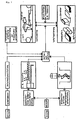
- FIGS. 1 and 4 The equipping of substrates and moldings with the enamel compositions according to the invention is shown by way of example in FIGS. 1 and 4. As can be seen from this, a large number of process combinations can be developed in order to meet the respective technology requirements.
- the flat substrates are equipped with one of the enamels according to the invention and then the enamel is polymerized or crosslinked free-radically in the heat or with jets, the substrate is deformed and then the coating agent on the resulting molded article is free-radically and / or fully crosslinked or cured with jets.
- the backbone polymers that are preferably used are summarized in Tables 1 and 2.
- cellulose ester No. 3 40 parts by weight of cellulose ester No. 3 are placed in a double-walled melt kneader with two Z-kneading arms. The kneader is closed and the mixing chamber and the cellulose ester are flushed with nitrogen gas for 2 minutes. The melt kneader is then heated to + 145 ° C and the cellulose ester is kneaded until it forms a homogeneous, soft mass. 60 parts by weight of the premelted copolyester No. 1 (145 ° C.) are now added to this melt mass and the same is incorporated homogeneously at this temperature. The mass is finally degassed with a vacuum of -0.5 bar.
- acr y profiled novolak having a molecular weight of 2100, a melting point of + 105 ° C and an acrylic group content of 0.5%, are melted at + 150 ° C in a process described in Example 3 Schmelzdissolver.
- 40 parts by weight of the preheated cellulose ester No. 7 are dispersed. After the cellulose particles have been dissolved, the melt is degassed with vacuum (-0.5 bar).
- copolyesters No. 1 and No. 4 were melted together at + 120 ° C. and degassed.
- melt compositions according to the invention made of polymer A, polymer B and / or oligomer C are described.
- the processing of the individual raw materials was carried out according to one of the process engineering described in Examples 1 to 6.
- melt mass from Example 1 80 parts by weight of the melt mass from Example 1 are melted at + 150 ° C. in a melt kneader with two Z-kneading arms and then 20 parts by weight of titanium dioxide (0.1 1 to 0.3 microns) preheated to + 100 ° C. are homogeneously incorporated and finally the filled melt mass degassed at -0.5 bar.
- the mixing process was carried out under a protective gas atmosphere with nitrogen.
- the melt is fed directly from a heated buffer tank to the applicator.
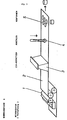
- Figures 2 - 4 show examples of the possibilities of producing molded articles from sheet metal coils, including the application and crosslinking of the melt masses.
- the unwound coil (2) first passes through an application unit (1), in which the melt mass is applied.
- Crosslinking of the melt mass is brought about even at elevated temperature by means of electron radiation (3).
- the mobility of the molten mass molecules that is still present enables favorable reactivity during curing.
- the cooling (4) of sheet metal and melt mass is carried out on the way to the deformation.
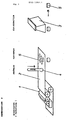
- Figure 3 shows a changed process sequence with some favorable properties for the deformation process.
- the possibility is conceivable with these special enamel materials, since there is an extreme increase in viscosity during cooling.
- the corrosion protection layer is so elastic that sheet metal deformation does not lead to microcracks, porosity, etc. Radiation crosslinking takes place on the finished molded body.
- the different radiation dose on the body must be taken into account, which is known to be given by the distance between the radiator and the shaped body. An extreme deep-drawing ratio can therefore normally be excluded with this combination.
- the metal packaging sector can be used, for example, to produce lids and fish cans in which the thermoforming ratio is very low.
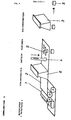
- the increase in viscosity is not sufficient to produce a molded body according to combination 2, it is possible to cross-link the already applied enamel (1/2) with a weak electron bombardment (e.g. 0.5 to 1.0 Mrad) (6).
- the surface crosslinking and the cooling process (4) then result in an increase in the viscosity of the melt mass which withstands the subsequent deformation process (5).
- the shaped body can then be fed to the final crosslinking process (3), where, according to the combination, two shaped bodies with a lower deep-drawing ratio can be treated.
- the melt compositions of Examples 1 to 22 were brought to the respectively required application temperatures between +100 and 220 ° C. in the melt kneader or melt dissolver, and substrates of aluminum, steel, polyvinyl chloride and kraft paper were coated with them.
- the test substrates (18 x 12.5 cm) were coated with application weights of 3 to 10 g / m 2 .
- the substrates and the application knife were preheated to different temperatures.
- the following reaction initiators were added to the polymerizable enamel compositions shortly before application: After the enamel materials had hardened on the various substrates, they were stored for 24 hours at 23 ° C. and then their adhesion was checked before and after a sterilization test. The sterilization conditions were 60 minutes at + 129 ° C in water vapor. Adhesion was determined using the known cross-cut test and the adhesive tape sample (TESAFILM® 154). The results are summarized in Table 4.
Landscapes
- Chemical & Material Sciences (AREA)
- Organic Chemistry (AREA)
- Chemical Kinetics & Catalysis (AREA)
- Materials Engineering (AREA)
- Medicinal Chemistry (AREA)
- Life Sciences & Earth Sciences (AREA)
- Engineering & Computer Science (AREA)
- Health & Medical Sciences (AREA)
- Wood Science & Technology (AREA)
- Polymers & Plastics (AREA)
- Paints Or Removers (AREA)
- Compositions Of Macromolecular Compounds (AREA)
- Graft Or Block Polymers (AREA)
- Laminated Bodies (AREA)
- Application Of Or Painting With Fluid Materials (AREA)
- Processes Of Treating Macromolecular Substances (AREA)
- Polyesters Or Polycarbonates (AREA)
Priority Applications (1)
| Application Number | Priority Date | Filing Date | Title |
|---|---|---|---|
| AT87116112T ATE85068T1 (de) | 1986-12-04 | 1987-11-02 | Loesungsmittelfreie, monomerarme bzw. -freie, polymerisierbare schmelzmasse, verfahren zu deren herstellung und verarbeitung. |
Applications Claiming Priority (2)
| Application Number | Priority Date | Filing Date | Title |
|---|---|---|---|
| DE19863641436 DE3641436A1 (de) | 1986-12-04 | 1986-12-04 | Loesungsmittelfreie, monomerarme bzw. -freie, polymerisierbare schmelzmasse, verfahren zu deren herstellung und verarbeitung |
| DE3641436 | 1986-12-04 |
Publications (3)
| Publication Number | Publication Date |
|---|---|
| EP0270831A2 true EP0270831A2 (fr) | 1988-06-15 |
| EP0270831A3 EP0270831A3 (en) | 1990-05-16 |
| EP0270831B1 EP0270831B1 (fr) | 1993-01-27 |
Family
ID=6315460
Family Applications (1)
| Application Number | Title | Priority Date | Filing Date |
|---|---|---|---|
| EP87116112A Expired - Lifetime EP0270831B1 (fr) | 1986-12-04 | 1987-11-02 | Masse fondue polymérisable exempte de solvant, pauvre ou exempte de monomère, son procédé de préparation et de traitement |
Country Status (5)
| Country | Link |
|---|---|
| US (1) | US4990364A (fr) |
| EP (1) | EP0270831B1 (fr) |
| AT (1) | ATE85068T1 (fr) |
| CA (1) | CA1325688C (fr) |
| DE (2) | DE3641436A1 (fr) |
Cited By (6)
| Publication number | Priority date | Publication date | Assignee | Title |
|---|---|---|---|---|
| WO1993013152A1 (fr) * | 1991-12-20 | 1993-07-08 | Showa Highpolymer Co., Ltd. | Procede d'elaboration d'un polyester aliphatique a forte structure moleculaire et film realise a partir de ce polyester |
| WO1994001224A3 (fr) * | 1992-07-08 | 1994-11-10 | Courtaulds Coatings Holdings | Procede de revetement et compositions |
| WO1996036653A3 (fr) * | 1995-05-18 | 1997-01-09 | Stoess & Co Gelatine | Materiau d'arret resistant a l'eau |
| WO2005014721A1 (fr) * | 2003-08-11 | 2005-02-17 | Industria Chimica Reggiana I.C.R. S.P.A. | Composition chimique et son procede de polymerisation a utiliser dans la reparation de la carrosserie d'un vehicule |
| EP2596960A3 (fr) * | 2011-11-25 | 2013-07-31 | Océ-Technologies B.V. | Support d'impression réutilisable et procédé de fabrication associé |
| CN106147548A (zh) * | 2016-08-14 | 2016-11-23 | 安庆市沁之源电器有限公司 | 一种电风扇吸音涂料及其制备方法 |
Families Citing this family (28)
| Publication number | Priority date | Publication date | Assignee | Title |
|---|---|---|---|---|
| DE3930097A1 (de) * | 1989-09-09 | 1991-03-14 | Basf Ag | Uv-vernetzbare copolymerisate |
| AU651007B2 (en) * | 1991-10-29 | 1994-07-07 | Courtaulds (Australia) Pty Ltd | Solventless coating |
| US5389170A (en) * | 1993-06-11 | 1995-02-14 | Dow Corning Corporation | Method for bonding substrates using molten moisture reactive organosiloxane compositions |
| US5352491A (en) * | 1993-06-11 | 1994-10-04 | Dow Corning Corporation | Method for coating using molten organosiloxane compositions |
| DE4337482A1 (de) † | 1993-11-03 | 1995-05-04 | Basf Ag | Verfahren zur Herstellung von radikalisch vernetzbaren Copolymerisaten |
| WO1996020086A1 (fr) * | 1994-12-23 | 1996-07-04 | Sms Schloemann-Siemag Aktiengesellschaft | Procede de recouvrement d'une ou de deux faces de feuillards metalliques avec une resine synthetique duroplastique extrudee |
| DE29624309U1 (de) * | 1995-04-04 | 2002-01-03 | Commonwealth Scientific And Industrial Research Organisation, Campbell | Dauertraglinsen |
| CH691126A5 (de) * | 1995-12-21 | 2001-04-30 | Mbt Holding Ag | Novolakvinylesterzusammensetzungen. |
| ZA973692B (en) * | 1996-05-17 | 1997-11-25 | Dexter Corp | Extrusion coating compositions and method. |
| US5849398A (en) * | 1996-06-28 | 1998-12-15 | Azon Corporation | Transparentized medium and process for making same |
| US5936056A (en) * | 1997-03-07 | 1999-08-10 | Indspec Chemical Corporation | Non-volatile resorcinolic resins and methods of making and using the same |
| FR2767074B1 (fr) * | 1997-08-08 | 1999-10-22 | Lorraine Laminage | Procede et dispositif de revetement en continu d'au moins une bande metallique par un film en polymere reticulable fluide |
| AU9401798A (en) * | 1997-10-08 | 1999-04-27 | Angus Chemical Company | Uv cured coatings containing tertiary amino alcohols |
| US6087417A (en) | 1998-01-16 | 2000-07-11 | The Valspar Corporation | Epoxy resin/acid/tertiary amine reaction product with reactive diluent |
| BR9916098A (pt) * | 1998-12-16 | 2001-09-04 | Lorraine Laminage | Processo e dispositivo de revestimento de modo contìnuo de pelo menos uma tira metálica com um filme fluido feito de polìmero reticulável |
| CN1261471C (zh) * | 1999-10-19 | 2006-06-28 | 阿克佐诺贝尔公司 | 辐射固化的热熔组合物及其应用方法 |
| DE19954366A1 (de) * | 1999-11-11 | 2001-05-17 | Basf Ag | Verfahren zur Beschriftung von Kunststoffoberflächen |
| ITPS20000013A1 (it) * | 2000-09-05 | 2002-03-05 | Canti & Figli Srl | Procedimento e macchina per l'applicazione di uno spesso strato di vernice su fogli da nobilitazione in bobinr |
| AUPR210600A0 (en) * | 2000-12-15 | 2001-01-25 | Bhp Steel (Jla) Pty Limited | Manufacturing solid paint |
| US7455891B2 (en) * | 2002-01-29 | 2008-11-25 | Ciba Specialty Chemicals Corporation | Process for the production of strongly adherent coatings |
| DE10261972B4 (de) * | 2002-02-19 | 2008-08-21 | Jowat Ag | Reaktives Einkomponenten-Beschichtungs- und/oder Klebstoffgranulat, Verfahren zu seiner Herstellung sowie seine Verwendung |
| US20050147824A1 (en) * | 2003-12-30 | 2005-07-07 | Kimberly-Clark Worldwide, Inc. | Surface initiated graft polymerization |
| US8796348B2 (en) | 2007-09-26 | 2014-08-05 | Henkel Ag & Co. Kgaa | UV curable coating composition |
| JP5246353B2 (ja) * | 2012-01-12 | 2013-07-24 | 新日鐵住金株式会社 | 被膜形成方法 |
| CN104177988A (zh) * | 2014-07-11 | 2014-12-03 | 安徽桑瑞斯环保新材料有限公司 | 一种用于金属粘结的粉末涂料 |
| US10828855B2 (en) | 2016-08-26 | 2020-11-10 | Molecular Imprints, Inc. | Monolithic high refractive index photonic devices |
| CN111526838B (zh) | 2017-11-02 | 2022-03-22 | 奇跃公司 | 制备和分配聚合物材料并从其生产聚合物制品 |
| CN115028288B (zh) * | 2022-06-30 | 2023-06-23 | 四川农业大学 | 一种自分离亲疏水调控絮凝剂及其应用 |
Family Cites Families (11)
| Publication number | Priority date | Publication date | Assignee | Title |
|---|---|---|---|---|
| FR1540413A (fr) * | 1965-12-27 | 1968-09-27 | Robertson Co H H | Compositions de résines de polyesters à durcissement rapide |
| GB1235769A (en) * | 1969-03-20 | 1971-06-16 | Ppg Industries Inc | Highly radiation-sensitive telomerized polyesters |
| US3928265A (en) * | 1972-10-31 | 1975-12-23 | Bayer Ag | Lacquer systems which are harmless to the environment |
| JPS5419895B2 (fr) * | 1973-07-27 | 1979-07-18 | ||
| US3956421A (en) * | 1974-12-12 | 1976-05-11 | Owens-Corning Fiberglas Corporation | Polar thermoplastic additive for molding compounds and molding compound containing same |
| US4175977A (en) * | 1977-09-19 | 1979-11-27 | International Paper Company | Process for producing a flowable, highly pigmented, low viscosity, hot-melt coating compound |
| DE2914982A1 (de) * | 1979-04-12 | 1980-10-30 | Consortium Elektrochem Ind | Haertbare massen und ihre herstellung |
| DE3106540A1 (de) * | 1981-02-21 | 1983-01-27 | Otto 7815 Kirchzarten Wehrle | Formstein mit einbaudose |
| DE3409271A1 (de) * | 1984-03-14 | 1985-10-03 | Bayer Ag, 5090 Leverkusen | Niedrigviskose, ungesaettigte polyester und ihre verwendung als bindemittel fuer monomerenfreie spachtelmassen |
| US4654233A (en) * | 1984-11-21 | 1987-03-31 | Minnesota Mining And Manufacturing Company | Radiation-curable thermoplastic coating |
| DE3613082A1 (de) * | 1985-05-07 | 1986-11-13 | Hüls AG, 45772 Marl | Haftklebstoffe auf der basis von strahlenhaertbaren, (meth-)acrylgruppenhaltigen polyestern |
-
1986
- 1986-12-04 DE DE19863641436 patent/DE3641436A1/de active Granted
-
1987
- 1987-11-02 AT AT87116112T patent/ATE85068T1/de not_active IP Right Cessation
- 1987-11-02 DE DE8787116112T patent/DE3783883D1/de not_active Expired - Fee Related
- 1987-11-02 EP EP87116112A patent/EP0270831B1/fr not_active Expired - Lifetime
- 1987-12-03 CA CA000553477A patent/CA1325688C/fr not_active Expired - Fee Related
- 1987-12-04 US US07/129,110 patent/US4990364A/en not_active Expired - Fee Related
Cited By (7)
| Publication number | Priority date | Publication date | Assignee | Title |
|---|---|---|---|---|
| WO1993013152A1 (fr) * | 1991-12-20 | 1993-07-08 | Showa Highpolymer Co., Ltd. | Procede d'elaboration d'un polyester aliphatique a forte structure moleculaire et film realise a partir de ce polyester |
| WO1994001224A3 (fr) * | 1992-07-08 | 1994-11-10 | Courtaulds Coatings Holdings | Procede de revetement et compositions |
| WO1996036653A3 (fr) * | 1995-05-18 | 1997-01-09 | Stoess & Co Gelatine | Materiau d'arret resistant a l'eau |
| WO2005014721A1 (fr) * | 2003-08-11 | 2005-02-17 | Industria Chimica Reggiana I.C.R. S.P.A. | Composition chimique et son procede de polymerisation a utiliser dans la reparation de la carrosserie d'un vehicule |
| EP2596960A3 (fr) * | 2011-11-25 | 2013-07-31 | Océ-Technologies B.V. | Support d'impression réutilisable et procédé de fabrication associé |
| US8809432B2 (en) | 2011-11-25 | 2014-08-19 | Oce Technologies B.V. | Reusable print medium and method of manufacturing thereof |
| CN106147548A (zh) * | 2016-08-14 | 2016-11-23 | 安庆市沁之源电器有限公司 | 一种电风扇吸音涂料及其制备方法 |
Also Published As
| Publication number | Publication date |
|---|---|
| CA1325688C (fr) | 1993-12-28 |
| DE3783883D1 (de) | 1993-03-11 |
| DE3641436C2 (fr) | 1992-10-01 |
| EP0270831B1 (fr) | 1993-01-27 |
| DE3641436A1 (de) | 1988-06-09 |
| EP0270831A3 (en) | 1990-05-16 |
| ATE85068T1 (de) | 1993-02-15 |
| US4990364A (en) | 1991-02-05 |
Similar Documents
| Publication | Publication Date | Title |
|---|---|---|
| EP0270831A2 (fr) | Masse fondue polymérisable exempte de solvant, pauvre ou exempte de monomère, son procédé de préparation et de traitement | |
| DE3600425C2 (fr) | ||
| DE68915158T2 (de) | In der Form hitzehärtbare Überzugszusammensetzungen. | |
| DE69735524T2 (de) | Beschichten von Substraten | |
| EP0347516B1 (fr) | Matière fondue polymérisable sans solvant, pauvre en monomères ou sans monomères | |
| EP1259571A2 (fr) | Procede de preparation de revetements, de couches adhesives ou de couches d'etancheite pour des substrats portant ou non une couche d'appret | |
| DE4102241A1 (de) | Polyolefinharzzusammensetzungen | |
| EP1297084A1 (fr) | Systeme a plusieurs composants durcissable par voie thermique et par rayonnement actinique, procede permettant de le produire et son utilisation | |
| EP0650992B1 (fr) | Utilisation de polyesterpolyols comme composant de liant dans des vernis de polyuréthane à deux composants | |
| DE2340474A1 (de) | Verfahren und mittel zur verbesserung der bindung zwischen klebstoffen und polyester- bzw. thermoplastischen substraten | |
| DE3887828T2 (de) | Reaktive Beschichtungen. | |
| DE19956483A1 (de) | Lackierte Kunststoffformteile, Verfahren zu ihrer Herstellung und ihre Verwendung | |
| DE19545634A1 (de) | Festkörperreiche Bindemittelkombinationen | |
| EP0826010A2 (fr) | Materiau d'arret resistant a l'eau | |
| EP1251971A2 (fr) | Procede d'obtention d'enduits, de couches adhesives ou de garnitures d'etancheite pour substrats avec couche de fond ou sans couche de fond | |
| DE69509284T2 (de) | Härtbare Zusammensetzungen mit verbesserter Haftung und ihre Verwendung zum Beschichten von Substraten | |
| DE102005024362A1 (de) | Verfahren zur Herstellung kratzfester gehärteter Materialien | |
| EP1252245B1 (fr) | Procede de production de revetements, couches de colle ou systemes d'etancheite pour des substrats avec ou sans couche de fond | |
| EP1440103A1 (fr) | Melange de substances durcissable, son procede de production et son utilisation | |
| DE19955129A1 (de) | Neue, festkörperreiche Bindemittelkombinationen und deren Verwendung | |
| DE68911787T2 (de) | Beschichtungszusammensetzungen. | |
| DE19903725A1 (de) | Bindemittelgemische und ihre Verwendung in mit aktinischer Strahlung und/oder thermisch härtbaren Beschichtungsstoffen | |
| DE3645347C2 (de) | Verfahren zur Bildung von Überzügen | |
| WO1997020893A1 (fr) | Peintures aqueuses a durcissement par irradiation avec effet mat | |
| EP0865471B1 (fr) | Procede pour produire une peinture aqueuse durcissant aux rayonnements |
Legal Events
| Date | Code | Title | Description |
|---|---|---|---|
| PUAI | Public reference made under article 153(3) epc to a published international application that has entered the european phase |
Free format text: ORIGINAL CODE: 0009012 |
|
| AK | Designated contracting states |
Kind code of ref document: A2 Designated state(s): AT BE CH DE ES FR GB GR IT LI LU NL SE |
|
| PUAL | Search report despatched |
Free format text: ORIGINAL CODE: 0009013 |
|
| RHK1 | Main classification (correction) |
Ipc: C09D 3/00 |
|
| AK | Designated contracting states |
Kind code of ref document: A3 Designated state(s): AT BE CH DE ES FR GB GR IT LI LU NL SE |
|
| 17P | Request for examination filed |
Effective date: 19900807 |
|
| 17Q | First examination report despatched |
Effective date: 19910524 |
|
| DIN1 | Information on inventor provided before grant (deleted) | ||
| RAP1 | Party data changed (applicant data changed or rights of an application transferred) |
Owner name: BOLTE, GEORG, DR. Owner name: HINTERWALDNER, RUDOLF |
|
| GRAA | (expected) grant |
Free format text: ORIGINAL CODE: 0009210 |
|
| AK | Designated contracting states |
Kind code of ref document: B1 Designated state(s): AT BE CH DE ES FR GB GR IT LI LU NL SE |
|
| PG25 | Lapsed in a contracting state [announced via postgrant information from national office to epo] |
Ref country code: GR Free format text: LAPSE BECAUSE OF FAILURE TO SUBMIT A TRANSLATION OF THE DESCRIPTION OR TO PAY THE FEE WITHIN THE PRESCRIBED TIME-LIMIT Effective date: 19930127 Ref country code: NL Effective date: 19930127 Ref country code: SE Effective date: 19930127 Ref country code: IT Free format text: LAPSE BECAUSE OF FAILURE TO SUBMIT A TRANSLATION OF THE DESCRIPTION OR TO PAY THE FEE WITHIN THE PRE;WARNING: LAPSES OF ITALIAN PATENTS WITH EFFECTIVE DATE BEFORE 2007 MAY HAVE OCCURRED AT ANY TIME BEFORE 2007. THE CORRECT EFFECTIVE DATE MAY BE DIFFERENT FROM THE ONE RECORDED.SCRIBED TIME-LIMIT Effective date: 19930127 |
|
| REF | Corresponds to: |
Ref document number: 85068 Country of ref document: AT Date of ref document: 19930215 Kind code of ref document: T |
|
| REF | Corresponds to: |
Ref document number: 3783883 Country of ref document: DE Date of ref document: 19930311 |
|
| PG25 | Lapsed in a contracting state [announced via postgrant information from national office to epo] |
Ref country code: ES Free format text: LAPSE BECAUSE OF FAILURE TO SUBMIT A TRANSLATION OF THE DESCRIPTION OR TO PAY THE FEE WITHIN THE PRESCRIBED TIME-LIMIT Effective date: 19930508 |
|
| GBT | Gb: translation of ep patent filed (gb section 77(6)(a)/1977) |
Effective date: 19930429 |
|
| ET | Fr: translation filed | ||
| NLV1 | Nl: lapsed or annulled due to failure to fulfill the requirements of art. 29p and 29m of the patents act | ||
| PLBE | No opposition filed within time limit |
Free format text: ORIGINAL CODE: 0009261 |
|
| STAA | Information on the status of an ep patent application or granted ep patent |
Free format text: STATUS: NO OPPOSITION FILED WITHIN TIME LIMIT |
|
| PG25 | Lapsed in a contracting state [announced via postgrant information from national office to epo] |
Ref country code: LU Free format text: LAPSE BECAUSE OF NON-PAYMENT OF DUE FEES Effective date: 19931130 |
|
| 26N | No opposition filed | ||
| PGFP | Annual fee paid to national office [announced via postgrant information from national office to epo] |
Ref country code: GB Payment date: 19941031 Year of fee payment: 8 |
|
| PGFP | Annual fee paid to national office [announced via postgrant information from national office to epo] |
Ref country code: FR Payment date: 19941128 Year of fee payment: 8 |
|
| PGFP | Annual fee paid to national office [announced via postgrant information from national office to epo] |
Ref country code: AT Payment date: 19941130 Year of fee payment: 8 |
|
| PGFP | Annual fee paid to national office [announced via postgrant information from national office to epo] |
Ref country code: CH Payment date: 19941202 Year of fee payment: 8 |
|
| PGFP | Annual fee paid to national office [announced via postgrant information from national office to epo] |
Ref country code: BE Payment date: 19941212 Year of fee payment: 8 |
|
| PG25 | Lapsed in a contracting state [announced via postgrant information from national office to epo] |
Ref country code: GB Effective date: 19951102 Ref country code: AT Effective date: 19951102 |
|
| PG25 | Lapsed in a contracting state [announced via postgrant information from national office to epo] |
Ref country code: LI Effective date: 19951130 Ref country code: BE Effective date: 19951130 Ref country code: CH Effective date: 19951130 |
|
| BERE | Be: lapsed |
Owner name: HINTERWALDNER RUDOLF Effective date: 19951130 Owner name: BOLTE GEORG Effective date: 19951130 |
|
| GBPC | Gb: european patent ceased through non-payment of renewal fee |
Effective date: 19951102 |
|
| REG | Reference to a national code |
Ref country code: CH Ref legal event code: PL |
|
| PG25 | Lapsed in a contracting state [announced via postgrant information from national office to epo] |
Ref country code: FR Effective date: 19960731 |
|
| REG | Reference to a national code |
Ref country code: FR Ref legal event code: ST |
|
| PGFP | Annual fee paid to national office [announced via postgrant information from national office to epo] |
Ref country code: DE Payment date: 20000114 Year of fee payment: 13 |
|
| PG25 | Lapsed in a contracting state [announced via postgrant information from national office to epo] |
Ref country code: DE Free format text: LAPSE BECAUSE OF NON-PAYMENT OF DUE FEES Effective date: 20010801 |