EP0272174A2 - Präparate von Adenyl-Zyklase, Verfahren zur Herstellung dieser Präparate und ihre biologischen Verwendungen - Google Patents
Präparate von Adenyl-Zyklase, Verfahren zur Herstellung dieser Präparate und ihre biologischen Verwendungen Download PDFInfo
- Publication number
- EP0272174A2 EP0272174A2 EP87402592A EP87402592A EP0272174A2 EP 0272174 A2 EP0272174 A2 EP 0272174A2 EP 87402592 A EP87402592 A EP 87402592A EP 87402592 A EP87402592 A EP 87402592A EP 0272174 A2 EP0272174 A2 EP 0272174A2
- Authority
- EP
- European Patent Office
- Prior art keywords
- preparations
- calmodulin
- bordetella
- enzyme
- purified
- Prior art date
- Legal status (The legal status is an assumption and is not a legal conclusion. Google has not performed a legal analysis and makes no representation as to the accuracy of the status listed.)
- Withdrawn
Links
Images




Classifications
-
- C—CHEMISTRY; METALLURGY
- C12—BIOCHEMISTRY; BEER; SPIRITS; WINE; VINEGAR; MICROBIOLOGY; ENZYMOLOGY; MUTATION OR GENETIC ENGINEERING
- C12N—MICROORGANISMS OR ENZYMES; COMPOSITIONS THEREOF; PROPAGATING, PRESERVING, OR MAINTAINING MICROORGANISMS; MUTATION OR GENETIC ENGINEERING; CULTURE MEDIA
- C12N9/00—Enzymes; Proenzymes; Compositions thereof; Processes for preparing, activating, inhibiting, separating or purifying enzymes
- C12N9/88—Lyases (4.)
-
- C—CHEMISTRY; METALLURGY
- C07—ORGANIC CHEMISTRY
- C07K—PEPTIDES
- C07K14/00—Peptides having more than 20 amino acids; Gastrins; Somatostatins; Melanotropins; Derivatives thereof
- C07K14/195—Peptides having more than 20 amino acids; Gastrins; Somatostatins; Melanotropins; Derivatives thereof from bacteria
- C07K14/235—Peptides having more than 20 amino acids; Gastrins; Somatostatins; Melanotropins; Derivatives thereof from bacteria from Bordetella (G)
-
- C—CHEMISTRY; METALLURGY
- C07—ORGANIC CHEMISTRY
- C07K—PEPTIDES
- C07K14/00—Peptides having more than 20 amino acids; Gastrins; Somatostatins; Melanotropins; Derivatives thereof
- C07K14/195—Peptides having more than 20 amino acids; Gastrins; Somatostatins; Melanotropins; Derivatives thereof from bacteria
- C07K14/32—Peptides having more than 20 amino acids; Gastrins; Somatostatins; Melanotropins; Derivatives thereof from bacteria from Bacillus (G)
-
- C—CHEMISTRY; METALLURGY
- C07—ORGANIC CHEMISTRY
- C07K—PEPTIDES
- C07K16/00—Immunoglobulins [IG], e.g. monoclonal or polyclonal antibodies
- C07K16/12—Immunoglobulins [IG], e.g. monoclonal or polyclonal antibodies against material from bacteria
- C07K16/1203—Gram-negative bacteria
- C07K16/1225—Gram-negative bacteria from Bordetella (G)
-
- C—CHEMISTRY; METALLURGY
- C07—ORGANIC CHEMISTRY
- C07K—PEPTIDES
- C07K16/00—Immunoglobulins [IG], e.g. monoclonal or polyclonal antibodies
- C07K16/12—Immunoglobulins [IG], e.g. monoclonal or polyclonal antibodies against material from bacteria
- C07K16/1267—Gram-positive bacteria
- C07K16/1278—Bacillus (G)
-
- C—CHEMISTRY; METALLURGY
- C07—ORGANIC CHEMISTRY
- C07K—PEPTIDES
- C07K16/00—Immunoglobulins [IG], e.g. monoclonal or polyclonal antibodies
- C07K16/40—Immunoglobulins [IG], e.g. monoclonal or polyclonal antibodies against enzymes
-
- C—CHEMISTRY; METALLURGY
- C12—BIOCHEMISTRY; BEER; SPIRITS; WINE; VINEGAR; MICROBIOLOGY; ENZYMOLOGY; MUTATION OR GENETIC ENGINEERING
- C12N—MICROORGANISMS OR ENZYMES; COMPOSITIONS THEREOF; PROPAGATING, PRESERVING, OR MAINTAINING MICROORGANISMS; MUTATION OR GENETIC ENGINEERING; CULTURE MEDIA
- C12N9/00—Enzymes; Proenzymes; Compositions thereof; Processes for preparing, activating, inhibiting, separating or purifying enzymes
- C12N9/96—Stabilising an enzyme by forming an adduct or a composition; Forming enzyme conjugates
-
- G—PHYSICS
- G01—MEASURING; TESTING
- G01N—INVESTIGATING OR ANALYSING MATERIALS BY DETERMINING THEIR CHEMICAL OR PHYSICAL PROPERTIES
- G01N33/00—Investigating or analysing materials by specific methods not covered by groups G01N1/00 - G01N31/00
- G01N33/48—Biological material, e.g. blood, urine; Haemocytometers
- G01N33/50—Chemical analysis of biological material, e.g. blood, urine; Testing involving biospecific ligand binding methods; Immunological testing
- G01N33/53—Immunoassay; Biospecific binding assay; Materials therefor
- G01N33/569—Immunoassay; Biospecific binding assay; Materials therefor for microorganisms, e.g. protozoa, bacteria, viruses
- G01N33/56911—Bacteria
-
- G—PHYSICS
- G01—MEASURING; TESTING
- G01N—INVESTIGATING OR ANALYSING MATERIALS BY DETERMINING THEIR CHEMICAL OR PHYSICAL PROPERTIES
- G01N33/00—Investigating or analysing materials by specific methods not covered by groups G01N1/00 - G01N31/00
- G01N33/48—Biological material, e.g. blood, urine; Haemocytometers
- G01N33/50—Chemical analysis of biological material, e.g. blood, urine; Testing involving biospecific ligand binding methods; Immunological testing
- G01N33/53—Immunoassay; Biospecific binding assay; Materials therefor
- G01N33/573—Immunoassay; Biospecific binding assay; Materials therefor for enzymes or isoenzymes
-
- A—HUMAN NECESSITIES
- A61—MEDICAL OR VETERINARY SCIENCE; HYGIENE
- A61K—PREPARATIONS FOR MEDICAL, DENTAL OR TOILETRY PURPOSES
- A61K39/00—Medicinal preparations containing antigens or antibodies
Definitions
- the subject of the invention is purified adenyl cyclase preparations, a process for obtaining these preparations and their biological applications.
- the invention therefore aims to provide new preparations of CA of high purity.
- the invention further relates to the biological applications of these purified preparations.
- it aims to provide polyclonal antibodies formed against these preparations and according to a particularly interesting aspect of the monoclonal antibody preparations specifically recognizing an epitope of CA and exerting a protective role against infections caused by Bordetella.
- the invention further relates to biological reagents produced from polyclonal and more especially monoclonal antibodies.
- biological applications also include the development of vaccines against infectious diseases caused by these bacteria, using the epitope recognized specifically by the preparations of monoclonal antibodies.
- the enzymatic preparations of CA according to the invention are characterized in that they have a high purity and are practically completely devoid of bacterial contaminating products, in particular pertussis toxins, lipopolysaccharide (or LPS) and filamentous hemagglutinin (or FHA). ).
- AC can exist in two molecular forms of approximately 45 and 43 kDa respectively, structurally related.
- these preparations are characterized in that they have an activity which can reach and even exceed 1600 ⁇ mol of cAMP min-1 mg-1. It will be noted that one unit of AC corresponds to one ⁇ mole of adenosine 3 ⁇ : 5 ⁇ -monophosphate or, for short, cAMP, formed in 1 min at 30 ° C at pH 8.
- the CA is free or in the form of a complex in association with eukaryotic proteins, more especially with calmodulin.
- the association constant of AC with calmodulin in these complexes is approximately 10 nM.
- the CA preparations according to the invention are also characterized in that the catalytic activity is carried by a 25 kDa fragment, site of combination with calmodulin and protected by the latter against tryptic digestion.
- the high purity CA preparations according to the invention are preparations made from cultures of bacteria expressing the CA. More specifically, these are pathogenic bacteria whose CA is capable of interfering with the CA of eukaryotic cells. Mention will be made more particularly of those of the genus Bordetella or Bacillus anthracis .
- Bordetella CA particularly preferred with regard to the therapeutic applications envisaged include CA originating from Bordetella responsible for respiratory pathologies of vertebrates such as, in humans, Bordetella pertussis and Bordetella parapertussis , and in animals, Bordetella bronchiseptica and Bordetella avium .
- the invention also relates to a process for obtaining high purity adenyl cyclase preparations.
- This process is characterized by the step of bringing a previously concentrated supernatant of cultures of bacteria expressing adenyl cyclase, or an extract of these bacteria, into contact with calmodulin.
- calmodulin attached to a support.
- the support to which the calmodulin is attached is constituted by a material inert with respect to the preparation containing the enzyme, and capable of retaining the molecules of high molecular weight.
- the support consists of a gel.
- calmodulin is already fixed, such as the commercial product Affigel calmoduline®.
- the gel-calmodulin and supernatant or extract mixture is subjected to stirring at low temperature.
- the support on which the calmodulin is fixed is a filtering material of the Millipores® filter type, capable of selectively retaining at least the major part of the enzyme.
- the filter material is made of nitrocellulose or a plastic material and has a porosity of 0.45-0.22 ⁇ m.
- the adenyl cyclase fixed on the support-calmodulin complex is recovered using a denaturing agent.
- a denaturing agent Preferably, urea is used in a buffer medium. A satisfactory dissolution of AC in urea is obtained with urea 4 to 8.8M. The urea is then removed from the enzyme preparation, for example by dialysis or filtration.
- Enzyme preparations are thus obtained of high purity, having a specific activity reaching or even exceeding 1100 u / mg of proteins.
- calmodulin is added to a preparation enriched with at least 90% adenyl cyclase, then it is brought into contact mixing, preferably by carrying out affinity chromatography, with an ion exchanger of low porosity, such as DEAE-Sephacel®.
- an ion exchanger of low porosity such as DEAE-Sephacel®.
- This variant makes it possible to obtain, with yields of approximately 40%, preparations of CA fixed to calmodulin, of great stability, the specific activity of which can reach and even exceed 1600 u / mg of protein.
- the preparation enriched with adenyl cyclase used is obtained from a concentrated culture supernatant, the pH of which has been brought to 7.0 and filtered using an ion exchanger, advantageously DEAE-Sephacel. ®.
- the concentrated supernatant used in the process of the invention is advantageously obtained by subjecting a supernatant of bacterial cultures expressing CA to one or more filtration operations using nitrocellulose or plastic filters, advantageously of porosity 0.45-0.22 ⁇ m, in particular those of the Millipores® type, then by incubating the filters with a detergent in order to liberate the AC and by eliminating from the preparation of AC the insoluble materials present.
- the detergent is a nonionic detergent, preferably Triton® or Np40®.
- the bacterial extract which can be used for the purification of adenyl cyclase is obtained, for example, by treatment of the bacterial cells expressing adenyl cyclase with urea and recovery of the supernatant.
- the bacteria expressing adenyl cyclase used for the cultures are chosen from pathogenic bacteria whose CA is capable of interfering with the CA of eukaryotic cells. It is more particularly Bordetella or Bacillus anthracis .
- Bordetella include: Bordetella pertussis, Bordetella bronchiseptica Bordetella parapertusis and Bordetella avium.
- the invention therefore also relates, as new products, to polyclonal antibodies directed against these enzymatic preparations.
- These antibodies are obtained for example by immunization of animals such as rabbits or mice using the CA preparations in question in which the CA is free or in the form of a complex with eukaryotic proteins, in particular calmodulin, and recovery, according to conventional techniques, of the sera containing the antibodies, then of the antibodies themselves.
- the invention also relates to monoclonal antibodies, such as obtained by fusion, to a myeloma of mice, from spleen lymphocytes from mice immunized with purified adenyl cyclase.
- monoclonal immunoglobulin preparations are characterized in that they specifically recognize a purified AC epitope which allows the induction of the synthesis of protective antibodies.
- the invention relates in particular to the preparation of monoclonal antibodies (8-25) which immunoprecipitate, in crude extracts, and the preparations of the enzyme purified from bacterial cells, a triplet of 50.45 and 43kDa as well as a high molecular weight protein greater than 100 kDa.
- the hybridoma strain producing monoclonal antibodies also falls within the scope of the invention.
- the antibodies according to the invention exert an immunoprotective effect with respect to AC. These properties are used to protect humans or animals from the pathogenic effects of the above bacteria.
- a local administration is used, in the case of respiratory infections by intranasal or intratacheal route, or by parenteral route.
- Conventional excipients such as calcium phosphate or aluminum hydroxide are used.
- the monoclonal antibodies of the invention make it possible to carry out specific serotherapy and seroprophylaxis.
- the antibodies of the invention can also be used for the purification of CA, including other species in the event of cross-reactivity and for the early diagnosis of the disease. They are indeed particularly suitable for screening latent patients and carriers.
- the invention also provides, thanks to the monoclonal antibodies defined above, an active epitope of CA recognized specifically.
- the toxicology tests carried out on the purified AC having demonstrated the absence of toxicity of this enzyme administered by the intranasal route on the mouse, this purified AC is advantageously used for the development of vaccinating principles, provided that it does not give cross-reactions with the CA of the eukaryotes treated.
- the vaccines according to the invention are therefore characterized in that they are molecular vaccines containing an active epitope of CA in association with a pharmaceutical vehicle, capable of inducing infection and toxic effects in humans or the animal.
- the usual doses and forms of administration are advantageously used.
- the operation is carried out at room temperature using the chloramine-T method (Greenwood et al., Biochem. J. 89, 114-123, 1963).
- Calmodulin iodine has a specific radioactivity of 20 Ci / minol; it is stable over two months when stored at -20 ° C.
- the AC-calmodulin complex obtained after purification on DEAE-Sephacel is chromatographed on hydroxylapatite in order to remove the detergent agent.
- the 125I-AC preparation is stable for two months at -20 ° C.
- the analyzes of the products of the examples are carried out as follows.
- the activity of the AC is measured according to the method of White A.A. in Methods Enzymol., 38C, 41-46, 1974 as modified by Hanoune et al. (J. Biol. Chem., 252, 2039-0246, 1977).
- the reaction is carried out in a medium containing 50 mM Tris-HCl, pH 8, 6 mM of MgCl2, 100 ⁇ g of bovine serum albumin, 0.12 mM of CaCl2 and 0.1 ⁇ M of calmodulin when it is added.
- One unit of AC corresponds, as indicated above, to 1 ⁇ mol of cAMP formed in one minute at 30 ° C. at pH 8.
- the proteins are measured either according to Bradford (Anal. Biochem., 248-254) or according to Schulz et al. (Anal. Biochem., 91, 354-356, 1978).
- the SDS-PAGE method is carried out according to Laemli (Nature, London, 227, 680-685, 1976).
- the gels are stained with silver as described by Morrissey (Anal. Biochem., 117, 307-310, 1981) or autoradiographed after exposure to X-omat AT films at -70 ° C.
- EXAMPLE 1 Culture of Bordetella pertussis and obtaining of a supernatant with a high concentration of adenyl cyclase.
- a preculture of Bordetella pertussis, 18323, phase I (strain ATCC 9797) and of an avirulent variant, phase IV, spontaneously stable of this strain, is carried out for 48 hours at 36 ° C. on a Stainer modified agar medium.
- -Scholte supplemented with cyclodextrin (according to Imaizumi et al. In J. Chim. Microbiol., 17, 781-786, 1983).
- the preculture is then transferred to a modified liquid Stainer-Scholte medium without cyclodextrin.
- the culture supernatants are stored at -30 ° C until use or concentrated directly.
- EXAMPLE 2 Process for obtaining purified extracytoplasmic adenyl cyclase in free form.
- Affigel-calmoduline® 40 ml of concentrated culture supernatant is added to 0.8 to 1 ml of Affigel-calmoduline® and the mixture is slowly stirred at 4 ° C for 18 hours. More than 2/3 of the enzyme activity is retained on the gel.
- Affigel-calmodulin is sedimented by centrifugation at 300 ⁇ g for 1 minute, washed several times with 0.5 M NaCl in buffer A.
- Adenyl cyclase is recovered from the gel using 2 , 5 ml of 8.8 M urea in buffer A. The urea is eliminated by filtration on a column of Sephadex G-25®, equilibrated with buffer A.
- This enzyme preparation has a specific activity of 1100 units / mg of protein. It can be stored at -80 ° C without loss of activity for several weeks.
- EXAMPLE 3 Process for obtaining purified adenyl cyclase from bacterial extracts.
- a culture of bacteria expressing activatable CA with calmodulin is subjected to a treatment with 8M urea for approximately 2 hours at room temperature.
- the supernatant which constitutes the bacterial extract is recovered and it is brought into contact with the Affigel-calmodulin gel under the conditions reported above.
- EXAMPLE 4 Process for obtaining purified AC in the form of a complex with calmodulin.
- a concentrated culture supernatant is used. This supernatant is adjusted to pH 7.0 using 1.5M imidazole (pH 6.5) and 40 ml of this material are passed through a column of 5 ml of DEAE-Sephacel, equilibrated with buffer A at a flow rate of 10 ml / h. Calmodulin is added to the effluent (0.2 ⁇ M final concentration). The mixture is passed through a 3 ml column of DEAE-Sephacel. 95% of the activity of AC is thus fixed on the column. After washing with 0.1M NaCl in buffer A, the AC-calmodulin complex is eluted with 0.3M NaCl in buffer A, at a flow rate of 3 ml / h.
- the specific activity of AC is 1600 u / mg of protein.
- This enzyme can be stored at -80 ° C without losing its activity over several weeks.
- 0.5 ml of buffer A is incubated containing 20 nM of (125I) beef brain calmodulin (20 Ci / mmol) and 3 dilutions of concentrated culture supernatant (A: 5 u / ml, B: 1 u / ml , C: 0.2 u / ml). Incubation is carried out at 4 ° C for one hour. Centrifugation is then carried out with a sucrose gradient of 5 to 20% for 16 hours at 35,000 rpm. in a SW41® rotor. 0.5 ml fractions are collected, the radioactivity and the AC activity of which are analyzed (measured in the presence of calmodulin and expressed in 10 ⁇ 3u / ml).
- the purified AC with a) Affigel-calmodulin or b) DEAE-Sephacel is studied according to the SDS-PAGE method (10% acrylamide) with coloration of the gel using silver.
- lane 1 corresponds to the concentrated culture supernatant
- lane 2 to proteins not linked to Affigel-calmodulin
- lane 3 to proteins eluted from Affigel-calmodulin.
- lane 1 corresponds to the concentrated culture supernatant
- lane 2 to proteins not linked to the first column of DEAE-Sephacel
- lane 3 to proteins not linked to the 2nd column of DEAE-Sephacel
- lane 4 with proteins eluted during the washing of DEAE-Séphacel
- lane 5 with proteins eluted from the 2nd column of DEAE-Séphacel
- lane 6 with the preparation of (125I) AC purified on DEAE-Séphacel.
- the preparation of purified enzyme contains four proteins of 50kDa, 45 kDa, 43kDa, and 40kDa. The additional bands observed are due to silver coloring artifacts.
- FIG. 2b shows that a preparation purified using DEAE-Sephacel contains 2 polypeptides with molecular weights of 45,000 and 43,000 respectively and excess calmodulin. After treatment with iodine, the two polypeptides and calmodulin are marked ( Figure 2b, track 6).
- the 2 labeled polypeptides of 45kDa and 43kDa are removed from an SDS gel (5.5% acrylamide) to which a complex (125I) of AC-calmodulin is applied.
- An autoradiography of the gel is carried out to visualize the positions of the 2 polypeptides and the gel sections are applied to a second SDS gel (15% acrylamide) in the presence of a protease of Staphylococcus aureus (protease V8) as described by Cleveland and al., J. Biol. Chem., 262, 1 102-1 106, 1977).
- protease of Staphylococcus aureus protease of Staphylococcus aureus
- A, C and E correspond to the peptide digestion profiles of 45kDa and B, D and F to the digestion profiles of the protein of 43kDa with respectively 0.075 ⁇ g, 0.75 ⁇ g and 7.5 ⁇ g of protease.
- the two polypeptides have similar proteolytic digestion profiles, indicating that they are structurally related.
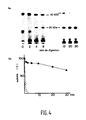
- a complex (125I) AC-calmodulin (1.5 u / ml) is treated under the conditions mentioned above. Aliquots are determined either for their AC activity or examined according to the SDS-PAGE method (10% acrylamide).
- the calmodulin marked by (125I) in excess with respect to the (125I) enzyme-calmodulin complex is rapidly degraded by trypsin as shown in FIG. 4a.
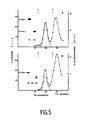
- Figure 5A corresponds to the untreated complex of 125I AC-calmodulin (12 ⁇ 10 ⁇ 3; 6.8 ⁇ 105 cpm) and Figure 5B corresponds to the complex (125I) AC-calmodulin digested with trypsin for 30 min at 0 ° C (the initial activity in the absence of trypsin is 22 ⁇ 10 ⁇ 3 u; 1.15 ⁇ 105 cpm. After 30 minutes of digestion: 11 ⁇ 10 ⁇ 3 u; 1.15 ⁇ 105 cpm. The results are expressed as a percentage of the initial activity
- the AC-calmodulin complex is used to form anti-enzyme antibodies in mice.
- mice 4-week-old female BALB / c mice are used which are immunized subcutaneously 3 times at one week intervals with 10 ⁇ l of preparation of purified AC on Affigel-calmodulin.
- a booster is carried out 1 month later using a preparation of CA purified with DEAE-Sephacel.
- the sera are collected 3 days after the booster.
- Anti-AC antibodies are detected using the radioimmunoassay performed as indicated below. All the immunological reactions are carried out in buffer A.
- the reaction mixture contains 100 ⁇ l of (125I) AC (2 ⁇ 104 cpm and 4 ⁇ 10 ⁇ 4 u of enzymatic activity), 100 ⁇ l of anti-AC mouse immune diluted and 100 ⁇ l of unlabeled AC or concentrated culture supernatant.
- 100 ⁇ l of rabbit antibody, mouse anti-immunoglobulin and 100 ⁇ l of 8% polyethylene glycol, diluted in a pre-immune mouse serum are added. After performing another 30 min incubation. at 4 ° C., the tubes are centrifuged at 2000 ⁇ g for 30 min., the supernatants are removed and the radioactivity of the precipitate is measured in a gamma counter.
- Bo corresponds to the initial fixation of 50% of (125I) AC linked to the antiserum in the absence of unlabeled AC and B to the percentage of (125I) residual AC, linked in the presence of different amounts of Unmarked AC ( ⁇ - ⁇ ) or concentrated culture supernatant of strain 18323 ( - ) or a culture supernatant of the avirulent phase IV variant ( ⁇ - ⁇ ) the parts inserted correspond to the results obtained with a preparation (125I) AC incubated with a pre-immune serum or anti-AC antiserum of mice 18 hours at 4 ° C. then the antibody complexes (125I) AC are precipitated as described above.
- Lane 1 represents the control preparation of (125I) AC, lane 2 immunoprecipitation with the serum before immunization and lane 3 immunoprecipitation with the antiserum of anti-AC mice.
- the mouse antiserum specifically precipitates the enzyme labeled with (125I) and not the calmodulin labeled with (125I).
- a typical dose-response curve is given in Figure 6 and is obtained with a dilution of anti-CA serum of 1: 2000. Using this radioimmunoassay, it is possible to detect an amount as low as 5 ng.
- the inhibition curve obtained with the concentrated supernatant is parallel to the reference curve determined with the purified enzyme. No AC can be detected in the culture supernatant lacking enzymatic activity, obtained from the avirulent phase IV derivative of the strain. It is concluded that the phase IV variant produces levels of AC that cannot be detected and does not produce active proteins.
- the Bordetella pertussis 18323 strain is cultivated on Bordet Gengou agar, supplemented with 15% (v / v) of defibrinated horse blood (BGB) at 36 ° C for 72 hours.
- a hemolytic colony (hly +) subculture is carried out in a Steiner-Scholte infusion for 20 to 24 hours until A650 of 1.0 is obtained which corresponds to colony forming units (CFU) of 2 ( ⁇ 1) ⁇ 109 ml-1. 50 ⁇ l of this culture are injected into the external orifices of the nostrils of 3 week old Swiss female mice.
- the parental strain and its two isogenic derivatives cultivated on a Stainer-Scholte agar medium supplemented with cyclodextrin, are then cultivated in sub-cultures of broth of Stainer-Scholte medium for injection into mice.
- Clone 7-1 does not secrete a detectable amount of this enzyme.
- the production of Ptx estimated from the LPF effects in the mouse in which an intravenous injection was carried out and from the CHO agglomeration effects, is also approximately 2 times greater in VIIIA7 than in the parental strain and is not detected in clone 7-1.
- the lethal respiratory test with the clone VIIIA7 is highly reproducible and induces the death of the mice within 4 days. The survivors on the 5th day are completely healed.
- Anti-FHA and anti-AC antibodies are protective against the acute hemorrhagic alveolitis constantly observed in the non-immunized controls.
- Anti-Ptx antibodies do not make it possible to protect the mouse against an experimental test while nevertheless possessing the protective effects against cytopathogenic effects on cells in culture.
- anti-FHAs The protective effects of anti-FHAs are considered to be due to an effective inhibition of bacterial adhesion by these antibodies, leading to a rapid disappearance of B. pertussis from the surface of the target epithelium.
- the protective effects of the monoclonal antibody 8-25 obtained from the hybridoma strain I are demonstrated by SDS-PAGE analysis of concentrated supernatant, of bacterial extract and of preparations of purified CA and immunoblot with using a fraction with 18% sodium sulfate of ascites 8-25 diluted to 1/100 (35 mg total protein / ml).
- Lanes A, B, C and D in FIG. 9a correspond respectively to a 115-fold concentrated supernatant (activity 9,267 u / ml), to pure AC (1,590 u / ml), to another preparation of Pure AC (795 u / ml) and a bacterial extract ( ⁇ > 8.8 M) (231 u / ml).
- Lanes A ⁇ , B ⁇ , C ⁇ and D ⁇ of FIG. 9b correspond to the products of the preparations transferred above and immunoprecipitated an IgG1 preparation of anti-AC 8-25 monoclonal antibody.
- mice 3 week old females, are injected subcutaneously with immunogenic preparations or not.
- Adenyl cyclase is purified on Affi-Gel calmodulin (Biorad) according to the method of D. Ladant et al. J. Biol. Chem. 1986, 261: 16264-16269. The purity and antigenic specificity checks are performed by electrophoretic and immunochemical analysis.
- the bacterial suspensions are prepared by culture in a defined synthetic medium of Stainer and Scholte and adjusted to the concentrations chosen by measuring the optical density at 650 nm and the number of colony forming units (CFU), on Bordet-Gengou medium with blood.
- CFU colony forming units
- the bacterial vaccine suspensions are "inactivated” by heating either to 56 ° C ("conventional vaccine") or to 80 ° C (complete inactivation of the immunomodulatory effects of pertussis-toxin).
- the adenyl cyclase epitope is neutralized by incubating the bacterial suspension with the monoclonal antibody 8-25 for 18 hours at 4 ° C.
- mice are observed for twenty days.
- anti-AC anti-adenyl cyclase
Landscapes
- Health & Medical Sciences (AREA)
- Chemical & Material Sciences (AREA)
- Life Sciences & Earth Sciences (AREA)
- Organic Chemistry (AREA)
- Molecular Biology (AREA)
- Engineering & Computer Science (AREA)
- Biochemistry (AREA)
- Medicinal Chemistry (AREA)
- Immunology (AREA)
- Genetics & Genomics (AREA)
- General Health & Medical Sciences (AREA)
- Biomedical Technology (AREA)
- Biophysics (AREA)
- Proteomics, Peptides & Aminoacids (AREA)
- Urology & Nephrology (AREA)
- Zoology (AREA)
- Microbiology (AREA)
- Hematology (AREA)
- Biotechnology (AREA)
- Wood Science & Technology (AREA)
- Bioinformatics & Cheminformatics (AREA)
- Pathology (AREA)
- General Physics & Mathematics (AREA)
- Cell Biology (AREA)
- General Engineering & Computer Science (AREA)
- Food Science & Technology (AREA)
- Gastroenterology & Hepatology (AREA)
- Physics & Mathematics (AREA)
- Analytical Chemistry (AREA)
- Virology (AREA)
- Tropical Medicine & Parasitology (AREA)
- Medicines Containing Antibodies Or Antigens For Use As Internal Diagnostic Agents (AREA)
- Preparation Of Compounds By Using Micro-Organisms (AREA)
- Enzymes And Modification Thereof (AREA)
- Micro-Organisms Or Cultivation Processes Thereof (AREA)
- Peptides Or Proteins (AREA)
- Pharmaceuticals Containing Other Organic And Inorganic Compounds (AREA)
Applications Claiming Priority (2)
| Application Number | Priority Date | Filing Date | Title |
|---|---|---|---|
| FR8615963 | 1986-11-17 | ||
| FR868615963A FR2606789B1 (fr) | 1986-11-17 | 1986-11-17 | Preparations d'adenylate cyclase purifiees, procede d'obtention de ces preparations et leurs applications biologiques |
Publications (2)
| Publication Number | Publication Date |
|---|---|
| EP0272174A2 true EP0272174A2 (de) | 1988-06-22 |
| EP0272174A3 EP0272174A3 (de) | 1988-07-06 |
Family
ID=9340885
Family Applications (1)
| Application Number | Title | Priority Date | Filing Date |
|---|---|---|---|
| EP87402592A Withdrawn EP0272174A3 (de) | 1986-11-17 | 1987-11-17 | Präparate von Adenyl-Zyklase, Verfahren zur Herstellung dieser Präparate und ihre biologischen Verwendungen |
Country Status (5)
| Country | Link |
|---|---|
| EP (1) | EP0272174A3 (de) |
| JP (1) | JPS63267274A (de) |
| DK (1) | DK601687A (de) |
| FR (1) | FR2606789B1 (de) |
| PT (1) | PT86151B (de) |
Cited By (4)
| Publication number | Priority date | Publication date | Assignee | Title |
|---|---|---|---|---|
| WO1990013312A1 (fr) * | 1989-05-12 | 1990-11-15 | Institut Pasteur | Utilisation d'adenyl cyclase ou de bacteries le produisant, comme vaccins contre bordetella |
| FR2653781A1 (fr) * | 1989-10-31 | 1991-05-03 | Pasteur Institut | Procede de synthese de derives d'adenosine phosphate et derives obtenus. |
| US6048700A (en) * | 1984-05-12 | 2000-04-11 | Medeva Pharma Limited | Antigenic preparations and the isolation of such preparations |
| US7479283B1 (en) | 1989-05-08 | 2009-01-20 | Ucb Pharma Limited | Acellular pertussis vaccine comprising a combination of the 69 kDa and the filamentous haemagglutinin antigens of Bordetella pertussis |
Families Citing this family (5)
| Publication number | Priority date | Publication date | Assignee | Title |
|---|---|---|---|---|
| EP0338169B1 (de) * | 1988-04-19 | 1996-07-24 | Institut Pasteur | Verfahren zur Gewinnung von Schutzantigenen gegen Bordetella-Infektionen und toxische Prozesse |
| FR2638090B1 (fr) * | 1988-10-25 | 1993-10-15 | Pasteur Institut | Sequences de nucleotides exprimant l'adenyl cyclase de b. anthracis, proteines ayant l'activite de cette adenyl cyclase et applications biologiques |
| FR2728170A1 (fr) | 1994-12-15 | 1996-06-21 | Pasteur Institut | Vaccin de type acellulaire anti-bordetella |
| US6030625A (en) * | 1994-12-15 | 2000-02-29 | Institut Pasteur | Bordetella pertussis and Bordetella parapertussis strains |
| FR2736064B1 (fr) | 1995-06-30 | 1997-09-05 | Pasteur Institut | Epitopes protecteurs de l'adenyl cyclase-hemolysine(ac-hty). leur application au traitement ou a la prevention des infections par bordetella |
Family Cites Families (1)
| Publication number | Priority date | Publication date | Assignee | Title |
|---|---|---|---|---|
| GB8412207D0 (en) * | 1984-05-12 | 1984-06-20 | Wellcome Found | Antigenic preparations |
-
1986
- 1986-11-17 FR FR868615963A patent/FR2606789B1/fr not_active Expired - Lifetime
-
1987
- 1987-11-16 DK DK601687A patent/DK601687A/da not_active Application Discontinuation
- 1987-11-17 JP JP62290175A patent/JPS63267274A/ja active Pending
- 1987-11-17 EP EP87402592A patent/EP0272174A3/de not_active Withdrawn
- 1987-11-17 PT PT86151A patent/PT86151B/pt not_active IP Right Cessation
Cited By (9)
| Publication number | Priority date | Publication date | Assignee | Title |
|---|---|---|---|---|
| US6048700A (en) * | 1984-05-12 | 2000-04-11 | Medeva Pharma Limited | Antigenic preparations and the isolation of such preparations |
| US6127151A (en) * | 1984-05-12 | 2000-10-03 | Medeva Pharma Limited | Antigenic preparations and the isolation of such preparations |
| US6210685B1 (en) | 1984-05-12 | 2001-04-03 | Medeva Pharma Limited | Antigenic preparations and isolation of such preparations |
| US7479283B1 (en) | 1989-05-08 | 2009-01-20 | Ucb Pharma Limited | Acellular pertussis vaccine comprising a combination of the 69 kDa and the filamentous haemagglutinin antigens of Bordetella pertussis |
| WO1990013312A1 (fr) * | 1989-05-12 | 1990-11-15 | Institut Pasteur | Utilisation d'adenyl cyclase ou de bacteries le produisant, comme vaccins contre bordetella |
| FR2646776A1 (fr) * | 1989-05-12 | 1990-11-16 | Pasteur Institut | Utilisation de preparations vaccinantes a base d'adenyl cyclase ou de bacteries les produisant en tant qu'antigenes protecteurs contre les effets des bordetella |
| US7211263B2 (en) | 1989-05-12 | 2007-05-01 | Institut Pasteur | Use of adenylate cyclase or bacteria producing it as vaccines against Bordetella |
| FR2653781A1 (fr) * | 1989-10-31 | 1991-05-03 | Pasteur Institut | Procede de synthese de derives d'adenosine phosphate et derives obtenus. |
| WO1991006664A1 (fr) * | 1989-10-31 | 1991-05-16 | Institut Pasteur | Procede de synthese de derives d'adenosine phosphate et derives obtenus |
Also Published As
| Publication number | Publication date |
|---|---|
| JPS63267274A (ja) | 1988-11-04 |
| DK601687D0 (da) | 1987-11-16 |
| PT86151A (fr) | 1987-12-01 |
| DK601687A (da) | 1988-05-18 |
| FR2606789B1 (fr) | 1991-05-31 |
| PT86151B (pt) | 1990-08-31 |
| FR2606789A1 (fr) | 1988-05-20 |
| EP0272174A3 (de) | 1988-07-06 |
Similar Documents
| Publication | Publication Date | Title |
|---|---|---|
| Casanova et al. | Identification of wall-specific antigens synthesized during germ tube formation by Candida albicans | |
| EP0302781B1 (de) | Verfahren zur Gewinnung von Polyosiden aus Staphylokokken-Kapseln sowie Verwendungen dieser Polyoside und Stämme für die Durchführung dieses Verfahrens | |
| Lancefield et al. | Preparation and properties of a protein (R antigen) occurring in streptococci of group A, type 28 and in certain streptococci of other serological groups | |
| Korhonen et al. | Type 3 fimbriae of Klebsiella sp.: molecular characterization and role in bacterial adhesion to plant roots | |
| US4521513A (en) | Protection against dental caries | |
| JPH05500011A (ja) | クロストリジウム・ディフィシレのトキシンbに特異的なモノクローナル抗体 | |
| EP0272174A2 (de) | Präparate von Adenyl-Zyklase, Verfahren zur Herstellung dieser Präparate und ihre biologischen Verwendungen | |
| AU616384B2 (en) | Method for the evaluation of oral microbes | |
| EP0235474A1 (de) | Gereinigte Antigene mit vakzinierenden Eigenschaften gegen B. pertussis, Mittel, insbesondere rekombinante DNS-Moleküle zur Herstellung derselben und diese Antigene enthaltende Impfstoffe | |
| WO1984002472A1 (fr) | Fractions polypeptidiques inductrices d'anticorps protecteurs contre des parasites du paludisme et compositions immunogenes les contenant | |
| JPH02138299A (ja) | 病原性細菌に対する免疫保護抗原タンパク質 | |
| EP0560969B1 (de) | Impfstoff, der eine Untereinheit des menschlichen Transferrin-Rezeptors von Neisseria meningitidis enthält | |
| FR2590172A1 (fr) | Nouvel antigene commun (psc-a) de pseudomonas aeruginosa protegeant contre l'infection provoquee par cet organisme | |
| EP0165830A1 (de) | Verfahren zur Diagnose in vitro von menschlichen Cytomegalovirusinfektionen und Anwendung von monoklonalen Antikörpern gegen Cytomegaloviren, die mit einer cytomegalovirusinduzierten Proteinkinase reagieren | |
| EP0424518B1 (de) | Verwendung von adenylzyclase als vakzin gegen bordetella | |
| EP0271379A1 (de) | Monoklonale Antikörper gegen gram-negative Bakterien, Verfahren zu ihrer Herstellung und Verwendungen | |
| EP0787796B1 (de) | Schützende Epitope von Adenylate-Zyklase-Hämolysin(AC-Hly) und ihre Verwendung zur Behandlung oder Verhütung von Bordetella-Infektionen | |
| EP0761819A1 (de) | Exopolysacchariden aus Burkholderia Pseudomallei und Burkholderia Mallei | |
| EP0298991B1 (de) | Neue lectine, abgeleitet von bakteriellen haaren | |
| FR2653227A1 (fr) | Preparations d'adenyl cyclase purifiees, procede d'obtention de ces preparations et leurs applications biologiques. | |
| WO2008050041A1 (fr) | Procede de diagnostic in vitro des staphylococcus aureus producteurs de pvl | |
| WO1983003354A1 (en) | Neisseria gonorrhoeae vaccine | |
| EP1769249B1 (de) | Neue polypeptide zur in-vintro-isolierung und vorbeugung von infektionen mit legionella pneumophila | |
| WO1991018112A1 (fr) | Nouveaux mycoplasmes - moyens pour detecter et caracteriser des mycoplasmes in vitro | |
| BE905582A (fr) | Procede de production et de purification d'antigenes proteiques de mycobacterium bovis-bcg, produits obtenues et leurs applications. |
Legal Events
| Date | Code | Title | Description |
|---|---|---|---|
| PUAI | Public reference made under article 153(3) epc to a published international application that has entered the european phase |
Free format text: ORIGINAL CODE: 0009012 |
|
| PUAL | Search report despatched |
Free format text: ORIGINAL CODE: 0009013 |
|
| AK | Designated contracting states |
Kind code of ref document: A2 Designated state(s): AT BE CH DE ES FR GB GR IT LI LU NL SE |
|
| AK | Designated contracting states |
Kind code of ref document: A3 Designated state(s): AT BE CH DE ES FR GB GR IT LI LU NL SE |
|
| RIN1 | Information on inventor provided before grant (corrected) |
Inventor name: GUISO-MACLOUF, NICOLE Inventor name: CRENON, ISABELLE Inventor name: LADANT, DANIEL Inventor name: BREZIN, COLETTE Inventor name: ALONSO , JEAN-MICHEL Inventor name: DJAVADI, LISA |
|
| 17P | Request for examination filed |
Effective date: 19881231 |
|
| 17Q | First examination report despatched |
Effective date: 19910612 |
|
| STAA | Information on the status of an ep patent application or granted ep patent |
Free format text: STATUS: THE APPLICATION IS DEEMED TO BE WITHDRAWN |
|
| 18D | Application deemed to be withdrawn |
Effective date: 19911224 |
|
| RIN1 | Information on inventor provided before grant (corrected) |
Inventor name: CRENON, ISABELLE Inventor name: GUISO-MACLOUF, NICOLE Inventor name: ALONSO , JEAN-MICHEL Inventor name: BREZIN, COLETTE Inventor name: LADANT, DANIEL Inventor name: DJAVADI, LISA |