EP0272896A2 - Compositions d'encre vésiculaire - Google Patents
Compositions d'encre vésiculaire Download PDFInfo
- Publication number
- EP0272896A2 EP0272896A2 EP87311208A EP87311208A EP0272896A2 EP 0272896 A2 EP0272896 A2 EP 0272896A2 EP 87311208 A EP87311208 A EP 87311208A EP 87311208 A EP87311208 A EP 87311208A EP 0272896 A2 EP0272896 A2 EP 0272896A2
- Authority
- EP
- European Patent Office
- Prior art keywords
- dye
- vesicles
- composition according
- ink
- weight
- Prior art date
- Legal status (The legal status is an assumption and is not a legal conclusion. Google has not performed a legal analysis and makes no representation as to the accuracy of the status listed.)
- Granted
Links
- 239000000203 mixture Substances 0.000 title claims abstract description 84
- 238000007639 printing Methods 0.000 claims abstract description 28
- 238000000034 method Methods 0.000 claims abstract description 22
- 239000004094 surface-active agent Substances 0.000 claims abstract description 12
- 125000000129 anionic group Chemical group 0.000 claims abstract description 7
- 125000002091 cationic group Chemical group 0.000 claims abstract description 7
- XLYOFNOQVPJJNP-UHFFFAOYSA-N water Substances O XLYOFNOQVPJJNP-UHFFFAOYSA-N 0.000 claims description 37
- 150000003904 phospholipids Chemical class 0.000 claims description 17
- 239000000725 suspension Substances 0.000 claims description 13
- 150000002632 lipids Chemical class 0.000 claims description 12
- 150000002430 hydrocarbons Chemical class 0.000 claims description 11
- PXIPVTKHYLBLMZ-UHFFFAOYSA-N Sodium azide Chemical compound [Na+].[N-]=[N+]=[N-] PXIPVTKHYLBLMZ-UHFFFAOYSA-N 0.000 claims description 10
- 239000004215 Carbon black (E152) Substances 0.000 claims description 8
- 229930195733 hydrocarbon Natural products 0.000 claims description 8
- 239000003963 antioxidant agent Substances 0.000 claims description 7
- 230000000813 microbial effect Effects 0.000 claims description 7
- CIWBSHSKHKDKBQ-JLAZNSOCSA-N Ascorbic acid Chemical group OC[C@H](O)[C@H]1OC(=O)C(O)=C1O CIWBSHSKHKDKBQ-JLAZNSOCSA-N 0.000 claims description 6
- 230000003078 antioxidant effect Effects 0.000 claims description 6
- 235000006708 antioxidants Nutrition 0.000 claims description 6
- 239000003112 inhibitor Substances 0.000 claims description 5
- YCUVUDODLRLVIC-VPHDGDOJSA-N sudan black b Chemical group C1=CC(=C23)NC(C)(C)NC2=CC=CC3=C1\N=N\C(C1=CC=CC=C11)=CC=C1\N=N\C1=CC=CC=C1 YCUVUDODLRLVIC-VPHDGDOJSA-N 0.000 claims description 5
- 150000001875 compounds Chemical class 0.000 claims description 4
- RNPXCFINMKSQPQ-UHFFFAOYSA-N dicetyl hydrogen phosphate Chemical compound CCCCCCCCCCCCCCCCOP(O)(=O)OCCCCCCCCCCCCCCCC RNPXCFINMKSQPQ-UHFFFAOYSA-N 0.000 claims description 4
- PSLWZOIUBRXAQW-UHFFFAOYSA-M dimethyl(dioctadecyl)azanium;bromide Chemical compound [Br-].CCCCCCCCCCCCCCCCCC[N+](C)(C)CCCCCCCCCCCCCCCCCC PSLWZOIUBRXAQW-UHFFFAOYSA-M 0.000 claims description 4
- 238000010348 incorporation Methods 0.000 claims description 4
- 239000002211 L-ascorbic acid Substances 0.000 claims description 3
- 235000000069 L-ascorbic acid Nutrition 0.000 claims description 3
- 229960005070 ascorbic acid Drugs 0.000 claims description 3
- 239000000787 lecithin Substances 0.000 claims description 3
- 229940067606 lecithin Drugs 0.000 claims description 3
- 125000005456 glyceride group Chemical group 0.000 claims description 2
- 230000002401 inhibitory effect Effects 0.000 claims 2
- NALREUIWICQLPS-UHFFFAOYSA-N 7-imino-n,n-dimethylphenothiazin-3-amine;hydrochloride Chemical compound [Cl-].C1=C(N)C=C2SC3=CC(=[N+](C)C)C=CC3=NC2=C1 NALREUIWICQLPS-UHFFFAOYSA-N 0.000 claims 1
- 238000007647 flexography Methods 0.000 abstract description 3
- 239000000976 ink Substances 0.000 description 104
- 239000000975 dye Substances 0.000 description 49
- 238000000527 sonication Methods 0.000 description 10
- 239000002904 solvent Substances 0.000 description 9
- 230000003287 optical effect Effects 0.000 description 7
- 239000000126 substance Substances 0.000 description 7
- 238000012360 testing method Methods 0.000 description 7
- 239000000463 material Substances 0.000 description 5
- 239000000243 solution Substances 0.000 description 5
- 230000015572 biosynthetic process Effects 0.000 description 4
- 238000001816 cooling Methods 0.000 description 4
- 238000005516 engineering process Methods 0.000 description 4
- 230000002209 hydrophobic effect Effects 0.000 description 4
- 238000007641 inkjet printing Methods 0.000 description 4
- 238000002360 preparation method Methods 0.000 description 4
- 230000008569 process Effects 0.000 description 4
- 238000011161 development Methods 0.000 description 3
- 239000012153 distilled water Substances 0.000 description 3
- 238000001035 drying Methods 0.000 description 3
- 238000003860 storage Methods 0.000 description 3
- GVJHHUAWPYXKBD-UHFFFAOYSA-N (±)-α-Tocopherol Chemical compound OC1=C(C)C(C)=C2OC(CCCC(C)CCCC(C)CCCC(C)C)(C)CCC2=C1C GVJHHUAWPYXKBD-UHFFFAOYSA-N 0.000 description 2
- IIZPXYDJLKNOIY-JXPKJXOSSA-N 1-palmitoyl-2-arachidonoyl-sn-glycero-3-phosphocholine Chemical compound CCCCCCCCCCCCCCCC(=O)OC[C@H](COP([O-])(=O)OCC[N+](C)(C)C)OC(=O)CCC\C=C/C\C=C/C\C=C/C\C=C/CCCCC IIZPXYDJLKNOIY-JXPKJXOSSA-N 0.000 description 2
- 235000010469 Glycine max Nutrition 0.000 description 2
- 244000068988 Glycine max Species 0.000 description 2
- VKWNTWQXVLKCSG-ZDXBJJIESA-N Sudan Red 7B Chemical compound CCNC1=CC=C2C=CC=CC2=C1\N=N\C(C=C1)=CC=C1\N=N\C1=CC=CC=C1 VKWNTWQXVLKCSG-ZDXBJJIESA-N 0.000 description 2
- JLPULHDHAOZNQI-JLOPVYAASA-N [(2r)-3-hexadecanoyloxy-2-[(9e,12e)-octadeca-9,12-dienoyl]oxypropyl] 2-(trimethylazaniumyl)ethyl phosphate Chemical compound CCCCCCCCCCCCCCCC(=O)OC[C@H](COP([O-])(=O)OCC[N+](C)(C)C)OC(=O)CCCCCCC\C=C\C\C=C\CCCCC JLPULHDHAOZNQI-JLOPVYAASA-N 0.000 description 2
- 239000000654 additive Substances 0.000 description 2
- 239000012736 aqueous medium Substances 0.000 description 2
- 238000009835 boiling Methods 0.000 description 2
- 238000000576 coating method Methods 0.000 description 2
- 230000007423 decrease Effects 0.000 description 2
- OGQYPPBGSLZBEG-UHFFFAOYSA-N dimethyl(dioctadecyl)azanium Chemical compound CCCCCCCCCCCCCCCCCC[N+](C)(C)CCCCCCCCCCCCCCCCCC OGQYPPBGSLZBEG-UHFFFAOYSA-N 0.000 description 2
- 239000006185 dispersion Substances 0.000 description 2
- 230000000694 effects Effects 0.000 description 2
- RRAFCDWBNXTKKO-UHFFFAOYSA-N eugenol Chemical compound COC1=CC(CC=C)=CC=C1O RRAFCDWBNXTKKO-UHFFFAOYSA-N 0.000 description 2
- 238000009472 formulation Methods 0.000 description 2
- 238000007654 immersion Methods 0.000 description 2
- 230000003993 interaction Effects 0.000 description 2
- 235000010445 lecithin Nutrition 0.000 description 2
- 239000002502 liposome Substances 0.000 description 2
- 239000000693 micelle Substances 0.000 description 2
- 239000003960 organic solvent Substances 0.000 description 2
- 239000002245 particle Substances 0.000 description 2
- 239000000049 pigment Substances 0.000 description 2
- PPASLZSBLFJQEF-RXSVEWSESA-M sodium-L-ascorbate Chemical compound [Na+].OC[C@H](O)[C@H]1OC(=O)C(O)=C1[O-] PPASLZSBLFJQEF-RXSVEWSESA-M 0.000 description 2
- 230000007480 spreading Effects 0.000 description 2
- 238000003892 spreading Methods 0.000 description 2
- BPTKLSBRRJFNHJ-UHFFFAOYSA-N 4-phenyldiazenylbenzene-1,3-diol Chemical compound OC1=CC(O)=CC=C1N=NC1=CC=CC=C1 BPTKLSBRRJFNHJ-UHFFFAOYSA-N 0.000 description 1
- CPELXLSAUQHCOX-UHFFFAOYSA-M Bromide Chemical compound [Br-] CPELXLSAUQHCOX-UHFFFAOYSA-M 0.000 description 1
- NLZUEZXRPGMBCV-UHFFFAOYSA-N Butylhydroxytoluene Chemical compound CC1=CC(C(C)(C)C)=C(O)C(C(C)(C)C)=C1 NLZUEZXRPGMBCV-UHFFFAOYSA-N 0.000 description 1
- NPBVQXIMTZKSBA-UHFFFAOYSA-N Chavibetol Natural products COC1=CC=C(CC=C)C=C1O NPBVQXIMTZKSBA-UHFFFAOYSA-N 0.000 description 1
- 244000260524 Chrysanthemum balsamita Species 0.000 description 1
- 235000005633 Chrysanthemum balsamita Nutrition 0.000 description 1
- 101150082208 DIABLO gene Proteins 0.000 description 1
- 241001125671 Eretmochelys imbricata Species 0.000 description 1
- 239000005770 Eugenol Substances 0.000 description 1
- AFCARXCZXQIEQB-UHFFFAOYSA-N N-[3-oxo-3-(2,4,6,7-tetrahydrotriazolo[4,5-c]pyridin-5-yl)propyl]-2-[[3-(trifluoromethoxy)phenyl]methylamino]pyrimidine-5-carboxamide Chemical compound O=C(CCNC(=O)C=1C=NC(=NC=1)NCC1=CC(=CC=C1)OC(F)(F)F)N1CC2=C(CC1)NN=N2 AFCARXCZXQIEQB-UHFFFAOYSA-N 0.000 description 1
- NPGIHFRTRXVWOY-UHFFFAOYSA-N Oil red O Chemical compound Cc1ccc(C)c(c1)N=Nc1cc(C)c(cc1C)N=Nc1c(O)ccc2ccccc12 NPGIHFRTRXVWOY-UHFFFAOYSA-N 0.000 description 1
- UVMRYBDEERADNV-UHFFFAOYSA-N Pseudoeugenol Natural products COC1=CC(C(C)=C)=CC=C1O UVMRYBDEERADNV-UHFFFAOYSA-N 0.000 description 1
- RCTGMCJBQGBLKT-UHFFFAOYSA-N Sudan IV Chemical compound CC1=CC=CC=C1N=NC(C=C1C)=CC=C1N=NC1=C(O)C=CC2=CC=CC=C12 RCTGMCJBQGBLKT-UHFFFAOYSA-N 0.000 description 1
- YCUVUDODLRLVIC-UHFFFAOYSA-N Sudan black B Chemical compound C1=CC(=C23)NC(C)(C)NC2=CC=CC3=C1N=NC(C1=CC=CC=C11)=CC=C1N=NC1=CC=CC=C1 YCUVUDODLRLVIC-UHFFFAOYSA-N 0.000 description 1
- 229930003427 Vitamin E Natural products 0.000 description 1
- 230000002776 aggregation Effects 0.000 description 1
- 238000004220 aggregation Methods 0.000 description 1
- 230000004075 alteration Effects 0.000 description 1
- 230000002421 anti-septic effect Effects 0.000 description 1
- 229940064004 antiseptic throat preparations Drugs 0.000 description 1
- 238000013459 approach Methods 0.000 description 1
- 230000008033 biological extinction Effects 0.000 description 1
- 238000005119 centrifugation Methods 0.000 description 1
- 230000008859 change Effects 0.000 description 1
- 238000012512 characterization method Methods 0.000 description 1
- XOCUHWXGSSSCTJ-UHFFFAOYSA-N chembl3145171 Chemical compound O=C1C(N=NC=2C=CC=CC=2)=C(C)NN1C1=CC=CC=C1 XOCUHWXGSSSCTJ-UHFFFAOYSA-N 0.000 description 1
- 125000003636 chemical group Chemical group 0.000 description 1
- 239000004927 clay Substances 0.000 description 1
- 239000000084 colloidal system Substances 0.000 description 1
- 239000013078 crystal Substances 0.000 description 1
- ZXJXZNDDNMQXFV-UHFFFAOYSA-M crystal violet Chemical compound [Cl-].C1=CC(N(C)C)=CC=C1[C+](C=1C=CC(=CC=1)N(C)C)C1=CC=C(N(C)C)C=C1 ZXJXZNDDNMQXFV-UHFFFAOYSA-M 0.000 description 1
- 230000003247 decreasing effect Effects 0.000 description 1
- 230000005595 deprotonation Effects 0.000 description 1
- 238000010537 deprotonation reaction Methods 0.000 description 1
- 238000004807 desolvation Methods 0.000 description 1
- 238000007865 diluting Methods 0.000 description 1
- 239000008344 egg yolk phospholipid Substances 0.000 description 1
- 229960002217 eugenol Drugs 0.000 description 1
- 239000012634 fragment Substances 0.000 description 1
- WIGCFUFOHFEKBI-UHFFFAOYSA-N gamma-tocopherol Natural products CC(C)CCCC(C)CCCC(C)CCCC1CCC2C(C)C(O)C(C)C(C)C2O1 WIGCFUFOHFEKBI-UHFFFAOYSA-N 0.000 description 1
- 239000011521 glass Substances 0.000 description 1
- 238000000265 homogenisation Methods 0.000 description 1
- 239000003906 humectant Substances 0.000 description 1
- 239000007788 liquid Substances 0.000 description 1
- 238000001459 lithography Methods 0.000 description 1
- 238000004519 manufacturing process Methods 0.000 description 1
- 238000013507 mapping Methods 0.000 description 1
- 239000012528 membrane Substances 0.000 description 1
- 238000012986 modification Methods 0.000 description 1
- 230000004048 modification Effects 0.000 description 1
- 238000005192 partition Methods 0.000 description 1
- WTJKGGKOPKCXLL-RRHRGVEJSA-N phosphatidylcholine Chemical compound CCCCCCCCCCCCCCCC(=O)OC[C@H](COP([O-])(=O)OCC[N+](C)(C)C)OC(=O)CCCCCCCC=CCCCCCCCC WTJKGGKOPKCXLL-RRHRGVEJSA-N 0.000 description 1
- 230000000704 physical effect Effects 0.000 description 1
- 230000005588 protonation Effects 0.000 description 1
- 230000000717 retained effect Effects 0.000 description 1
- 238000001338 self-assembly Methods 0.000 description 1
- 230000003381 solubilizing effect Effects 0.000 description 1
- 239000003381 stabilizer Substances 0.000 description 1
- 239000011550 stock solution Substances 0.000 description 1
- 210000003813 thumb Anatomy 0.000 description 1
- 238000012546 transfer Methods 0.000 description 1
- 239000002691 unilamellar liposome Substances 0.000 description 1
- 235000019165 vitamin E Nutrition 0.000 description 1
- 229940046009 vitamin E Drugs 0.000 description 1
- 239000011709 vitamin E Substances 0.000 description 1
Images
Classifications
-
- C—CHEMISTRY; METALLURGY
- C09—DYES; PAINTS; POLISHES; NATURAL RESINS; ADHESIVES; COMPOSITIONS NOT OTHERWISE PROVIDED FOR; APPLICATIONS OF MATERIALS NOT OTHERWISE PROVIDED FOR
- C09D—COATING COMPOSITIONS, e.g. PAINTS, VARNISHES OR LACQUERS; FILLING PASTES; CHEMICAL PAINT OR INK REMOVERS; INKS; CORRECTING FLUIDS; WOODSTAINS; PASTES OR SOLIDS FOR COLOURING OR PRINTING; USE OF MATERIALS THEREFOR
- C09D11/00—Inks
- C09D11/30—Inkjet printing inks
-
- A—HUMAN NECESSITIES
- A61—MEDICAL OR VETERINARY SCIENCE; HYGIENE
- A61K—PREPARATIONS FOR MEDICAL, DENTAL OR TOILETRY PURPOSES
- A61K9/00—Medicinal preparations characterised by special physical form
- A61K9/10—Dispersions; Emulsions
- A61K9/127—Synthetic bilayered vehicles, e.g. liposomes or liposomes with cholesterol as the only non-phosphatidyl surfactant
-
- A—HUMAN NECESSITIES
- A61—MEDICAL OR VETERINARY SCIENCE; HYGIENE
- A61K—PREPARATIONS FOR MEDICAL, DENTAL OR TOILETRY PURPOSES
- A61K9/00—Medicinal preparations characterised by special physical form
- A61K9/10—Dispersions; Emulsions
- A61K9/127—Synthetic bilayered vehicles, e.g. liposomes or liposomes with cholesterol as the only non-phosphatidyl surfactant
- A61K9/1271—Non-conventional liposomes, e.g. PEGylated liposomes or liposomes coated or grafted with polymers
- A61K9/1272—Non-conventional liposomes, e.g. PEGylated liposomes or liposomes coated or grafted with polymers comprising non-phosphatidyl surfactants as bilayer-forming substances, e.g. cationic lipids or non-phosphatidyl liposomes coated or grafted with polymers
-
- C—CHEMISTRY; METALLURGY
- C09—DYES; PAINTS; POLISHES; NATURAL RESINS; ADHESIVES; COMPOSITIONS NOT OTHERWISE PROVIDED FOR; APPLICATIONS OF MATERIALS NOT OTHERWISE PROVIDED FOR
- C09D—COATING COMPOSITIONS, e.g. PAINTS, VARNISHES OR LACQUERS; FILLING PASTES; CHEMICAL PAINT OR INK REMOVERS; INKS; CORRECTING FLUIDS; WOODSTAINS; PASTES OR SOLIDS FOR COLOURING OR PRINTING; USE OF MATERIALS THEREFOR
- C09D11/00—Inks
- C09D11/02—Printing inks
Definitions
- This invention relates generally to ink compositions and more particularly to ink compositions comprised of vesicles.
- One embodiment of the present invention is directed to ink compositions comprised of vesicles formulated from, for example, surfactants with a polar group containing two hydrocarbon tails. Therefore, there can be selected for the ink compositions of the present invention, vesicles generated from molecules that form anionic, cationic, nonionic, and zwitterionic components. Vesicles useful in the present invention thus include phospholipid vesicles inclusive of single unilamellar and multilamellar vesicles having a dye associated therewith. Ink compositions comprised of the aforementioned vesicles are useful in printing systems, particularly ink jet printing and possess the desirable characterisics indicated hereinafter including excellent waterfastness and storage stability.
- Ink jet printers include continuous and so-called “drop-on-demand" ink-jet systems, both of which emit droplets of ink under pressure from a nozzle.
- ink is ejected in a continuous stream, and the ink that is not used for printing is recirculated.
- an electromechanical transducer vibrates to break up the steady flow of ink into droplets which are electrically charged and correspond in amount to the signal strengths for the shape of the characters.
- Drop-on-demand ink jet systems do not recycle ink and rely on piezo-crystal formation to generate a spurt of high pressure to force out drops of ink onto the paper.
- the bubble-jet system typified by the Hewlett Packard "Thinkjet®” printer, is a variation of the drop-on-demand system, where heat is used to generate bubbles that create a brief pulse of high pressure that propels ink out of a chamber onto the paper.
- it is necessary that drops be uniform in size, equally spaced from each other, and be formed at a high rate.
- Z. Kovac and C. Sambucetti Magnetic Ink for Magnetic Ink Jet Printing , Colloids and Surfaces in Reprographic Technology, 1982 the disclosure of which is incorporated herein by reference.
- Ink jet printer inks are typically formed by dissolving or dispersing dyes or pigments in solvent with additives such as antiseptics and stabilizers.
- Technical problems encountered with these solvent-based inks include those due to interactions between the ink and the paper surface: after striking the paper, the solvent used in the ink drop spreads before drying.
- Dye dissolved in the solvent spreads along with the solvent, resulting in a "feathering" effect which degrades resolution since adjacent dots of ink may overlap. Moreover, the dyes in the ink may separate chromatographically in this process, causing an undesirable effect. The solvent and dye also tend to penetrate into the paper. This can result in "print through", where a shadow of the image is observed on the reverse side of the paper sheet. Two sided printing is not possible under these circumstances.
- the above problems have been trated by modifying the surface of the paper.
- the paper used in ink jet printing is heavily coated with a variety of materials such as clays designed to reduce or control the spreading of the ink. These coatings, however, increase the cost of the paper and often reduce its aesthetic appeal.
- coatings which work well with a particular ink jet may not perform well with other marking instruments used in printing apparatus, such as pens or pencils.
- particulate inks have been used to eliminate feathering, but have been found to settle out of the ink solution over a long period of time and tend to clog the printer nozzle.
- Water-fastness can be defined as that property of the ink composition which renders it resistant to remove or spreading on the paper when exposed to water after image formation.
- Lightfastness can be defined as the property of the ink composition which renders it resistant to a change in color when exposed to the light. Improved lightfastness is obtained with the ink composition of the present invention primarily because of the presence of an oil soluble dye.
- compositions wherein the compositions are stored stable, i.e. the dyes selected are permanently retained within the vesicle and do not settle out on storage.
- ink compositions that exhibit a high optical density which provides a measure of the quality of the appearance of the ink on paper.
- a reflectance (optical density) in the range of 1.0 to 1.4 is preferred.
- An ink composition should contain a dye content in the range of about 3-7% of the total ink composition depending on the molar extinction coefficient and a molecular weight of the dye.
- the preferred viscosity range is low, between about 1.5 and 1.8 cps (measured against water with a value of 1) for ink jet printers using a piezo-electric driver and 2-3 cps for bubble jet printers.
- the preferred surface tension is approximately 55-60 dynes/cm.
- the ink compositions of the present invention include relative fast drying on the paper (within a few seconds) and water resistance after drying. Successful ink compositions are also chemically stble and have minimal settling out of particles for longer shelf-life, for example 1-2 years. If used in a bubble jet printer, the ink will be subjected to 300°C (bulk temperature approaches 100°C) and must be able to retain the qualties described above under these conditions. Finally, the ink must be safe, i.e., contain an approved dye or pigment, and should use relatively inexpensive materials and be easy to manufacture.
- the flexographic process requires solvents that do not erode rubber rollers and printing plates, thus making the water-based ink composition of the present invention ideal for this process.
- Further advantages of water inks in the flexographic and rotogravure processes include excellent press stability, printing quality, heat resistance, absence of fire hazard associated with solvents, and the convenience and economy of water.
- Another object of the present invention is the provision of ink compositions that can be black or another color and which is comprised of vesicles.
- vesicle ink compositions which enable images of superior resolution.
- the water-based colored or black ink compositions which comprise vesicles, inclusive of unilamellar and multilamellar vescles having oil soluble dyes, inclusive of lipid-soluble dyes, associated therewith.
- the ink compositions are comprised of from about 70 percent to about 95 percent by weight of water; from about 5 percent to about 30 percent by weight of lipid or other amphiphilic material and dye components.
- the inks are comprised of from about 70 percent to about 95 percent by weight of water; from about 5 percent by weight to about 30 percent by weight of a phospholipid in the form of unilamellar vesicles and associated therewith an oil soluble dye, inclusive of lipid soluble dyes, present in an amount of from about 1.0 percent to about 10 percent by weight, and wherein the vesicles of the resulting inks are preferably of a diameter of from about 10 nanometers to about 400 nanometers.
- ink compositions of this embodiment may be prepared by suspending a phospholipid, an antioxidant and a microbial inhibitor in water, subjecting the suspension to a shear force sufficient to generate vesicles of desired size, for example by sonication, adding lipid soluble dye, adjusting the pH of the solution to enhance the incorporation of dye into the lipid vesicles, further subjecting it to sufficient shear force, and then centrifuging and decanting the solution to obtain an ink composition of dyeassociated phospholipid vesicles that are from approximately 40-800 nanometers in diameter.
- the phospholipid is replaced by dioctadecyl dimethyl ammonium bromide but the ink and its preparation are otherwise the same as described above.
- the ink composition of this invention comprises dye molecules which are soluble in the hydrocarbon bilayer of vesicles formed from surfactants selected from the group consisting of anionic, cationic, zwitterionic and nonionic molecules.
- the dye molecules are associated with small (about 40-800 nanometers in diameter, preferably about 100 to about 400 nanometers) vesicles, in the form of single unilamellar and multilamellar vesicles. Formation of vesicles by the dispersion of anphiphilic compounds in water is fully described in J. Israelachvili, D. Mitchell and B. Ninham, Theory of Self-Assembly of Hydrocarbon Amphiphiles into Micelles and Bilayers, 1976 and D. Evans and B.
- amphiphiles are molecules with polar and non-polar molecular regions. When dispersed in water, the polar regions are readily solvated while the non-polar fragments of the amphiphile are poorly solvated. Above the critical micelle concentration (CMC), the amphiphiles spontaneously self-assemble to form a variety of mesophases. The CMC is reached when the concentration of the surfactant solute in the bulk of the solution exceeds a limiting value.
- Such vesicles formed by the dispersion of amphililic compounds in water are known in the art and may be prepared, for example, using sonication as described in Liposome Technology , Preparation of Liposomes, Vol. I, Gregoriadis (Ed.), CRC Press, Inc. (1984), or by homogenization by the invention disclosed in copending application, Serial No.
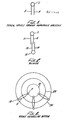
- a typical amphiphilic molecule from which vesicles are formed illustrated in FIG. 1 includes a polar head group 1 and two long chain nonpolar hydrocarbon moieties 3 and 5.
- the bilayer structure shown in FIG. 2 includes polar head groups 7 and 15 and nonpolar hydrocarbon moieties 9, 11 and 17, 19 respectively.
- the single unilamellar system shown in FIG. 3, produced by sonication of the mesophases comprises polar head groups 7, 15 nonpolar hydrocarbon tail 9, an inside polar layer 21, a hydrocarbon segment 23 and an outside polar layer 25.
- vesicles are formed from molecules which contain two long hydrophic chains attached to the same hydrophobic head group.
- Classes of vesicles thus include those formulated from anionic, cationic, non-ionic and zwitterionic head groups. Specific examples include dihexadecyl phosphate (anionic), dioctadecyl dimethyl ammonium bromide (cationic), diacyl glycerides and their ethoxylated derivatives (non-ionic) and phospholipids (zwitterionic).
- the phospholipid of the vesicles is preferably partially purified (greater than 70% pure) phospholipid, which is less expensive than pure phosolipid and thus decreases the costs of preparing the ink composition, although substantially pure phospholipids may, of course, also be used.
- substantially pure phospholipids may, of course, also be used.
- One such phospholipid is soybean L- ⁇ -lecithin.
- Egg lecithin phosphatidylcholine
- the general formulation of this embodiment of the ink composition of the present invention is phospholipid comprising about 5% to about 30% and preferably about 5% to 20% by weight of the total ink composition in an aqueous medium such as distilled water.
- the dye to phospholipid ratio is between about 1:1 to 1:10 by weight.
- To the aqueous medium there may be added about 0 to about 0.4% by weight of an antioxidant, and about 0 to about 0.5% by weight of a microbial inhibitor.
- a preferred antioxidant is L-ascorbic acid, although vitamin E or other antioxidants such as eugenol or ional may also be used.
- a preferred microbial inhibitor is sodium azide. Further other additives can be incorporated into the inks if needed, such as humectants and the like.
- Lipid soluble dye molecules typically have a large hydrophobic portion and a smaller hydrophilic region depending on the type of dye. It is believed that the ink molecule partitions into the bilayered membane structure of the vesicle (FIG. 2) during formation of the composition such that the hydrophilic region of the dye molecule is exposed to water, and the hydrophobic region resides within the hydrocarbon portion of the vesicle membrane.
- the hydrophilic nature of the dye molecule is due in part to the presence of an electric charge generated by protonation or deprotonation of a chemical group in the hydrophilic region of the molecule. This charge may be created or amplified by alterations in the acidity (pH) of the region.
- pH may enhance the incorporation of dye into the vesicles of the ink composition of the invention.
- the optimal pH for incorporating dye may vary over a wide range from a pH of about 2 to a pH of about 10 depending on the specific dye.
- the optimum pH for incorporating May-Greenwald's dye in lecithin is approximately 2.
- temperature during preparation of the composition may affect dye incorporation.
- Dye uptake into the ink may range from about 1.0 percent by weight/ml of ink composition to about 10 percent.
- a preferred method of preparing the ink composition of this invention essentially comprises suspending about 5g of the surfactant, and optionally about 0 to about 0.4% by weight antioxidant and about 0 to about 0.05% by weight microbial inhibitor in about 20 to about 25 milliliters water, and sonicating the suspension for 3 minutes at low power (approximately 100 micron peak-to-peak excursion at 20 KH z ).
- lipid soluble dye is then added for a dye to phospholipid ratio between 1:1 to 1:10 by weight and the suspension is sonicated at high power (approximately 300 micron peak-to-peak excursion at 20 KH z to form dye-associated vesicles that are approximately 40 to 800 nanometers in diameter.
- the solution is the centrifuged (2400 r.p.m., 12 inch rotor) for approximately ten minutes and decanted, yielding the ink composition which comprises a dye soluble in the hydrocarbon bilayer of vesicles formed from survactants selected from the group consisting of anionic, cationic, zwitterionic, and nonionic molecules.
- Non organic solvent is used.
- the pH was 4.45 and was readjusted to 1.87 with one drop of 6 N HCl followed by a three minute high power sonication (approximately 300 micron peak-to-peak excursion at 20 KHz) to form a violet-coloured ink of May Greenwald's (Giemsa) stain-associated phospholipid vesicles.
- the mixture was stirred using a vortex stirrer, and then dispersed by sonication on a No. 4 setting for 3 minutes with no cooling.
- the mixture was divided into aliquots in small (13 ⁇ 100 mm) test tubes and each tube was sonicated first at a No. 7 setting for 10 minutes and then at a No. 5 setting for 5 minutes with cooling by a hot (below boiling) water bath. finally, the ink was centrifuged at 2500 r.p.m. for 50 minutes, and decanted.
- DODAB dioctadecyldimethyl ammonium
- Sudan BB Sudan BB-associated dioctadecyldimethyl ammonium bromide vesicles were formed, approximately 40-800 nanometers in diameter.
- the viscosity of the vesicle ink compositions was measured using a Cannon Fenske Kinematic viscometer.
- the percentage of dye uptake was calculated by diluting the unincorporated dye into an organic solvent and measuring optical density with a Carey 14 spectrophotometer.
- the pH of the ink was determined using a conventional glass electrode pH meter.
- the test for waterfastness consisted in the comparison of the shape and optical density of the ink before and after water treatment (immersion in water for 10 minutes).
- Example III dye uptake into the ink was determined to be 6.05% dye and by weight/ml of ink composition, which represents 68% dye uptake. Viscosity was determined to be 3.7 cps (measured against a water standard of 1). The final pH of this ink composition was 0.8, and the ink was of a suitable liquid consistency.
- the ink composition of this invention can be applied in a number of ways using appropriate printing systems including flexographic, rotogravure presses or electronic devices such as ink jet or bubble jet printers.
- the ink can be applied by stamps (ink pads) or from rollers or belts to imprint on paper.
Landscapes
- Chemical & Material Sciences (AREA)
- Health & Medical Sciences (AREA)
- Life Sciences & Earth Sciences (AREA)
- Epidemiology (AREA)
- General Health & Medical Sciences (AREA)
- Organic Chemistry (AREA)
- Dispersion Chemistry (AREA)
- Materials Engineering (AREA)
- Medicinal Chemistry (AREA)
- Pharmacology & Pharmacy (AREA)
- Engineering & Computer Science (AREA)
- Animal Behavior & Ethology (AREA)
- Wood Science & Technology (AREA)
- Public Health (AREA)
- Veterinary Medicine (AREA)
- Biophysics (AREA)
- Molecular Biology (AREA)
- Inks, Pencil-Leads, Or Crayons (AREA)
- Manufacturing Of Micro-Capsules (AREA)
- Ink Jet Recording Methods And Recording Media Thereof (AREA)
Applications Claiming Priority (2)
| Application Number | Priority Date | Filing Date | Title |
|---|---|---|---|
| US944675 | 1986-12-18 | ||
| US06/944,675 US4783220A (en) | 1986-12-18 | 1986-12-18 | Vesicle ink compositions |
Publications (3)
| Publication Number | Publication Date |
|---|---|
| EP0272896A2 true EP0272896A2 (fr) | 1988-06-29 |
| EP0272896A3 EP0272896A3 (en) | 1990-01-17 |
| EP0272896B1 EP0272896B1 (fr) | 1994-06-29 |
Family
ID=25481854
Family Applications (1)
| Application Number | Title | Priority Date | Filing Date |
|---|---|---|---|
| EP87311208A Expired - Lifetime EP0272896B1 (fr) | 1986-12-18 | 1987-12-18 | Compositions d'encre vésiculaire |
Country Status (7)
| Country | Link |
|---|---|
| US (1) | US4783220A (fr) |
| EP (1) | EP0272896B1 (fr) |
| JP (1) | JP2514057B2 (fr) |
| AT (1) | ATE107950T1 (fr) |
| CA (1) | CA1304894C (fr) |
| DE (1) | DE3750160T2 (fr) |
| ES (1) | ES2064321T3 (fr) |
Cited By (5)
| Publication number | Priority date | Publication date | Assignee | Title |
|---|---|---|---|---|
| EP0583096A1 (fr) * | 1992-07-24 | 1994-02-16 | Canon Kabushiki Kaisha | Méthode et dispositif d'enregistrement à jet d'encre |
| WO1998047972A1 (fr) * | 1997-04-18 | 1998-10-29 | Idanit Technologies Ltd. | Adjuvants pour encres |
| EP0881270A3 (fr) * | 1997-05-29 | 1999-05-06 | Hewlett-Packard Company | Compositions d'encres liposomales contenant des colorants et pigments insolubles dans l'eau |
| WO2005110363A3 (fr) * | 2004-04-19 | 2006-03-09 | Hewlett Packard Development Co | Systèmes et procédés pour préparer un dosage pharmaceutique en utilisant des compositions contenant des vésicules aqueuses |
| WO2006092286A1 (fr) * | 2005-03-04 | 2006-09-08 | Identif Gmbh | Solution de marquage a appliquer au moyen d'une imprimante a jet d'encre |
Families Citing this family (42)
| Publication number | Priority date | Publication date | Assignee | Title |
|---|---|---|---|---|
| DE69120543T2 (de) * | 1990-09-06 | 1997-01-09 | Johnson & Son Inc S C | Verfahren zur stabilisierung von liposomen sowie diese enthaltende mittel |
| US5139574A (en) * | 1991-01-28 | 1992-08-18 | Xerox Corporation | Ink compositions |
| US5454956A (en) * | 1993-04-01 | 1995-10-03 | Deluxe Corporation | Method of cleaning waste water and recovery of contaminants therefrom |
| US5431721A (en) | 1992-09-17 | 1995-07-11 | Deluxe Corporation | Ink varnish and composition and method of making the same |
| US5308390A (en) * | 1992-09-17 | 1994-05-03 | Deluxe Corporation | Ink composition and method of making and using such composition |
| US5549741A (en) | 1992-09-17 | 1996-08-27 | Deluxe Corporation | Ink varnish composition |
| US5411596A (en) * | 1993-04-01 | 1995-05-02 | Deluxe Corporation | Oil based composition clean up method and composition for use therein |
| US5633109A (en) * | 1995-12-05 | 1997-05-27 | Xerox Corporation | Ink compositions with liposomes containing photochromic compounds |
| US5626654A (en) * | 1995-12-05 | 1997-05-06 | Xerox Corporation | Ink compositions containing liposomes |
| US5788749A (en) * | 1997-02-14 | 1998-08-04 | Xerox Corporation | Pigmented ink compositions containing liposomes |
| US5858075A (en) * | 1997-03-03 | 1999-01-12 | Hewlett-Packard Company | Dye set for improved ink-jet image quality |
| EP0926211B1 (fr) * | 1997-12-23 | 2003-08-13 | Pelikan Produktions Ag | Encre à base de pigment pour l'impression par jet d'encre ayant des propriétés de dé-mouillabilité améliorées |
| US6245137B1 (en) | 1999-04-30 | 2001-06-12 | Hewlett-Packard Company | Surfactants for improved ink-jet performance |
| US6261350B1 (en) | 1999-08-17 | 2001-07-17 | Hewlett-Packard Company | Increasing chroma and edge acuity of dye-based inks by underprinting using vesicle technique |
| US6432183B1 (en) * | 2000-04-19 | 2002-08-13 | Hewlett-Packard Company | Microemulsion techniques for ink jet inks |
| JP2004525195A (ja) | 2000-10-02 | 2004-08-19 | キンバリー クラーク ワールドワイド インコーポレイテッド | ナノ粒子ベースのインク及びその製造方法 |
| TWI288779B (en) * | 2002-03-28 | 2007-10-21 | Blasticon Biotech Forschung | Dedifferentiated, programmable stem cells of monocytic origin, and their production and use |
| US20060193905A1 (en) * | 2002-05-14 | 2006-08-31 | University Of Louisville Research Foundation, Inc. | Direct cellular energy delivery system |
| US7666410B2 (en) | 2002-12-20 | 2010-02-23 | Kimberly-Clark Worldwide, Inc. | Delivery system for functional compounds |
| US8409618B2 (en) | 2002-12-20 | 2013-04-02 | Kimberly-Clark Worldwide, Inc. | Odor-reducing quinone compounds |
| US6780896B2 (en) * | 2002-12-20 | 2004-08-24 | Kimberly-Clark Worldwide, Inc. | Stabilized photoinitiators and applications thereof |
| US7582308B2 (en) | 2002-12-23 | 2009-09-01 | Kimberly-Clark Worldwide, Inc. | Odor control composition |
| US7192472B2 (en) * | 2003-09-18 | 2007-03-20 | E. I. Du Pont De Nemours And Company | Inkjet ink composition |
| US7488520B2 (en) | 2003-10-16 | 2009-02-10 | Kimberly-Clark Worldwide, Inc. | High surface area material blends for odor reduction, articles utilizing such blends and methods of using same |
| US7141518B2 (en) | 2003-10-16 | 2006-11-28 | Kimberly-Clark Worldwide, Inc. | Durable charged particle coatings and materials |
| US7413550B2 (en) | 2003-10-16 | 2008-08-19 | Kimberly-Clark Worldwide, Inc. | Visual indicating device for bad breath |
| US7879350B2 (en) | 2003-10-16 | 2011-02-01 | Kimberly-Clark Worldwide, Inc. | Method for reducing odor using colloidal nanoparticles |
| US7754197B2 (en) | 2003-10-16 | 2010-07-13 | Kimberly-Clark Worldwide, Inc. | Method for reducing odor using coordinated polydentate compounds |
| US7794737B2 (en) | 2003-10-16 | 2010-09-14 | Kimberly-Clark Worldwide, Inc. | Odor absorbing extrudates |
| US7837663B2 (en) | 2003-10-16 | 2010-11-23 | Kimberly-Clark Worldwide, Inc. | Odor controlling article including a visual indicating device for monitoring odor absorption |
| US7678367B2 (en) | 2003-10-16 | 2010-03-16 | Kimberly-Clark Worldwide, Inc. | Method for reducing odor using metal-modified particles |
| US7582485B2 (en) | 2003-10-16 | 2009-09-01 | Kimberly-Clark Worldride, Inc. | Method and device for detecting ammonia odors and helicobacter pylori urease infection |
| US7438875B2 (en) | 2003-10-16 | 2008-10-21 | Kimberly-Clark Worldwide, Inc. | Method for reducing odor using metal-modified silica particles |
| US7592020B2 (en) * | 2003-12-05 | 2009-09-22 | Kimberly-Clark Worldwide, Inc. | Personal care products with visual indicator of vaginitis |
| CN1925853B (zh) * | 2004-07-28 | 2011-01-26 | 陈献 | 琥珀酸α-生育酚酯及其类似物和盐的稳定注射组合物 |
| US20080147028A1 (en) * | 2006-12-15 | 2008-06-19 | Marie Luna | Deodorizing release liner for absorbent articles |
| US7531471B2 (en) | 2007-01-30 | 2009-05-12 | Kimberly-Clark Worldwide, Inc. | Substrate containing a deodorizing ink |
| US9279140B2 (en) | 2009-02-06 | 2016-03-08 | Kimberly-Clark Worldwide, Inc. | Personal care products with visual indicator of vaginitis |
| JP2017047687A (ja) | 2015-09-04 | 2017-03-09 | 凸版印刷株式会社 | 化粧シート |
| WO2018101349A1 (fr) * | 2016-11-29 | 2018-06-07 | 凸版印刷株式会社 | Feuille cosmétique et procédé de production de feuille cosmétique |
| CN113387651B (zh) * | 2021-06-29 | 2022-03-22 | 东北林业大学 | 一种凝结时间长且施工和易性好的季冻区钢桥面铺装用聚氨酯混凝土及其制备方法 |
| JP7746735B2 (ja) * | 2021-08-25 | 2025-10-01 | セイコーエプソン株式会社 | インクジェットインク組成物、記録方法、および記録物 |
Family Cites Families (11)
| Publication number | Priority date | Publication date | Assignee | Title |
|---|---|---|---|---|
| US3471415A (en) * | 1966-12-20 | 1969-10-07 | Honora Friedman | Magnetic inks containing lecithin as a surfactant |
| US3533727A (en) * | 1967-12-08 | 1970-10-13 | Macdermid Inc | Polypropylene dyeing with a turpentine emulsion and solvent soluble dye |
| JPS5034974A (fr) * | 1973-07-27 | 1975-04-03 | ||
| US3928226A (en) * | 1974-01-16 | 1975-12-23 | Pitney Bowes Inc | Multi-detectable ink compositions and method of use |
| CH624011A5 (fr) * | 1977-08-05 | 1981-07-15 | Battelle Memorial Institute | |
| FR2478662A1 (fr) * | 1980-03-21 | 1981-09-25 | Hotchkiss Brandt Sogeme | Liquide d'impre |
| US4314259A (en) * | 1980-06-16 | 1982-02-02 | Arthur D. Little, Inc. | Apparatus for providing an array of fine liquid droplets particularly suited for ink-jet printing |
| JPS6036232B2 (ja) * | 1981-11-20 | 1985-08-19 | 浜田食品工業株式会社 | 錠形物用の印刷インク |
| JPS59196294A (ja) * | 1983-04-21 | 1984-11-07 | Ricoh Co Ltd | 画像形成方法 |
| JPS60210495A (ja) * | 1984-04-05 | 1985-10-22 | Mitsubishi Electric Corp | 転写型感熱記録用シ−ト |
| US4753788A (en) * | 1985-01-31 | 1988-06-28 | Vestar Research Inc. | Method for preparing small vesicles using microemulsification |
-
1986
- 1986-12-18 US US06/944,675 patent/US4783220A/en not_active Expired - Lifetime
-
1987
- 1987-12-17 CA CA000554618A patent/CA1304894C/fr not_active Expired
- 1987-12-18 AT AT87311208T patent/ATE107950T1/de not_active IP Right Cessation
- 1987-12-18 EP EP87311208A patent/EP0272896B1/fr not_active Expired - Lifetime
- 1987-12-18 JP JP62321120A patent/JP2514057B2/ja not_active Expired - Lifetime
- 1987-12-18 ES ES87311208T patent/ES2064321T3/es not_active Expired - Lifetime
- 1987-12-18 DE DE3750160T patent/DE3750160T2/de not_active Expired - Fee Related
Cited By (7)
| Publication number | Priority date | Publication date | Assignee | Title |
|---|---|---|---|---|
| EP0583096A1 (fr) * | 1992-07-24 | 1994-02-16 | Canon Kabushiki Kaisha | Méthode et dispositif d'enregistrement à jet d'encre |
| WO1998047972A1 (fr) * | 1997-04-18 | 1998-10-29 | Idanit Technologies Ltd. | Adjuvants pour encres |
| US6652639B1 (en) | 1997-04-18 | 2003-11-25 | Idanit Technologies Ltd. | Ink additives |
| EP0881270A3 (fr) * | 1997-05-29 | 1999-05-06 | Hewlett-Packard Company | Compositions d'encres liposomales contenant des colorants et pigments insolubles dans l'eau |
| WO2005110363A3 (fr) * | 2004-04-19 | 2006-03-09 | Hewlett Packard Development Co | Systèmes et procédés pour préparer un dosage pharmaceutique en utilisant des compositions contenant des vésicules aqueuses |
| WO2006092286A1 (fr) * | 2005-03-04 | 2006-09-08 | Identif Gmbh | Solution de marquage a appliquer au moyen d'une imprimante a jet d'encre |
| US8114207B2 (en) | 2005-03-04 | 2012-02-14 | Secutech International Pte. Ltd. | Marker solution to be applied by means of an inkjet printer |
Also Published As
| Publication number | Publication date |
|---|---|
| ATE107950T1 (de) | 1994-07-15 |
| ES2064321T3 (es) | 1995-02-01 |
| JP2514057B2 (ja) | 1996-07-10 |
| JPS6485264A (en) | 1989-03-30 |
| DE3750160T2 (de) | 1994-10-06 |
| EP0272896A3 (en) | 1990-01-17 |
| US4783220A (en) | 1988-11-08 |
| CA1304894C (fr) | 1992-07-14 |
| EP0272896B1 (fr) | 1994-06-29 |
| DE3750160D1 (de) | 1994-08-04 |
Similar Documents
| Publication | Publication Date | Title |
|---|---|---|
| EP0272896B1 (fr) | Compositions d'encre vésiculaire | |
| DE69608397T2 (de) | Liposomenhaltige Tintenzusammensetzungen | |
| JP3379583B2 (ja) | インクジェット用インク組成物 | |
| US5541633A (en) | Ink jet printing of concealed images on carbonless paper | |
| JP2562634B2 (ja) | 記録液及びそれを用いた画像形成方法 | |
| WO1996010603B1 (fr) | Encre pour jet d'encre et son procede de fabrication | |
| JP4713710B2 (ja) | 水性カーボンブラック分散液、その製造方法及びその使用 | |
| EP0705890A1 (fr) | Encre blanche pour le marquage des bonbons | |
| JP2005509716A (ja) | 顔料配合インク組成物 | |
| JPH1135863A (ja) | 検出可能な標識物質を有するインクジェット記録用インク組成物 | |
| JPH08209051A (ja) | アルコール混合物を含有するインクジェット用インク | |
| GB2031002A (en) | Jet printing ink | |
| JP3089639B2 (ja) | 画像記録用インク | |
| JPH07223314A (ja) | 無カーボン紙の減感インクジェットプリンテイング法 | |
| JPH0853640A (ja) | バブルジェットインキジェットプリンターにおいて有用な蛍光顔料インキ組成物 | |
| JP2514057C (fr) | ||
| JPH11217529A (ja) | インク及びこれを用いるインクジェット記録方法 | |
| US3683808A (en) | Water feeding method for offset printing | |
| JP3902673B2 (ja) | 無カーボン紙上に隠蔽像をインクジェットプリンテイングする方法 | |
| US6071852A (en) | Pressure-sensitive record materials | |
| JP2004238573A5 (ja) | インクジェット用インク | |
| JP2003286424A (ja) | 着色微粒子分散体を含む水性インク | |
| JPH10506419A (ja) | インクジェットのインクの改良 | |
| EP0670787B1 (fr) | Procede d'impression sur des materiaux d'enregistrement sensibles a la pression | |
| CA2170740C (fr) | Materiaux d'enregistrement sensibles a la pression |
Legal Events
| Date | Code | Title | Description |
|---|---|---|---|
| PUAI | Public reference made under article 153(3) epc to a published international application that has entered the european phase |
Free format text: ORIGINAL CODE: 0009012 |
|
| AK | Designated contracting states |
Kind code of ref document: A2 Designated state(s): AT BE CH DE ES FR GB GR IT LI LU NL SE |
|
| PUAL | Search report despatched |
Free format text: ORIGINAL CODE: 0009013 |
|
| AK | Designated contracting states |
Kind code of ref document: A3 Designated state(s): AT BE CH DE ES FR GB GR IT LI LU NL SE |
|
| 17P | Request for examination filed |
Effective date: 19900619 |
|
| 17Q | First examination report despatched |
Effective date: 19911011 |
|
| GRAA | (expected) grant |
Free format text: ORIGINAL CODE: 0009210 |
|
| AK | Designated contracting states |
Kind code of ref document: B1 Designated state(s): AT BE CH DE ES FR GB GR IT LI LU NL SE |
|
| REF | Corresponds to: |
Ref document number: 107950 Country of ref document: AT Date of ref document: 19940715 Kind code of ref document: T |
|
| ITF | It: translation for a ep patent filed | ||
| RAP2 | Party data changed (patent owner data changed or rights of a patent transferred) |
Owner name: VESTAR, INC. |
|
| REF | Corresponds to: |
Ref document number: 3750160 Country of ref document: DE Date of ref document: 19940804 |
|
| ET | Fr: translation filed | ||
| REG | Reference to a national code |
Ref country code: GR Ref legal event code: FG4A Free format text: 3013171 |
|
| EAL | Se: european patent in force in sweden |
Ref document number: 87311208.0 |
|
| PLBE | No opposition filed within time limit |
Free format text: ORIGINAL CODE: 0009261 |
|
| STAA | Information on the status of an ep patent application or granted ep patent |
Free format text: STATUS: NO OPPOSITION FILED WITHIN TIME LIMIT |
|
| 26N | No opposition filed | ||
| REG | Reference to a national code |
Ref country code: CH Ref legal event code: PUE Owner name: VESTAR, INC. TRANSFER- NEXSTAR PHARMACEUTICALS, IN |
|
| REG | Reference to a national code |
Ref country code: GB Ref legal event code: 732E |
|
| REG | Reference to a national code |
Ref country code: ES Ref legal event code: PC2A Owner name: NEXSTAR PHARMACEUTICALS, INC. |
|
| NLS | Nl: assignments of ep-patents |
Owner name: NEXSTAR PHARMACEUTICALS, INC. |
|
| NLS | Nl: assignments of ep-patents |
Owner name: NEXSTAR PHARMACEUTICALS, INC. |
|
| REG | Reference to a national code |
Ref country code: FR Ref legal event code: TP |
|
| PGFP | Annual fee paid to national office [announced via postgrant information from national office to epo] |
Ref country code: GB Payment date: 19971209 Year of fee payment: 11 Ref country code: FR Payment date: 19971209 Year of fee payment: 11 |
|
| PGFP | Annual fee paid to national office [announced via postgrant information from national office to epo] |
Ref country code: LU Payment date: 19971210 Year of fee payment: 11 |
|
| PGFP | Annual fee paid to national office [announced via postgrant information from national office to epo] |
Ref country code: AT Payment date: 19971212 Year of fee payment: 11 |
|
| PGFP | Annual fee paid to national office [announced via postgrant information from national office to epo] |
Ref country code: SE Payment date: 19971218 Year of fee payment: 11 |
|
| PGFP | Annual fee paid to national office [announced via postgrant information from national office to epo] |
Ref country code: GR Payment date: 19971219 Year of fee payment: 11 |
|
| PGFP | Annual fee paid to national office [announced via postgrant information from national office to epo] |
Ref country code: NL Payment date: 19971223 Year of fee payment: 11 |
|
| PGFP | Annual fee paid to national office [announced via postgrant information from national office to epo] |
Ref country code: ES Payment date: 19971230 Year of fee payment: 11 Ref country code: DE Payment date: 19971230 Year of fee payment: 11 |
|
| PGFP | Annual fee paid to national office [announced via postgrant information from national office to epo] |
Ref country code: CH Payment date: 19980108 Year of fee payment: 11 |
|
| PGFP | Annual fee paid to national office [announced via postgrant information from national office to epo] |
Ref country code: BE Payment date: 19980217 Year of fee payment: 11 |
|
| PG25 | Lapsed in a contracting state [announced via postgrant information from national office to epo] |
Ref country code: LU Free format text: LAPSE BECAUSE OF NON-PAYMENT OF DUE FEES Effective date: 19981218 Ref country code: GB Free format text: LAPSE BECAUSE OF NON-PAYMENT OF DUE FEES Effective date: 19981218 Ref country code: AT Free format text: LAPSE BECAUSE OF NON-PAYMENT OF DUE FEES Effective date: 19981218 |
|
| PG25 | Lapsed in a contracting state [announced via postgrant information from national office to epo] |
Ref country code: SE Free format text: LAPSE BECAUSE OF NON-PAYMENT OF DUE FEES Effective date: 19981219 |
|
| PG25 | Lapsed in a contracting state [announced via postgrant information from national office to epo] |
Ref country code: LI Free format text: LAPSE BECAUSE OF NON-PAYMENT OF DUE FEES Effective date: 19981231 Ref country code: GR Free format text: LAPSE BECAUSE OF NON-PAYMENT OF DUE FEES Effective date: 19981231 Ref country code: CH Free format text: LAPSE BECAUSE OF NON-PAYMENT OF DUE FEES Effective date: 19981231 Ref country code: BE Free format text: LAPSE BECAUSE OF NON-PAYMENT OF DUE FEES Effective date: 19981231 |
|
| BERE | Be: lapsed |
Owner name: NEXSTAR PHARMACEUTICALS INC. Effective date: 19981231 |
|
| PG25 | Lapsed in a contracting state [announced via postgrant information from national office to epo] |
Ref country code: NL Free format text: LAPSE BECAUSE OF NON-PAYMENT OF DUE FEES Effective date: 19990701 |
|
| GBPC | Gb: european patent ceased through non-payment of renewal fee |
Effective date: 19981218 |
|
| REG | Reference to a national code |
Ref country code: CH Ref legal event code: PL |
|
| PG25 | Lapsed in a contracting state [announced via postgrant information from national office to epo] |
Ref country code: FR Free format text: LAPSE BECAUSE OF NON-PAYMENT OF DUE FEES Effective date: 19990831 |
|
| NLV4 | Nl: lapsed or anulled due to non-payment of the annual fee |
Effective date: 19990701 |
|
| REG | Reference to a national code |
Ref country code: FR Ref legal event code: ST |
|
| PG25 | Lapsed in a contracting state [announced via postgrant information from national office to epo] |
Ref country code: DE Free format text: LAPSE BECAUSE OF NON-PAYMENT OF DUE FEES Effective date: 19991001 |
|
| PG25 | Lapsed in a contracting state [announced via postgrant information from national office to epo] |
Ref country code: ES Free format text: LAPSE BECAUSE OF NON-PAYMENT OF DUE FEES Effective date: 19991219 |
|
| REG | Reference to a national code |
Ref country code: ES Ref legal event code: FD2A Effective date: 20000114 |
|
| PG25 | Lapsed in a contracting state [announced via postgrant information from national office to epo] |
Ref country code: IT Free format text: LAPSE BECAUSE OF NON-PAYMENT OF DUE FEES;WARNING: LAPSES OF ITALIAN PATENTS WITH EFFECTIVE DATE BEFORE 2007 MAY HAVE OCCURRED AT ANY TIME BEFORE 2007. THE CORRECT EFFECTIVE DATE MAY BE DIFFERENT FROM THE ONE RECORDED. Effective date: 20051218 |