EP0273660B1 - Für inaktivierte IMP-Dehydrogenase kodierende DNS - Google Patents
Für inaktivierte IMP-Dehydrogenase kodierende DNS Download PDFInfo
- Publication number
- EP0273660B1 EP0273660B1 EP87311199A EP87311199A EP0273660B1 EP 0273660 B1 EP0273660 B1 EP 0273660B1 EP 87311199 A EP87311199 A EP 87311199A EP 87311199 A EP87311199 A EP 87311199A EP 0273660 B1 EP0273660 B1 EP 0273660B1
- Authority
- EP
- European Patent Office
- Prior art keywords
- dna
- gene
- bacillus subtilis
- imp dehydrogenase
- inosine
- Prior art date
- Legal status (The legal status is an assumption and is not a legal conclusion. Google has not performed a legal analysis and makes no representation as to the accuracy of the status listed.)
- Expired - Lifetime
Links
- 108010087227 IMP Dehydrogenase Proteins 0.000 title claims abstract description 65
- 102000006674 IMP dehydrogenase Human genes 0.000 title claims description 21
- 108090000623 proteins and genes Proteins 0.000 claims abstract description 61
- 238000000034 method Methods 0.000 claims abstract description 53
- UGQMRVRMYYASKQ-KQYNXXCUSA-N Inosine Chemical compound O[C@@H]1[C@H](O)[C@@H](CO)O[C@H]1N1C2=NC=NC(O)=C2N=C1 UGQMRVRMYYASKQ-KQYNXXCUSA-N 0.000 claims abstract description 38
- 229930010555 Inosine Natural products 0.000 claims abstract description 38
- 229960003786 inosine Drugs 0.000 claims abstract description 38
- 235000014469 Bacillus subtilis Nutrition 0.000 claims description 68
- 244000063299 Bacillus subtilis Species 0.000 claims description 67
- LRFVTYWOQMYALW-UHFFFAOYSA-N 9H-xanthine Chemical compound O=C1NC(=O)NC2=C1NC=N2 LRFVTYWOQMYALW-UHFFFAOYSA-N 0.000 claims description 46
- 239000002609 medium Substances 0.000 claims description 40
- 229940075420 xanthine Drugs 0.000 claims description 23
- 239000003550 marker Substances 0.000 claims description 19
- 108010035563 Chloramphenicol O-acetyltransferase Proteins 0.000 claims description 11
- 230000002950 deficient Effects 0.000 claims description 11
- 230000035772 mutation Effects 0.000 claims description 11
- 230000015572 biosynthetic process Effects 0.000 claims description 10
- 206010059866 Drug resistance Diseases 0.000 claims description 9
- 108020004707 nucleic acids Proteins 0.000 claims description 6
- 150000007523 nucleic acids Chemical class 0.000 claims description 6
- 102000039446 nucleic acids Human genes 0.000 claims description 6
- 150000001413 amino acids Chemical class 0.000 claims description 5
- 235000013343 vitamin Nutrition 0.000 claims description 5
- 239000011782 vitamin Substances 0.000 claims description 5
- 229940088594 vitamin Drugs 0.000 claims description 5
- 229930003231 vitamin Natural products 0.000 claims description 5
- 238000003306 harvesting Methods 0.000 claims description 3
- 150000003722 vitamin derivatives Chemical class 0.000 claims description 3
- 239000001963 growth medium Substances 0.000 claims description 2
- 108020004414 DNA Proteins 0.000 abstract description 119
- 241000193830 Bacillus <bacterium> Species 0.000 abstract description 21
- NYHBQMYGNKIUIF-UUOKFMHZSA-N Guanosine Chemical compound C1=NC=2C(=O)NC(N)=NC=2N1[C@@H]1O[C@H](CO)[C@@H](O)[C@H]1O NYHBQMYGNKIUIF-UUOKFMHZSA-N 0.000 abstract description 14
- MIKUYHXYGGJMLM-GIMIYPNGSA-N Crotonoside Natural products C1=NC2=C(N)NC(=O)N=C2N1[C@H]1O[C@@H](CO)[C@H](O)[C@@H]1O MIKUYHXYGGJMLM-GIMIYPNGSA-N 0.000 abstract description 7
- NYHBQMYGNKIUIF-UHFFFAOYSA-N D-guanosine Natural products C1=2NC(N)=NC(=O)C=2N=CN1C1OC(CO)C(O)C1O NYHBQMYGNKIUIF-UHFFFAOYSA-N 0.000 abstract description 7
- 229940029575 guanosine Drugs 0.000 abstract description 7
- 239000013598 vector Substances 0.000 abstract description 7
- UBORTCNDUKBEOP-UHFFFAOYSA-N L-xanthosine Natural products OC1C(O)C(CO)OC1N1C(NC(=O)NC2=O)=C2N=C1 UBORTCNDUKBEOP-UHFFFAOYSA-N 0.000 abstract description 5
- UBORTCNDUKBEOP-HAVMAKPUSA-N Xanthosine Natural products O[C@@H]1[C@H](O)[C@H](CO)O[C@H]1N1C(NC(=O)NC2=O)=C2N=C1 UBORTCNDUKBEOP-HAVMAKPUSA-N 0.000 abstract description 5
- 238000009825 accumulation Methods 0.000 abstract description 5
- UBORTCNDUKBEOP-UUOKFMHZSA-N xanthosine Chemical compound O[C@@H]1[C@H](O)[C@@H](CO)O[C@H]1N1C(NC(=O)NC2=O)=C2N=C1 UBORTCNDUKBEOP-UUOKFMHZSA-N 0.000 abstract description 5
- 108020004511 Recombinant DNA Proteins 0.000 abstract description 3
- 239000012634 fragment Substances 0.000 description 51
- 239000013612 plasmid Substances 0.000 description 37
- 108091008146 restriction endonucleases Proteins 0.000 description 34
- 239000013611 chromosomal DNA Substances 0.000 description 28
- 210000004027 cell Anatomy 0.000 description 21
- 238000009396 hybridization Methods 0.000 description 14
- 239000000243 solution Substances 0.000 description 14
- 241000194103 Bacillus pumilus Species 0.000 description 11
- 238000000246 agarose gel electrophoresis Methods 0.000 description 11
- 239000000523 sample Substances 0.000 description 11
- 230000001580 bacterial effect Effects 0.000 description 10
- 239000002585 base Substances 0.000 description 10
- 238000000855 fermentation Methods 0.000 description 10
- 230000004151 fermentation Effects 0.000 description 10
- LFQSCWFLJHTTHZ-UHFFFAOYSA-N Ethanol Chemical compound CCO LFQSCWFLJHTTHZ-UHFFFAOYSA-N 0.000 description 9
- 229960005091 chloramphenicol Drugs 0.000 description 9
- WIIZWVCIJKGZOK-RKDXNWHRSA-N chloramphenicol Chemical compound ClC(Cl)C(=O)N[C@H](CO)[C@H](O)C1=CC=C([N+]([O-])=O)C=C1 WIIZWVCIJKGZOK-RKDXNWHRSA-N 0.000 description 9
- 238000003776 cleavage reaction Methods 0.000 description 9
- 230000007017 scission Effects 0.000 description 9
- 239000000126 substance Substances 0.000 description 9
- 229920001817 Agar Polymers 0.000 description 8
- 102000012410 DNA Ligases Human genes 0.000 description 8
- 108010061982 DNA Ligases Proteins 0.000 description 8
- ISWSIDIOOBJBQZ-UHFFFAOYSA-N Phenol Chemical compound OC1=CC=CC=C1 ISWSIDIOOBJBQZ-UHFFFAOYSA-N 0.000 description 8
- 239000008272 agar Substances 0.000 description 8
- 238000004519 manufacturing process Methods 0.000 description 8
- 230000009466 transformation Effects 0.000 description 8
- 239000007984 Tris EDTA buffer Substances 0.000 description 7
- 238000010369 molecular cloning Methods 0.000 description 7
- KDCGOANMDULRCW-UHFFFAOYSA-N 7H-purine Chemical compound N1=CNC2=NC=NC2=C1 KDCGOANMDULRCW-UHFFFAOYSA-N 0.000 description 6
- IJGRMHOSHXDMSA-UHFFFAOYSA-N Atomic nitrogen Chemical compound N#N IJGRMHOSHXDMSA-UHFFFAOYSA-N 0.000 description 6
- 108010054576 Deoxyribonuclease EcoRI Proteins 0.000 description 6
- 108090000790 Enzymes Proteins 0.000 description 6
- 241000588724 Escherichia coli Species 0.000 description 6
- HEMHJVSKTPXQMS-UHFFFAOYSA-M Sodium hydroxide Chemical compound [OH-].[Na+] HEMHJVSKTPXQMS-UHFFFAOYSA-M 0.000 description 6
- XSQUKJJJFZCRTK-UHFFFAOYSA-N Urea Chemical compound NC(N)=O XSQUKJJJFZCRTK-UHFFFAOYSA-N 0.000 description 6
- 239000011543 agarose gel Substances 0.000 description 6
- 238000012869 ethanol precipitation Methods 0.000 description 6
- 238000010438 heat treatment Methods 0.000 description 6
- 229930024421 Adenine Natural products 0.000 description 5
- GFFGJBXGBJISGV-UHFFFAOYSA-N Adenine Chemical compound NC1=NC=NC2=C1N=CN2 GFFGJBXGBJISGV-UHFFFAOYSA-N 0.000 description 5
- 241000194108 Bacillus licheniformis Species 0.000 description 5
- 102000004190 Enzymes Human genes 0.000 description 5
- 238000002105 Southern blotting Methods 0.000 description 5
- 229960000643 adenine Drugs 0.000 description 5
- 238000007796 conventional method Methods 0.000 description 5
- 230000000694 effects Effects 0.000 description 5
- 229940088598 enzyme Drugs 0.000 description 5
- 230000000813 microbial effect Effects 0.000 description 5
- 239000000203 mixture Substances 0.000 description 5
- 239000002244 precipitate Substances 0.000 description 5
- QGZKDVFQNNGYKY-UHFFFAOYSA-N Ammonia Chemical class N QGZKDVFQNNGYKY-UHFFFAOYSA-N 0.000 description 4
- OKTJSMMVPCPJKN-UHFFFAOYSA-N Carbon Chemical compound [C] OKTJSMMVPCPJKN-UHFFFAOYSA-N 0.000 description 4
- 239000000020 Nitrocellulose Substances 0.000 description 4
- FAPWRFPIFSIZLT-UHFFFAOYSA-M Sodium chloride Chemical compound [Na+].[Cl-] FAPWRFPIFSIZLT-UHFFFAOYSA-M 0.000 description 4
- QAOWNCQODCNURD-UHFFFAOYSA-N Sulfuric acid Chemical class OS(O)(=O)=O QAOWNCQODCNURD-UHFFFAOYSA-N 0.000 description 4
- FJWGYAHXMCUOOM-QHOUIDNNSA-N [(2s,3r,4s,5r,6r)-2-[(2r,3r,4s,5r,6s)-4,5-dinitrooxy-2-(nitrooxymethyl)-6-[(2r,3r,4s,5r,6s)-4,5,6-trinitrooxy-2-(nitrooxymethyl)oxan-3-yl]oxyoxan-3-yl]oxy-3,5-dinitrooxy-6-(nitrooxymethyl)oxan-4-yl] nitrate Chemical compound O([C@@H]1O[C@@H]([C@H]([C@H](O[N+]([O-])=O)[C@H]1O[N+]([O-])=O)O[C@H]1[C@@H]([C@@H](O[N+]([O-])=O)[C@H](O[N+]([O-])=O)[C@@H](CO[N+]([O-])=O)O1)O[N+]([O-])=O)CO[N+](=O)[O-])[C@@H]1[C@@H](CO[N+]([O-])=O)O[C@@H](O[N+]([O-])=O)[C@H](O[N+]([O-])=O)[C@H]1O[N+]([O-])=O FJWGYAHXMCUOOM-QHOUIDNNSA-N 0.000 description 4
- 239000007853 buffer solution Substances 0.000 description 4
- 210000000349 chromosome Anatomy 0.000 description 4
- 238000010276 construction Methods 0.000 description 4
- 238000011534 incubation Methods 0.000 description 4
- 230000000977 initiatory effect Effects 0.000 description 4
- 239000004245 inosinic acid Substances 0.000 description 4
- 229940028843 inosinic acid Drugs 0.000 description 4
- 238000002955 isolation Methods 0.000 description 4
- 244000005700 microbiome Species 0.000 description 4
- 229920001220 nitrocellulos Polymers 0.000 description 4
- 229940079938 nitrocellulose Drugs 0.000 description 4
- SCVFZCLFOSHCOH-UHFFFAOYSA-M potassium acetate Chemical compound [K+].CC([O-])=O SCVFZCLFOSHCOH-UHFFFAOYSA-M 0.000 description 4
- 239000000047 product Substances 0.000 description 4
- 230000001131 transforming effect Effects 0.000 description 4
- 102000016928 DNA-directed DNA polymerase Human genes 0.000 description 3
- 108010014303 DNA-directed DNA polymerase Proteins 0.000 description 3
- 108090000364 Ligases Proteins 0.000 description 3
- 239000004202 carbamide Substances 0.000 description 3
- 238000005119 centrifugation Methods 0.000 description 3
- 238000006243 chemical reaction Methods 0.000 description 3
- 238000005520 cutting process Methods 0.000 description 3
- 238000010586 diagram Methods 0.000 description 3
- 229940079593 drug Drugs 0.000 description 3
- 239000003814 drug Substances 0.000 description 3
- 238000000605 extraction Methods 0.000 description 3
- 230000002349 favourable effect Effects 0.000 description 3
- 238000003780 insertion Methods 0.000 description 3
- 230000037431 insertion Effects 0.000 description 3
- 229910052757 nitrogen Inorganic materials 0.000 description 3
- 239000011541 reaction mixture Substances 0.000 description 3
- 239000000725 suspension Substances 0.000 description 3
- 238000011282 treatment Methods 0.000 description 3
- WTLKTXIHIHFSGU-UHFFFAOYSA-N 2-nitrosoguanidine Chemical compound NC(N)=NN=O WTLKTXIHIHFSGU-UHFFFAOYSA-N 0.000 description 2
- VHUUQVKOLVNVRT-UHFFFAOYSA-N Ammonium hydroxide Chemical class [NH4+].[OH-] VHUUQVKOLVNVRT-UHFFFAOYSA-N 0.000 description 2
- 241000894006 Bacteria Species 0.000 description 2
- VTYYLEPIZMXCLO-UHFFFAOYSA-L Calcium carbonate Chemical compound [Ca+2].[O-]C([O-])=O VTYYLEPIZMXCLO-UHFFFAOYSA-L 0.000 description 2
- WQZGKKKJIJFFOK-GASJEMHNSA-N Glucose Natural products OC[C@H]1OC(O)[C@H](O)[C@@H](O)[C@@H]1O WQZGKKKJIJFFOK-GASJEMHNSA-N 0.000 description 2
- VEXZGXHMUGYJMC-UHFFFAOYSA-N Hydrochloric acid Chemical class Cl VEXZGXHMUGYJMC-UHFFFAOYSA-N 0.000 description 2
- KFZMGEQAYNKOFK-UHFFFAOYSA-N Isopropanol Chemical compound CC(C)O KFZMGEQAYNKOFK-UHFFFAOYSA-N 0.000 description 2
- 102000003960 Ligases Human genes 0.000 description 2
- CSNNHWWHGAXBCP-UHFFFAOYSA-L Magnesium sulfate Chemical compound [Mg+2].[O-][S+2]([O-])([O-])[O-] CSNNHWWHGAXBCP-UHFFFAOYSA-L 0.000 description 2
- LRHPLDYGYMQRHN-UHFFFAOYSA-N N-Butanol Chemical compound CCCCO LRHPLDYGYMQRHN-UHFFFAOYSA-N 0.000 description 2
- 229920002472 Starch Polymers 0.000 description 2
- IQFYYKKMVGJFEH-XLPZGREQSA-N Thymidine Chemical compound O=C1NC(=O)C(C)=CN1[C@@H]1O[C@H](CO)[C@@H](O)C1 IQFYYKKMVGJFEH-XLPZGREQSA-N 0.000 description 2
- OIRDTQYFTABQOQ-KQYNXXCUSA-N adenosine Chemical compound C1=NC=2C(N)=NC=NC=2N1[C@@H]1O[C@H](CO)[C@@H](O)[C@H]1O OIRDTQYFTABQOQ-KQYNXXCUSA-N 0.000 description 2
- BFNBIHQBYMNNAN-UHFFFAOYSA-N ammonium sulfate Chemical compound N.N.OS(O)(=O)=O BFNBIHQBYMNNAN-UHFFFAOYSA-N 0.000 description 2
- 229910052921 ammonium sulfate Inorganic materials 0.000 description 2
- 235000011130 ammonium sulphate Nutrition 0.000 description 2
- 229960000723 ampicillin Drugs 0.000 description 2
- AVKUERGKIZMTKX-NJBDSQKTSA-N ampicillin Chemical compound C1([C@@H](N)C(=O)N[C@H]2[C@H]3SC([C@@H](N3C2=O)C(O)=O)(C)C)=CC=CC=C1 AVKUERGKIZMTKX-NJBDSQKTSA-N 0.000 description 2
- 229910052796 boron Inorganic materials 0.000 description 2
- 229910052799 carbon Inorganic materials 0.000 description 2
- 239000006285 cell suspension Substances 0.000 description 2
- 238000010367 cloning Methods 0.000 description 2
- 238000012217 deletion Methods 0.000 description 2
- 230000037430 deletion Effects 0.000 description 2
- 238000001514 detection method Methods 0.000 description 2
- 230000029087 digestion Effects 0.000 description 2
- 238000001962 electrophoresis Methods 0.000 description 2
- 229960005542 ethidium bromide Drugs 0.000 description 2
- ZMMJGEGLRURXTF-UHFFFAOYSA-N ethidium bromide Chemical compound [Br-].C12=CC(N)=CC=C2C2=CC=C(N)C=C2[N+](CC)=C1C1=CC=CC=C1 ZMMJGEGLRURXTF-UHFFFAOYSA-N 0.000 description 2
- 239000000284 extract Substances 0.000 description 2
- 230000014509 gene expression Effects 0.000 description 2
- 239000008103 glucose Substances 0.000 description 2
- UYTPUPDQBNUYGX-UHFFFAOYSA-N guanine Chemical compound O=C1NC(N)=NC2=C1N=CN2 UYTPUPDQBNUYGX-UHFFFAOYSA-N 0.000 description 2
- 239000004226 guanylic acid Substances 0.000 description 2
- 238000004128 high performance liquid chromatography Methods 0.000 description 2
- 239000011259 mixed solution Substances 0.000 description 2
- 239000002773 nucleotide Substances 0.000 description 2
- 125000003729 nucleotide group Chemical group 0.000 description 2
- 235000015097 nutrients Nutrition 0.000 description 2
- 235000011056 potassium acetate Nutrition 0.000 description 2
- 238000000746 purification Methods 0.000 description 2
- 150000003212 purines Chemical class 0.000 description 2
- 239000011780 sodium chloride Substances 0.000 description 2
- 239000008107 starch Substances 0.000 description 2
- 239000007858 starting material Substances 0.000 description 2
- 239000006228 supernatant Substances 0.000 description 2
- 238000013519 translation Methods 0.000 description 2
- XLYOFNOQVPJJNP-UHFFFAOYSA-N water Substances O XLYOFNOQVPJJNP-UHFFFAOYSA-N 0.000 description 2
- NWUYHJFMYQTDRP-UHFFFAOYSA-N 1,2-bis(ethenyl)benzene;1-ethenyl-2-ethylbenzene;styrene Chemical compound C=CC1=CC=CC=C1.CCC1=CC=CC=C1C=C.C=CC1=CC=CC=C1C=C NWUYHJFMYQTDRP-UHFFFAOYSA-N 0.000 description 1
- OWEGMIWEEQEYGQ-UHFFFAOYSA-N 100676-05-9 Natural products OC1C(O)C(O)C(CO)OC1OCC1C(O)C(O)C(O)C(OC2C(OC(O)C(O)C2O)CO)O1 OWEGMIWEEQEYGQ-UHFFFAOYSA-N 0.000 description 1
- QKNYBSVHEMOAJP-UHFFFAOYSA-N 2-amino-2-(hydroxymethyl)propane-1,3-diol;hydron;chloride Chemical compound Cl.OCC(N)(CO)CO QKNYBSVHEMOAJP-UHFFFAOYSA-N 0.000 description 1
- DCTLYFZHFGENCW-UUOKFMHZSA-N 5'-xanthylic acid Chemical compound O[C@@H]1[C@H](O)[C@@H](COP(O)(O)=O)O[C@H]1N1C(NC(=O)NC2=O)=C2N=C1 DCTLYFZHFGENCW-UUOKFMHZSA-N 0.000 description 1
- LPXQRXLUHJKZIE-UHFFFAOYSA-N 8-azaguanine Chemical compound NC1=NC(O)=C2NN=NC2=N1 LPXQRXLUHJKZIE-UHFFFAOYSA-N 0.000 description 1
- 229960005508 8-azaguanine Drugs 0.000 description 1
- NLXLAEXVIDQMFP-UHFFFAOYSA-N Ammonia chloride Chemical compound [NH4+].[Cl-] NLXLAEXVIDQMFP-UHFFFAOYSA-N 0.000 description 1
- 101000793931 Bacillus pumilus Chloramphenicol acetyltransferase Proteins 0.000 description 1
- DWRXFEITVBNRMK-UHFFFAOYSA-N Beta-D-1-Arabinofuranosylthymine Natural products O=C1NC(=O)C(C)=CN1C1C(O)C(O)C(CO)O1 DWRXFEITVBNRMK-UHFFFAOYSA-N 0.000 description 1
- 108091003079 Bovine Serum Albumin Proteins 0.000 description 1
- 241000186146 Brevibacterium Species 0.000 description 1
- 239000002126 C01EB10 - Adenosine Substances 0.000 description 1
- UXVMQQNJUSDDNG-UHFFFAOYSA-L Calcium chloride Chemical compound [Cl-].[Cl-].[Ca+2] UXVMQQNJUSDDNG-UHFFFAOYSA-L 0.000 description 1
- UDMBCSSLTHHNCD-UHFFFAOYSA-N Coenzym Q(11) Natural products C1=NC=2C(N)=NC=NC=2N1C1OC(COP(O)(O)=O)C(O)C1O UDMBCSSLTHHNCD-UHFFFAOYSA-N 0.000 description 1
- 101710088194 Dehydrogenase Proteins 0.000 description 1
- KCXVZYZYPLLWCC-UHFFFAOYSA-N EDTA Chemical compound OC(=O)CN(CC(O)=O)CCN(CC(O)=O)CC(O)=O KCXVZYZYPLLWCC-UHFFFAOYSA-N 0.000 description 1
- 241000701959 Escherichia virus Lambda Species 0.000 description 1
- 241000206602 Eukaryota Species 0.000 description 1
- 229940123414 Folate antagonist Drugs 0.000 description 1
- 239000007836 KH2PO4 Substances 0.000 description 1
- ROHFNLRQFUQHCH-YFKPBYRVSA-N L-leucine Chemical compound CC(C)C[C@H](N)C(O)=O ROHFNLRQFUQHCH-YFKPBYRVSA-N 0.000 description 1
- QIVBCDIJIAJPQS-VIFPVBQESA-N L-tryptophane Chemical compound C1=CC=C2C(C[C@H](N)C(O)=O)=CNC2=C1 QIVBCDIJIAJPQS-VIFPVBQESA-N 0.000 description 1
- ROHFNLRQFUQHCH-UHFFFAOYSA-N Leucine Natural products CC(C)CC(N)C(O)=O ROHFNLRQFUQHCH-UHFFFAOYSA-N 0.000 description 1
- 239000006142 Luria-Bertani Agar Substances 0.000 description 1
- GUBGYTABKSRVRQ-PICCSMPSSA-N Maltose Natural products O[C@@H]1[C@@H](O)[C@H](O)[C@@H](CO)O[C@@H]1O[C@@H]1[C@@H](CO)OC(O)[C@H](O)[C@H]1O GUBGYTABKSRVRQ-PICCSMPSSA-N 0.000 description 1
- 102000016943 Muramidase Human genes 0.000 description 1
- 108010014251 Muramidase Proteins 0.000 description 1
- 101000966481 Mus musculus Dihydrofolate reductase Proteins 0.000 description 1
- 108010062010 N-Acetylmuramoyl-L-alanine Amidase Proteins 0.000 description 1
- GRYLNZFGIOXLOG-UHFFFAOYSA-N Nitric acid Chemical class O[N+]([O-])=O GRYLNZFGIOXLOG-UHFFFAOYSA-N 0.000 description 1
- 239000001888 Peptone Substances 0.000 description 1
- 108010080698 Peptones Proteins 0.000 description 1
- 241000831652 Salinivibrio sharmensis Species 0.000 description 1
- XUIMIQQOPSSXEZ-UHFFFAOYSA-N Silicon Chemical compound [Si] XUIMIQQOPSSXEZ-UHFFFAOYSA-N 0.000 description 1
- DBMJMQXJHONAFJ-UHFFFAOYSA-M Sodium laurylsulphate Chemical compound [Na+].CCCCCCCCCCCCOS([O-])(=O)=O DBMJMQXJHONAFJ-UHFFFAOYSA-M 0.000 description 1
- 235000019764 Soybean Meal Nutrition 0.000 description 1
- CZMRCDWAGMRECN-UGDNZRGBSA-N Sucrose Chemical compound O[C@H]1[C@H](O)[C@@H](CO)O[C@@]1(CO)O[C@@H]1[C@H](O)[C@@H](O)[C@H](O)[C@@H](CO)O1 CZMRCDWAGMRECN-UGDNZRGBSA-N 0.000 description 1
- 229930006000 Sucrose Natural products 0.000 description 1
- 239000004098 Tetracycline Substances 0.000 description 1
- QIVBCDIJIAJPQS-UHFFFAOYSA-N Tryptophan Natural products C1=CC=C2C(CC(N)C(O)=O)=CNC2=C1 QIVBCDIJIAJPQS-UHFFFAOYSA-N 0.000 description 1
- 240000008042 Zea mays Species 0.000 description 1
- 235000005824 Zea mays ssp. parviglumis Nutrition 0.000 description 1
- 235000002017 Zea mays subsp mays Nutrition 0.000 description 1
- 239000002253 acid Substances 0.000 description 1
- 229960005305 adenosine Drugs 0.000 description 1
- UDMBCSSLTHHNCD-KQYNXXCUSA-N adenosine 5'-monophosphate Chemical compound C1=NC=2C(N)=NC=NC=2N1[C@@H]1O[C@H](COP(O)(O)=O)[C@@H](O)[C@H]1O UDMBCSSLTHHNCD-KQYNXXCUSA-N 0.000 description 1
- 229950006790 adenosine phosphate Drugs 0.000 description 1
- 239000003513 alkali Substances 0.000 description 1
- 235000001014 amino acid Nutrition 0.000 description 1
- 235000019270 ammonium chloride Nutrition 0.000 description 1
- 150000003863 ammonium salts Chemical class 0.000 description 1
- 230000003321 amplification Effects 0.000 description 1
- 239000002518 antifoaming agent Substances 0.000 description 1
- 230000000721 bacterilogical effect Effects 0.000 description 1
- WQZGKKKJIJFFOK-VFUOTHLCSA-N beta-D-glucose Chemical compound OC[C@H]1O[C@@H](O)[C@H](O)[C@@H](O)[C@@H]1O WQZGKKKJIJFFOK-VFUOTHLCSA-N 0.000 description 1
- IQFYYKKMVGJFEH-UHFFFAOYSA-N beta-L-thymidine Natural products O=C1NC(=O)C(C)=CN1C1OC(CO)C(O)C1 IQFYYKKMVGJFEH-UHFFFAOYSA-N 0.000 description 1
- GUBGYTABKSRVRQ-QUYVBRFLSA-N beta-maltose Chemical compound OC[C@H]1O[C@H](O[C@H]2[C@H](O)[C@@H](O)[C@H](O)O[C@@H]2CO)[C@H](O)[C@@H](O)[C@@H]1O GUBGYTABKSRVRQ-QUYVBRFLSA-N 0.000 description 1
- 230000003115 biocidal effect Effects 0.000 description 1
- 229940098773 bovine serum albumin Drugs 0.000 description 1
- AIYUHDOJVYHVIT-UHFFFAOYSA-M caesium chloride Chemical compound [Cl-].[Cs+] AIYUHDOJVYHVIT-UHFFFAOYSA-M 0.000 description 1
- 229910000019 calcium carbonate Inorganic materials 0.000 description 1
- 239000001110 calcium chloride Substances 0.000 description 1
- 235000011148 calcium chloride Nutrition 0.000 description 1
- 229910001628 calcium chloride Inorganic materials 0.000 description 1
- 229940041514 candida albicans extract Drugs 0.000 description 1
- BVKZGUZCCUSVTD-UHFFFAOYSA-N carbonic acid Chemical class OC(O)=O BVKZGUZCCUSVTD-UHFFFAOYSA-N 0.000 description 1
- 239000012295 chemical reaction liquid Substances 0.000 description 1
- 239000003795 chemical substances by application Substances 0.000 description 1
- 238000004587 chromatography analysis Methods 0.000 description 1
- 230000002759 chromosomal effect Effects 0.000 description 1
- 235000005822 corn Nutrition 0.000 description 1
- 238000012364 cultivation method Methods 0.000 description 1
- 230000007423 decrease Effects 0.000 description 1
- 230000007812 deficiency Effects 0.000 description 1
- 238000004925 denaturation Methods 0.000 description 1
- 230000036425 denaturation Effects 0.000 description 1
- 238000009795 derivation Methods 0.000 description 1
- 238000000502 dialysis Methods 0.000 description 1
- BNIILDVGGAEEIG-UHFFFAOYSA-L disodium hydrogen phosphate Chemical compound [Na+].[Na+].OP([O-])([O-])=O BNIILDVGGAEEIG-UHFFFAOYSA-L 0.000 description 1
- 229910000397 disodium phosphate Inorganic materials 0.000 description 1
- 235000019800 disodium phosphate Nutrition 0.000 description 1
- VHJLVAABSRFDPM-QWWZWVQMSA-N dithiothreitol Chemical compound SC[C@@H](O)[C@H](O)CS VHJLVAABSRFDPM-QWWZWVQMSA-N 0.000 description 1
- 238000005516 engineering process Methods 0.000 description 1
- 230000001747 exhibiting effect Effects 0.000 description 1
- 239000004052 folic acid antagonist Substances 0.000 description 1
- 235000011194 food seasoning agent Nutrition 0.000 description 1
- 230000002068 genetic effect Effects 0.000 description 1
- 230000005484 gravity Effects 0.000 description 1
- RQFCJASXJCIDSX-UUOKFMHZSA-N guanosine 5'-monophosphate Chemical compound C1=2NC(N)=NC(=O)C=2N=CN1[C@@H]1O[C@H](COP(O)(O)=O)[C@@H](O)[C@H]1O RQFCJASXJCIDSX-UUOKFMHZSA-N 0.000 description 1
- 235000013928 guanylic acid Nutrition 0.000 description 1
- 229910052739 hydrogen Inorganic materials 0.000 description 1
- 229910052500 inorganic mineral Inorganic materials 0.000 description 1
- 238000011835 investigation Methods 0.000 description 1
- 239000003456 ion exchange resin Substances 0.000 description 1
- 229920003303 ion-exchange polymer Polymers 0.000 description 1
- 229960000318 kanamycin Drugs 0.000 description 1
- 229930027917 kanamycin Natural products 0.000 description 1
- SBUJHOSQTJFQJX-NOAMYHISSA-N kanamycin Chemical compound O[C@@H]1[C@@H](O)[C@H](O)[C@@H](CN)O[C@@H]1O[C@H]1[C@H](O)[C@@H](O[C@@H]2[C@@H]([C@@H](N)[C@H](O)[C@@H](CO)O2)O)[C@H](N)C[C@@H]1N SBUJHOSQTJFQJX-NOAMYHISSA-N 0.000 description 1
- 229930182823 kanamycin A Natural products 0.000 description 1
- 238000002372 labelling Methods 0.000 description 1
- 229960000274 lysozyme Drugs 0.000 description 1
- 239000004325 lysozyme Substances 0.000 description 1
- 235000010335 lysozyme Nutrition 0.000 description 1
- UEGPKNKPLBYCNK-UHFFFAOYSA-L magnesium acetate Chemical compound [Mg+2].CC([O-])=O.CC([O-])=O UEGPKNKPLBYCNK-UHFFFAOYSA-L 0.000 description 1
- 239000011654 magnesium acetate Substances 0.000 description 1
- 235000011285 magnesium acetate Nutrition 0.000 description 1
- 229940069446 magnesium acetate Drugs 0.000 description 1
- 229910052943 magnesium sulfate Inorganic materials 0.000 description 1
- 235000019341 magnesium sulphate Nutrition 0.000 description 1
- 238000005259 measurement Methods 0.000 description 1
- 229910021645 metal ion Inorganic materials 0.000 description 1
- 239000011707 mineral Substances 0.000 description 1
- 235000010755 mineral Nutrition 0.000 description 1
- 238000002156 mixing Methods 0.000 description 1
- 238000012986 modification Methods 0.000 description 1
- 230000004048 modification Effects 0.000 description 1
- 235000013379 molasses Nutrition 0.000 description 1
- 229910000402 monopotassium phosphate Inorganic materials 0.000 description 1
- 235000019796 monopotassium phosphate Nutrition 0.000 description 1
- 231100000219 mutagenic Toxicity 0.000 description 1
- 239000003471 mutagenic agent Substances 0.000 description 1
- 230000003505 mutagenic effect Effects 0.000 description 1
- 229910017604 nitric acid Inorganic materials 0.000 description 1
- 238000003199 nucleic acid amplification method Methods 0.000 description 1
- 239000002777 nucleoside Substances 0.000 description 1
- 150000003833 nucleoside derivatives Chemical class 0.000 description 1
- 239000003921 oil Substances 0.000 description 1
- 125000001477 organic nitrogen group Chemical class 0.000 description 1
- 230000007918 pathogenicity Effects 0.000 description 1
- 235000019319 peptone Nutrition 0.000 description 1
- 229910052698 phosphorus Inorganic materials 0.000 description 1
- 229920001521 polyalkylene glycol ether Polymers 0.000 description 1
- GNSKLFRGEWLPPA-UHFFFAOYSA-M potassium dihydrogen phosphate Chemical compound [K+].OP(O)([O-])=O GNSKLFRGEWLPPA-UHFFFAOYSA-M 0.000 description 1
- 238000001556 precipitation Methods 0.000 description 1
- 238000002360 preparation method Methods 0.000 description 1
- 239000002213 purine nucleotide Substances 0.000 description 1
- 230000006798 recombination Effects 0.000 description 1
- 238000005215 recombination Methods 0.000 description 1
- 238000011160 research Methods 0.000 description 1
- 239000006152 selective media Substances 0.000 description 1
- 238000000926 separation method Methods 0.000 description 1
- 229910052710 silicon Inorganic materials 0.000 description 1
- 239000010703 silicon Substances 0.000 description 1
- IFGCUJZIWBUILZ-UHFFFAOYSA-N sodium 2-[[2-[[hydroxy-(3,4,5-trihydroxy-6-methyloxan-2-yl)oxyphosphoryl]amino]-4-methylpentanoyl]amino]-3-(1H-indol-3-yl)propanoic acid Chemical compound [Na+].C=1NC2=CC=CC=C2C=1CC(C(O)=O)NC(=O)C(CC(C)C)NP(O)(=O)OC1OC(C)C(O)C(O)C1O IFGCUJZIWBUILZ-UHFFFAOYSA-N 0.000 description 1
- 235000019333 sodium laurylsulphate Nutrition 0.000 description 1
- 239000004455 soybean meal Substances 0.000 description 1
- 235000019698 starch Nutrition 0.000 description 1
- 239000008223 sterile water Substances 0.000 description 1
- 239000005720 sucrose Substances 0.000 description 1
- 229910052717 sulfur Inorganic materials 0.000 description 1
- 239000004094 surface-active agent Substances 0.000 description 1
- 238000003786 synthesis reaction Methods 0.000 description 1
- 229960002180 tetracycline Drugs 0.000 description 1
- 229930101283 tetracycline Natural products 0.000 description 1
- 235000019364 tetracycline Nutrition 0.000 description 1
- 150000003522 tetracyclines Chemical class 0.000 description 1
- 229940104230 thymidine Drugs 0.000 description 1
- 238000012546 transfer Methods 0.000 description 1
- PIEPQKCYPFFYMG-UHFFFAOYSA-N tris acetate Chemical compound CC(O)=O.OCC(N)(CO)CO PIEPQKCYPFFYMG-UHFFFAOYSA-N 0.000 description 1
- 238000011144 upstream manufacturing Methods 0.000 description 1
- 239000012138 yeast extract Substances 0.000 description 1
Images
Classifications
-
- C—CHEMISTRY; METALLURGY
- C12—BIOCHEMISTRY; BEER; SPIRITS; WINE; VINEGAR; MICROBIOLOGY; ENZYMOLOGY; MUTATION OR GENETIC ENGINEERING
- C12N—MICROORGANISMS OR ENZYMES; COMPOSITIONS THEREOF; PROPAGATING, PRESERVING, OR MAINTAINING MICROORGANISMS; MUTATION OR GENETIC ENGINEERING; CULTURE MEDIA
- C12N15/00—Mutation or genetic engineering; DNA or RNA concerning genetic engineering, vectors, e.g. plasmids, or their isolation, preparation or purification; Use of hosts therefor
-
- C—CHEMISTRY; METALLURGY
- C12—BIOCHEMISTRY; BEER; SPIRITS; WINE; VINEGAR; MICROBIOLOGY; ENZYMOLOGY; MUTATION OR GENETIC ENGINEERING
- C12P—FERMENTATION OR ENZYME-USING PROCESSES TO SYNTHESISE A DESIRED CHEMICAL COMPOUND OR COMPOSITION OR TO SEPARATE OPTICAL ISOMERS FROM A RACEMIC MIXTURE
- C12P19/00—Preparation of compounds containing saccharide radicals
- C12P19/26—Preparation of nitrogen-containing carbohydrates
- C12P19/28—N-glycosides
- C12P19/38—Nucleosides
- C12P19/40—Nucleosides having a condensed ring system containing a six-membered ring having two nitrogen atoms in the same ring, e.g. purine nucleosides
-
- C—CHEMISTRY; METALLURGY
- C12—BIOCHEMISTRY; BEER; SPIRITS; WINE; VINEGAR; MICROBIOLOGY; ENZYMOLOGY; MUTATION OR GENETIC ENGINEERING
- C12N—MICROORGANISMS OR ENZYMES; COMPOSITIONS THEREOF; PROPAGATING, PRESERVING, OR MAINTAINING MICROORGANISMS; MUTATION OR GENETIC ENGINEERING; CULTURE MEDIA
- C12N15/00—Mutation or genetic engineering; DNA or RNA concerning genetic engineering, vectors, e.g. plasmids, or their isolation, preparation or purification; Use of hosts therefor
- C12N15/09—Recombinant DNA-technology
- C12N15/87—Introduction of foreign genetic material using processes not otherwise provided for, e.g. co-transformation
- C12N15/90—Stable introduction of foreign DNA into chromosome
-
- C—CHEMISTRY; METALLURGY
- C12—BIOCHEMISTRY; BEER; SPIRITS; WINE; VINEGAR; MICROBIOLOGY; ENZYMOLOGY; MUTATION OR GENETIC ENGINEERING
- C12N—MICROORGANISMS OR ENZYMES; COMPOSITIONS THEREOF; PROPAGATING, PRESERVING, OR MAINTAINING MICROORGANISMS; MUTATION OR GENETIC ENGINEERING; CULTURE MEDIA
- C12N9/00—Enzymes; Proenzymes; Compositions thereof; Processes for preparing, activating, inhibiting, separating or purifying enzymes
- C12N9/0004—Oxidoreductases (1.)
- C12N9/0006—Oxidoreductases (1.) acting on CH-OH groups as donors (1.1)
Definitions
- the present invention relates to a production method for inosine, an important substance as a starting material for the synthesis of 5 ⁇ -inosinic acid, novel microbes used for the production thereof and novel DNAs used for the construction of said novel microbes.
- obtaining IMP dehydrogenase deficient strains is thought of as useful in a method of mass accumulation of inosine because it is expected that when IMP dehydrogenase (5 ⁇ -inosinic acid dehydrogenase) is defective, 5 ⁇ -inosinic acid, an intermediate for inosine production, efficiently converts itself to inosine without converting itself to 5 ⁇ -guanylic acid.
- xanthine- or guanine-requiring strains have conventionally been selected using the replica method or the like via mutagenic treatments such as ultraviolet irradiation and nitrosoguanidine (NTG) treatment.
- auxotrophs thus obtained have presented some drawbacks; for example, their productivity is in some cases lower than that of their parent strains due to mutations in regions on the chromosome other than the relevant enzyme gene, and their productivity often fluctuates decreases due to back mutation during fermentation.
- the present inventors made investigations of how to obtain IMP dehydrogenase deficient strains; as a result, the present inventors succeeded in constructing novel microbes having a chromosomal DNA of the structure in that an IMP dehydrogenase-encoding gene DNA incorporates a suitable DNA fragment selected from the outside of said gene DNA using recombinant DNA techniques.
- the present inventors found that said novel microbes induced using said techniques from recipient microbes selected out of adenine-requiring Bacillus bacteria can be repeatedly used for the highly stable production of inosine since they accumulate a large amount of inosine and the back mutation rate for IMP dehydrogenase activity during fermentation is not more than the detection limit.
- the present invention was accomplished based on this finding.
- the present invention involves:
- a DNA cut off from microbial chromosomal DNA by a conventional method using a restriction enzyme can be used.
- a DNA isolated and cloned by the method described in Japanese Published Unexamined Patent Application No. 156388/1985 and the corresponding European Patent Publication No. 0151341 can be used.
- any DNA can be used for the entire region of an IMP dehydrogenase-encoding DNA, as long as it has a 1.85 kilobase pairs of Xba I -Hin CII fragment.
- any microbe can be used in principle without any special limitation on its origin, as long as the base sequence of the IMP dehydrogenase gene of the relevant bacterial strain is highly homologous to that of the IMP dehydrogenase gene on the chromosome of the Bacillus strain used as a recipient as described below.
- the use of a Bacillus strain is preferable also from the point of view of handling because of what is called self-cloning; in addition, the transformant thus obtained is expected to be stable.
- said donor it is not always necessary for said donor to have a capability of producing inosine, guanosine, xanthosine or their purine bases, but the use of a microorganism which is not deficient in IMP dehydrogenase is preferable.
- DNA donors mention may be made of Bacillus strains such as Bacillus subtilis, Bacillus pumilus and Bacillus licheniformis .
- Bacterial strains which can be used include the following known microorganisms: Bacillus subtilis NA-6011(IFO 14189, FERM BP-291) Bacillus subtilis NA-6012(IFO 14190, FERM BP-292) Bacillus subtilis NA-7821(IFO 14368, FERM BP-618) Bacillus subtilis NA-6128(IFO 14373, FERM BP-617) Bacillus subtilis No. 115 (IFO 14187) Bacillus subtilis No. 168 (BGSC No.
- Bacillus subtilis MI 114 [Gene, 24 ,255(1983)] Bacillus pumilus (FERM P-2116) Bacillus pumilus (FERM P-4832) Bacillus pumilus (FERM P-4829) Bacillus licheniformis ATCC 8480 Bacillus licheniformis IFO 12485
- IMP dehydrogenase genes of a Bacillus strain can certainly also be used as donors of DNA in the present invention, whatever host-vector system has been used.
- a cloned IMP dehydrogenase gene mention may be made of pEX 117, resulting from the cloning of an IMP dehydrogenase gene-containing DNA derived from Bacillus subtilis strain NA-6012 onto pBR 322 (Japanese Published Unexamined Patent Application No. 156388/1985).
- pEX 117 can be extracted from Esherichia coli TEX 117 carrying the said plasmid by the method described in "Molecular Cloning, A Laboratory Manual", T. Maniatis et al., Cold Spring Harbor Laboratory, published by University of Tokyo Press, 1982, pp. 86 to 93.
- EK systems can be suitably used, i.e., strains which can be suitably used as hosts include strains derived from Esherichia coli strain K-12 such as Esherichia coli C600 ("Molecular cloning", p. 504), Esherichia coli JA221 (IFO 14359) and Esherichia coli 294 [Proc. Natl. Acad. Sci. USA, 73 , 4174 (1976)] and strains derived therefrom [e.g.
- Esherichia coli X-895 (IFO 14308, FERM BP-614) induced from said C600 strain]
- vectors which can be suitably used include pBR 322, pACYC 184, pACYC 177, pUC18, pUC19, pHSG 396 and pHSG 298.
- novel DNAs of the present invention can be constructed and isolated from plasmids containing an IMP dehydrogenase gene using the procedure shown below.
- the desired DNA can be obtained by digesting a plasmid containing an IMP dehydrogenase gene with a restriction enzyme by a conventional method, separately cutting the DNA fragment to be inserted with restriction enzymes by a conventional method, extracting and isolating the said cutting after separation by for example agarose gel electrophoresis if necessary, mixing both together, and ligating them together using T4 DNA ligase either directly in cases where their cohesive ends are the same with each other or after converting their cohesive ends to blunt ends using T4 DNA polymerase in cases where the cohesive ends are different from each other.
- any restriction enzyme can be used, as long as it has some restriction sites on the relevant gene DNA; however, it is preferably that a restriction enzyme which has a small number of restriction sites on the relevant gene and which does not digest any other region of the relevant plasmid be selected.
- Afl II , Apa I , Axy I , Bam HI , Bcl I , Bgl II , Bst EII , Cla I , Eco RI , Eco 81I , Hpa I , Hin dIII , Kpn I , Mlu I , Nco I , Pst I , Sac I , Sac II , Sal I , Sma I , Sph I , Spl I , Ssp I , Stu I , Xba I and Xho I can be suitably used.
- any DNA fragment can be used of whatever origin it is, as long as it renders said gene inactivated, including DNA fragments of procaryotes and eucaryotes.
- DNA fragments of procaryotes and eucaryotes Normally, it is advantageous for practical application to use a DNA fragment containing a selection marker gene so that IMP dehydrogenase is made inactivated and transformant selection becomes easier.
- Any gene can be used as such as selection marker, as long as it expresses itself in a Bacillus strain, but it is preferable that the marker gene express itself in Escherichia coli .
- marker gene expression in a Bacillus strain and that in Escherichia coli may be of the "read-through" type; it is therefore not always necessary for the DNA fragment to be inserted to have a promoter expressing itself in the relevant host.
- marker genes mention may be made of drug resistance genes, amino acid biosynthesis genes, nucleic acid biosynthesis genes and vitamin biosynthesis genes.
- drug resistance genes mention may be made of Bacillus pumilus chloramphenicol acetyltransferase gene [D.M. Williams et al.; J. Bacteriol., 146 , 1162 (1981)], plasmid pC 194 chloramphenicol acetyltransferase gene [S. Horinouchi and B. Weisblum; J. Bacteriol., 150 , 815 (1982)] and plasmid pUB 110 kanamycin mucleotidyltransferase gene [M.
- Transformants having an inserted and inactivated IMP dehydrogenase gene can be easily selected either by adding the relevant antibiotic to the medium for selection in cases where, for example, a DNA containing a drug resistance gene is used or by complementing auxotrophy in cases where a biosynthesis gene is used as a marker.
- selection marker gene DNA fragment The construction of a selection marker gene DNA fragment can be achieved as directed below.
- a selection marker gene DNA can be isolated from a small piece of agarose gel containing said gene DNA in accordance with a published method such as the method described in Molecular Cloning, pp. 164 to 166 after fractionating by agarose gel electrophoresis fragments obtained by digesting a recombinant containing said gene with a suitably selected restriction enzyme.
- a restriction enzyme which has no restriction site on the relevant gene and which provides as small a fragment containing said gene as possible is preferably selected. Two suitable restriction enzymes may be used in combination as occasion needs.
- the DNA which deletes a part or the whole of IMP dehydrogenase gene region and has flanking regions of said gene can be obtained as follows:
- the plasmid containing the IMP dehydrogenase gene is digested completely or partially with the restriction engyme whose cleavage site(s) is/are on the relevant gene region.
- the desired DNA is obtained by religating the above digested DNA after its cohesive ends was converted to blunt ends.
- Said flanking regions include DNAs having about 0.05 kilo base pairs or more, preferably about 0.1 to 10 kilo base pairs apart from the respective 5 ⁇ -upstream and 3 ⁇ -downstream of IMP dehydrogenase gene region.
- the recombinant plasmid containing the relevant gene is digested with the restriction enzyme, and then said enzyme is inactivated by a procedure such as heating, for example.
- the DNA is purified with phenol, precipitated with cold ethanol and religated with a T4 DNA ligase.
- Another procedure may be also adapted: after digestion with the restriction enzyme, the DNA fragment to be deleted is removed by using agarose gel electrophoresis from the digested product and then the remaining DNAs are ligated with a T4 DNA ligase.
- the above methods give the DNA of the present invention which deletes a small fragment according to two cleavage sites of the restriction enzyme on the DNA region encoding IMP dehydrogenase.
- the desired DNA may be obtained by religating after partial digestion of said plasmid DNA with said restriction enzyme.
- the DNA of the present invention may be also obtained using a restriction enzyme which has the sole cleavage site on the IMP dehydrogenase gene region.
- the starting DNA is digested with such a restriction enzyme, and the resulting digested DNA, after their cohesive ends, if arose, were converted to blunt ends, is religated to give the desired DNA.
- Addition of a nucleotide to cohensive ends or removal of a nucleotide from cohensive ends occurs on the occasion of conversion, and the desired DNA can be obtained.
- Deletion of a fragment from the IMP dehydrogenase gene region is also achieved using a couple of different kinds of restriction enzymes, each of which has individual cleavage site on the gene region.
- a novel DNA of the present invention can be obtained in a large amount by transforming the host strain with a T4 DNA ligase ligation mixtures as described above to obtain a transformant growing on a medium for selection corresponding to the inserted selection marker, and proceeding with this transformant in accordance with a per se known method such as the above-mentioned method described in "Molecular Cloning", pp. 86 to 93.
- said gene region can be easily extracted and isolated using, for example, an electroeluter after separating by agarose gel electrophoresis fragments obtained by cleaving said plasmid with a restriction enzyme by a conventional method.
- a DNA which deletes a part or the whole of IMP dehydrogenase gene can be obtained in a large amount by transforming the xanthine requiring host strain with a T4 DNA ligase ligation mixture as described above to obtain a transformant which is capable of growing on a minimum medium to which a substance essential for growth of said host strain and a selection drug are added and is uncapable of growing on a medium containing no xanthine.
- Any microorganism can be used as a recipient for this transformation, as long as it has an ability to take up a linear DNA provided outside the bacterial cell followed by recombination in a region highly homologous to the base sequence of said DNA on the chromosome to transform itself, namely, what is called capability of transformation; it is not always necessary for the recipient to be identical with the IMP dehydrogenase gene donor, as long as the base sequence of its chromosomal DNA exhibits a high homology to that of the IMP dehydrogenase gene contained in the linear DNA.
- Bacillus strains specifically Bacillus subtilis, Bacillus pumilus, Bacillus licheniformis and the like are preferable from the point of view of the fact that these microbes are known to accumulate at least 1 of the purine substances such as inosine, guanosine and xanthosine, they possess a capability of transformation, they have no pathogenicity, and they have been safely used also in industrial situations.
- Bacillus bacteria which can be used as recipients, mention may be made of the following: Bacillus subtilis (B.G.S.C. No. 1A3) Bacillus subtilis BM 1032 (IFO 14559, FERM BP-1242; deposited on December 25, 1986) Bacillus subtilis NA-6011 (IFO 14189, FERM BP-291) Bacillus subtilis NA-6012 (IFO 14190, FERM BP-292) Bacillus subtilis NA-6128 (IFO 14373, FERM BP-617) Bacillus subtilis NA-7821 (IFO 14368, FERM BP-618) Bacillus subtilis ATCC 19221 Bacillus subtilis ATCC 14662 Bacillus pumilus (FERM P-2116) Bacillus pumilus (FERM P-4832) Bacillus pumilus (FERM P-4829) Bacillus licheniformis IFO 12485 When used to transform a Bacillus strain, a novel
- the transformation of a Bacillus strain with a linear DNA fragment can be carried out using a published method [C. Anagnostopouls and J. Spizizen; J. Bacteriol., 81 741 (1961)]; the resulting transformant can be picked up from the colony grown on the selective medium using a selection marker. For example, when a drug resistance gene has been inserted as a selection marker, the resulting transformant can be picked up from the medium for selection containing the relevant drug.
- Judgment can be made of whether or not the transformant thus obtained has become an IMP dehydrogenase deficient strain as desired for the present invention by examining its growth on each of a minimum medium containing the substances essential to the growth of the recipient and a xanthine-supplemented medium prepared from said minimum medium.
- said transformant is a novel microbe by cleaving the chromosomal DNA of said transformant with a suitable restriction enzyme, transferring the fragments thus obtained onto nitrocellulose filters after agarose gel electrophoresis and alkali denaturation, separately labeling the DNA fragment used for the insertion, for example, a DNA fragment containing a drug resistance gene, with radioactivity, and conducting Southern hydridization using this DNA fragment as a probe. That is it, can be easily judged that said transformant is a desired microbe of the present invention based on the fact that a fragment which hybridizes to the probe is present in the chromosomal DNA of said transformant while no fragment hybridizable to the probe is present in the chromosomal DNA of the recipient.
- said DNA fragment has been inserted onto the IMP dehydrogenase gene, based on the fact that when Southern hybridization is conducted using as a probe IMP dehydrogenase isolated from the donor, the fragment which hybridizes to said probe of the chromosomal DNA of the transformant has become larger than that of the recipient by the length of the inserted DNA fragment.
- the transformant obtained by the use of the DNA deleting a part or the whole of IMP dehydrogenase gene can be confirmed from the comparison with the length of DNA fragments when hybridized.
- the above transformant whose chromosomal DNA has an IMP dehydrogenase gene onto which a marker gene is inserted, has become drug-resistant due to marker gene expression when the marker gene is, for example, a drug resistance gene, and it has become IMP dehydrogenase deficient and xanthine-requiring due to marker gene insertion; however, the transformant is not different from the pre-transformation recipient in any other bacteriological characteristics.
- Said transformant is also characterized in that the back mutation rate for xanthine requirement is at or below the detection limit.
- the back mutation rate can be shown in the ratio of the growth colony count on an agar plate medium containing no xanthine to the number of bacterial cells applied over said aga plate medium.
- the back mutation rate of said transformant is extremely low; no revertant occurs even when the transformant is subjected to subculture or mutagenic agent treatment.
- Bacillus subtilis BM 1041 (IFO 14560; FERM BP-1243, deposited on December 25, 1986) Bacillus subtilis NA-6141 (IFO 14561; FERM BP-1244 deposited on December 25, 1986) Bacillus subtilis BM-1403 (IFO 14655; FERM BP-1501, deposited on October 7, 1987), as in the examples shown below.
- Substances which can be used as xanthine sources include not only xanthine, xanthosine, xanthylic acid and substitutes for them such as guanine, guanosine, guanylic acid and nucleic acid but also microbial cells containing them and extracts from such microbial cells.
- Substances which can be used as adenine sources include not only adenine, adenosine, adenylic acid and nucleic acid but also microbial cells containing them and extracts from such microbial cells.
- antifoam agents or surfactants such as silicon oil and polyalkylene glycol ether may be added to the medium as occasion needs.
- the cultivation is normally carried out under aerobic conditions such as shake culture and aerobic submerged culture. It is normally preferable that the pH of the medium be in a range of 4 to 9. In cases where a pH fluctuation is noted during cultivation, sulfuric acid, calcium carbonate, sodium hydroxide, ammonia gas, aqueous ammonia or the like may be properly added to adjust the pH to a preferable range.
- cultivation temperature a temperature suitable for both the growth of the used microbe and inosine accumulation is selected out of a range of 20 to 40°C. Cultivation is carried out until the amount of accumulated inosine actually reaches its maximum, but the purpose normally is achieved by 24 to 144 hours of cultivation.
- inosine a starting material for 5 ⁇ -inosinic acid, an important seasoning substance, can be industrially favorably produced at high efficiency. That is, novel IMP dehydrogenase deficient bacterial strains of high inosine productivity can be obtained by transforming Bacillus strains capable of producing at least one of inosine, xanthosine and guanosine as recipients using the DNAs of the present invention.
- the inosine producing strains thus obtained are both high in inosine accumulation and highly stable because they have no back mutation; they are therefore very favorable also from the point of view of production control.
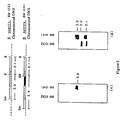
- the upper diagrams of Figure 2 respectively schematize the structures of Bacillus subtilis BM 1032 chromosomal DNA and Bacillus subtilis BM 1041 chromosomal DNA; in the diagrams, Sm, B, the figures, the shaded portion and the heavy line respectively represent Sma I restriction site, Bgl II restriction site, the numbers of base pairs (kilobase pairs), the IMP dehydrogenase gene region and the chloramphenicol acetyltransferase gene region.
- the lower diagrams A and B of Figure 2 respectively show hybridization of the Sma I- Bgl II double digested products of the chromosomal DNA of Bacillus subtilis BM 1032 and Bacillus subtilis BM 1041 with the 32P-labeled pBTM 124 chloramphenicol acetyltransferase gene DNA, and hybridization of the Sma I- Bgl II double digested products of the chromosomal DNAs of Bacillus subtilis BM 1032 and Bacillus subtilis BM 1041 with the 32P-labeled pEX 117 IMP dehydrogenase gene region.
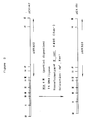
- Figure 3 shows the method of preparing p EX 181 as described in Example 5.
- III, X and P respectively represent Hind III, Xba I and Pst I.
- Esherichia coli TEX 117 was inoculated to an LB medium (10g/l Bacto Trypton, 5 g/l yeast extract, 5 g/l sodium chloride), and chloramphenicol was added to a concentration of 140 ⁇ g/ml for plasmid amplification, followed by cultivation overnight, then bacterial cells were harvested and washed. The washed cells were lysed by adding lysozyme and further adding a 0.2N sodium hydroxide solution containing 1% sodium lauryl sulfate, followed by the addition of 5M potassium acetate, then a supernatant containing the plasmid was obtained via centrifugation.
- LB medium 10g/l Bacto Trypton, 5 g/l yeast extract, 5 g/l sodium chloride
- chloramphenicol was added to a concentration of 140 ⁇ g/ml for plasmid amplification, followed by cultivation overnight, then bacterial cells were harvested and washed.
- the washed cells
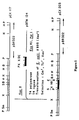
- pEX 117 was cleaved with various restriction enzymes, and the restriction map shown in Figure 1 was prepared from the agarose gel electrophoresis patterns of the plasmid fragments thus obtained, based on the molecular weight of the lambda phage Hin dIII digested DNA.
- pEX 117 is a recombinant plasmid wherein an about 6.4 kilobase pairs of DNA fragment has been inserted at the Pst I site of pBR 322.
- pEX147 is a recombinant plasmid derived from pBR322 by insertion of 2.9 kilo base pairs DNA fragment at the Hin d III site thereof.
- the recombinant plasmid pBTM 124 containing a Bacillus pumilus -derived chloramphenicol acetyltransferase gene was prepared in accordance with the method of Williams et al. [J. Bacteriol., 146 , 1162 (1981)] as follows: A DNA was prepared from Bacillus pumilus NCIB 8600 (IFO 12089, listed in the LIST OF CULTURES, 7th edition, issued by the INSTITUTE FOR FERMENTATION, OSAKA). The DNA (6.5 ⁇ g) was cleaved by reacting it with 40 units of the restriction enzyme Eco RI at 37°C for 1 hour, followed by heating at 68°C for 15 minutes and ethanol precipitation.
- the plasmid pUB 110 (2.0 ⁇ g) was cleaved by reacting it with 20 units of the restriction enzyme Eco RI at 37°C for 1 hour, followed by heating at 68°C for 15 minutes and ethanol precipitation.
- Both resulting precipitates were dissolved in water and mixed together; a reaction liquid (100 ⁇ l) prepared by adding 60 nmole ATP, 10 units of T4 DNA ligase and a ligase buffer solution to the mixture thus obtained was incubated at 11°C for 30 hours, followed by ethanol precipitation. The resulting precipitate was dissolved in a TE buffer solution (50 ⁇ l). Using 25 ⁇ l of the resulting solution, Bacillus subtilis MI-114 [Gene, 24, 255 (1983)] was transformed to obtain a chloramphenicol-resistant transformant. From the chloramphenicol-resistant transformant thus obtained, a plasmid was prepared, which was named pBTM 124.
- pBTM 124 was double digested by reacting it with the restriction enzymes Eco RI and Pst I at 37°C for 1 hour, followed by agarose gel electrophoresis, and the agarose gel corresponding to the electrophoresis distance of a 1.1 kilobase pairs of DNA was cut off.
- Eco RI and Pst I restriction enzymes Eco RI and Pst I at 37°C for 1 hour
- agarose gel electrophoresis the relevant DNA was extracted from the above agarose gel fragment, followed by ethanol precipitation; the resulting precipitate was dissolved in a TE buffer solution (10 ⁇ l).
- pEX 203 100 ⁇ g of pEX 203 was next cleaved with the restriction enzyme Pst I, followed by agarose gel electrophoresis; the agarose gel fragment corresponding to the electrophoresis distance of a 7.5 kilobase pairs of DNA was cut off; using the above-mentioned electroeluter, a DNA was extracted to isolate about 35 ⁇ g of DNA.
- the said DNA is a 7.5 kilobase pairs of DNA fragment inserted at the Pst I site of pBR 322, and it has a structure wherein a Bacillus pumilus NCIB 8600 chloramphenicol acetyltransferase gene has been inserted at the Sac II site on a Bacillus subtilis IMP dehydrogenase gene.
- the method of preparing pEX 203 and its restriction map are shown in Fig. 1.
- the adenine-requiring strain B. subtilis BM 1032 (IFO 14559, FERM BP-1242) was obtained from Bacillus subtilis MI-114.
- Competent cells of the said bacterium were next prepared in accordance with the method of C. Anagnostpoulos and J. Spizizen.
- the suspension was then applied onto an LB agar medium containing 10 ⁇ g/ml chloramphenicol and incubated at 37°C for one day; from the resulting colony was obtained the chloramphenicol-resistant transformant Bacillus subtilis BM 1041 (IFO 14560, FERM BP-1243).
- the said transformant was inoculated to an M-9 CATA medium (6 g/l Na2HPO4, 3g/l KH2PO4, 0.5 g/l NaCl, 1 g/l NH4Cl, 1mM MgSO4, 1mM CaCl2, 2 g/l glucose, 2 g/l casamino acid, 50 mg/l adenine, 50 mg/l tryptophan, 15 g/l agar, pH 7.2) and a medium prepared by further adding xanthine to the above medium, and its growth was examined; as a result, it was confirmed that the said chloramphenicol-resistant transformant has come to exhibit an xanthine requirement as well. Measurements were made of IMP dehydrogenase activity in accordance with the method of Magasanik (Method in Enzymology VI, 106 to 110), but the said enzyme activity was not detectable in this bacterium.
- Bacillus subtilis BM 1041 was inoculated onto an LB medium and cultured at 28°C overnight, then a chromosomal DNA was obtained from bacterial cells in 1 l of the culture broth via the method of purification of chromosomal DNA with phenol [Biochem. Biophys. Acta, 72 619 (1963)]. 10 ⁇ g of the chromosomal DNA thus obtained was double digested with the restriction enzymes Bgl II and Sma I, followed by agarose gel electrophoresis, then the resulting cuttings were transferred onto nitrocellulose filters in accordance with the above-mentioned method described in "Molecular Cloning", pp. 382 to 386.
- the Bgl II- Sma I digested fragments of the chromosomal DNA of Bacillus subtilis BM-1032 were also transferred to nitrocellulose filters at the same time. Separately, a 1.1 kilobase pairs of DNA fragment was extracted and isolated from pBTM 124 by the method described in Example 1; this DNA fragment was then labeled with 32P-CTP and used as a probe. The preparation of the said probe was carried out using the Nick Translation Kit-2 (manufactured by Nippon Gene) in accordance with the protocol specified by the manufacturer.
- a loopful of Bacillus subtilis BM 1041 was inoculated to 20 ml of a seed medium as described in Table 1 and subjected to shake cultivation at 37°C for 18 hours, then 1 ml of the culture broth was transferred to a main fermentation medium (20 ml) as described in Table 1 and subjected to shake cultivation at 37°C for 2 days. 1 ml of the resulting culture broth was transferred to a main fermentation medium as described in Table 1 and subjected to shake cultivation at 37°C for 2 days.
- the viable bacterial cell count in the culture broth was examined; as a result, the viable cell count per 1 ml of the culture broth was 1 X 10⁹, all of which had a xanthine requirement, and no revertant was noted.
- Bacillus subtilis strain RN 63 (IFO 14307, FERM BP-613), a xanthine-requiring strain induced via a conventional method of obtaining transformants, was subjected to the same procedure as above; as a result, the viable cell count per 1 ml of the culture broth was 1 X 10⁹, 20% of which (2 X 10⁸) were revertants exhibiting no xanthine requirement.
- a loopful of Bacillus subtilis strain BM 1041 was inoculated to a 1 l capacity conical flask containing 125 ml of a seed medium as shown in Table 1 and subjected to shake cultivation at 37°C for 12 hours.
- the entire amount of the culture broth was transferred to a 5 l capacity jar containing 2.5 l of a main fermentation medium as shown in Table 1 and cultured at 37°C for 60 hours while both continuously feeding xanthine at a rate of 10 ⁇ g/ml ⁇ hr from 5 hours to 35 hours after the initiation of cultivation and adding 100 ml of a mixed solution containing 12.5% ammonium sulfate and 6.25% urea on the 24th hour following the initiation of main fermentative cultivation.
- inosine had accumulated in a ratio of 10.1 mg/ml.
- Bacillus subtilis strain BM 1032 was cultured under the same conditions as above; as a result, inosine accumulated in a ratio of only 5.2 mg/ml.
- Competent cells of Bacillus subtilis strain NA-6128 were prepared in accordance with the method of Example 2.
- the competent cells thus obtained the 7.5 kilobase pairs of DNA fragment obtained in Example 1 was added, after which they were shaken at 37°C for 1 hour for transformation; as a result, the chloramphenicol-resistant transformant Bacillus subtilis NA-6141 (IFO 14561, FERM BP-1244) was obtained from a colony which had grown on a LB medium containing 10 ⁇ g/ml chloramphenicol.
- a loopful of Bacillus subtilis strain NA-6141 was inoculated into a 1 l capacity of conical flask containing 125 ml of a seed medium as shown in Table 1 and subjected to shake culture at 37°C for 12 hours.
- the whole amount of the resulting culture broth was transplanted to a 5 l capacity of jar containing 2.5 l of a main fermentation medium as shown in Table 1 and cultured at 37°C for 86 hours while both continuously feeding xanthine at a ratio of 10 ⁇ g/ml ⁇ hr from 5 hours to 35 hours after the initiation of cultivation and thereafter at a rate of 5 ⁇ g/ml ⁇ hr until the completion of cultivation and adding 100 ml of a mixed solution containing 12.5% ammonium sulfate and 6.25% urea on the 24th and 48th hours following the initiations of main fermentative cultivation.
- inosine and guanosine which had accumulated in the culture broth were determined via high performance liquid chromatography; as a result, inosine was found to have accumulated at a ratio of 35.0 mg/ml.
- Bacillus subtilis strain NA-6128 was cultured under the same conditions as above; as a result, inosine accumulated at a ratio of only 19.8 mg/ml.
- the viable cell count and xanthine-requiring revertant count in the above culture broth were examined; as a result, the viable cell count was 4 X 10⁸ per 1 ml of the culture broth, and no xanthine-requiring revertant was detected therein.
- the occurrence of adenine-requiring revertants was also examined for reference; as a result, such revertants were present in a ratio of 4 X 10² per 1 ml of the above culture broth. From the comparison of back mutation rate, the effect of the present invention is obvious.
Landscapes
- Life Sciences & Earth Sciences (AREA)
- Health & Medical Sciences (AREA)
- Genetics & Genomics (AREA)
- Chemical & Material Sciences (AREA)
- Engineering & Computer Science (AREA)
- Organic Chemistry (AREA)
- Zoology (AREA)
- Wood Science & Technology (AREA)
- Bioinformatics & Cheminformatics (AREA)
- General Engineering & Computer Science (AREA)
- Biotechnology (AREA)
- Biomedical Technology (AREA)
- Molecular Biology (AREA)
- Microbiology (AREA)
- Biochemistry (AREA)
- General Health & Medical Sciences (AREA)
- Biophysics (AREA)
- Plant Pathology (AREA)
- Physics & Mathematics (AREA)
- Mycology (AREA)
- Medicinal Chemistry (AREA)
- Chemical Kinetics & Catalysis (AREA)
- General Chemical & Material Sciences (AREA)
- Micro-Organisms Or Cultivation Processes Thereof (AREA)
- Enzymes And Modification Thereof (AREA)
- Preparation Of Compounds By Using Micro-Organisms (AREA)
- Saccharide Compounds (AREA)
Claims (5)
- Verfahren zur Herstellung von Inosin, umfassend das Kultivieren in einem Medium eines IMP-Dehydrogenase-Mangelstammes von Bacillus subtilis, der mit DNA transformiert ist, die eine inaktivierte IMP-Dehydrogenase codiert, worin die DNA eine DNA eines IMP-Dehydrogenase-Gens des Bacillus subtilis Stammes umfaßt, der wenigstens 1,85 Kilobasenpaare des Xba-I-Hin CII Fragments hat und ein Selektions-Marker-Gen und das Ernten des so in dem Kulturmedium hergestellten Inosins.
- Verfahren gemäß Anspruch 1, worin das Selektions-Marker-Gen ein oder mehr Glieder sind, die aus der Gruppe, die aus Arzneimittelresistenz-Genen, Aminosäurebiosynthese-Genen, Nucleinsäurebiosynthese-Genen und Vitaminbiosynthese-Genen besteht, ausgewählt sind.
- Verfahren gemäß Anspruch 2, worin das Arzneimittelresistenz-Gen ein Chloramphenicol-Acetyltransferase-Gen ist.
- Verfahren gemäß irgendeinem der vorangehenden Ansprüche, worin der IMP-Dehydrogenase Mangelstamm von Bacillus subtilis befähigt ist, Inosin zu bilden und keine Rückmutation bei Xanthinbedarf zeigt.
- Verfahren gemäß irgendeinem der vorangehenden Ansprüche, worin der IMP-Dehydrogenase Mangelstamm von Bacillus subtilis aus der Gruppe, die aus Bacillus subtilis NA-6141 (FERM BP-1244) und Bacillus subtilis BM 1041 (FERM BP-1243) besteht, ausgewählt ist.
Priority Applications (1)
| Application Number | Priority Date | Filing Date | Title |
|---|---|---|---|
| AT87311199T ATE92101T1 (de) | 1986-12-26 | 1987-12-18 | Fuer inaktivierte imp-dehydrogenase kodierende dns. |
Applications Claiming Priority (2)
| Application Number | Priority Date | Filing Date | Title |
|---|---|---|---|
| JP311588/86 | 1986-12-26 | ||
| JP31158886 | 1986-12-26 |
Publications (3)
| Publication Number | Publication Date |
|---|---|
| EP0273660A2 EP0273660A2 (de) | 1988-07-06 |
| EP0273660A3 EP0273660A3 (en) | 1989-04-19 |
| EP0273660B1 true EP0273660B1 (de) | 1993-07-28 |
Family
ID=18019045
Family Applications (1)
| Application Number | Title | Priority Date | Filing Date |
|---|---|---|---|
| EP87311199A Expired - Lifetime EP0273660B1 (de) | 1986-12-26 | 1987-12-18 | Für inaktivierte IMP-Dehydrogenase kodierende DNS |
Country Status (7)
| Country | Link |
|---|---|
| EP (1) | EP0273660B1 (de) |
| JP (1) | JPH01174385A (de) |
| KR (1) | KR880007735A (de) |
| CN (1) | CN1018846B (de) |
| AT (1) | ATE92101T1 (de) |
| DE (1) | DE3786771T2 (de) |
| ES (1) | ES2058133T3 (de) |
Families Citing this family (13)
| Publication number | Priority date | Publication date | Assignee | Title |
|---|---|---|---|---|
| EP0393969A3 (de) * | 1989-04-19 | 1991-03-13 | Takeda Chemical Industries, Ltd. | ZMP-Dehydrogenase Gen enthaltende DNS und reine Verwendung |
| TW201793B (de) * | 1989-08-04 | 1993-03-11 | Takeda Pharm Industry Co Ltd | |
| US5213972A (en) * | 1989-12-08 | 1993-05-25 | Chemgen Corporation | Fermentation process for the production of pyrimidine deoxyribonucleosides |
| KR920002774A (ko) * | 1990-07-03 | 1992-02-28 | 우메모또 요시마사 | Dna 및 그의 용도 |
| FR2665711B1 (fr) * | 1990-08-08 | 1993-08-13 | Centre Nat Rech Scient | Integron de corynebacterie, procede de transformation d'une corynebacterie par ledit integron et corynebacterie obtenue. |
| JP4352716B2 (ja) * | 2003-02-17 | 2009-10-28 | 味の素株式会社 | バチルス属に属するイノシン生産菌及びイノシンの製造法 |
| BRPI0509056A (pt) | 2004-03-31 | 2007-08-21 | Ajinomoto Kk | bactéria pertencendo ao gênero bacillus ou ao gênero escherichia, e, métodos para produzir um nucleosìdeo de purina, para produzir um nucleotìdeo de purina e para produzir ácido 5'-guanìlico |
| US7326546B2 (en) | 2005-03-10 | 2008-02-05 | Ajinomoto Co., Inc. | Purine-derived substance-producing bacterium and a method for producing purine-derived substance |
| WO2007125783A1 (ja) | 2006-04-24 | 2007-11-08 | Ajinomoto Co., Inc. | プリン系物質生産菌及びプリン系物質の製造法 |
| KR101250826B1 (ko) | 2006-04-24 | 2013-04-11 | 아지노모토 가부시키가이샤 | 퓨린계 물질 생산균 및 퓨린계 물질의 제조법 |
| RU2365622C2 (ru) | 2006-12-22 | 2009-08-27 | Закрытое акционерное общество "Научно-исследовательский институт Аджиномото-Генетика" (ЗАО АГРИ) | СПОСОБ ПРОДУКЦИИ ПУРИНОВЫХ НУКЛЕОЗИДОВ И НУКЛЕОТИДОВ МЕТОДОМ ФЕРМЕНТАЦИИ С ИСПОЛЬЗОВАНИЕМ БАКТЕРИЙ, ПРИНАДЛЕЖАЩИХ К РОДУ Escherichia ИЛИ Bacillus |
| CN104745616B (zh) * | 2015-04-17 | 2018-10-23 | 南京工业大学 | 一种肌苷酸脱氢酶基因缺陷型的节杆菌及其构建方法与应用 |
| KR102556368B1 (ko) | 2020-10-30 | 2023-07-18 | 세메스 주식회사 | 반송 핸드 및 기판 처리 장치 |
Family Cites Families (4)
| Publication number | Priority date | Publication date | Assignee | Title |
|---|---|---|---|---|
| EP0074808A3 (de) * | 1981-09-16 | 1984-07-04 | University Patents, Inc. | Rekombinantes Verfahren und Materialien |
| JPS59205983A (ja) * | 1983-04-28 | 1984-11-21 | ジエネツクス・コ−ポレイシヨン | 異種遺伝子を原核微生物で発現させる方法 |
| JPH0630583B2 (ja) * | 1984-01-27 | 1994-04-27 | 武田薬品工業株式会社 | Dνaおよびその用途 |
| US4828994A (en) * | 1984-09-21 | 1989-05-09 | Genex Corporation | Bacillus strains with reduced extracellular protease levels |
-
1987
- 1987-12-18 DE DE87311199T patent/DE3786771T2/de not_active Expired - Fee Related
- 1987-12-18 AT AT87311199T patent/ATE92101T1/de not_active IP Right Cessation
- 1987-12-18 ES ES87311199T patent/ES2058133T3/es not_active Expired - Lifetime
- 1987-12-18 EP EP87311199A patent/EP0273660B1/de not_active Expired - Lifetime
- 1987-12-24 JP JP62328840A patent/JPH01174385A/ja active Pending
- 1987-12-25 CN CN87101275A patent/CN1018846B/zh not_active Expired
- 1987-12-26 KR KR870014964A patent/KR880007735A/ko not_active Withdrawn
Non-Patent Citations (1)
| Title |
|---|
| Agric. Biol. Chem., vol. 46(9), pages 2347-2352, 1982 * |
Also Published As
| Publication number | Publication date |
|---|---|
| CN87101275A (zh) | 1988-08-10 |
| EP0273660A2 (de) | 1988-07-06 |
| JPH01174385A (ja) | 1989-07-10 |
| DE3786771D1 (de) | 1993-09-02 |
| KR880007735A (ko) | 1988-08-29 |
| CN1018846B (zh) | 1992-10-28 |
| ES2058133T3 (es) | 1994-11-01 |
| DE3786771T2 (de) | 1993-11-11 |
| ATE92101T1 (de) | 1993-08-15 |
| EP0273660A3 (en) | 1989-04-19 |
Similar Documents
| Publication | Publication Date | Title |
|---|---|---|
| EP0273660B1 (de) | Für inaktivierte IMP-Dehydrogenase kodierende DNS | |
| KR101558622B1 (ko) | mRNA의 안정화를 통한 표적 생성물의 증가된 제조 | |
| JP4913929B2 (ja) | 核酸系物質の製造法 | |
| EP0356739A1 (de) | Rekombinante DNS, diese rekombinante DNS enthaltender Mikroorganismus und Verfahren zur Herstellung von L-Aminosäure unter Verwendung dieses Mikroorganismus | |
| EP2115120B1 (de) | Mikroorganismus zur herstellung von inosin und verfahren zur herstellung von inosin damit | |
| EP0286303B1 (de) | DNA und ihre Verwendung | |
| Miyagawa et al. | Cloning of the Bacillus subtilis IMP dehydrogenase gene and its application to increased production of guanosine | |
| US5281531A (en) | Host and vector for producing D-ribose | |
| CZ100596A3 (en) | Dna fragment, vector and micro-organism containing genes for metabolic transformation of butyrobetaine/crotonobetaine-l-carnitine and process for preparing l-carnitine | |
| EP0465132A2 (de) | DNA und seine Verwendung | |
| TW201793B (de) | ||
| EP0393969A2 (de) | ZMP-Dehydrogenase Gen enthaltende DNS und reine Verwendung | |
| EP0151341B1 (de) | DNS und ihre Verwendung | |
| EP0329062B1 (de) | Ein DNS-Resistenzgen gegen Pyrimidine Analoge und dessen Verwendung. | |
| KR101877120B1 (ko) | 생물전환공정을 이용한 2'-데옥시시티딘의 제조방법 | |
| EP0124076A2 (de) | Verfahren zur Herstellung von rekombinanten Plasmiden, Mikroorganismen transformiert mit diesen Plasmiden und thermostabile Alpha-Amylase | |
| Miyagawa et al. | Increased inosine production by a Bacillus subtilis xanthine-requiring mutant derived by insertional inactivation of the IMP dehydrogenase gene | |
| Wetekam et al. | A role for the product of gene suA in restoration of polarity in vitro | |
| JPH05192164A (ja) | 組換えdnaおよびその用途 | |
| KR100237091B1 (ko) | 플라빈 뉴클레오타이드의 제조방법 | |
| EP0458070A1 (de) | DNS-Gen zum Widerstand gegen Cytidine Analogen und reine Verwendung | |
| EP1844135A1 (de) | Zur umwandlung von xmp in gmp und zur bewahrung des inaktivierten zustands eines oder mehrerer gene im zusammenhang mit gmp-abbau fähiger escherichia-stamm und verfahren zur verwendung davon | |
| Kim et al. | Optimization of Culture Conditions and Analysis of Plasmid Stability of a Transformant Bacillus subtilis for Cytidine Deaminase Production |
Legal Events
| Date | Code | Title | Description |
|---|---|---|---|
| PUAI | Public reference made under article 153(3) epc to a published international application that has entered the european phase |
Free format text: ORIGINAL CODE: 0009012 |
|
| AK | Designated contracting states |
Kind code of ref document: A2 Designated state(s): AT BE CH DE ES FR GB GR IT LI LU NL SE |
|
| PUAL | Search report despatched |
Free format text: ORIGINAL CODE: 0009013 |
|
| AK | Designated contracting states |
Kind code of ref document: A3 Designated state(s): AT BE CH DE ES FR GB GR IT LI LU NL SE |
|
| 17P | Request for examination filed |
Effective date: 19890613 |
|
| RAP1 | Party data changed (applicant data changed or rights of an application transferred) |
Owner name: TAKEDA CHEMICAL INDUSTRIES, LTD. |
|
| 17Q | First examination report despatched |
Effective date: 19911112 |
|
| RAP3 | Party data changed (applicant data changed or rights of an application transferred) |
Owner name: TAKEDA CHEMICAL INDUSTRIES, LTD. |
|
| GRAA | (expected) grant |
Free format text: ORIGINAL CODE: 0009210 |
|
| AK | Designated contracting states |
Kind code of ref document: B1 Designated state(s): AT BE CH DE ES FR GB GR IT LI LU NL SE |
|
| PG25 | Lapsed in a contracting state [announced via postgrant information from national office to epo] |
Ref country code: NL Effective date: 19930728 Ref country code: LI Effective date: 19930728 Ref country code: GR Free format text: LAPSE BECAUSE OF FAILURE TO SUBMIT A TRANSLATION OF THE DESCRIPTION OR TO PAY THE FEE WITHIN THE PRESCRIBED TIME-LIMIT Effective date: 19930728 Ref country code: CH Effective date: 19930728 Ref country code: BE Effective date: 19930728 Ref country code: AT Effective date: 19930728 |
|
| REF | Corresponds to: |
Ref document number: 92101 Country of ref document: AT Date of ref document: 19930815 Kind code of ref document: T |
|
| REF | Corresponds to: |
Ref document number: 3786771 Country of ref document: DE Date of ref document: 19930902 |
|
| ITF | It: translation for a ep patent filed | ||
| PGFP | Annual fee paid to national office [announced via postgrant information from national office to epo] |
Ref country code: FR Payment date: 19931021 Year of fee payment: 7 |
|
| ET | Fr: translation filed | ||
| REG | Reference to a national code |
Ref country code: CH Ref legal event code: PL |
|
| PGFP | Annual fee paid to national office [announced via postgrant information from national office to epo] |
Ref country code: SE Payment date: 19931126 Year of fee payment: 7 |
|
| PGFP | Annual fee paid to national office [announced via postgrant information from national office to epo] |
Ref country code: GB Payment date: 19931208 Year of fee payment: 7 |
|
| PGFP | Annual fee paid to national office [announced via postgrant information from national office to epo] |
Ref country code: ES Payment date: 19931213 Year of fee payment: 7 |
|
| PGFP | Annual fee paid to national office [announced via postgrant information from national office to epo] |
Ref country code: DE Payment date: 19931228 Year of fee payment: 7 |
|
| PG25 | Lapsed in a contracting state [announced via postgrant information from national office to epo] |
Ref country code: LU Free format text: LAPSE BECAUSE OF NON-PAYMENT OF DUE FEES Effective date: 19931231 |
|
| NLV1 | Nl: lapsed or annulled due to failure to fulfill the requirements of art. 29p and 29m of the patents act | ||
| PLBE | No opposition filed within time limit |
Free format text: ORIGINAL CODE: 0009261 |
|
| STAA | Information on the status of an ep patent application or granted ep patent |
Free format text: STATUS: NO OPPOSITION FILED WITHIN TIME LIMIT |
|
| 26N | No opposition filed | ||
| REG | Reference to a national code |
Ref country code: ES Ref legal event code: FG2A Ref document number: 2058133 Country of ref document: ES Kind code of ref document: T3 |
|
| PG25 | Lapsed in a contracting state [announced via postgrant information from national office to epo] |
Ref country code: GB Effective date: 19941218 |
|
| PG25 | Lapsed in a contracting state [announced via postgrant information from national office to epo] |
Ref country code: SE Effective date: 19941219 Ref country code: ES Free format text: LAPSE BECAUSE OF EXPIRATION OF PROTECTION Effective date: 19941219 |
|
| EAL | Se: european patent in force in sweden |
Ref document number: 87311199.1 |
|
| GBPC | Gb: european patent ceased through non-payment of renewal fee |
Effective date: 19941218 |
|
| PG25 | Lapsed in a contracting state [announced via postgrant information from national office to epo] |
Ref country code: FR Effective date: 19950831 |
|
| PG25 | Lapsed in a contracting state [announced via postgrant information from national office to epo] |
Ref country code: DE Effective date: 19950901 |
|
| EUG | Se: european patent has lapsed |
Ref document number: 87311199.1 |
|
| REG | Reference to a national code |
Ref country code: FR Ref legal event code: ST |
|
| REG | Reference to a national code |
Ref country code: ES Ref legal event code: FD2A Effective date: 20010201 |
|
| PG25 | Lapsed in a contracting state [announced via postgrant information from national office to epo] |
Ref country code: IT Free format text: LAPSE BECAUSE OF NON-PAYMENT OF DUE FEES;WARNING: LAPSES OF ITALIAN PATENTS WITH EFFECTIVE DATE BEFORE 2007 MAY HAVE OCCURRED AT ANY TIME BEFORE 2007. THE CORRECT EFFECTIVE DATE MAY BE DIFFERENT FROM THE ONE RECORDED. Effective date: 20051218 |