EP0273716A2 - Synthetische Peptide, die zelluläre Immunität gegen den AIDS-Virus und dessen Proteine erzeugen - Google Patents
Synthetische Peptide, die zelluläre Immunität gegen den AIDS-Virus und dessen Proteine erzeugen Download PDFInfo
- Publication number
- EP0273716A2 EP0273716A2 EP87311391A EP87311391A EP0273716A2 EP 0273716 A2 EP0273716 A2 EP 0273716A2 EP 87311391 A EP87311391 A EP 87311391A EP 87311391 A EP87311391 A EP 87311391A EP 0273716 A2 EP0273716 A2 EP 0273716A2
- Authority
- EP
- European Patent Office
- Prior art keywords
- cell
- peptides
- sites
- env
- peptide
- Prior art date
- Legal status (The legal status is an assumption and is not a legal conclusion. Google has not performed a legal analysis and makes no representation as to the accuracy of the status listed.)
- Granted
Links
- 108090000765 processed proteins & peptides Proteins 0.000 title claims abstract description 99
- 102000004196 processed proteins & peptides Human genes 0.000 title claims abstract description 51
- 230000007969 cellular immunity Effects 0.000 title claims abstract description 23
- 241000700605 Viruses Species 0.000 title claims description 11
- 108010067390 Viral Proteins Proteins 0.000 title claims description 9
- 229960005486 vaccine Drugs 0.000 claims abstract description 22
- 238000000034 method Methods 0.000 claims abstract description 12
- 230000001939 inductive effect Effects 0.000 claims abstract description 4
- 210000001744 T-lymphocyte Anatomy 0.000 claims description 70
- 208000030507 AIDS Diseases 0.000 claims description 20
- 230000000890 antigenic effect Effects 0.000 claims description 17
- 101710091045 Envelope protein Proteins 0.000 claims description 16
- 101710188315 Protein X Proteins 0.000 claims description 16
- 230000036039 immunity Effects 0.000 claims description 14
- 230000005867 T cell response Effects 0.000 claims description 11
- 230000000875 corresponding effect Effects 0.000 claims description 8
- 230000006698 induction Effects 0.000 claims description 6
- 230000005875 antibody response Effects 0.000 claims description 5
- 108010003533 Viral Envelope Proteins Proteins 0.000 claims description 3
- 125000003275 alpha amino acid group Chemical group 0.000 claims 3
- 102100021696 Syncytin-1 Human genes 0.000 claims 2
- 208000000389 T-cell leukemia Diseases 0.000 claims 1
- 208000028530 T-cell lymphoblastic leukemia/lymphoma Diseases 0.000 claims 1
- 239000000306 component Substances 0.000 claims 1
- 208000011580 syndromic disease Diseases 0.000 claims 1
- 108090000623 proteins and genes Proteins 0.000 abstract description 41
- 102000004169 proteins and genes Human genes 0.000 abstract description 39
- 241000725303 Human immunodeficiency virus Species 0.000 abstract description 19
- 230000003053 immunization Effects 0.000 abstract description 12
- 238000002649 immunization Methods 0.000 abstract description 11
- 239000012634 fragment Substances 0.000 abstract description 9
- 101800001357 Potential peptide Proteins 0.000 abstract description 2
- 102400000745 Potential peptide Human genes 0.000 abstract description 2
- 239000000427 antigen Substances 0.000 description 22
- 108091007433 antigens Proteins 0.000 description 21
- 102000036639 antigens Human genes 0.000 description 21
- 230000004044 response Effects 0.000 description 20
- 102100027723 Endogenous retrovirus group K member 6 Rec protein Human genes 0.000 description 14
- 210000002443 helper t lymphocyte Anatomy 0.000 description 13
- 150000001413 amino acids Chemical group 0.000 description 12
- 210000004027 cell Anatomy 0.000 description 10
- 241000699670 Mus sp. Species 0.000 description 9
- 210000001165 lymph node Anatomy 0.000 description 9
- 102000007056 Recombinant Fusion Proteins Human genes 0.000 description 8
- 108010008281 Recombinant Fusion Proteins Proteins 0.000 description 8
- 238000004458 analytical method Methods 0.000 description 8
- 210000003719 b-lymphocyte Anatomy 0.000 description 8
- 230000002163 immunogen Effects 0.000 description 8
- KDXKERNSBIXSRK-UHFFFAOYSA-N Lysine Natural products NCCCCC(N)C(O)=O KDXKERNSBIXSRK-UHFFFAOYSA-N 0.000 description 7
- 230000015572 biosynthetic process Effects 0.000 description 7
- 210000001151 cytotoxic T lymphocyte Anatomy 0.000 description 7
- 238000005755 formation reaction Methods 0.000 description 7
- 230000008878 coupling Effects 0.000 description 6
- 238000010168 coupling process Methods 0.000 description 6
- 238000005859 coupling reaction Methods 0.000 description 6
- 230000000694 effects Effects 0.000 description 6
- 238000002474 experimental method Methods 0.000 description 6
- 230000002209 hydrophobic effect Effects 0.000 description 6
- 230000000638 stimulation Effects 0.000 description 6
- IQFYYKKMVGJFEH-XLPZGREQSA-N Thymidine Chemical compound O=C1NC(=O)C(C)=CN1[C@@H]1O[C@H](CO)[C@@H](O)C1 IQFYYKKMVGJFEH-XLPZGREQSA-N 0.000 description 5
- 101800001690 Transmembrane protein gp41 Proteins 0.000 description 5
- 102000054766 genetic haplotypes Human genes 0.000 description 5
- 230000003472 neutralizing effect Effects 0.000 description 5
- 238000011740 C57BL/6 mouse Methods 0.000 description 4
- 239000004472 Lysine Substances 0.000 description 4
- IQFYYKKMVGJFEH-UHFFFAOYSA-N beta-L-thymidine Natural products O=C1NC(=O)C(C)=CN1C1OC(CO)C(O)C1 IQFYYKKMVGJFEH-UHFFFAOYSA-N 0.000 description 4
- 238000010348 incorporation Methods 0.000 description 4
- 239000002609 medium Substances 0.000 description 4
- 229940023041 peptide vaccine Drugs 0.000 description 4
- 230000008569 process Effects 0.000 description 4
- NHBKXEKEPDILRR-UHFFFAOYSA-N 2,3-bis(butanoylsulfanyl)propyl butanoate Chemical compound CCCC(=O)OCC(SC(=O)CCC)CSC(=O)CCC NHBKXEKEPDILRR-UHFFFAOYSA-N 0.000 description 3
- ZDXPYRJPNDTMRX-VKHMYHEASA-N L-glutamine Chemical compound OC(=O)[C@@H](N)CCC(N)=O ZDXPYRJPNDTMRX-VKHMYHEASA-N 0.000 description 3
- 102000036675 Myoglobin Human genes 0.000 description 3
- 108010062374 Myoglobin Proteins 0.000 description 3
- 241000283222 Physeter catodon Species 0.000 description 3
- 206010046865 Vaccinia virus infection Diseases 0.000 description 3
- 208000036142 Viral infection Diseases 0.000 description 3
- 210000000612 antigen-presenting cell Anatomy 0.000 description 3
- 238000001516 cell proliferation assay Methods 0.000 description 3
- 230000007123 defense Effects 0.000 description 3
- 230000028993 immune response Effects 0.000 description 3
- 230000016784 immunoglobulin production Effects 0.000 description 3
- 229940070376 protein Drugs 0.000 description 3
- 208000007089 vaccinia Diseases 0.000 description 3
- 230000009385 viral infection Effects 0.000 description 3
- -1 2-chlorobenzyloxycarbonyl Chemical group 0.000 description 2
- 229940124718 AIDS vaccine Drugs 0.000 description 2
- 108020004414 DNA Proteins 0.000 description 2
- KRHYYFGTRYWZRS-UHFFFAOYSA-N Fluorane Chemical compound F KRHYYFGTRYWZRS-UHFFFAOYSA-N 0.000 description 2
- 241000699666 Mus <mouse, genus> Species 0.000 description 2
- 230000004988 N-glycosylation Effects 0.000 description 2
- ONIBWKKTOPOVIA-UHFFFAOYSA-N Proline Natural products OC(=O)C1CCCN1 ONIBWKKTOPOVIA-UHFFFAOYSA-N 0.000 description 2
- 102100036011 T-cell surface glycoprotein CD4 Human genes 0.000 description 2
- 125000000539 amino acid group Chemical group 0.000 description 2
- 238000003556 assay Methods 0.000 description 2
- 125000000051 benzyloxy group Chemical group [H]C1=C([H])C([H])=C(C([H])=C1[H])C([H])([H])O* 0.000 description 2
- 238000012512 characterization method Methods 0.000 description 2
- 230000009260 cross reactivity Effects 0.000 description 2
- 238000013461 design Methods 0.000 description 2
- 238000011161 development Methods 0.000 description 2
- 230000002349 favourable effect Effects 0.000 description 2
- 125000001165 hydrophobic group Chemical group 0.000 description 2
- 230000005847 immunogenicity Effects 0.000 description 2
- 238000001727 in vivo Methods 0.000 description 2
- 208000015181 infectious disease Diseases 0.000 description 2
- 206010022000 influenza Diseases 0.000 description 2
- 210000003810 lymphokine-activated killer cell Anatomy 0.000 description 2
- 210000002540 macrophage Anatomy 0.000 description 2
- 238000004519 manufacturing process Methods 0.000 description 2
- 230000001404 mediated effect Effects 0.000 description 2
- BDAGIHXWWSANSR-UHFFFAOYSA-N methanoic acid Natural products OC=O BDAGIHXWWSANSR-UHFFFAOYSA-N 0.000 description 2
- 210000000822 natural killer cell Anatomy 0.000 description 2
- 244000052769 pathogen Species 0.000 description 2
- 230000001717 pathogenic effect Effects 0.000 description 2
- 238000010647 peptide synthesis reaction Methods 0.000 description 2
- 239000013641 positive control Substances 0.000 description 2
- 230000035755 proliferation Effects 0.000 description 2
- 230000009257 reactivity Effects 0.000 description 2
- 230000004043 responsiveness Effects 0.000 description 2
- 210000002966 serum Anatomy 0.000 description 2
- 239000007790 solid phase Substances 0.000 description 2
- 241000894007 species Species 0.000 description 2
- 230000004936 stimulating effect Effects 0.000 description 2
- UCSJYZPVAKXKNQ-HZYVHMACSA-N streptomycin Chemical compound CN[C@H]1[C@H](O)[C@@H](O)[C@H](CO)O[C@H]1O[C@@H]1[C@](C=O)(O)[C@H](C)O[C@H]1O[C@@H]1[C@@H](NC(N)=N)[C@H](O)[C@@H](NC(N)=N)[C@H](O)[C@H]1O UCSJYZPVAKXKNQ-HZYVHMACSA-N 0.000 description 2
- 229940126577 synthetic vaccine Drugs 0.000 description 2
- 239000013598 vector Substances 0.000 description 2
- 210000002845 virion Anatomy 0.000 description 2
- DGVVWUTYPXICAM-UHFFFAOYSA-N β‐Mercaptoethanol Chemical compound OCCS DGVVWUTYPXICAM-UHFFFAOYSA-N 0.000 description 2
- YEDUAINPPJYDJZ-UHFFFAOYSA-N 2-hydroxybenzothiazole Chemical compound C1=CC=C2SC(O)=NC2=C1 YEDUAINPPJYDJZ-UHFFFAOYSA-N 0.000 description 1
- OSWFIVFLDKOXQC-UHFFFAOYSA-N 4-(3-methoxyphenyl)aniline Chemical compound COC1=CC=CC(C=2C=CC(N)=CC=2)=C1 OSWFIVFLDKOXQC-UHFFFAOYSA-N 0.000 description 1
- 206010001513 AIDS related complex Diseases 0.000 description 1
- 108010032595 Antibody Binding Sites Proteins 0.000 description 1
- 238000011725 BALB/c mouse Methods 0.000 description 1
- DWRXFEITVBNRMK-UHFFFAOYSA-N Beta-D-1-Arabinofuranosylthymine Natural products O=C1NC(=O)C(C)=CN1C1C(O)C(O)C(CO)O1 DWRXFEITVBNRMK-UHFFFAOYSA-N 0.000 description 1
- 108091003079 Bovine Serum Albumin Proteins 0.000 description 1
- 125000001433 C-terminal amino-acid group Chemical group 0.000 description 1
- 102000014914 Carrier Proteins Human genes 0.000 description 1
- 108010078791 Carrier Proteins Proteins 0.000 description 1
- 241000282693 Cercopithecidae Species 0.000 description 1
- 108091026890 Coding region Proteins 0.000 description 1
- 102000053602 DNA Human genes 0.000 description 1
- QOSSAOTZNIDXMA-UHFFFAOYSA-N Dicylcohexylcarbodiimide Chemical compound C1CCCCC1N=C=NC1CCCCC1 QOSSAOTZNIDXMA-UHFFFAOYSA-N 0.000 description 1
- 241000588724 Escherichia coli Species 0.000 description 1
- 102000005731 Glucose-6-phosphate isomerase Human genes 0.000 description 1
- 108010070600 Glucose-6-phosphate isomerase Proteins 0.000 description 1
- 108010038826 HIV Envelope Protein gp160 Proteins 0.000 description 1
- 208000031886 HIV Infections Diseases 0.000 description 1
- 208000037357 HIV infectious disease Diseases 0.000 description 1
- 101710154606 Hemagglutinin Proteins 0.000 description 1
- 108010048209 Human Immunodeficiency Virus Proteins Proteins 0.000 description 1
- 241000598436 Human T-cell lymphotropic virus Species 0.000 description 1
- 206010061598 Immunodeficiency Diseases 0.000 description 1
- 208000029462 Immunodeficiency disease Diseases 0.000 description 1
- 229930182816 L-glutamine Natural products 0.000 description 1
- 244000237786 Lathyrus tuberosus Species 0.000 description 1
- 206010024229 Leprosy Diseases 0.000 description 1
- 241000282553 Macaca Species 0.000 description 1
- 108700018351 Major Histocompatibility Complex Proteins 0.000 description 1
- 108010059724 Micrococcal Nuclease Proteins 0.000 description 1
- 241001529936 Murinae Species 0.000 description 1
- 102000011931 Nucleoproteins Human genes 0.000 description 1
- 108010061100 Nucleoproteins Proteins 0.000 description 1
- 101710093908 Outer capsid protein VP4 Proteins 0.000 description 1
- 101710135467 Outer capsid protein sigma-1 Proteins 0.000 description 1
- 241001480549 Parenthis Species 0.000 description 1
- 229930182555 Penicillin Natural products 0.000 description 1
- JGSARLDLIJGVTE-MBNYWOFBSA-N Penicillin G Chemical compound N([C@H]1[C@H]2SC([C@@H](N2C1=O)C(O)=O)(C)C)C(=O)CC1=CC=CC=C1 JGSARLDLIJGVTE-MBNYWOFBSA-N 0.000 description 1
- 206010069582 Progressive vaccinia Diseases 0.000 description 1
- 101710176177 Protein A56 Proteins 0.000 description 1
- 108010076504 Protein Sorting Signals Proteins 0.000 description 1
- 239000012980 RPMI-1640 medium Substances 0.000 description 1
- 108020004511 Recombinant DNA Proteins 0.000 description 1
- 108091008874 T cell receptors Proteins 0.000 description 1
- 102000016266 T-Cell Antigen Receptors Human genes 0.000 description 1
- QIVBCDIJIAJPQS-UHFFFAOYSA-N Tryptophan Natural products C1=CC=C2C(CC(N)C(O)=O)=CNC2=C1 QIVBCDIJIAJPQS-UHFFFAOYSA-N 0.000 description 1
- 241000700618 Vaccinia virus Species 0.000 description 1
- 108700005077 Viral Genes Proteins 0.000 description 1
- 230000002378 acidificating effect Effects 0.000 description 1
- 239000002671 adjuvant Substances 0.000 description 1
- 238000001042 affinity chromatography Methods 0.000 description 1
- 230000030741 antigen processing and presentation Effects 0.000 description 1
- 238000013459 approach Methods 0.000 description 1
- 230000003416 augmentation Effects 0.000 description 1
- 125000001797 benzyl group Chemical group [H]C1=C([H])C([H])=C(C([H])=C1[H])C([H])([H])* 0.000 description 1
- 125000000440 benzylamino group Chemical group [H]N(*)C([H])([H])C1=C([H])C([H])=C([H])C([H])=C1[H] 0.000 description 1
- 150000001720 carbohydrates Chemical class 0.000 description 1
- 235000014633 carbohydrates Nutrition 0.000 description 1
- 125000003178 carboxy group Chemical group [H]OC(*)=O 0.000 description 1
- 239000000969 carrier Substances 0.000 description 1
- 230000001364 causal effect Effects 0.000 description 1
- 230000007910 cell fusion Effects 0.000 description 1
- 230000022534 cell killing Effects 0.000 description 1
- 230000005859 cell recognition Effects 0.000 description 1
- 239000006285 cell suspension Substances 0.000 description 1
- 230000001413 cellular effect Effects 0.000 description 1
- 238000003776 cleavage reaction Methods 0.000 description 1
- 238000010367 cloning Methods 0.000 description 1
- 229940000425 combination drug Drugs 0.000 description 1
- 238000012790 confirmation Methods 0.000 description 1
- 238000011109 contamination Methods 0.000 description 1
- 230000002939 deleterious effect Effects 0.000 description 1
- 238000004925 denaturation Methods 0.000 description 1
- 230000036425 denaturation Effects 0.000 description 1
- 210000004443 dendritic cell Anatomy 0.000 description 1
- 239000003599 detergent Substances 0.000 description 1
- 238000000502 dialysis Methods 0.000 description 1
- 201000010099 disease Diseases 0.000 description 1
- 231100000676 disease causative agent Toxicity 0.000 description 1
- 208000037265 diseases, disorders, signs and symptoms Diseases 0.000 description 1
- 230000001083 documented effect Effects 0.000 description 1
- 238000009510 drug design Methods 0.000 description 1
- 238000005516 engineering process Methods 0.000 description 1
- 239000013604 expression vector Substances 0.000 description 1
- 238000000605 extraction Methods 0.000 description 1
- 239000012091 fetal bovine serum Substances 0.000 description 1
- 235000019253 formic acid Nutrition 0.000 description 1
- 125000002485 formyl group Chemical group [H]C(*)=O 0.000 description 1
- 230000006870 function Effects 0.000 description 1
- 238000002523 gelfiltration Methods 0.000 description 1
- 230000002068 genetic effect Effects 0.000 description 1
- 239000003365 glass fiber Substances 0.000 description 1
- 239000000185 hemagglutinin Substances 0.000 description 1
- 208000033519 human immunodeficiency virus infectious disease Diseases 0.000 description 1
- 230000004727 humoral immunity Effects 0.000 description 1
- 230000008348 humoral response Effects 0.000 description 1
- 229910000040 hydrogen fluoride Inorganic materials 0.000 description 1
- NPZTUJOABDZTLV-UHFFFAOYSA-N hydroxybenzotriazole Substances O=C1C=CC=C2NNN=C12 NPZTUJOABDZTLV-UHFFFAOYSA-N 0.000 description 1
- 210000002865 immune cell Anatomy 0.000 description 1
- 230000007124 immune defense Effects 0.000 description 1
- 210000000987 immune system Anatomy 0.000 description 1
- 230000007813 immunodeficiency Effects 0.000 description 1
- 238000000338 in vitro Methods 0.000 description 1
- 230000003455 independent Effects 0.000 description 1
- 230000002458 infectious effect Effects 0.000 description 1
- 238000005567 liquid scintillation counting Methods 0.000 description 1
- 230000004807 localization Effects 0.000 description 1
- 239000000463 material Substances 0.000 description 1
- 230000007246 mechanism Effects 0.000 description 1
- 239000000203 mixture Substances 0.000 description 1
- 229940031348 multivalent vaccine Drugs 0.000 description 1
- 239000013642 negative control Substances 0.000 description 1
- FEMOMIGRRWSMCU-UHFFFAOYSA-N ninhydrin Chemical compound C1=CC=C2C(=O)C(O)(O)C(=O)C2=C1 FEMOMIGRRWSMCU-UHFFFAOYSA-N 0.000 description 1
- 229940049954 penicillin Drugs 0.000 description 1
- 230000000737 periodic effect Effects 0.000 description 1
- 239000002243 precursor Substances 0.000 description 1
- 230000037452 priming Effects 0.000 description 1
- 238000012545 processing Methods 0.000 description 1
- 230000009696 proliferative response Effects 0.000 description 1
- 230000001681 protective effect Effects 0.000 description 1
- 230000017854 proteolysis Effects 0.000 description 1
- 238000000746 purification Methods 0.000 description 1
- 238000011160 research Methods 0.000 description 1
- 239000011347 resin Substances 0.000 description 1
- 229920005989 resin Polymers 0.000 description 1
- 238000004007 reversed phase HPLC Methods 0.000 description 1
- 230000007017 scission Effects 0.000 description 1
- 230000035945 sensitivity Effects 0.000 description 1
- 238000010561 standard procedure Methods 0.000 description 1
- 229960005322 streptomycin Drugs 0.000 description 1
- 238000006467 substitution reaction Methods 0.000 description 1
- 125000005931 tert-butyloxycarbonyl group Chemical group [H]C([H])([H])C(OC(*)=O)(C([H])([H])[H])C([H])([H])[H] 0.000 description 1
- 238000012360 testing method Methods 0.000 description 1
- 229940104230 thymidine Drugs 0.000 description 1
- 125000002088 tosyl group Chemical group [H]C1=C([H])C(=C([H])C([H])=C1C([H])([H])[H])S(*)(=O)=O 0.000 description 1
- 230000014599 transmission of virus Effects 0.000 description 1
- 241000712461 unidentified influenza virus Species 0.000 description 1
- 238000002255 vaccination Methods 0.000 description 1
- 230000003612 virological effect Effects 0.000 description 1
Images



Classifications
-
- C—CHEMISTRY; METALLURGY
- C07—ORGANIC CHEMISTRY
- C07K—PEPTIDES
- C07K14/00—Peptides having more than 20 amino acids; Gastrins; Somatostatins; Melanotropins; Derivatives thereof
- C07K14/005—Peptides having more than 20 amino acids; Gastrins; Somatostatins; Melanotropins; Derivatives thereof from viruses
-
- A—HUMAN NECESSITIES
- A61—MEDICAL OR VETERINARY SCIENCE; HYGIENE
- A61K—PREPARATIONS FOR MEDICAL, DENTAL OR TOILETRY PURPOSES
- A61K39/00—Medicinal preparations containing antigens or antibodies
-
- C—CHEMISTRY; METALLURGY
- C12—BIOCHEMISTRY; BEER; SPIRITS; WINE; VINEGAR; MICROBIOLOGY; ENZYMOLOGY; MUTATION OR GENETIC ENGINEERING
- C12N—MICROORGANISMS OR ENZYMES; COMPOSITIONS THEREOF; PROPAGATING, PRESERVING, OR MAINTAINING MICROORGANISMS; MUTATION OR GENETIC ENGINEERING; CULTURE MEDIA
- C12N2740/00—Reverse transcribing RNA viruses
- C12N2740/00011—Details
- C12N2740/10011—Retroviridae
- C12N2740/16011—Human Immunodeficiency Virus, HIV
- C12N2740/16111—Human Immunodeficiency Virus, HIV concerning HIV env
- C12N2740/16122—New viral proteins or individual genes, new structural or functional aspects of known viral proteins or genes
Definitions
- the purpose of the present invention is to develop a vaccine to prevent acquired immunodeficiency syndrome (AIDS) based partly or solely on synthetic peptides which produde T cell immunity.
- T cell immunity is an important arm of defense against viral infections, but has hardly been studied for AIDS.
- Helper T cells are needed for an antibody response as well as for a cytotoxic T cell response and for inducing macrophage and LAK cell killing.
- the peptides of the present invention are particularly suited for use in a vaccine capable of safely eliciting either type of immunity: (1) the peptides are synthetically produced, and therefore do not include live virus, or a part of a live virus, or other sites which might produce deleterious effects (e.g., the site binding to T4 or the site producing cell fusion); (2) the peptides may be used alone to induce cellular immunity; (3) the peptides may be used in conjunction with other molecules in order to induce antibody production or a humoral response; and (4) the peptides may be targeted for a particular type of T-cell response without the side effects of other unwanted responses.
- Correspondly ing peptides were synthesized and studied in genetically defined inbred and F1 mice for induction of lymph node proliferation. After immunization with a 425 residue recombinant envelope protein fragment, significant responses to native gp120 as well as to each peptide were observed in both F1 combinations studied. Conversely, immunization with env T1 peptide induced T cell immunity to the native gp120 envelope protein. The genetics of the response to env T1 peptide were further examined and revealed a significant response in three of four independent Major Histocompatibility haplotypes tested, an indication of high frequency responsiveness in the population.
- helper T cell sites should facilitate development of a highly immunogenic, carrier-free vaccine that induces both T cell and B cell immunity.
- the ability to elicit T cell immunity to the native AIDS viral protein by immunization with a 16-residue peptide suggests that such sites represent potentially important components of an effective AIDS vaccine.
- An ideal vaccine is highly immunogenic, induces both T cell and B cell virus-specific immunity, and is free of irrelevant carrier proteins. While traditional approaches using whole virion or virion subunits can generally achieve this, practical considerations such as safety and availability of native antigen have led many to consider more highly engineered vaccine constructs for AIDS. Localization of immunodominant T cell and B cell recognition sites becomes critical if one wishes to design a vaccine based on recombinant proteins or synthetic peptides. A T cell repsonse to the gp120 envelope protein has been demonstrated recently by Zarling et al. Nature , 323: 344-345 (1986) in macaques immunized with vaccinia constructs containing gp120 coding sequence. However, identification and characterization of immunodominant T cell sites within this 518 residue protein or other HIV proteins have not been reported.
- Antibodies typically recognize free antigen in native conformation and can potentially recognize almost any site exposed on the antigen surface.
- typical CD4+ helper T cells recognize antigen only in the context of the Class II Major Histocompatibility (MHC) molecule and only after appropriate antigen processing usually consisting of proteolysis or denaturation.
- MHC Class II Major Histocompatibility
- the polyclonal T cell response is focused only on relatively few discrete sites. This limited response is seen even for noneukaryotic proteins (e.g., influenza hemagglutinin and staphylococcal nuclease) for which tolerance to homologous host proteins does not limit the number of antigenic sites. Therefore, it is important to find sites which do elicit T-cell immunity to AIDS viral proteins.
- the present invention relates to a method of inducing cellular immunity to native proteins of the AIDS virus by immunization with short synthetic peptides.
- Five potential peptides are identified by searching for regions which can fold as a maximally amphipathic helix. Two of these are recognized by T cells immune to the AIDS virus envelope protein. One of these was used to immunize mice and can successfully induce T cell immunity to the whole AIDS envelope protein (480 amino acid residues long) using this 16-residue peptide in 3 of 4 mouse strains tested.
- the invention includes but is not limited to these specific peptides and any synthetic peptides containing or overlapping these sequences or variations therein, including peptides with amino acid substitutions that retain or enhance the activity documented. These can be used alone as a vaccine or in combination with other materials (e.g. primary immunization with peptide, boost with recombinant fragment). They can also be attached to sites binding neutralizing antibodies to induce a neutralizing
- the present invention is critical to the manufacture of peptide vaccines capable of eliciting T-cell immunity.
- One aspect of the present invention is the discovery of certain traits which seem to be common to most T-cell stimulating protein segments.
- Such peptide vaccines should optimally be those protein segments which (a) have a propensity to form amphipathic alpha-helices; (b) do not have regions with a propensity to coil formations; and (c) have a lysine at their COOH-terminus.
- the last two observations are of particular use in manufacturing peptides vaccines; they indicate where the synthetic peptides should be terminated.
- T-cell antigenic peptides has important implications for the development of artifical vaccines. Such vaccines are particularly useful in diseases like leprosy, caused by organisms which are hard to culture and for which the cellular arm of the immune system is the principal defense. Even when antibody production is the primary goal of vaccination, a secondary or anamnestic response requires the induction of helper T-cell immunity. Prediction of peptides for use as vaccines requires discovery and confirmation of properties correlating with T-cell antigenicity. One of the purposes of this invention is to use such properties in a process capable of reliably predicting T-cell stimulation by a protein segment.
- T-cell immunity is not only important in the defense against many viral infections; T-cell help is also necessary for a memory antibody response. However, only a limited number of segments of protein antigens elicits T-cell immunity. None have previously been found for any proteins of the AIDS virus.
- the T-cell antigenic sites from AIDS viral proteins covered by the present invention should be very useful in any vaccine developed for this virus.
- the present invention also shows that one of the peptides elicits T-cell immunity to the native AIDS gp120 envelope protein. Thus, these peptides may constitute all or part of a synthetic vaccine. Also, a fragment vaccine made by recombinant DNA or other technology should be designed to include these sites.
- Antigenicity in this invention always refers to T-cell antigenicity.
- an antigenic protein probably passes through three main steps before raising a helper T-cell response: (a) "processing”: an antigen-presenting cell (APC), usually a macrophage, dendritic or B cell, ingests the protein and then digests it into smaller peptides; (b) "presentation”: these peptides are then presented to T-cells, probably in conjunction with a Class II Major Histocompatibility Complex Protein on the APC surface; and (c) "recognition”: a helper T-cell receptor then recognizes some combination of peptide and Class II Protein, and initiates a T-cell response.
- APC antigen-presenting cell
- a structure is amphipathic when it has both a hydrophobic portion and hydraulic portion.
- a peptide is segmentally amphipathic when the peptide contains at least two disjoint subpeptides, one hydrophobic, the other hydrophilic.
- a peptide is alpha-amphipathic if, when the peptide is put into an alpha-helical conformation, one side of the alpha-helix is hydrophobic, the other side hydrophilic.
- a peptide is helically amphipathic if, when put into an alpha or 310 helix, or similar helical structure, one side of the helix is hydrophobic and the other side hydrophilic. Both segmental amphipathicity and helical-amphipathicity are believed to contribute to T-cell antigenicity, though opinions about their relative importance differ.
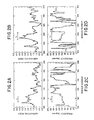
- AMPHI was used to analyze the gp120 envelope protein of the HTLV-IIIb isolates of HIV for sequences consistent with formation of amphipathic helices as potential T cell sites. Sites were ranked according to the apparent strength of helical amphipathicity as reflected in the Amphipathic Score, and frequencies were examined for consistency. Sites were further selected for occurrence in constant regions of gp120 (based on a comparison of the sequence of six isolates) and for absence of N-linked glycosylation sites. AMPHI parameters for the two most favorable sites are shown in Figure 2. Candidate T cell sites were selected by including appropriate flanking residues.
- Candidate T cell sites env T1 and env T2 were defined as residues 428 through 443 and 112 through 124, respectively.
- the standard epitope nomenclature employed consists of viral isolate, protein designation, site type, and assigned number or residue number (e.g. HTLV-III (bH10)env T1).
- Synthetic peptides corresponding to these sites were prepared by solid phase peptide synthesis.
- Peptides were synthesized using standard methods of solid phase peptide synthesis on a Vega 250 peptide synthesizer using double dicyclohexylcarbodiimide mediated couplings. HOBT preactivation couplings were performed when coupling Gln or Asn.
- the standard t-boc/benzyl amino acid protection strategy was employed with side chain protection of the following amino acids: Asp(O-benzyl), Glu(O-benzyl), His(tosyl), Lys(2-chlorobenzyloxycarbonyl), Ser(benzyl), Trp(formyl), Tyr(2,6-dichlorobenzyl).
- Native gp120 was purified by selective detergent extraction and immunoaffinity chromatography followed by dialysis.
- the recombinant proteins R10 and PB1 were produced by cloning restriction fragments KpnI(5923) to Bgl II(7197) or Pvu II(6659) to Bgl II(7197) from the BH10 clone of HTLV-IIIb into the Repligen Expression Vector (REV) followed by expression in E. coli and purification.
- Protein R10 contains residues 49 through 474 and PB1 residues 294 through 474 of the envelope protein.
- FIG. 3 panels A and B, shows the lymph node proliferative response of R10 immune mice tested with native gp120, recombinant proteins, and synthetic peptide env T1.
- a strong response was observed not only to the immunogen R10, but also to gp120. Therefore, the response was largely directed at envelope sequence and not at the irrelevant vector-derived flanking sequence encoded residues in the recombinant protein.
- the recombinant R10-fragment is an effective immunogen for priming for a response to the native gp120.
- the response to the synthetic peptide env T1 indicates that a significant component of the T cell response to the 425 residue R10 is in fact focused on the 16 residue env T1 site.
- mice immunized with env T1 peptide showed substantial immunity not only to the env T1 immunogen but also to the native gp120 as well as to the recombinant proteins.
- a 16-residue synthetic peptide selected on the basis of amphipathicity can elicit T cell immunity to the native AIDS virus protein.
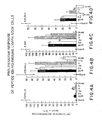
- H-2 disparate parental strains from which the F1 hybrids have been derived C57BL/6, C3H/HeJ, A.SW and BALB/c. Mice were immunized with env T1 peptide and studied with native and peptide antigens. As shown in figure 4, C57BL/6 ( H-2 b haplotype) was found be a low responder, whereas the other strains ( H-2 k , H-2 s , and H-2 d haplotypes) were intermediate or high responders to the env T1 peptide. The response to native gp120 paralleled that to the peptide.
- env T1 and env T2 share the hydrophobic Ile-Ile-Xxx-Yyy-Trp cluster on the hydrophobic face and the Lys on the hydrophilic face of the helix, but also the spatial relationship between these is identical. Gln and acidic amino acids (Glu, Asp) neighboring the Lys are observed in both cases as well.
- the poor reactivity to peptide 102-118 of sperm whale myoglobin which is derived from an unrelated protein and shares minimal homology with env T1 indicates that the property of being an amphipathic alpha-helical peptide is not sufficient for cross-reactivity.
- gp120, env T1 and env T2 were tested using lymph node cells immune to an unrelated antigen, sperm whale myoglobin, and were found to be non-stimulatory (data not shown).
- the one helper T cell site (from influenza virus) that has been characterized at the synthetic peptide level in man is in fact immunodominant in mice as well and has no amino acid sequence consistent with formation of a highly amphipathic alpha helix.
- T cell immunity may contribute in several ways to protection against HIV infection. Though AIDS progresses despite the presence of detectable antibody to viral proteins in most patients, low titer neutralizing antibody has been demonstrated in many such patients. Neutralizing titers are substantially higher in healthy AIDS related complex patients and in HIV antibody positive hemophiliacs. Whether this relationship is causal or simply correlative is as yet unknown. If these or any other antibodies are in fact protective, provision of optimum T cell help at the time of immunization as well as when faced with an infectious challenge would appear essential. Substantial T cell help should also be required for an effective cell mediated response to infected cells. NK cells have been shown to selectively kill HIV infected cells in vitro .
- a vaccine that primes helper T cells for augmentation of NK cell and possibly lymphokine activated killer cell activity is essential for an effective vaccine.
- Induction of virus-specific cytotoxic T lymphocyte (CTL) immunity which also requires helper T cells, is also desirable.
- CTL cytotoxic T lymphocyte
- the determinants recognized by CTL can in fact be defined by small peptides
- in vivo expression of antigens such as in a vaccinia or adenoviral vector may be required for efficient elicitation of a classical CTL response.
- the AMPHI algorithm was developed to identify helper T cell sites, and consequently its relevance to CTL specificity is unknown. However, it does successfully identify the two characterized sites in influenza nucleoprotein recognized by human and murine CTL.
- helper T cell immunity can be induced with short peptides as well or better than with native protein stands in sharp contast to the situation with B cell immunity for which tertiary structure is frequently important, and indicates that peptide vaccines aimed at T cell immunity are more successful than those aimed at antibody production.
- a synthetic peptide or recombinant fragment based construct one could selectively include important helper T cell sites, in multiple copies if desired, and exclude suppressor T cell sites which can blunt the immune response.
- Sites associated with specific functions or possible undesirable side effects such as the CD4 binding site(s), the site(s) mediating syncytia formation, or the neuroleukin homology site, can be systematically included or excluded.
- T cell sites identified here are potentially important components of an effective AIDS vaccine.
- the present invention includes a method of predicting which segments of a protein (along its entire sequence, if desired) are antigenic.
- the present invention is a method of determining which sites of an entire protein sequence are recognized by T-cells (activate or stimulate T-cells).
- Application of this method is limited only by knowledge of the amino acid sequences of a protein, i.e., can be applied to any pro tein in the protein data base of the National Biomedical Research Foundation or any protein whose sequence is subsequently published.
- the analysis can be done using the amino acid sequence translated from a DNA gene sequence, without ever isolating the protein.
- the background experiments which made this process possible comprise, in their entirety, an examination of a number of properties to determine if a particular property or properties is implicated in T-cell stimulation.
- T-cell antigenic sites based on the amphipathic helix model
- the optimum algorithm identifies 18 of 23 known sites (75% sensitivity), with a high degree of significance (p ⁇ 0.001).
- the success of the algorithm also shows that stable amphipathic structures such as amphipathic helices are fundamentally important in determining immunodominance.
- the optimized algorithm enables the predication of immunodominant T-cell sites on a protein. This prediction capability facilitates the rational design of synthetic vaccines, and facilitates other apprroaches to antigen specific T-cell recognition.
- the AMPHI algorithm was used to examine the HTLV-III envelope protein amino acid sequence for sites with periodic variation in the hydrophobicity consistent with formation of an amphipathic helix (alpha or 310). Overlapping blocks of 11 residues were examined and resultant parameters assigned to the middle residue. The results for the residue 100-200 and 400-500 regions encompassing the env T2 and T1 sites respectively appear on the left and right of Figure 2.
- the upper panels show the amphipathic index, a measure of intensity of amphipathicity, determined at a frequency of 100° or 120° per residue. The higher of the two is shown. The lower panels display the frequency where the maximum amphipathic signal is observed.
- the sites were selected based on their consistently high amphipathic indices with maxima in the helical frequency range.
- the amino acid sequence of the indicated sites are: env T2(112-124): His-Glu-Asp-Ile-Ile-Ser-Leu-Trp-Asp-Gln-Ser-Leu-Lys; env T1(428-443): Lys-Gln-Ile-Ile-Asn-Met-Trp-Gln-Glu-Val-Gly-Lys-Ala-Met-Tyr-Ala.
- Applying the algorithm is a major step in predicting the most probable immunodominant sites that show amphipathic helical potency.
- the number and length of sites along a specific protein depend on the hydrophobicity profile of that protein.
- the present invention prefers the use of three factors for grading purposes: a) amphipathic score (particularly useful when comparing segments of the same length); b) the rarity of proline in helices in general (except near the NH2-terminus), and in most of the helical antigenic sites in particular; and c) the appearance of lysine at the carboxyl end in a large number of helical antigenic sites. It has been found that lysine as the ultimate or penultimate C-terminal residue occurs much more frequently in immunodominant sites. In short, a preferred sequence contains amphipathic segments with proline, if present, only near the N-terminus, the lysine near the C-terminus.
- Another possible indicator is the presence of N-glycosylation sites--these sites are indicative of a less favorable candidate for an immunodominant site, because the T-cell epitope may be masked by the carbohydrate.
- the numbering sequence used in this invention corresponds to Ratner et al, Nature , 313:277-284 (1985).
- each segment has been shown by other methods to be a T-cell stimulation site.
- segment 231-250 segment 615-652 segment 307-331 segment 659-681 segment 335-357 segment 777-808 segment 553-574 segment 827-856
- segment 5-22 segment 148-162 segment 52-70 segment 284 - 309 segment 93-110 segment 360-376
- the numbering sequence used in this invention corresponds to Ratner et al, Nature , 313:277-284 (1985).
Landscapes
- Chemical & Material Sciences (AREA)
- Organic Chemistry (AREA)
- Health & Medical Sciences (AREA)
- Life Sciences & Earth Sciences (AREA)
- Biophysics (AREA)
- Biochemistry (AREA)
- Gastroenterology & Hepatology (AREA)
- General Health & Medical Sciences (AREA)
- Genetics & Genomics (AREA)
- Medicinal Chemistry (AREA)
- Molecular Biology (AREA)
- Proteomics, Peptides & Aminoacids (AREA)
- Virology (AREA)
- Peptides Or Proteins (AREA)
- Medicines Containing Antibodies Or Antigens For Use As Internal Diagnostic Agents (AREA)
Priority Applications (1)
| Application Number | Priority Date | Filing Date | Title |
|---|---|---|---|
| AT87311391T ATE92934T1 (de) | 1986-12-30 | 1987-12-23 | Synthetische peptide, die zellulaere immunitaet gegen den aids-virus und dessen proteine erzeugen. |
Applications Claiming Priority (4)
| Application Number | Priority Date | Filing Date | Title |
|---|---|---|---|
| US94793586A | 1986-12-30 | 1986-12-30 | |
| US947935 | 1986-12-30 | ||
| US1443087A | 1987-02-12 | 1987-02-12 | |
| US14430 | 1987-02-12 |
Publications (3)
| Publication Number | Publication Date |
|---|---|
| EP0273716A2 true EP0273716A2 (de) | 1988-07-06 |
| EP0273716A3 EP0273716A3 (en) | 1989-12-20 |
| EP0273716B1 EP0273716B1 (de) | 1993-08-11 |
Family
ID=26686083
Family Applications (1)
| Application Number | Title | Priority Date | Filing Date |
|---|---|---|---|
| EP87311391A Expired - Lifetime EP0273716B1 (de) | 1986-12-30 | 1987-12-23 | Synthetische Peptide, die zelluläre Immunität gegen den AIDS-Virus und dessen Proteine erzeugen |
Country Status (7)
| Country | Link |
|---|---|
| EP (1) | EP0273716B1 (de) |
| JP (1) | JPH0762031B2 (de) |
| AU (1) | AU592258B2 (de) |
| CA (1) | CA1340896C (de) |
| DE (1) | DE3787002T2 (de) |
| IL (1) | IL84980A (de) |
| WO (1) | WO1988005051A1 (de) |
Cited By (39)
| Publication number | Priority date | Publication date | Assignee | Title |
|---|---|---|---|---|
| BE1000811A4 (fr) * | 1986-08-20 | 1989-04-11 | Genetic Systems Corp | Anticorps monoclonaux, peptides et compositions les contenant, destinees au diagnostic et au traitement des infections par le virus hiv. |
| WO1989002277A3 (en) * | 1987-08-28 | 1989-05-18 | Univ Texas | Prophylaxis and therapy of acquired immunodeficiency syndrome |
| EP0279688A3 (de) * | 1987-02-20 | 1989-09-13 | Genentech, Inc. | Verfahren und Zubereitungen für die Verwendung von HIV-env-Polypeptiden und Antikörpern |
| WO1990003984A1 (en) * | 1988-10-03 | 1990-04-19 | Repligen Corporation | Hiv proteins and peptides useful in the diagnosis, prophylaxis or therapy of aids |
| EP0373070A1 (de) * | 1988-12-06 | 1990-06-13 | Centre National De La Recherche Scientifique | Verfahren zur Herstellung einer Bücherei peptidischer antigenischer Determinanten, daraus aufgebaute Peptide oder diese enthaltende antigenische Determinanten und Verwendung dieser Peptide, besonders zu diagnostischen Zwecken |
| EP0362909A3 (de) * | 1988-08-26 | 1990-11-14 | Akzo N.V. | Synthetische Polypeptide, immunochemisch aktiv mit HIV-Antikörpern |
| WO1990013564A1 (en) * | 1989-05-03 | 1990-11-15 | Connaught Laboratories Limited | Synthetic peptides for an hiv-1 vaccine |
| GB2236754A (en) * | 1989-10-12 | 1991-04-17 | Viral Technologies Inc | Peptide fragments of p17 protein of hiv |
| WO1991004273A3 (en) * | 1989-09-22 | 1991-05-02 | Idec Pharma Corp | Novel peptides associated with the cd4 binding region of gp120 and their methods of use |
| EP0328403A3 (de) * | 1988-02-12 | 1991-09-25 | United Biomedical Inc. | Synthetische vom HIV-GP120-env-Protein abgeleitete Peptide und ihre Anwendung |
| EP0400076A4 (en) * | 1988-01-26 | 1991-11-13 | Us Health | A synthetic antigen evoking anti-hiv response |
| EP0429477A4 (en) * | 1988-07-21 | 1991-11-13 | Us Health | Synthetic vaccine against aids virus |
| EP0491861A4 (en) * | 1989-09-20 | 1992-10-07 | Board Of Regents The University Of Texas System | Prophylaxis and therapy of acquired immunodeficiency syndrome |
| US5166050A (en) * | 1986-08-20 | 1992-11-24 | Bristol-Myers Squibb Company | Monoclonal antibodies and peptides useful in treating and diagnosing HIV infections |
| WO1992021377A1 (en) * | 1991-06-03 | 1992-12-10 | Syntello Inc. | Peptides for use in induction of t cell activation against hiv-1 |
| WO1992022577A1 (fr) * | 1991-06-17 | 1992-12-23 | Neovacs | Composes immunogenes a effet notamment anti-cytokine, procede de preparation, compositions pharmaceutiques et kits les renfermant |
| US5185147A (en) * | 1988-08-19 | 1993-02-09 | Cellular Products, Inc. | Short polypeptide sequences useful in the production and detection of antibodies against human immunodeficiency virus |
| EP0491844A4 (en) * | 1989-09-19 | 1993-02-17 | Medimmune, Inc. | Peptides including ctl epitopes of hiv proteins and use thereof |
| US5346989A (en) * | 1990-08-22 | 1994-09-13 | Syntello Vaccine Development Kb | Peptides for use in induction of T cell activation against HIV-1 |
| WO1995018855A3 (en) * | 1994-01-07 | 1995-10-19 | Pioneer Hi Bred Int | Synthetic antimicrobial peptides |
| EP0652764A4 (de) * | 1992-02-10 | 1995-12-27 | Univ Duke | Verwendung synthetischer peptide zur induktion der toleranz gegen t- und b-zell epitope von autoantigenen. |
| US5556744A (en) * | 1992-05-29 | 1996-09-17 | The Trustees Of The University Of Pennsylvania | Methods and compositions for diagnosing and treating certain HIV infected patients |
| US5562905A (en) * | 1988-04-26 | 1996-10-08 | E. I. Du Pont De Nemours And Company | Human immunodeficiency virus (hiv) env-coded peptide capable of eliciting hiv-inhibiting antibodies in mammals |
| US5603933A (en) * | 1993-08-31 | 1997-02-18 | Board Of Regents, The University Of Texas | CD4 peptides for binding to viral envelope proteins |
| EP0601108A4 (en) * | 1991-08-29 | 1997-03-19 | Us Gov Health & Human Serv | Multideterminant peptide antigens that stimulate helper t lymphocyte response to hiv in a range of human subjects. |
| US5714577A (en) * | 1996-01-26 | 1998-02-03 | University Of Pittsburgh | Antimicrobial peptides |
| US5763160A (en) * | 1988-02-12 | 1998-06-09 | United Biomedical, Inc. | Synthetic peptides and process of using same for the detection of antibodies to human immunodeficiency virus (HIV) gp120 envelope protein, diagnosis of AIDS and pre-AIDS conditions and as vaccines |
| US5820865A (en) * | 1988-01-26 | 1998-10-13 | The United States Of America As Represented By The Department Of Health And Human Services | Method to induce cytotoxic T Lymphocytes specific for a broad array of HIV-1 isolates using hybrid synthetic peptides |
| US5939074A (en) * | 1986-12-30 | 1999-08-17 | The United States Of America As Represented By The Department Of Health And Human Services | Multideterminant peptide antigens |
| US5976541A (en) * | 1988-01-26 | 1999-11-02 | The United States Of America As Represented By The Department Of Health And Human Services | Potent peptide for stimulation of cytotoxic T lymphocytes specific for the HIV-1 envelope |
| US6210873B1 (en) | 1987-08-28 | 2001-04-03 | Board Of Regents, The University Of Texas System | Methods and compositions for the priming of specific cytotoxic T-lymphocyte response |
| WO2000076537A3 (en) * | 1997-09-10 | 2001-05-03 | Us Health | Use of semi-allogeneic cell line-peptide complexes for the treatment of cancer, aids and other viral diseases |
| US6749856B1 (en) | 1997-09-11 | 2004-06-15 | The United States Of America, As Represented By The Department Of Health And Human Services | Mucosal cytotoxic T lymphocyte responses |
| EP1307130A4 (de) * | 2000-02-04 | 2005-01-12 | Beth Israel Hospital | Impfstoff gegen menschlichen immunschwächevirus |
| US7306804B2 (en) | 1998-11-17 | 2007-12-11 | Board Of Regents, The University Of Texas System | HIV-specific T-cell induction |
| US7563437B2 (en) | 2005-02-15 | 2009-07-21 | Thymon, Llc | Methods and compositions for impairing multiplication of HIV-1 |
| US7803524B2 (en) | 1994-02-23 | 2010-09-28 | Siemens Healthcare Diagnostics Products Gmbh | Antigenic HIV gp41 chimeric polypeptides comprising the MVP5180/91 epitope SKGKLIS |
| EP1849869A3 (de) * | 1994-10-20 | 2011-05-18 | Institut Pasteur | Nukleotidsequenzen retroviraler Antigene der VIH-1-Gruppe (oder -Untergruppe) 0 |
| US9399663B2 (en) * | 2014-02-24 | 2016-07-26 | Georgetown University | Competitive inhibitor of GP120 |
Families Citing this family (6)
| Publication number | Priority date | Publication date | Assignee | Title |
|---|---|---|---|---|
| US6479055B1 (en) | 1993-06-07 | 2002-11-12 | Trimeris, Inc. | Methods for inhibition of membrane fusion-associated events, including respiratory syncytial virus transmission |
| AU3774000A (en) * | 1999-03-29 | 2000-10-16 | David Bernstein | Conformationally constrained peptides |
| JP4419549B2 (ja) | 2003-07-18 | 2010-02-24 | 東レ株式会社 | 極細短繊維不織布および皮革様シート状物ならびにそれらの製造方法 |
| US8071540B2 (en) | 2007-07-13 | 2011-12-06 | University of Pittsburgh—of the Commonwealth System of Higher Education | Virus derived antimicrobial peptides |
| JP2023501385A (ja) | 2019-11-08 | 2023-01-18 | ユニバーシティ オブ ピッツバーグ - オブ ザ コモンウェルス システム オブ ハイヤー エデュケイション | 抗微生物ペプチドを含む組成物 |
| US12371463B2 (en) | 2021-04-20 | 2025-07-29 | University of Pittsburgh—of the Commonwealth System of Higher Education | Methods and compositions for treatment of antibiotic-resistant bacterial infections |
Family Cites Families (6)
| Publication number | Priority date | Publication date | Assignee | Title |
|---|---|---|---|---|
| US4554101A (en) * | 1981-01-09 | 1985-11-19 | New York Blood Center, Inc. | Identification and preparation of epitopes on antigens and allergens on the basis of hydrophilicity |
| US4689398A (en) * | 1984-06-20 | 1987-08-25 | Ortho Diagnostic Systems Inc. | HTLV test using synthetic peptides |
| WO1986001834A1 (en) * | 1984-09-19 | 1986-03-27 | The Regents Of The University Of California | Retroviral polypeptides associated with human cellular transformation |
| EP0387915B1 (de) * | 1984-10-18 | 1993-03-10 | Institut Pasteur | F Antigene vom menschlichen Immunodefizienz-Virus und deren Verwendungen |
| NZ213823A (en) * | 1984-10-26 | 1988-05-30 | Us Health | Producing human t-cell leukemia retrovirus envelope protein fragments in bacteria |
| US4629783A (en) * | 1985-04-29 | 1986-12-16 | Genetic Systems Corporation | Synthetic antigen for the detection of AIDS-related disease |
-
1987
- 1987-12-23 AU AU13657/88A patent/AU592258B2/en not_active Expired
- 1987-12-23 EP EP87311391A patent/EP0273716B1/de not_active Expired - Lifetime
- 1987-12-23 WO PCT/US1987/003471 patent/WO1988005051A1/en not_active Ceased
- 1987-12-23 JP JP63502098A patent/JPH0762031B2/ja not_active Expired - Fee Related
- 1987-12-23 DE DE87311391T patent/DE3787002T2/de not_active Expired - Lifetime
- 1987-12-29 CA CA000555480A patent/CA1340896C/en not_active Expired - Fee Related
- 1987-12-29 IL IL84980A patent/IL84980A/xx not_active IP Right Cessation
Non-Patent Citations (3)
| Title |
|---|
| CHEMICAL ABSTRACTS, Vol. 104, No. 5, February 3, 1986, page 290, Abstract 31295v, Columbus, Ohio, US; D. PAULETTI et al.: "Application of a modifies computer algorithm in determining potential antigenic determinants associated with the AIDS virus glycoprotein", & Anal. Biochem. 1985, 151(2), 540-6, whole Abstract. * |
| CHEMICAL ABSTRACTS, Vol. 107, No. 9, August 31, 1987, page 530, Abstract 75749n, Columbus, Ohio, US; K.B. CEASE et al.: "Helper T-cell antigenic site identification in the acquired immunodeficiency syndrome virus gp120 envelope protein and induction of immunity in mice to the native protein using a 16-residue synthetic peptide", & Proc. Natl. Acad. Sci. USA., 1987, 84(12), 4249-53, whole Abstract. * |
| Proc. Natl. Acad. Sci. USA, Vol. 82, No. 20, October 1985, pages 7048-7052; C. DeLISI et al.: "T-cell antigenic sites tend to be amphipathic structures", whole article. * |
Cited By (45)
| Publication number | Priority date | Publication date | Assignee | Title |
|---|---|---|---|---|
| US5166050A (en) * | 1986-08-20 | 1992-11-24 | Bristol-Myers Squibb Company | Monoclonal antibodies and peptides useful in treating and diagnosing HIV infections |
| BE1000811A4 (fr) * | 1986-08-20 | 1989-04-11 | Genetic Systems Corp | Anticorps monoclonaux, peptides et compositions les contenant, destinees au diagnostic et au traitement des infections par le virus hiv. |
| US5939074A (en) * | 1986-12-30 | 1999-08-17 | The United States Of America As Represented By The Department Of Health And Human Services | Multideterminant peptide antigens |
| EP0279688A3 (de) * | 1987-02-20 | 1989-09-13 | Genentech, Inc. | Verfahren und Zubereitungen für die Verwendung von HIV-env-Polypeptiden und Antikörpern |
| US6265539B1 (en) | 1987-08-28 | 2001-07-24 | The University Of Texas System The Board Of Regents | Prophylaxis and therapy of acquired immunodeficiency syndrome |
| WO1989002277A3 (en) * | 1987-08-28 | 1989-05-18 | Univ Texas | Prophylaxis and therapy of acquired immunodeficiency syndrome |
| US6210873B1 (en) | 1987-08-28 | 2001-04-03 | Board Of Regents, The University Of Texas System | Methods and compositions for the priming of specific cytotoxic T-lymphocyte response |
| US5976541A (en) * | 1988-01-26 | 1999-11-02 | The United States Of America As Represented By The Department Of Health And Human Services | Potent peptide for stimulation of cytotoxic T lymphocytes specific for the HIV-1 envelope |
| EP0400076A4 (en) * | 1988-01-26 | 1991-11-13 | Us Health | A synthetic antigen evoking anti-hiv response |
| US5820865A (en) * | 1988-01-26 | 1998-10-13 | The United States Of America As Represented By The Department Of Health And Human Services | Method to induce cytotoxic T Lymphocytes specific for a broad array of HIV-1 isolates using hybrid synthetic peptides |
| US5763160A (en) * | 1988-02-12 | 1998-06-09 | United Biomedical, Inc. | Synthetic peptides and process of using same for the detection of antibodies to human immunodeficiency virus (HIV) gp120 envelope protein, diagnosis of AIDS and pre-AIDS conditions and as vaccines |
| EP0328403A3 (de) * | 1988-02-12 | 1991-09-25 | United Biomedical Inc. | Synthetische vom HIV-GP120-env-Protein abgeleitete Peptide und ihre Anwendung |
| US5562905A (en) * | 1988-04-26 | 1996-10-08 | E. I. Du Pont De Nemours And Company | Human immunodeficiency virus (hiv) env-coded peptide capable of eliciting hiv-inhibiting antibodies in mammals |
| EP0429477A4 (en) * | 1988-07-21 | 1991-11-13 | Us Health | Synthetic vaccine against aids virus |
| US5185147A (en) * | 1988-08-19 | 1993-02-09 | Cellular Products, Inc. | Short polypeptide sequences useful in the production and detection of antibodies against human immunodeficiency virus |
| EP0362909A3 (de) * | 1988-08-26 | 1990-11-14 | Akzo N.V. | Synthetische Polypeptide, immunochemisch aktiv mit HIV-Antikörpern |
| WO1990003984A1 (en) * | 1988-10-03 | 1990-04-19 | Repligen Corporation | Hiv proteins and peptides useful in the diagnosis, prophylaxis or therapy of aids |
| EP0373070A1 (de) * | 1988-12-06 | 1990-06-13 | Centre National De La Recherche Scientifique | Verfahren zur Herstellung einer Bücherei peptidischer antigenischer Determinanten, daraus aufgebaute Peptide oder diese enthaltende antigenische Determinanten und Verwendung dieser Peptide, besonders zu diagnostischen Zwecken |
| WO1990006132A1 (fr) * | 1988-12-06 | 1990-06-14 | Centre National De La Recherche Scientifique (Cnrs) | Procede de preparation d'une librairie de determinants antigeniques peptidiques, nouveaux peptides constitues par ou comportant les determinants antigeniques obtenus et application des peptides, notamment au diagnostic |
| FR2640877A1 (de) * | 1988-12-06 | 1990-06-29 | Centre Nat Rech Scient | |
| WO1990013564A1 (en) * | 1989-05-03 | 1990-11-15 | Connaught Laboratories Limited | Synthetic peptides for an hiv-1 vaccine |
| EP0491844A4 (en) * | 1989-09-19 | 1993-02-17 | Medimmune, Inc. | Peptides including ctl epitopes of hiv proteins and use thereof |
| EP0491861A4 (en) * | 1989-09-20 | 1992-10-07 | Board Of Regents The University Of Texas System | Prophylaxis and therapy of acquired immunodeficiency syndrome |
| WO1991004273A3 (en) * | 1989-09-22 | 1991-05-02 | Idec Pharma Corp | Novel peptides associated with the cd4 binding region of gp120 and their methods of use |
| GB2236754A (en) * | 1989-10-12 | 1991-04-17 | Viral Technologies Inc | Peptide fragments of p17 protein of hiv |
| US5346989A (en) * | 1990-08-22 | 1994-09-13 | Syntello Vaccine Development Kb | Peptides for use in induction of T cell activation against HIV-1 |
| WO1992021377A1 (en) * | 1991-06-03 | 1992-12-10 | Syntello Inc. | Peptides for use in induction of t cell activation against hiv-1 |
| WO1992022577A1 (fr) * | 1991-06-17 | 1992-12-23 | Neovacs | Composes immunogenes a effet notamment anti-cytokine, procede de preparation, compositions pharmaceutiques et kits les renfermant |
| EP0601108A4 (en) * | 1991-08-29 | 1997-03-19 | Us Gov Health & Human Serv | Multideterminant peptide antigens that stimulate helper t lymphocyte response to hiv in a range of human subjects. |
| EP0652764A4 (de) * | 1992-02-10 | 1995-12-27 | Univ Duke | Verwendung synthetischer peptide zur induktion der toleranz gegen t- und b-zell epitope von autoantigenen. |
| US5556744A (en) * | 1992-05-29 | 1996-09-17 | The Trustees Of The University Of Pennsylvania | Methods and compositions for diagnosing and treating certain HIV infected patients |
| US5603933A (en) * | 1993-08-31 | 1997-02-18 | Board Of Regents, The University Of Texas | CD4 peptides for binding to viral envelope proteins |
| WO1995018855A3 (en) * | 1994-01-07 | 1995-10-19 | Pioneer Hi Bred Int | Synthetic antimicrobial peptides |
| US7803524B2 (en) | 1994-02-23 | 2010-09-28 | Siemens Healthcare Diagnostics Products Gmbh | Antigenic HIV gp41 chimeric polypeptides comprising the MVP5180/91 epitope SKGKLIS |
| EP1849869A3 (de) * | 1994-10-20 | 2011-05-18 | Institut Pasteur | Nukleotidsequenzen retroviraler Antigene der VIH-1-Gruppe (oder -Untergruppe) 0 |
| US5714577A (en) * | 1996-01-26 | 1998-02-03 | University Of Pittsburgh | Antimicrobial peptides |
| WO2000076537A3 (en) * | 1997-09-10 | 2001-05-03 | Us Health | Use of semi-allogeneic cell line-peptide complexes for the treatment of cancer, aids and other viral diseases |
| US6749856B1 (en) | 1997-09-11 | 2004-06-15 | The United States Of America, As Represented By The Department Of Health And Human Services | Mucosal cytotoxic T lymphocyte responses |
| US7306804B2 (en) | 1998-11-17 | 2007-12-11 | Board Of Regents, The University Of Texas System | HIV-specific T-cell induction |
| EP1307130A4 (de) * | 2000-02-04 | 2005-01-12 | Beth Israel Hospital | Impfstoff gegen menschlichen immunschwächevirus |
| US7078039B2 (en) | 2000-02-04 | 2006-07-18 | Duke University | Immunogenic composition |
| US7052699B2 (en) | 2000-02-04 | 2006-05-30 | Duke University | Immunogenic composition |
| US6982086B2 (en) | 2000-02-04 | 2006-01-03 | Duke University | Human immunodeficiency virus immunogenic composition |
| US7563437B2 (en) | 2005-02-15 | 2009-07-21 | Thymon, Llc | Methods and compositions for impairing multiplication of HIV-1 |
| US9399663B2 (en) * | 2014-02-24 | 2016-07-26 | Georgetown University | Competitive inhibitor of GP120 |
Also Published As
| Publication number | Publication date |
|---|---|
| DE3787002D1 (de) | 1993-09-16 |
| CA1340896C (en) | 2000-02-15 |
| WO1988005051A1 (en) | 1988-07-14 |
| DE3787002T2 (de) | 1993-11-25 |
| AU1365788A (en) | 1988-07-27 |
| EP0273716B1 (de) | 1993-08-11 |
| EP0273716A3 (en) | 1989-12-20 |
| JPH0762031B2 (ja) | 1995-07-05 |
| AU592258B2 (en) | 1990-01-04 |
| IL84980A0 (en) | 1988-06-30 |
| IL84980A (en) | 1993-06-10 |
| JPS63503227A (ja) | 1988-11-24 |
Similar Documents
| Publication | Publication Date | Title |
|---|---|---|
| EP0273716B1 (de) | Synthetische Peptide, die zelluläre Immunität gegen den AIDS-Virus und dessen Proteine erzeugen | |
| Haigwood et al. | Importance of hypervariable regions of HIV-1 gp120 in the generation of virus neutralizing antibodies | |
| US6265539B1 (en) | Prophylaxis and therapy of acquired immunodeficiency syndrome | |
| Hale et al. | T cell multideterminant regions in the human immunodeficiency virus envelope: toward overcoming the problem of major histocompatibility complex restriction | |
| Griffiths et al. | Hybrid human immunodeficiency virus Gag particles as an antigen carrier system: induction of cytotoxic T-cell and humoral responses by a Gag: V3 fusion | |
| US5081226A (en) | Synthetic peptides sharing sequence homology with the HIV envelope protein | |
| Hinkula et al. | Recognition of prominent viral epitopes induced by immunization with human immunodeficiency virus type 1 regulatory genes | |
| US5817318A (en) | Synthetic peptides for an HIV-1 vaccine | |
| US20100121029A1 (en) | Anti-hiv immunogenic formulation and process for preparation thereof | |
| Grundner et al. | Factors limiting the immunogenicity of HIV-1 gp120 envelope glycoproteins | |
| NZ230855A (en) | Principal neutralising domain of hiv variant, dna, vaccine, assay, antibodies and treatment | |
| US7169396B2 (en) | Reference clones and sequences for non-subtype B isolates of human immunodeficiency virus type 1 | |
| IL91007A (en) | Synthetic vaccine against aids virus | |
| Berzofsky | Development of artificial vaccines against HIV using defined epitopes | |
| CA2053921C (en) | Synthetic peptides for an hiv-1 vaccine | |
| US6210873B1 (en) | Methods and compositions for the priming of specific cytotoxic T-lymphocyte response | |
| Berzofsky | Mechanisms of T cell recognition with application to vaccine design | |
| Anderson et al. | Hypervariable epitope constructs as a means of accounting for epitope variability | |
| EP0601108B1 (de) | Peptid-antigene bestehend aus multi-determinanten, die die t-helfer lymphozyten-antwort gegen hiv in einem weiten bereich von betroffenen menschen stimulieren | |
| US7319000B1 (en) | Compositions and methods for eliciting immune or anti-infective responses | |
| EP0671947B1 (de) | Zusammensetzungen zum auslösen cytotoxischer t-lymphozyten gegen viren | |
| AU2002231510B2 (en) | Immunogenic formulations of variable peptidic epitopes and process for preparation thereof | |
| Estaquier et al. | Determination of B-cell epitopes of nef HIV-I protein: immunogenicity related to their structure | |
| US5882853A (en) | Method of evaluating HTLV-I-specific T cell responses | |
| Brown et al. | Synthetic peptides representing sequences within gp41 of HIV as immunogens for murine T-and B-cell responses |
Legal Events
| Date | Code | Title | Description |
|---|---|---|---|
| PUAI | Public reference made under article 153(3) epc to a published international application that has entered the european phase |
Free format text: ORIGINAL CODE: 0009012 |
|
| 17P | Request for examination filed |
Effective date: 19871230 |
|
| AK | Designated contracting states |
Kind code of ref document: A2 Designated state(s): AT BE CH DE FR GB IT LI LU NL SE |
|
| PUAL | Search report despatched |
Free format text: ORIGINAL CODE: 0009013 |
|
| AK | Designated contracting states |
Kind code of ref document: A3 Designated state(s): AT BE CH DE FR GB IT LI LU NL SE |
|
| 17Q | First examination report despatched |
Effective date: 19911205 |
|
| GRAA | (expected) grant |
Free format text: ORIGINAL CODE: 0009210 |
|
| AK | Designated contracting states |
Kind code of ref document: B1 Designated state(s): AT BE CH DE FR GB IT LI LU NL SE |
|
| REF | Corresponds to: |
Ref document number: 92934 Country of ref document: AT Date of ref document: 19930815 Kind code of ref document: T |
|
| REF | Corresponds to: |
Ref document number: 3787002 Country of ref document: DE Date of ref document: 19930916 |
|
| ITF | It: translation for a ep patent filed | ||
| ET | Fr: translation filed | ||
| EPTA | Lu: last paid annual fee | ||
| PLBE | No opposition filed within time limit |
Free format text: ORIGINAL CODE: 0009261 |
|
| STAA | Information on the status of an ep patent application or granted ep patent |
Free format text: STATUS: NO OPPOSITION FILED WITHIN TIME LIMIT |
|
| 26N | No opposition filed | ||
| EAL | Se: european patent in force in sweden |
Ref document number: 87311391.4 |
|
| EUG | Se: european patent has lapsed | ||
| REG | Reference to a national code |
Ref country code: GB Ref legal event code: IF02 |
|
| PGFP | Annual fee paid to national office [announced via postgrant information from national office to epo] |
Ref country code: AT Payment date: 20061204 Year of fee payment: 20 |
|
| PGFP | Annual fee paid to national office [announced via postgrant information from national office to epo] |
Ref country code: FR Payment date: 20061220 Year of fee payment: 20 |
|
| PGFP | Annual fee paid to national office [announced via postgrant information from national office to epo] |
Ref country code: NL Payment date: 20061221 Year of fee payment: 20 |
|
| PGFP | Annual fee paid to national office [announced via postgrant information from national office to epo] |
Ref country code: GB Payment date: 20061222 Year of fee payment: 20 |
|
| PGFP | Annual fee paid to national office [announced via postgrant information from national office to epo] |
Ref country code: SE Payment date: 20061227 Year of fee payment: 20 Ref country code: CH Payment date: 20061227 Year of fee payment: 20 |
|
| PGFP | Annual fee paid to national office [announced via postgrant information from national office to epo] |
Ref country code: IT Payment date: 20061231 Year of fee payment: 20 |
|
| PGFP | Annual fee paid to national office [announced via postgrant information from national office to epo] |
Ref country code: LU Payment date: 20070109 Year of fee payment: 20 |
|
| PGFP | Annual fee paid to national office [announced via postgrant information from national office to epo] |
Ref country code: DE Payment date: 20070131 Year of fee payment: 20 |
|
| PGFP | Annual fee paid to national office [announced via postgrant information from national office to epo] |
Ref country code: BE Payment date: 20070206 Year of fee payment: 20 |
|
| BE20 | Be: patent expired |
Owner name: THE *UNITED STATES OF AMERICA AS REPRESENTED BY TH Effective date: 20071223 |
|
| REG | Reference to a national code |
Ref country code: GB Ref legal event code: PE20 |
|
| PG25 | Lapsed in a contracting state [announced via postgrant information from national office to epo] |
Ref country code: NL Free format text: LAPSE BECAUSE OF EXPIRATION OF PROTECTION Effective date: 20071223 |
|
| REG | Reference to a national code |
Ref country code: CH Ref legal event code: PL |
|
| EUG | Se: european patent has lapsed | ||
| NLV7 | Nl: ceased due to reaching the maximum lifetime of a patent |
Effective date: 20071223 |
|
| PG25 | Lapsed in a contracting state [announced via postgrant information from national office to epo] |
Ref country code: GB Free format text: LAPSE BECAUSE OF EXPIRATION OF PROTECTION Effective date: 20071222 |