EP0277789A2 - Procédé pour déterminer la biomasse - Google Patents
Procédé pour déterminer la biomasse Download PDFInfo
- Publication number
- EP0277789A2 EP0277789A2 EP88300815A EP88300815A EP0277789A2 EP 0277789 A2 EP0277789 A2 EP 0277789A2 EP 88300815 A EP88300815 A EP 88300815A EP 88300815 A EP88300815 A EP 88300815A EP 0277789 A2 EP0277789 A2 EP 0277789A2
- Authority
- EP
- European Patent Office
- Prior art keywords
- biomass
- measuring
- bioreactor
- electric capacitance
- capacitance
- Prior art date
- Legal status (The legal status is an assumption and is not a legal conclusion. Google has not performed a legal analysis and makes no representation as to the accuracy of the status listed.)
- Granted
Links
Images


Classifications
-
- C—CHEMISTRY; METALLURGY
- C12—BIOCHEMISTRY; BEER; SPIRITS; WINE; VINEGAR; MICROBIOLOGY; ENZYMOLOGY; MUTATION OR GENETIC ENGINEERING
- C12M—APPARATUS FOR ENZYMOLOGY OR MICROBIOLOGY; APPARATUS FOR CULTURING MICROORGANISMS FOR PRODUCING BIOMASS, FOR GROWING CELLS OR FOR OBTAINING FERMENTATION OR METABOLIC PRODUCTS, i.e. BIOREACTORS OR FERMENTERS
- C12M41/00—Means for regulation, monitoring, measurement or control, e.g. flow regulation
- C12M41/30—Means for regulation, monitoring, measurement or control, e.g. flow regulation of concentration
- C12M41/36—Means for regulation, monitoring, measurement or control, e.g. flow regulation of concentration of biomass, e.g. colony counters or by turbidity measurements
Definitions
- the present invention relates to a method for measuring biomass. More particularly, it relates to a method for measuring on-line the quantities of microorganisms or the quantities of animal or plant cells in a bioreactor.
- the present invention will play an important role in bioindustry and microbial industry relating to medicine, food, sewage disposal, etc.
- the bioreactor to produce useful substances by the aid of microorganisms, animal or plant cells, etc. is different from the ordinary reactor containing catalyst in that the biomass in the reactor changes from time to time. Therefore, measuring the biomass is very important for the design and control of bioreactor.
- a bioreactor in which microorganisms are not immobilized on a support but suspended in the solution it is possible to measure the quantities of the microorganisms by several methods. They include, for example, the measurement of turbidity with scattered light, the measurement of absorption spectrum by a double beam spectrometer, and the measurement of fine particles by a projecting light particle sensor.
- measuring methods are also used for plant cells and animal cells which have a larger volume than microorganisms and tend to form flocs. According to them, measurement is accomplished by weighing the dry weight, calculating the wet volume of cells, or counting the number of stained cells under a microscope. Whichever method may be used, it is necessary to take a sample of cells from the reactor or culture tank. This leads to the possibility of contamination with infectious microbes, and contamination often forces one to abandon an expensive culture medium.
- An additional disadvantage of these measuring methods is that the result of measurement such as the quantity of cells cannot be used for the on-line control of the culture equipment.
- a method for rapidly and accurately measuring on-line the biomass such as microorganisms and animal or plant cells in a bioreactor. Accordingly, it is an object of the present invention to provide a method for measuring a biomass which comprises measuring an electric capacitance (dielectric permitivity) across at least one pair of electrodes attached to a bioreactor, and thereby continuously measuring a biomass of organisms in the bioreactor according to the electric capacitance (dielectric permitivity) measured.
- a cell of a living organism is composed of cytoplasma containing a cell nucleus etc. and a cell membrane surrounding the cytoplasma.
- the cell membrane is composed mainly of lipids and hence it has a very high electric resistance. Therefore, a bioreactor is regarded as an oil/water emulsion system which is composed of an electrolyte (substrate containing ions) and oil droplets (microorganisms) dispersed therein.
- the emulsion system has been theoretically elucidated by Hanai et al. (See “Emarujon no Kagaku” (Science of Emulsion) [III] and "Chori Kagaku” (Science of Cooking), vol. 7 No. 1, 1974.) By the application of Hanai's theory, it is possible to analyze the state of oil in an oil/water emulsion (for example, the ratio of the volume occupied by oil).
- the present inventors conducted a series of experiments with microorganisms and animal and plant cells. It was found from the experiments that the electric capacitance at frequencies in a certain range increases in proportion to the biomass such as microorganisms and plant or animal cells.
- the electric capacitance is affected by the shape of electrodes and culture equipment and other factors.
- the actual electric capacitance is obtained by subtracting the thus obtained value from the value measured on a bioreactor containing living organisms. In the presence of living organisms, the electric capacitance increases over a broad frequency range from several kHz to several MHz, the range varying depending on the ion concentration in the given environment and the kind of objects to be measured. If a frequency at which the electric capacitance changes most according to biomass is previously established, it is possible to calculate a biomass from an electric capacitance measured.
- the method of the present invention permits one to measure a biomass on-line without having to sample living organisms to be measured.
- the measurement of electric capacitance is accomplished by the aid of at least one pair of parallel electrodes attached to a culture tank (vessel) containing living organisms.
- a culture tank containing living organisms.
- A' preferred measuring system is shown in Fig. 1. Referring to Fig. 1, there is shown a culture tank 2 which holds living organisms and has a pair of electrodes 1 .
- the living organism to be measured may be present in any state. For example, they may be immobilized, flocced, or suspended. These states may be present alone or in combination. Immobilization may be accomplished by entrapment or attachment.
- the culture tank is enclosed by a shield 4 which is not essential but desirable.
- the electric capacitance is measured by the aid of an apparatus 5 (such as LCR meter) for measuring dielectric permitivity.
- the apparatus 5 may be of fixed-frequency type or variable-frequency type. It should preferably by one which is capable of measuring electric capacitance at a plurality of frequencies.
- the results of measurements may be converted into the value of biomass by manual calculations or by automatic calculations by a computer 6 connected to the apparatus. In the case where the living organisms or cells are in the form of suspension, measurement can be accomplished by placing the paired electrodes in the culture medium.
- the measuring method can also be applied to living organisms or cells immobilized in the usual way by the aid of an immobilizing agent such as polyacrylamide, polyacrylate, polystyrene, polyvinyl alcohol, photosensitive resin, and other resins; calcium alginate, ⁇ -carrageenan, cellulose, dextran, and other polysaccharides; collagen and other proteins.
- an immobilizing agent such as polyacrylamide, polyacrylate, polystyrene, polyvinyl alcohol, photosensitive resin, and other resins; calcium alginate, ⁇ -carrageenan, cellulose, dextran, and other polysaccharides; collagen and other proteins.
- the measuring method can also be applied to cells attached to or grown on the surface of plastics beads such as "Cytodex" produced by Pharmacia Co., Ltd.
- the apparatus 5 for measuring electric capacitance is not limited to a specific type in the present invention.
- the quantity of yeast immobilized with calcium alginate was measured dielectrically in the following manner. At first an MY medium of the composition as shown in Table 1 was prepared, and 10 ml of the medium was placed in a test tube, followed by steam sterilization in the usual way.
- the medium was inoculated with Saccharomyces cerevisiae IFO-0224 and standing culture was carried out at 28°C for about 60 hours.
- the yeast was transplanted to 150 ml of separately prepared MY medium, and shaking culture was carried out for about 30 hours.
- the culture was collected by centrifugal separation (2000 rpm, 10 min).
- the yeast paste (2.5 ml) was diluted two-fold with the culture medium, and the dilution was mixed with 5 ml of 2% solution of sodium alginate.
- the mixture was added dropwise to a 0.1 M solution of calcium chloride through an injection needle. Thus there were obtained beads of immobilized yeast. It was estimated that the beads contain 25% of yeast.
- the electric capacitance of each sample (containing 2.5%, 5%, 10%, 15%, 25%, and 0% of yeast) was plotted by using a computer as shown in Fig. 2.
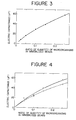
- the relationship between the quantity of yeast and the electric capacitance at a frequency of 300 kHz was obtained from Fig. 2, and the result is plotted as shown in Fig. 3. It is noted from Fig. 3 that there exists a close relationship between the quantity of yeast and the electric capacitance. This relationship makes it possible to measure the quantity of yeast by the electric capacitance.
- the quantities of immobilized bacteria and fungi were measured dielectrically in the following manner.
- glucose bouillon medium of the composition as shown in Table 2 was prepared, and the medium was inoculated with Escherichia coli IFO 3366, followed by shaking culture at 37°C for 24 hours. The culture was collected for the subsequent experiment. The samples for measurement were prepared in the same manner as in Example 1.
- a potato dextrose medium of the composition as shown in Table 3 was prepared, and the medium was inoculated with Aspergillus oryzae IFO 4176, followed by shaking culture at 28°C. The culture was collected for the subsequent experiment. The samples for measurement were prepared in the same manner as in Example 1.
- Immobilization in this example was carried out in the following three methods.
- (1) Immobilization with a photosensitive resin A suspension of microorganisms was mixed with a photocurable resin solution (ENTG-3800), a photopolymerization initiator S, and a molding auxiliary (all made by Kansai Paint Co., Ltd.) in the ratio shown in Table 4.
- the resulting mixture was added dropwise to a 0.3 M solution of calcium chloride through an injection needle, to yield beads containing microorganisms.
- the beads were transferred to a Petri dish and irradiated with ultraviolet rays for 5 minutes to give immobilized beads.
- (2) Immobilization with ⁇ -carrageenan was carried out in the usual way. (See A., Nguyan and J.H.
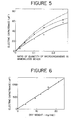
- Fig. 4 shows the results of experiments with bacteria and fungi immobilized with calcium alginate under the above-mentioned conditions.
- Fig.5 shows the results of experiments with yeast immobilized with ⁇ -carrageenan, polyacrylamide, or photosensitive resin. It is noted from Figs. 4 and 5 that there exists a close relationship between the quantity of microorganisms in the sample and the electric capacitance.
- a basal medium of the composition as shown in Table 5 which is commonly used for propagation and culture of plant cells. (See “Manual for Plant Cell Culture", issued by Kodansha, Japan, 1984) To this basal medium were added 5 ⁇ 10 ⁇ 5 M of naphthalene acetic acid and 1 ⁇ 10 ⁇ 5 M of benzyladenine. The medium was dispensed in 100 ml portions into 500-ml Erlenmeyer flasks, followed by sterilization at 120°C for 15 minutes. To the medium was transplanted 10 ml of previously cultured cells of Sesamum indicum L. The culture was carried out at 28°C with stirring at 75 rpm under the light of 12,000 lux.
- Fig. 6 shows the relationship between the quantity of plant cells (dry basis) and the electric capacitance at a frequency of 3 kHz. It is noted from Fig. 6 that there exists an almost linear relationship between the quantity of cells in the sample and the electric capacitance.
- a cell strain (K-562) of myeloid leukemia of human origin was cultured according to the method commonly used for the culture of animal cells. (See “Manual for Cell Culture” issued by Kodansha.)
- a culture medium was prepared by adding 10% of fetal bovine serum to RPMI-1640 medium (made by Dainippon Pharmaceutical Co., Ltd., Japan) which is in general use. This culture medium was dispensed in 10 ml portions into plastics dishes, 10 cm in diameter, for cell culture. To the dispensed medium were transplanted the above-mentioned cells in a concentration of 1 x 10⁵ cells per ml.
- Standing culture was carried out at 37°C for 4 days in an incubator containing 5% of carbon dioxide gas.
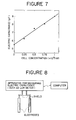
- Fig. 7 shows the relationship between the electric capacitance and the number (concentration) of cells. It is noted from Fig. 7 that there exists an almost linear relationship between the number of cells in each culture medium and the electric capacitance.
- a liquid sample was taken from the aeration tank of a sewage disposal plant. After separation into precipitates and supernatant liquid, they were mixed again in different ratios to prepare samples each containing a different amount of suspended solids (SS).
- the electric capacitance of each sample was measured by immersing the electrodes as shown in Fig. 8 in the sample. For some samples, the electric capacitance was measured in the aerated state.
- the sample underwent washing with water and centrifugal precipitation (3000 rpm for 5 min) three times each for the removal of soluble matters and floating matters such as broken pieces of bacteria.
- MLSS and MLVSS were determined according to the sewage water testing method.
- FIG. 9 shows the relationship between SS (MLSS and MLVSS) and the electric capacitance expressed by the difference between the value measured at a frequency of 30 kHz and the value measured at a frequency of 10 MHz. It is noted from Fig. 8 that there exists an almost linear relationship between the quantity of bacteria in sludge and the electric capacitance.
- a liquid sample was taken from a sewage disposal plant for industrial effluent containing starch. After separation into precipitates and supernatant liquid, they were mixed again in different ratios to prepare two each of samples, each containing a different amount of suspended solids (SS).
- the electric capacitance (at 30 kHz) of one set of samples was measured by immersing the electrodes as shown in Fig. 8 in the sample. The same procedure was repeated for the same set of samples after the cell membrane of the bacteria was destroyed by a hydrolase. The difference of the two values was obtained.
- the other set of samples underwent washing with water and centrifugal precipitation (3000 rpm for 5 min) three times each.
- MLSS was determined according to the sewage water testing method.
- Fig. 10 shows the relationship between MLSS and the electric capacitance measured at a frequency of 30 kHz. It is noted from Fig.10 that there exists an almost linear relationship between the quantity of bacteria in sludge and the electric capacitance.
- the present invention has made it possible for the first time to measure the biomass of microorganisms and animal and plant cells, which could not be measured by the conventional method without destroying the system, on account of its entirely new idea of measuring the electric capacitance.
- the present invention permits one to measure on-line the quantities of microorganisms, animal cells or plant cells without having to take samples from a bioreactor or culture tank. Because of its capability to measure the quantities of microorganisms, animal or plant cells without destroying them, the method of the present invention will find general use in biotechnology, vaccine manufacturing, experiments with microorganisms, animal or plant cells, and many other fields.
- the material may be passed between electrodes and the capacitance of the material may be continuously measured as it passes the electrodes.
Landscapes
- Chemical & Material Sciences (AREA)
- Organic Chemistry (AREA)
- Health & Medical Sciences (AREA)
- Life Sciences & Earth Sciences (AREA)
- Engineering & Computer Science (AREA)
- Bioinformatics & Cheminformatics (AREA)
- Zoology (AREA)
- Wood Science & Technology (AREA)
- Microbiology (AREA)
- Sustainable Development (AREA)
- Biotechnology (AREA)
- Biomedical Technology (AREA)
- Biochemistry (AREA)
- General Engineering & Computer Science (AREA)
- General Health & Medical Sciences (AREA)
- Genetics & Genomics (AREA)
- Analytical Chemistry (AREA)
- Measuring Or Testing Involving Enzymes Or Micro-Organisms (AREA)
Priority Applications (1)
| Application Number | Priority Date | Filing Date | Title |
|---|---|---|---|
| AT88300815T ATE76436T1 (de) | 1987-02-04 | 1988-02-01 | Verfahren zur messung von biomasse. |
Applications Claiming Priority (6)
| Application Number | Priority Date | Filing Date | Title |
|---|---|---|---|
| JP62022481A JPH07117511B2 (ja) | 1987-02-04 | 1987-02-04 | 菌体量の計測方法 |
| JP22481/87 | 1987-02-04 | ||
| JP62224018A JPH069519B2 (ja) | 1987-09-09 | 1987-09-09 | 動物および植物細胞量の計測方法 |
| JP224018/87 | 1987-09-09 | ||
| JP27906087A JPH01124399A (ja) | 1987-11-06 | 1987-11-06 | 懸濁液中の菌体量の計測方法 |
| JP279060/87 | 1987-11-06 |
Publications (3)
| Publication Number | Publication Date |
|---|---|
| EP0277789A2 true EP0277789A2 (fr) | 1988-08-10 |
| EP0277789A3 EP0277789A3 (en) | 1988-10-05 |
| EP0277789B1 EP0277789B1 (fr) | 1992-05-20 |
Family
ID=27283858
Family Applications (1)
| Application Number | Title | Priority Date | Filing Date |
|---|---|---|---|
| EP88300815A Expired - Lifetime EP0277789B1 (fr) | 1987-02-04 | 1988-02-01 | Procédé pour déterminer la biomasse |
Country Status (2)
| Country | Link |
|---|---|
| EP (1) | EP0277789B1 (fr) |
| DE (1) | DE3871168D1 (fr) |
Cited By (10)
| Publication number | Priority date | Publication date | Assignee | Title |
|---|---|---|---|---|
| WO1999017124A1 (fr) * | 1997-09-27 | 1999-04-08 | The University Of Wales, Aberystwyth | Mesure de la capacite d'un milieu dielectrique |
| EP1046905A1 (fr) * | 1997-03-06 | 2000-10-25 | Nte, S.A. | Procédé et dispositif de mesure de la composition et de la concentration de la biomasse |
| EP1138758A1 (fr) * | 2000-03-27 | 2001-10-04 | Nte, S.A. | Sonde, cellule et procédé de mesure de la concentration et de la composition d'une biomasse |
| WO2001027591A3 (fr) * | 1999-10-11 | 2002-08-01 | Christoph Bittner | Procede et dispositif pour caracteriser un liquide de culture |
| EP1085316A3 (fr) * | 1999-09-15 | 2002-12-11 | Aber Instruments Limited | Détection de changements de l'état de cellules |
| ES2183677A1 (es) * | 1997-03-06 | 2003-03-16 | Nte Sa | Mejoras en la patente n-* 9700500 relativa a un metodo y aparato para medir la concentracion y composicion de biomasa. |
| FR2835921A1 (fr) * | 2002-02-11 | 2003-08-15 | Gervais Danone Sa | Utilisation d'une sonde capacitive pour determiner la biomasse de bacteries lactiques |
| EP2574660A1 (fr) * | 2011-09-29 | 2013-04-03 | Kiestra Lab Automation Drachten B.V. | Procédé de capture de matériau de cellules et ensemble pour effectuer ce procédé |
| US8815574B2 (en) | 2004-12-27 | 2014-08-26 | Becton, Dickinson And Company | Detection method and apparatus for detecting microbial growth |
| CZ308349B6 (cs) * | 2018-12-06 | 2020-06-10 | Technická univerzita v Liberci | Vyvažovací systém robotického ramene manipulátoru |
Families Citing this family (1)
| Publication number | Priority date | Publication date | Assignee | Title |
|---|---|---|---|---|
| ES2340118B1 (es) * | 2008-01-16 | 2011-04-04 | Consejo Superior De Investigaciones Cientificas (50%) | Dispositivo y procedimiento para medir concentracion de biomasa, y uso de un elemento electronico chip para medir dicha concentracion de biomasa. |
Family Cites Families (5)
| Publication number | Priority date | Publication date | Assignee | Title |
|---|---|---|---|---|
| DE2412165A1 (de) * | 1974-03-14 | 1975-09-25 | Paul J Dipl Ing Metzger | Messgeraet zur messung der konzentration von feststoffen in suspension |
| GB2136130B (en) * | 1983-02-28 | 1987-02-11 | Theodore Henry Krueger | Chemical assay systems and methods |
| GB8516912D0 (en) * | 1985-07-04 | 1985-08-07 | Johnson Matthey Plc | Detecting growth of micro-organisms |
| GB8622747D0 (en) * | 1986-09-22 | 1986-10-29 | Ici Plc | Determination of biomass |
| GB8622748D0 (en) * | 1986-09-22 | 1986-10-29 | Ici Plc | Determination of biomass |
-
1988
- 1988-02-01 DE DE8888300815T patent/DE3871168D1/de not_active Expired - Fee Related
- 1988-02-01 EP EP88300815A patent/EP0277789B1/fr not_active Expired - Lifetime
Cited By (17)
| Publication number | Priority date | Publication date | Assignee | Title |
|---|---|---|---|---|
| EP1046905A1 (fr) * | 1997-03-06 | 2000-10-25 | Nte, S.A. | Procédé et dispositif de mesure de la composition et de la concentration de la biomasse |
| ES2183677A1 (es) * | 1997-03-06 | 2003-03-16 | Nte Sa | Mejoras en la patente n-* 9700500 relativa a un metodo y aparato para medir la concentracion y composicion de biomasa. |
| WO1999017124A1 (fr) * | 1997-09-27 | 1999-04-08 | The University Of Wales, Aberystwyth | Mesure de la capacite d'un milieu dielectrique |
| US6496020B1 (en) | 1997-09-27 | 2002-12-17 | University Of Wales Aberystwyth | Method and apparatus for capacitance measurement of a dielectric medium utilizing the ratio of capacitance measurement made at different frequencies |
| EP1085316A3 (fr) * | 1999-09-15 | 2002-12-11 | Aber Instruments Limited | Détection de changements de l'état de cellules |
| WO2001027591A3 (fr) * | 1999-10-11 | 2002-08-01 | Christoph Bittner | Procede et dispositif pour caracteriser un liquide de culture |
| US6905838B1 (en) | 1999-10-11 | 2005-06-14 | Innovatis Ag | Method and device for characterizing a culture liquid |
| EP1138758A1 (fr) * | 2000-03-27 | 2001-10-04 | Nte, S.A. | Sonde, cellule et procédé de mesure de la concentration et de la composition d'une biomasse |
| WO2003069334A1 (fr) * | 2002-02-11 | 2003-08-21 | Compagnie Gervais Danone | Utilisation d'une sonde capacitive pour déterminer la biomasse de bactéries de petite taille |
| FR2835921A1 (fr) * | 2002-02-11 | 2003-08-15 | Gervais Danone Sa | Utilisation d'une sonde capacitive pour determiner la biomasse de bacteries lactiques |
| US8815574B2 (en) | 2004-12-27 | 2014-08-26 | Becton, Dickinson And Company | Detection method and apparatus for detecting microbial growth |
| US9400272B2 (en) | 2004-12-27 | 2016-07-26 | Becton, Dickinson And Company | Detection method and apparatus for detecting microbial growth |
| EP1839044B1 (fr) * | 2004-12-27 | 2017-06-07 | Becton Dickinson and Company | Système pour la détermination de la présence/absence de microbes dans un échantillon |
| EP2574660A1 (fr) * | 2011-09-29 | 2013-04-03 | Kiestra Lab Automation Drachten B.V. | Procédé de capture de matériau de cellules et ensemble pour effectuer ce procédé |
| WO2013048249A1 (fr) * | 2011-09-29 | 2013-04-04 | Kiestra Lab Automation Drachten B.V. | Procédé pour prélever du matériel cellulaire et ensemble pour mettre en œuvre ledit procédé |
| US9677044B2 (en) | 2011-09-29 | 2017-06-13 | BD Keistra B.V. | Method for picking up cell material and assembly for performing said method |
| CZ308349B6 (cs) * | 2018-12-06 | 2020-06-10 | Technická univerzita v Liberci | Vyvažovací systém robotického ramene manipulátoru |
Also Published As
| Publication number | Publication date |
|---|---|
| DE3871168D1 (de) | 1992-06-25 |
| EP0277789A3 (en) | 1988-10-05 |
| EP0277789B1 (fr) | 1992-05-20 |
Similar Documents
| Publication | Publication Date | Title |
|---|---|---|
| US5182193A (en) | Method for measuring biomass | |
| CA1125152A (fr) | Dosage selectif dans des cellules somatiques et microbiennes viables | |
| Kell et al. | Real-time monitoring of cellular biomass: methods and applications | |
| EP0277789B1 (fr) | Procédé pour déterminer la biomasse | |
| EP0073773B1 (fr) | Perfusion-culture de cellules animales et material prevu a cet effet | |
| Junker et al. | On-line and in-situ monitoring technology for cell density measurement in microbial and animal cell cultures | |
| Markx et al. | Dielectric spectroscopy as a novel and convenient tool for the study of the shear sensitivity of plant cells in suspension culture | |
| Amory et al. | Application of XPS to the surface analysis of yeast cells | |
| Clarke et al. | Monitoring reactor biomass | |
| EP1529213B1 (fr) | Procede et dispositif permettant de determiner le nombre de cellules vivantes dans un fluide d'essai | |
| Smart et al. | Effect of physiological stress on the surface properties of brewing yeasts | |
| CN1260486A (zh) | 酵母浓度(生物量浓度)的检测方法和仪器 | |
| EP0029815A1 (fr) | Récipient pour la culture de cellules | |
| CN101477105A (zh) | 高盐工业废水bod的快速测定方法 | |
| Clark-Walker | Development of respiration and mitochondria in Mucor genevensis after anaerobic growth: absence of glucose repression | |
| JPH0569462B2 (fr) | ||
| JPH069519B2 (ja) | 動物および植物細胞量の計測方法 | |
| JPS63191046A (ja) | 菌体量の計測方法 | |
| JPH02114163A (ja) | 生物培養容器 | |
| Ramsay et al. | Rapid bioelectrochemical methods for the detection of living microorganisms | |
| RU2840963C1 (ru) | Способ получения биорецепторного элемента в виде биопленки на основе микроорганизмов для электрода биосенсорного аналитического устройства и биосенсорное аналитическое устройство для детекции уровня загрязнения воды биоразлагаемыми органическими соединениями | |
| RU2401308C2 (ru) | Способ определения количества микробиологических объектов в процессе их культивирования | |
| RU2800373C1 (ru) | Устройство для экспресс-оценки количества легкоокисляемых органических веществ по индексу биохимического потребления кислорода | |
| CN119446305A (zh) | 一种基于受控堆肥条件下的需氧生物分解试验结果的线性外推法分析评价塑料抗降解性能的方法 | |
| Zakharov et al. | A computer-assisted biomonitoring test system |
Legal Events
| Date | Code | Title | Description |
|---|---|---|---|
| PUAI | Public reference made under article 153(3) epc to a published international application that has entered the european phase |
Free format text: ORIGINAL CODE: 0009012 |
|
| 17P | Request for examination filed |
Effective date: 19880206 |
|
| AK | Designated contracting states |
Kind code of ref document: A2 Designated state(s): AT CH DE FR GB IT LI NL SE |
|
| PUAL | Search report despatched |
Free format text: ORIGINAL CODE: 0009013 |
|
| AK | Designated contracting states |
Kind code of ref document: A3 Designated state(s): AT CH DE FR GB IT LI NL SE |
|
| 17Q | First examination report despatched |
Effective date: 19890516 |
|
| GRAA | (expected) grant |
Free format text: ORIGINAL CODE: 0009210 |
|
| AK | Designated contracting states |
Kind code of ref document: B1 Designated state(s): AT CH DE FR GB IT LI NL SE |
|
| REF | Corresponds to: |
Ref document number: 76436 Country of ref document: AT Date of ref document: 19920615 Kind code of ref document: T |
|
| ITF | It: translation for a ep patent filed | ||
| ET | Fr: translation filed | ||
| REF | Corresponds to: |
Ref document number: 3871168 Country of ref document: DE Date of ref document: 19920625 |
|
| PLBE | No opposition filed within time limit |
Free format text: ORIGINAL CODE: 0009261 |
|
| STAA | Information on the status of an ep patent application or granted ep patent |
Free format text: STATUS: NO OPPOSITION FILED WITHIN TIME LIMIT |
|
| 26N | No opposition filed | ||
| EAL | Se: european patent in force in sweden |
Ref document number: 88300815.3 |
|
| PGFP | Annual fee paid to national office [announced via postgrant information from national office to epo] |
Ref country code: CH Payment date: 19980205 Year of fee payment: 11 |
|
| PGFP | Annual fee paid to national office [announced via postgrant information from national office to epo] |
Ref country code: AT Payment date: 19980226 Year of fee payment: 11 |
|
| PGFP | Annual fee paid to national office [announced via postgrant information from national office to epo] |
Ref country code: NL Payment date: 19980228 Year of fee payment: 11 |
|
| PG25 | Lapsed in a contracting state [announced via postgrant information from national office to epo] |
Ref country code: AT Free format text: LAPSE BECAUSE OF NON-PAYMENT OF DUE FEES Effective date: 19990201 |
|
| PG25 | Lapsed in a contracting state [announced via postgrant information from national office to epo] |
Ref country code: LI Free format text: LAPSE BECAUSE OF NON-PAYMENT OF DUE FEES Effective date: 19990228 Ref country code: CH Free format text: LAPSE BECAUSE OF NON-PAYMENT OF DUE FEES Effective date: 19990228 |
|
| PG25 | Lapsed in a contracting state [announced via postgrant information from national office to epo] |
Ref country code: NL Free format text: LAPSE BECAUSE OF NON-PAYMENT OF DUE FEES Effective date: 19990901 |
|
| REG | Reference to a national code |
Ref country code: CH Ref legal event code: PL |
|
| PGFP | Annual fee paid to national office [announced via postgrant information from national office to epo] |
Ref country code: DE Payment date: 20010122 Year of fee payment: 14 |
|
| PGFP | Annual fee paid to national office [announced via postgrant information from national office to epo] |
Ref country code: GB Payment date: 20010131 Year of fee payment: 14 |
|
| PGFP | Annual fee paid to national office [announced via postgrant information from national office to epo] |
Ref country code: SE Payment date: 20010206 Year of fee payment: 14 |
|
| PGFP | Annual fee paid to national office [announced via postgrant information from national office to epo] |
Ref country code: FR Payment date: 20010213 Year of fee payment: 14 |
|
| REG | Reference to a national code |
Ref country code: GB Ref legal event code: IF02 |
|
| PG25 | Lapsed in a contracting state [announced via postgrant information from national office to epo] |
Ref country code: GB Free format text: LAPSE BECAUSE OF NON-PAYMENT OF DUE FEES Effective date: 20020201 |
|
| PG25 | Lapsed in a contracting state [announced via postgrant information from national office to epo] |
Ref country code: SE Free format text: LAPSE BECAUSE OF NON-PAYMENT OF DUE FEES Effective date: 20020202 |
|
| PG25 | Lapsed in a contracting state [announced via postgrant information from national office to epo] |
Ref country code: DE Free format text: LAPSE BECAUSE OF NON-PAYMENT OF DUE FEES Effective date: 20020903 |
|
| GBPC | Gb: european patent ceased through non-payment of renewal fee |
Effective date: 20020201 |
|
| EUG | Se: european patent has lapsed |
Ref document number: 88300815.3 |
|
| PG25 | Lapsed in a contracting state [announced via postgrant information from national office to epo] |
Ref country code: FR Free format text: LAPSE BECAUSE OF NON-PAYMENT OF DUE FEES Effective date: 20021031 |
|
| REG | Reference to a national code |
Ref country code: FR Ref legal event code: ST |
|
| PG25 | Lapsed in a contracting state [announced via postgrant information from national office to epo] |
Ref country code: IT Free format text: LAPSE BECAUSE OF NON-PAYMENT OF DUE FEES;WARNING: LAPSES OF ITALIAN PATENTS WITH EFFECTIVE DATE BEFORE 2007 MAY HAVE OCCURRED AT ANY TIME BEFORE 2007. THE CORRECT EFFECTIVE DATE MAY BE DIFFERENT FROM THE ONE RECORDED. Effective date: 20050201 |