EP0278112A2 - Gentechnologisch hergestellter pankreatischer sekretorischer Trypsininhibitor und seine Varianten - Google Patents
Gentechnologisch hergestellter pankreatischer sekretorischer Trypsininhibitor und seine Varianten Download PDFInfo
- Publication number
- EP0278112A2 EP0278112A2 EP87119221A EP87119221A EP0278112A2 EP 0278112 A2 EP0278112 A2 EP 0278112A2 EP 87119221 A EP87119221 A EP 87119221A EP 87119221 A EP87119221 A EP 87119221A EP 0278112 A2 EP0278112 A2 EP 0278112A2
- Authority
- EP
- European Patent Office
- Prior art keywords
- asp
- psti
- glu
- asn
- tyr
- Prior art date
- Legal status (The legal status is an assumption and is not a legal conclusion. Google has not performed a legal analysis and makes no representation as to the accuracy of the status listed.)
- Granted
Links
Images



Classifications
-
- C—CHEMISTRY; METALLURGY
- C12—BIOCHEMISTRY; BEER; SPIRITS; WINE; VINEGAR; MICROBIOLOGY; ENZYMOLOGY; MUTATION OR GENETIC ENGINEERING
- C12N—MICROORGANISMS OR ENZYMES; COMPOSITIONS THEREOF; PROPAGATING, PRESERVING, OR MAINTAINING MICROORGANISMS; MUTATION OR GENETIC ENGINEERING; CULTURE MEDIA
- C12N15/00—Mutation or genetic engineering; DNA or RNA concerning genetic engineering, vectors, e.g. plasmids, or their isolation, preparation or purification; Use of hosts therefor
-
- C—CHEMISTRY; METALLURGY
- C07—ORGANIC CHEMISTRY
- C07K—PEPTIDES
- C07K14/00—Peptides having more than 20 amino acids; Gastrins; Somatostatins; Melanotropins; Derivatives thereof
- C07K14/81—Protease inhibitors
- C07K14/8107—Endopeptidase (E.C. 3.4.21-99) inhibitors
- C07K14/811—Serine protease (E.C. 3.4.21) inhibitors
- C07K14/8135—Kazal type inhibitors, e.g. pancreatic secretory inhibitor, ovomucoid
-
- A—HUMAN NECESSITIES
- A61—MEDICAL OR VETERINARY SCIENCE; HYGIENE
- A61P—SPECIFIC THERAPEUTIC ACTIVITY OF CHEMICAL COMPOUNDS OR MEDICINAL PREPARATIONS
- A61P29/00—Non-central analgesic, antipyretic or antiinflammatory agents, e.g. antirheumatic agents; Non-steroidal antiinflammatory drugs [NSAID]
-
- A—HUMAN NECESSITIES
- A61—MEDICAL OR VETERINARY SCIENCE; HYGIENE
- A61P—SPECIFIC THERAPEUTIC ACTIVITY OF CHEMICAL COMPOUNDS OR MEDICINAL PREPARATIONS
- A61P37/00—Drugs for immunological or allergic disorders
- A61P37/08—Antiallergic agents
-
- A—HUMAN NECESSITIES
- A61—MEDICAL OR VETERINARY SCIENCE; HYGIENE
- A61K—PREPARATIONS FOR MEDICAL, DENTAL OR TOILETRY PURPOSES
- A61K38/00—Medicinal preparations containing peptides
-
- C—CHEMISTRY; METALLURGY
- C07—ORGANIC CHEMISTRY
- C07K—PEPTIDES
- C07K2319/00—Fusion polypeptide
-
- C—CHEMISTRY; METALLURGY
- C07—ORGANIC CHEMISTRY
- C07K—PEPTIDES
- C07K2319/00—Fusion polypeptide
- C07K2319/01—Fusion polypeptide containing a localisation/targetting motif
- C07K2319/02—Fusion polypeptide containing a localisation/targetting motif containing a signal sequence
-
- C—CHEMISTRY; METALLURGY
- C07—ORGANIC CHEMISTRY
- C07K—PEPTIDES
- C07K2319/00—Fusion polypeptide
- C07K2319/01—Fusion polypeptide containing a localisation/targetting motif
- C07K2319/036—Fusion polypeptide containing a localisation/targetting motif targeting to the medium outside of the cell, e.g. type III secretion
-
- Y—GENERAL TAGGING OF NEW TECHNOLOGICAL DEVELOPMENTS; GENERAL TAGGING OF CROSS-SECTIONAL TECHNOLOGIES SPANNING OVER SEVERAL SECTIONS OF THE IPC; TECHNICAL SUBJECTS COVERED BY FORMER USPC CROSS-REFERENCE ART COLLECTIONS [XRACs] AND DIGESTS
- Y10—TECHNICAL SUBJECTS COVERED BY FORMER USPC
- Y10S—TECHNICAL SUBJECTS COVERED BY FORMER USPC CROSS-REFERENCE ART COLLECTIONS [XRACs] AND DIGESTS
- Y10S930/00—Peptide or protein sequence
- Y10S930/01—Peptide or protein sequence
- Y10S930/26—Containing cys-cys disulfide bridge between nonadjacent cysteine residues
-
- Y—GENERAL TAGGING OF NEW TECHNOLOGICAL DEVELOPMENTS; GENERAL TAGGING OF CROSS-SECTIONAL TECHNOLOGIES SPANNING OVER SEVERAL SECTIONS OF THE IPC; TECHNICAL SUBJECTS COVERED BY FORMER USPC CROSS-REFERENCE ART COLLECTIONS [XRACs] AND DIGESTS
- Y10—TECHNICAL SUBJECTS COVERED BY FORMER USPC
- Y10S—TECHNICAL SUBJECTS COVERED BY FORMER USPC CROSS-REFERENCE ART COLLECTIONS [XRACs] AND DIGESTS
- Y10S930/00—Peptide or protein sequence
- Y10S930/01—Peptide or protein sequence
- Y10S930/27—Cyclic peptide or cyclic protein
Definitions
- the present invention relates to a microbially produced peptide which essentially has the amino acid sequence of human pancreatic secretory trypsin inhibitor (h-PSTI).
- the invention further relates to variants of such a peptide, one or more of the amino acids in the original sequence being replaced by other amino acids.
- These peptides have an advantageously modified specificity with regard to their inhibitory activity.
- a production process for the peptides and their pharmaceutical use are also described.
- Lysosomal elastase (leukocyte elastase); JG Bieth (1986), pp. 217-320 (in Regulation of Matrix Accumulation, Mecham, editor, Academic Press, Orlando) from polymorphonuclear granulocytes represents a potent intracellular protease that is stored in lysosomes and its physiological function, the intracellular Protein breakdown, accomplished in phagolysosomes.
- the most important functional role of lysosomal proteases (Elastase, Cathepsin G etc .; H. Fritz et al (1984) in Selected Topics in Clinical Enzymology, Goldberg and Werner Hsg., Walter de Gruyter, Berlin, Vol. 2, pp. 305-328 ) is the breakdown of phagocytized material from the organism itself (e.g. metabolic products, injured tissue) or from invasive organisms (bacteria, viruses, molds etc.).
- elastase After release into the extracellular space (blood or interstitial fluid), elastase is rapidly released by effective endogenous inhibitors, such as ⁇ 1-PI ( ⁇ 1 protease inhibitor; J. Travis and GS Salvesen (1983) Ann. Rev. Biochem., Pp. 655-709) in plasma, and / or antileukoprotease (also known as HUSI-I, human seminal proteinase inhibitor; H. Schiessler et al (1978), pp. 195-207, in Neutral Proteases of Human Polymorphonuclear Leukocytes, Havemann and Janoff Hsg., Urban & Schwarzenberg, Baltimore) bound in slime secretions.
- ⁇ 1-PI ⁇ 1 protease inhibitor
- antileukoprotease also known as HUSI-I, human seminal proteinase inhibitor; H. Schiessler et al (1978), pp. 195-207, in Neutral Proteases of Human Polymorph
- Elastase also contributes to local inflammation, such as occurs in rheumatoid arthritis, e.g. B. the degradation of Connective tissue components (K. Kleesiek et al (1985) in: New ways in inflammation diagnostics, PMN elastase, pp. 71-82).
- HUSI-I The antileukoprotease or HUSI-I (H. Schiessler et al, 1978; and U. Seemüller et al (1986), FEBS Letters 199, 43-48) has a MW of 14,000 daltons and consists of two active domains, one against elastase, the other against trypsin. For this reason, this type of inhibitor has a relatively low selectivity and is not a specific elastase inhibitor. The inhibition of trypsin or trypsin-like enzymes is usually not intended in the above indications.
- the human pancreas secretes PSTI, a low molecular weight (6.2 kd) protease inhibitor that specifically inhibits trypsin, i.e. H. it has a high selectivity for a specific type of protease.
- An advantage of the present invention is the substitution of only one (or a few) amino acids in PSTI using recombinant DNA technology to produce PSTI variants that have been shown to be highly effective protease inhibitors with high specificity for leukocytes -Elastase represent.
- the Elastase-PSTI-Drivat complex should also pass through the kidneys due to its relatively low molecular weight. For this reason, the elimination of extracellularly released elastase will be very effective.
- PSTI is of human origin, together with its low molecular weight, led us to expect that the clinical use of PSTI derivatives would not result in any complications due to the recognition of these substances as foreign proteins by the immune system.
- PSTI palladium sulfate
- ⁇ 1-PI and antileukoprotease Another major advantage of PSTI, compared to ⁇ 1-PI and antileukoprotease, is the insensitivity to oxidative inactivation during inflammatory processes in which strongly oxidative agents are produced and released extracellularly. Consequently, lower doses of the PSTI derivative should be sufficient to achieve the same protective effect compared to ⁇ 1-PI and antileukoprotease.
- peptides which have a proteinase inhibitor activity, preferably with an improved specificity and / or an improved inhibitor activity.
- the peptides mentioned are peptides with the sequence of PSTI and variants thereof, which are produced by recombinant DNA technology.
- variants refers to peptides in which one or more amino acids of the parent sequence are replaced by other, naturally occurring, amino acids.
- the present invention particularly preferably relates to peptides which essentially have the sequence of PSTIO (as described by LJ Greene, 1976, Methods Enzymol. 45, 813-825) and comprise the following amino acids: Glu, Asp or Leu in position 13 Glu, Asp or Asn in position 14 Thr, Pro, Ser, Arg, Leu or Met at position 17; Leu, Met, Val, Gln, Ser, Ala, Thr, Ile, Tyr, Phe, Arg, Trp or Lys in position 18; Glu, Asp, Leu or Ile in position 19; Tyr, Phe, Asp, Asn, Leu, Glu, Gln, His or Arg in position 20; Glu, Arg, Met, Phe, Lys, Val, Thr, Gln, Leu, Asp or Asn in position 21; Lys, Glu, Ile, Gln, Asp or Asn in position 29; Pro, Gly, Ser, Asn, Ala, Asp, Val,
- PSTIO represents the parent sequence when the amino acids in positions 32 and 36 represent proline and valine, respectively.
- the present invention also relates to peptides with the sequences described above, which also have a methionine or a leader peptide in position 1.
- leader peptide means not only signal sequences which promote the secretion of the expression product (SD Emr et al, J. of Cell Biol., 1980, pp. 701-711), but also peptides which a Signal sequence and a linker sequence that precede the PSTI sequences.
- the DNA according to the invention can also be a DNA which codes for one of the above peptides and additionally comprises a sequence at the NH2 terminus which codes for a leader peptide.
- Another object according to the invention is an expression vector, which is also referred to as a plasmid and comprises the DNA which codes for one of the peptides according to the present invention.
- the plasmid serves to transform host organisms.
- the present invention also relates to microorganisms transformed in this way. A large number of different microorganisms which are suitable for the transformation are known to the person skilled in the art.
- the type of plasmid is mainly chosen depending on the host organism to be used.
- the peptide can be purified by known methods of protein chemistry, e.g. B. by precipitation, chromatography and electrophoresis.
- the above linker peptide can be designed to facilitate purification of the fusion protein. If e.g. B. the linker peptide mainly comprises basic or acidic amino acids, ion exchange chromatography can prove to be particularly advantageous when purifying the expressed product.
- the present invention also relates to pharmaceutical compositions and preparations comprising the peptides described above and the use of the said peptides in the manufacture of pharmaceutical preparations. These pharmaceutical preparations are used in particular for the indications given above.
- the pharmaceutical preparations can contain one or more compounds according to the invention or consist of one or more active substances according to the invention.
- the present invention also encompasses pharmaceutical preparations in unit doses.
- the preparations are in the form of individual parts, e.g. B. as tablets, dragees, capsules, pills, suppositories and ampoules, the content of active ingredient corresponds to a fraction or a multiple of a single dose.
- the dose units can e.g. B. contain one, two, three or four single doses, or a half, a third or a quarter or a whole single dose.
- a single dose preferably contains the amount of active ingredient which is given in one administration and which usually corresponds to a whole or a half dose, or a third dose or a quarter dose of the daily requirement.
- Non-toxic, inert pharmaceutically suitable carriers are solid, semi-solid or liquid diluents, fillers and formulation aids of all kinds.
- Tablets, dragees, capsules, pills, granules, suppositories, solutions, suspensions and emulsions, pastes, ointments, gels, creams, lotions, powders and sprays can be mentioned as preferred pharmaceutical preparations.
- Tablets, coated tablets, capsules, pills and granules can contain the active ingredient or ingredients together with conventional carriers, such as. B.
- fillers and extenders e.g. B. starches, lactose, sucrose, glucose, mannitol and silicon dioxide
- binders e.g. B. carboxymethyl cellulose, alginates, gelatin and polyvinylpyrrolidone
- moisturizing agents e.g. B. glycerin
- disintegrant e.g. B. agar-agar, calcium carbonate and sodium carbonate
- e solution retarder
- paraffin paraffin
- absorption accelerator e.g. B.
- quaternary ammonium compounds (b) wetting agents, e.g. B. cetyl alcohol and glycerol monostearate, (h) absorbents, e.g. B. caolin and bentonite, and (i) lubricants, e.g. B. talc, calcium and magnesium stearate and solid polyethylene glycols or mixtures of the substances as listed under (a) to (i).
- wetting agents e.g. B. cetyl alcohol and glycerol monostearate
- absorbents e.g. B. caolin and bentonite
- lubricants e.g. B. talc, calcium and magnesium stearate and solid polyethylene glycols or mixtures of the substances as listed under (a) to (i).
- the tablets, dragees, capsules, pills and granules can be provided with conventional coatings and coatings, which may contain opacifying agents; they can also be used in such preparations are present, which release the active ingredient or the active ingredients preferably only in a certain part of the digestive tract, possibly in a delayed manner, examples of suitable materials for embedding being polymer substances and waxes.
- the active substance or substances, optionally together with one or more of the above-mentioned carriers, can also be in the form of microcapsules.
- Suppositories can contain the usual water-soluble or water-soluble carriers in addition to the active substance or substances, e.g. B. polyethylene glycols, fats, e.g. B. cocoa fat, and higher esters, e.g. B. C14 alcohol with C16 fatty acids, or mixtures of these substances.
- B. polyethylene glycols e.g. B. polyethylene glycols
- fats e.g. B. cocoa fat
- esters e.g. B. C14 alcohol with C16 fatty acids, or mixtures of these substances.
- Ointments, pastes, creams and gels can contain conventional excipients in addition to the active ingredient or ingredients, e.g. B. animal and vegetable fats, waxes, paraffins, starch, tragacanth, cellulose derivatives, polyethylene glycols, silicones, bentonites, silicon dioxide, talc and zinc oxide, or mixtures of these substances.
- Powders and sprays can contain conventional carriers in addition to the active ingredient or ingredients, e.g. B. lactose, talc, silicon dioxide, aluminum hydroxide, calcium silicate and polyamide powder, or mixtures of these substances.
- the sprays can also contain common propellants, e.g. B. chlorofluorocarbons.
- Solutions and emulsions can contain conventional carriers in addition to the active ingredient or ingredients, such as solvents, solubilizing agents and emulsifying agents, e.g. As water, ethyl alcohol, isopropyl alcohol, ethyl carbonate, ethyl acetate, benzyl alcohol, benzyl benzoate, propylene glycol, 1,3-butylene glycol, dimethylformamide, oils, especially cottonseed oil, peanut oil, corn oil, olive oil, castor oil and sesame oil, glycerin, glycerol formaldehyde, tetrahydrofuran, fatty alcohol, fatty alcohol of sorbitan, or mixtures of these substances.
- solvents e.g. As water, ethyl alcohol, isopropyl alcohol, ethyl carbonate, ethyl acetate, benzyl alcohol, benzyl benzoate, propylene glycol, 1,3-butylene glycol
- solutions and emulsions can also be in sterile form that is isotonic with the blood.
- Suspensions can contain conventional carriers in addition to the active ingredient or ingredients, such as liquid diluents, e.g. B. water, ethyl alcohol or propylene glycol, suspending agents, e.g. B. ethoxylated isostearyl alcohols, polyoxyethylene sorbitol and sorbitan esters, microcrystalline cellulose, aluminum metahydroxide, bentonite, agar agar and tragacanth, or mixtures of these substances.
- liquid diluents e.g. B. water, ethyl alcohol or propylene glycol
- suspending agents e.g. B. ethoxylated isostearyl alcohols, polyoxyethylene sorbitol and sorbitan esters, microcrystalline cellulose, aluminum metahydroxide, bentonite, agar agar and tragacanth, or mixtures of these substances.
- the formulations mentioned can also contain dyes, preservatives and additives which improve the smell and taste, e.g. B. peppermint oil and eucalyptus oil, and sweeteners, e.g. B. saccharin.
- the therapeutically active compounds should preferably be present in the above-mentioned pharmaceutical preparations in a concentration of approximately 0.1 to 99.5% by weight, preferably approximately 0.5 to 95% by weight, based on the total weight .
- compositions can also contain other active pharmaceutical ingredients in addition to the compounds according to the invention.
- compositions are prepared in a conventional manner by known methods, e.g. B. by mixing the active ingredient or ingredients with the carrier (s).
- the active substances or the pharmaceutical preparations can be administered locally, orally, parenterally, intraperitonally and / or rectally, preferably orally or parenterally, such as intravenously or intramuscularly.
- the active ingredient or active ingredients according to the invention in total amounts of from about 0.5 to about 500, preferably from 5 to 100 mg / kg of body weight To be administered 24 hours, if necessary in the form of several single administrations, in order to achieve the desired results.
- a single administration contains the active substance or the active substances according to the invention preferably in quantities from about 1 to 250, in particular from 3 to 60 mg / kg of body weight.
- PSTI can be isolated from pancreas, but is not available in large quantities, especially PSTI of human origin.
- the human pancreas secretes PSTI, a low molecular weight (6.2 kd) protease inhibitor that specifically inhibits trypsin, i.e. H. this inhibitor has a high selectivity for a specific type of protease.
- An advantage according to the invention is the substitution of only one (or a few) amino acids in PSTI by recombinant DNA technology, whereby PSTI variants are obtained which have been shown to be highly effective protease inhibitors with a high specificity for leukocyte elastase represent.
- the elastase-PSTI derivative complex should also pass through the kidneys. For this reason, a particularly effective elimination of extracellularly released elastase can be expected.
- PSTI palladium sulfate
- ⁇ 1-PI and antileukoprotease Another major advantage of PSTI, compared to ⁇ 1-PI and antileukoprotease, is the insensitivity to oxidative inactivation through inflammatory processes, in which strongly oxidative agents are formed and released extracellularly. Consequently, compared to ⁇ 1-PI or antileukoprotease, lower doses of the PSTI derivative should be sufficient to achieve a comparable protective effect.
- the codons marked with an asterisk in Table 2 were used consistently, with the following exceptions: Thr 26 (ACC) in all genes to create a KpnI site at positions 72 to 77; Lys 18 (AAG) in PSTI-0 and -10 to create a BglII site at positions 53 to 58; Gly 28 (GGC) in PSTI-2, -10, -19 and -20 to achieve proper hybridization of the corresponding oligonucleotide fragments (see below); Pro 17 (CCT) + Leu 18 (CTA) in PSTI-11 to create an XbaI site at positions 51 to 56; 5 ⁇ end of the gene: first codon, comprises the second half of the HincII site GTPyPuAC; 3 ⁇ end of the gene: Stop codon TGA overlapping the EcoRI site (positions 170 to 175), followed by a HindIII site (positions 176 to 181) and an NcoI sticky end (positions 182 to 186).
- the dots indicate fragments that differ from the sequence of the master gene and that are required for the construction of gene variants.
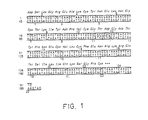
- the recorded gene sequences were divided into oligonucleotide fragments (Fig. 1). These fragments have clear overlaps to ensure correct enzymatic assembly of DNA double strands in a multi-component reaction.
- Table 3 shows the combinations of oligonucleotide fragments that were used for the assembly of the different segments I and II. Dots indicate the fragments that differ from those of the master gene.
- the desired complete gene variants are obtained by enzymatic ligation of the corresponding segment pairs 1 and 2. Genomultimers were first prepared by also allowing blunt end ligation at the 5 ⁇ ends of segment I and sticky end ligation at the 3 ⁇ ends of segment II. Monomeric genes were then excised by cutting with HincII and either HindIII, EcoRI or NcoI.
- oligodeoxyribonucleotides were synthesized on cellulose disks as segment carriers using the known phosphotriester chemistry (Frank et al (1983), Nucleic Acids Res. 11 , 4365-4377). They were analyzed by ion exchange HPLC on a Whatman Partisil SAX 10 column cleaned with a triethylammonium phosphate gradient (pH 6.3) in 60% aqueous formamide.
- the oligonucleotides of tubes A and B were at 37 ° C for 30 minutes with a triple excess of [ ⁇ -32 P] ATP (about 2 Ci / millimole) over 5 ⁇ -hydroxyl ends in reaction mixtures of 10 ul, which 60 mM Tris ⁇ HCl (pH 8), 6 mM MgCl2, 10 mM DTE and 2 units T4 PNK (polynucleotide kinase) contained, phosphorylated. After quantitative phosphorylation, T4 was subjected to PNK Warm tubes A and B inactivated at 95 ° C for 2 minutes and the contents were transferred to tube C.
- DNA ligase was inactivated by heating at 65 ° C for 15 minutes.
- the ligation products were isolated from the reaction mixtures by preparative gel electrophoresis on a 1 mm thick gel under the conditions mentioned above.
- PSTI-1-Ala-32 (-1A), PSTI-3-Pro-32 - (- 3P), PSTI-6-Ser-32 - (- 4A) and PSTI-5-Pro-32 (5P) constructed according to the above protocol.
- PSTI-0 to PSTI-24 refers to a specific coding sequence for the range of amino acids 17 to 29, which either follows: A (for alanine), S (for serine), G (for glycine) or P (for proline) in position 32.
- the gene constructs are planned in such a way that the variants in segment I can be recombined with variants in segment II (e.g. variants in position 32) after columns at a KpnI site in positions 72 to 76 (FIG. 1).
- variants were made either by site-specific mutagenesis on the gene fragments cloned in M13 bacteriophage vectors using synthetic nucleotides, or by total gene synthesis as described above.
- PSTI variants e.g. PSTI-1A and PSTI-3P
- PSTI-1A and PSTI-3P PSTI variants with a smooth end at the 5 ⁇ -terminus (amino-terminal coding end) and a HindIII site at the 3 ⁇ -end were inserted into the HincII, HindIII -Restricted enzyme-treated plasmid pUC8 cloned (pUC-PSTI-1A and pUC-PSTI-3P).
- PSTI variants which also contained methionine at the NH2 end were similarly synthesized in pUC8-NcoI (which contains the NcoI linker CCCATGGG, introduced into the HincII site) cloned.
- pUC8-NcoI was treated with NcoI restriction enzyme, filled in with dNTP in the presence of DNA-PolI (large fragment) and further treated with HindIII.
- the NcoI restriction site was reconstituted (pUC-Met-PSTI-4A) by cloning the gene for the PSTI-4A variant into this vector.
- HincII-HindIII-PSTI fragments were cloned into M13mp (-8, 9, 18 or 19) vectors according to the instructions given by the manufacturer (Boehringer, Mannheim).
- restriction endonuclease KpnI cleaves in the PSTI gene in all constructions after base 76 on the upper strand and after base 72 on the lower strand, whereby 4 bp single-stranded 3 ⁇ -protruding ends (GTAC) are formed.
- the starting material for this mutagenesis process are the M13 mp9-PSTI clones, which are produced by cloning the HincII-HindIII-PSTI fragments from pUC8-PSTI variants in double-stranded M13 mp9 bacteriophages according to the methods of J. Messing and J. Viera ( 1982), Gene, 19 , 269-276. Single-stranded hybrid bacteriophage was isolated and attached to a linear negative strand of bacteriophage M13 mp9 rev. hybridizes.
- Synthetic oligonucleotides which contain the sequence of the new variant at the site of the mutagenesis are then hybridized to this so-called “gapped duplex" and filled in by the consecutive action of polymerase I (Klenow fragment, Boehringer Mannheim) and DNA ligase and to form a closed circular double helix, which contains base mismatches at the site of mutagenesis.
- polymerase I Klenow fragment, Boehringer Mannheim
- DNA ligase DNA ligase
- DNA sequencing was performed on single-stranded M13 mp8, M13 mp9, M13 mP18, M13 mp9 (rev) -PSTI molecules using the dideoxy method as described by F. Sanger et al (1977), Proc. Natn. Acad. Sci., USA 74 , 5463-5467, or for pGV451 constructs using the specific end label and chemical degradation method according to G. Volckaert et al (1984), Gene Analysis Techniques, 1 , 52-59.
- E. coli secretion vectors which contained signal sequences from ⁇ -amylase (B. subtilis) or penicillin acylase (E. coli).
- E. coli secretion vectors for the expression of a human secretory protein such as PSTI has the advantage that a fused signal peptide leads the desired gene product through the cytoplasmic membrane into the periplasmic space with simultaneous processing of the signal peptide (G. Kreil (1981) Ann. Rev. Biochem. 50, 317-348) and release of the active PSTI, either in the mature form or as a fusion product which contains a linker peptide of a few amino acids at the amino terminal end.
- the ⁇ -amylase signal sequence of B. subtilis was derived from Bacillus subtilis DSM 704 (German Collection for Microorganisms, Göttingen) by cloning a partial Sau3A digestion of the chromosomal DNA into the BamH I site of pMK 3 (MA Sullivan et al, Gene (1984) 29, 21-26).
- One of the clones, which contained a 3 Kb DNA fragment with the ⁇ -amylase gene was modified by deleting parts of the ⁇ -amylase structural gene to give pALKA1 (personal communication from Dr. MA Courtney; University of Rochester, NY, Dept. of Microbiology).
- DNA sequences from pALK1 showed a possible ribosome binding site (RBS) and a signal sequence on a 230 bp EcoRI-BstEII fragment with pronounced homology to the ⁇ -amylase from B. subtilis 1A289 (compare DNA sequence in FIG. 2 with M. Yang et al, Nucleic Acid Research (1983), 237-249). Since it was expected that the processing of the ⁇ -amylase signal sequence in B. subtilis at the amino acid in position 41 (see FIG. 2), a fusion of the signal sequence with the PSTI reading frame carried out at the BstE II site. For this reason, we isolated a 230 bp fragment from pALK1 (provided by Dr.
- Fragment A in FIG. 3A.
- Fragment B which contained the reading frame for either Met-PSTI-1A or Met-PST-4A, was isolated from pUC-Met-PSTI-1A or pUC-Met-PSTI-4A (see “Cloning PSTI variation genes"). Ligation of the 3 ⁇ smooth end of fragment A to the 5 ⁇ smooth end of B fuses the reading frame of the ⁇ -amylase signal sequence to that of Met-PSTI-1A or (Met-PSTI-4A), thereby rendering the BstE II and Nco I restriction sites are reconstituted (Fig. 3B).
- the PSTI products from E. coli RR1 ⁇ M15 which is transformed with pCH 233 (PSTI-1A) or pCH 2331 (PSTI-4A), showed a fusion of 13 amino acids to the amino end of the PSTI molecule after protein purification and amino acid sequencing (see examples 1 and 3). From these to Additional amino acids starting with asn-ala-glu-thr ... were found to be identical to those in the ⁇ -amylase signal sequence starting from amino acid 32 in Fig. 3B, showing that the processing of the PSTI precursor by the E. coli signal peptidase according to the amino acid sequence ... pro-ala29-ala-ala31 ⁇ takes place in the signal sequence of the Bacillus ⁇ -amylase.
- PSTI variants Another signal sequence for the production of PSTI variants was derived from E. coli penicillin acylase (PENAC), a periplasmic enzyme from E. coli ATCC 11105.
- PENAC E. coli penicillin acylase
- a DNA fragment was synthesized which the Shine-Dalgano site and contained a signal sequence from PENAC which was modified by introducing an EcoR I site up and an EcoR V site down the Shine-Dalgano site, and a Bcl I site at position 40 of the sequence in Fig. 4, whereby the Amino acid 9 of the original PENAC signal sequence was changed from valine to methionine.
- An NheI site was introduced at the processing site of the PENAC signal sequence at amino acid 26.
- the PENAC DNA fragment was made up of 4 DNA fragments (Pass 1-4, Fig.
- pCh 236 was modified at the NheI site (see FIG. 5A) and further trimmed with HindIII. Ligation of the gene for PSTI-5P (or for PSTI-3P) in the prepared pCH 236 fuses the PENAC signal sequence with the PSTI reading frame, resulting in the expression vector pCH 2361 (or pCH 2362).
- the lac z Leser reading frame at the TAG codon should terminate in front of the Shine-Dalgano site of PENAC (items 7-9 in FIG. 4).
- pCH 2363 was constructed by preparing pCH 236 similarly as described above.
- the gene for Met-PSTI-4A was isolated from pUC-MetOPSTI-4A (Fig. 5B).
- RR1 ⁇ M15 transformed with pCH 233, 2331, 2361, 2362 and 2363 was grown in overnight cultures.
- the medium contained 3% bovine extract (Gibco), 1.5% yeast extract (Gibco) and 0.5% K2HPO4 in distilled water (pH 7.0) and ⁇ g / ml ampicillin. Care was taken to achieve good aeration by incubating the cultures in 1,000 ml Erlenmeyer flasks filled with 100 ml medium.
- the flasks were shaken on a kuhner RC-6 U shaker at 28 and 37 ° C and 190 rpm.
- the overnight cultures were diluted 1: 100 in fresh medium at 37 ° C. and grown for about 3 hours to optical densities of 1.5 A550 nm.
- the lac promoter was induced by adding 1 mM isopropylthiogalactoside (Sigma) to the cultures.
- the fermentation was carried out for 20 hours up to 4 to 6 A550 and the cells were harvested by centrifuging at 8,000 rpm (10 °, 4 ° C. in a Kontron Centrikon H-401 with rotor A 6.14).
- HLE human leukocyte elastase
- PPE porcine pancreatic elastase
- Bovine ⁇ -chymotrypsin (CHT) was obtained from E. Merck, Darmstadt.
- MeOSuc-Ala-Ala-Pro-Val-pNA HLE
- Ac-Ala-Ala-Pro-Ala-pNA and Suc-Ala-Ala-Ala-pNA PPE
- Suc-Ala-Ala-Pro -Phe-pNA CHT
- the hydrophobic resin LGP 4429 is a product of Bayer AG, Leverkusen.
- Chymotrypsin was immobilized on Sepharose R 4B-Cl by reducing the Schiff base formed with chymotrypsin with Na [CNBH3], after oxidation of the carrier with sodium periodate (GB Royer et al (1975), Biochem. Biophys. Res. Commun. 164 , 478-484).
- HPLC was carried out using suitable columns. These are described in the text and / or the legends for the corresponding illustrations.
- a Waters HPLC system including an M 510 pump, a WISP 710B auto-injector, an M 481 LC spectrophotometer and a SHIMADZU integrator CR-3A was used.
- the conditions of the enzyme assays are shown in Table 4.
- the samples were diluted with an appropriate buffer volume and the enzyme added.
- substrate was added (the substrates were dissolved in DMSO at 0.1 M concentration and diluted with buffer to give the concentration of the stock solution).
- the release of p-nitroaniline from the substrates was determined at 405 nm, either continuously or after stopping the reaction by adding acetic acid. 100% values formed samples in which no inhibitors were added.
- the percentage inhibition was calculated according to the following formula:
- microorganisms of Examples 3 and 6 of this application were obtained from the National Collection of Industrial Bacteria (NCIB), Torry Research Station, PO Box 31, 135 Abbey Road, Aberdeen AB9 8DG, Scotland, Great Britain, under the respective names NCIB 12365 and NCIB 12364 deposited.
- NCIB National Collection of Industrial Bacteria
- Torry Research Station PO Box 31, 135 Abbey Road, Aberdeen AB9 8DG, Scotland, Great Britain, under the respective names NCIB 12365 and NCIB 12364 deposited.
- the filtrate was filtered through a bed of chymotrypsin-Sepharose-4B-Cl conjugate at 4 ° C (7 x 9 cm).
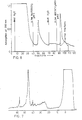
- the gel was washed with water until the absorbance of the eluates went to zero at 280 nm, then washed with 500 ml of 0.2 M acetate buffer (pH 5) and 500 ml of water. Finally, the gel was eluted with 0.2 M acetic acid, the pH of which was adjusted to 2.0 with HCl. The elution profile is shown in Fig. 6.
- the active fractions (as measured in the leukocyte elastase inhibition assay) were pooled, adjusted to pH 4 by the addition of solid sodium acetate and concentrated by rotary evaporation. Salts and minor contaminants were finally removed by preparative HPLC over an RP-318 column. The elution profile is shown in Fig. 7. The purity of each fraction was determined by analytical HPLC.
- 750 ml of fermentation broth of RR1 ⁇ M15 / pCH 2362 were treated with 25 ml of perchloric acid and centrifuged after 30 minutes. The supernatant was neutralized by adding 4 N KOH solution; KC1O4 was removed by filtration after 6 hours. The filtrate was placed on a chymotrypsin-Sepharose 4B-Cl column (2.5 ⁇ 7 cm), which was subsequently washed with water and 0.2 M acetic acid. The inhibitor was desorbed with the aid of 0.2 M acetic acid, adjusted to pH 1.8 with HCl. The active fractions were combined, adjusted to pH 3.5 with NaOH solution and concentrated by rotary evaporation.
- the active fractions were pooled and concentrated by evaporation in vacuo.
- the concentrate was acidified to pH 2.7 by adding trifluoroacetic acid and to SP-Sephadex-25 (2.5 ⁇ 10 cm), which had previously been equilibrated with 0.15% trifluoroacetic acid (pH 2.7 adjusted with NaOH). given.
- the column was then developed with a linear gradient from 0 to 1 M NaCl in the starting buffer.
- the fractions with inhibitory activity were combined, neutralized, concentrated and desalted by filtration over Sephadex G-25 with 0.01 M phosphate buffer, pH 7.0.
- the active fractions were adjusted to pH 2.7 and again chromatographed on SP-Sephadex C-25 with a linear gradient of 0.1 to 0.5 M NaCl at pH 2.7.
Landscapes
- Health & Medical Sciences (AREA)
- Chemical & Material Sciences (AREA)
- Organic Chemistry (AREA)
- Life Sciences & Earth Sciences (AREA)
- Genetics & Genomics (AREA)
- General Health & Medical Sciences (AREA)
- Engineering & Computer Science (AREA)
- Medicinal Chemistry (AREA)
- Bioinformatics & Cheminformatics (AREA)
- Molecular Biology (AREA)
- Biophysics (AREA)
- Biochemistry (AREA)
- Biotechnology (AREA)
- Wood Science & Technology (AREA)
- Pharmacology & Pharmacy (AREA)
- Public Health (AREA)
- Veterinary Medicine (AREA)
- Zoology (AREA)
- Animal Behavior & Ethology (AREA)
- Gastroenterology & Hepatology (AREA)
- Nuclear Medicine, Radiotherapy & Molecular Imaging (AREA)
- General Chemical & Material Sciences (AREA)
- Chemical Kinetics & Catalysis (AREA)
- General Engineering & Computer Science (AREA)
- Proteomics, Peptides & Aminoacids (AREA)
- Biomedical Technology (AREA)
- Physics & Mathematics (AREA)
- Pulmonology (AREA)
- Immunology (AREA)
- Plant Pathology (AREA)
- Microbiology (AREA)
- Rheumatology (AREA)
- Pain & Pain Management (AREA)
- Medicines That Contain Protein Lipid Enzymes And Other Medicines (AREA)
- Peptides Or Proteins (AREA)
- Medicines Containing Material From Animals Or Micro-Organisms (AREA)
- Preparation Of Compounds By Using Micro-Organisms (AREA)
- Micro-Organisms Or Cultivation Processes Thereof (AREA)
Abstract
Description
- Die vorliegende Erfindung betrifft ein mikrobiell hergestelltes Peptid, welches im wesentlichen die Aminosäuresequenz von humanem pankreatischen sekretorischen Trypsininhibitor (h-PSTI) aufweist. Die Erfindung betrifft im weiteren Varianten eines solchen Peptides, wobei eine oder mehrere der Aminosäuren in der ursprünglichen Sequenz durch andere Aminosäuren ersetzt werden. Diese Peptide weisen in bezug auf ihre Inhibitorwirkung eine vorteilhaft modifizierte Spezifität auf. Außerdem werden ein Herstellungsverfahren für die Peptide sowie deren pharmazeutische Verwendung beschrieben.
- Lysosomale Elastase (Leukocyten-Elastase); J. G. Bieth (1986), S. 217-320 (in Regulation of Matrix Accumulation, Mecham, Herausgeber, Academic Press, Orlando) aus polymorphkernigen Granulocyten stellt eine potente intrazelluläre Protease dar, die in Lysosomen gelagert wird, und ihre physiologische Funktion, den intrazellulären Proteinabbau, in Phagolysosomen bewerkstelligt. Die wichtigste funktionelle Rolle lysosomaler Proteasen (Elastase, Cathepsin G etc.; H. Fritz et al (1984) in Selected Topics in Clinical Enzymology, Goldberg und Werner Hsg., Walter de Gruyter, Berlin, Bd. 2, S. 305-328) ist der Abbau von phagocytiertem Material aus dem Organismus selbst (z.B. Stoffwechselprodukte, verletztes Gewebe) oder von invasiven Organismen (Bakterien, Viren, Schimmelpilzen etc.).
- Nach Freisetzung in den extrazellularen Raum (Blut oder Interstitialflüssigkeit) wird Elastase rasch von wirksamen endogenen Inhibitoren, wie α₁-PI (α₁-Proteaseinhibitor; J. Travis und G. S. Salvesen (1983) Ann. Rev. Biochem., S. 655-709) im Plasma, und/oder Antileukoprotease (auch als HUSI-I, humaner seminaler Proteinaseinhibitor bezeichnet; H. Schiessler et al (1978), S. 195-207, in Neutral Proteases of Human Polymorphonuclear Leukocytes, Havemann und Janoff Hsg., Urban & Schwarzenberg, Baltimore) in Schleimabsonderungen, gebunden.
- Im Falle eines erblichen α₁-PI-Mangels (J. G. Bieth, 1986) oder als Folge einer massiven extrazellularen Elastasefreisetzung (bei akuten und chronischen Entzündungen, Polytrauma oder Schock; H. Fritz et al, 1984) ist der Schutz des Organismus gegenüber dem degradativen Elastasepotential durch natürliche Proteaseinhibitoren unzureichend. Ein exzessiver und lokal sogar vollständiger Verbrauch von endogenen Proteaseinhibitoren wird verursacht durch (i) Komplexbildung mit Elastase, (ii) proteolytische Inaktivierung durch verschiedene lysosomale Proteasen, und (iii) insbesondere durch oxidative Inaktivierung (α₁-PI) (J. G. Bieth (1986); H. Fritz et al (1984); J. Travis und G. S. Salvesen (1983); siehe oben).
- Die Folge davon ist ein extensiver proteolytischer Abbau von Bindegeweben sowie von humoralen Proteinen, einschließlich Koagulations-, Fibrinolyse- und Komplementfaktoren durch Elastase und andere lysosomale Proteasen (z. B. Cathepsin G), was zu ernsthaften klinischen Symptomen führt, wie Emphysem, Schocklunge, erworbenes respiratorisches Distress-Syndrom (ARDS), Koagulationsstörungen, Nieren- und Leberversagen etc. (zusätzlich zu den vorstehend genannten Referenzen: Neue Wege in der Entzündungsdiagnostik, PMN Elastase; M. Jochum et al (Hsg.), (1985) GIT Verlag, Darmstadt; C. T. Lee et al (1981) N. Engl. J. Med. 304, 192-196; W. W. McGuire et al (1982) J. Clin, Invest. 69, 543).
- Elastase trägt auch zur lokalen Entzündung bei, wie sie bei rheumatoider Arthritis auftritt, z. B. dem Abbau von Bindegewebsbestandteilen (K. Kleesiek et al (1985) in: Neue Wege in der Entzündungsdiagnostik, PMN Elastase, S. 71-82).
- Die extrazelluläre Freisetzung von Elastase nach schweren Verletzungen oder bei Erkrankungen, wie septischem Schock, Schocklunge etc., kann routinemäßig mit Hilfe von Enzymimmunoassays verfolgt werden (S. Neumann und M. Jochum (1984), S. 184-195 in Methods of Enzymatic Analysis, Bergmeyer (Hsg.), Verlag Chemie, Weinheim).
- Bei experimentellen Modellen für Sepsis und Emphysem haben sich synthetische Elastaseinhibitoren (J. C. Powers Am. Rev. Respir. Dis. (1983) 127, 554-558) und natürliche Inhibitoren aus Tieren, wie Eglin C (H. P. Schnebli et al (1985), Eur. J. Respir. Dis. 66, Ergänzung 139, S. 66-70) als therapeutisch nützlich erwiesen. Die Anwendung eines Proteaseinhibitors menschlichen Ursprungs wäre vorzuziehen, um toxische Nebeneffekte und insbesondere allergische Reaktionen zu vermeiden, wenn eine Langzeit-Therapie indiziert ist, z. B. bei der Behandlung von α₁-PI-Mangel (Emphysem). Da human-α₁-PI ein Glykoprotein mit hohem Molekulargewicht darstellt, ist dessen Herstellung mit Hilfe der Gentechnologie in ausreichenden Mengen in naher Zukunft nicht zu erwarten.
- Die Antileukoprotease oder HUSI-I (H. Schiessler et al, 1978; und U. Seemüller et al (1986), FEBS Letters 199, 43-48) hat ein MG von 14,000 Dalton und besteht aus zwei aktiven Domänen, wobei eine gegen Elastase, die andere gegen Trypsin gerichtet ist. Aus diesem Grunde hat dieser Inhibitortyp eine relative niedrige Selektivität und stellt nicht einen spezifischen Elastaseinhibitor dar. Die Inhibierung von Trypsin oder Trypsin-ähnlichen Enzymen ist üblicherweise bei den vorstehend gegebenen Indikationen nicht beabsichtigt.
- Der menschliche Pankreas sezerniert PSTI, einen Proteaseinhibitor von niedrigem Molekulargewicht (6, 2 kd), der spezifisch Trypsin inhibiert, d. h. er besitzt eine hohe Selektivität für einen spezifischen Proteasetyp.
- Ein Vorteil der vorliegenden Erfindung besteht in der Substitution von nur einer (oder einiger weniger) Aminosäuren in PSTI mit Hilfe der rekombinanten DNA-Technologie, wobei PSTI-Varianten erhalten werden, von denen gezeigt wurde, daß sie hochwirksame Proteaseinhibitoren mit einer hohen Spezifität für Leukocyten-Elastase darstellen. Außerdem sollte der Elastase-PSTI-Drivat-Komplex aufgrund seines relativ niedrigen Molekulargewichtes auch die Nieren passieren. Aus diesem Grunde wird die Eliminierung von extrazellulär freigesetzter Elastase sehr wirksam sein. Die Tatsache, daß PSTI menschlichen Ursprungs ist, zusammen mit dessen niedrigem Molekulargewicht, ließ uns erwarten, daß bei der klinischen Anwendung von PSTI-Derivaten keine Komplikationen auftreten, die auf die Erkennung dieser Substanzen als Fremdproteine durch das Immunsystem zurückgehen.
- Ein weiterer wesentlicher Vorteil von PSTI, im Vergleich zu α₁-PI und Antileukoprotease, liegt in der Unempfindlichkeit gegenüber oxidativer Inaktivierung während Entzündungsprozessen, bei denen stark oxidative Agenzien produziert und extrazellulär freigesetzt werden. Folglich sollten im Vergleich zu α₁-PI und Antileukoprotease niedrigere Dosen des PSTI-Derivates ausreichend sein, um die gleiche Schutzwirkung zu erzielen.
- Es ist somit Aufgabe der vorliegenden Erfindung, pharmazeutisch nützliche Peptide zur Verfügung zu stellen, die über eine Proteinaseinhibitorwirkung verfügen, vorzugsweise mit einer verbesserten Spezifität und/oder verbesserten Inhibitorwirkung. Die genannten Peptide stellen Peptide mit der Sequenz von PSTI und Varianten desselben dar, die durch rekombinante DNA-Technologie hergestellt werden. Die Bezeichnung "Varianten" bezieht sich auf Peptide, in denen eine oder mehrere Aminosäuren der Stammsequenz durch andere, natürlich vorkommende, Aminosäuren ersetzt sind. Als Stammsequenz dient die Sequenz des humanen PSTI (h-PSTI = PSTI O). Bevorzugte Positionen, die einem Austausch von Aminosäuren unterliegen, sind die Positionen 17, 18, 19, 20, 21, 29, 32 und 36 im Peptid. Die vorliegende Erfindung betrifft besonders bevorzugt Peptide, die im wesentlichen die Sequenz von PSTI O (wie sie von L. J. Greene, 1976, Methods Enzymol. 45, 813-825, beschrieben wird) aufweisen und die folgenden Aminosäuren umfassen:
Glu, Asp oder Leu in Position 13
Glu, Asp oder Asn in Position 14
Thr, Pro, Ser, Arg, Leu oder Met in Position 17;
Leu, Met, Val, Gln, Ser, Ala, Thr, Ile, Tyr, Phe, Arg, Trp oder Lys in Position 18;
Glu, Asp, Leu oder Ile in Position 19;
Tyr, Phe, Asp, Asn, Leu, Glu, Gln, His oder Arg in Position 20;
Glu, Arg, Met, Phe, Lys, Val, Thr, Gln, Leu, Asp oder Asn in Position 21;
Lys, Glu, Ile, Gln, Asp oder Asn in Position 29;
Pro, Gly, Ser, Asn, Ala, Asp, Val, Arg oder His in Position 32 und
Asn, Asp, Ala, Ser, Gly, Tyr, Val oder Glu in Position 36.
- Ausgenommen sind die Kombinationen -Leu¹³, - Asn¹⁴, - Thr¹⁷, - Lys⁸, - Ile¹⁹, - Tyr²⁰, - Asn²¹, - Asp²⁹, - Pro³², - Val³⁶ sowie - Leu¹³, - Asn¹⁴, - Ther¹⁷, - Lys¹⁸, - Ile¹⁹, - Tyr²⁰, - Asp²¹, - Asn²⁹, - Pro³², - Val³⁶.
- Tabelle 1 betrifft einige dieser Varianten, PSTI O stellt die Stammsequenz dar, wenn die Aminosäuren in Positionen 32 und 36 jeweils Prolin und Valin bedeuten.
- Die in Tabelle 1 dargestellten Varianten können im weiteren in Position 32 und 36 durch die vorstehend aufgeführten Aminosäuren variieren.
- Die vorliegende Erfindung betrifft auch Peptide mit den vorstehend beschriebenen Sequenzen, die außerdem in Position 1 ein Methionin oder ein Leaderpeptid besitzen. Die Bezeichnung "Leaderpeptid" bedeutet in bezug auf die vorliegende Erfindung nicht nur Signalsequenzen, welche die Sekretion des Expressionsproduktes fördern (S. D. Emr et al, J. of Cell Biol., 1980, S. 701-711), sondern auch Peptide, welche eine Signalsequenz und eine Linkersequenz, die den PSTI-Sequenzen vorausgehen, aufweisen.

- Die vorliegende Erfindung betrifft auch DNA's, die für die genannten Sequenzen codieren. Insbesondere betrifft die vorliegende Erfindung ein DNA, die im nachfolgenden als "Mastergen" gezeichnet wird, und die folgende Sequenz hat:

- Fig. 1: Nukleotid- und korrespondierende Aminosäure-sequenz des PSTI-Mastergens. Die Klammern und Zahlen verweisen auf die synthetischen Oligonucleotide, die für den Aufbau des Gens verwendet wurden. Die gestrichelte Linie gibt die Teilung des Gens in das Segment I (erster Teil) und das Segment II (zweiter Teil) an und die funktionellen Äquivalente derselben. "Funktionelle Äquivalente" bedeutet dabei, daß auch Derivate der vorstehenden DNA-Sequenz für die Expression des gleichen Proteins geeignet sein können. Es ist dem Fachmann auf diesem Gebiet bekannt, daß in einigen Codons eine, zwei oder drei der Basen durch eine andere ersetzt werden kann bzw. können, ohne daß dies einen Einfluß auf die in ein gegebenes Protein einzubauende Aminosäure hat. Um die Varianten des Peptids herzustellen, wird das Mastergen mit Hilfe der DNA-Technologie in der Weise modifiziert, daß das Codon für eine bestimmte Aminosäure in einer bestimmten Position durch das Codon für eine andere Aminosäure ersetzt ist. Um eine DNA zu erhalten, die für eine der Peptidvarianten gemäß der vorliegenden Erfindung codiert, können die Codons für die Aminosäuren in Positionen 17, 18, 19, 20 21, 29, 32 und 36 durch andere Codons ersetzt werden.
- Bevorzugte Codons sind bei diesem Austausch solche Codons, die für die vorstehend aufgeführten Aminosäuren codieren. Je nach dem verwendeten Expressionssystem kann die DNA gemäß der Erfindung auch eine DNA darstellen, die für eines der vorstehenden Peptide codiert und zusätzlich am NH₂-Terminus eine Sequenz umfaßt, die für ein Leaderpeptid codiert.
- Eine weitere Aufgabe gemäß der Erfindung stellt einen Expressionsvektor dar, der auch als Plasmid bezeichnet wird und die DNA, welche für eines der Peptide gemäß der vorliegenden Erfindung codiert, umfaßt. Das Plasmid dient zur Transformation von Wirtsorganismen. Die vorliegende Erfindung betrifft auch derartig transformierte Mikroorganismen. Dem Fachmann ist eine große Zahl verschiedener Mikroorganismen bekannt, die sich für die Transformation eignen. Die Art des Plasmids wird in der Hauptsache in Abhängigkeit von dem zu verwendenden Wirtsorganismus gewählt.
- Der Wirtsorganismus, der mit dem Plasmid transformiert ist, das die DNA gemäß der Erfindung umfaßt, dient zur Herstellung des vorstehend genannten Peptides und der Varianten desselben. Die Herstellung umfaßt die folgenden Schritte:
- (a) Züchten des Wirtsorganismus unter geeigneten Bedingungen;
- (b) Gewinnung des Peptides aus der Kultur und
- (c) Reinigung des Peptides.
- Die Reinigung des Peptides kann nach bekannten Methoden der Proteinchemie erfolgen, z. B. durch Präzipitation, Chromatografie und Elektrophorese. Das vorstehend genannte Linkerpeptid kann so konstruiert sein, daß es die Reinigung des Fusionsproteins erleichtert. Wenn z. B. das Linkerpeptid in der Hauptsache basische oder saure Aminosäuren umfaßt, so kann sich bei der Reinigung des exprimierten Produktes die Ionenaustauschchromatografie als besonders vorteilhaft erwiesen.
- Die vorliegende Erfindung betrifft auch pharmazeutische Zusammensetzungen und Präparationen, welche die vorstehend beschriebenen Peptide umfassen, und die Verwendung der genannten Peptide bei der Herstellung pharmazeutischer Zubereitungen. Diese pharmazeutischen Zubereitungen werden insbesondere bei den vorstehend angegebenen Indikationen angewandt.
- Die pharmazeutischen Präparationen können außer nicht-toxischen, inerten, pharmazeutisch geeigneten Träger bzw. Zuschlagsstoffen eine oder mehrere Verbindungen gemäß der Erfindung enthalten oder aus einem oder mehreren Wirkstoffen gemäß der Erfindung bestehen.
- Die vorliegende Erfindung umfaßt auch pharmazeutische Präparationen in Dosiseinheiten. Dies bedeutet, daß die Präparationen in Form einzelner Teile vorliegen, z. B. als Tabletten, Dragees, Kapseln, Pillen, Suppositorien und Ampullen, deren Gehalt an Wirkstoff einem Bruchteil oder einem Vielfachen einer Einzeldosis entspricht. Die Dosiseinheiten können z. B. eine, zwei, drei oder vier Einzeldosen, oder eine halbe, eine drittel oder eine viertel oder eine ganze Einzeldosis enthalten. Eine Einzeldosis enthält vorzugsweise die Menge an Wirkstoff, die bei einer Verabreichung gegeben wird und die üblicherweise einer ganzen oder einer halben Dosis, oder einer drittel Dosis oder einer viertel Dosis des täglichen Bedarfs entspricht.
- Unter nicht-toxischen, inerten pharmazeutisch geeigneten Trägerstoffen versteht man feste, halbfeste oder flüssige Verdünnungsmittel, Füllmittel und Formulierungshilfen aller Art.
- Tabletten, Dragees, Kapseln, Pillen, Granulate, Suppositorien, Lösungen, Suspensionen und Emulsionen, Pasten, Salben, Gele, Cremes, Lotionen, Pulver und Sprays können als bevorzugte pharmazeutische Präparationen genannt werden.
- Tabletten, Dragees, Kapseln, Pillen und Granulate können den Wirkstoff bzw. die Wirkstoffe zusammen mit üblichen Trägerstoffen enthalten, wie z. B. (a) Füllstoffe und Streckmittel, z. B. Stärken, Lactose, Sucrose, Glucose, Mannit und Siliciumdioxid, (b) Bindemittel, z. B. Carboxymethylcellulose, Alginate, Gelatine und Polyvinylpyrrolidon, (c) anfeuchtende Mittel, z. B. Glycerin, (d) Sprengmittel, z. B. Agar-Agar, Calciumcarbonat und Natriumcarbonat, (e) Lösungsverzögerer, Paraffin und (f) Absorptionsbeschleuniger, z. B. quaternäre Ammoniumverbindungen, (b) Netzmittel, z. B. Cetylalkohol und Glycerin-monostearat, (h) Absorbenzien, z. B. Caolin und Bentonit, und (i) Gleitmittel, z. B. Talk, Calcium- und Magnesiumstearat und feste Polyethylenglykole oder Gemische der Substanzen, wie sie unter (a) bis (i) aufgeführt sind.
- Die Tabletten, Dragees, Kapseln, Pillen und Granulate können mit üblichen Überzügen und Umhüllungen versehen sein, welche gegebenenfalls Opakisierungsmittel enthalten; sie können auch in solchen Zubereitungen vorliegen, die den Wirkstoff oder die Wirkstoffe vorzugsweise nur in einem bestimmten Teil des Verdauungstraktes, gegebenenfals in verzögerter Weise, freisetzen, wobei als Beispiele für geeignete Materialien zum Einbetten Polymersubstanzen und Wachse genannt werden.
- Der Wirkstoff oder die Wirkstoffe, gegebenenfalls zusammen mit einem oder mehreren der vorstehend genannten Trägerstoffen, kann bzw. können auch in Form von Mikrokapseln vorliegen.
- Suppositorien können neben dem Wirkstoff oder den Wirkstoffen die üblichen wasserlöslichen oder wasserlöslichen Trägerstoffe enthalten, z. B. Polyethylenglykole, Fette, z. B. Kakaofett, und höhere Ester, z. B. C₁₄-Alkohol mit C₁₆-Fettsäuren, oder Gemische dieser Substanzen.
- Salben, Pasten, Cremes und Gele können übliche Exzipienten neben dem Wirkstoff bzw. den Wirkstoffen enthalten, z. B. tierische und pflanzliche Fette, Wachse, Paraffine, Stärke, Tragant, Cellulosederivate, Polyethylenglykole, Silicone, Bentonite, Siliciumdioxid, Talk und Zinkoxid, oder Gemische dieser Substanzen.
- Pulver und Sprays können übliche Trägerstoffe neben außer dem Wirkstoff oder den Wirkstoffen enthalten, z. B. Lactose, Talk, Siliciumdioxid, Aluminiumhydroxid, Calciumsilicat und Polyamidpulver, oder Gemische dieser Substanzen. Die Sprays können außerdem übliche Treibmitel enthalten, z. B. Chlorfluorkohlenwasserstoffe.
- Lösungen und Emulsionen können übliche Trägerstoffe neben dem Wirkstoff oder den Wirkstoffen enthalten, wie Lösungsmittel, solubilisierende Agenzien und emulgierende Agenzien, z. B. Wasser, Ethylalkohol, Isopropylalkohol, Ethylcarbonat, Ethylacetat, Benzylalkohol, Benzylbenzoat, Propylenglykol, 1,3-Butylenglykol, Dimethylformamid, Öle, insbesondere Baumwollsamenöl, Erdnußöl, Maiskeimöl, Olivenöl, Rhizinusöl und Sesamöl, Glycerin, Glycerinformal, Tetrahydrofurfurylalkohol, Polyethylenglykole und Fettsäureester von Sorbitan, oder Gemische dieser Substanzen.
- Für die parenterale Verabreichung können die Lösungen und Emulsionen auch in steriler, mit dem Blut isotoner Form vorliegen.
- Suspensionen können übliche Trägerstoffe neben dem Wirkstoff oder den Wirkstoffen enthalten, wie flüssige Verdünner, z. B. Wasser, Ethylalkohol oder Propylenglykol, suspendierende Agenzien, z. B. ethoxylierte Isostearylalkohole, Polyoxyethylen-sorbit und Sorbitanester, mikrokristalline Cellulose, Aluminiummetahydroxid, Bentonit, Agar-Agar und Tragacanth, oder Gemische dieser Substanzen.
- Die genannten Formulierungen können auch Farbstoffe, Konservierungsstoffe und Additive enthalten, die den Geruch und Geschmack verbessern, z. B. Pfefferminzöl und Eukalyptusöl, sowie Süssungsmittel, z. B. Saccharin.
- Die therapeutisch wirksamen Verbindungen sollen vorzugsweise in den vorstehend genannten pharmazeutischen Präparationen in einer Konzentration von ca. 0,1 bis 99,5 Gew.-%, vorzugsweise von ca. 0,5 bis 95 Gew.-%, bezogen auf das Gesamtgewicht, vorliegen.
- Die vorstehend genannten pharmazeutischen Präparationen können auch andere pharmazeutische Wirkstoffe neben den Verbindungen gemäß der Erfindung enthalten.
- Die vorstehend genannten pharmazeutischen Präparationen werden in üblicher Weise nach bekannten Verfahren hergestellt, z. B. durch Vermischen des Wirkstoffes oder der Wirkstoffe mit dem oder den Trägerstoffen.
- Die Wirkstoffe oder die pharmazeutischen Präparationen können lokal, oral, parenteral, intraperitonal und/oder rektal verabreicht werden, vorzugsweise oral oder parenteral, wie intravenös oder intramuskulär.
- Im allgemeinen hat es sich sowohl in der Human- als auch in der Veterinärmedizin als vorteilhaft erwiesen, den Wirkstoff oder die Wirkstoffe gemäß der Erfindung in Gesamtmengen von ca. 0,5 bis ca. 500, vorzugsweise von 5 bis 100 mg/kg Körpergewicht alle 24 Stunden zu verabreichen, gegebenenfalls in Form von mehreren Einzelverabreichungen, um die gewünschten Ergebnisse zu erzielen. Eine Einzelverabreichung enthält den Wirkstoff oder die Wirkstoffe gemäß der Erfindung vorzugsweise in Mengen von ca. 1 bis 250, insbesondere von 3 bis 60 mg/kg Körpergewicht. Es kann jedoch erforderlich sein, von den genannten Dosen abzuweichen, und zwar insbesondere in Abhängigkeit von der Natur und dem Körpergewicht des zubehandelnden Individuums, der Natur und der Schwere der Erkrankung, der Art der Präparation und der Verabreichungsweise der Medizin sowie der Zeit oder der Zeitdauer, über die die Verabreichung stattfindet.
- Somit kann es in manchen Fällen genügen, weniger als die vorstehend genannte Menge an Wirkstoff zu verabreichen, während in anderen Fällen die vorstehend genannte Menge an Wirkstoff überschritten werden muß. Die speziell erforderliche optimale Dosis und der Verabreichungstyp der Wirkstoffe können vom Fachmann aufgrund seines Fachwissens ohne weiteres bestimmt werden.
- PSTI kann aus Pankreas isoliert werden, ist jedoch nicht in größeren Mengen erhältlich, insbesondere PSTI menschlichen Ursprungs.
- Es wurde deshalb erkannt, daß die Anwendung der rekombinanten DNA-Technik sowie verwandter Technologien einen wirksamen Weg zur Beschaffung der notwendigen großen Mengen an h-PSTI hoher Qualität sowie auch von Varianten dieses Peptides bieten würde. Die Herstellung eines Fremdproteins in rekombinanten Bakterien ist im Hinblick auf die in vielen Fällen angetroffene Instabilität nicht trivial (B. E. Butterworth und B. D. Kovant; J. Virol. 14, (1984) 282-291, D. V. Goeddel et al; Proc. Natn. Acad. Sci, USA 76 (1979), 106-110, M. Inouye et al in "The future in nucleic acid research", I. Watanabe Hsg., (Tokyo, Academic Press) (1983). Die Instabilität stellt, insbesondere bei der Expression von Peptiden relativ kurzer kettenlänge, ein Problem dar.
- Der menschliche Pankreas sezerniert PSTI, einen Proteaseinhibitor mit niedrigem Molekulargewicht (6,2 kd), der spezifisch Trypsin inhibiert, d. h. dieser Inhibitor besitzt eine hohe Selektivität für einen spezifischen Proteasetyp.
- Ein Vorteil gemäß der Erfindung liegt in der Substitution von nur einer (oder einiger weniger) Aminosäuren in PSTI durch rekombinante DNA-Technologie, wodurch PSTI-Varianten erhalten werden, von denen gezeigt wurde, daß sie hochwirksame Proteaseinhibitoren mit einer hohen Spezifität für Leukocyten-Elastase darstellen. Außerdem sollte aufgrund des relativ niedrigen Molekulargewichtes der Elastase-PSTI-Derivat-Komplex auch die Nieren passieren. Aus diesem Grund ist eine besonders wirksame Eliminierung von extrazellulär freigesetzter Elastase zu erwarten. Die Tatsache, daß PSTI menschlichen Ursprungs ist, zusammen mit dessen niedrigem Molekulargewicht, ließ erwarten, daß die klinische Applikation von PSTI-Derivaten keine Komplikationen aufgrund der Erkennung dieser Substanzen als Fremdproteine durch das Immunsystem verursacht.
- Ein weiterer wesentlicher Vorteil von PSTI, verglichen mit α₁-PI und Antileukoprotease, liegt in der Unempfindlichkeit gegenüber oxidativer Inaktivierung durch Entzündungsprozesse, bei denen stark oxidative Agenzien gebildet und extrazellulär freigesetzt werden. Folglich sollten, im Vergleich mit α₁-PI oder Antileukoprotease, geringere Dosen des PSTI-Derivates ausreichen, um eine vergleichbare Schutzwirkung zu erzielen.
- Die Aminosäuresequenz von h-PSTI wurde in die Sequenz eines DNA-Mastergens mit Hilfe solcher Codons, die bei hochexprimierten E. Coli-Genen am häufigsten angetroffen werden, zurücktranslatiert (M. Gouy und C. Gautier (1982), Nucleic Acids Res., 10, 7055-7074); siehe Fig. 1. Für die Aminosäure-Substitutionen der PSTI-Varianten (Tabelle 1) wurden die entsprechenden Codons im Mastergen ausgetauscht (siehe Tabelle 2).
- Die mit einem Sternchen markierten Codons in Tabelle 2 wurden durchweg verwendet, mit folgenden Ausnahmen:
Thr 26 (ACC)
in allen Genen, um eine KpnI-Stelle an den Positionen 72 bis 77 zu schaffen;
Lys 18 (AAG)
in PSTI-0 und -10, um eine BglII-Stelle an den Positionen 53 bis 58 zu schaffen;
Gly 28 (GGC)
in PSTI-2, -10, -19 und -20, um eine richtige Hybridisierung der korrespondierenden Oligonukleotid-Fragmente zu erzielen (siehe unten);
Pro 17 (CCT) + Leu 18 (CTA)
in PSTI-11, um eine XbaI-Stelle an den Positionen 51 bis 56 zu schaffen;
5ʹ-ende des Gens:
erstes Codon, umfaßt die zweite Hälfte der HincII-Stelle GTPyPuAC;
3ʹ-ende des Gens:
Stopp-Codon TGA, welches die EcoRI-Stelle (Position 170 bis 175) überlappt, gefolgt von einer HindIII-Stelle (Position 176 bis 181) und ein NcoI-klebriges Ende (Position 182 bis 186).
- Die PSTI-Gen-Konstruktion wurde wie folgt durchgeführt:
- (1) Synthese von 25 kurzen Oligonukleotiden (jeweils 12 und 13 für jeden komplementären Strang)wobei für einige Varianten spezifische Fragmente synthetisiert wurden (siehe Tabelle 3). Die Reinigung des Fragmentes mit der richtigen Größe erfolgte durch Ionenaustausch-Hochleistungs-Flüssigchromatografie (HPLC).

- (2) Ligieren der Fragmente unter Erhalt eines doppelsträngigen Moleküls für den Codierungsbereich von reifem PSTI (Aminosäuren 1 bis 56) mit einem "glatten" Ende am Amino-terminalen Codierungsende und einem GAT-einzelsträngigen 5ʹ überhängenden Ende am Carboxy-terminalen Codierungsende. Für diesen Schritt war es wichtig, die zu synthetisierenden Oligonukleotidsequenzen zu optimieren, um falsche Legierungsprodukte auf einem Minimum zu halten.
- (3) Klonieren in mehreren Vektoren, z. B. pUC8, pGV451, M13mp18 zur Sequenzierung (siehe Text zu Verfahren).
- (4) Schaffung weiterer Varianten über ortsspezifische Mutagenese in M13-Phagenvektoren unter Verwendung spezifischer synthetischer Oligonukleotide.
- Spalte 1: die Fragmentzahlen (siehe Fig. 1)
Spalte 2 und 3: erste und letzte Nukleotidpositionen des Fragmentes innerhalb der Sequenz des Mastergens (5ʹ--→ 3ʹ)
Spalte 4: Nukleotidsequenz der Fragmente (5ʹ--→ 3ʹ)
- Die Punkte zeigen Fragmente an, die von der Sequenz des Mastergens abweichen und die für die Konstruktion von Genvarianten erforderlich sind.
- 1 7 1 GAGAGTC
2 1 13 GACTCTCTGGGTC
3 23 8 TTAGCTTCACGACCCA
4 14 30 GTGAAGCTAAATGCTAC
5 39 24 CAGTTCGTTGTAGCAT
6 31 47 AACGAACTGAACGGTTG
7 54 40 CTTAGTGCAACCGTT
8 48 60 CACTAAGATCTAC
9 66 55 CGGGTTGTAGAT
10 61 74 AACCCGGTTTGCGG
11 81 67 GTCGGTACCGCAAAC
- 12 75 89 TACCGACGGTGACAC
13 97 82 TCGGGTAAGTGTCACC
14 90 105 TTACCCGAACGAATGC
15 113 98 CACAGAACGCATTCGT
16 106 121 GTTCTGTGCTTCGAAA
17 129 114 TTTACGGTTTTCGAAG
18 122 137 ACCGTAAACGTCAGAC
19 145 130 GGATAGAAGTCTGACG
20 138 152 TTCTATCCTGATCCA
21 160 146 CAGATTTCTGGATCA
22 153 167 GAAATCTGGTCCGTG
23 174 161 AATTCAGCACGGAC
24 168 182 CTGAATTCAAGCTTC
25 186 175 CATGGAAGCTTG
- 1 7 1 GAGAGTC
2 1 13 GACTCTCTGGGTC
3 23 8 TTAGCTTCACGACCCA
4 14 30 GTGAAGCTAAATGCTAC
5 39 24 CAGTTCGTTGTAGCAT
6 31 47 AACGAACTGAACGGTTG
· 7 54 40 CAGAGTGCAACCGTT
· 8 48 60 CACTCTGATCTAC
9 66 55 CGGGTTGTAGAT
10 61 74 AACCCGGTTTGCGG
11 81 67 GTCGGTACCGCAAAC
- 1 7 1 GAGAGTC
2 1 13 GACTCTCTGGGTC
3 23 8 TTAGCTTCACGACCCA
4 14 30 GTGAAGCTAAATGCTAC
5 39 24 CAGTTCGTTGTAGCAT
6 31 47 AACGAACTGAACGGTTG
· 7 54 40 CAGAGTGCAACCGTT
· 8 48 60 CACTCTGATCTAC
· 9 66 55 CGGGTCGTAGAT
· 10 61 74 GACCCGGTTTGCGG
11 81 67 GTCGGTACCGCAAAC
- 1 7 1 GAGAGTC
2 1 13 GACTCTCTGGGTC
3 23 8 TTAGCTTCACGACCCA
4 14 30 GTGAAGCTAAATGCTAC
5 39 24 CAGTTCGTTGTAGCAT
6 31 47 AACGAACTGAACGGTTG
· 7 54 40 GTAAGTGCAACCGTT
· 8 48 60 CACTTACGAATAC
· 9 66 55 CGGACGGTATTC
· 10 61 74 CGTCCGGTTTGCGG
11 81 67 GTCGGTACCGCAAAC
- 1 7 1 GAGAGTC
2 1 13 GACTCTCTGGGTC
3 23 8 TTAGCTTCACGACCCA
4 14 30 GTGAAGCTAAATGCTAC
5 39 24 CAGTTCGTTGTAGCAT
6 31 47 AACGAACTGAACGGTTG
· 7 54 40 CAGAGTGCAACCGTT
· 8 48 60 CACTCTGGAATAC
· 9 66 55 CGGACGGTATTC
· 10 61 74 CGTCCGGTTTGCGG
11 81 67 GTCGGTACCGCAAAC
- 1 7 1 GAGAGTC
2 1 13 GACTCTCTGGGTC
3 23 8 TTAGCTTCACGACCCA
4 14 30 GTGAAGCTAAATGCTAC
5 39 24 CAGTTCGTTGTAGCAT
6 31 47 AACGAACTGAACGGTTG
· 7 54 40 AACAGTGCAACCGTT
· 8 48 60 CACTGTTGAATAC
· 9 66 55 CGGACGGTATTC
· 10 61 74 CGTCCGGTTTGCGG
11 81 67 GTCGGTACCGCAAAC
- 1 7 1 GAGAGTC
2 1 13 GACTCTCTGGGTC
3 23 8 TTAGCTTCACGACCCA
4 14 30 GTGAAGCTAAATGCTAC
5 39 24 CAGTTCGTTGTAGCAT
6 31 47 AACGAACTGAACGGTTG
· 7 54 40 CAGAGTGCAACCGTT
· 8 48 60 CACTCTGGAATAC
· 9 66 55 CGGGTTGTATTC
10 61 74 AACCCGGTTTGCGG
11 81 67 GTCGGTACCGCAAAC
- 1 7 1 GAGAGTC
2 1 13 GACTCTCTGGGTC
3 23 8 TTAGCTTCACGACCCA
4 14 30 GTGAAGCTAAATGCTAC
5 39 24 CAGTTCGTTGTAGCAT
6 31 47 AACGAACTGAACGGTTG
· 7 54 40 CAGAGTGCAACCGTT
· 8 48 60 CACTCTGATCTAC
· 9 66 55 CGGACGGTAGAT
· 10 61 74 CGTCCGGTTTGCGG
11 81 67 GTCGGTACCGCAAAC
- 1 7 1 GAGAGTC
2 1 13 GACTCTCTGGGTC
3 23 8 TTAGCTTCACGACCCA
4 14 30 GTGAAGCTAAATGCTAC
5 39 24 CAGTTCGTTGTAGCAT
6 31 47 AACGAACTGAACGGTTG
· 7 54 40 GATAGTGCAACCGTT
· 8 48 60 CACTATCGAATAC
· 9 66 55 CGGGTTGTATTC
10 61 74 AACCCGGTTTGCGG
11 81 67 GTCGGTACCGCAAAC
- 1 7 1 GAGAGTC
2 1 13 GACTCTCTGGGTC
3 23 8 TTAGCTTCACGACCCA
4 14 30 GTGAAGCTAAATGCTAC
5 39 24 CAGTTCGTTGTAGCAT
6 31 47 AACGAACTGAACGGTTG
· 7 54 40 ACGAGTGCAACCGTT
· 8 48 60 CACTCGTGAATAC
· 9 66 55 CGGGTTGTATTC
10 61 74 AACCCGGTTTGCGG
11 81 67 GTCGGTACCGCAAAC
- 1 7 1 GAGAGTC
2 1 13 GACTCTCTGGGTC
3 23 8 TTAGCTTCACGACCCA
4 14 30 GTGAAGCTAAATGCTAC
5 39 24 CAGTTCGTTGTAGCAT
6 31 47 AACGAACTGAACGGTTG
· 7 54 40 GAAAGTGCAACCGTT
· 8 48 60 CACTTTCGAATAC
· 9 66 55 CGGGTTGTATTC
10 61 74 AACCCGGTTTGCGG
11 81 67 GTCGGTACCGCAAAC
- 1 7 1 GAGAGTC
2 1 13 GACTCTCTGGGTC
3 23 8 TTAGCTTCACGACCCA
4 14 30 GTGAAGCTAAATGCTAC
5 39 24 CAGTTCGTTGTAGCAT
6 31 47 AACGAACTGAACGGTTG
· 7 54 40 AGCAGTGCAACCGTT
· 8 48 60 CACTGCTGAATAC
· 9 66 55 CGGGTTGTATTC
10 61 74 AACCCGGTTTGCGG
11 81 67 GTCGGTACCGCAAAC
- 1 7 1 GAGAGTC
2 1 13 GACTCTCTGGGTC
3 23 8 TTAGCTTCACGACCCA
4 14 30 GTGAAGCTAAATGCTAC
5 39 24 CAGTTCGTTGTAGCAT
6 31 47 AACGAACTGAACGGTTG
· 7 54 40 AACAGTGCAACCGTT
· 8 48 60 CACTGTTATCTAC
9 66 55 CGGGTTGTAGAT
10 61 74 AACCCGGTTTGCGG
11 81 67 GTCGGTACCGCAAAC
- 1 7 1 GAGAGTC
2 1 13 GACTCTCTGGGTC
3 23 8 TTAGCTTCACGACCCA
4 14 30 GTGAAGCTAAATGCTAC
5 39 24 CAGTTCGTTGTAGCAT
6 31 47 AACGAACTGAACGGTTG
· 7 54 40 GATAGTGCAACCGTT
· 8 48 60 CACTATCATCTAC
9 66 55 CGGGTTGTAGAT
10 61 74 AACCCGGTTTGCGG
11 81 67 GTCGGTACCGCAAAC
- 1 7 1 GAGAGTC
2 1 13 GACTCTCTGGGTC
3 23 8 TTAGCTTCACGACCCA
4 14 30 GTGAAGCTAAATGCTAC
5 39 24 CAGTTCGTTGTAGCAT
6 31 47 AACGAACTGAACGGTTG
· 7 54 40 AACAGTGCAACCGTT
· 8 48 60 CACTGTTATCTAC
· 9 66 55 CGGGTCGTAGAT
· 10 61 74 GACCCGGTTTGCGG
11 81 67 GTCGGTACCGCAAAC
- 1 7 1 GAGAGTC
2 1 13 GACTCTCTGGGTC
3 23 8 TTAGCTTCACGACCCA
4 14 30 GTGAAGCTAAATGCTAC
5 39 24 CAGTTCGTTGTAGCAT
6 31 47 AACGAACTGAACGGTTG
· 7 54 40 GATAGTGCAACCGTT
· 8 48 60 CACTATCATCTAC
· 9 66 55 CGGGTCGTAGAT
· 10 61 74 GACCCGGTTTGCGG
11 81 67 GTCGGTACCGCAAAC
- 12 75 89 TACCGACGGTGACAC
· 13 97 82 TAGCGTAAGTGTCACC
· 14 90 105 TTACGCTAACGAATGC
15 113 98 CACAGAACGCATTCGT
16 106 121 GTTCTGTGCTTCGAAA
17 129 114 TTTACGGTTTTCGAAG
18 122 137 ACCGTAAACGTCAGAC
19 145 130 GGATAGAAGTCTGACG
20 138 152 TTCTATCCTGATCCA
21 160 146 CAGATTTCTGGATCA
22 153 167 GAAATCTGGTCCGTG
23 174 161 AATTCAGCACGGAC
24 168 182 CTGAATTCAAGCTTC
25 186 175 CATGGAAGCTTG
- 12 75 89 TACCGACGGTGACAC
· 13 97 82 TAGAGTAAGTGTCACC
· 14 90 105 TTACTCTAACGAATGC
15 113 98 CACAGAACGCATTCGT
16 106 121 GTTCTGTGCTTCGAAA
17 129 114 TTTACGGTTTTCGAAG
18 122 137 ACCGTAAACGTCAGAC
19 145 130 GGATAGAAGTCTGACG
20 138 152 TTCTATCCTGATCCA
21 160 146 CAGATTTCTGGATCA
22 153 167 GAAATCTGGTCCGTG
23 174 161 AATTCAGCACGGAC
24 168 182 CTGAATTCAAGCTTC
25 186 175 CATGGAAGCTTG
- · 12 75 89 TACCGACGGCAACAC
· 13 97 82 TCGGGTAAGTGTTGCC
14 90 105 TTACCCGAACGAATGC
15 113 98 CACAGAACGCATTCGT
16 106 121 GTTCTGTGCTTCGAAA
17 129 114 TTTACGGTTTTCGAAG
18 122 137 ACCGTAAACGTCAGAC
19 145 130 GGATAGAAGTCTGACG
20 138 152 TTCTATCCTGATCCA
21 160 146 CAGATTTCTGGATCA
22 153 167 GAAATCTGGTCCGTG
23 174 161 AATTCAGCACGGAC
24 168 182 CTGAATTCAAGCTTC
25 186 175 CATGGAAGCTTG
- 1 7 1 GAGAGTC
2 1 13 GACTCTCTGGGTC
3 23 8 TTAGCTTCACGACCCA
4 14 30 GTGAAGCTAAATGCTAC
5 39 24 CAGTTCGTTGTAGCAT
6 31 47 AACGAACTGAACGGTTG
· 7 54 40 GATAGTGCAACCGTT
· 8 48 60 CACTATCGAATAC
· 9 66 55 CGGACGGTATTC
· 10 61 74 CGTCCGGTTTGCGG
11 81 67 GTCGGTACCGCAAAC
- 1 7 1 GAGAGTC
2 1 13 GACTCTCTGGGTC
3 23 8 TTAGCTTCACGACCCA
4 14 30 GTGAAGCTAAATGCTAC
5 39 24 CAGTTCGTTGTAGCAT
6 31 47 AACGAACTGAACGGTTG
· 7 54 40 GTAAGTGCAACCGTT
· 8 48 60 CACTTACATCTAC
9 66 55 CGGGTTGTAGAT
10 61 74 AACCCGGTTTGCGG
11 81 67 GTCGGTACCGCAAAC
- 1 7 1 GAGAGTC
2 1 13 GACTCTCTGGGTC
3 23 8 TTAGCTTCACGACCCA
4 14 30 GTGAAGCTAAATGCTAC
5 39 24 CAGTTCGTTGTAGCAT
6 31 47 AACGAACTGAACGGTTG
· 7 54 40 GAAAGTGCAACCGTT
· 8 48 60 CACTTTCATCTAC
9 66 55 CGGGTTGTAGAT
10 61 74 AACCCGGTTTGCGG
11 81 67 GTCGGTACCGCAAAC
- 1 7 1 GAGAGTC
2 1 13 GACTCTCTGGGTC
3 23 8 TTAGCTTCACGACCCA
4 14 30 GTGAAGCTAAATGCTAC
5 39 24 CAGTTCGTTGTAGCAT
6 31 47 AACGAACTGAACGGTTG
· 7 54 40 TTTAGTGCAACCGTT
· 8 48 60 CACTAAAGAATAC
· 9 66 55 CGGACGGTATTC
· 10 61 74 CGTCCGGTTTGCGG
11 81 67 GTCGGTACCGCAAAC
- Die aufgezeichneten Gensequenzen wurden in Oligonukleotid-Fragmente aufgeteilt (Fig. 1). Diese Fragmente weisen eindeutige Überlappungen auf, um einen korrekten enzymatischen Zusammenbau von DNA-Doppelsträngen in einer Multi-Komponenten-Reaktion zu gewährleisten.
- Die Grundstrategie zur Konstruktion von PSTI-Genvarianten sieht den separaten Zusammenbau von zwei Segmenten der Gene vor:
- Segment I: aus Fragmenten 1 - 11; dies umfaßt die variablen Aminosäuren-Positionen 17 - 21
- Segment II: aus Fragmenten 12 - 25; dies umfaßt die variablen Aminosäure-Positionen 29 und 32 sowie 36.
- Tabelle 3 zeigt die Kombinationen von Oligonukleotid-Fragmenten, die für den Zusammenbau der verschiedenen Segmente I und II verwendet wurden. Punkte zeigen die Fragmente an, die von denen des Mastergens abweichen.
- Durch enzymatische Ligierung der korrespondierenden Segmentpaare 1 und 2 erhält man die gewünschten kompletten Genvarianten. Genmultimere wurden zuerst hergestellt, indem man auch eine Ligierung glatter Enden an den 5ʹ-Enden von Segmenten I und eine Ligierung klebriger Enden an den 3ʹ-Enden von Segmenten II zuließ. Monomere Gene wurden dann durch Schneiden mit HincII und entweder HindIII, EcoRI oder NcoI herausgeschnitten.
- Alle erforderlichen Oligodesoxyribonukleotide wurden mit Hilfe der bekannten Phosphotriesterchemie auf Zellulosedisks als Segmentträger synthetisiert (Frank et al (1983), Nucleic Acids Res. 11, 4365-4377), Sie wurden mittels Ionenaustausch-HPLC auf einer Whatman-Partisil-SAX-10-Säule mit einem Triethylammoniumphosphatgradienten (pH 6,3) in 60 %igem wässrigen Formamid gereinigt.
- Äquimolare Mengen (50 pmol) eines jeden Oligonukleotid-Fragmentes (siehe Tabelle 3), wurden in siliconisierten Plastikröhrchen vereinigt (Röhrchen A: Fragmente, die den oberen Strang umfassen; Röhrchen B: Fragmente, welche den unteren Strang umfassen). Fragmente 1 und 11, sowie 12 und 25, die nicht phosphoryliert werden sollten (z. B. die Enden der Duplices), wurden in einem separaten Röhrchen (Röhrchen C) vereinigt. Das Material wurde eingetrocknet. Die Oligonukleotide von Röhrchen A und B wurden bei 37°C 30 Minuten mit einem Dreifach-Überschuß an [γ-³²P]ATP (ca. 2 Ci/Millimol) über 5ʹ-Hydroxylenden in Reaktionsgemischen von 10 µl, welche 60 mM Tris·HCl (pH 8), 6 mM MgCl₂, 10 mM DTE und 2 Einheiten T4 PNK (Polynukleotidkinase) enthielten, phosphoryliert. Nach quantitativer Phosphorylierung wurde T4 PNK durch Erwärmen der Röhrchen A und B für 2 Minuten auf 95°C inaktiviert und die Inhalte wurden in Röhrchen C überführt. 10 mM DTE, 0,2 mM ATP und 2 Einheiten T4 DNA-Ligase wurden zugegeben und das Gemisch 1 Stunde bei 40°C inkubiert. Nach Abkühlen auf 37°C wurden weitere 2 Einheiten T4 DNA-Ligase zugegeben und die Inkubation 1 Stunde bei 37°C, 3 Stunden bei 30°C und über Nacht bei 15°C fortgesetzt. Teile der Gemische wurden dann durch Elektrophorese auf einem 0,04 × 20 × 40 cm, 10 %igem nichtdenaturierenden Polyacrylamidgel (Acrylamid: Methylenbisacrylamid-29:1, 50 mM Tris·borat (pH 8,3) 1mM EDTA), welches auf 25°C thermostatisiert war, bei 1.000 V analysiert (BPB = Bromphenolblau wandert bis 25 cm). Proben für die Gelelektrophorese wurden in einem Gemisch aufgegeben, das 0,05 % XC, 0,05 % BPB, 10 mM EDTA und 4 M Harnstoff enthielt und wurden vor dem Auftragen nicht erwärmt. Die ursprünglichen Reaktionsgemische wurden bei -20°C gelagert bis das Ergebnis der Gelelektrophorese die Bildung eines Produktes der erwarteten Länge anzeigte.
- Dann wurde die DNA-Ligase durch 15-minütiges Erwärmen auf 65°C inaktiviert. Die Ligierungsprodukte wurden aus den Reaktionsgemischen durch präparative Gelelektrophorese auf einem 1 mm dicken Gel unter den vorstehend genannten Bedingungen isoliert.
- 10 pmol der korrespondierenden DNA-Segmente I und II wurden vereinigt und 30 Minuten bei 37°C in einem 20 µl- Reaktionsgemisch phosphoryliert, welches 60 pmol [γ-³²P]ATP (200 Ci/mmol), 60 mM Tris·HCl (pH 8), 6 mM MgCl₂, 10 mM DTE und 2 Einheiten T4 PNK enthielt. Dann wurden 2 µl 1 mM ATP und 2 Einheiten T4 DNA-Ligase zugegeben, worauf eine Inkubierung bei 15°C über Nacht folgte. Das Reaktionsgemisch wurde dann auf 50 µl verdünnt, wobei die geeigneten Pufferkonditionen für den Schnitt mit Restriktionsenzymen eingestellt wurden.
- Zum Beispiel wurden die PSTI-Gen-Varianten
PSTI-1-Ala-32(-1A),
PSTI-3-Pro-32-(-3P),
PSTI-6-Ser-32-(-4A) und
PSTI-5-Pro-32(5P)
gemäß dem vorstehenden Protokoll konstruiert. - Gene wurden, wie vorstehend beschrieben, aus synthetischen Gen-Fragmenten mit verschiedenen Sequenzen in den Positionen, die für die Aminosäuren 17, 18, 19, 20, 21, 29, 32 und 36 codieren, synthetisiert. Die Nomenklatur PSTI-0 bis PSTI-24 (siehe Tabelle 1) bezieht sich auf eine spezielle Codierungssequenz für den Bereich der Aminosäuren 17 bis 29, der entweder folgt: A (für Alanin), S (für Serin), G (für Glycin) oder P (für Prolin) in Position 32.
- Die Genkonstrukte sind so geplant, daß die Varianten im Segment I mit Varianten im Segment II (z. B. Varianten in Position 32) nach Spalten an einer KpnI-Stelle im Position 72 bis 76 rekombiniert werden können (Fig. 1).
- Weitere Varianten wurden hergestellt entweder durch ortsspezifische Mutagenese auf den Gen-Fragmenten, welche in M13 Bakteriophagen-Vektoren kloniert wurden, und zwar unter Verwendung synthetischer Nukleotide, oder durch eine totale Gensynthese, wie dies vorstehend beschrieben wurde.
- Gene für die PSTI-Varianten (z. B. PSTI-1A und PSTI-3P) mit einem glatten Ende am 5ʹ-Terminus (Amino-terminales Codierungsende) und einer HindIII-Stelle am 3ʹ-Ende, wurden in das mit HincII, HindIII-Restriktionsenzym- behandelten Plasmid pUC8 kloniert (pUC-PSTI-1A und pUC-PSTI-3P).
- PSTI-Varianten, welche außerdem am NH₂-Ende Methionin enthielten (z. B. Met⁻¹-PSTI-4A) wurden in ähnlicher Weise in pUC8-NcoI (welches den NcoI-Linker CCCATGGG, eingeführt in die HincII-Stelle, enthält) kloniert. pUC8-NcoI wurde mit NcoI-Restriktionsenzym behandelt, mit dNTP in Gegenwart von DNA-PolI (großes Fragment) aufgefüllt und im weiteren mit HindIII behandelt. Durch klonieren des Gens für die PSTI-4A-Variante in diesen Vektor wurde die NcoI-Restriktionsstelle rekonstituiert (pUC-Met-PSTI-4A).
- Methoden zur Restriktionsenzymspaltung, Ligierung, Transformation und zum Screenen auf "Insertions-Inaktivierung" der β-Galactosidase-Aktivität wurden von T. Maniatis, E. G. Fritsch und J. Sambrook in Molekular cloning, Cold Spring Harbor Publications, Cold Spring Harbor, 1982, beschrieben.
- Für die weitere Analyse und DNA-Sequenzierung einiger Varianten wurden die HincII-HindIII-PSTI-Fragmente in M13mp(-8, 9, 18 oder 19)-Vektoren gemäß den vom Hersteller angegebenen Instruktionen (Boehringer, Mannheim) geklont.
- Die Restriktionsendonuclease KpnI spaltet im PSTI-Gen in allen Konstruktionen nach der Base 76 auf dem oberen Strang und nach der Base 72 auf dem unteren Strang, wodurch 4 bp-einzelsträngige 3ʹ-überstehende Enden (GTAC) gebildet werden.
- Nach der KpnI, ScaI-Doppelspaltung von pUC8-PSTI-Hybriden werden zwei Fragmente erhalten, welche in einem Fragment das 5ʹ-Ende des Gens mit den variablen Sequenzen für die Aminosäurereste 17 bis 21, und in dem anderen Fragment das 3ʹ-Ende des Gens mit den Variationen der Aminosäuren 29, 32 und 36 enthalten. Die erneute Ligierung von Fragmenten aus verschiedenen Plasmiden ergibt neue rekombinante pUC8-PSTI-Varianten mit neu an geordneten 5ʹ- und 3ʹ-Bereichen (z. B. ausgehend von PSTI-OP und PSTI-1A kann man PSTI-OA und PSTI-1P ableiten). Der Escherichia coli K-12-Stamm RR1ΔM15 und DH1 (ATCC 31343 und 33625) wurden als aufnehmende Wirte für die neu arrangierten pUC8-PSTI-Varianten verwendet.
- Ausgangsmaterial für dieses Mutageneseverfahren sind die M13 mp9-PSTI-Klone, die hergestellt werden durch klonieren der HincII-HindIII-PSTI-Fragmente aus pUC8-PSTI-Varianten in doppelsträngigem M13 mp9-Bakteriophagen nach den Methoden von J. Messing und J. Viera (1982), Gene, 19, 269-276. Einzelsträngiger Hybrid-Bakteriophage wurde isoliert und an einen linearen negativen Strang des Bakteriophagen M13 mp9 rev. hybridisiert. Synthetischen Oligonucleotide, die die Sequenz er neuen Variante an der Stelle der Mutagenese enthalten, werden dann an diesen sogenannten "gapped duplex" hybridisiert und durch konsekutive Wirkung der Polymerase I (Klenow-Fragment, Boehringer Mannheim) und DNA-Ligase aufgefüllt und unter Bildung einer geschlossenen ringförmigen Doppelhelix, welche Basen-Fehlpaarungen an der Stelle der Mutagenese enthält, ligiert. Durch Transformieren dieser DNA in dem Mismatch-Reparatur-Mangel-E. coli-MutS-Stamm BMH 71-18 erhält man eine hohe Frequenz von M13 mp9 rev.-PSTI-Varianten, welche die neue Sequenz, bestimmt durch den synthetischen "Mutagenese-Primer", enthalten, die im folgenden in E. Coli su⁻ (amber-Suppressor-minus)-Stamm MK 30-3 selektiert werden. Das experimentelle Protokoll entspricht dem, wie es von W. Kramer et al, Nucl. Acids Res., 12 (1984), beschrieben wird. Auf diese Weise wurden PSTI-8P, -9P, -10P, -11P, -12P,-15P, -17P, -18P und -19P konstruiert.
- Die DNA-Sequenzierung wurde an einzelsträngigen M13 mp8, M13 mp9, M13 mP18, M13 mp9 (rev)-PSTI-Molekülen unter Verwendung der Didesoxy-Methode, wie sie von F. Sanger et al (1977), Proc. Natn. Acad. Sci., USA 74, 5463-5467, beschrieben wird, oder für pGV451-Konstrukte mittels der spezifischen Endmarkierung und chemischen Abbaumethode nach G. Volckaert et al (1984), Gene Analysis Techniques, 1, 52-59, durchgeführt.
- Die Herstellung von PSTI-Peptidvarianten wurde durch Klonierung in E. coli-Sekretionsvektoren, welche Signalsequenzen von α-Amylase (B. subtilis) oder Penicillinacylase (E. coli) enthielten, durchgeführt. Die Verwendung von E. coli-Sekretionsvektoren zur Expression eines humanen sekretorischen proteins wie PSTI, hat den Vorteil, daß ein fusioniertes Signalpeptid das gewünschte Genprodukt durch die cytoplasmatische Membran in den periplasmatischen Raum führt, bei gleichzeitiger Prozessierung des Signalpeptides (G. Kreil (1981) Ann. Rev. Biochem. 50, 317-348) und Freisetzung des aktiven PSTI, entweder in der maturen Form oder als Fusionsprodukt, welches ein Linkerpeptid aus wenigen Aminosäuren am aminoterminalen Ende enthält.
- Methoden für die Spaltung mit Restriktionsenzymen, das Auffüllen von 5ʹ-überstehenden Enden mit dNTP in Gegenwart von DNA-pol I (großes Fragment), Abbau mit S₁-Nuclease, Gelelektrophorese von DNA, Isolierung von DNA-Fragmenten, Ligierung und Transformation, werden von T. Maniatis et al in Molecular Cloning, Cold Spring Harbor (1982) beschrieben.
- Die α-Amylase-Signalsequenz von B. subtilis wurde von Bacillus subtilis DSM 704 (Deutsche Sammlung für Mikroorganismen, Göttingen) durch Klonierung eines partiellen Sau3A-Verdaus der chromosomalen DNA in die BamH I-Stelle von pMK 3 abgeleitet (M. A. Sullivan et al, Gene (1984) 29, 21-26). Einer der Klone, welcher ein 3 Kb DNA-Fragment mit dem α-Amylase-Gen enthielt, wurde modifiziert durch Deletion von Teilen des α-Amylase-Strukturgens, um pALKA1 zu ergeben (persönliche Mitteilung von Dr. M.A. Courtney; University of Rochester, N.Y., Abt. für Mikrobiologie). DNA-Sequenzen von pALK1 zeigten eine mögliche Ribosomen-Bindungsstelle (RBS) und eine Signalsequenz auf einem 230 bp EcoRI-BstEII-Fragment mit ausgeprägter Homologie zur α-Amylase aus B. subtilis 1A289 (vergleiche DNA-Sequenz in Fig. 2 mit M. Yang et al, Nucleic Acid Research (1983), 237-249). Da erwartet wurde, daß die Prozessierung der α-Amylase-Signalsequenz in B. subtilis an der Aminosäure in Position 41 erfolgt (siehe Fig. 2), wurde eine Fusion der Signalsequenz mit dem PSTI-Leseraster an der BstE II-Stelle durchgeführt. Aus diesem Grunde isolierten wir aus pALK1 (zur Verfügung gestellt von Dr. M.A. Courtney, Rochester) ein 230 bp-Fragment, welches die mögliche Shine-Dalgano-Stelle und die Signalsequenz von α-Amylase enthielt (Fragment A in Fig. 3A). Fragment B, welches das Leseraster entweder für Met-PSTI-1A oder Met-PST-4A enthielt, wurde aus pUC-Met-PSTI-1A oder pUC-Met-PSTI-4A isoliert (siehe "Klonieren von PSTI-Variationsgenen"). Die Ligierung des glatten 3ʹ-Endes von Fragment A an das glatte 5ʹ-Ende von B fusioniert das Leseraster der α-Amylase-Signalsequenz an das von Met-PSTI-1A oder (Met-PSTI-4A), wodurch die BstE II- und Nco I-Restriktionsstellen rekonstituiert werden (Fig. 3B). Die korrekte Orientierung des A-B-Fragmentes, relativ zu dem lac z-Promotor (s. Fig. 3A) bringt das Gen für den PSTI-Precursor unter die Kontrolle von lac Zpo hinter das Leseraster von lac zʹ, welches an dem TAA-Stopp-Codon terminieren sollte (Pos. -58/-56 in der DNA-Sequenz von Fragment A, Fig. 2). Die Reinitiierung der Proteinsynthese auf der gleichen mRNA sollte nach Bindung des Ribosoms an die mögliche Shine-Dalgano-Stelle der α-Amylase ca. 50 Basen abwärts vom Stopp-Codon in Pos. -10 stattfinden (siehe Fig. 2).
- Die PSTI-Produkte aus E. coli RR1ΔM15, welcher mit pCH 233 (PSTI-1A) oder pCH 2331 (PSTI-4A) transformiert ist, zeigten nach Proteinreinigung und Aminosäuresequenzierung eine Fusion von 13 Aminosäuren an das Aminoende des PSTI-Moleküls (siehe Beispiele 1 und 3). Von diesen zu sätzlichen Aminosäuren, die mit asn-ala-glu-thr... beginnen, wurde festgestellt, daß sie identisch mit denen in der α-Amylase-Signalsequenz sind, die ausgehen von der Aminosäure 32 in Fig. 3B, wodurch gezeigt wird, daß die Prozessierung des PSTI-Precursors durch die E. coli-Signalpeptidase nach der Aminosäuresequenz ...pro-ala₂₉-ala-ala₃₁↓ in der Signalsequenz der Bacillus-α-amylase stattfindet.
- Eine weitere Signalsequenz für die Herstellung von PSTI-Varianten wurde von der E. coli-Penicillin-acylase (PENAC) abgeleitet, einem periplasmatischen Enzym aus E. coli ATCC 11105.
- Entsprechend der DNA-Sequenz des penicillin-acylase-Gens (W. Bruns et al (1985), J. of Mol. and Appl. Genetics 3, 36-44) wurde ein DNA-Fragment synthetisiert, welches die Shine-Dalgano-Stelle und eine Signalsequenz von PENAC enthielt, welche durch Einführung einer EcoR I-Stelle aufwärts und eine EcoR V-Stelle abwärts der Shine-Dalgano-Stelle, sowie einer Bcl I-Stelle in Position 40 der Sequenz in Fig. 4 modifiziert wurde, wodurch die Aminosäure 9 der ursprünglichen PENAC-Signalsequenz von Valin zu Methionin geändert wurde. Eine NheI-Stelle wurde an der Prozessierungsstelle der PENAC-Signalsequenz bei Aminosäure 26 eingeführt. Das PENAC-DNA-Fragment wurde aus 4 DNA-Fragmenten (Pass 1-4, Fig. 4) zu sammengestellt, wie dies für die PSTI-Gene beschrieben wurde; dieses Fragment wurde in einem pBR 322, der mit EcoRI und NheI geschnitten wurde, kloniert (pPENAC 1, Fig. 5A). Die Oligonucleotid-Synthese der DNA-Fragmente Pass 1-4 erfolgte mit einem Applied Biosystems Model 380 DNA-Synthesizer, entsprechend den Instruktionen des Herstellers. Die PENAC-Signalsequenz wurde dann unter die Kontrolle von lac zpo durch Klonieren des EcoRI-BamHI-Fragments aus pPENAC1 in pUC8 gebracht (pCH 236 in Fig. 5A).
- Für die Konstruktion des PENAC-Expressionsvektors mit dem Gen für PSTI-5P (pCH 2361) und für PSTI-3P (pCH 2362) wurde pCh 236 an der NheI-Stelle modifiziert (siehe Fig. 5A) und im weiteren mit HindIII nachgeschnitten. Die Ligierung des Gens für PSTI-5P (oder für PSTI-3P) in den vorbereiteten pCH 236 fusioniert die PENAC-Signalsequenz mit dem PSTI-Leseraster, wodurch sich der Expressionsvektor pCH 2361 (oder pCH 2362) ergibt. Auch hier sollte, wie vorstehend für pCH 233 beschrieben, das lac zʹ-Leseraster am TAG-Codon vor der Shine-Dalgano-Stelle von PENAC terminieren (Pos. 7-9 in Fig. 4).
- Für die Herstellung von Met-PSTI-4A (Beispiel 4) wurde pCH 2363 konstruiert, indem pCH 236 ähnlich wie vorstehend beschrieben vorbereitet wurde. Das Gen für Met-PSTI-4A wurde aus pUC-MetOPSTI-4A isoliert (Fig. 5B).
- Bei der Transformation von kompetentem E. coli DH 1 oder RR1ΔM15 mit pCH 233, 2331, 2361-2363, dem Ausstreichen auf selektiven Medien (Agar-Platten mit 50 µg/ml Ampicillin), Minipräparationen und Restriktionsanalysen von Plasmid-DNA aus einzelnen Kolonien wurden Standardverfahren angewendet (T. Maniatis et al, 1982, Molecular Cloning - A Laboratory Manual; Cold Spring Harbor, N.Y.). Nach dem Screenen auf Restriktionsstellen, die in dem Gensegment oder in dem Expressionsvektor vorliegen, wurde die DNA-Sequenz des insertierten DNA-Fragmentes, wie vorstehend für die synthetischen Gene beschrieben, bestimmt.
- RR1ΔM15, transformiert mit pCH 233, 2331, 2361, 2362 und 2363, wurde in Übernacht-Kulturen gezüchtet. Das Medium enthielt 3 % Rinderextrakt (Gibco), 1,5 % Hefeextrakt (Gibco) und 0,5 % K₂HPO₄ in destilliertem Wasser (pH 7,0) und µg/ml Ampicillin. Es wurde darauf geachtet, eine gute Belüftung zu erzielen, indem die Inkubation der Kulturen in 1.000 ml-Erlenmeyer-Kolben, die mit 100 ml Medium gefüllt waren, erfolgte.
- Die Kolben wurden auf einer Kühner RC-6-U-Schüttelmaschine bei 28 und 37°C und 190 Upm geschüttelt.
- Zur Herstellung der PSTI-Varianten wurden die Übernacht-Kulturen 1:100 in frischem Medium bei 37°C verdünnt und ca. 3 Stunden bis zu optischen Dichten von 1,5 A550 nm gezüchtet. Die Induktion des lac-Promotors erfolgte durch Zugabe von 1mM Isopropylthiogalactosid (Sigma) zu den Kulturen. Die Fermentation wurde für 20 Stunden bis zu 4 bis 6 A550 durchgeführt und die Zellen durch Zentrifugieren bei 8.000 Upm geerntet (10ʹ, 4°C in einer Kontron Centrikon H-401 mit Rotor A 6.14).
- human-Leukocyten-Elastase (HLE) und Schweine-Pankreas-Elastase (PPE) wurden von Elastin Products Company, Inc., P.O. Box 147, Pacific, Miss. 63069/USA, erhalten.
- Rinder-α-Chymotrypsin (CHT) wurde von E. Merck, Darmstadt, bezogen.
- Die Substrate: MeOSuc-Ala-Ala-Pro-Val-pNA (HLE), Ac-Ala-Ala-Pro-Ala-pNA und Suc-Ala-Ala-Ala-pNA (PPE) und Suc-Ala-Ala-Pro-Phe-pNA (CHT) wurden von Bachem, Bubendorf/Schweiz, bezogen.
- SephadexR G-25; SephadexR G-50; SepharoseR 4B-Cl, SP-Sephadex C-25, wurden von Deutsche Pharmacia, Freiburg, bezogen. Das hydrophobe Harz LGP 4429 ist ein Produkt der Bayer AG, Leverkusen.
- Chymotrypsin wurde auf SepharoseR 4B-Cl durch Reduktion der mit Chymotrypsin gebildeten Schiff'schen Base mit Na[CNBH₃], nach Oxidation des Trägers mit Natriumperjodat immobilisiert, (G. B. Royer et al (1975), Biochem. Biophys. Res. Commun. 164, 478-484).
- HPLC wurde mit Hilfe geeigneter Säulen durchgeführt. Diese sind im Text und/oder den Legenden zu den entsprechenden Abbildungen beschrieben.
- Ca. 0,5 bis 2 nMol des proteins wurden in 30 µl TFA aufgelöst. Die Probe wurde auf ein Glasfaserfilter aufgegeben, das mit 3 mg Polybren vorbehandelt war. Die Sequenzanalyse wurde mit Hilfe des Gasphasen-Proteinsequenzers von Applied Biosystems (Inc. USA) gemäß Hewick (R. M. Hewick, M. W. Hunkapillar, L. E. Hood, W. Dreger, 1981, J. Biol. Chem. 256, 7990-7997) durchgeführt. Die Aminosäure-Phenylthiohydantoinderivate, die in jedem Schritt freigesetzt wurden, wurden unter Verwendung einer Cyano-HPLC-Säule (DuPont) und einem Trennsystem, wie es von Beyreuther (K. Beyreuther, B. Biesler, J. Bowens, R. Dildrop, K. Neufer, K. Stüber, S. Zais, R. Ehring, P. Zabel, 1983, Modern Methods in Protein Chemistry, S. 303-325, Walter de Gruyter & Co., Berlin) beschrieben wird, analysiert. Es wurde ein Waters HPLC-System, einschließlich einer M 510-Pumpe, einem WISP 710B-Autoinjektor, einem LC-Spektrophotometer M 481 und eines SHIMADZU-Integrators CR-3A verwendet.
- Ca. 1 nMol des Proteins gibt man in ein Pyrex-Reagenzglas, zu welchem 200 µl 6M HCl zugegeben werden, welche 0,05 % 2-Mercaptoethanol enthält (I. T. Potts Jr., 1969, Anal. Biochem. 131, 1-15). Die Reagenzgläser wurden im Vakuum abgeschmolzen und 42 Stunden bei 110°C inkubiert. Die Hydrolysate wurden schnell getrocknet, in 150 µl 0,2 M Natriumcitratpuffer, pH 2,2, wieder aufgelöst und filtriert. Die Aminosäureanalyse wurde mit einem Biotronic LC 5.000- Aminosäureanalysator durchgeführt, der mit einem Fluoreszenz-Detektor und einem SHIMADZU CR-2A-Integrator ausgestattet war. Die Aminosäuren wurden nach Reaktion mit o-Phthaldialdehyd quantifiziert, wie es im wesentlichen von Benson beschrieben wird (J. R. Benson, P. E. Hare, 1975, Proc. Natl. Acad. Sci., USA, 72, 619-622).
- Kulturfiltrate wurden wie folgt behandelt:
- 10 µl Tween 80-Lösung (0,5 %) und 50 µl Perchlorsäure (70 %) wurden zu 1 ml Kulturfiltrat zugegeben. Nach 20 Minuten wurden diese Proben zentrifugiert und die klaren Überstände durch Zugabe von 225 µl gesättigte Lösung an Tris-Base neutralisiert. Aliquote Teile dieser Lösungen wurden entnommen, um die Inhibitionswirkungen zu bestimmen.
- Die Bedingungen der Enzymassays sind in Tabelle 4 wiedergegeben. Im allgemeinen wurden die Proben mit einem geeigneten Puffervolumen verdünnt und darauf das Enzym zugegeben. Nach der Präinkubationszeit wurde Substrat zugegeben (die Substrate wurden in DMSO in einer Konzentration von 0,1 M aufgelöst und mit Puffer verdünnt, um die Konzentration der Stammlösung zu ergeben). Die Freisetzung von p-Nitroanilin aus den Substraten wurde bei 405 nm bestimmt und zwar entweder kontinuierlich oder nach Stoppen der Reaktion durch Zugabe von Essigsäure. 100 %-Werte bildeten solche Proben, bei denen keine Inhibitoren zugegeben wurden. Die prozentuale Inhibierung wurde entsprechend der folgende Formel berechnet:

- Die absoluten Mengen der Inhibitoren konnten mit Hilfe von Kalibrierungskurven erst dann berechnet werden, wenn geringe Mengen der gereinigten Substanzen zugänglich waren.
- Die Mikroorganismen der Beispiele 3 und 6 dieser Anmeldung wurden bei der National Collection of Industrial Bacteria (NCIB), Torry Research Station, P. O. Box 31, 135 Abbey Road, Aberdeen AB9 8DG, Schottland, Grossbritannien, unter der jeweiligen Bezeichnung NCIB 12365 und NCIB 12364 hinterlegt.
- 10 l der Fermentationsbrühe von RR1ΔM15/pCH 2331 wurden mit 350 ml Perchlorsäure (70 %) behandelt. Der Niederschlag wurde durch Zentrifugieren entfernt. Der Überstand wurde mit 8 N KOH-Lösung neutralisiert. Der KClO₄-Niederschlag wurde durch Filtration mit Hilfe eines Büchnertrichters nach Stehenlassen bei 4°C abgesaugt.
- Das Filtrat wurde über ein Gelbett aus einem Chymotrypsin-Sepharose-4B-Cl-Konjugat bei 4°C (7 × 9 cm) filtriert. Das Gel wurde mit Wasser gewaschen, bis die Extinktion der Eluate bei 280 nm gegen Null ging, dann mit 500 ml 0,2 M Acetatpuffer (pH 5) und 500 ml Wasser gewaschen. Schließlich wurde das Gel mit 0,2 M Essigsäure, deren pH mit HCl auf pH 2,0 eingestellt war, eluiert. Das Elutionsprofil ist in Fig. 6 wiedergegeben. Die aktiven Fraktionen (wie im Leukocyten-Elastase-Inhibierungs-Assay gemessen) wurden vereinigt, durch Zugabe von festem Natriumacetat auf pH 4 eingestellt und durch Rotationsverdampfung konzentriert. Salze und geringfügige Verunreinigungen wurden schließlich durch präparative HPLC über einer RP-318 Säule entfernt. Das Elutionsprofil ist in Fig. 7 wiedergegeben. Die Reinheit einer jeden Fraktion wurde durch analytische HPLC bestimmt.
- Gemäß diesen Ergebnissen wurden drei Pools bereitet, nämlich die Fraktionen 42-44, 45-46 und 47-49, welche nach Lyophilisierung 6 mg, 12 mg und 6 mg lieferten. Die höchste Reinheit wurde in der mittleren Fraktion erreicht; ein analytisches HPLC-Diagramm davon ist in Fig. 8 wiedergegeben.
- Die Daten der Aminosäure-Zusammensetzung, der Sequenzanalyse und das Inhibitionsspektrum sind in den Tabellen 5 bis 7 aufgeführt.
- 2,93 mg (0,46 µMol) des PSTI-4A-Minifusionsproduktes (Beispiel 1) wurden in 1 ml 70 %iger Ameisensäure aufgelöst. Die Spaltung erfolgte durch Zugabe von 3 mg Bromcyan und Inkubation über 18 Stunden bei Raumtemperatur unter Stickstoffatmosphäre im Dunkeln. Die Reaktion wurde durch Verdünnung mit 10 ml Wasser gestoppt. Das Wasser und die flüchtigen Nebenprodukte wurden durch Gefriertrocknung entfernt. Leu¹⁸-Glu¹⁹-Arg²¹-Ala³²-PSTI (PSTI-4A) wurde von den Nebenprodukten und dem ungespaltenen Fusionsprotein durch Gelchromatografie auf einer SephadexR G50 (Superfine)-Säule (2,5 × 90 cm) in 1 % Ameisensäure abgetrennt. Die Fraktionen wurden vereinigt und zwar entsprechend ihren Retentionszeiten auf einer hipore Biorad RP-318 (4,6 × 250 mm)-Säule, Lösung A: 0,1 % TFA; Lösung B: 0,1 % TFA/60 % Acetonitril, Fließgeschwindigkeit 1 ml/Min., Raumtemperatur, Nachweis bei 210 nm; Gradient: 0 bis 60 % B.
- Die Fraktionen wurden lyophilisiert und durch erneute Chromatografie auf der gleichen Säule unter den gleichen Bedingungen gereinigt. Die aktiven Fraktionen wurden gesammelt und lyophilisiert. Die Reinheit wurde mittels eines analytischen HPLC-Laufes von Leu¹⁸-Glu¹⁹-Arg²¹-Ala³²-PSTI (PSTI-4A), wie dies in Beispiel 1 beschrieben ist, überprüft. Der Inhibitor wurde charakterisiert durch Aminosäureanalyse, N-terminale Sequenzierung, HPLC und Elastase-Inhibitionsassay (Tabellen 5 bis 7).
- 4 l der Fermentationsbrühe von RR1ΔM15/pCH 233 wurden mit 120 ml Perchlorsäure (70 %) behandelt und der gebildete Niederschlag durch Zentrifugieren (30 Min., 4°C, 4.000 Upm, Beckman J-6) entfernt. Der Überstand wurde mit 8 N NaOH-Lösung auf pH 8,6 eingestellt und über ein Chymotrypsin-Sepharose-4B-Cl-Konjugat (8 × 10 cm) filtriert. Das Gel wurde mit0,2 M Tris-HCl-Puffer (pH 8,6) gewaschen, bis die Extinktion des Durchlaufes bei 280 nm die Basislinie erreichte. Daraufhin wurde das Gel nacheinander mit Wasser und 0,1 M Essigsäure, eingestellt auf pH 2 mit HCl, eluiert.
- Die Fraktionen, die die inhibitorische Aktivität (gemessen gegen Leukocyten-Elastase) aufwiesen, wurden vereinigt, mit 8 N NaOH-Lösung auf pH 2,7 eingestellt und über SP-Sephadex C-25 (2,5 × 35 cm), welches vorher mit 0,15 % Trifluoressigsäure (eingestellt auf pH 2,7 mit (NaOH-Lösung) equilibriert worden war, aufgegeben.
- Nach Waschen mit dem Ausgangspuffer wurde die Säule mit einem linearen Gradienten von NaCl von 0 bis 1 M im Ausgangspuffer eluiert. Die Fraktionen wurden entsprechend ihrer inhibitorischen Aktivität und den Ergebnissen der analytischen HPLC-Läufe (RP-318, Biorad) vereinigt. Der Pool wurde durch Ultrafiltration über eine UM2-Membran (Amicon) konzentriert und die endgültige Reinigung mit Hilfe präparativer HPLC-Chromatografie über RP-318 (Gradient 0 bis 60 % Acetonitril in 0,15 % Trifluoressigsäure über 60 Min.) erreicht. Es wurden zwei Fraktionen geschnitten und lyophilisiert, wobei 8,7 mg einer homogenen Substanz und 1,9 mg mit kleineren Verunreinigungen erhalten wurden. Die analytischen Daten (Aminosäureanalyse, Sequenzanalyse und Inhibitionswirkung) sind in den Tabellen 5 bis 7 wiedergegeben.
- Eine Bromcyan-Spaltung des PSTI-1A-Minifusionsproteins wurde, wie in Beispiel 2 beschrieben, durchgeführt und ergab Leu¹⁸-Alal³²-PSTI (PSTI-1A).
- 1 l Fermentationsbrühe von RR1ΔM15/pCH 2363 wurde mit Perchlorsäure behandelt, zentrifugiert und neutralisiert, wie dies in Beispiel 1 beschrieben ist, und schließlich über ein Chymotrypsin-Sepharose-4B/Cl-Konjugat (2,5 × 10 cm) gegeben. Das Gel wurde mit Wasser, Acetatpuffer und Wasser, wie dies in Beispiel 1 beschrieben ist, gewaschen. Die Desorption des Inhinbitors erfolgte durch Eluierung mit 0,2 M Essigsäure, pH 2 (eingestellt mit HCl). Die Fraktionen, welche den Inhibitor enthielten, wurden vereinigt, durch Zugabe von NaOH-Lösung auf pH 4 eingestellt und im Rotationsverdampfer auf 5 ml konzentriert. Die endgültige Reinigung wurde durch präparative HPLC über RP-318 unter Verwendung eines Gradienten von 0 bis 60 % Acetonitril in 0,15 % Trifluoressigsäure erzielt. Die Lyophilisierung der vereinigten aktiven Fraktionen ergab 1,8 mg Substanz. Weitere Daten (Aminosäure-Zusammensetzung, Sequenzanalyse und Inhibitionswirdung) sind in Tabellen 5 bis 7 wiedergegeben.
- 750 ml Fermentationsbrühe von RR1ΔM15/pCH 2362 wurden mit 25 ml Perchlorsäure behandelt und nach 30 Minuten zentrifugiert. Der Überstand wurde durch Zugabe von 4 N KOH-Lösung neutralisiert; KC1O₄ wurde nach 6 Stunden durch Filtration entfernt. Das Filtrat wurde auf eine Chymotrypsin-Sepharose-4B-Cl-Säule (2,5 × 7 cm) gegeben, die im folgenden mit Wasser und 0,2 M Essigsäure gewaschen wurde. Der Inhibitor wurde mit Hilfe von 0,2 M Essigsäure, eingestellt auf pH 1,8 mit HCl, desorbiert. Die aktiven Fraktionen wurden vereinigt, mit NaOH-Lösung auf pH 3,5 eingestellt und durch Rotationsverdampfung konzentriert. Ein geringfügiger Niederschlag wurde durch Zentrifugieren entfernt und der Überstand über RP-318 in einer präparativen HPLC gegeben. Durch Gefriertrocknung der aktiven Fraktionen wurden ca. 0,8 mg des Inhibitors erhalten, der sich bei der analytischen HPLC als homogen erwies. Analytische Daten (Aminosäure-Analyse, Sequenzanalyse und Inhibitionswirkung) sind in den Tabellen 5 bis 7 aufgeführt.
- Zu 3 l der Fermentationsbrühe von RR1ΔM15/pCH 2361 wurden 100 ml Perchlorsäure (70 %) gegeben. Nach 30 Minuten wurde der Niederschlag abfiltriert und der Überstand mit 8 N NaOH-Lösung auf pH 7 gebracht. Das Filtrat wurde dann über ein hydrophobes Harz (Lewapol LGP 4429, Bayer AG), welches vorher mit 0,1 N HCl, Methanol und Wasser gewaschen worden war (⌀: 3 cm, Betthöhe: 40 cm) gegeben. Das Harz wurde mit Wasser gewaschen und anschließend mit einem linearen Gradienten von 0 bis 70 % Methanol eluiert. Die Inhibitionswirkung wurde in jeder Fraktion bestimmt (Leukocyten-Elastase-Inhibitionsassay nach Entfernung von Methanol durch Verdampfung). Die aktiven Fraktionen wurden vereinigt und durch Verdampfung im Vakuum konzentriert. Das Konzentrat wurde durch Zugabe von Trifluoressigsäure auf pH 2,7 angesäuert und auf SP-Sephadex-25 (2,5 × 10 cm), welches vorher mit 0,15 % Trifluoressigsäure (pH 2,7 eingestellt mit NaOH) equilibriert worden war, gegeben.
- Die Säule wurde dann mit einem linearen Gradienten von 0 bis 1 M NaCl im Ausgangspuffer entwickelt. Die Fraktionen mit Inhibitionswirkung wurden vereinigt, neutralisiert, konzentriert und durch Filtration über Sephadex G-25 mit 0,01 M Phosphatpuffer, pH 7,0, entsalzt. Die aktiven Fraktionen wurden auf pH 2,7 eingestellt und erneut auf SP-Sephadex C-25 mit einem linearen Gradienten von 0,1 bis 0,5 M NaCl bei pH 2,7 chromatografiert.
- Die aktiven Eluate wurden auf pH 4,0 eingestellt, konzentriert und weiter gereinigt, indem sie über RP-318 in einer präparativen HPLC chromatografiert wurden. Dieser Schritt wurde einmal wiederholt. Eine endgültige Reinigung wurde erzielt durch präparative HPLC auf einer Mono-S-Säule von Pharmacia und einer nachfolgenden erneuten Chromatografie über RP-318 (Fig. 9). Analytische HPLC-Diagramme des gereinigten Produktes sind in Fig. 10 wiedergegeben. Weitere analytische Daten (Aminosäure-Zusammensetzung, Sequenz, Inhibitionswirkung) sind in Tabellen 5 bis 7 aufgeführt.


-
- Fig. 1: Nucleotid- und entsprechende Aminosäuresequenz des PSTI-Mastergens. Die Klammern und Zahlen verweisen auf die synthetischen Oligonucleotide, die beim Zusammensetzen des Gens verwendet wurden. Die gestichelte Linie zeigt die Teilung des Gens in Segment I (erster Teil) und Segment II (zweiter Teil) an.
- Fig. 2: DNA-Sequenz des 230 bp EcoRI-BstEII-Fragmentes von pALK1, welches die mögliche Shine-Dalgano-Stelle (SD) um die Position -10 und die Signalsequenz von α-Amylase enthält, ausgehend von Position 1. Die mögliche Prozessierungsstelle für das Exoenzym ist an der Aminosäure 41 angegeben.
- Fig. 3A: Fragment A wurde aus pALK1 isoliert durch Schneiden des Plasmids mit BstEII und aufgefüllt mit dNTP in Gegenwart von DNApolI (großes Fragment). Die DNA wurde mit Phenol behandelt, mit Ethanol präzipitiert und anschließend mit EcoRI behandelt. Das 230 bp DNA-Fragment (A) wurde nach elektrophoretischer Auftrennung auf einem 2 %-Agarosegel isoliert. Das 180 bp-Fragment B wurde in ähnlicher Weise aus pUC-Met-PSTI-1A (oder aus pUC-Met-PSTI-4A zur Konstruktion von pCH 2331) isoliert durch Restriktion mit NcoI, aufgefüllt mit dNTP, mit Ethanol präzipitiert und schließlich mit EcoRI behandelt. Beide Fragmente A und B wurden in einen mit EcoRI geschnittenen pUC8 ligiert.
- Fig. 3B: zeigt die Sequenz an der Verbindungsstelle zwischen der α-Amylase-Signalsequenz (Fragment A) und dem Met-PSTI-Gen (Fragment B), entweder für Met-PSTI-1A oder -4A. Die Prozessierung der Signalsequenz in E. coli findet zwischen der Aminosäure 31 und 32 statt (siehe Beispiel 1).
- Fig. 4: Fig. 4 zeigt das synthetische EcoRI-NheI-DNA-Fragment (PENAC), welches die mögliche Shine-Dalgano-Stelle (um Position 10) und die modifizierte Signalsequenz von E. coli Penicillinacylase mit der Prozessierungsstelle an der Aminosäure Ala₂₆ enthält.
- Fig. 5A: Die synthetische PENAC-Sequenz (96 bp EcoRI-NheI-Fragment, vgl. Fig. 4) wurde in pBR322 kloniert, der mit EcoRI und NheI geschnitten wurde, um pPENAC1 zu ergeben. pPENAC1 wurde mit EcoRI und BamHI behandelt; das 250 bp DNA-Fragment, welches eine Shine-Dalgano-Stelle und die PENAC-Signalsequenz enthält, wurde in pUC8, welches mit EcoRI und BamHI geschnitten worden war, ligiert, um pCH 236 zu ergeben.
Zur Konstruktion von pCH 2361 (oder pCH 2362) wurde pCH 236 mit NheI geschnitten und mit dCTP und dTTP in Gegenwart von DNApolI (großes Fragment) aufgefüllt. Die DNA wurde mit Phenol behandelt und mit Ethanol präzipitiert; eine S1-Nuclease-Reaktion wurde durchgeführt, um ein Codon mit glattem Ende für Ala₂₆ an der Spaltstelle der Signalpeptidase in der PENAC-Signalsequenz (vgl. Fig. 4) zu bilden. Nach DNA-Präzipitation wurde pCH 236 im weiteren mit HindIII behandelt und der Vektor wurde nach Elektrophorese auf einem 0,8 %igen Agarosegel isoliert.
Das Gen für PSTI-5P wurde durch Restriktion von pUC-PSTI-5P mit HincII und HindIII erzeugt; das 180 bp-Fragment wurde nach Elektrophorese auf einem 2 %igen Agarosegel isoliert. Das Gen für PSTI-3P wurde in ähnlicher Weise aus pUC-PSTI-3P isoliert. Die Ligierung des 180 bp HincII-HindIII-Fragmentes aus pUC-PSTI-5P (oder pUC-PSTI-3 ) in pCH 236 ergab pCH 2361 (oder pCH 2362). - Fig. 5B: pCH 236 wurde mit NheI geschnitten und mit dCTP in Gegenwart von DNApolI (großes Fragment) aufgefüllt. Nach DNA-Präzipitation wurde eine S1-Nuclease-Behandlung durchgeführt, um ein glattes Ende zu bilden. Der Vektor wurde im weiteren mit HindIII behandelt und nach Elektrophorese auf einem 0,8 %igen Agarosegel isoliert. Das Gen für Met-PSTI-4A wurde aus pUC-Met-PSTI-4A durch Restriktion mit NcoI erzeugt und mit dNTP aufgefüllt. Nach Äthanolfällung wurde die DNA im weiteren mit HindIII behandelt und das 180 bp-Fragment nach Elektrophorese aus einem 2 %igen Agarosegel isoliert.
- Fig. 6: Isolierung von PSTI-4A [Minifusion] durch Affinitätschromatografie unter Verwendung einer Säule (7 × 9 cm) mit immobilisiertem Chymotrypsin bei 4°C. Es wurden Fraktionen von 11 ml gesammelt. Auf der Abszisse ist die Nummer der Reagensgläser wiedergegeben. Die Ordinate gibt die Extinktion bei 280 nm wieder. Die Säule wurde mit Wasser (bis Fraktion 40) und dann mit 0,2 M Acetatpuffer, pH 5,0 (bis Fraktion 70) und destilliertem Wasser (bis Fraktion 85) entwickelt. Die endgültige Desorption wurde mit 0,2 M Essigsäure/Salzsäure, pH 2,0, erzielt. Der Inhibitor wurde in den Fraktionen 92 bis 108 eluiert.
- Fig. 7: Präparative HPLC von PSTI-4A [Minifusion] mit Eluaten der Chymotrypsin-Affinitätssäule (Fraktionen 92 bis 108) auf einer RP-318-Säule (250 × 4,6 mm) (Biorad). Die Eluierung erfolgte mit einem linearen Gradienten von 0,15 % Trifluoressigsäure und 60 % Acetonitril, welches 0,15 % Trifluroessigsäure enthielt (2 Stunden). Fließgeschwindigkeit: 1 ml/Min. bei 150 bar; Detektion bei 220 nm. Auf der Ordinate ist die Extinktion bei 220 nm wiedergegeben; die Abszisse gibt die Fraktionsnummer an. Der Inhibitor wurde in den Fraktionen 44 bis 50 eluiert.
- Fig. 8: Analytische HPLC von PSTI-4A [Minifusion] auf einer Ultra-pak TSK SP-5 PW-Säule mit Vorsäule (75 × 7,5 mm LKB).
BEDINGUNGEN
Lösungsmittel A:
0,15 % Trifluoressigsäure und
0,1 M Na₂SO₄,
10 % Methanol, pH 2,7;
Lösungsmittel B:
0,15 % Trifluroessigsäure und
0,6 M Na₂SO₄,
10 % Methanol, pH 2,7;
Gradient:
0 - 5 Min. 5 % B
5 - 30 Min. 15 - 100 % B
30 - 33 Min. 100 - 15 % B
33 - 40 Min. 15 % B
Fließgeschwindigkeit:
1,5 ml/Min. bei 20 bar
Detektion:
215 nm
- Fig. 9: Endreinigung von PSTI-5P durch präparative HPLC auf RP-318 (250 × 4,6 mm) (Biorad). Eluierung mit einem linearen Gradienten von 0,15 % Trifluoressigsäure und 0,15 % Trifluoressigsäure, 60 % Acetonitril in 2 Stunden. Fließgeschwindigkeit: 1 ml/Min. bei 150 bar; Detektion bei 280 nm. Der Inhibitor wurde in den Fraktionen 20 bis 27 eluiert.
- Fig. 10: Analytische HPLC von PSTI-5P unter Verwendung einer Bio-SilR TSK CM-3-SW-Säule (75 × 7,5 mm) (Biorad).
- 0,15 % Trifluoressigsäure und
0,1 M Na₂SO₄,
10 % Methanol
- 0,15 % Trifluoressigsäure und
0,6 M Na₂SO₄,
10 % Methanol
- 0 - 5 Min. 15 % B
5 - 30 Min. 15 - 100 % B
30 - 32 Min. 100 - 15 % B
32 - 40 Min. 15 % B
- 1,5 ml/Min. bei 22 bar
- 215 nm
Claims (20)
Glu, Asp, Leu oder Ile in Position 19;
Tyr, Phe, Asp, Asn, Leu, Glu, Gln, His oder Arg in Position 20;
Glu, Arg, Met, Phe, Lys, Val, Thr, Gln, Leu,Asp oder Asn in Position 21;
Lys, Glu, Ile, Gln, Asp oder Asn in Position 29;
Pro, Gly, Ser, Asn, Ala, Asp, Val, Arg oder His in Position 32;
Asn, Asp, Ala, Ser, Gly, Tyr, Val oder Glu in Position 36 umfaßt, mit Ausnahme der Kombinationen Leu¹³ - Asn¹⁴ -Thr¹⁷ - Lys¹⁸ - Ile¹⁹ -Tyr²⁰ - Asn ²¹ - Asp²⁹ - Pro³², Val³⁶ sowie Leu¹³ - Asn¹⁴ - Thr¹⁷ - Lys¹⁸ - Ile⁹ - Tyr²⁰ - Asp²¹ - Asn²⁹ -Pro³²-Val³⁶.

in Position 13 für: Glu, Asp oder Leu
in Position 14 für: Glu, Asp oder Asn
in Position 17 für: Thr, Pro, Ser, Arg, Leu oder Met,
in Position 18 für: Leu, Met, Val, Gln, Ser, Ala, Thr, Ile, Tyr, Phe, Arg, Trp oder Lys,
in Position 19 für: Glu, Asp, Leu oder Ile,
in Position 20 für: Tyr, Phe, Asp, Asn, Leu, Glu, Gln, His or Arg,
in Position 21 für: Glu, Arg, Met, Phe, Lys, Val, Thr, Gln, Leu, Asp oder Asn,
in Position 29 für: Lys, Glu, Ile, Gln, Asp oder Asn,
in Position 32 für: Pro,Gly, Ser, Asn, Ala, Asp, Val, Arg oder His,
in Position 36 für: Asn, Asp, Ala, Ser, Gly, Tyr, Val oder Glu, ausgenommen die Verbindungen - Leu¹³ - Asn¹⁴ - Thr¹⁷ - Lys¹⁸ - Ile¹⁹- Tyr²⁰ -Asn²¹ - Asp²⁹ - Pro³² - Val³⁶ sowie Leu¹³ - Asn¹⁴ - Thr¹⁷ - Lys¹⁸ - Ile¹⁹- Tyr²⁰ - Asp²¹ - Asn²⁹ - Pro³² - Val³⁶.
Priority Applications (1)
| Application Number | Priority Date | Filing Date | Title |
|---|---|---|---|
| AT87119221T ATE97421T1 (de) | 1987-01-07 | 1987-12-24 | Gentechnologisch hergestellter pankreatischer sekretorischer trypsininhibitor und seine varianten. |
Applications Claiming Priority (2)
| Application Number | Priority Date | Filing Date | Title |
|---|---|---|---|
| GB08700204A GB2199582A (en) | 1987-01-07 | 1987-01-07 | Analogues of pancreatic secretory trypsin inhibitor |
| GB8700204 | 1987-01-07 |
Publications (3)
| Publication Number | Publication Date |
|---|---|
| EP0278112A2 true EP0278112A2 (de) | 1988-08-17 |
| EP0278112A3 EP0278112A3 (en) | 1990-01-10 |
| EP0278112B1 EP0278112B1 (de) | 1993-11-18 |
Family
ID=10610323
Family Applications (1)
| Application Number | Title | Priority Date | Filing Date |
|---|---|---|---|
| EP87119221A Expired - Lifetime EP0278112B1 (de) | 1987-01-07 | 1987-12-24 | Gentechnologisch hergestellter pankreatischer sekretorischer Trypsininhibitor und seine Varianten |
Country Status (15)
| Country | Link |
|---|---|
| US (1) | US5126322A (de) |
| EP (1) | EP0278112B1 (de) |
| JP (2) | JPS63169994A (de) |
| KR (1) | KR960010949B1 (de) |
| CN (1) | CN1030999C (de) |
| AT (1) | ATE97421T1 (de) |
| AU (1) | AU592486B2 (de) |
| DE (1) | DE3788216D1 (de) |
| DK (1) | DK3688A (de) |
| ES (1) | ES2059356T3 (de) |
| FI (1) | FI97139C (de) |
| GB (1) | GB2199582A (de) |
| HU (1) | HUT46068A (de) |
| IL (1) | IL85020A (de) |
| ZA (1) | ZA8860B (de) |
Cited By (6)
| Publication number | Priority date | Publication date | Assignee | Title |
|---|---|---|---|---|
| EP0329693A4 (de) * | 1986-10-30 | 1989-09-26 | Synergen Biolog Inc | Menschliche pankreas-sekretions-trypsin-inhibitoren, hergestellt mit dns-rekombinationsmethoden und verfahren für ihre herstellung. |
| EP0300459A3 (de) * | 1987-07-23 | 1989-11-15 | Mochida Pharmaceutical Co., Ltd. | Menschlicher pankreatischer sekretorischer Trypsininhibitor |
| WO1990010642A1 (de) * | 1989-03-08 | 1990-09-20 | GESELLSCHAFT FüR BIOTECHNOLOGISCHE FORSCHUNG MBH (GBF) | VERFAHREN ZUR ISOLIERUNG UND REINIGUNG VON hPSTI UND hPSTI-VARIANTEN |
| US5079229A (en) * | 1988-03-07 | 1992-01-07 | Ciba-Geigy Corporation | Modified eglin proteins |
| US5180667A (en) * | 1988-03-07 | 1993-01-19 | Ciba-Geigy Corporation | Genes encoding eglin C mutants |
| WO2008098720A1 (en) * | 2007-02-12 | 2008-08-21 | Csl Behring Gmbh | Therapeutic application of kazal-type serine protease inhibitors |
Families Citing this family (18)
| Publication number | Priority date | Publication date | Assignee | Title |
|---|---|---|---|---|
| GB2208511A (en) * | 1987-08-07 | 1989-04-05 | Bayer Ag | Variants of bovine pancreatic trypsin inhibitor produced by recombinant dna technology |
| US5591603A (en) * | 1987-08-28 | 1997-01-07 | Novo Nordisk A/S | Process for preparing aprotinin and aprotinin analogs in yeast cells |
| JPH07102137B2 (ja) * | 1988-07-19 | 1995-11-08 | 塩野義製薬株式会社 | 修飾ヒトpsti |
| US5231010A (en) * | 1989-09-13 | 1993-07-27 | Bayer Aktiengesellschaft | Recombinant aprotinin variants genetically engineered process for the microbial preparation of homogeneously processed aprotinin variants and the therapeutic use thereof |
| IL104314A0 (en) * | 1992-01-07 | 1993-05-13 | Novo Nordisk As | Human kunitz-type protease inhibitor and variants thereof,their production and pharmaceutical compositions containing them |
| EP0699750A1 (de) * | 1994-06-07 | 1996-03-06 | Gesellschaft für biotechnologische Forschung mbH (GBF) | Eine Sammling an Phagemiden, eine Sammling von Escherichia coli Zellen die diese Phagemide tragen, eine Sammling an Phagemid-Partikeln die daraus hergestellt würden und Phagemid-Partikel die durch dieses Verfahren erhalten würden |
| US6703201B1 (en) | 1995-10-27 | 2004-03-09 | Sagami Chemical Research Center | Human PEC-60-like protein and DNA encoding this protein |
| JPH09124698A (ja) | 1995-10-27 | 1997-05-13 | Sagami Chem Res Center | ヒトpec−60様蛋白質およびそれをコードするdna |
| US5851987A (en) * | 1997-04-14 | 1998-12-22 | Incyte Pharmaceuticals, Inc. | Human tumor-associated Kazal inhibitor-like polypeptides and encoding polynucleotides |
| WO2008052238A1 (en) * | 2006-11-01 | 2008-05-08 | The University Of Sydney | Treatment of urological cancer |
| FI20105572A0 (fi) | 2010-05-24 | 2010-05-24 | Prevab R Lcc | Muokattu beeta-laktamaasi ja siihen liittyvät menetelmät ja käytöt |
| JP6685925B2 (ja) | 2014-04-17 | 2020-04-22 | シンセティック バイオロジクス,インコーポレイテッド | 治療用として改善された特性を有するβ−ラクタマーゼ |
| JP6803328B2 (ja) | 2014-08-28 | 2021-01-06 | シンセティック バイオロジクス,インコーポレイテッド | 大腸菌ベースでのベータラクタマーゼ生産 |
| KR102467968B1 (ko) | 2014-10-08 | 2022-11-16 | 신세틱 바이오로직스, 인코퍼레이티드 | 베타-락타마제 제형 및 이의 용도 |
| WO2016105498A1 (en) | 2014-12-23 | 2016-06-30 | Synthetic Biologics, Inc. | Methods and compositions for inhibiting or preventing adverse effects of oral antibiotics |
| EP3261662B1 (de) | 2015-02-23 | 2021-07-21 | Synthetic Biologics Inc. | Carbapenemasen zur verwendung mit antibiotika zum schutz des intestinalen mikrobioms |
| AU2016229976B2 (en) | 2015-03-06 | 2021-11-11 | Theriva Biologics, Inc. | Safe and effective beta-lactamase dosing for microbiome protection |
| WO2020176637A1 (en) | 2019-02-26 | 2020-09-03 | Pantheryx, Inc. | Compositions for management of disorders of the gastrointestinal tract |
Family Cites Families (8)
| Publication number | Priority date | Publication date | Assignee | Title |
|---|---|---|---|---|
| DE2701890C2 (de) * | 1977-01-19 | 1983-08-04 | Hoechst Ag, 6230 Frankfurt | Peptielischer Glycosidhydrolase-Inhibitor aus einem Streptomyceten und seine Verwendung |
| AU560584B2 (en) * | 1983-07-28 | 1987-04-09 | Bayer Aktiengesellschaft | Homologues of aprotinin |
| DE3429430A1 (de) * | 1984-08-10 | 1986-02-20 | Hoechst Ag, 6230 Frankfurt | Gentechnologisches verfahren zur herstellung von hirudin und mittel zur durchfuehrung dieses verfahrens |
| HU204563B (en) * | 1984-12-06 | 1992-01-28 | Synergen Biolog Inc | Process for producing recombinant serine-protease inhibitors and dns sequencyes for them |
| US4760130A (en) * | 1984-12-06 | 1988-07-26 | Synergen Biologicals, Inc. | Serine protease inhibitors and methods for isolation of same |
| JPH0616716B2 (ja) * | 1986-10-14 | 1994-03-09 | 塩野義製薬株式会社 | 酵母におけるヒトpstiの製造法 |
| CA1339736C (en) * | 1986-10-14 | 1998-03-17 | Shionogi & Co., Ltd. | Method for preparing fusion proteins |
| EP0329693A4 (de) * | 1986-10-30 | 1989-09-26 | Synergen Biolog Inc | Menschliche pankreas-sekretions-trypsin-inhibitoren, hergestellt mit dns-rekombinationsmethoden und verfahren für ihre herstellung. |
-
1987
- 1987-01-07 GB GB08700204A patent/GB2199582A/en active Pending
- 1987-12-24 ES ES87119221T patent/ES2059356T3/es not_active Expired - Lifetime
- 1987-12-24 EP EP87119221A patent/EP0278112B1/de not_active Expired - Lifetime
- 1987-12-24 AT AT87119221T patent/ATE97421T1/de not_active IP Right Cessation
- 1987-12-24 DE DE87119221T patent/DE3788216D1/de not_active Expired - Lifetime
-
1988
- 1988-01-04 IL IL85020A patent/IL85020A/xx not_active IP Right Cessation
- 1988-01-05 AU AU10038/88A patent/AU592486B2/en not_active Ceased
- 1988-01-05 HU HU8817A patent/HUT46068A/hu unknown
- 1988-01-05 FI FI880017A patent/FI97139C/fi not_active IP Right Cessation
- 1988-01-06 DK DK003688A patent/DK3688A/da not_active Application Discontinuation
- 1988-01-06 ZA ZA8860A patent/ZA8860B/xx unknown
- 1988-01-06 JP JP63000445A patent/JPS63169994A/ja active Pending
- 1988-01-07 KR KR1019880000044A patent/KR960010949B1/ko not_active Expired - Fee Related
- 1988-01-07 CN CN88100146A patent/CN1030999C/zh not_active Expired - Fee Related
-
1991
- 1991-04-16 US US07/685,798 patent/US5126322A/en not_active Expired - Fee Related
-
1997
- 1997-07-30 JP JP9218307A patent/JPH10117786A/ja active Pending
Cited By (8)
| Publication number | Priority date | Publication date | Assignee | Title |
|---|---|---|---|---|
| EP0329693A4 (de) * | 1986-10-30 | 1989-09-26 | Synergen Biolog Inc | Menschliche pankreas-sekretions-trypsin-inhibitoren, hergestellt mit dns-rekombinationsmethoden und verfahren für ihre herstellung. |
| EP0300459A3 (de) * | 1987-07-23 | 1989-11-15 | Mochida Pharmaceutical Co., Ltd. | Menschlicher pankreatischer sekretorischer Trypsininhibitor |
| US5079229A (en) * | 1988-03-07 | 1992-01-07 | Ciba-Geigy Corporation | Modified eglin proteins |
| US5180667A (en) * | 1988-03-07 | 1993-01-19 | Ciba-Geigy Corporation | Genes encoding eglin C mutants |
| WO1990010642A1 (de) * | 1989-03-08 | 1990-09-20 | GESELLSCHAFT FüR BIOTECHNOLOGISCHE FORSCHUNG MBH (GBF) | VERFAHREN ZUR ISOLIERUNG UND REINIGUNG VON hPSTI UND hPSTI-VARIANTEN |
| WO2008098720A1 (en) * | 2007-02-12 | 2008-08-21 | Csl Behring Gmbh | Therapeutic application of kazal-type serine protease inhibitors |
| US8283319B2 (en) | 2007-02-12 | 2012-10-09 | Csl Behring Gmbh | Therapeutic application of Kazal-type serine protease inhibitors |
| EP2526962A1 (de) | 2007-02-12 | 2012-11-28 | CSL Behring GmbH | Therapeutische Anwendung von Kazal-Serinproteasehemmern |
Also Published As
| Publication number | Publication date |
|---|---|
| DK3688A (da) | 1988-07-08 |
| EP0278112A3 (en) | 1990-01-10 |
| FI97139C (fi) | 1996-10-25 |
| CN88100146A (zh) | 1988-08-31 |
| ATE97421T1 (de) | 1993-12-15 |
| KR880009125A (ko) | 1988-09-14 |
| EP0278112B1 (de) | 1993-11-18 |
| ES2059356T3 (es) | 1994-11-16 |
| ZA8860B (en) | 1988-10-26 |
| AU592486B2 (en) | 1990-01-11 |
| US5126322A (en) | 1992-06-30 |
| JPS63169994A (ja) | 1988-07-13 |
| GB8700204D0 (en) | 1987-02-11 |
| DE3788216D1 (de) | 1993-12-23 |
| AU1003888A (en) | 1988-09-01 |
| FI880017A0 (fi) | 1988-01-05 |
| IL85020A (en) | 1993-02-21 |
| IL85020A0 (en) | 1988-06-30 |
| FI97139B (fi) | 1996-07-15 |
| FI880017L (fi) | 1988-07-08 |
| GB2199582A (en) | 1988-07-13 |
| DK3688D0 (da) | 1988-01-06 |
| HUT46068A (en) | 1988-09-28 |
| JPH10117786A (ja) | 1998-05-12 |
| CN1030999C (zh) | 1996-02-14 |
| KR960010949B1 (ko) | 1996-08-14 |
Similar Documents
| Publication | Publication Date | Title |
|---|---|---|
| EP0278112B1 (de) | Gentechnologisch hergestellter pankreatischer sekretorischer Trypsininhibitor und seine Varianten | |
| EP0307592B1 (de) | Varianten des pankreatischen Rinder-Trypsininhibitors, deren Herstellung und Verwendung | |
| EP0238993B1 (de) | Gentechnologisch-hergestellte Aprotinin-Homologe | |
| EP0401508B1 (de) | Proteinaseninhibitoren, Verfahren zu ihrer Herstellung sowie diese enthaltende Arzneimittel | |
| EP0209061B1 (de) | Neue Polypeptide mit blutgerinnungshemmender Wirkung, Verfahren zu deren Herstellung bzw. Gewinnung, deren Verwendung und diese enthaltende Mittel | |
| DE3785864T2 (de) | Verfahren zur Herstellung von menschlichem Epidermalwachstumsfaktor und dessen Analogen. | |
| DE3587875T2 (de) | Rekombinantverfahren zur herstellung von serinproteaseinhibitoren, sowie dns-sequenzen dazu. | |
| DE19530816A1 (de) | Verwendung von mutierter Subtilisin-Protease in kosmetischen Produkten | |
| WO1995032992A1 (de) | Synthetische peptidanaloge des lungenoberflächenproteins sp-c | |
| EP0393431A1 (de) | Gentechnologisch hergestellte Homologe des Alzheimer-Protease-Inhibitors, Wirtstämme sowie Expressionsvektoren für ihre Herstellung für ihre Verwendung als Arzneimittel | |
| DE69003595T2 (de) | Mikroproteine, Verfahren zur Herstellung derselben und Anwendung dieser Mikroproteine als Arzneimittel. | |
| EP0232523B1 (de) | DNA-Sequenzen, die für Proteine mit der biologischen Aktivität der HUSI-TypI-Inhibitoren codieren, gentechnologische Verfahren zur Herstellung dieser Proteine und diese Proteine enthaltende Arzneimittel | |
| DE69121192T2 (de) | Hirudinmutante, deren herstellung, antikoagulans, sekretorischer vektor, durch besagten vektor transformierter mikroorganismus und herstellung eines produkts durch besagten mikroorganismus | |
| EP0419878B1 (de) | Neue Aprotinin-Varianten und gentechnisches Verfahren zur mikrobiellen Herstellung dieser Varianten in homogen prozessierter Form | |
| JPH04507238A (ja) | プロテアーゼインヒビター | |
| DE3786961T2 (de) | Alpha-1-antitrypsin-Varianten, besonders verwendbar als Kallikrein-Inhibitoren. | |
| DE3718591A1 (de) | Aeusseres membranprotein f von pseudomonas aeruginosa | |
| EP0297362A2 (de) | Human-Aprotinin, dessen Lys-Rest in Position 15 gegen einen anderen protogenen Aminosäurerest ausgetauscht ist | |
| DE69022901T2 (de) | Streptokinase-Proteine, entsprechende Gene, entsprechende Plasmide und Verfahren zu deren Herstellung. | |
| EP0330725A1 (de) | Herstellung und Expression von DNA-Sequenzen, die für Proteine mit den biologischen Eigenschaften des Cystatin C kodieren | |
| DE4140381A1 (de) | Neue synthetische isohirudine mit verbesserter stabilitaet | |
| EP0244627A2 (de) | Expressionsvektoren zur Gewinnung von Polypeptiden | |
| EP0616642B1 (de) | Neue thrombininhibitorische proteine aus landblutegeln | |
| DE69432975T2 (de) | Tryptase hemmer | |
| DE3884241T2 (de) | Analoge des Porcin-Wachstumshormones. |
Legal Events
| Date | Code | Title | Description |
|---|---|---|---|
| PUAI | Public reference made under article 153(3) epc to a published international application that has entered the european phase |
Free format text: ORIGINAL CODE: 0009012 |
|
| 17P | Request for examination filed |
Effective date: 19871224 |
|
| AK | Designated contracting states |
Kind code of ref document: A2 Designated state(s): AT BE CH DE ES FR GB GR IT LI NL SE |
|
| PUAL | Search report despatched |
Free format text: ORIGINAL CODE: 0009013 |
|
| AK | Designated contracting states |
Kind code of ref document: A3 Designated state(s): AT BE CH DE ES FR GB GR IT LI NL SE |
|
| 17Q | First examination report despatched |
Effective date: 19920218 |
|
| GRAA | (expected) grant |
Free format text: ORIGINAL CODE: 0009210 |
|
| AK | Designated contracting states |
Kind code of ref document: B1 Designated state(s): AT BE CH DE ES FR GB GR IT LI NL SE |
|
| REF | Corresponds to: |
Ref document number: 97421 Country of ref document: AT Date of ref document: 19931215 Kind code of ref document: T |
|
| REF | Corresponds to: |
Ref document number: 3788216 Country of ref document: DE Date of ref document: 19931223 |
|
| GBT | Gb: translation of ep patent filed (gb section 77(6)(a)/1977) |
Effective date: 19931208 |
|
| ITF | It: translation for a ep patent filed | ||
| REG | Reference to a national code |
Ref country code: GR Ref legal event code: FG4A Free format text: 3010179 |
|
| ET | Fr: translation filed | ||
| PLBE | No opposition filed within time limit |
Free format text: ORIGINAL CODE: 0009261 |
|
| STAA | Information on the status of an ep patent application or granted ep patent |
Free format text: STATUS: NO OPPOSITION FILED WITHIN TIME LIMIT |
|
| 26N | No opposition filed | ||
| REG | Reference to a national code |
Ref country code: ES Ref legal event code: FG2A Ref document number: 2059356 Country of ref document: ES Kind code of ref document: T3 |
|
| ITTA | It: last paid annual fee | ||
| EAL | Se: european patent in force in sweden |
Ref document number: 87119221.7 |
|
| PGFP | Annual fee paid to national office [announced via postgrant information from national office to epo] |
Ref country code: GB Payment date: 19971208 Year of fee payment: 11 |
|
| PGFP | Annual fee paid to national office [announced via postgrant information from national office to epo] |
Ref country code: ES Payment date: 19971216 Year of fee payment: 11 |
|
| PGFP | Annual fee paid to national office [announced via postgrant information from national office to epo] |
Ref country code: FR Payment date: 19971217 Year of fee payment: 11 |
|
| PGFP | Annual fee paid to national office [announced via postgrant information from national office to epo] |
Ref country code: SE Payment date: 19971222 Year of fee payment: 11 Ref country code: BE Payment date: 19971222 Year of fee payment: 11 Ref country code: AT Payment date: 19971222 Year of fee payment: 11 |
|
| PGFP | Annual fee paid to national office [announced via postgrant information from national office to epo] |
Ref country code: GR Payment date: 19971223 Year of fee payment: 11 |
|
| PGFP | Annual fee paid to national office [announced via postgrant information from national office to epo] |
Ref country code: DE Payment date: 19971230 Year of fee payment: 11 |
|
| PGFP | Annual fee paid to national office [announced via postgrant information from national office to epo] |
Ref country code: NL Payment date: 19971231 Year of fee payment: 11 |
|
| PGFP | Annual fee paid to national office [announced via postgrant information from national office to epo] |
Ref country code: CH Payment date: 19980107 Year of fee payment: 11 |
|
| REG | Reference to a national code |
Ref country code: GB Ref legal event code: 732E |
|
| REG | Reference to a national code |
Ref country code: FR Ref legal event code: TP |
|
| NLS | Nl: assignments of ep-patents |
Owner name: GESELLSCHAFT FUER BIOTECHNOLOGISCHE FORSCHUNG MBH |
|
| PG25 | Lapsed in a contracting state [announced via postgrant information from national office to epo] |
Ref country code: GB Free format text: LAPSE BECAUSE OF NON-PAYMENT OF DUE FEES Effective date: 19981224 Ref country code: AT Free format text: LAPSE BECAUSE OF NON-PAYMENT OF DUE FEES Effective date: 19981224 |
|
| PG25 | Lapsed in a contracting state [announced via postgrant information from national office to epo] |
Ref country code: SE Free format text: LAPSE BECAUSE OF NON-PAYMENT OF DUE FEES Effective date: 19981225 |
|
| PG25 | Lapsed in a contracting state [announced via postgrant information from national office to epo] |
Ref country code: LI Free format text: LAPSE BECAUSE OF NON-PAYMENT OF DUE FEES Effective date: 19981231 Ref country code: GR Free format text: LAPSE BECAUSE OF NON-PAYMENT OF DUE FEES Effective date: 19981231 Ref country code: CH Free format text: LAPSE BECAUSE OF NON-PAYMENT OF DUE FEES Effective date: 19981231 Ref country code: BE Free format text: LAPSE BECAUSE OF NON-PAYMENT OF DUE FEES Effective date: 19981231 |
|
| PG25 | Lapsed in a contracting state [announced via postgrant information from national office to epo] |
Ref country code: DE Free format text: LAPSE BECAUSE OF THE APPLICANT RENOUNCES Effective date: 19990318 |
|
| BERE | Be: lapsed |
Owner name: GBF GESELLSCHAFT BIOTECHNOLOGISCHE FORSCHUNG M.B. Effective date: 19981231 |
|
| PG25 | Lapsed in a contracting state [announced via postgrant information from national office to epo] |
Ref country code: NL Free format text: LAPSE BECAUSE OF NON-PAYMENT OF DUE FEES Effective date: 19990701 |
|
| GBPC | Gb: european patent ceased through non-payment of renewal fee |
Effective date: 19981224 |
|
| REG | Reference to a national code |
Ref country code: CH Ref legal event code: PL |
|
| PG25 | Lapsed in a contracting state [announced via postgrant information from national office to epo] |
Ref country code: FR Free format text: LAPSE BECAUSE OF NON-PAYMENT OF DUE FEES Effective date: 19990831 |
|
| NLV4 | Nl: lapsed or anulled due to non-payment of the annual fee |
Effective date: 19990701 |
|
| REG | Reference to a national code |
Ref country code: FR Ref legal event code: ST |
|
| PG25 | Lapsed in a contracting state [announced via postgrant information from national office to epo] |
Ref country code: ES Free format text: LAPSE BECAUSE OF NON-PAYMENT OF DUE FEES Effective date: 19991225 |
|
| REG | Reference to a national code |
Ref country code: ES Ref legal event code: FD2A Effective date: 20000114 |
|
| PG25 | Lapsed in a contracting state [announced via postgrant information from national office to epo] |
Ref country code: IT Free format text: LAPSE BECAUSE OF NON-PAYMENT OF DUE FEES;WARNING: LAPSES OF ITALIAN PATENTS WITH EFFECTIVE DATE BEFORE 2007 MAY HAVE OCCURRED AT ANY TIME BEFORE 2007. THE CORRECT EFFECTIVE DATE MAY BE DIFFERENT FROM THE ONE RECORDED. Effective date: 20051224 |