EP0278268A2 - Feuille de renforcement pour renforcer des panneaux et procédé pour renforcer des panneaux - Google Patents
Feuille de renforcement pour renforcer des panneaux et procédé pour renforcer des panneaux Download PDFInfo
- Publication number
- EP0278268A2 EP0278268A2 EP88100727A EP88100727A EP0278268A2 EP 0278268 A2 EP0278268 A2 EP 0278268A2 EP 88100727 A EP88100727 A EP 88100727A EP 88100727 A EP88100727 A EP 88100727A EP 0278268 A2 EP0278268 A2 EP 0278268A2
- Authority
- EP
- European Patent Office
- Prior art keywords
- reinforcing sheet
- adhesive layer
- panel
- thermosetting adhesive
- sheet according
- Prior art date
- Legal status (The legal status is an assumption and is not a legal conclusion. Google has not performed a legal analysis and makes no representation as to the accuracy of the status listed.)
- Ceased
Links
- HGCIXCUEYOPUTN-UHFFFAOYSA-N C1CC=CCC1 Chemical compound C1CC=CCC1 HGCIXCUEYOPUTN-UHFFFAOYSA-N 0.000 description 1
Images
Classifications
-
- B—PERFORMING OPERATIONS; TRANSPORTING
- B32—LAYERED PRODUCTS
- B32B—LAYERED PRODUCTS, i.e. PRODUCTS BUILT-UP OF STRATA OF FLAT OR NON-FLAT, e.g. CELLULAR OR HONEYCOMB, FORM
- B32B7/00—Layered products characterised by the relation between layers; Layered products characterised by the relative orientation of features between layers, or by the relative values of a measurable parameter between layers, i.e. products comprising layers having different physical, chemical or physicochemical properties; Layered products characterised by the interconnection of layers
- B32B7/04—Interconnection of layers
- B32B7/12—Interconnection of layers using interposed adhesives or interposed materials with bonding properties
-
- B—PERFORMING OPERATIONS; TRANSPORTING
- B29—WORKING OF PLASTICS; WORKING OF SUBSTANCES IN A PLASTIC STATE IN GENERAL
- B29C—SHAPING OR JOINING OF PLASTICS; SHAPING OF MATERIAL IN A PLASTIC STATE, NOT OTHERWISE PROVIDED FOR; AFTER-TREATMENT OF THE SHAPED PRODUCTS, e.g. REPAIRING
- B29C70/00—Shaping composites, i.e. plastics material comprising reinforcements, fillers or preformed parts, e.g. inserts
-
- B—PERFORMING OPERATIONS; TRANSPORTING
- B32—LAYERED PRODUCTS
- B32B—LAYERED PRODUCTS, i.e. PRODUCTS BUILT-UP OF STRATA OF FLAT OR NON-FLAT, e.g. CELLULAR OR HONEYCOMB, FORM
- B32B15/00—Layered products comprising a layer of metal
- B32B15/04—Layered products comprising a layer of metal comprising metal as the main or only constituent of a layer, which is next to another layer of the same or of a different material
- B32B15/08—Layered products comprising a layer of metal comprising metal as the main or only constituent of a layer, which is next to another layer of the same or of a different material of synthetic resin
-
- B—PERFORMING OPERATIONS; TRANSPORTING
- B32—LAYERED PRODUCTS
- B32B—LAYERED PRODUCTS, i.e. PRODUCTS BUILT-UP OF STRATA OF FLAT OR NON-FLAT, e.g. CELLULAR OR HONEYCOMB, FORM
- B32B15/00—Layered products comprising a layer of metal
- B32B15/04—Layered products comprising a layer of metal comprising metal as the main or only constituent of a layer, which is next to another layer of the same or of a different material
- B32B15/12—Layered products comprising a layer of metal comprising metal as the main or only constituent of a layer, which is next to another layer of the same or of a different material of paper or cardboard
-
- B—PERFORMING OPERATIONS; TRANSPORTING
- B32—LAYERED PRODUCTS
- B32B—LAYERED PRODUCTS, i.e. PRODUCTS BUILT-UP OF STRATA OF FLAT OR NON-FLAT, e.g. CELLULAR OR HONEYCOMB, FORM
- B32B15/00—Layered products comprising a layer of metal
- B32B15/14—Layered products comprising a layer of metal next to a fibrous or filamentary layer
-
- B—PERFORMING OPERATIONS; TRANSPORTING
- B32—LAYERED PRODUCTS
- B32B—LAYERED PRODUCTS, i.e. PRODUCTS BUILT-UP OF STRATA OF FLAT OR NON-FLAT, e.g. CELLULAR OR HONEYCOMB, FORM
- B32B15/00—Layered products comprising a layer of metal
- B32B15/18—Layered products comprising a layer of metal comprising iron or steel
-
- B—PERFORMING OPERATIONS; TRANSPORTING
- B32—LAYERED PRODUCTS
- B32B—LAYERED PRODUCTS, i.e. PRODUCTS BUILT-UP OF STRATA OF FLAT OR NON-FLAT, e.g. CELLULAR OR HONEYCOMB, FORM
- B32B15/00—Layered products comprising a layer of metal
- B32B15/20—Layered products comprising a layer of metal comprising aluminium or copper
-
- B—PERFORMING OPERATIONS; TRANSPORTING
- B32—LAYERED PRODUCTS
- B32B—LAYERED PRODUCTS, i.e. PRODUCTS BUILT-UP OF STRATA OF FLAT OR NON-FLAT, e.g. CELLULAR OR HONEYCOMB, FORM
- B32B5/00—Layered products characterised by the non- homogeneity or physical structure, i.e. comprising a fibrous, filamentary, particulate or foam layer; Layered products characterised by having a layer differing constitutionally or physically in different parts
- B32B5/02—Layered products characterised by the non- homogeneity or physical structure, i.e. comprising a fibrous, filamentary, particulate or foam layer; Layered products characterised by having a layer differing constitutionally or physically in different parts characterised by structural features of a fibrous or filamentary layer
- B32B5/024—Woven fabric
-
- B—PERFORMING OPERATIONS; TRANSPORTING
- B32—LAYERED PRODUCTS
- B32B—LAYERED PRODUCTS, i.e. PRODUCTS BUILT-UP OF STRATA OF FLAT OR NON-FLAT, e.g. CELLULAR OR HONEYCOMB, FORM
- B32B7/00—Layered products characterised by the relation between layers; Layered products characterised by the relative orientation of features between layers, or by the relative values of a measurable parameter between layers, i.e. products comprising layers having different physical, chemical or physicochemical properties; Layered products characterised by the interconnection of layers
- B32B7/02—Physical, chemical or physicochemical properties
-
- B—PERFORMING OPERATIONS; TRANSPORTING
- B32—LAYERED PRODUCTS
- B32B—LAYERED PRODUCTS, i.e. PRODUCTS BUILT-UP OF STRATA OF FLAT OR NON-FLAT, e.g. CELLULAR OR HONEYCOMB, FORM
- B32B7/00—Layered products characterised by the relation between layers; Layered products characterised by the relative orientation of features between layers, or by the relative values of a measurable parameter between layers, i.e. products comprising layers having different physical, chemical or physicochemical properties; Layered products characterised by the interconnection of layers
- B32B7/04—Interconnection of layers
- B32B7/06—Interconnection of layers permitting easy separation
-
- B—PERFORMING OPERATIONS; TRANSPORTING
- B62—LAND VEHICLES FOR TRAVELLING OTHERWISE THAN ON RAILS
- B62D—MOTOR VEHICLES; TRAILERS
- B62D29/00—Superstructures, understructures, or sub-units thereof, characterised by the material thereof
- B62D29/04—Superstructures, understructures, or sub-units thereof, characterised by the material thereof predominantly of synthetic material
-
- E—FIXED CONSTRUCTIONS
- E04—BUILDING
- E04C—STRUCTURAL ELEMENTS; BUILDING MATERIALS
- E04C2/00—Building elements of relatively thin form for the construction of parts of buildings, e.g. sheet materials, slabs, or panels
- E04C2/02—Building elements of relatively thin form for the construction of parts of buildings, e.g. sheet materials, slabs, or panels characterised by specified materials
- E04C2/08—Building elements of relatively thin form for the construction of parts of buildings, e.g. sheet materials, slabs, or panels characterised by specified materials of metal, e.g. sheet metal
-
- B—PERFORMING OPERATIONS; TRANSPORTING
- B32—LAYERED PRODUCTS
- B32B—LAYERED PRODUCTS, i.e. PRODUCTS BUILT-UP OF STRATA OF FLAT OR NON-FLAT, e.g. CELLULAR OR HONEYCOMB, FORM
- B32B2262/00—Composition or structural features of fibres which form a fibrous or filamentary layer or are present as additives
- B32B2262/10—Inorganic fibres
- B32B2262/101—Glass fibres
-
- B—PERFORMING OPERATIONS; TRANSPORTING
- B32—LAYERED PRODUCTS
- B32B—LAYERED PRODUCTS, i.e. PRODUCTS BUILT-UP OF STRATA OF FLAT OR NON-FLAT, e.g. CELLULAR OR HONEYCOMB, FORM
- B32B2305/00—Condition, form or state of the layers or laminate
- B32B2305/08—Reinforcements
-
- B—PERFORMING OPERATIONS; TRANSPORTING
- B32—LAYERED PRODUCTS
- B32B—LAYERED PRODUCTS, i.e. PRODUCTS BUILT-UP OF STRATA OF FLAT OR NON-FLAT, e.g. CELLULAR OR HONEYCOMB, FORM
- B32B2307/00—Properties of the layers or laminate
- B32B2307/70—Other properties
- B32B2307/724—Permeability to gases, adsorption
- B32B2307/7242—Non-permeable
- B32B2307/7246—Water vapor barrier
-
- B—PERFORMING OPERATIONS; TRANSPORTING
- B32—LAYERED PRODUCTS
- B32B—LAYERED PRODUCTS, i.e. PRODUCTS BUILT-UP OF STRATA OF FLAT OR NON-FLAT, e.g. CELLULAR OR HONEYCOMB, FORM
- B32B2311/00—Metals, their alloys or their compounds
- B32B2311/24—Aluminium
-
- B—PERFORMING OPERATIONS; TRANSPORTING
- B32—LAYERED PRODUCTS
- B32B—LAYERED PRODUCTS, i.e. PRODUCTS BUILT-UP OF STRATA OF FLAT OR NON-FLAT, e.g. CELLULAR OR HONEYCOMB, FORM
- B32B2363/00—Epoxy resins
-
- B—PERFORMING OPERATIONS; TRANSPORTING
- B32—LAYERED PRODUCTS
- B32B—LAYERED PRODUCTS, i.e. PRODUCTS BUILT-UP OF STRATA OF FLAT OR NON-FLAT, e.g. CELLULAR OR HONEYCOMB, FORM
- B32B2605/00—Vehicles
- B32B2605/08—Cars
-
- Y—GENERAL TAGGING OF NEW TECHNOLOGICAL DEVELOPMENTS; GENERAL TAGGING OF CROSS-SECTIONAL TECHNOLOGIES SPANNING OVER SEVERAL SECTIONS OF THE IPC; TECHNICAL SUBJECTS COVERED BY FORMER USPC CROSS-REFERENCE ART COLLECTIONS [XRACs] AND DIGESTS
- Y10—TECHNICAL SUBJECTS COVERED BY FORMER USPC
- Y10T—TECHNICAL SUBJECTS COVERED BY FORMER US CLASSIFICATION
- Y10T428/00—Stock material or miscellaneous articles
- Y10T428/14—Layer or component removable to expose adhesive
- Y10T428/1438—Metal containing
- Y10T428/1443—Aluminum
-
- Y—GENERAL TAGGING OF NEW TECHNOLOGICAL DEVELOPMENTS; GENERAL TAGGING OF CROSS-SECTIONAL TECHNOLOGIES SPANNING OVER SEVERAL SECTIONS OF THE IPC; TECHNICAL SUBJECTS COVERED BY FORMER USPC CROSS-REFERENCE ART COLLECTIONS [XRACs] AND DIGESTS
- Y10—TECHNICAL SUBJECTS COVERED BY FORMER USPC
- Y10T—TECHNICAL SUBJECTS COVERED BY FORMER US CLASSIFICATION
- Y10T428/00—Stock material or miscellaneous articles
- Y10T428/28—Web or sheet containing structurally defined element or component and having an adhesive outermost layer
- Y10T428/2804—Next to metal
-
- Y—GENERAL TAGGING OF NEW TECHNOLOGICAL DEVELOPMENTS; GENERAL TAGGING OF CROSS-SECTIONAL TECHNOLOGIES SPANNING OVER SEVERAL SECTIONS OF THE IPC; TECHNICAL SUBJECTS COVERED BY FORMER USPC CROSS-REFERENCE ART COLLECTIONS [XRACs] AND DIGESTS
- Y10—TECHNICAL SUBJECTS COVERED BY FORMER USPC
- Y10T—TECHNICAL SUBJECTS COVERED BY FORMER US CLASSIFICATION
- Y10T428/00—Stock material or miscellaneous articles
- Y10T428/31504—Composite [nonstructural laminate]
- Y10T428/31511—Of epoxy ether
-
- Y—GENERAL TAGGING OF NEW TECHNOLOGICAL DEVELOPMENTS; GENERAL TAGGING OF CROSS-SECTIONAL TECHNOLOGIES SPANNING OVER SEVERAL SECTIONS OF THE IPC; TECHNICAL SUBJECTS COVERED BY FORMER USPC CROSS-REFERENCE ART COLLECTIONS [XRACs] AND DIGESTS
- Y10—TECHNICAL SUBJECTS COVERED BY FORMER USPC
- Y10T—TECHNICAL SUBJECTS COVERED BY FORMER US CLASSIFICATION
- Y10T428/00—Stock material or miscellaneous articles
- Y10T428/31504—Composite [nonstructural laminate]
- Y10T428/31511—Of epoxy ether
- Y10T428/31515—As intermediate layer
-
- Y—GENERAL TAGGING OF NEW TECHNOLOGICAL DEVELOPMENTS; GENERAL TAGGING OF CROSS-SECTIONAL TECHNOLOGIES SPANNING OVER SEVERAL SECTIONS OF THE IPC; TECHNICAL SUBJECTS COVERED BY FORMER USPC CROSS-REFERENCE ART COLLECTIONS [XRACs] AND DIGESTS
- Y10—TECHNICAL SUBJECTS COVERED BY FORMER USPC
- Y10T—TECHNICAL SUBJECTS COVERED BY FORMER US CLASSIFICATION
- Y10T428/00—Stock material or miscellaneous articles
- Y10T428/31504—Composite [nonstructural laminate]
- Y10T428/31511—Of epoxy ether
- Y10T428/31515—As intermediate layer
- Y10T428/31518—Next to glass or quartz
-
- Y—GENERAL TAGGING OF NEW TECHNOLOGICAL DEVELOPMENTS; GENERAL TAGGING OF CROSS-SECTIONAL TECHNOLOGIES SPANNING OVER SEVERAL SECTIONS OF THE IPC; TECHNICAL SUBJECTS COVERED BY FORMER USPC CROSS-REFERENCE ART COLLECTIONS [XRACs] AND DIGESTS
- Y10—TECHNICAL SUBJECTS COVERED BY FORMER USPC
- Y10T—TECHNICAL SUBJECTS COVERED BY FORMER US CLASSIFICATION
- Y10T428/00—Stock material or miscellaneous articles
- Y10T428/31504—Composite [nonstructural laminate]
- Y10T428/31511—Of epoxy ether
- Y10T428/31515—As intermediate layer
- Y10T428/31522—Next to metal
-
- Y—GENERAL TAGGING OF NEW TECHNOLOGICAL DEVELOPMENTS; GENERAL TAGGING OF CROSS-SECTIONAL TECHNOLOGIES SPANNING OVER SEVERAL SECTIONS OF THE IPC; TECHNICAL SUBJECTS COVERED BY FORMER USPC CROSS-REFERENCE ART COLLECTIONS [XRACs] AND DIGESTS
- Y10—TECHNICAL SUBJECTS COVERED BY FORMER USPC
- Y10T—TECHNICAL SUBJECTS COVERED BY FORMER US CLASSIFICATION
- Y10T428/00—Stock material or miscellaneous articles
- Y10T428/31504—Composite [nonstructural laminate]
- Y10T428/31511—Of epoxy ether
- Y10T428/31525—Next to glass or quartz
-
- Y—GENERAL TAGGING OF NEW TECHNOLOGICAL DEVELOPMENTS; GENERAL TAGGING OF CROSS-SECTIONAL TECHNOLOGIES SPANNING OVER SEVERAL SECTIONS OF THE IPC; TECHNICAL SUBJECTS COVERED BY FORMER USPC CROSS-REFERENCE ART COLLECTIONS [XRACs] AND DIGESTS
- Y10—TECHNICAL SUBJECTS COVERED BY FORMER USPC
- Y10T—TECHNICAL SUBJECTS COVERED BY FORMER US CLASSIFICATION
- Y10T428/00—Stock material or miscellaneous articles
- Y10T428/31504—Composite [nonstructural laminate]
- Y10T428/31511—Of epoxy ether
- Y10T428/31529—Next to metal
-
- Y—GENERAL TAGGING OF NEW TECHNOLOGICAL DEVELOPMENTS; GENERAL TAGGING OF CROSS-SECTIONAL TECHNOLOGIES SPANNING OVER SEVERAL SECTIONS OF THE IPC; TECHNICAL SUBJECTS COVERED BY FORMER USPC CROSS-REFERENCE ART COLLECTIONS [XRACs] AND DIGESTS
- Y10—TECHNICAL SUBJECTS COVERED BY FORMER USPC
- Y10T—TECHNICAL SUBJECTS COVERED BY FORMER US CLASSIFICATION
- Y10T442/00—Fabric [woven, knitted, or nonwoven textile or cloth, etc.]
- Y10T442/30—Woven fabric [i.e., woven strand or strip material]
- Y10T442/3382—Including a free metal or alloy constituent
- Y10T442/3415—Preformed metallic film or foil or sheet [film or foil or sheet had structural integrity prior to association with the woven fabric]
Definitions
- the present invention relates to a reinforcing sheet for the reinforcement of a panel formed of metal, plastic or sheet molding compound and to a method for reinforcing a panel formed of metal, plastic or sheet molding compound with the reinforcing sheet.
- this invention relates to a reinforcing sheet with improved resistance to the adverse effects of moisture and to a method for reinforcing a cold rolled steel panel, such as an automobile panel, using such a reinforcing sheet.
- Reinforcement comprised of thermosetting adhesive layers and a reinforcing material has been applied to steel panels for use in the production of the body of automobiles.
- Such reinforcement provides increased strength against force applied to the outside surface of the automobile body.
- Such reinforcement further serves to decrease vibration and corrosion of the metal panels.
- U.S. patent No. 4'369'608 describes a door for an automobile wherein a main reinforcing member made of a thermo-setting resin is bonded to the inner side of an outer metal panel of the door to improve the strength and rigidity of the door.
- a multilayer sheet-like auxiliary reinforcing member preferably made of a glass fabric, is bonded to the main reinforcing member.
- a wave-like or bead-like projection is provided on the main reinforcing member, which projection functions as a rib of the metal panel to be reinforced and serves to increase the reinforcement effects of the reinforcing sheet.
- the reinforcing sheet is adhered under pressure, for example to the back surface of metal panel to be reinforced, and thereafter cured by usual heating methods, e.g. in a hot air circulation type heating furnace, an infrared ray heating furnace or a radio frequency induction heating furnace.
- This heat curing treatment can be carried out simultaneously at a stage in a vehicle assembly line at which painted metal panels, having a reinforcing sheet thereon, are baked to cure the paint.
- the reinforcing sheet may be premolded to conform its shape with that of the metal panel to be reinforced.
- the reinforcing sheet has sufficient flexibility so as to conform to the shape of the metal panel upon its application to the metal panel without premolding. In either case, in order for the reinforcing sheet to decrease vibration and corrosion of the metal panel and to provide enhanced strength and rigidity to the panel, it is necessary that the reinforcing sheet maintains good contact with the panel to be reinforced both before, during and after curing of the thermosetting adhesive layer.
- U.S. patent No. 4'444'818 describes a reinforcing sheet containing a first thermosetting adhesive layer, a second thermosetting adhesive layer with a reinforcing material embedded therein, and a protective film covering the entire reinforcing sheet.
- This sheet is used to secure a flattened tubular material to the metal panel to be reinforced. Upon heating the sheet to cure the thermosetting adhesive layers, the flattened tubular material recovers its original tubular form to provide a wave-like or ribbed construction for the reinforcing sheet.
- the reinforcing mate rial is embedded in the second thermosetting adhesive layer and provides increased reinforcing effect to the metal panel.
- Reinforcing materials include cloths of inorganic fibers, such as of glass or asbestos fabric; cloths of organic fibers, such as flax, cotton, nylon, polyester or polypropylene fibers; plastic films such as of polyester or nylon film; paper such as kraft paper; nonwoven fabrics such as of polyester fiber or polypropylene fiber; and metal foils such as of aluminium, iron, copper or zinc foil.
- U.S. patent No. 4'444'818 further describes the use of a protective film on the side of the reinforcing sheet opposite that of the metal panel to be reinforced.
- the protective film facilitates separation of the reinforcing sheet when stored in the form of a rolled tape, participates in the reinforcement of the metal panel to be reinforced, and improves the moisture resistant characteristics of the fabric reinforced resin layer.
- films such as polyester, polyethylene, nylon polyvinyl chloride, and polypropylene film, are described.
- reinforcing adhesive sheets containing thermosetting re sins have a tendency readily to absorb moisture, including moisture that is naturally present, for example in the atmosphere.
- the absorbed moisture adversely affects the thermosetting adhesive layer of the reinforcing sheet and, therefore, the adhesion of the reinforcing sheet to the metal panel upon curing of the thermosetting adhesive layer.
- Such adverse effects are particularly pronounced when the metal panel, with attached reinforcing sheet, is stored for a number of months, especially under humid conditions, before curing of the adhesive layer. It is believed that such adverse effects stem from decomposition of the curing agents in the thermosetting adhesive layer such that gas forms and is trapped in the thermosetting adhesive layer during curing. Due to the trapped gas, the adhesive layer is not as cohesive and the reinforcing sheet tends to fall from the metal panel.
- the location of the protective film presumably po sitioned to protect the entire reinforcing sheet including the expandable core, necessarily involves drawbacks.
- the location of the protective layer as the outside layer of the reinforcing sheet subjects the protective layer to wear and tear during handling and storage of the reinforcing sheet.
- the adverse consequences resulting from any damage to the protective layer such as a worn spot, tear or hole, would be aggravated by its placement on top of the absorptive woven or nonwoven reinforcing material.
- Capillary action of the reinforcing material magnifies the amount of the moisture absorbed by the thermosetting adhesive layer such that the area affected by any damage to the protective layer would be proportionately larger than the area of the damage itself.
- the present invention is directed to a reinforcing sheet for the reinforcement of a panel formed of metal, plastic or sheet molding compound, which reinforcing sheet comprises a moisture impermeable barrier embedded in a thermosetting adhesive layer and a reinforcement adhered to the surface of the thermosetting adhesive layer opposite the surface to be applied to the panel to be reinforced.
- the present invention relates to a method for reinforcing a panel formed of metal, plastic or sheet molding compound, which method comprises applying to the panel a reinforcing sheet containing a moisture impermeable barrier embedded in a thermosetting adhesive layer and a reinforcement adhered to the surface of the thermosetting adhesive layer opposite the surface to be applied to the panel to be reinforced, and then heating the reinforcing sheet with the embedded moisture impermeable barrier to the curing temperature of the thermosetting adhesive to harden the reinforcing sheet.
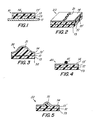
- reinforcing sheet 10 for the reinforcement of panel 11 shown as formed of metal but which may also be plastic or sheet molding compound, includes moisture impermeable barrier 12 embedded within thermosetting adhesive layer 13, 13 ⁇ .
- thermosetting adhesive layer 13, 13 ⁇ is formed of an epoxy resin and a curing agent.
- a mixture of cycloaliphatic epoxides, epoxidized novolac resins, epoxidized bisphenol A or bisphenol F resins, butanediol diglycidyl ether, neopentyl glycol diglycidyl ether or flexibilizing epoxy resins can be used. These resins can be reacted with carboxy terminated butadiene acrylonitrile to produce rubber modified epoxy resins.
- the diglycidyl ether of bisphenol A and the diglycidyl ether of bisphenol A reacted with carboxy terminated butadiene acrylonitrile to produce a crosslinkable resin with improved peel strength and impact resistance are preferably used as the epoxy resin.
- Lewis acids, substituted imidazoles or amine salts can be used as curing agents.
- dicyandiamide is used as the curing agent.
- Thermosetting adhesive layer 13, 13 ⁇ can include a plasticizer for impact and thermal shock resistance improvement.
- a plasticizer for impact and thermal shock resistance improvement Advantageously, benzoates, adipates and phthalates can be used as the plasticizer.
- thermosetting adhesive layer can further con tain a flame retardent, such as a halogenated epoxy, hydrated alumina or antimony oxide; a flow control agent, such as clay or fumed silica; or a filler, such as glass, phenolic or aluminium oxide bubbles, preferably glass bubbles.
- a flame retardent such as a halogenated epoxy, hydrated alumina or antimony oxide
- a flow control agent such as clay or fumed silica
- a filler such as glass, phenolic or aluminium oxide bubbles, preferably glass bubbles.
- Such fillers further serve as a low density reinforcing agent.
- Other fillers such as talcs, carbonates, silicates and aluminium oxide powder can be used to modify impact, reinforcement and adhesion characteristics.
- Still other fillers such as ferrites can be used to impart magnetic properties to the adhesive sheet.
- thermosetting adhesive is advantageously formed of 100 parts by weight of epoxy resin, 3 to 15 parts by weight of curing agent, 0 to 30 parts by weight of plasticizer, 0 to 15 parts by weight of clay filler and 0 to 60 parts by weight of glass bubbles.
- thermosetting adhesive suitably cures at about 160° to 220° C.
- the thermosetting adhesive composition may also include a catalyst compatible with the curing agent for curing the composition at lower temperatures.
- An appropriate catalyst is a substituted urea catalyst, preferably phenyl dimethyl urea. With such a catalyst, the adhesive cures at about 120° to 180° C.
- Reinforcement 14 suitably in the form of a layer, is adhered to the surface of thermosetting adhesive layer 13 ⁇ opposite the surface of thermosetting adhesive layer 13 to be applied to panel 11 to be reinforced.
- the reinforcement is a woven glass fabric.
- the woven glass fabric reinforcement provides increased strength for the reinforcing sheet.
- the reinforcing sheet may take various forms while still maintaining the necessary flexibility to conform to the shape of the panel to be reinforced.
- the reinforcing sheet may be flat such as reinforcing sheet 10 in Fig.1 and reinforcing sheet 20 in Fig.2.
- woven glass fabric 14 may have reinforcing constructions 21 woven into it, such as by weaving carbon fiber into the woven glass fabric or by changing the weave of the woven glass fabric.
- the reinforcing sheet may have a ribbed configuration such as reinforcing sheet 30 in Fig.3, reinforcing sheet 40 in Fig.4 and reinforcing sheet 50 in Fig.5.
- the rib may be formed of additional material 31 of the same composition as thermosetting adhesive layer 13 ⁇ under the unexposed surface of woven glass fabric 14.
- resin impregnated roving 41 such as a slightly twisted strand of textile fibers coated with resin, may be placed on the exposed surface of woven glass fabric 14 to form a rib.
- the rib may be formed of flexible expandable material 51 which expands during curing to form a bead-like projection.
- moisture impermeable barrier 12 is embedded between thermosetting adhesive layers 13 and 13 ⁇ .
- Moisture impermeable barrier 12 acts to prevent mois ture from adversely affecting protected thermosetting adhesive layer 13 after reinforcing sheet 10 is applied to panel 11 to be reinforced.
- moisture may be absorbed by woven glass fabric 14 and unprotected thermosetting adhesive layer 13 ⁇ .
- moisture impermeable barrier 12 migration of the moisture to protected thermosetting adhesive layer 13 is prevented by moisture impermeable barrier 12.
- Any material that is moisture impermeable, remains stable up to the curing temperature, and exhibits sufficient adhesion to the thermosetting adhesive layer and sufficient flexibility to conform to the shape of the panel to be reinforced can be used as moisture impermeable barrier 12.
- a metal foil such as aluminium, tin, copper, zinc, brass, steel or iron foil, can be advantageously used as moisture impermeable barrier 12. Because of its ready accessibility, inexpensive cost and high flexibi lity, aluminium foil is most preferred.
- Moisture impermeable barrier 12 and in particular the aluminium foil used as the moisture impermeable barrier, must have sufficient thickness to maintain its integrity in order to prevent moisture from migrating to protected thermosetting adhesive layer 13.
- moisture impermeable barrier 12 must not have so great a thickness that its flexibility and capacity to conform to the shape of panel 11 to be reinforced are sacrificed.
- aluminium foil is used as the moisture impermeable barrier, it suitably has a thickness of ca. 0.0125 mm to ca. 0.075 mm, more preferably ca. 0.02 mm to ca. 0.05 mm, most preferably ca. 0.025 mm.
- moisture impermeable barrier 12 is embedded approximately midway between the surface of the thermosetting adhesive layer 13 which comes in contact with panel 11 to be reinforced and the surface of thermosetting adhesive layer 13 ⁇ which binds to reinforcement 14.
- Each of adhesive layers 13 and 13 ⁇ has a thickness sufficient to bond the reinforcing sheet to the panel and to adhere the woven glass fabric reinforcement to the surface opposite the surface to be applied to the panel, respectively.
- the combined adhesive layer has a thickness of ca. 0.5 mm to ca. 5 mm, preferably ca. 0.75 mm to ca. 2.5 mm, and at least ca. 0.25 mm of the adhesive is provided on each side of the moisture impermeable barrier.
- the surface of protected thermosetting adhesive layer 13 away from moisture impermeable barrier 12 is advantageously covered with release sheet 32, preferably release paper, to facilitate handling of reinforcing sheet 30 and to prevent unintentional adhesion of the reinforcing sheet prior to its application to the panel to be reinforced.
- release sheet 32 preferably release paper
- the reinforcing sheet advantageously is prepared by spreading a thermosetting adhesive layer onto release paper with a coating knife to a uniform thickness suitable of ca. 0.25 mm to ca. 2.5 mm, preferably ca. 0.5 mm to ca. 1.25 mm.
- the moisture impermeable barrier is then placed on the thermosetting adhesive layer and pressed with a pressure roll.
- a second thermosetting adhesive layer is pumped onto the moisture impermeable barrier and spread with a coating knife again to form a layer of uniform thickness suitably of ca. 0.25 mm to ca. 2.5 mm, preferably ca. 0.5 mm to ca. 1.25 mm.
- the reinforcement such as the woven glass fabric, is adhered to the top of the second thermosetting adhesive layer, the surface of the adhesive layer opposite the surface to be applied to the panel to be reinforced.
- the woven glass fiber preferably has a thickness of ca. 0.125 mm to ca. 1.25 mm.
- the entire reinforcing sheet is then pressed with a roller to provide a sheet with total thickness suitably of ca. 0.75 mm to ca. 7.5 mm, preferably ca. 1.0 mm to ca. 2.5 mm.
- the release paper is removed from the reinforcing sheet and the reinforcing sheet is brought in contact with the panel.
- the reinforcing sheet has sufficient flexibility and thickness to conform to the shape of the panel to be reinforced. Because of the moisture impermeable barrier in the reinforcing sheet, the panel with the reinforcing sheet applied on it can be stored for long periods of time, for example three to six months, with minimal adverse effects due to the absorption of moisture, even under humid conditions.
- the moisture impermeable barrier is embedded within the thermosetting adhesive layer, it is protected from damage during handling and storage of the reinforcing sheet. Furthermore, the position of the moisture impermeable barrier embedded within the uncured thermosetting adhesive layer serves to prevent buckling and separation of the barrier from the laminated reinforcing sheet, even when conforming the reinforcing sheet to the shape of the panel to be reinforced.
- thermosetting adhesive layer does provide resistance to humidity absorption.
- disadvantageous effects of any flaw in the moisture impermeable barrier which otherwise would allow aggravated damage to the thermosetting adhesive layer due to absorption of moisture if the barrier were located at the surface of the reinforcing sheet, particularly at the reinforcement adhered to the thermosetting adhesive layer are minimized due to the location of the barrier embedded in the thermosetting adhesive layer.
- a panel with a reinforcing sheet having an embedded moisture impermeable barrier applied to the panel can be heated to the curing temperature of the thermosetting adhesive layer, preferably to a temperature of 120° to 220° C, to harden the reinforcing sheet without adverse effects, even after storage for a number of months under humid conditions.
- a flat reinforcing sheet containing a 0.025 mm aluminium foil moisture impermeable barrier was constructed according to the invention.
- the aluminium foil was embedded midway within a thermosetting adhesive layer formed of 30 parts by weight of the diglycidyl ether of bisphenol A, 70 parts by weight of the diglycidyl ether of bisphenol A reacted in a 3:2 ratio with carboxy terminated butadiene acrylonitrile, 7 parts by weight of a phthalate plasticizer, 6 parts by weight of dicyandiamide curing agent, 7 parts by weight of clay, 15 parts by weight of glass bubbles, and 1.5 parts by weight of phenyl dimethyl urea catalyst for dicyandiamide curing.
- the reinforcing sheet contained a woven glass fabric adhered to the surface of the thermosetting adhesive layer opposite the surface to be applied to the panel to be reinforced.
- a comparative sample was prepared in an identical manner to the sample according to the invention except omitting the moisture impermeable barrier.
- a 25 mm wide by 150 mm long piece of the reinforcing sheet according to the invention was applied to a first cold rolled steel metal panel of dimensions 25 mm wide by 150 mm long by 0.75 mm thick.
- a 25 mm wide by 150 mm long sample of the comparison reinforcing sheet without the moisture impermeable barrier was applied to an identical second cold rolled steel metal panel of dimensions 25 mm wide by 150 mm long by 0.75 mm thick.
- thermosetting adhesive The two samples were then heated at 150° C for 0.5 hour to cure and harden the thermosetting adhesive.
- the presence of the moisture impermeable barrier does not affect the reinforcement capability of the reinforcing sheet.
- thermosetting adhesive layer was gassed through the entire sheet. Presumably, this gassing was caused by decomposition of the curing agent in the presence of moisture absorbed by the thermosetting adhesive layer. The trapped gas reduced the cohesiveness and density of the thermosetting adhesive layer during and after curing. Loss of cohesion of the adhesive layer resulted in the reinforcing sheet peeling away from the cold rolled steel during curing.
- the reinforcing sheet according to the invention with the moisture impermeable barrier exhibited gassing of the thermosetting adhesive layer only between the aluminium foil and the woven glass fabric but no gassing of the thermosetting adhesive between the aluminium foil and the cold rolled steel metal panel.
- the thermosetting adhesive layer in contact with the steel panel maintained its integrity, including its adhesion to the metal panel, despite the fact that the reinforcing sheet was subjected to moisture from atmospheric humidity.
- the reinforcing sheet containing the moisture impermeable barrier remained adhered to the metal panel during curing. The corrosion and vibration protection of the reinforced metal panel was maintained.
- a flat reinforcing sheet having a 0.025 mm aluminium foil moisture impermeable barrier was constructed according to the invention.
- the aluminium foil was embedded midway within a thermosetting adhesive layer formed of 30 parts by weight of the diglycidyl ether of bisphenol A, 70 parts by weight of the diglycidyl ether of the bisphenol A reacted in a 3:2 ratio with carboxy terminated butadiene acrylonitrile, 7 parts by weight of a phthalate plasticizer, 6 parts by weight of dicyandiamide curing agent, 7 parts by weight of clay, and 20 parts by weight of glass bubbles.
- the reinforcing sheet contained a woven glass fabric adhered to the surface of the thermosetting adhesive layer opposite the surface to be applied to the panel to be reinforced.
- a comparative sample was prepared in an identical manner to the sample according to the invention except omitting the moisture impermeable barrier.
- a 25 mm wide by 150 mm long piece of the reinforcing sheet according to the invention was applied to a first cold rolled steel metal panel of dimensions 25 mm wide by 150 mm long by 0.75 mm thick.
- a 25 mm wide by 150 mm long sample of the comparison reinforcing sheet without the moisture impermeable barrier was applied to an identical second cold rolled steel metal panel of dimensions 25 mm wide by 150 mm long by 0.75 mm thick.
- thermosetting adhesive The two samples were then heated at 200° C for 0.5 hour to cure and harden the thermosetting adhesive.
- the presence of the moisture impermeable barrier does not affect the reinforcement capability of the reinforcing sheet.
- thermosetting adhesive layer was gassed through the entire sheet. Presumably, this gassing was caused by decomposition of the curing agent in the presence of moisture absorbed by the thermosetting adhesive layer. The trapped gas reduced the cohesiveness and density of the thermosetting adhesive layer during and after curing. Loss of cohesion of the adhesive layer resulted in the reinforcing sheet peeling away from the cold rolled steel during curing.
- the reinforcing sheet according to the invention with the moisture impermeable barrier exhibited gassing of the thermosetting adhesive layer only between the aluminium foil and the woven glass fabric but no gassing of the thermosetting adhesive between the aluminium foil and the cold rolled steel metal panel.
- the thermosetting adhesive layer in contact with the steel panel maintained its integrity, including its adhesion to the metal panel, despite the fact that the reinforcing sheet was subjected to moisture from atmospheric humidity.
- the reinforcing sheet containing the moisture impermeable barrier remained adhered to the metal panel during curing. The corrosion and vibration protection of the reinforced metal panel was maintained.
Landscapes
- Engineering & Computer Science (AREA)
- Architecture (AREA)
- Structural Engineering (AREA)
- Chemical & Material Sciences (AREA)
- Mechanical Engineering (AREA)
- Combustion & Propulsion (AREA)
- Civil Engineering (AREA)
- Transportation (AREA)
- Textile Engineering (AREA)
- Composite Materials (AREA)
- Laminated Bodies (AREA)
- Body Structure For Vehicles (AREA)
- Reinforced Plastic Materials (AREA)
- Adhesives Or Adhesive Processes (AREA)
Applications Claiming Priority (2)
| Application Number | Priority Date | Filing Date | Title |
|---|---|---|---|
| US07/014,636 US4803105A (en) | 1987-02-13 | 1987-02-13 | Reinforcing sheet for the reinforcement of panel and method of reinforcing panel |
| US14636 | 2001-10-26 |
Publications (2)
| Publication Number | Publication Date |
|---|---|
| EP0278268A2 true EP0278268A2 (fr) | 1988-08-17 |
| EP0278268A3 EP0278268A3 (fr) | 1989-04-12 |
Family
ID=21766715
Family Applications (1)
| Application Number | Title | Priority Date | Filing Date |
|---|---|---|---|
| EP88100727A Ceased EP0278268A3 (fr) | 1987-02-13 | 1988-01-20 | Feuille de renforcement pour renforcer des panneaux et procédé pour renforcer des panneaux |
Country Status (7)
| Country | Link |
|---|---|
| US (1) | US4803105A (fr) |
| EP (1) | EP0278268A3 (fr) |
| JP (1) | JP2574683B2 (fr) |
| KR (1) | KR960000728B1 (fr) |
| AU (1) | AU8229987A (fr) |
| BR (1) | BR8800446A (fr) |
| CA (1) | CA1307451C (fr) |
Cited By (2)
| Publication number | Priority date | Publication date | Assignee | Title |
|---|---|---|---|---|
| EP1092818A3 (fr) * | 1999-10-11 | 2003-08-20 | ALSTOM LHB GmbH | Méthode pour augmenter la raideur d'éléments plans ainsi qu' élément plan et son utilisation |
| DE10250780A1 (de) * | 2002-10-30 | 2004-05-19 | Henkel Kgaa | Mehrschicht Laminate zum Versteifen |
Families Citing this family (51)
| Publication number | Priority date | Publication date | Assignee | Title |
|---|---|---|---|---|
| DE3720267A1 (de) * | 1987-06-19 | 1989-01-05 | Gurit Essex Ag | Schichtkoerper |
| DE3863016D1 (de) * | 1987-06-19 | 1991-07-04 | Gurit Essex Ag | Verfahren zum versteifen von blechen, kunststoff-formkoerpern oder dgl. und versteifungskoerper zur durchfuehrung des verfahrens. |
| JPH0245816U (fr) * | 1988-09-26 | 1990-03-29 | ||
| DE69026219T2 (de) * | 1989-12-19 | 1996-09-05 | Mitsubishi Chem Corp | Epoxyharz imprägnierte Glasmatte mit einer Kleberschicht |
| US5151327A (en) * | 1990-03-15 | 1992-09-29 | Nitto Denko Corporation | Adhesive sheet for reinforcing thin rigid plates |
| JP2858160B2 (ja) * | 1990-05-11 | 1999-02-17 | 本田技研工業株式会社 | Al合金製プレス成形板の接着構造 |
| US5456513A (en) * | 1993-09-20 | 1995-10-10 | Schmidt; Glen D. | Sound and water barrier and method of making the same |
| US6309985B1 (en) | 1998-01-26 | 2001-10-30 | Soundwich, Inc. | Formable constraining layer system |
| MY125251A (en) * | 1999-10-08 | 2006-07-31 | James Hardie Int Finance B V | Fiber-cement/gypsum laminate composite building material |
| US6689451B1 (en) * | 1999-11-19 | 2004-02-10 | James Hardie Research Pty Limited | Pre-finished and durable building material |
| US6539643B1 (en) | 2000-02-28 | 2003-04-01 | James Hardie Research Pty Limited | Surface groove system for building sheets |
| AU2001275059A1 (en) * | 2000-06-06 | 2001-12-17 | Dow Global Technologies Inc | Epoxy based reinforcing patches with improved adhesion to oily metal surfaces |
| ES2215096T3 (es) * | 2001-03-05 | 2004-10-01 | Sika Schweiz Ag | Procedimiento de pegado estructural sobre superficies de pintura. |
| US20050284339A1 (en) * | 2001-04-03 | 2005-12-29 | Greg Brunton | Durable building article and method of making same |
| WO2002081842A1 (fr) * | 2001-04-03 | 2002-10-17 | James Hardie Research Pty Limited | Article en fibrociment renforce et procedes de production et d'installation |
| US20020170651A1 (en) * | 2001-05-15 | 2002-11-21 | Edwards Christopher M. | Method for reinforcing cementitious structures |
| US7318873B2 (en) | 2002-03-29 | 2008-01-15 | Zephyros, Inc. | Structurally reinforced members |
| EP1534511B1 (fr) * | 2002-07-16 | 2012-05-30 | James Hardie Technology Limited | Conditionnement d'articles prefinis en fibrociment |
| US8281535B2 (en) * | 2002-07-16 | 2012-10-09 | James Hardie Technology Limited | Packaging prefinished fiber cement articles |
| US20040018353A1 (en) * | 2002-07-25 | 2004-01-29 | L&L Products, Inc. | Composite metal foam damping/reinforcement structure |
| US20040076831A1 (en) * | 2002-10-02 | 2004-04-22 | L&L Products, Inc. | Synthetic material and methods of forming and applying same |
| MXPA05003691A (es) | 2002-10-07 | 2005-11-17 | James Hardie Int Finance Bv | Material mixto de fibrocemento de densidad media durable. |
| US20040214008A1 (en) * | 2003-04-25 | 2004-10-28 | Dobrusky Scott R. | Flexible magnetic damping laminate with thermosetting adhesive layer |
| GB2401349A (en) * | 2003-05-08 | 2004-11-10 | L & L Products | Reinforcement for a vehicle panel |
| US7585559B2 (en) * | 2003-06-03 | 2009-09-08 | Intellectual Property Holdings, Llc | Foam barrier heat shield |
| US7784186B2 (en) * | 2003-06-26 | 2010-08-31 | Zephyros, Inc. | Method of forming a fastenable member for sealing, baffling or reinforcing |
| US20050102815A1 (en) * | 2003-11-03 | 2005-05-19 | L&L Products, Inc. | Reinforced members formed with absorbent mediums |
| US20050138865A1 (en) * | 2003-11-28 | 2005-06-30 | James Gleeson | Eave lining system |
| US20050166532A1 (en) * | 2004-01-07 | 2005-08-04 | L&L Products, Inc. | Structurally reinforced panels |
| CN1910326A (zh) * | 2004-01-12 | 2007-02-07 | 詹姆斯哈迪国际财金公司 | 具有可辐射固化组分的复合纤维水泥制品 |
| GB0402221D0 (en) | 2004-02-02 | 2004-03-03 | L & L Products Inc | Improvements in or relating to composite materials |
| US20050172486A1 (en) * | 2004-02-05 | 2005-08-11 | L&L Products, Inc. | Member for sealing, baffling or reinforcing and method of forming same |
| NZ549407A (en) * | 2004-02-27 | 2009-04-30 | James Hardie Int Finance Bv | Batten mounting water management system |
| US20050260399A1 (en) * | 2004-05-19 | 2005-11-24 | L&L Products, Inc. | Synthetic material having selective expansion characteristics |
| US7998571B2 (en) | 2004-07-09 | 2011-08-16 | James Hardie Technology Limited | Composite cement article incorporating a powder coating and methods of making same |
| CA2584203A1 (fr) * | 2004-10-14 | 2006-04-20 | James Hardie International Finance B.V. | Systeme de mur creux |
| US7748184B1 (en) * | 2005-02-09 | 2010-07-06 | Intellectual Property Holdings, Llc | Body panel having improved stiffness and method of making |
| EP1710286A1 (fr) | 2005-04-04 | 2006-10-11 | 3M Innovative Properties Company | Coussin de renfort |
| US20070104958A1 (en) * | 2005-08-24 | 2007-05-10 | Dow Global Technologies, Inc. | Epoxy based reinforcing patches with encapsulated physical blowing agents |
| GB2431374A (en) * | 2005-10-20 | 2007-04-25 | 3M Innovative Properties Co | Adhesive pad comprising fibrous layer of metal and polymeric fibers |
| WO2007115379A1 (fr) | 2006-04-12 | 2007-10-18 | James Hardie International Finance B.V. | Element de construction renforce a surface etanche |
| US7799840B2 (en) | 2006-09-12 | 2010-09-21 | Intellectual Property Holdings, Llc | Thermoplastic vibrational damper with constraining layer |
| KR101663846B1 (ko) * | 2008-10-15 | 2016-10-07 | 쓰리엠 이노베이티브 프로퍼티즈 컴파니 | 일방향으로 정렬된 섬유를 갖는 보강 패치 |
| JP5764408B2 (ja) * | 2011-06-30 | 2015-08-19 | 株式会社ユーシン精機 | 成形品取出機 |
| CN104136529B (zh) * | 2011-12-29 | 2018-05-11 | 3M创新有限公司 | 低温减振压敏粘合剂和构造 |
| US9771811B2 (en) | 2012-01-11 | 2017-09-26 | General Electric Company | Continuous fiber reinforced mesh bond coat for environmental barrier coating system |
| FR3021255B1 (fr) * | 2014-05-21 | 2016-05-13 | Renault Sa | Portiere renforcee de vehicule automobile |
| US20160059513A1 (en) * | 2014-08-26 | 2016-03-03 | Seriforge, Inc. | Folded composite preforms with integrated joints |
| EP3243885B2 (fr) | 2016-05-12 | 2024-10-30 | 3M Innovative Properties Company | Film adhésif structurel |
| WO2019099227A1 (fr) | 2017-11-20 | 2019-05-23 | Uniseal, Inc. | Pièces de renforcement à base d'époxy ayant un facteur de perte d'amortissement amélioré |
| DE102021101908A1 (de) * | 2021-01-28 | 2022-07-28 | Dr. Ing. H.C. F. Porsche Aktiengesellschaft | Schutzdeckel einer Kraftfahrzeugkarosserie |
Family Cites Families (35)
| Publication number | Priority date | Publication date | Assignee | Title |
|---|---|---|---|---|
| US3817808A (en) * | 1969-09-29 | 1974-06-18 | Rohr Industries Inc | Method of forming core panels |
| US3529693A (en) * | 1969-11-03 | 1970-09-22 | Rohr Corp | Acoustical sandwich panel having honeycomb core with crushed intermediate zone and method of making same |
| US3902951A (en) * | 1969-12-28 | 1975-09-02 | Matsushita Electric Works Ltd | Copper-clad laminate and production thereof |
| US3553054A (en) * | 1970-01-12 | 1971-01-05 | North American Rockwell | Laminated structural members |
| US3666617A (en) * | 1970-05-22 | 1972-05-30 | Hooker Chemical Corp | Fire retardant laminates |
| US3695968A (en) * | 1970-11-10 | 1972-10-03 | Morrison Ind Inc | Method of making a fibrous glass plastic encapsulated plywood or like core panel |
| US3895152A (en) * | 1973-12-26 | 1975-07-15 | Continental Oil Co | A composite cellular construction |
| US4180608A (en) * | 1977-01-07 | 1979-12-25 | Del Joseph A | Process for making multi-layer printed circuit boards, and the article resulting therefrom |
| JPS55101659A (en) * | 1979-01-27 | 1980-08-02 | Toma Kohan Kk | Grooved floor member |
| JPS6044187B2 (ja) * | 1979-09-08 | 1985-10-02 | 日産自動車株式会社 | 自動車用板材及びその製造方法 |
| US4290235A (en) * | 1979-10-24 | 1981-09-22 | The Budd Company | Intrusion resisting strap for automobile doors |
| JPS56136869A (en) * | 1980-03-31 | 1981-10-26 | Idemitsu Kosan Co Ltd | Sticking foam |
| JPS5720358A (en) * | 1980-07-14 | 1982-02-02 | Nippon Telegr & Teleph Corp <Ntt> | Type body |
| JPS6017705B2 (ja) * | 1980-11-27 | 1985-05-04 | 日東電工株式会社 | 金属板補強用の接着性シ−トと金属板補強方法 |
| NL8100087A (nl) * | 1981-01-09 | 1982-08-02 | Tech Hogeschool Delft Afdeling | Laminaat uit metalen platen en daarmede verbonden draden. |
| JPS57151354A (en) * | 1981-03-16 | 1982-09-18 | Nissan Motor | Reinforcing material and reinforcing panel |
| JPS57151342A (en) * | 1981-03-16 | 1982-09-18 | Nissan Motor | Reinforcing structure of board material |
| JPS57151422A (en) * | 1981-03-16 | 1982-09-18 | Nissan Motor Co Ltd | Reinforcement process for plate member |
| JPS57151347A (en) * | 1981-03-16 | 1982-09-18 | Nissan Motor | Reinforcing material for reinforcing board material |
| JPS6056114B2 (ja) * | 1981-03-16 | 1985-12-09 | 日産自動車株式会社 | 板材補強用の補強材 |
| JPS57151357A (en) * | 1981-03-16 | 1982-09-18 | Nissan Motor | Reinforcing material and reinforcing panel |
| JPS57151361A (en) * | 1981-03-16 | 1982-09-18 | Nissan Motor | Reinforcing material and reinforcing panel |
| DE3117604A1 (de) * | 1981-05-05 | 1983-01-05 | Chemie-Werk Weinsheim Gmbh, 6520 Worms | "mehrschichtiges flaechenhaftes aussteifungsteil" |
| JPS58112534A (ja) * | 1981-12-28 | 1983-07-05 | オリンパス光学工業株式会社 | 内視鏡用処置具 |
| JPS58118878A (ja) * | 1982-01-09 | 1983-07-15 | Nitto Electric Ind Co Ltd | 金属板補強用の接着性シ−ト |
| JPS58132068A (ja) * | 1982-01-30 | 1983-08-06 | Nitto Electric Ind Co Ltd | 補強用の接着性シ−ト |
| JPS58136435A (ja) * | 1982-02-07 | 1983-08-13 | 日東電工株式会社 | 積層補強材 |
| US4581267A (en) * | 1982-09-09 | 1986-04-08 | Morgan Adhesives Company | Moisture and oxygen barrier laminate for photographic or printed articles |
| US4501787A (en) * | 1983-04-29 | 1985-02-26 | Westinghouse Electric Corp. | Flame retardant B-staged epoxy resin prepregs and laminates made therefrom |
| JPS59204549A (ja) * | 1983-05-07 | 1984-11-19 | 日東電工株式会社 | 金属板補強用の接着性シ−ト |
| US4559252A (en) * | 1983-06-09 | 1985-12-17 | Toyota Jidosha Kabushiki Kaisha | Plate metal reinforcing combination |
| US4511621A (en) * | 1983-10-17 | 1985-04-16 | Lik-Nu Porcelain, Inc. | Repair laminate sheet for acrylic and fiberglass tubs |
| JPS60222238A (ja) * | 1984-04-19 | 1985-11-06 | 日東電工株式会社 | 補強用接着性シ−ト |
| US4707397A (en) * | 1984-05-21 | 1987-11-17 | Bridgestone Corporation | Vibration damping metal panels |
| US4670339A (en) * | 1984-06-04 | 1987-06-02 | Advanced Technology Laboratories, Inc. | Electrically conductive thin epoxy bond |
-
1987
- 1987-02-13 US US07/014,636 patent/US4803105A/en not_active Expired - Lifetime
- 1987-12-10 AU AU82299/87A patent/AU8229987A/en not_active Abandoned
-
1988
- 1988-01-08 JP JP63001435A patent/JP2574683B2/ja not_active Expired - Lifetime
- 1988-01-20 EP EP88100727A patent/EP0278268A3/fr not_active Ceased
- 1988-02-04 BR BR8800446A patent/BR8800446A/pt unknown
- 1988-02-12 KR KR1019880001353A patent/KR960000728B1/ko not_active Expired - Lifetime
- 1988-02-12 CA CA000558783A patent/CA1307451C/fr not_active Expired - Lifetime
Cited By (3)
| Publication number | Priority date | Publication date | Assignee | Title |
|---|---|---|---|---|
| EP1092818A3 (fr) * | 1999-10-11 | 2003-08-20 | ALSTOM LHB GmbH | Méthode pour augmenter la raideur d'éléments plans ainsi qu' élément plan et son utilisation |
| DE10250780A1 (de) * | 2002-10-30 | 2004-05-19 | Henkel Kgaa | Mehrschicht Laminate zum Versteifen |
| US7238407B2 (en) | 2002-10-30 | 2007-07-03 | Henkel Kommanditgesellschaft Auf Aktien | Multi-layer reinforcing laminate |
Also Published As
| Publication number | Publication date |
|---|---|
| CA1307451C (fr) | 1992-09-15 |
| BR8800446A (pt) | 1988-09-20 |
| JPS63202445A (ja) | 1988-08-22 |
| EP0278268A3 (fr) | 1989-04-12 |
| AU8229987A (en) | 1988-08-18 |
| KR880009788A (ko) | 1988-10-05 |
| JP2574683B2 (ja) | 1997-01-22 |
| US4803105A (en) | 1989-02-07 |
| KR960000728B1 (ko) | 1996-01-12 |
Similar Documents
| Publication | Publication Date | Title |
|---|---|---|
| EP0278268A2 (fr) | Feuille de renforcement pour renforcer des panneaux et procédé pour renforcer des panneaux | |
| CA1321130C (fr) | Feuilles alveolees a utiliser comme renfort de panneaux | |
| EP0085415B1 (fr) | Feuilles adhésives de renforcement | |
| KR100809859B1 (ko) | 오일이 묻어 있는 금속 표면에 대한 접착성이 개선된 에폭시계 보강용 시트 및 이를 사용하여 기판을 보강하는 방법 | |
| US20030176128A1 (en) | Structurally reinforced panels | |
| JPS60222238A (ja) | 補強用接着性シ−ト | |
| JPS6035261B2 (ja) | 多層構造を有する被覆物を用いた金属薄板の音響防止並びに補強方法 | |
| KR100497727B1 (ko) | 표면재 및 이를 이용한 샌드위치 구조체 | |
| JPH08267665A (ja) | 薄板補強用接着シート | |
| JPS59204537A (ja) | 金属板補強用の接着性シ−ト | |
| JPS608947B2 (ja) | 金属板補強用接着性シ−ト | |
| JPS58136435A (ja) | 積層補強材 | |
| JPH05220883A (ja) | 制振シート | |
| JP2510882B2 (ja) | 薄板補強用の接着性シ―ト | |
| JPH01221236A (ja) | 薄板補強用の接着性シート | |
| JPS6322236B2 (fr) | ||
| JPH0240549B2 (ja) | Jidoshayoitazainohokyozai | |
| JP2001261264A (ja) | エレベータかご用パネル体 | |
| JPH1122898A (ja) | 薄板補強用接着シートおよびそれを用いた補強体 | |
| JPS59155037A (ja) | 自動車ボデイ−の補強構造 | |
| JPS59124974A (ja) | 金属板補強用の接着性シ−ト | |
| JPS6121142B2 (fr) | ||
| JPS5959773A (ja) | 補強用接着性シ−ト | |
| JPH01284579A (ja) | 薄板補強用接着シート | |
| JPS6356861B2 (fr) |
Legal Events
| Date | Code | Title | Description |
|---|---|---|---|
| PUAI | Public reference made under article 153(3) epc to a published international application that has entered the european phase |
Free format text: ORIGINAL CODE: 0009012 |
|
| AK | Designated contracting states |
Kind code of ref document: A2 Designated state(s): AT BE CH DE ES FR GB GR IT LI LU NL SE |
|
| PUAL | Search report despatched |
Free format text: ORIGINAL CODE: 0009013 |
|
| AK | Designated contracting states |
Kind code of ref document: A3 Designated state(s): AT BE CH DE ES FR GB GR IT LI LU NL SE |
|
| 17P | Request for examination filed |
Effective date: 19890526 |
|
| 17Q | First examination report despatched |
Effective date: 19910128 |
|
| STAA | Information on the status of an ep patent application or granted ep patent |
Free format text: STATUS: THE APPLICATION HAS BEEN REFUSED |
|
| 18R | Application refused |
Effective date: 19920412 |