EP0278706B1 - Rekombinantes Plasmid für die Expression von L-Phenylalanin-Ammonialyase und transformierte Stämme, die es enthalten - Google Patents
Rekombinantes Plasmid für die Expression von L-Phenylalanin-Ammonialyase und transformierte Stämme, die es enthalten Download PDFInfo
- Publication number
- EP0278706B1 EP0278706B1 EP88301011A EP88301011A EP0278706B1 EP 0278706 B1 EP0278706 B1 EP 0278706B1 EP 88301011 A EP88301011 A EP 88301011A EP 88301011 A EP88301011 A EP 88301011A EP 0278706 B1 EP0278706 B1 EP 0278706B1
- Authority
- EP
- European Patent Office
- Prior art keywords
- promoter
- plasmid
- pal
- coli
- dna
- Prior art date
- Legal status (The legal status is an assumption and is not a legal conclusion. Google has not performed a legal analysis and makes no representation as to the accuracy of the status listed.)
- Expired - Lifetime
Links
Images







Classifications
-
- C—CHEMISTRY; METALLURGY
- C12—BIOCHEMISTRY; BEER; SPIRITS; WINE; VINEGAR; MICROBIOLOGY; ENZYMOLOGY; MUTATION OR GENETIC ENGINEERING
- C12N—MICROORGANISMS OR ENZYMES; COMPOSITIONS THEREOF; PROPAGATING, PRESERVING, OR MAINTAINING MICROORGANISMS; MUTATION OR GENETIC ENGINEERING; CULTURE MEDIA
- C12N15/00—Mutation or genetic engineering; DNA or RNA concerning genetic engineering, vectors, e.g. plasmids, or their isolation, preparation or purification; Use of hosts therefor
- C12N15/09—Recombinant DNA-technology
- C12N15/11—DNA or RNA fragments; Modified forms thereof; Non-coding nucleic acids having a biological activity
- C12N15/52—Genes encoding for enzymes or proenzymes
-
- C—CHEMISTRY; METALLURGY
- C12—BIOCHEMISTRY; BEER; SPIRITS; WINE; VINEGAR; MICROBIOLOGY; ENZYMOLOGY; MUTATION OR GENETIC ENGINEERING
- C12N—MICROORGANISMS OR ENZYMES; COMPOSITIONS THEREOF; PROPAGATING, PRESERVING, OR MAINTAINING MICROORGANISMS; MUTATION OR GENETIC ENGINEERING; CULTURE MEDIA
- C12N9/00—Enzymes; Proenzymes; Compositions thereof; Processes for preparing, activating, inhibiting, separating or purifying enzymes
- C12N9/88—Lyases (4.)
-
- C—CHEMISTRY; METALLURGY
- C12—BIOCHEMISTRY; BEER; SPIRITS; WINE; VINEGAR; MICROBIOLOGY; ENZYMOLOGY; MUTATION OR GENETIC ENGINEERING
- C12N—MICROORGANISMS OR ENZYMES; COMPOSITIONS THEREOF; PROPAGATING, PRESERVING, OR MAINTAINING MICROORGANISMS; MUTATION OR GENETIC ENGINEERING; CULTURE MEDIA
- C12N15/00—Mutation or genetic engineering; DNA or RNA concerning genetic engineering, vectors, e.g. plasmids, or their isolation, preparation or purification; Use of hosts therefor
- C12N15/09—Recombinant DNA-technology
- C12N15/63—Introduction of foreign genetic material using vectors; Vectors; Use of hosts therefor; Regulation of expression
- C12N15/70—Vectors or expression systems specially adapted for E. coli
Definitions
- This invention relates to a recombinant plasmid (a hybrid plasmid) permitting efficient expression of L-phenylalanine ammonia-lyase (hereinafter abbreviated as PAL) in Escherichia coli , and a strain of E . coli which has been transformed with the recombinant plasmid.
- a hybrid plasmid permitting efficient expression of L-phenylalanine ammonia-lyase (hereinafter abbreviated as PAL) in Escherichia coli
- PAL L-phenylalanine ammonia-lyase
- the invention relates to a hybrid plasmid characterized in that, when the hybrid plasmid is constructed by inserting the structural gene for PAL in an expression vector enabling the expression of an exogenous gene in E . coli according to gene manipulation techniques, a combined promoter obtained by connecting, in a specified order, (a) a hybrid promoter (the tac promoter) constructed from the trp promoter minus 35 region and the lac UV-5 promoter minus 10 region with (b) the P L rpomoter of the lambda phage is used as the promoter for the expression of the structural gene for PAL.
- a hybrid promoter the tac promoter
- the lac UV-5 promoter minus 10 region the lac UV-5 promoter minus 10 region
- the P L rpomoter of the lambda phage is used as the promoter for the expression of the structural gene for PAL.
- PAL is an enzyme catalyzing the reaction in which ammonia is removed from L-phenylalanine to form trans-cinnamic acid. Accordingly, it is useful in the production of L-phenylalanine from cinnamic acid and ammonia by utilizing the reverse reaction.
- PAL has been prepared by extraction from yeasts, molds and plants.
- organisms productive of PAL can only give a slight yield of PAL, and it has been difficult to prepare PAL on an industrial scale.
- PAL i.e., the product of the structural gene derived from Rhodosporidium toruloides
- E . coli As a host microorganism serving to produce an exogenous protein (i.e., a protein which is not normally produced by the host microorganism) by utilization of the genetic recombination technique, E . coli is being widely used because its biological properties have been fully analyzed, it is not pathogenic, and it can be readily cultured in a medium having a simple composition.
- an expression vector allowing the desired protein to be expressed in E . coli there is used one which basically comprises a promoter permitting the transcription, in E . coli , of a DNA sequence located downstream of the promoter and containing the region coding for the desired exogenous protein, and a vector capable of replicating in E . coli .
- promoters are available for use as the promoter incorporated in such an expression vector.
- the P L promoter of the lambda phage of E . coli hereinafter referred to as the P L lambda promoter
- the promoter of the tryptophan operon of E. coli hereinafter referred to as the trp promoter
- the lac promoter the promoter of the lactose operon of E . coli
- the fusion promoter hereinafter referred to as the tac promoter
- the tac promoter composed of the trp promoter and the lac promoter
- Japanese Patent Laid-Open No. 126086/'85 discloses tandem promoters constructed by connecting the P L lambda promoter or the P R promoter (i.e., the P R promoter of the lambda phage of E . coli ) in series with the trp promoter or the lac promoter so that the former is located upstream of the latter.
- the substitution of 5' flanking region of the tac promoter with the 5' flanking region of the P L lambda promoter has been disclosed in EP-A-0 152 613.
- the present inventors made an attempt to develop an expression vector suitable for the production of PAL in E . coli according to the aforesaid gene manipulation technique, with their attention focused on the combination of the expression level of PAL and the promoter incorporated in the expression vector. Furthermore, by using various combined promoters, the present inventors also made an extensive investigation on the relationship between the arrangement of the constituent promoters and the expression level of PAL. As a result, it has been found that highly efficient expression of PAL in E . coli can be achieved by using, as the promoter of the expression vector, a combined promoter comprising the tac promoter and the P L promoter arranged in a specified direction and order. The present invention has been completed on the basis of this finding.
- the object of the present invention is to make improvements in the production of PAL in E . coli according to gene manipulation techniques. More specifically, the object of the present invention is to provide a hybrid plasmid which permits more efficient expression of PAL in E . coli , as well as a strain of E . coli which has been transformed with the plasmid and is suitable for use in the mass production of PAL.
- the present invention provides (A) a hybrid plasmid having
- the hybrid plasmid of the present invention has the structure in which a combined promoter comprising the tac promoter and the P L lambda promoter is located upstream of a DNA sequence coding for PAL in a specified positional relationship. This characteristic structure makes it possible to achieve more efficient expression of PAL.
- a transformed strain useful in the efficient mass production of PAL can be obtained by transforming E . coli with the hybrid plasmid of the present invention.
- the hybrid plasmid for the expression of PAL in accordance with the present invention is a recombinant plasmid comprising
- upstream and downstream mean that, when the reference direction is defined as the direction leading from the initiation codon to the termination codon of the DNA sequence coding for PAL, the side of a point lying in the same direction as the reference direction is “downstream” of the point and the side lying in the direction opposite to the reference direction is “upstream” of the point.
- the vector used in the hybrid plasmid of the present invention can be any DNA fragment that is stably retained in the E . coli and is capable of replicating therein (i.e., has an origin of replication capable of functioning properly in E . coli ).
- origin of replication of the vector there may be used those derived from pMB1, pSC101, ColE1 and p15A.
- origin of replication derived from the plasmid pBR322 is preferred because it originates from pMB1 and can be multicopied in E . coli .
- the aforesaid vector may conveniently contain a gene serving as a selection marker when the hybrid plasmid is introduced into the host microorganism.
- the marker gene there may be used various genes permitting the expression of ampicillin resistance in E . coli , such as those derived from the plasmids pBR322, pKC7, pMK16, pMG411, pACYC184 and the like; various genes permitting the expression of tetracycline resistance, kanamycin resistance or the like; and the lacZ gene.
- the combined promoter incorporated in the hybrid plasmid of the present invention comprises the tac promoter (that is a fusion promoter derived from the trp promoter and the lac promoter), and the P L lambda promoter which is connected downstream of the fusion promoter.
- the tac promoter used in this combined promoter can be constructed from the trp promoter minus 35 region and the lac UV-5 promoter minus 10 region according to the method reported by Bennet, G.N., et al., [Gene, 20 , 231 (1982)].
- the tac promoter used for this purpose may be cut out of suitable vectors containing it, such as the plasmid pKK223-3 (a product of Pharmacia Co.) constructed by J. Birosius et al.
- This tac promoter should preferably contain the SD sequence (Shine-Dalgano sequence).
- the P L lambda promoter there may be used that contained, for example, in a HindIII-BamHI segment of the DNA of the lambda phage for E . coli .
- This segment can be directly cut out of the lambda phage DNA by treatment with the restriction endonucleases HindIII and BamHI.
- the segment may also be cut out of suitable plasmids containing it, such a that used in the method of Shimatake et al. [Nature, 292, 128 (1981)].
- the term "same directional property" means that the RNA polymerase recognition site and RAN polymerase binding site characteristic of a promoter are arranged in the same order for both the tac promoter and the P L lambda promoter.
- the P L lambda promoter located downstream of the tac promoter in the combined promoter should be disposed so as to have the directional property which renders it active enough to permit transcription of the DNA sequence located downstream of it (i.e., the directional property in which the RNA polymerase recognition site is located downstream of its RNA polymerase recognition site), and should contain the SD sequence of the P L promoter.
- the DNA sequence coding for PAL and located downstream of the combined promoter constructed in the above-described manner can be, for example, the DNA sequence (with an initiation codon and a termination codon) containing the structural gene for PAL and having been cloned from a yeast of the genus Rhodosporidium by the present inventors according to the procedure described in the Reference Example given later. Moreover, there may also be used such DNA sequences cloned from various types of plants, animals and microorganisms having the ability to produce PAL.
- the mRNA terminator incorporated therein so as to be located downstream of the DNA sequence coding for PAL can be any terminator that functions properly in E . coli .
- a terminator such as rrnB, trpA or the like
- the hybrid plasmid of the present invention can be constructed by connecting the aforesaid constituents in the above-defined order according to genetic recombination techniques.
- the aforesaid marker gene and origin of replication are preferably connected in such a way that they are arranged in that order and located downstream of the terminator connected downstream of the DNA sequence coding for PAL and that each of them has the directional property permitting it to function properly from the upstream to the downstream side.
- Rhodosporidium toruloides IFO 559 (also identified as ATCC 10788) was grown at 27°C under aerated and agitated conditions. Immediately after all of the glucose added at the beginning of the culture was consumed, the cells were collected by centrifugation. The collected wet cells were washed with 0.85% sterile saline and collected again by centrifugation to obtain wet washed cells.
- PAL induction medium i.e., 0.17% Yeast Nitrogen Base (a product of Difco; ammonium sulfate-free and amino acid-free type) containing 2% L-Phe] to a cell concentration of 0.5-0.8%, and the resulting suspension was shaken at 27°C to induce PAL.
- a PAL induction medium i.e., 0.17% Yeast Nitrogen Base (a product of Difco; ammonium sulfate-free and amino acid-free type) containing 2% L-Phe
- the cells were recovered from the PAL induction medium by centrifugation. The collected wet cells were suspended in an equal volume of sterile water, and the resulting suspension was dropped into liquid nitrogen to obtain frozen cells.
- aqueous phase was added 5M sterile saline so as to give a final sodium chloride concentration of 0.2M. Then, 2.5 volumes of cold ethanol was added thereto. The resulting mixture was stored at -20°C or below to precipitate the nucleic acid components.
- the precipitate so formed was collected by centrifugation, washed with cold ethanol, and then dried under reduced pressure.
- the dry material thus obtained was dissolved in 10 ml of sterile water, and the resulting solution was heat-treated at 65°C for 5 minutes. Thereafter, mRNA was isolated according to Maniatis' method using oligo-d(T) cellulose [Maniatis, T., et al., "Molecular Cloning” (1982)].
- the mRNA thus obtained was dissolved in a sample buffer solution (composed of 5M urea, 1mM EDTA and 0.05% Bromophenol Blue) and then heat-treated at 65°C for 2 minutes to destroy its higher-order structure. Thereafter, using an 8M urea-acrylamide slab gel (having an acrylamide concentration of 3% and containing 8M urea), the mRNA was electrophoresed at 100 volts for 1.5 hours in an electrophoretic buffer solution (composed of 89mM Tris, 89mM boric acid and 2mM EDTA).
- the acrylamide gel was treated with ethidium bromide and mRNA bands were visualized under ultraviolet light.
- the gel portion corresponding to an mRNA size range of 2.0 to 3.0 kb was divided into three equal parts in the lengthwise direction, and three gel segments were cut out of the slab gel.
- Each gel segment was sealed in a dialysis tube, which was immersed in an electrophoretic buffer solution having the aforesaid composition. Thus, the mRNA was electrically eluted from the gel segment.
- each dialysis tube was added a phenolchloroform mixture.
- the resulting mixture was extracted twice with water and the aqueous phase thus obtained was further extracted with ether to remove any residual phenol.
- To this aqueous phase were added 1/10 volume of a 3M aqueous solution of sodium acetate (pH 5.2) and then 2.5 volumes of cold ethanol.
- the resulting mixture was stored at -20°C to precipitate the mRNA.
- each gel segment contained the mRNA for PAL or not
- the mRNA contained in each fraction was translated into proteins and the produced proteins were tested with an antibody specific for PAL.
- each mRNA fraction was subjected to experiments with a cell-free translation kit using the lysate of rabbit reticulocytes [Pelham, H.R., et al., European J. Biochem., 67 , 247-256 (1976)].
- the rabbit reticulocyte assay kit used was a product of Promega Biotec Co. and the labeled amino acid used was 35S-methionine (a product of Amersham Co.).
- the PAL included in the proteins synthesized in the in vitro rabbit reticulocyte translation system was identified as follows: To the translation mixture was added buffer solution C in order to dissolve the proteins. After the insoluble matter was removed by centrifugation, self-prepared anti-PAL rabbit IgG was added to the supernatant and this reaction mixture was allowed to stand on ice for 30 minutes. Then, anti-rabbit IgG goat serum (self-prepared) was added to the reaction mixture, followed by standing on ice for 30 minutes. Thus, proteins were precipitated together with the rabbit antibody.
- the precipitate was recovered by centrifugation, washed twice with buffer solution C, and then dissolved in a solution formed by mixing a mixture of 2% SDS and 10% ⁇ -mercaptoethanol solution with a mixture of 0.1M Tris-phosphate (pH 6.8), 1% SDS and 50% glycerol solution in a volume ratio of 3:1.
- This reaction mixture was heated at 95°C for 2 hours to sever the disulfide linkages of the proteins.
- the reaction mixture was subjected to SDS-polyacrylamide slab gel electrophoresis (at an acrylamide concentration of 10%) according to Laemmli's method [Laemmli, U.K., Nature, 227 , 680-685 (1970)]. After completion of the electrophoresis, the gel was dried and PAL was detected by autoradiography.
- the mRNA thus obtained was treated with AMV reverse transcriptase to convert it to a single-stranded cDNA molecule [Gugger, U., et al., Gene, 25 , 263-269 (1983)].
- a single-stranded cDNA-mRNA hybrid was formed and then treated with RNaseH, DNA polymerase I and a ligase.
- RNaseH RNaseH
- DNA polymerase I DNA polymerase I
- a ligase a ligase
- the ds-cDNA obtained in Section 2 above was treated with terminal deoxynucleotidyl transferase (TdT) to add an oligo-dC tail to the 3 ⁇ -termini of the Ds-cDNA.
- TdT terminal deoxynucleotidyl transferase
- ds-cDNA 3 ⁇ g was dissolved in a reaction medium containing a TdT buffer solution [composed of 100mM potassium cacodylate (pH 7.2), 2mM cobalt chloride and 0.2mM dithiothreitol] and 0.2mM dCTP, and pretreated at 37°C for 5 minutes. Then, 50 units of TdT was added and the resulting reaction mixture was incubated at 37°C for 15 minutes so as to allow the reaction to proceed. Thereafter, EDTA was added to a final concentration of 40mM and the reaction mixture was placed on ice. Then, the TdT was denatured and inactivated by the addition of a phenol-chloroform mixture.
- the denatured insoluble protein was removed from the reaction mixture by centrifugation, the supernatant was extracted with phenol and the separated aqueous phase was mixed with cold ethanol. The precipitate so formed was collected, washed with 70% ethanol, and then dried under reduced pressure to obtain ds-cDNA having an oligo-dC tails added to its 3 ⁇ -terminus.
- the oligo-dC tailed ds-cDNA obtained in Section 3 above was joined to the plasmid pUC9 (having an oligo-dG tail; readily available from Pharmacia Co., Sweden) according to Maniatis' method that is known as the dC-dG homopolymer method.
- the hybrid plasmid obtained in Section 4 above (consisting of an oligo-dG tailed pUC9 molecule and an oligo-dC tailed Ds-cDNA molecule) was introduced into CaCl2-treated E . coli [MC 1061; Casadaban, M.T., et al., Method in Enz., Vol. 100, 293-308, Academic Press, New York (1983)] according to the competent cell method.
- transformed cells were selected according to a colony hybridization method based on the procedure of Grunstein et al. [Grunstein, M., et al., Proc. Natl. Acad. Sci. U.S.A., 72 , 3961 (1971)].
- Plasmids were extracted and purified. These plasmids were cleaved with various restriction endonucleases, and the sizes of the resulting DNA fragments were analyzed by agarose gel electrophoresis.
- Plasmids pSW2 and pSW11 were isolated from the transformants obtained in Section 5 above.
- the plasmids obtained from cells containing pSW11 were cleaved with the restriction endonucleases BanIII and HindIII. By subjecting the resulting fragment mixture to electrophoresis, a DNA fragment having a size of 0.8 kb was recovered and purified.
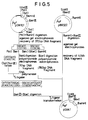
- Plasmids were extracted from the transformants exhibiting ampicillin resistance used as the marker, and then treated with various restriction endonucleases to construct cleavage maps. Thus, a plasmid pSW13 having the full length PAL structure shown in the restriction endonuclease cleavage maps of Figs. 1 and 3 was selected.
- the aforesaid plasmid pSW13 was isolated from a clone containing it, and this cloned DNA fragment was cleaved with various restriction endonucleases. With suitable restriction fragments, their nucleotide sequences were analyzed by Maxam-Gilbert's method (chemical decomposition method), and also biochemically by Maat's dideoxy method [Maat, J., et al., Nucleic Acids Research, 5, 4537-4545 (1978)]. The resulting nucleotide sequences of the respective DNA fragments were edited by use of the GENAS program produced by Mitsui Information Development Co. The nucleotide sequence so determined is shown in Figs. 2(A)-(D).
- the structural gene for PAL including its initiator codon and terminator codon comprises the base sequence extending from 1 to 2151 in Figs. 2(A)-(D).
- the plasmid pSW13 was extracted and purified from cells containing it.
- a reaction medium composed of 4mM Tris-HCl (pH 7.5), 0.4mM EDTA and 50mM NaCl
- the plasmid pSW13 was treated with the restriction endonuclease DraI at 37°C for 28 hours.
- the plasmid pSW13 was further treated with the restriction endonucleases EcoRI and HindIII at 37°C for 16 hours.
- the reaction mixture was subjected to agarose gel electrophoresis, and a DNA fragment having a size of 2.3 kb was recovered from the gel. Then, this DNA fragment was subjected three times to a procedure comprising extraction with phenol, treatment with a phenol-chloroform mixture, and precipitation with cold ethanol. Thus, there was obtained a cDNA fragment coding for PAL.
- the cDNA fragment was treated with the Klenow fragment of DNA polymerase at room temperature for 45 minutes, and then subjected three times to a procedure comprising treatment with a phenol-chloroform mixture and precipitation with cold ethanol.
- a procedure comprising treatment with a phenol-chloroform mixture and precipitation with cold ethanol.
- a circular plasmid pSW101 was constructed by joining the flush-ended pUC13 fragment to the flush-ended cDNA fragment by means of a ligase.
- E . coli JM83 was transformed according to the well-known method.
- a cell strain (MT-10410, FERM P-8834) was selected from among ampicillin-resistant colonies, and its PAL activity was determined.
- the plasmid pSW101 constructed in the manner described in Section 8 above was digested with PstI and BamHI. After the resulting fragment mixture was subjected to agarose gel electrophoresis, a DNA fragment of 370bp was recovered. This fragment was divided into two parts, and one of them was digested with BanI and the other with BbeI.
- the 70 bp fragment was treated with DNA polymerase to generate flush ends, to which ClaI(BanIII) linkers were joined by means of a ligase.
- the resulting lysate was centrifuged at 12,000 rpm for 10 minutes and the supernatant was separated. Then, this supernatant was subjected three times to a procedure comprising treatment with a phenol-chloroform mixture and precipitation with cold ethanol.
- PSYA1 was extracted according to conventional procedure. After pSYA1 was digested with BamHI and BanIII, a DNA fragment having a size of 350 bp was recovered.
- the plasmid pSW13 constructed in Section 6 above was digested with XbaI and the resulting cohesive ends were treated with DNA polymerase to generate flush ends. Then, a HindIII linker was joined thereto by means of a ligase to construct pSW13H. Then, this pSW13H was digested with BamHI and HindIII. By subjecting the resulting DNA fragment mixture to agarose gel electrophoresis, a DNA fragment having a size of 1.9 kb was recovered.
- the plasmid pVV1 [Brian P. Nicols and Charles Yanofsky, Methods in Enzymology, 101 , 155 (1983)] containing a part of the trp operon of E . coli was digested with the restriction endonuclease HinfI.
- the DNA fragments of the digested plasmid were separated by agarose gel electrophoresis, and a DNA fragment having a size of 0.9 kb was recovered from the gel according to the previously described procedure.
- the DNA fragment having an EcoRI linker jointed thereto was treated with the restriction endonuclease EcoRI to create a DNA fragment having an EcoRI-cleaved cohesive end [Brian P. Nicols and Charles Yanofsky, Methods in Enzymology, 101 , 155 (1983)].
- the DNA fragment having an EcoRI cohesive end was joined to a DNA fragment which had been obtained by treating the EcoRI digest of pBR322 with CIP according to the procedure described in Section 8 above.
- the resulting product was digested with the restriction endonucleases EcoRI and BglII. By subjecting the resulting digest to agarose gel electrophoresis, a DNA fragment having a size of 0.4 kb was separated and recovered.
- This DNA fragment which had three cleavage sites for the restriction endonuclease TaqI, was partially digested with TaqI. Thus, a DNA fragment having a size of 345 bp was recovered.
- This 345 bp DNA fragment was joined to a 4.3 kb DNA fragment obtained by digesting pBR322 with EcoRI and ClaI. Thus, there was obtained a plasmid pFtrp2 containing the trp promoter.
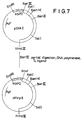
- the plasmid pFtrp2 constructed in the above-described manner was digested with BanIII and HindIII. By subjecting the resulting fragment mixture to agarose gel electrophoresis, a fragment of 4.7 kb was recovered. Then, as illustrated in Fig. 6, this 4.7 kb fragment. were joined to the previously prepared BamHI+BamIII fragment of 350 bp and the previously prepared BamHI+HindIII fragment of 1.9 kb by means of a ligase. Thus, a circular plasmid pSYA2 was constructed as illustrated in Fig. 7.
- pSYA2 was partially digested with BanIII and the resulting cohesive ends were treated with DNA polymerase to generate flush ends. Then, this fragment was cyclized by means of a ligase to create a plasmid pYtrp6 (Fig. 7) having a cleavage site for NruI.
- E . coli MC1061 was transformed with pYtrp6 according to the well-known method. Cells were selected from the resulting ampicillin-resistant colonies and then tested for PAL activity. The construction of pYtrp6 is generally illustrated in the flow chart of Fig. 4 and its greater details are illustrated in Figs. 5 to 7. Thus, a transformed strain of E . coli exhibiting PAL activity was isolated and named MT-10414 (FERM P-8876).
- plasmids were extracted from E . coli MT 10414 (FERM P-8876) carrying the plasmid pYtrp6 in which the structural gene for PAL derived from Rhodosporidium toruloides was cloned according to the procedures described in Reference Example. These plasmids were digested with the restriction endonucleases NruI and HindIII. From the resulting DNA fragment mixture, a DNA fragment having a size of 2.4 kb was separated and recovered by electrophoresis.
- the plasmid pKK223-3 (a product of Pharmacia Co.) having the tac promoter was digested with the restriction endonuclease EcoRI to obtain a DNA fragment. Then, using DNA polymerase, the cohesive ends of this DNA fragment was converted to flush ends.
- E . coli having the reaction product introduced thereinto was grown on an ampicillin plate prepared by adding 1.5% of agar to LB medium [composed of 10 g of Bacto-tryptone® (a product of Difco), 5 g of Bacto-yeast Extract® (a product of Difco), 1 g of glucose and 1 liter of distilled water and adjusted to pH 7.5 with NaOH] containing ampicillin at a concentration of 50 ⁇ g/ml.
- plasmids were extracted from each of the ampicillin-resistant colonies having appeared on the plate, and the restriction endonuclease cleavage map of each plasmid was constructed.
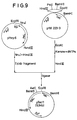
- the colonies containing the desired plasmid pTac11 having the structure illustrated in Fig. 9 were identified, and the plasmid pTac11 was isolated from these colonies.
- the plasmid pP L - ⁇ (a product of Pharmacia Co.) was digested with the restriction endonucleases EcoRI and HpaI. From the resulting DNA fragment mixture, a DNA fragment of 470 bp was separated and recovered by electrophoresis. Then, this 470 bp DNA fragment was partially digested with the restriction endonuclease HinfI. From the resulting DNA fragment mixture, a DNA fragment of 370 bp was separated and recovered by electrophoresis.
- the plasmid pSYA2 which had been constructed in the process of cloning of the structural gene for PAL of Rhodosporidium toruloides in the previously given Reference Example, was digested with the restriction endonuclease EcoRI. Furhtermore, the resulting DNA fragment was partially digested with the restriction endonuclease ClaI. From the resulting mixture of two (large and small) DNA fragments, the large DNA fragment was extracted and separated by electrophoresis.
- the plasmid pSYP L -3 thus obtained was digested with EcoRI and BamHI. From the resulting mixture of two (large and small) DNA fragments, the small DNA fragment was separated and recovered by electrophoresis.
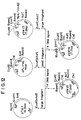
- the plasmid pBR322 (a product of Pharmacia Co.) was digested with the restriction endonucleases EcoRI and BamHI. From the resulting mixture of two (large and small) DNA fragments, the large DNA fragment was separated and recovered by electrophoresis. Then, this large DNA fragment was reacted with the small fragment previously prepared from the plasmid pSYP L -3, in the presence of a ligase. Thus, there was obtained a plasmid pP L -PAL-head having the structure illustrated in Fig. 10. In order to confirm that the desired plasmid was obtained, the reaction product resulting from the aforesaid reaction in the presence of a ligase was introduced into E . coli MC 1061, which was grown on an ampicillin plate. Then, plasmids were prepared from each of the colonies having appeared on the plate, and their restriction endonuclease cleavage maps were constructed.
- the plasmid pTac11 obtained in Section (1) above was digested with the restriction endonucleases EcoRI and AatI. From the resulting mixture of two (large and small) DNA fragments, the large DNA fragment was separated and recovered by electrophoresis.
- the plasmid pP L -PAL-head obtained in Section (2) above was digested with the restriction endonucleases EcoRI and AatI. From the resulting mixture of two (large and small) DNA fragments, the small DNA fragment was separated and recovered by electrophoresis.
- the plasmid produced by the aforesaid reaction was introduced into E . coli MC 1061 and the resulting transformants were selected on an ampicillin plate. Then, plasmids were prepared from the respective transformants and their restriction endonuclease cleavage maps were constructed. At the same time, these transformants were tested for PAL activity according to the procedure described later. Thus, a transformed E . coli strain carrying plasmid pSW115 having PAL activity was obtained and named MT-10423 (FERM P-9023).
- the inoculated medium was shaken at 30°C.
- the cinnamic acid formed in the reaction mixture was analyzed by liquid chromatography.
- the PAL activity was determined in terms of units.
- One unit (U) corresponds to the amount of the enzyme which forms 1 micromole of cinnamic acid in a minute.
- the dry cell weight used to obtain the data shown in Table 2 was determined by drying a sample of the washed cells and then weighing it.
- the plasmid pSW13 which had been constructed in the process of cloning of the structural gene for PAL of Rhodosporidium toruloides as described in Reference Example, was digested with the restriction endonucleases HindIII and EcoRI. From the resulting DNA fragment mixture, a DNA fragment having a size of 2.3 kb was separated and recovered by electrophoresis. Then, the termini of this DNA fragment were treated with DNA polymerase to generate flush ends.
- coli MC 1061 which was grown on an ampicillin plate. Then, plasmids were prepared from each of the ampicillin-resistant colonies having appeared on the plate, and the restriction endonuclease. cleavage map of each plasmid was constructed. Thus, the colonies containing the desired plasmid pSW108 having the structure illustrated in Fig. 11 were identified, and the plasmid pSW108 was isolated from these colonies.
- the plasmid pP L - ⁇ (a product of Pharmacia Co.) was cleaved by digestion with the restriction endonuclease EcoRI. The termini of the resulting DNA fragment were treated with DNA polymerase to generate flush ends. Thereafter, this DNA fragment was cyclized with a ligase to obtain a plasmid pP L -[E].
- the plasmid pP L - ⁇ (a product of Pharmacia Co.) was digested with the restriction endonucleases EcoRI and HpaI. From the resulting DNA fragment mixture, a DNA fragment of 470 bp was separated and recovered by electrophoresis. Then, this 470 bp DNA fragment was digested with the restriction endonuclease HaeIII. The resulting reaction product was reacted with EcoRI linkers (a product of Takara Shuzo K.K.) in the presence of T4 ligase. Then, the resulting reaction product was treated with the restriction endonucleases EcoRI and BamHI to obtain a mixture of DNA fragments. From this mixture of DNA fragments, a DNA fragment of 240 bp was separated and recovered by electrophoresis.
- EcoRI linkers a product of Takara Shuzo K.K.
- the plasmid pSW108 obtained in Section (1) above was digested with the restriction endonucleases EcoRI and NruI. From the resulting DNA fragment mixture, a DNA fragment of 4.1 kb was separated and recovered by electrophoresis.
- the plasmid pP L -[E] obtained in Section (2) above was digested with the restriction endonucleases BamHI and NruI. From the resulting DNA fragment mixture, a DNA fragment of 3.4 kb was separated and recovered by electrophoresis.
- the plasmid pSW113 obtained in Section (3) above was digested with the restriction endonucleases EcoRI and AatI. From the resulting mixture of two (large and small) DNA fragments, the large DNA fragment was separated and recovered by electrophoresis.
- the plasmid pP L -PAL-head obtained in Section (3) of Example 1 was digested with the restriction endonucleases EcoRI and AatI. From the resulting mixture of two (large and small) DNA fragments, the small DNA fragment was separated and recovered by electrophoresis.
- the plasmid pSW113 obtained in Section (3) of Comparative Example 1 was digested with the restriction endonucleases EcoRI and AatI. From the resulting mixture of two (large and small) DNA fragments, the large DNA fragment was separated and recovered by electrophoresis.
- the plasmid pYtrp6 used in Section (1) of Example 1 was digested with the restriction endonucleases EcoRI and AatI. From the resulting mixture of two (large and small) DNA fragments, the small DNA fragment was separated and recovered by electrophoresis.
- the plasmid pP L -PAL-head obtained in Section (2) of Example 1 was digested with the restriction endonucleases EcoRI and AatI. From the resulting mixture of two (large and small) DNA fragments, the small DNA fragment was separated and recovered by electrophoresis.
- the plasmid pYtrp6 used in Section (1) of Example 1 was digested with the restriction endonucleases EcoRI and AatI. From the resulting mixture of two (large and small) DNA fragments, the large DNA fragment was separated and recovered by electrophoresis.
- FERM P-8834 (FERM BP-1710) on July 4, 1986; FERM P-8876 (FERM BP-1712) on July 26, 1986; FEPM P-9023 (FERM BP-1713) on October 31, 1986; and FERM P-9024 (FERM BP-1714) on October 31, 1986.
- the invention also comprehends method aspects.
Landscapes
- Health & Medical Sciences (AREA)
- Genetics & Genomics (AREA)
- Life Sciences & Earth Sciences (AREA)
- Engineering & Computer Science (AREA)
- Chemical & Material Sciences (AREA)
- Organic Chemistry (AREA)
- Bioinformatics & Cheminformatics (AREA)
- Wood Science & Technology (AREA)
- Zoology (AREA)
- Biomedical Technology (AREA)
- Biotechnology (AREA)
- General Engineering & Computer Science (AREA)
- Molecular Biology (AREA)
- Microbiology (AREA)
- Biochemistry (AREA)
- General Health & Medical Sciences (AREA)
- Physics & Mathematics (AREA)
- Biophysics (AREA)
- Plant Pathology (AREA)
- Medicinal Chemistry (AREA)
- Micro-Organisms Or Cultivation Processes Thereof (AREA)
- Enzymes And Modification Thereof (AREA)
- Preparation Of Compounds By Using Micro-Organisms (AREA)
Claims (5)
- Verfahren zur Expression von L-Phenylalanin-Ammoniaklyase, das die Schritte aufweist:(I) Bereitstellen eines rekombinanten Plasmids, das umfaßt:(a) einen Vektor, der in Escherichia coli replizieren kann,(b) einen kombinierten Promotor, der einen Fusionspromotor, der aus der minus 35-Region des trp-Promotors und der minus 10-Region des lac UV-5-Promotors besteht (tac-Promotor), und den PL-Promotor des Lambda-Phagen enthält, wobei der PL-Promotor stromabwärts des Fusionspromotors angeordnet ist, und(c) eine DNA-Sequenz, die für L-Phenylalanin-Ammoniaklyase codiert, wobei die DNA-Sequenz stromabwärts des kombinierten Promotors insertiert ist,wobei die zwei Promotoren, die den kombinierten Promotor bilden, die gleiche Richtungseigenschaft haben und der PL-Promotor stromaufwärts der DNA-Sequenz lokalisiert ist, um die Richtungseigenschaft zu haben, die die Transkription der DNA-Sequenz erlaubt; und(II) Exprimieren der L-Phenylalanin-Ammoniaklyase.
- Verfahren gemäß Anspruch 1, wobei Escherichia coli mit dem rekombinanten Plasmid transformiert worden ist.
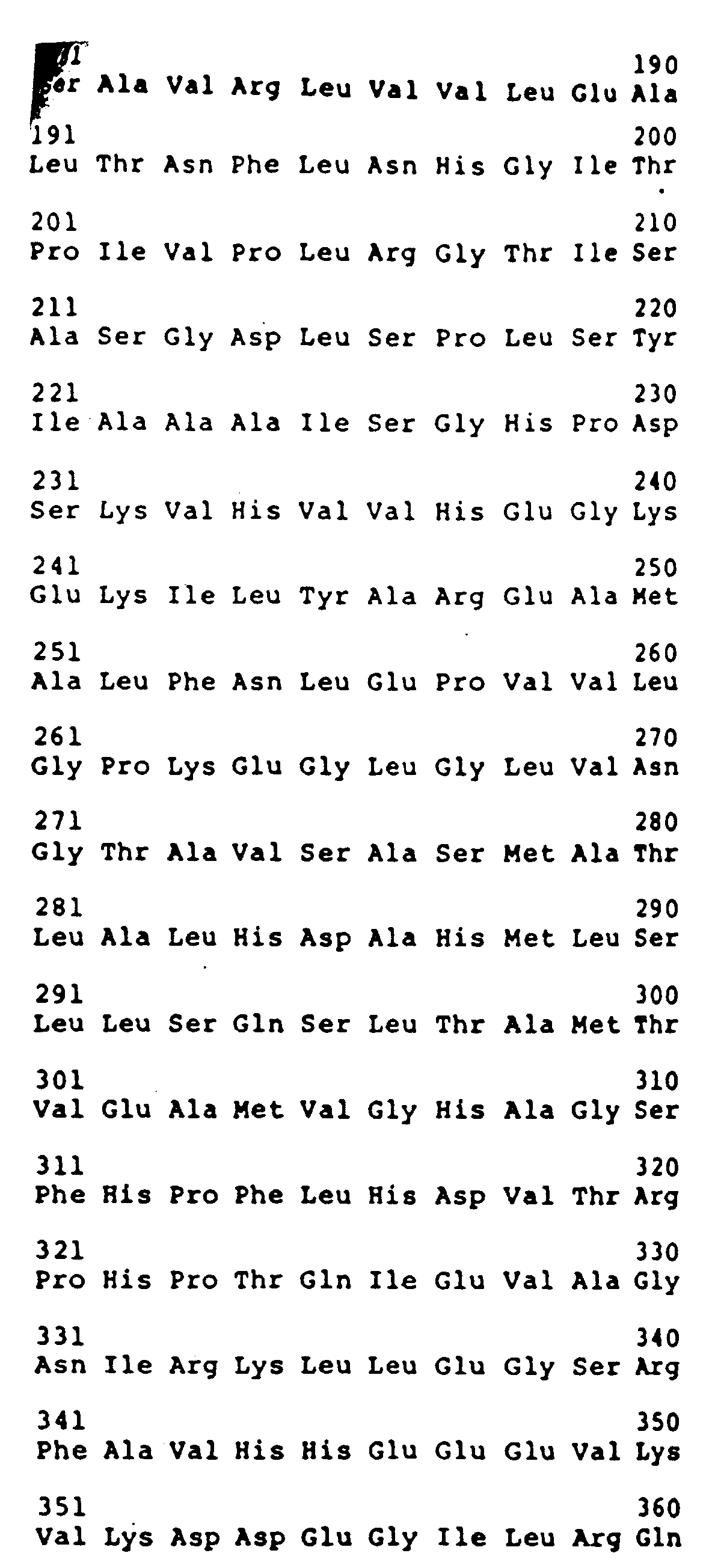
- Verfahren gemäß Anspruch 1 oder 2, wobei die L-Phenylalanin-Ammoniaklyase die folgende Aminosäuresequenz hat:



- Verfahren zur Konstruktion des rekombinanten Plasmids von Anspruch 1, das die Schritte aufweist:(a) Anordnen des PL-Promotors des Lambda-Phagen stromabwärts des Fusionspromotors (tac-Promotor), der aus der minus 35-Region des trp-Promotors und der minus 10-Region des lac UV-5-Promotors besteht, um einen kombinierten Promotor zu bilden, und(b) Insertieren einer DNA-Sequenz, die für L-Phenylalanin-Ammoniaklyase codiert, stromabwärts des kombinierten Promotors.
- Verfahren gemäß Anspruch 4, wobei die L-Phenylalanin-Ammoniaklyase-DNA-Sequenz für die Aminosäuresequenz von Anspruch 3 codiert.
Applications Claiming Priority (4)
| Application Number | Priority Date | Filing Date | Title |
|---|---|---|---|
| JP24705/87 | 1987-02-06 | ||
| JP62024705A JPS63196292A (ja) | 1987-02-06 | 1987-02-06 | L−フエニルアラニン・アンモニアリア−ゼ発現用組換え体プラスミド及び該プラスミドを有する形質転換株 |
| JP152357/87 | 1987-06-18 | ||
| JP62152357A JP2525413B2 (ja) | 1987-06-18 | 1987-06-18 | L−フェニルアラニン・アンモニアリア−ゼ発現用組換え体プラスミド及び該プラスミドを有する形質転換株 |
Publications (3)
| Publication Number | Publication Date |
|---|---|
| EP0278706A2 EP0278706A2 (de) | 1988-08-17 |
| EP0278706A3 EP0278706A3 (en) | 1989-04-26 |
| EP0278706B1 true EP0278706B1 (de) | 1993-04-28 |
Family
ID=26362269
Family Applications (1)
| Application Number | Title | Priority Date | Filing Date |
|---|---|---|---|
| EP88301011A Expired - Lifetime EP0278706B1 (de) | 1987-02-06 | 1988-02-08 | Rekombinantes Plasmid für die Expression von L-Phenylalanin-Ammonialyase und transformierte Stämme, die es enthalten |
Country Status (7)
| Country | Link |
|---|---|
| US (1) | US4946790A (de) |
| EP (1) | EP0278706B1 (de) |
| KR (1) | KR910001810B1 (de) |
| CA (1) | CA1293461C (de) |
| DE (1) | DE3880520T2 (de) |
| DK (1) | DK60088A (de) |
| ES (1) | ES2056910T3 (de) |
Families Citing this family (9)
| Publication number | Priority date | Publication date | Assignee | Title |
|---|---|---|---|---|
| US2593326A (en) * | 1949-07-22 | 1952-04-15 | James I Mcaskill | Process for conditioning and granulating finely divided materials |
| US5139935A (en) * | 1987-02-19 | 1992-08-18 | Mitsui Toatsu Chemicals, Incorporated | Method of regulating expression of a foreign gene by controlling the sugar concentration in a medium and a process of producing a foreign product thereby |
| US7033627B2 (en) | 1990-03-23 | 2006-04-25 | Syngenta Mogen B.V. | Production of enzymes in seeds and their use |
| US5543576A (en) * | 1990-03-23 | 1996-08-06 | Mogen International | Production of enzymes in seeds and their use |
| EP0462836A3 (en) * | 1990-06-20 | 1992-08-26 | Mitsui Toatsu Chemicals, Inc. | Recombinant vector plasmid capable of expressing human manganese superoxide dismutase, and process of producing this enzyme |
| WO1998046722A1 (en) * | 1997-04-16 | 1998-10-22 | Unigene Laboratories Inc. | Direct expression of peptides into culture media |
| WO2001011071A2 (en) * | 1999-08-06 | 2001-02-15 | E.I. Du Pont De Nemours And Company | Bioproduction of para-hydroxycinnamic acid |
| US6521748B2 (en) | 1999-08-06 | 2003-02-18 | E. I. Du Pont De Nemours And Company | Polynucleotide encoding a mutant Rhodotorula glutinis tyrosine ammonia lyase polypeptide |
| JP2005522180A (ja) * | 2001-05-04 | 2005-07-28 | イー・アイ・デュポン・ドウ・ヌムール・アンド・カンパニー | チロシン、桂皮酸およびパラ−ヒドロキシ桂皮酸の産生方法 |
Family Cites Families (4)
| Publication number | Priority date | Publication date | Assignee | Title |
|---|---|---|---|---|
| JPS60221091A (ja) * | 1983-12-21 | 1985-11-05 | Kyowa Hakko Kogyo Co Ltd | 新規プロモ−タ− |
| GB8621626D0 (en) * | 1986-09-08 | 1986-10-15 | Health Lab Service Board | Phenylalanine ammonia lyase |
| JP2507345B2 (ja) * | 1986-09-16 | 1996-06-12 | 三井東圧化学株式会社 | L―フェニルアラニン―アンモニアリ・ア―ゼ構造遺伝子 |
| CA1319630C (en) * | 1987-02-19 | 1993-06-29 | Satori Sone | Method of regulating expression of a foreign gene by controlling the sugar concentration in a medium and a process of producing a foreign gene product thereby |
-
1988
- 1988-02-01 US US07/151,234 patent/US4946790A/en not_active Expired - Lifetime
- 1988-02-05 CA CA000558283A patent/CA1293461C/en not_active Expired - Lifetime
- 1988-02-05 DK DK060088A patent/DK60088A/da not_active Application Discontinuation
- 1988-02-06 KR KR1019880001118A patent/KR910001810B1/ko not_active Expired
- 1988-02-08 DE DE8888301011T patent/DE3880520T2/de not_active Expired - Fee Related
- 1988-02-08 EP EP88301011A patent/EP0278706B1/de not_active Expired - Lifetime
- 1988-02-08 ES ES88301011T patent/ES2056910T3/es not_active Expired - Lifetime
Also Published As
| Publication number | Publication date |
|---|---|
| KR910001810B1 (ko) | 1991-03-26 |
| DE3880520D1 (de) | 1993-06-03 |
| US4946790A (en) | 1990-08-07 |
| EP0278706A2 (de) | 1988-08-17 |
| DK60088A (da) | 1988-08-07 |
| DE3880520T2 (de) | 1993-08-12 |
| KR880010127A (ko) | 1988-10-07 |
| EP0278706A3 (en) | 1989-04-26 |
| CA1293461C (en) | 1991-12-24 |
| DK60088D0 (da) | 1988-02-05 |
| ES2056910T3 (es) | 1994-10-16 |
Similar Documents
| Publication | Publication Date | Title |
|---|---|---|
| EP0035384B1 (de) | Desoxyribonukleotid-Segment zur Befestigung an einer klonierten DNS-Codierungssequenz | |
| FI86886B (fi) | Nya expressionsplasmider och deras anvaendning i foerfarandet foer expressering av prokymosin koderande gen i e.coli. | |
| US4769326A (en) | Expression linkers | |
| EP0136829A2 (de) | Expressionsvektor und dessen Verwendung | |
| WO1991005866A1 (en) | Novel expression systems utilizing bacteriophage t7 promoters and gene sequences | |
| US5128256A (en) | DNA cloning vectors with in vivo excisable plasmids | |
| EP0278706B1 (de) | Rekombinantes Plasmid für die Expression von L-Phenylalanin-Ammonialyase und transformierte Stämme, die es enthalten | |
| EP0111814A2 (de) | Klonierung und Expression von nucleotiden Sequenzen die für Rinderwachstumshormon kodieren | |
| EP0195303A1 (de) | Plasmidvektoren zur Expression in Escherichia coli und/oder Bacillus subtilis | |
| EP0260919B1 (de) | L-Phenylalanine-Ammonia-Lyase | |
| US4828988A (en) | Hybrid polypeptides comprising somatocrinine and alpha1 -antitrypsin, method for their production from bacterial clones and use thereof for the production of somatocrinine | |
| GB2104901A (en) | Expression vectors | |
| EP0134673B1 (de) | Plasmidvektor und seine Verwendung | |
| US5043277A (en) | Method of regulating expression of a foreign gene by controlling culture temperature and a process of producing a foreign gene product thereby | |
| EP0286200B1 (de) | DNS-Klonierungsvektor mit in vivo ausschneidbaren Plasmiden | |
| EP0279664B1 (de) | Verfahren zur Expressionsregulation eines Fremdgens mittels Kontrolle der Zuckerkonzentration in einem Medium und Verfahren zur Herstellung eines Fremdgenproduktes | |
| JP2525413B2 (ja) | L−フェニルアラニン・アンモニアリア−ゼ発現用組換え体プラスミド及び該プラスミドを有する形質転換株 | |
| EP0183571A2 (de) | Cosmid-Vektoren | |
| US5139935A (en) | Method of regulating expression of a foreign gene by controlling the sugar concentration in a medium and a process of producing a foreign product thereby | |
| JP2507423B2 (ja) | L―フェニルアラニン・アンモニアリア―ゼ | |
| CA1200775A (en) | Expression linkers | |
| JP2616784B2 (ja) | ヒトインターロイキン1ポリペプチド生産用高度形質発現プラスミド | |
| FR2598430A1 (fr) | Nouveaux vecteurs d'expression, leur procede d'obtention et leur application pour exprimer une proteine quelconque dans escherichia coli | |
| JPH0817703B2 (ja) | 外来遺伝子産物の生産方法 |
Legal Events
| Date | Code | Title | Description |
|---|---|---|---|
| PUAI | Public reference made under article 153(3) epc to a published international application that has entered the european phase |
Free format text: ORIGINAL CODE: 0009012 |
|
| AK | Designated contracting states |
Kind code of ref document: A2 Designated state(s): BE CH DE ES FR GB IT LI NL |
|
| PUAL | Search report despatched |
Free format text: ORIGINAL CODE: 0009013 |
|
| AK | Designated contracting states |
Kind code of ref document: A3 Designated state(s): BE CH DE ES FR GB IT LI NL |
|
| 17P | Request for examination filed |
Effective date: 19890929 |
|
| 17Q | First examination report despatched |
Effective date: 19920626 |
|
| GRAA | (expected) grant |
Free format text: ORIGINAL CODE: 0009210 |
|
| AK | Designated contracting states |
Kind code of ref document: B1 Designated state(s): BE CH DE ES FR GB IT LI NL |
|
| ITF | It: translation for a ep patent filed | ||
| REF | Corresponds to: |
Ref document number: 3880520 Country of ref document: DE Date of ref document: 19930603 |
|
| ET | Fr: translation filed | ||
| PLBE | No opposition filed within time limit |
Free format text: ORIGINAL CODE: 0009261 |
|
| STAA | Information on the status of an ep patent application or granted ep patent |
Free format text: STATUS: NO OPPOSITION FILED WITHIN TIME LIMIT |
|
| 26N | No opposition filed | ||
| REG | Reference to a national code |
Ref country code: ES Ref legal event code: FG2A Ref document number: 2056910 Country of ref document: ES Kind code of ref document: T3 |
|
| REG | Reference to a national code |
Ref country code: CH Ref legal event code: PFA Free format text: MITSUI TOATSU CHEMICALS, INCORPORATED TRANSFER- MITSUI CHEMICALS, INC. |
|
| REG | Reference to a national code |
Ref country code: GB Ref legal event code: 732E |
|
| REG | Reference to a national code |
Ref country code: FR Ref legal event code: TP |
|
| REG | Reference to a national code |
Ref country code: ES Ref legal event code: PC2A |
|
| NLS | Nl: assignments of ep-patents |
Owner name: MITSUI CHEMICALS, INC. |
|
| REG | Reference to a national code |
Ref country code: GB Ref legal event code: IF02 |
|
| PGFP | Annual fee paid to national office [announced via postgrant information from national office to epo] |
Ref country code: ES Payment date: 20020213 Year of fee payment: 15 |
|
| PGFP | Annual fee paid to national office [announced via postgrant information from national office to epo] |
Ref country code: CH Payment date: 20020214 Year of fee payment: 15 |
|
| PGFP | Annual fee paid to national office [announced via postgrant information from national office to epo] |
Ref country code: NL Payment date: 20020228 Year of fee payment: 15 |
|
| PGFP | Annual fee paid to national office [announced via postgrant information from national office to epo] |
Ref country code: BE Payment date: 20020418 Year of fee payment: 15 |
|
| PG25 | Lapsed in a contracting state [announced via postgrant information from national office to epo] |
Ref country code: ES Free format text: LAPSE BECAUSE OF NON-PAYMENT OF DUE FEES Effective date: 20030210 |
|
| PG25 | Lapsed in a contracting state [announced via postgrant information from national office to epo] |
Ref country code: BE Free format text: LAPSE BECAUSE OF NON-PAYMENT OF DUE FEES Effective date: 20030228 Ref country code: CH Free format text: LAPSE BECAUSE OF NON-PAYMENT OF DUE FEES Effective date: 20030228 Ref country code: LI Free format text: LAPSE BECAUSE OF NON-PAYMENT OF DUE FEES Effective date: 20030228 |
|
| PG25 | Lapsed in a contracting state [announced via postgrant information from national office to epo] |
Ref country code: NL Free format text: LAPSE BECAUSE OF NON-PAYMENT OF DUE FEES Effective date: 20030901 |
|
| REG | Reference to a national code |
Ref country code: CH Ref legal event code: PL |
|
| NLV4 | Nl: lapsed or anulled due to non-payment of the annual fee |
Effective date: 20030901 |
|
| PGFP | Annual fee paid to national office [announced via postgrant information from national office to epo] |
Ref country code: FR Payment date: 20040210 Year of fee payment: 17 |
|
| REG | Reference to a national code |
Ref country code: ES Ref legal event code: FD2A Effective date: 20030210 |
|
| PG25 | Lapsed in a contracting state [announced via postgrant information from national office to epo] |
Ref country code: IT Free format text: LAPSE BECAUSE OF NON-PAYMENT OF DUE FEES Effective date: 20050208 |
|
| PG25 | Lapsed in a contracting state [announced via postgrant information from national office to epo] |
Ref country code: FR Free format text: LAPSE BECAUSE OF NON-PAYMENT OF DUE FEES Effective date: 20051031 |
|
| REG | Reference to a national code |
Ref country code: FR Ref legal event code: ST Effective date: 20051031 |
|
| PGFP | Annual fee paid to national office [announced via postgrant information from national office to epo] |
Ref country code: DE Payment date: 20060202 Year of fee payment: 19 |
|
| PGFP | Annual fee paid to national office [announced via postgrant information from national office to epo] |
Ref country code: GB Payment date: 20060208 Year of fee payment: 19 |
|
| GBPC | Gb: european patent ceased through non-payment of renewal fee |
Effective date: 20070208 |
|
| PG25 | Lapsed in a contracting state [announced via postgrant information from national office to epo] |
Ref country code: DE Free format text: LAPSE BECAUSE OF NON-PAYMENT OF DUE FEES Effective date: 20070901 |
|
| PG25 | Lapsed in a contracting state [announced via postgrant information from national office to epo] |
Ref country code: GB Free format text: LAPSE BECAUSE OF NON-PAYMENT OF DUE FEES Effective date: 20070208 |