EP0280567A2 - Mittel für Elektrophorese - Google Patents
Mittel für Elektrophorese Download PDFInfo
- Publication number
- EP0280567A2 EP0280567A2 EP88301666A EP88301666A EP0280567A2 EP 0280567 A2 EP0280567 A2 EP 0280567A2 EP 88301666 A EP88301666 A EP 88301666A EP 88301666 A EP88301666 A EP 88301666A EP 0280567 A2 EP0280567 A2 EP 0280567A2
- Authority
- EP
- European Patent Office
- Prior art keywords
- electrophoresis
- membrane
- thickness
- gel
- gradient
- Prior art date
- Legal status (The legal status is an assumption and is not a legal conclusion. Google has not performed a legal analysis and makes no representation as to the accuracy of the status listed.)
- Granted
Links
- 238000001962 electrophoresis Methods 0.000 title claims abstract description 70
- 239000012528 membrane Substances 0.000 claims abstract description 137
- 229920002401 polyacrylamide Polymers 0.000 claims abstract description 23
- 210000004379 membrane Anatomy 0.000 claims description 135
- 239000003431 cross linking reagent Substances 0.000 claims description 20
- 238000000034 method Methods 0.000 claims description 16
- -1 acrylamide compound Chemical class 0.000 claims description 14
- 238000004132 cross linking Methods 0.000 claims description 13
- XLYOFNOQVPJJNP-UHFFFAOYSA-N water Substances O XLYOFNOQVPJJNP-UHFFFAOYSA-N 0.000 claims description 12
- 238000006116 polymerization reaction Methods 0.000 claims description 11
- 229920000936 Agarose Polymers 0.000 claims description 10
- 239000003945 anionic surfactant Substances 0.000 claims description 9
- 239000003607 modifier Substances 0.000 claims description 9
- 229920003169 water-soluble polymer Polymers 0.000 claims description 9
- 230000008569 process Effects 0.000 claims description 7
- 150000001875 compounds Chemical class 0.000 claims description 6
- 125000003917 carbamoyl group Chemical group [H]N([H])C(*)=O 0.000 claims description 2
- 239000000523 sample Substances 0.000 claims 2
- 102000004169 proteins and genes Human genes 0.000 abstract description 20
- 108090000623 proteins and genes Proteins 0.000 abstract description 20
- 239000012634 fragment Substances 0.000 abstract description 19
- 238000004458 analytical method Methods 0.000 abstract description 10
- 229920001222 biopolymer Polymers 0.000 abstract description 5
- 239000000499 gel Substances 0.000 description 112
- 239000000243 solution Substances 0.000 description 25
- 235000018102 proteins Nutrition 0.000 description 19
- 239000000872 buffer Substances 0.000 description 18
- 229940117913 acrylamide Drugs 0.000 description 17
- 239000003795 chemical substances by application Substances 0.000 description 17
- 239000010410 layer Substances 0.000 description 14
- 125000006850 spacer group Chemical group 0.000 description 14
- 229920002799 BoPET Polymers 0.000 description 12
- 239000000203 mixture Substances 0.000 description 12
- 229920000139 polyethylene terephthalate Polymers 0.000 description 11
- 239000005020 polyethylene terephthalate Substances 0.000 description 11
- HRPVXLWXLXDGHG-UHFFFAOYSA-N Acrylamide Chemical compound NC(=O)C=C HRPVXLWXLXDGHG-UHFFFAOYSA-N 0.000 description 9
- PEDCQBHIVMGVHV-UHFFFAOYSA-N Glycerine Chemical compound OCC(O)CO PEDCQBHIVMGVHV-UHFFFAOYSA-N 0.000 description 9
- 239000002585 base Substances 0.000 description 9
- 239000000178 monomer Substances 0.000 description 9
- 150000003839 salts Chemical class 0.000 description 9
- 239000011544 gradient gel Substances 0.000 description 8
- 229920000620 organic polymer Polymers 0.000 description 8
- 230000000875 corresponding effect Effects 0.000 description 7
- 239000011734 sodium Substances 0.000 description 7
- 229910052708 sodium Inorganic materials 0.000 description 7
- LYCAIKOWRPUZTN-UHFFFAOYSA-N Ethylene glycol Chemical compound OCCO LYCAIKOWRPUZTN-UHFFFAOYSA-N 0.000 description 6
- XSQUKJJJFZCRTK-UHFFFAOYSA-N Urea Chemical compound NC(N)=O XSQUKJJJFZCRTK-UHFFFAOYSA-N 0.000 description 6
- 229920006322 acrylamide copolymer Polymers 0.000 description 6
- 238000002360 preparation method Methods 0.000 description 6
- URGAHOPLAPQHLN-UHFFFAOYSA-N sodium aluminosilicate Chemical group [Na+].[Al+3].[O-][Si]([O-])=O.[O-][Si]([O-])=O URGAHOPLAPQHLN-UHFFFAOYSA-N 0.000 description 6
- LENZDBCJOHFCAS-UHFFFAOYSA-N tris Chemical compound OCC(N)(CO)CO LENZDBCJOHFCAS-UHFFFAOYSA-N 0.000 description 6
- FTOAOBMCPZCFFF-UHFFFAOYSA-N 5,5-diethylbarbituric acid Chemical compound CCC1(CC)C(=O)NC(=O)NC1=O FTOAOBMCPZCFFF-UHFFFAOYSA-N 0.000 description 5
- FSVCELGFZIQNCK-UHFFFAOYSA-N N,N-bis(2-hydroxyethyl)glycine Chemical compound OCCN(CCO)CC(O)=O FSVCELGFZIQNCK-UHFFFAOYSA-N 0.000 description 5
- 239000007983 Tris buffer Substances 0.000 description 5
- 239000007864 aqueous solution Substances 0.000 description 5
- 230000001276 controlling effect Effects 0.000 description 5
- 239000000463 material Substances 0.000 description 5
- GIZQLVPDAOBAFN-UHFFFAOYSA-N HEPPSO Chemical compound OCCN1CCN(CC(O)CS(O)(=O)=O)CC1 GIZQLVPDAOBAFN-UHFFFAOYSA-N 0.000 description 4
- AUNGANRZJHBGPY-SCRDCRAPSA-N Riboflavin Chemical compound OC[C@@H](O)[C@@H](O)[C@@H](O)CN1C=2C=C(C)C(C)=CC=2N=C2C1=NC(=O)NC2=O AUNGANRZJHBGPY-SCRDCRAPSA-N 0.000 description 4
- 208000034953 Twin anemia-polycythemia sequence Diseases 0.000 description 4
- KRKNYBCHXYNGOX-UHFFFAOYSA-N citric acid Chemical compound OC(=O)CC(O)(C(O)=O)CC(O)=O KRKNYBCHXYNGOX-UHFFFAOYSA-N 0.000 description 4
- 230000001678 irradiating effect Effects 0.000 description 4
- 125000002496 methyl group Chemical group [H]C([H])([H])* 0.000 description 4
- 229910052700 potassium Inorganic materials 0.000 description 4
- QTBSBXVTEAMEQO-UHFFFAOYSA-N Acetic acid Chemical compound CC(O)=O QTBSBXVTEAMEQO-UHFFFAOYSA-N 0.000 description 3
- OWXMKDGYPWMGEB-UHFFFAOYSA-N HEPPS Chemical compound OCCN1CCN(CCCS(O)(=O)=O)CC1 OWXMKDGYPWMGEB-UHFFFAOYSA-N 0.000 description 3
- DGAQECJNVWCQMB-PUAWFVPOSA-M Ilexoside XXIX Chemical class C[C@@H]1CC[C@@]2(CC[C@@]3(C(=CC[C@H]4[C@]3(CC[C@@H]5[C@@]4(CC[C@@H](C5(C)C)OS(=O)(=O)[O-])C)C)[C@@H]2[C@]1(C)O)C)C(=O)O[C@H]6[C@@H]([C@H]([C@@H]([C@H](O6)CO)O)O)O.[Na+] DGAQECJNVWCQMB-PUAWFVPOSA-M 0.000 description 3
- KWYHDKDOAIKMQN-UHFFFAOYSA-N N,N,N',N'-tetramethylethylenediamine Chemical compound CN(C)CCN(C)C KWYHDKDOAIKMQN-UHFFFAOYSA-N 0.000 description 3
- DBMJMQXJHONAFJ-UHFFFAOYSA-M Sodium laurylsulphate Chemical compound [Na+].CCCCCCCCCCCCOS([O-])(=O)=O DBMJMQXJHONAFJ-UHFFFAOYSA-M 0.000 description 3
- 150000003926 acrylamides Chemical class 0.000 description 3
- 238000012644 addition polymerization Methods 0.000 description 3
- 150000008051 alkyl sulfates Chemical class 0.000 description 3
- 239000007998 bicine buffer Substances 0.000 description 3
- 239000004202 carbamide Substances 0.000 description 3
- 229920002678 cellulose Polymers 0.000 description 3
- 239000001913 cellulose Substances 0.000 description 3
- 235000010980 cellulose Nutrition 0.000 description 3
- 238000005370 electroosmosis Methods 0.000 description 3
- RTZKZFJDLAIYFH-UHFFFAOYSA-N ether Substances CCOCC RTZKZFJDLAIYFH-UHFFFAOYSA-N 0.000 description 3
- 239000011521 glass Substances 0.000 description 3
- VEXZGXHMUGYJMC-UHFFFAOYSA-N hydrochloric acid Substances Cl VEXZGXHMUGYJMC-UHFFFAOYSA-N 0.000 description 3
- 239000002609 medium Substances 0.000 description 3
- 239000012299 nitrogen atmosphere Substances 0.000 description 3
- 238000012643 polycondensation polymerization Methods 0.000 description 3
- 229920005862 polyol Polymers 0.000 description 3
- 238000000926 separation method Methods 0.000 description 3
- 229940083575 sodium dodecyl sulfate Drugs 0.000 description 3
- 235000019333 sodium laurylsulphate Nutrition 0.000 description 3
- 159000000000 sodium salts Chemical class 0.000 description 3
- 229910052724 xenon Inorganic materials 0.000 description 3
- FHNFHKCVQCLJFQ-UHFFFAOYSA-N xenon atom Chemical compound [Xe] FHNFHKCVQCLJFQ-UHFFFAOYSA-N 0.000 description 3
- KUDUQBURMYMBIJ-UHFFFAOYSA-N 2-prop-2-enoyloxyethyl prop-2-enoate Chemical compound C=CC(=O)OCCOC(=O)C=C KUDUQBURMYMBIJ-UHFFFAOYSA-N 0.000 description 2
- MTPJEFOSTIKRSS-UHFFFAOYSA-N 3-(dimethylamino)propanenitrile Chemical compound CN(C)CCC#N MTPJEFOSTIKRSS-UHFFFAOYSA-N 0.000 description 2
- IJGRMHOSHXDMSA-UHFFFAOYSA-N Atomic nitrogen Chemical compound N#N IJGRMHOSHXDMSA-UHFFFAOYSA-N 0.000 description 2
- AUNGANRZJHBGPY-UHFFFAOYSA-N D-Lyxoflavin Natural products OCC(O)C(O)C(O)CN1C=2C=C(C)C(C)=CC=2N=C2C1=NC(=O)NC2=O AUNGANRZJHBGPY-UHFFFAOYSA-N 0.000 description 2
- ZHNUHDYFZUAESO-UHFFFAOYSA-N Formamide Chemical compound NC=O ZHNUHDYFZUAESO-UHFFFAOYSA-N 0.000 description 2
- MHAJPDPJQMAIIY-UHFFFAOYSA-N Hydrogen peroxide Chemical compound OO MHAJPDPJQMAIIY-UHFFFAOYSA-N 0.000 description 2
- 239000002202 Polyethylene glycol Substances 0.000 description 2
- FKNQFGJONOIPTF-UHFFFAOYSA-N Sodium cation Chemical compound [Na+] FKNQFGJONOIPTF-UHFFFAOYSA-N 0.000 description 2
- 229910052782 aluminium Inorganic materials 0.000 description 2
- XAGFODPZIPBFFR-UHFFFAOYSA-N aluminium Chemical compound [Al] XAGFODPZIPBFFR-UHFFFAOYSA-N 0.000 description 2
- ROOXNKNUYICQNP-UHFFFAOYSA-N ammonium persulfate Chemical compound [NH4+].[NH4+].[O-]S(=O)(=O)OOS([O-])(=O)=O ROOXNKNUYICQNP-UHFFFAOYSA-N 0.000 description 2
- 239000012935 ammoniumperoxodisulfate Substances 0.000 description 2
- 239000012736 aqueous medium Substances 0.000 description 2
- 239000012298 atmosphere Substances 0.000 description 2
- 229960002319 barbital Drugs 0.000 description 2
- 229960000796 barbital sodium Drugs 0.000 description 2
- IISBACLAFKSPIT-UHFFFAOYSA-N bisphenol A Chemical compound C=1C=C(O)C=CC=1C(C)(C)C1=CC=C(O)C=C1 IISBACLAFKSPIT-UHFFFAOYSA-N 0.000 description 2
- 238000003486 chemical etching Methods 0.000 description 2
- 238000006243 chemical reaction Methods 0.000 description 2
- 229940000425 combination drug Drugs 0.000 description 2
- NKLPQNGYXWVELD-UHFFFAOYSA-M coomassie brilliant blue Chemical compound [Na+].C1=CC(OCC)=CC=C1NC1=CC=C(C(=C2C=CC(C=C2)=[N+](CC)CC=2C=C(C=CC=2)S([O-])(=O)=O)C=2C=CC(=CC=2)N(CC)CC=2C=C(C=CC=2)S([O-])(=O)=O)C=C1 NKLPQNGYXWVELD-UHFFFAOYSA-M 0.000 description 2
- 229910001873 dinitrogen Inorganic materials 0.000 description 2
- 239000006185 dispersion Substances 0.000 description 2
- 238000004043 dyeing Methods 0.000 description 2
- 229940093476 ethylene glycol Drugs 0.000 description 2
- 238000011156 evaluation Methods 0.000 description 2
- 239000003999 initiator Substances 0.000 description 2
- JVTAAEKCZFNVCJ-UHFFFAOYSA-N lactic acid Chemical compound CC(O)C(O)=O JVTAAEKCZFNVCJ-UHFFFAOYSA-N 0.000 description 2
- 238000004519 manufacturing process Methods 0.000 description 2
- QSHDDOUJBYECFT-UHFFFAOYSA-N mercury Chemical compound [Hg] QSHDDOUJBYECFT-UHFFFAOYSA-N 0.000 description 2
- 229910052753 mercury Inorganic materials 0.000 description 2
- 239000002736 nonionic surfactant Substances 0.000 description 2
- 239000003960 organic solvent Substances 0.000 description 2
- 229920006255 plastic film Polymers 0.000 description 2
- 239000002985 plastic film Substances 0.000 description 2
- 229920001223 polyethylene glycol Polymers 0.000 description 2
- 229920000642 polymer Polymers 0.000 description 2
- 239000002861 polymer material Substances 0.000 description 2
- 235000019192 riboflavin Nutrition 0.000 description 2
- 229960002477 riboflavin Drugs 0.000 description 2
- 239000002151 riboflavin Substances 0.000 description 2
- 229910001415 sodium ion Inorganic materials 0.000 description 2
- RGHFKWPGWBFQLN-UHFFFAOYSA-M sodium;5,5-diethylpyrimidin-3-ide-2,4,6-trione Chemical compound [Na+].CCC1(CC)C([O-])=NC(=O)NC1=O RGHFKWPGWBFQLN-UHFFFAOYSA-M 0.000 description 2
- 239000004094 surface-active agent Substances 0.000 description 2
- 239000000725 suspension Substances 0.000 description 2
- 230000008961 swelling Effects 0.000 description 2
- LNAZSHAWQACDHT-XIYTZBAFSA-N (2r,3r,4s,5r,6s)-4,5-dimethoxy-2-(methoxymethyl)-3-[(2s,3r,4s,5r,6r)-3,4,5-trimethoxy-6-(methoxymethyl)oxan-2-yl]oxy-6-[(2r,3r,4s,5r,6r)-4,5,6-trimethoxy-2-(methoxymethyl)oxan-3-yl]oxyoxane Chemical compound CO[C@@H]1[C@@H](OC)[C@H](OC)[C@@H](COC)O[C@H]1O[C@H]1[C@H](OC)[C@@H](OC)[C@H](O[C@H]2[C@@H]([C@@H](OC)[C@H](OC)O[C@@H]2COC)OC)O[C@@H]1COC LNAZSHAWQACDHT-XIYTZBAFSA-N 0.000 description 1
- KOMNUTZXSVSERR-UHFFFAOYSA-N 1,3,5-tris(prop-2-enyl)-1,3,5-triazinane-2,4,6-trione Chemical compound C=CCN1C(=O)N(CC=C)C(=O)N(CC=C)C1=O KOMNUTZXSVSERR-UHFFFAOYSA-N 0.000 description 1
- RPZANUYHRMRTTE-UHFFFAOYSA-N 2,3,4-trimethoxy-6-(methoxymethyl)-5-[3,4,5-trimethoxy-6-(methoxymethyl)oxan-2-yl]oxyoxane;1-[[3,4,5-tris(2-hydroxybutoxy)-6-[4,5,6-tris(2-hydroxybutoxy)-2-(2-hydroxybutoxymethyl)oxan-3-yl]oxyoxan-2-yl]methoxy]butan-2-ol Chemical compound COC1C(OC)C(OC)C(COC)OC1OC1C(OC)C(OC)C(OC)OC1COC.CCC(O)COC1C(OCC(O)CC)C(OCC(O)CC)C(COCC(O)CC)OC1OC1C(OCC(O)CC)C(OCC(O)CC)C(OCC(O)CC)OC1COCC(O)CC RPZANUYHRMRTTE-UHFFFAOYSA-N 0.000 description 1
- BJELTSYBAHKXRW-UHFFFAOYSA-N 2,4,6-triallyloxy-1,3,5-triazine Chemical compound C=CCOC1=NC(OCC=C)=NC(OCC=C)=N1 BJELTSYBAHKXRW-UHFFFAOYSA-N 0.000 description 1
- MJQHZNBUODTQTK-UHFFFAOYSA-N 2-[[3-[2-[(3,4-dihydroxy-2,6-dioxabicyclo[3.2.1]octan-8-yl)oxy]-3,5-dihydroxy-6-(hydroxymethyl)oxan-4-yl]oxy-4-hydroxy-2,6-dioxabicyclo[3.2.1]octan-8-yl]oxy]-6-(hydroxymethyl)oxane-3,4,5-triol Chemical compound OC1C(O)C(O)C(CO)OC1OC1C2OCC1OC(OC1C(C(OC3C4OCC3OC(O)C4O)OC(CO)C1O)O)C2O MJQHZNBUODTQTK-UHFFFAOYSA-N 0.000 description 1
- QTBSBXVTEAMEQO-UHFFFAOYSA-M Acetate Chemical compound CC([O-])=O QTBSBXVTEAMEQO-UHFFFAOYSA-M 0.000 description 1
- 102000004506 Blood Proteins Human genes 0.000 description 1
- 108010017384 Blood Proteins Proteins 0.000 description 1
- BTBUEUYNUDRHOZ-UHFFFAOYSA-N Borate Chemical compound [O-]B([O-])[O-] BTBUEUYNUDRHOZ-UHFFFAOYSA-N 0.000 description 1
- 102000016938 Catalase Human genes 0.000 description 1
- 108010053835 Catalase Proteins 0.000 description 1
- 229920008347 Cellulose acetate propionate Polymers 0.000 description 1
- 229920001747 Cellulose diacetate Polymers 0.000 description 1
- 229920002284 Cellulose triacetate Polymers 0.000 description 1
- 241000251730 Chondrichthyes Species 0.000 description 1
- KRKNYBCHXYNGOX-UHFFFAOYSA-K Citrate Chemical compound [O-]C(=O)CC(O)(CC([O-])=O)C([O-])=O KRKNYBCHXYNGOX-UHFFFAOYSA-K 0.000 description 1
- 239000001856 Ethyl cellulose Substances 0.000 description 1
- ZZSNKZQZMQGXPY-UHFFFAOYSA-N Ethyl cellulose Chemical compound CCOCC1OC(OC)C(OCC)C(OCC)C1OC1C(O)C(O)C(OC)C(CO)O1 ZZSNKZQZMQGXPY-UHFFFAOYSA-N 0.000 description 1
- DHMQDGOQFOQNFH-UHFFFAOYSA-N Glycine Chemical compound NCC(O)=O DHMQDGOQFOQNFH-UHFFFAOYSA-N 0.000 description 1
- 102000003886 Glycoproteins Human genes 0.000 description 1
- 108090000288 Glycoproteins Proteins 0.000 description 1
- 102000008100 Human Serum Albumin Human genes 0.000 description 1
- 108091006905 Human Serum Albumin Proteins 0.000 description 1
- 229920000663 Hydroxyethyl cellulose Polymers 0.000 description 1
- 239000004354 Hydroxyethyl cellulose Substances 0.000 description 1
- 102000003855 L-lactate dehydrogenase Human genes 0.000 description 1
- 108700023483 L-lactate dehydrogenases Proteins 0.000 description 1
- JVTAAEKCZFNVCJ-UHFFFAOYSA-M Lactate Chemical compound CC(O)C([O-])=O JVTAAEKCZFNVCJ-UHFFFAOYSA-M 0.000 description 1
- 102000004895 Lipoproteins Human genes 0.000 description 1
- 108090001030 Lipoproteins Proteins 0.000 description 1
- WHXSMMKQMYFTQS-UHFFFAOYSA-N Lithium Chemical class [Li] WHXSMMKQMYFTQS-UHFFFAOYSA-N 0.000 description 1
- HBBGRARXTFLTSG-UHFFFAOYSA-N Lithium ion Chemical compound [Li+] HBBGRARXTFLTSG-UHFFFAOYSA-N 0.000 description 1
- ZRKLEAHGBNDKHM-UHFFFAOYSA-N N,n'-diallyl-2,3-dihydroxysuccinamide Chemical compound C=CCNC(=O)C(O)C(O)C(=O)NCC=C ZRKLEAHGBNDKHM-UHFFFAOYSA-N 0.000 description 1
- CNCOEDDPFOAUMB-UHFFFAOYSA-N N-Methylolacrylamide Chemical compound OCNC(=O)C=C CNCOEDDPFOAUMB-UHFFFAOYSA-N 0.000 description 1
- YNLCVAQJIKOXER-UHFFFAOYSA-N N-[tris(hydroxymethyl)methyl]-3-aminopropanesulfonic acid Chemical compound OCC(CO)(CO)NCCCS(O)(=O)=O YNLCVAQJIKOXER-UHFFFAOYSA-N 0.000 description 1
- 229910019142 PO4 Inorganic materials 0.000 description 1
- 239000004698 Polyethylene Substances 0.000 description 1
- 239000004793 Polystyrene Substances 0.000 description 1
- 239000004372 Polyvinyl alcohol Substances 0.000 description 1
- ZLMJMSJWJFRBEC-UHFFFAOYSA-N Potassium Chemical class [K] ZLMJMSJWJFRBEC-UHFFFAOYSA-N 0.000 description 1
- NPYPAHLBTDXSSS-UHFFFAOYSA-N Potassium ion Chemical compound [K+] NPYPAHLBTDXSSS-UHFFFAOYSA-N 0.000 description 1
- OHSHFZJLPYLRIP-BMZHGHOISA-M Riboflavin sodium phosphate Chemical class [Na+].OP(=O)([O-])OC[C@@H](O)[C@@H](O)[C@@H](O)CN1C=2C=C(C)C(C)=CC=2N=C2C1=NC(=O)NC2=O OHSHFZJLPYLRIP-BMZHGHOISA-M 0.000 description 1
- NNLVGZFZQQXQNW-ADJNRHBOSA-N [(2r,3r,4s,5r,6s)-4,5-diacetyloxy-3-[(2s,3r,4s,5r,6r)-3,4,5-triacetyloxy-6-(acetyloxymethyl)oxan-2-yl]oxy-6-[(2r,3r,4s,5r,6s)-4,5,6-triacetyloxy-2-(acetyloxymethyl)oxan-3-yl]oxyoxan-2-yl]methyl acetate Chemical compound O([C@@H]1O[C@@H]([C@H]([C@H](OC(C)=O)[C@H]1OC(C)=O)O[C@H]1[C@@H]([C@@H](OC(C)=O)[C@H](OC(C)=O)[C@@H](COC(C)=O)O1)OC(C)=O)COC(=O)C)[C@@H]1[C@@H](COC(C)=O)O[C@@H](OC(C)=O)[C@H](OC(C)=O)[C@H]1OC(C)=O NNLVGZFZQQXQNW-ADJNRHBOSA-N 0.000 description 1
- 229940022663 acetate Drugs 0.000 description 1
- 239000002253 acid Substances 0.000 description 1
- 239000012790 adhesive layer Substances 0.000 description 1
- 239000011543 agarose gel Substances 0.000 description 1
- 239000003513 alkali Substances 0.000 description 1
- 229910001413 alkali metal ion Inorganic materials 0.000 description 1
- 125000000217 alkyl group Chemical group 0.000 description 1
- 239000002280 amphoteric surfactant Substances 0.000 description 1
- 229920006318 anionic polymer Polymers 0.000 description 1
- 238000003556 assay Methods 0.000 description 1
- 230000001588 bifunctional effect Effects 0.000 description 1
- 230000015572 biosynthetic process Effects 0.000 description 1
- 239000007853 buffer solution Substances 0.000 description 1
- 125000004432 carbon atom Chemical group C* 0.000 description 1
- 238000005266 casting Methods 0.000 description 1
- 239000003093 cationic surfactant Substances 0.000 description 1
- 150000001768 cations Chemical class 0.000 description 1
- 229940106135 cellulose Drugs 0.000 description 1
- 230000000052 comparative effect Effects 0.000 description 1
- 238000003851 corona treatment Methods 0.000 description 1
- 238000005520 cutting process Methods 0.000 description 1
- 230000003247 decreasing effect Effects 0.000 description 1
- 208000028659 discharge Diseases 0.000 description 1
- CBMPTFJVXNIWHP-UHFFFAOYSA-L disodium;hydrogen phosphate;2-hydroxypropane-1,2,3-tricarboxylic acid Chemical compound [Na+].[Na+].OP([O-])([O-])=O.OC(=O)CC(O)(C(O)=O)CC(O)=O CBMPTFJVXNIWHP-UHFFFAOYSA-L 0.000 description 1
- MOTZDAYCYVMXPC-UHFFFAOYSA-N dodecyl hydrogen sulfate Chemical class CCCCCCCCCCCCOS(O)(=O)=O MOTZDAYCYVMXPC-UHFFFAOYSA-N 0.000 description 1
- 229920001249 ethyl cellulose Polymers 0.000 description 1
- 235000019325 ethyl cellulose Nutrition 0.000 description 1
- 125000001495 ethyl group Chemical group [H]C([H])([H])C([H])([H])* 0.000 description 1
- 238000001502 gel electrophoresis Methods 0.000 description 1
- 235000019447 hydroxyethyl cellulose Nutrition 0.000 description 1
- 229940071826 hydroxyethyl cellulose Drugs 0.000 description 1
- 239000001866 hydroxypropyl methyl cellulose Substances 0.000 description 1
- 229920003088 hydroxypropyl methyl cellulose Polymers 0.000 description 1
- 235000010979 hydroxypropyl methyl cellulose Nutrition 0.000 description 1
- UFVKGYZPFZQRLF-UHFFFAOYSA-N hydroxypropyl methyl cellulose Chemical compound OC1C(O)C(OC)OC(CO)C1OC1C(O)C(O)C(OC2C(C(O)C(OC3C(C(O)C(O)C(CO)O3)O)C(CO)O2)O)C(CO)O1 UFVKGYZPFZQRLF-UHFFFAOYSA-N 0.000 description 1
- 229940001447 lactate Drugs 0.000 description 1
- 239000004310 lactic acid Substances 0.000 description 1
- 235000014655 lactic acid Nutrition 0.000 description 1
- 229910052744 lithium Inorganic materials 0.000 description 1
- 229910001416 lithium ion Inorganic materials 0.000 description 1
- FQPSGWSUVKBHSU-UHFFFAOYSA-N methacrylamide Chemical compound CC(=C)C(N)=O FQPSGWSUVKBHSU-UHFFFAOYSA-N 0.000 description 1
- 229920000609 methyl cellulose Polymers 0.000 description 1
- 239000001923 methylcellulose Substances 0.000 description 1
- 235000010981 methylcellulose Nutrition 0.000 description 1
- 238000013508 migration Methods 0.000 description 1
- 230000005012 migration Effects 0.000 description 1
- 229940088644 n,n-dimethylacrylamide Drugs 0.000 description 1
- YLGYACDQVQQZSW-UHFFFAOYSA-N n,n-dimethylprop-2-enamide Chemical compound CN(C)C(=O)C=C YLGYACDQVQQZSW-UHFFFAOYSA-N 0.000 description 1
- OMNKZBIFPJNNIO-UHFFFAOYSA-N n-(2-methyl-4-oxopentan-2-yl)prop-2-enamide Chemical compound CC(=O)CC(C)(C)NC(=O)C=C OMNKZBIFPJNNIO-UHFFFAOYSA-N 0.000 description 1
- YPHQUSNPXDGUHL-UHFFFAOYSA-N n-methylprop-2-enamide Chemical compound CNC(=O)C=C YPHQUSNPXDGUHL-UHFFFAOYSA-N 0.000 description 1
- 229910052757 nitrogen Inorganic materials 0.000 description 1
- 150000002978 peroxides Chemical class 0.000 description 1
- NBIIXXVUZAFLBC-UHFFFAOYSA-K phosphate Chemical compound [O-]P([O-])([O-])=O NBIIXXVUZAFLBC-UHFFFAOYSA-K 0.000 description 1
- 239000010452 phosphate Substances 0.000 description 1
- 229920001515 polyalkylene glycol Polymers 0.000 description 1
- 239000004417 polycarbonate Substances 0.000 description 1
- 229920000515 polycarbonate Polymers 0.000 description 1
- 239000002685 polymerization catalyst Substances 0.000 description 1
- 239000003505 polymerization initiator Substances 0.000 description 1
- 229920001451 polypropylene glycol Polymers 0.000 description 1
- 229920002223 polystyrene Polymers 0.000 description 1
- 229920002451 polyvinyl alcohol Polymers 0.000 description 1
- 229940068984 polyvinyl alcohol Drugs 0.000 description 1
- 235000019422 polyvinyl alcohol Nutrition 0.000 description 1
- 229920000036 polyvinylpyrrolidone Polymers 0.000 description 1
- 239000001267 polyvinylpyrrolidone Substances 0.000 description 1
- 235000013855 polyvinylpyrrolidone Nutrition 0.000 description 1
- 239000011148 porous material Substances 0.000 description 1
- 239000011591 potassium Chemical class 0.000 description 1
- 229910001414 potassium ion Inorganic materials 0.000 description 1
- BUCIWTBCUUHRHZ-UHFFFAOYSA-K potassium;disodium;dihydrogen phosphate;hydrogen phosphate Chemical compound [Na+].[Na+].[K+].OP(O)([O-])=O.OP([O-])([O-])=O BUCIWTBCUUHRHZ-UHFFFAOYSA-K 0.000 description 1
- 229940070376 protein Drugs 0.000 description 1
- 230000005855 radiation Effects 0.000 description 1
- 239000007870 radical polymerization initiator Substances 0.000 description 1
- 238000007348 radical reaction Methods 0.000 description 1
- 239000001632 sodium acetate Substances 0.000 description 1
- BHZOKUMUHVTPBX-UHFFFAOYSA-M sodium acetic acid acetate Chemical compound [Na+].CC(O)=O.CC([O-])=O BHZOKUMUHVTPBX-UHFFFAOYSA-M 0.000 description 1
- KMPHTYSTEHXSTL-UHFFFAOYSA-M sodium;2-hydroxypropanoate;2-hydroxypropanoic acid Chemical compound [Na+].CC(O)C(O)=O.CC(O)C([O-])=O KMPHTYSTEHXSTL-UHFFFAOYSA-M 0.000 description 1
- 239000000126 substance Substances 0.000 description 1
- BSVBQGMMJUBVOD-UHFFFAOYSA-N trisodium borate Chemical compound [Na+].[Na+].[Na+].[O-]B([O-])[O-] BSVBQGMMJUBVOD-UHFFFAOYSA-N 0.000 description 1
- 230000004304 visual acuity Effects 0.000 description 1
- 239000000080 wetting agent Substances 0.000 description 1
Images

Classifications
-
- G—PHYSICS
- G01—MEASURING; TESTING
- G01N—INVESTIGATING OR ANALYSING MATERIALS BY DETERMINING THEIR CHEMICAL OR PHYSICAL PROPERTIES
- G01N27/00—Investigating or analysing materials by the use of electric, electrochemical, or magnetic means
- G01N27/26—Investigating or analysing materials by the use of electric, electrochemical, or magnetic means by investigating electrochemical variables; by using electrolysis or electrophoresis
- G01N27/416—Systems
- G01N27/447—Systems using electrophoresis
- G01N27/44704—Details; Accessories
-
- G—PHYSICS
- G01—MEASURING; TESTING
- G01N—INVESTIGATING OR ANALYSING MATERIALS BY DETERMINING THEIR CHEMICAL OR PHYSICAL PROPERTIES
- G01N27/00—Investigating or analysing materials by the use of electric, electrochemical, or magnetic means
- G01N27/26—Investigating or analysing materials by the use of electric, electrochemical, or magnetic means by investigating electrochemical variables; by using electrolysis or electrophoresis
- G01N27/416—Systems
- G01N27/447—Systems using electrophoresis
- G01N27/44704—Details; Accessories
- G01N27/44747—Composition of gel or of carrier mixture
Definitions
- This invention relates to a means for electrophoresis comprising an aqueous polyacrylamide gel which is suitably employable for analysis of biopolymers such as proteins, as well as for determination of base sequence of DNA, RNA, their fragments, and their derivatives, and more particularly relates to an improvement of a membrane (slab or layer) for electrophoresis having an improved molecular sieve function over a wide range, that is, from a low molecular weight portion to a high molecular weight portion.
- the membrane or sheet for the electrophoresis As the membrane or sheet for the electrophoresis, a filter paper was previously employed, but recently an agarose gel membrane or a polyacrylamide gel membrane (or medium) has been employed from the viewpoints of their advantageous properties.
- the polyacrylamide gel membrane showing a molecular sieve function and a function to separate, fractionate, analyse or assay a high molecular weight portion of proteins originating from a living body is widely used. More particularly, in the method for determination of base sequence of DNA, RNA, thier fragments, and their derivatives according to a post-label method, a procedure of slab electrophoresis using a polyacrylamide gel membrane has become essential.
- a polyarcylamide gel membrane having a polyacrylamide gel concentration gradient or a buffer solution concentration gradient in the direction of electrophoresis is already used to analyze proteins equally over a wide range of molecular weight part.
- Japanese Patent Provisional Publication No. 60(1985)-235819 (corresponding to European Patent Provisional Publication No. 0159694A) describes a process for the preparation of polyacrylamide gel membrane for electrophoresis having a polyacrylamide concentration (i.e., gel concentration or pore size) gradient (gradient gel membrane) and an apparatus thereof.
- the polyacrylamide gel membrane can be prepared by closslinking polymerization of an aqueous solution containing an acrylamide and a crosslinking agent in the form of a thin layer formed on a surface of a support using an ionization rays such as an electronic beam to give a concentration gradient in the gel membrane.
- an ionization rays such as an electronic beam
- the gradient gel membrane has problems of its mass scale production such that the preparation thereof requires a long period of time, reproducibility is insufficient, and preparation thereof frequently failed.
- the gradient gel membrane is apt to deform when it is dyed to visualize the segregated and fractionated image, because the degree of swelling is affected by the polyacrylamide gel concentration.
- An object of the present invention is to provide a means for electrophoresis comprising an aqueous polyacrylamide gel (referred to herein as “gel membrane” or “slab gel”) employable for analysis of biopolymers such as proteins, as well as for determination of base sequence of DNA, RNA, their fragments, and their derivatives which is able to give such an improved molecular sieve function that biopolymers or fragments can be equally separated in a wide range from a low molecular weight portion to a high molecular weight portion.
- gel membrane aqueous polyacrylamide gel
- a means for electrophoresis comprising a membrane of an aqueous polyacrylamide gel formed by crosslinking polymerization of an acrylamide compound and a crosslinking agent in the presence of water sandwiched between a support and a covering sheet, wherein said membrane has a thickness gradient (or gradation) in its electrophoresis direction.
- the means for electrophoresis of the invention can be employed in a conventional electrophoresis process comprising the steps of applying a sample on the aqueous gel membrane and developing (i.e., subjecting) to electrophoresis the applied sample in the electrophoresis direction on the membrane.
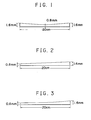
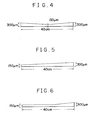
- Figs. 1 to 6 are vertical sectional views showing representative thickness gradients of the gel membrane (gradient in the direction of electrophoresis) according to the present invention.
- acrylamide compound employable in the present invention examples include and its homologues such as N-methylacrylamide, N,N-dimethylacrylamide, N-(hydroxymethyl)acrylamide and diacetoneacrylamide, as well as methacrylamide and its homologues. These compounds can be employed independently or in combination. Acrylamide is most preferred among these acrylamide compounds, and this acrylamide can be also preferably employed in combination with one or more of other acrylamide compounds.
- crosslinking agent employable to obtain the polyacrylamide gel membrane a known crosslinking agent described, for instance, in "Electrophoresis” 1981, 2 , 213-228 can be employed singly or in combination.
- Examples of the crosslinking agents include bifunctional compounds such as N,N ⁇ -methylenebisacrylamide (BIS), N,N ⁇ -propylenebisacrylamide (PBA), di(acrylamide dimethyl)-ether (i.e., N,N ⁇ -oxydimethyleneacrylamide), 1,2-diacrylamide ethyleneglycol (DEG), 1,3-diacryloylethyleneurea (EUB), ethylene diacrylate (EDA), N,N ⁇ -diallyltartardiamide (DATD), and N,N ⁇ -bisacrylylcystamine (BAC).
- Examples of the crosslinking agents also include trifunctional compounds such as 1,3,5-triacryloylhexahydro-s-triazin, triallyl
- the crosslinking agent can be employed in an amount of approx. 1 to 30 wt.%, preferably approx. 2 to 10 wt.%, based on the total weight of the monomer (i.e., acrylamide compound) and the crosslinking agent.
- the gel membrane preferably contains agarose.
- agarose there is no specific limitation on the agarose to be contained in the gel membrane, and any type of agarose such as lowelectroendosmosis agarose, medium-electroendosmosis agarose, or high-electroendosmosis agarose can be employed.
- examples of agarose employable in the invention include agarose disclosed in USP 4,290,911, GB 2 042 571A, WO 82/02599, USP 4,319,976, etc.
- the amount of agarose to be added ranges from approx. 0.2 to 2.0 wt(g)/v(ml) %, preferably from approx. 0.3 to 1.2 wt(g)/v(ml) %, based on the volume of the aqueous gel containing the monomer and the crosslinking agent.
- the gel membrane of the invention may contain a water-soluble polymer.
- a water-soluble polymer of the addition polymerization type or condensation polymerization type a cross-linked acrylamide copolymer containing a vinylsulfonyl group, or a water-soluble cellulose derivative can be used.
- Examples of the polymer of the addition polymerization type include non-ionic water-soluble polymers such as polyvinyl alcohol, polyvinyl pyrrolidone, and polyacrylamide.
- polymer of the condensation polymerization type include non-ionic water-soluble polyalkylene glycols such as polyethylene glycol and polypropylene glycol.
- Examples of the cross-linked acrylamide copolymers inlude N-[[3-(2-vinylsulfonyl)propaneamide]methyl]acrylamide-acrylamide copolymer, N-[[3-(2-chloroethylsulfonyl)propaneamide]methyl]acrylamide-acrylamide-N-(1,1-dimethyl3-oxobutyl)acrylamide copolymer.
- Examples of the watersoluble cellulose derivatives include water-soluble cellulose ether such as methyl cellulose, ethyl cellulose, hydroxy ethyl cellulose, hydroxypropyl methyl cellulose, hydroxybutyl methyl cellulose.
- water-soluble polymers polyarylamide, polyethylene glycol, N[[3-(vinylsulfonyl)propaneamide]methyl]acrylamide-acrylamide copolymer are preferred.
- the water-soluble polymer is used in a range of approx. 2 to 100 wt.%, preferably, approx. 5 to 50 wt.%, based on the total weight of the monomer and the crosslinking agent, in the case that the water-soluble anionic polymer of the addition polymerization type or condensation polymerization type is used.
- the crosslinked acrylamide copolymer the water-soluble polymer can be used in a range of approx. 1 to 50 wt.%, preferably, approx. 5 wt.% to 40 wt.%, based on the weight of the acrylamide compound.
- Glycerol can be contained in the gel membrane to prevent prolongation and distortion of the bands so as to read the resolved pattern.
- the glycerol can be introduced in an amount of approx. 0.1 to 1.0 wt(g)/v(ml) % based on the volume of the gel membrane.
- a polyol compound such as glycerol or ethylene glycol can be contained in the aqueous gel membrane of the means of the invention as a wetting agent.
- the polyol compound can be introduced in an amount of approx. 5 to 40 wt(g)/v(ml) % based on the volume of the gel membrane.
- the agarose and/or the water-soluble polymer or the polyol compound can be added to the gel membrane at a state when the acrylamide compound and the crosslinking agent are dissolved in water until at a stage when the aqueous polyacrylamide gel is formed.
- the means for electrophoresis of the invention can be employed for analysis of proteins and conjugated proteins (e.g., lipoproteins, glycoproteins, etc.) and the electrophoresis layer (gel membrane) of the means may comprise an anionic surfactant as a modifier.
- the use of the anionic surfactant is generally essential or preferivelyable for the electrophoretic analyses of proteins or conjugated proteins, because it contributes to perform separation of the protein and conjugated protein and determination of molecular weight of these proteins.
- the electrophoresis layer may not contain the anionic surfactant.
- the anionic surfactant examples include alkylsulfates, particularly alkylsulfates having a long chain alkyl group of at least 10 carbon atoms.
- the cation contained for formation of the salt generally is an alkali metal ion such as sodium ion, potassium ion, or lithium ion.
- Sodium ion is preferred from the economical viewpoint.
- the alkylsulfates preferably are dodecylsulfates (salts of sodium, potassium, lithium, etc.), and particularly preferred is sodium dodecylsulfate (SDS).
- SDS sodium dodecylsulfate
- the anionic surfactant (modifier) can be contained in the gel-forming solution in an amount of not more than about 2.0 wt(g)/v(ml) % (weight per volume of the gel- forming solution), preferably approx. 0.1 to 1.5 wt(g)/v(ml) %.
- the anionic surfactant can be added at a stage when the acrylamide and the closslinking agent are dissolved in water until at a stage when the aqueous polyacrylamide gel is formed.
- surfactants such as a nonionic surfactant, an anionic surfactant or an amphoteric surfactant differing from the modifier can be added to the gel medium. Examples of such surfactants are described hereinbelow.
- Et means ethyl and Me means methyl.
- the amount of the nonionic surfactant or cationic surfactant is in the range of approx. 1x10 ⁇ 4 to 5x10 ⁇ 1 wt(g)/v(ml) %, preferably approx. 1x10 ⁇ 3 to 1x10 ⁇ 2 wt(g)/v(ml) % based on the volume of the aqueous gel membrane containing the monomer and the crosslinking agent.
- the amount of the anionic surfactant is in the range of approx. 1x10 ⁇ 4 to 5x10 ⁇ 2 wt(g)/v(ml) %, preferably approx. 1x10 ⁇ 3 to 5x10 ⁇ 2 wt(g)/v(ml) %.
- the means for electrophoresis of the invention also can be employed for determination of base sequence of DNA, RNA, their fragments, and their derivatives.
- a compound containing at least one carbamoyl group is generally incorporated into the gel membrane medium as a modifier.
- the modifiers include urea and formamide. Urea is most preferred.
- the modifier can be used in an amount of approx. 40 to 60 wt.% based on the volume of the aqueous gel membrane containing the monomer and the crosslinking agent.
- the amount generally ranges from approx. 6 moles (approx. 360 g.) per one liter of the aqueous gel containing the monomer and the crosslinking agent to the saturation amount, preferivelyably from about 7 moles (approx. 420 g.) to the saturation amount.
- a buffer agent which is able to buffer a solution to a range of pH 2.5 to 10.0 can be incorporated.
- Such buffer agent are described in publications such as "Chemistry Handbook, Fundamental Edition” compiled by The Chemical Society of Japan (Maruzen Ltd., Tokyo, 1966) pp. 1312-1320; "Modern Electrophoresis” edited by Aoki & Nagai (Hirokawa Shoten, 1973), pp. 320-322; "Data for Biochemical Research” compiled by R.M.C. Dawson et al., second edition (Oxford at the Clarendon Press, 1969) pp.
- the buffer agents include a buffer agent containing barbital, a buffer agent containing tris(hydroxymethyl)aminomethane (Tris), a buffer agent containing phosphate, a buffer agent containing borate, a buffer agent containing acetic acid or acetate, a buffer agent containing citric acid or citrate, a buffer agent containing lactic acid or lactate, and a buffer agent containing glycine; as well as N,N-bis(2-hydroxyethyl)-glycine (Bicine), N-2-hydroxyethylpiperazine-N ⁇ -2-hydroxypropane-3-sulfonic acid (HEPPSO) or its salt, N-2-hydroxyethylpiperazine-N ⁇ -3-propanesulfonic acid (EPPS) or its salt, N-[tris), N-2-hydroxyethylpiperazine-N ⁇ -2-propanesulfonic acid (HEPPSO) or its salt, N-2-hydroxye
- buffer agents include potassium dihydrogenphosphate-disodium hydrogenphosphate, Tris-sodium borate, Tris-sodium borate-EDTA ⁇ 2Na, Tris-citric acid, sodium barbital-sodium acetate, sodium barbital-hydrochloric acid, barbital-sodium barbital, acetic acid-sodium acetate, lactic acid-sodium lactate, citric acid-disodium hydrogenphosphate, Bicine, HEPPSO, sodium salt of HEPPSO, EPPS, sodium salt of EPPS, TAPS, and sodium salt of TAPS.
- a buffer agent which is able to buffer a solution to a range of pH 8.0 to 10.0, preferably pH 8.0 to 9.0 can be incorporated.
- buffer agents are also described in the aforementioned publications.
- buffer agents examples include tris(hydroxymethyl)aminomethane (Tris), N,N-bis(2-hydroxyethyl)glycine (Bicine), N-2-hydroxyethylpiperazine-N ⁇ -2-hydroxypropane-2-sulfonic acid or its Na or K salt, N-2-hydroxyethylpiperazine-N ⁇ -2-hydroxypropane-3-sulfonic acid (HEPPSO) or its Na or K Salt, N-[tris(hydroymethy)methyl]-3-aminopropanesulfonic acid (TAPS) or its Na or K salt; as well as an acid, an alkali, and a salt employable in combination with the compounds.
- Preferable examples of the buffer agents include a combination of Tris and boric acid-EDTA ⁇ 2Na (pH 8.2 to 8.3), and a combination of Tris and hydrochloric acid (pH 8.9).
- the gel membrane preferably is colorless and transparent for readily detecting or reading the obtained electrophoretic patterns.
- the gel membrane can be prepared as a layer, a membrane or a slab having a predetermined and controlled thickness gradient on a sheet-type (or film-type, or plate-type) support or covering sheet which has a non-conductive and water impermeable smooth surface.
- An organic polymer sheet or a glass plate can be employed as the support or covering sheet.
- the organic polymer sheet means a polymer material in the form of a sheet (or plate). Examples of the organic polymer include polyethylene terephathalate, polycarbonate of Bisphenol A, polystyrene, cellulose ester such as cellulose diacetate, cellulose triacetate, cellulose acetate propionate, or the like.
- the organic polymer sheet has a thickness in the range of approx.
- the organic polymer sheet is transparent and has a smooth surface through which an electromagnetic rays having at least a part of the range of wavelength in the range of approx. 200 to 900 nm can be penetrate.
- the surface of the organic polymer support or covering sheet employed in the invention can be made hydrophilic to improve adhesion.
- Known methods for making a surface of a polymer material hydrophilic such as irradiation of ultraviolet rays, glow discharge treatment, corona discharge treatment, flame treatment, irradiation of electron radiation or chemical etching can be used.
- a undercoating layer or an adhesive layer can be provided on a surface of the organic polymer support or covering sheet.
- a plane support or covering sheet which has a predetermined gradual thickness variation (described hereinafter) can be used.
- the gel membrane of the means of the invention can be prepared by a process in which an aqueous solution containing the above-described components and a radical polymerization initiator (gel-forming solution) is coated or casted by a known method on a plane support or covering sheet having a smooth surface.
- the gel forming solution is then crosslinked to undergo polymerization on the surface of the support or covering sheet.
- the crosslinking polymerization can be initiated by a known method, for instance, in the presence of a peroxide and/or under irradiation of ultraviolet rays.
- the reaction can be accelerated by heat and irradiation with ultraviolet rays.
- acrylamide compound and a crosslinking agent are dissolved or dispersed in water to prepare an aqueous solution or an aqueous dispersion, wherein the crosslinking reaction is carried out to form an aqueous polyacrylamide gel membrane.
- dissolving (in water) means to include both “dissolving (in water” and “dispersing (in water)”
- aqueous solution means to include both “aqueous solution” and “aqueous dispersion”, unless otherwise indicated.
- aqueous medium is used to include both a simple water as well as an aqueous mixture of water and an organic solvent, the organic solvent being optionally added.
- a known low temperature-polymerization initiator such as those described in "Electrophoresis” 1981, 2 , 213 - 219, ibid. 1981, 2 , 220 -228; and “Modern Electrophoresis” edited by Aoki & Nagai (Hirokawa Shoten, 1973) can be used.
- the initiators include a mixture of ⁇ -dimethylaminopropionitrile (DMAPN) and ammonium peroxodisulfate, a mixture of N,N,N ⁇ ,N ⁇ -tetramethylethylenediamine (TEMED) and ammonium peroxodisulfate, a mixture of TEMED and riboflavin (riboflavin phosphate sodium salt), a combination of a mixture of TEMED, riboflavin and hydrogen peroxide, and irradiation with ultraviolet rays.
- the radical reaction initiator can be employed in the amount of approx. 0.3 to 5 wt. %, preferably approx. 0.5 to 3 wt. %, based on the total amount of the monomer and crosslinking agent.
- the gel concentration preferably is in the range of approx. 3 to 30 wt(g)/v(ml) % (total weight of the monomer and crosslinking agent per total volume of gel membrane comprising a monomer, a crosslinking agent and an aqueous medium), the concentration being expressed in accordance with the definition indicated by S. Hjerten in Arch. Biochem. Biophys. 1 (Suppl.), 147 (1962).
- the surface of the gel forming solution layer can be covered with a plastic film (including sheet and plate, which serves as a support).
- a plastic film including sheet and plate, which serves as a support.
- the covering material materials same as the above-described plane-type support can be used.
- the thickness is not larger than approx. 300 ⁇ m, for practical use in the range of approx. 4 to 250 ⁇ m, preferably in the range of approx. 50 to 200 ⁇ m.
- the covering materials is a glass plate
- the thickness is the same as a plane glass plate employed as the support.
- the gel membrane generally has a thickness gradient wherein the side for a low molecular weight portion is made larger than the side for a high molecular weight portion.
- the gel membrane having other thickness gradient may also be used.
- the thickness gradient (curve or straight line) of the gel membrane may be a straight line, a slightly bended straight line, a part of gradual variation curve such as an exponential function, a logarithmic function, a suspension line, a tracking line, a parabola, a hyperbola, an ellipsoidal line and a tertiary curve, and a combination thereof or a combination of curve with a straight line.
- the thickness gradient preferably increases from one end to another end gradually and monotonously in the direction of electrophoresis, or increases from an intermediate position to one end in the direction of electrophoresis, or increases after initially decreasing the thickness.
- the range of the thickness variation is from approx. 50 ⁇ m to 5 mm, preferably approx. 80 ⁇ m to 2 mm.
- the range of thickness variation preferably is approx. 300 ⁇ m to 3 mm.
- the start point may have an optional shape selected from the known forms such as a rectangle, a square, a triangle (shark's teeth type) and a circle.
- the gel membrane of the invention has one of the following characteristics.
- the thickness gradient of the membrane is formed under the condition that at least one end of the membrane is the thickest; the thickness gradient of the membrane is formed under the condition that one end of the membrane is the thickest and another end of the membrane is the thinnest; the thickness gradient of the membrane is formed under the condition that the thinnest portion lies bet ween positions at 10 % (preferably 20 %, more preferably 30 %) of the length of the membrane in the electrophoresis direction apart inside from both ends of the membrane; the thickness gradient of the membrane is formed under the condition that thickness of the thinnest portion is less than 80 % (preferably less than 70 %, more preferably less than 60 %) of the thickness of the thickest portion; and the thickness gradient of the membrane is formed under the condition that thickness of the thinnest portion is more than 20 % (preferably more than 30 %, more preferably more than 40 %) of the thickness of the thickest portion.
- the gel membrane having a thickness gradient can be prepared by the following processes:
- the plane support having a predetermined thickness gradient can be prepared by various known manners such as a mold-casting method, a chemical etching and a cutting method.
- the spacer is not necessary to have a thickness gradient corresponding to the predetermined thickness gradient of the gel membrane.
- the thickness gradient can be given in the area being a little wider than the migration area, and the thickness of the residual area is made uniform.
- the gel membrane having such thickness gradient utilized for an embodiment employing a plane support or covering sheet having a gradual thickness variation.
- the gel membrane of the invention can be prepared essentially in the same manner as for the preparation of the known aqueous polyacrylamide gel membrane.
- the gel membrane of the invention can be horizontally or vertically placed for performing slab gel electrophoresis in the known manners.
- PET polyethylene terephthalate
- width 20 cm, length: 20 cm, thickness: 180 ⁇ m
- the PET film was itself used as a support.
- spacer plates having a width of 10 mm and a thickness gradient given respectively in the sectional views of Figs. 1 to 3, and a spacer plate having a width of 10 mm and a uniform thickness of 0.8 mm.
- the fixed spacer plates were covered with the PET sheet (covering sheet, thickness: 100 ⁇ m), and then outside of the covering sheet was fixed using a square aluminum plate (size: 20 cm x 20 cm) corresponding to the thickness gradient of the spacer plates to obtain a mold for the preparation of a gel membrane for electrophoresis composed of an aqueous polyacrylamide gel.
- the gel-forming solution having a composition given in Table 1, and then was left for 10 minutes.
- the gel-forming solution was subjected to crosslinking polymerization between two PET sheets (support and covering sheet) by irradiating 100 W of high pressure mercury lamp placed at a distance of 10 cm at a temperature of 25°C.
- the aqueous polyacrylamide gel membranes (1), (2) and (3) having a thickness gradient, and an aqueous polyacrylamide gel membrane (a) (for comparison) having a uniform thickness of 0.8 mm were obtained.
- Electrophoresis of the following human serum proteins were performed in the conventional manner using the gel membranes (1), (2), (3) & (a). Standard protein (human albumin, molecular weight: 67,000) Lactate dehydrogenase, sub unit (molecular weight: 36,000) Catalase, sub unit (molecular weight: 60,000) Ferritine, sub unit (molecular weight: 18,500) Ferritine, half unit (molecular weight: 220,000) Tyroglobulin, sub unit (molecular weight: 330,000)
- the range of the molecular weight using the gradient gel membranes (1), (2), (3) which can be segregated and fractionated was from 10,000 to 330,000 or more.
- the range of the molecular weight using the gradient gel membrane (a) which can be segregated and fractionated was from 10,000 to between 220,000 and 330,000.
- the aqueous polyacrylamide gel membrane of the present invention had an improved molecular sieve function in the wide range from a low molecular weight portion to a high molecular weight portion.
- a polyacrylamide gel membrane (b) having a gel concentration gradient was prepared using the same mold having a uniform thickness 0.8 mm as in Comparison Example 1, and then the composition of the gel-forming solution was introduced into the mold while the mixture proportion of the gel-forming solution was gradually changed as shown in Table 2.
- the gel membrane (2) prepared in Example 1 and the gel membrane (b) were dyed by Coomassie Blue R-250.
- the gel membrane (2) was not distorted in the dyeing process and the swelling proportion was constant.
- the gel membrane (b) having a gel concentration gradient was distorted as a whole, slightly distorted in a low gel concentration portion, highly distorted in a high gel concentration portion.
- a surface of square, colorless, transparent PET film (width: 20 cm, length: 20 cm, thickness: 180 ⁇ m) was treated with irradiation of ultraviolet rays.
- the PET film was itself used as a support.
- On both sides of the PET film was fixed a spacer plate having a uniform thickness of 0.8 mm, a width of 10 mm and a length 20 cm.
- the gel-forming solution having a composition given in Table 1 to give a layer thickness in the range of 0.8 mm to 1.6 mm by controlling the flow rate and the coated layer was subjected to crosslinking polymerization by irradiating 500 W of xenon lamp in a nitrogen atmosphere.
- the gel membrane was covered with the PET sheet (thickness : 63 ⁇ m, size: 20 x 20 cm) and was then bound to obtain aqueous polyacrylamide gel membranes having some thickness gradient of the gel membranes (1), (2) and (3).
- a gel membrane (c) having a uniform thickness of 0.8 mm was prepared in the same manner as mentioned above, except that the flow rate of the gel forming solution was controlled to give a thickness of 0.8 mm.
- a surface of rectangular, colorless, transparent PET film (width: 20 cm, length: 40 cm, thickness: 180 ⁇ m) was treated with irradiation of ultraviolet rays.
- the PET film was itself used as a support.
- On both lateral sides of the PET film were fixed spacer plates having a width of 10 mm and a thickness gradient given respectively in the sectional views of Figs. 4 to 6, and a spacer plate having a width of 10 mm and a uniform thickness of 200 ⁇ m.
- the fixed spacer plates were covered with the PET sheet (covering sheet, thickness: 100 ⁇ m), and then the outer side of the covering sheet was fixed using a square aluminum plate (size: 20 cm x 40 cm) corresponding to the thickness gradient of the spacer plates to obtain a mold for the preparation of a gel membrane for electrophoresis composed of an aqueous polyacrylamide gel.
- the readable range of the resolved fragments on the gradient gel membranes (d) was No. 60 to No. 200 (namely, 60th to 200th), and the width and space of the resolved fragments gradually narrowed from the low molecular weight portion to the high molecular weight portion.
- the aqueous polyacrylamide gel membrane of the invention had an improved molecular sieve function in the wide range from a low molecular weight portion to a high molecular weight portion. Further, the gel membrane of the invention showed an improved resolving power for the detemination of base sequence of DNA.
- a surface of rectangular, colorless, transparent PET sheet (thickness: 180 ⁇ m, size: 20 cm x 40 cm) was treated with irradiation of ultraviolet rays.
- the PET film was itself used as a support.
- One both lateral sides of the PET film were fixed spacer plates having a width of 10 mm, a length of 40 cm and a uniform thickness of 300 ⁇ m.
- the gel-forming solution having a composition given in Table 3 to give a layer thickness in the range of 150 ⁇ m to 300 ⁇ m by controlling the flaw rate, and the coated layer was subjected to crosslinking polymerization by irradiating 500 W of xenon lamp in a nitrogen atmosphere.
- the gel membrane was covered with the PET sheet (thickness : 63 ⁇ m, size: 20 x 40 cm) and was bound to obtain aqueous polyacrylamide gel membranes having a same thickness gradient of the gel membranes (4), (5) and (6).
- a gel membrane (e) for comparison having a uniform thickness of 200 ⁇ m was prepared in the same manner as mentioned above, except that the flow rate of the gel forming solution was controlled to give a thickness of 200 ⁇ m.
- Electrophoresis was perfomed using the above obtained gel membranes in the same manner as in Example 4 & Comparison Example 4. Almost the same results were obtained.
- a surface of rectangular, colorless, transparent PET sheet (thickness: 180 ⁇ m, size: 20 cm x 40 cm) was treted with irradiation of ultraviolet rays.
- the PET film was itself used as support.
- On both lateral sides of the PET film were fixed spacer plates having a width of 10 mm, a length of 40 cm and a uniform thickness of 200 ⁇ m.
- the gel-forming solution having a composition given in Table 3 to give a layer thickness in the range of 100 ⁇ m to 280 ⁇ m by controlling the flow rate, and the coated layer was subjected to crosslinking polymerization by irradiating 500 W of xenon lamp in a nitrogen atmosphere.
- the gel membrane was covered with the PET sheet (thickness : 63 ⁇ m, size: 20 x 40 cm) and was bound to obtain aqueous polyacrylamide gel membrane (7) having a thickness gradient shown in Fig. 7.
- a gel membrane (f) for comparison having a uniform thickness of 200 ⁇ m was prepared in the same manner as mentioned above, except that the flow rate of the gel forming solution was controlled to give a thickness of 200 ⁇ m.
- the readable range of the resolved fragments on the gradient gel membrane (f) for comparison was from No. 60 to No. 200, and the width and space of the resolved fragments gradually narrowed from the low molecular weight portion to the high molecular weight portion.
Landscapes
- Health & Medical Sciences (AREA)
- Life Sciences & Earth Sciences (AREA)
- Chemical & Material Sciences (AREA)
- Molecular Biology (AREA)
- Biochemistry (AREA)
- Immunology (AREA)
- Physics & Mathematics (AREA)
- Analytical Chemistry (AREA)
- Chemical Kinetics & Catalysis (AREA)
- General Health & Medical Sciences (AREA)
- General Physics & Mathematics (AREA)
- Electrochemistry (AREA)
- Pathology (AREA)
- Dispersion Chemistry (AREA)
- Addition Polymer Or Copolymer, Post-Treatments, Or Chemical Modifications (AREA)
- Manufacture Of Macromolecular Shaped Articles (AREA)
- Laminated Bodies (AREA)
- Investigating Or Analysing Biological Materials (AREA)
Applications Claiming Priority (4)
| Application Number | Priority Date | Filing Date | Title |
|---|---|---|---|
| JP62043702A JPH0660886B2 (ja) | 1987-02-26 | 1987-02-26 | 電気泳動用媒体膜 |
| JP43703/87 | 1987-02-26 | ||
| JP62043703A JPS63210654A (ja) | 1987-02-26 | 1987-02-26 | 電気泳動用媒体膜 |
| JP43702/87 | 1987-02-26 |
Publications (3)
| Publication Number | Publication Date |
|---|---|
| EP0280567A2 true EP0280567A2 (de) | 1988-08-31 |
| EP0280567A3 EP0280567A3 (en) | 1989-10-11 |
| EP0280567B1 EP0280567B1 (de) | 1993-06-23 |
Family
ID=26383511
Family Applications (1)
| Application Number | Title | Priority Date | Filing Date |
|---|---|---|---|
| EP88301666A Expired - Lifetime EP0280567B1 (de) | 1987-02-26 | 1988-02-26 | Mittel für Elektrophorese |
Country Status (3)
| Country | Link |
|---|---|
| US (1) | US4844786A (de) |
| EP (1) | EP0280567B1 (de) |
| DE (1) | DE3881905D1 (de) |
Cited By (7)
| Publication number | Priority date | Publication date | Assignee | Title |
|---|---|---|---|---|
| EP0320937A3 (en) * | 1987-12-18 | 1990-05-30 | Fuji Photo Film Co., Ltd. | Electrophoresis medium membrane, pulse field electrophoresis method and apparatus |
| EP0521065A4 (en) * | 1990-03-20 | 1993-05-05 | At Biochem, Inc. | Electrophoretic media |
| WO1994020843A1 (en) * | 1993-03-05 | 1994-09-15 | Pawliszyn Janusz B | Method and device for isoelectric focusing without carrier ampholytes |
| US6113767A (en) * | 1998-04-24 | 2000-09-05 | Apogee Designs, Ltd. | Electrophoresis sequencing apparatus |
| EP1211510A1 (de) * | 2000-11-29 | 2002-06-05 | Proteologics, Inc. | Verfahren und Vorrichtung zur nichtlinear beweglichen, elektrophoretischen Trennung |
| WO2002044707A1 (en) * | 2000-11-29 | 2002-06-06 | Proteologics Inc. | Method and apparatus for decoupling temperature and electric field in electrophoresis separation |
| WO2002071048A1 (en) * | 2001-03-07 | 2002-09-12 | Picosep A/S | A process for the separation of biocomponents on a substrate surface |
Families Citing this family (17)
| Publication number | Priority date | Publication date | Assignee | Title |
|---|---|---|---|---|
| US5830642A (en) * | 1992-04-03 | 1998-11-03 | Amersham Life Science, Inc. | Electrophoresis of nucleic acid fragments |
| US5314595A (en) * | 1992-04-03 | 1994-05-24 | United States Biochemical Corporation | Electrophoresis of nucleic acid fragments |
| WO1994023092A1 (en) * | 1993-03-26 | 1994-10-13 | United States Biochemical Corporation | Improved sequencing gel |
| US5460709A (en) * | 1993-06-21 | 1995-10-24 | Helena Laboratories Corporation | Automatic electrophoresis method and apparatus |
| CA2123940A1 (en) * | 1993-06-21 | 1994-12-22 | Philip A. Guadagno | Electrophoresis plate |
| US5370347A (en) * | 1993-07-07 | 1994-12-06 | Helena Laboratories Corporation | Support system for an equipment housing |
| AU1183195A (en) * | 1993-11-17 | 1995-06-06 | Applied Hydrogel Technology Corporation | Methods for the separation of biological materials |
| US5507934A (en) * | 1994-11-01 | 1996-04-16 | Visible Genetics Inc. | Apparatus for preparing gels for use in electrophoretic separations and similar applications |
| US5518604A (en) * | 1995-04-07 | 1996-05-21 | Brandeis University | Buffer shaping device |
| US6027628A (en) * | 1998-02-23 | 2000-02-22 | Yamamura; Hidetaka | Gel cassette for electrophoresis |
| WO2000042423A1 (en) * | 1999-01-12 | 2000-07-20 | Spectrumedix Corporation | Copolymers for capillary gel electrophoresis |
| US6036021A (en) * | 1999-02-17 | 2000-03-14 | C.C. Imex | Package for electrophoresis gel |
| US6878250B1 (en) * | 1999-12-16 | 2005-04-12 | Honeywell International Inc. | Sputtering targets formed from cast materials |
| WO2007002676A2 (en) * | 2005-06-27 | 2007-01-04 | Invitrogen Corporation | Liquid protein markers for native gel electrophoresis |
| EP2941637A4 (de) * | 2013-01-02 | 2016-10-12 | Abraham Shtevi | Vorrichtung zur durchführung von elektrophorese zur erzeugung von spiegelkopien von getrennten proteinen durch verwendung desselben gels und derselben proben |
| GB201319791D0 (en) * | 2013-11-08 | 2013-12-25 | Sigmoid Pharma Ltd | Formulations |
| JP6802827B2 (ja) * | 2018-09-18 | 2020-12-23 | 株式会社東芝 | 水素製造装置及び隔膜 |
Family Cites Families (5)
| Publication number | Priority date | Publication date | Assignee | Title |
|---|---|---|---|---|
| US3129158A (en) * | 1961-01-24 | 1964-04-14 | Raymond Samuel | Process for gel electrophoresis |
| US4704198A (en) * | 1984-04-27 | 1987-11-03 | E. I. Du Pont De Nemours And Company | Porosity gradient electrophoresis gel |
| EP0167373A3 (de) * | 1984-06-30 | 1989-06-14 | Fuji Photo Film Co., Ltd. | Bestandteil für Elektrophorese |
| US4576693A (en) * | 1985-01-14 | 1986-03-18 | International Biotechnologies, Inc. | Nucleic acid sequencing electrophoresis apparatus and method of fabricating |
| US4762743A (en) * | 1987-07-31 | 1988-08-09 | Bio-Rad Laboratories, Inc. | Corrugated wedge spacers for slab gel molds |
-
1988
- 1988-02-25 US US07/160,161 patent/US4844786A/en not_active Expired - Lifetime
- 1988-02-26 EP EP88301666A patent/EP0280567B1/de not_active Expired - Lifetime
- 1988-02-26 DE DE8888301666T patent/DE3881905D1/de not_active Expired - Lifetime
Cited By (9)
| Publication number | Priority date | Publication date | Assignee | Title |
|---|---|---|---|---|
| EP0320937A3 (en) * | 1987-12-18 | 1990-05-30 | Fuji Photo Film Co., Ltd. | Electrophoresis medium membrane, pulse field electrophoresis method and apparatus |
| EP0521065A4 (en) * | 1990-03-20 | 1993-05-05 | At Biochem, Inc. | Electrophoretic media |
| WO1994020843A1 (en) * | 1993-03-05 | 1994-09-15 | Pawliszyn Janusz B | Method and device for isoelectric focusing without carrier ampholytes |
| US6113767A (en) * | 1998-04-24 | 2000-09-05 | Apogee Designs, Ltd. | Electrophoresis sequencing apparatus |
| WO1999060390A3 (en) * | 1998-04-24 | 2001-05-31 | Apogee Designs Ltd | Electrophoresis sequencing apparatus |
| EP1211510A1 (de) * | 2000-11-29 | 2002-06-05 | Proteologics, Inc. | Verfahren und Vorrichtung zur nichtlinear beweglichen, elektrophoretischen Trennung |
| WO2002044706A1 (en) * | 2000-11-29 | 2002-06-06 | Proteologics Inc. | Methods and apparatus for nonlinear mobility electrophoresis separation |
| WO2002044707A1 (en) * | 2000-11-29 | 2002-06-06 | Proteologics Inc. | Method and apparatus for decoupling temperature and electric field in electrophoresis separation |
| WO2002071048A1 (en) * | 2001-03-07 | 2002-09-12 | Picosep A/S | A process for the separation of biocomponents on a substrate surface |
Also Published As
| Publication number | Publication date |
|---|---|
| EP0280567A3 (en) | 1989-10-11 |
| EP0280567B1 (de) | 1993-06-23 |
| DE3881905D1 (de) | 1993-07-29 |
| US4844786A (en) | 1989-07-04 |
Similar Documents
| Publication | Publication Date | Title |
|---|---|---|
| EP0280567B1 (de) | Mittel für Elektrophorese | |
| US4891119A (en) | Medium for electrophoresis having improved physical properties | |
| EP0119808B1 (de) | Element für Elektrophorese | |
| EP0119090B1 (de) | Element für Elektrophorese | |
| US4657656A (en) | Polyacrylamide medium for electrophoresis having improved elasticity | |
| US4737259A (en) | Element for electrophoresis | |
| US4963243A (en) | Medium for electrophoresis | |
| US4718998A (en) | Element for electrophoresis | |
| EP0168233B1 (de) | Träger für Elektrophorese | |
| EP0126639B1 (de) | Element für Elektrophorese | |
| EP0246751B1 (de) | Elektrophoresemedium | |
| US4722777A (en) | Improvement of electrophoretic element using polyacrylamide gel | |
| US4699705A (en) | Element for electrophoresis using aqueous polyacrylamide gel | |
| US5190629A (en) | Electrophoresis medium membrane | |
| EP0115436B1 (de) | Medium für die Elektrophorese | |
| US4737258A (en) | Element for electrophoresis containing polyacrylamide gel membrane | |
| US4695354A (en) | Medium for electrophoresis | |
| US4834854A (en) | Method of making an electrophoresis medium | |
| EP0163472B1 (de) | Elektrophoretisches Element | |
| EP0165069B1 (de) | Elektrophoresemedium | |
| EP0162693A2 (de) | Elektrophoretischer Bestandteil | |
| JPS63210654A (ja) | 電気泳動用媒体膜 | |
| JPS6291850A (ja) | 電気泳動用媒体の製造方法 | |
| JPS63210653A (ja) | 電気泳動用媒体膜 | |
| JPS631964A (ja) | 電気泳動用媒体材料 |
Legal Events
| Date | Code | Title | Description |
|---|---|---|---|
| PUAI | Public reference made under article 153(3) epc to a published international application that has entered the european phase |
Free format text: ORIGINAL CODE: 0009012 |
|
| AK | Designated contracting states |
Kind code of ref document: A2 Designated state(s): DE FR GB |
|
| PUAL | Search report despatched |
Free format text: ORIGINAL CODE: 0009013 |
|
| AK | Designated contracting states |
Kind code of ref document: A3 Designated state(s): DE FR GB |
|
| 17P | Request for examination filed |
Effective date: 19900409 |
|
| 17Q | First examination report despatched |
Effective date: 19910503 |
|
| GRAA | (expected) grant |
Free format text: ORIGINAL CODE: 0009210 |
|
| AK | Designated contracting states |
Kind code of ref document: B1 Designated state(s): DE FR GB |
|
| PG25 | Lapsed in a contracting state [announced via postgrant information from national office to epo] |
Ref country code: DE Effective date: 19930623 |
|
| REF | Corresponds to: |
Ref document number: 3881905 Country of ref document: DE Date of ref document: 19930729 |
|
| ET | Fr: translation filed | ||
| PLBE | No opposition filed within time limit |
Free format text: ORIGINAL CODE: 0009261 |
|
| STAA | Information on the status of an ep patent application or granted ep patent |
Free format text: STATUS: NO OPPOSITION FILED WITHIN TIME LIMIT |
|
| 26N | No opposition filed | ||
| REG | Reference to a national code |
Ref country code: GB Ref legal event code: IF02 |
|
| PGFP | Annual fee paid to national office [announced via postgrant information from national office to epo] |
Ref country code: FR Payment date: 20050106 Year of fee payment: 18 |
|
| PGFP | Annual fee paid to national office [announced via postgrant information from national office to epo] |
Ref country code: GB Payment date: 20050211 Year of fee payment: 18 |
|
| PG25 | Lapsed in a contracting state [announced via postgrant information from national office to epo] |
Ref country code: GB Free format text: LAPSE BECAUSE OF NON-PAYMENT OF DUE FEES Effective date: 20060226 |
|
| GBPC | Gb: european patent ceased through non-payment of renewal fee |
Effective date: 20060226 |
|
| REG | Reference to a national code |
Ref country code: FR Ref legal event code: ST Effective date: 20061031 |
|
| PG25 | Lapsed in a contracting state [announced via postgrant information from national office to epo] |
Ref country code: FR Free format text: LAPSE BECAUSE OF NON-PAYMENT OF DUE FEES Effective date: 20060228 |