EP0283563B1 - Nouveaux dérivés - Google Patents
Nouveaux dérivés Download PDFInfo
- Publication number
- EP0283563B1 EP0283563B1 EP87115581A EP87115581A EP0283563B1 EP 0283563 B1 EP0283563 B1 EP 0283563B1 EP 87115581 A EP87115581 A EP 87115581A EP 87115581 A EP87115581 A EP 87115581A EP 0283563 B1 EP0283563 B1 EP 0283563B1
- Authority
- EP
- European Patent Office
- Prior art keywords
- protein
- group
- human
- conjugate
- buffer
- Prior art date
- Legal status (The legal status is an assumption and is not a legal conclusion. Google has not performed a legal analysis and makes no representation as to the accuracy of the status listed.)
- Expired - Lifetime
Links
Images



Classifications
-
- C—CHEMISTRY; METALLURGY
- C07—ORGANIC CHEMISTRY
- C07D—HETEROCYCLIC COMPOUNDS
- C07D213/00—Heterocyclic compounds containing six-membered rings, not condensed with other rings, with one nitrogen atom as the only ring hetero atom and three or more double bonds between ring members or between ring members and non-ring members
- C07D213/02—Heterocyclic compounds containing six-membered rings, not condensed with other rings, with one nitrogen atom as the only ring hetero atom and three or more double bonds between ring members or between ring members and non-ring members having three double bonds between ring members or between ring members and non-ring members
- C07D213/04—Heterocyclic compounds containing six-membered rings, not condensed with other rings, with one nitrogen atom as the only ring hetero atom and three or more double bonds between ring members or between ring members and non-ring members having three double bonds between ring members or between ring members and non-ring members having no bond between the ring nitrogen atom and a non-ring member or having only hydrogen or carbon atoms directly attached to the ring nitrogen atom
- C07D213/60—Heterocyclic compounds containing six-membered rings, not condensed with other rings, with one nitrogen atom as the only ring hetero atom and three or more double bonds between ring members or between ring members and non-ring members having three double bonds between ring members or between ring members and non-ring members having no bond between the ring nitrogen atom and a non-ring member or having only hydrogen or carbon atoms directly attached to the ring nitrogen atom with hetero atoms or with carbon atoms having three bonds to hetero atoms with at the most one bond to halogen, e.g. ester or nitrile radicals, directly attached to ring carbon atoms
- C07D213/62—Oxygen or sulfur atoms
- C07D213/70—Sulfur atoms
- C07D213/71—Sulfur atoms to which a second hetero atom is attached
-
- A—HUMAN NECESSITIES
- A61—MEDICAL OR VETERINARY SCIENCE; HYGIENE
- A61P—SPECIFIC THERAPEUTIC ACTIVITY OF CHEMICAL COMPOUNDS OR MEDICINAL PREPARATIONS
- A61P7/00—Drugs for disorders of the blood or the extracellular fluid
- A61P7/02—Antithrombotic agents; Anticoagulants; Platelet aggregation inhibitors
-
- C—CHEMISTRY; METALLURGY
- C12—BIOCHEMISTRY; BEER; SPIRITS; WINE; VINEGAR; MICROBIOLOGY; ENZYMOLOGY; MUTATION OR GENETIC ENGINEERING
- C12N—MICROORGANISMS OR ENZYMES; COMPOSITIONS THEREOF; PROPAGATING, PRESERVING, OR MAINTAINING MICROORGANISMS; MUTATION OR GENETIC ENGINEERING; CULTURE MEDIA
- C12N11/00—Carrier-bound or immobilised enzymes; Carrier-bound or immobilised microbial cells; Preparation thereof
- C12N11/02—Enzymes or microbial cells immobilised on or in an organic carrier
- C12N11/06—Enzymes or microbial cells immobilised on or in an organic carrier attached to the carrier via a bridging agent
Definitions
- This invention relates to acylating agents suitable for preparing enzyme derivatives for use in the treatment of thrombotic diseases.
- European Patent No. 0,009,879 discloses derivatives of in vivo fibrinolytic enzymes which are useful therapeutic agents for treating venous thrombosis.
- the derivatives are characterised by the active catalytic site on the enzymes being blocked by a group which is removable by hydrolysis such that the pseudo first order rate constant for hydrolysis is in the range 10 ⁇ 6 sec ⁇ 1 to 10 ⁇ 3 sec ⁇ 1.
- EP-B-0155388 from which the present application is devided, provides a derivative of a fibrinolytic enzyme in which the catalytic site on the enzyme which is responsible for fibrinolytic activity is blocked by a human protein attached thereto by way of a reversible linking group.
- reversible linking group includes groups which are removable by hydrolysis at a rate such that the pseudo first order rate constant for hydrolysis is in the range 10 ⁇ 6 sec ⁇ 1 to 10 ⁇ 3 sec ⁇ 1 in isotonic aqueous media at pH 7.4 at 37°C.
- the preferred rate constant is in the range 1 x 10 ⁇ 5 sec ⁇ 1 to 8 x 10 ⁇ 4 sec ⁇ 1.
- the catalytic site on the enzyme is blocked by group of structure (I) P-B-A-X- (I) in which P is a human protein modified by treatment with an amino acid side chain specific reagent to include a protein attachment group, X is an acyl group of formula in which R is an aromatic or aliphatic residue, A is a bridging group comprising at least one hetero atom selected from oxygen, sulphur and nitrogen, in which the nitrogen is optionally substituted by C 1-6 alkyl, B is a linear hydrophilic linking group, linked to the protein attachment group on P.
- P is a human protein modified by treatment with an amino acid side chain specific reagent to include a protein attachment group
- X is an acyl group of formula in which R is an aromatic or aliphatic residue
- A is a bridging group comprising at least one hetero atom selected from oxygen, sulphur and nitrogen, in which the nitrogen is optionally substituted by C 1-6 alkyl
- B is a linear hydrophilic linking group,
- 'fibrinolytic enzyme is used herein to mean any enzyme which demonstrates in vivo fibrinolytic activity as defined in the above mentioned European Patent, and includes enzymes which are obtainable from mammalian urine, blood or tisues, or from bacteria expressing genes specifying such mammalian enzymes and which can activate plasminogen.
- tissue-type plasminogen acivator t-PA
- t-PA tissue-type plasminogen activator
- t-PA is melanoma plasminogen activator, the extraction of which is described in Published European Patent Application No. 41766.
- t-PA is a type of activator known as human extrinsic plasminogen activator.
- Intrinsic plasminogen activators such as urokinase and plasmin, are also suitable fibrinolytic enzymes for use in the present invention.
- human proteins are human plasma proteins known to have slow physiological clearance rates such as human serum albumin (and its oligomers), immunoglobulin, human fibrinogen and human plasminogen.
- the protein has a molecular weight in the region of 30,000 to 800,000 daltons.
- Preferred proteins are ones which are known to have significant affinity for components of a thrombotic mass, for example, human plasminogen.
- the protein may itself be a fibrinolytic enzyme as hereinbefore defined such as urokinase or tissue plasminogen activator, or a proenzyme thereof such as prourokinase.
- the active catalytic site thereof may optionally be blocked as described in European Patent No 0009 879.
- An example of such a blocked fibrinolytic enzyme is p-aminobenzoyl urokinase.
- derivatives include human serum albumin ⁇ human tissue plasminogen activator human serum albumin ⁇ urokinase urokinase or acylated urokinase ⁇ human plasmin human tissue plasminogen activator ⁇ human plasmin human immunoglobulin G ⁇ human tissue plasminogen activator human plasminogen ⁇ human tissue plasminogen activator where ⁇ represents a reversible linkage to the active centre of the enzyme.
- suitable groups X include groups derived from those blocking groups described in European Patent No. 0,009,879.
- Preferred groups are optionally substituted benzoyl groups as described in the above mentioned European Patent further substituted at the 2 or 4 position by the group A, and optionally substituted acryloyl groups also described in the above mentioned European patent and joined to A at the 2 or 3 position thereof.
- Suitable groups A are those which provide sufficient stabilisation of the resulting benzoyl or acryloyl-enzyme to result in a pseudo first order rate constant for hydrolysis in the above mentioned range and preferably in the range 1 x 10 ⁇ 5 to 8 x 10 ⁇ 4 sec ⁇ 1.
- Examples of A are: wherein R is a C 1-6 alkyl group.
- the protein attachment group is a functionality derived by modification of the protein with a reagent specific for one or more amino acid side chains, and which contains a group capable of reacting with a group B.
- groups B are substituted C2-C10 alkanes such as 6-aminohexyl, or linear polymers such as polyethylene glycol, polypropylene glycol, poly-glycine, poly-alanine or poly-sarcosine.
- the linear group B may optionally contain a cleavable section to facilitate analysis of the derivative or to react with the protein attachment group such as those derived from a 3-thio propionyl or 2-thio acetyl derivative of the ⁇ -amino alkane or polymer function.
- An example of a cleavable section is a disulphide bond.
- the disulphide bond is derived from reaction of P with the linear group B and thus is generated at the linkage of B with P.
- the cleavable section may comprise an ⁇ , ⁇ dihydroxy function.
- B is a group; - S(CH2)2CONH - , -S-(CH2)2CONH(CH2)6- or -S-(CH2)2CONH(CH2)2-
- the generation of a free thiol function by reaction of the protein with 2-iminothiolane or N -acetyl homocysteine thiolactone will permit coupling of the protein attachment group with a thiol-reactive B structure.
- the protein attachment group can contain a thiol-reactive entity such as the 6-maleimidohexyl group or a 2-pyridyl-dithio group which can react with a free thio in B.
- the protein attachment group is derived from protein modifying agents such as 2-iminothiolane that react with lysine ⁇ -amino groups in proteins.
- the derivatives may be prepared by reacting together a human protein optionally modified to include a protein attachment group, a fibrinolytic enzyme and a linking agent having a moiety capable of reacting with the catalytic site of the enzyme and a moiety capable of reacting with a protein amino group or protein attachment group to form a reversible linking group as hereinbefore defined.
- the derivatives may be prepared by treating a human protein, which has been optionally modified by treatment with an amino acid side chain specific reagent to include a protein attachment group, with an acylating agent of formula (II) in which B, A and X are as defined with reference to formula (I), W represents a group capable of reacting directly with the amino acid side chain of a protein or, when the protein includes a protein attachment group, W represents a group capable of reacting with the attachment group, Z represents a counter anion, preferably halide or p-toluenesulphonate, and each of R1 to R4 represents hydrogen or an electron withdrawing moiety which increases the reactivity of an amidinophenyl ester; and reacting the acylated protein produced thereby with a fibrinolytic enzyme.
- an acylating agent of formula (II) in which B, A and X are as defined with reference to formula (I)
- W represents a group capable of reacting directly with the amino acid side chain of a protein or,
- the present invention provides acylating agents of formula (II).
- W represents a group capable of reacting directly with the amino acid side chain of a protein, it is preferably an N-succinimidyl group.
- W represents a group capable of reacting with a protein attachment group, it is preferably a pyridylthio group.
- W may be a photoactivated group such as 2-nitro-4-azido phenyl.
- each of R1 to R4 represents hydrogen or halogen.
- the derivatives may also be prepared by treating a human protein, which has been modified by treatment with an amino acid side chain specific reagent to include a protein attachment group, with a fibrinolytic enzyme which itself has been modified by treatment with an acylating agent of formula (II) in which W is a group capable of reacting with the protein attachment group on the protein.
- W is a pyridythio group.
- modification of the protein to introduce a protein attachment group is preferably carried out in aqueous buffered media at a pH between 3.0 and 9.0 depending on the reagent used.
- the pH is preferably 6.5-8.5.
- the concentration of protein is preferably high (> 10mg/ml) and the modifying reagent is used in a moderate (1.1- to 5-fold) molar excess, depending on the reactivity of the reagent.
- the temperature and duration of reaction are preferably in the range 0°-40°C and 10 minutes to 7 days.
- the extent of modification of the protein may be determined by assaying the protein attachment groups introduced.
- Such assays may be standard protein chemical techniques such as titration with 5,5 ⁇ -dithiobis-(2-nitrobenzoic acid). Preferably, 0.5-2.0 moles of protein attachment group will be introduced on average per mole of protein.
- the modified protein may be separated from excess modifying agents by standard techniques such as dialysis, ultrafiltration, gel filtration and solvent or salt precipitation. It is generally desirable to react the modified protein with the acylating agent or the acylated fibrinolytic enzyme as soon as possible, but in certain cases, the intermediate material may be stored in frozen solution or lyophilised.
- modified protein prepared as described above may be reacted with the acylating agent of formula (II) under conditions similar to those used for the initial introduction of the protein attachment group but with the following qualifications:
- the modified protein itself comprises a fibrinolytic enzyme whose active catalytic site is blocked
- the blocking may be carried out as described in European Patent No 000 9879 either before or after modification as described above, or after reaction with the fibrinolytic enzyme.
- the enzyme may first be reacted with an acylating agent of formula (II) under the conditions described for the introduction of blocking groups in European Published Patent Application No. 0,009,879. Having been freed of excess reagent by the techniques noted above, the acylated enzyme may then be reacted with protein containing a protein attachment group under conditions similar to those used in paragraphs (a) to (d) above. However, it is preferable to conduct the coupling below 10°C (preferably 0°-4°C) in order to minimise the hydrolysis of the acylated enzyme.
- the modified protein may be used in a large molar excess (up to 104-fold) over the acylated enzyme. The latter conditions also apply to the coupling between an a proteinaceous acylating agent and fibrinolytic enzyme.
- the derivatives may be purified from excess modified protein/protein acylating agent and uncoupled enzyme by a variety of separation techniques. Because the molecular weight of the derivative will usually be significantly greater than that of its components, rapid size fractionation methods such as protein high performance gel chromatography are particularly advantageous. In addition, affinity chromatography utilising an insoluble matrix with affinity for the fibrinolytic enzyme component, may be used, in conjugation with gel filtration methods.
- acylating agents of formula (II) may be prepared by a variety of standard procedures. A preferred general synthetic route is given below.
- the derivatives are preferably administered as pharmaceutical compositions.
- a pharmaceutical composition comprises the derivative in combination with a pharmaceutically acceptable carrier.
- compositions may be formulated in accordance with routine procedures as pharmaceutical compositions adapted for intravenous administration to human beings.
- compositions for intravenous administration are solutions of the sterile derivative in sterile isotonic aqueous buffer.
- the composition may also include a solubilising agent to keep the derivative in solution and a local anaesthetic such as lignocaine to ease pain at the site of injection.
- the derivative will be supplied in unit dosage form for example as a dry powder or water-free concentrate in a hermetically sealed container such as an ampoule or sachette indicating the quantity of enzyme conjugate in activity units, as well as an indication of the time within which the free, unmodified protein will be liberated.
- the derivative will be dispensed with an infusion bottle containing sterile pharmaceutical 'water for injection'.
- the derivative is dispensed with an ampoule of sterile water for injection.
- the injectable or infusable composition will be made up by mixing the ingredients prior to administration.
- the quantity of material administered will depend upon the amount of fibrinolysis required and the speed with which it is required, the seriousness of the thromboembolic condition and position and size of the clot.
- the precise dose to be employed and mode of administration must per force in view of the nature of the complaint be decided according to the circumstances by the physician supervising treatment.
- a patient being treated for a mature thrombus will generally receive a daily dose of from 0.10 to 2.0 mg/kg ⁇ 1 of body weight either by injection in up to five doses or by infusion.
- a similar dose may be given as a single intravenous bolus.
- a method of treating thrombotic disorders comprises administering to the sufferer an effective non-toxic amount of a derivative.
- Urokinase and t-PA were assayed against the chromogenic substrates (KabiVitrum, Sweden) S-2444 and S-2288, respectively at a substrate concentration of 1 mM in 0.1 M triethanolamine.HCl pH 8.0 at 25°C.
- An SU is defined as the amount of activity that gives an O.D. increase of 0.001/min in 1ml substrate in a 1 cm pathlength cell.
- the pseudo first order rate constant is determined by hydrolysing the acyl-enzyme under physiological conditions, i.e. in isotonic aqueous media at pH 7.4 and at 37°C. At regular intervals aliquots are withdrawn and incubated with a chromogenic substrate and the rate of conversion of the substrate measured as indicated above.
- the hydrolysis is followed until such time as the rate of conversion of substrate reaches a maximum.
- the rate constant k is then calculated by plotting: log e (1-A t /A max ) against t where A max is the maximum rate at which an aliquot converts substrate and A t is the rate at which an aliquot converts substrate at time t.
- pentobarbitone sodium 60mg/kg i.p.
- heparin 50 U/kg
- a pre-dose blood sample 0.8ml
- Heparin treatment 50 U/kg was repeated after the 30 min sample to maintain cannula patency. All citrated blood samples were kept on ice until the end of each experiment, then centrifuged at 1700g for 15 min at 4° to obtain plasma. The euglobulin fraction was precipitated by adding 0.1 ml each plasma to 1.82 ml ice-cold 0.011% (v/v) acetic acid in water. After 30 min standing in ice, all tubes were centrifuged at 1700 g for 15 min at 4°.
- Fibrin plates were prepared from 0.4% (w/v) human fibrinogen (Nabi, Grade 1, Flow Laboratories, Scotland) dissolved in 0.029 M barbitone in 125 mM NaCl, pH 7.4, pipetted (9ml) into 10 x 10 cm square plastic dishes (Sterilin) and clotted by rapid mixing with 0.3 ml bovine thrombin (50 NIH units/ml, Parke-Davis, UK). Plates were incubated at 37° for 18-24h usually, but longer if required, and stained with aqueous bromophenol blue. For each lysis zone, two diameters perpendicular to each other were measured using Vernier calipers.
- Heparin treatment 50 U/kg i.v. was repeated after the 30 min sample to maintain cannula patency. All citrated blood samples were kept on ice until the end of each experiment, then centrifuged at 1700 g for 15 min at 4° to obtain plasma. Each plasma sample was diluted 200-fold in phosphate buffered saline, pH 7.4, containing 0.01% (v/v) Tween 80. Aliquots (30 ⁇ l) were then applied to fibrin plates in quadruplicate.
- Fibrin plates were prepared from 0.4% (w/v) human fibrinogen (Kabi, Grade L, Flow Laboratories, Scotland) dissolved in 0.029 M barbitone in 125 mM NaCl, pH 7.4, pipetted (10 ml) into 10 x 10 cm square plastic dishes (Sterilin) and clotted by rapid mixing with 0.3 ml bovine thrombin (50 NIH units/ml, Parke-Davis, U.K.). Plates were incubated at 37° for 18-24h usually, but longer if required, and stained with aqueous bromophenol blue. For each lysis zone, two diameters perpendicular to each other were measured using Vernier calipers.
- SPDP 200 mg, 0.64 mmol was dissolved in dry pyridine (1.0 ml) and added to the above aminohexyl anthranilic acid (151 mg, 0.64 mmol) which rapidly dissolved. The solution was allowed to stand at ambient temperature for 4h and then evaporated under reduced pressure. The resulting oil was dissolved in hot 1 M HCl (5 ml) and the solution neutralised with 5 M NaOH (0.5ml), then allowed to cool overnight at 4°C. A pale yellow solid was precipitated and isolated by decantation of the supernatant and drying of the residue over P2O5 in vacuo . The product was dissolved in dry pyridine (1.0 ml) and p-amidinophenol.
- the phthalimide produced above (240 mg) was dissolved in ethanol (10 ml) and hydrazine hydrate (40 ⁇ l) was added. The solution was heated to reflux overnight under nitrogen during which time a white precipitate was formed. Concentrated hydrochloric acid (150 ⁇ l) was added, and the solution cooled and filtered. The ethanol was removed by evaporation to leave an aqueous solution that was refiltered. The solution was basified with 15% sodium hydroxide solution and extracted with ethyl acetate (2 x 25 ml). The organic solution was dried (sodium sulphate), filtered and evaporated to leave a white crystalline compound (131 mg, 85%) - the desired diaminoester, m.p.
- the acid bistrifluoroacetate (288 mg) was added to a solution of 2-chloro-4-amidinophenol (46 mg) in pyridine (1 ml). Dicyclohexylcarbodiimide (46 mg) was introduced. The material was stirred for 20 h, in which time a solid was precipitated. The material was filtered through a plug of glass wool, and the solvent removed by evaporation to leave a pale cream gum (288 mg). Assuming complete esterification, the product was about 45% pure by weight.
- Human serum albumin (Kabi, 200 mg/m ) was mixed with solid iminothiolane (Sigma, 10.3 mg) and incubated at pH 7.4, 37°C for 1 h.
- the mixture was gel filtered into 3.5 ml 20% glycerol, 0.1 M Tris.HCl, 0.9% w/v NaCl buffer (TGS) pH 7.4 using a small Sephadex G-25 M column at 4°C.
- Active site titration using Ellmanns Reagent (1.0 mM, 20% TGS, pH 7.4) gave a thiol content of 2.33 mM (2 determinations), corresponding to an average of 1.09 thiols/mol HSA.
- the solution was stored at -40°C.
- Thiolated albumin (VI, 1.5 ml) was mixed with the acylating agent of Example I (b) (10 mM in DMSO, 0.5 ml, 1.43 molar excess) and incubated at 0°C for 60 min during which approximately 1.1 molar equivalents of pyridine 2-thione were released. Part of this material was subjected to two successive gel filtrations (Sephadex G-25 M) at 4°C into 1% w/v D-mannitol, 20 mM ammonium bicarbonate, 1.0 mM 6-aminohexanoic acid (MAE) buffer, pH 7.4. Final vol: 3.5 ml, 1.05 mM ester. The solution was stored at -40°C.
- t-PA Purified t-PA was mixed with 0.1 M Trien.HCl pH 7.0 (0.5 ml) to give a final activity of 20,900 SU/ml and the above albumin ester (0.5 ml) added.
- amidolytic activity against S-2288 progressively decreased as illustrated in Figure 1.
- the acylation process appeared to have two phases: one relatively rapid (t 1 ⁇ 2 ⁇ 13 min) and the other slower (t 1 ⁇ 2 ⁇ 98 min). Additional inactivation occurred on freezing to -40°C and thawing.
- the product was mixed with a batch prepared under the same conditions but using 125I-MPA.
- a column (2 x 55 cm) of Sephacryl S-300 was calibrated by chromatography of a mixture of unmodified albumin and 125I-MPA (vial 5) in MAE buffer at 4°C and a flow rate of 22 ml/h. Albumin and 125I eluted together at 62-88 ml. Crude conjugate chromatographed under the same conditions gave two peaks with apparent molecular weights greater than albumin and containing radioactivity. The fractions eluting at 42-64 ml were pooled and freeze-dried, yielding a white powder (244 mg). This process was repeated for several other batches.
- Freeze-dried batches of the conjugate were deacylated for pH 7.4, 37°C in the above TGS buffer containing 0.01% w/v Tween 80 detergent.
- the average first order deacylation rate constant for four batches was about 4 x 10 ⁇ 4 sec ⁇ 1.
- a slower component of deacylation characterised by a rate constant of about 5 x 10 ⁇ 5 sec ⁇ 1 became evident and this correlated with an increase in the average molecular weight of the preparation (see below).
- the size of the coupled products was examined by two techniques. First, polyacrylamide gel electrophoresis in the presence of sodium dodecyl sulphate (Laemmli, U.K. (1970), Nature, 277 , 680) was used to separate the components of the conjugate which were detected either by autoradiography of the 125I-t-PA or by fibrin overlay zymography (Granelli-Piperno, A. & Reich, E. (1978), J. Exp. Med., 148 , 223) which detects fibrinolytic enzymes. Secondly, size exclusion high performance liquid chromatography with calibrated modified silica columns was used to separate the conjugate mixture before and after deacylation. All these methods gave similar results which may be summarised as follows:
- the rate of removal of unmodified t-PA and of albumin-t-PA conjugate from the circulation of rats was measured by both radiometric and fibrinolytic methods. The results are shown in Fig. 2.
- the activity of unmodified t-PA was removed very rapidly (t 1 ⁇ 2 about 1.5 min). Radiometric measurements diverged from activity measurements after c. 8 min, probably because of recycling of metabolised 125I-label into the bloodstream. Both the enzyme activity and the radioactivity of the albumin conjugate were cleared significantly more slowly than the unmodified enzyme, with part of the dose being cleared with an apparent half-life of about 36 min. Integration of the concentration/time plots for the two agents suggests that the conjugate had at least a 10-fold greater bioavailability than the unmodified t-PA. Since the conjugate gives rise to unmodified t-PA by hydrolysis, it can therefore function as a slow-release form of the fibrinolytic agent in vivo .
- Human serum albumin (Kabi, 200 mg/ml, 10 ml) was mixed with 2-iminothiolane (4.1 mg:1 mole equivalent) and incubated at 25°C for 75 min. Titration with Ellmann's reagent showed a concentration of 2.82 mM thiol after this time. An aliquot of this solution (0.5 ml) was mixed with the acylating agent of Example 2(b) (70 ⁇ l of 20 mM in DMSO, 1 molar equivalent) and held on ice for 1h. t-PA (50,000 SU) and tracer 125I-t-PA (960,000 c.p.m.) were added.
- the mixture slowly decreased in activity over 72h at 0°C although the decrease could be accelerated by incubation at 25°C for short periods of time.
- the final amidolytic activity was 37% of the initial level.
- the product was applied to a column (300 x 22.5 mM) of TSK-G-3000 SW modified silica gel and subjected to high performance gel permeation chromatography.
- the buffer used was 0.08 M sodium phosphate, 0.32 M sodium chloride, 20% v/v ethanol pH 7.0 (Buffer H, Hefti, F. (1982) Anal. Biochem., 121 , 378-381) at a flow rate of 1.0 ml/min at 22°C.
- Human immunoglobulin G (Sigma, 100 mg) was dissolved in degassed 50 mM sodium phosphate 0.1 M sodium chloride pH 7.4 buffer (PBS buffer, 1.0 ml) and 2-iminothiolane (50 ⁇ l of a fresh 50 mM solution in PBS) added. The mixture was incubated at 37°C for 1h and then gel filtered on a small Sephadex G-25 column into 3.4 ml of PBS at 4°C. The product was used immediately.
- PBS buffer 50 mM sodium phosphate 0.1 M sodium chloride pH 7.4 buffer
- 2-iminothiolane 50 ⁇ l of a fresh 50 mM solution in PBS
- the above thiolated IgG was mixed with the acylating agent of Example 1(b) (85 ⁇ l of 20 mM in DMSO) and incubated at ambient temperature (22-24°C) for 10 min.
- Cold (-20°C) ethanol (10 ml) was added with mixing over 30 sec.
- the mixture was centrifuged at 18,000 g for 30 min at 4°C and the pellet redissolved in PBS buffer (3.4 ml).
- Saturated ammonium sulphate solution (10 ml) was added with mixing over 1 min and the centrifugation repeated.
- the pellet was dissolved in 2.2 ml PBS and gel filtered into 3.4 ml of the same buffer at 4°C. The product was used immediately.
- t-PA (approx. 26 nmoles) was mixed with the product of step (b) to give a solution containing 51,000 SU/ml. The mixture was held on ice for 24h after which the residual activity was 11,600 SU/ml (22.7%). The product was centrifuged to remove small amounts of insoluble material and an aliquot (50 ⁇ l) diluted into TGS buffer containing 0.01% w/v Tween 80. The deacylation of this sample was measured at 37°C and gave a first order constant of about 5.7 x 10 ⁇ 4 sec ⁇ 1. The remaining product was stored in solution at -70°C and showed a high molecular weight (c-200 Kilodaltons) fibrinolytic component (susceptible to hydrolysis) when analysed by fibrin overlay zymography.
- Tissue-plasminogen activator 46 nmoles in 3.0 ml 0.1 M sodium 4-guanidinobutyrate pH 7.4 was treated with the acylating agent of Example 3 (30 ⁇ l of 50 mM in DMSO) at 4°C for 16h and then at 25°C for 5h. After this time, 4.6% of the initial amidolytic activity remained. 2.5 ml of this solution was gel filtered into 3.5 ml of TGS buffer containing 0.01% w/v Tween 80. Dilution of an aliquot of this solution 1:20 v/v into TGS/Tween 80 and deacylation at 37°C indicated that the first order deacylation rate constant was about 6.6 x 10 ⁇ 4 sec ⁇ 1. The remaining solution was used immediately.
- Human serum albumin (Sigma, 200 mg) was dissolved in PBS (1.0 ml) and incubated for 1h at 25°C with 60 ⁇ l of 50 mM fresh aqueous 2-iminothiolane. The product was gel filtered into PBS (3.5 ml) and the filtrate immediately mixed with the above acyl-t-PA solution. After holding at 0°C for 30 min, the product was stored frozen at -40°C. SDS-PAGE/fibrin overlay zymography of the product demonstrated the presence of high molecular weight fibrinolytic components which were susceptible to hydrolysis.
- High molecular weight urokinase (Serono 500,000 IU, 32.8 nmoles) was mixed with tracer 125I-UK (1.13 x 10⁶ c.p.m.) in PBS buffer (1.0 ml) and treated with 2-iminothiolane (25 ⁇ l of a 50 mM solution in cold (0°C) water). The mixture was incubated at 25°C for 75 min and gel filtered (Sephadex ® G-25) into MAE buffer diluted 1:1 v/v with water (3.5 ml). This solution was freeze-dried.
- Lys-plasminogen 100 mg was dissolved in TGS buffer (1.0 ml) and activated with urokinase (5000 IU) at 0°C for 2h.
- the resulting plasmin had an activity of 3.7 x 10⁶ SU/ml and was treated with the acylating agent of Example 1 (50 ⁇ l of a 20 mM solution in DMSO) for 1h at 0°C. After this time, the amidolytic activity was reduced to 0.6% of the initial level and the mixture was gel filtered into MAE buffer (3.4 ml) and freeze-dried in 0.2 ml aliquots.
- the above urokinase was mixed with 5 aliquots of acyl-enzyme in PBS buffer (1.0 ml) and held at 0°C for 2h. Approximately 61 nmoles of pyridine 2-thione were released as measured spectrophotometrically.
- the product was purified by preparative high performance gel permeation chromatography as described in Example 5. The conjugate eluted at around 60-68 ml and this pool was gel filtered into MAE buffer (diluted 1:1 v/v with water and containing 1 mg/ml human serum albumin and freeze-dried in 6 aliquots). Unmodified urokinase eluted from the column at around 78 ml.
- the final yield of conjugate was 8.3% (radiochemical) or 9.6% (amidolytic).
- Hydrolysis of the conjugate at 37°C for 45 min in TGS buffer indicated release of plasmin as measured by a 4-fold increase in amidolytic activity against the plasmin substrate S-2251.
- SDS PAGE and fibrin overlay zymography revealed components corresponding to one and two molecules of acyl plasmin conjugated to each UK molecule. The high MW bands were sensitive to hydrolysis in TGS buffer at 37°C for 3h.
- Urokinase (Serono 500,000 IU, 32.8 nmoles) was mixed with tracer 125I-UK (1.70 x 10⁶ c.p.m.) and treated with 2-iminothiolane (13.3 ⁇ l of 10 mM in cold water) in PBS buffer (0.5 ml) at 25°C for 75 min. This product was used without further processing.
- 2-(N-6-[3- ⁇ 2-pyridyldithio ⁇ propionyl] aminohexylaminobenzoyl (Ser-740) human plasmin was prepared by reacting plasmin (prepared as in Example 8(b), 0.9 ml) with the acylating agent of Example 2(b) (80 ⁇ l of 20 nM in DMSO) for 2h at 25°C. The amidolytic activity of the plasmin decreased to 8.8% of the initial activity under these conditions. The product was gel filtered into MAE buffer, diluted 1:5 v/v in water (3.2 ml) and freeze-dried in 4 aliquots.
- the former pool was gel filtered into MAE buffer diluted 1:5 v/v in water (10.2 ml) and freeze-dried in aliquots.
- Deacylation of one of these aliquots in TGS buffer at 37°C indicated a first order deacylation rate constant for removal of the p-aminobenzoyl group at the urokinase active site of about 2.7 x 10 ⁇ 4 sec ⁇ 1.
- the acyl group linking the urokinase to the plasmin was much more stable (k ⁇ 2 x 10 ⁇ 5 sec ⁇ 1).
- SDS-PAGE and fibrin overlay zymography showed a pattern similar to that noted for Example 8.
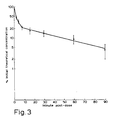
- the compound was injected into 4 rats (at 8,000 SU/kg i.v.) and the clearance of fibrinolytic activity from the bloodstream measured using the technique described in Method (c) and compared with the clearance of unmodified urokinase (at 40,000 SU/kg).
- Figure 4 shows the results obtained using euglobulin precipitation. An extended plasma half-life of 33 - 47 min compared with unmodified UK was observed. The clearance of this agent was also studied in guinea pigs (Method (e) at a dose of 5,000 SU/kg i.v.
- Fig. 5 compares the clearance of unmodified UK and the conjugate and shows that a half-life of 40-50 min applies to at least 50% of the injected conjugate dose in marked contrast to the more rapid clearance of UK itself.
- a conjugate of urokinase linked to the active site of human plasmin (linker example 3)
- Human plasmin solution was prepared by the method of Example 8(b) and had an amidolytic activity of 3.05 x 10⁶ SU/ml. 1.5 ml of this solution was mixed with the acylating agent of Example 3 (f) (75 ⁇ l of a 50 mM solution in DMSO). The mixture was incubated at 4°C for 16h, at 25°C for 2h and, after a further 75 ⁇ l of acylating agent had been added, at 37°C for 30 min. The amidolytic activity was then reduced to 1.16% of the initial level. The product was filtered through a 0.22 ⁇ filter and purified by HPLC using the conditions described for Example 5.
- the acyl plasmin eluted between 62 and 68 ml and was well separated from excess acylating agent.
- the acyl-plasmin pool was gel filtered into MAE buffer (9.6 ml) and freeze-dried in 6 aliquots. Reduction of one such aliquot with dithiothreitol indicated an acyl-enzyme content of 5.62 nmoles/aliquot.
- Deacylation of the acyl-enzyme in TGS/Tween 80 buffer at 37°C gave a first order deacylation rate constant of about 6.4 x 10 ⁇ 5 sec ⁇ 1.
- the mixture was placed in a Centricon centrifugal ultrafiltration vial and centrifuged at 4°C for 2h at 5000 g. This process reduced the volume to 1.1 ml.
- the product was purified by HPLC using the conditions described for Example 4. Three peaks of radioactivity were observed: the first at about 56ml corresponded to a conjugate of MW ⁇ 200 kilodaltons, the second at about 64 ml to material of 100-140 kilodaltons and the third at 80-82 ml to unmodified urokinase. The first two peaks (pools: 52-58 ml, 60-68 ml) were gel filtered into MAE buffer and freeze-dried.
- the radiochemical yield of the high MW fraction (corresponding to urokinase coupled to 2 plasmin molecules) was 6.3% and that of the second fraction (a 1:1 conjugate) was 9.8%.
- the recovery of amidolytic activity in the two fractions was 3.9 and 11% respectively.
- SDS-PAGE/fibrin overlay zymography confirmed the presence of high MW conjugate bands in the two fractions.
- Tissue-plasminogen activator (18,000 SU) mixed with tracer 125I t-PA (2 x 10⁶ c.p.m.) in PBS buffer containing 0.01% w/v Tween 80 (2.5 ml) was treated with 2-iminothiolane (25 ⁇ l of 50 mM in cold PBS/Tween) and the mixture incubated at 25°C for 30 min.
- the product was gel filtered into PBS/Tween buffer (3.0 ml) and mixed with one aliquot of the acyl-plasmin of Example 8(b) and aprotinin solution (20 ⁇ l of 44 ⁇ M). The mixture was incubated on ice for 1h. SDS-PAGE/fibrin overlay zymography of this material revealed a high MW conjugate band which was sensitive to hydrolysis.
- Human lys-plasminogen (1.2 ml of a 9.4 mg/ml solution in PBS buffer containing 33% v/v glycerol) was mixed with 2-iminothiolane (24 ⁇ l of a fresh 50 mM solution in water) and incubated at 37°C for 4 min.
- the acylating agent of Example 1(b) (150 ⁇ l of a 10 mM solution DMSO) was added and the mixture held on ice for 1h.
- the product was gel filtered (Sephadex TM G-25) into PBS buffer containing 1.0 mM 6-aminohexanoic acid (3.2 ml).
- Part of the resulting thiolated plasminogen solution (1.0 ml) was mixed with t-PA (20,000) and tracer 125I-t-PA (1 x 10⁶ c.p.m.) and incubated at 0°C. After 21 ⁇ 2h, the amidolytic activity of the t-PA was decreased to 7.7% of the initial level.
- Part of the product was subjected to HPLC separation on a modified silica gel column (TSK G-3000, 600 x 7.5 mM) in Buffer H (see Example 5) at 0.5 ml/min and 22°C.
- a high molecular weight peak of radioactivity eluted at about 17 ml and unmodified t-PA eluted at about 20 ml.
- SDS-PAGE/fibrin zymography also revealed the presence of a hydrolysis-sensitive high MW fibrinolytic component.
- Tissue-plasminogen activator (78 nmoles in 3.4 ml 0.1 M sodium 4-guanidinobutyrate, 0.3 M sodium chloride, 20 mM sodium phosphate, 0.01% w/v Tween 80 pH 7.4) was treated with 50 ⁇ l of 50 mM 2-iminothiolane (fresh in cold water) at 25°C for 70 min. 1.7 ml of this solution was gel filtered into 3.4 ml of the above buffer on Sephadex G-25. Titration of the thiol groups in the t-PA with Ellmann's reagent indicated an average of about 0.6-0.7 moles of thiol/mole of protein.
- the thiolated t-PA was mixed with aprotinin (132 nmoles), the above buffer (0.4 ml) and the acyl-plasmin of Example 8(b) (53 nmoles).
- the mixture was concentrated in Centricon vials to a final volume of 1.0 ml (5000 g/4°C for 2h).
- the product contained about 23 nmoles of t-PA as measured by amidolytic assay.
- SDS-PAGE/fibrin overlay zymography showed that a fibrinolytically active component with an apparent molecular weight of about 150 kilodaltons was present together with unmodified t-PA.
- Reduction of this material with dithiothreitol c. 20 mM at 0°C for 30 min) removed most of the high molecular weight component, thus confirming that the components of the conjugate were linked by a disulphide bridge.
- a conjugate of urokinase linked to the active centre of human plasmin (linker example 2, no acylation of the active centre of urokinase)
- High MW urokinase (Serono, 500,000 IU, 32.8 nmoles) was dissolved in PBS buffer containing 0.01% w/v Tween 80 (1.0 ml) and treated with 25 ⁇ l of 50 mM 2-iminothiolane at 25°C for 1h. The product was gel filtered into MAE buffer and freeze-dried. Ellmann's titration showed that the average thiol content of the modified UK was 0.8 moles/mole.
- the product (64 nmoles) was mixed with N-2-[N-6- ⁇ 3-(2-pyridyldithio)propionyl ⁇ aminohexyl]aminobenzoyl (SER 740) human plasmin prepared as in Example 9 (330 nmoles) in PBS/Tween buffer (1.0 ml) and held at 0°C for 4h.
- the product was partially purified by HPLC on a modified silica gel column (TSK G-4000 SW, 7.5 x 600 mM) in buffer H at a flow rate of 1.0 ml/min at 25°C.
- the product eluting between 20 and 24 ml was gel filtered into MAE buffer containing 1 mg/ml human serum albumin and freeze-dried. 151 g of white solid resulted and part of this (81 mg) was repurified on a column (16 x 200 mm) of Sephacryl S-300 in 4 mM ammonium bicarbonate, 0.1% w/v D-mannitol at a flow rate of 10 ml/h at 4°C. Two fractions were collected and freeze-dried. The first corresponded to high molecular weight material (42-52 ml) and the second to material around 90 kilodaltons in MW (54-62 ml).
Landscapes
- Organic Chemistry (AREA)
- Chemical & Material Sciences (AREA)
- Health & Medical Sciences (AREA)
- Engineering & Computer Science (AREA)
- Bioinformatics & Cheminformatics (AREA)
- Life Sciences & Earth Sciences (AREA)
- Zoology (AREA)
- Wood Science & Technology (AREA)
- Genetics & Genomics (AREA)
- General Health & Medical Sciences (AREA)
- Biomedical Technology (AREA)
- General Engineering & Computer Science (AREA)
- Biochemistry (AREA)
- Microbiology (AREA)
- Biotechnology (AREA)
- Public Health (AREA)
- Diabetes (AREA)
- Nuclear Medicine, Radiotherapy & Molecular Imaging (AREA)
- General Chemical & Material Sciences (AREA)
- Chemical Kinetics & Catalysis (AREA)
- Animal Behavior & Ethology (AREA)
- Hematology (AREA)
- Veterinary Medicine (AREA)
- Medicinal Chemistry (AREA)
- Pharmacology & Pharmacy (AREA)
- Medicines That Contain Protein Lipid Enzymes And Other Medicines (AREA)
- Pharmaceuticals Containing Other Organic And Inorganic Compounds (AREA)
- Enzymes And Modification Thereof (AREA)
- Pyridine Compounds (AREA)
- Medicines Containing Antibodies Or Antigens For Use As Internal Diagnostic Agents (AREA)
Claims (2)
- Composé de formule (II):


B est un groupe de liaison hydrophile et
W représente un groupe capable de réagir directement avec la chaîne latérale aminoacide d'une protéine ou d'un groupe de fixation d'une protéine, Z est un contre-ion et R₁ à R₄ sont chacun indépendamment un atome d'hydrogène ou un groupe électro attracteur. - Composé, caractérisé en ce qu'il s'agit de:
l'ester 4'-amidinophénylique d'acide 4-[N-2-(3-[2-pyridyl]-dithiopropionyl)hydrazino]benzoïque,
l'ester 4ʼ-amidinophénylique d'acide N-(6-[3-(2-pyridyl)-dithiopropionyl]aminohexyl) anthranilique,
le N-4-(N-2-[3-(2-pyridyldithio)propionyl]aminoéthyl)-aminobenzoate de 4-amidinophényle, ou
le N-4-(N-2-[3-(2-pyridyldithio)propionyl]aminoéthyl)-aminobenzoate de 2-chloro-4-amidinophényle.
Applications Claiming Priority (2)
| Application Number | Priority Date | Filing Date | Title |
|---|---|---|---|
| GB838334499A GB8334499D0 (en) | 1983-12-24 | 1983-12-24 | Derivatives |
| GB8334499 | 1983-12-24 |
Related Parent Applications (1)
| Application Number | Title | Priority Date | Filing Date |
|---|---|---|---|
| EP84115346.3 Division | 1984-12-13 |
Publications (3)
| Publication Number | Publication Date |
|---|---|
| EP0283563A2 EP0283563A2 (fr) | 1988-09-28 |
| EP0283563A3 EP0283563A3 (en) | 1988-11-23 |
| EP0283563B1 true EP0283563B1 (fr) | 1991-05-29 |
Family
ID=10553871
Family Applications (2)
| Application Number | Title | Priority Date | Filing Date |
|---|---|---|---|
| EP84115346A Expired EP0155388B1 (fr) | 1983-12-24 | 1984-12-13 | Conjugué d'enzyme, et de protéine, son procédé de préparation et son utilisation en pharmacie |
| EP87115581A Expired - Lifetime EP0283563B1 (fr) | 1983-12-24 | 1984-12-13 | Nouveaux dérivés |
Family Applications Before (1)
| Application Number | Title | Priority Date | Filing Date |
|---|---|---|---|
| EP84115346A Expired EP0155388B1 (fr) | 1983-12-24 | 1984-12-13 | Conjugué d'enzyme, et de protéine, son procédé de préparation et son utilisation en pharmacie |
Country Status (12)
| Country | Link |
|---|---|
| US (3) | US4600580A (fr) |
| EP (2) | EP0155388B1 (fr) |
| JP (1) | JPH0829085B2 (fr) |
| AU (1) | AU580747B2 (fr) |
| CA (1) | CA1271718A (fr) |
| DE (2) | DE3477469D1 (fr) |
| ES (2) | ES8609468A1 (fr) |
| GB (1) | GB8334499D0 (fr) |
| GR (1) | GR82558B (fr) |
| MX (1) | MX7663E (fr) |
| NZ (1) | NZ210696A (fr) |
| ZA (1) | ZA849927B (fr) |
Families Citing this family (20)
| Publication number | Priority date | Publication date | Assignee | Title |
|---|---|---|---|---|
| US5650270A (en) * | 1982-02-01 | 1997-07-22 | Northeastern University | Molecular analytical release tags and their use in chemical analysis |
| GB8334498D0 (en) * | 1983-12-24 | 1984-02-01 | Beecham Group Plc | Compounds |
| GB8334499D0 (en) * | 1983-12-24 | 1984-02-01 | Beecham Group Plc | Derivatives |
| US4880776A (en) * | 1983-12-24 | 1989-11-14 | Beecham Group P.L.C. | Plasmin A-chain urokinase B-chain hybrid protein |
| GB8400653D0 (en) * | 1984-01-11 | 1984-02-15 | Beecham Group Plc | Conjugates |
| GB8430253D0 (en) * | 1984-11-30 | 1985-01-09 | Beecham Group Plc | Compounds |
| US4916070A (en) * | 1986-04-14 | 1990-04-10 | The General Hospital Corporation | Fibrin-specific antibodies and method of screening for the antibodies |
| GB8707369D0 (en) * | 1987-03-27 | 1987-04-29 | Beecham Group Plc | Enzyme derivatives |
| US5217705A (en) * | 1987-09-25 | 1993-06-08 | Neorx Corporation | Method of diagnosing blood clots using fibrin-binding proteins |
| US5151359A (en) * | 1988-05-19 | 1992-09-29 | Mitsui Toatsu Chemicals Incorporated | Method for producing of human tissue type plasminogen activator |
| US5811265A (en) * | 1988-08-19 | 1998-09-22 | The General Hospital Corporation | Hybrid immunoglobulin-thrombolytic enzyme molecules which specifically bind a thrombus, and methods of their production and use |
| US5609869A (en) * | 1988-08-19 | 1997-03-11 | The General Hospital Corporation | Hybrid immunoglobulin-thrombolytic enzyme molecules which specifically bind a thrombus, and methods of their production and use |
| US5183754A (en) * | 1988-10-04 | 1993-02-02 | Mitsui Toatsu Chemicals, Incorporated | Method for production of human tissue type plasminogen activator |
| US5272076A (en) * | 1991-06-13 | 1993-12-21 | Eli Lilly And Company | Compounds and methods for treatment of thromboembolic disorders using an adduct of t-PA |
| US6608204B1 (en) * | 1994-12-13 | 2003-08-19 | Corvas International, Inc. | Aromatic heterocyclic derivatives as enzyme inhibitors |
| ES2232862T3 (es) * | 1996-10-21 | 2005-06-01 | Quadrant Drug Delivery Limited | Sustitutos de plaquetas y procedimientos de conjugacion apropiados para su preparacion. |
| EP0973384A4 (fr) * | 1997-02-13 | 2004-10-13 | Sky High Llc | Solution de preservation d'organes |
| WO2004082640A2 (fr) * | 2003-03-19 | 2004-09-30 | New Century Pharmaceuticals, Inc. | Fragments ou polymeres d'albumine a temps de residence vasculaire modulable utilisables pour la mise au point de therapies d'administration et de vaccins |
| US7541159B2 (en) * | 2004-04-14 | 2009-06-02 | The United States Of America As Represented By The Administrator Of The National Aeronautics And Space Administration | Molecular-specific urokinase antibodies |
| US10878790B1 (en) | 2020-03-13 | 2020-12-29 | Aspire Precision Instruments, LLC | Device and method for amplitude modulated optical pickup for a stringed instrument |
Family Cites Families (25)
| Publication number | Priority date | Publication date | Assignee | Title |
|---|---|---|---|---|
| US428593A (en) * | 1890-05-27 | Sleigh | ||
| US4464468A (en) * | 1968-03-29 | 1984-08-07 | Agence Nationale De Valorisation De La Recherche (Anvar) | Immobilization of active protein by cross-linking to inactive protein |
| GB1463513A (en) * | 1974-08-13 | 1977-02-02 | Beecham Group Ltd | Enzymes |
| CS181417B1 (en) * | 1975-03-27 | 1978-03-31 | Miroslav Bleha | Method for preparing insoluble biologically active compounds |
| DE2621974A1 (de) * | 1976-05-18 | 1977-11-24 | Max Planck Gesellschaft | Verfahren zur herstellung eines zur kovalenten bindung mit biologisch aktivem material befaehigten traegermaterials |
| US4082612A (en) * | 1976-09-24 | 1978-04-04 | Michael Reese Research Foundation | Plasminogen activator complex |
| US4134792A (en) * | 1976-12-06 | 1979-01-16 | Miles Laboratories, Inc. | Specific binding assay with an enzyme modulator as a labeling substance |
| SE427505B (sv) * | 1977-03-04 | 1983-04-11 | Pharmacia Diagnostics Ab | Reagens till anvendning vid immunkemiska bestemningsmetoder |
| SE430062B (sv) * | 1977-03-04 | 1983-10-17 | Pharmacia Fine Chemicals Ab | Kopplings- eller tioleringsreagens |
| US4233401A (en) * | 1977-07-14 | 1980-11-11 | Syva Company | Antienzyme homogeneous competitive binding assay |
| IT1107772B (it) * | 1977-08-22 | 1985-11-25 | Cancer Res Inst Royal | Procedimento per la produzione di complessi macromolecolari prodotto ottenuto e composizioni farmaceutiche che lo contengono come ingrediente attivo |
| NZ191320A (en) * | 1978-09-07 | 1982-09-14 | Beecham Group Ltd | In vivo fibrinolytic enzyme having active site blocked by hydrolytically removable group pharmaceutical compositions |
| SE446184B (sv) * | 1979-01-12 | 1986-08-18 | Toyo Jozo Kk | Polyfunktionell disulfidforening anvendbar som tverbindande medel |
| US4305926A (en) * | 1979-09-13 | 1981-12-15 | Johannes Everse | Immobilization of Streptokinase |
| US4286964A (en) * | 1979-10-12 | 1981-09-01 | Seed Brian S | Polyfunctional epoxides and halohydrins used as bridging groups to bind aromatic amine group-containing alcohols and thiols to hydroxyl bearing substrates |
| FR2470773B1 (fr) * | 1979-11-28 | 1983-01-28 | Pasteur Institut | |
| NL8003402A (nl) * | 1980-06-11 | 1982-01-04 | Leuven Res & Dev Vzw | Nieuwe plasminogeen-activator en farmaceutisch preparaat met trombolytische werking. |
| SE450834B (sv) * | 1980-11-19 | 1987-08-03 | Biocompat Inc | Sett att binda ett protein till en berare innehallande hydroxylgrupper |
| SE8102193L (sv) * | 1981-04-06 | 1982-10-07 | Pharmacia Ab | Terapeutiskt aktiv organisk forening och dess anvendning |
| US4429008B1 (en) * | 1981-12-10 | 1995-05-16 | Univ California | Thiol reactive liposomes |
| EP0091240B1 (fr) * | 1982-04-07 | 1985-12-27 | Beecham Group Plc | Dérivés d'enzymes, procédé pour leur préparation et compositions pharmaceutiques les contenant |
| US4536391A (en) * | 1982-11-17 | 1985-08-20 | Otsuka Pharmaceutical Co. | Process for preparing urokinase complex |
| GB8334499D0 (en) * | 1983-12-24 | 1984-02-01 | Beecham Group Plc | Derivatives |
| GB8400653D0 (en) * | 1984-01-11 | 1984-02-15 | Beecham Group Plc | Conjugates |
| US4542225A (en) * | 1984-08-29 | 1985-09-17 | Dana-Farber Cancer Institute, Inc. | Acid-cleavable compound |
-
1983
- 1983-12-24 GB GB838334499A patent/GB8334499D0/en active Pending
-
1984
- 1984-12-13 EP EP84115346A patent/EP0155388B1/fr not_active Expired
- 1984-12-13 DE DE8484115346T patent/DE3477469D1/de not_active Expired
- 1984-12-13 DE DE8787115581T patent/DE3484655D1/de not_active Expired - Fee Related
- 1984-12-13 EP EP87115581A patent/EP0283563B1/fr not_active Expired - Lifetime
- 1984-12-20 ZA ZA849927A patent/ZA849927B/xx unknown
- 1984-12-20 MX MX8411401U patent/MX7663E/es unknown
- 1984-12-21 NZ NZ210696A patent/NZ210696A/xx unknown
- 1984-12-21 US US06/684,359 patent/US4600580A/en not_active Expired - Fee Related
- 1984-12-21 CA CA000470956A patent/CA1271718A/fr not_active Expired - Fee Related
- 1984-12-21 AU AU37072/84A patent/AU580747B2/en not_active Ceased
- 1984-12-21 ES ES539000A patent/ES8609468A1/es not_active Expired
- 1984-12-21 GR GR82558A patent/GR82558B/el unknown
- 1984-12-24 JP JP59272693A patent/JPH0829085B2/ja not_active Expired - Lifetime
-
1985
- 1985-09-05 ES ES546739A patent/ES8605476A1/es not_active Expired
-
1987
- 1987-04-03 US US07/034,784 patent/US4730050A/en not_active Expired - Fee Related
- 1987-04-15 US US07/039,114 patent/US4741903A/en not_active Expired - Fee Related
Also Published As
| Publication number | Publication date |
|---|---|
| EP0283563A2 (fr) | 1988-09-28 |
| EP0155388B1 (fr) | 1989-03-29 |
| EP0155388A2 (fr) | 1985-09-25 |
| JPH0829085B2 (ja) | 1996-03-27 |
| ES546739A0 (es) | 1986-03-16 |
| ZA849927B (en) | 1986-04-30 |
| CA1271718A (fr) | 1990-07-17 |
| US4730050A (en) | 1988-03-08 |
| GB8334499D0 (en) | 1984-02-01 |
| US4600580A (en) | 1986-07-15 |
| EP0283563A3 (en) | 1988-11-23 |
| DE3484655D1 (de) | 1991-07-04 |
| GR82558B (en) | 1985-04-23 |
| AU3707284A (en) | 1985-07-04 |
| ES539000A0 (es) | 1986-09-01 |
| ES8609468A1 (es) | 1986-09-01 |
| AU580747B2 (en) | 1989-02-02 |
| MX7663E (es) | 1990-06-19 |
| DE3477469D1 (en) | 1989-05-03 |
| ES8605476A1 (es) | 1986-03-16 |
| JPS60178864A (ja) | 1985-09-12 |
| NZ210696A (en) | 1989-04-26 |
| US4741903A (en) | 1988-05-03 |
| EP0155388A3 (en) | 1986-12-10 |
Similar Documents
| Publication | Publication Date | Title |
|---|---|---|
| IE57946B1 (en) | Enzyme-protein conjugate,process for its preparation and pharmaceutical use thereof | |
| EP0283563B1 (fr) | Nouveaux dérivés | |
| US4673573A (en) | Novel fibrinolytic enzyme compounds | |
| US4935465A (en) | Conjugates of pharmaceutically useful proteins | |
| US4495285A (en) | Plasminogen activator derivatives | |
| US5484893A (en) | Tri-aza macrocycles and metal complexes thereof | |
| TWI232105B (en) | Novel compounds and their preparation process and pharmaceutical formulation containing the same | |
| JPH02154687A (ja) | 医薬組成物 | |
| EP0109653A2 (fr) | Procédé de préparation de complexe d'urokinase | |
| EP0151593B1 (fr) | Derives enzymatiques | |
| US4507283A (en) | Pharmacologically active compounds | |
| WO1984001960A1 (fr) | Composes pharmaceutiquement actifs | |
| EP0184363A2 (fr) | Conjugués d'enzymes et leur application thérapeutique | |
| AU609105B2 (en) | Derivative of a fibrinolytic enzyme | |
| EP0250071A1 (fr) | Enzymes fibrinolytiques, leurs procédés de préparation et leur utilisation | |
| Kalindjian et al. | Reagents for reversible coupling of proteins to the active centres of trypsin-like serine proteinases | |
| US4880776A (en) | Plasmin A-chain urokinase B-chain hybrid protein |
Legal Events
| Date | Code | Title | Description |
|---|---|---|---|
| PUAI | Public reference made under article 153(3) epc to a published international application that has entered the european phase |
Free format text: ORIGINAL CODE: 0009012 |
|
| 17P | Request for examination filed |
Effective date: 19871112 |
|
| AC | Divisional application: reference to earlier application |
Ref document number: 155388 Country of ref document: EP |
|
| AK | Designated contracting states |
Kind code of ref document: A2 Designated state(s): BE CH DE FR GB IT LI NL SE |
|
| PUAL | Search report despatched |
Free format text: ORIGINAL CODE: 0009013 |
|
| AK | Designated contracting states |
Kind code of ref document: A3 Designated state(s): BE CH DE FR GB IT LI NL SE |
|
| 17Q | First examination report despatched |
Effective date: 19901016 |
|
| GRAA | (expected) grant |
Free format text: ORIGINAL CODE: 0009210 |
|
| AC | Divisional application: reference to earlier application |
Ref document number: 155388 Country of ref document: EP |
|
| AK | Designated contracting states |
Kind code of ref document: B1 Designated state(s): BE CH DE FR GB IT LI NL SE |
|
| REF | Corresponds to: |
Ref document number: 3484655 Country of ref document: DE Date of ref document: 19910704 |
|
| ET | Fr: translation filed | ||
| ITF | It: translation for a ep patent filed | ||
| PG25 | Lapsed in a contracting state [announced via postgrant information from national office to epo] |
Ref country code: SE Effective date: 19911214 |
|
| PG25 | Lapsed in a contracting state [announced via postgrant information from national office to epo] |
Ref country code: BE Effective date: 19911231 |
|
| PLBE | No opposition filed within time limit |
Free format text: ORIGINAL CODE: 0009261 |
|
| STAA | Information on the status of an ep patent application or granted ep patent |
Free format text: STATUS: NO OPPOSITION FILED WITHIN TIME LIMIT |
|
| 26N | No opposition filed | ||
| BERE | Be: lapsed |
Owner name: BEECHAM GROUP P.L.C. Effective date: 19911231 |
|
| PGFP | Annual fee paid to national office [announced via postgrant information from national office to epo] |
Ref country code: NL Payment date: 19921231 Year of fee payment: 9 |
|
| PGFP | Annual fee paid to national office [announced via postgrant information from national office to epo] |
Ref country code: FR Payment date: 19930122 Year of fee payment: 9 |
|
| PGFP | Annual fee paid to national office [announced via postgrant information from national office to epo] |
Ref country code: GB Payment date: 19930125 Year of fee payment: 9 Ref country code: CH Payment date: 19930125 Year of fee payment: 9 |
|
| PGFP | Annual fee paid to national office [announced via postgrant information from national office to epo] |
Ref country code: DE Payment date: 19930209 Year of fee payment: 9 |
|
| PG25 | Lapsed in a contracting state [announced via postgrant information from national office to epo] |
Ref country code: GB Effective date: 19931213 |
|
| PG25 | Lapsed in a contracting state [announced via postgrant information from national office to epo] |
Ref country code: LI Effective date: 19931231 Ref country code: CH Effective date: 19931231 |
|
| PG25 | Lapsed in a contracting state [announced via postgrant information from national office to epo] |
Ref country code: NL Effective date: 19940701 |
|
| GBPC | Gb: european patent ceased through non-payment of renewal fee |
Effective date: 19931213 |
|
| NLV4 | Nl: lapsed or anulled due to non-payment of the annual fee | ||
| PG25 | Lapsed in a contracting state [announced via postgrant information from national office to epo] |
Ref country code: FR Effective date: 19940831 |
|
| REG | Reference to a national code |
Ref country code: CH Ref legal event code: PL |
|
| PG25 | Lapsed in a contracting state [announced via postgrant information from national office to epo] |
Ref country code: DE Effective date: 19940901 |
|
| REG | Reference to a national code |
Ref country code: FR Ref legal event code: ST |
|
| EUG | Se: european patent has lapsed |
Ref document number: 87115581.8 Effective date: 19920704 |