EP0286523B1 - Nouveaux dérivés aromatiques d'acide butyrique, leur procédé de préparation et leur utilisation en cosmétique ainsi qu'en médecine humaine et vétérinaire - Google Patents
Nouveaux dérivés aromatiques d'acide butyrique, leur procédé de préparation et leur utilisation en cosmétique ainsi qu'en médecine humaine et vétérinaire Download PDFInfo
- Publication number
- EP0286523B1 EP0286523B1 EP88400796A EP88400796A EP0286523B1 EP 0286523 B1 EP0286523 B1 EP 0286523B1 EP 88400796 A EP88400796 A EP 88400796A EP 88400796 A EP88400796 A EP 88400796A EP 0286523 B1 EP0286523 B1 EP 0286523B1
- Authority
- EP
- European Patent Office
- Prior art keywords
- radical
- tetrahydro
- acid
- tetramethyl
- oxo
- Prior art date
- Legal status (The legal status is an assumption and is not a legal conclusion. Google has not performed a legal analysis and makes no representation as to the accuracy of the status listed.)
- Expired - Lifetime
Links
Classifications
-
- C—CHEMISTRY; METALLURGY
- C07—ORGANIC CHEMISTRY
- C07D—HETEROCYCLIC COMPOUNDS
- C07D295/00—Heterocyclic compounds containing polymethylene-imine rings with at least five ring members, 3-azabicyclo [3.2.2] nonane, piperazine, morpholine or thiomorpholine rings, having only hydrogen atoms directly attached to the ring carbon atoms
- C07D295/16—Heterocyclic compounds containing polymethylene-imine rings with at least five ring members, 3-azabicyclo [3.2.2] nonane, piperazine, morpholine or thiomorpholine rings, having only hydrogen atoms directly attached to the ring carbon atoms acylated on ring nitrogen atoms
- C07D295/18—Heterocyclic compounds containing polymethylene-imine rings with at least five ring members, 3-azabicyclo [3.2.2] nonane, piperazine, morpholine or thiomorpholine rings, having only hydrogen atoms directly attached to the ring carbon atoms acylated on ring nitrogen atoms by radicals derived from carboxylic acids, or sulfur or nitrogen analogues thereof
- C07D295/182—Radicals derived from carboxylic acids
- C07D295/185—Radicals derived from carboxylic acids from aliphatic carboxylic acids
-
- C—CHEMISTRY; METALLURGY
- C07—ORGANIC CHEMISTRY
- C07C—ACYCLIC OR CARBOCYCLIC COMPOUNDS
- C07C57/00—Unsaturated compounds having carboxyl groups bound to acyclic carbon atoms
- C07C57/46—Unsaturated compounds having carboxyl groups bound to acyclic carbon atoms containing six-membered aromatic rings and other rings, e.g. cyclohexylphenylacetic acid
- C07C57/50—Unsaturated compounds having carboxyl groups bound to acyclic carbon atoms containing six-membered aromatic rings and other rings, e.g. cyclohexylphenylacetic acid containing condensed ring systems
-
- C—CHEMISTRY; METALLURGY
- C07—ORGANIC CHEMISTRY
- C07C—ACYCLIC OR CARBOCYCLIC COMPOUNDS
- C07C59/00—Compounds having carboxyl groups bound to acyclic carbon atoms and containing any of the groups OH, O—metal, —CHO, keto, ether, groups, groups, or groups
- C07C59/40—Unsaturated compounds
- C07C59/42—Unsaturated compounds containing hydroxy or O-metal groups
- C07C59/54—Unsaturated compounds containing hydroxy or O-metal groups containing six-membered aromatic rings and other rings
-
- C—CHEMISTRY; METALLURGY
- C07—ORGANIC CHEMISTRY
- C07C—ACYCLIC OR CARBOCYCLIC COMPOUNDS
- C07C59/00—Compounds having carboxyl groups bound to acyclic carbon atoms and containing any of the groups OH, O—metal, —CHO, keto, ether, groups, groups, or groups
- C07C59/40—Unsaturated compounds
- C07C59/76—Unsaturated compounds containing keto groups
- C07C59/86—Unsaturated compounds containing keto groups containing six-membered aromatic rings and other rings
-
- C—CHEMISTRY; METALLURGY
- C07—ORGANIC CHEMISTRY
- C07C—ACYCLIC OR CARBOCYCLIC COMPOUNDS
- C07C59/00—Compounds having carboxyl groups bound to acyclic carbon atoms and containing any of the groups OH, O—metal, —CHO, keto, ether, groups, groups, or groups
- C07C59/40—Unsaturated compounds
- C07C59/76—Unsaturated compounds containing keto groups
- C07C59/90—Unsaturated compounds containing keto groups containing singly bound oxygen-containing groups
-
- C—CHEMISTRY; METALLURGY
- C07—ORGANIC CHEMISTRY
- C07C—ACYCLIC OR CARBOCYCLIC COMPOUNDS
- C07C69/00—Esters of carboxylic acids; Esters of carbonic or haloformic acids
- C07C69/66—Esters of carboxylic acids having esterified carboxylic groups bound to acyclic carbon atoms and having any of the groups OH, O—metal, —CHO, keto, ether, acyloxy, groups, groups, or in the acid moiety
- C07C69/73—Esters of carboxylic acids having esterified carboxylic groups bound to acyclic carbon atoms and having any of the groups OH, O—metal, —CHO, keto, ether, acyloxy, groups, groups, or in the acid moiety of unsaturated acids
- C07C69/738—Esters of keto-carboxylic acids or aldehydo-carboxylic acids
-
- C—CHEMISTRY; METALLURGY
- C07—ORGANIC CHEMISTRY
- C07C—ACYCLIC OR CARBOCYCLIC COMPOUNDS
- C07C2602/00—Systems containing two condensed rings
- C07C2602/02—Systems containing two condensed rings the rings having only two atoms in common
- C07C2602/04—One of the condensed rings being a six-membered aromatic ring
- C07C2602/08—One of the condensed rings being a six-membered aromatic ring the other ring being five-membered, e.g. indane
-
- C—CHEMISTRY; METALLURGY
- C07—ORGANIC CHEMISTRY
- C07C—ACYCLIC OR CARBOCYCLIC COMPOUNDS
- C07C2602/00—Systems containing two condensed rings
- C07C2602/02—Systems containing two condensed rings the rings having only two atoms in common
- C07C2602/04—One of the condensed rings being a six-membered aromatic ring
- C07C2602/10—One of the condensed rings being a six-membered aromatic ring the other ring being six-membered, e.g. tetraline
Definitions
- the present invention relates to new aromatic derivatives of butyric acid, their preparation process and their use in cosmetics as well as in human and veterinary medicine.
- the compounds according to the invention by their activity inhibiting lipid synthesis, are of great interest in cosmetics in the treatment of scalp and skin having a greasy appearance.
- R1, R2, R3 and R4 represent, independently of one another, a hydrogen atom or a lower alkyl radical, at least two of the radicals R1 to R4 being different from an acore of hydrogen,
- A represents a methylene or dimethylene radical, substituted or not substituted by a lower alkyl radical; when A represents a dimethylene radical, R1 and R3 can together form a methylene or dimethylene radical,
- R5 and R6 represent a hydrogen atom, a halogen atom, a lower alkyl radical, a lower alekoxy radical or a hydroxyl radical,
- R ′ represents a hydrogen atom, a hydroxyl radical, a lower alkoxy radical or a C1-C4 acyloxy radical
- R8 represents a hydrogen atom or a lower alkyl radical
- R7 represents the radical -OR9 or
- R9 representing a hydrogen atom, an alkyl radical having from 1 to 20 carbon atoms, a monohydroxyalkyl, polyhydroxyalkyl, aryl or aralkyl radical, a sugar residue, a carboxyalkyl or alkoxycarbonylalkyl radical,
- r ′ and r ⁇ representing a hydrogen atom, a lower alkyl radical, a monohydroxyalkyl radical possibly interrupted with a heteroatom, a monohydroxyalkyl radical, a radical or benzyl, an amino acid or amino sugar residue or, taken together, form a heterocycle optionally substituted by C1-C3 hydroxyalkyl radical, and the salts of the said compounds of formula ( I) and their optical isomers as well as the tautomeric forms of the compounds of formula (I) (in particular the corresponding lactones and lactams).
- lower alkyl radical is meant a radical having from 1 to 6 carbon atoms.
- lower alkyl radical or having up to 20 carbon atoms should be understood in particular to mean the methyl, ethyl, propyl, isopropyl, butyl, tert-butyl, 2-ethylhexyl, octyl, dodecyl, hexadecyl and octadecyl radicals.
- monohydroxyalkyl radical should be understood to mean a radical having from 2 to 6 carbon atoms, in particular a 2-hydroxyethyl, 2-hydroxypropyl or 2-hydroxyethoxyethyl radical,
- polyhydroxyalkyl radical should be understood to mean a radical containing from 3 to 6 carbon atoms and from 2 to 5 hydroxyl groups such as the 2,3-dihydroxy-propyl, 1,3-dihydroxy-1,3-propyl radicals or the rest of pentaerythritol.
- the remainder of a sugar should be understood to mean a residue derived from glucose, mannose, erythrose or galactose.
- amino sugar residues mention may be made of those derived from glucosamine, galactosamine, mannosamine or meglumine.
- radicals r ′ and r ⁇ taken together, form with the nitrogen atom to which they are linked, a heterocycle, this is preferably a piperidino, piperazino, morpholino, pyrrolidino or (2-hydroxyethyl) radical -4 piperazino.
- the compounds according to the invention when they are in the form of salts, they may be either zinc salts, an alkali or alkaline earth metal, or an organic amine when they contain at least one acid function free, either of salts of a mineral or organic acid, in particular of hydrochloride, hydrobromide or citrate when they contain at least one amine function.
- the compounds according to the invention can be in tautomeric form when R ′ and R ⁇ , taken together, form an oxo radical and that R7 represents the radical at least one of the substituents r ′ and r ⁇ being a hydrogen atom, these compounds then being lactams which can be represented by formula (III).
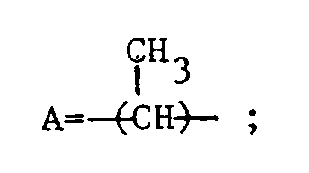
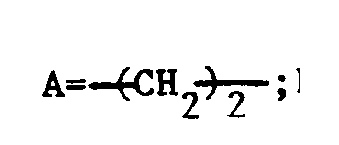
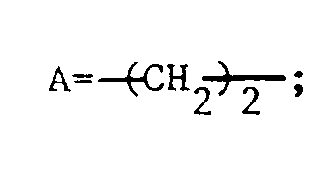
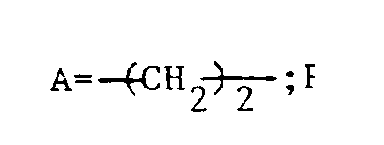
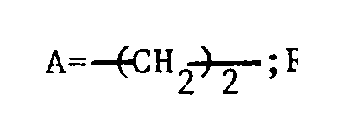
- A represents a radical - (CH2) 2- or the radical
- R7 represents the radical -OR9 or R9 representing a hydrogen atom or a lower alkyl radical, r ′ being a hydrogen atom and r ⁇ being an alkyl radical having from 1 to 8 carbon atoms, a monohydroxyalkyl radical, optionally interrupted by a heteroatom or a polyhydroxyalkyl radical or r ′ and r ⁇ , taken together, form with the nitrogen atom a (2-hydroxyethyl) -4 piperazinyl radical, and R8 represents a hydrogen atom or a methyl radical.
- the present invention also relates to the process for the preparation of the compounds of formula (I).
- This process consists of a condensation reaction under the conditions of the Friedel Crafts reaction of an anhydride of structure ( 2 ) on a bicyclic aromatic compound of formula ( 1 ).
- This condensation reaction is carried out in the presence of a Lewis acid such as aluminum chloride or tin chloride in a chlorinated solvent such as 1,2-dichloroethane or dichloromethane.
- a Lewis acid such as aluminum chloride or tin chloride
- a chlorinated solvent such as 1,2-dichloroethane or dichloromethane.
- the compounds of formula (I) in which R ′ and R ⁇ together form a hydroxyimino radical are obtained by reaction of hydroxylamine hydrochloride with the corresponding carbonyl compounds in an organic solvent such as ethanol, in the presence of a base mineral such as sodium bicarbonate or an organic base such as triethylamine.
- the compounds of formula (I), in the form of esters, amides or salts, are prepared according to the conventional methods of esterification, amidation or salification.
- the compounds of formula (I), according to the present invention exhibit excellent activity in the test described by J. GIRARD and A. BARBIER, Int. Journal of Cosmetic Science, 2 , 315-329 (1980) and M. GAUCI and J. OUSTRIN, Int. Journal of Cosmetic Science 3 , 227-232 (1982). These authors have in fact shown that the "in vitro" test for the incorporation of labeled glucose could be used as an orientation test for non-hormonal anti-seborrheics since this test accounts for the inhibitory activity of lipid synthesis.
- the compounds of formula (I) according to the invention therefore find application in the cosmetic field, in particular body and hair hygiene and, in particular, for the treatment of skin prone to acne, for hair regrowth, anti-fall, to fight against the oily appearance of the skin or hair.
- the subject of the present invention is therefore a cosmetic composition containing, in a cosmetically acceptable carrier, at least one compound of formula (I), or one of its salts, or one of its isomers, this composition being in particular in the form of a lotion, gel, soap or shampoo.
- the concentration of compounds of formula (I) in the cosmetic compositions is between 0.005 and 5% by weight and preferably between 0.01 and 1% by weight.
- the present invention also relates to a medicinal composition, intended in particular for the treatment of different forms of acne, characterized in that it contains, in a pharmaceutically acceptable carrier at least one compound of formula (I) and / or one of its isomers and / or one of its salts.
- any conventional support can be used, the active compound being either in the dissolved state or in the dispersed state in the vehicle.
- Administration can be by enteral, parenteral or topical routes.
- the drugs can be in the form of tablets, capsules, dragees, syrups, suspensions, solutions, powders, granules, emulsions.
- compositions may be in the form of solutions or suspensions for infusions or for injections.
- the compounds according to the invention are generally administered at a daily dose of approximately 0.1 mg / kg to 10 mg / kg of body weight.
- compositions based on the compounds according to the invention are in the form of ointments, tinctures, creams, ointments, powders, patches, soaked pads, solutions, emulsions, lotions, gels, sprays or suspensions.
- compositions can be presented either in anhydrous form or in aqueous form according to the clinical indication.
- the preferred concentrations of active products are between 0.1 and 5% by weight.
- compositions according to the invention can also contain flavor-enhancing agents, preserving agents, stabilizing agents, humidity-regulating agents, pH-regulating agents, agents for modifying osmotic pressure, emulsifying agents, UV-A and UV-B filters, antioxidants such as ⁇ -tocopherol, butylhydroxy-anisole or butylhydroxy-toluene.
- the dichloromethane phases are washed with water, dried over sodium sulfate and then evaporated to dryness.
- the crude oil obtained is crystallized by trituration in 100cm3 of warm hexane. After filtration, the beige solid obtained is recrystallized from 120 cm3 of hexane / acetone mixture (90/10). Is thus isolated 5.1g of white crystals which are taken up in 50cm3 of isopropyl ether, drained and again recrystallized from 80cm3 of isopropyl ether / hexane mixture (60/40).
- the residue is rapidly purified by passage through a silica gel filter 60 using an eluent mixture of dichloromethane / toluene (60/40). After evaporation under vacuum and prolonged drying, 3.6 g of (tetramethyl-5,5,8,8 tetrahydro-5,6,7,8 naphthyl-2) -4 4-oxo-2 'ethyl butyrate are obtained. hexyl in the form of a colorless liquid.
- the dichloromethane phase is dried over sodium sulfate and concentrated under reduced pressure.
- the crude oil obtained is purified by chromatography on silica gel 60 in a toluene / dichloromethane / ethyl acetate mixture (5/3/2). After evaporation and drying, 0.6 g of N-ethyl (tetramethyl-5,5,8,8 tetrahydro-5,6,7,8 naphthyl-2) -4 4-oxo-2-methyl-2-butyramide is isolated in the form of '' a white solid with a melting point of 101 ° C.
- the solid obtained is taken up in 100cm3 of hexane and drained. 1.75 g of expected product are thus obtained in mixture with its lactone. 20 cm3 of 0.5N sodium hydroxide are added and the mixture is heated for 1 hour under reflux. The solution is then cooled to room temperature and acidified by adding 0.6 cm3 of glacial acetic acid. The precipitate is drained, washed abundantly with water and dried under vacuum at 50 ° C. 1.7 g of acid (tetramethyl-5,5,8,8 tetrahydro-5,6,7,8 naphthyl-2) -4 hydroxy-4-butyric are obtained in the form of a white solid with a melting point is 110 ° C.
- the dichloromethane phase is dried over sodium sulfate and evaporated to dryness.
- the crude product is then purified by chromatography on silica gel 60 in a toluene / dichloromethane / tetrahydrofuran mixture (6/3/1). After evaporation and drying, 6.6 g of (tetramethyl-5,5,8,8 tetrahydro-5,6,7,8 naphthyl-2) -4 hydroxyimino-4 butyrate in the form of a liquid are isolated. colorless.
- the toluene phase is separated, washed with copious amounts of water, dried over sodium sulfate and concentrated under reduced pressure.
- the crude oil obtained is purified by chromatography on silica gel 60 in the eluent mixture acetic acid / dioxane / toluene 2/8/90. After evaporation, the isolated solid is taken up in the minimum amount of isopropyl ether, drained and dried under vacuum at 70 ° C.
- 4.6g (tetramethyl-5,5,8,8 tetrahydro-5,6,7,8 naphthyl-2) -4 butyric acid are thus obtained in the form of a white solid with a melting point of : 99 ° C.
Landscapes
- Chemical & Material Sciences (AREA)
- Organic Chemistry (AREA)
- Organic Low-Molecular-Weight Compounds And Preparation Thereof (AREA)
- Acyclic And Carbocyclic Compounds In Medicinal Compositions (AREA)
- Cosmetics (AREA)
- Pharmaceuticals Containing Other Organic And Inorganic Compounds (AREA)
Description
- La présente invention a pour objet de nouveaux dérivés aromatiques d'acide butyrique, leur procédé de préparation et leur utilisation en cosmétique ainsi qu'en médecine humaine et vétérinaire.
- L'état de la technique concernant les composés selon l'invention est essentiellement représenté par les demandes de brevet français n° 1.566.213 et 2.300.551 ainsi que par le brevet suisse n° 610.875.
- Les composés selon l'invention, de par leur activité inhibitrice de la synthèse des lipides, sont d'un grand intérêt en cosmétique dans le traitement du cuir chevelu et de la peau présentant un aspect gras.
- Ces nouveaux dérivés aromatiques d'acide butyrique selon l'invention peuvent être représentés par la formule générale suivante :

dans laquelle: - R₁, R₂, R₃ et R₄ représentent, indépendamment l'un de l'autre, un atome d'hydrogène ou un radical alkyle inférieur, au moins deux des radicaux R₁ à R₄ étant différents d'un acore d'hydrogène,
- A représente un radical méthylène ou diméthylène, substitué ou non par un radical alkyle inférieur ; lorsque A représente un radical diméthylène, R₁ et R₃ peuvent former ensemble un radical méthylène ou diméthylène,
- R₅ et R₆ représentent un atome d'hydrogène, un atome d'halogène, un radical alkyle inférieur, un radical alekoxy inférieur ou un radical hydroxyle,
- R′ représente un atome d'hydrogène, un radical hydroxyle, un radical alkoxy inférieur ou un radical acyloxy en C₁-C₄,
- R˝ représente un atome d'hydrogène ou un radical alkoxy inférieur, ou R′ et R˝, pris ensemble, forment un radical oxo (=O) ou hydroxyimino (=N-OH),
- R₈ représente un atome d'hydrogène ou un radical alkyle inférieur, et R₇ représente le radical -OR₉ ou
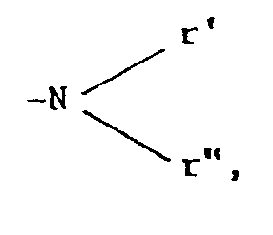
- R₉ représentant un atome d'hydrogène, un radical alkyle ayant de 1 à 20 atomes de carbone, un radical monohydroxyalkyle, polyhydroxyalkyle, aryle ou aralkyle, un reste de sucre, un radical carboxyalkyle ou alkoxycarbonylalkyle,
- r′ et r˝ représentant un atome d'hydrogène, un radical alkyle inférieur, un radical monohydroxyalkyle éventuellement interrompu par un hétéroatome, un radical monohydroxyalkyle, un radical ou benzyle, un reste d'amino-acide ou de sucre aminé ou, pris ensemble, forment un hétérocycle éventuellement substitué par radical hydroxyalkyle en C₁-C₃, et les sels desdits composés de formule (I) et leurs isomères optiques ainsi que les formes tautomères des composés de formule (I) (en particulier les lactones et lactames correspondants).
- Par radical alkyle inférieur, on doit entendre un radical ayant de 1 à 6 atomes de carbone.
- Par radical alkyle inférieur ou ayant jusqu'à 20 atomes de carbone, on doit entendre notamment les radicaux méthyle, éthyle, propyle, isopropyle, butyle, tertiobutyle, éthyl-2 hexyle, octyle, dodécyle, hexadécyle et octadécyle.
- Par radical monohydroxyalkyle, on doit entendre un radical ayant de 2 à 6 atomes de carbone, notamment un radical hydroxy-2 éthyle, hydroxy-2 propyle ou hydroxy-2 éthoxyéthyle,
- Par radical polyhydroxyalkyle, on doit entendre un radical contenant de 3 à 6 atomes de carbone et de 2 à 5 groupes hydroxyles tels que les radicaux dihydroxy-2,3 propyle, dihydroxy-1,3 propyl-2 ou le reste du pentaérythritol.
- Parmi les radicaux alkoxy inférieurs, on peut notamment citer les radicaux méthoxy, isopropoxy, butoxy et tert-butoxy.
- Par reste d'un sucre, on doit entendre un reste dérivant du glucose, du mannose, de l'érythrose ou du galactose.
- Parmi les restes de sucre aminé, on peut citer ceux dérivant de glucosamine, de galactosamine, de mannosamine ou de la méglumine.
- Lorsque les radicaux r′ et r˝, pris ensemble, forment avec l'atome d'azote auquel ils sont reliés, un hétérocycle, celui-ci est de préférence un radical pipéridino, pipérazino, morpholino, pyrrolidino ou (hydroxy-2 éthyl)-4 pipérazino.
- Lorsque les composés selon l'invention se présentent sous forme de sels, il peut s'agir soit de sels de zinc, d'un métal alcalin ou alcalino-terreux, ou d'une amine organique lorsqu'ils comportent au moins une fonction acide libre, soit de sels d'un acide minéral ou organique, notamment de chlorhydrate, de bromhydrate ou de citrate lorsqu'ils comportent au moins une fonction amine.
- Les composés selon l'invention peuvent se présenter sous forme tautomère lorsque R′ et R˝, pris ensemble, forment un radical oxo et que R₇ représente le radical

au moins l'un des substituants r′ et r˝ étant un atome d'hydrogène, ces composés étant alors des lactames pouvant être représentés par la formule (III).
- Parmi les composés de formule (I) particulièrement préférés selon l'invention, on peut notamment mentionner ceux correspondant à la formule générale suivante :

dans laquelle : - A représente un radical -(CH₂)₂- ou le radical

- R₇ représente le radical -OR₉ ou
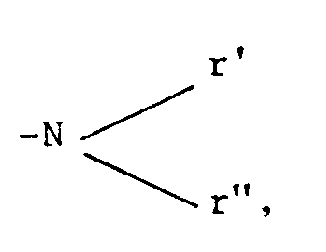
R₉ représentant un atome d'hydrogène ou un radical alkyle inférieur, r′ étant un atome d'hydrogène et r˝ étant un radical alkyle ayant de 1 à 8 atomes de carbone, un radical monohydroxyalkyle, éventuellement interrompu par un hétéroatome ou un radical polyhydroxyalkyle ou r′ et r˝, pris ensemble, forment avec l'atome d'azote un radical (hydroxy-2 éthyl)-4 pipérazinyle,
et R₈ représente un atome d'hydrogène ou un radical méthyle. - Parmi les composés de formule (I) selon l'invention, on peut notamment citer les suivants :
- L'acide (tétraméthyl-5,5,8,8 tétrahydro-5,6,7,8 naphtyl-2)-4 oxo-4 méthyl-2 butyrique,
- L'acide (méthano-5,8 tétrahydro-5,6,7,8 naphtyl-2)-4 oxo-4 méthyl-2 butyrique,
- L'acide (pentaméthyl-1,1,2,3,3 indanyl-5)-4 oxo-4 méthyl-2 butyrique,
- L'acide (tétraméthyl-1,1,3,3 indanyl-5)-4 oxo-4 méthyl-2 butyrique,
- L'acide (tétraméthyl-5,5,8,8 tétrahydro-5,6,7,8 naphtyl-2)-4 oxo-4 butyrique,
- L'acide (méthano-5,8 tétrahydro-5,6,7,8 naphtyl-2)-4 oxo-4 butyrique
- L'acide (pentaméthyl-1,1,2,3,3 indanyl-5)-4 oxo-4 butyrique,
- L'acide (tétraméthyl-1,1,3,3 indanyl-5)-4 oxo-4 butyrique,
- L'acide (diméthoxy-1,4 méthano-5,8 tétrahydro-5,6,7,8 naphtyl-2)-4 oxo-4 méthyl-2 butyrique,
- L'acide (diméthoxy-1,4 méthano-5,8 tétrahydro-5,6,7,8 naphtyl-2)-4 oxo-4 butyrique,
- Le (pentaméthyl-1,1,2,3,3 indanyl-5)-4 oxo-4 butyrate d'éthyle,
- Le (tétraméthyl-5,5,8,8 tétrahydro-5,6,7,8 naphtyl-2)-4 oxo-4 butyrate d'éthyle,
- Le (diméthoxy-1,4 méthano-5,8 tétrahydro-5,6,7,8 naphtyl-2)-4 oxo-4 butyrate d'éthyle,
- Le (tétraméthyl-5,5,8,8 tétrahydro-5,6,7,8 naphtyl-2)-4 oxo-4 butyrate d'éthyl-2′ hexyle,
- Le N-éthyl(tétraméthyl-5,5,8,8 tétrahydro-5,6,7,8 naphtyl-2)-4 oxo-4 méthyl-2 butyramide,
- Le N-éthyl(tétraméthyl-5,5,8,8 tétrahydro-5,6,7,8 naphtyl-2)-4 oxo-4 butyramide,
- Le N-éthyl (diméthoxy-1,4 méthano-5,8 tétrahydro-5,6,7,8 naphtyl-2)-4 oxo-4 butyramide,
- Le N-(hydroxy-2 éthyl)-4′ pipérazinyl(tétraméthyl-5,5,8,8 tétrahydro-5,6,7,8 naphtyl-2)-4 oxo-4 butyramide,
- Le N-(hydroxy-2 éthoxyéthyl)(tétraméthyl-5,5,8,8 tétrahydro-5,6,7,8 naphtyl-2)-4 oxo-4 butyramide,
- Le N-(hydroxy-2 éthoxyéthyl)(pentaméthyl-1,1,2,3,3 indanyl-5)-4 oxo-4 butyramide,
- L'acide (tétraméthyl-5,5,8,8 tétrahydro-5,6,7,8 naphtyl-2)-4 hydroxy-4 butyrique,
- L'acide (pentaméthyl,-1,1,2,3,3 indanyl-5)-4 hydroxy-4 butyrique,
- L'acide (diméthoxy-1,4 méthano-5,8 tétrahydro-5,6,7,8 naphtyl-2)-4 hydroxy-4 butyrique,
- Le (tétraméthyl-5,5,8,8 tétrahydro-5,6,7,8 naphtyl-2)-4 hydroxyimino-4 butyrate d'éthyle,
- L'acide (tétraméthyl-5,5,8,8 tétrahydro-5,6,7,8 naphtyl-2)-4 hydroxy-imino-4 butyrique,
- Le (tétraméthyl-5,5,8,8 tétrahydro-5,6,7,8 naphtyl-2)-4 oxo-4 butyrate de sodium,
- Le (tétraméthyl-5,5,8,8 tétrahydro-5,6,7,8 naphtyl-2)-4 oxo-4 méthyl-2 butyrate de sodium,
- Le (tétraméthyl-5,5,8,8 tétrahydro-5,6,7,8 naphtyl-2)oxo-4 butyrate de zinc,
- Le (diméthoxy-1,4 méthano-5,8 tétrahydro-5,6,7,8 naphtyl-2)-4 oxo-4 butyrate de zinc,
- Le (pentaméthyl-1,1,2,3,3 indanyl-5)oxo-4 butyrate de zinc,
- L'acide (tétraméthyl-5,5,8,8 tétrahydro-5,6,7,8 naphtyl-2)-4 butyrique,
- Le (tétraméthyl-5,5,8,8 tétrahydro-5,6,7,8 naphtyl-2)-4 oxo-4 méthyl-2 butyrate de zinc.
- La présente invention a également pour objet le procédé de préparation des composés de formule (I).
- Ces composés peuvent être préparés selon le schéma réactionnel suivant :

- Ce procédé consiste en une réaction de condensation dans les conditions de la réaction de Friedel Crafts d'un anhydride de structure (2) sur un composé aromatique bicyclique de formule (1).
- Cette réaction de condensation est effectuée en présence d'un acide de Lewis tel que le chlorure d'aluminium ou le chlorure d'étain dans un solvent chloré tel que le dichloro-1,2 éthane ou le dichlorométhane.
- Parmi les composés aromatiques bicycliques de départ de formule (1), on peut citer le tétraméthyl-1,1,4,4 tétrahydro-1,2,3,4 naphtalène (décrit dans J.A.C.S. 62, 36-44, (1940)), le méthano-1,4 tétrahydro-1,2,3,4 naphtalène ou benzonorbornène (décrit dans J.O.C., 32, 893-901, (1967)), le dihydro-5,8 méthano-1,4 tétrahydro-1,2,3,4 naphtalène (produit commercial), le tétraméthyl-1,1,3,3 indane et le pentaméthyl-1,1,2,3,3 indane (décrits dans le brevet français n°1.392.804).
- A partir du céto-acide de formule (3), on peut accéder, selon le schéma réactionnel suivant, aux autres formes des composés selon l'invention:


- Ainsi, par réduction par le borohydrure de sodium dans un solvant tel que le tétrahydrofuranne ou bien par le zinc en milieu alcalin, on peut accéder aux alcools secondaires de formule (4).
- Par réduction de Clemmensen, à l'aide d'amalgame de zinc en présence d'acide chlorhydrique, on peut accéder aux composés de formule (5).
- Les dérivés acyloxy des composés de formule (I), (R′=acyloxy et R˝=H), sont obtenus en faisant réagir une forme activée d'acide tel qu'un anhydride ou un chlorure d'acide sur un composé selon l'invention dans lequel R′=OH et R˝=H.
- Les dérivés alkoxy des composés de formule (I) (R′=alkoxy et R˝=H), sont de même obtenus à partir des composés de formule (I) (R′=OH et R˝=H), selon les méthodes connues.
- Les composés de formule (I) dans laquelle R′ et R˝ forment ensemble un radical hydroxyimino, sont obtenus par réaction du chlorhydrate d'hydroxylamine sur les composés carbonylés correspondants dans un solvant organique tel que l'éthanol, en présence d'une base minérale telle que le bicarbonate de sodium ou d'une base organique telle que la triéthylamine.
- Les composés de formule (I), sous forme d'esters, d'amides ou de sels, sont préparés suivant les méthodes classiques d'estérification, d'amidification ou de salification.
- Les composés de formule (I), selon la présente invention, présentent une excellente activité dans le test décrit par J. GIRARD et A. BARBIER, Int. Journal of Cosmetic Science, 2, 315-329 (1980) et M. GAUCI et J. OUSTRIN, Int. Journal of Cosmetic Science 3, 227-232 (1982). Ces auteurs ont en effet montré que le test "in vitro" d'incorporation de glucose marqué pouvait être retenu comme test d'orientation pour les anti-séborrhéiques non hormonaux puisque ce test rend compte de l'activité inhibitrice de la synthèse des lipides.
- On sait par ailleurs qu'un accroissement de sécrétion du sébum produit des états dermatologiques tels que la séborrhée, les pellicules, la peau grasse, les cheveux gras, les points blancs et les points noirs.
- Ces phénomènes chroniques des unités pilo-sébacées concernent surtout le visage, la poitrine et le dos.
- En outre, les acides de formule (I) selon l'invention, dans laquelle (R₇ = OH), présentent une bonne activité sur "la souris Rhino", ce test étant généralement admis comme un des éléments du screening pour retenir un produit ayant une activité anti-acné.
- Les composés selon l'invention conviennent donc tout particulièrement pour traiter les sécrétions excessives de sébum, notamment :
- les peaux et les cheveux gras,
- les acnés vulgaires, comédonniennes ou polymorphes,
- les acnés séniles, solaires et les acnés médicamenteuses ou professionnelles.
- Les composés de formule (I) selon l'invention, trouvent donc une application dans le domaine cosmétique, en particulier l'hygiène corporelle et capillaire et, notamment, pour le traitement des peaux à tendance acnéique, pour la repousse des cheveux, l'anti-chute, pour lutter contre l'aspect gras de la peau ou des cheveux.
- La présente invention a donc pour objet une composition cosmétique contenant, dans un support cosmétiquement acceptable, au moins un composé de formule (I), ou un de ses sels, ou un de ses isomères, cette composition se présentant notamment sous forme de lotion, gel, savon ou shampooing.
- La concentration en composés de formule (I), dans les compositions cosmétiques est comprise entre 0,005 et 5% en poids et de préférence entre 0,01 et 1% en poids.
- La présente invention a également pour objet une composition médicamenteuse, destinée notamment au traitement des différentes formes de l'acné, caractérisée par le fait qu'elle contient, dans un support pharmaceutiquement acceptable au moins un composé de formule (I) et/ou un de ses isomères et/ou un de ses sels.
- Comme support des compositions, on peut utiliser tout support conventionnel, le composé actif se trouvant soit à l'état dissous soit à l'état dispersé dans le véhicule.
- L'administration peut être effectuée par voie entérale, parentérale ou topique.
- Par voie entérale, les médicaments peuvent se présenter sous forme de comprimés, de gélules, de dragées, de sirops, de suspensions, de solutions, de poudres, de granulés, d'émulsions.
- Par voie parentérale, les compositions peuvent se présenter sous forme de solutions ou suspensions pour perfusions ou pour injections.
- Les composés selon l'invention sont généralement administrés à une dose journalière d'environ 0,1mg/kg à 10mg/kg de poids corporel.
- Par voie topique, les compositions pharmaceutiques à base des composés selon l'invention se présentent sous forme d'onguents, de teintures, de crèmes, de pommades, de poudres, de timbres, de tampons imbibés, de solutions, d'émulsions, de lotions, de gels, de sprays ou encore de suspensions.
- Ces compositions par voie topique peuvent se présenter soit sous forme anhydre, soit sous forme aqueuse selon l'indication clinique.
- Lorsque les composés selon l'invention sont utilisés par voie topique, on observe une bonne activité de ces composés sur une très grande gamme de dilution ; on peut utiliser notamment des concentrations en produits actifs allant de 0,01 à 10% en poids.
- Il est bien entendu possible d'utiliser des concentrations supérieures lorsque ceci est rendu nécessaire pour une application thérapeutique particulière ; toutefois, les concentrations préférées en produits actifs sont comprises entre 0,1 et 5% en poids.
- Les compositions cosmétiques et médicamenteuses selon l'invention, peuvent contenir des additifs inertes ou même cosmétiquement ou pharmacodynamiquement actifs et, notamment :
- des agents hydratants comme la thiamorpholinone et ses dérivés, ou l'urée,
- des agents anti-séborrhéiques tels que la S-carboxyméthylcystéine, la S-benzylcystéamine et leurs dérivés, la tioxolone,
- des agents anti-acnéiques comme le peroxyde de benzoyle,
- des agents antibiotiques comme l'érythromycine et ses esters, la néomycine, les tétracyclines ou les polyméthylène-4,5 isothiazolinones-3,
- des agents favorisant la repousse des cheveux comme le "Minoxidil" (diamino-2,4 pipéridino 6-pyrimidine oxyde-3) et ses dérivés, le Diazoxide (chloro-7 méthyl-3 benzothiadiazine-1,2,4 dioxide-1,1) et le Phénytoïn (diphényl-5,5 imidazolinedione-2,4) ou encore l'iodure d'oxapropanium;
- des agents anti-inflammatoires stéroïdiens et non stéroïdiens,
- des caroténoïdes et, notamment, le β-carotène,
- des agents anti-psoriasiques tels que l'anthraline et ses dérivés et les acides eicosatétraynoïque-5,8,11,14 et triynoïque-5,8,11 et leurs esters et amides.
- Les compositions selon l'invention peuvent également contenir des agents d'amélioration de la saveur, des agents conservateurs, des agents stabilisants, des agents régulateurs d'humidité, des agents régulateurs de pH, des agents modificateurs de pression osmotique, des agents émulsionnants, des filtres UV-A et UV-B, des anti-oxydants tels que l′α-tocophérol, le butylhydroxy-anisole ou le butylhydroxy-toluène.
- On va maintenant donner, à titre d'illustration et sans aucun caractère limitatif, plusieurs exemples de préparation des composés actifs de formule (I) selon l'invention ainsi que des exemples de compositions les contenant.
- Formule (I) dans laquelle :

R₁=R₂=R₃=R₄=-CH₃ ; R₅=R₆=H ; R′,R˝=oxo ; R₇=OH, R₈=-CH₃. - A une solution de 37,7g (0,2 mole) de tétraméthyl-1,1,4,4 tétrahydro-1,2,3,4 naphtalène et de 22,82g (0,2 mole) d'anhydride méthylsuccinique dans 250cm³ de dichloro-1,2 éthane anhydre, on ajoute par portions, en environ 1 heure, 53,3 g (0,4 mole) de chlorure d'aluminium anhydre de façon à maintenir la température inférieure ou égale à 30°C. Après 3 heures d'agitation à température ambiante, le milieu réactionnel est versé sur 200 cm³ d'eau glacée. La phase organique est décantée. La phase aqueuse est à nouveau extraite deux fois par 100 cm³ de dichlorométhane. Les phases de dichloroéthane et dichlorométhane sont rassemblées, lavées à l'eau, séchées sur sulfate de sodium et concentrées sous pression réduite. Le résidu est repris dans 300cm³ d'hexane, essoré, lavé trois fois successivement par 200cm³ de toluène puis recristallisé dans l'éther isopropylique. On obtient ainsi, après séchage, 20,7 g d'acide (tétraméthyl-5,5,8,8 tétrahydro-5,6,7,8 naphtyl-2)-4 oxo-4 méthyl-2 butyrique sous la forme d'un solide blanc dont le point de fusion est de 165°C.
- Les spectres RMN¹H et ¹³C correspondent à la structure attendue.
Analyse élémentaire : C₁₉H₂₆O₃
- Formule (I) dans laquelle :

R₂=R₄=H ; R₅=R₆=H ; R′,R˝=oxo ; R₇=-OH, R₈= -CH₃ - A une suspension de 13,33g (0,1 mole) de chlorure d'aluminium anhydre dans 70cm³ de dichlorométhane sec, agitée à température ambiante, on ajoute goutte à goutte en environ 30mn une solution équimolaire de 7,11g (0,05 mole) de méthano-1,4 tétrahydro-1,2,3,4 naphtalène et de 5,7g (0,05 mole) d'anhydride méthylsuccinique dans 50cm³ de dichlorométhane sec. L'addition terminée, on agite 1 heure supplémentaire à température ambiante puis verse dans 100cm³ d'eau glacée. La phase organique est décantée et la phase aqueuse est à nouveau extraite deux fois par 100cm³ de dichlorométhane. Les phases de dichlorométhane sont lavées à l'eau, séchées sur sulfate de sodium puis évaporées à sec. L'huile brute obtenue est cristallisée par trituration dans 100cm³ d'hexane tiède. Après filtration, le solide beige obtenu est recristallisé dans 120cm³ de mélange hexane/acétone (90/10). On isole ainsi 5,1g de cristaux blancs qui sont repris par 50cm³ d'éther isopropylique, essorés et à nouveau recristallisés dans 80cm³ de mélange éther isopropylique/hexane (60/40). Après séchage, on obtient 1,7g d'acide (méthano-5,8 tétrahydro-5,6,7,8 naphtyl-2)-4 oxo-4 méthyl-2 butyrique sous la forme d'un solide blanc dont le point de fusion est de 148°C.
- Les spectres RMN¹H 250 MHz et ¹³C sont conformes à la structure attendue.
Analyse élémentaire : C₁₆H₁₈O₂
- Formule (I) dans laquelle :
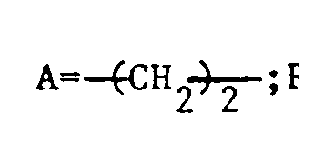
R₁=R₂=R₃=R₄=-CH₃ ; R₅=R₆=H ; R′,R˝=oxo ; R₇=OH ; R₈=H - A une suspension de 13,18g (0,07mole) de tétraméthyl-1,1,4,4 tétrahydro-1,2,3,4 naphtalène et de 7g (0,07mole) d'anhydride succinique dans 150cm³ de dichloro-1,2 éthane anhydre, on ajoute par portions, en environ 45mn, 18,7g (0,14mole) de chlorure d'aluminium anhydre de façon à maintenir la température inférieure à 30°C. Après 3 heures d'agitation, le milieu réactionnel est versé dans 100cm³ d'eau glacée. La phase organique est décantée et la phase aqueuse est extraite trois fois par 100cm³ de dichlorométhane. Les phases de dichloroéthane et dichlorométhane sont rassemblées, lavées à l'eau, séchées sur sulfate de sodium et concentrées sous pression réduite. Le solide brut obtenu est recristallisé deux fois dans l'acétone. On obtient ainsi 15,7g de cristaux blancs d'acide (tétraméthyl-5,5,8,8 tétrahydro-5,6,7,8 naphtyl-2)-4 oxo-4 butyrique dont le point de fusion est de 178°C.
- Le spectre RMN¹H 250 MHz est conforme à la structure attendue.
Analyse élémentaire : C₁₈H₂₄O₃
- Formule (I) dans laquelle:

R₁=R₂=R₄=-CH₃ ; R₅=R₆=H ; R′,R˝=oxo ; R₇=OH ; R₈=H - A une solution de 11g de pentaméthyl-1,1,2,3,3 indane (0,058mole) et de 7g d'anhydride succinique (0,07 mole) dans 100cm³ de dichloro-1,2 éthane anhydre, agitée à 0°C, on ajoute par petites portions 9,4g de chlorure d'aluminum de façon à ce que la température reste inférieure à 30°C. Le mélange réactionnel est ensuite agité pendant 3 heures à température ambiante puis versé dans 250cm³ d'eau glacée. La phase organique est décantée et la phase aqueuse est extraite deux fois au dichloro-1,2 éthane. Les phases organiques sont rassemblées, lavées à l'eau, séchées sur sulfate de magnésium. Le solvant est évaporé sous pression réduite et le produit obtenu est cristallisé dans l'éther isopropylique. On obtient 7g d'acide (pentaméthyl-1,1,2,3,3 indanyl-5)-4 oxo-4 butyrique sous forme de cristaux blancs dont le point de fusion est de 161°C.
Analyse élémentaire : C₁₈H₂₄O₃
- Formule (I) dans laquelle

R₂=R₄=H ; R₅=R₆=H ; R′, R˝=oxo ; R₇=-OH ; R₈=H - A une solution agitée à 0°C de 30g de méthano-1,4 tétrahydro-1,2,3,4 naphtalène (0,2mole) et de 21g d'anhydride succinique (0,21mole) dans 300cm³ de dichlorométhane, on ajoute, par petites portions, en environ 2 heures, 56g de chlorure d'aluminium. L'agitation est ensuite maintenue 2 heures à température ambiante. Le milieu réactionnel est alors versé sur un volume égal d'eau glacée et la phase organique est décantée. La phase aqueuse est extraite deux fois par 300cm³ de dichlorométhane. Les phases de dichlorométhane sont rassemblées, lavées une fois à l'eau, décantées, séchées sur sulfate de magnésium et concentrées sous pression réduite. Le produit obtenu est déposé sur une colonne de gel de silice. L'acide attendu est entraîné à l'acétate d'éthyle, puis recristallisé dans l'hexane. On obtient 25g d'acide (méthano-5,8 tétrahydro-5,6,7,8 naphtyl-2)-4 oxo-4 butyrique sous forme de cristaux blancs de point de fusion : 135°C.
Analyse élémentaire : C₁₅H₁₆O₃
- Formule (I) dans laquelle

R₂=R₄=H, R₅=R₆=-OCH₃ ; R′,R˝=oxo ; R₇=-OH ; R₈=H - A une solution agitée à 0°C de 30g de diméthoxy-1,4 méthano-5,8 tétrahydro-5,6,7,8 naphtalène (0,154mole) et de 17g d'anhydride succinique (0,17mole) dans 280cm³ de dichloro-1,2 éthane anhydre on ajoute en environ une heure par petites portions 23,5g de chlorure d'aluminium. A la fin de l'addition, le mélange est agité trois heures à température ambiante, puis versé sur 500cm³ d'eau glacée. La phase de dichloro-1,2 éthane est décantée et la phase aqueuse est extraite deux fois par 250cm³ de dichloro-1,2 éthane. Les phases organiques sont rassemblées, séchées sur sulfate de magnésium et concentrées. On obtient 30g de produit brut qui est recristallisé dans l'éther isopropylique. On isole ainsi 16g d'acide sulfate de magnésium et concentrées. On obtient 30g de produit brut qui est (diméthoxy-1,4 méthano-5,8 tétrahydro-5,6,7,8 naphtyl-2)-4 oxo-4 butyrique sous forme de cristaux blancs de point de fusion : 132°C.
Analyse élémentaire : C₁₇H₂₀O₅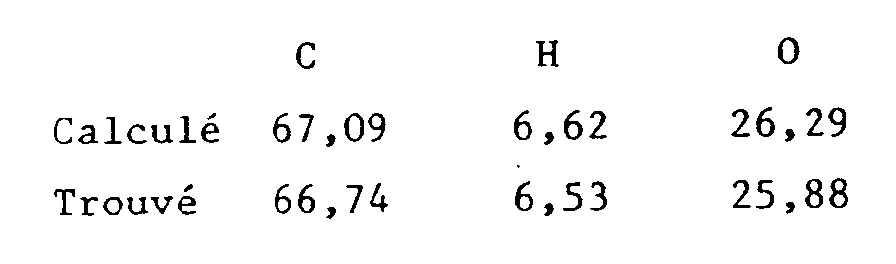
- Formule (I) dans laquelle
R₁=R₂=R₃=R₄=-CH₃; R₅=R₆=H ; R′,R˝=oxo ; R₇=-OC₂H₅; R₈=H - Une solution de 2g (7mmoles) d'acide (pentaméthyl-1,1,2,3,3 indanyl-5)-4 oxo-4 butyrique décrit à l'exemple IV, dans 100cm³ d'alcool éthylique absolu contenant 0,2cm³ d'acide sulfurique à 98% est chauffée 4 heures au reflux. La solution est alors concentrée sous pression réduite. L'ester brut est dissous dans 100cm³ de dichlorométhane et la solution est lavée au bicarbonate de sodium puis à l'eau et séchée sur sulfate de sodium. Après évaporation à sec et après séchage, on obtient 1,9g de (pentaméthyl-1,1,2,3,3 indanyl-5)-4 oxo-4 butyrate d'éthyle sous la forme d'un liquide incolore.
- Le spectre RMN¹H 80MHz est conforme à la structure attendue.
Analyse élémentaire : C₂₀H₂₈O₃
- Formule (I) dans laquelle
R₁=R₂=R₃=R₄=-CH₃ ; R₅=R₆=H ; R′,R˝=oxo ; R₇=-OC₈H₁₇ ; R₈=H. - Une solution de 2,88g (10mmoles) d'acide (tétraméthyl-5,5,8,8 tétrahydro-5,6,7,8 naphtyl-2)-4 oxo-4 butyrique, décrit à l'exemple III, dans 120cm³ de toluène contenant 2g (20mmoles) d'éthyl-2 hexanol-1 et 0,1cm³ d'acide sulfurique à 98% est chauffée au reflux 4 heures avec distillation azéotropique de l'eau formée. La solution est alors refroidie, transférée dans une ampoule à décanter, lavée abondamment à l'eau, séchée sur sulfate de sodium et concentrée sous pression réduite. Le résidu est purifié rapidement par passage sur un filtre de gel de silice 60 en utilisant un mélange éluant dichlorométhane/toluène (60/40). Après évaporation sous vide et séchage prolongé, on obtient 3,6 g de (tétraméthyl-5,5,8,8 tétrahydro-5,6,7,8 naphtyl-2)-4 oxo-4 butyrate d'éthyl-2′ hexyle sous la forme d'un liquide incolore.
- Le spectre RMN¹H 80MHz correspond à la structure attendue.
Analyse élémentaire : C₂₆H₄₀O₃
- Formule (I) dans laquelle

R₁=R₂=R₃=R₄=-CH₃ ; R₅=R₆=H ; R′,R˝=oxo ; R₇=-OC₂H₅ ; R₈=H - Une solution de 1,01g (3,5mmoles) d'acide (tétraméthyl-5,5,8,8 tétrahydro-5,6,7,8 naphtyl-2)-4 oxo-4 butyrique, décrit à l'exemple III, dans 40cm³ d'alcool éthylique contenant 0,06 cm³ d'acide sulfurique à 98% est chauffée 5 heures au reflux puis concentrée sous pression réduite. L'ester brut est dissous dans 50cm³ de dichlorométhane. La solution est lavée au bicarbonate de sodium puis à l'eau, séchée sur sulfate de sodium et évaporée à sec. Après séchage, on obtient 0,9g de (tétraméthyl-5,5,8,8 tétrahydro-5,6,7,8 naphtyl-2)-4 oxo-4 butyrate d'éthyle sous la forme d'un liquide épais incolore.
- Le spectre RMN¹H 80MHz est conforme à la structure attendue.
Analyse élémentaire : C₂₀H₂₈O₃
- Formule (I) dans laquelle

R₁=R₂=R₃=R₄=-CH₃ ; R₅=R₆=H ; R′, R˝=oxo ; R₇=-NHEt ; R₈=-CH₃ - A une suspension de 3g (10mmoles) d'acide (tétraméthyl-5,5,8,8 tétrahydro-5,6,7,8 naphtyl-2)-4 oxo-4 méthyl-2 butyrique dans 60cm³ de dichlorométhane anhydre, on ajoute 1,95g (12mmoles) de N,N′-carbonyl diimidazole et agite 1h30 à température ambiante. La solution obtenue est refroidie à +5°C. On ajoute alors 0,86cm³ (13mmoles) d'éthylamine anhydre et maintient l'agitation 3 heures en laissant revenir à température ambiante. Le milieu réactionnel est transféré dans une ampoule à décanter et lavé à l'acide chlorhydrique 0,1N puis à l'eau. La phase de dichlorométhane est séchée sur sulfate de sodium et concentrée sous pression réduite. L'huile brute obtenue est purifiée par chromatographie sur gel de silice 60 dans un mélange toluène/dichlorométhane/acétate d'éthyle (5/3/2). Après évaporation et séchage, on isole 0,6g de N-éthyl(tétraméthyl-5,5,8,8 tétrahydro-5,6,7,8 naphtyl-2)-4 oxo-4 méthyl-2 butyramide sous la forme d'un solide blanc dont de point de fusion est de 101°C.
- Les spectres I.R. et RMN¹H 250MHz correspondent à la structure attendue.
Analyse élémentaire : C₂₁H₃₁NO₂
-

- Une suspension de 2,88g (10mmoles) d'acide (tétraméthyl-5,5,8,8 tétrahydro-5,6,7,8 naphtyl-2)-4 oxo-4 butyrique et de 1,95g (12mmoles) de N,N′-carbonyl diimidazole dans 50cm³ de dichlorométhane anhydre est agitée 1h30 à température ambiante. La solution obtenue est alors refroidie à +5°C et 1,47cm³ (12mmoles) de N-hydroxy-2 éthylpipérazine sont ajoutés. L'agitation est maintenue 2 heures en laissant revenir à température ambiante. Le milieu réactionnel est transféré dans une ampoule à décanter et lavé abondamment à l'eau. La phase de dichlorométhane est séchée sur sulfate de sodium et concentrée sous pression réduite. Le solide brut obtenu est purifié par chromatographie sur gel de silice 60 dans le tétrahydrofuranne. Après évaporation et séchage, on isole 1,7g de N-(hydroxy-2 éthyl)-4′ pipérazinyl (tétraméthyl-5,5,8,8 tétrahydro-5,6,7,8 naphtyl-2)-4 oxo-4 butyramide sous la forme d'une poudre blanche dont le point de fusion est de 115°C.
- Le spectre RMN¹H 250MHz est conforme à la structure attendue.
Analyse élémentaire : C₂₂H₃₆N₂O₃
- Formule (I) dans laquelle

- Une suspension de 2,88g (10mmoles) d'acide (tétraméthyl-5,5,8,8 tétrahydro-5,6,7,8 naphtyl-2)-4 oxo-4 butyrique, décrit à l'exemple III, et de 1,95g (12mmoles) de N,N′-carbonyldiimidazole dans 50cm³ de dichlorométhane anhydre est agitée 2 heures à température ambiante. La solution obtenue est refroidie entre +5 et +10°C et 1,26g (12mmoles) de N-hydroxy-2 éthoxyéthylamine sont ajoutés. L'agitation est maintenue 3 heures en laissant revenir à température ambiante. Le milieu réactionnel est transféré dans une ampoule à décanter et dilué à 100cm³. Après lavage à l'acide chorhydrique 0,1N puis à l'eau, la phase de dichlorométhane est séchée sur sulfate de sodium puis évaporée à sec. Le résidu est purifié par chromatographie sur gel de silice 60 dans un mélange éluant dichlorométhane/toluène/acétate d'éthyle/isopropanol (40/25/25/10). Après évaporation et séchage, on obtient 2,5g de N-(hydroxy-2 éthoxyéthyl) (tétraméthyl-5,5,8,8 tétrahydro-5,6,7,8 naphtyl-2)-4 oxo-4 butyramide sous la forme d'une huile épaisse incolore conservée à l'abri de la lumière.
- Le spectre RMN¹H 250MHz est conforme à la structure attendue.
Analyse élémentaire : C₂₂H₃₃NO₄ ,O,5H₂O
- Formule (I) dans laquelle :

- A une solution de 2,02g (7mmoles) d'acide (tétraméthyl-5,5,8,8 tétrahydro-5,6,7,8 naphtyl-2)-4 oxo-4 butyrique, décrit à l'exemple III, dans 60cm³ de tétrahydrofuranne anhydre, on ajoute 1,06g (21mmoles) de borohydrure de sodium et agite une nuit à température ambiante. Le milieu réactionnel est alors refroidi à environ 10°C et acidifié par addition lente d'acide chlorhydrique 0,1N. Le mélange est extrait à l'éther éthylique (3x100cm³). La phase organique est lavée à l'eau, séchée sur sulfate de sodium et évaporée à sec. Le solide obtenu est repris par 100cm³ d'hexane et essoré. On obtient ainsi 1,75g de produit attendu en mélange avec sa lactone. On ajoute 20cm³ de soude 0,5N et chauffe 1 heure au reflux. La solution est ensuite refroidie à température ambiante et acidifiée par addition de 0,6cm³ d'acide acétique glacial. Le précipité est essoré, lavé abondamment à l'eau et séché sous vide à 50°C. On obtient 1,7g d'acide (tétraméthyl-5,5,8,8 tétrahydro-5,6,7,8 naphtyl-2)-4 hydroxy-4 butyrique sous la forme d'un solide blanc dont le point de fusion est de 110°C.
- Les spectres I.R. et RMN¹H 80MHz sont conformes à la structure attendue.
Analyse élémentaire : C₁₈H₂₆O₃
- Formule (I) dans laquelle :

R₁=R₂=R₃=R₄=-CH₃; R₅=R₆=H ; R′,R˝= =N-OH ; R₇=-OC₂H₅ ; R₈=H - A une solution de 9,96g (0,0315 mole) de (tétraméthyl-5,5,8,8 tétrahydro-5,6,7,8 naphtyl-2)-4 oxo-4 butyrate d'éthyle, décrit à l'exemple IX, dans 250cm³ d'alcool éthylique, on ajoute 4,38g (0,063 mole) de chlorhydrate d'hydroxylamine puis 8,9cm³ (0,063mole) de triéthylamine et chauffe 12 heures au reflux. Après concentration sous pression réduite, le résidu est repris par 200cm³ de dichlorométhane. La solution est lavée à l'acide chlorhydrique dilué puis à l'eau. La phase de dichlorométhane est séchée sur sulfate de sodium et évaporée à sec. Le produit brut est alors purifié par chromatographie sur gel de silice 60 dans un mélange toluène/dichlorométhane/tétrahydrofuranne (6/3/1). Après évaporation et séchage, on isole 6,6g de (tétraméthyl-5,5,8,8 tétrahydro-5,6,7,8 naphtyl-2)-4 hydroxyimino-4 butyrate d'éthyle sous la forme d'un liquide incolore.
- Le spectre RMN¹H 80MHz est conforme à la structure attendue.
Analyse élémentaire : C₂₀H₂₉NO₃
- Formule (I) dans laquelle :

R₁=R₂=R₃=R₄=-CH₃; R₅=R₆=H ; R′,R˝= =N-OH ; R₇=OH ; R₈=H - Une solution de 2g (6mmoles) de (tétraméthyl-5,5,8,8 tétrahydro-5,6,7,8 naphtyl-2)-4 hydroxyimino-4 butyrate d'éthyle, décrit à l'exemple XIV, dans un mélange de 30cm³ d'alcool éthylique et 30cm³ de potasse 2N est chauffée 2 heures à 60°C. Après refroidissement à température ambiante, on ajoute 100cm³ d'eau et évapore l'alcool sous pression réduite. L'acide est précipité par addition d'acide chlorhydrique 12N. Après filtration, lavage à l'eau et séchage, le produit brut est recristallisé dans l'éther isopropylique. On obtient ainsi 1,4g de cristaux blancs d'acide (tétraméthyl-5,5,8,8 tétrahydro-5,6,7,8 naphtyl-2)-4 hydroxyimino-4 butyrique dont le point de fusion est de 146°C.
- Le spectre RMN¹H 250MHz est conforme à la structure attendue.
Analyse élémentaire : C₁₈H₂₅NO₃
- Formule (I) dans laquelle :
R₁=R₂=R₃=R₄=-CH₃; R₅=R₆=H ; R′=R˝=H ; R₇=OH ; R₈=H - A un mélange de 6g de laine de zincet de 0,6g de chlorure mercurique, on ajoute 9cm³ d'eau et 0,3cm³ d'acide chlorhydrique 12N et agite 10mn à température ambiante. La phase aqueuse est éliminée par décantation. L'amalgame obtenu est rincé par 20cm³ d'eau. On ajoute alors 7,21g (0,025mole) d'acide (tétraméthyl-5,5,8,8 tétrahydro-5,6,7,8 naphtyl-2)-4 oxo-4 butyrique décrit à l'exemple III, 10cm³ d'eau, 8cm³ de toluène, 5cm³ d'acide chlorhydrique 12N et chauffe 34 heures au reflux sous agitation en ajoutant 3cm³ d'acide chlorhydrique 12N toutes les 6 heures. Le milieu réactionnel est dilué par addition de 100cm³ de toluène et filtré (séparation de l'amalgame résiduel) avec rinçage au toluène. La phase toluénique est séparée, lavée abondamment à l'eau, séchée sur sulfate de sodium et concentrée sous pression réduite. L'huile brute obtenue est purifiée par chromatographie sur gel de silice 60 dans le mélange éluant acide acétique/dioxanne/toluène 2/8/90. Après évaporation, le solide isolé est repris par le minimum d'éther isopropylique, essoré et séché sous vide à 70°C. On obtient ainsi 4,6g d'acide (tétraméthyl-5,5,8,8 tétrahydro-5,6,7,8 naphtyl-2)-4 butyrique sous la forme d'un solide blanc dont le point de fusion est de : 99°C.
- Le spectre RMN¹H 80MHz est conforme à la structure attendue.
Analyse élémentaire : C₁₈H₂₆O₂
- Formule (I) dans laquelle :

R₁=R₂=R₃=R₄=-CH₃; R₅=R₆=H ; R′=R˝=oxo ; R₇=-O⊖Na⊕ ; R₈=-CH₃ - On met en suspension 1,028g (3,39mmoles) d'acide (tétraméthyl-5,5,8,8 tétrahydro-5,6,7,8 naphtyl-2)-4 oxo-4 méthyl-2 butyrique, décrit à l'exemple I, dans 350cm³ d'eau bipermutée, ajoute 33,9cm³ de soude aqueuse 0,1N (3,39mmoles) et agite en tiédissant jusqu'à dissolution. La solution obtenue est filtrée puis évaporée à sec sous pression réduite. On obtient ainsi, après séchage sous vide à 80°C, 1,09g de (tétraméthyl-5,5,8,8 tétrahydro-5,6,7,8 naphtyl-2)-4 oxo-4 méthyl-2 butyrate de sodium sous la forme d'un solide blanc devenant vitreux vers 80°C.
- Formule (I) dans laquelle :
R₁=R₂=R₃=R₄=-CH₃; R₅=R₆=H ; R′,R˝=oxo ; R₇=-O⊖Na⊕ ; R₈=H - On met en suspension 0,502g (1,74mmoles) d'acide (tétraméthyl-5,5,8,8 tétrahydro-5,6,7,8 naphtyl-2)-4 oxo-4 butyrique, décrit à l'exemple III, dans 200cm³ d'eau bipermutée, ajoute 17,4cm³ (1,74mmoles) de soude aqueuse 0,1N et agite en tiédissant jusqu'à dissolution. La solution obtenue est filtrée puis évaporée à sec. Après séchage sous vide à 80°C, on obtient 0,52g de (tétraméthyl-5,5,8,8 tétrahydro-5,6,7,8 naphtyl-2)-4 oxo-4 butyrate de sodium sous la forme d'un solide blanc dont le point de fusion est supérieur à 250°C.
- Formule (I) dans laquelle :

R₁=R₂=R₃=R₄=-CH₃; R₅=R₆=H ; R′,R˝=oxo ; R₇=-O⊖,1/2 Zn2⊕ ; R₈=-CH₃ - On dissout 308mg (0,95mmole) de (tétraméthyl-5,5,8,8 tétrahydro-5,6,7,8 naphtyl-2)-4 oxo-4 méthyl-2 butyrate de sodium, obtenu à l'exemple XVII, dans 150cm³ d'eau puis ajoute 136,5mg (0,475mmole) de sulfate de zinc, 7H₂O. Le sel de zinc précipite. Il est essoré, lavé à l'eau et séché sous vide à 70-80°C. On obtient ainsi 0,32g de (tétraméthyl-5,5,8,8 tétrahydro-5,6,7,8 naphtyl-2)-4 oxo-4 méthyl-2 butyrate de zinc sous la forme d'un solide blanc devenant vitreux vers 115°C.
- Formule (I) dans laquelle :
R₁=R₂=R₃=R₄=-CH₃; R₅=R₆=H ; R′,R˝=oxo ; R₇=-O⊖,1/2 Zn2⊕ ; R₈=H - On dissout 317mg (1,02 mmoles) de (tétraméthyl-5,5,8,8 tétrahydro-5,6,7,8 naphtyl-2)-4 oxo-4 butyrate de sodium, obtenu à l'exemple XVIII, dans 150cm³ d'eau puis ajoute 147mg (0,51mmole) de sulfate de zinc, 7H₂O. Le précipité est essoré, lavé à l'eau et séché sous vide à 80°C. On obtient ainsi 0,33g de (tétraméthyl-5,5,8,8 tétrahydro-5,6,7,8 naphtyl-2)-4 oxo-4 butyrate de zinc sous la forme d'un solide blanc devenant vitreux vers 125°C.
-


Claims (21)

R₁, R₂, R₃ et R₄ représentent, indépendamment l'un de l'autre, un atome d'hydrogène ou un radical alkyle inférieur, au moins deux des radicaux R₁ à R₄ étant différents d'un atome d'hydrogène,
A représente un radical méthylène ou diméthylène, substitué ou non par un radical alkyle inférieur ; lorsque A représente un radical diméthylène, R₁ et R₃ peuvent former ensemble un radical méthylène ou diméthylène,
R₅ et R₆ représentent un atome d'hydrogène, un atome d'halogène, un radical alkyle inférieur, un radical alkoxy inférieur ou un radical hydroxyle;
R′ représente un atome d'hydrogène, un radical hydroxyle, un radical alkoxy inférieur ou un radical acyloxy en C₁-C₄,
R˝ représente un atome d'hydrogène ou un radical alkoxy inférieur, ou R′ et R˝, pris ensemble, forment un radical oxo (=O) ou hydroxyimino (=N-OH),
R₈ représente un atome d'hydrogène ou un radical alkyle inférieur, et R₇ représente le radical -OR₉ ou

R₉ représentant un atome d'hydrogène, un radical alkyle ayant de 1 à 20 atomes de carbone, un radical monohydroxyalkyle, polyhydroxyalkyle, aryle ou aralkyle, un reste de sucre, un radical carboxyalkyle ou alkoxycarbonylalkyle,
r′ et r˝ représentant un atome d'hydrogène, un radical alkyle inférieur, un radical monohydroxyalkyle éventuellement interrompu par un hétéroatome, un radical polyhydroxyalkyle, un radical aryle ou benzyle, un reste d'amino-acide ou de sucre aminé ou, pris ensemble, forment un hétérocycle éventuellement substitué par un radical hydroxyalkyle en C₁-C₃, et les sels desdits composés de formule (I) et leurs isomères optiques ainsi que les formes tautomères des composés de formule (I).

A représente un radical


R₇ représente le radical -OR₉ ou

R₉ représentant un atome d'hydrogène ou un radical alkyle inférieur, r′ étant un atome d'hydrogène et r˝ étant un radical alkyle ayant de 1 à 8 atomes de carbone, un radical monohydroxyalkyle, éventuellement interrompu par un hétéroatome ou un radical polyhydroxyalkyle ou r′ et r˝, pris ensemble, forment avec l'atome d'azote un radical (hydroxy-2 éthyl)-4 pipérazinyle,
et R₈ représente un atome d'hydrogène ou un radical méthyle.
l'acide (tétraméthyl-5,5,8,8-tétrahydro-5,6,7,8 naphtyl-2)-4 oxo-4 méthyl-2 butyrique,
l'acide (tétraméthyl-5,5,8,8-tétrahydro-5,6,7,8 naphtyl-2)-4 oxo-4 butyrique,
le (tétraméthyl-5,5,8,8-tétrahydro-5,6,7,8-naphtyl-2)-4 oxo-4 butyrate d'éthyle,
le (tétraméthyl-5,5,8,8-tétrahydro-5,6,7,8-naphtyl-2)-4 oxo-4 butyrate d'éthyl-2′ hexyle,
le N-éthyl(tétraméthyl-5,5,8,8-tétrahydro-5,6,7,8 naphtyl-2)-4 oxo-4 méthyl-2 butyramide,
le N-éthyl(tétraméthyll-5,5,8,8-tétrahydro-5,6,7,8 naphtyl-2)-4 oxo-4 butyramide,
le N-(hydroxy-2 éthyl)-4′pipérazinyl(tétraméthyl-5,5,8,8-tétrahydro-5,6,7,8 napthyl-2)-4 oxo-4 butyramide,
le N-(hydroxy-2 éthoxyéthyl)(tétraméthyl-5,5,8,8-tétrahydro-5,6,7,8 naphtyl-2)-4 oxo-4 butyramide,
l'acide (tétraméthyl-5,5,8,8-tétrahydro-5,6,7,8 naphtyl-2)-4 hydroxy-4 butyrigue,
le (tétraméthyl-5,5,8,8-tétrahydro-5,6,7,8 naphtyl-2)-4 hydroxyimino-4 butyrate d'éthyle,
l'acide (tétraméthyl-5,5,8,8-tétrahydro-5,6,7,8 naphtyl-2)-4 hydroxyimino-4 butyrique,
le (tétraméthyl-5,5,8,8-tétrahydro-5,6,7,8 naphtyl-2)-4 oxo-4 butyrate de sodium,
le (tétraméthyl-5,5,8,8-tétrahydro-5,6,7,8 naphtyl-2)-4 oxo-4 méthyl-2 butyrate de sodium,
le (tétraméthyl-5,5,8,8-tétrahydro-5,6,7,8 naphtyl-2) oxo-4 butyrate de zinc,
l'acide (tétraméthyl-5,5,8,8-tétrahydro-5,6,7,8 naphtyl-2)-4 butyrique, et le (tétraméthyl-5,5,8,8-tétrahydro-5,6,7,8 naphtyl-2)-4 oxo-4 méthyl-2 butyrate de zinc.
l'acide (méthano-5,8 tétrahydro-5,6,7,8 naphtyl-2)-4 oxo-4 butyrique,
l'acide (diméthoxy-1,4 méthano-5,8 tétrahydro-5,6,7,8 naphtyl-2)-4 oxo-4 méthyl-2 butyrique,
l'acide (diméthoxy-1,4 méthano-5,8 tétrahydro-5,6,7,8 naphtyl-2)-4 oxo-4 butyrique,
le (diméthoxy-1,4 méthano-5,8 tétrahydro-5,6,7,8 naphtyl-2)-4 oxo-4 butyrate d'éthyle,
le N-éthyl (diméthoxy-1,4 méthano-5,8 tétrahydro-5,6,7,8 naphtyl-2)-4 oxo-4 butyramide,
l'acide (diméthoxy-1,4 méthano-5,8 tétrahydro-5,6,7,8 naphtyl-2)-4 hydroxy-4 butyrique, et
le (diméthoxy-1,4-méthano-5,8 tétrahydro-5,6,7,8 naphtyl-2)-4 oxo-4 butyrate de zinc.
l'acide (pentaméthyl-1,1,2,3,3 indanyl-5)-4 oxo-4 méthyl-2 butyrique,
l'acide (tétraméthyl-1,1,3,3 indanyl-5)-4 oxo-4 méthyl-2 butyrique,
l'acide (pentaméthyl-1,1,2,3,3 indanyl-5)-4 oxo-4 butyrique,
l'acide (tétraméthyl-1,1,3,3 indanyl-5)-4 oxo-4 butyrique,
le (pentaméthyl-1,1,2,3,3 indanyl-5)-4 oxo-4 butyrate d'éthyle,
le N-(hydroxy-2 éthoxyéthyl)(pentaméthyl-1,1,2,3,3 indanyl-5)-4 oxo-4 butyramide,
l'acide (pentaméthyl-1,1,2,3,3 indanyl-5)-4 hydroxy-4 butyrique, et
le (pentaméthyl-1,1,2,3,3 indanyl-5)-4 oxo-4 butyrate de zinc.


A, R₁ à R₆ et R₈ ont les mêmes significations que celles données à la revendication 1, et que l'on procède, si nécessaire à partir du céto-acide obtenu aux réactions conventionnelles permettant d'accéder aux autres composés de formule (I).
Priority Applications (1)
| Application Number | Priority Date | Filing Date | Title |
|---|---|---|---|
| AT88400796T ATE71930T1 (de) | 1987-04-03 | 1988-04-01 | Aromatische derivate der butyrsaeure, verfahren zu ihrer herstellung und ihre verwendung in kosmetischen und pharmazeutischen zubereitungen. |
Applications Claiming Priority (2)
| Application Number | Priority Date | Filing Date | Title |
|---|---|---|---|
| FR8704711A FR2613360B1 (fr) | 1987-04-03 | 1987-04-03 | Nouveaux derives aromatiques d'acide butyrique, leur procede de preparation et leur utilisation en medecine humaine et veterinaire ainsi qu'en cosmetique |
| FR8704711 | 1987-04-03 |
Publications (2)
| Publication Number | Publication Date |
|---|---|
| EP0286523A1 EP0286523A1 (fr) | 1988-10-12 |
| EP0286523B1 true EP0286523B1 (fr) | 1992-01-22 |
Family
ID=9349763
Family Applications (1)
| Application Number | Title | Priority Date | Filing Date |
|---|---|---|---|
| EP88400796A Expired - Lifetime EP0286523B1 (fr) | 1987-04-03 | 1988-04-01 | Nouveaux dérivés aromatiques d'acide butyrique, leur procédé de préparation et leur utilisation en cosmétique ainsi qu'en médecine humaine et vétérinaire |
Country Status (8)
| Country | Link |
|---|---|
| US (1) | US5068393A (fr) |
| EP (1) | EP0286523B1 (fr) |
| AT (1) | ATE71930T1 (fr) |
| CA (1) | CA1312865C (fr) |
| DE (2) | DE286523T1 (fr) |
| ES (1) | ES2006726T3 (fr) |
| FR (1) | FR2613360B1 (fr) |
| GR (1) | GR890300055T1 (fr) |
Families Citing this family (9)
| Publication number | Priority date | Publication date | Assignee | Title |
|---|---|---|---|---|
| JPH02134345A (ja) * | 1988-11-15 | 1990-05-23 | Mitsui Petrochem Ind Ltd | インダン誘導体 |
| US5169430A (en) * | 1991-08-09 | 1992-12-08 | Uniroyal Chemical Company, Inc. | Benzenesulfonamide derivatives and methods for their production |
| KR100363545B1 (ko) * | 1994-08-10 | 2003-02-19 | 에프. 호프만-라 로슈 아게 | 레틴산x-수용체리간드 |
| DE10210623A1 (de) | 2002-03-11 | 2003-09-25 | Haarmann & Reimer Gmbh | Alkoxy-substituierte Indane und deren Herstellung |
| US7799954B2 (en) * | 2006-11-17 | 2010-09-21 | Abraxis Bioscience, Llc | Dicarbonyl derivatives and methods of use |
| US9561996B2 (en) | 2009-07-21 | 2017-02-07 | Exxonmobil Chemical Patents Inc. | Keto acid esters as PVC plasticizers |
| US8604114B2 (en) * | 2009-12-24 | 2013-12-10 | Exxonmobil Research And Engineering Company | Aromatic acylation with cyclic anhydride for plasticizer production |
| PE20151721A1 (es) | 2013-02-22 | 2015-12-07 | Samumed Llc | Y-dicetonas como activadores de la ruta de senalizacion de wnt/b-catenina |
| DK3206686T3 (da) * | 2014-08-20 | 2019-12-16 | Samumed Llc | Gamma-diketoner til behandling og forebyggelse af ældning af huden og rynker |
Family Cites Families (3)
| Publication number | Priority date | Publication date | Assignee | Title |
|---|---|---|---|---|
| NL6717403A (fr) * | 1966-12-30 | 1968-07-01 | ||
| FR2300551A2 (fr) * | 1975-02-17 | 1976-09-10 | Fabre Sa Pierre | Nouveaux |
| CH610875A5 (en) * | 1974-09-13 | 1979-05-15 | Hexachimie | Process for the preparation of novel indanacetic acids and their esters |
-
1987
- 1987-04-03 FR FR8704711A patent/FR2613360B1/fr not_active Expired
-
1988
- 1988-03-31 CA CA000563111A patent/CA1312865C/fr not_active Expired - Fee Related
- 1988-04-01 AT AT88400796T patent/ATE71930T1/de not_active IP Right Cessation
- 1988-04-01 EP EP88400796A patent/EP0286523B1/fr not_active Expired - Lifetime
- 1988-04-01 DE DE198888400796T patent/DE286523T1/de active Pending
- 1988-04-01 DE DE8888400796T patent/DE3867884D1/de not_active Expired - Lifetime
- 1988-04-01 ES ES198888400796T patent/ES2006726T3/es not_active Expired - Lifetime
- 1988-04-04 US US07/181,017 patent/US5068393A/en not_active Expired - Fee Related
-
1989
- 1989-06-22 GR GR89300055T patent/GR890300055T1/el unknown
Also Published As
| Publication number | Publication date |
|---|---|
| DE286523T1 (de) | 1989-06-22 |
| DE3867884D1 (de) | 1992-03-05 |
| ES2006726A4 (es) | 1989-05-16 |
| FR2613360A1 (fr) | 1988-10-07 |
| FR2613360B1 (fr) | 1989-06-09 |
| GR890300055T1 (en) | 1989-06-22 |
| US5068393A (en) | 1991-11-26 |
| EP0286523A1 (fr) | 1988-10-12 |
| ES2006726T3 (es) | 1993-08-01 |
| CA1312865C (fr) | 1993-01-19 |
| ATE71930T1 (de) | 1992-02-15 |
Similar Documents
| Publication | Publication Date | Title |
|---|---|---|
| EP0220118B1 (fr) | Dérivés bicycliques naphtaléniques, leur procédé de préparation et leur utilisation en médecine humaine et vétérinaire et en cosmétique | |
| EP0325540B1 (fr) | Esters et thioesters aromatiques, leur procédé de préparation et leur utilisation en médecine humaine ou vétérinaire et en cosmétique | |
| EP0260162B1 (fr) | Dérivés bicycliques aromatiques, leur procédé de préparation et leur utilisation en médecine humaine et vétérinaire et en cosmétique | |
| EP0199636B1 (fr) | Dérivés benzonaphtaléniques, leur procédé de préparation et leur application dans les domaines pharmaceutique et cosmétique | |
| EP0514269B1 (fr) | Nouveaux composés aromatiques dérivés d'imine, leur procédé de préparation et leur utilisation en médecine humaine et vétérinaire ainsi qu'en cosmétique | |
| EP0232199A2 (fr) | Composés benzamido aromatiques, leur procédé de préparation et leur utilisation en médecine humaine ou vétérinaire et en cosmétique | |
| CH672638A5 (fr) | ||
| EP0776885B1 (fr) | Composés biaromatiques portant un groupement adamantyl en ortho, compositions pharmaceutiques et cosmétiques les contenant et utilisations | |
| CH666679A5 (fr) | Derives naphtaleniques a action retinoique, leurs procedes de preparation et compositions medicamenteuse et cosmetique les contenant. | |
| FR2580277A1 (fr) | Nouveaux derives naphtaleniques a action retinoique, le ur procede de preparation et compositions medicamenteuse et cosmetique les contenant | |
| BE1004273A4 (fr) | Nouveaux derives aromatiques bicycliques, leur procede de preparation et leur utilisation en cosmetique et en medecine humaine et veterinaire. | |
| EP0514264B1 (fr) | Composés bi-aromatiques dérivés d'un motif salicylique, leur procédé de préparation et leur utilisation en médecine humaine et vétérinaire ainsi qu'en cosmétique | |
| EP0292348B1 (fr) | Dérivés hétérocycliques polycycliques , leur procédé de préparation et leur utilisation en médecine humaine et vétérinaire | |
| CA2021329C (fr) | Esters bi-aromatiques, leur procede de preparation et leur utilisation en medecine humaine ou veterinaire et en cosmetique | |
| FR2596050A1 (fr) | Nouveaux derives benzofuranniques, leurs procedes de preparation et compositions medicamenteuse et cosmetique les contenant | |
| EP0643701B1 (fr) | Composes derives de benzimidazole, leur procede de preparation et leur utilisation dans les domaines therapeutique et cosmetique | |
| EP0297995B1 (fr) | Nouveaux dérivés polycycliques aromatiques, leur procédé de préparation et leur utilisation en médecine humaine et vétérinaire et en cosmétique | |
| EP0286523A1 (fr) | Nouveaux dérivés aromatiques d'acide butyrique, leur procédé de préparation et leur utilisation en cosmétique ainsi qu'en médecine humaine et vétérinaire | |
| CH673278A5 (fr) | ||
| EP0360637A1 (fr) | Nouveaux composés benzofuranniques, leur procédé de préparation, compositions pharmaceutique et cosmétique les contenant et utilisation de ces compositions | |
| EP0409729B1 (fr) | Thioesters bi-aromatiques, leur procédé de préparation et leur utilisation en médecine humaine ou vétérinaire et en cosmétique | |
| LU86259A1 (fr) | Amides aromatiques,leur procede de preparation et leur utilisation en medecine humaine ou veterinaire et en cosmetique | |
| CH668592A5 (fr) | Composes insatures cycloaliphatiques et compositions pharmaceutiques ou cosmetiques les contenant. | |
| FR2590566A1 (fr) | Derives ceto-naphtaleniques, leur procede de preparation et leur application dans les domaines pharmaceutique et cosmetique |
Legal Events
| Date | Code | Title | Description |
|---|---|---|---|
| PUAI | Public reference made under article 153(3) epc to a published international application that has entered the european phase |
Free format text: ORIGINAL CODE: 0009012 |
|
| AK | Designated contracting states |
Kind code of ref document: A1 Designated state(s): AT BE CH DE ES FR GB GR IT LI NL SE |
|
| ITCL | It: translation for ep claims filed |
Representative=s name: MODIANO & ASSOCIATI S.R.L. |
|
| 17P | Request for examination filed |
Effective date: 19890123 |
|
| TCAT | At: translation of patent claims filed | ||
| DET | De: translation of patent claims | ||
| TCNL | Nl: translation of patent claims filed | ||
| GBC | Gb: translation of claims filed (gb section 78(7)/1977) | ||
| 17Q | First examination report despatched |
Effective date: 19900806 |
|
| GRAA | (expected) grant |
Free format text: ORIGINAL CODE: 0009210 |
|
| AK | Designated contracting states |
Kind code of ref document: B1 Designated state(s): AT BE CH DE ES FR GB GR IT LI NL SE |
|
| PG25 | Lapsed in a contracting state [announced via postgrant information from national office to epo] |
Ref country code: SE Effective date: 19920122 Ref country code: NL Effective date: 19920122 Ref country code: GR Free format text: LAPSE BECAUSE OF FAILURE TO SUBMIT A TRANSLATION OF THE DESCRIPTION OR TO PAY THE FEE WITHIN THE PRESCRIBED TIME-LIMIT Effective date: 19920122 Ref country code: AT Effective date: 19920122 |
|
| REF | Corresponds to: |
Ref document number: 71930 Country of ref document: AT Date of ref document: 19920215 Kind code of ref document: T |
|
| GBT | Gb: translation of ep patent filed (gb section 77(6)(a)/1977) | ||
| REF | Corresponds to: |
Ref document number: 3867884 Country of ref document: DE Date of ref document: 19920305 |
|
| ITF | It: translation for a ep patent filed | ||
| NLV1 | Nl: lapsed or annulled due to failure to fulfill the requirements of art. 29p and 29m of the patents act | ||
| PLBE | No opposition filed within time limit |
Free format text: ORIGINAL CODE: 0009261 |
|
| STAA | Information on the status of an ep patent application or granted ep patent |
Free format text: STATUS: NO OPPOSITION FILED WITHIN TIME LIMIT |
|
| 26N | No opposition filed | ||
| REG | Reference to a national code |
Ref country code: ES Ref legal event code: FG2A Ref document number: 2006726 Country of ref document: ES Kind code of ref document: T3 |
|
| REG | Reference to a national code |
Ref country code: GB Ref legal event code: IF02 |
|
| PGFP | Annual fee paid to national office [announced via postgrant information from national office to epo] |
Ref country code: GB Payment date: 20020327 Year of fee payment: 15 |
|
| PGFP | Annual fee paid to national office [announced via postgrant information from national office to epo] |
Ref country code: FR Payment date: 20020410 Year of fee payment: 15 Ref country code: DE Payment date: 20020410 Year of fee payment: 15 |
|
| PGFP | Annual fee paid to national office [announced via postgrant information from national office to epo] |
Ref country code: CH Payment date: 20020412 Year of fee payment: 15 |
|
| PGFP | Annual fee paid to national office [announced via postgrant information from national office to epo] |
Ref country code: ES Payment date: 20020417 Year of fee payment: 15 |
|
| PGFP | Annual fee paid to national office [announced via postgrant information from national office to epo] |
Ref country code: BE Payment date: 20020619 Year of fee payment: 15 |
|
| PG25 | Lapsed in a contracting state [announced via postgrant information from national office to epo] |
Ref country code: GB Free format text: LAPSE BECAUSE OF NON-PAYMENT OF DUE FEES Effective date: 20030401 |
|
| PG25 | Lapsed in a contracting state [announced via postgrant information from national office to epo] |
Ref country code: ES Free format text: LAPSE BECAUSE OF NON-PAYMENT OF DUE FEES Effective date: 20030402 |
|
| PG25 | Lapsed in a contracting state [announced via postgrant information from national office to epo] |
Ref country code: LI Free format text: LAPSE BECAUSE OF NON-PAYMENT OF DUE FEES Effective date: 20030430 Ref country code: CH Free format text: LAPSE BECAUSE OF NON-PAYMENT OF DUE FEES Effective date: 20030430 Ref country code: BE Free format text: LAPSE BECAUSE OF NON-PAYMENT OF DUE FEES Effective date: 20030430 |
|
| BERE | Be: lapsed |
Owner name: L'*OREAL Effective date: 20030430 |
|
| PG25 | Lapsed in a contracting state [announced via postgrant information from national office to epo] |
Ref country code: DE Free format text: LAPSE BECAUSE OF NON-PAYMENT OF DUE FEES Effective date: 20031101 |
|
| GBPC | Gb: european patent ceased through non-payment of renewal fee |
Effective date: 20030401 |
|
| REG | Reference to a national code |
Ref country code: CH Ref legal event code: PL |
|
| PG25 | Lapsed in a contracting state [announced via postgrant information from national office to epo] |
Ref country code: FR Free format text: LAPSE BECAUSE OF NON-PAYMENT OF DUE FEES Effective date: 20031231 |
|
| REG | Reference to a national code |
Ref country code: FR Ref legal event code: ST |
|
| REG | Reference to a national code |
Ref country code: ES Ref legal event code: FD2A Effective date: 20030402 |
|
| PG25 | Lapsed in a contracting state [announced via postgrant information from national office to epo] |
Ref country code: IT Free format text: LAPSE BECAUSE OF NON-PAYMENT OF DUE FEES;WARNING: LAPSES OF ITALIAN PATENTS WITH EFFECTIVE DATE BEFORE 2007 MAY HAVE OCCURRED AT ANY TIME BEFORE 2007. THE CORRECT EFFECTIVE DATE MAY BE DIFFERENT FROM THE ONE RECORDED. Effective date: 20050401 |