EP0287206B2 - Vaccin contre pasteurella - Google Patents
Vaccin contre pasteurella Download PDFInfo
- Publication number
- EP0287206B2 EP0287206B2 EP88301932A EP88301932A EP0287206B2 EP 0287206 B2 EP0287206 B2 EP 0287206B2 EP 88301932 A EP88301932 A EP 88301932A EP 88301932 A EP88301932 A EP 88301932A EP 0287206 B2 EP0287206 B2 EP 0287206B2
- Authority
- EP
- European Patent Office
- Prior art keywords
- pasteurella
- iron
- proteinaceous material
- cells
- haemolytica
- Prior art date
- Legal status (The legal status is an assumption and is not a legal conclusion. Google has not performed a legal analysis and makes no representation as to the accuracy of the status listed.)
- Expired - Lifetime
Links
- ROFVEXUMMXZLPA-UHFFFAOYSA-N c1ccnc(-c2ccccn2)c1 Chemical compound c1ccnc(-c2ccccn2)c1 ROFVEXUMMXZLPA-UHFFFAOYSA-N 0.000 description 1
Images


Classifications
-
- C—CHEMISTRY; METALLURGY
- C07—ORGANIC CHEMISTRY
- C07K—PEPTIDES
- C07K16/00—Immunoglobulins [IG], e.g. monoclonal or polyclonal antibodies
- C07K16/12—Immunoglobulins [IG], e.g. monoclonal or polyclonal antibodies against material from bacteria
- C07K16/1203—Gram-negative bacteria
- C07K16/1242—Gram-negative bacteria from Pasteurellaceae (F), e.g. Haemophilus influenza
-
- A—HUMAN NECESSITIES
- A61—MEDICAL OR VETERINARY SCIENCE; HYGIENE
- A61K—PREPARATIONS FOR MEDICAL, DENTAL OR TOILETRY PURPOSES
- A61K39/00—Medicinal preparations containing antigens or antibodies
- A61K39/02—Bacterial antigens
- A61K39/102—Pasteurellales, e.g. Actinobacillus, Pasteurella; Haemophilus
Definitions
- This invention relates to a vaccine against bacteria of the genus Pasteurella , especially Pasteurella haemolytica , which is the organism responsible for pasteurellosis in sheep and one of those responsible for pasteurellosis in cattle, and Pasteurella multocida , which is another responsible for pasteurellosis in cattle.
- Pasteurellosis is a common respiratory disease of sheep and cattle which may often lead to fatality, particularly in the case of young animals, and thus the prevention and control of this disease is of great importance to farmers engaged in the rearing of sheep and cattle.
- sheep the disease appears as either a pneumonia or a septicaemic condition dependent upon the age of the infected animal and the strain of the infecting organism, whereas in cattle the disease is encountered primarily as a pneumonia in regions with temperate climates.
- Two biotypes of P Two biotypes of P .
- a biotype generally associated with septicaemias in young lambs and pneumonias in older sheep
- T biotype generally associated with septicaemias in adult sheep
- Serotype A2 is particularly important in relation to sheep and A1 in relation to cattle.
- the sheep vaccines comprise various strains of P . haemolytica , representing the more important of the biotypes and subtypes thereof.
- Cattle vaccines also comprise P . multocida .
- European Patent Specification 36995A (Norden Labs.) describes a live vaccine of Pasteurella haemolytica and multocida , attenuated to make them less pathogenic by culturing them in broth containing acriflavine hydrochloride, a well known mutagen.
- a vaccine against Pasteurella haemolytica contains antigens said to be associated with the capsule of the bacterium.
- An extract of such antigens is prepared by heating and centrifuging the culture and collecting the supernatant. The precipitated cells are sterilised and washed. Both the supernatant and the washed cells are included in the vaccine.
- French Patent Specification 2182909A (Wellcome) or the corresponding UK Specification 1441098 describe a vaccine component prepared from P. haemolytica or multocida by extracting a whole cell structure, lysate, or cell-free culture medium with a lower alkanol or lower alkyl ketone or "salting out” with a salt such as ammonium sulphate to precipitate endotoxin.
- Endotoxin is a lipopolysaccharide component present in the capsule of the organism. The endotoxin-free supernatant is re-treated with the solvent or salt (as before) at a high concentration, to precipitate the antigenic substance for use as a vaccine component.
- Pasteurella organisms are grown under iron-restriction conditions, that is to say conditions restricting the availability of iron to the organism to less than it requires for normal growth in vitro
- extraction of the outer membrane or of whole cell lysate give rise to a different protein profile from that obtained under normal growth conditions in vitro , that such an extract is more immunogenic than a corresponding outer membrane extract of the organism grown under said normal growth conditions, and that this improved immunogenicity is associated with proteinaceous material produced under iron-restriction conditions but not under said normal growth conditions.
- This proteinaceous material and cellular material containing it have been found to be valuable in vaccinating animals against Pasteurella , especially P . haemolytica , at least of the same serotype.
- novel proteinaceous material is novel in the sense that it is detectable when the organism is grown under iron-restriction conditions but not when it is grown under normal, i.e. iron-replete, conditions in vitro . It is immunogenic in the sense that it reacts in an immunoblotting test against the serum of a convalescent animal which has recovered from an infection by Pasteurella of the same serotype.
- the novel proteinaceous material may comprise one or more individual molecules and may be a free protein or a bound protein such as a glycoprotein and the term "proteinaceous material", as used herein, is to be construed broadly as any material which will give rise to peptide band(s) upon gel electrophoresis of the whole cell lysate or outer membrane extract containing it.
- the novel proteinaceous material is conveniently referred to herein as an "iron-restriction protein" or "IRP".
- a proteinaceous material in the form of a free or glycosylated protein isolatable from Pasteurella grown under iron-restriction conditions and visible by SDS-PAGE on whole cell lysates or outer membrane extracts thereof but not isolatable from Pasteurella grown under normal conditions in vitro and not visible by SDS-PAGE on corresponding whole cell lysates or outer membrane extracts thereof, said proteinaceous material reacting in an immunoblotting test against serum of a convalescent animal which has recovered from an infection by Pasteurella of the same serotype, for use in a vaccine against Pasteurella .
- Killed (inactivated) whole cells of Pasteurella haemolytica or piscicida grown under iron-restriction conditions, including "bacterin", preferably for the purpose of preparing a vaccine, are included within the invention.
- the invention further provides a vaccine against Pasteurella haemolytica or piscicida comprising killed whole cells as defined above and an adjuvant.
- the invention also includes a vaccine against Pasteurella comprising a proteinaceous material as defined above, together with an adjuvant.
- Antibodies to a proteinaceous material as defined above especially monoclonal antibodies, including anti-idiotype antibodies for use in passive administration to animals against Pasteurella , are also within the invention.
- the invention also includes a process of preparing a vaccine comprising growing cells of Pasteurella multocida under iron-restriction conditons in a non-plasma growth medium, harvesting the cells, killing them and formulating them with an adjuvant, as a vaccine for use in treating cattle against Pasteurella .
- Iron restriction conditions can be created artificially by adding a good iron chelator, such as alpha, alpha-bipyridyl (also called alpha, alpha-dipyridyl), to the cell growth medium, whereby the cell is stimulated to manufacture the iron receptor protein.
- a good iron chelator such as alpha, alpha-bipyridyl (also called alpha, alpha-dipyridyl)
- alpha, alpha-bipyridyl also called alpha, alpha-dipyridyl
- the introduction in the FEMS reference mentions some other organisms known to secrete enterochelin under iron-restricted conditions, including a Salmonella species which produces new outer membrane proteins.
- outer membrane iron receptor proteins can act as "virulence factors" in the sense that they help a pathogenic bacterium acquire iron so that it would survive longer in the host and thereby prolong the infection.
- Pathogenic E . coli recovered from lethally infected guinea pigs were found to contain two iron restriction proteins as major components of the outer membrane extract. There is no suggestion, however, that other bacteria produce new outer membrane proteins (OMPs) in response to iron restriction or that such proteins would have any value as vaccine components.
- OMPs outer membrane proteins
- Pasteurella multocida was passaged many times (up to 200) in an iron-deficient medium, it was reported to have decreased virulence (sic), as measured by the LD 50 in mice, and in one case, a decrease of immunogenicity also, see K.-D. Flossmann et al ., Zeitschrift für Mikrobiologie 24 . 231-237 (1984). This reference appears therefore to provide a negative teaching in relation to the invention. In any case, the invention is not concerned with attenuation by repeated passaging.
- the invention is applicable to P . haemolytica organisms of biotype A or T, but biotype A is the more important epidemiologically.
- serotype A2 is the most important in the vaccination of sheep and A1 in the vaccination of cattle.
- an IRP derived from serotype A2 would be used to protect against infection by A2.
- the invention includes a polyvalent vaccine containing IRPs from all the pathologically important Pasteurella serotypes.
- sheep this includes at least serotype A2 and preferably also at least A1, A6, A7 and A9.
- cattle includes at least serotype A1 and preferably also at least A2 and P . multocida .
- the major IRP for P . haemolytica serotype A2 has a molecular weight of about 70,000 Daltons, as determined by gel electrophoresis.
- the molecular weight of the major IRP for other A serotypes of P. haemolytica and of P . multocida appears to be of the same order.
- Another IRP has a molecular weight of about 30 to 35 kiloDaltons and is hereinafter referred to for brevity as "the 35 kDal protein".
- the IRP can be provided in many different formulations as defined under "Summary of the Invention".
- a whole cell vaccine can be formulated in which the cells of Pasteurella haemolytica or piscicida grown under iron-restriction conditions are killed by treatment with formalin (aqueous formaldehyde) or heat, for example at 60°C for 20 minutes, or (by way of precaution) both methods.
- formalin aqueous formaldehyde
- heat for example at 60°C for 20 minutes, or (by way of precaution) both methods.
- bacterin preparation Bacillin preparation
- Bacillerins are formalin-killed whole cells together with associated toxoids).
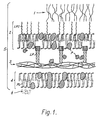
- a “capsular extract” will in practice contain more than the capsule 1.
- a sodium salicylate extract (SSE) extracts the capsule 1, outer membrane 2 and peptidoglycan layer 3.
- IRP immunoglobulin-like protein
- MCA monoclonal antibody
- One simple method is to extract cell envelopes which contain the outer membrane. These envelopes can be recovered by sonicating the cells.
- a preferred method of extraction is capsular extraction, which extracts the capsule of the organism including the outer membrane.
- One useful method of capsular extraction is that in which sodium salicylate is used: see US Patent 4,346,074 or European Patent 20356B mentioned above.
- Antibodies can also be raised against the monoclonal or polyclonal antibodies to the IRP and such raised antibodies are known as anti-idiotype antibodies and can themselves be monoclonal or polyclonal.
- the anti-idiotype antibodies are selected to have immunogenic properties similar to those of one or more of the original IRPs.
- the proteinaceous material can be combined with any of the usual adjuvants in veterinary vaccines, typically those based on aluminium compounds.
- the aluminium hydroxide gel adjuvant "Alhydrogel”® is especially suitable.
- antigenic material is absorbed on to "Alhydrogel®” and the resultant suspension optionally emulsified with a suitable oil, such as "Bayol® F" preferably containing 10% "Arlacel® A”.
- the vaccine can also include other components, for example a preservative.
- the concentration of antigenic material in the vaccine may be varied as desired, for instance, in accordance with the dose rate of the vaccines, and in this respect the normal dose used is generally about 1-2 ml.
- each dose of vaccine comprises 0.1 to 20 mg of antigenic material, especially from 0.5 mg up to 10 mg, e.g. about 5 mg, of antigenic material of each serotype included within the vaccine.
- the vaccines of the invention are administered to adult or juvenile animals, e.g. sheep or cattle, usually in the form of a subcutaneous injection.
- the animals may be vaccinated soon after birth to provide the animals with protection against pasteurellosis at an early stage in their lives.
- vaccination may be carried out at particular periods of the year to provide protection against customary seasonal outbreaks of pasteurellosis.
- sheep flocks may be vaccinated in late spring or thereabouts with vaccines according to the invention comprising P . haemolytica A serotype antigenic material to provide protection against the outbreaks of pneumonic pasteurellosis which customarily occur in sheep flocks during the summer.
- Pregnant ewes can also be vaccinated.
- the invention further provides a process of preparing a vaccine component which consists of or includes an IRP, the process comprising growing the Pasteurella in a nutrient medium depleted in available iron, whereby the bacteria grow at a slower rate than normal, and optionally inactivating the bacteria or extracting from the cells material comprising outer membrane proteins.
- the 70 kDal protein can be isolated from whole cell lysates or from outer membrane extracts.
- the 35 kDal protein has so far been isolated only from whole cells, but it would be possible to isolate it from an appropriate extract. It would also be possible to prepare these proteins by a recombinant DNA method, using monoclonal antibodies to detect their translation from mRNA, and thereby to identify cDNA clones.
- the invention includes, for use in a vaccine, these proteins, howsoever prepared or synthesised, chemically or biotechnologically, alone or fused with, conjugated to or complexed to other compatible proteins, and howsoever isolated, but preferably so as to be free from association with live cellular material.
- the cells can be grown in any medium appropriate to the normal growth of the Pasteurella but which has been made iron-deficient.
- normal growth media are broths based on meat digests such as GIBCO No. 2, OXOID, Brain Heart Infusion or Trypticase-Soy Broth.
- meat digests such as GIBCO No. 2, OXOID, Brain Heart Infusion or Trypticase-Soy Broth.
- any iron chelator or binder can be used, so long as it is compatible with growth of the Pasteurella bacteria in culture.
- iron-chelators are alpha, alpha-bipyridyl of formula: nitrilotriacetic acid of formula: certain ethylenediamine-acetic acid compounds such as diethylene-triaminepentaacetic acid (DETPA), of formula: and desferrioxamine of formula: (and salts or derivatives of any of these compounds which do not interfere with their chelating action.)
- DETPA diethylene-triaminepentaacetic acid
- Desferrioxamine methanesulphonate is available commercially as "Desferal®" (believed to be a Registered Trade Mark) from Ciba-Geigy AG, as an antidote to iron poisoning.
- EDTA for example, is unsuitable from this viewpoint.
- the currently preferred chelating agent is alpha, alpha-bipyridyl.
- the proportions of chelating agent to be used must be carefully controlled. Too great a concentration leaves the bacteria so short of iron that they do not grow at all. An insufficient amount will allow merely normal growths.
- the optimal rate of growth at which to aim is one in which there is multiplication of the bacterial culture to at least 100 times the initial concentration in 6 hours when it is incubated at 37°C on a shaker. In the absence of an iron-restricting agent, a typical multiplication under these conditions would be about 1000 times.
- the optimal concentration of chelating agent can be readily found by simple trial based on these criteria. For alpha, alpha-bipyridyl it is between 80 and 200, preferably between 100 and 200 micromolar. For DEPTA it is about between 25 and 500, preferably 50 to 200 micromolar.
- any other means of depleting the iron can be employed, there being no necessity to use a chelating agent in the medium in which the bacteria are being grown.
- the medium could be pre-treated to remove iron by an ion-exchanger, for example "Chelex® 100" from Biorad, and a defined low concentration of iron added to the medium.
- Another possibility is to use a natural bacterial growth medium which already contains iron-binding proteins.
- a mammalian serum such as horse serum, suitably diluted if necessary, could be used.
- the cells can be grown otherwise under the normal conditions applicable to Pasteurella , for example in air, without shaking, at a temperature of from 25 to 41°C, preferably about 37°C.
- the invention is applicable to many different species of Pasteurella including P . haemolytica , P . multocida , P . piscicida and P . anatipestifer .
- the vaccine can be used for the prophylaxis of any of the diseases associated with Pasteurella , e.g. any of the following diseases caused by P . haemolytica : pneumonia in sheep, cattle, deer and goats, septicaemias in many species of animals; any of the following diseases caused by P .
- multocida pneumonias in pigs and cattle; atrophic rhinitis in pigs, fowl cholera in chickens, turkeys and ducks, encephalomyelitis in buffalo, and snuffles and pneumonias in small mammals such as hamsters, rabbits and mink; as well as diseases in ducks caused by P . anatipestifer and fish caused by P . piscicida .
- an IRP of the homologous species and type would normally be used.
- P . haemolytica A2 was grown in stationary culture for 6 hours at 37°C in GIBCO Nutrient Broth No. 2 (a trypsin digest of ox heart), with and without the addition of alpha, alpha-bipyridyl to a concentration of 150 micromolar.
- the final concentration of cells was about 10 9 cells/ml in the case of normal growth and 10 7 cells/ml in the case of iron restricted growth in the medium containing alpha, alpha-bipyridyl.
- the cells were harvested by centrifugation and the supernatant liquid was discarded.
- the cells were washed in phosphate-buffered saline, pH 7.4 (“PBS”), resuspended in one tenth of the volume of 1M aqueous sodium salicylate, shaken vigorously for 3 hours at 37°C, centrifuged and the cellular debris removed.
- the resultant sodium salicylate extract (“SSE”) was concentrated by ultrafiltration through an exclusion membrane which allowed low molecular weight material (of m.w. 100,000 Daltons or less) to pass through.
- the IRP was in the form of aggregates which were retained by the membrane.
- the retained material was concentrated tenfold, e.g. from 300 ml to 30 ml. It was then dialysed against PBS and then against distilled water at 4°C. The product was freeze-dried to a white fluffy solid.
- Vaccines were prepared as follows. The freeze-dried SSE of P . haemolytica grown with and without iron-restriction, prepared as above, was homogenised with an equal part by weight of "Alhydrogel”® adjuvant and with distilled water to a concentration of 2.5 mg SSE/ml of vaccine. Three week old specific pathogen-free (SPF) lambs were vaccinated on Day 0 and revaccinated on day 28, each time with a 1 ml dose of vaccine, then infected intratracheally and intranasally with parainfluenza virus type 3 (PI3) (10 6 TCID 50 /ml) on day 35 and an aerosol of P .
- SPPF pathogen-free
- haemolytica A2 strain ⁇ 205A (approx 4 ⁇ 10 7 cfu/litre) on day 42. Other three-week old SPF lambs were used as unvaccinated controls. (PI3 is a well-known inducer of P . haemolytica experimentally).
- the lambs were observed for 6 days (days 43-48) after exposure to the P . haemolytica aerosol and clinical scores of the degree of illness suffered were recorded. 13 of the 28 lambs, six in the SSE without iron-restriction group and seven unvaccinated, died or were killed because of severe illness within 6 days of challenge. The remaining lambs were killed in random order on day 49 and the lungs of all lambs were examined.
- cells of the same P . haemolytica A2 strain grown " in vivo" were obtained from the pleural fluid of specific pathogen free (SPF) lambs which had been exposed to an aerosol of the same A2 strain and had developed pneumonia with pleural exudate.
- the pleural fluid was removed from the opened thorax with a sterile 25 ml pipette and between 100 and 1000 ml of fluid could be obtained. This fluid was then centrifuged at 1000 g for 10 minutes to remove red blood cells and other unwanted particles in the fluid.
- Bacterial cells were pelleted by centrifugation at 3000 g for 20 minutes. These cells were washed 3 times in isotonic saline and stored at -20°C.
- the various preparations were subjected to SDS-PAGE using a 3% acrylamide stacking gel and a 121 ⁇ 2% acrylamide separating gel.
- the gel was stained with Coomassie Blue dye.
- Example 2 cell envelopes were prepared from P . haemolytica serotypes A1, A2, A6, A7 and A9 grown in nutrient broth, with and without alpha, alpha-bipyridyl(AABP).
- An A2 "in vivo" sample prepared as in Example 2 was again included.
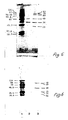
- SDS-PAGE was carried out as in Example 2 to produce the gels shown in Figure 4.
- the arrow indicates the major IRP band and the identification of the tracks is as follows:-
- the molecular weight of the IRP is about the same in all the tracks representing cells grown under iron-restriction (tracks 3, 5, 7, 9 and 11) and also occurs in the " in vivo " A2 track 2.
- the Example shows that IRPs are also produced by two P . haemolytica T serotypes.
- Cell envelopes were prepared by the procedure of Example 2, from P . haemolytica T10 grown in 80% horse serum/20% PBS and in GIBCO nutrient broth No.2 (Nb) containing 2 mg/ml. "Desferal" and from P . haemolytica T15 grown in 80% horse serum/20% PBS and in Nb containing AABP at 200 ⁇ M concentration. SDS - PAGE and staining were carried out as in Example 2 along with an A2 cell envelope preparation from Example 2. The T type samples displayed new or significantly denser bands in the region of 70 kDal molecular weight.
- Pasteurella multocida type A strain was grown in 50 ml nutrient broth, with and without 150 micromolar AABP, for 18h at 37°C.
- the cells were harvested by centrifugation, washed once in PBS, pH 7.4, resuspended in distilled water and sonicated.
- Whole cells remaining after sonication were pelleted by centrifugation at 2,800 g and the supernatant centrifuged at 40,000 g to pellet cell envelopes.
- the cell envelopes were adjusted to 1 mg/ml protein and separated by SDS-PAGE in 12.5% acrylamide-resolving gels.
- Figure 5 shows the electrophoretic gels for molecular weight markers (as set out in Example 2) in track 1, the preparation from nutrient broth-grown P . multocida (grown without AABP) in track 2 and the preparation from P . multocida grown with AABP in track 3.
- Track 3 showed a weakly staining band in the 70 kDal region present in the track of AABP-grown cell envelopes, but not present to the same degree in that of the nutrient broth-grown cell envelopes.
- This Example concerns the identification, extraction and antigenic analysis of the 35 kDal protein in P . haemolytica cells grown under iron restriction conditions.
- Cells of P . haemolytica A2 (strain Y510) were grown GIBCO nutrient broth No.2 with and without the addition of AABP 150 micromolar). The cells were harvested by centrifugation and washed in PBS (pH 7.4) before use in vaccination.
- Iodination of whole cells with radioactive iodine was carried out under conditions that favour iodination of surface proteins, i.e. low temperature, short reaction time and using intact log phase cells.
- one Pierce Iodobead chloramine T immobilized on a solid phase
- 1 ml of P . haemolytica cells and 2 milliCuries of iodine - 125 were reacted for 5 minutes at room temperature, the liquid removed, 250 microlitres of 50 nanomolar 2-mercaptoethenol added and after waiting for 1 minute, 1% w/v potassium iodide solution and PBS were added.
- the resultant protein material was washed three times with PBS.
- a solvent gradient was used, starting with 99% of 0.1% TFA in water/1% of 0.1% TFA in acetonitrile for the first 5 minutes, then 95% of 0.1% TFA in water/5% of 0.1% TFA in acetonitrile for the next 5 minutes and a gradually decreasing proportion (95 to 5%) of 01.% TFA in water and increasing proportion of 0.1% TFA in acetonitrile for the remaining 160 minutes.
- the flow rate was 1ml/minute.
- the chromatography was followed spectroscopically by reference to the UV absorption spectrum at 280 nm. Comparison of the A280 elution profiles demonstrated a clear difference in a single peak which was greatly enlarged in cells grown under iron-restricted conditions.
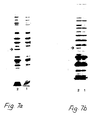
- Fig. 7 of the drawings is a photograph of a gel (7a) and blot (7b) similar to that of Figures 2 and 3 and similarly obtained.
- Whole cell preparations grown in replete and in iron depleted media were separated by SDS-PAGE, transferred to nitrocellulose paper and probed with serum from SPF lambs as described in Example 2 except that the antibody-antigen interaction was detected by horseradish peroxidase (HRP) conjugated donkey anti-sheep IgG rather than by 125 I labelled pig anti-sheep IgG.
- HRP horseradish peroxidase
- Fig. 7a is a gel stained with Coomassie blue to visualise the antigens
- Fig. 7b is a Western blot of the gel of Fig. 7a with antisera from convalescent lambs.
- the 35 kDal band is arrowed in each Figure.
- the tracks are:-
Landscapes
- Health & Medical Sciences (AREA)
- Chemical & Material Sciences (AREA)
- Life Sciences & Earth Sciences (AREA)
- Medicinal Chemistry (AREA)
- General Health & Medical Sciences (AREA)
- Organic Chemistry (AREA)
- Immunology (AREA)
- Proteomics, Peptides & Aminoacids (AREA)
- Microbiology (AREA)
- Genetics & Genomics (AREA)
- Communicable Diseases (AREA)
- Molecular Biology (AREA)
- Biochemistry (AREA)
- Pulmonology (AREA)
- Biophysics (AREA)
- Mycology (AREA)
- Pharmacology & Pharmacy (AREA)
- Epidemiology (AREA)
- Animal Behavior & Ethology (AREA)
- Public Health (AREA)
- Veterinary Medicine (AREA)
- Medicines Containing Antibodies Or Antigens For Use As Internal Diagnostic Agents (AREA)
- Adhesives Or Adhesive Processes (AREA)
Claims (31)
- Une matière protéinacée isolée sous la forme d'une protéine libre ou fixée isolable d'une Pasteurella cultivée dans des conditions ferrirestrictives et visible par SDS-PAGE sur des lysats de cellules entières ou des extraits de membranes extérieures, mais non isolable d'une Pasteurella cultivée in vitro dans des conditions normales et non visible par SDS-PAGE sur des lysats de cellules entières ou des extraits de membranes extérieures de celles-ci correspondants, cette matière protéinacée réagissant au cours d'un test d'immunoséchage contre le sérum d'un animal convalescent qui a guéri d'une infection par une Pasteurella du même sérotype, à utiliser dans un vaccin contre Pasteurella.
- Une matière protéinacée selon la Revendication 1 isolable d'un extrait de membranes extérieures de Pasteurella.
- Une matiére protéinacée selon la Revendication 1 isolable d'un lysat de cellules entiéres de Pasteurella.
- Une matière protéinacée selon l'une des Revendications qui précedènt, où la Pasteurella est une Pasteurella haemolytica.
- Une matiére protéinacée selon la Revendication 4 où la Pasteurella est une Pasteurella haemolytica de biotype A.
- Une matière protéinacée selon la Revendication 5 où la Pasteurella haemolytica est de sérotype A1 ou A2.
- Une matière protéinacée selon la Revendication 5 ou 6 ayant un poids moléculaire, déterminé par électrophorèse sur gel, de l'ordre de 70 kiloDaltons.
- Une matère protéinacée selon la Revendication 5 ou 6 isolable d'une cellule entière et ayant un poids moléculaire, déterminé par électrophorèse sur gel, de l'ordre de 30 à 35 kiloDaltons.
- Une matière protéinacée selon l'une des Revendications 1, 2 ou 3, où la Pasteurella est une Pasteurella multocida.
- Une matiére protéinacée selon l'une des Revendications qui préceèdent, où les conditions ferrirestrictives sont celles obtenues lorsque la Pasteurella est cultivée dans un milieu nutritif contenant un agent chélateur du fer compatible avec le développement de ladite Pasteurella en culture.
- Une matiére protéinacée selon la Revendication 10 où l'agent chélateur du fer est de l'alpha, alpha-bipyridyle.
- Une matière protéinacée selon la Revendication 11 où la concentration d'alpha, alpha-bipyridyle est comprise entre 50 et 200 micromolaires.
- Une matière protéinacée selon la Revendication 10 où l'agent chélateur du fer est de l'acide diéthylène-triamine-pentaacétique, de l'acide nitrilotriacétique ou de la desferrioxamine.
- Des cellules entières tuées de Pasteurella haemolytica cultivées dans des conditions ferrirestrictives.
- Des cellules entières tuées de Pasteurella piscicida cultivées dans des conditions ferrirestrictives.
- Des cellules selon la Revendication 14, où les conditions ferrirestrictives sont celles définies dans la Revendication 10, 11, 12 ou 13.
- Des cellules selon la Revendication 15 où les conditions ferrirestrictives sont celles définies dans la Revendication 10, 11, 12 ou 13.
- Des cellules selon la Revendication 14 ou 16, à utiliser dans un vaccin contre la Pasteurella haemolytica.
- Des cellules selon la Revendication 15 ou 17, à utiliser dans un vaccin contre la Pasteurella piscicida.
- Un vaccin contre la Pasteurella contenant une matière protéinacée telle que définie dans l'une des Revendications 1 à 13, ainsi qu'un adjuvant.
- Un vaccin contre la Pasteurella haemolytica contenant des cellules entières tuées de Pasteurella cultivées dans des conditions ferrirestrictives telles que définies dans la Revendication 14 ou 16, ainsi qu'un adjuvant.
- Un vaccin selon la Revendication 21 contenant de la bactérine de cellules cultivées dans des conditions ferrirestrictives, ainsi qu'un adjuvant.
- Un vaccin contre la Pasteurella piscicida contenant des cellules entières tuées de Pasteurella cultivées dans des conditions ferrirestrictives telles que définies dans la Revendication 15 ou 17, ainsi qu'un adjuvant.
- Un vaccin selon la Revendication 23 contenant de la bactérine de cellules cultivées dans des conditions ferrirestrictives, ainsi qu'un adjuvant.
- Une matière protéinacée selon l'une des Revendications 4 à 8 ou l'une des Revendications 10 à 13 comme dépendent de 4 à 8 à utiliser dans un vaccin contre la Pasteurella haemolytica pour le traitement des moutons ou des bovins.
- Un vaccin contre la Pasteurella haemolytica contenant un extrait de membranes extérieures de Pasteurella haemolytica cultivé dans des conditions ferrirestrictives, ainsi qu'un adjuvant, à utiliser pour le traitment des moutons ou des bovins.
- Un vaccin contre la Pasteurella piscicida contenant un extrait de membranes extérieures de Pasteurella piscicida cultivé dans des conditions ferrirestrictives, ainsi qu'un adjuvant, à utiliser pour le traitment des poissons ou des bovins.
- Un procédé pour préparer un vaccin qui comprend les étapes de cultivation des cellules de Pasteurella multocida dans des conditions ferrirestrictives dans un milieu qu'aucune plasma contient, ainsi q'un adjuvant, à utiliser pour le traitement des bovins contre la Pasteurella.
- Des anticorps d'une matière protéinacée selon l'une des Revendications 1 à 13, à utiliser en administration passive à des animaux contre la Pasteurella.
- Des anticorps selon la Revendication 29 qui sont monoclonaux.
- Des anticorps selon la Revendication 29 ou 30 à utiliser en administration passive à des moutons, bovins ou poissons.
Applications Claiming Priority (4)
| Application Number | Priority Date | Filing Date | Title |
|---|---|---|---|
| GB8706944 | 1987-03-24 | ||
| GB878706944A GB8706944D0 (en) | 1987-03-24 | 1987-03-24 | Vaccine against pasteurella |
| GB8721286 | 1987-09-10 | ||
| GB878721286A GB8721286D0 (en) | 1987-09-10 | 1987-09-10 | Vaccine against pasteurella |
Publications (3)
| Publication Number | Publication Date |
|---|---|
| EP0287206A1 EP0287206A1 (fr) | 1988-10-19 |
| EP0287206B1 EP0287206B1 (fr) | 1993-08-04 |
| EP0287206B2 true EP0287206B2 (fr) | 1999-11-24 |
Family
ID=26292052
Family Applications (1)
| Application Number | Title | Priority Date | Filing Date |
|---|---|---|---|
| EP88301932A Expired - Lifetime EP0287206B2 (fr) | 1987-03-24 | 1988-03-04 | Vaccin contre pasteurella |
Country Status (13)
| Country | Link |
|---|---|
| US (1) | US5587166A (fr) |
| EP (1) | EP0287206B2 (fr) |
| AU (1) | AU621288B2 (fr) |
| CA (1) | CA1328071C (fr) |
| DE (1) | DE3882781T3 (fr) |
| DK (1) | DK173361B1 (fr) |
| ES (1) | ES2059503T5 (fr) |
| GB (1) | GB2202851B (fr) |
| IE (1) | IE60567B1 (fr) |
| NL (1) | NL990018I1 (fr) |
| NO (1) | NO175735C (fr) |
| NZ (1) | NZ223841A (fr) |
| PT (1) | PT87065B (fr) |
Cited By (3)
| Publication number | Priority date | Publication date | Assignee | Title |
|---|---|---|---|---|
| US7138125B2 (en) | 2001-01-03 | 2006-11-21 | Epitopix Llc | Methods for treating an animal for low milk production |
| US8329192B2 (en) | 2003-09-19 | 2012-12-11 | Epitopix Llc | Campylobacter polypeptides and methods of use |
| US10166280B2 (en) | 2016-06-08 | 2019-01-01 | Epitopix, Llc | Polypeptides and immunizing compositions containing Bacillus polypeptides and methods of use |
Families Citing this family (12)
| Publication number | Priority date | Publication date | Assignee | Title |
|---|---|---|---|---|
| DK0563288T3 (da) * | 1990-12-19 | 1999-09-27 | Pfizer | Immunopotentiering af vacciner, navnlig svinepleuropneumoniavacciner |
| US5855894A (en) * | 1992-03-30 | 1999-01-05 | Pfizer Inc. | Pasteurella haemolytica type A-1 bacterin-toxoid vaccine |
| WO1994011024A1 (fr) * | 1992-11-06 | 1994-05-26 | Regents Of The University Of Minnesota | COMPOSITION PROTEGEANT DE L'INFECTION PAR LA PASTEURELLOSE A $i(P. MULTOCIDA) |
| US5830479A (en) * | 1994-02-09 | 1998-11-03 | Willmar Poultry Company, Inc. | Active immunization using a siderophore receptor protein |
| EP0749321B1 (fr) * | 1994-02-09 | 2007-01-24 | Epitopix LLC | Immunisation active au moyen d'un recepteur proteique de siderophore |
| WO1995025742A1 (fr) * | 1994-03-22 | 1995-09-28 | Pfizer Inc. | Antigenes de pasteurellaceae et vaccins associes |
| NZ272660A (en) * | 1994-07-29 | 1998-01-26 | American Cyanamid Co | Pasteurella multocida antigens, antibodies, their production and use |
| EP0833910A1 (fr) * | 1996-04-15 | 1998-04-08 | Icos Corporation | Modulateurs cytoplasmiques de la regulation/signalisation de l'integrine |
| GB9814902D0 (en) | 1998-07-10 | 1998-09-09 | Univ Nottingham | Screening of neisserial vaccine candidates against pathogenic neisseria |
| US6682754B2 (en) | 1999-11-24 | 2004-01-27 | Willmar Poultry Company, Inc. | Ovo delivery of an immunogen containing implant |
| GB0317733D0 (en) * | 2003-07-29 | 2003-09-03 | Novartis Ag | Organic compounds |
| ES2945137T3 (es) | 2017-02-10 | 2023-06-28 | Epitopix Llc | Proteínas y composiciones inmunitarias que contienen proteínas de Pasteurella y métodos de uso |
Family Cites Families (11)
| Publication number | Priority date | Publication date | Assignee | Title |
|---|---|---|---|---|
| US2844515A (en) * | 1953-07-17 | 1958-07-22 | Sobotka Harry | Medium and method for the mass culture of microorganisms |
| US3113078A (en) * | 1959-02-10 | 1963-12-03 | Dow Chemical Co | Slime control in culture media |
| GB1441098A (en) * | 1972-03-29 | 1976-06-30 | Wellcome Found | Biological preparations |
| FR2208980A1 (en) * | 1972-12-06 | 1974-06-28 | Inst Francais Du Petrole | Citric acid prodn by fermentation - with addition of a heterocyclic organic nitrogen cpd to increase yield |
| GB2023420A (en) * | 1978-06-21 | 1980-01-03 | Hoechst Uk Ltd | Preparations containing antigen from pasteurella haemolytica |
| CA1133829A (fr) * | 1978-08-24 | 1982-10-19 | National Research Development Corporation | Vaccins contre la pasteurellose |
| GB2029219B (en) * | 1978-08-24 | 1982-12-15 | Gilmour N | Pasteurellosis vaccines |
| US4293545A (en) * | 1980-03-31 | 1981-10-06 | Norden Laboratories, Inc. | Modified Pasteurella multocida bacteria vaccines |
| DD216954A1 (de) * | 1983-03-08 | 1985-01-02 | Akad Landwirtschaftswiss Ddr | Verfahren zur virulenzabschwaechung bei bakterien der gattung pasteurella, species p. multocida |
| DD213947A1 (de) * | 1983-03-08 | 1984-09-26 | Akad Landwirtschaftswiss Ddr | Verfahren zur kultivierung von bakterien der species pasteurella multocida |
| US4681761A (en) * | 1985-10-24 | 1987-07-21 | State Of Oregon, Acting By And Through The Oregon State Board Of Higher Education, Acting For And On Behalf Of The Oregon Health Sciences University | Major iron-regulated protein of Neisseria gonorrhoeae and its use as vaccine |
-
1988
- 1988-03-04 GB GB8805233A patent/GB2202851B/en not_active Expired - Lifetime
- 1988-03-04 ES ES88301932T patent/ES2059503T5/es not_active Expired - Lifetime
- 1988-03-04 DE DE3882781T patent/DE3882781T3/de not_active Expired - Lifetime
- 1988-03-04 EP EP88301932A patent/EP0287206B2/fr not_active Expired - Lifetime
- 1988-03-10 NZ NZ223841A patent/NZ223841A/en unknown
- 1988-03-23 CA CA000562169A patent/CA1328071C/fr not_active Expired - Lifetime
- 1988-03-23 IE IE85488A patent/IE60567B1/en not_active IP Right Cessation
- 1988-03-23 DK DK198801572A patent/DK173361B1/da not_active IP Right Cessation
- 1988-03-23 AU AU13543/88A patent/AU621288B2/en not_active Expired
- 1988-03-23 PT PT87065A patent/PT87065B/pt not_active IP Right Cessation
- 1988-03-23 NO NO881288A patent/NO175735C/no not_active IP Right Cessation
-
1995
- 1995-04-24 US US08/427,692 patent/US5587166A/en not_active Expired - Lifetime
-
1999
- 1999-06-10 NL NL990018C patent/NL990018I1/nl unknown
Cited By (12)
| Publication number | Priority date | Publication date | Assignee | Title |
|---|---|---|---|---|
| US7138125B2 (en) | 2001-01-03 | 2006-11-21 | Epitopix Llc | Methods for treating an animal for low milk production |
| US7160549B2 (en) | 2001-01-03 | 2007-01-09 | Epitopix, Llc | Methods for making compositions including gram negative microbial polypeptides |
| US7341732B2 (en) | 2001-01-03 | 2008-03-11 | Epitopix, Llc | Methods for treating mastitis in a milk producing animal |
| US7371393B2 (en) | 2001-01-03 | 2008-05-13 | Epitopix, Llc | Methods for reducing fecal shedding |
| US7943150B2 (en) | 2001-01-03 | 2011-05-17 | Epitopix, Llc | Immunizing compositions and methods of use |
| US7943151B2 (en) | 2001-01-03 | 2011-05-17 | Epitopix, Llc | Immunizing compositions and methods of use |
| US8282941B2 (en) | 2001-01-03 | 2012-10-09 | Epitopix, Llc | Immunizing compositions and methods of use |
| US8425916B2 (en) | 2001-01-03 | 2013-04-23 | Epitopix, Llc | Immunizing compositions and methods of use |
| US8637048B2 (en) | 2001-01-03 | 2014-01-28 | Epitopix, Llc | Immunizing compositions and methods of use |
| US8329192B2 (en) | 2003-09-19 | 2012-12-11 | Epitopix Llc | Campylobacter polypeptides and methods of use |
| US10086059B2 (en) | 2003-09-19 | 2018-10-02 | Epitopix, Llc | Campylobacter polypeptides and methods of use |
| US10166280B2 (en) | 2016-06-08 | 2019-01-01 | Epitopix, Llc | Polypeptides and immunizing compositions containing Bacillus polypeptides and methods of use |
Also Published As
| Publication number | Publication date |
|---|---|
| NO175735B (no) | 1994-08-22 |
| GB2202851A (en) | 1988-10-05 |
| DE3882781T2 (de) | 1993-11-11 |
| IE880854L (en) | 1988-09-24 |
| PT87065A (pt) | 1988-04-01 |
| US5587166A (en) | 1996-12-24 |
| GB2202851B (en) | 1990-12-19 |
| AU621288B2 (en) | 1992-03-12 |
| DK157288A (da) | 1988-09-25 |
| PT87065B (pt) | 1992-07-31 |
| GB8805233D0 (en) | 1988-04-07 |
| NO881288L (no) | 1988-09-26 |
| DK173361B1 (da) | 2000-08-14 |
| AU1354388A (en) | 1988-09-22 |
| DE3882781T3 (de) | 2000-04-06 |
| ES2059503T3 (es) | 1994-11-16 |
| NL990018I1 (nl) | 1999-08-02 |
| EP0287206B1 (fr) | 1993-08-04 |
| ES2059503T5 (es) | 2000-01-16 |
| CA1328071C (fr) | 1994-03-29 |
| DE3882781D1 (de) | 1993-09-09 |
| NO881288D0 (no) | 1988-03-23 |
| IE60567B1 (en) | 1994-07-27 |
| DK157288D0 (da) | 1988-03-23 |
| NZ223841A (en) | 1991-04-26 |
| NO175735C (no) | 1994-11-30 |
| EP0287206A1 (fr) | 1988-10-19 |
Similar Documents
| Publication | Publication Date | Title |
|---|---|---|
| Confer | Immunogens of pasteurella | |
| EP0749321B1 (fr) | Immunisation active au moyen d'un recepteur proteique de siderophore | |
| Bolin et al. | Passive immunization with antibodies against iron-regulated outer membrane proteins protects turkeys from Escherichia coli septicemia | |
| Frasch et al. | Protection against group B meningococcal disease. III. Immunogenicity of serotype 2 vaccines and specificity of protection in a guinea pig model. | |
| US5587166A (en) | Vaccine against Pasteurella | |
| Devenish et al. | Humoral antibody response and protective immunity in swine following immunization with the 104-kilodalton hemolysin of Actinobacillus pleuropneumoniae | |
| Inzana et al. | Serotype specificity and immunogenicity of the capsular polymer of Haemophilus pleuropneumoniae serotype 5 | |
| EP0453024B1 (fr) | Vaccin de sous-unités d'actinobacillus pleuropneumoniae | |
| Ruffolo et al. | Iron-regulated outer membrane proteins of Pasteurella multocida and their role in immunity | |
| PT749321E (pt) | Imunização activa da utilização de uma proteina receptora de sideroforos | |
| Gatewood et al. | Growth-condition dependent expression of Pasteurella haemolytica A1 outer membrane proteins, capsule, and leukotoxin | |
| Craven et al. | Protection against group B meningococcal disease: evaluation of serotype 2 protein vaccines in a mouse bacteremia model | |
| CA1331445C (fr) | Vaccin contre la septicemie a e. coli chez le poulet | |
| Timoney et al. | Properties of a protective protein antigen of Erysipelothrix rhusiopathiae | |
| Glisson et al. | In vivo antigen expression by Pasteurella multocida | |
| US6787137B1 (en) | Campylobacter vaccine | |
| Smith et al. | Intranasal immunization of mice against Pasteurella multocida | |
| EP1043029A1 (fr) | Vaccin contre Campylobacter | |
| MANOHARAN | fKlasiter of Teteriitarp detente | |
| Griffith | Immune responses of cattle to antigens of Pasteurella multocida | |
| Ikeda | Characterization of an iron-regulated outer membrane protein of Pasteurella multocida | |
| Ridley | Purification and Analysis of an 18KD Outer Membrane Protein of Mannheimia (Pasteurella) Haemolytica | |
| Borenstein | Studies on antigen-specific and nonspecific cellular host defenses in experimental syphilis |
Legal Events
| Date | Code | Title | Description |
|---|---|---|---|
| PUAI | Public reference made under article 153(3) epc to a published international application that has entered the european phase |
Free format text: ORIGINAL CODE: 0009012 |
|
| AK | Designated contracting states |
Kind code of ref document: A1 Designated state(s): BE DE ES FR GB IT NL SE |
|
| 17P | Request for examination filed |
Effective date: 19890208 |
|
| 17Q | First examination report despatched |
Effective date: 19910527 |
|
| RAP1 | Party data changed (applicant data changed or rights of an application transferred) |
Owner name: BRITISH TECHNOLOGY GROUP LTD |
|
| RBV | Designated contracting states (corrected) |
Designated state(s): BE DE ES FR IT NL SE |
|
| GRAA | (expected) grant |
Free format text: ORIGINAL CODE: 0009210 |
|
| AK | Designated contracting states |
Kind code of ref document: B1 Designated state(s): BE DE ES FR IT NL SE |
|
| ET | Fr: translation filed | ||
| REF | Corresponds to: |
Ref document number: 3882781 Country of ref document: DE Date of ref document: 19930909 |
|
| ITF | It: translation for a ep patent filed | ||
| PLBI | Opposition filed |
Free format text: ORIGINAL CODE: 0009260 |
|
| 26 | Opposition filed |
Opponent name: AKZO PHARMA B.V. Effective date: 19940504 |
|
| NLR1 | Nl: opposition has been filed with the epo |
Opponent name: AKZO PHARMA B.V |
|
| REG | Reference to a national code |
Ref country code: ES Ref legal event code: FG2A Ref document number: 2059503 Country of ref document: ES Kind code of ref document: T3 |
|
| EAL | Se: european patent in force in sweden |
Ref document number: 88301932.5 |
|
| PLBQ | Unpublished change to opponent data |
Free format text: ORIGINAL CODE: EPIDOS OPPO |
|
| PLAB | Opposition data, opponent's data or that of the opponent's representative modified |
Free format text: ORIGINAL CODE: 0009299OPPO |
|
| R26 | Opposition filed (corrected) |
Opponent name: AKZO NOBEL PHARMA B.V. Effective date: 19940504 |
|
| NLR1 | Nl: opposition has been filed with the epo |
Opponent name: AKZO NOBEL PHARMA B.V. |
|
| RAP2 | Party data changed (patent owner data changed or rights of a patent transferred) |
Owner name: BRITISH TECHNOLOGY GROUP LIMITED |
|
| NLT2 | Nl: modifications (of names), taken from the european patent patent bulletin |
Owner name: BRITISH TECHNOLOGY GROUP LIMITED |
|
| RAP2 | Party data changed (patent owner data changed or rights of a patent transferred) |
Owner name: BTG INTERNATIONAL LIMITED (COMPANY NO. 2664412) |
|
| MED | It: supplementary protection certificate for pharmaceutical products: no action taken |
Free format text: CCP 630, 19981028; BTG INTERNATIONAL LIMITED |
|
| NLT2 | Nl: modifications (of names), taken from the european patent patent bulletin |
Owner name: BTG INTERNATIONAL LIMITED (COMPANY NO. 2664412) |
|
| PLAW | Interlocutory decision in opposition |
Free format text: ORIGINAL CODE: EPIDOS IDOP |
|
| MEDD | It: supplementary protection certificate for pharmaceutical products: granted |
Free format text: CCP 630, 19981028; BTG INTERNATIONAL LIMITED |
|
| PLAW | Interlocutory decision in opposition |
Free format text: ORIGINAL CODE: EPIDOS IDOP |
|
| NLT1 | Nl: modifications of names registered in virtue of documents presented to the patent office pursuant to art. 16 a, paragraph 1 |
Owner name: BTG INTERNATIONAL LIMITED |
|
| REG | Reference to a national code |
Ref country code: NL Ref legal event code: AC1 Free format text: NLAC1 990018, 19990610 |
|
| RIC2 | Information provided on ipc code assigned after grant |
Free format text: 6A 61K 39/02 A, 6C 12N 1/38 B, 6C 12P 21/00 B, 6C 07K 1/00 B, 6C 07K 1/14 B |
|
| PUAH | Patent maintained in amended form |
Free format text: ORIGINAL CODE: 0009272 |
|
| STAA | Information on the status of an ep patent application or granted ep patent |
Free format text: STATUS: PATENT MAINTAINED AS AMENDED |
|
| 27A | Patent maintained in amended form |
Effective date: 19991124 |
|
| AK | Designated contracting states |
Kind code of ref document: B2 Designated state(s): BE DE ES FR IT NL SE |
|
| REG | Reference to a national code |
Ref country code: ES Ref legal event code: DC2A Kind code of ref document: T5 Effective date: 19991203 |
|
| NLR2 | Nl: decision of opposition | ||
| ITF | It: translation for a ep patent filed | ||
| REG | Reference to a national code |
Ref country code: NL Ref legal event code: BC1 Free format text: NLBC1 990018 |
|
| ET3 | Fr: translation filed ** decision concerning opposition | ||
| NLR3 | Nl: receipt of modified translations in the netherlands language after an opposition procedure | ||
| REG | Reference to a national code |
Ref country code: NL Ref legal event code: BC1 Free format text: NLBC1 990018 |
|
| PGFP | Annual fee paid to national office [announced via postgrant information from national office to epo] |
Ref country code: DE Payment date: 20070301 Year of fee payment: 20 |
|
| PGFP | Annual fee paid to national office [announced via postgrant information from national office to epo] |
Ref country code: NL Payment date: 20070304 Year of fee payment: 20 |
|
| PGFP | Annual fee paid to national office [announced via postgrant information from national office to epo] |
Ref country code: SE Payment date: 20070307 Year of fee payment: 20 |
|
| PGFP | Annual fee paid to national office [announced via postgrant information from national office to epo] |
Ref country code: ES Payment date: 20070417 Year of fee payment: 20 |
|
| PGFP | Annual fee paid to national office [announced via postgrant information from national office to epo] |
Ref country code: BE Payment date: 20070514 Year of fee payment: 20 |
|
| PGFP | Annual fee paid to national office [announced via postgrant information from national office to epo] |
Ref country code: IT Payment date: 20070625 Year of fee payment: 20 |
|
| BE20 | Be: patent expired |
Owner name: *BTG INTERNATIONAL LTD (CY NO 2664412) Effective date: 20080304 |
|
| PG25 | Lapsed in a contracting state [announced via postgrant information from national office to epo] |
Ref country code: NL Free format text: LAPSE BECAUSE OF EXPIRATION OF PROTECTION Effective date: 20080304 |
|
| PGFP | Annual fee paid to national office [announced via postgrant information from national office to epo] |
Ref country code: FR Payment date: 20070308 Year of fee payment: 20 |
|
| NLV7 | Nl: ceased due to reaching the maximum lifetime of a patent |
Effective date: 20080304 |
|
| EUG | Se: european patent has lapsed | ||
| REG | Reference to a national code |
Ref country code: ES Ref legal event code: FD2A Effective date: 20080305 |
|
| PG25 | Lapsed in a contracting state [announced via postgrant information from national office to epo] |
Ref country code: ES Free format text: LAPSE BECAUSE OF EXPIRATION OF PROTECTION Effective date: 20080305 |
|
| REG | Reference to a national code |
Ref country code: NL Ref legal event code: KC1 Free format text: PRODUCT NAME: GEDODE HELE CELLEN VAN PATEURELLA HAEMOLYTICA GEKWEEKT ONDER IJZERRESTRICTIE-OMSTADIGHEDEN; NAT. REGISTRATION NO/DATE: REG NL 9255 19990115; FIRST REGISTRATION: 15476/4000 19960719 Spc suppl protection certif: C990018 Filing date: 19990610 Extension date: 20110718 Ref country code: NL Ref legal event code: RD2A Effective date: 20121030 |