EP0287634B1 - Positionsmässig nicht spezifische lipase von candida-arten; verfahren für ihre herstellung und ihre verwendung - Google Patents
Positionsmässig nicht spezifische lipase von candida-arten; verfahren für ihre herstellung und ihre verwendung Download PDFInfo
- Publication number
- EP0287634B1 EP0287634B1 EP87907098A EP87907098A EP0287634B1 EP 0287634 B1 EP0287634 B1 EP 0287634B1 EP 87907098 A EP87907098 A EP 87907098A EP 87907098 A EP87907098 A EP 87907098A EP 0287634 B1 EP0287634 B1 EP 0287634B1
- Authority
- EP
- European Patent Office
- Prior art keywords
- lipase
- antarctica
- immobilized
- activity
- acid
- Prior art date
- Legal status (The legal status is an assumption and is not a legal conclusion. Google has not performed a legal analysis and makes no representation as to the accuracy of the status listed.)
- Expired - Lifetime
Links
- 108090001060 Lipase Proteins 0.000 title claims abstract description 254
- 102000004882 Lipase Human genes 0.000 title claims abstract description 254
- 239000004367 Lipase Substances 0.000 title claims abstract description 254
- 235000019421 lipase Nutrition 0.000 title claims abstract description 254
- 241000222120 Candida <Saccharomycetales> Species 0.000 title claims abstract description 17
- 238000004519 manufacturing process Methods 0.000 title claims description 14
- 150000002148 esters Chemical class 0.000 claims abstract description 42
- 230000015572 biosynthetic process Effects 0.000 claims abstract description 21
- 238000003786 synthesis reaction Methods 0.000 claims abstract description 19
- 238000009884 interesterification Methods 0.000 claims abstract description 10
- 241001661345 Moesziomyces antarcticus Species 0.000 claims description 99
- 230000000694 effects Effects 0.000 claims description 90
- 238000000034 method Methods 0.000 claims description 74
- 241000222180 Pseudozyma tsukubaensis Species 0.000 claims description 24
- 239000002609 medium Substances 0.000 claims description 23
- 230000008569 process Effects 0.000 claims description 22
- 239000011347 resin Substances 0.000 claims description 17
- 229920005989 resin Polymers 0.000 claims description 17
- 238000011534 incubation Methods 0.000 claims description 14
- 235000019626 lipase activity Nutrition 0.000 claims description 11
- 239000003957 anion exchange resin Substances 0.000 claims description 10
- 238000010438 heat treatment Methods 0.000 claims description 9
- 239000003463 adsorbent Substances 0.000 claims description 6
- 239000001963 growth medium Substances 0.000 claims description 5
- 230000000984 immunochemical effect Effects 0.000 claims description 4
- 241000283973 Oryctolagus cuniculus Species 0.000 claims description 3
- 238000010924 continuous production Methods 0.000 claims description 3
- 238000001179 sorption measurement Methods 0.000 claims description 3
- 101710158368 Extracellular lipase Proteins 0.000 claims description 2
- 101710128940 Triacylglycerol lipase Proteins 0.000 claims description 2
- 230000003301 hydrolyzing effect Effects 0.000 claims description 2
- 230000003100 immobilizing effect Effects 0.000 claims description 2
- 235000015097 nutrients Nutrition 0.000 claims description 2
- 230000002194 synthesizing effect Effects 0.000 claims description 2
- 125000005457 triglyceride group Chemical group 0.000 claims 1
- 238000010931 ester hydrolysis Methods 0.000 abstract description 4
- 229940040461 lipase Drugs 0.000 description 173
- XLYOFNOQVPJJNP-UHFFFAOYSA-N water Substances O XLYOFNOQVPJJNP-UHFFFAOYSA-N 0.000 description 53
- 229940088598 enzyme Drugs 0.000 description 49
- 102000004190 Enzymes Human genes 0.000 description 46
- 108090000790 Enzymes Proteins 0.000 description 46
- IPCSVZSSVZVIGE-UHFFFAOYSA-N hexadecanoic acid Chemical compound CCCCCCCCCCCCCCCC(O)=O IPCSVZSSVZVIGE-UHFFFAOYSA-N 0.000 description 43
- LFQSCWFLJHTTHZ-UHFFFAOYSA-N Ethanol Chemical compound CCO LFQSCWFLJHTTHZ-UHFFFAOYSA-N 0.000 description 42
- 239000000203 mixture Substances 0.000 description 42
- 101710098556 Lipase A Proteins 0.000 description 38
- 102100026001 Lysosomal acid lipase/cholesteryl ester hydrolase Human genes 0.000 description 38
- 101710099648 Lysosomal acid lipase/cholesteryl ester hydrolase Proteins 0.000 description 38
- 238000002360 preparation method Methods 0.000 description 31
- 238000006243 chemical reaction Methods 0.000 description 25
- POULHZVOKOAJMA-UHFFFAOYSA-N dodecanoic acid Chemical compound CCCCCCCCCCCC(O)=O POULHZVOKOAJMA-UHFFFAOYSA-N 0.000 description 25
- RTZKZFJDLAIYFH-UHFFFAOYSA-N Diethyl ether Chemical compound CCOCC RTZKZFJDLAIYFH-UHFFFAOYSA-N 0.000 description 23
- 101710098554 Lipase B Proteins 0.000 description 22
- HEMHJVSKTPXQMS-UHFFFAOYSA-M Sodium hydroxide Chemical compound [OH-].[Na+] HEMHJVSKTPXQMS-UHFFFAOYSA-M 0.000 description 21
- 239000000872 buffer Substances 0.000 description 21
- 239000000243 solution Substances 0.000 description 21
- 239000000843 powder Substances 0.000 description 19
- 235000019197 fats Nutrition 0.000 description 18
- 235000021314 Palmitic acid Nutrition 0.000 description 17
- 235000014113 dietary fatty acids Nutrition 0.000 description 17
- 239000000194 fatty acid Substances 0.000 description 17
- 229930195729 fatty acid Natural products 0.000 description 17
- 150000004665 fatty acids Chemical class 0.000 description 17
- WQEPLUUGTLDZJY-UHFFFAOYSA-N n-Pentadecanoic acid Natural products CCCCCCCCCCCCCCC(O)=O WQEPLUUGTLDZJY-UHFFFAOYSA-N 0.000 description 17
- 239000000047 product Substances 0.000 description 17
- 239000000758 substrate Substances 0.000 description 15
- 241000580885 Cutaneotrichosporon curvatus Species 0.000 description 14
- 230000007062 hydrolysis Effects 0.000 description 14
- 238000006460 hydrolysis reaction Methods 0.000 description 14
- WRIDQFICGBMAFQ-UHFFFAOYSA-N (E)-8-Octadecenoic acid Natural products CCCCCCCCCC=CCCCCCCC(O)=O WRIDQFICGBMAFQ-UHFFFAOYSA-N 0.000 description 13
- LQJBNNIYVWPHFW-UHFFFAOYSA-N 20:1omega9c fatty acid Natural products CCCCCCCCCCC=CCCCCCCCC(O)=O LQJBNNIYVWPHFW-UHFFFAOYSA-N 0.000 description 13
- QSBYPNXLFMSGKH-UHFFFAOYSA-N 9-Heptadecensaeure Natural products CCCCCCCC=CCCCCCCCC(O)=O QSBYPNXLFMSGKH-UHFFFAOYSA-N 0.000 description 13
- ZQPPMHVWECSIRJ-UHFFFAOYSA-N Oleic acid Natural products CCCCCCCCC=CCCCCCCCC(O)=O ZQPPMHVWECSIRJ-UHFFFAOYSA-N 0.000 description 13
- QXJSBBXBKPUZAA-UHFFFAOYSA-N isooleic acid Natural products CCCCCCCC=CCCCCCCCCC(O)=O QXJSBBXBKPUZAA-UHFFFAOYSA-N 0.000 description 13
- ZQPPMHVWECSIRJ-KTKRTIGZSA-N oleic acid Chemical compound CCCCCCCC\C=C/CCCCCCCC(O)=O ZQPPMHVWECSIRJ-KTKRTIGZSA-N 0.000 description 13
- 239000002904 solvent Substances 0.000 description 13
- UFTFJSFQGQCHQW-UHFFFAOYSA-N triformin Chemical compound O=COCC(OC=O)COC=O UFTFJSFQGQCHQW-UHFFFAOYSA-N 0.000 description 13
- 229920001817 Agar Polymers 0.000 description 12
- 239000005639 Lauric acid Substances 0.000 description 12
- 239000005642 Oleic acid Substances 0.000 description 12
- PHYFQTYBJUILEZ-UHFFFAOYSA-N Trioleoylglycerol Natural products CCCCCCCCC=CCCCCCCCC(=O)OCC(OC(=O)CCCCCCCC=CCCCCCCCC)COC(=O)CCCCCCCC=CCCCCCCCC PHYFQTYBJUILEZ-UHFFFAOYSA-N 0.000 description 12
- 241000179532 [Candida] cylindracea Species 0.000 description 12
- 239000008272 agar Substances 0.000 description 12
- 150000003626 triacylglycerols Chemical class 0.000 description 12
- BAECOWNUKCLBPZ-HIUWNOOHSA-N Triolein Natural products O([C@H](OCC(=O)CCCCCCC/C=C\CCCCCCCC)COC(=O)CCCCCCC/C=C\CCCCCCCC)C(=O)CCCCCCC/C=C\CCCCCCCC BAECOWNUKCLBPZ-HIUWNOOHSA-N 0.000 description 11
- 239000002253 acid Substances 0.000 description 11
- 239000000376 reactant Substances 0.000 description 11
- 239000000523 sample Substances 0.000 description 11
- PHYFQTYBJUILEZ-IUPFWZBJSA-N triolein Chemical compound CCCCCCCC\C=C/CCCCCCCC(=O)OCC(OC(=O)CCCCCCC\C=C/CCCCCCCC)COC(=O)CCCCCCC\C=C/CCCCCCCC PHYFQTYBJUILEZ-IUPFWZBJSA-N 0.000 description 11
- 229940117972 triolein Drugs 0.000 description 11
- WQZGKKKJIJFFOK-GASJEMHNSA-N Glucose Chemical compound OC[C@H]1OC(O)[C@H](O)[C@@H](O)[C@@H]1O WQZGKKKJIJFFOK-GASJEMHNSA-N 0.000 description 10
- 239000000706 filtrate Substances 0.000 description 10
- 235000020777 polyunsaturated fatty acids Nutrition 0.000 description 10
- POSZUTFLHGNLHX-KSBRXOFISA-N tris maleate Chemical compound OCC(N)(CO)CO.OCC(N)(CO)CO.OC(=O)\C=C/C(O)=O POSZUTFLHGNLHX-KSBRXOFISA-N 0.000 description 10
- KFZMGEQAYNKOFK-UHFFFAOYSA-N Isopropanol Chemical compound CC(C)O KFZMGEQAYNKOFK-UHFFFAOYSA-N 0.000 description 9
- 235000021360 Myristic acid Nutrition 0.000 description 9
- TUNFSRHWOTWDNC-UHFFFAOYSA-N Myristic acid Natural products CCCCCCCCCCCCCC(O)=O TUNFSRHWOTWDNC-UHFFFAOYSA-N 0.000 description 9
- 239000000470 constituent Substances 0.000 description 9
- 238000010348 incorporation Methods 0.000 description 9
- BDERNNFJNOPAEC-UHFFFAOYSA-N propan-1-ol Chemical compound CCCO BDERNNFJNOPAEC-UHFFFAOYSA-N 0.000 description 9
- ALSTYHKOOCGGFT-KTKRTIGZSA-N (9Z)-octadecen-1-ol Chemical compound CCCCCCCC\C=C/CCCCCCCCO ALSTYHKOOCGGFT-KTKRTIGZSA-N 0.000 description 8
- TWJNQYPJQDRXPH-UHFFFAOYSA-N 2-cyanobenzohydrazide Chemical compound NNC(=O)C1=CC=CC=C1C#N TWJNQYPJQDRXPH-UHFFFAOYSA-N 0.000 description 8
- OYHQOLUKZRVURQ-HZJYTTRNSA-N Linoleic acid Chemical compound CCCCC\C=C/C\C=C/CCCCCCCC(O)=O OYHQOLUKZRVURQ-HZJYTTRNSA-N 0.000 description 8
- 230000004151 fermentation Effects 0.000 description 8
- 235000021588 free fatty acids Nutrition 0.000 description 8
- 229960004232 linoleic acid Drugs 0.000 description 8
- 239000003921 oil Substances 0.000 description 8
- 235000019198 oils Nutrition 0.000 description 8
- 229940055577 oleyl alcohol Drugs 0.000 description 8
- XMLQWXUVTXCDDL-UHFFFAOYSA-N oleyl alcohol Natural products CCCCCCC=CCCCCCCCCCCO XMLQWXUVTXCDDL-UHFFFAOYSA-N 0.000 description 8
- 101100405318 Saccharomyces cerevisiae (strain ATCC 204508 / S288c) NSI1 gene Proteins 0.000 description 7
- 239000012141 concentrate Substances 0.000 description 7
- 238000000855 fermentation Methods 0.000 description 7
- 239000004006 olive oil Substances 0.000 description 7
- 235000008390 olive oil Nutrition 0.000 description 7
- 229920006395 saturated elastomer Polymers 0.000 description 7
- 238000005809 transesterification reaction Methods 0.000 description 7
- QTBSBXVTEAMEQO-UHFFFAOYSA-N Acetic acid Chemical compound CC(O)=O QTBSBXVTEAMEQO-UHFFFAOYSA-N 0.000 description 6
- CSCPPACGZOOCGX-UHFFFAOYSA-N Acetone Chemical compound CC(C)=O CSCPPACGZOOCGX-UHFFFAOYSA-N 0.000 description 6
- 108010093096 Immobilized Enzymes Proteins 0.000 description 6
- 241000235403 Rhizomucor miehei Species 0.000 description 6
- 238000004458 analytical method Methods 0.000 description 6
- 229940041514 candida albicans extract Drugs 0.000 description 6
- 239000011521 glass Substances 0.000 description 6
- 238000005259 measurement Methods 0.000 description 6
- 238000002844 melting Methods 0.000 description 6
- UQDUPQYQJKYHQI-UHFFFAOYSA-N methyl laurate Chemical compound CCCCCCCCCCCC(=O)OC UQDUPQYQJKYHQI-UHFFFAOYSA-N 0.000 description 6
- VLKZOEOYAKHREP-UHFFFAOYSA-N n-Hexane Chemical compound CCCCCC VLKZOEOYAKHREP-UHFFFAOYSA-N 0.000 description 6
- 239000011541 reaction mixture Substances 0.000 description 6
- 230000035484 reaction time Effects 0.000 description 6
- 239000003549 soybean oil Substances 0.000 description 6
- 235000012424 soybean oil Nutrition 0.000 description 6
- PVNIQBQSYATKKL-UHFFFAOYSA-N tripalmitin Chemical compound CCCCCCCCCCCCCCCC(=O)OCC(OC(=O)CCCCCCCCCCCCCCC)COC(=O)CCCCCCCCCCCCCCC PVNIQBQSYATKKL-UHFFFAOYSA-N 0.000 description 6
- 238000000108 ultra-filtration Methods 0.000 description 6
- 239000012138 yeast extract Substances 0.000 description 6
- 101710140793 B-enzyme Proteins 0.000 description 5
- 150000001298 alcohols Chemical class 0.000 description 5
- 238000003556 assay Methods 0.000 description 5
- 238000002474 experimental method Methods 0.000 description 5
- 235000020778 linoleic acid Nutrition 0.000 description 5
- OYHQOLUKZRVURQ-IXWMQOLASA-N linoleic acid Natural products CCCCC\C=C/C\C=C\CCCCCCCC(O)=O OYHQOLUKZRVURQ-IXWMQOLASA-N 0.000 description 5
- 238000002203 pretreatment Methods 0.000 description 5
- 150000003138 primary alcohols Chemical class 0.000 description 5
- 150000003333 secondary alcohols Chemical class 0.000 description 5
- 241000894007 species Species 0.000 description 5
- 238000012360 testing method Methods 0.000 description 5
- IJGRMHOSHXDMSA-UHFFFAOYSA-N Atomic nitrogen Chemical compound N#N IJGRMHOSHXDMSA-UHFFFAOYSA-N 0.000 description 4
- HEDRZPFGACZZDS-UHFFFAOYSA-N Chloroform Chemical compound ClC(Cl)Cl HEDRZPFGACZZDS-UHFFFAOYSA-N 0.000 description 4
- 241000186427 Cutibacterium acnes Species 0.000 description 4
- 239000004372 Polyvinyl alcohol Substances 0.000 description 4
- 108020004511 Recombinant DNA Proteins 0.000 description 4
- 229920002125 Sokalan® Polymers 0.000 description 4
- 125000002252 acyl group Chemical group 0.000 description 4
- 235000019797 dipotassium phosphate Nutrition 0.000 description 4
- 229910000396 dipotassium phosphate Inorganic materials 0.000 description 4
- 238000010353 genetic engineering Methods 0.000 description 4
- 125000005456 glyceride group Chemical group 0.000 description 4
- 238000004128 high performance liquid chromatography Methods 0.000 description 4
- 230000001900 immune effect Effects 0.000 description 4
- 150000002632 lipids Chemical class 0.000 description 4
- 239000000463 material Substances 0.000 description 4
- 230000000813 microbial effect Effects 0.000 description 4
- 238000002156 mixing Methods 0.000 description 4
- 239000003208 petroleum Substances 0.000 description 4
- 229920001983 poloxamer Polymers 0.000 description 4
- 229920002451 polyvinyl alcohol Polymers 0.000 description 4
- 238000000746 purification Methods 0.000 description 4
- 238000002415 sodium dodecyl sulfate polyacrylamide gel electrophoresis Methods 0.000 description 4
- 239000006228 supernatant Substances 0.000 description 4
- 238000005406 washing Methods 0.000 description 4
- WBLPIWJPFHNCRS-KVVVOXFISA-N (Z)-octadec-9-enoic acid propan-1-ol Chemical compound CCCO.CCCCCCCC\C=C/CCCCCCCC(O)=O WBLPIWJPFHNCRS-KVVVOXFISA-N 0.000 description 3
- UURYLEQNUYEWRA-UHFFFAOYSA-N (Z)-octadec-9-enoic acid propan-2-ol Chemical compound C(C)(C)O.C(CCCCCCCC=C/CCCCCCCC)(=O)O UURYLEQNUYEWRA-UHFFFAOYSA-N 0.000 description 3
- AFSHUZFNMVJNKX-LLWMBOQKSA-N 1,2-dioleoyl-sn-glycerol Chemical compound CCCCCCCC\C=C/CCCCCCCC(=O)OC[C@H](CO)OC(=O)CCCCCCC\C=C/CCCCCCCC AFSHUZFNMVJNKX-LLWMBOQKSA-N 0.000 description 3
- 108010048733 Lipozyme Proteins 0.000 description 3
- 239000007832 Na2SO4 Substances 0.000 description 3
- PMZURENOXWZQFD-UHFFFAOYSA-L Sodium Sulfate Chemical compound [Na+].[Na+].[O-]S([O-])(=O)=O PMZURENOXWZQFD-UHFFFAOYSA-L 0.000 description 3
- 235000021355 Stearic acid Nutrition 0.000 description 3
- 240000008042 Zea mays Species 0.000 description 3
- 235000005824 Zea mays ssp. parviglumis Nutrition 0.000 description 3
- 235000002017 Zea mays subsp mays Nutrition 0.000 description 3
- PNEYBMLMFCGWSK-UHFFFAOYSA-N aluminium oxide Inorganic materials [O-2].[O-2].[O-2].[Al+3].[Al+3] PNEYBMLMFCGWSK-UHFFFAOYSA-N 0.000 description 3
- 229910052799 carbon Inorganic materials 0.000 description 3
- 238000005119 centrifugation Methods 0.000 description 3
- 238000012512 characterization method Methods 0.000 description 3
- KRKNYBCHXYNGOX-UHFFFAOYSA-N citric acid Chemical compound OC(=O)CC(O)(C(O)=O)CC(O)=O KRKNYBCHXYNGOX-UHFFFAOYSA-N 0.000 description 3
- 235000005822 corn Nutrition 0.000 description 3
- 239000008121 dextrose Substances 0.000 description 3
- 229960004132 diethyl ether Drugs 0.000 description 3
- ZPWVASYFFYYZEW-UHFFFAOYSA-L dipotassium hydrogen phosphate Chemical compound [K+].[K+].OP([O-])([O-])=O ZPWVASYFFYYZEW-UHFFFAOYSA-L 0.000 description 3
- BNIILDVGGAEEIG-UHFFFAOYSA-L disodium hydrogen phosphate Chemical compound [Na+].[Na+].OP([O-])([O-])=O BNIILDVGGAEEIG-UHFFFAOYSA-L 0.000 description 3
- QYDYPVFESGNLHU-UHFFFAOYSA-N elaidic acid methyl ester Natural products CCCCCCCCC=CCCCCCCCC(=O)OC QYDYPVFESGNLHU-UHFFFAOYSA-N 0.000 description 3
- 239000000839 emulsion Substances 0.000 description 3
- 125000001924 fatty-acyl group Chemical group 0.000 description 3
- FCCDDURTIIUXBY-UHFFFAOYSA-N lipoamide Chemical compound NC(=O)CCCCC1CCSS1 FCCDDURTIIUXBY-UHFFFAOYSA-N 0.000 description 3
- 239000007788 liquid Substances 0.000 description 3
- 230000008018 melting Effects 0.000 description 3
- QYDYPVFESGNLHU-KHPPLWFESA-N methyl oleate Chemical compound CCCCCCCC\C=C/CCCCCCCC(=O)OC QYDYPVFESGNLHU-KHPPLWFESA-N 0.000 description 3
- 229940073769 methyl oleate Drugs 0.000 description 3
- QIQXTHQIDYTFRH-UHFFFAOYSA-N octadecanoic acid Chemical compound CCCCCCCCCCCCCCCCCC(O)=O QIQXTHQIDYTFRH-UHFFFAOYSA-N 0.000 description 3
- OQCDKBAXFALNLD-UHFFFAOYSA-N octadecanoic acid Natural products CCCCCCCC(C)CCCCCCCCC(O)=O OQCDKBAXFALNLD-UHFFFAOYSA-N 0.000 description 3
- 239000008363 phosphate buffer Substances 0.000 description 3
- 235000010482 polyoxyethylene sorbitan monooleate Nutrition 0.000 description 3
- 229920000053 polysorbate 80 Polymers 0.000 description 3
- NPZXAFBTJJYHNB-UHFFFAOYSA-N propan-1-ol;tetradecanoic acid Chemical compound CCCO.CCCCCCCCCCCCCC(O)=O NPZXAFBTJJYHNB-UHFFFAOYSA-N 0.000 description 3
- PHKHUWNVKIFFEL-UHFFFAOYSA-N propan-2-ol;tetradecanoic acid Chemical compound CC(C)O.CCCCCCCCCCCCCC(O)=O PHKHUWNVKIFFEL-UHFFFAOYSA-N 0.000 description 3
- 238000012552 review Methods 0.000 description 3
- 150000003839 salts Chemical class 0.000 description 3
- 238000011218 seed culture Methods 0.000 description 3
- 238000000926 separation method Methods 0.000 description 3
- VWDWKYIASSYTQR-UHFFFAOYSA-N sodium nitrate Chemical compound [Na+].[O-][N+]([O-])=O VWDWKYIASSYTQR-UHFFFAOYSA-N 0.000 description 3
- 229910052938 sodium sulfate Inorganic materials 0.000 description 3
- 235000011152 sodium sulphate Nutrition 0.000 description 3
- 239000008117 stearic acid Substances 0.000 description 3
- 238000004809 thin layer chromatography Methods 0.000 description 3
- 229940093609 tricaprylin Drugs 0.000 description 3
- VLPFTAMPNXLGLX-UHFFFAOYSA-N trioctanoin Chemical compound CCCCCCCC(=O)OCC(OC(=O)CCCCCCC)COC(=O)CCCCCCC VLPFTAMPNXLGLX-UHFFFAOYSA-N 0.000 description 3
- 229960001947 tripalmitin Drugs 0.000 description 3
- LDVVTQMJQSCDMK-UHFFFAOYSA-N 1,3-dihydroxypropan-2-yl formate Chemical compound OCC(CO)OC=O LDVVTQMJQSCDMK-UHFFFAOYSA-N 0.000 description 2
- VBICKXHEKHSIBG-UHFFFAOYSA-N 1-monostearoylglycerol Chemical compound CCCCCCCCCCCCCCCCCC(=O)OCC(O)CO VBICKXHEKHSIBG-UHFFFAOYSA-N 0.000 description 2
- 244000300657 Alchornea rugosa Species 0.000 description 2
- BTBUEUYNUDRHOZ-UHFFFAOYSA-N Borate Chemical compound [O-]B([O-])[O-] BTBUEUYNUDRHOZ-UHFFFAOYSA-N 0.000 description 2
- FERIUCNNQQJTOY-UHFFFAOYSA-N Butyric acid Chemical compound CCCC(O)=O FERIUCNNQQJTOY-UHFFFAOYSA-N 0.000 description 2
- OKTJSMMVPCPJKN-UHFFFAOYSA-N Carbon Chemical compound [C] OKTJSMMVPCPJKN-UHFFFAOYSA-N 0.000 description 2
- 241000146387 Chromobacterium viscosum Species 0.000 description 2
- DCXXMTOCNZCJGO-UHFFFAOYSA-N Glycerol trioctadecanoate Natural products CCCCCCCCCCCCCCCCCC(=O)OCC(OC(=O)CCCCCCCCCCCCCCCCC)COC(=O)CCCCCCCCCCCCCCCCC DCXXMTOCNZCJGO-UHFFFAOYSA-N 0.000 description 2
- DHMQDGOQFOQNFH-UHFFFAOYSA-N Glycine Chemical compound NCC(O)=O DHMQDGOQFOQNFH-UHFFFAOYSA-N 0.000 description 2
- 239000007836 KH2PO4 Substances 0.000 description 2
- 241000235395 Mucor Species 0.000 description 2
- 108091028043 Nucleic acid sequence Proteins 0.000 description 2
- 108050006759 Pancreatic lipases Proteins 0.000 description 2
- 102000019280 Pancreatic lipases Human genes 0.000 description 2
- 239000001888 Peptone Substances 0.000 description 2
- 108010080698 Peptones Proteins 0.000 description 2
- 239000002202 Polyethylene glycol Substances 0.000 description 2
- 229920002684 Sepharose Polymers 0.000 description 2
- 229930006000 Sucrose Natural products 0.000 description 2
- JZRWCGZRTZMZEH-UHFFFAOYSA-N Thiamine Natural products CC1=C(CCO)SC=[N+]1CC1=CN=C(C)N=C1N JZRWCGZRTZMZEH-UHFFFAOYSA-N 0.000 description 2
- 239000007983 Tris buffer Substances 0.000 description 2
- NIXOWILDQLNWCW-UHFFFAOYSA-N acrylic acid group Chemical group C(C=C)(=O)O NIXOWILDQLNWCW-UHFFFAOYSA-N 0.000 description 2
- 238000005273 aeration Methods 0.000 description 2
- 238000013019 agitation Methods 0.000 description 2
- 238000010923 batch production Methods 0.000 description 2
- 239000006227 byproduct Substances 0.000 description 2
- 210000004027 cell Anatomy 0.000 description 2
- 239000003153 chemical reaction reagent Substances 0.000 description 2
- 238000011083 clear filtration Methods 0.000 description 2
- 239000013599 cloning vector Substances 0.000 description 2
- 229940110456 cocoa butter Drugs 0.000 description 2
- 235000019868 cocoa butter Nutrition 0.000 description 2
- 230000008878 coupling Effects 0.000 description 2
- 238000010168 coupling process Methods 0.000 description 2
- 238000005859 coupling reaction Methods 0.000 description 2
- 238000004132 cross linking Methods 0.000 description 2
- 230000009849 deactivation Effects 0.000 description 2
- 239000008367 deionised water Substances 0.000 description 2
- 229910021641 deionized water Inorganic materials 0.000 description 2
- 238000009792 diffusion process Methods 0.000 description 2
- 235000019800 disodium phosphate Nutrition 0.000 description 2
- 229910000397 disodium phosphate Inorganic materials 0.000 description 2
- 125000004494 ethyl ester group Chemical group 0.000 description 2
- 238000001914 filtration Methods 0.000 description 2
- SLGWESQGEUXWJQ-UHFFFAOYSA-N formaldehyde;phenol Chemical compound O=C.OC1=CC=CC=C1 SLGWESQGEUXWJQ-UHFFFAOYSA-N 0.000 description 2
- 239000000499 gel Substances 0.000 description 2
- 230000002209 hydrophobic effect Effects 0.000 description 2
- 238000003119 immunoblot Methods 0.000 description 2
- 230000000977 initiatory effect Effects 0.000 description 2
- 230000007774 longterm Effects 0.000 description 2
- 235000013310 margarine Nutrition 0.000 description 2
- 239000003264 margarine Substances 0.000 description 2
- 150000004702 methyl esters Chemical class 0.000 description 2
- 125000002496 methyl group Chemical group [H]C([H])([H])* 0.000 description 2
- 244000005700 microbiome Species 0.000 description 2
- 238000013508 migration Methods 0.000 description 2
- 230000005012 migration Effects 0.000 description 2
- 230000004048 modification Effects 0.000 description 2
- 238000012986 modification Methods 0.000 description 2
- 229910000402 monopotassium phosphate Inorganic materials 0.000 description 2
- 235000019796 monopotassium phosphate Nutrition 0.000 description 2
- 229910052757 nitrogen Inorganic materials 0.000 description 2
- 150000002888 oleic acid derivatives Chemical class 0.000 description 2
- 239000003960 organic solvent Substances 0.000 description 2
- 229940116369 pancreatic lipase Drugs 0.000 description 2
- 235000019319 peptone Nutrition 0.000 description 2
- 229920001568 phenolic resin Polymers 0.000 description 2
- 229920001223 polyethylene glycol Polymers 0.000 description 2
- 108090000623 proteins and genes Proteins 0.000 description 2
- 230000000717 retained effect Effects 0.000 description 2
- 235000010344 sodium nitrate Nutrition 0.000 description 2
- 239000005720 sucrose Substances 0.000 description 2
- HLZKNKRTKFSKGZ-UHFFFAOYSA-N tetradecan-1-ol Chemical compound CCCCCCCCCCCCCCO HLZKNKRTKFSKGZ-UHFFFAOYSA-N 0.000 description 2
- 235000019157 thiamine Nutrition 0.000 description 2
- 229960003495 thiamine Drugs 0.000 description 2
- 239000011721 thiamine Substances 0.000 description 2
- 238000012546 transfer Methods 0.000 description 2
- VMPHSYLJUKZBJJ-UHFFFAOYSA-N trilaurin Chemical compound CCCCCCCCCCCC(=O)OCC(OC(=O)CCCCCCCCCCC)COC(=O)CCCCCCCCCCC VMPHSYLJUKZBJJ-UHFFFAOYSA-N 0.000 description 2
- PIEPQKCYPFFYMG-UHFFFAOYSA-N tris acetate Chemical compound CC(O)=O.OCC(N)(CO)CO PIEPQKCYPFFYMG-UHFFFAOYSA-N 0.000 description 2
- 238000005292 vacuum distillation Methods 0.000 description 2
- 238000001291 vacuum drying Methods 0.000 description 2
- 229940088594 vitamin Drugs 0.000 description 2
- 235000013343 vitamin Nutrition 0.000 description 2
- 239000011782 vitamin Substances 0.000 description 2
- 229930003231 vitamin Natural products 0.000 description 2
- 150000003722 vitamin derivatives Chemical class 0.000 description 2
- YUFFSWGQGVEMMI-JLNKQSITSA-N (7Z,10Z,13Z,16Z,19Z)-docosapentaenoic acid Chemical compound CC\C=C/C\C=C/C\C=C/C\C=C/C\C=C/CCCCCC(O)=O YUFFSWGQGVEMMI-JLNKQSITSA-N 0.000 description 1
- UOCLXMDMGBRAIB-UHFFFAOYSA-N 1,1,1-trichloroethane Chemical compound CC(Cl)(Cl)Cl UOCLXMDMGBRAIB-UHFFFAOYSA-N 0.000 description 1
- HBOQXIRUPVQLKX-BBWANDEASA-N 1,2,3-trilinoleoylglycerol Chemical compound CCCCC\C=C/C\C=C/CCCCCCCC(=O)OCC(OC(=O)CCCCCCC\C=C/C\C=C/CCCCC)COC(=O)CCCCCCC\C=C/C\C=C/CCCCC HBOQXIRUPVQLKX-BBWANDEASA-N 0.000 description 1
- ZCYVEMRRCGMTRW-UHFFFAOYSA-N 7553-56-2 Chemical compound [I] ZCYVEMRRCGMTRW-UHFFFAOYSA-N 0.000 description 1
- 244000215068 Acacia senegal Species 0.000 description 1
- 241000228212 Aspergillus Species 0.000 description 1
- 240000006439 Aspergillus oryzae Species 0.000 description 1
- 241000273930 Brevoortia tyrannus Species 0.000 description 1
- UXVMQQNJUSDDNG-UHFFFAOYSA-L Calcium chloride Chemical compound [Cl-].[Cl-].[Ca+2] UXVMQQNJUSDDNG-UHFFFAOYSA-L 0.000 description 1
- 241000588881 Chromobacterium Species 0.000 description 1
- 108010015598 Chromobacterium viscosum lipase Proteins 0.000 description 1
- 229920000742 Cotton Polymers 0.000 description 1
- AUNGANRZJHBGPY-UHFFFAOYSA-N D-Lyxoflavin Natural products OCC(O)C(O)C(O)CN1C=2C=C(C)C(C)=CC=2N=C2C1=NC(=O)NC2=O AUNGANRZJHBGPY-UHFFFAOYSA-N 0.000 description 1
- 239000004375 Dextrin Substances 0.000 description 1
- 229920001353 Dextrin Polymers 0.000 description 1
- 235000021294 Docosapentaenoic acid Nutrition 0.000 description 1
- 241000196324 Embryophyta Species 0.000 description 1
- OVBPIULPVIDEAO-LBPRGKRZSA-N Folic acid Natural products C=1N=C2NC(N)=NC(=O)C2=NC=1CNC1=CC=C(C(=O)N[C@@H](CCC(O)=O)C(O)=O)C=C1 OVBPIULPVIDEAO-LBPRGKRZSA-N 0.000 description 1
- 244000168141 Geotrichum candidum Species 0.000 description 1
- 235000017388 Geotrichum candidum Nutrition 0.000 description 1
- SXRSQZLOMIGNAQ-UHFFFAOYSA-N Glutaraldehyde Chemical compound O=CCCCC=O SXRSQZLOMIGNAQ-UHFFFAOYSA-N 0.000 description 1
- 108010068370 Glutens Proteins 0.000 description 1
- 239000004471 Glycine Substances 0.000 description 1
- 244000068988 Glycine max Species 0.000 description 1
- 235000010469 Glycine max Nutrition 0.000 description 1
- 229920000084 Gum arabic Polymers 0.000 description 1
- SQUHHTBVTRBESD-UHFFFAOYSA-N Hexa-Ac-myo-Inositol Natural products CC(=O)OC1C(OC(C)=O)C(OC(C)=O)C(OC(C)=O)C(OC(C)=O)C1OC(C)=O SQUHHTBVTRBESD-UHFFFAOYSA-N 0.000 description 1
- SMEROWZSTRWXGI-UHFFFAOYSA-N Lithocholsaeure Natural products C1CC2CC(O)CCC2(C)C2C1C1CCC(C(CCC(O)=O)C)C1(C)CC2 SMEROWZSTRWXGI-UHFFFAOYSA-N 0.000 description 1
- 241001465754 Metazoa Species 0.000 description 1
- 241001661343 Moesziomyces aphidis Species 0.000 description 1
- OVBPIULPVIDEAO-UHFFFAOYSA-N N-Pteroyl-L-glutaminsaeure Natural products C=1N=C2NC(N)=NC(=O)C2=NC=1CNC1=CC=C(C(=O)NC(CCC(O)=O)C(O)=O)C=C1 OVBPIULPVIDEAO-UHFFFAOYSA-N 0.000 description 1
- 229910002651 NO3 Inorganic materials 0.000 description 1
- NHNBFGGVMKEFGY-UHFFFAOYSA-N Nitrate Chemical compound [O-][N+]([O-])=O NHNBFGGVMKEFGY-UHFFFAOYSA-N 0.000 description 1
- MEQQYVZSTNNDJR-UHFFFAOYSA-N P(=O)(O)(O)O.C(CC(O)(C(=O)O)CC(=O)O)(=O)O.C(C=C/C(=O)O)(=O)O Chemical compound P(=O)(O)(O)O.C(CC(O)(C(=O)O)CC(=O)O)(=O)O.C(C=C/C(=O)O)(=O)O MEQQYVZSTNNDJR-UHFFFAOYSA-N 0.000 description 1
- 235000019482 Palm oil Nutrition 0.000 description 1
- 241001507683 Penicillium aurantiogriseum Species 0.000 description 1
- 108091005804 Peptidases Proteins 0.000 description 1
- 239000004793 Polystyrene Substances 0.000 description 1
- 239000004365 Protease Substances 0.000 description 1
- 102100037486 Reverse transcriptase/ribonuclease H Human genes 0.000 description 1
- AUNGANRZJHBGPY-SCRDCRAPSA-N Riboflavin Natural products OC[C@@H](O)[C@@H](O)[C@@H](O)CN1C=2C=C(C)C(C)=CC=2N=C2C1=NC(=O)NC2=O AUNGANRZJHBGPY-SCRDCRAPSA-N 0.000 description 1
- 240000004808 Saccharomyces cerevisiae Species 0.000 description 1
- 229920005654 Sephadex Polymers 0.000 description 1
- 239000012507 Sephadex™ Substances 0.000 description 1
- VMHLLURERBWHNL-UHFFFAOYSA-M Sodium acetate Chemical compound [Na+].CC([O-])=O VMHLLURERBWHNL-UHFFFAOYSA-M 0.000 description 1
- WQDUMFSSJAZKTM-UHFFFAOYSA-N Sodium methoxide Chemical compound [Na+].[O-]C WQDUMFSSJAZKTM-UHFFFAOYSA-N 0.000 description 1
- 235000019764 Soybean Meal Nutrition 0.000 description 1
- 241000191967 Staphylococcus aureus Species 0.000 description 1
- CZMRCDWAGMRECN-UGDNZRGBSA-N Sucrose Chemical compound O[C@H]1[C@H](O)[C@@H](CO)O[C@@]1(CO)O[C@@H]1[C@H](O)[C@@H](O)[C@H](O)[C@@H](CO)O1 CZMRCDWAGMRECN-UGDNZRGBSA-N 0.000 description 1
- 235000019486 Sunflower oil Nutrition 0.000 description 1
- 241000223258 Thermomyces lanuginosus Species 0.000 description 1
- 102000004142 Trypsin Human genes 0.000 description 1
- 108090000631 Trypsin Proteins 0.000 description 1
- LXNHXLLTXMVWPM-UHFFFAOYSA-N Vitamin B6 Natural products CC1=NC=C(CO)C(CO)=C1O LXNHXLLTXMVWPM-UHFFFAOYSA-N 0.000 description 1
- 238000010521 absorption reaction Methods 0.000 description 1
- 239000000205 acacia gum Substances 0.000 description 1
- 235000010489 acacia gum Nutrition 0.000 description 1
- 230000004913 activation Effects 0.000 description 1
- 238000006136 alcoholysis reaction Methods 0.000 description 1
- 239000003513 alkali Substances 0.000 description 1
- 238000009874 alkali refining Methods 0.000 description 1
- JAZBEHYOTPTENJ-JLNKQSITSA-N all-cis-5,8,11,14,17-icosapentaenoic acid Chemical compound CC\C=C/C\C=C/C\C=C/C\C=C/C\C=C/CCCC(O)=O JAZBEHYOTPTENJ-JLNKQSITSA-N 0.000 description 1
- MBMBGCFOFBJSGT-KUBAVDMBSA-N all-cis-docosa-4,7,10,13,16,19-hexaenoic acid Chemical compound CC\C=C/C\C=C/C\C=C/C\C=C/C\C=C/C\C=C/CCC(O)=O MBMBGCFOFBJSGT-KUBAVDMBSA-N 0.000 description 1
- 229960004050 aminobenzoic acid Drugs 0.000 description 1
- 150000003863 ammonium salts Chemical class 0.000 description 1
- ALYNCZNDIQEVRV-UHFFFAOYSA-N aniline-p-carboxylic acid Natural products NC1=CC=C(C(O)=O)C=C1 ALYNCZNDIQEVRV-UHFFFAOYSA-N 0.000 description 1
- 239000011942 biocatalyst Substances 0.000 description 1
- 229940054333 biotin 2 mg Drugs 0.000 description 1
- 239000012496 blank sample Substances 0.000 description 1
- 238000004061 bleaching Methods 0.000 description 1
- 238000009835 boiling Methods 0.000 description 1
- 229960001506 brilliant green Drugs 0.000 description 1
- 239000001110 calcium chloride Substances 0.000 description 1
- 235000011148 calcium chloride Nutrition 0.000 description 1
- 229910001628 calcium chloride Inorganic materials 0.000 description 1
- FAPWYRCQGJNNSJ-CTWWJBIBSA-L calcium;3-[[(2s)-2,4-dihydroxy-3,3-dimethylbutanoyl]amino]propanoate Chemical compound [Ca+2].OCC(C)(C)[C@H](O)C(=O)NCCC([O-])=O.OCC(C)(C)[C@H](O)C(=O)NCCC([O-])=O FAPWYRCQGJNNSJ-CTWWJBIBSA-L 0.000 description 1
- 125000003178 carboxy group Chemical group [H]OC(*)=O 0.000 description 1
- 150000001732 carboxylic acid derivatives Chemical class 0.000 description 1
- 150000001733 carboxylic acid esters Chemical class 0.000 description 1
- 239000000969 carrier Substances 0.000 description 1
- 239000005018 casein Substances 0.000 description 1
- BECPQYXYKAMYBN-UHFFFAOYSA-N casein, tech. Chemical compound NCCCCC(C(O)=O)N=C(O)C(CC(O)=O)N=C(O)C(CCC(O)=N)N=C(O)C(CC(C)C)N=C(O)C(CCC(O)=O)N=C(O)C(CC(O)=O)N=C(O)C(CCC(O)=O)N=C(O)C(C(C)O)N=C(O)C(CCC(O)=N)N=C(O)C(CCC(O)=N)N=C(O)C(CCC(O)=N)N=C(O)C(CCC(O)=O)N=C(O)C(CCC(O)=O)N=C(O)C(COP(O)(O)=O)N=C(O)C(CCC(O)=N)N=C(O)C(N)CC1=CC=CC=C1 BECPQYXYKAMYBN-UHFFFAOYSA-N 0.000 description 1
- 235000021240 caseins Nutrition 0.000 description 1
- 239000003518 caustics Substances 0.000 description 1
- 230000008859 change Effects 0.000 description 1
- 150000001840 cholesterol esters Chemical class 0.000 description 1
- 238000004587 chromatography analysis Methods 0.000 description 1
- 239000007979 citrate buffer Substances 0.000 description 1
- 239000011248 coating agent Substances 0.000 description 1
- 238000000576 coating method Methods 0.000 description 1
- 239000003240 coconut oil Substances 0.000 description 1
- 235000019864 coconut oil Nutrition 0.000 description 1
- 238000004440 column chromatography Methods 0.000 description 1
- 239000013065 commercial product Substances 0.000 description 1
- 239000013068 control sample Substances 0.000 description 1
- 238000007796 conventional method Methods 0.000 description 1
- 239000002385 cottonseed oil Substances 0.000 description 1
- 235000012343 cottonseed oil Nutrition 0.000 description 1
- 239000003431 cross linking reagent Substances 0.000 description 1
- 238000012258 culturing Methods 0.000 description 1
- 230000003247 decreasing effect Effects 0.000 description 1
- 238000004332 deodorization Methods 0.000 description 1
- 238000011161 development Methods 0.000 description 1
- 230000018109 developmental process Effects 0.000 description 1
- 235000019425 dextrin Nutrition 0.000 description 1
- MNNHAPBLZZVQHP-UHFFFAOYSA-N diammonium hydrogen phosphate Chemical compound [NH4+].[NH4+].OP([O-])([O-])=O MNNHAPBLZZVQHP-UHFFFAOYSA-N 0.000 description 1
- 229910000388 diammonium phosphate Inorganic materials 0.000 description 1
- 235000019838 diammonium phosphate Nutrition 0.000 description 1
- 229940061607 dibasic sodium phosphate Drugs 0.000 description 1
- 235000005911 diet Nutrition 0.000 description 1
- 230000000378 dietary effect Effects 0.000 description 1
- 229940079919 digestives enzyme preparation Drugs 0.000 description 1
- IJKVHSBPTUYDLN-UHFFFAOYSA-N dihydroxy(oxo)silane Chemical compound O[Si](O)=O IJKVHSBPTUYDLN-UHFFFAOYSA-N 0.000 description 1
- 238000001035 drying Methods 0.000 description 1
- 229960005135 eicosapentaenoic acid Drugs 0.000 description 1
- JAZBEHYOTPTENJ-UHFFFAOYSA-N eicosapentaenoic acid Natural products CCC=CCC=CCC=CCC=CCC=CCCCC(O)=O JAZBEHYOTPTENJ-UHFFFAOYSA-N 0.000 description 1
- 235000020673 eicosapentaenoic acid Nutrition 0.000 description 1
- 238000010828 elution Methods 0.000 description 1
- 239000003995 emulsifying agent Substances 0.000 description 1
- 238000005516 engineering process Methods 0.000 description 1
- 235000020774 essential nutrients Nutrition 0.000 description 1
- 238000005886 esterification reaction Methods 0.000 description 1
- 238000012869 ethanol precipitation Methods 0.000 description 1
- 238000001704 evaporation Methods 0.000 description 1
- 230000008020 evaporation Effects 0.000 description 1
- 239000000284 extract Substances 0.000 description 1
- 235000019387 fatty acid methyl ester Nutrition 0.000 description 1
- 229960000304 folic acid Drugs 0.000 description 1
- 235000019152 folic acid Nutrition 0.000 description 1
- 239000011724 folic acid Substances 0.000 description 1
- 238000009472 formulation Methods 0.000 description 1
- 238000005194 fractionation Methods 0.000 description 1
- 238000004108 freeze drying Methods 0.000 description 1
- 238000001030 gas--liquid chromatography Methods 0.000 description 1
- 238000002523 gelfiltration Methods 0.000 description 1
- 230000014509 gene expression Effects 0.000 description 1
- 239000008103 glucose Substances 0.000 description 1
- 235000021312 gluten Nutrition 0.000 description 1
- 239000011544 gradient gel Substances 0.000 description 1
- 238000003306 harvesting Methods 0.000 description 1
- 229930195733 hydrocarbon Natural products 0.000 description 1
- 150000002430 hydrocarbons Chemical class 0.000 description 1
- 238000005984 hydrogenation reaction Methods 0.000 description 1
- 238000004191 hydrophobic interaction chromatography Methods 0.000 description 1
- 125000004029 hydroxymethyl group Chemical group [H]OC([H])([H])* 0.000 description 1
- 210000001822 immobilized cell Anatomy 0.000 description 1
- 230000000951 immunodiffusion Effects 0.000 description 1
- 238000000760 immunoelectrophoresis Methods 0.000 description 1
- 239000004615 ingredient Substances 0.000 description 1
- 229960000367 inositol Drugs 0.000 description 1
- 230000003993 interaction Effects 0.000 description 1
- 230000003834 intracellular effect Effects 0.000 description 1
- 239000011630 iodine Substances 0.000 description 1
- 229910052740 iodine Inorganic materials 0.000 description 1
- 239000003456 ion exchange resin Substances 0.000 description 1
- 229920003303 ion-exchange polymer Polymers 0.000 description 1
- HBOQXIRUPVQLKX-UHFFFAOYSA-N linoleic acid triglyceride Natural products CCCCCC=CCC=CCCCCCCCC(=O)OCC(OC(=O)CCCCCCCC=CCC=CCCCCC)COC(=O)CCCCCCCC=CCC=CCCCCC HBOQXIRUPVQLKX-UHFFFAOYSA-N 0.000 description 1
- SMEROWZSTRWXGI-HVATVPOCSA-N lithocholic acid Chemical compound C([C@H]1CC2)[C@H](O)CC[C@]1(C)[C@@H]1[C@@H]2[C@@H]2CC[C@H]([C@@H](CCC(O)=O)C)[C@@]2(C)CC1 SMEROWZSTRWXGI-HVATVPOCSA-N 0.000 description 1
- WRUGWIBCXHJTDG-UHFFFAOYSA-L magnesium sulfate heptahydrate Chemical compound O.O.O.O.O.O.O.[Mg+2].[O-]S([O-])(=O)=O WRUGWIBCXHJTDG-UHFFFAOYSA-L 0.000 description 1
- 239000011159 matrix material Substances 0.000 description 1
- 235000012054 meals Nutrition 0.000 description 1
- 235000013372 meat Nutrition 0.000 description 1
- RUAIJHHRCIHFEV-UHFFFAOYSA-N methyl 4-amino-5-chlorothiophene-2-carboxylate Chemical compound COC(=O)C1=CC(N)=C(Cl)S1 RUAIJHHRCIHFEV-UHFFFAOYSA-N 0.000 description 1
- 230000011987 methylation Effects 0.000 description 1
- 238000007069 methylation reaction Methods 0.000 description 1
- 239000002808 molecular sieve Substances 0.000 description 1
- 235000019799 monosodium phosphate Nutrition 0.000 description 1
- -1 myristic acid ester Chemical class 0.000 description 1
- 235000001968 nicotinic acid Nutrition 0.000 description 1
- 229960003512 nicotinic acid Drugs 0.000 description 1
- PVNIIMVLHYAWGP-UHFFFAOYSA-N nicotinic acid Natural products OC(=O)C1=CC=CN=C1 PVNIIMVLHYAWGP-UHFFFAOYSA-N 0.000 description 1
- 239000011664 nicotinic acid Substances 0.000 description 1
- 239000002540 palm oil Substances 0.000 description 1
- 210000000496 pancreas Anatomy 0.000 description 1
- 230000036961 partial effect Effects 0.000 description 1
- 244000052769 pathogen Species 0.000 description 1
- 239000008188 pellet Substances 0.000 description 1
- 150000002978 peroxides Chemical class 0.000 description 1
- 239000000244 polyoxyethylene sorbitan monooleate Substances 0.000 description 1
- 229920002223 polystyrene Polymers 0.000 description 1
- GNSKLFRGEWLPPA-UHFFFAOYSA-M potassium dihydrogen phosphate Chemical compound [K+].OP(O)([O-])=O GNSKLFRGEWLPPA-UHFFFAOYSA-M 0.000 description 1
- 239000001965 potato dextrose agar Substances 0.000 description 1
- 238000001556 precipitation Methods 0.000 description 1
- 238000012746 preparative thin layer chromatography Methods 0.000 description 1
- 238000012545 processing Methods 0.000 description 1
- 229940055019 propionibacterium acne Drugs 0.000 description 1
- 235000018102 proteins Nutrition 0.000 description 1
- 102000004169 proteins and genes Human genes 0.000 description 1
- 235000008160 pyridoxine Nutrition 0.000 description 1
- 239000011677 pyridoxine Substances 0.000 description 1
- 238000011084 recovery Methods 0.000 description 1
- 239000013074 reference sample Substances 0.000 description 1
- 238000007670 refining Methods 0.000 description 1
- 230000001850 reproductive effect Effects 0.000 description 1
- 238000011160 research Methods 0.000 description 1
- 238000001223 reverse osmosis Methods 0.000 description 1
- 230000002441 reversible effect Effects 0.000 description 1
- 229960002477 riboflavin Drugs 0.000 description 1
- 235000019192 riboflavin Nutrition 0.000 description 1
- 239000002151 riboflavin Substances 0.000 description 1
- 235000003441 saturated fatty acids Nutrition 0.000 description 1
- 150000004671 saturated fatty acids Chemical class 0.000 description 1
- 238000009738 saturating Methods 0.000 description 1
- CDAISMWEOUEBRE-UHFFFAOYSA-N scyllo-inosotol Natural products OC1C(O)C(O)C(O)C(O)C1O CDAISMWEOUEBRE-UHFFFAOYSA-N 0.000 description 1
- 239000001632 sodium acetate Substances 0.000 description 1
- 235000017281 sodium acetate Nutrition 0.000 description 1
- URGAHOPLAPQHLN-UHFFFAOYSA-N sodium aluminosilicate Chemical compound [Na+].[Al+3].[O-][Si]([O-])=O.[O-][Si]([O-])=O URGAHOPLAPQHLN-UHFFFAOYSA-N 0.000 description 1
- AJPJDKMHJJGVTQ-UHFFFAOYSA-M sodium dihydrogen phosphate Chemical compound [Na+].OP(O)([O-])=O AJPJDKMHJJGVTQ-UHFFFAOYSA-M 0.000 description 1
- 229910000162 sodium phosphate Inorganic materials 0.000 description 1
- 239000007787 solid Substances 0.000 description 1
- 108010079522 solysime Proteins 0.000 description 1
- 239000004455 soybean meal Substances 0.000 description 1
- 230000002269 spontaneous effect Effects 0.000 description 1
- 238000001694 spray drying Methods 0.000 description 1
- 230000000087 stabilizing effect Effects 0.000 description 1
- 238000003756 stirring Methods 0.000 description 1
- 239000000126 substance Substances 0.000 description 1
- 239000002600 sunflower oil Substances 0.000 description 1
- 239000000725 suspension Substances 0.000 description 1
- WBWWGRHZICKQGZ-HZAMXZRMSA-N taurocholic acid Chemical compound C([C@H]1C[C@H]2O)[C@H](O)CC[C@]1(C)[C@@H]1[C@@H]2[C@@H]2CC[C@H]([C@@H](CCC(=O)NCCS(O)(=O)=O)C)[C@@]2(C)[C@@H](O)C1 WBWWGRHZICKQGZ-HZAMXZRMSA-N 0.000 description 1
- 108010072641 thermostable lipase Proteins 0.000 description 1
- KYMBYSLLVAOCFI-UHFFFAOYSA-N thiamine Chemical compound CC1=C(CCO)SCN1CC1=CN=C(C)N=C1N KYMBYSLLVAOCFI-UHFFFAOYSA-N 0.000 description 1
- 238000004448 titration Methods 0.000 description 1
- 239000011573 trace mineral Substances 0.000 description 1
- 235000013619 trace mineral Nutrition 0.000 description 1
- 230000001131 transforming effect Effects 0.000 description 1
- 229940081852 trilinolein Drugs 0.000 description 1
- LENZDBCJOHFCAS-UHFFFAOYSA-N tris Chemical compound OCC(N)(CO)CO LENZDBCJOHFCAS-UHFFFAOYSA-N 0.000 description 1
- 239000012588 trypsin Substances 0.000 description 1
- 229940011671 vitamin b6 Drugs 0.000 description 1
Images




Classifications
-
- C—CHEMISTRY; METALLURGY
- C12—BIOCHEMISTRY; BEER; SPIRITS; WINE; VINEGAR; MICROBIOLOGY; ENZYMOLOGY; MUTATION OR GENETIC ENGINEERING
- C12N—MICROORGANISMS OR ENZYMES; COMPOSITIONS THEREOF; PROPAGATING, PRESERVING, OR MAINTAINING MICROORGANISMS; MUTATION OR GENETIC ENGINEERING; CULTURE MEDIA
- C12N9/00—Enzymes; Proenzymes; Compositions thereof; Processes for preparing, activating, inhibiting, separating or purifying enzymes
- C12N9/14—Hydrolases (3)
- C12N9/16—Hydrolases (3) acting on ester bonds (3.1)
- C12N9/18—Carboxylic ester hydrolases (3.1.1)
- C12N9/20—Triglyceride splitting, e.g. by means of lipase
-
- C—CHEMISTRY; METALLURGY
- C12—BIOCHEMISTRY; BEER; SPIRITS; WINE; VINEGAR; MICROBIOLOGY; ENZYMOLOGY; MUTATION OR GENETIC ENGINEERING
- C12N—MICROORGANISMS OR ENZYMES; COMPOSITIONS THEREOF; PROPAGATING, PRESERVING, OR MAINTAINING MICROORGANISMS; MUTATION OR GENETIC ENGINEERING; CULTURE MEDIA
- C12N11/00—Carrier-bound or immobilised enzymes; Carrier-bound or immobilised microbial cells; Preparation thereof
- C12N11/02—Enzymes or microbial cells immobilised on or in an organic carrier
Definitions
- This invention is directed to novel positionally non-specific lipase of enhanced thermostability in soluble and immobilized form, to a method of producing it and to its use in ester hydrolysis, ester synthesis and interesterification.
- Lipase is taken to mean an enzyme that catalyzes reactions involving ester bonds (such as hydrolysis, synthesis and exhange of ester bonds) in water-insoluble carboxylic acid esters.
- Immobilized lipase denotes lipase in the form of immobilized enzyme or immobilized cells, as defined in "Guidelines for the characterization of immobilized biocatalysts" (1983), Enzyme Microb. Technol., 5 , 304-307.
- Derivatized lipase denotes lipase that has been chemically modified without immobilizing it.
- Soluble lipase denotes unmodified lipase that is neither immobilized nor derivatized.
- a positionally specific lipase is one that reacts preferentially with the fatty acyl groups in the 1- and 3- positions of a triglyceride molecule
- a positionally non-specific lipase is one that reacts at comparable rates with all three fatty acyl groups of a triglyceride.
- lipases of microbial origin both intracellular and extracellular
- plant and animal origin are known.
- extracellular microbial lipases see A. R. Macrae, p. 225ff in Microbial Enzymes and Biotechnology (Ed. W. Fogarty), ISBN 0-85334-185-0, Applied Science Publishers Ltd., 1983.
- Non-specific lipases from the following microorganisms are known: Staphylococcus aureus (Vadehra, D.V. (1974). Lipids, 9 , 158), Penicillium cyclopium (Okumura, S., et al. (1976). Agricultural and Biological Chemistry, 40 , 655 and Renshaw E.C. and San Clemente C.L. (1966) Developments in Industrial Microbiology, 8 , 214), Corynebacterium acnes (Hassing, G.S. (1971). Biochimica et Biophysica Acta, 242 , 381 and Pablo G.
- lipases from Humicola lanuginosa (Liu, W.H., Beppu, T. & Arima, K. (1973). Agricultural and Biological Chemistry, 37 , 1349) and Chromobacterium viscosum (Sugiura, M. & Isobe, M. (1975). Chemical and Pharmaceutical Bulletin, 23 , 1226) have been described as non-specific. However, later results (Biotechnology and Genetic Engineering Reviews, Vol. 3 (September 1985), page 200) show that these two lipases are, in fact, specific. Data in an example of this specification also demonstrate that the C. viscosum lipase is specific.
- Immobilized non-specific lipase is disclosed in Y. Kimura et al. , Eur.J.Microbiol.Biotechnol. 17 (1983), 107-112.
- the lipase is derived from Candida cylindracea , and the data in the article show that the immobilized lipase has optimum temperature about 40°C, and that there is significant deactivation at 50°C.
- thermostable, non-specific lipase for processing high-melting substrates at about 60°C or higher without solvent, e.g. for randomization of fat in the margarine industry.
- A.R. Macrae and R.C. Hammond "Present and Future Applications of Lipases", Biotechnology and Genetic Engineering Reviews, 3 , 193-217 (1985).
- Prior-art preparations are not sufficiently heat-stable, and it is the object of the invention to provide non-specific lipase that is thermostable enough for long-term use at 60°C or higher in soluble or immobilized form.
- the lipase should be microbial, as these can be produced economically.
- the first aspect of the invention provides a positionally non-specific lipase, characterized by
- the invention furthermore provides a method for producing said lipase, said method comprising (1) aerobically cultivating a lipase producing Candida strain selected from the group consisting of C. antarctica and C. tsukubaensis , and (2) isolating said lipase from the culture medium.
- the invention provides use of said lipase in a lipase-catalyzed process for hydrolyzing an ester, synthesizing an ester or interesterifying an ester.
- Lipases according to the invention can be produced by cultivation of strains belonging to the genus Candida , particularly Candida Group I as defined by N.J.W. Kreger van Rij: The Yeasts, a Taxonomic Study third revised and enlarged edition, Elsevier, Amsterdam (1984).
- Group I includes the basidiomycetous anamorphs of Candida .
- Preferred species are C. antarctica (Goto et al. ) Kurtzman et al. , and C. tsukubaensis , as defined in the said book. It is noted that C. antarctica has also been described under the synonyms Sporobolomyces antarcticus Goto et al. , Sterigmatomyces aphidis Henninger & Windisch and Trichosporon oryzae Ito et al. .
- the preferred Candida strains are those that produce non-specific lipase which shows immunochemical identity to one or more of the lipases exemplified hereinafter.
- the preferred strains include the following three strains of C. antarctica , which have been deposited at Deutsche Sammlung von Mikroorganismen (DSM) under the terms of the Budapest Treaty: Deposit No. Deposit date DSM 3855 29 Sep 1986 DSM 3908 8 Dec 1986 DSM 3909 8 Dec 1986
- the preferred strains also include the following strains, which are freely available to the public from Centralbureau voor Schimmelculturen (CBS), American Type Culture Collection (ATCC), Agricultural Research Culture Collection (NRRL) and Institute of Fermentation, Osaka (IFO) under the indicated deposit numbers:
- the lipases of the invention have good thermostability in soluble and immobilized form. Lipases of C. antarctica , and C. tsukubaensis are preferred, and lipases derived from C. antarctica are particularly preferred, due to their thermostability.
- lipase preparations according to the invention it is observed that during heat treatment they initially lose activity fairly rapidly, but the activity remaining after a certain time is very stable towards further heat treatment. This behaviour may be due to the presence of two or more lipases of different thermostability, and/or to the presence of heat-labile protease and/or presence of a limited amount of lipase stabilizing components.
- the Candida strains used in this invention may be cultivated under aerobic conditions in a nutrient medium containing assimilable carbon and nitrogen sources together with other essential nutrients, the medium being composed in accordance with principles known in the art.
- Suitable carbon sources may be carbonhydrates, lipids and other esters.
- Suitable nitrogen sources may be inorganic (e.g. nitrate or ammonium salts) or organic (e.g. yeast extract, corn steep liquor, soy bean meal, cotton seed meal or corn gluten).
- pH of the medium may be 3.5 - 9.5, preferably 5.5 - 8.5.
- Fermentation temperature may be 15-40°C, preferably 20-34°C.
- liquid enzyme concentrates may be produced by removal of coarse material from the broth and, if desired, concentration by evaporation or by reverse osmosis. finally, perservatives may be added to the concentrate.
- Solid enzyme preparations may be prepared from the purified and/or concentrated broth by precipitation with salts, such as Na2SO4 or with water miscible solvents, such as ethanol or acetone; removal of the water in the broth by suitable drying methods such as spray-drying may also be employed.
- salts such as Na2SO4
- water miscible solvents such as ethanol or acetone
- Derivatized (chemically modified) lipase may be prepared by any method known in the art.
- One example is the polyethylene-glycol (PEG) modification described in Matsushima A. et al. (1986), Biotechnology Letters, 8 , 72-78.
- PEG polyethylene-glycol
- C. antarctica lipase contains two constituent lipases A and B. The properties and uses of each will be discussed later in this specification.
- Purified lipase A and B may be produced from lipase after fermentation, e.g. by gel filtration.
- recombinant DNA technology can be used to selectively transfer the gene coding for lipase A or B. A preferred method for this will be described below.
- Lipase A is the more thermostable, and lipase B is more alkali-resistant than A, so treatment at high temperature or high pH can be used obtain a preparation containing mainly lipase A or B, respectively.
- Lipases A has a molecular weight of 43 kD and an isoelectric point of 8.0 ⁇ 0.2.
- Lipase B has MW of 33 kD and pI of 6.0 ⁇ 0.2.
- the preferred lipases of the invention show immunological identity with a lipase from one of the above-mentioned Candida species, particularly from one of the above-mentioned strains, and especially lipase A or B from DSM 3855.
- the most preferred lipases have both immunological identity and identical molecular weight with one of these lipases.
- Immunological identity and molecular weight of proteins can be determined by SDS-polyacrylamide gel electrophoresis (SDS-PAGE) (e.g. according to Novo Analysis method AF 217-GB) followed by immunoblotting according to J. Hald et al. , Journal of Reproductive Immunology, vol. 10, pp. 15-26 (1987).
- SDS-PAGE SDS-polyacrylamide gel electrophoresis
- the identity tests may also be performed by the well-known Ouchterlony double immunodiffusion procedure or by tandem crossed immunoelectrophoresis according to Chapter 5 and 14 of the above-mentioned book by N.H. Axelsen.
- Recombinant DNA techniques may be used in order to obtain a higher yield of lipase or in order to produce a single constituent lipase, such as lipase A or B from C. antarctica described above, in good yield.
- a preferred method uses an Aspergillus strain as the host and comprises the following steps:
- A. oryzae as the host according to EP 0,238,023, incorporated herein by reference.
- lipase may be immobilized by any method known in the art, e.g. in K. Mosbach (ed.): Methods in Enzymology, 44 , "Immobilized Enzymes", (Academic Press, New York, 1976).
- Available methods for enzyme immobilization include: cross-linking of cell homogenates, covalent coupling to insoluble inorganic or organic carriers, entrapment in gels and adsorption on ion-exchange resins or other adsorbent materials.
- coating on a particulate support may be used, as described in Macrae A.R. and Hammond R.C. (1985), Biotechnology and Genetic Engineering Reviews, 3 , 193.
- a preferred immobilization method uses a particulate, macroporous resin.
- the lipase may be simply adsorbed on the resin, or it may be attached to the resin by cross-linking with glutaraldehyde or other cross-linking agent known in the art.
- a preferred resin type is weakly basic anion exchange resin, e.g. of acrylic, polystyrene or phenolformaldehyde type.
- Examples of commercial products are Lewatit® E 1999/85 (product of Bayer, West Germany) and Duolite® ES-568 (Rohm & Haas).
- the immobilization on this type of resin is preferably according to EP 0 140 542, incorporated herein by reference.
- Another preferred resin type is an adsorbent resin of the phenol-formaldehyde type.
- the immobilization on this resin is preferably done according to DK 85/878, incorporated herein by reference.
- Yet another preferred resin type is adsorbent resin of the acrylic type.
- An example of a commercial product is Lewatit® E2001/85 (product of Bayer).
- Another preferred immobilization method uses an inorganic support material, and the lipase is preferably attached to the support by adsorption or covalent coupling.
- Such support materials and immobilization techniques are described in K. Mosbach (ed.): Methods in Enzymology, 44 , "Immobilized Enzymes” (Academic Press, 1976).
- the lipases of the invention may be used in any of the following processes (reactants indicated in parenthesis):
- This may be performed either batch-wise or continuously.
- the fat and water are mixed mechanically together with the necessary amount of lipase.
- Reaction time depends on enzyme dosage and desired conversion, but is generally from 4-6 hours up to 3-4 days. If an immobilized lipase is used it may be recovered at the end of reaction and reused, thereby improving process economy.
- fat above its melting point is passed through a reactor in which the immobilized lipase is retained.
- Water may be added to the system in several ways, e.g. by dispersing water in the fat or by intermittently absorbing water in the immobilized lipase.
- the water content will usually be kept below 40% w/w.
- the temperature should be above the melting point of the reaction mixture, and may be as high as 80°C. Preferred temperatures are 45-70°C.
- a second example of this process is hydrolysis of cholesterol esters.
- fat containing high amounts of oleic acid or linolic acid may be hydrolyzed with C. antarctica lipase, preferably lipase A.
- the saturated fatty acids are hydrolyzed but oleic and linoleic acid are largely left untouched.
- near-complete hydrolysis may be carried out chemically or enzymatically, e.g. with C. antarctica lipase B.
- fatty acid with a high content of oleic or linolic acid is obtained.
- oleic acid may be obtained from olive oil
- linolic acid may be obtained from cotton seed oil, soy bean oil or sunflower oil.
- the process of this invention is particularly advantageous for the synthesis of esters of secondary alcohols that are otherwise difficult to produce, including those where the acid or alcohol is high-melting.
- the process may be performed batch-wise or continuously.
- the immobilized lipase may be recovered and reused to improve economy.
- water is removed during reaction, e.g. by vacuum distillation or by absorption on molecular sieves.
- the temperature should be such that the reaction mixture is liquid, preferably 60-90°C, more preferably 60-80°C.
- C. antarctica lipase containing lipase B For ester synthesis from short-chain alcohols (primary or secondary) it is preferred to use C. antarctica lipase containing lipase B. For ester synthesis from long-chain, non-volatile alcohols, it is preferred to use a C. antarctica preparation containing lipase A, and to apply vacuum for water removal.
- an organic solvent such as hexane or other hydrocarbons may be included in the reactant mixture.
- an organic solvent such as hexane or other hydrocarbons
- the reactant mixture may also include a small amount of water, in order to maintain the activity of the enzyme. Water content up to saturation may be used, but a high water content leads to an undesired high degree of by-product formation by hydrolysis.
- purification may be needed prior to carrying out the reaction in order to achieve the highest productivity of the immobilized lipase.
- Conventional purification methods may be used, such as bleaching, alkali refining and deodorization.
- reaction temperature may be as high as 90°C.
- the lower limit for reaction temperature is determined by the melting point and viscosity of the reactant mixture. Preferred temperatures are from 60 to 90°C, most preferably from 60 to 80°C.
- Immobilized lipase is highly preferred for ester interchange for reasons of convenience and economy.
- C. antarctica lipase containing component A is preferred.
- the reaction may be performed batch-wise or continuously.
- the substrate and if convenient solvent is mixed in a batch reactor which is heated to the preferred temperature together with the immobilized lipase.
- the substrate can be partly or fully saturated with water.
- the enzyme dosage can be up to 10% depending on the desired conversion and reaction time.
- the reaction time can be from a few hours to several days. After reaction the enzyme can be filtered off and reused, if convenient after a solvent wash.
- the substrate is passed through a column containing the immobilized lipase.
- the substrate can be partly or fully saturated with water before entering the enzyme column. This can e.g. be done by a precolumn containing water saturated resin or by saturating the substrate in the substrate container.
- the desired conversion can be achieved by adjusting the flow rate through the column, i.e. changing the residence time.
- the operation time in such a system can be up to several thousand hours.
- the slow loss of activity occuring can be compensated for by decreasing the flow rate, i.e. increasing the residence time of the reactant mixture.
- the initial residence time will depend on desired conversion and can typically be from 5 min up to 2 hours.
- Examples of this process are fat randomization and production of glyceride of poly-unsaturated fatty acid.
- a preferred embodiment of this process is random interesterification of fat, where the reactant mixture comprises triglyceride fat, and reaction occurs by exchange of acyl groups between triglyceride molecules.
- the reactant mixture may consist of a single fat fraction, whereby exchange between acyl groups in the three different positions occurs.
- the reactant mixture may also consist of two or more types of fat, especially one being liquid at ambient temperature and one being a high-melting fat.
- the latter may be obtained by fractionation from natural sources or by hydrogenation.
- the product obtained by randomization of such mixtures is useful in margarine production.
- the reactants comprise a triglyceride fat and a carboxyl acid ester, especially a methyl or ethyl ester.
- the products may be further processed.
- By-products such as free fatty acids may be removed afterwards by conventional methods such as caustic refining.
- the product itself can be fractionated, blended with other oils or similar, depending on the specific application.
- Lipase of the invention may advantageously be used in acidolysis or ester interchange of fat and fatty acids or esters (especially methyl or ethyl esters), having a high content of poly-unsaturated fatty acids (PUFA) to produce fat with high PUFA content for dietary use.
- PUFA poly-unsaturated fatty acids
- C. antarctica lipase is particularly suited for this as it has high activity for interesterifying PUFA.
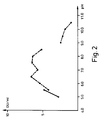
- Figs. 1 and 2 show pH-activity curves for lipases of C. antarctica , and C. tsukubaensis , respectively. Details are given in Example 11.
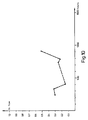
- Fig. 3 shows the pH-activity curves for C. antarctica lipases A and B. Details are given in Example 7.
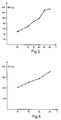
- Figs. 4 and 5 show the results of acidolysis and transesterification, respectively, with immobilized C. antarctica lipase at various temperatures. Details are given in Example 28.
- Figs. 6 and 7 show the results of myristic acid ester synthesis with immobilized C. antarctica lipase, using n-propanol and isopropanol, respectively. Details are given in Example 34.
- Figs. 8 and 9 show the results of continuous acidolysis and transesterification, respectively with immobilized C. antarctica lipase. Details are given in Examples 33 and 36.
- the first method is based on hydrolysis of tributyrine in a pH-stat.
- 1 LU Lipase Unit
- 1 LU is the amount of enzyme which liberates 1 ⁇ mol titratable butyric acid per minute at 30°C, pH 7.0 with gum arabic as an emulsifier. Further details are given in Novo Analytical Method AF 95/5, available on request.
- Measurement of activity in lipase units by hydrolysis of olive oil is carried out as follows: 1 ml enzyme solution, 5 ml emulsion (25 ml olive oil and 75 ml 2% polyvinyl alcohol, MW approx. 72,000 emulsified in a Waring blender), and 5 ml buffer (50 mM tris-maleate buffer pH 7.0) are mixed and incubated in a shaking water bath at 40°C for 10 minutes. The reaction is stopped by addition of 20 ml stop reagent (500 ml acetone, 500 ml ethanol and 11 ml 1 N NaOH).
- the sample and a blank sample are titrated to pH 9.2 with 0.05 N NaOH.
- the activity (OU) is calculated from the difference in titrated NaOH between the sample and the blank, and is expressed as 1 ⁇ m liberated free fatty acid per min.
- DG diglycerides
- the measurement is carried out as follows: 250 ⁇ l enzyme solution (4-100 OU/ml), 250 ⁇ l Trismaleate buffer, pH 7.0, and 500 ⁇ l substrate (triolein: 2%-polyvinyl alcohol, MW 72,000; 1:3) are mixed in an Eppendorf centrifuge-tube and shaken for 30-90 min at 42°C. The reaction is stopped by mixing with 10 ml CHCl3 (0.2% lithocholic acid can be used as internal standard). The CHCl3 is dried by Na2SO4. 1 ⁇ l is spotted on a thin layer chromatography rod (Chromarod Type S II, Newman-Howell Associates Ltd) and developed for 20 min with hexan/ether/acetic acid (70:30:1) as solvent.
- the partial glycerides are quantified by a FID analyser (Iatroscan TH 10, Newman-Howell Associates Ltd). Results are reported as 1,3-DG in % of total DG. Thus, a specific lipase would give 0, and a fully non-specific lipase would be expected to give around 33%.
- the activity is determined by reacting palmitic acid with triolein with or without solvent. Total incorporation of palmitic acid is measured by FAME-GLC of triglyceride. Incorporation in the 2-position is measured by treating the triglycerides with pancreatic lipase to hydrolyze the 1- and 3-positions, and then analyzing the resulting 2-monoglyceride by FAME-GLC.
- FAME-GLC Fatty acid methyl ester - gas-liquid chromatography
- AOCS American Oil Chemists' Society
- the reaction mixture consists of 0.6 g of triolein, 0.174 g of palmitic acid and 8.083 g of petroleum ether.
- the reaction without solvent 3.0 g of triolein and 0.87 g of palmitic acid is used.
- a suitable amount of enzyme is hydrated, incubated with the above reaction mixture at a given temperature for 1-4 hours, and then filtering to stop the reaction.
- the filtrate is purified on an alumina column, and the triglycerides are analyzed by FAME-GLC.
- triglycerides from 2 ml of the filtrate are purified in the same manner on 4 g of activated alumina.
- the emulsion is heated in a water bath at 40°C for 2 minutes and mixed on a Whirley mixer for 1 1/2 minute before the reacton is stopped by addition of 4 ml 96% ethanol.
- the sample is transferred to a separation funnel and extracted with 4 x 20 ml diethyl ether.
- the ether phase is washed 4 times with 20 ml deionized water before it is dried by a Na2SO4 filter and evaporated.
- the sample is redissolved in 1 ml 1,1,1-trichloroethane.
- the glycerides are separated by preparative TLC on precoated TLC Plates silica gel 60 from Merck (activated 30 minutes at 110°C) in a well saturated developing tank with diethylether and n-hexane (70:30) as a developing solvent. The TLC is run for 40 minutes at 20°C.
- the monoglyceride band is identified by iodine vapour, scraped off and extracted by 3 times 10 ml diethyl ether.
- the ether fase is filtered, evaporated and the sample is methylated and analysed by GLC.
- One BIU (Batch Interesterification Unit) is the amount of immobilized lipase that incorporates palmitic acid at an initial rate of 1 ⁇ mole/minute at the given temperature with or without solvent.
- One BIU-2 (BIU in 2-positon) is defined similarly from incorporation in 2-position.
- the activity is determined by reacting an equimolar mixture of triolein and tripalmitin. Formation of mixed triglycerides (POO, PPO etc.) is measured by high-performance liquid chromatography (HPLC).
- triolein OOO
- PPP tripalmitin
- HPLC may be done according to G.W. Jensen, J. Chromatogr., 204, 407 (1981).
- One BTU Batch Transesterification Unit
- One BTU is defined as the amount of immobilized lipase that produces mixed triglyceride at an initial rate of 1 ⁇ mole/minute at the given temperature.
- Non-Specificity Index of immobilized lipase (NSI1, NSI2)
- NSI1 3 x BIU-2/BIU. This will be O for a completely specific lipase, and will be 1 for a non-specific lipase that reacts equally with all three positions.
- immobilized lipase is hydrated as required for activation usually to about 10% of water.
- the following mixture is used:
- NSI2 3 x (oleic decrease)/(lauric incorporation)
- lauric acid incorporation a lauric acid incorporation in the range 30-65% is considered most suitable.
- a culture of Candida antarctica strain DSM 3855 on Agar-3 slants was transferred to a 2000 ml shake flask with 800 ml of Bou-3 medium, and shaken at 26°C for one day (200 rpm, amplitude approx. 2 cm).
- the resulting culture broth was used as seed culture for a 10 l conventional fermenter, with 7 liters Cale-2 medium.
- Fermentation conditions were as follows: Fermenter type: Laboratory fermenter FL 110 from Biotec AB, Bromma, Sweden. Aeration: 6 Nl/min Agitation: 520 rpm by an agitator with two impellers with six blades each Temperature: 26°C pH: There was no pH control Time: 119 hours The lipase yield was 157 LU/ml
- the culture broth from the fermenter was centrifuged for 35 minutes at 4100 rpm by means of a Sorvall RC-3B centrifuge with a 6000 A rotor.
- the supernatant (a total of 5 l) was concentrated by ultrafiltration (and washed 5 times with one volume water each) to 600 ml by a Pellicon ultrafiltration apparatus from Millipore with a 10,000 MW cut-off filter sheet.
- 600 ml 99% cold ethanol was added to 560 ml of the UF-concentrate and the mixture was stirred for 30 min at 4°C followed by a centrifugation (as above). 2.5 vol cold 99% ethanol was then added to the supernatant from the first ethanol precipitation.
- the mixture was stirred for 30 minutes and centrifuged (as above).
- the pellet from this centrifugation was dissolved in approx. 230 ml water and freeze-dried to give 22 g powder of 16,200 LU/g.
- the lipase was further purified by use of hydrophobic interaction chromatography with ethanol elution followed by vacuum drying to give a powder of approx 92,000 LU/g.
- Candida curvata strain CBS 570 (alias ATCC 10567) was used. CBS indicates Centraalbureau voor Schimmelcultures, Baarn, Netherlands, and ATCC indicates American Type Culture Collection, Rockville, MD, USA. A culture of this strain on an Agar-3 slant (see Example 1) was transferred to four 500 ml shake flasks with 100 ml Bou-3 medium (see example 1) each, and shaken at 26°C for 1 day (200 rpm, amplitude approx. 2 cm)
- the culture broth of the Bou-3 shake flasks was used as a seed culture for inoculating two hundred 500 ml shake flasks, each with 200 ml LR-15 medium:
- the composition of LR-15 medium was as follows: Constituent Concentration Pharmamedia 50 g/l K2HPO4 5 - NaNO3 1 - MgSO4.7H2O 0.5 - Tween-80 20 - pH adjusted to 7.0 by HCl Autoclaved at 121°C for 40 minutes.
- Tween-80 is Polyoxyethylene sorbitan monooleate (obtained from Merck).
- Each shake flask was inoculated with 0.5-2 ml of Bou-3 culture broth and shaken with 200-300 rpm (amplitude approx. 2 cm) at 26°C for 4 days.
- the culture broth from the shake flasks was pooled at harvest giving rise to 29.5 l in total with a lipase activity of 15 LU/ml.
- the broth was centrifuged as described in Example 1, followed by a concentration also as described in Example 1, but only washed twice with 1 volume water, giving 3.9 l concentrate with a lipase activity of 168 LU/ml.
- a culture of Candida antarctica strain DSM 3855 was inoculated on a Fernbach flask containing YPG-agar.
- the Fernbach flask was incubated for 8 days at 26°C before it was used to inoculate a conventional agitated and aerated seed fermenter containing 300 liter medium with the following composition: Yeast extract 3.0 kg KH2PO4 0.2 - Na2HPO4.12H2O 0.2 - Glucose 0.3 - Pluronic 60 L 125 ml pH 5.6
- the fermentation was run for 5 days at 26°C with 1000 Nl/min aeration and 200 rpm agitation.
- the yield was 82 LU/ml.
- the lipase was recovered by the following procedure: 1) drum filtration of the culture broth, 2) clear filtration, 3) concentration by ultrafiltration, 4) addition of ethanol to 50% w/w, 5) clear filtration, 6) concentration by ultrafiltration, 7) addition of ethanol to 77% w/w, 8) centrifugation, 9) vacuum drying, 10) redissolving in water, 11) batch hydrophobic interaction purification (the lipase was absorbed on a hydrophobic matrix, washed with water and eluted with 50% w/w ethanol), and 12) evapoation of the ethanol and freeze drying.
- the resulting powder had an activity of 143,000 LU/g.
- Candida antarctica culture DSM 3855 was maintained on PDA-agar slants.
- Composition of PDA-agar Bacto potato dextrose agar (Difco) 39 g/l Agar 10 - Autoclaved at 121°C for 20 minutes.
- the broth 46 OU/ml was centrifugated at maximum 4,400 g for 20 minutes.
- the supernatant was concentrated to 1 liter and desalted with 1 liter water on an Amicon ultrafiltration apparatus with a HlP 10-20 cartridge (cut-off 10,000 MW) and freeze dried.
- the activity of the powder was 4000 OU/g.
- the Candida tsukubaensis culture CBS 6389 was maintained on PDA-agar slants (composition of PDA-agar are given in Example 3).
- This culture was used to inoculate 52 shake flasks with CG-1g medium.
- the shake flasks were cultivated for 4 days at 25°C.
- the broth were centrifugated at maximum 4,400 g for 20 minutes.
- the supernatant (3 l) was concentrated to 450 ml and desalted with 2 liter water on an Amicon ultraconcentration apparatus with a HlP 10-20 cartridge and freeze dried to give 24 g powder with 223 OU/g, 135 LU/g.
- Each strain indicated below was inoculated on a PDA-agar slant (see Example 3) and cultivated for 3 days at 25°C. Cells were then suspended in 9 ml of sterile, deionized water and inoculated in YePD medium (see Example 5) as seed culture and cultivated for 17-23 hours. 2 to 7 ml of the culture broth was reinoculated in shake flask with Ca19g medium, YS-4 medium or YS-25 medium (see Example 4) and cultivated for 3 days at 25°C with shaking. pH and lipase activity (OU) of the broth were then measured. Results: Species Strain No. Medium pH OU/ml 1. C. antarctica DSM 3855 Ca19g 7.0 27.8 2.
- C. curvata CBS 570 was cultivated in the same way with 4 days cultivation in YS-25 medium.
- the activity was 34.8 OU/g.
- Partially purified lipases from C. antarctica obtained as in Example 2 were further purified as follows. 1 g of the enzyme powder was suspended in 50 mM Tris-acetate pH 6. 1 g of DEAE-sephadex A50 was swollen and washed in 50 mM Tris-acetate pH 6 and was added to the enzyme suspension. Mixture was stirred for one hour at room temperature and filtered on a sintered glass funnel. The filtrate was then concentrated by ultrafiltration and dialyzed against 20 mM citrate buffer pH 4.5 and applied on CM-sepharose column equilibrated with the same buffer. B-enzyme was eluted as effluent and A-enzyme was eluted with salt gradient.
- Molecular weight or the A and B enzyme were determined by Pharmacia PhastTM system using 8-25% SDS PAGE gradient gels. Molecular weight for A and B enzymes were found to be 43 and 33 kD, respectively. Isoelectric points for the A and B enzymes were determined by using LKB Ampholine page plate with pH range 3.5 to 9.5. pI for A enzyme was 8.0 ⁇ 0.2 and for B enzyme 6.0 ⁇ 0.2.
- the table below shows % residual activity measured by LU method. Activity of the enzymes at pH 7 was adjusted as 100%. It is seen that A-enzyme was totally inactive at pH 10 after overnight incubation at 4°C, whereas B-enzyme maintained more than 78% of its activity at pH 10, but was less stable at pH 6.
- Lipase activity was measured by the LU method, except that temperature was varied. Results are shown below, with activity at 30°C taken as 100%. % increase in activity Temperature A-enzyme B-enzyme 30°C 100 100 40°C 128 103 50°C 160 119 60°C 169 112 70°C 192 116
- Lipase activity was measured by the LU method, except that pH was varied. Results obtained at respective pHs in the absence of the enzyme were used as controls for spontaneous hydrolysis. Results are shown in figure 3. It is seen that optimum pH for both A and B enzymes was found to be around pH 7.
- thermostabilities of the following lipases were compared.
- C. antarctica lipase and lipase A are far more thermostable than prior art C. cylindracea and C. curvata lipases.
- lipase samples were first pre-treated for 1 hour at 60°C, pH 6.5 as follows:
- Purified lipase A The eluate from the columm (Example 10) was dialyzed overnight against 15 mM tris-maleate buffer pH 7, diluted 5 times with pH 6.5 buffer and pre-treated for 1 hour at 60°C.
- C. curvata The UF-concentrate from ref. Example 1. The concentrate was adjusted to pH 6.5 and incubated for 1 hour at 60°C, pH 6.5. This pre-treated sample was diluted 5 times in buffer (pH 6, 6.5, 7.5, see above) for the thermostability experiments.
- Lipase powder obtained as in Example 3 was dissolved in water (1%), and further diluted 5 times in 50 mM tris-maleate buffer pH 7. This solution was pre-treated at 60°C for 0, 60 and 180 minutes, and then heat treated for 30 minutes at various temperatures. Remaining activity after each step was measured by the OU method. Pre-treatment time at 60°C 0 min 60 min 180 min Remaining activity after pre-treatment 100% 39% - Heat treatment 30 minutes, at 0°C 100% 100% 100% 30°C 100% 103% 126% 40°C 96% 105% 137% 50°C 81% 108% 148% 60°C 62% 86% 135% 70°C 60% 86% 135% 80°C 29% 55% 111%
- the enzyme activity of C. antarctica lipase (0.1% of the powder from Example 3) was measured at 30, 40, 50, 60, 65, and 70°C. The activities were measured by the OU method described in the text, but with incubation at different temperatures. The results were as follows. Incubation temperature 30 40 50 60 65 70 Activity OU/ml 2.1 2.3 3.4 5.2 6.3 5.8
- pH was varied from 4.0 to 10.5 in steps of 0.5 units.
- the buffers used were sodium acetate/acetic acid at pH 4.0-5.5 (200 mM for C. antarctica and 100 mM for the other lipases), 50 mM tris-maleate/NaOH at pH 5.5-8.5 and glycine/NaOH at pH 9.0-10.5 (200 mM for C. antarctica and 100 mM for the other lipases).
- the activities of purified lipases A and B (from Example 7) on various substrates were compared. Activities on tributyrine and olive oil were measured by the LU and OU methods, respectively. Activities on methyloleate, methyllaurate and racemic diolein were measured by the LU method with the following modifications: 1% substrate (methyllaurate 99% pure from Nu Check Prep, methyloleate 99% pure from Nu Check Prep, or racemic diolein 99% pure from Sigma) instead of tributyrine, and with NaOH titration at pH 8.5 instead of pH 7.0.
- lipase B has high activity on diglycerides and methyl esters, whereas lipase A has relatively low activity to these, in relation to activity on triglyceride.
- Candida antarctica lipase obtained as described in Example 1 was diluted with water to 7.5 grams and mixed with 1.5 grams dry matter of Lewatit® E1999/85 weakly basic anion exchange resin (product of Bayer) adjusted to pH 7.
- Example 2 100 ml with 15,000 LU/ml C. antarctica lipase obtained as in Example 2 were mixed with 46 g dry weight of washed Lewatit® E 1999/85 weakly basic anion exchange resin (product of Bayer) adjusted to pH 7. The mixture was stirred for 24 hours at room temperature. After washing with water the preparation was dried in vacuum at room temperature giving 51.5 g (dry matter content 99%). The activity remaining in the filtrate was 1% corresponding to a load of 29,200 LU/g. The activity was 37.6 BIU/g.
- Example 2 60 ml with 12,500 LU/ml C. antarctica lipase obtained as described in Example 2 were mixed with 25 g dry weight of washed Lewatit® E 2001/85 non-ionic resin (product of Bayer) adjusted to pH 7. The mixture was stirred for 24 hours at room temperature. After washing with water the preparation was dried in vacuum at room temperature giving 25 g (dry matter content 98%). The activity in the remaining filtrate was 1.6%, corresponding to a load of 30,200 LU/g.
- Preparation of carrier 10 g of Lewatit® 2001/85 were washed on a G-2 glass filter, the pH was adjusted to pH 7 by pH-stat using 0.05 N NaOH (2 hours' run), washed again, and dried on the glass filter. The dry matter was measured as 61.55%, and 2.5 g dry weight were used for the immobilization.
- Preparation of the enzyme Lipase A (Example 7) was dialyzed overnight against 15 mM Tris-maleate buffer pH 8, resulting in 15 ml of 8000 LU/ml.
- Immobilization Carrier and enzyme were mixed overnight, washed on a glass filter, and dried for 2 hours in vacuum. The dry matter was 96%. 2% of the activity remained in the solution, corresponding to a load of 28,200 LU/g.
- Carrier was prepared as in the previous example.
- the dry matter was measured as 76.32%, and 4.4 g dry weight were used for the immobilization.
- Enzyme was prepared as in the previous example, resulting in 24.7 ml of 5400 LU/ml. Immobilization: Carrier and enzyme were mixed overnight, washed on a glass filter, and dried for 5 hours in vacuum. The dry matter was 100%. 28% of the activity remained in the solution corresponding to a load of 22,300 LU/g.
- Lipase B (Example 7) was prepared as in Example 21, resulting in 24.9 ml of 3200 LU/ml. Immobilization: Carrier and enzyme were mixed overnight, washed on a glass filter, and dried for 5 hours in vacuum. The dry matter was 100%. 6.4% of the activity remained in the solution corresponding to a load of 29,200 LU/g.
- the activity was 4.4 BIU/g.
- a NSI2 assay was run for 2 hours with 250 mg dry matter lipase and only 4 ml of reaction mixtures. The lauric acid incorporation was only 14 mole % and the NSI2 was 0.65, indicating that lipase B is non-specific.
- the activity was measured both with the BIU assay (60°C, without organic solvent) and by the BTU assay at 70°C.
- the non-specificity was measured both by the NSI1 and NSI2 assays.
- thermostability was measured by the following method: 1.2 g of triolein was added to 150 mg dry weight 10% hydrated enzyme. The sample was then incubated at 80°C for 3 days. The remaining activity (BIU) was measured at 40°C after addition of 12 ml of petroleum ether with 348 mg of palmitic acid. The thermostability is expressed in % of the activity of a reference sample placed for 3 days in a refrigerator.
- the two immobilized products have very similar properties in all these tests. Both are non-specific, are effective for catalyzing acidolysis and transesterificaton, and both are extremely thermostable.
- NAI2 Non-Specificity Index
- Thermostability of the immobilized preparations of Candida antarctica and Candida cylindracea lipases was assayed as follows: 250 mg dry matter preparation was hydrated to 10% w/w. 600 mg triolein was added and incubations were made for 0, 2, 4, and 24 hours at 70°C. After incubation the sample was cooled, 12 ml petroleum ether containing 174 mg palmitic acid was added, and the mixture was incubated for 1 hour at 40°C. Incorporated palmitic acid (% w/w) in each case was measured, as described in the AF 206-method, referred to previously, as follows: Hours incubation C. antarctica C. cylindracea 0 21.6 25.1 2 20.5 14.0 4 20.7 13.4 24 20.8 6.7
- Example 19 The immobilized product of Example 19 was used for acidolysis (triolein + palmitic acid) and transesterification (triolein + tripalmitin) without solvent at various temperatures according to the BIU and BTU methods.
- immobilized lipase B is more effective for ester synthesis than lipase A in all the experiments, both with long-chain and short-chain alcohol, and both with primary and secondary alcohol.
- Immobilized lipase A gives low ester yields in case of short-chain alcohols, but is more effective in case of long-chain alhohol.
- Immobilized C. antarctica lipase (containing both lipase A and lipase B) gives similar yield as lipase B for short-chain alcohol, and better yield than lipase A or B for long-chain alcohol.
- the mixtures were incubated in shaking water bath at 70°C, samples were taken out after appropriate times to calculate the activity.
- the triglycerides were purified, methylated, analysed on GLC and the activities were calculated as described in the BIU method described previously.
- Immobilized C. antarctica lipase Activity ⁇ mole incorporated fatty acid (initial activity) per minute Acidolysis of tricaprylin with: lauric acid 116 U/g myristic acid 100 U/g palmitic acid 121 U/g stearic acid 134 U/g oleic acid 74 U/g linoleic acid 56 U/g Immobilized purified lipase A: Activity ⁇ mole incorporated fatty acid (initial activity) per minute Acidolysis of tricaprylin with: lauric acid 13 U/g oleic acid 3 U/g
- lipase A has a much lower activity towards mono- and di-unsaturated acid than towards saturated acid.
- C. antarctica lipase (containing both lipase A and lipase B) has only slightly lower activity towards mono- and di-unsaturated acid.
- immobilized C. antarctica the preparation from Example 19
- immobilized purified lipase A the preparation from Example 22
- immobilized specific lipase from Mucor miehei Lipozyme® IM 20 from NOVO INDUSTRI A/S
- fatty acid mixture was obtained by mixing palmitic acid with a poly-unsaturated fatty acid rich fraction (obtained by vacuum distillation) from hydrolyzed Menhaden oil.
- the fatty acid mixture contained 24.9 mole % palmitic acid (C16:0), 20.4 mole % eicosapentaenoic acid (C20:5), 7.2 mole % docosapentaenoic acid (C22:5) and 26.2 mole % docosahexanoic acid (C22:6).
- the reaction was carried out in a shaking water bath at 70°C. Samples were taken out after 3 and 5 hours, and the triglycerides were purified, methylated, and analysed by GLC as described previously.
- C. antarctica lipase is effective in incorporating poly-unsaturated fatty acid, almost with the same ease as for saturated acid.
- the two lipases of the invention are effective in incorporating C22:6 acid.
- the esterification reaction was followed by taking out samples and titrating the non-reacted fatty acid (as described in Example 28).
- Candida antarctica lipase was also examined.
- Example 18 4.5 g of the immobilized C. antarctica lipase (Example 18) was filled into a water jacketed column, having an internal diameter of 1.5 cm.
- the column was equipped with a water jacket with hot circulating water and was kept at 60°C or 80°C.
- a precolumn containing water-saturated resin, (Duolite® ES561) was placed before the enzyme column and kept at the same temperature.
- a substrate consisting of 71% highly refined soy bean oil with a peroxide value less than 3 and 29% analytical grade lauric acid was pumped through the columns.
- At the outlet from the enzyme column samples were taken for analysis, and the incorporation of lauric acid measured by GLC. An incorporation of 14% w/w lauric acid was attempted and the flow rate was adjusted in order to keep the conversion at that value. Measurements of flow rate were taken when the actual conversion was 14 ⁇ 1%. Whenever the precolumn was dry it was replaced by a fresh one.
- the samples were analysed by removing the free fatty acid and mono- and diglyceride by Al2O3-column chromatography, thereafter methylation of the triglyceride by NaOCH3 and finally analysis of the methylester on a GLC.
- Olive oil was hydrolyzed at 60°c with C. antarctica lipase (prepared as in Example 2) in an 8 l thermostated tank with stirring.
- the oil:water ratio was 60:40 or 70:30 (w/w), and the lipase dosage was 75 LU/g of oil.
- Results (% hydrolysis) were as follows: Time, hours Oil:water ratio 60:40 70:30 24 80 70 48 91 85 72 93 89 96 95 91
- heat-treated C. antarctica lipase is extremely thermostable, even at 80°C.
- Heat-treated C. tsukubaensis lipase is stable up to 70°C.
- Immobilized lipase of Example 20 was used at 60°C with a substrate mixture of equal volumes of palm oil mid fraction and soy bean oil. Other conditions were as in Example 33.
- Outlet samples were analyzed by HPLC, and flow rate was adjusted to an attempt to keep the content of trilinolein in the outlet near 6%. This represents about 63% of equilibrium conversion, as the inlet content was 11.0%. Measurements were taken when the outlet content was 6% ⁇ 1%.
Landscapes
- Life Sciences & Earth Sciences (AREA)
- Chemical & Material Sciences (AREA)
- Health & Medical Sciences (AREA)
- Genetics & Genomics (AREA)
- Organic Chemistry (AREA)
- Zoology (AREA)
- Engineering & Computer Science (AREA)
- Bioinformatics & Cheminformatics (AREA)
- Wood Science & Technology (AREA)
- Microbiology (AREA)
- Biotechnology (AREA)
- Biomedical Technology (AREA)
- Biochemistry (AREA)
- General Engineering & Computer Science (AREA)
- General Health & Medical Sciences (AREA)
- Molecular Biology (AREA)
- Medicinal Chemistry (AREA)
- Preparation Of Compounds By Using Micro-Organisms (AREA)
- Enzymes And Modification Thereof (AREA)
- Micro-Organisms Or Cultivation Processes Thereof (AREA)
- Immobilizing And Processing Of Enzymes And Microorganisms (AREA)
Claims (21)
- Hinsichtlich der Position unspezifische Lipase, dadurch gekennzeichnet, daß sie(1) mindestens 20 % Restaktivität nach Inkubation für 60 Minuten bei einem pH-Wert von 6,5 und 65°C aufweist;(2) eine optimale Aktivität bei einem pH-Wert im Bereich von 6,5 bis 8 zeigt; und(3) eine immunochemische Identität zu einer extrazellulären Lipase mit den vorstehenden Merkmalen, die von einem Stamm von Candida antarctica order Candida tsukubaensis hierrührt, gegenüber monospezifischem Kaninchenantiserum, zeigt.
- Lipase nach Anspruch 1, wobei der Stamm ein C. antarctica-Stamm ist.
- Lipase nach Anspruch 2, wobei es sich bei dem Stamm um C. antarctica DSM 3855, DSM 3908, DSM 3909, CBS 5955, CBS 6678 oder CBS 6821 handelt.
- Lipase nach Anspruch 3, wobei es sich bei dem Stamm um C. antarctica DSM 3855 handelt.
- Lipase nach Anspruch 4, die ein Molekulargewicht von etwa 43 kD und einen isoelektrischen Punkt von etwa 8,0 aufweist.
- Lipase nach Anspruch 4, die ein Molekulargewicht von etwa 33 kD und einen isoelektrischen Punkt von etwa 6,0 aufweist.
- Lipase nach Anspruch 1, wobei es sich bei dem Candida-Stamm um C. tsukubaensis CBS 6389 handelt.
- Lipase nach einem der vorstehenden Ansprüche in immobilisierter Form.
- Lipase nach Anspruch 8, wobei die immobilisierte Lipase eine Halbwertszeit der Lipaseaktivität bei 60°C von mehr als 1000 Stunden bei der kontinuierlichen Umesterung aufweist.
- Lipase nach Anspruch 8 oder 9, wobei die Lipase durch Adsorption an einem schwach-basischen Anionenaustauschharz oder an einem Adsorbensharz immobilisiert ist.
- verfahren zur Herstellung einer Lipase nach Anspruch 1, wobei das Verfahren (1) das aerobe Kultivieren eines Lipase-bildenden Candida-Stamms, der aus der aus C. antarctica und C. tsukubaensis bestehenden Gruppe ausgewählt ist, in einem geeigneten Nährmedium und (2) die Isolierung der Lipase aus dem Kulturmedium umfaßt.
- Verfahren nach Anspruch 11, wobei es sich bei dem Stamm um C. antarctica DSM 3855, DSM 3908, DSM 3909, CBS 5955, CBS 6678 oder CBS 6821 handelt.
- Verfahren nach Anspruch 11 oder 12, das ferner das Erwärmen der isolierten Lipase für 1 bis 3 Stunden auf etwa 60°C umfaßt.
- Verfahren nach einem der Ansprüche 11 bis 13, das ferner das Immobilisieren der isolierten Lipase umfaßt.
- Verwendung der Lipase nach einem der Ansprüche 1 bis 10 in einem Lipase-katalysierten Verfahren zur Hydrolyse eines Esters, zur Synthese eines Esters oder zur Umesterung eines Esters.
- Verwendung nach Anspruch 15, wobei die Lipase in immobilisierter Form vorliegt.
- Verwendung nach Anspruch 16, wobei es sich bei dem Verfahren um ein kontinuierliches Verfahren handelt.
- Verwendung nach einem der Ansprüche 15 bis 17, wobei es sich bei dem Ester um ein Triglycerid handelt.
- Verwendung nach einem der Ansprüche 15 bis 18, wobei es sich bei der Lipase um eine Lipase nach Anspruch 3 handelt.
- Verwendung nach Anspruch 19, wobei es sich bei dem Verfahren um eine Umesterung handelt und es sich bei der Lipase um eine Lipase nach Anspruch 5 handelt.
- Verwendung nach Anspruch 19, wobei es sich bei dem Verfahren um eine Estersynthese handelt und es sich bei der Lipase um eine Lipase nach Anspruch 6 handelt.
Applications Claiming Priority (5)
| Application Number | Priority Date | Filing Date | Title |
|---|---|---|---|
| DK4966/86 | 1986-10-17 | ||
| DK496686A DK496686D0 (da) | 1986-10-17 | 1986-10-17 | Lipase og metode til dens fremstilling |
| DK507287A DK507287D0 (da) | 1987-09-28 | 1987-09-28 | Positions-uspecifik lipase |
| PCT/DK1987/000127 WO1988002775A1 (en) | 1986-10-17 | 1987-10-16 | Positionally non-specific lipase from candida sp, a method for producing it, its use and a recombinant dna process for producing it |
| DK5072/87 | 1987-12-28 |
Publications (2)
| Publication Number | Publication Date |
|---|---|
| EP0287634A1 EP0287634A1 (de) | 1988-10-26 |
| EP0287634B1 true EP0287634B1 (de) | 1995-01-11 |
Family
ID=26067684
Family Applications (1)
| Application Number | Title | Priority Date | Filing Date |
|---|---|---|---|
| EP87907098A Expired - Lifetime EP0287634B1 (de) | 1986-10-17 | 1987-10-16 | Positionsmässig nicht spezifische lipase von candida-arten; verfahren für ihre herstellung und ihre verwendung |
Country Status (6)
| Country | Link |
|---|---|
| EP (1) | EP0287634B1 (de) |
| JP (1) | JP2628667B2 (de) |
| AT (1) | ATE117018T1 (de) |
| CA (1) | CA1339844C (de) |
| DE (1) | DE3750982T2 (de) |
| WO (1) | WO1988002775A1 (de) |
Families Citing this family (67)
| Publication number | Priority date | Publication date | Assignee | Title |
|---|---|---|---|---|
| DK399387D0 (da) * | 1987-07-31 | 1987-07-31 | Novo Industri As | Immobiliseret lipase og dennes anvendelse |
| DK638688D0 (da) * | 1988-11-16 | 1988-11-16 | Novo Industri As | Partikelformet immobiliseret lipase-praeparat, fremgangsmaade til fremstilling deraf og anvendelse deraf |
| DK306189D0 (da) * | 1989-06-21 | 1989-06-21 | Novo Nordisk As | Immobiliseret lipasepraeparat og anvendelse deraf til estersyntese |
| US5658871A (en) * | 1989-07-07 | 1997-08-19 | Lever Brothers Company, Division Of Conopco, Inc. | Microbial lipase muteins and detergent compositions comprising same |
| IN171820B (de) * | 1989-12-22 | 1993-01-16 | Lever Hindustan Ltd | |
| WO1991014784A1 (en) * | 1990-03-23 | 1991-10-03 | Novo Nordisk A/S | A process for increasing the amount of triglyceride of a fat or oil |
| JPH04240286A (ja) * | 1991-01-25 | 1992-08-27 | Novo Nordisk As | 耐熱性リパーゼによるピッチトラブル防止法 |
| EP0579708B1 (de) * | 1991-04-10 | 1998-11-04 | Novo Nordisk A/S | Lipasekatalysierte esterhydrolyse |
| US5616215A (en) * | 1991-04-19 | 1997-04-01 | Novo Nordisk A/S | Method of making paper from pulp treated with lipase and an aluminum salt |
| EP0519561A1 (de) * | 1991-06-18 | 1992-12-23 | Unilever N.V. | Enzymatisches Triglycerid-Umsetzverfahren |
| DK88892D0 (da) * | 1992-07-06 | 1992-07-06 | Novo Nordisk As | Forbindelse |
| NL9202208A (nl) * | 1992-12-18 | 1994-07-18 | Dsm Nv | Werkwijze voor de enzymatische bereiding van optisch aktieve glycidezure esters. |
| DE69531538T2 (de) * | 1994-02-21 | 2004-06-24 | Novozymes A/S | Verfahren zur herstellung einer immobilisierten enzympräparation und ihre verwendung |
| JPH08238088A (ja) * | 1995-03-06 | 1996-09-17 | Showa Denko Kk | 高温下で高活性を有するリパーゼ |
| US6406723B1 (en) | 1997-04-09 | 2002-06-18 | Danisco A/S | Method for preparing flour doughs and products made from such doughs using glycerol oxidase and lipase |
| US6936289B2 (en) | 1995-06-07 | 2005-08-30 | Danisco A/S | Method of improving the properties of a flour dough, a flour dough improving composition and improved food products |
| CO4750597A1 (es) | 1995-06-07 | 1999-03-31 | Danisco | Metodo y composicion para mejorar la masa de harina . |
| AU6513096A (en) * | 1995-07-19 | 1997-02-18 | Novo Nordisk A/S | Treatment of fabrics |
| WO1997036000A1 (en) * | 1996-03-27 | 1997-10-02 | Unichema Chemie B.V. | Esterification process |
| CN100494363C (zh) | 1997-12-22 | 2009-06-03 | 诺维信公司 | 糖氧化酶及其在焙烤中的用途 |
| DE19928158C2 (de) | 1999-06-19 | 2003-09-04 | Haarmann & Reimer Gmbh | Verfahren zur Herstellung von aromatischen Carbonylverbindungen aus Styrolen |
| WO2001053511A1 (en) * | 2000-01-21 | 2001-07-26 | Novozymes A/S | Process for preparing esters |
| AU2001267333A1 (en) | 2000-06-26 | 2002-01-08 | Novozymes A/S | Lipolytic enzyme |
| ATE426668T1 (de) | 2001-01-10 | 2009-04-15 | Novozymes As | Variante eines lipolytischen enzyms |
| WO2002094123A2 (en) | 2001-05-18 | 2002-11-28 | Danisco A/S | Method of preparing a dought with an enzime |
| MXPA05007654A (es) | 2003-01-17 | 2005-09-30 | Danisco | Metodo. |
| GB0405637D0 (en) | 2004-03-12 | 2004-04-21 | Danisco | Protein |
| CN102533440B (zh) | 2004-07-16 | 2017-09-19 | 杜邦营养生物科学有限公司 | 用酶使油脱胶的方法 |
| CN101103118B (zh) | 2005-01-10 | 2012-04-18 | 诺维信公司 | 使用两种脂解酶的混合物从甘油三酯和醇产生脂肪酸烷基酯的方法 |
| WO2006133698A2 (en) | 2005-06-13 | 2006-12-21 | Novozymes A/S | Production of degummed fatty acid alkyl esters |
| EP2069488A2 (de) | 2006-10-03 | 2009-06-17 | Novozymes A/S | Varianten lipolytischer enzyme |
| EP2267121B1 (de) | 2006-11-28 | 2014-05-14 | Novozymes A/S | Lipolytische Enzymvarianten |
| BRPI0808513A2 (pt) | 2007-03-09 | 2014-08-19 | Danisco Us Inc Genencor Div | Variantes de alfa-amilase de espécies de bacillus alcalifílico, composições compreendendo variantes de alfa-amilase e métodos de uso |
| EP2132307B1 (de) | 2007-03-14 | 2011-11-16 | Danisco US Inc. | Trichoderma reesei-amylase als maltogenes enzym |
| EP1978102B1 (de) | 2007-04-02 | 2010-07-07 | Cognis IP Management GmbH | Ein Gemisch enthaltend Fettsäureglyceride |
| EP2238244A1 (de) | 2008-01-02 | 2010-10-13 | Danisco A/S | Pseudomonas saccharophila-g4-amylase-varianten und ihre verwendung |
| MX2010011721A (es) | 2008-04-30 | 2010-11-30 | Danisco Inc | Nuevas variantes de alfa-amilasa quimericas. |
| MX350760B (es) | 2008-06-06 | 2017-09-18 | Danisco Us Inc | Alfa-amilasas variantes de bacillus subtilis y metodos de uso de las mismas. |
| JP5599113B2 (ja) | 2008-06-06 | 2014-10-01 | ダニスコ・ユーエス・インク | 糖化酵素組成物及びその糖化方法 |
| BRPI0913378A2 (pt) | 2008-06-06 | 2015-09-01 | Danisco Us Inc | Produção de glicose a partir do amido usando alfa-amilase do bacillus subtilis |
| EP3412771B1 (de) | 2009-05-19 | 2020-12-02 | DuPont Nutrition Biosciences ApS | Amylase polypeptide |
| EP2491128A1 (de) | 2009-10-21 | 2012-08-29 | Novozymes A/S | Verfahren zur behandlung von öl |
| WO2011067349A1 (en) | 2009-12-03 | 2011-06-09 | Novozymes A/S | Variants of a polypeptide with lipolytic activity and improved stability |
| US20130224757A1 (en) | 2010-08-19 | 2013-08-29 | Novozymes A/S | Induced sporulation screening method |
| EP2665825B1 (de) | 2011-01-21 | 2016-01-13 | Novozymes A/S | Herstellung von fettsäurealkylestern |
| EP2670854A1 (de) | 2011-02-04 | 2013-12-11 | Novozymes A/S | Fettsäureveresterungsverfahren |
| US20140017741A1 (en) | 2011-03-30 | 2014-01-16 | Novozymes A/S | Esterification Process |
| WO2017060471A1 (en) | 2015-10-09 | 2017-04-13 | Novozymes A/S | Enzymatic or non-enzymatic biodiesel polishing process |
| US10851327B2 (en) | 2018-06-11 | 2020-12-01 | Poet Research, Inc. | Methods of refining a grain oil composition feedstock, and related systems, compositions and uses |
| US12157822B2 (en) | 2017-05-24 | 2024-12-03 | Poet Research, Inc. | Methods of producing vegetable oils with low minerals, metals, or other contaminants |
| CA3064549C (en) | 2017-05-24 | 2023-06-20 | Poet Research Inc. | Enhanced alkyl ester containing oil compositions and methods of making and using the same |
| CA3064571C (en) | 2017-05-24 | 2023-08-22 | Poet Research, Inc. | Use of an esterase to enhance ethyl ester content in fermentation media |
| RU2020120682A (ru) | 2017-11-24 | 2021-12-24 | Новозимс А/С | Мелкие частицы на основе фермента для переэтерификации |
| WO2019155789A1 (ja) * | 2018-02-09 | 2019-08-15 | 天野エンザイム株式会社 | ランダムエステル交換リパーゼ |
| JPWO2019155790A1 (ja) * | 2018-02-09 | 2021-01-28 | 天野エンザイム株式会社 | ランダムエステル交換リパーゼ |
| WO2019220831A1 (ja) * | 2018-05-17 | 2019-11-21 | シーシーアイホールディングス株式会社 | 油脂の新規分解微生物 |
| WO2020099491A1 (en) | 2018-11-14 | 2020-05-22 | Novozymes A/S | Oral care composition comprising a polypeptide having dnase activity |
| EP3744838B1 (de) | 2019-05-29 | 2026-07-08 | Novozymes A/S | Lipolytische polymerpartikel zur veresterung und umesterung |
| EP4192964A1 (de) | 2020-08-06 | 2023-06-14 | POET Research, Inc. | Endogene lipase zur metallreduktion in getreidedestillatöl |
| JP2023539234A (ja) | 2020-08-24 | 2023-09-13 | ノボザイムス アクティーゼルスカブ | フルクタナーゼを含む口腔ケア組成物 |
| KR20240005689A (ko) | 2021-05-04 | 2024-01-12 | 노보자임스 에이/에스 | 수소처리 식물성 오일(hvo) 제조를 위한 공급원료의 효소 처리 |
| CA3253720A1 (en) | 2022-04-20 | 2023-10-26 | Novozymes A/S | PROCESS FOR PRODUCING FREE FATTY ACIDS |
| CN118765328A (zh) | 2022-04-29 | 2024-10-11 | 诺维信公司 | 脂肪酸烷基酯的产生 |
| CN119053708A (zh) | 2022-05-17 | 2024-11-29 | 诺维信公司 | 用于减少游离脂肪酸的方法 |
| CN119948140A (zh) | 2022-10-14 | 2025-05-06 | 诺维信公司 | 利用南极假丝酵母脂肪酶b来选择性水解油/脂肪中的甘油二酯的方法 |
| US20260152771A1 (en) | 2022-10-24 | 2026-06-04 | Selabtec Sciences, Slu | Method for preparing a biofuel composition |
| AU2024363779A1 (en) | 2023-10-16 | 2026-03-05 | Novozymes A/S | Method of producing interesterified fat product |
Family Cites Families (6)
| Publication number | Priority date | Publication date | Assignee | Title |
|---|---|---|---|---|
| GB976415A (en) * | 1961-09-25 | 1964-11-25 | Meito Sangyo Kk | High-activity lipase and method of preparation thereof |
| GB1461408A (en) * | 1973-05-25 | 1977-01-13 | British Petroleum Co | Fermentation process for the production of lipase |
| US4056442A (en) * | 1976-06-01 | 1977-11-01 | The Dow Chemical Company | Lipase composition for glycerol ester determination |
| JPS59156282A (ja) * | 1983-02-25 | 1984-09-05 | Daikin Ind Ltd | 新規耐熱性リパーゼおよびその製造法 |
| JPS60501758A (ja) * | 1983-07-01 | 1985-10-17 | セルテク リミテツド | タンパク質、医薬構成物、遺伝子、ベクタ−宿主生物及びそれらの生産方法 |
| JPS61280274A (ja) * | 1985-06-05 | 1986-12-10 | Sapporo Breweries Ltd | 新規リパ−ゼ |
-
1987
- 1987-10-16 EP EP87907098A patent/EP0287634B1/de not_active Expired - Lifetime
- 1987-10-16 WO PCT/DK1987/000127 patent/WO1988002775A1/en not_active Ceased
- 1987-10-16 DE DE3750982T patent/DE3750982T2/de not_active Expired - Fee Related
- 1987-10-16 AT AT87907098T patent/ATE117018T1/de not_active IP Right Cessation
- 1987-10-16 JP JP62506545A patent/JP2628667B2/ja not_active Expired - Fee Related
- 1987-10-19 CA CA000549667A patent/CA1339844C/en not_active Expired - Fee Related
Also Published As
| Publication number | Publication date |
|---|---|
| WO1988002775A1 (en) | 1988-04-21 |
| JP2628667B2 (ja) | 1997-07-09 |
| ATE117018T1 (de) | 1995-01-15 |
| JPH01501120A (ja) | 1989-04-20 |
| DE3750982T2 (de) | 1995-06-14 |
| CA1339844C (en) | 1998-04-28 |
| EP0287634A1 (de) | 1988-10-26 |
| DE3750982D1 (de) | 1995-02-23 |
Similar Documents
| Publication | Publication Date | Title |
|---|---|---|
| US5273898A (en) | Thermally stable and positionally non-specific lipase isolated from Candida | |
| CA1339844C (en) | Positionally non-specific lipase | |
| WO1989001032A1 (en) | Immobilized, positionally non-specific lipase, its production and use | |
| de Azeredo et al. | Production and Regulation of Lipase Activity from Penicillium restrictum in Submerged and Solid-State Fermentations: LAI de Azeredo et al. | |
| US5156963A (en) | Immobilization of lipase by adsorption on a particulate macroporous resin | |
| Yamane | Enzyme technology for the lipids industry: an engineering overview | |
| Macrae et al. | Present and future applications of lipases | |
| Baillargeon et al. | Evaluation of strains of Geotrichum candidum for lipase production and fatty acid specificity | |
| EP0648263B1 (de) | Lipasen aus hyphozyma | |
| Rao et al. | Production of lipase by Candida rugosa in solid state fermentation. 1: determination of significant process variables | |
| Bradoo et al. | Two acidothermotolerant lipases from new variants of Bacillus spp. | |
| De Almeida et al. | Agroindustrial Wastes as Alternative for Lipase Production by Candida viswanathii under Solid‐State Cultivation: Purification, Biochemical Properties, and Its Potential for Poultry Fat Hydrolysis | |
| Ohnishi et al. | Purification and characterization of a novel lipolytic enzyme from Aspergillus oryzae | |
| US5093256A (en) | Essentially purified, thermostable and alkalophilic lipase from bacillus sp. a30-1 atcc 53841 | |
| Ferrer et al. | Purification and properties of a lipase from Penicillium chrysogenum isolated from industrial wastes | |
| WO1994001541A1 (en) | C. antarctica lipase and lipase variants | |
| EP0204284A2 (de) | Lipase | |
| Kademi et al. | Characterization of a new thermostable esterase from the moderate thermophilic bacterium Bacillus circulans | |
| Barik et al. | Purification and optimization of extracellular lipase from a novel strain Kocuria flava Y4 | |
| Basri et al. | Alcoholysis of palm oil mid-fraction by lipase from Rhizopus rhizopodiformis | |
| Costas et al. | Lipolytic activity in submerged cultures of Issatchenkia orientalis | |
| WO1989006278A1 (en) | Immobilized lipase | |
| Sugihara et al. | Purification and characterization of a lipase from Pichia burtonii | |
| Mustranta et al. | Transesterification of phospholipids in different reaction conditions | |
| Samad et al. | A lipase from a newly isolated thermophilic Rhizopus rhizopodiformis |
Legal Events
| Date | Code | Title | Description |
|---|---|---|---|
| PUAI | Public reference made under article 153(3) epc to a published international application that has entered the european phase |
Free format text: ORIGINAL CODE: 0009012 |
|
| 17P | Request for examination filed |
Effective date: 19880808 |
|
| AK | Designated contracting states |
Kind code of ref document: A1 Designated state(s): AT BE CH DE FR GB IT LI LU NL SE |
|
| RAP1 | Party data changed (applicant data changed or rights of an application transferred) |
Owner name: NOVO-NORDISK A/S |
|
| 17Q | First examination report despatched |
Effective date: 19910425 |
|
| RAP1 | Party data changed (applicant data changed or rights of an application transferred) |
Owner name: NOVO NORDISK A/S |
|
| GRAA | (expected) grant |
Free format text: ORIGINAL CODE: 0009210 |
|
| AK | Designated contracting states |
Kind code of ref document: B1 Designated state(s): AT BE CH DE FR GB IT LI LU NL SE |
|
| REF | Corresponds to: |
Ref document number: 117018 Country of ref document: AT Date of ref document: 19950115 Kind code of ref document: T |
|
| REF | Corresponds to: |
Ref document number: 3750982 Country of ref document: DE Date of ref document: 19950223 |
|
| ET | Fr: translation filed | ||
| ITF | It: translation for a ep patent filed | ||
| K2C2 | Correction of patent specification (partial reprint) published |
Effective date: 19950111 |
|
| NLR4 | Nl: receipt of corrected translation in the netherlands language at the initiative of the proprietor of the patent | ||
| PG25 | Lapsed in a contracting state [announced via postgrant information from national office to epo] |
Ref country code: LU Free format text: LAPSE BECAUSE OF NON-PAYMENT OF DUE FEES Effective date: 19951031 |
|
| PLBE | No opposition filed within time limit |
Free format text: ORIGINAL CODE: 0009261 |
|
| STAA | Information on the status of an ep patent application or granted ep patent |
Free format text: STATUS: NO OPPOSITION FILED WITHIN TIME LIMIT |
|
| 26N | No opposition filed | ||
| REG | Reference to a national code |
Ref country code: CH Ref legal event code: PUE Owner name: NOVO NORDISK A/S TRANSFER- NOVOZYMES A/S |
|
| REG | Reference to a national code |
Ref country code: FR Ref legal event code: TP |
|
| REG | Reference to a national code |
Ref country code: GB Ref legal event code: 732E |
|
| NLS | Nl: assignments of ep-patents |
Owner name: NOVOZYMES A/S |
|
| PGFP | Annual fee paid to national office [announced via postgrant information from national office to epo] |
Ref country code: SE Payment date: 20011005 Year of fee payment: 15 |
|
| PGFP | Annual fee paid to national office [announced via postgrant information from national office to epo] |
Ref country code: FR Payment date: 20011010 Year of fee payment: 15 |
|
| PGFP | Annual fee paid to national office [announced via postgrant information from national office to epo] |
Ref country code: AT Payment date: 20011011 Year of fee payment: 15 |
|
| PGFP | Annual fee paid to national office [announced via postgrant information from national office to epo] |
Ref country code: BE Payment date: 20011129 Year of fee payment: 15 |
|
| REG | Reference to a national code |
Ref country code: GB Ref legal event code: IF02 |
|
| PG25 | Lapsed in a contracting state [announced via postgrant information from national office to epo] |
Ref country code: AT Free format text: LAPSE BECAUSE OF NON-PAYMENT OF DUE FEES Effective date: 20021016 |
|
| PG25 | Lapsed in a contracting state [announced via postgrant information from national office to epo] |
Ref country code: SE Free format text: LAPSE BECAUSE OF NON-PAYMENT OF DUE FEES Effective date: 20021017 |
|
| PG25 | Lapsed in a contracting state [announced via postgrant information from national office to epo] |
Ref country code: BE Free format text: LAPSE BECAUSE OF NON-PAYMENT OF DUE FEES Effective date: 20021031 |
|
| BERE | Be: lapsed |
Owner name: *NOVOZYMES A/S Effective date: 20021031 |
|
| EUG | Se: european patent has lapsed | ||
| PG25 | Lapsed in a contracting state [announced via postgrant information from national office to epo] |
Ref country code: FR Free format text: LAPSE BECAUSE OF NON-PAYMENT OF DUE FEES Effective date: 20030630 |
|
| REG | Reference to a national code |
Ref country code: FR Ref legal event code: ST |
|
| PGFP | Annual fee paid to national office [announced via postgrant information from national office to epo] |
Ref country code: NL Payment date: 20051003 Year of fee payment: 19 |
|
| PGFP | Annual fee paid to national office [announced via postgrant information from national office to epo] |
Ref country code: GB Payment date: 20051012 Year of fee payment: 19 |
|
| PGFP | Annual fee paid to national office [announced via postgrant information from national office to epo] |
Ref country code: CH Payment date: 20051014 Year of fee payment: 19 Ref country code: DE Payment date: 20051014 Year of fee payment: 19 |
|
| PG25 | Lapsed in a contracting state [announced via postgrant information from national office to epo] |
Ref country code: IT Free format text: LAPSE BECAUSE OF NON-PAYMENT OF DUE FEES;WARNING: LAPSES OF ITALIAN PATENTS WITH EFFECTIVE DATE BEFORE 2007 MAY HAVE OCCURRED AT ANY TIME BEFORE 2007. THE CORRECT EFFECTIVE DATE MAY BE DIFFERENT FROM THE ONE RECORDED. Effective date: 20051016 |
|
| PG25 | Lapsed in a contracting state [announced via postgrant information from national office to epo] |
Ref country code: CH Free format text: LAPSE BECAUSE OF NON-PAYMENT OF DUE FEES Effective date: 20061031 Ref country code: LI Free format text: LAPSE BECAUSE OF NON-PAYMENT OF DUE FEES Effective date: 20061031 |
|
| PG25 | Lapsed in a contracting state [announced via postgrant information from national office to epo] |
Ref country code: DE Free format text: LAPSE BECAUSE OF NON-PAYMENT OF DUE FEES Effective date: 20070501 Ref country code: NL Free format text: LAPSE BECAUSE OF NON-PAYMENT OF DUE FEES Effective date: 20070501 |
|
| REG | Reference to a national code |
Ref country code: CH Ref legal event code: PL |
|
| GBPC | Gb: european patent ceased through non-payment of renewal fee |
Effective date: 20061016 |
|
| NLV4 | Nl: lapsed or anulled due to non-payment of the annual fee |
Effective date: 20070501 |
|
| PG25 | Lapsed in a contracting state [announced via postgrant information from national office to epo] |
Ref country code: GB Free format text: LAPSE BECAUSE OF NON-PAYMENT OF DUE FEES Effective date: 20061016 |