EP0290252B1 - Substitut du sang pasteurisable, lyophilisable, à base d'hémoglobine - Google Patents
Substitut du sang pasteurisable, lyophilisable, à base d'hémoglobine Download PDFInfo
- Publication number
- EP0290252B1 EP0290252B1 EP88304059A EP88304059A EP0290252B1 EP 0290252 B1 EP0290252 B1 EP 0290252B1 EP 88304059 A EP88304059 A EP 88304059A EP 88304059 A EP88304059 A EP 88304059A EP 0290252 B1 EP0290252 B1 EP 0290252B1
- Authority
- EP
- European Patent Office
- Prior art keywords
- hemoglobin
- stabilized
- hemosafe
- tetrameric
- complex
- Prior art date
- Legal status (The legal status is an assumption and is not a legal conclusion. Google has not performed a legal analysis and makes no representation as to the accuracy of the status listed.)
- Expired - Lifetime
Links
Images



Classifications
-
- C—CHEMISTRY; METALLURGY
- C07—ORGANIC CHEMISTRY
- C07K—PEPTIDES
- C07K14/00—Peptides having more than 20 amino acids; Gastrins; Somatostatins; Melanotropins; Derivatives thereof
- C07K14/795—Porphyrin- or corrin-ring-containing peptides
- C07K14/805—Haemoglobins; Myoglobins
-
- A—HUMAN NECESSITIES
- A61—MEDICAL OR VETERINARY SCIENCE; HYGIENE
- A61K—PREPARATIONS FOR MEDICAL, DENTAL OR TOILETRY PURPOSES
- A61K38/00—Medicinal preparations containing peptides
- A61K38/16—Peptides having more than 20 amino acids; Gastrins; Somatostatins; Melanotropins; Derivatives thereof
-
- A—HUMAN NECESSITIES
- A61—MEDICAL OR VETERINARY SCIENCE; HYGIENE
- A61K—PREPARATIONS FOR MEDICAL, DENTAL OR TOILETRY PURPOSES
- A61K38/00—Medicinal preparations containing peptides
- A61K38/16—Peptides having more than 20 amino acids; Gastrins; Somatostatins; Melanotropins; Derivatives thereof
- A61K38/41—Porphyrin- or corrin-ring-containing peptides
- A61K38/42—Haemoglobins; Myoglobins
-
- A—HUMAN NECESSITIES
- A61—MEDICAL OR VETERINARY SCIENCE; HYGIENE
- A61L—METHODS OR APPARATUS FOR STERILISING MATERIALS OR OBJECTS IN GENERAL; DISINFECTION, STERILISATION OR DEODORISATION OF AIR; CHEMICAL ASPECTS OF BANDAGES, DRESSINGS, ABSORBENT PADS OR SURGICAL ARTICLES; MATERIALS FOR BANDAGES, DRESSINGS, ABSORBENT PADS OR SURGICAL ARTICLES
- A61L2/00—Disinfection or sterilisation of materials or objects, in general; Accessories therefor
- A61L2/02—Disinfection or sterilisation of materials or objects, in general; Accessories therefor using physical processes
- A61L2/04—Heat
-
- A—HUMAN NECESSITIES
- A61—MEDICAL OR VETERINARY SCIENCE; HYGIENE
- A61P—SPECIFIC THERAPEUTIC ACTIVITY OF CHEMICAL COMPOUNDS OR MEDICINAL PREPARATIONS
- A61P7/00—Drugs for disorders of the blood or the extracellular fluid
- A61P7/08—Plasma substitutes; Perfusion solutions; Dialytics or haemodialytics; Drugs for electrolytic or acid-base disorders, e.g. hypovolemic shock
-
- A—HUMAN NECESSITIES
- A61—MEDICAL OR VETERINARY SCIENCE; HYGIENE
- A61L—METHODS OR APPARATUS FOR STERILISING MATERIALS OR OBJECTS IN GENERAL; DISINFECTION, STERILISATION OR DEODORISATION OF AIR; CHEMICAL ASPECTS OF BANDAGES, DRESSINGS, ABSORBENT PADS OR SURGICAL ARTICLES; MATERIALS FOR BANDAGES, DRESSINGS, ABSORBENT PADS OR SURGICAL ARTICLES
- A61L2103/00—Materials or objects being the target of disinfection or sterilisation
- A61L2103/05—Living organisms or biological materials
Definitions
- This invention relates generally to the stabilization of biomacromolecules in unique conformational states, and utilization of their associated activities and functions for biomedical and biotechnological applications. More specifically, hemoglobin (Hb), in either of its natural conformations [tight Hb(T) or relaxed Hb(R)], is stabilized and/or cross-linked to prevent dissociation and to achieve desired ligand-binding affinity. Processes and reagents are developed for the preparation of a family of new animal-hemoglobin, human-hemoglobin and genetically engineered hemoglobin-based substitutes for the oxygen delivery function of red blood cells, or "blood substitutes", and conversion of the oxyhemoglobin derivative to the met-hemoglobin derivatives for use in treating cyanide poisoning.
- Hb hemoglobin
- Viral disease transmission by blood and blood products is a major problem in transfusion medicine. Screening to detect virally infected blood is costly and not completely effective. Of the available methods for inactivating viral infection in blood-derived pharmaceuticals, an industry standard is wet-heat pasteurization. RBC are not, however, pasteurizable.
- hemoglobin naturally comprises a tetramer of four subunits, made up of two alpha ( ⁇ ) and two beta ( ⁇ ) globin chains.
- the molecular weight of the tetramer is about 64 kilo-daltons, and each of the sub-units has approximately the same molecular weight.
- tetrameric hemoglobin readily dissociates into half molecules of ⁇ dimers.
- the relatively low molecular weight of these dimers is such that they are rapidly filtered from the circulation by the kidney and lost in the urine. This results in an unacceptably short half-life (T 1/2) of approximately 2-3 hours.
- DPG diphosphoglycerate
- DPG analogues have been shown to cross-link Hb intramolecularly. These cross-linkers are designed to bind specifically to the DPG-binding site of human hemoglobin. They include reagents specific for ⁇ subunits (Benesch et al., Biochem. Biophys. Res. Commun., Vol. 63, No. 4 (1975), pp. 1123-1129; Benesch et al. in Methods in Enzymology, Vol. 76. Hemoglobins (1981) pp. 147-159 Academic Press) or ⁇ subunits (Chatterjee et al., Journal of Biol. Chem., Vol. 261, July 25, 1986, pp. 9929-9937).
- Intermolecular cross-linking (polmerization) of PLP-Hb by a nonspecific cross-linker e.g. glutaraldehyde (GA)
- G glutaraldehyde
- the resulting polymeric PLP-Hb 14 g Hb/dl
- physiological oxygen-carrying capacity up to 20 cc O2 per dl
- iso-oncotic pressure up to 20 cc O2 per dl
- the polymerization is incomplete and its components have heterogeneous oxygen affinity.
- a further object is to make available cross-linking agents and processes which cause hemoglobin to become intramolecularly cross-linked in either of its natural molecular conformations, (tight (T) or relaxed (R)), such that conformation is retained in the cross-linked product, which is then said to be conformationally stabilized.
- T straight
- R relaxed
- conformational stabilization is applicable to biomacromolecules in general.
- the present invention is based upon a novel manner of stabilizing hemoglobin in its tetrameric form, which yields a hemoglobin tetramer not only stabilized against dissociation into dimers, or monomers, but is also stabilized in either of the natural conformations of Hb, namely tight (T) as normally assumed by deoxyhemoglobin, or relaxed (R) as normally assumed by oxyhemoglobin.
- the products of the present invention are stabilized against both dissociation and conformational change by secondary amino covalent chemical linkages between between globin chains of the respective sub-units, the linkages being formed by reaction of the hemoglobin with a polyaldehyde to form Schiff base links which are subsequently reduced.
- the conformation of the starting tetrameric hemoglobin, T or R that conformation is retained in the stabilized product according to the invention.
- Hb Hb to shift between conformations
- n The ability of Hb to shift between conformations is reflected by the Hill coefficient (n).
- a coefficient of 2 or more indicates cooperative oxygen binding between subunits through conformational change, while a coefficient approximating to 1 indicates that Hb is locked in the T or R conformation.
- a Hill coefficient approximating to 1-1.5 indicating complete stabilization and the absence of co-operativity in oxygen binding, is a distinctive feature of the present invention.
- a further distinction of the present invention over the prior art is that in the prior art, stabilization of hemoglobin is accomplished by linking globin chains of the sub-units at specific sites to make up the hemoglobin tetramer. These products are stabilized only against dissociation of the tetrameric units into dimeric sub-units, i.e. cooperative binding of oxygen is retained (Hill coefficient n ⁇ 3).
- the present invention in contrast, stabilizes tetrameric hemoglobin not only against dissociation but also against conformational change, i.e. no cooperative oxygen binding (Hill coefficient n ⁇ 1-1.5). This feature of conformational stability is unique to the products of this invention.
- the conformationally stabilized tetrameric hemoglobin of the present invention shows a number of significant advantages. For example, the very fact that it is stabilized into the T-conformation, and remains in that conformation in solution, confers on the product an oxygen affinity approximating that of natural red blood cells.
- the products of the invention are therefore substantially equivalent with red blood cells in respect of their oxygen uptake at the lungs.
- Another important feature is their ability to deliver oxygen to the body tissues. Under the oxygen partial pressure experienced in the body tissues, the T-conformational stabilized products of the invention will release a substantially greater quantity of oxygen to the tissues than allosterically cooperative, non-conformationally stabilized hemoglobin products. This high oxygen release to tissue becomes very important for example, when transfusing to the tissue-injured trauma patient, as commonly encountered in emergency medicine.
- HemoSafe I the stabilized hemoglobin according to the invention is readily produced in high yield, (at least 95%) in a single reaction step, substantially free from residual unstabilized hemoglobin. This does not require further purification, so that there is very little per cent formation of low molecular weight dimeric product in solution, even without subsequent purification to remove residual unreacted material. Accordingly, the conformationally stabilized, monomeric Hb (hereinafter sometimes referred to as HemoSafe I) has a plasma half-life of about three times that of stroma-free hemoglobin and so may be well suited for use as a blood substitute in emergency situations.
- Hb(T) is eminently suited to the preparation of other novel hemoglobin-based products.
- Hb(T) can be linked together to form a polymerized hemoglobin, (poly Hb(T) or HemoSafe II) useful as a blood substitute and in most circumstances preferred as such to the stabilized tetrameric product on account of its increased molecular weight, conferring longer plasma half-life. It can be covalently linked to a second bio-polymer to form a conjugate (HemoSafe I-conjugate), useful as blood substitutes. In all of these conversions, the hemoglobin tetramers retain their specific conformation (e.g. Hb(T)).
- the product can be lyophilized for extended storage.
- the conformationally stabilized heme-containing tetramers of the present invention can be treated to avoid oxidation of the iron from the ferrous to the ferric state, e.g by presence of oxygen displacers such as carbon monoxide or nitric oxide, or oxygen scavengers such as sodium dithionite, and then pasteurized to destroy any contaminating viruses.
- oxygen displacers such as carbon monoxide or nitric oxide
- oxygen scavengers such as sodium dithionite
- CO-HemoSafe I the polymerized, e.g. CO-HemoSafe II and the conjugated CO-HemoSafe I-conjugate. Then these CO HemoSafes can be readily reconverted to oxy-HemoSafes which are suitable for transfusion as blood substitutes, all without significant loss of their conformational functional and structural integrity.
- the products can be oxidized, with or without polymerization or conjugation, to met-hemoglobin products, (i.e. met-HemoSafes) effective as cyanide scavengers and usable for such purposes prophylactically.
- met-hemoglobin products i.e. met-HemoSafes
- cyanide scavengers effective as cyanide scavengers and usable for such purposes prophylactically.
- a hemoglobin product consisting essentially of tetrameric hemoglobin units stabilized against dissociation into dimers and stabilized against conformational change between the T-conformation and the R-conformation upon formation of aqueous preparations thereof, said tetrameric units having secondary amino covalent chemical linkages between globin chains of the sub-units to effect the stabilization, the linkages being formed by reaction of the hemoglobin with a polyaldehyde to form Schiff base links which are subsequently reduced.
- the preferred method of achieving the desired conformational and intramolecular stabilization of the tetrameric hemoglobin units according to the invention is by reaction with one or more of a class of reagents called conformation-specific stabilizers and cross-linkers (CSSC). These are polyaldehydes. They react with primary amino groups on the globin chains, to form Schiff base linkages, which can subsequently be reduced to secondary amino linkages. In tetrameric hemoglobin, there are appropriately located primary amino groups on the ⁇ -chains and the ⁇ -chains which will react preferentially and to all intents and purposes selectively with polyaldehydes to form the desired covalent linkages for stabilization. Reaction of hemoglobins with GA has been reported previously.
- Hb(T) During the process of fixing the Hb in the monomeric form, Hb(T), with GA, there is strong tendency towards polymerization.
- the present invention employs different CSSC reagents and reaction conditions in the stabilization of hemoglobin (Hb).
- Hb hemoglobin
- Use of these CSSC compounds can achieve stabilization of the Hb monomers, minimum dimer formation ( ⁇ 5%) with no detectable polymers, and, as well, the different CSSC compounds can generally be used to stabilize other macromolecules in the conformations chosen, with minimum polymerization, if desired.
- Such CSSC compounds by stabilizing macromolecules in unique conformational states, permit the preservation of the activity and function of the bio macromolecule.
- CSSC compounds can additionally permit manipulation of the reaction conditions deliberately to link macromolecules to each other (polymerization), and alternatively to conjugate them to a different macromolecule, e.g. Inulin.
- the reaction conditions can be manipulated to allow polymerization of the stabilized Hb(T) monomers, if desired, as well as linking of stabilized Hb(T) with different macromolecules.
- Such CSSC compounds can also be used to stabilize and to polymerize hemoglobin derivatives, e.g. PLP-Hb, depending on reaction conditions, and additionally, to link such derivatives to different macromolecules.
- the CSSC compounds used in the present invention are polyaldehydes. Most preferred as CSSC compounds are the aldehydic products produced by oxidative ring opening reactions on monosaccharides and oligosaccharides. Such reactions, e.g. using periodate oxidation, are known. The reaction yields a product having two aldehyde groups for each sugar monomer in the oligosaccharide. Thus, six aldehyde groups derive from a raffinose (o-raffinose) or maltotriose (o-maltotriose), for example.
- o-raffinose raffinose
- maltotriose o-maltotriose
- the number of molar equivalents of the polyaldehyde cross linkers, required to achieve the same extent of stabilization of the sub-units as a divalent aldehyde such as glucose, is inversely proportional to the valency of the CSSC.
- O-raffinose is intramolecular cross-linking specific, so that higher molar ratios of o-raffinose to Hb (20:1) can be used in the preparation of polymer-free Hb(T).
- CSSC effectively stabilizes Hb monomers into specific conformation with minimal intermolecular cross-linking. This affords more effective control of the reaction through slowing of the polymerization process, and allows easier production of an essentially polymer-free stabilized Hb product.
- CSSC compounds include a homologous series of periodate oxidized saccharides of inulin, maltose, maltotriose, maltotetrose, maltopentose, maltohexose and maltoheptose.
- the CSSC compounds derived from ring opening oxidation of sugars correspond to the formula where each of R, R1, R2, R3, R4 and R5 is independently selected from hydrogen, hydroxyl, methoxy and hydroxymethyl; m is zero or one; and Q is a chemical group resulting from the oxidative ring opening of a oligosaccharide having up to 36 sugar moieties.
- the CSSC oxidation product has the formula:
- cross-linking reagents used in the present invention are thus quite different from the DPG analogues conventionally used in the prior art to stabilize and cross-link Hb in its tetrameric form. They have no negatively charged groups such as phosphate, carboxylate or the like, and are not known specifically to react with the DPG site of the Hb. Hence, they are able to effect the conformational stabilization of the Hb, of human and domestic animal origin, to retain each Hb unity in the conformation in which it encounters and reacts with the cross-linker. Water soluble cross-linkers are preferred for ease of reaction.
- the relative amounts of polyaldehyde to hemoglobin are preferably arranged to provide a molar ratio of aldehyde groups to hemoglobin of at least 12:1, and preferably at least 60:1.
- molar ratio is done on the assumption that hemoglobin has about 50 primary amino groups. Since the globin chain linking reactions in the present invention do not need to be site specific, excess molar ratio of aldehyde (e.g. for o-raffinose, molar ratio of 5-30 can be used preferably 20:1) can be used so as to obtain high yields (at least 95%) of stabilized product. Prior art processes requiring site specific reaction must use substantially stoichiometric amounts of reagents, with consequent decreases in yield. Reactions suitably take place in aqueous solution, at temperatures ranging from 4° - 37°C preferably at ambient temperatures. The pH of the reaction mixture should be controlled to between 6.7 and 9.5, preferably 8.0, by suitable buffering.
- Hb concentration can be used, e.g. from 1-20 g/dl, preferably 3-4 g/dl, since the reaction is easily controllable.
- Stroma free hemoglobin as obtained from red blood cells has a hemoglobin concentration of about 3-4 g/dl. It is most convenient to use this hemoglobin solution without dilution or concentration thereof. The preferred concentrations depend upon the choice of aldehyde.
- advantages of the novel CSSC are applicable equally to the production of polymer-free human Hb derivatives and of polymer-free animal Hb derivatives, but the prevention of poly Hb formation, using the novel CSSC such as o-raffinose, permits use of animal-Hb-derived HemoSafe products in man.
- the intramolecular cross-linking reaction can be terminated prior to the onset of the intermolecular cross-linking to form dimers, trimers, tetramers and higher polymers, by addition of reducing or quenching agent at the appropriate time.
- the reaction of the primary amine groups with the aldehydic groups of the CSSC forms Schiff base linkages.
- Addition of sodium or potassium borohydride or the like reduces the Schiff base linkages to secondary amine linkages, and also reduces excess aldehydic groups to primary alcohols, thus arresting further cross-linking.
- the appropriate time for reduction can be ascertained through high pressure liquid chromatography (HPLC) analysis of a sample of the reaction mixture.
- the conformationally stabilized tetrameric Hb product may be recovered and purified by standard techniques. Thus, it may be washed and concentrated by membrane filtration, and made up in physiological salt solution for use as a blood substitute, on an emergency basis where its relatively short half-life in the vascular system is acceptable. Alternatively, it may be used as the starting material for preparing other products according to the invention.
- Hb polymerized Hb (HemoSafe II), in which the conformationally stabilized and dissociatively stabilized tetrameric hemoglobin (HemoSafe I) is intermolecularly linked to form polymerized Hb, with a molecular weight preferably giving iso-oncotic pressure at a hemoglobin concentration of 14 g/dl.
- Polymerization is accomplished by use of polyaldehydes, which may be the same as or different from those used for conferring conformational stability.
- Poly (Hb) products prepared in the prior art, for example, using glutaraldehyde have lacked the essentially complete conformational stability of the products of the present invention, since they have not been made from HemoSafe I.
- Polymeric products according to the invention may contain a mixture of polymeric species, differing from one another in respect of their molecular weight (number of units in the polymer). However, all the species are conformationally stabilized in the T-conformation. All the species have the same or substantially the same oxygen affinity. Accordingly, the polymerized products of the invention have the advantages over the prior art of homogeneous oxygen affinity and readily reproducible composition.
- Suitable conditions of reaction to produce the polymers are aqueous solution at room temperature, and in any event not exceeding about 37°C.
- the ratio of aldehyde to hemoglobin is suitably 2 to 100 on the basis of moles of aldehyde group per mole of Hb.
- the reaction solution should be buffered to within a pH of 6.7 - 9.5, preferably 8.0.
- the reaction can be terminated by addition of reducing agent such as sodium borohydride or sodium cyanoborohydride thereto, to reduce the residual aldehyde groups, and to convert the Schiff base to stable covalent carbon-nitrogen linkage.
- a particularly preferred polymeric product composition of the invention has a molecular weight distribution in which from 20 - 25% of the constituent polymers consist of five or more tetrameric hemoglobin monomeric units, 50 - 60% of the constituent polymers have 2 - 4 hemoglobin monomeric units, 20 - 25% of the constituents are a single hemoglobin unit (molecular weight ⁇ 64 kilo dalton), and from 1 - 2% are incompletely stabilized hemoglobin.
- Such a composition is iso-oncotic at 14 g/dl, so that it can be used in equal volumes with blood as a blood substitute without causing blood pressure problems.
- conjugated HemoSafe I Another of such products is “conjugated HemoSafe I", in which the conformationally stabilized and dissociatively stabilized hemoglobin (HemoSafe I) is covalently conjugated to a bio-macromolecule to form a product of desirably high molecular weight.
- Conjugates of hemoglobin and bio-polymers inulin, dextran, hydroxyethyl starch, etc.
- the hemoglobin retains its conformational stability, preferably T, in the conjugate form, with the attendant advantages discussed above.
- the polymer for preparing conjugates according to the present invention is inulin.
- This is a polysaccharide of approximately 5000 molecular weight, known for use in diagnostic aids.
- the prior art stabilization, polymerization, and conjugation processes described do not protect the home from oxidation, or the macromolecule from denaturation, when the macromolecule is subjected to heat, to drying or to freezing. It has now been discovered according to this invention, that the heme-containing macromolecule, when first stabilized, and optionally then polymerized or conjugated as described above, can be protected from thermal oxidation, e.g. by use of oxygen displacers or scavengers, or preferably by formation of heme-protecting complexes such as those formed by reaction with carbon monoxide (CO), or nitric oxide in such a manner as to form, for example, a carbon monoxy-heme derivative which permits pasteurization and freeze drying without denaturation.
- CO carbon monoxide
- CO-HemoSafe addition of CO to the novel, stabilized hemoglobins derived using the CSSC products, yields novel products which are sometimes called herein CO-HemoSafe(s).
- CO may be added to the reaction mixture without isolation of the hemoglobin product therefrom.
- Pasteurization e.g. wet-heat at 60°C for 10 hours
- lyophilization freeze drying
- heme of the uniquely-stabilized hemoglobins of this invention With CO, heating and freeze drying of the product CO-HemoSafe can be successfully achieved.
- Successful pasteurization yields a soluble, undenatured CO-HemoSafe which is virus-disease transmission-free.
- Successful lyophilization then yields a dry CO-HemoSafe product.
- Both liquid and dry CO-HemoSafe products are stable to long term storage at any reasonable temperature, (e.g. 56°C for 60 days). CO-HemoSafe is stable but does not deliver oxygen.
- CO-HemoSafe solution is converted to oxy-HemoSafe solution by treatment with light in the presence of oxygen.
- another feature of this invention is the photoconversion of CO-HemoSafe to oxy-HemoSafe prior to transfusion.
- CO-HemoSafe I(T) which tolerates pasteurization and storage for up to 60 days in solution at 25°C or 56°C, with no detectable change n physical-chemical properties such as its visible spectrum, oxygen affinity (i.e. P50), or composition, as indicated by its HPLC profile.
- CO-HemoSafe I(T) can be freeze-dried and stored at 25°C or 56°C for 60 days without detectable changes in physical-chemical properties as described for pasteurization above.
- CO-HemoSafe does not bind or transport oxygen, therefore it is unsuitable for oxygen delivery and transfusion despite its stability throughout the preparation, pasteurization and freeze drying procedures. Removal of CO under aseptic conditions is a prerequisite for its use as a blood substitute.
- the present invention teaches that CO-HemoSafe can be readily photoconverted to the oxygenated derivative oxy-Hemoglobin. For this, oxygen may be supplied to the solution, and the solution may then be passed through a transparent tubing exposed to visible light.
- Optical absorption spectra of CO-HemoSafe and oxy-HemoSafe provide a convenient means of characterizing and quantitating the two species.
- HemoSafe In contrast to existing blood substitutes, like the currently available poly PLP-Hb, HemoSafe has the advantage of physiological and uniform oxygen affinity Its precursor, CO-HemoSafe, displays stability under conditions of pasteurization, lyophilization, photoconversion and storage at any temperature up to 60°C. Thus, this invention teaches processes which produce a sterile viral-disease transmission-free and efficacious blood substitute.
- the stability conferred by the process of carbon monoxylation can be applied to any Hb-based blood substitute described in prior art.
- carbonmonoxy derivatives of poly PLP-Hb poly CO-PLP-Hb
- ATP-Hb CO-ATP-Hb
- poly ATP-Hb poly CO-ATP-Hb
- the present invention includes processes applicable as a general requisite treatment to eradicate pathogenic viruses from oxygen carrying resuscitation fluids based on hemoglobin, and to improve their storage properties.
- hemoglobin based blood substitutes such as dextran-Hb, hydroxyethyl starch Hb, polyethylene glycol-Hb, and diaspirin cross-linked Hb can be rendered virus-disease transmission free by the same processes described in the present application.
- oxy-HemoSafe becomes available, as taught by this invention, it is possible to convert it to the met-hemoSafe derivative for use as an antidote and as a preventive transfusion in anticipation of cyanide poisoning such as in chemical defence.
- this invention teaches that after preparation of oxy-hemoSafe, known methods are used to oxidize it into met-HemoSafe, which can be transfused as an instantly effective and long acting cyanide scavenger.
- met-HemoSafe intravenously avoids the time delay attending of the body's utilization of oral nitrites to form met-Hb.
- met-HemoSafe provides a treatment for cyanide intoxication beyond that used in prior art.
- Transfusion of oxy-hemoSafe also can be used as a substitute for the blood doping technique.
- red blood cells can be given to individuals to enhance their oxygen carrying capacity, the viscosity attending the red cells limits this increase to 10-15%.
- plasma can be replaced with oxy-HemoSafe, theoretically, increasing the oxygen carrying capacity by 50%, without changing the hematocrit or flow characteristics of the blood.
- Human stroma-free hemoglobin was prepared from outdated blood or packed blood cells obtained from the Canadian Red Cross. First, the whole blood was centrifuged at 3,000 rpm for 30 minutes. Then, the plasma and buffy coat were removed by suction through a pipette and discarded. The sedimented erythrocytes were washed three times by suspending them in 3 times their volume of ice-cold normal saline. Following each wash, the cells were re-sedimented by centrifugation and the supernatant removed and discarded.
- the washed red cells were lysed with 4 volumes of 5 mM phosphate buffer, pH 7.6, to rupture the intact cell wall and free the hemoglobin.
- the hemolysate was filtered by a Pellicon Cassette System (Millipore) with a fluorocarbon polymer filter (HVLP, Porosity 0.5 ⁇ m), followed by a polysulphone filter (100,000 molecular weight cut-off).
- the hemoglobin in the filtrate was first concentrated to 14-20 g/dl and then washed with 10 volume excess of PBS buffer, pH 7.4, with a Pellicon Cassette System equipped with 5.0 sq.ft. of membrane cassette (PT series, 30,000 molecular weight cut off) and sterilized by filtration through a 0.22 ⁇ m Millipore filter unit and stored at 4°C until use.
- the pH of the solution was then immediately adjusted to 8.0 ⁇ 0.1 by the addition of 6N NaOH.
- the resulting oxidized sugar solutions were further diluted to give a final concentration of 20 mg/ml and filtered through a Millipore 0.45 ⁇ m type GS membrane filter and stored at 4°C until use.
- Figure 1 is the HPLC profile obtained from 5 ⁇ g/100 ml of the product (solid line), and a control human SFH (dashed line). Molecular weight calibrations indicative of B-globin half molecules (peak a) and ( ⁇ B)2 stabilized human Hb(T), (peak b) are as marked.
- the buffer used was 50 m M phosphate and 150 m M NaCl, pH 7.0.
- the chromatogram was obtained on a Pharmacia FPLC system equipped with GP.250 gradient programmer, P500 pump, a model 482 chart recorder and a single path UV monitor with 405 nm filter.
- the profile shows that greater than 95% of the hemoglobin is stabilized and cross-linked and less than 5% of the XL-Hb(T) dissociate into half-molecules. Under the same experimental conditions, hemoglobin completely dissociates into half-molecules.
- CO-HemoSafe I Preparation of the carbon monoxide (CO) derivative of XL-Hb(T) (COXL-Hb(T)) and pasteurization: Following the reduction with sodium borohydride, CO was bubbled directly into the XL-Hb(T) reaction mixture. After washing and concentration by membrane filtration, the COXLHb(T) under 100% CO was pasteurized at atmospheric pressure by heating for 10 hours at 60°C to give CO-HemoSafe I. For long term storage at ambient temperature, CO-HemoSafe I can be lyophilized to a dry powder and reconstituted with a buffer when needed.
- Figure 3 illustrates the relative absorption spectra of the products of this and other examples, in Ringer's buffer pH 7.4 at 22°C.
- the solid line is that of the XL-Hb(T), i.e. prior to carbon monoxylation, and the dotted line is that of the oxy-HemoSafe final product.
- Figure 2 is the oxygen dissociation curve of the HemoSafe (1) cross-linked and stabilized by o-raffinose in this Example (dashed line) and that of oxy-hemoglobin or Hb(R) (solid line), measured at 37°C in Ringer's phosphate buffer at pH 7.4 with hemoglobin concentration at 3.5 g/dl. These are typical curves of such products. Values of partial pressure of oxygen at 50% saturation (P50) are read directly from the curve.
- the HemoSafe (1) product of this Example shows according to Figure 2 a hyperbolic oxygen dissociation curve with a P50 value (P50 is partial pressure of oxygen at which 50% of the hemoglobin is in the oxygenated state) of 27 mmHg at 37°C in PBS buffer, (pH 7.4). It has a Hill coefficient of ⁇ 1-1.5.
- the final product shows a hyperbolic oxygen dissociation curve with P50 value of 2-3 mmHg at 37°C in PBS buffer, pH 7.4, ( Figure 2, solid line) and its gel permeation chromatographic composition and visible spectrum are indistinguishable from those of HemoSafe I(T).
- the reaction mixture was cooled in an ice-water bath, and 3.5 mmoles of sodium borohydide in 2 ml of 1 mM NaOH (degassed) was added under positive inert gas pressure. Reduction was allowed to proceed for 45 minutes.
- the HPLC gel permeation chromatograpic profile shows that >90% of the bovine hemoglobin was intramolecularly stabilized.
- the chromatogram of cross-linked bovine hemoglobin is similar to that shown in Figure 1.
- the final product so obtained has unaltered gel permeation chromatographic composition and physical-chemical properties.
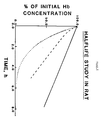
- the product has a hyperbolic oxygen dissociation curve with P50 of 34 mmHg measured at 37°C in PBS buffer, pH 7.2, a Hill coefficient of ⁇ 1.5 and a plasma half-life of ⁇ 4 hours measured in 30% hypervolemic transfusion in rat.
- the reaction mixture was cooled in an ice-water bath, and 4.4 mmoles of sodium borohydride in 2.5 ml of degassed 1 mM NaOH was added under positive inert gas pressure. Reduction was allowed to proceed for 45 minutes.
- the HPLC gel permeation chromatographic profile revealed that greater than 95% of the ovine hemoglobin half-molecule was intramolecularly stabilized, similar to that shown in Figure 1.
- the final product so obtained has unaltered gel permeation chromatographic composition and physical-chemical properties.
- the product has a P50 of 38 mmHg measured at 37°C in PBS buffer, pH 7.4.
- the reaction mixture was cooled in an ice-water bath and 1.2 m moles of sodium borohydride in 1 ml of 1 mM NaOH was added under positive inert gas pressure. Reduction was allowed to proceed for 45 minutes.
- the HPLC gel permeation chromatographic profile shows that greater than 90% of the rat hemoglobin half-molecule was intramolecularly stabilized similar to that shown in Figure 1.
- the final product obtained has unaltered gel permeation chromatographic composition and physical-chemical properties.
- the product has a P50 of 24 mmHg measured at 37°C in PBS buffer, pH 7.4, and a Hill coefficient of ⁇ 1.0.
- This chromatographic profile was obtained using as buffer 50 mM phosphate and 150 mM NaCl, pH 7, with the apparatus described for Figure 1.
- the poly Hb(T) was resolved into monomers (peak a), the sum of dimer, trimer and tetramer (peak b) as well as pentamers or greater (peak c), on a Superose®-12 prepacked HR 10/30 column at a flow-rate of 0.4 ml/min.
- Such a composition of the polymerized product was shown to be iso-oncotic at a concentration of 14 g/dl.
- the final product so obtained has unaltered gel permeation chromatographic composition and physical-chemical properties before and after pasteurization, has a hyperbolic oxygen dissociation curve with uniform P50 of 32 mmHg, and a Hill coefficient 1.6 measured at 37°C in PBS buffer, pH 7.2.
- the isolated purified fractions of HemoSafe II(T), i.e. monomer, dimer, trimer, tetramer, pentamer or greater has indistinguishable P50, a Hill coefficient and a half-life of 7-8 hours measured in rat with a 30% hypervolemic replacement.
- the final product so obtained has unaltered gel permeation chromatographic composition and physical-chemical properties before and after pasteurization.
- the product has a P50 of 24 mmHg measured at 37°C in PBS buffer, pH 7.2, a Hill coefficient of 1.3 and a half-life of ⁇ 7-8 hours in rat, measured at 30% hypervolemic replacement.
- the reaction mixture was cooled in an ice-water bath and 3.5 mmoles of sodium borohydride in 4.0 ml of degassed 1 mM NaOH was added under positive inert gas pressure. Reduction was allowed to proceed for 45 minutes.
- the HPLC gel permeation chromatographic profile shows that >95% of the bovine hemoglobin half-molecule was stabilized and cross-linked and the product composition is similar to that described in Example 8.
- the final product so obtained has unaltered gel permeation chromatographic composition and physical properties before and after pasteurization.
- the product has a P50 of 28 mmHg measured at 37°C in PBS buffer, pH 7.4, and a Hill coefficient of ⁇ 1.5 and a half-life of 7-8 hours measured in rat with a 30% hypervolemic replacement.
- the reaction mixture was cooled in ice-water bath and 1.2 mmoles of sodium borohydride in 1.0 ml of degassed 1 mM NaOH was added under positive inert gas pressure. Reduction was allowed to proceed for 45 minutes.
- the HPLC gel permeation chromatographic profile shows that >98% of the rat hemoglobin half-molecule was stabilized and cross-linked and the product composition is similar to that described in Example 8.
- the final product so obtained has unaltered gel permeation chromatographic composition and physical-chemical properties before and after pasteurization.
- the final product so obtained has unaltered gel permeation chromatographic composition and physical-chemical properties.
- the product has a P50 of 27 mm Hg at 37°C in PBS buffer, pH 7.2, a Hill coefficient of ⁇ 1.2, and a half-life of 7-8 hours measured in rat with a 30% hypervolemic replacement.
- O-raffinose conformationally stabilized human HemoSafe I(T)-inulin conjugate was prepared according to Example 12 and converted to the met-HemoSafe as described in Example 13.
- Human HemoSafe II was prepared according to Example 8. Samples were prepared consisting of HemoSafe II, HemoSafe II spiked with 104 HIV units, and 104 HIV units only. In control experiments, it was demonstrated that the presence of HemoSafe II in solution does not affect the infectivity of HIV-I. These samples were subjected to wet-heat at 56°C for one week. At the end of this treatment, the samples were assayed for HIV infectivity using an antigen assay. No HIV infectivity was detected in any of the samples.
Landscapes
- Health & Medical Sciences (AREA)
- Life Sciences & Earth Sciences (AREA)
- Chemical & Material Sciences (AREA)
- General Health & Medical Sciences (AREA)
- Animal Behavior & Ethology (AREA)
- Public Health (AREA)
- Veterinary Medicine (AREA)
- Medicinal Chemistry (AREA)
- Gastroenterology & Hepatology (AREA)
- Epidemiology (AREA)
- Proteomics, Peptides & Aminoacids (AREA)
- Engineering & Computer Science (AREA)
- Bioinformatics & Cheminformatics (AREA)
- Pharmacology & Pharmacy (AREA)
- Organic Chemistry (AREA)
- Immunology (AREA)
- Biophysics (AREA)
- Genetics & Genomics (AREA)
- Molecular Biology (AREA)
- Biochemistry (AREA)
- Diabetes (AREA)
- Hematology (AREA)
- Chemical Kinetics & Catalysis (AREA)
- General Chemical & Material Sciences (AREA)
- Nuclear Medicine, Radiotherapy & Molecular Imaging (AREA)
- Medicines That Contain Protein Lipid Enzymes And Other Medicines (AREA)
- Medicines Containing Material From Animals Or Micro-Organisms (AREA)
- Medicines Containing Antibodies Or Antigens For Use As Internal Diagnostic Agents (AREA)
- Enzymes And Modification Thereof (AREA)
- Preparation Of Compounds By Using Micro-Organisms (AREA)
- Medicinal Preparation (AREA)
- Peptides Or Proteins (AREA)
- Dental Preparations (AREA)
- Materials For Medical Uses (AREA)
- Pharmaceuticals Containing Other Organic And Inorganic Compounds (AREA)
Claims (24)
- Produit hémoglobinique à conformation stabilisée, constitué essentiellement d'unités d'hémoglobine tétramères qui sont à la fois stabilisées contre la dissociation en unités d'hémoglobine dimères et ont également une conformation stabilisée contre les changements de conformation entre la conformation T et la conformation R lors de la formation de préparations aqueuses les contenant, lesdites unités tétramères ayant des liaisons chimiques covalentes amino secondaires entre les chaînes de globine des sous-unités, de façon à effectuer la stabilisation, les liaisons ayant été formées par réaction de l'hémoglobine avec un polyaldéhyde pour former des liens de base de Schiff, puis réduction en liaisons amino secondaires.
- Produit hémoglobinique stabilisé selon la revendication 1, dont la conformation est stabilisée sous la conformation T.
- Produit hémoglobinique stabilisé selon la revendication 2, formé par réaction de l'hémoglobine avec un polyaldéhyde produit par décyclisation par oxydation d'un oligosaccharide ayant au moins deux fragments de sucre.
- Produit hémoglobinique stabilisé selon la revendication 3, dans lequel l'oligosaccharide a jusqu'à sept fragments de sucre par molécule.
- Produit hémoglobinique stabilisé selon la revendication 4, dans lequel l'oligosaccharide est le raffinose.
- Produit hémoglobinique stabilisé selon l'une quelconque des revendications 1 à 5, dans lequel l'hémoglobine est d'origine humaine.
- Produit hémoglobinique stabilisé selon l'une quelconque des revendications 1 à 5, dans lequel l'hémoglobine est d'origine animale.
- Produit hémoglobinique stabilisé comprenant plusieurs unités d'hémoglobine tétramères stabilisées selon la revendication 1, liées ensemble par covalence pour former un produit hémoglobinique polymère dans lequel chaque unité d'hémoglobine a une stabilité de conformation et une stabilité de dissociation.
- Produit hémoglobinique polymère stabilisé selon la revendication 8, dans lequel chaque unité d'hémoglobine est stabilisée sous la conformation T.
- Produit hémoglobinique polymère stabilisé selon la revendication 9 et ayant une composition telle que 20 à 25 % des constituants soient des unités tétramères d'hémoglobine, 50 à 60 % des constituants soient des oligomères d'hémoglobine de 2 à 5 unités d'hémoglobine tétramères, 20 à 25 % des constituants soient des tétramères d'hémoglobine isolés et 1 à 2 % soient des dimères de sous-unités d'hémoglobine.
- Procédé pour préparer une solution aqueuse d'hémoglobine tétramère à conformation stabilisée, qui comprend la réaction de l'hémoglobine en solution aqueuse avec un agent réticulant polyaldéhydique pour former des liaisons covalentes de base de Schiff entre les chaînes de la même unité d'hémoglobine tétramère, puis la réduction desdites liaisons en liaisons amino secondaires, et l'obtention, à partir du mélange réactionnel, d'une solution aqueuse d'hémoglobine dans laquelle au moins 95 % de l'hémoglobine est sous la forme tétramère à conformation stabilisée.
- Procédé selon la revendication 11, dans lequel l'agent réticulant polyaldéhydique a au moins quatre groupes aldéhydiques par molécule.
- Procédé selon la revendication 12, dans lequel la réaction de réticulation est effectuée avec un rapport molaire des groupes aldéhydes sur l'agent réticulant à l'hémoglobine d'au moins 12/1 et à une température dans la gamme approximative de 4 à 37°C.
- Procédé selon la revendication 13, dans lequel la réaction de réticulation est également effectuée à une concentration en hémoglobine en solution aqueuse d'environ 1 à 20 g/dl et à un pH de 6,7 à 9,5.
- Procédé selon la revendication 14, dans lequel le polyaldéhyde est le produit de l'oxydation décyclisante d'un oligosaccharide.
- Procédé selon la revendication 15, dans lequel l'oligosaccharide a jusqu'à 36 fragments de sucre.
- Procédé selon la revendication 16, dans lequel l'oligosaccharide est choisi dans le groupe constitué par le maltose, le maltotriose, le maltotétrose, le maltopentose, le maltohexose, le maltoheptose et le raffinose.
- Produit hémoglobinique stabilisé selon la revendication 1 complexé avec du monoxyde de carbone, ledit complexe en solution aqueuse étant capable de résister à des températures atteignant 60°C pendant 10 heures, sans présenter sensiblement de dénaturation ni de décomposition.
- Complexe CO-hémoglobine stabilisé selon la revendication 18, dans lequel les unités d'hémoglobine sont stabilisées sous la conformation T.
- Complexe CO-hémoglobine stabilisé selon la revendication 19 sous forme lyophilisée.
- Complexe CO-hémoglobine stabilisé selon la revendication 19, dans lequel le rapport molaire du complexe CO-hémoglobine est d'environ 4/1.
- Procédé de préparation d'un produit hémoglobinique, approprié à l'emploi comme succédané du sang et dépourvu d'infection virale transmissible, qui comprend la pasteurisation du complexe d'hémoglobine et de monoxyde de carbone stabilisé de la revendication 19 par chauffage d'une solution de celui-ci à des températures appropriées à la pasteurisation pendant un temps suffisant pour provoquer une désactivation effective de tout contaminant viral dudit complexe, puis la réaction du complexe avec de l'oxygène pour le transformer en un complexe d'oxy- ou de désoxyhémoglobine ou un de leurs mélanges.
- Succédané du sang à inactivation virale, pasteurisé, contenant de l'oxy- ou de la désoxyhémoglobine à conformation et à dissociation stabilisées ou un de leurs mélanges, préparé selon le procédé de la revendication 22.
- Procédé pour préparer un complexe de méthémoglobine approprié à l'emploi comme succédané du sang pour l'épuration du cyanure, qui comprend l'oxydation de l'oxyhémoglobine pasteurisée de la revendication 23 dans des conditions appropriées.
Priority Applications (1)
| Application Number | Priority Date | Filing Date | Title |
|---|---|---|---|
| AT88304059T ATE84970T1 (de) | 1987-05-05 | 1988-05-05 | Pasteurisierbares, lyophilisierbares blutsurrogat auf haemoglobinbasis. |
Applications Claiming Priority (2)
| Application Number | Priority Date | Filing Date | Title |
|---|---|---|---|
| GB8710598 | 1987-05-05 | ||
| GB878710598A GB8710598D0 (en) | 1987-05-05 | 1987-05-05 | Hemoglobin based blood substitute |
Publications (3)
| Publication Number | Publication Date |
|---|---|
| EP0290252A2 EP0290252A2 (fr) | 1988-11-09 |
| EP0290252A3 EP0290252A3 (en) | 1989-01-18 |
| EP0290252B1 true EP0290252B1 (fr) | 1993-01-27 |
Family
ID=10616838
Family Applications (1)
| Application Number | Title | Priority Date | Filing Date |
|---|---|---|---|
| EP88304059A Expired - Lifetime EP0290252B1 (fr) | 1987-05-05 | 1988-05-05 | Substitut du sang pasteurisable, lyophilisable, à base d'hémoglobine |
Country Status (15)
| Country | Link |
|---|---|
| US (2) | US4857636A (fr) |
| EP (1) | EP0290252B1 (fr) |
| JP (1) | JPS63297330A (fr) |
| KR (1) | KR910009343B1 (fr) |
| CN (1) | CN1032471C (fr) |
| AT (1) | ATE84970T1 (fr) |
| AU (1) | AU610883B2 (fr) |
| CA (1) | CA1306583C (fr) |
| DE (1) | DE3877811T2 (fr) |
| DK (1) | DK174286B1 (fr) |
| ES (1) | ES2053729T3 (fr) |
| GB (1) | GB8710598D0 (fr) |
| IL (1) | IL86258A (fr) |
| NZ (1) | NZ224479A (fr) |
| ZA (1) | ZA883171B (fr) |
Families Citing this family (95)
| Publication number | Priority date | Publication date | Assignee | Title |
|---|---|---|---|---|
| US5464814A (en) * | 1986-06-20 | 1995-11-07 | Northfield Laboratories, Inc. | Acellular red blood cell substitute |
| US5753616A (en) * | 1986-11-10 | 1998-05-19 | Biopure Corporation | Method for producing a stable polymerized hemoglobin blood-substitute |
| DE3778006D1 (de) * | 1986-11-10 | 1992-05-07 | Biopure Corp | Hochreines, halbsynthetisches blutsurrogat. |
| US5955581A (en) * | 1986-11-10 | 1999-09-21 | Biopure Corporation | Method for producing a stable polymerized hemoglobin blood-substitute |
| US5854209A (en) * | 1995-03-23 | 1998-12-29 | Biopure Corporation | Method for oxygenating tissue having reduced red blood cell flow |
| US5189146A (en) * | 1987-05-05 | 1993-02-23 | Her Majesty The Queen In Right Of Canada, As Represented By The Minister Of National Defence | Pasteurizable, freeze-driable hemoglobin-based blood substitute |
| GB8710598D0 (en) * | 1987-05-05 | 1987-06-10 | Star Medical Diagnostics Ltd | Hemoglobin based blood substitute |
| US5545727A (en) * | 1989-05-10 | 1996-08-13 | Somatogen, Inc. | DNA encoding fused di-alpha globins and production of pseudotetrameric hemoglobin |
| US5844090A (en) * | 1994-05-09 | 1998-12-01 | Somatogen, Inc. | Modified hemoglobin-like compounds |
| US5386014A (en) * | 1989-11-22 | 1995-01-31 | Enzon, Inc. | Chemically modified hemoglobin as an effective, stable, non-immunogenic red blood cell substitute |
| US5234903A (en) * | 1989-11-22 | 1993-08-10 | Enzon, Inc. | Chemically modified hemoglobin as an effective, stable non-immunogenic red blood cell substitute |
| US5439882A (en) * | 1989-12-29 | 1995-08-08 | Texas Tech University Health Sciences Center | Blood substitute |
| DE69026513T2 (de) * | 1989-12-29 | 1996-09-12 | Texas Tech University Health Sciences Centre, Lubbock, Tex. | Polyhämoglobin durch purinderivate und glutathion stabilisiert |
| AU658821B2 (en) * | 1990-03-14 | 1995-05-04 | University Of Toronto Innovations Foundation, The | Acyl phosphate esters and modification of proteins therewith |
| US5248766A (en) * | 1990-08-17 | 1993-09-28 | Baxter International Inc. | Oxirane-modified hemoglobin based composition |
| WO1992008478A1 (fr) * | 1990-11-20 | 1992-05-29 | Enzon, Inc. | Procede d'amelioration de la stabilite du stockage a long terme de produits d'hemoglobine |
| SK54993A3 (en) * | 1990-11-29 | 1993-10-06 | Upjohn Co | Imidoester cross-linked hemoglobin compositions |
| ATE173273T1 (de) * | 1991-02-12 | 1998-11-15 | Univ Texas Tech | Verbesserter blutersatz |
| US5250665A (en) * | 1991-05-31 | 1993-10-05 | The University Of Toronto Innovations Foundation | Specifically β-β cross-linked hemoglobins and method of preparation |
| GB9617611D0 (en) * | 1996-08-22 | 1996-10-02 | Vasogen Inc | Treatment of autoimmune disease |
| US6669965B2 (en) | 1992-02-07 | 2003-12-30 | Vasogen Ireland Limited | Method of treating atherosclerosis |
| US5591457A (en) * | 1992-02-07 | 1997-01-07 | Vasogen Inc | Method of inhibiting the aggregation of blood platelets and stimulating the immune systems of a human |
| US5980954A (en) | 1992-02-07 | 1999-11-09 | Vasogen Ireland Limited | Treatment of autoimmune diseases |
| US5646252A (en) * | 1992-02-10 | 1997-07-08 | Staat Der Nederlanden, De Minister Van Defensie, Voor Deze: Het Hoofd Van De Afdeling Militair Geneeskundig Beleid | Hemoglobin composition and preparation thereof |
| US5399671A (en) * | 1992-11-18 | 1995-03-21 | Kluger; Ronald | Specifically crosslinked hemoglobin with free functionality |
| ES2095751T3 (es) * | 1993-03-16 | 1997-02-16 | Hemosol Inc | Regulacion selectiva de hemoglobinas mediante sacaridos de anillo abierto oxidados. |
| AU6523194A (en) * | 1993-03-26 | 1994-10-24 | Biorelease Technologies, Inc. | Compositions including heme-containing proteins and methods relating thereto |
| US5578564A (en) * | 1993-07-23 | 1996-11-26 | Somatogen, Inc. | Nickel-free hemoglobin and methods for producing such hemoglobin |
| US5840851A (en) * | 1993-07-23 | 1998-11-24 | Plomer; J. Jeffrey | Purification of hemoglobin |
| US5767089A (en) * | 1993-08-16 | 1998-06-16 | Hsia; Jen-Chang | Compositions and methods utilizing nitroxides in combination with biocompatible macromolecules |
| US5807831A (en) * | 1993-08-16 | 1998-09-15 | Hsia; Jen-Chang | Compositions and methods utilizing nitroxides in combination with biocompatible macromolecules |
| TW381022B (en) * | 1993-08-16 | 2000-02-01 | Hsia Jen Chang | Compositions and methods utilizing nitroxides to avoid oxygen toxicity, particularly in stabilized, polymerized, conjugated, or encapsulated hemoglobin used as a red cell substitute |
| US5840701A (en) * | 1993-08-16 | 1998-11-24 | Hsia; Jen-Chang | Compositions and methods utilizing nitroxides in combination with biocompatible macromolecules |
| US5725839A (en) * | 1993-08-16 | 1998-03-10 | Hsia; Jen-Chang | Compositions and methods utilizing nitroxides in combination with biocompatible macromolecules for ERI or MRI |
| US5804561A (en) * | 1993-08-16 | 1998-09-08 | Hsia; Jen-Chang | Compositions and methods utilizing nitroxides in combination with biocompatible macromolecules |
| US5741893A (en) * | 1993-08-16 | 1998-04-21 | Hsia; Jen-Chang | Compositions and methods utilizing nitroxides in combination with biocompatible macromolecules |
| US5824781A (en) * | 1993-08-16 | 1998-10-20 | Hsia; Jen-Chang | Compositions and methods utilizing nitroxides in combination with biocompatible macromolecules |
| US5817632A (en) * | 1993-08-16 | 1998-10-06 | Hsia; Jen-Chang | Compositions and methods utilizing nitroxides in combination with biocompatible macromolecules |
| US5631219A (en) * | 1994-03-08 | 1997-05-20 | Somatogen, Inc. | Method of stimulating hematopoiesis with hemoglobin |
| US6242417B1 (en) | 1994-03-08 | 2001-06-05 | Somatogen, Inc. | Stabilized compositions containing hemoglobin |
| CA2135739C (fr) * | 1994-11-14 | 1997-10-21 | Felice D'agnillo | Complexes hemoglobine-enzyme |
| US6288027B1 (en) | 1995-03-23 | 2001-09-11 | Biopure Corporation | Preserving a hemoglobin blood substitute with a transparent overwrap |
| US5895810A (en) * | 1995-03-23 | 1999-04-20 | Biopure Corporation | Stable polymerized hemoglobin and use thereof |
| US5691452A (en) * | 1995-03-23 | 1997-11-25 | Biopure Corporation | Method for preserving a hemoglobin blood substitute |
| US6610832B1 (en) | 1995-03-23 | 2003-08-26 | Biopure Corporation | Preserving a hemoglobin blood substitute with a transparent overwrap |
| US6271351B1 (en) | 1995-03-23 | 2001-08-07 | Biopure Corporation | Method for preserving a hemoglobin blood substitute |
| US5952470A (en) * | 1995-06-07 | 1999-09-14 | Biopure Corporation | Method for separating unmodified hemoglobin from cross-linked hemoglobin |
| US5691453A (en) * | 1995-06-07 | 1997-11-25 | Biopure Corporation | Separation of polymerized hemoglobin from unpolymerized hemoglobin on hydroxyapatite using HPLC |
| US5865784A (en) * | 1995-06-07 | 1999-02-02 | Alliance Pharmaceutical Corp. | Method of hemodilution facilitated by monitoring oxygenation status |
| WO1997010268A1 (fr) * | 1995-09-11 | 1997-03-20 | Staat Der Nederlanden, De Minister Van Defensie, Voor Deze: Het Hoofd Van De Afdeling Militair Geneeskundig Beleid | Hemoglobine obtenue par pulverisation-dessiccation |
| US5741894A (en) * | 1995-09-22 | 1998-04-21 | Baxter International, Inc. | Preparation of pharmaceutical grade hemoglobins by heat treatment in partially oxygenated form |
| AU1946397A (en) * | 1996-03-15 | 1997-10-01 | Staat Der Nederlanden, De Minister Van Defensie | Methods for producing hemoglobin preparations and preparations obtainable thereby |
| US5917020A (en) * | 1997-01-15 | 1999-06-29 | Kluger; Ronald H. | Bis-tetrameric hemoglobin and reagents for its production |
| US6436705B1 (en) | 1997-02-18 | 2002-08-20 | The United States Of America As Represented By The Secretary Of The Navy | Shape stabilized erythrocytes |
| US6358678B1 (en) | 1998-02-11 | 2002-03-19 | The United States Of America As Represented By The Secretary Of The Navy | Applications of reversible crosslinking and co-treatment in stabilization and viral inactivations of erythrocytes |
| US5814601A (en) * | 1997-02-28 | 1998-09-29 | The Regents Of The University Of California | Methods and compositions for optimization of oxygen transport by cell-free systems |
| AU735799C (en) * | 1997-02-28 | 2005-04-28 | Regents Of The University Of California, The | Methods and compositions for optimisation of oxygen transport by cell-free systems |
| CA2233725A1 (fr) * | 1998-03-31 | 1999-09-30 | Hemosol Inc. | Complexes d'amidon hydroxyethyles d'hemoglobine |
| DE10031744A1 (de) * | 2000-06-29 | 2002-01-17 | Sanguibio Tech Ag | Mit Blutplasma verträgliche, vernetzte und mit Polyalkylenoxiden konjugierte Säugetierhämoglobine als künstliche medizinische Sauerstoffträger, ihre Herstellung und ihre Verwendung |
| DE10031740A1 (de) * | 2000-06-29 | 2002-02-14 | Sanguibio Tech Ag | Künstliche Sauerstoffträger aus vernetztem modifizierten Human- oder Schweinehämoglobin mit verbesserten Eigenschaften, Verfahren zu ihrer technisch einfachen Herstellung aus gereinigtem Material in hohen Ausbeuten, sowie deren Verwendung |
| DE10031741A1 (de) * | 2000-06-29 | 2002-01-17 | Sanguibio Tech Ag | Einen Sauerstoffträger, ausgewählt aus Hämoglobin oder Hämoglobin- und Myoglobin-enthaltende Zubereitung als Externum zur natürlichen Regeneration der Haut bei Sauerstoff-Mangel |
| DE10031742A1 (de) * | 2000-06-29 | 2002-01-17 | Sanguibio Tech Ag | Verfahren zur Herstellung künstlicher Sauerstoffträger aus kovalent vernetzten Hämoglobinen mit verbesserten funktionellen Eigenschaften durch Vernetzung in Anwesenheit chemisch nicht reagierender Effektoren der Sauerstoffaffinität der Hämoglobine |
| CA2319966A1 (fr) * | 2000-09-19 | 2002-03-19 | Dextro-Sang Corporation | Conjugue dextrane/hemoglobine ameliore utilisable comme succedane de sang potentiel |
| US6747132B2 (en) | 2000-11-29 | 2004-06-08 | Apex Biosciences, Inc. | Methods for the synthesis of a modified hemoglobin solution |
| US6518010B2 (en) * | 2001-02-28 | 2003-02-11 | Biopure Corporation | Use of defibrinated blood for manufacture of a hemoglobin-based oxygen carrier |
| US6884228B2 (en) * | 2001-03-06 | 2005-04-26 | Baxter International Inc. | Automated system adaptable for use with different fluid circuits |
| US6808503B2 (en) * | 2001-03-06 | 2004-10-26 | Baxter International Inc. | Automated system and method for pre-surgical blood donation and fluid replacement |
| CA2444590C (fr) * | 2001-04-18 | 2009-12-01 | Robert L. Mcginnis | Solutions d'hemoglobine stabilisees |
| JP4416356B2 (ja) * | 2001-07-10 | 2010-02-17 | 克博 山本 | 食肉・食肉加工品退色防止方法 |
| SI1465643T1 (sl) | 2002-01-11 | 2008-06-30 | Sangart Inc | Postopki in sestavki za transport kisika z visokoafiniteto za kisik |
| US20030153491A1 (en) | 2002-01-11 | 2003-08-14 | Winslow Robert M. | Methods and compositions for oxygen transport comprising a high oxygen affinity modified hemoglobin |
| WO2003059286A2 (fr) * | 2002-01-11 | 2003-07-24 | Sangart, Inc. | Procedes et compositions pour transport d'oxygene comprenant une hemoglobine modifiee dans le plasma |
| WO2003059287A2 (fr) * | 2002-01-11 | 2003-07-24 | Sangart, Inc. | Procedes et compositions de transport d'oxygene comprenant un transporteur d'oxygene et un cristalloide en solution hypertonique |
| US20050164915A1 (en) | 2002-04-01 | 2005-07-28 | Sangart, Inc. | Compositions for oxygen transport comprising a high oxygen affinity modified hemoglobin |
| US7001715B2 (en) * | 2002-02-28 | 2006-02-21 | Biopure Corporation | Purification of red blood cells by separation and diafiltration |
| IL149611A (en) * | 2002-05-13 | 2011-07-31 | Safetin Ltd | Method for extended storage of viable and pathogen-safe blood and blood components using carbon monoxide |
| JP3912206B2 (ja) * | 2002-07-05 | 2007-05-09 | 株式会社日立製作所 | 筒内直接燃料噴射装置用燃料ポンプ |
| US20040072729A1 (en) * | 2002-10-10 | 2004-04-15 | Sunbio Inc. | High oxygen affinity PEG-hemoglobin as treatment for brain stroke |
| NZ541340A (en) * | 2003-01-29 | 2008-04-30 | Northfield Lab | Polymerized hemoglobin solutions having reduced amount of tetramer and method for preparing |
| AU2005279780B2 (en) * | 2004-08-31 | 2011-02-03 | Sangart, Inc. | Methods to enhance hemodynamic stability using oxygen carrying compositions |
| JP2009524436A (ja) * | 2006-01-24 | 2009-07-02 | ノースフィールド ラボラトリーズ、インコーポレイテッド | 重合したヘモグロビンの培地、並びに島細胞の単離及び移植におけるその使用 |
| US20090004159A1 (en) * | 2006-01-24 | 2009-01-01 | The Board Of Trustees Of The University Of Illinoi | Polymerized Hemoglobin Media and Its Use in Isolation and Transplantation of Islet Cells |
| US7759306B2 (en) * | 2006-05-16 | 2010-07-20 | Simoni Jan S | Methods of treating acute blood loss |
| US10172950B2 (en) | 2009-06-09 | 2019-01-08 | Prolong Pharmaceuticals, LLC | Hemoglobin compositions |
| US10172949B2 (en) | 2009-06-09 | 2019-01-08 | Prolong Pharmaceuticals, LLC | Hemoglobin compositions |
| KR102170375B1 (ko) * | 2009-06-09 | 2020-10-27 | 프로롱 파마슈티컬스, 엘엘씨 | 헤모글로빈 조성물 |
| US8273857B2 (en) * | 2009-09-22 | 2012-09-25 | Jen-Chang Hsia | Compositions and methods of use of neurovascular protective multifunctional polynitroxylated pegylated carboxy hemoglobins for transfusion and critical care medicine |
| US20110319858A1 (en) * | 2010-06-23 | 2011-12-29 | Bing Lou Wong | Method for the preparation of a heat stable oxygen carrier-containing pharmaceutical compositions and the use thereof |
| ES2432075T3 (es) * | 2011-07-23 | 2013-11-29 | Sastomed Gmbh | Espray para heridas |
| CN104411807B (zh) | 2012-04-03 | 2018-10-02 | 桑加特公司 | 琥珀酰亚胺活化型硝酰化合物及其用于蛋白质硝酰化的使用方法 |
| CN105188761B (zh) | 2013-03-15 | 2020-05-15 | 桑加特公司 | 聚环氧烷戊酸酯血红蛋白缀合物 |
| WO2014179793A1 (fr) | 2013-05-03 | 2014-11-06 | Washington University | Composition de succédané de sang et procédé d'utilisation |
| CN103387613B (zh) * | 2013-08-02 | 2016-12-28 | 西北大学 | 一种血红蛋白及血红蛋白氧载体病毒灭活的方法 |
| US10973883B2 (en) * | 2016-05-19 | 2021-04-13 | University of Pittsburgh—of the Commonwealth System of Higher Education | Reduced oxygen carriers and their use for the treatment of carboxyhemoglobinemia |
| EP4041193A1 (fr) * | 2019-10-11 | 2022-08-17 | Medical Technology Associates II, Inc. | Compositions d'hémoglobine stabilisées et leurs formulations pharmaceutiques |
Family Cites Families (25)
| Publication number | Priority date | Publication date | Assignee | Title |
|---|---|---|---|---|
| US4049673A (en) * | 1971-06-08 | 1977-09-20 | Israel Herbert Scheinberg | Preparation of ferrous hemoglobin and enzymatic digestion products thereof active for absorption of carbon monoxide |
| US3925344A (en) * | 1973-04-11 | 1975-12-09 | Community Blood Council | Plasma protein substitute |
| DE2449885C3 (de) * | 1974-10-21 | 1980-04-30 | Biotest-Serum-Institut Gmbh, 6000 Frankfurt | Verfahren zur Herstellung von chemisch modifizierten haltbaren Hämoglobinpräparaten sowie das nach diesem Verfahren hergestellte modifizierte Hämoglobinpräparat |
| US4001401A (en) * | 1975-02-02 | 1977-01-04 | Alza Corporation | Blood substitute and blood plasma expander comprising polyhemoglobin |
| US4001200A (en) * | 1975-02-27 | 1977-01-04 | Alza Corporation | Novel polymerized, cross-linked, stromal-free hemoglobin |
| US4061736A (en) * | 1975-02-02 | 1977-12-06 | Alza Corporation | Pharmaceutically acceptable intramolecularly cross-linked, stromal-free hemoglobin |
| US4053590A (en) * | 1975-02-27 | 1977-10-11 | Alza Corporation | Compositions of matter comprising macromolecular hemoglobin |
| US4136093A (en) * | 1976-04-23 | 1979-01-23 | Biotest-Serum-Institut Gmbh | Hemoglobin preparation with increased oxygen release |
| FR2387658A1 (fr) * | 1977-03-25 | 1978-11-17 | Ciba Geigy Ag | Procede pour combattre les microorganismes |
| US4623717A (en) * | 1980-03-05 | 1986-11-18 | Miles Laboratories, Inc. | Pasteurized therapeutically active protein compositions |
| DE3130770C2 (de) * | 1981-08-04 | 1986-06-19 | Biotest-Serum-Institut Gmbh, 6000 Frankfurt | Verfahren zur Gewinnung von hepatitissicheren, sterilen, pyrogenfreien und stromafreien Hämoglobinlösungen |
| US4473496A (en) * | 1981-09-14 | 1984-09-25 | The United States Of America As Represented By The Secretary Of The Army | Intramolecularly crosslinked hemoglobin |
| SE451542B (sv) * | 1982-08-23 | 1987-10-19 | Rationell Golftrening Hb | Utslagsanordning for golftrening |
| AU2965284A (en) * | 1983-05-04 | 1984-11-19 | Tye, R.W. | Modified crosslinked stroma-free tetrameric hemoglobin |
| US4529719A (en) * | 1983-05-04 | 1985-07-16 | Tye Ross W | Modified crosslinked stroma-free tetrameric hemoglobin |
| US4764369A (en) * | 1983-07-14 | 1988-08-16 | New York Blood Center Inc. | Undenatured virus-free biologically active protein derivatives |
| DE3330770A1 (de) * | 1983-08-26 | 1985-03-14 | Behringwerke Ag, 3550 Marburg | Verfahren zur pasteurisierung von humanplasma |
| JPS60258126A (ja) * | 1984-06-02 | 1985-12-20 | Teruo Tomota | 重合化ヘモグロビンの製造方法 |
| US4600531A (en) * | 1984-06-27 | 1986-07-15 | University Of Iowa Research Foundation | Production of alpha-alpha cross-linked hemoglobins in high yield |
| NL8403425A (nl) * | 1984-11-09 | 1986-06-02 | Stichting Gastransport | Stromavrije hemoglobine-oplossing, werkwijze voor de bereiding daarvan en toepassing daarvan. |
| US4584130A (en) * | 1985-03-29 | 1986-04-22 | University Of Maryland | Intramolecularly cross-linked hemoglobin and method of preparation |
| US4863964A (en) * | 1985-07-02 | 1989-09-05 | Biomedical Frontiers, Inc. | Method for the stabilization of deferoxamine to chelate free ions in physiological fluid |
| DE3778006D1 (de) * | 1986-11-10 | 1992-05-07 | Biopure Corp | Hochreines, halbsynthetisches blutsurrogat. |
| GB8710598D0 (en) * | 1987-05-05 | 1987-06-10 | Star Medical Diagnostics Ltd | Hemoglobin based blood substitute |
| US5069936A (en) * | 1987-06-25 | 1991-12-03 | Yen Richard C K | Manufacturing protein microspheres |
-
1987
- 1987-05-05 GB GB878710598A patent/GB8710598D0/en active Pending
-
1988
- 1988-04-29 CA CA000565563A patent/CA1306583C/fr not_active Expired - Lifetime
- 1988-04-29 US US07/187,721 patent/US4857636A/en not_active Expired - Lifetime
- 1988-05-03 IL IL8625888A patent/IL86258A/en not_active IP Right Cessation
- 1988-05-03 NZ NZ224479A patent/NZ224479A/en unknown
- 1988-05-04 DK DK198802428A patent/DK174286B1/da not_active IP Right Cessation
- 1988-05-04 ZA ZA883171A patent/ZA883171B/xx unknown
- 1988-05-04 KR KR1019880005223A patent/KR910009343B1/ko not_active Expired
- 1988-05-05 AT AT88304059T patent/ATE84970T1/de not_active IP Right Cessation
- 1988-05-05 DE DE8888304059T patent/DE3877811T2/de not_active Expired - Lifetime
- 1988-05-05 EP EP88304059A patent/EP0290252B1/fr not_active Expired - Lifetime
- 1988-05-05 CN CN88103596A patent/CN1032471C/zh not_active Expired - Lifetime
- 1988-05-05 AU AU15635/88A patent/AU610883B2/en not_active Expired
- 1988-05-05 ES ES88304059T patent/ES2053729T3/es not_active Expired - Lifetime
- 1988-05-06 JP JP63109257A patent/JPS63297330A/ja active Granted
-
1992
- 1992-07-27 US US07/918,610 patent/US5364932A/en not_active Expired - Lifetime
Also Published As
| Publication number | Publication date |
|---|---|
| IL86258A0 (en) | 1988-11-15 |
| AU1563588A (en) | 1988-11-10 |
| CN1032471C (zh) | 1996-08-07 |
| GB8710598D0 (en) | 1987-06-10 |
| CA1306583C (fr) | 1992-08-18 |
| IL86258A (en) | 1994-11-28 |
| ES2053729T3 (es) | 1994-08-01 |
| DK174286B1 (da) | 2002-11-11 |
| DK242888D0 (da) | 1988-05-04 |
| KR910009343B1 (ko) | 1991-11-12 |
| KR880013571A (ko) | 1988-12-21 |
| JPS63297330A (ja) | 1988-12-05 |
| ZA883171B (en) | 1989-03-29 |
| EP0290252A3 (en) | 1989-01-18 |
| US4857636A (en) | 1989-08-15 |
| EP0290252A2 (fr) | 1988-11-09 |
| AU610883B2 (en) | 1991-05-30 |
| JPH0532372B2 (fr) | 1993-05-14 |
| DE3877811D1 (fr) | 1993-03-11 |
| DE3877811T2 (de) | 1993-05-27 |
| US5364932A (en) | 1994-11-15 |
| NZ224479A (en) | 1991-04-26 |
| DK242888A (da) | 1988-11-06 |
| ATE84970T1 (de) | 1993-02-15 |
| CN1030425A (zh) | 1989-01-18 |
Similar Documents
| Publication | Publication Date | Title |
|---|---|---|
| EP0290252B1 (fr) | Substitut du sang pasteurisable, lyophilisable, à base d'hémoglobine | |
| US5189146A (en) | Pasteurizable, freeze-driable hemoglobin-based blood substitute | |
| JP2668446B2 (ja) | 精製したヘモグロビン溶液およびその製造方法 | |
| CA2473662C (fr) | Procedes et compositions pour le transport d'oxygene comprenant une hemoglobine modifie a haute affinite en oxygene | |
| NL8720283A (nl) | Acellulair vervangingsmiddel voor rode bloedlichaampjes. | |
| US5248766A (en) | Oxirane-modified hemoglobin based composition | |
| CA2072081C (fr) | Polyhemoglobine stabilisee par des derives de la purine et par le glutathion | |
| BG63919B1 (bg) | Неклетъчен заместител на червените кръвни клетки | |
| KR20070069154A (ko) | 산소 운반 조성물을 사용하여 혈역학적 안정성을향상시키는 방법 | |
| EP0586381B1 (fr) | Substitut de sang ameliore | |
| WO1999018979A1 (fr) | Composition d'hemoglobine stable lors de son stockage | |
| AU722301B2 (en) | Use of hemoglobin to prevent sepsis or treat systemic inflammatory response syndrome | |
| WO1999023967A1 (fr) | Utilisation de l'hemoglobine pour traiter un syndrome de reponse inflammatoire general |
Legal Events
| Date | Code | Title | Description |
|---|---|---|---|
| PUAI | Public reference made under article 153(3) epc to a published international application that has entered the european phase |
Free format text: ORIGINAL CODE: 0009012 |
|
| AK | Designated contracting states |
Kind code of ref document: A2 Designated state(s): AT BE CH DE ES FR GB GR IT LI LU NL SE |
|
| PUAL | Search report despatched |
Free format text: ORIGINAL CODE: 0009013 |
|
| AK | Designated contracting states |
Kind code of ref document: A3 Designated state(s): AT BE CH DE ES FR GB GR IT LI LU NL SE |
|
| 17P | Request for examination filed |
Effective date: 19890704 |
|
| 17Q | First examination report despatched |
Effective date: 19900608 |
|
| RAP1 | Party data changed (applicant data changed or rights of an application transferred) |
Owner name: HER MAJESTY THE QUEEN AS REPRESENTED BY THE MINIST |
|
| RAP1 | Party data changed (applicant data changed or rights of an application transferred) |
Owner name: HER MAJESTY THE QUEEN IN RIGHT OF CANADA AS REPRES |
|
| GRAA | (expected) grant |
Free format text: ORIGINAL CODE: 0009210 |
|
| AK | Designated contracting states |
Kind code of ref document: B1 Designated state(s): AT BE CH DE ES FR GB GR IT LI LU NL SE |
|
| REF | Corresponds to: |
Ref document number: 84970 Country of ref document: AT Date of ref document: 19930215 Kind code of ref document: T |
|
| REF | Corresponds to: |
Ref document number: 3877811 Country of ref document: DE Date of ref document: 19930311 |
|
| ITF | It: translation for a ep patent filed | ||
| ET | Fr: translation filed | ||
| REG | Reference to a national code |
Ref country code: GR Ref legal event code: FG4A Free format text: 3007652 |
|
| PLBE | No opposition filed within time limit |
Free format text: ORIGINAL CODE: 0009261 |
|
| STAA | Information on the status of an ep patent application or granted ep patent |
Free format text: STATUS: NO OPPOSITION FILED WITHIN TIME LIMIT |
|
| 26N | No opposition filed | ||
| EPTA | Lu: last paid annual fee | ||
| REG | Reference to a national code |
Ref country code: ES Ref legal event code: FG2A Ref document number: 2053729 Country of ref document: ES Kind code of ref document: T3 |
|
| EAL | Se: european patent in force in sweden |
Ref document number: 88304059.4 |
|
| REG | Reference to a national code |
Ref country code: GB Ref legal event code: IF02 |
|
| PGFP | Annual fee paid to national office [announced via postgrant information from national office to epo] |
Ref country code: ES Payment date: 20070507 Year of fee payment: 20 |
|
| PGFP | Annual fee paid to national office [announced via postgrant information from national office to epo] |
Ref country code: SE Payment date: 20070515 Year of fee payment: 20 |
|
| PGFP | Annual fee paid to national office [announced via postgrant information from national office to epo] |
Ref country code: CH Payment date: 20070518 Year of fee payment: 20 |
|
| PGFP | Annual fee paid to national office [announced via postgrant information from national office to epo] |
Ref country code: AT Payment date: 20070524 Year of fee payment: 20 Ref country code: LU Payment date: 20070524 Year of fee payment: 20 |
|
| PGFP | Annual fee paid to national office [announced via postgrant information from national office to epo] |
Ref country code: NL Payment date: 20070531 Year of fee payment: 20 |
|
| PGFP | Annual fee paid to national office [announced via postgrant information from national office to epo] |
Ref country code: BE Payment date: 20070612 Year of fee payment: 20 |
|
| PGFP | Annual fee paid to national office [announced via postgrant information from national office to epo] |
Ref country code: DE Payment date: 20070725 Year of fee payment: 20 |
|
| PGFP | Annual fee paid to national office [announced via postgrant information from national office to epo] |
Ref country code: GB Payment date: 20070502 Year of fee payment: 20 |
|
| PGFP | Annual fee paid to national office [announced via postgrant information from national office to epo] |
Ref country code: IT Payment date: 20070530 Year of fee payment: 20 |
|
| PGFP | Annual fee paid to national office [announced via postgrant information from national office to epo] |
Ref country code: FR Payment date: 20070503 Year of fee payment: 20 |
|
| REG | Reference to a national code |
Ref country code: GB Ref legal event code: PE20 Expiry date: 20080504 |
|
| PGFP | Annual fee paid to national office [announced via postgrant information from national office to epo] |
Ref country code: GR Payment date: 20070504 Year of fee payment: 20 |
|
| REG | Reference to a national code |
Ref country code: CH Ref legal event code: PL |
|
| BE20 | Be: patent expired |
Owner name: HER MAJESTY THE *QUEEN IN RIGHT OF CANADA AS REPRE Effective date: 20080505 |
|
| NLV7 | Nl: ceased due to reaching the maximum lifetime of a patent |
Effective date: 20080505 |
|
| EUG | Se: european patent has lapsed | ||
| REG | Reference to a national code |
Ref country code: ES Ref legal event code: FD2A Effective date: 20080506 |
|
| PG25 | Lapsed in a contracting state [announced via postgrant information from national office to epo] |
Ref country code: NL Free format text: LAPSE BECAUSE OF EXPIRATION OF PROTECTION Effective date: 20080505 Ref country code: ES Free format text: LAPSE BECAUSE OF EXPIRATION OF PROTECTION Effective date: 20080506 |
|
| PG25 | Lapsed in a contracting state [announced via postgrant information from national office to epo] |
Ref country code: GB Free format text: LAPSE BECAUSE OF EXPIRATION OF PROTECTION Effective date: 20080504 |