EP0298385A2 - Dérivés d'anthracycline à activité cytostatique - Google Patents
Dérivés d'anthracycline à activité cytostatique Download PDFInfo
- Publication number
- EP0298385A2 EP0298385A2 EP88110522A EP88110522A EP0298385A2 EP 0298385 A2 EP0298385 A2 EP 0298385A2 EP 88110522 A EP88110522 A EP 88110522A EP 88110522 A EP88110522 A EP 88110522A EP 0298385 A2 EP0298385 A2 EP 0298385A2
- Authority
- EP
- European Patent Office
- Prior art keywords
- formula
- hydrogen
- compound
- group
- hydroxy
- Prior art date
- Legal status (The legal status is an assumption and is not a legal conclusion. Google has not performed a legal analysis and makes no representation as to the accuracy of the status listed.)
- Withdrawn
Links
Images






Classifications
-
- C—CHEMISTRY; METALLURGY
- C07—ORGANIC CHEMISTRY
- C07H—SUGARS; DERIVATIVES THEREOF; NUCLEOSIDES; NUCLEOTIDES; NUCLEIC ACIDS
- C07H15/00—Compounds containing hydrocarbon or substituted hydrocarbon radicals directly attached to hetero atoms of saccharide radicals
- C07H15/20—Carbocyclic rings
- C07H15/24—Condensed ring systems having three or more rings
-
- C—CHEMISTRY; METALLURGY
- C07—ORGANIC CHEMISTRY
- C07H—SUGARS; DERIVATIVES THEREOF; NUCLEOSIDES; NUCLEOTIDES; NUCLEIC ACIDS
- C07H15/00—Compounds containing hydrocarbon or substituted hydrocarbon radicals directly attached to hetero atoms of saccharide radicals
- C07H15/20—Carbocyclic rings
- C07H15/24—Condensed ring systems having three or more rings
- C07H15/252—Naphthacene radicals, e.g. daunomycins, adriamycins
-
- A—HUMAN NECESSITIES
- A61—MEDICAL OR VETERINARY SCIENCE; HYGIENE
- A61P—SPECIFIC THERAPEUTIC ACTIVITY OF CHEMICAL COMPOUNDS OR MEDICINAL PREPARATIONS
- A61P35/00—Antineoplastic agents
-
- C—CHEMISTRY; METALLURGY
- C07—ORGANIC CHEMISTRY
- C07D—HETEROCYCLIC COMPOUNDS
- C07D309/00—Heterocyclic compounds containing six-membered rings having one oxygen atom as the only ring hetero atom, not condensed with other rings
Definitions
- the invention relates to new, cytostatically active anthracycline derivatives including anthracycline conjugates, processes for their preparation and their use in medicaments.
- the anthracycline substance class has been known for a long time and since the structure determination of the rhodomycins, the adriamycin or the daunomycin and the cytostatic activity of certain representatives of this anthracycline class became known, a large number of anthracyclines have been isolated biologically from representatives of the actinomycetes genus and their streptomyces Effectiveness researched.
- anthracyclines daunomycin and adriamycin and anthracyclines which are derived from these two basic structures, e.g. 4'-epi-adriamycin, 4'-methoxyadriamycin or 4'-deoxyadriamycin can already be used for the therapy of tumors.
- anthracyclines mentioned only apply to rapidly growing tumors, e.g. in leukemia, develop good effectiveness, but not in slow-growing solid tumors, e.g. the carcinomas of the colon or pancreas.
- anthracyclines in tumor therapy, in addition to the desired cytostatic activity, they have undesirable side effects, such as haematological or cardiac toxicity, and that tumors are resistant to the anthracycline used for therapy, mostly adriamycin, after a certain time will.
- anthracycline derivatives which are distinguished by a new spectrum of activity and lower toxicity. Furthermore, it is an object of the present invention to connect the newly created anthracyclines in a suitable manner to monoclonal antibodies and the like, which are directed against tumors, and to develop spacers for this purpose which, under suitable conditions, permit the cytostatic agent bound to the antibody to be released.
- A is an anthracyclinone of the general formula II or III
- M is a structure of the general formula IV or V
- a and b are identical or different types of substituted or unsubstituted alkyl radicals of an aliphatic or benzyl aromatic nature, and they can in particular be C1-C8-alkyl, cyanomethyl, benzyl or in the ortho, meta or para position by methyl, ethyl, hydroxy, methoxy, Ethoxy, nitro, cyano, fluorine, chlorine or bromine can be substituted benzyl or a and b form, together with the N atom, an optionally substituted heterocyclic ring, preferably a morpholino or cyanomorpholino structure, where in formulas II and III
- cytostatic substance which is able to slow down or prevent the growth of tumors, directly by means of a suitable carrier, for example by means of a monoclonal antibody which is directed against the respective tumor to the desired site of action, namely the respective tumor.
- a suitable carrier for example by means of a monoclonal antibody which is directed against the respective tumor to the desired site of action, namely the respective tumor.
- the substance coupled to the carrier can develop its cytostatic action against the tumor in a very targeted manner under suitable conditions.
- the coupling of the cytostatic substance to the antibody reduces the general toxic effect of the substance on the host tissue.
- cytostatic substances can be, for example, vinca alkaloids, anti-metabolites, anthracyclines or plant or bacterial toxins (see Gallego & Price, Drugs of Today (1985), 21, 511).
- anthracyclines daunomycin and adriamycin when appropriately coupled to a protein, have a lower general toxicity than when in solution and, when appropriately coupled to an immunoglobulin, in certain cases and can slow tumor growth compared to a suitable control (see e.g. Gallego & Price, Drugs of Today (1985), 21, 511).
- Maleimido derivatives of carboxylic acids are particularly suitable for this selective esterification at the 4′-hydroxy group of the sugar segment.
- cytorhodin-S which was linked to a monoclonal antibody by means of a 4-maleimidobenzoyl spacer via the free OH group of the rhodosamine sugar building block, can be released again from the conjugate in aqueous solution.
- maleimidoacyl derivatives of anthracyclines which are prepared can be easily coupled to thiol groups of proteins or antibodies, the thiol groups in the protein either being present natively or being introduced chemically or being produced by reducing disulfide bonds.
- thiol groups in the protein either being present natively or being introduced chemically or being produced by reducing disulfide bonds.
- anthracycline derivatives claimed in the subclaims have proven to be particularly advantageous.
- an SH group-bearing protein or peptide residue in particular an SH group-bearing immunoglobulin or immunoglobulin residue, preferably with an immunoglobulin or immunoglobulin residue, in which the SH groups by reducing the interchain Disulfide bonds were generated, preferably with a SH group-bearing monoclonal antibody, preferably with a monoclonal antibody in which the SH groups were generated by reducing the interchain disulfide bonds, or also preferably with a Fab or Fab ' Fragment of an antibody, preferably a monoclonal antibody, or with substances of the aforementioned type provided with artificially introduced SH groups in a suitable aqueous buffer system, for example in a physiological saline solution or a phosphate buffer containing saline, which may contain up to 30 percent by volume of one Water-miscible organic solvents means such as dimethylformamide or dimethyl sulfoxide can maintain at a temperature between, for example, 0
- a compound of the formula I is obtained in which A, a, b, R1, R2, R3, R4, R5, X and Y have the meaning given and in which M is a structure of the formula V in which Z the said And P has a protein or peptide residue, in particular an immunoglobulin or immunoglobulin residue, preferably a monoclonal antibody, a Fab or Fab 'fragment or F (ab') 2 fragment, a hormone, lectin or growth factor May be rest, where P may optionally carry further anthracycline derivatives of the claimed coupled type.
- the new anthracycline derivatives obtained by the process according to the invention are distinguished by cytostatic activity and can therefore be processed together with the customary pharmaceutical confectioning and / or diluting agents to give medicaments which are used in cancer therapy.
- the dosage and application corresponds essentially to that for the known substances adriamycin, daunomycin, aclacinomycin, 4'-epi-adriamycin, 4'-methoxyadriamycin or 4'-deoxyadriamycin.
- the pharmaceuticals produced in this way can additionally contain other active ingredients, provided that these do not show any undesirable side effects together with the compounds according to the invention.
- the anthracycline-antibody conjugates obtained by the process according to the invention generally contain 6 to 10 moles of anthracycline per mole of antibody, sufficient to develop a suitable cytostatic effect.
- the clinical dose for the application of the anthracycline-antibody conjugates can - depending on the coupled anthracycline, the tumor to be treated, the antibody used and the administration - vary and can, for example in the case of a cytorhodine-S conjugate, between, for example, 1 to 20 mg conjugate per day per adult.
- the conjugate can be administered, for example, intravenously, intraperitoneally or rectally.
- compositions which contain an anthracycline-antibody conjugate are produced by the methods customary in immunology or medicine, it being possible to use the customary carriers and additives.
- the injectable preparation can e.g. be powdery and, in addition to the conjugate, a suitable stabilizer, e.g. Contain mannitol, sucrose, lactose, maltose, glucose or fructose. This preparation mixture is dissolved in water, divided into ampoules, lyophilized and sealed.
- the rectally administrable preparation can be prepared using a lipophilic base, for example a mixture consisting of cocoa oil or fatty acid triglycerides with a fatty acid monoglyceride in various mixing ratios, or using a hydrophilic base, for example polyethylene glycol or glycerogelatin, whereby by gentle Heating the mixture a solution is prepared, which is homogenized and applied.
- a lipophilic base for example a mixture consisting of cocoa oil or fatty acid triglycerides with a fatty acid monoglyceride in various mixing ratios
- a hydrophilic base for example polyethylene glycol or glycerogelatin
- the cytostatic activity of the compounds according to the invention was tested using L1210 mouse leukemia cells.
- the colony formation of L1210 leukemia cells in agar plates was used for this. This method serves to demonstrate the influence of the test substances on the growth behavior of the cells over 1 hour or over several generations. With a cell cycle time of 10-12 hours, about 14 consecutive generations are observed in the test period of 7 days.
- the cytostatically active substances according to the invention bring about a reduction in the number of colonies to be observed compared to an untreated control sample.
- test procedure result from the following procedure for determining colony formation.
- the structure of the compounds prepared was determined by means of 1 H-NMR spectroscopy, UV spectroscopy and HPLC technology. As far as possible, the course of the reactions was followed by thin layer chromatography on silica gel prefabricated plates. The results of the cytotoxicity test against L1210 cells in vitro are summarized in Table 1.
- Example 3 4.6 g (30 mmol) of 4-amino-2-hydroxybenzoic acid were reacted with 3.4 g (34.7 mmol) of maleic anhydride and worked up in analogy to Example 3.
- the filter cake obtained (6.26 g) was analogous to Example 1 stirred with 1 g of sodium acetate in 35 ml of acetic anhydride at 60 ° C. for 1 h, filtered and the solvent removed.
- the gel-like residue was stirred in 200 ml of water at 70 ° C. for 2 h. After cooling to room temperature, the resulting precipitate was filtered off through a glass frit (P3), washed several times with water and dried (yield 0.91 g).
- cytorhodin-S (Huber et al., ZA Patent No. 84/5538) were dissolved in 60 ml of chloroform dissolved and mixed with 20 ml of saturated sodium bicarbonate solution.
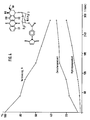
- the respective compound was dissolved in acetonitrile at a concentration of 1 mg / ml and diluted with phosphate-buffered saline pH 7.2 in a volume ratio of 1: 100, a concentration of 10 ⁇ g / ml being obtained in each case. These solutions were each incubated at 37 ° C. in the dark and 20 ⁇ l aliquots were examined using the HPLC technique after defined times. The stabilities of these compounds are shown graphically in FIG. 1.
- a solution of the monoclonal antibody MAK 431/26 (EP 0160897 from 07.05.84 and the equivalent US application Ser.No. 729,578 - Bosslet et al.) (330 mg correspond 10.5 ml of a 3.12 percent.
- the reduced antibody was isolated by gel filtration over Sephadex G25 in physiological saline pH 6.0 in a resulting elution volume of 30 ml.
- This solution was diluted with 6 ml of dimethylformamide, which had previously been adjusted to pH 6.0, and with a solution of 74 mg (64.9 ⁇ mol) of 4 ⁇ -O- (4-maleimidobenzoyl) -cytorhodin-S (compound 12), dissolved in 2 ml of dimethylformamide, added and incubated at room temperature in the dark. After 1 h, the precipitate formed was centrifuged at 4000 g and the supernatant was pressed through a 0.45 ⁇ filter. The filtrate was filtered through a Sephadex G25 column (80 ml gel) in 0.85% saline solution pH 7.2, the conjugate being separated from unbound cytostatic.
- the elution peak (120 ml) containing the conjugate was collected.
- the conjugate was precipitated by adding an ammonium sulfate solution (120 ml) saturated at room temperature, the precipitate was centrifuged off, dialyzed against physiological saline of pH 7.2 and sterile filtered, whereby 13 ml of conjugate solution was obtained.
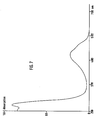
- the degree of coupling was determined by absorbance measurement (FIG. 6) and by determining the protein content of the solution according to Kjeldahl to be 7.6 mol cytorhodin-S per mol MAK 431/26.
- the conjugate solution was preserved at -18 ° C.
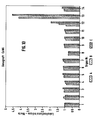
- Cytorhodin-S-anti-CEA-MAK 431/26 (compound 13) and cytorhodin-S-anti-pancreatic CA-MAK 494/32 (compound 14) were tested in the xenograft nude mouse model for their in vivo binding to CO -WI tumors examined (distribution 3 days after application). Polyclonal mouse immunoglobulin served as a control.
- conjugates and the control were in each case known per se (IODO-GEN R method, oxidizing agent: 1,3,4,6-tetrachloro-3a, 6a-diphenylglycoluril; PJ Fraker, JC Speck (1978), Biochem. Biophys. Res. Commun. 80 , 849-857) marked with radioactive iodine (conjugates: 13 I, control: 12 I) and administered iv in groups of 3 nude mice each. After 3 days, the animals were sacrificed and the individual organs measured for 125 I and 131 I contained.
- IODO-GEN R method oxidizing agent: 1,3,4,6-tetrachloro-3a, 6a-diphenylglycoluril; PJ Fraker, JC Speck (1978), Biochem. Biophys. Res. Commun. 80 , 849-857
- conjugates and the control were in each case known per se (IODO-GEN R method, oxidizing agent: 1,3,4,6
- ⁇ -Rhodomycin-I-MAK 494/32 compound 16
- cytorhodin-S-MAK 494/32 compound 14
- MAK 494/32 uncoupled
- conjugates 13 (A) and 14 (B) in the organs of xenograft-bearing nude mice expressed in ng conjugate per g organ or tumor, after 3 days.
- the values mentioned are mean values from 3 individual animals each.
Landscapes
- Chemical & Material Sciences (AREA)
- Organic Chemistry (AREA)
- Health & Medical Sciences (AREA)
- General Health & Medical Sciences (AREA)
- Life Sciences & Earth Sciences (AREA)
- Molecular Biology (AREA)
- Genetics & Genomics (AREA)
- Biotechnology (AREA)
- Biochemistry (AREA)
- Engineering & Computer Science (AREA)
- Veterinary Medicine (AREA)
- Chemical Kinetics & Catalysis (AREA)
- Animal Behavior & Ethology (AREA)
- Pharmacology & Pharmacy (AREA)
- Nuclear Medicine, Radiotherapy & Molecular Imaging (AREA)
- Medicinal Chemistry (AREA)
- General Chemical & Material Sciences (AREA)
- Public Health (AREA)
- Pharmaceuticals Containing Other Organic And Inorganic Compounds (AREA)
- Medicinal Preparation (AREA)
- Peptides Or Proteins (AREA)
- Medicines Containing Antibodies Or Antigens For Use As Internal Diagnostic Agents (AREA)
- Medicines That Contain Protein Lipid Enzymes And Other Medicines (AREA)
- Saccharide Compounds (AREA)
Applications Claiming Priority (2)
| Application Number | Priority Date | Filing Date | Title |
|---|---|---|---|
| DE3722699 | 1987-07-09 | ||
| DE19873722699 DE3722699A1 (de) | 1987-07-09 | 1987-07-09 | Zytostatisch wirksame anthacyclin-konjugate |
Publications (2)
| Publication Number | Publication Date |
|---|---|
| EP0298385A2 true EP0298385A2 (fr) | 1989-01-11 |
| EP0298385A3 EP0298385A3 (fr) | 1990-07-25 |
Family
ID=6331230
Family Applications (1)
| Application Number | Title | Priority Date | Filing Date |
|---|---|---|---|
| EP88110522A Withdrawn EP0298385A3 (fr) | 1987-07-09 | 1988-07-01 | Dérivés d'anthracycline à activité cytostatique |
Country Status (8)
| Country | Link |
|---|---|
| EP (1) | EP0298385A3 (fr) |
| JP (1) | JPS6429392A (fr) |
| KR (1) | KR890002216A (fr) |
| AU (1) | AU1887788A (fr) |
| DE (1) | DE3722699A1 (fr) |
| DK (1) | DK383888A (fr) |
| FI (1) | FI883254A7 (fr) |
| PT (1) | PT87931A (fr) |
Cited By (4)
| Publication number | Priority date | Publication date | Assignee | Title |
|---|---|---|---|---|
| US4939158A (en) * | 1987-08-20 | 1990-07-03 | Ciba-Geigy Corporation | Phenanthridine derivatives and compositions containing them |
| EP0299350A3 (fr) * | 1987-07-09 | 1990-08-16 | BEHRINGWERKE Aktiengesellschaft | Dérivés d'anthracycline à activité cytostatique |
| WO1992016629A1 (fr) * | 1991-03-25 | 1992-10-01 | Leiras Oy | Procede de production d'antibiotiques, sequences d'adn, structures d'adn recombine et souches microbiennes utilisees |
| RU2145965C1 (ru) * | 1993-05-11 | 2000-02-27 | Фармация Энд Апджон С.П.А. | Биологически активные полимерсвязанные антрациклины, промежуточные соединения, способы получения и фармацевтическая композиция |
Families Citing this family (2)
| Publication number | Priority date | Publication date | Assignee | Title |
|---|---|---|---|---|
| DE3819092A1 (de) * | 1988-06-04 | 1989-12-14 | Behringwerke Ag | Zytostatisch wirksame anthracyclinderivate |
| DE19955582B4 (de) * | 1999-11-18 | 2004-07-22 | Jandratek Gmbh | Gegenstand mit einer ungeladenen, funktionalisierten Oberfläche umfassend ein Hydrogel, Verfahren zur Herstellung und Verwendung des Gegenstandes sowie Verbindungen zur Herstellung der Oberfläche |
Family Cites Families (2)
| Publication number | Priority date | Publication date | Assignee | Title |
|---|---|---|---|---|
| JPS61254598A (ja) * | 1985-05-02 | 1986-11-12 | Green Cross Corp:The | アントラサイクリン系化合物 |
| JPH0822869B2 (ja) * | 1986-06-25 | 1996-03-06 | ヘキストジヤパン株式会社 | サイトロジンs誘導体およびそれを含有する抗癌剤 |
-
1987
- 1987-07-09 DE DE19873722699 patent/DE3722699A1/de not_active Withdrawn
-
1988
- 1988-07-01 EP EP88110522A patent/EP0298385A3/fr not_active Withdrawn
- 1988-07-07 KR KR1019880008402A patent/KR890002216A/ko not_active Withdrawn
- 1988-07-07 FI FI883254A patent/FI883254A7/fi not_active IP Right Cessation
- 1988-07-07 PT PT87931A patent/PT87931A/pt not_active Application Discontinuation
- 1988-07-08 AU AU18877/88A patent/AU1887788A/en not_active Abandoned
- 1988-07-08 JP JP63169165A patent/JPS6429392A/ja active Pending
- 1988-07-08 DK DK383888A patent/DK383888A/da not_active Application Discontinuation
Cited By (5)
| Publication number | Priority date | Publication date | Assignee | Title |
|---|---|---|---|---|
| EP0299350A3 (fr) * | 1987-07-09 | 1990-08-16 | BEHRINGWERKE Aktiengesellschaft | Dérivés d'anthracycline à activité cytostatique |
| US4939158A (en) * | 1987-08-20 | 1990-07-03 | Ciba-Geigy Corporation | Phenanthridine derivatives and compositions containing them |
| US5093247A (en) * | 1987-08-20 | 1992-03-03 | Ciba-Geigy Corporation | Phenanthridine derivatives, process for the preparation thereof, and compositions containing them |
| WO1992016629A1 (fr) * | 1991-03-25 | 1992-10-01 | Leiras Oy | Procede de production d'antibiotiques, sequences d'adn, structures d'adn recombine et souches microbiennes utilisees |
| RU2145965C1 (ru) * | 1993-05-11 | 2000-02-27 | Фармация Энд Апджон С.П.А. | Биологически активные полимерсвязанные антрациклины, промежуточные соединения, способы получения и фармацевтическая композиция |
Also Published As
| Publication number | Publication date |
|---|---|
| PT87931A (pt) | 1989-06-30 |
| KR890002216A (ko) | 1989-04-10 |
| AU1887788A (en) | 1989-01-12 |
| JPS6429392A (en) | 1989-01-31 |
| EP0298385A3 (fr) | 1990-07-25 |
| DE3722699A1 (de) | 1989-01-19 |
| FI883254A7 (fi) | 1989-01-10 |
| FI883254A0 (fi) | 1988-07-07 |
| DK383888A (da) | 1989-01-10 |
| DK383888D0 (da) | 1988-07-08 |
Similar Documents
| Publication | Publication Date | Title |
|---|---|---|
| DE69103255T2 (de) | Säureempfindliche Linkermoleküle. | |
| DE3872939T2 (de) | Verfahren zur herstellung von polyesterharzzusammensetzung. | |
| DE3930696A1 (de) | Gallensaeurederivate, verfahren zu ihrer herstellung, verwendung als arzneimittel | |
| DE3881576T2 (de) | Anthracyclinderivate und ihre Verwendung. | |
| EP0270992B1 (fr) | Dérivés d'anthracycline à activité cytostatique | |
| EP0298385A2 (fr) | Dérivés d'anthracycline à activité cytostatique | |
| DE2831579A1 (de) | Anthracyclinglykoside | |
| DE2838895A1 (de) | 5-iminodaunomycin | |
| DE3634496C2 (de) | Glukosylmoranolinderivate und ihre Herstellung | |
| EP0277310A1 (fr) | Dérivés d'anthracycline à activité cytostatique | |
| EP0345598B1 (fr) | Dérivés d'anthracyclines à activité cytostatique | |
| DE2316705C3 (de) | 9-Acyl -3' '-thiomethoxymethyl-SF-837-Macrolid-Antibiotika, Verfahren zur Herstellung derselben sowie diese enthaltende pharmazeutische Mittel | |
| EP0660825B1 (fr) | Macrolactame (cyclamenol) anti-inflammatoire | |
| EP0374759A2 (fr) | Rhodomycines modifiés sur le motif carbohydrate | |
| DE3913759A1 (de) | Zytostatisch wirksame rhodomycin-dimere | |
| DE2942818A1 (de) | Neue antitumoranthracycline mit einem gehalt an verzweigtkettigen aminodeoxyzuckern und verfahren zu deren herstellung | |
| EP0432309B1 (fr) | Sucres, procédé pour leur préparation et leur utilisation | |
| DE3722698A1 (de) | Zytostatisch wirksame anthracyclinderivate | |
| AT392277B (de) | Diels-alder-addukte aus streptazolin und naphthochinonen und ihre oxidationsprodukte, verfahren zu ihrer herstellung und ihre verwendung zur herstellung von arzneimitteln | |
| DE69601908T2 (de) | Fluorenthaltende Anthracyclinderivate mit Mono- oder Di-0-aminoalkanoylaten Hydroxylgruppen in dem Zuckerrest | |
| DE69405544T2 (de) | 4'-0-sulfonylanthracyclinderivate | |
| DE3727139A1 (de) | Acylderivate von urdamycin a, ihre herstellung und ihre verwendung | |
| EP0394983A2 (fr) | Dérivés d'anthracyclines à activité cytostatique | |
| WO1998015573A1 (fr) | Glycoconjugues de camptothecine lies en 20-o | |
| DE3920062A1 (de) | Neue anthracyclin-derivate, ein verfahren zu ihrer herstellung und ihre verwendung als arzneimittel |
Legal Events
| Date | Code | Title | Description |
|---|---|---|---|
| PUAI | Public reference made under article 153(3) epc to a published international application that has entered the european phase |
Free format text: ORIGINAL CODE: 0009012 |
|
| AK | Designated contracting states |
Kind code of ref document: A2 Designated state(s): AT BE CH DE ES FR GB GR IT LI LU NL SE |
|
| PUAL | Search report despatched |
Free format text: ORIGINAL CODE: 0009013 |
|
| AK | Designated contracting states |
Kind code of ref document: A3 Designated state(s): AT BE CH DE ES FR GB GR IT LI LU NL SE |
|
| STAA | Information on the status of an ep patent application or granted ep patent |
Free format text: STATUS: THE APPLICATION HAS BEEN WITHDRAWN |
|
| 18W | Application withdrawn |
Withdrawal date: 19901213 |