EP0302801A1 - Impfstoffe, deren charakteristischer Epitop in einem Picornavirusprotein, insbesondere Poliovirus, inkorporiert ist - Google Patents
Impfstoffe, deren charakteristischer Epitop in einem Picornavirusprotein, insbesondere Poliovirus, inkorporiert ist Download PDFInfo
- Publication number
- EP0302801A1 EP0302801A1 EP88402057A EP88402057A EP0302801A1 EP 0302801 A1 EP0302801 A1 EP 0302801A1 EP 88402057 A EP88402057 A EP 88402057A EP 88402057 A EP88402057 A EP 88402057A EP 0302801 A1 EP0302801 A1 EP 0302801A1
- Authority
- EP
- European Patent Office
- Prior art keywords
- picornavirus
- epitope
- sequence
- heterologous
- protein
- Prior art date
- Legal status (The legal status is an assumption and is not a legal conclusion. Google has not performed a legal analysis and makes no representation as to the accuracy of the status listed.)
- Granted
Links
- 241000709664 Picornaviridae Species 0.000 title claims abstract description 85
- 241000991587 Enterovirus C Species 0.000 title claims abstract description 66
- 108090000623 proteins and genes Proteins 0.000 title claims abstract description 35
- 102000004169 proteins and genes Human genes 0.000 title claims abstract description 32
- 229960005486 vaccine Drugs 0.000 title claims abstract description 20
- 230000002163 immunogen Effects 0.000 claims abstract description 35
- 210000000234 capsid Anatomy 0.000 claims abstract description 20
- 239000013612 plasmid Substances 0.000 claims description 58
- 239000002299 complementary DNA Substances 0.000 claims description 40
- 241000700605 Viruses Species 0.000 claims description 28
- 238000000034 method Methods 0.000 claims description 24
- 241000709721 Hepatovirus A Species 0.000 claims description 22
- 108020004414 DNA Proteins 0.000 claims description 20
- 239000002773 nucleotide Substances 0.000 claims description 20
- 125000003729 nucleotide group Chemical group 0.000 claims description 20
- 238000010276 construction Methods 0.000 claims description 18
- 238000004519 manufacturing process Methods 0.000 claims description 16
- 241000709661 Enterovirus Species 0.000 claims description 13
- 230000010076 replication Effects 0.000 claims description 11
- 125000003275 alpha amino acid group Chemical group 0.000 claims description 10
- 108091008146 restriction endonucleases Proteins 0.000 claims description 9
- 238000006467 substitution reaction Methods 0.000 claims description 9
- 208000015181 infectious disease Diseases 0.000 claims description 8
- 108020004511 Recombinant DNA Proteins 0.000 claims description 7
- 108020000999 Viral RNA Proteins 0.000 claims description 7
- 241000274177 Juniperus sabina Species 0.000 claims description 6
- 239000003795 chemical substances by application Substances 0.000 claims description 6
- 230000002458 infectious effect Effects 0.000 claims description 5
- 108091028043 Nucleic acid sequence Proteins 0.000 claims description 4
- 230000001717 pathogenic effect Effects 0.000 claims description 4
- 238000013518 transcription Methods 0.000 claims description 4
- 230000035897 transcription Effects 0.000 claims description 4
- 230000009466 transformation Effects 0.000 claims description 4
- 241000709701 Human poliovirus 1 Species 0.000 claims description 3
- 125000000539 amino acid group Chemical group 0.000 claims description 3
- 230000001105 regulatory effect Effects 0.000 claims description 3
- 238000012163 sequencing technique Methods 0.000 claims description 3
- 108010067390 Viral Proteins Proteins 0.000 claims description 2
- 238000004113 cell culture Methods 0.000 claims description 2
- 230000001413 cellular effect Effects 0.000 claims description 2
- 201000010099 disease Diseases 0.000 claims description 2
- 208000037265 diseases, disorders, signs and symptoms Diseases 0.000 claims description 2
- 101710121417 Envelope glycoprotein Proteins 0.000 claims 1
- 241000430519 Human rhinovirus sp. Species 0.000 claims 1
- 102100021696 Syncytin-1 Human genes 0.000 claims 1
- 102100023935 Transmembrane glycoprotein NMB Human genes 0.000 claims 1
- 238000010839 reverse transcription Methods 0.000 claims 1
- 108700010850 rotavirus proteins Proteins 0.000 claims 1
- 108091007466 transmembrane glycoproteins Proteins 0.000 claims 1
- 239000013598 vector Substances 0.000 abstract description 23
- 239000004480 active ingredient Substances 0.000 abstract 1
- 108020004635 Complementary DNA Proteins 0.000 description 38
- 239000012634 fragment Substances 0.000 description 32
- 238000010804 cDNA synthesis Methods 0.000 description 28
- 108091034117 Oligonucleotide Proteins 0.000 description 26
- 210000004027 cell Anatomy 0.000 description 24
- 101710197658 Capsid protein VP1 Proteins 0.000 description 20
- 101710118046 RNA-directed RNA polymerase Proteins 0.000 description 20
- 101710132601 Capsid protein Proteins 0.000 description 19
- 101710108545 Viral protein 1 Proteins 0.000 description 19
- JLCPHMBAVCMARE-UHFFFAOYSA-N [3-[[3-[[3-[[3-[[3-[[3-[[3-[[3-[[3-[[3-[[3-[[5-(2-amino-6-oxo-1H-purin-9-yl)-3-[[3-[[3-[[3-[[3-[[3-[[5-(2-amino-6-oxo-1H-purin-9-yl)-3-[[5-(2-amino-6-oxo-1H-purin-9-yl)-3-hydroxyoxolan-2-yl]methoxy-hydroxyphosphoryl]oxyoxolan-2-yl]methoxy-hydroxyphosphoryl]oxy-5-(5-methyl-2,4-dioxopyrimidin-1-yl)oxolan-2-yl]methoxy-hydroxyphosphoryl]oxy-5-(6-aminopurin-9-yl)oxolan-2-yl]methoxy-hydroxyphosphoryl]oxy-5-(6-aminopurin-9-yl)oxolan-2-yl]methoxy-hydroxyphosphoryl]oxy-5-(6-aminopurin-9-yl)oxolan-2-yl]methoxy-hydroxyphosphoryl]oxy-5-(6-aminopurin-9-yl)oxolan-2-yl]methoxy-hydroxyphosphoryl]oxyoxolan-2-yl]methoxy-hydroxyphosphoryl]oxy-5-(5-methyl-2,4-dioxopyrimidin-1-yl)oxolan-2-yl]methoxy-hydroxyphosphoryl]oxy-5-(4-amino-2-oxopyrimidin-1-yl)oxolan-2-yl]methoxy-hydroxyphosphoryl]oxy-5-(5-methyl-2,4-dioxopyrimidin-1-yl)oxolan-2-yl]methoxy-hydroxyphosphoryl]oxy-5-(5-methyl-2,4-dioxopyrimidin-1-yl)oxolan-2-yl]methoxy-hydroxyphosphoryl]oxy-5-(6-aminopurin-9-yl)oxolan-2-yl]methoxy-hydroxyphosphoryl]oxy-5-(6-aminopurin-9-yl)oxolan-2-yl]methoxy-hydroxyphosphoryl]oxy-5-(4-amino-2-oxopyrimidin-1-yl)oxolan-2-yl]methoxy-hydroxyphosphoryl]oxy-5-(4-amino-2-oxopyrimidin-1-yl)oxolan-2-yl]methoxy-hydroxyphosphoryl]oxy-5-(4-amino-2-oxopyrimidin-1-yl)oxolan-2-yl]methoxy-hydroxyphosphoryl]oxy-5-(6-aminopurin-9-yl)oxolan-2-yl]methoxy-hydroxyphosphoryl]oxy-5-(4-amino-2-oxopyrimidin-1-yl)oxolan-2-yl]methyl [5-(6-aminopurin-9-yl)-2-(hydroxymethyl)oxolan-3-yl] hydrogen phosphate Polymers Cc1cn(C2CC(OP(O)(=O)OCC3OC(CC3OP(O)(=O)OCC3OC(CC3O)n3cnc4c3nc(N)[nH]c4=O)n3cnc4c3nc(N)[nH]c4=O)C(COP(O)(=O)OC3CC(OC3COP(O)(=O)OC3CC(OC3COP(O)(=O)OC3CC(OC3COP(O)(=O)OC3CC(OC3COP(O)(=O)OC3CC(OC3COP(O)(=O)OC3CC(OC3COP(O)(=O)OC3CC(OC3COP(O)(=O)OC3CC(OC3COP(O)(=O)OC3CC(OC3COP(O)(=O)OC3CC(OC3COP(O)(=O)OC3CC(OC3COP(O)(=O)OC3CC(OC3COP(O)(=O)OC3CC(OC3COP(O)(=O)OC3CC(OC3COP(O)(=O)OC3CC(OC3COP(O)(=O)OC3CC(OC3COP(O)(=O)OC3CC(OC3CO)n3cnc4c(N)ncnc34)n3ccc(N)nc3=O)n3cnc4c(N)ncnc34)n3ccc(N)nc3=O)n3ccc(N)nc3=O)n3ccc(N)nc3=O)n3cnc4c(N)ncnc34)n3cnc4c(N)ncnc34)n3cc(C)c(=O)[nH]c3=O)n3cc(C)c(=O)[nH]c3=O)n3ccc(N)nc3=O)n3cc(C)c(=O)[nH]c3=O)n3cnc4c3nc(N)[nH]c4=O)n3cnc4c(N)ncnc34)n3cnc4c(N)ncnc34)n3cnc4c(N)ncnc34)n3cnc4c(N)ncnc34)O2)c(=O)[nH]c1=O JLCPHMBAVCMARE-UHFFFAOYSA-N 0.000 description 19
- 230000003472 neutralizing effect Effects 0.000 description 19
- 229940024606 amino acid Drugs 0.000 description 16
- 235000001014 amino acid Nutrition 0.000 description 16
- 150000001413 amino acids Chemical class 0.000 description 15
- 230000035772 mutation Effects 0.000 description 14
- 208000000474 Poliomyelitis Diseases 0.000 description 12
- 239000000203 mixture Substances 0.000 description 12
- 235000018102 proteins Nutrition 0.000 description 12
- 108091032973 (ribonucleotides)n+m Proteins 0.000 description 10
- 241000894006 Bacteria Species 0.000 description 10
- TWRXJAOTZQYOKJ-UHFFFAOYSA-L Magnesium chloride Chemical compound [Mg+2].[Cl-].[Cl-] TWRXJAOTZQYOKJ-UHFFFAOYSA-L 0.000 description 10
- PHTQWCKDNZKARW-UHFFFAOYSA-N isoamylol Chemical compound CC(C)CCO PHTQWCKDNZKARW-UHFFFAOYSA-N 0.000 description 10
- 108090000765 processed proteins & peptides Proteins 0.000 description 10
- 239000000427 antigen Substances 0.000 description 9
- 102000036639 antigens Human genes 0.000 description 9
- 108091007433 antigens Proteins 0.000 description 9
- 108020004705 Codon Proteins 0.000 description 8
- 102000004196 processed proteins & peptides Human genes 0.000 description 8
- 230000003612 virological effect Effects 0.000 description 8
- 102000040650 (ribonucleotides)n+m Human genes 0.000 description 7
- QKNYBSVHEMOAJP-UHFFFAOYSA-N 2-amino-2-(hydroxymethyl)propane-1,3-diol;hydron;chloride Chemical compound Cl.OCC(N)(CO)CO QKNYBSVHEMOAJP-UHFFFAOYSA-N 0.000 description 7
- 229960000723 ampicillin Drugs 0.000 description 7
- AVKUERGKIZMTKX-NJBDSQKTSA-N ampicillin Chemical compound C1([C@@H](N)C(=O)N[C@H]2[C@H]3SC([C@@H](N3C2=O)C(O)=O)(C)C)=CC=CC=C1 AVKUERGKIZMTKX-NJBDSQKTSA-N 0.000 description 7
- AIYUHDOJVYHVIT-UHFFFAOYSA-M caesium chloride Chemical compound [Cl-].[Cs+] AIYUHDOJVYHVIT-UHFFFAOYSA-M 0.000 description 7
- 238000009396 hybridization Methods 0.000 description 7
- 238000006386 neutralization reaction Methods 0.000 description 7
- HEDRZPFGACZZDS-UHFFFAOYSA-N Chloroform Chemical compound ClC(Cl)Cl HEDRZPFGACZZDS-UHFFFAOYSA-N 0.000 description 6
- LFQSCWFLJHTTHZ-UHFFFAOYSA-N Ethanol Chemical compound CCO LFQSCWFLJHTTHZ-UHFFFAOYSA-N 0.000 description 6
- 241001465754 Metazoa Species 0.000 description 6
- 241000283973 Oryctolagus cuniculus Species 0.000 description 6
- 238000003780 insertion Methods 0.000 description 6
- 230000037431 insertion Effects 0.000 description 6
- WSFSSNUMVMOOMR-UHFFFAOYSA-N Formaldehyde Chemical compound O=C WSFSSNUMVMOOMR-UHFFFAOYSA-N 0.000 description 5
- CKLJMWTZIZZHCS-REOHCLBHSA-N L-aspartic acid Chemical compound OC(=O)[C@@H](N)CC(O)=O CKLJMWTZIZZHCS-REOHCLBHSA-N 0.000 description 5
- 241000288906 Primates Species 0.000 description 5
- 230000000890 antigenic effect Effects 0.000 description 5
- 238000006243 chemical reaction Methods 0.000 description 5
- 238000003776 cleavage reaction Methods 0.000 description 5
- 238000000605 extraction Methods 0.000 description 5
- 230000001939 inductive effect Effects 0.000 description 5
- 229910001629 magnesium chloride Inorganic materials 0.000 description 5
- 238000002844 melting Methods 0.000 description 5
- 230000000717 retained effect Effects 0.000 description 5
- 230000007017 scission Effects 0.000 description 5
- 238000002741 site-directed mutagenesis Methods 0.000 description 5
- CURLTUGMZLYLDI-UHFFFAOYSA-N Carbon dioxide Chemical compound O=C=O CURLTUGMZLYLDI-UHFFFAOYSA-N 0.000 description 4
- KCXVZYZYPLLWCC-UHFFFAOYSA-N EDTA Chemical compound OC(=O)CN(CC(O)=O)CCN(CC(O)=O)CC(O)=O KCXVZYZYPLLWCC-UHFFFAOYSA-N 0.000 description 4
- ISWSIDIOOBJBQZ-UHFFFAOYSA-N Phenol Chemical compound OC1=CC=CC=C1 ISWSIDIOOBJBQZ-UHFFFAOYSA-N 0.000 description 4
- 241000702670 Rotavirus Species 0.000 description 4
- 239000011543 agarose gel Substances 0.000 description 4
- 235000011089 carbon dioxide Nutrition 0.000 description 4
- 230000029087 digestion Effects 0.000 description 4
- 208000005252 hepatitis A Diseases 0.000 description 4
- 238000000338 in vitro Methods 0.000 description 4
- 238000011534 incubation Methods 0.000 description 4
- 230000008018 melting Effects 0.000 description 4
- 239000000725 suspension Substances 0.000 description 4
- 238000011282 treatment Methods 0.000 description 4
- 210000002845 virion Anatomy 0.000 description 4
- 102100022717 Atypical chemokine receptor 1 Human genes 0.000 description 3
- 108091003079 Bovine Serum Albumin Proteins 0.000 description 3
- 101000583086 Bunodosoma granuliferum Delta-actitoxin-Bgr2b Proteins 0.000 description 3
- 108090000565 Capsid Proteins Proteins 0.000 description 3
- 241000282693 Cercopithecidae Species 0.000 description 3
- 102100023321 Ceruloplasmin Human genes 0.000 description 3
- 102000012410 DNA Ligases Human genes 0.000 description 3
- 108010061982 DNA Ligases Proteins 0.000 description 3
- 102000004190 Enzymes Human genes 0.000 description 3
- 108090000790 Enzymes Proteins 0.000 description 3
- 101000678879 Homo sapiens Atypical chemokine receptor 1 Proteins 0.000 description 3
- 241000725303 Human immunodeficiency virus Species 0.000 description 3
- 238000004458 analytical method Methods 0.000 description 3
- 239000000872 buffer Substances 0.000 description 3
- 230000009089 cytolysis Effects 0.000 description 3
- 239000012894 fetal calf serum Substances 0.000 description 3
- 238000002347 injection Methods 0.000 description 3
- 239000007924 injection Substances 0.000 description 3
- 210000002966 serum Anatomy 0.000 description 3
- 238000001890 transfection Methods 0.000 description 3
- 230000001018 virulence Effects 0.000 description 3
- BFSVOASYOCHEOV-UHFFFAOYSA-N 2-diethylaminoethanol Chemical compound CCN(CC)CCO BFSVOASYOCHEOV-UHFFFAOYSA-N 0.000 description 2
- 229920001817 Agar Polymers 0.000 description 2
- 101100084595 Caenorhabditis elegans pam-1 gene Proteins 0.000 description 2
- 102000053602 DNA Human genes 0.000 description 2
- 102000016928 DNA-directed DNA polymerase Human genes 0.000 description 2
- 108010014303 DNA-directed DNA polymerase Proteins 0.000 description 2
- 229920002307 Dextran Polymers 0.000 description 2
- 206010019799 Hepatitis viral Diseases 0.000 description 2
- 101000740205 Homo sapiens Sal-like protein 1 Proteins 0.000 description 2
- 241000700588 Human alphaherpesvirus 1 Species 0.000 description 2
- KZSNJWFQEVHDMF-BYPYZUCNSA-N L-valine Chemical compound CC(C)[C@H](N)C(O)=O KZSNJWFQEVHDMF-BYPYZUCNSA-N 0.000 description 2
- 108010021757 Polynucleotide 5'-Hydroxyl-Kinase Proteins 0.000 description 2
- 102000008422 Polynucleotide 5'-hydroxyl-kinase Human genes 0.000 description 2
- 102100037204 Sal-like protein 1 Human genes 0.000 description 2
- FAPWRFPIFSIZLT-UHFFFAOYSA-M Sodium chloride Chemical compound [Na+].[Cl-] FAPWRFPIFSIZLT-UHFFFAOYSA-M 0.000 description 2
- 101710137500 T7 RNA polymerase Proteins 0.000 description 2
- 101800001690 Transmembrane protein gp41 Proteins 0.000 description 2
- 239000007984 Tris EDTA buffer Substances 0.000 description 2
- KZSNJWFQEVHDMF-UHFFFAOYSA-N Valine Natural products CC(C)C(N)C(O)=O KZSNJWFQEVHDMF-UHFFFAOYSA-N 0.000 description 2
- 239000008272 agar Substances 0.000 description 2
- 230000002238 attenuated effect Effects 0.000 description 2
- 230000001580 bacterial effect Effects 0.000 description 2
- 238000010367 cloning Methods 0.000 description 2
- 239000013078 crystal Substances 0.000 description 2
- 238000011161 development Methods 0.000 description 2
- 238000010790 dilution Methods 0.000 description 2
- 239000012895 dilution Substances 0.000 description 2
- 239000000499 gel Substances 0.000 description 2
- 230000005847 immunogenicity Effects 0.000 description 2
- 238000001727 in vivo Methods 0.000 description 2
- 229940031551 inactivated vaccine Drugs 0.000 description 2
- 230000002779 inactivation Effects 0.000 description 2
- 239000011159 matrix material Substances 0.000 description 2
- 108020004999 messenger RNA Proteins 0.000 description 2
- 238000012986 modification Methods 0.000 description 2
- 230000004048 modification Effects 0.000 description 2
- 150000007523 nucleic acids Chemical class 0.000 description 2
- 230000008569 process Effects 0.000 description 2
- 230000003362 replicative effect Effects 0.000 description 2
- 239000000523 sample Substances 0.000 description 2
- 239000000243 solution Substances 0.000 description 2
- 230000001131 transforming effect Effects 0.000 description 2
- 239000004474 valine Substances 0.000 description 2
- 201000001862 viral hepatitis Diseases 0.000 description 2
- XLYOFNOQVPJJNP-UHFFFAOYSA-N water Substances O XLYOFNOQVPJJNP-UHFFFAOYSA-N 0.000 description 2
- HRPVXLWXLXDGHG-UHFFFAOYSA-N Acrylamide Chemical compound NC(=O)C=C HRPVXLWXLXDGHG-UHFFFAOYSA-N 0.000 description 1
- 229920000936 Agarose Polymers 0.000 description 1
- 102000002260 Alkaline Phosphatase Human genes 0.000 description 1
- 108020004774 Alkaline Phosphatase Proteins 0.000 description 1
- XWGJDUSDTRPQRK-ZLUOBGJFSA-N Asn-Ala-Ser Chemical compound OC[C@@H](C(O)=O)NC(=O)[C@H](C)NC(=O)[C@@H](N)CC(N)=O XWGJDUSDTRPQRK-ZLUOBGJFSA-N 0.000 description 1
- JSHWXQIZOCVWIA-ZKWXMUAHSA-N Asp-Ser-Val Chemical compound [H]N[C@@H](CC(O)=O)C(=O)N[C@@H](CO)C(=O)N[C@@H](C(C)C)C(O)=O JSHWXQIZOCVWIA-ZKWXMUAHSA-N 0.000 description 1
- 108010041397 CD4 Antigens Proteins 0.000 description 1
- UXVMQQNJUSDDNG-UHFFFAOYSA-L Calcium chloride Chemical compound [Cl-].[Cl-].[Ca+2] UXVMQQNJUSDDNG-UHFFFAOYSA-L 0.000 description 1
- 201000009030 Carcinoma Diseases 0.000 description 1
- 241000710190 Cardiovirus Species 0.000 description 1
- 108010078791 Carrier Proteins Proteins 0.000 description 1
- 102000014914 Carrier Proteins Human genes 0.000 description 1
- 241000700198 Cavia Species 0.000 description 1
- 206010008631 Cholera Diseases 0.000 description 1
- 101710117490 Circumsporozoite protein Proteins 0.000 description 1
- 208000035473 Communicable disease Diseases 0.000 description 1
- 206010012735 Diarrhoea Diseases 0.000 description 1
- 238000002965 ELISA Methods 0.000 description 1
- 241001466953 Echovirus Species 0.000 description 1
- 241000701867 Enterobacteria phage T7 Species 0.000 description 1
- 241000588724 Escherichia coli Species 0.000 description 1
- 241001131785 Escherichia coli HB101 Species 0.000 description 1
- 108700028146 Genetic Enhancer Elements Proteins 0.000 description 1
- KTSZUNRRYXPZTK-BQBZGAKWSA-N Gly-Gln-Glu Chemical compound NCC(=O)N[C@@H](CCC(N)=O)C(=O)N[C@@H](CCC(O)=O)C(O)=O KTSZUNRRYXPZTK-BQBZGAKWSA-N 0.000 description 1
- 239000004471 Glycine Substances 0.000 description 1
- 108090000288 Glycoproteins Proteins 0.000 description 1
- 102000003886 Glycoproteins Human genes 0.000 description 1
- 241000700721 Hepatitis B virus Species 0.000 description 1
- 241000282412 Homo Species 0.000 description 1
- 241000713772 Human immunodeficiency virus 1 Species 0.000 description 1
- 241000709704 Human poliovirus 2 Species 0.000 description 1
- 241000709727 Human poliovirus 3 Species 0.000 description 1
- AGPKZVBTJJNPAG-WHFBIAKZSA-N L-isoleucine Chemical compound CC[C@H](C)[C@H](N)C(O)=O AGPKZVBTJJNPAG-WHFBIAKZSA-N 0.000 description 1
- 241000124008 Mammalia Species 0.000 description 1
- 241000699670 Mus sp. Species 0.000 description 1
- LRHPLDYGYMQRHN-UHFFFAOYSA-N N-Butanol Chemical compound CCCCO LRHPLDYGYMQRHN-UHFFFAOYSA-N 0.000 description 1
- 206010028980 Neoplasm Diseases 0.000 description 1
- 108700038250 PAM2-CSK4 Proteins 0.000 description 1
- 241000282579 Pan Species 0.000 description 1
- 108091005804 Peptidases Proteins 0.000 description 1
- 108050000278 Picornavirus capsid Proteins 0.000 description 1
- 241000223960 Plasmodium falciparum Species 0.000 description 1
- 108700003740 Poliovirus VP1 Proteins 0.000 description 1
- 239000004365 Protease Substances 0.000 description 1
- 108010065868 RNA polymerase SP6 Proteins 0.000 description 1
- 101900083372 Rabies virus Glycoprotein Proteins 0.000 description 1
- 102100037486 Reverse transcriptase/ribonuclease H Human genes 0.000 description 1
- 241000607142 Salmonella Species 0.000 description 1
- 241001468001 Salmonella virus SP6 Species 0.000 description 1
- 101100206155 Schizosaccharomyces pombe (strain 972 / ATCC 24843) tbp1 gene Proteins 0.000 description 1
- OOKCGAYXSNJBGQ-ZLUOBGJFSA-N Ser-Asn-Asn Chemical compound [H]N[C@@H](CO)C(=O)N[C@@H](CC(N)=O)C(=O)N[C@@H](CC(N)=O)C(O)=O OOKCGAYXSNJBGQ-ZLUOBGJFSA-N 0.000 description 1
- 108020004682 Single-Stranded DNA Proteins 0.000 description 1
- DBMJMQXJHONAFJ-UHFFFAOYSA-M Sodium laurylsulphate Chemical compound [Na+].CCCCCCCCCCCCOS([O-])(=O)=O DBMJMQXJHONAFJ-UHFFFAOYSA-M 0.000 description 1
- 239000004098 Tetracycline Substances 0.000 description 1
- KZURUCDWKDEAFZ-XVSYOHENSA-N Thr-Phe-Asn Chemical compound C[C@H]([C@@H](C(=O)N[C@@H](CC1=CC=CC=C1)C(=O)N[C@@H](CC(=O)N)C(=O)O)N)O KZURUCDWKDEAFZ-XVSYOHENSA-N 0.000 description 1
- XSQUKJJJFZCRTK-UHFFFAOYSA-N Urea Chemical compound NC(N)=O XSQUKJJJFZCRTK-UHFFFAOYSA-N 0.000 description 1
- -1 VP0 Proteins 0.000 description 1
- 239000002253 acid Substances 0.000 description 1
- 150000007513 acids Chemical class 0.000 description 1
- 239000002671 adjuvant Substances 0.000 description 1
- 150000001299 aldehydes Chemical class 0.000 description 1
- 238000010171 animal model Methods 0.000 description 1
- 239000008346 aqueous phase Substances 0.000 description 1
- 239000007864 aqueous solution Substances 0.000 description 1
- 125000000613 asparagine group Chemical group N[C@@H](CC(N)=O)C(=O)* 0.000 description 1
- 229940009098 aspartate Drugs 0.000 description 1
- CKLJMWTZIZZHCS-REOHCLBHSA-L aspartate group Chemical group N[C@@H](CC(=O)[O-])C(=O)[O-] CKLJMWTZIZZHCS-REOHCLBHSA-L 0.000 description 1
- 230000008901 benefit Effects 0.000 description 1
- 230000015572 biosynthetic process Effects 0.000 description 1
- 230000000740 bleeding effect Effects 0.000 description 1
- 238000009835 boiling Methods 0.000 description 1
- 239000001110 calcium chloride Substances 0.000 description 1
- 229910001628 calcium chloride Inorganic materials 0.000 description 1
- 244000309466 calf Species 0.000 description 1
- 201000011510 cancer Diseases 0.000 description 1
- 239000004202 carbamide Substances 0.000 description 1
- 210000000170 cell membrane Anatomy 0.000 description 1
- 210000004671 cell-free system Anatomy 0.000 description 1
- 241000902900 cellular organisms Species 0.000 description 1
- 230000008859 change Effects 0.000 description 1
- 238000012512 characterization method Methods 0.000 description 1
- 239000013043 chemical agent Substances 0.000 description 1
- 230000000295 complement effect Effects 0.000 description 1
- 238000007796 conventional method Methods 0.000 description 1
- 230000009260 cross reactivity Effects 0.000 description 1
- 230000000120 cytopathologic effect Effects 0.000 description 1
- 238000004925 denaturation Methods 0.000 description 1
- 230000036425 denaturation Effects 0.000 description 1
- 230000000694 effects Effects 0.000 description 1
- 238000001962 electrophoresis Methods 0.000 description 1
- 230000008030 elimination Effects 0.000 description 1
- 238000003379 elimination reaction Methods 0.000 description 1
- 239000000284 extract Substances 0.000 description 1
- 238000007710 freezing Methods 0.000 description 1
- 230000008014 freezing Effects 0.000 description 1
- 230000004927 fusion Effects 0.000 description 1
- 238000010353 genetic engineering Methods 0.000 description 1
- 238000010438 heat treatment Methods 0.000 description 1
- 108700019200 hepatitis A virus VP1 Proteins 0.000 description 1
- 238000004128 high performance liquid chromatography Methods 0.000 description 1
- 210000005260 human cell Anatomy 0.000 description 1
- 230000002209 hydrophobic effect Effects 0.000 description 1
- 230000003053 immunization Effects 0.000 description 1
- 238000002649 immunization Methods 0.000 description 1
- 238000003119 immunoblot Methods 0.000 description 1
- 230000006698 induction Effects 0.000 description 1
- 239000013067 intermediate product Substances 0.000 description 1
- 210000000936 intestine Anatomy 0.000 description 1
- 229960000310 isoleucine Drugs 0.000 description 1
- AGPKZVBTJJNPAG-UHFFFAOYSA-N isoleucine Natural products CCC(C)C(N)C(O)=O AGPKZVBTJJNPAG-UHFFFAOYSA-N 0.000 description 1
- 210000003292 kidney cell Anatomy 0.000 description 1
- 230000004807 localization Effects 0.000 description 1
- 108010009298 lysylglutamic acid Proteins 0.000 description 1
- 201000004792 malaria Diseases 0.000 description 1
- 238000010369 molecular cloning Methods 0.000 description 1
- 238000002703 mutagenesis Methods 0.000 description 1
- 231100000350 mutagenesis Toxicity 0.000 description 1
- 210000004897 n-terminal region Anatomy 0.000 description 1
- 102000039446 nucleic acids Human genes 0.000 description 1
- 108020004707 nucleic acids Proteins 0.000 description 1
- 229960005030 other vaccine in atc Drugs 0.000 description 1
- 230000003071 parasitic effect Effects 0.000 description 1
- 244000052769 pathogen Species 0.000 description 1
- 239000008188 pellet Substances 0.000 description 1
- 229960001539 poliomyelitis vaccine Drugs 0.000 description 1
- 229920002401 polyacrylamide Polymers 0.000 description 1
- 102000040430 polynucleotide Human genes 0.000 description 1
- 108091033319 polynucleotide Proteins 0.000 description 1
- 239000002157 polynucleotide Substances 0.000 description 1
- 229920001184 polypeptide Polymers 0.000 description 1
- 238000001556 precipitation Methods 0.000 description 1
- 238000002360 preparation method Methods 0.000 description 1
- 239000000047 product Substances 0.000 description 1
- 230000002250 progressing effect Effects 0.000 description 1
- 238000000746 purification Methods 0.000 description 1
- 229920006395 saturated elastomer Polymers 0.000 description 1
- 238000012216 screening Methods 0.000 description 1
- 238000000926 separation method Methods 0.000 description 1
- 238000010583 slow cooling Methods 0.000 description 1
- 239000011780 sodium chloride Substances 0.000 description 1
- 239000006228 supernatant Substances 0.000 description 1
- 238000003786 synthesis reaction Methods 0.000 description 1
- 229960002180 tetracycline Drugs 0.000 description 1
- 229930101283 tetracycline Natural products 0.000 description 1
- 235000019364 tetracycline Nutrition 0.000 description 1
- 150000003522 tetracyclines Chemical class 0.000 description 1
- 238000010257 thawing Methods 0.000 description 1
- 238000012546 transfer Methods 0.000 description 1
- 238000013519 translation Methods 0.000 description 1
- 238000011144 upstream manufacturing Methods 0.000 description 1
- 210000003501 vero cell Anatomy 0.000 description 1
- 230000035899 viability Effects 0.000 description 1
- 238000005406 washing Methods 0.000 description 1
- 239000011592 zinc chloride Substances 0.000 description 1
- 235000005074 zinc chloride Nutrition 0.000 description 1
- JIAARYAFYJHUJI-UHFFFAOYSA-L zinc dichloride Chemical compound [Cl-].[Cl-].[Zn+2] JIAARYAFYJHUJI-UHFFFAOYSA-L 0.000 description 1
- DGVVWUTYPXICAM-UHFFFAOYSA-N β‐Mercaptoethanol Chemical compound OCCS DGVVWUTYPXICAM-UHFFFAOYSA-N 0.000 description 1
Images


Classifications
-
- C—CHEMISTRY; METALLURGY
- C07—ORGANIC CHEMISTRY
- C07K—PEPTIDES
- C07K14/00—Peptides having more than 20 amino acids; Gastrins; Somatostatins; Melanotropins; Derivatives thereof
- C07K14/005—Peptides having more than 20 amino acids; Gastrins; Somatostatins; Melanotropins; Derivatives thereof from viruses
-
- C—CHEMISTRY; METALLURGY
- C07—ORGANIC CHEMISTRY
- C07K—PEPTIDES
- C07K14/00—Peptides having more than 20 amino acids; Gastrins; Somatostatins; Melanotropins; Derivatives thereof
- C07K14/195—Peptides having more than 20 amino acids; Gastrins; Somatostatins; Melanotropins; Derivatives thereof from bacteria
- C07K14/28—Peptides having more than 20 amino acids; Gastrins; Somatostatins; Melanotropins; Derivatives thereof from bacteria from Vibrionaceae (F)
-
- C—CHEMISTRY; METALLURGY
- C07—ORGANIC CHEMISTRY
- C07K—PEPTIDES
- C07K14/00—Peptides having more than 20 amino acids; Gastrins; Somatostatins; Melanotropins; Derivatives thereof
- C07K14/435—Peptides having more than 20 amino acids; Gastrins; Somatostatins; Melanotropins; Derivatives thereof from animals; from humans
- C07K14/44—Peptides having more than 20 amino acids; Gastrins; Somatostatins; Melanotropins; Derivatives thereof from animals; from humans from protozoa
- C07K14/445—Plasmodium
-
- C—CHEMISTRY; METALLURGY
- C12—BIOCHEMISTRY; BEER; SPIRITS; WINE; VINEGAR; MICROBIOLOGY; ENZYMOLOGY; MUTATION OR GENETIC ENGINEERING
- C12N—MICROORGANISMS OR ENZYMES; COMPOSITIONS THEREOF; PROPAGATING, PRESERVING, OR MAINTAINING MICROORGANISMS; MUTATION OR GENETIC ENGINEERING; CULTURE MEDIA
- C12N15/00—Mutation or genetic engineering; DNA or RNA concerning genetic engineering, vectors, e.g. plasmids, or their isolation, preparation or purification; Use of hosts therefor
- C12N15/09—Recombinant DNA-technology
- C12N15/63—Introduction of foreign genetic material using vectors; Vectors; Use of hosts therefor; Regulation of expression
- C12N15/79—Vectors or expression systems specially adapted for eukaryotic hosts
- C12N15/85—Vectors or expression systems specially adapted for eukaryotic hosts for animal cells
- C12N15/86—Viral vectors
-
- A—HUMAN NECESSITIES
- A61—MEDICAL OR VETERINARY SCIENCE; HYGIENE
- A61K—PREPARATIONS FOR MEDICAL, DENTAL OR TOILETRY PURPOSES
- A61K39/00—Medicinal preparations containing antigens or antibodies
-
- C—CHEMISTRY; METALLURGY
- C12—BIOCHEMISTRY; BEER; SPIRITS; WINE; VINEGAR; MICROBIOLOGY; ENZYMOLOGY; MUTATION OR GENETIC ENGINEERING
- C12N—MICROORGANISMS OR ENZYMES; COMPOSITIONS THEREOF; PROPAGATING, PRESERVING, OR MAINTAINING MICROORGANISMS; MUTATION OR GENETIC ENGINEERING; CULTURE MEDIA
- C12N2710/00—MICROORGANISMS OR ENZYMES; COMPOSITIONS THEREOF; PROPAGATING, PRESERVING, OR MAINTAINING MICROORGANISMS; MUTATION OR GENETIC ENGINEERING; CULTURE MEDIA dsDNA viruses
- C12N2710/00011—Details
- C12N2710/16011—Herpesviridae
- C12N2710/16611—Simplexvirus, e.g. human herpesvirus 1, 2
- C12N2710/16622—New viral proteins or individual genes, new structural or functional aspects of known viral proteins or genes
-
- C—CHEMISTRY; METALLURGY
- C12—BIOCHEMISTRY; BEER; SPIRITS; WINE; VINEGAR; MICROBIOLOGY; ENZYMOLOGY; MUTATION OR GENETIC ENGINEERING
- C12N—MICROORGANISMS OR ENZYMES; COMPOSITIONS THEREOF; PROPAGATING, PRESERVING, OR MAINTAINING MICROORGANISMS; MUTATION OR GENETIC ENGINEERING; CULTURE MEDIA
- C12N2730/00—Reverse transcribing DNA viruses
- C12N2730/00011—Details
- C12N2730/10011—Hepadnaviridae
- C12N2730/10111—Orthohepadnavirus, e.g. hepatitis B virus
- C12N2730/10122—New viral proteins or individual genes, new structural or functional aspects of known viral proteins or genes
-
- C—CHEMISTRY; METALLURGY
- C12—BIOCHEMISTRY; BEER; SPIRITS; WINE; VINEGAR; MICROBIOLOGY; ENZYMOLOGY; MUTATION OR GENETIC ENGINEERING
- C12N—MICROORGANISMS OR ENZYMES; COMPOSITIONS THEREOF; PROPAGATING, PRESERVING, OR MAINTAINING MICROORGANISMS; MUTATION OR GENETIC ENGINEERING; CULTURE MEDIA
- C12N2760/00—MICROORGANISMS OR ENZYMES; COMPOSITIONS THEREOF; PROPAGATING, PRESERVING, OR MAINTAINING MICROORGANISMS; MUTATION OR GENETIC ENGINEERING; CULTURE MEDIA ssRNA viruses negative-sense
- C12N2760/00011—Details
- C12N2760/16011—Orthomyxoviridae
- C12N2760/16111—Influenzavirus A, i.e. influenza A virus
- C12N2760/16122—New viral proteins or individual genes, new structural or functional aspects of known viral proteins or genes
-
- C—CHEMISTRY; METALLURGY
- C12—BIOCHEMISTRY; BEER; SPIRITS; WINE; VINEGAR; MICROBIOLOGY; ENZYMOLOGY; MUTATION OR GENETIC ENGINEERING
- C12N—MICROORGANISMS OR ENZYMES; COMPOSITIONS THEREOF; PROPAGATING, PRESERVING, OR MAINTAINING MICROORGANISMS; MUTATION OR GENETIC ENGINEERING; CULTURE MEDIA
- C12N2770/00—MICROORGANISMS OR ENZYMES; COMPOSITIONS THEREOF; PROPAGATING, PRESERVING, OR MAINTAINING MICROORGANISMS; MUTATION OR GENETIC ENGINEERING; CULTURE MEDIA ssRNA viruses positive-sense
- C12N2770/00011—Details
- C12N2770/32011—Picornaviridae
- C12N2770/32611—Poliovirus
- C12N2770/32622—New viral proteins or individual genes, new structural or functional aspects of known viral proteins or genes
-
- Y—GENERAL TAGGING OF NEW TECHNOLOGICAL DEVELOPMENTS; GENERAL TAGGING OF CROSS-SECTIONAL TECHNOLOGIES SPANNING OVER SEVERAL SECTIONS OF THE IPC; TECHNICAL SUBJECTS COVERED BY FORMER USPC CROSS-REFERENCE ART COLLECTIONS [XRACs] AND DIGESTS
- Y02—TECHNOLOGIES OR APPLICATIONS FOR MITIGATION OR ADAPTATION AGAINST CLIMATE CHANGE
- Y02A—TECHNOLOGIES FOR ADAPTATION TO CLIMATE CHANGE
- Y02A50/00—TECHNOLOGIES FOR ADAPTATION TO CLIMATE CHANGE in human health protection, e.g. against extreme weather
- Y02A50/30—Against vector-borne diseases, e.g. mosquito-borne, fly-borne, tick-borne or waterborne diseases whose impact is exacerbated by climate change
Definitions
- Poliovirus known to be the agent of a human infectious disease, polio or Heine-Madin disease, has been studied as a prototype of viruses of the picornaviridae family. In recent years, the development of genetic engineering has contributed to a better understanding of this virus and has enabled the molecular cloning of viral RNA into cDNA and the nucleotide determination of its genome (Kitamura et al. 1981; Racaniello and Baltimore, 1981, van der Werf et al., 1981). In addition, the possibility of inducing an infectious cycle in primate cells, from plasmids carrying a complete copy of the viral genome, has contributed to the development of other vectors whose specific infectivity may have been increased.
- picornaviruses are RNAs whose size is generally around 7,500 nucleotides.
- the invention is based on the idea of using a picornavirus capable of replicating in the cells of the host to be vaccinated against a determined pathogenic agent, as a vector carrying an epitope, heterologous with respect to this picornavirus, immunogen capable of inducing in the host produces neutralizing antibodies against this pathogenic agent, said epitope being incorporated into a picornavirus protein, in place of an immunogenic epitope, neutralizing with respect to this picornavirus.
- Preferred picornaviruses usable as vectors are polioviruses, aphtoviruses and rhinoviruses.
- the invention therefore relates to a viable hybrid picornavirus containing an epitope characteristic of a vaccinating protein, heterologous with respect to the proteins of this picornavirus in place of one of its own immunogenic epitopes.
- the heterologous epitope is exposed on the surface of the picornavirus capsid.
- the epitope is then substituted for an endogenous epitope immunogenic of the picornavirus, normally exposed on the surface thereof.
- the heterologous epitope is incorporated by construction into the carrier protein which initially contained the endogenous epitope, immunogenic of this picornavirus.
- the heterologous epitope is exposed on the surface of the capsid.
- the invention cannot be limited to this type of exposure. It also concerns picornaviruses in which the heterologous epitope is substituted for an internal natural immunogenic epitope, the activity of which is nevertheless likely to occur in vivo.
- the picornavirus vector of the capsid of the poliovirus is a type 1 poliovirus in which the heterologous epitope is substituted for the epitope C3 normally exposed on the surface of the capsid of the poliovirus.
- the invention also relates to the intermediate products involved in the construction of viable hybrid picornaviruses, more particularly the recombinant hybrid cDNAs comprising all or all of the minus the parts of picornavirus cDNAs necessary for the production of a viable virus in a culture of competent cells in which the unconverted picornavirus is cultivable, on the one hand, and a heterologous nucleotide sequence, if necessary synthetic, coding for a separate epitope, substituted in this cDNA for an endogenous or natural DNA sequence coding for an immunogenic amino acid sequence, on the other hand.
- the heterologous sequence is substituted for an endogenous sequence which, in the unmodified picornavirus and taking into account the nature of the surrounding sequences, coded for an amino acid sequence exposed on the surface of the capsid of this picornavirus.
- It relates more particularly to recombinant plasmids in which the abovementioned hybrid cDNAs have been incorporated by construction, under the control of a promoter and of regulatory elements allowing the autonomous replication of the corresponding recombinant picornaviruses in prokaryotic or eukaryotic organisms which can be used for production significant amounts of picornavirus.
- the invention relates more particularly to plasmids carrying recombinant cDNAs derived from cDNAs of poliovirus, aphtovirus or rhinovirus modified under the conditions indicated above, by a polynucleotide coding for a heterologous immunogenic epitope, in particular plasmids which can be used for transformation of prokaryotic or eukaryotic cellular organisms and allowing autonomous replication and the production of the corresponding modified poliovirus, aphtovirus or rhinovirus.
- the invention also relates to recombinant RNAs containing all of the messenger RNA of the corresponding picornavirus, including the sequences encoding the proteins VP0, VP3 and VP1, and comprising the substitution corresponding to that of the corresponding cDNA.
- This messenger RNA can be obtained either in vitro or in cultures of cells previously transformed, from a vector containing the cDNA of the corresponding picornavirus, under the control of a promoter and of appropriate regulatory elements.
- the invention therefore provides active principles which can be used for constituting "live vaccines" or inactivated from characteristic epitopes encoded by oligonucleotides which may have been produced by synthesis.
- These vaccines can naturally also be produced from a natural nucleotide sequence, obtained by cleavage from natural DNA or from a cDNA derived from natural RNA coding for the protein which normally contains the amino acid sequence of the epitope.
- the invention also relates to the vaccines themselves obtained from the above-mentioned viruses, in particular by inactivation of their virulence by conventional methods or live attenuated virulence vaccines.
- the major advantage of the vaccine according to the invention lies in the possibility of bringing into play the perfectly controlled or controllable characteristics of picornavirus, more particularly of polioviruses, and of vaccines against these picornaviruses, in particular of polio vaccines for the manufacture of other vaccines.
- the heterologous epitopes of the new vaccines are found presented to the body of the vaccinated host in a three-dimensional structure related to the natural immunogenic form of polioviruses.
- the invention finally relates to a process for the production of the above-defined hybrid picornaviruses, this process being characterized in that, starting from a cDNA obtained from viral RNA, and after having previously located a natural immunogenic epitope of the picornavirus corresponding, we introduce on either side of the natural immunogenic sequence to substitute specific restriction sites (insofar as these were not already present) in the cDNA, the cDNA is cleaved at these specific sites by the corresponding restriction enzymes, a recombinant hybrid DNA formed from all the elements of the DNA necessary for the subsequent replication of the virus, which were previously associated with the sequence encoding the natural epitope, is reconstituted.
- the procedure will be by site-directed mutagenesis, for example as described in the example below.
- This transformation consequently makes it possible to obtain a picornavirus derived from the poliovirus, but provided with a capsid of rhinovirus, or of HAV.
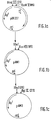
- FIGS. 1a to 5d schematically illustrate the successive stages of this construction and the structures of the various plasmids used.
- the plasmid pBR327 (SOBERON et al. 1980) (fig 1a) capable of replicating in E. coli bacteria, carrying the genes for resistance to ampicillin (Ap r ) and tetracycline (Tc r ) and its origin of replication (ori), is chosen as a vector to carry out the constructions.
- This vector is modified for the purposes of cloning as follows.
- the vector is opened at the HindIII site by the corresponding restriction enzyme (BOEHRINGER, conditions of use provided by the company), the cohesive ends generated (40 ⁇ g DNA / ml) are filled by treatment with DNA polymerase from KLENOV (100 U / ml) in the presence of the 4 nucleotides (dNTP) (200 ⁇ M each) according to the protocol described by MANIATIS et al. (1982).
- BOEHRINGER restriction enzyme
- Linearized DNA is dephosphorylated by treatment with alkaline phosphatase from calf intestine (2 x 0.02 units per ⁇ g of DNA) in a 50 mM Tris-HCl buffer pH 8.0 10 mM MgCl2, 0.1 mM EDTA , 1 mM ZnCl2 (enzyme and protocol for use BOEHRINGER) twice for 30 minutes at 37 ° C, before ligation with a synthetic phosphorlated Xhol adapter (linker) (8 nucleotides, marketed by NEW ENGLAND BIOLABS).
- linker 8 nucleotides, marketed by NEW ENGLAND BIOLABS.
- the ligation reaction is carried out for 48 hours at + 4 ° C (or for 16 hours at + 15 ° C) in a 60 mM Tris-HCl solution pH 7.5, 1 mM EDTA, 10 mM MgCl2, 10 mM DTT, 1 mM ATP, in the presence of a T4DNA ligase unit (BOEHRINGER) by ⁇ g of DNA, in a molar ratio of 100 (linker / DNA with blunt ends).
- the ligation mixture is used to transform the E. coli HB101 bacteria (BOYER, ROULLAND-DUSSOIS, 1969) treated with calcium chloride (MANIATIS et al. 1982 protocol).
- the bacteria are then spread on LB agarose dishes containing ampicillin (100 ⁇ g / ml).
- the plasmids are extracted according to the technique described by BIRNBOIM and DOLY (1979) and sorted in order to isolate those containing the XhoI restriction site.
- a plasmid pAM1 (FIG. 16) having the XhoI restriction site in place of the HindIII site is retained.
- This plasmid is prepared in large quantities after lysis of the bacteria with lysozyme-sodium dodecyl sulfate (GODSON and VAPNEK, 1973), and purification in cesium chloride gradient.
- the plasmid DNA taken from the gradient can be used after successive volume-to-volume extractions with butanol 1 (3 times), the 1: 1 phenol mixture saturated with TE (10 mM Tris-HCl pH 7.5, 1 mM EDTA) chloroform , isoamyl alcohol (24: 1).
- the aqueous phase extracted is precipitated by adding 2 volumes of 95% ethanol, then centrifuged and the pellet taken up in TE buffer.
- the plasmid pAM1 is linearized at the EcoRV site, dephosphorylated and ligated with a phosphorylated BglII "linker" (8 nucleotides). Resistant ampicillin clones are obtained after transformation of the HB101 bacteria by the ligation mixture.
- the plasmids are prepared according to the technique previously described and analyzed for the presence of the BglII restriction site.
- a plasmid pAM2 (FIG. 1c or FIG. 2a) having the XhoI and BglII restriction sites in place of the HindIII and EcoRV sites respectively is purified in cesium chloride gradient.
- Subcloning of a fragment comprising the first 5,601 nucleotides of complementary DNA (cDNA) of MAHONEY type 1 poliovirus (out of 7,441 nucleotides) is carried out so that the restriction sites to be generated in this fragment by site-directed mutagenesis are unique in construction.
- the new restriction sites will thus be accessible by total digestion with the corresponding restriction enzymes, so that the fragment between these sites can be easily deleted and replaced by a foreign substitution sequence.
- the XhoI-BglII restriction fragment containing the first 5,601 nucleotides of the polio cDNA (5638 base pairs) is derived from the plasmid pKK17 (K. KEAN et al. 1986) (fig. 2b)
- This plasmid contains all of the cDNA ( represented by a hatched region) of the poliovirus cloned immediately after the late promoter of SV40 PL contained in the fragment (TAg) derived from SV40, as well as the elements necessary for its autonomous replication in monkey cells (origin of replication of SV40), transcription promoter, transcription enhancer sequence, functional T antigen). It also contains the origin of bacterial replication and the gene coding for resistance to ampicillin.
- the plasmid pKK17 is completely digested by the restriction enzymes XhoI and BglII (BOEHRINGER) to which correspond unique sites in this plasmid.
- the 5,638 base pair (bp) fragment is isolated from a low melting agarose gel (WIESLANDER, 1979) purified by two extractions with phenol, one extraction with the phenol / chloroform mixture: isoamyl alcohol (IAA) and two extractions with the chloroform mixture: isoamyl alcohol (IAA).
- the plasmid pAM2 is fully digested (unique sites) by the restriction enzymes XhoI and BglII.
- the BglII-XhoI fragment (3,109 bp) containing the origin of bacterial replication and the ampicillin resistance gene is likewise isolated and purified from a low melting agarose gel.
- a ligation reaction of the two fragments (insert / vector molar ratio (2: 1)) is carried out.
- the HB101 bacteria are transformed with the ligation mixture.
- Ampicillin-resistant clones are obtained.
- the plasmid DNA is extracted and then analyzed on the basis of the size of the fragments generated after digestion with the enzymes XhoI and BglII.
- PAM3 is collected (fig. 2c or fig 3a) which has the sequence of the first 5,601 base pairs of the polio cDNA and it is purified on a cesium chloride gradient.
- the new restriction sites are created by the mutagenesis technique directed by synthetic oligonucleotide (MORINAGA et al. 1984), applied to double stranded plasmid, in this case pAM3. To this end, it was chosen to create Hpal or EcoRV sites at position 2 756, and a HindIII side at position 2 786 in the poliovirus sequence. These two positions exactly frame the 93-103 loop of the VP1 capsid protein which corresponds to a neutralizing type I antigenic site of the poliovirus, located between two beta sheets.
- restriction sites which will thus be generated will make it possible to delete the nucleotide sequence coding for the amino acids of this loop and to replace it by a sequence heterologous chosen according to its antigenic role, with the objective of exposing this heterologous sequence on the surface of the virion.
- a single nucleotide mutation in poliovirus DNA may be sufficient to generate a new restriction site.
- the technique is used here to generate (thanks to the pairs of corresponding synthetic oligonucleotides (cf. fig. 3) double mutants of the poliovirus containing, for the former, sites, HpaI and HindIII by making point mutations in the positions 2 757 -2,791 respectively and, for the latter, EcoRV and HindIII sites by mutations in positions 2,760 and 2,791 respectively.
- the plasmid pAM3 is digested with Sal1 (in position 651 of the pBR327 part) to generate a linear fragment I (FIG. 3b).
- the plasmid pAM3 is digested with XbaI, a site present at positions 2,546, 2,861, 3,581, 4,886 of the cDNA fragment of the poliovirus. 4 fragments are therefore generated, one of which (2 546-2 861) is eliminated after separation on "low melting” agarose gel (at low melting point). It will be noted that the eliminated fragment contained the nucleic acid sequence coding for the above-mentioned loop 93-103 of the capsid protein VP1 as well as the nucleotides which surrounded it in what will be called hereinafter the "polio-wild sequence".
- the fragments I, IIa, IIb, IIc are individually purified by extraction with phenol, then precipitation with 95% ethanol. They are dissolved in 10 mM Tris-HCl pH 7.5 TE buffer, 1 mM EDTA. The fragments IIa, IIb, IIc are then combined in the same solution.
- oligonucleotides were synthesized in an automatic synthesizer, purified by high performance liquid chromatography (HPLC), then by electrophoresis on 20% acrylamide gel containing 7M urea. Finally, they were phosphorylated by treatment with T4 polynucleotide kinase (2 x 1 unit / ⁇ g DNA) in a 50 mM Tris-HCl buffer pH 9.0, 10 mM MgCl2, 5 mM DTT, in the presence of 1 mM ATP for 2 x 1 hour at 37 ° C.
- HPLC high performance liquid chromatography
- oligonucleotides correspond to parts of the "poliosauvage sequence" whose structure follows. In particular, they comprise a mutation of a nucleotide of the codon coding for the amino acids: - 93 for oligonucleotide A, - 104 for oligonucleotide B, and - 94 for oligonucleotide C.
- the preceding numbers correspond to the numbering of the amino acids of the VP1 protein coded by the corresponding codons of the "wild polio sequence" below.
- the Hpal site was created by modifying the codon coding for the Aspartate residue (position 93 of VP1) into a codon coding for valine (A 2 757> T).
- the HindIII site results from a dumb mutation (in terms of the amino acid expressed) on the residue in position 104 VP1 (A 2791> T).
- the EcoRV site was created by modifying the codon coding for an Asparagine residue (position 94 of VP1) into a codon coding for an Isoleucine (A 2 760> T).
- Fragments I and II (0.03 pmole of each) are mixed in 10 ⁇ l of water, either with oligonucleotides A and B, or with oligonucleotides B and C, approximately 20 pmole of each of the oligonucleotides to form in the plasmids subsequent hybrids, either the Hpal + HindIII site pairs, or the EcoRV + HindIII site pairs.
- polymerase-ligase buffer 10 times concentrated (1 M NaCl, 65 mM Tris-HCl pH 7.5, 80 mM MgCl2, 10 M B-mercaptoethanol).
- the fragments of the mixture contained in a sealed capillary are denatured by incubation in a boiling water bath for 3 minutes, then the molecules are renatured by slow cooling.
- the molecules formed there are molecules of which a strand of the wild matrix is hybridized either with the pairs of oligonucleotides A and B, or with the pairs of oligonucleotides B and C.
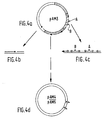
- FIG. 4a The product of these hybridizations is illustrated in FIG. 4a, as regards more particularly the first alternative above. There is no more then than to fill the still single-stranded parts of the matrix illustrated in FIGS. 4b and 4c which relate to fragments still comprising these single-stranded parts and in which the insertions are represented by small angular projections.
- the mixture is treated with KLENOV DNA polymerase (3 units + 4 dNTP + T4 DNA ligase (3 units) overnight at 12.5 ° C so that the single-stranded DNA is converted into a double DNA strand, circular and containing the mutations generated by the two oligonucleotides.
- the HB101 bacteria are transformed by the mixture; out of more than 1,000 resistant ampicillin transformants obtained for each construction, 600 transformants are sorted (screening) by colony hybridization (according to GRUNSTEIN and HOGNESS 1975).
- the synthetic oligonucleotides labeled with 32p by the polynucleotide kinase then serve as a hybridization probe to identify the bacteria transformed by the mutated plasmids (hybridizations carried out at 42 ° C, washes carried out at 53 ° C).
- a dozen positive clones are retained and used to transform HB101 bacteria in order to separate the mutant plasmids from the "wild plasmids" which may be contained in the same transformant.
- the plasmids prepared according to the BIRNBOIM and DOLY method are tested for the presence of the corresponding restriction sites, either Hpal and HindIII, or EcoRV and HindIII.
- the plasmids used are: - pAM4: Hpal and HindIII sites - pAM5: EcoRV and HindIII sites.
- the plasmids are prepared and purified in CsCl and then sequenced to confirm the mutations.
- the sequencing is done according to the ZAGURSKY method directly on the plasmid prepared according to the BIRNBOIM and DOLY method or in cesium chloride.
- the unique Hpal and HindIII restriction sites in the plasmid pAM4 make it possible to delete the nucleotide sequence corresponding to amino acids 94 to 102 of VP1 of the poliovirus, that is to say the C3 epitope and replace it with any other sequence coding for a heterologous antigenic motif, for example of an enterovirus (poliovirus type 2 or type 3 or of hepatitis A) or of any other heterologous immunogenic epitope.
- the plasmid pAM4 (also shown in FIG. 4b) is digested with the restriction enzymes Hpal and HindIII, Hpal generating blunt ends and HindIII cohesive ends, then dephosphorylated.
- the hepatitis A sequence is introduced in the form of two complementary synthesized, purified and phosphorylated oligonucleotides as described above, one of which is completed by an A and the other preceded by an AGCTT sequence (see below). below) to restore a HindIII site allowing ligation with cohesive ends with the vector.
- the two framed oligonucleotides hybridized with one another as shown below, are then incorporated into the sequence of the poliovirus vector (whose nucleotides and amino acids external to the HAV sequence are represented by hollow letters), in particular by proceeding as indicated below.
- the ligation reaction is carried out in the presence of T4 DNA ligase for 48 h at + 4 ° C between the deleted vector and the 2 oligonucleotides hybridized in a molar ratio of 1/20.
- the HB 101 bacteria are transformed with the mixture and the transforming clones are analyzed by hybridization of colonies with one of the 2 HAV oligonucleotides used as a probe labeled with 32p (hybridization at 37 ° C., washing at successive temperatures of 42 ° C. at 68 ° C).
- the plasmids are extracted from the positive clones according to the method of Birnboim and Doly and are tested for the presence of the HindIII site by digestion with the corresponding enzyme.
- a plasmid pAM42 (FIG. 5b) is retained. Its sequence in the insertion area is controlled by sequencing according to the method described.
- the poliovirus sequence 1 to 5601 containing a heterologous sequence is then replaced in the plasmid pKK17 (represented again in FIG. 5c), so as to reconstitute a complete cDNA of poliovirus.
- the plasmid pAM42 is digested with the restriction enzymes Xhol and BgIII and the fragment Xhol.BgIII (5641pb) containing the polio-HAV sequence is isolated and purified from a "low-melting" agarose gel.
- the plasmid pKK17 is also digested with Xhol and BgIII and the BgIII-Xhol fragment (10028pb) containing the last 1840 base pairs of polio as well as the sequences necessary for the replication of the plasmid in bacteria and in primate cells, is isolated and purified in the same way.
- a ligation reaction is carried out between the 2 fragments and the HB101 bacteria are transformed by the recombinant.
- the plasmids extracted from the transforming clones are analyzed by double digestion with the restriction enzymes Xhol and Hpal and / or Xhol + HindIII and sorted on the basis of the size of the fragments obtained.
- a plasmid pAM420 (FIG. 5d) is retained: it contains the entire cDNA of the poliovirus with the HAV insert, in a plasmid infectious for primate cells. It then gave rise to the production of a hybrid poliovirus, hereinafter designated v420, under the conditions explained below.
- the plasmid is sequenced according to the technique described in order to confirm the sequences of the insertion.
- sequences can be substituted for the antigenic site I of the Mahoney type 1 poliovirus, for example: - the sequence 94 to 102 VP1 of the Lansing type 2 poliovirus, using the following synthetic oligonucleotides: or the HAV VP1 sequence 97 to 107: to form the hybrid DNA sequences (in which the hybridized synthetic oligonucleotides are framed) containing said VP1 sequences of HAV incorporated into the cDNA of the poliovirus.
- hybrid poliovirus / HAV 72-81 plasmid (also called v520) was constructed in pAM5, characterized by the heterologous insertion below:
- the hybrid plasmids pAM420 type are used to transfect, in the presence of DEAE Dextran (McCutchan and Pagano, 1965), according to the method of Sompayrac and Danna (1981) of CV1 or VER0 monkey kidney cells, or human cells (HeLa, Hep2, etc.)
- the DNAs are prepared by the Birnboim and Doly method or in cesium chloride gradient.
- 106 CV1 or VERO cells are spread on 60mm Petri dishes and incubated with 0.4 ml of a 0.25 ⁇ g / ml DNA mixture in Eagle's medium modified by Dulbecco (DMEM) without serum, containing 50 mM Tris-HCl, pH 7.5 and 500 ⁇ g / ml DEAE dextran. Incubation is carried out at 37 ° C in a CO2 oven for 2 hours. Cells are then washed with DMEM without serum, then maintained in DMEM supplemented with 5% fetal calf serum.
- DMEM Dulbecco
- the cells After ten days, when the cytopathic effect (ECP) is complete, the cells are then broken by 5 successive freezing / thawing in the dry ice, centrifuged for 30 minutes at 1500 rpm to remove cellular debris; the supernatant is used as a viral mini-stock.
- ECP cytopathic effect
- the mini viral stocks are titrated on a 6-well plate: the wells are seeded with 4.105 CV1 or VER0 cells each, then infected with 0.2 ml of successive dilutions of the viral suspension in DMEM medium without serum supplemented with 10 mM MgCl2 . Incubation is done at 37 ° C in a CO2 study for 30 min. The viral suspension is then removed and the cells covered with an agar containing DMEM with 2% fetal calf serum. Two days after infection, the plates are stained with violet crystal: the agar is removed and the cell layer, pierced with lysis pads, is stained with an aqueous solution containing 10% formalin, 20% ethanol and 2 g / l of crystal purple. Lysis ranges are counted in the appropriate dilution. The titer of the viral suspension is expressed in plaque forming units (pfu) / ml.
- Mini-stocks are used to make maximum stocks of viruses: for this, 5.106 CV1 or 8.10 cells.
- HEp2 cells human epithelial cancer cells, on which the poliovirus grows better
- HEp2 cells human epithelial cancer cells, on which the poliovirus grows better
- Incubation is carried out at 37 ° C in a CO2 oven for 1 hour.
- the cells are then maintained in DMEM containing 2% of fetal calf serum. 22 hours later, when the PCE is complete, the cells are treated as described for obtaining the mini-stock.
- the maxi-stock is also titrated.
- the sequence of viral RNA extracted from the virions making up this maximum stock is controlled at the insertion level. Therefore, from this maxi-stock, different analyzes are carried out: - characterization of viruses: reactions with polyclonal and / or monoclonal antibodies directed against the vector poliovirus, and against the antigen from which the heterologous epitope has been borrowed; if necessary, the loss of the capacity which the monoclonal antibodies specific for the replaced sequence in the picornavirus used to neutralize it is checked, for example loss of the capacity of the monoclonal antibodies C3 to neutralize the hybrid poliovirus or chimera derived from a type 1 poliovirus, due to the replacement of the C3 epitope by the heterologous epitope; - injection of the purified hybrid viruses into rabbits, analysis of the sera obtained (ELISA, immunoblot, seroneutralization) - marduage and preparation of extracts of infected cells for analysis of capsid proteins (in particular VP1) of hybrid viruses in SDS polyacrylamide
- the selected hybrid picornaviruses can then be tested for their immunogenicity and their capacity to neutralize the pathogens to which the epitopes inserted into the picornavirus hybrid correspond, in particular after injection into laboratory animals (mice, guinea pigs, rabbits).
- Hybrid or chimeric viruses are retained which have as much as possible the stability and yields of the poliovirus in culture and capable of inducing in animals high neutralizing antibodies, not only against the poliovirus but also against the selected targets (for example HAV, HIV, rotavirus). These viruses are then tested for their ability to induce in appropriate animal systems (monkeys, chimpanzees, etc.) protection against a challenge infection of the virus considered.
- the immunogenicity of the new vaccinating principle can be tested as follows:
- each clarified viral stock is mixed volume by volume with complete Freund's adjuvant (AFC) and injected into each rabbit from a batch of 4 rabbits (females - white NewZeland breed) by intradermal route (ID) , on the back of the animal.
- AFC complete Freund's adjuvant
- ID intradermal route
- AFC intradermal route
- the hybrid DNA cloned into the infectious plasmid pKK17 (described part II-1), was used directly to give rise to the corresponding viruses, by transfection of cells. of primate.
- RNAs of positive polarity obtained in vitro .
- the infectivity of these RNAs is higher than that of cDNA clones, during transfections in primate cells.
- hybrid cDNAs are cloned, for example, behind the promoter of phage T7 (in a plasmid described by S. van der Werf et al., 1986) or the promoter of phage SP6 of Salmonella (in a plasmid described by G. Kaplan et al., 1985).
- the cDNAs are transcribed in a cell-free system, using purified T7 RNA polymerase or SP6 RNA polymerase and capable of generating in vitro copies of infectious viral RNA, of positive polarity.
- RNA polymerase for its own promoters, its ability to fabricate complete transcripts of long cDNAs make it possible to produce large quantities of RNA in this system. These RNAs serve as a template for translation in the transfected cells.
- the plasmid pT7PV1-5 described by S. van der Werf (1986) allows, by its construction, to obtain RNA (+) containing only 2 excess G residues in 5 ′ and 3 excess residues downstream of the polyA in 3 ′ .
- the elimination of the long excess sequences in 5 ′ and 3 ′ of the RNAs produced from the initial constructions made it possible to increase the infectivity of the RNAs from 103 pfu / ⁇ g to 105 pfu / ⁇ g (i.e. around 5% of the infectivity viral RNAs extracted from virions).
- these methodologies can be applied in general to hybrid cDNAs over a larger part of their genome.
- cassette framed by restriction sites that can be generated by site-directed mutagenesis, one can delete the the entire P1 part of the poliovirus genome and replace it with a P1 region of another Picornavirus, and generate hybrid viruses (with possible complementation by a system which can provide exogenous poliovirus capsids if necessary).
- a number of neutralizing immunogenic peptides capable of being incorporated as previously described in the capsid proteins of a poliovirus are also presented hereinafter and by way of nonlimiting examples.
- glycoprotein D (residues 365 to 381 of the predicted sequence).
- Influenza virus epitope comprising residues 138-164 of hemagglutinin ref : M.SHAPIRA, M.JIBSON, G.MULLER, R.ARNON (1984) PNAS 81 , 2461-2465.
- Epitopes characteristic of the glycoprotein envelope of HIV I and HIV 2 for example epitopes important for seroneutralization located in gp120, as defined respectively by the Bolognesi and Putney groups (type specific epitope) and by the Ho group and collaborators (specific group epitope) or by Matsuhito et al, J. Virol. 1988, 62 , 2107-2114. ; or broadly specific neutralization epitopes, as identified in gp41, which also carries the hydrophobic sequence necessary for the fusion of the envelope of the virus with the cell membrane (Robin Weiss).
- epitopes include the epitope of gp41 corresponding to amino acids 735 to 752, namely: or the epitope (LASKY et al) which appears to be involved in the recognition of the CD4 receptor (amino acids 404 to 425):
- neutralizing epitopes present on VP7 can be used, in particular those coinciding with the amino acid regions 87 to 101 and 208 to 221 (Taniguchi, Channock et al, Virol., 1988, 62 , 1870-1874), in particular those carrying sequences: TEASTQINDGDWKDSLSQ and GCQTTNVDSFEMVAE N.
- any other epitope could be used for the production of vaccines, preferably live vaccines, using a picornavirus of attenuated virulence as a carrier vector (for example a SABIN strain).
- a picornavirus of attenuated virulence as a carrier vector (for example a SABIN strain).
- These vaccines will be intended for humans or animals, depending on the nature of the epitope chosen and the vector chosen.
- the picornavirus used as a vector may also be a virulent virus, in which case the recombinant obtained will be used to manufacture an inactivated vaccine.
- it is up to the clinician to determine the doses and administration protocol of the chosen vaccine, depending on the mammal for which it is intended.
- NIM I site NIM II site
- VP3 NIM III
- 2 of the 3, or even all 3, sites for neutralizing the vector picornavirus for example poliovirus 1
- HAV another picornavirus
- epitope as it has been used in the context of the present text should not be interpreted restrictively.
- the expression “epitope” is not limited to the only amino acid sequence to which is attributed the in vivo induction capacity of neutralizing antibodies against the antigen from which this epitope was borrowed /
- the expression must be understood as possibly encompassing more or less short amino acid sequences which normally surround the epitope (in the narrow sense of the term) in the antigen from which it was borrowed. We have seen that these sequences could even, in the case of picornavirus, go so far as to include all of proteins of the capsids of that of the picornaviruses from which the substitution antigen was borrowed.
- the invention therefore makes it possible to develop live chimeric vaccines which can be used by the oral route. This is particularly possible for the production of vaccines against hepatitis A and rotavirus diarrhea.
- the direct subcloning which has become possible of a fragment of the plasmid pAM5 substituted in Sabin cDNA should make it possible to respond to this concern.
Landscapes
- Health & Medical Sciences (AREA)
- Chemical & Material Sciences (AREA)
- Life Sciences & Earth Sciences (AREA)
- Organic Chemistry (AREA)
- Genetics & Genomics (AREA)
- Molecular Biology (AREA)
- Biochemistry (AREA)
- Biophysics (AREA)
- General Health & Medical Sciences (AREA)
- Gastroenterology & Hepatology (AREA)
- Zoology (AREA)
- Medicinal Chemistry (AREA)
- Engineering & Computer Science (AREA)
- Proteomics, Peptides & Aminoacids (AREA)
- Wood Science & Technology (AREA)
- Virology (AREA)
- Bioinformatics & Cheminformatics (AREA)
- General Engineering & Computer Science (AREA)
- Biomedical Technology (AREA)
- Biotechnology (AREA)
- Physics & Mathematics (AREA)
- Plant Pathology (AREA)
- Tropical Medicine & Parasitology (AREA)
- Microbiology (AREA)
- Toxicology (AREA)
- Medicines Containing Antibodies Or Antigens For Use As Internal Diagnostic Agents (AREA)
- Micro-Organisms Or Cultivation Processes Thereof (AREA)
Applications Claiming Priority (3)
| Application Number | Priority Date | Filing Date | Title |
|---|---|---|---|
| FR8711337A FR2619012B1 (fr) | 1987-08-07 | 1987-08-07 | Vaccins dont l'epitope caracteristique est incorpore dans une proteine de picornavirus, notamment de poliovirus |
| FR8711337 | 1987-08-07 | ||
| PCT/FR1988/000409 WO1989001516A1 (fr) | 1987-08-07 | 1988-08-05 | Vaccins dont l'epitope caracteristique est incorpore dans une proteine de picornavirus, notamment de poliovirus |
Publications (2)
| Publication Number | Publication Date |
|---|---|
| EP0302801A1 true EP0302801A1 (de) | 1989-02-08 |
| EP0302801B1 EP0302801B1 (de) | 1995-10-18 |
Family
ID=9354047
Family Applications (1)
| Application Number | Title | Priority Date | Filing Date |
|---|---|---|---|
| EP88402057A Expired - Lifetime EP0302801B1 (de) | 1987-08-07 | 1988-08-05 | Impfstoffe, deren charakteristischer Epitop in einem Picornavirusprotein, insbesondere Poliovirus, inkorporiert ist |
Country Status (11)
| Country | Link |
|---|---|
| EP (1) | EP0302801B1 (de) |
| JP (1) | JPH01157380A (de) |
| AR (1) | AR242057A1 (de) |
| AT (1) | ATE129288T1 (de) |
| DE (1) | DE3854591D1 (de) |
| DK (1) | DK438288A (de) |
| FR (1) | FR2619012B1 (de) |
| OA (1) | OA08749A (de) |
| PT (1) | PT88219B (de) |
| WO (1) | WO1989001516A1 (de) |
| ZA (1) | ZA885774B (de) |
Cited By (5)
| Publication number | Priority date | Publication date | Assignee | Title |
|---|---|---|---|---|
| WO1994029472A3 (en) * | 1993-06-03 | 1995-02-16 | Pasteur Institut | Mengovirus as a vector for expression of foreign polypeptides |
| US5747324A (en) * | 1988-06-10 | 1998-05-05 | Therion Biologics Corporation | Self-assembled, defective, non-self-propagating lentivirus particles |
| WO2000014263A3 (en) * | 1998-09-03 | 2000-08-17 | Univ Texas | Recombinant hepatitis a virus (hav), hav variants, hav-based vaccines and methods of producing them |
| US8063197B2 (en) | 2004-07-13 | 2011-11-22 | Gen-Probe Incorporated | Compositions and methods for detection of hepatitis A virus nucleic acid |
| US9388234B2 (en) | 2003-06-06 | 2016-07-12 | Samuel Bogoch | Systems and methods for identifying Replikin Scaffolds and uses of said Replikin Scaffolds |
Families Citing this family (10)
| Publication number | Priority date | Publication date | Assignee | Title |
|---|---|---|---|---|
| US5614404A (en) * | 1988-06-10 | 1997-03-25 | Theriod Biologics, Incorporated | Self-assembled, defective, non-self-propagating lentivirus particles |
| AU640619B2 (en) * | 1988-10-03 | 1993-09-02 | Repligen Corporation | Hiv proteins and peptides useful in the diagnosis, prophylaxis or therapy of aids |
| CA2055613A1 (en) * | 1989-05-31 | 1990-12-01 | Jeffrey W. Almond | Poliovirus chimaeras |
| GB8912496D0 (en) * | 1989-05-31 | 1989-07-19 | Medical Res Council | Vaccines |
| JP3034025B2 (ja) * | 1989-06-01 | 2000-04-17 | アプライド・バイオテクノロジー・インコーポレーテツド | 自己アセンブルド欠損非自己増殖性ウイルス粒子 |
| US5817491A (en) * | 1990-09-21 | 1998-10-06 | The Regents Of The University Of California | VSV G pseusdotyped retroviral vectors |
| US5512421A (en) * | 1991-02-19 | 1996-04-30 | The Regents Of The University Of California | Generation, concentration and efficient transfer of VSV-G pseudotyped retroviral vectors |
| DE69131908T3 (de) * | 1991-02-19 | 2008-04-03 | Oxford Biomedica (Uk) Ltd. | Viruspartikel mit veraendertem wirtspektrum |
| GB9125896D0 (en) * | 1991-12-05 | 1992-02-05 | Almond Jeffrey W | Bicistronic viruses |
| US6071742A (en) | 1997-03-05 | 2000-06-06 | Board Of Regents Of The University Of Nebraska | Coxsackie virus as a vector for delivery of anti-inflammatory cytokines |
Citations (1)
| Publication number | Priority date | Publication date | Assignee | Title |
|---|---|---|---|---|
| WO1983002393A1 (en) * | 1982-01-11 | 1983-07-21 | Animal Vaccine Research Corp | Viruses with recombinant surface proteins |
-
1987
- 1987-08-07 FR FR8711337A patent/FR2619012B1/fr not_active Expired
-
1988
- 1988-08-05 DK DK438288A patent/DK438288A/da not_active Application Discontinuation
- 1988-08-05 ZA ZA885774A patent/ZA885774B/xx unknown
- 1988-08-05 WO PCT/FR1988/000409 patent/WO1989001516A1/fr not_active Ceased
- 1988-08-05 EP EP88402057A patent/EP0302801B1/de not_active Expired - Lifetime
- 1988-08-05 AT AT88402057T patent/ATE129288T1/de active
- 1988-08-05 DE DE3854591T patent/DE3854591D1/de not_active Expired - Lifetime
- 1988-08-08 PT PT88219A patent/PT88219B/pt not_active IP Right Cessation
- 1988-08-08 JP JP63197810A patent/JPH01157380A/ja active Pending
- 1988-08-08 OA OA59402A patent/OA08749A/xx unknown
- 1988-08-08 AR AR88311618A patent/AR242057A1/es active
Patent Citations (1)
| Publication number | Priority date | Publication date | Assignee | Title |
|---|---|---|---|---|
| WO1983002393A1 (en) * | 1982-01-11 | 1983-07-21 | Animal Vaccine Research Corp | Viruses with recombinant surface proteins |
Cited By (9)
| Publication number | Priority date | Publication date | Assignee | Title |
|---|---|---|---|---|
| US5747324A (en) * | 1988-06-10 | 1998-05-05 | Therion Biologics Corporation | Self-assembled, defective, non-self-propagating lentivirus particles |
| WO1994029472A3 (en) * | 1993-06-03 | 1995-02-16 | Pasteur Institut | Mengovirus as a vector for expression of foreign polypeptides |
| WO2000014263A3 (en) * | 1998-09-03 | 2000-08-17 | Univ Texas | Recombinant hepatitis a virus (hav), hav variants, hav-based vaccines and methods of producing them |
| US9388234B2 (en) | 2003-06-06 | 2016-07-12 | Samuel Bogoch | Systems and methods for identifying Replikin Scaffolds and uses of said Replikin Scaffolds |
| US8063197B2 (en) | 2004-07-13 | 2011-11-22 | Gen-Probe Incorporated | Compositions and methods for detection of hepatitis A virus nucleic acid |
| US8461324B2 (en) | 2004-07-13 | 2013-06-11 | Gen-Probe Incorporated | Compositions and methods for detection of hepatitis A virus nucleic acid |
| US8563707B2 (en) | 2004-07-13 | 2013-10-22 | Gen-Probe Incorporated | Compositions and methods for detection of hepatitis A virus nucleic acid |
| US9469881B2 (en) | 2004-07-13 | 2016-10-18 | Gen-Probe Incorporated | Compositions and methods for detection of hepatitis A virus nucleic acid |
| US10392656B2 (en) | 2004-07-13 | 2019-08-27 | Gen-Probe Incorporated | Compositions and methods for detection of hepatitis A virus nucleic acid |
Also Published As
| Publication number | Publication date |
|---|---|
| DK438288A (da) | 1989-04-10 |
| ZA885774B (en) | 1989-04-26 |
| PT88219A (pt) | 1989-06-30 |
| WO1989001516A1 (fr) | 1989-02-23 |
| ATE129288T1 (de) | 1995-11-15 |
| FR2619012A1 (fr) | 1989-02-10 |
| DE3854591D1 (de) | 1995-11-23 |
| AR242057A1 (es) | 1993-02-26 |
| FR2619012B1 (fr) | 1989-12-22 |
| JPH01157380A (ja) | 1989-06-20 |
| EP0302801B1 (de) | 1995-10-18 |
| PT88219B (pt) | 1995-09-12 |
| OA08749A (fr) | 1989-03-31 |
| DK438288D0 (da) | 1988-08-05 |
Similar Documents
| Publication | Publication Date | Title |
|---|---|---|
| EP0302801B1 (de) | Impfstoffe, deren charakteristischer Epitop in einem Picornavirusprotein, insbesondere Poliovirus, inkorporiert ist | |
| Wimmer et al. | Genetics of poliovirus. | |
| Bredenbeek et al. | The primary structure and expression of the second open reading frame of the polymerase gene of the coronavirus MHV-A59; a highly conserved polymerase is expressed by an efficient ribosomal frameshifting mechanism | |
| Chapman et al. | An infectious cDNA copy of the genome of a non-cardiovirulent coxsackievirus B3 strain: its complete sequence analysis and comparison to the genomes of cardiovirulent coxsackieviruses | |
| JP4504464B2 (ja) | キメラフラビウイルスワクチン | |
| JP3236614B2 (ja) | ベクターとして修正された植物ウイルス | |
| Boot et al. | Efficient rescue of infectious bursal disease virus from cloned cDNA: evidence for involvement of the 3′-terminal sequence in genome replication | |
| Reimann et al. | Mapping of a neutralizing antigenic site of Coxsackievirus B4 by construction of an antigen chimera | |
| van der Most et al. | Homologous RNA recombination allows efficient introduction of site-specific mutations into the genome of coronavirus MHV-A59 via synthetic co-replicating RNAs | |
| Rieder et al. | Vaccines prepared from chimeras of foot-and-mouth disease virus (FMDV) induce neutralizing antibodies and protective immunity to multiple serotypes of FMDV | |
| Mattion et al. | Attenuated poliovirus strain as a live vector: expression of regions of rotavirus outer capsid protein VP7 by using recombinant Sabin 3 viruses | |
| Cao et al. | Replication of poliovirus RNA containing two VPg coding sequences leads to a specific deletion event | |
| EP0110791B1 (de) | Immunogen-Lage des Poliovirus enthaltende Peptide und DNS enthaltend Nukleotidfragmente die für diese Peptide kodieren | |
| JP2023510133A (ja) | エンテロウイルスの精製組成物、およびグルタチオンアフィニティークロマトグラフィーによる精製方法 | |
| Martín-Alonso et al. | Isolation and characterization of a new Vesivirus from rabbits | |
| Wimmer et al. | Molecular biology and cell-free synthesis of poliovirus | |
| KR100230195B1 (ko) | cDNA로 부터의 RNA 비루스 제조방법 | |
| Zhang et al. | A single amino acid substitution in the capsid protein VP1 of coxsackievirus B3 (CVB3) alters plaque phenotype in Vero cells but not cardiovirulence in a mouse model | |
| EP0541753B1 (de) | Hybride, lösliche und nicht gespaltene gp160-variante | |
| CN107881153A (zh) | 一种o型口蹄疫耐酸疫苗毒株及其构建方法 | |
| US5182211A (en) | Plasmid vectors encoding a protein of a picornavirus | |
| JP2000503551A (ja) | ポリオウイルスの複製コンピテント組換えセービンタイプ1菌株 | |
| Xin et al. | Genome analysis and development of infectious cDNA clone of a virulence-attenuated strain of foot-and-mouth disease virus type Asia 1 from China | |
| EP0323861B1 (de) | Peptide, die eine Immunogen-Lage des Poliovirus des Sabin-Stammes enthalten | |
| Both | Replication of the reoviridae: information derived from gene cloning and expression |
Legal Events
| Date | Code | Title | Description |
|---|---|---|---|
| PUAI | Public reference made under article 153(3) epc to a published international application that has entered the european phase |
Free format text: ORIGINAL CODE: 0009012 |
|
| AK | Designated contracting states |
Kind code of ref document: A1 Designated state(s): AT BE CH DE ES FR GB GR IT LI LU NL SE |
|
| 17P | Request for examination filed |
Effective date: 19890204 |
|
| 17Q | First examination report despatched |
Effective date: 19920123 |
|
| GRAA | (expected) grant |
Free format text: ORIGINAL CODE: 0009210 |
|
| AK | Designated contracting states |
Kind code of ref document: B1 Designated state(s): AT BE CH DE ES FR GB GR IT LI LU NL SE |
|
| PG25 | Lapsed in a contracting state [announced via postgrant information from national office to epo] |
Ref country code: IT Free format text: LAPSE BECAUSE OF FAILURE TO SUBMIT A TRANSLATION OF THE DESCRIPTION OR TO PAY THE FEE WITHIN THE PRE;WARNING: LAPSES OF ITALIAN PATENTS WITH EFFECTIVE DATE BEFORE 2007 MAY HAVE OCCURRED AT ANY TIME BEFORE 2007. THE CORRECT EFFECTIVE DATE MAY BE DIFFERENT FROM THE ONE RECORDED.SCRIBED TIME-LIMIT Effective date: 19951018 Ref country code: NL Free format text: LAPSE BECAUSE OF FAILURE TO SUBMIT A TRANSLATION OF THE DESCRIPTION OR TO PAY THE FEE WITHIN THE PRESCRIBED TIME-LIMIT Effective date: 19951018 Ref country code: GR Free format text: LAPSE BECAUSE OF FAILURE TO SUBMIT A TRANSLATION OF THE DESCRIPTION OR TO PAY THE FEE WITHIN THE PRESCRIBED TIME-LIMIT Effective date: 19951018 Ref country code: GB Effective date: 19951018 Ref country code: ES Free format text: THE PATENT HAS BEEN ANNULLED BY A DECISION OF A NATIONAL AUTHORITY Effective date: 19951018 Ref country code: AT Effective date: 19951018 |
|
| REF | Corresponds to: |
Ref document number: 129288 Country of ref document: AT Date of ref document: 19951115 Kind code of ref document: T |
|
| REF | Corresponds to: |
Ref document number: 3854591 Country of ref document: DE Date of ref document: 19951123 |
|
| PG25 | Lapsed in a contracting state [announced via postgrant information from national office to epo] |
Ref country code: SE Effective date: 19960118 |
|
| PG25 | Lapsed in a contracting state [announced via postgrant information from national office to epo] |
Ref country code: DE Effective date: 19960119 |
|
| NLV1 | Nl: lapsed or annulled due to failure to fulfill the requirements of art. 29p and 29m of the patents act | ||
| GBV | Gb: ep patent (uk) treated as always having been void in accordance with gb section 77(7)/1977 [no translation filed] |
Effective date: 19951018 |
|
| PLBE | No opposition filed within time limit |
Free format text: ORIGINAL CODE: 0009261 |
|
| STAA | Information on the status of an ep patent application or granted ep patent |
Free format text: STATUS: NO OPPOSITION FILED WITHIN TIME LIMIT |
|
| PG25 | Lapsed in a contracting state [announced via postgrant information from national office to epo] |
Ref country code: LU Free format text: LAPSE BECAUSE OF NON-PAYMENT OF DUE FEES Effective date: 19960831 Ref country code: LI Effective date: 19960831 Ref country code: CH Effective date: 19960831 Ref country code: BE Effective date: 19960831 |
|
| 26N | No opposition filed | ||
| BERE | Be: lapsed |
Owner name: INSTITUT PASTEUR Effective date: 19960831 |
|
| REG | Reference to a national code |
Ref country code: CH Ref legal event code: PL |
|
| PG25 | Lapsed in a contracting state [announced via postgrant information from national office to epo] |
Ref country code: FR Effective date: 19970430 |
|
| REG | Reference to a national code |
Ref country code: FR Ref legal event code: ST |