EP0310069B1 - Méthode de génération d'une grille discrète pour simulation par différences finies - Google Patents
Méthode de génération d'une grille discrète pour simulation par différences finies Download PDFInfo
- Publication number
- EP0310069B1 EP0310069B1 EP88116071A EP88116071A EP0310069B1 EP 0310069 B1 EP0310069 B1 EP 0310069B1 EP 88116071 A EP88116071 A EP 88116071A EP 88116071 A EP88116071 A EP 88116071A EP 0310069 B1 EP0310069 B1 EP 0310069B1
- Authority
- EP
- European Patent Office
- Prior art keywords
- grid
- rectangular grid
- generating
- rectangular
- intersection
- Prior art date
- Legal status (The legal status is an assumption and is not a legal conclusion. Google has not performed a legal analysis and makes no representation as to the accuracy of the status listed.)
- Expired - Lifetime
Links
Images



Classifications
-
- G—PHYSICS
- G06—COMPUTING OR CALCULATING; COUNTING
- G06F—ELECTRIC DIGITAL DATA PROCESSING
- G06F30/00—Computer-aided design [CAD]
- G06F30/20—Design optimisation, verification or simulation
- G06F30/23—Design optimisation, verification or simulation using finite element methods [FEM] or finite difference methods [FDM]
Definitions
- the present invention relates to a numerical simulation technique known as a finite-difference simulation and, more particularly, to a method of generating a discretization grid necessary for finite-difference simulation.
- a numerical simulation technique known as finite-difference simulation is particularly useful in analyzing Voltage-Current characteristic and response characteristic of semi-conductor devices (See, for example, S. Selberherr "Analysis and Simulation of Semiconductor Devices” Springer-Verlag, Wien, 1984).
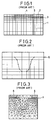
- a discretization grid is superimposed on the cross-sectional figure of a semi-conductor device to be simulated, as shown in Fig. 1.
- grid points separations between adjacent intersections of a vertical line and a horizontal line (referred hereafter simply as grid points) are reduced near boundaries of different materials such as a boundary 3 between semi-conductor base 1 and insulator medium 2, or peripheral region 5 of the electrode medium 4.
- the discretization grid is generated such that grid points lie on these boundaries.
- the physical quantities such as potentials, electron densities etc. are calculated on these grid points, and prediction or evaluation of the Voltage-Current characteristic, the response characteristic etc. are derived from these simulated quantities.
- the discretization grid used for finite-difference simulation most commonly is a rectangular grid such as the one shown in Fig. 1.
- This object is achieved in the present invention by providing a method of generating a discretization grid for a finite-difference simulation as set out in claim 1.
- Fig. 1 is an illustration of a rectangular grid of a first prior art method.
- Fig. 2 is an illustration of a rectangular grid to simulate a complicated polygonal figure in the first prior art method.
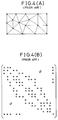
- Fig. 3 is an illustration of a triangular grid of a second prior art method.
- Fig. 4(A) and (B) are illustrations showing a particular configuration of a triangular grid and a matrix involved in calculations required for this configuration, respectively, in the second prior art method.
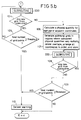
- Fig. 5 is a main flow chart of a method for generating a discretization grid according to the present invention.
- Fig. 6 is a flow chart of a subroutine to be used in the method shown in Fig. 5.
- Fig. 7(a), (b), (c) and (d) are illustrations of discretization grids generated at different stages of the method for generating the discretization grid according to the present invention.
- Fig. 8 is an illustration showing a matrix involved in calculations required by the method according to the present invention.
- the method is executed by an ordinary computer equipped with CPU, ROM, RAM, input device, output device, etc. All calculations and other operations needed at each step of the method are carried out by CPU and all the memorizations of the information needed in the method are handled by RAM or other memory devices.
- Fig. 5 there is shown a main flow-chart of this embodiment of the present invention.
- step 100 input data on a polygonal figure representing the inner structures of a semi-conductor device to be simulated are entered and their units are converted into those appropriate for the computer.
- step 101 material data contained in the input data indicating material of each section of the polygonal figure, such as a semi-conductor on an insulator, are read out and stored in the memory.
- straight lines parallel to the orthogonal coordinate axes (referred hereafter simply as grid lines) are drawn through each vertex of the polygonal figure.
- step 102 ensures that there is a grid point on each vertex of the polygonal figure.
- step 103 boundaries between different materials which are parallel to the orthogonal coordinate axes are identified from the material data obtained at the step 101, and additional grid points and grid lines through them are generated near the identified boundaries so as to reduce the separations between grid lines in this region.
- coordinates of the newly generated grid points are determined, and from all coordinates overlaps are removed while the remaining coordinates are arranged in order and stored in the memory.
- This step 103 ensures that the grid is finer around boundaries of different materials.
- the coordinates stored in the memory at this point are then given to the subroutine 200 shown in Fig. 6.
- the total number of grid points are compared with a prescribed threshold value. If the total number is greater than the threshold value, the step 206, which will be explained later, will be taken. Otherwise, the step 202 will be taken, where segments of the polygonal figure which are not parallel to the orthogonal coordinate axes (referred hereafter simply as oblique segments) are identified, and further additional grid points and grid lines through them are generated at intersections of one of the grid lines and the identified oblique segments. Then coordinates of the newly generated grid points are determined, marked as new in order to distinguish from those existed before entering this step, and stored in the memory.
- step 203 whether all the grid lines have been checked at the step 202 is determined. If so, the step 204 will be taken. Otherwise, the step 202 is repeated for the next unchecked grid line.
- step 204 from all the coordinates overlaps are removed and the remaining coordinates are arranged in order and stored in the memory.
- step 205 the step 201 is repeated except here if the total number is greater than the threshold value, the step 206 will be taken while otherwise the step 207, which will be explained later, will be taken.
- step 206 an arbitrary grid line from those newly generated in the subroutine 200 is deleted, and then the step 205 will be repeated. This loop formed by the steps 205 and 206 is intended to remove excessive grid lines.
- step 207 further additional grid points and grid lines through them are generated such that each distance between adjacent grid points has a ratio less than a prescribed ratio to the adjacent distance.
- This can be done, for example, by repeatedly taking an arithmetic mean of the adjacent coordinates and generating new grid points and grid lines through them at that point until the requirement is satisfied.
- the coordinates of the newly generated grid points are determined, and from all the coordinates overlaps are removed and the remaining coordinates are arranged in order and stored in the memory.
- the subroutine 200 ends at this point. It can be seen that this subroutine 200 ensures by repeated applications of the step 202 that there is a grid point at each intersection of the grid lines and the oblique segments.
- the subroutine 200 also ensures by the step 207 that the grid becomes coarser or finer gradually. It is worthwhile to mention here that the process of the step 202 may repeat indefinitely when the polygonal figure consists only of oblique segments, in which a new grid line generated at an intersection of one of the grid lines and one of the oblique segments intersects with some other oblique segment and thereby requiring a new grid lines to be generated there, and so on ad infinitum. However, in this embodiment, since any two points are considered overlapping when their separation is less than a prescribed distance as mentioned above, the process of the step 202 will terminate in a finite number of repetition.
- the step 104 will be taken next.
- the step 104 whether any new grid point had been generated at the subroutine 200 is determined. If so, the step 105 will be taken while otherwise the step 106, which will be explained later, will be taken.
- the total number of the grid points are compared with the prescribed threshold value used at the step 200. If the total number is less than the threshold value, the subroutine 200 and the step 104 will be repeated so as to generate enough number of grid lines, while otherwise the step 110, which will be explained later, will be taken.
- a physical quantity such as an impurity distribution is calculated for each pair of adjacent grid points.
- step 107 further additional grid points and grid lines through them are generated in regions where the physical quantity calculated at the step 106 varies radically. Then coordinates of the newly generated grid points are determined, and from all coordinates overlaps are removed while the remaining coordinates are arranged in order and stored in the memory.
- step 108 will be taken, where the step 104 is repeated except here if any new grid line had been generated by the subrountine 200, the subroutine and this step 108 immediately following it will be repeated so as to take care of these new grid lines. Otherwise the step 109 will be taken where the step 105 will be repeated except here if the total number of grid points is less than the threshold value the process terminates, while otherwise the step 110 will be taken.
- the warning indicating that the prescribed threshold value for the total number of grid points has been saturated is delivered and then the process terminates.
- Fig. 7(A) shows the grid after the step 102
- Fig. 7(B) shows the grid after the step 103
- Fig. 7(c) shows the grid after the step 104
- Fig. 7(d) shows the grid after the process terminated. It is clear from Fig. 7 that the grid generated by this embodiment of the present invention is capable of more accurate simulation of the complicated polygonal figure.
- this embodiment is capable of generating the discretization grid which can simulate the complex configuration with improved accuracy.
- the requirements set out as the object of the present invention are all satisfied. Namely, in this embodiment:
Landscapes
- Engineering & Computer Science (AREA)
- Physics & Mathematics (AREA)
- Theoretical Computer Science (AREA)
- Computer Hardware Design (AREA)
- Evolutionary Computation (AREA)
- Geometry (AREA)
- General Engineering & Computer Science (AREA)
- General Physics & Mathematics (AREA)
- Management, Administration, Business Operations System, And Electronic Commerce (AREA)
- Complex Calculations (AREA)
- Testing Of Individual Semiconductor Devices (AREA)
- Testing Or Measuring Of Semiconductors Or The Like (AREA)
Claims (16)
- Procédé pour engendrer automatiquement une grille de numérisation rectangulaire pour une simulation par différences finies, dans lequel des quantités physiques particulières sont calculées en des points de la grille de numérisation, ledit procédé consistant à:(a) générer (102) une grille rectangulaire pour disposer un point de la grille sur chaque sommet du dessin polygonal représentant un objet à simuler; ledit procédé étant de plus caractérisé par les étapes consistant à(b) générer (202, 203) une grille rectangulaire supplémentaire pour disposer un point de la grille à chaque intersection de la grille rectangulaire produite à l'étape (a), avec des segments du dessin polygonal qui ne sont pas parallèles à des lignes de la grille rectangulaire; et(c) générer de manière répétitive (200, 104, 105; 200, 108) une grille rectangulaire supplémentaire pour disposer un point de la grille à chaque intersection de la grille rectangulaire générée à l'étape (b) avec des segments du dessin polygonal qui ne sont pas parallèles à des lignes de la grille rectangulaire, jusqu'à ce qu'un point de la grille soit superposé à chaque intersection.
- Procédé selon la revendication 1, consistant de plus à:
(d) générer une grille rectangulaire supplémentaire près de frontières entre différents matériaux, de façon à affiner la grille au voisinage des frontières. - Procédé selon la revendication 2, consistant de plus à:
(e) générer une grille rectangulaire supplémentaire pour placer un point de la grille à chaque intersection de la grille rectangulaire générée à l'étape (d) avec des segments du dessin polygonal qui ne sont pas parallèles à des lignes de la grille rectangulaire. - Procédé selon la revendication 3, consistant de plus à:
(f) générer de manière répétitive une grille rectangulaire supplémentaire pour disposer un point de la grille à chaque intersection de la grille rectangulaire avec des segments du dessin polygonal qui ne sont pas parallèles à des lignes de la grille rectangulaire, jusqu'à ce qu'un point de la grille soit superposé à chaque intersection. - Procédé selon la revendication 1, consistant de plus à:
(g) générer une grille rectangulaire supplémentaire telle que chaque séparation entre des lignes adjacentes de la grille soit dans un rapport prescrit par rapport à une séparation adjacente. - Procédé selon la revendication 5, consistant de plus à:
(h) générer une grille rectangulaire supplémentaire pour disposer un point de la grille à chaque intersection de la grille rectangulaire produite à l'étape (g), avec des segments du dessin polygonal qui ne sont pas parallèles à des lignes de la grille rectangulaire. - Procédé selon la revendication 6, consistant de plus à:
(i) générer de manière répétitive une grille rectangulaire supplémentaire pour disposer un point de la grille à chaque intersection de la grille rectangulaire avec des segments du dessin polygonal qui ne sont pas parallèles à des lignes de la grille rectangulaire, jusqu'à ce qu'un point de la grille soit superposé à chaque intersection. - Procédé selon la revendication 1, consistant de plus à:(j) calculer une quantité physique pour chaque paire de points adjacents de la grille;(k) générer une grille rectangulaire supplémentaire dans des régions où les quantités physiques calculées à l'étape (j) varient fortement, de façon à affiner la grille au voisinage des régions.
- Procédé selon la revendication 8, consistant de plus à:
(l) générer une grille rectangulaire supplémentaire pour disposer un point de la grille à chaque intersection de la grille rectangulaire générée à l'étape (k), avec des segments du dessin polygonal qui ne sont pas parallèles à des lignes de la grille rectangulaire. - Procédé selon la revendication 9, consistant de plus à:
(m) générer de manière répétitive une grille rectangulaire supplémentaire pour disposer un point de la grille à chaque intersection de la grille rectangulaire avec des segments du dessin polygonal qui ne sont pas parallèles à des lignes de la grille rectangulaire, jusqu'à ce qu'un point de la grille soit superposé à chaque intersection. - Procédé selon la revendication 1, consistant de plus à:
(n) représenter chaque point de la grille par ses coordonnées dans un système de coordonnées. - Procédé selon la revendication 11, consistant de plus à:
(o) supprimer toutes les coordonnées qui se chevauchent, et mettre les coordonnées restantes dans l'ordre après chaque étape. - Procédé selon la revendication 2, dans lequel les frontières sont indiquées par des données matérielles.
- Procédé selon la revendication 5, dans lequel l'étape (g) est mise en oeuvre en engendrant de manière répétitive un point supplémentaire de la grille au point médian d'une séparation qui ne satisfait pas une condition, jusqu'à ce que la condition soit satisfaite.
- Procédé selon la revendication 12, dans lequel à l'étape (o), deux points sont considérés comme se chevauchant lorsqu'une séparation entre eux est inférieure à une distance prescrite.
- Procédé selon la revendication 1, dans lequel l'objet à simuler est un dispositif semi-conducteur.
Applications Claiming Priority (2)
| Application Number | Priority Date | Filing Date | Title |
|---|---|---|---|
| JP62242585A JP2635617B2 (ja) | 1987-09-29 | 1987-09-29 | 半導体素子特性評価用の直交格子点の発生方法 |
| JP242585/87 | 1987-09-29 |
Publications (3)
| Publication Number | Publication Date |
|---|---|
| EP0310069A2 EP0310069A2 (fr) | 1989-04-05 |
| EP0310069A3 EP0310069A3 (en) | 1990-06-13 |
| EP0310069B1 true EP0310069B1 (fr) | 1994-12-28 |
Family
ID=17091246
Family Applications (1)
| Application Number | Title | Priority Date | Filing Date |
|---|---|---|---|
| EP88116071A Expired - Lifetime EP0310069B1 (fr) | 1987-09-29 | 1988-09-29 | Méthode de génération d'une grille discrète pour simulation par différences finies |
Country Status (4)
| Country | Link |
|---|---|
| US (1) | US4969116A (fr) |
| EP (1) | EP0310069B1 (fr) |
| JP (1) | JP2635617B2 (fr) |
| DE (1) | DE3852596T2 (fr) |
Families Citing this family (30)
| Publication number | Priority date | Publication date | Assignee | Title |
|---|---|---|---|---|
| US5684723A (en) * | 1987-11-16 | 1997-11-04 | Fujitsu Limited | Device simulation method and device simulator |
| DE3908684C2 (de) * | 1989-03-16 | 1999-07-08 | Gebelein Udo Dipl Ing Fh Dipl | Verfahren zum Durchsuchen eines einer Datenverarbeitungsanlage zugehörigen Speichers und Vorrichtung zur Durchführung eines solchen Verfahrens |
| JP2851447B2 (ja) * | 1991-03-08 | 1999-01-27 | 三菱電機株式会社 | 形状シミュレーション方法 |
| US5315537A (en) * | 1991-04-08 | 1994-05-24 | Blacker Teddy D | Automated quadrilateral surface discretization method and apparatus usable to generate mesh in a finite element analysis system |
| JPH0520401A (ja) * | 1991-07-12 | 1993-01-29 | Sony Corp | 立体物理量計算装置 |
| JP3220250B2 (ja) * | 1992-01-09 | 2001-10-22 | 株式会社東芝 | セル自動配置方法 |
| JP3001351B2 (ja) * | 1993-06-24 | 2000-01-24 | 日本電気株式会社 | シミュレーション方法 |
| JPH0786556A (ja) * | 1993-09-17 | 1995-03-31 | Nec Corp | 四面体分割方式 |
| US5579249A (en) * | 1993-11-01 | 1996-11-26 | Texas Instruments Incorporated | System for modeling an integrated chip package and method of operation |
| US5848260A (en) * | 1993-12-10 | 1998-12-08 | Exa Corporation | Computer system for simulating physical processes |
| US5677846A (en) * | 1993-12-13 | 1997-10-14 | Nec Corporation | Device simulator and mesh generating method thereof |
| US5606517A (en) * | 1994-06-08 | 1997-02-25 | Exa Corporation | Viscosity reduction in physical process simulation |
| US5867590A (en) * | 1995-01-11 | 1999-02-02 | Nova Measuring Instruments, Ltd. | Method and apparatus for determining a location on a surface of an object |
| IL112313A (en) * | 1995-01-11 | 1999-08-17 | Nova Measuring Instr Ltd | Method and apparatus for determining a location on a surface of an object |
| US5640335A (en) * | 1995-03-23 | 1997-06-17 | Exa Corporation | Collision operators in physical process simulation |
| JP3428232B2 (ja) * | 1995-06-16 | 2003-07-22 | 富士通株式会社 | 電磁界強度算出装置 |
| WO1997020276A1 (fr) * | 1995-12-01 | 1997-06-05 | Sonnet Software, Inc. | Maillage conforme pour l'analyse electromagnetique de circuits plans |
| JP2858559B2 (ja) * | 1996-04-25 | 1999-02-17 | 日本電気株式会社 | デバイスシミュレーション方法 |
| US5896303A (en) * | 1996-10-11 | 1999-04-20 | International Business Machines Corporation | Discretization technique for multi-dimensional semiconductor device simulation |
| US5910902A (en) * | 1997-03-28 | 1999-06-08 | Exa Corporation | Computer simulation of physical processes |
| US6052520A (en) * | 1998-02-10 | 2000-04-18 | Exxon Production Research Company | Process for predicting behavior of a subterranean formation |
| JP3621378B2 (ja) * | 2001-12-28 | 2005-02-16 | 川崎重工業株式会社 | 格子収束解の算出システム |
| EP1759226A1 (fr) | 2004-06-07 | 2007-03-07 | ExxonMobil Upstream Research Company | Procede pour resoudre une equation matricielle de simulation de reservoir implicite |
| WO2009075945A1 (fr) | 2007-12-13 | 2009-06-18 | Exxonmobil Upstream Research Company | Partitionnement parallèle adaptatif de données sur une simulation de réservoir utilisant une grille non structurée |
| US8879112B2 (en) * | 2012-09-28 | 2014-11-04 | Interactive Memories, Inc. | Method for optimizing printing quality for image-laden PDF files at lower file sizes |
| AU2018212812A1 (en) | 2017-01-26 | 2019-08-15 | Dassault Systemes Simulia Corp. | Multi-phase flow visualizations based on fluid occupation time |
| US11714040B2 (en) | 2018-01-10 | 2023-08-01 | Dassault Systemes Simulia Corp. | Determining fluid flow characteristics of porous mediums |
| US11530598B2 (en) | 2018-08-21 | 2022-12-20 | Dassault Systemes Simulia Corp. | Determination of oil removed by gas via miscible displacement in reservoir rock |
| US11847391B2 (en) | 2020-06-29 | 2023-12-19 | Dassault Systemes Simulia Corp. | Computer system for simulating physical processes using surface algorithm |
| US11907625B2 (en) | 2020-12-29 | 2024-02-20 | Dassault Systemes Americas Corp. | Computer simulation of multi-phase and multi-component fluid flows including physics of under-resolved porous structures |
Family Cites Families (10)
| Publication number | Priority date | Publication date | Assignee | Title |
|---|---|---|---|---|
| US4843563A (en) * | 1985-03-25 | 1989-06-27 | Canon Kabushiki Kaisha | Step-and-repeat alignment and exposure method and apparatus |
| JPS6229135A (ja) * | 1985-07-29 | 1987-02-07 | Advantest Corp | 荷電粒子ビ−ム露光方法及びこの方法を用いた荷電粒子ビ−ム露光装置 |
| US4754408A (en) * | 1985-11-21 | 1988-06-28 | International Business Machines Corporation | Progressive insertion placement of elements on an integrated circuit |
| US4809202A (en) * | 1985-12-27 | 1989-02-28 | Thinking Machines Corporation | Method and apparatus for simulating systems described by partial differential equations |
| US4802099A (en) * | 1986-01-03 | 1989-01-31 | International Business Machines Corporation | Physical parameter balancing of circuit islands in integrated circuit wafers |
| JPS63137A (ja) * | 1986-02-17 | 1988-01-05 | Mitsubishi Electric Corp | 配線領域決定処理装置 |
| JPH0763074B2 (ja) * | 1986-02-25 | 1995-07-05 | 株式会社東芝 | 半導体論理集積回路の論理セル配置方法 |
| US4837447A (en) * | 1986-05-06 | 1989-06-06 | Research Triangle Institute, Inc. | Rasterization system for converting polygonal pattern data into a bit-map |
| US4829446A (en) * | 1986-12-12 | 1989-05-09 | Caeco, Inc. | Method and apparatus for recording and rearranging representations of objects in a model of a group of objects located using a co-ordinate system |
| US4812962A (en) * | 1987-04-09 | 1989-03-14 | Harris Corp. | Area feature sorting mechanism for neighborhood-based proximity correction in lithography processing of integrated circuit patterns |
-
1987
- 1987-09-29 JP JP62242585A patent/JP2635617B2/ja not_active Expired - Lifetime
-
1988
- 1988-09-28 US US07/251,165 patent/US4969116A/en not_active Expired - Lifetime
- 1988-09-29 DE DE3852596T patent/DE3852596T2/de not_active Expired - Lifetime
- 1988-09-29 EP EP88116071A patent/EP0310069B1/fr not_active Expired - Lifetime
Also Published As
| Publication number | Publication date |
|---|---|
| DE3852596D1 (de) | 1995-02-09 |
| JP2635617B2 (ja) | 1997-07-30 |
| US4969116A (en) | 1990-11-06 |
| DE3852596T2 (de) | 1995-07-06 |
| JPS6486078A (en) | 1989-03-30 |
| EP0310069A2 (fr) | 1989-04-05 |
| EP0310069A3 (en) | 1990-06-13 |
Similar Documents
| Publication | Publication Date | Title |
|---|---|---|
| EP0310069B1 (fr) | Méthode de génération d'une grille discrète pour simulation par différences finies | |
| KR0160367B1 (ko) | 메쉬 생성 장치 및 생성 방법 | |
| US5838594A (en) | Method and apparatus for generating finite element meshes, and analyzing method and apparatus | |
| JP2001522111A (ja) | Icレイアウトにおけるポリゴン表現 | |
| JPH07120351B2 (ja) | シミュレーションプログラム生成方法 | |
| CN115049133A (zh) | 余料定位方法、终端设备和计算机可读存储介质 | |
| US7107193B1 (en) | Defining parameters for a finite elements analysis calculation in a computer-assisted drafting program | |
| US5671395A (en) | Method and system for dividing analyzing region in device simulator | |
| US6665846B2 (en) | Method and configuration for verifying a layout of an integrated circuit and application thereof for fabricating the integrated circuit | |
| JP3083701B2 (ja) | 部品モデルデータチェック装置 | |
| US6505147B1 (en) | Method for process simulation | |
| US6581198B1 (en) | Method and arrangement for extracting capacitance in integrated circuits having non Manhattan wiring | |
| JP2874711B2 (ja) | 離散化格子の生成装置 | |
| JP3337608B2 (ja) | 解析シミュレーション装置 | |
| EP0644496B1 (fr) | Méthode et système pour diviser une région d'analyse dans un simulateur de dispositif | |
| US5963732A (en) | Method for simulating impurity diffusion in semiconductor with oxidation | |
| Kemp et al. | The generation of a mesh for resistance calculation in integrated circuits | |
| CN116305681B (zh) | 包络线生成方法、装置、电子设备及存储介质 | |
| JP3021136B2 (ja) | 3次元シミュレーション方法 | |
| JPH06231217A (ja) | 有限要素メッシュ生成方法 | |
| JPS636855A (ja) | 集積回路マスクパタ−ンの解析方法 | |
| JPH06259519A (ja) | シミュレーション用メッシュ発生方法 | |
| JP2002163323A (ja) | パタ−ンレイアウト方法、パターンレイアウト装置およびパターンレイアウトプログラムを記憶した媒体 | |
| JPS63257062A (ja) | 回路の配線抵抗演算方式 | |
| JP3249652B2 (ja) | 曲面分割方法および装置 |
Legal Events
| Date | Code | Title | Description |
|---|---|---|---|
| PUAI | Public reference made under article 153(3) epc to a published international application that has entered the european phase |
Free format text: ORIGINAL CODE: 0009012 |
|
| 17P | Request for examination filed |
Effective date: 19880929 |
|
| AK | Designated contracting states |
Kind code of ref document: A2 Designated state(s): DE FR GB |
|
| PUAL | Search report despatched |
Free format text: ORIGINAL CODE: 0009013 |
|
| AK | Designated contracting states |
Kind code of ref document: A3 Designated state(s): DE FR GB |
|
| 17Q | First examination report despatched |
Effective date: 19930622 |
|
| GRAA | (expected) grant |
Free format text: ORIGINAL CODE: 0009210 |
|
| AK | Designated contracting states |
Kind code of ref document: B1 Designated state(s): DE FR GB |
|
| PG25 | Lapsed in a contracting state [announced via postgrant information from national office to epo] |
Ref country code: FR Effective date: 19941228 |
|
| REF | Corresponds to: |
Ref document number: 3852596 Country of ref document: DE Date of ref document: 19950209 |
|
| EN | Fr: translation not filed | ||
| PLBE | No opposition filed within time limit |
Free format text: ORIGINAL CODE: 0009261 |
|
| STAA | Information on the status of an ep patent application or granted ep patent |
Free format text: STATUS: NO OPPOSITION FILED WITHIN TIME LIMIT |
|
| 26N | No opposition filed | ||
| PGFP | Annual fee paid to national office [announced via postgrant information from national office to epo] |
Ref country code: GB Payment date: 19960920 Year of fee payment: 9 |
|
| PG25 | Lapsed in a contracting state [announced via postgrant information from national office to epo] |
Ref country code: GB Free format text: LAPSE BECAUSE OF NON-PAYMENT OF DUE FEES Effective date: 19970929 |
|
| GBPC | Gb: european patent ceased through non-payment of renewal fee |
Effective date: 19970929 |
|
| PGFP | Annual fee paid to national office [announced via postgrant information from national office to epo] |
Ref country code: DE Payment date: 20070927 Year of fee payment: 20 |