EP0310734B1 - Katalysatorsystem für Polyolefinproduktion mit breiter Molekulargewichtsverteilung - Google Patents
Katalysatorsystem für Polyolefinproduktion mit breiter Molekulargewichtsverteilung Download PDFInfo
- Publication number
- EP0310734B1 EP0310734B1 EP87870133A EP87870133A EP0310734B1 EP 0310734 B1 EP0310734 B1 EP 0310734B1 EP 87870133 A EP87870133 A EP 87870133A EP 87870133 A EP87870133 A EP 87870133A EP 0310734 B1 EP0310734 B1 EP 0310734B1
- Authority
- EP
- European Patent Office
- Prior art keywords
- catalyst
- catalyst system
- group
- carbon atoms
- radical
- Prior art date
- Legal status (The legal status is an assumption and is not a legal conclusion. Google has not performed a legal analysis and makes no representation as to the accuracy of the status listed.)
- Expired - Lifetime
Links
- 239000003054 catalyst Substances 0.000 title claims abstract description 79
- 229920000098 polyolefin Polymers 0.000 title claims description 4
- 238000009826 distribution Methods 0.000 title abstract description 15
- -1 aluminum compound Chemical class 0.000 claims abstract description 55
- 239000012968 metallocene catalyst Substances 0.000 claims abstract description 37
- 238000006116 polymerization reaction Methods 0.000 claims abstract description 30
- 229910052782 aluminium Inorganic materials 0.000 claims abstract description 23
- 150000001336 alkenes Chemical class 0.000 claims abstract description 21
- QQONPFPTGQHPMA-UHFFFAOYSA-N propylene Natural products CC=C QQONPFPTGQHPMA-UHFFFAOYSA-N 0.000 claims abstract description 15
- 125000004805 propylene group Chemical group [H]C([H])([H])C([H])([*:1])C([H])([H])[*:2] 0.000 claims abstract description 15
- IJGRMHOSHXDMSA-UHFFFAOYSA-N Atomic nitrogen Chemical compound N#N IJGRMHOSHXDMSA-UHFFFAOYSA-N 0.000 claims description 22
- 238000000034 method Methods 0.000 claims description 19
- YBYIRNPNPLQARY-UHFFFAOYSA-N 1H-indene Chemical compound C1=CC=C2CC=CC2=C1 YBYIRNPNPLQARY-UHFFFAOYSA-N 0.000 claims description 18
- 125000004432 carbon atom Chemical group C* 0.000 claims description 15
- 239000002904 solvent Substances 0.000 claims description 14
- 125000000058 cyclopentadienyl group Chemical group C1(=CC=CC1)* 0.000 claims description 12
- VGGSQFUCUMXWEO-UHFFFAOYSA-N Ethene Chemical compound C=C VGGSQFUCUMXWEO-UHFFFAOYSA-N 0.000 claims description 11
- 239000000203 mixture Substances 0.000 claims description 11
- 229910052757 nitrogen Inorganic materials 0.000 claims description 11
- 230000008569 process Effects 0.000 claims description 10
- JLTRXTDYQLMHGR-UHFFFAOYSA-N trimethylaluminium Chemical compound C[Al](C)C JLTRXTDYQLMHGR-UHFFFAOYSA-N 0.000 claims description 10
- 229910052735 hafnium Inorganic materials 0.000 claims description 9
- XAGFODPZIPBFFR-UHFFFAOYSA-N aluminium Chemical compound [Al] XAGFODPZIPBFFR-UHFFFAOYSA-N 0.000 claims description 8
- VBJZVLUMGGDVMO-UHFFFAOYSA-N hafnium atom Chemical group [Hf] VBJZVLUMGGDVMO-UHFFFAOYSA-N 0.000 claims description 8
- 239000000178 monomer Substances 0.000 claims description 8
- 229910052736 halogen Inorganic materials 0.000 claims description 7
- 229910052726 zirconium Inorganic materials 0.000 claims description 7
- ZOXJGFHDIHLPTG-UHFFFAOYSA-N Boron Chemical compound [B] ZOXJGFHDIHLPTG-UHFFFAOYSA-N 0.000 claims description 6
- NINIDFKCEFEMDL-UHFFFAOYSA-N Sulfur Chemical compound [S] NINIDFKCEFEMDL-UHFFFAOYSA-N 0.000 claims description 6
- QCWXUUIWCKQGHC-UHFFFAOYSA-N Zirconium Chemical compound [Zr] QCWXUUIWCKQGHC-UHFFFAOYSA-N 0.000 claims description 6
- 229910052796 boron Inorganic materials 0.000 claims description 6
- ZSWFCLXCOIISFI-UHFFFAOYSA-N endo-cyclopentadiene Natural products C1C=CC=C1 ZSWFCLXCOIISFI-UHFFFAOYSA-N 0.000 claims description 6
- BHEPBYXIRTUNPN-UHFFFAOYSA-N hydridophosphorus(.) (triplet) Chemical compound [PH] BHEPBYXIRTUNPN-UHFFFAOYSA-N 0.000 claims description 6
- JRZJOMJEPLMPRA-UHFFFAOYSA-N olefin Natural products CCCCCCCC=C JRZJOMJEPLMPRA-UHFFFAOYSA-N 0.000 claims description 6
- 239000011593 sulfur Substances 0.000 claims description 6
- 229910052717 sulfur Inorganic materials 0.000 claims description 6
- 239000001257 hydrogen Substances 0.000 claims description 5
- 229910052739 hydrogen Inorganic materials 0.000 claims description 5
- 229910052751 metal Inorganic materials 0.000 claims description 5
- 239000002184 metal Substances 0.000 claims description 5
- 229910052710 silicon Inorganic materials 0.000 claims description 5
- 239000010703 silicon Substances 0.000 claims description 5
- 238000007334 copolymerization reaction Methods 0.000 claims description 4
- 230000000737 periodic effect Effects 0.000 claims description 4
- UFHFLCQGNIYNRP-UHFFFAOYSA-N Hydrogen Chemical compound [H][H] UFHFLCQGNIYNRP-UHFFFAOYSA-N 0.000 claims description 3
- XYFCBTPGUUZFHI-UHFFFAOYSA-N Phosphine Natural products P XYFCBTPGUUZFHI-UHFFFAOYSA-N 0.000 claims description 3
- RTAQQCXQSZGOHL-UHFFFAOYSA-N Titanium Chemical compound [Ti] RTAQQCXQSZGOHL-UHFFFAOYSA-N 0.000 claims description 3
- 150000003973 alkyl amines Chemical class 0.000 claims description 3
- 229910052732 germanium Inorganic materials 0.000 claims description 3
- 229910000073 phosphorus hydride Inorganic materials 0.000 claims description 3
- 229910052719 titanium Inorganic materials 0.000 claims description 3
- 239000010936 titanium Substances 0.000 claims description 3
- 125000005843 halogen group Chemical group 0.000 claims 2
- ZMMRKRFMSDTOLV-UHFFFAOYSA-N cyclopenta-1,3-diene zirconium Chemical compound [Zr].C1C=CC=C1.C1C=CC=C1 ZMMRKRFMSDTOLV-UHFFFAOYSA-N 0.000 claims 1
- 229920000642 polymer Polymers 0.000 abstract description 24
- YXFVVABEGXRONW-UHFFFAOYSA-N Toluene Chemical compound CC1=CC=CC=C1 YXFVVABEGXRONW-UHFFFAOYSA-N 0.000 description 24
- YMWUJEATGCHHMB-UHFFFAOYSA-N Dichloromethane Chemical compound ClCCl YMWUJEATGCHHMB-UHFFFAOYSA-N 0.000 description 12
- 239000005977 Ethylene Substances 0.000 description 10
- 229920001155 polypropylene Polymers 0.000 description 8
- 238000002844 melting Methods 0.000 description 7
- 230000008018 melting Effects 0.000 description 7
- 239000004743 Polypropylene Substances 0.000 description 6
- 125000004122 cyclic group Chemical group 0.000 description 5
- 150000002367 halogens Chemical group 0.000 description 5
- XKRFYHLGVUSROY-UHFFFAOYSA-N Argon Chemical compound [Ar] XKRFYHLGVUSROY-UHFFFAOYSA-N 0.000 description 4
- MZRVEZGGRBJDDB-UHFFFAOYSA-N N-Butyllithium Chemical compound [Li]CCCC MZRVEZGGRBJDDB-UHFFFAOYSA-N 0.000 description 4
- IMNFDUFMRHMDMM-UHFFFAOYSA-N N-Heptane Chemical compound CCCCCCC IMNFDUFMRHMDMM-UHFFFAOYSA-N 0.000 description 4
- 125000000217 alkyl group Chemical group 0.000 description 4
- 238000000113 differential scanning calorimetry Methods 0.000 description 4
- 238000005227 gel permeation chromatography Methods 0.000 description 4
- 239000004711 α-olefin Substances 0.000 description 4
- UHOVQNZJYSORNB-UHFFFAOYSA-N Benzene Chemical compound C1=CC=CC=C1 UHOVQNZJYSORNB-UHFFFAOYSA-N 0.000 description 3
- 239000004215 Carbon black (E152) Substances 0.000 description 3
- 229910003865 HfCl4 Inorganic materials 0.000 description 3
- OKKJLVBELUTLKV-UHFFFAOYSA-N Methanol Chemical compound OC OKKJLVBELUTLKV-UHFFFAOYSA-N 0.000 description 3
- 238000004458 analytical method Methods 0.000 description 3
- 238000006243 chemical reaction Methods 0.000 description 3
- 230000000052 comparative effect Effects 0.000 description 3
- PDPJQWYGJJBYLF-UHFFFAOYSA-J hafnium tetrachloride Chemical compound Cl[Hf](Cl)(Cl)Cl PDPJQWYGJJBYLF-UHFFFAOYSA-J 0.000 description 3
- 229930195733 hydrocarbon Natural products 0.000 description 3
- 239000003446 ligand Substances 0.000 description 3
- 239000007788 liquid Substances 0.000 description 3
- 125000002496 methyl group Chemical group [H]C([H])([H])* 0.000 description 3
- 229920000573 polyethylene Polymers 0.000 description 3
- 229920005606 polypropylene copolymer Polymers 0.000 description 3
- 239000000843 powder Substances 0.000 description 3
- 238000002360 preparation method Methods 0.000 description 3
- 125000001424 substituent group Chemical group 0.000 description 3
- XLYOFNOQVPJJNP-UHFFFAOYSA-N water Substances O XLYOFNOQVPJJNP-UHFFFAOYSA-N 0.000 description 3
- RTZKZFJDLAIYFH-UHFFFAOYSA-N Diethyl ether Chemical compound CCOCC RTZKZFJDLAIYFH-UHFFFAOYSA-N 0.000 description 2
- CTQNGGLPUBDAKN-UHFFFAOYSA-N O-Xylene Chemical compound CC1=CC=CC=C1C CTQNGGLPUBDAKN-UHFFFAOYSA-N 0.000 description 2
- OFBQJSOFQDEBGM-UHFFFAOYSA-N Pentane Chemical compound CCCCC OFBQJSOFQDEBGM-UHFFFAOYSA-N 0.000 description 2
- 239000004698 Polyethylene Substances 0.000 description 2
- WYURNTSHIVDZCO-UHFFFAOYSA-N Tetrahydrofuran Chemical compound C1CCOC1 WYURNTSHIVDZCO-UHFFFAOYSA-N 0.000 description 2
- 229910052786 argon Inorganic materials 0.000 description 2
- 239000000460 chlorine Substances 0.000 description 2
- 229910052801 chlorine Inorganic materials 0.000 description 2
- 229910000365 copper sulfate Inorganic materials 0.000 description 2
- ARUVKPQLZAKDPS-UHFFFAOYSA-L copper(II) sulfate Chemical compound [Cu+2].[O-][S+2]([O-])([O-])[O-] ARUVKPQLZAKDPS-UHFFFAOYSA-L 0.000 description 2
- 238000010828 elution Methods 0.000 description 2
- 150000002430 hydrocarbons Chemical class 0.000 description 2
- 125000004435 hydrogen atom Chemical group [H]* 0.000 description 2
- KWGKDLIKAYFUFQ-UHFFFAOYSA-M lithium chloride Chemical compound [Li+].[Cl-] KWGKDLIKAYFUFQ-UHFFFAOYSA-M 0.000 description 2
- 230000000379 polymerizing effect Effects 0.000 description 2
- 229910052723 transition metal Inorganic materials 0.000 description 2
- 150000003624 transition metals Chemical class 0.000 description 2
- 239000008096 xylene Substances 0.000 description 2
- RELMFMZEBKVZJC-UHFFFAOYSA-N 1,2,3-trichlorobenzene Chemical compound ClC1=CC=CC(Cl)=C1Cl RELMFMZEBKVZJC-UHFFFAOYSA-N 0.000 description 1
- ZAMOUSCENKQFHK-UHFFFAOYSA-N Chlorine atom Chemical compound [Cl] ZAMOUSCENKQFHK-UHFFFAOYSA-N 0.000 description 1
- 125000003342 alkenyl group Chemical group 0.000 description 1
- 125000002877 alkyl aryl group Chemical group 0.000 description 1
- 125000003118 aryl group Chemical group 0.000 description 1
- 230000002902 bimodal effect Effects 0.000 description 1
- 125000000484 butyl group Chemical group [H]C([*])([H])C([H])([H])C([H])([H])C([H])([H])[H] 0.000 description 1
- 230000008859 change Effects 0.000 description 1
- 125000001309 chloro group Chemical group Cl* 0.000 description 1
- 239000000470 constituent Substances 0.000 description 1
- JZCCFEFSEZPSOG-UHFFFAOYSA-L copper(II) sulfate pentahydrate Chemical compound O.O.O.O.O.[Cu+2].[O-]S([O-])(=O)=O JZCCFEFSEZPSOG-UHFFFAOYSA-L 0.000 description 1
- RSTLWOCALWUMLP-UHFFFAOYSA-N cyclopropylsilicon Chemical compound [Si]C1CC1 RSTLWOCALWUMLP-UHFFFAOYSA-N 0.000 description 1
- 238000010908 decantation Methods 0.000 description 1
- 125000002704 decyl group Chemical group [H]C([H])([H])C([H])([H])C([H])([H])C([H])([H])C([H])([H])C([H])([H])C([H])([H])C([H])([H])C([H])([H])C([H])([H])* 0.000 description 1
- QUPDWYMUPZLYJZ-UHFFFAOYSA-N ethyl Chemical group C[CH2] QUPDWYMUPZLYJZ-UHFFFAOYSA-N 0.000 description 1
- 125000001495 ethyl group Chemical group [H]C([H])([H])C([H])([H])* 0.000 description 1
- 229920001038 ethylene copolymer Polymers 0.000 description 1
- 238000010575 fractional recrystallization Methods 0.000 description 1
- PCHJSUWPFVWCPO-UHFFFAOYSA-N gold Chemical compound [Au] PCHJSUWPFVWCPO-UHFFFAOYSA-N 0.000 description 1
- 239000010931 gold Substances 0.000 description 1
- 229910052737 gold Inorganic materials 0.000 description 1
- 125000003187 heptyl group Chemical group [H]C([*])([H])C([H])([H])C([H])([H])C([H])([H])C([H])([H])C([H])([H])C([H])([H])[H] 0.000 description 1
- 125000004051 hexyl group Chemical group [H]C([H])([H])C([H])([H])C([H])([H])C([H])([H])C([H])([H])C([H])([H])* 0.000 description 1
- 125000001183 hydrocarbyl group Chemical group 0.000 description 1
- 239000012535 impurity Substances 0.000 description 1
- 125000001905 inorganic group Chemical group 0.000 description 1
- 125000000959 isobutyl group Chemical group [H]C([H])([H])C([H])(C([H])([H])[H])C([H])([H])* 0.000 description 1
- 125000001972 isopentyl group Chemical group [H]C([H])([H])C([H])(C([H])([H])[H])C([H])([H])C([H])([H])* 0.000 description 1
- 238000004519 manufacturing process Methods 0.000 description 1
- 150000002739 metals Chemical class 0.000 description 1
- 125000001570 methylene group Chemical group [H]C([H])([*:1])[*:2] 0.000 description 1
- 150000005673 monoalkenes Chemical class 0.000 description 1
- 125000000740 n-pentyl group Chemical group [H]C([H])([H])C([H])([H])C([H])([H])C([H])([H])C([H])([H])* 0.000 description 1
- 239000012299 nitrogen atmosphere Substances 0.000 description 1
- 125000001400 nonyl group Chemical group [H]C([*])([H])C([H])([H])C([H])([H])C([H])([H])C([H])([H])C([H])([H])C([H])([H])C([H])([H])C([H])([H])[H] 0.000 description 1
- 125000002347 octyl group Chemical group [H]C([*])([H])C([H])([H])C([H])([H])C([H])([H])C([H])([H])C([H])([H])C([H])([H])C([H])([H])[H] 0.000 description 1
- 125000000962 organic group Chemical group 0.000 description 1
- 125000000913 palmityl group Chemical group [H]C([*])([H])C([H])([H])C([H])([H])C([H])([H])C([H])([H])C([H])([H])C([H])([H])C([H])([H])C([H])([H])C([H])([H])C([H])([H])C([H])([H])C([H])([H])C([H])([H])C([H])([H])C([H])([H])[H] 0.000 description 1
- 125000001997 phenyl group Chemical group [H]C1=C([H])C([H])=C(*)C([H])=C1[H] 0.000 description 1
- 125000001436 propyl group Chemical group [H]C([*])([H])C([H])([H])C([H])([H])[H] 0.000 description 1
- 239000011541 reaction mixture Substances 0.000 description 1
- 239000007787 solid Substances 0.000 description 1
- 229910001220 stainless steel Inorganic materials 0.000 description 1
- 239000010935 stainless steel Substances 0.000 description 1
- 239000007858 starting material Substances 0.000 description 1
- 230000000707 stereoselective effect Effects 0.000 description 1
- YLQBMQCUIZJEEH-UHFFFAOYSA-N tetrahydrofuran Natural products C=1C=COC=1 YLQBMQCUIZJEEH-UHFFFAOYSA-N 0.000 description 1
- 230000009466 transformation Effects 0.000 description 1
- 239000003643 water by type Substances 0.000 description 1
Images



Classifications
-
- C—CHEMISTRY; METALLURGY
- C08—ORGANIC MACROMOLECULAR COMPOUNDS; THEIR PREPARATION OR CHEMICAL WORKING-UP; COMPOSITIONS BASED THEREON
- C08F—MACROMOLECULAR COMPOUNDS OBTAINED BY REACTIONS ONLY INVOLVING CARBON-TO-CARBON UNSATURATED BONDS
- C08F10/00—Homopolymers and copolymers of unsaturated aliphatic hydrocarbons having only one carbon-to-carbon double bond
-
- C—CHEMISTRY; METALLURGY
- C08—ORGANIC MACROMOLECULAR COMPOUNDS; THEIR PREPARATION OR CHEMICAL WORKING-UP; COMPOSITIONS BASED THEREON
- C08F—MACROMOLECULAR COMPOUNDS OBTAINED BY REACTIONS ONLY INVOLVING CARBON-TO-CARBON UNSATURATED BONDS
- C08F4/00—Polymerisation catalysts
- C08F4/42—Metals; Metal hydrides; Metallo-organic compounds; Use thereof as catalyst precursors
- C08F4/44—Metals; Metal hydrides; Metallo-organic compounds; Use thereof as catalyst precursors selected from light metals, zinc, cadmium, mercury, copper, silver, gold, boron, gallium, indium, thallium, rare earths or actinides
- C08F4/60—Metals; Metal hydrides; Metallo-organic compounds; Use thereof as catalyst precursors selected from light metals, zinc, cadmium, mercury, copper, silver, gold, boron, gallium, indium, thallium, rare earths or actinides together with refractory metals, iron group metals, platinum group metals, manganese, rhenium technetium or compounds thereof
- C08F4/62—Refractory metals or compounds thereof
-
- C—CHEMISTRY; METALLURGY
- C08—ORGANIC MACROMOLECULAR COMPOUNDS; THEIR PREPARATION OR CHEMICAL WORKING-UP; COMPOSITIONS BASED THEREON
- C08F—MACROMOLECULAR COMPOUNDS OBTAINED BY REACTIONS ONLY INVOLVING CARBON-TO-CARBON UNSATURATED BONDS
- C08F4/00—Polymerisation catalysts
- C08F4/42—Metals; Metal hydrides; Metallo-organic compounds; Use thereof as catalyst precursors
- C08F4/44—Metals; Metal hydrides; Metallo-organic compounds; Use thereof as catalyst precursors selected from light metals, zinc, cadmium, mercury, copper, silver, gold, boron, gallium, indium, thallium, rare earths or actinides
- C08F4/60—Metals; Metal hydrides; Metallo-organic compounds; Use thereof as catalyst precursors selected from light metals, zinc, cadmium, mercury, copper, silver, gold, boron, gallium, indium, thallium, rare earths or actinides together with refractory metals, iron group metals, platinum group metals, manganese, rhenium technetium or compounds thereof
- C08F4/62—Refractory metals or compounds thereof
- C08F4/639—Component covered by group C08F4/62 containing a transition metal-carbon bond
- C08F4/63904—Component covered by group C08F4/62 containing a transition metal-carbon bond in combination with another component of C08F4/62
-
- C—CHEMISTRY; METALLURGY
- C08—ORGANIC MACROMOLECULAR COMPOUNDS; THEIR PREPARATION OR CHEMICAL WORKING-UP; COMPOSITIONS BASED THEREON
- C08F—MACROMOLECULAR COMPOUNDS OBTAINED BY REACTIONS ONLY INVOLVING CARBON-TO-CARBON UNSATURATED BONDS
- C08F4/00—Polymerisation catalysts
- C08F4/42—Metals; Metal hydrides; Metallo-organic compounds; Use thereof as catalyst precursors
- C08F4/44—Metals; Metal hydrides; Metallo-organic compounds; Use thereof as catalyst precursors selected from light metals, zinc, cadmium, mercury, copper, silver, gold, boron, gallium, indium, thallium, rare earths or actinides
- C08F4/60—Metals; Metal hydrides; Metallo-organic compounds; Use thereof as catalyst precursors selected from light metals, zinc, cadmium, mercury, copper, silver, gold, boron, gallium, indium, thallium, rare earths or actinides together with refractory metals, iron group metals, platinum group metals, manganese, rhenium technetium or compounds thereof
- C08F4/62—Refractory metals or compounds thereof
- C08F4/639—Component covered by group C08F4/62 containing a transition metal-carbon bond
- C08F4/63912—Component covered by group C08F4/62 containing a transition metal-carbon bond in combination with an organoaluminium compound
-
- C—CHEMISTRY; METALLURGY
- C08—ORGANIC MACROMOLECULAR COMPOUNDS; THEIR PREPARATION OR CHEMICAL WORKING-UP; COMPOSITIONS BASED THEREON
- C08F—MACROMOLECULAR COMPOUNDS OBTAINED BY REACTIONS ONLY INVOLVING CARBON-TO-CARBON UNSATURATED BONDS
- C08F4/00—Polymerisation catalysts
- C08F4/42—Metals; Metal hydrides; Metallo-organic compounds; Use thereof as catalyst precursors
- C08F4/44—Metals; Metal hydrides; Metallo-organic compounds; Use thereof as catalyst precursors selected from light metals, zinc, cadmium, mercury, copper, silver, gold, boron, gallium, indium, thallium, rare earths or actinides
- C08F4/60—Metals; Metal hydrides; Metallo-organic compounds; Use thereof as catalyst precursors selected from light metals, zinc, cadmium, mercury, copper, silver, gold, boron, gallium, indium, thallium, rare earths or actinides together with refractory metals, iron group metals, platinum group metals, manganese, rhenium technetium or compounds thereof
- C08F4/62—Refractory metals or compounds thereof
- C08F4/639—Component covered by group C08F4/62 containing a transition metal-carbon bond
- C08F4/6392—Component covered by group C08F4/62 containing a transition metal-carbon bond containing at least one cyclopentadienyl ring, condensed or not, e.g. an indenyl or a fluorenyl ring
- C08F4/63922—Component covered by group C08F4/62 containing a transition metal-carbon bond containing at least one cyclopentadienyl ring, condensed or not, e.g. an indenyl or a fluorenyl ring containing at least two cyclopentadienyl rings, fused or not
- C08F4/63927—Component covered by group C08F4/62 containing a transition metal-carbon bond containing at least one cyclopentadienyl ring, condensed or not, e.g. an indenyl or a fluorenyl ring containing at least two cyclopentadienyl rings, fused or not two cyclopentadienyl rings being mutually bridged
Definitions
- the invention relates to catalyst systems for the polymerization of olefins that produce a polymer product having a broad molecular weight distribution.
- These catalyst systems include at least two different chiral, stereo-rigid metallocene catalysts and an aluminum compound.
- the present invention provides catalyst systems for use in the polymerization of olefins, especially propylene and copolymers of propylene, that produce a polymer with a broad or multimodal molecular weight distribution.
- These catalyst systems include a mixture of at least two different chiral, stereo-rigid metallocene catalysts.
- German Patent Application 2,608,863 discloses a catalyst system for the polymerization of ethylene which system consists of a bis(cyclopentadienyl) titanium dialkyl, an aluminum trialkyl and water.
- German Patent Application 2,608,933 discloses a zirconium metallocene of the formula (cyclopentadienyl) n ZrY 4-n , wherein Y represents R, CH2AlR2, CH2CH2AlR2, or CH2CH(AlR2)2 and where R is an alkyl or metallo alkyl and n is an integer within the range 1-4. This catalyst is described as being useful in the polymerization of ethylene.
- Metallocene catalysts are known to be useful in the copolymerization of ethylene and other alphaolefins.
- U.S. Patent No. 4,542,199 to Kaminsky, et al. discloses a catalyst system that comprises a catalyst of the formula (cyclopentadienyl)2MeRHal, in which R is a halogen, a cyclopentadienyl group, or a C1-C6 alkyl radical; Me is a transition metal, in particular zirconium, and Hal is a halogen, in particular chlorine.
- the catalyst system also includes an alumoxane of the formula Al2OR4(Al(R)-O) n for a linear molecule and/or (Al(R)-O) n+2 for a cyclical molecule in which n is a number from 4-20 and R is a methyl or ethyl radical.
- a similar catalyst system is disclosed in U.S. Patent No. 4,404,344.
- Metallocene catalysts particularly useful in the polymerization of propylene and higher alpha-olefins are disclosed in European Patent publication No. 0185918.
- This Publication discloses a zirconium metallocene catalyst that includes a bridge between two cyclopentadienyl rings. The bridge is described as being a linear hydrocarbon with 1-4 carbon atoms or a cyclical hydrocarbon with 3-6 carbon atoms.
- EP-A-0284707 discloses a catalyst system comprising a stereo-rigid hafnium metallocene catalyst in combination with an aluminum compound. The catalyst is described by the formula R''(C5R' m )2-HfQ p wherein R'' includes a bridge between the two (C5R'm) rings.
- MWD molecular weight distribution
- U.S. Patent No. 4,530,914 discloses a catalyst system for the polymerization of ethylene to polyethylene having a broad MWD which may be bimodal or multimodal.
- the catalyst system comprises at least two different metallocenes that have different rate constants for the propagation and termination of ethylene polymerizations.
- the disclosure is limited to the production of polyethylene, and the disclosed catalyst system does not address the stereochemical problems of making useful polypropylene and other higher alpha-olefins.
- the present invention provides a catalyst system that may be used to polymerize almost all olefins, and not just ethylene, and to produce a polymer product with a broad MWD.
- the MWD may be tailored to a desired level by varying the substituents of the catalyst system.
- the present invention provides catalyst systems for the polymerization of olefins that produce polymers with a broad or multimodal molecular weight distribution.
- the invention further provides a process for polymerizing olefins in the presence of the catalyst system such that the polymer product has a broad molecular weight distribution.
- the invention is useful in the polymerization of all olefins, but is particularly useful in the polymerization of propylene and copolymers of propylene and other olefins.
- the catalyst system of the present invention comprises at least two different metallocene catalysts which are chiral and stereo-rigid in combination with an aluminum compound.
- the metallocene catalysts can be described by the formula: R''(C5(R')4)2MeQ p wherein (C5(R')4) is a cyclopentadienyl or substituted cyclopentadienyl ring; each R' may be the same or each may be different, and R' is a hydrogen or a hydrocarbyl radical having 1-20 carbon atoms; R'' is an organic or inorganic group that acts as a bridge between the two (C5(R')4) rings and serves to make the catalyst stereo-rigid; Me is a Group 4b, 5b, or 6b metal of the Periodic Table; Q is a hydrocarbon radical having 1-20 carbon atoms or is a halogen; and O ⁇ p ⁇ 3.
- the catalysts may differ by having different metals as the Me group or by having different groups for
- the catalyst system also includes an aluminum compound which is preferably an alumoxane.
- the alumoxane can be either linear, cyclic, or a combination of linear and cyclic.
- the aluminum compound may include a mixture of alumoxane and trimethyl aluminum.
- a solvent may also be added to the system. Preferred solvents include toluene, xylene and methylene chloride.
- the present invention further provides a process for the polymerization or copolymerization of olefins and producing a polymer having a broad molecular weight distribution.
- the process comprises polymerizing a monoolefin, particularly propylene, or copolymerizing two or more olefins in the presence of a catalyst system as described. Again, it is possible to tailor the molecular weight distribution of a polymer by selecting the appropriate combination of metallocene catalysts.
- the invention further provides a polyolefin with a relatively broad molecular weight distribution that is made by this process.
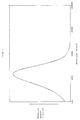
- FIGURE 1 is a plot of the molecular weight distribution ("MWD") as derived from a GPC elution curve for the polypropylene produced in comparative Example A. It shows the high and narrow MWD obtained from using Et(Ind)2HfCl2 in a single catalyst system.
- MWD molecular weight distribution
- FIGURE 2 is a plot of the MWD of the polypropylene produced in comparative Example D showing the narrow MWD obtained from using Et(IndH4)2ZrCl2.
- FIGURE 3 is a plot of the MWD of the polypropylene produced in Example 1 in accordance with the present invention.
- propylene was polymerized using a catalyst system comprising two metallocene catalysts: Et(Ind)2HfCl2 and Et(IndH4)2ZrCl2.
- FIGURE 3 shows the high and broad MWD obtained by practicing the present invention.
- FIGURE 4 is a plot of the MWD for the polymer
- FIGURE 5 is a plot of the MWD for the polypropylene produced in Example 4.
- FIGURE 6 is a plot of the MWD for the polypropylene produced in Example 7. This plot shows a broad distribution at a lower molecular weight than the other figures.
- the present invention provides catalyst systems for use in the polymerization of olefins to obtain a polymer with a broad or multimodal molecular weight distribution (MWD).
- the invention is particularly applicable to the polymerization of propylene because of the stereochemical control that the catalyst systems exhibit on the polymer and the systems ability to produce a polymer with a high isotactic index.
- the catalyst systems of the present invention may be used to polmerize higher olefins as well as ethylene and copolymers of propylene and ethylene.
- the catalyst systems of the present invention comprise at least two different metallocene catalysts which are chiral and stereo-rigid in combination with an aluminum compound.
- the metallocene catalysts may be described by the formula: R''(C5(R')4)2MeQ p wherein (C5(R')4) is a cyclopentadienyl or substituted cyclopentadienyl ring; R' is a hydrogen or a hydrocarbyl radical having 1-20 carbon atoms, and each R' may be the same or each may be different; R'' connects the two (C5(R')4) rings such that at least a portion of R'' acts as a bridge between the two rings and makes the catalyst stereo-rigid; Me is a Group 4b, 5b, or 6b metal of the Periodic Table; Q is a halogen or is a hydrocarbyl radical having 1-20 carbon atoms; and O ⁇ p ⁇ 3.
- R' may be hydrogen or a hydrocarbyl radical.
- hydrocarbyl radicals useful as R' include alkyl, alkenyl, aryl, alkylaryl or arylalkyl radicals. More specifically, exemplary hydrocarbyl radicals include methyl, ethyl, propyl, butyl, amyl, isoamyl, hexyl, isobutyl, heptyl, octyl, nonyl, decyl, cetyl, phenyl, methylene, ethylene, propylene, and other like groups.
- the R's are selected so that (C5(R')4) is an indenyl radical (Ind) or a hydrated indenyl radical (IndH4).
- R'' is a stable component that bridges the two (C5(R')4) rings in order to render the catalyst stereo-rigid.
- R'' may be organic or inorganic and may include groups depending from the portion acting as the bridge.
- Examples of R'' include an alkylene radical having 1-4 carbon atoms, a silicon hydrocarbyl group, a germanium hydrocarbyl group, boron, nitrogen, sulfur, phosphorous, aluminum or groups containing boron, nitrogen, sulfur, phosphorous or aluminum, specifically an alkyl phosphine and an alkyl amine.
- the preferred R'' components are methylene (-CH2-), ethylene (-C2H4-), an alkyl silicon, and a cycloalkyl silicon such as cyclopropyl silicon, among others.
- Q may be any of the hydrocarbyl groups listed for R' above, but preferably, Q is a halogen, and most preferably, Q is chlorine. Also in the preferred embodiment, p is 2.
- the metallocene catalyst should be chiral, i.e., non-superimposable on its mirror image, for the polymerization of propylene and higher alpha-olefins in order to produce a useful polymer product. It was discovered that chirality in a metallocene catalyst exhibits stereochemical control over the polymer product and produces a polymer with a high isotactic index. In addition, the catalyst should be stereo-rigid to aid in the stereochemical control of the polymerization. It is not necessary for the catalyst to be chiral or stereo-rigid for the polymerization of ethylene or predominantly ethylene copolymers.
- the present invention comprises the use of at least two different metallocene catalysts.
- the catalysts may differ in any one or more of the constituent groups : R'', R' m , Me, or Q p .
- the appropriate groups may be varied and the catalyst system tailored to produce a polymer product with the desired MWD.
- the combination of some catalysts produces a high and broad MWD, while other combinations produce a lower MWD. Varying the Me groups between hafnium, zirconium and titanium produces a particularly broad MWD.
- the catalyst systems of the present invention also include an aluminum compound in combination with the metallocene catalysts.
- the aluminum compound may be alumoxane, trimethyl aluminum or mixtures thereof.
- the aluminum compound is an alumoxane represented by the general formula (R-Al-O) for the cyclic form and R(R-Al-O) n -AlR2 for the linear form.
- R is an alkyl group with preferably 1-5 carbons and n is an integer preferably from 1 to about 20. Most preferably, R is a methyl group.
- the aluminum compound may be a mixture of the linear and cyclic alumoxanes.
- alumoxanes a mixture of the cyclic and linear forms is obtained.
- the alumoxanes may be prepared using any of the methods known in the art. Preferably, they are prepared by contacting water with a solution of trialkyl aluminum, such as, for example, trimethyl aluminum in a suitable solvent such as benzene. Most preferably, the alumoxane is prepared in the presence of a hydrated copper sulfate as described in U.S. Patent No. 4,404,344, the disclosure of which is hereby incorporated by reference. As an example, this method of preparation comprises treating a dilute solution of trimethyl aluminum in toluene with copper sulfate represented by the formula CuSO4.5H2O.
- the aluminum compound of the present invention may also comprise a mixture of trimethyl aluminum (TMA) and alumoxane.
- TMA trimethyl aluminum
- alumoxane alumoxane
- the addition of TMA with alumoxanes to the catalyst system causes a transformation of the catalyst over time with the transformed catalyst producing a product with different characteristics than the product of the initial catalyst system.
- TMA is added in the amount of about 0-20 mole percent of the aluminum compound.
- the catalyst system may also include a solvent to increase the solubility of the catalyst in the monomer.
- the olefin monomer is used in a liquid form.
- the solvent may be premixed with the catalyst or added with the monomer.
- the preferred solvents include toluene, xylene, and methylene chloride as well as other known solvents. Depending on the catalysts, a particular solvent may be more compatible with a particular catalyst than other solvents.
- the metallocene catalysts useful in the present invention may be prepard by any of the methods known in the art. Typically, the procedures comprise the addition of a MeQ group and a R'' group to a starting compound such as indene or another dicyclopentadiene compound. An example of a preferred preparation method is given below.
- the catalyst system of the present invention may be used with any polymerization process.
- An example of a preferred procedure is described in co-pending application Serial No. 009,712, the disclosure of which is hereby incorporated by reference. This process includes a pre-polymerization of the catalyst before introducing the catalyst into a polymerization reaction zone. Another preferred procedure is described in the examples below.
- Examples A-D are comparative examples using only one metallocene catalyst in the system.
- Examples 1-7 illustrate the present invention by using catalyst systems with at least two different metallocene catalysts. The results are shown in Table 1 and Figures 1-6.
- a hafnium metallocene of the formula Et(Ind)2 - HfCl2 was prepared by first preparing the ligand Et(Ind)2.
- the ligand was prepared by adding 215 mmol of n-butyl lithium to 215 mmol of Gold Label indene (Aldrich) in 250 ml of dry, deoxygenated tetrahydrafuran (THF) under nitrogen at -91°C.
- the reaction flask was warmed to 25°C and stirred for 4 hours before 107 mmol of 1,2-C2H4Br2 dissolved in 100 ml of THF were added to the indene anion under nitrogen at -91°C.
- the mixture was stirred at 50°C for 12 hours.
- 20 ml of water were added dropwise and the ether evaporated to yield 16.4 grams (60%) of pale yellow solids.
- the yellow powder was dissolved in 100 cc of CH2Cl2 and the insoluble white LiCl filtered off. On addition of 1000 cc of cold pentane to the CH2Cl2 solution, 2 grams (dry weight) of a bright yellow powder precipitated. The complex was filtered off, dried and further purified by fractional recrystallization from dry toluene at 0°C. The complexes were stored under argon and were recrystallized less than 3 weeks prior to a polymerization test.
- a catalyst solution containing 3.4 mg of Et(Ind)2HfCl2 and toluene was precontacted for 5 minutes with a 10 ml toluene solution of 560 mg of alumoxane.
- the contents of the sample cylinder were then charged to a 4 liter Zipperclave reactor containing one liter of propylene and about 1 liter of toluene with the reactor at 50°C. The temperature was maintained at the reaction temperature of 50°C and the contents of the reactor were agitated for one hour. The propylene was then vented and the contents of the reactor were washed with 50% methanol in dilute HCl solution and dried in vacuo.
- the polymer product was then analyzed for the melting points and molecular weights.
- the melting points (Tm) shown in Table 1 were derived from DSC (Differential Scanning Calorimetry) data as known in the art. The melting points are not true equilibrium melting points but are DSC peak temperatures. True equilibium melting points obtained over a period of several hours would be higher than the DSC peak melting points.
- the molecular weights of the polymers were calculated using GPC (Gel Permeation Chromatography) analysis. The analysis was done on a Waters 150 C instrument with a column of Jordi gel. The solvent was trichlorobenzene and the operating temperature was 140°C. The values for M n , M v , M z , M w and M w /M n are reported in Table 1.
- Example D Procedures similar to Example A were followed in preparing three different metallocene catalysts: Et IndH4)2HfCl2 (Example B); Et Ind)2ZrCl2 (Example C); and Et(IndH4)2ZrCl2 (Example D).
- Propylene was polymerized as in Example A using each of these individual catalysts under the varying conditions as given in Table 1.
- Table 1 also shows the MWD obtained with these individual catalysts.
- the M w /M n values obtained with the single catalyst systems are all between 2.0-2.5, indicating a narrow MWD.
- Figures 1 and 2 show a plot of the GPC elution curves for Examples A and D respectively. Figure 1 shows a high, narrow MWD while Figure 2 exhibits a lower MWD.
- the plot of the MWD is shown in Figure 3.
- the use of the two metallocene catalysts as taught by the present invention caused a dramatic change in the MWD as compared to either of the single catalyst systems as shown in Figures 1 or 2.
- Examples 2-7 used two different metallocene catalysts as indicated in Table 1 and under the polymerization conditions shown in Table 1.
- the MWD for Examples 2, 4, and 7 are plotted in Figures 4, 5, and 6 respectively. These results show an ability to vary the breadth and the values of the MWD by using different combinations of various metallocene catalysts as described by the present invention.
- the Examples illustrate the present invention with Hf and Zr metallocene catalysts. Other transition metals are also useful in the present invention.
- the amounts of the catalysts may be varied to achieve different MWD.
- different polymerization procedures may be used as well as different conditions, such as temperature and the addition of a solvent, to achieve different results.
Landscapes
- Chemical & Material Sciences (AREA)
- Health & Medical Sciences (AREA)
- Chemical Kinetics & Catalysis (AREA)
- Medicinal Chemistry (AREA)
- Polymers & Plastics (AREA)
- Organic Chemistry (AREA)
- Engineering & Computer Science (AREA)
- Materials Engineering (AREA)
- Transition And Organic Metals Composition Catalysts For Addition Polymerization (AREA)
- Compositions Of Macromolecular Compounds (AREA)
- Addition Polymer Or Copolymer, Post-Treatments, Or Chemical Modifications (AREA)
Claims (12)
- Katalysatorsystem zur Polymerisation und Copolymerisation von Olefinen, die 3 - 8 Kohlenstoff-Atome aufweisen, wobei besagtes Katalysatorsystem umfaßt:a) mindestens zwei verschiedene Metallocenkatalysatoren, die chiral und stereorigid sind und durch die Formel beschrieben werden:
R''(C₅(R')₄)₂MeQp
worin (C₅(R')₄) ein Cyclopentadienyl- oder ein substituierter Cyclopentadienylring ist; jedes R' gleich oder verschieden ist und ein Wasserstoff- oder ein Kohlenwasserstoffradikal mit 1 - 20 Kohlenstoffatomen ist; R'' eine strukturelle Brücke zwischen den beiden (C₅(R')₄)-Ringen ist, die den besagten Katalysatoren Stereorigidität verleiht, und R'' aus der Gruppe ausgewählt ist, die aus einem Alkylenradikal mit 1 - 4 Kohlenstoffatomen, einem Silicium-Kohlenwasserstoffradikal, einem Germanium-Kohlenwasserstoffradikal, Bor, Stickstoff, Schwefel, Phosphor, Aluminium und Gruppen, die Bor, Stickstoff, Schwefel, Phosphor oder Aluminium enthalten, besteht; Me ein Metall der im Periodensystem der Elemente aufgezeigten Gruppe 4b, 5b oder 6b ist; jedes Q ein Kohlenwasserstoffradikal mit 1-20 Kohlenstoffatomen ist oder ein Halogen ist; 0 ≦ p ≦ 3; und in mindestens einem der besagten Metallocenkatalysatoren Me Hafnium ist; undb) eine Aluminiumverbindung, die aus der Gruppe ausgewählt ist, die aus Alumoxan, Trimethylaluminium und deren Mischungen besteht. - Katalysatorsystem nach Anspruch 1, worin Me aus Hafnium, Zirkonium und Titan ausgewählt ist.
- Katalysatorsystem nach Anspruch 1, worin das System mindestens einen Zirkonocenkatalysator enthält.
- Katalysatorsystem nach Anspruch 1, worin (C₅(R')₄) aus der Gruppe ausgewählt ist, die aus einem Indenylradikal und einem hydrierten Indenylradikal besteht.
- Katalysatorsystem nach Anspruch 1, worin R'' bei wenigstens einem der Katalysatoren ein Ethylenradikal ist.
- Katalysatorsystem nach Anspruch 1, welches weiterhin umfaßt:c) ein Lösungsmittel, das die Löslichkeit des Katalysators in einem Olefinmonomer erhöht.
- Katalysatorsystem nach Anspruch 1, worin R'' aus der Gruppe ausgewählt ist, die aus einem Alkylphosphan und einem Alkylamin besteht.
- Verfahren zur Polymerisation und Copolymerisation von Olefinen mit 3 - 8 Kohlenstoffatomen, welches umfaßt:(1) Bereitstellung eines Katalysatorsystems, das umfaßt:a) mindestens zwei verschiedene Metallocenkatalysatoren, die chiral und stereorigid sind, und die durch die Formel beschrieben werden:
R''(C₅(R')₄)₂MeQp
worin (C₅(R')₄) ein Cyclopentadienyl- oder substituierter Cyclopentadienylring ist; jedes R' gleich oder verschieden ist und ein Wasserstoff- oder ein Kohlenwasserstoffradikal mit 1 - 20 Kohlenstoffatomen ist; R'' eine strukturelle Brücke zwischen den beiden (C₅(R')₄)-Ringen ist, die den besagten Katalysatoren Stereorigidität verleiht, und R'' aus der Gruppe ausgewählt ist, die aus einem Alkylenradikal mit 1 - 4 Kohlenstoffatomen, einem Silicium-Kohlenwasserstoffradikal, einem Germanium-Kohlenwasserstoffradikal, Bor, Stickstoff, Schwefel, Phosphor, Aluminium und Gruppen, die Bor, Stickstoff, Schwefel, Phosphor oder Aluminium enthalten, besteht; Me ein im Periodensystem der Elemente aufgezeigtes Metall der Gruppe 4b, 5b oder 6b ist; jedes Q ein Kohlenwasserstoffradikal mit 1 - 20 Kohlenstoffatomen ist oder ein Halogen ist; 0 ≦ p ≦ 3; und in mindestens einem der besagten Metallocenkatalysatoren Me Hafnium ist; und(b) eine Aluminiumverbindung, die aus der Gruppe ausgewählt wird, die aus Alumoxan, Trimethylaluminium und deren Mischungen besteht.(2) Zusammenbringen des Katalysatorsystems mit einem Olefinmonomer unter Polymerisationsbedingungen, die zur Herstellung von Polyolefinen geeignet sind. - Verfahren nach Anspruch 8, worin Me aus Hafnium, Zirkonium und Titan ausgewählt wird.
- Verfahren nach Anspruch 8, worin das Katalysatorsystem weiterhin umfaßt:(c) ein Lösungsmittel, das die Löslichkeit des Katalysators in einem Olefinmonomer erhöht.
- Verfahren nach Anspruch 8, worin das Olefinmonomer Propylen oder eine Mischung von Propylen und einem anderen Olefinmonomer ist.
- Verfahren nach Anspruch 8, worin R'' aus der Gruppe ausgewählt wird, die aus einem Alkylphosphan und einem Alkylamin besteht.
Applications Claiming Priority (2)
| Application Number | Priority Date | Filing Date | Title |
|---|---|---|---|
| US9575587A | 1987-09-11 | 1987-09-11 | |
| US95755 | 1987-09-11 |
Publications (2)
| Publication Number | Publication Date |
|---|---|
| EP0310734A1 EP0310734A1 (de) | 1989-04-12 |
| EP0310734B1 true EP0310734B1 (de) | 1994-11-23 |
Family
ID=22253445
Family Applications (1)
| Application Number | Title | Priority Date | Filing Date |
|---|---|---|---|
| EP87870133A Expired - Lifetime EP0310734B1 (de) | 1987-09-11 | 1987-09-21 | Katalysatorsystem für Polyolefinproduktion mit breiter Molekulargewichtsverteilung |
Country Status (7)
| Country | Link |
|---|---|
| EP (1) | EP0310734B1 (de) |
| JP (1) | JP2669833B2 (de) |
| KR (1) | KR950008152B1 (de) |
| AT (1) | ATE114323T1 (de) |
| CA (1) | CA1323621C (de) |
| DE (1) | DE3750776T2 (de) |
| ES (1) | ES2064322T3 (de) |
Cited By (22)
| Publication number | Priority date | Publication date | Assignee | Title |
|---|---|---|---|---|
| EP0516019A3 (en) * | 1991-05-27 | 1993-02-17 | Hoechst Aktiengesellschaft | Process for preparing syndiotactic polyolefins with large molecular weight distribution |
| EP0516018A3 (en) * | 1991-05-27 | 1993-03-03 | Hoechst Aktiengesellschaft | Process for preparing olefin polymers with large molecular weight distribution |
| WO1993009148A1 (en) * | 1991-11-07 | 1993-05-13 | Exxon Chemical Patents Inc. | Process for producing polyolefin |
| US5516848A (en) * | 1995-01-31 | 1996-05-14 | Exxon Chemical Patents Inc. | Process to produce thermoplastic elastomers |
| US5539056A (en) * | 1995-01-31 | 1996-07-23 | Exxon Chemical Patents Inc. | Thermoplastic elastomers |
| US5696045A (en) * | 1993-09-29 | 1997-12-09 | Winter; Andreas | Process for the preparation of polyolefins |
| US5786291A (en) * | 1996-02-23 | 1998-07-28 | Exxon Chemical Patents, Inc. | Engineered catalyst systems and methods for their production and use |
| US5891814A (en) * | 1993-05-25 | 1999-04-06 | Exxon Chemical Patents Inc. | Nonwoven fabrics |
| US6576306B2 (en) | 1996-09-04 | 2003-06-10 | Exxonmobil Chemical Patents Inc. | Propylene polymers for films |
| US6583227B2 (en) | 1996-09-04 | 2003-06-24 | Exxonmobil Chemical Patents Inc. | Propylene polymers for films |
| US6605676B1 (en) | 1994-12-30 | 2003-08-12 | Repsol Quimica, S.A. | Process for obtaining polyolefins with broad bimodal or multimodal molecular weight distributions |
| US6608000B1 (en) * | 1992-04-09 | 2003-08-19 | Exxonmobil Chemical Patents Inc. | Polymerization catalysts, their production and use |
| US6723795B1 (en) * | 1999-06-10 | 2004-04-20 | Atofina Research S.A. | Polypropylene with high melt strength and drawability |
| US6806316B2 (en) | 1996-09-04 | 2004-10-19 | Exxonmobil Chemical Patents Inc. | Propylene polymers for oriented films |
| US7223822B2 (en) | 2002-10-15 | 2007-05-29 | Exxonmobil Chemical Patents Inc. | Multiple catalyst and reactor system for olefin polymerization and polymers produced therefrom |
| US7294681B2 (en) | 2002-10-15 | 2007-11-13 | Exxonmobil Chemical Patents Inc. | Mutliple catalyst system for olefin polymerization and polymers produced therefrom |
| US7541402B2 (en) | 2002-10-15 | 2009-06-02 | Exxonmobil Chemical Patents Inc. | Blend functionalized polyolefin adhesive |
| US7550528B2 (en) | 2002-10-15 | 2009-06-23 | Exxonmobil Chemical Patents Inc. | Functionalized olefin polymers |
| US7700707B2 (en) | 2002-10-15 | 2010-04-20 | Exxonmobil Chemical Patents Inc. | Polyolefin adhesive compositions and articles made therefrom |
| US8088704B2 (en) | 2007-11-15 | 2012-01-03 | Univation Technologies, Llc | Polymerization catalysts and methods of using the same to produce polyolefin products |
| US8435914B2 (en) | 2009-05-14 | 2013-05-07 | Univation Technologies, Llc | Mixed metal catalyst systems having a tailored hydrogen response |
| US8835577B2 (en) | 2007-11-15 | 2014-09-16 | Univation Technologies, Llc | Catalyst systems having a tailored hydrogen response |
Families Citing this family (14)
| Publication number | Priority date | Publication date | Assignee | Title |
|---|---|---|---|---|
| JP2587251B2 (ja) * | 1987-11-09 | 1997-03-05 | チッソ株式会社 | 立体規則性オレフィン重合体製造用触媒 |
| DE3743321A1 (de) * | 1987-12-21 | 1989-06-29 | Hoechst Ag | 1-olefinpolymerwachs und verfahren zu seiner herstellung |
| JP2720392B2 (ja) * | 1988-07-12 | 1998-03-04 | 三井化学株式会社 | オレフィン重合用触媒およびオレフィンの重合方法 |
| EP0588208A3 (en) * | 1992-09-12 | 1994-07-06 | Hoechst Ag | Polyolefin moulding composition with broad melt range, process and use therefore |
| CN1131953A (zh) * | 1993-08-06 | 1996-09-25 | 埃克森化学专利公司 | 聚合催化剂及其制备和用途 |
| JPH07309910A (ja) * | 1994-05-19 | 1995-11-28 | Chisso Corp | 改質ポリプロピレンの製造方法および成形品 |
| EP1083188A1 (de) | 1999-09-10 | 2001-03-14 | Fina Research S.A. | Katalysator und Verfahren zur Herstellung von syndiotaktischen / ataktischen Block-Polyolefinen |
| US6943227B2 (en) | 2001-06-29 | 2005-09-13 | Japan Polypropylene Corporation | Catalyst for olefin polymerization and method of polymerization of olefin |
| MXPA04000550A (es) * | 2001-07-19 | 2005-02-17 | Univation Tech Llc | Sistemas catalizadores de metaloceno mixtos, conteniendo un incorporador de co-monomero pobre y un buen incorporador de co-monomero. |
| EP1300423A1 (de) * | 2001-09-27 | 2003-04-09 | Atofina Research S.A. | Katalysatorsystem aus einer Mischung von Katalysatorbestandteilen zur Herstellung einer Polyolefinmischung |
| EP1650232A1 (de) * | 2004-10-25 | 2006-04-26 | Total Petrochemicals Research Feluy | Herstellung von LDPE-Polymeren mittels Bisindenyl-Liganden, die verschiedene Ringsysteme enthalten |
| US8293856B2 (en) | 2008-08-19 | 2012-10-23 | Mitsui Chemicals, Inc. | Process for preparing olefin polymer using mixed catalyst |
| EP3943543A4 (de) * | 2019-03-19 | 2022-12-14 | Mitsui Chemicals, Inc. | Propylenharzzusammensetzung, formkörper und propylenpolymer |
| JP2022158974A (ja) * | 2021-03-31 | 2022-10-17 | 三井化学株式会社 | オレフィン重合体の製造方法 |
Citations (1)
| Publication number | Priority date | Publication date | Assignee | Title |
|---|---|---|---|---|
| EP0128045A1 (de) * | 1983-06-06 | 1984-12-12 | Exxon Research And Engineering Company | Verfahren und Katalysator für die Herstellung von Polyäthylen mit einer breiten Molekulargewichtsverteilung |
Family Cites Families (5)
| Publication number | Priority date | Publication date | Assignee | Title |
|---|---|---|---|---|
| ZA844157B (en) * | 1983-06-06 | 1986-01-29 | Exxon Research Engineering Co | Process and catalyst for polyolefin density and molecular weight control |
| CA1231702A (en) * | 1983-06-06 | 1988-01-19 | John A. Ewen | Process and catalyst for producing reactor blend polyolefins |
| US4522982A (en) * | 1983-06-06 | 1985-06-11 | Exxon Research & Engineering Co. | Isotactic-stereoblock polymers of alpha-olefins and process for producing the same |
| DE3443087A1 (de) * | 1984-11-27 | 1986-05-28 | Hoechst Ag, 6230 Frankfurt | Verfahren zur herstellung von polyolefinen |
| DE3508887A1 (de) * | 1985-03-13 | 1986-09-25 | Hoechst Ag, 6230 Frankfurt | Verfahren zur herstellung von optisch aktiven polyolefinen |
-
1987
- 1987-09-21 EP EP87870133A patent/EP0310734B1/de not_active Expired - Lifetime
- 1987-09-21 ES ES87870133T patent/ES2064322T3/es not_active Expired - Lifetime
- 1987-09-21 AT AT87870133T patent/ATE114323T1/de not_active IP Right Cessation
- 1987-09-21 DE DE3750776T patent/DE3750776T2/de not_active Expired - Lifetime
- 1987-10-06 KR KR1019870011126A patent/KR950008152B1/ko not_active Expired - Fee Related
- 1987-10-16 JP JP62259836A patent/JP2669833B2/ja not_active Expired - Fee Related
- 1987-11-16 CA CA000551887A patent/CA1323621C/en not_active Expired - Fee Related
Patent Citations (1)
| Publication number | Priority date | Publication date | Assignee | Title |
|---|---|---|---|---|
| EP0128045A1 (de) * | 1983-06-06 | 1984-12-12 | Exxon Research And Engineering Company | Verfahren und Katalysator für die Herstellung von Polyäthylen mit einer breiten Molekulargewichtsverteilung |
Cited By (37)
| Publication number | Priority date | Publication date | Assignee | Title |
|---|---|---|---|---|
| RU2101296C1 (ru) * | 1991-05-27 | 1998-01-10 | Хехст АГ | Способ получения синдиотактического полиолефина |
| EP0516018A3 (en) * | 1991-05-27 | 1993-03-03 | Hoechst Aktiengesellschaft | Process for preparing olefin polymers with large molecular weight distribution |
| US5350817A (en) * | 1991-05-27 | 1994-09-27 | Hoechst Ag | Process for the preparation of polyolefins having a broad molecular weight distribution |
| US5539066A (en) * | 1991-05-27 | 1996-07-23 | Hoechst Aktiengesellschaft | Process for the preparation of syndiotactic polyolefins having a broad molecular weight distribution |
| US5587501A (en) * | 1991-05-27 | 1996-12-24 | Hoechst Aktiengesellschaft | Process for the preparation of syndiotactic polyolefins having a broad molecular weight distribution |
| US5714427A (en) * | 1991-05-27 | 1998-02-03 | Hoechst Aktiengesellschaft | Catalyst system comprising two zirconocenes and aluminoxane |
| EP0516019A3 (en) * | 1991-05-27 | 1993-02-17 | Hoechst Aktiengesellschaft | Process for preparing syndiotactic polyolefins with large molecular weight distribution |
| WO1993009148A1 (en) * | 1991-11-07 | 1993-05-13 | Exxon Chemical Patents Inc. | Process for producing polyolefin |
| US6608000B1 (en) * | 1992-04-09 | 2003-08-19 | Exxonmobil Chemical Patents Inc. | Polymerization catalysts, their production and use |
| US5891814A (en) * | 1993-05-25 | 1999-04-06 | Exxon Chemical Patents Inc. | Nonwoven fabrics |
| US5700886A (en) * | 1993-09-29 | 1997-12-23 | Hoechst Aktiengesellschaft | Process for the preparation of polyolefins |
| US5696045A (en) * | 1993-09-29 | 1997-12-09 | Winter; Andreas | Process for the preparation of polyolefins |
| US6150481A (en) * | 1993-09-29 | 2000-11-21 | Targor Gmbh | Process for the preparation of polyolefins |
| US6605676B1 (en) | 1994-12-30 | 2003-08-12 | Repsol Quimica, S.A. | Process for obtaining polyolefins with broad bimodal or multimodal molecular weight distributions |
| US5539056A (en) * | 1995-01-31 | 1996-07-23 | Exxon Chemical Patents Inc. | Thermoplastic elastomers |
| US5516848A (en) * | 1995-01-31 | 1996-05-14 | Exxon Chemical Patents Inc. | Process to produce thermoplastic elastomers |
| US5786291A (en) * | 1996-02-23 | 1998-07-28 | Exxon Chemical Patents, Inc. | Engineered catalyst systems and methods for their production and use |
| US6576306B2 (en) | 1996-09-04 | 2003-06-10 | Exxonmobil Chemical Patents Inc. | Propylene polymers for films |
| US6583227B2 (en) | 1996-09-04 | 2003-06-24 | Exxonmobil Chemical Patents Inc. | Propylene polymers for films |
| US6806316B2 (en) | 1996-09-04 | 2004-10-19 | Exxonmobil Chemical Patents Inc. | Propylene polymers for oriented films |
| US7026040B2 (en) | 1996-09-04 | 2006-04-11 | Exxon Mobil Chemical Patents Inc. | Oriented films from improved propylene polymers |
| US6723795B1 (en) * | 1999-06-10 | 2004-04-20 | Atofina Research S.A. | Polypropylene with high melt strength and drawability |
| US7294681B2 (en) | 2002-10-15 | 2007-11-13 | Exxonmobil Chemical Patents Inc. | Mutliple catalyst system for olefin polymerization and polymers produced therefrom |
| US8088867B2 (en) | 2002-10-15 | 2012-01-03 | Exxonmobil Chemical Patents Inc. | Multiple catalyst system for olefin polymerization and polymers produced therefrom |
| US7524910B2 (en) | 2002-10-15 | 2009-04-28 | Exxonmobil Chemical Patents Inc. | Polyolefin adhesive compositions and articles made therefrom |
| US7541402B2 (en) | 2002-10-15 | 2009-06-02 | Exxonmobil Chemical Patents Inc. | Blend functionalized polyolefin adhesive |
| US7550528B2 (en) | 2002-10-15 | 2009-06-23 | Exxonmobil Chemical Patents Inc. | Functionalized olefin polymers |
| US7700707B2 (en) | 2002-10-15 | 2010-04-20 | Exxonmobil Chemical Patents Inc. | Polyolefin adhesive compositions and articles made therefrom |
| US8071687B2 (en) | 2002-10-15 | 2011-12-06 | Exxonmobil Chemical Patents Inc. | Multiple catalyst system for olefin polymerization and polymers produced therefrom |
| US7223822B2 (en) | 2002-10-15 | 2007-05-29 | Exxonmobil Chemical Patents Inc. | Multiple catalyst and reactor system for olefin polymerization and polymers produced therefrom |
| US8957159B2 (en) | 2002-10-15 | 2015-02-17 | Exxonmobil Chemical Patents Inc. | Multiple catalyst system for olefin polymerization and polymers produced therefrom |
| US8455601B2 (en) | 2007-11-15 | 2013-06-04 | Univation Technologies, Llc | Polyolefin film |
| US8586497B2 (en) | 2007-11-15 | 2013-11-19 | Univation Technologies, Llc | Polymerization catalysts, methods of making, methods of using, and polyolefin products made therefrom |
| US8835577B2 (en) | 2007-11-15 | 2014-09-16 | Univation Technologies, Llc | Catalyst systems having a tailored hydrogen response |
| US8088704B2 (en) | 2007-11-15 | 2012-01-03 | Univation Technologies, Llc | Polymerization catalysts and methods of using the same to produce polyolefin products |
| EP3309182A2 (de) | 2007-11-15 | 2018-04-18 | Univation Technologies, LLC | Polymerisierungskatalysatoren, verfahren zur herstellung und verwendung sowie daraus hergestellte polyolefinprodukte |
| US8435914B2 (en) | 2009-05-14 | 2013-05-07 | Univation Technologies, Llc | Mixed metal catalyst systems having a tailored hydrogen response |
Also Published As
| Publication number | Publication date |
|---|---|
| ATE114323T1 (de) | 1994-12-15 |
| JP2669833B2 (ja) | 1997-10-29 |
| ES2064322T3 (es) | 1995-02-01 |
| DE3750776T2 (de) | 1995-04-27 |
| DE3750776D1 (de) | 1995-01-05 |
| KR890005155A (ko) | 1989-05-13 |
| EP0310734A1 (de) | 1989-04-12 |
| CA1323621C (en) | 1993-10-26 |
| KR950008152B1 (ko) | 1995-07-25 |
| JPS6474202A (en) | 1989-03-20 |
Similar Documents
| Publication | Publication Date | Title |
|---|---|---|
| EP0310734B1 (de) | Katalysatorsystem für Polyolefinproduktion mit breiter Molekulargewichtsverteilung | |
| US4975403A (en) | Catalyst systems for producing polyolefins having a broad molecular weight distribution | |
| KR950008154B1 (ko) | 올레핀 중합용 하프늄 메탈로센 촉매 | |
| US6344577B1 (en) | Process for making silicon bridged metallocene compounds and metallocene catalysts | |
| EP0748822B1 (de) | Olefinpolymerisationskatalysator | |
| US5510502A (en) | Catalyst component for use in the polymerization of α-olefins and process for producing α-olefin polymers using the same | |
| EP0611773B1 (de) | Katalysatorbestandteil für Alpha-olefinpolymerisation und Verfahren zur Herstellung von Alpha-olefinpolymere unter Anwendung derselben | |
| US6713426B1 (en) | Metallocene capable of being used for the process for the preparation of a syndiotactic polyolefin | |
| EP0739361A1 (de) | Amido-siladiylverbrückte katalysatorkomponente, verfahren zur herstellung und verwendung | |
| US6084043A (en) | Catalyst component for polymerization of alpha-olefins and process for producing alpha-olefin polymers using the same | |
| CA2010065C (en) | Process for the preparation of a random propylene copolymer | |
| JPH05209019A (ja) | シンジオタクチックプロピレンコポリマーの製造方法 | |
| EP0813551A1 (de) | Cylcopentadienyl-metall-alkalimetall der gruppe 6 b alpha-olefin polymerisationsaustauschkatalysatoren und ihre verwendung im polymersisationsverfahren | |
| JPH05202124A (ja) | オレフィン重合体の製造方法 | |
| CA2225014A1 (en) | B-n heterocyclic ligands | |
| CN1030705C (zh) | 用于生产具有宽分子量分布的聚烯烃的催化剂体系 | |
| US7332456B2 (en) | Alpha olefin catalyst systems | |
| JP3092974B2 (ja) | シンジオタクチックポリ−α−オレフィン製造用触媒およびシンジオタクチックポリ−α−オレフィンの製造方法 | |
| JP3482700B2 (ja) | オレフィン重合体製造用触媒及びそれを用いたオレフィン重合体の製造方法 | |
| JPH04283205A (ja) | ポリ−α−オレフィン製造用遷移金属触媒成分およびそれを用いたα−オレフィンの重合方法 |
Legal Events
| Date | Code | Title | Description |
|---|---|---|---|
| PUAI | Public reference made under article 153(3) epc to a published international application that has entered the european phase |
Free format text: ORIGINAL CODE: 0009012 |
|
| 17P | Request for examination filed |
Effective date: 19871007 |
|
| AK | Designated contracting states |
Kind code of ref document: A1 Designated state(s): AT BE CH DE ES FR GB IT LI NL SE |
|
| 17Q | First examination report despatched |
Effective date: 19901029 |
|
| GRAA | (expected) grant |
Free format text: ORIGINAL CODE: 0009210 |
|
| RAP1 | Party data changed (applicant data changed or rights of an application transferred) |
Owner name: FINA TECHNOLOGY, INC. |
|
| AK | Designated contracting states |
Kind code of ref document: B1 Designated state(s): AT BE CH DE ES FR GB IT LI NL SE |
|
| REF | Corresponds to: |
Ref document number: 114323 Country of ref document: AT Date of ref document: 19941215 Kind code of ref document: T |
|
| ET | Fr: translation filed | ||
| REF | Corresponds to: |
Ref document number: 3750776 Country of ref document: DE Date of ref document: 19950105 |
|
| REG | Reference to a national code |
Ref country code: ES Ref legal event code: FG2A Ref document number: 2064322 Country of ref document: ES Kind code of ref document: T3 |
|
| ITF | It: translation for a ep patent filed | ||
| PLBE | No opposition filed within time limit |
Free format text: ORIGINAL CODE: 0009261 |
|
| STAA | Information on the status of an ep patent application or granted ep patent |
Free format text: STATUS: NO OPPOSITION FILED WITHIN TIME LIMIT |
|
| 26N | No opposition filed | ||
| REG | Reference to a national code |
Ref country code: GB Ref legal event code: IF02 |
|
| PGFP | Annual fee paid to national office [announced via postgrant information from national office to epo] |
Ref country code: ES Payment date: 20050927 Year of fee payment: 19 |
|
| PGFP | Annual fee paid to national office [announced via postgrant information from national office to epo] |
Ref country code: AT Payment date: 20060901 Year of fee payment: 20 |
|
| PGFP | Annual fee paid to national office [announced via postgrant information from national office to epo] |
Ref country code: FR Payment date: 20060918 Year of fee payment: 20 |
|
| PGFP | Annual fee paid to national office [announced via postgrant information from national office to epo] |
Ref country code: NL Payment date: 20060924 Year of fee payment: 20 |
|
| PGFP | Annual fee paid to national office [announced via postgrant information from national office to epo] |
Ref country code: GB Payment date: 20060925 Year of fee payment: 20 |
|
| PGFP | Annual fee paid to national office [announced via postgrant information from national office to epo] |
Ref country code: CH Payment date: 20060928 Year of fee payment: 20 |
|
| PGFP | Annual fee paid to national office [announced via postgrant information from national office to epo] |
Ref country code: IT Payment date: 20060930 Year of fee payment: 20 |
|
| PGFP | Annual fee paid to national office [announced via postgrant information from national office to epo] |
Ref country code: BE Payment date: 20061018 Year of fee payment: 20 |
|
| PGFP | Annual fee paid to national office [announced via postgrant information from national office to epo] |
Ref country code: DE Payment date: 20061031 Year of fee payment: 20 |
|
| REG | Reference to a national code |
Ref country code: GB Ref legal event code: PE20 |
|
| REG | Reference to a national code |
Ref country code: CH Ref legal event code: PL |
|
| NLV7 | Nl: ceased due to reaching the maximum lifetime of a patent |
Effective date: 20070921 |
|
| EUG | Se: european patent has lapsed | ||
| PG25 | Lapsed in a contracting state [announced via postgrant information from national office to epo] |
Ref country code: GB Free format text: LAPSE BECAUSE OF EXPIRATION OF PROTECTION Effective date: 20070920 |
|
| REG | Reference to a national code |
Ref country code: ES Ref legal event code: FD2A Effective date: 20070922 |
|
| BE20 | Be: patent expired |
Owner name: *FINA TECHNOLOGY INC. Effective date: 20070921 |
|
| PG25 | Lapsed in a contracting state [announced via postgrant information from national office to epo] |
Ref country code: NL Free format text: LAPSE BECAUSE OF EXPIRATION OF PROTECTION Effective date: 20070921 Ref country code: ES Free format text: LAPSE BECAUSE OF EXPIRATION OF PROTECTION Effective date: 20070922 |
|
| PGFP | Annual fee paid to national office [announced via postgrant information from national office to epo] |
Ref country code: SE Payment date: 20060927 Year of fee payment: 20 |