EP0312942A2 - Polypeptides ayant l'activité de la prourokinase, leur production et utilisation - Google Patents
Polypeptides ayant l'activité de la prourokinase, leur production et utilisation Download PDFInfo
- Publication number
- EP0312942A2 EP0312942A2 EP88117188A EP88117188A EP0312942A2 EP 0312942 A2 EP0312942 A2 EP 0312942A2 EP 88117188 A EP88117188 A EP 88117188A EP 88117188 A EP88117188 A EP 88117188A EP 0312942 A2 EP0312942 A2 EP 0312942A2
- Authority
- EP
- European Patent Office
- Prior art keywords
- prourokinase
- polypeptides
- puk
- gene
- expression
- Prior art date
- Legal status (The legal status is an assumption and is not a legal conclusion. Google has not performed a legal analysis and makes no representation as to the accuracy of the status listed.)
- Withdrawn
Links
Images



Classifications
-
- C—CHEMISTRY; METALLURGY
- C12—BIOCHEMISTRY; BEER; SPIRITS; WINE; VINEGAR; MICROBIOLOGY; ENZYMOLOGY; MUTATION OR GENETIC ENGINEERING
- C12N—MICROORGANISMS OR ENZYMES; COMPOSITIONS THEREOF; PROPAGATING, PRESERVING, OR MAINTAINING MICROORGANISMS; MUTATION OR GENETIC ENGINEERING; CULTURE MEDIA
- C12N9/00—Enzymes; Proenzymes; Compositions thereof; Processes for preparing, activating, inhibiting, separating or purifying enzymes
- C12N9/14—Hydrolases (3)
- C12N9/48—Hydrolases (3) acting on peptide bonds (3.4)
- C12N9/50—Proteinases, e.g. Endopeptidases (3.4.21-3.4.25)
- C12N9/64—Proteinases, e.g. Endopeptidases (3.4.21-3.4.25) derived from animal tissue
- C12N9/6421—Proteinases, e.g. Endopeptidases (3.4.21-3.4.25) derived from animal tissue from mammals
- C12N9/6424—Serine endopeptidases (3.4.21)
- C12N9/6456—Plasminogen activators
- C12N9/6462—Plasminogen activators u-Plasminogen activator (3.4.21.73), i.e. urokinase
-
- A—HUMAN NECESSITIES
- A61—MEDICAL OR VETERINARY SCIENCE; HYGIENE
- A61P—SPECIFIC THERAPEUTIC ACTIVITY OF CHEMICAL COMPOUNDS OR MEDICINAL PREPARATIONS
- A61P7/00—Drugs for disorders of the blood or the extracellular fluid
- A61P7/02—Antithrombotic agents; Anticoagulants; Platelet aggregation inhibitors
-
- C—CHEMISTRY; METALLURGY
- C12—BIOCHEMISTRY; BEER; SPIRITS; WINE; VINEGAR; MICROBIOLOGY; ENZYMOLOGY; MUTATION OR GENETIC ENGINEERING
- C12Y—ENZYMES
- C12Y304/00—Hydrolases acting on peptide bonds, i.e. peptidases (3.4)
- C12Y304/21—Serine endopeptidases (3.4.21)
- C12Y304/21073—Serine endopeptidases (3.4.21) u-Plasminogen activator (3.4.21.73), i.e. urokinase
Definitions
- the present invention relates to new polypeptides with prourokinase activity, processes for their preparation and their use in combating diseases.
- the plasminogen activator prourokinase also called “single chain urokinase plasminogenactivator (SCUPA)” or “kidney plasminogenactivator” (KPA)
- PKA plasminogen activator prourokinase
- SCUPA single chain urokinase plasminogenactivator
- KPA kidney plasminogenactivator
- LUK low molecular weight urokinase
- Both the one and the two chain forms have fibrinolytic properties.
- the two-chain molecules have a systemic effect. They degrade both fibrin and fibrinogen throughout the body, and life-threatening bleeding often occurs during application.
- the single-chain forms alone are clot-specific and show little systemic lysis.
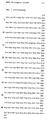
- polypeptides of the formula I can carry a glycosyl residue on the amino acid 302 (Asn, see Fig. 1).
- the invention further relates to DNA sequences which code for the polypeptides of the formula I and to vectors which contain these DNA sequences.
- the new polypeptides can be produced using known genetic engineering techniques.
- the starting point for the constructions described here is a cDNA clone, hereinafter called pU20, which contains the coding sequence of prourokinase and 5′- and 3′- untranslated regions.
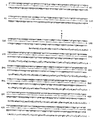
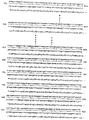
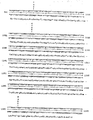
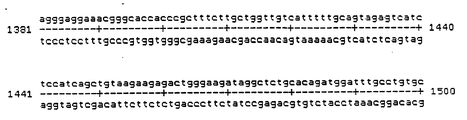
- the partial sequence of the cDNA clone, which encompasses the coding region and from which the protein sequence (FIG. 1) is derived, is shown in FIG. 2.
- the mature protein begins after a so-called "leader" sequence at Ser1 and terminates after Leu411.
- pU20 was obtained from the human, prourokinase-producing tumor cell line Detroit 562 (ATCC No. CCL 138): m-RNA was isolated from this cell line and transcribed into double-stranded cDNA.
- Parts of the DNA sequence of pU20 are easily accessible with the help of restriction endonucleases. These fragments, optionally in conjunction with chemically synthesized oligonucleotides, adapters or gene fragments, can be used to clone the DNA sequences which code for the new polypeptides.
- the installation of the gene fragments or synthetic DNA sequences in cloning vectors for example the commercially available plasmids pBR 322, puc 18 and puc 19, is carried out in a known manner.
- the genes or gene fragments can also be provided with suitable chemically synthesized control regions or control regions isolated from bacteria or phages, which enable expression of the proteins.
- hybrid plasmids obtained in this way into suitable host organisms are also known and has been described in detail.
- the hybrid plasmids can also be provided with corresponding signal sequences which allow the polypeptides to be secreted into the periplasm of E. coli.
- eukaryotic control regions must be used here.
- vectors which e.g. puts the foreign gene to be expressed under the control of the viral SV 40 promoter.
- Such plasmids have no eukaryotic origin of replication. After the transformation into permissive mammalian cells, clones are isolated which carry copies of these plasmids integrated in the genome.
- the genes to be expressed can be cloned under the control of a eukaryotic promoter onto vectors based on the bovine papilloma virus.
- Such expression plasmids remain episomally in a copy number of 20 to 100 in the permissive mouse fibroblast cell line C127.
- the prourokinase When expressed in eukaryotic cells, the prourokinase also receives a glycoside side chain at the amino acid 302 (Asn). Bacteria are unable to synthesize glycoside side chains. Most eukaryotic proteins expressed in bacteria, as well as prourokinase and the polypeptides derived from it according to the invention, occur in the cell as denatured inclusion bodies and have to be refolded by protein chemistry. Furthermore, bacteria are often unable to split off the initiator amino acid methionine from the finished protein. The cleavage of the terminal methionine when expressed in bacteria and in some cases the prevention of the formation of inclusion bodies can be achieved by using secretion systems.
- the N-terminus often still has an amino acid that is important for the cleavage site, e.g. Alanine.
- an amino acid that is important for the cleavage site e.g. Alanine.
- expression in bacteria poses many problems, like the prourokinase, these are the expression system of choice if the resulting crude protein can be renatured into the active enzyme. Therefore, expression in bacteria is preferred here.
- the new active ingredients can be used for thrombolysis in arterial and venous occlusive diseases and show improved properties compared to human prourokinase.
- the invention therefore also relates to medicaments which contain at least one of the new polypeptides, optionally in a pharmaceutically acceptable carrier or binder.
- the new proteins can also be used together with other fibrinolytics, such as urokinase, TPA, streptokinase, derivatives derived from these three parties, or sodium pentosan polysulfate.
- TPA and derived proteins with similar activity are particularly suitable as combination components.
- the prourokinase-producing human tumor cell line Detroit 562 (ATCC No. CCL 138) was in "Eagle's minimal essential" medium with 3% NaHCO3, 10% fetal calf serum, 1% amino acids, 2.4% Hepes pH 7.5 at 37 ° C and 5% CO2 atmosphere pulled to confluence.
- the medium was poured off, the cells washed with physiological saline and disrupted in lysis buffer (6M guanidinium isothiocyanate, 5 mM sodium citrate (pH 7), 0.1 M 2-mercaptoethanol, 0.5% sarkosyl).
- the RNA was sedimented through a 5.7 M CsCl cushion overnight at 100,000 g.
- the fraction containing polyA + RNA was separated by two affinity chromatography on oligo (dT) cellulose.
- the polyA + RNA was rewritten into single-stranded cDNA.
- the second strand was synthesized using E. coli DNA polymerase I. About 10-20 dG residues were synthesized on the double-stranded cDNA with the aid of the enzyme terminal transferase at each 5′-end.
- the same procedure was followed with the commercially available plasmid puC 18, which was linearized with the restriction endonuclease SphI and about 10 to 20 dC residues were synthesized at its 5 'ends as described above. Both DNAs were fused together and the hybrid was transformed into competent cells of the E. coli strain HB 101. The clones were plated on LB plates with 100 ⁇ g / ml ampicillin as a selection marker and the colonies were transferred to nitrocellulose.
- the bacteria on the filters were replicated, lysed and the denatured DNA firmly bound to the filter.
- oligonucleotide probes with homology to the published DNA sequence of the human prourokinase were produced. These probes had the following sequences: 5 ′ TCAGCAGCACATAGCAT 3 ′ 5 ′ AACCAGGGCTGGTTCTC 3 ′ 5 ′ ACCATGCACTCTTGGAC 3 ′ 5 ′ TGCTGGTCACAGGTCAT 3 ′
- Fig. 2 shows the sequence of the coding region and neighboring areas.
- the starting point was the plasmid pU20 (Example 1).
- the fragment of the prourokinase gene from nucleotide 162 to 1329 was cut out of this by a limited TaqI / BamHI digestion and isolated by gel electrophoresis (fragment 1).
- the plasmid puc 18 was linearized with EcoRI and SalI, which resulted in fragment 2.
- Fragments 1 and 2 were ligated with the oligonucleotide adapters 3/4 and 5/6, which restore the respective 5'-end (3/4) and 3'-end (5/6) of the prourokinase gene.
- oligonucleotide 3/4 the EcoRI site at the 5'-end was deleted.
- the hybrid plasmid pPUK was obtained according to FIG. 3, which made the prourokinase gene available as an easily clonable ClaI / SalI "cassette" for conversion into different expression vectors.
- the hybrid plasmid pPUK was opened with ClaI and the protruding 5 'ends were filled in with Klenow fragment of DNA polymerase I and dCTP and dGTP.
- This strain contains the episome F′i Q with the lac repressor, which represses the prourokinase gene under normal growth conditions by adjusting the isopropyl ⁇ -D-thiogalactoside (IPTG) content to 0.5 mM in the In the logarithmic growth phase, the expression of the prourokinase gene was induced, and the prourokinase was denatured intracellularly as so-called "inclusion bodies” e Prourokinase can be renatured and purified using protein chemistry.
- IPTG isopropyl ⁇ -D-thiogalactoside
- the plasmid pPUK (Fig. 3, Example 2) was completely cleaved with BalI and then partially with EcoRI. The fragment containing the vector was purified by gel electrophoresis and ligated with the synthetic oligonucleotides 84/85, 86/87 or 88/89:
- polypeptides claimed according to the invention were produced by genetic engineering in E. coli as described in Example 2.
- polypeptides described above can be purified and renatured after their expression in E. coli using a standard method:
- the cell pellet (100 g wet mixture) was taken up in 500 ml (50 mM phosphate buffer pH 8.0, 10 mM EDTA, 1 mM DTT and 0.005% Tween 80) and resuspended.
- the cells disrupted by ultrasound were centrifuged off and the pellet with the inclusion bodies was washed with 50 mM phosphate buffer, pH 8.0, 1 M NaCl, 1 mM DTT, 0.005% Tween 80.
- the washed inclusion bodies were centrifuged off (10 min, 10,000 g) and dissolved in 6 M guanidinium hydrochloride. This was done by stirring for 30 min at room temperature in 200 ml of 50 mM phosphate buffer pH 8.0, 5 mM DTT, 1 mM EDTA, 6 M guanidinium hydrochloride and 0.005% Tween 80. Undissolved protein was centrifuged off.
- the PUK mutein was renatured by diluting this solution to a protein concentration between 0.2 and 0.3 mg / ml in 50 mM phosphate buffer pH 9.0, 1.5 M guanidinium hydrochloride, 0.5 M arginine, 1 mM GSH, 0.1mM GSSG, 1mM EDTA, 0.005% Tween 80.
- Protein purification was done by ammonium sulfate precipitation, affinity chromatography and ion exchange chromatography. For this purpose, ammonium sulfate (between 40 to 70%) was added to the renaturation solution, the pellet was taken up in 50 mM phosphate, 1 M guanidinium hydrochloride, 0.1 M NaCl, 0.005% Tween 80 and applied to a Zn chelate (Pharmacia) chromatography column and eluted with 50 mM EDTA in the above buffer at 4 ° C.
- the eluted protein was dialyzed at 4 ° C against 10 mM phosphate, 10 mM NaCl, 0.005% Tween 80 and applied to an S-Sepharose (Pharmacia).
- the PUK mutein was eluted from the column with 50 mM phosphate, 400 mM NaCl, 0.005% Tween 80.
- the specific activities of the purified proteins in the direct amidolytic test with the substrate S-2444 are in the range from 0.5 to 1.5x10⁵ U / mg.
- Thrombin cleavage of the prourokinase behind Arg 156 results in a 2 chain molecule that can no longer be activated and is no longer available for clot lysis.
- Polypeptides with amino acid exchange in pos. 156 can no longer be inactivated by thrombin or only to a significantly lesser extent.
- the thrombin inactivation test was carried out as follows: Prourokinase (or its muteins) is diluted to 6000 U / ml (50 mM phosphate, pH 6.7, 300 mM NaCl, 0.005% Tween 80) and with thrombin (5 U / ml) Incubated at 37 ° C. Aliquots are removed at intervals of 15 min and measured in the amidolytic test.
- the PUK mutein (Gln 156 or Leu 156) was used in the thrombin inhibition test.
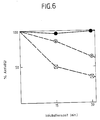
- Fig. 7 shows that this mutein still showed 100% of the initial activity after 30 min incubation with 5 U thrombin (o-o).
- the amino acid exchange at position 156 of the prourokinase (Arg ⁇ Gln) or Leu therefore means that thrombin on the mutein is no longer proteolytically active and no inactive two-chain material is formed.
Landscapes
- Health & Medical Sciences (AREA)
- Chemical & Material Sciences (AREA)
- Organic Chemistry (AREA)
- Engineering & Computer Science (AREA)
- Life Sciences & Earth Sciences (AREA)
- Bioinformatics & Cheminformatics (AREA)
- General Health & Medical Sciences (AREA)
- Genetics & Genomics (AREA)
- Wood Science & Technology (AREA)
- Zoology (AREA)
- Biochemistry (AREA)
- General Engineering & Computer Science (AREA)
- Biomedical Technology (AREA)
- Medicinal Chemistry (AREA)
- Molecular Biology (AREA)
- Nuclear Medicine, Radiotherapy & Molecular Imaging (AREA)
- Microbiology (AREA)
- Diabetes (AREA)
- Hematology (AREA)
- Chemical Kinetics & Catalysis (AREA)
- General Chemical & Material Sciences (AREA)
- Biotechnology (AREA)
- Pharmacology & Pharmacy (AREA)
- Animal Behavior & Ethology (AREA)
- Public Health (AREA)
- Veterinary Medicine (AREA)
- Medicines That Contain Protein Lipid Enzymes And Other Medicines (AREA)
- Enzymes And Modification Thereof (AREA)
- Peptides Or Proteins (AREA)
- Preparation Of Compounds By Using Micro-Organisms (AREA)
Applications Claiming Priority (2)
| Application Number | Priority Date | Filing Date | Title |
|---|---|---|---|
| DE3735916 | 1987-10-23 | ||
| DE19873735916 DE3735916A1 (de) | 1987-10-23 | 1987-10-23 | Neue polypeptide, ihre herstellung und verwendung |
Publications (2)
| Publication Number | Publication Date |
|---|---|
| EP0312942A2 true EP0312942A2 (fr) | 1989-04-26 |
| EP0312942A3 EP0312942A3 (fr) | 1990-05-02 |
Family
ID=6338942
Family Applications (1)
| Application Number | Title | Priority Date | Filing Date |
|---|---|---|---|
| EP88117188A Withdrawn EP0312942A3 (fr) | 1987-10-23 | 1988-10-15 | Polypeptides ayant l'activité de la prourokinase, leur production et utilisation |
Country Status (4)
| Country | Link |
|---|---|
| EP (1) | EP0312942A3 (fr) |
| JP (1) | JPH01160482A (fr) |
| DE (1) | DE3735916A1 (fr) |
| DK (1) | DK587588A (fr) |
Cited By (3)
| Publication number | Priority date | Publication date | Assignee | Title |
|---|---|---|---|---|
| EP0405285A1 (fr) * | 1989-06-19 | 1991-01-02 | Kyowa Hakko Kogyo Co., Ltd. | Activateur du plasminogène |
| US5316934A (en) * | 1989-06-13 | 1994-05-31 | Nippon Soda Co., Ltd. | Effective thrombosis mediated by human prourokinase-like polypeptides with increased binding affinity for thrombosis |
| CN100441683C (zh) * | 2006-03-24 | 2008-12-10 | 中国人民解放军军事医学科学院生物工程研究所 | 低分子量尿激酶突变体及其表达载体 |
Family Cites Families (2)
| Publication number | Priority date | Publication date | Assignee | Title |
|---|---|---|---|---|
| AU5390286A (en) * | 1985-01-25 | 1986-08-13 | Sagami Chemical Research Center | Stabilized human prourokinase |
| US5219569A (en) * | 1985-04-22 | 1993-06-15 | Genentech, Inc. | Protease resistant urokinase |
-
1987
- 1987-10-23 DE DE19873735916 patent/DE3735916A1/de not_active Withdrawn
-
1988
- 1988-10-15 EP EP88117188A patent/EP0312942A3/fr not_active Withdrawn
- 1988-10-21 DK DK587588A patent/DK587588A/da not_active Application Discontinuation
- 1988-10-24 JP JP63266255A patent/JPH01160482A/ja active Pending
Cited By (5)
| Publication number | Priority date | Publication date | Assignee | Title |
|---|---|---|---|---|
| US5316934A (en) * | 1989-06-13 | 1994-05-31 | Nippon Soda Co., Ltd. | Effective thrombosis mediated by human prourokinase-like polypeptides with increased binding affinity for thrombosis |
| EP0405285A1 (fr) * | 1989-06-19 | 1991-01-02 | Kyowa Hakko Kogyo Co., Ltd. | Activateur du plasminogène |
| US5160735A (en) * | 1989-06-19 | 1992-11-03 | Kyowa Hakko Kogyo Co. Ltd. | Plasminogen activator |
| US5342775A (en) * | 1989-06-19 | 1994-08-30 | Kyowa Hakko Kogyo Co. Ltd. | Plasminogen activator |
| CN100441683C (zh) * | 2006-03-24 | 2008-12-10 | 中国人民解放军军事医学科学院生物工程研究所 | 低分子量尿激酶突变体及其表达载体 |
Also Published As
| Publication number | Publication date |
|---|---|
| DK587588A (da) | 1989-06-14 |
| EP0312942A3 (fr) | 1990-05-02 |
| JPH01160482A (ja) | 1989-06-23 |
| DE3735916A1 (de) | 1989-05-03 |
| DK587588D0 (da) | 1988-10-21 |
Similar Documents
| Publication | Publication Date | Title |
|---|---|---|
| DE3751128T2 (de) | Rekombinante gereinigte Protease, Nexin. | |
| DE3588149T2 (de) | Rekombinante DNS-Verfahren und dadurch hergestellte Produkte | |
| DE3786767T2 (de) | Neues Polypeptid. | |
| DE3687651T2 (de) | Analoge des gewebespezifischen plasminogenaktivators. | |
| DE69012888T2 (de) | Plasminogenaktivator. | |
| DE68923741T2 (de) | Fledermausspeichel-Plasminogenaktivatoren. | |
| DD210303A5 (de) | Verfahren zur herstellung von humangewebe-plasminogen-aktivator | |
| DE3587875T2 (de) | Rekombinantverfahren zur herstellung von serinproteaseinhibitoren, sowie dns-sequenzen dazu. | |
| DE3903581A1 (de) | Gewebs-plasminogenaktivator-derivat | |
| DE69432608T2 (de) | Expression von inhibitoren vom plasminogenaktivator vom urokinasetyp | |
| DE3852706T2 (de) | Verfahren zur Herstellung eines physiologisch aktiven Peptids mit einem Cysteinrest. | |
| DE3643158A1 (de) | Gewebs-plasminogen-aktivator(tpa) - derivat und seine herstellung | |
| DE69027948T2 (de) | Reinigung von rekombinantem, menschlichem Interleukin-3 | |
| EP0408945B1 (fr) | Plasmides, leur préparation et leur utilisation pour obtenir un activateur de plasminogène | |
| DE68918279T2 (de) | Plasminogenaktivator-varianten und verfahren zu ihrer herstellung. | |
| EP0496327B1 (fr) | Procédé pour la préparation de polypeptides ayant l'activité de la prourokinase | |
| EP0312942A2 (fr) | Polypeptides ayant l'activité de la prourokinase, leur production et utilisation | |
| EP0244627A2 (fr) | Vecteurs d'expression pour la production de polypeptides | |
| DE3780199T2 (de) | Modifiziertes enzym. | |
| EP0312941A2 (fr) | Polypeptides ayant l'activité de la prourokinase, leur production et utilisation | |
| EP0447468B1 (fr) | Proteines d'ancrod, leur production et utilisation | |
| DE3877197T2 (de) | Verfahren zur herstellung von hirudin. | |
| EP0403598A1 (fr) | POLYPEPTIDES ANALOGUES AU tPA, LEUR FABRICATION ET LEUR UTILISATION | |
| EP0540560B1 (fr) | Proteines semblables a l'ancrod, leur fabrication et utilisation | |
| EP0242835B1 (fr) | Procédé de préparation des activateurs de plasminogène dans les procaryotes |
Legal Events
| Date | Code | Title | Description |
|---|---|---|---|
| PUAI | Public reference made under article 153(3) epc to a published international application that has entered the european phase |
Free format text: ORIGINAL CODE: 0009012 |
|
| AK | Designated contracting states |
Kind code of ref document: A2 Designated state(s): AT BE CH DE ES FR GB IT LI NL |
|
| PUAL | Search report despatched |
Free format text: ORIGINAL CODE: 0009013 |
|
| AK | Designated contracting states |
Kind code of ref document: A3 Designated state(s): AT BE CH DE ES FR GB IT LI NL |
|
| 17P | Request for examination filed |
Effective date: 19900329 |
|
| 18W | Application withdrawn |
Withdrawal date: 19910107 |
|
| STAA | Information on the status of an ep patent application or granted ep patent |
Free format text: STATUS: THE APPLICATION HAS BEEN WITHDRAWN |
|
| R18W | Application withdrawn (corrected) |
Effective date: 19910107 |