EP0314500A2 - Sonde diagnostique pour déterminer une prédisposition dioabétique type 1 - Google Patents
Sonde diagnostique pour déterminer une prédisposition dioabétique type 1 Download PDFInfo
- Publication number
- EP0314500A2 EP0314500A2 EP88310163A EP88310163A EP0314500A2 EP 0314500 A2 EP0314500 A2 EP 0314500A2 EP 88310163 A EP88310163 A EP 88310163A EP 88310163 A EP88310163 A EP 88310163A EP 0314500 A2 EP0314500 A2 EP 0314500A2
- Authority
- EP
- European Patent Office
- Prior art keywords
- probe
- gene
- dna
- sequence
- thymine
- Prior art date
- Legal status (The legal status is an assumption and is not a legal conclusion. Google has not performed a legal analysis and makes no representation as to the accuracy of the status listed.)
- Granted
Links
Images

Classifications
-
- C—CHEMISTRY; METALLURGY
- C12—BIOCHEMISTRY; BEER; SPIRITS; WINE; VINEGAR; MICROBIOLOGY; ENZYMOLOGY; MUTATION OR GENETIC ENGINEERING
- C12Q—MEASURING OR TESTING PROCESSES INVOLVING ENZYMES, NUCLEIC ACIDS OR MICROORGANISMS; COMPOSITIONS OR TEST PAPERS THEREFOR; PROCESSES OF PREPARING SUCH COMPOSITIONS; CONDITION-RESPONSIVE CONTROL IN MICROBIOLOGICAL OR ENZYMOLOGICAL PROCESSES
- C12Q1/00—Measuring or testing processes involving enzymes, nucleic acids or microorganisms; Compositions therefor; Processes of preparing such compositions
- C12Q1/68—Measuring or testing processes involving enzymes, nucleic acids or microorganisms; Compositions therefor; Processes of preparing such compositions involving nucleic acids
- C12Q1/6876—Nucleic acid products used in the analysis of nucleic acids, e.g. primers or probes
- C12Q1/6881—Nucleic acid products used in the analysis of nucleic acids, e.g. primers or probes for tissue or cell typing, e.g. human leukocyte antigen [HLA] probes
-
- C—CHEMISTRY; METALLURGY
- C12—BIOCHEMISTRY; BEER; SPIRITS; WINE; VINEGAR; MICROBIOLOGY; ENZYMOLOGY; MUTATION OR GENETIC ENGINEERING
- C12Q—MEASURING OR TESTING PROCESSES INVOLVING ENZYMES, NUCLEIC ACIDS OR MICROORGANISMS; COMPOSITIONS OR TEST PAPERS THEREFOR; PROCESSES OF PREPARING SUCH COMPOSITIONS; CONDITION-RESPONSIVE CONTROL IN MICROBIOLOGICAL OR ENZYMOLOGICAL PROCESSES
- C12Q1/00—Measuring or testing processes involving enzymes, nucleic acids or microorganisms; Compositions therefor; Processes of preparing such compositions
- C12Q1/68—Measuring or testing processes involving enzymes, nucleic acids or microorganisms; Compositions therefor; Processes of preparing such compositions involving nucleic acids
- C12Q1/6813—Hybridisation assays
- C12Q1/6827—Hybridisation assays for detection of mutation or polymorphism
-
- C—CHEMISTRY; METALLURGY
- C12—BIOCHEMISTRY; BEER; SPIRITS; WINE; VINEGAR; MICROBIOLOGY; ENZYMOLOGY; MUTATION OR GENETIC ENGINEERING
- C12Q—MEASURING OR TESTING PROCESSES INVOLVING ENZYMES, NUCLEIC ACIDS OR MICROORGANISMS; COMPOSITIONS OR TEST PAPERS THEREFOR; PROCESSES OF PREPARING SUCH COMPOSITIONS; CONDITION-RESPONSIVE CONTROL IN MICROBIOLOGICAL OR ENZYMOLOGICAL PROCESSES
- C12Q1/00—Measuring or testing processes involving enzymes, nucleic acids or microorganisms; Compositions therefor; Processes of preparing such compositions
- C12Q1/68—Measuring or testing processes involving enzymes, nucleic acids or microorganisms; Compositions therefor; Processes of preparing such compositions involving nucleic acids
- C12Q1/6876—Nucleic acid products used in the analysis of nucleic acids, e.g. primers or probes
- C12Q1/6883—Nucleic acid products used in the analysis of nucleic acids, e.g. primers or probes for diseases caused by alterations of genetic material
-
- C—CHEMISTRY; METALLURGY
- C12—BIOCHEMISTRY; BEER; SPIRITS; WINE; VINEGAR; MICROBIOLOGY; ENZYMOLOGY; MUTATION OR GENETIC ENGINEERING
- C12Q—MEASURING OR TESTING PROCESSES INVOLVING ENZYMES, NUCLEIC ACIDS OR MICROORGANISMS; COMPOSITIONS OR TEST PAPERS THEREFOR; PROCESSES OF PREPARING SUCH COMPOSITIONS; CONDITION-RESPONSIVE CONTROL IN MICROBIOLOGICAL OR ENZYMOLOGICAL PROCESSES
- C12Q2600/00—Oligonucleotides characterized by their use
- C12Q2600/156—Polymorphic or mutational markers
-
- C—CHEMISTRY; METALLURGY
- C12—BIOCHEMISTRY; BEER; SPIRITS; WINE; VINEGAR; MICROBIOLOGY; ENZYMOLOGY; MUTATION OR GENETIC ENGINEERING
- C12Q—MEASURING OR TESTING PROCESSES INVOLVING ENZYMES, NUCLEIC ACIDS OR MICROORGANISMS; COMPOSITIONS OR TEST PAPERS THEREFOR; PROCESSES OF PREPARING SUCH COMPOSITIONS; CONDITION-RESPONSIVE CONTROL IN MICROBIOLOGICAL OR ENZYMOLOGICAL PROCESSES
- C12Q2600/00—Oligonucleotides characterized by their use
- C12Q2600/172—Haplotypes
Definitions
- This invention relates generally to genetic engineering and more particularly to DNA and RNA probes useful for diagnosing predisposition to disease states, specifically type I diabetes.
- genetic screening for inherited diseases based on the use of specific gene probes is a promising technology that will augment both the breadth and the precision of genetic diagnostic testing.
- genetic disorders There are an estimated 3,000 genetic disorders known which result from a single gene mutation, for which the application of specific gene probes is of direct value.
- RA rheumatoid arthritis
- type I diabetes or insulin-dependent diabetes mellitus, IDDM, hereinafter "diabetes”
- genetic inheritance determines the predisposition, or disease risk, associated with a large proportion of clinical disease.
- genetic testing for diabetes should be viewed as the identification of genetic predisposition, distinct from the more conventional notion of a single gene defect resulting in a specific inherited disease.
- the identification of a particular gene associated with predisposition to diabetes can be viewed from two different perspectives.
- the gene being detected may be linked on the chromosome to other genes which actually confer disease susceptibility, in which case the gene being tested would function as a marker gene.
- the gene being identified may itself contribute directly to disease, but only if other genetic elements or appropriate environmental agents are present. Both of these concepts are important for understanding the genetic predisposition to diabetes.
- the major genetic contribution to both diabetes and rheumatoid arthritis is encoded in a portion of chromosome 6 known as the major histocompatibility complex. Within this gene complex, a series of 14 linked genes constitutes the HLA class II gene cluster. Products of these class II genes are essential in the normal immune response for the triggering of the activation steps which lead to immunity. Even when the immune system is activated inappropriately, and attacks normal tissue, causing autoimmunity, these class II molecules play an essential role in the immune activation which leads to disease.
- HLA class II genes The association of HLA class II genes with diabetes and with rheumatoid arthritis has been suspected for some time.
- the products of HLA genes carry the HLA typing specificities, which are conventionally measured using serologic reactivities. These typing specificities are a partial measure of genetic polymorphisms within the HLA gene complex.
- One of these serologic polymorphisms known as HLA DR4, is present in approximately 70-75% of patients with either type I diabetes or classic rheumatoid arthritis.
- HLA DR4 One of these serologic polymorphisms, known as HLA DR4
- the utility of this serologic marker for disease predisposition analysis is hampered, however, by the fact that approximately 35% of the normal population also type as HLA DR4.
- the invention provides such an oligonucleotide probe for diagnosing predisposition or susceptibility to type I diabetes in the form of an oligonucleotide capable of specifically hybridizing with the gene sequence 3′-GCGGGCRARGRGGGGGRGCAG-5′ or 5′-CGCCCGATACACCCCCACGTC-3′ wherein A is adenine, C is cytosine, G is guanine, T is thymine, and R is thymine or uracil.
- the probe preferably includes at least 15 sequential nucleotides selected from the sequence 5′-GCCCGATACACCCCCACGT-3′ or 3′CGGGCRARGRGGGGGRGCA-5′.
- the oligonucleotide probe includes at least 5′CCGATACACCCCCAC-3′ or 3′-GGCRARGRGGGGGRG-5′.
- the probe may be labeled with a detectable marker, such as an enzyme or biotin, and will typically be supplied in a diagnostic kit in combination with a substratum capable of adsorbing DNA or cells, a restriction enzyme, and/or a detergent, that is preferably capable of permeabilising cell membranes, such as an octoxynol.
- a detectable marker such as an enzyme or biotin
- FIGURE 1 illustrates the genes on chromosome 6 which constitute the HLA class II genetic complex.
- Several of these genes are highly polymorphic; that is, they exist in numerous allelic forms in the normal population. For instance, at least 50 alleles of the DR ⁇ 1 locus, and a dozen or so alleles of the DQ ⁇ and DQ ⁇ loci are known to exist.
- asterisks mark genes known to be expressed; the DR and Dw allelic series, including Dw4(DR4) and Dw14(DR4) genes, representing alleles of the DR ⁇ 1 locus.
- the DQ ⁇ 3.1(DQw3) and DQ ⁇ 3.2(DQw3) genes represent alleles of the DQ ⁇ 1 locus.
- HLA DR4 specificity is carried by products of the DR ⁇ 1 locus. At least five different DR ⁇ 1 alleles all carry the HLA DR4 serologic specificity, and other alleles do not but instead carry HLA specificities known as DR1, DR2, etc.
- each of the five alleles of DR ⁇ 1 genes on DR4 positive hapolotypes have been given different names, such as Dw4, Dw14, Dw10, Dw13, Dw15 (not shown).
- Each of these different DR ⁇ 1 alleles is linked to a polymorphic DQ ⁇ allele.
- the DQ ⁇ alleles are designated DQ3.1, DQ3.2, or DQx (not shown).
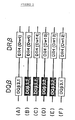
- An individual who "types" using conventional methodology as HLA DR4 potentially will carry any of the hapolotypes illustrated in FIGURE 2.
- up to five different alleles of DR ⁇ and three different alleles of DQ ⁇ may be represented with the linkage patterns shown.
- DR4 positive DR ⁇ 1 alleles are very closely related. They differ from each other by as few as one amino acid or as many as five amino acids. In keeping with this limited divergence, restriction enzyme recognition sites are conserved among these different alleles. In other words, restriction fragment linked polymorphisms (RFLP) do not distinguish among the different DR4 positive DR ⁇ 1 alleles.
- RFLP restriction fragment linked polymorphisms
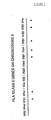
- FIGURE 2 three different alleles of the DQ ⁇ gene are found on DR4 positive haplotypes. These three alleles are fairly divergent from each other, and can be distinguished by either restriction enzyme polymorphisms (RFLP) or specific oligonucleotide probes.
- FIGURE 3 highlights some of the restriction enzyme differences which distinguish the DQ3.1 and the DQ3.2 alleles. Analysis of type I diabetic patients and normal controls indicates that greater than 95% DR4 positive patients carry the DQ3.2 allele at the DQ ⁇ gene. This is the most highly associated HLA gene in this disease and apparently accounts for the association of the DR4 typing specificity noted previously. As illustrated in FIGURE 2, the DQ3.2 gene is found linked to several different DR ⁇ genes. In other words, the HLA class II gene most highly associated with DR4-positive diabetes is not the DR ⁇ 1 gene but the DQ ⁇ gene, and specifically its DQ3.2 allele.
- the invention thus provides a gene probe useful for diagnosing predisposition to type I diabetes, in the form of an oligonucleotide capable of specifically hybridizing with the following distinguishing DQ3.2 gene sequence: 3′-GCGGGCTATGTGGGGGTGCAG-5′ (1) or 5′-CGCCCGATACACCCCCACGTC-3′.
- RNA probes are also provided that are capable of specifically hybridizing with the following RNA sequence: 3′-GCGGGCUAUGUGGGGGUGCAG-5′.
- hybridizing is meant that the subject probes are capable of hybridizing either with the sense or antisense strand of the DQ3.2 allele, or with RNA transcribed therefrom, at a stringency condition where a single base mismatch does not hybridize.
- stringency conditions for various hybridization assay formats will depend upon the constellation of temperature, ionic concentration, and pH. Generally, for optimal DNA:DNA or RNA:RNA hybridization, the temperature is inversely related to the salt concentration; the pH should be held, e.g., for 15-nucleotide sequences ("15-mers”), in the range of from about 6.8 to about 7.4.
- RNA:DNA hybridizations similar assay conditions apply, but lower temperatures (accompanied by higher salt concentrations) are generally employed than for the DNA:DNA hybridizations.
- the subject probe should exactly complement all or part of oligonucleotide sequences (1), (2), or (3).
- the bases complementary to terminal sequences of (1), (2), and (3) are not included in the probe construction, in order to increase the hybridization efficiency.
- the subject probes will generally contain sequential nucleotides selected from the following sequences: 5′-GCCCGATACACCCCCACGT-3′ (4) or 3′-CGGGCTATGTGGGGGTGCA-5′ (5) or 3′-CGGGCUAUGUGGGGGUGCA-5′. (6)
- the requisite specificity can be achieved by constructing the probe with any 15-nucleotide sequence from within (4), (5), or (6).
- the probe should be such a 16-mer, which is considered to be optimal for commercial diagnostic applications at room temperature.
- longer oligonucleotide sequences including the 21-base sequences complementing (1), (2), or (3), can be selected, especially for clinical laboratory applications where auxiliary equipment for achieving higher hybridization temperatures is available.
- the probe contains a nucleotide sequence from the central region of (4), (5), or (6).
- the subject probes will contain or include the following sequences: 5′-CCGATACACCCCCAC-3′ (7) or 3′-GGCTATGTGGGGGTG-5′. (8) or 3′-GGCUAUGUGGGGGUG-5′ (9)
- oligonucleotides can be readily synthesized by known techniques and available reagents and equipment.
- the subject probes can be detected or made detectable under various assay conditions in a number of conventional ways.
- a radioisotope can be incorporated into the probe during oligonucleotide synthesis.
- an enzyme such as alkaline phosphatase can be conjugated to the probe prior to the assay, or a biotinylated probe can be employed in the assay and hybrids subsequently detected with an avidinized enzyme, e.g., streptavidin-alkaline phosphatase.
- Luciferins are also suitable for marking the oligonucleotide to make a probe, and the list of presently available detectable markers also includes fluorophores and other luminophores, enzyme inhibitors as well as coenzymes, paramagnetic metals and other spin labels.
- the subject DNA and RNA probes can be employed in a wide variety of existing diagnostic hybridization assays, which generally include the steps of contacting patient-specific nucleic acids, either DNA or RNA or both, with an oligonucleotide probe capable of specifically hybridizing with a disease-associated polynucleotide sequence, and thereafter determining the presence or absence of the disease-associated DNA or RNA in the patient-specific sample by detecting DNA:DNA, RNA:RNA, DNA:RNA, or RNA:DNA hybrids formed between the probe and the patient-specific polynucleotides.
- the hybridization can occur either on isolated nucleic acids or in situ, e.g., within patient-specific leukocytes, using available protocols in which the nuclear and/or plasma membranes of patient cells are permeabilized with detergents such as octoxynols (particularly Triton X-100) prior to incubation with the probe.
- detergents such as octoxynols (particularly Triton X-100) prior to incubation with the probe.
- the subject probe will typically be supplied in diagnostic test kits in combination with one or more of the following reagents.
- a substratum capable of adsorbing or otherwise binding DNA and/or RNA will often be supplied with the probe.
- Available substrata for this purpose include membranes of nitrocellulose, nylon, or derivatized nylon that are generally characterized by bearing an array of positively charged substituents.
- One or more restriction enzymes, such as Taq I, may be furnished in the kit, as many nonhuman polynucleotides like calf-thymus or salmon-sperm DNA.
- a detergent such as Triton X-100 may be supplied, along with a substratum, such as a transparent microscope slide, for binding the cells throughout the permeabilization, probe incubation and hybridization, and detection steps of the assay.
- the invention is further illustrated by the following specific Example.
- Type I diabetes (IDDM) patients were selected that fulfilled the criteria for juvenile onset insulin-dependent diabetes. Thirty-one caucasian DR4+ patients were available for this study. All of the DR4+ haplotypes were positive for HLA-DQw3. In five cases, the proband reported an IDDM affected sibling. DNA from all members of these five families was also obtained. Control DNA was obtained from 34 clinically normal DR4+ volunteers.
- IDDM Type I diabetes
- DNA Prior to gel electrophoresis, DNA was digested with restriction endonuclease Taq I (Bethesda Res. Labs.) at 2 u/ ⁇ g DNA for four hours at 60°. Digested DNA was sorted by electrophoresis on 1% agarose gels, denatured and neutralized, then dried onto Whatman 3MM paper as described in Holbeck, S.L., and G.T. Nepom, Immunogenetics 24 :251-258, 1986, and Nepom, G.T., et al., The Lancet ii (8514):1002-1005, 1986, both hereby incorporated by reference. Samples analyzed by slot blot hybridization (see below) were tested directly, without digestion or electrophoresis, after adsorption onto nitrocellulose paper.
- Allele specific oligonucleotide probes and hybridization Detailed procedures for the analysis of genomic DNA using allele-specific probes are described in Nepom et al., 1986, ibid . Briefly, gels or nitrocellulose slot blots containing digests of genomic DNA were hybridized for three hours at 55° in 6X NET (NaCl EDTA Tris), 10% dextran sulfate, 5X Denhardt's stock solution, 5 mM EDTA, 0.1% SDS, 0.05% NP-40 (Noniodet P-40), 250 ⁇ g/ml tRNA, and 107 CPM/ml of the oligonucleotide probe, which was end-labeled with ⁇ 32p-dATP and T4 polynucleotide kinase to give a specific activity of 109 CPM/ ⁇ g.
- 6X NET NaCl EDTA Tris
- 5X Denhardt's stock solution 5X Den
- Samples were washed with 5X SSC (sodium citrate stock solution), 0.5% SDS twice at room temperature for 10 min and twice at 55° for 30 min followed by washing with 3.2 mol tetramethylammonium chloride (TMACl) containing 0.5% SDS at 61°C, and then exposed to XAR-5 film for 1-7 days at -70° with Cronex Lightening Plus intensifying screens.
- 5X SSC sodium citrate stock solution
- SDS sodium citrate stock solution
- TMACl 3.2 mol tetramethylammonium chloride
- Probes DQ ⁇ 3.1A25 and DQ ⁇ 3.2A43 were synthesized, using an Applied Biosystems automated DNA synthesizer, by phosphoramidite analog chemistry as described by M.H. Carruthers in Methods of DNA and RNA Sequencing, pp 1-22, Weismann, S.M., ed., Praeger Publishers, N.Y., 1983, hereby incorporated by reference. Their sequences were 5′-TCTGGTCACATAACGCACGCG-3′ (DQ ⁇ 3.1A25) and 5′-CGCCCGATACACCCCCACGTC-3′(DQ ⁇ 3.2A43).
- HLA-DQ genes Characterization of probes for individual HLA-DQ genes : A DQ ⁇ gene probe that hybridizes to a conserved nucleotide sequence present in all DQ ⁇ genes is described in Holbeck and Nepom, 1986, supra . This probe identifies one gene per haplotype, the DQ ⁇ gene, and thus can be used to "HLA DQ type" genomic DNA analyzed by restriction enzyme digestions like those shown in FIGURE 3. Results of such typing are illustrated in panel A of FIGURE 2, in which genomic DNA from a variety of homozygous cells has been digested with the restriction enzyme Taq I, electrophoresed, and hybridized to the DQ ⁇ locus specific probe.
- Different alleles representing the DQw1, DQw2, DQ3.1, and DQ3.2 genes were distinguished by different sized fragments, corresponding to variation in the Taq I recognition sequences present on these different genes.
- the use of the allele specific oligonucleotide probe is illustrated in panel B of FIGURE 2, wherein the same DNA blot for panel A was rehybridized with the DQ3.2 specific probe. Note that only the DQ3.2 genes were identified. The absence of a hybridization signal in genomic DNA from non-DQ3.2 haplotypes verified that the DQ ⁇ 3.2A43 probe is specific for a DNA sequence found only in the DQ3.2 ⁇ gene.
- Panel C of FIGURE 2 illustrates "slot-blot" hybridization analysis of a panel of DNA from different individuals, hybridized with the DQ3.1-specific oligonucleotide probe.
- genomic DNA prepared from peripheral blood leukocytes or cell lines was directly applied to nitrocellulose paper without digestion and without amplification.
- Radiolabeled probe DQ3.1A25 was then added, with hybridization indicating the presence of the specific DQ ⁇ 3.1 gene.
- Slot-blot hybridization was also performed with the DQ3.2-specific probe.
- DQ3.2 association with IDDM on multiple DR4+ haplotypes DNA from thirty-one HLA-DR4 IDDM patients representing twenty-three unrelated sibships was analyzed with the DQ oligonucleotide probes; all thirty-one carried the DQ3.2 gene. Three individuals also carried the DQ3.1 gene; all three of these patients were homozygous for DR4, and heterozygous for DQ3.2 and DQ3.1.
- the DQ3.2 gene is present on several different DR4 positive haplotypes.
- the linked DR ⁇ alleles in each case were then analyzed.
- Allele-specific oligonucleotide probes distinguishing between different DR4+ DR genes, called Dw4, Dw14, and Dw10, were used for hybridization analysis of Eco RI digested genomic DNA, as described in Nepom et al., 1986, supra .
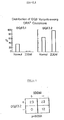
- FIGURE 5 summarizes the prevalence of DQ3.2 in patients versus controls, indicating the high sensitivity, but low specificity, of this gene marker among DR4 IDDM patients.
- Haplotype A (FIGURE 2) is a common DR4+ haplotype, with a DR gene identical to haplotype B, but differing at DQ. This haplotype carries a DQ3.1 allele and was found only in DR4-homozygous patients, when the patient's other haplotype carried a DQ3.2 gene. Because of this, and because the incidence of DQ ⁇ 3.1 is lower in patients than in controls, haplotype A is considered a DR4+ haplotype that is not associated with IDDM. For susceptible DR4+ haplotypes associated with IDDM, the linked DR ⁇ allele may vary, so long as the DQ3.2 gene is present.
Landscapes
- Chemical & Material Sciences (AREA)
- Life Sciences & Earth Sciences (AREA)
- Organic Chemistry (AREA)
- Health & Medical Sciences (AREA)
- Proteomics, Peptides & Aminoacids (AREA)
- Zoology (AREA)
- Wood Science & Technology (AREA)
- Engineering & Computer Science (AREA)
- Analytical Chemistry (AREA)
- Genetics & Genomics (AREA)
- Immunology (AREA)
- Molecular Biology (AREA)
- General Engineering & Computer Science (AREA)
- Biotechnology (AREA)
- Biophysics (AREA)
- Physics & Mathematics (AREA)
- Biochemistry (AREA)
- Bioinformatics & Cheminformatics (AREA)
- Microbiology (AREA)
- General Health & Medical Sciences (AREA)
- Cell Biology (AREA)
- Pathology (AREA)
- Measuring Or Testing Involving Enzymes Or Micro-Organisms (AREA)
- Investigating Or Analysing Biological Materials (AREA)
- Other Investigation Or Analysis Of Materials By Electrical Means (AREA)
- Medicines Containing Antibodies Or Antigens For Use As Internal Diagnostic Agents (AREA)
- Medicines That Contain Protein Lipid Enzymes And Other Medicines (AREA)
Priority Applications (1)
| Application Number | Priority Date | Filing Date | Title |
|---|---|---|---|
| AT88310163T ATE88507T1 (de) | 1987-10-29 | 1988-10-28 | Diagnostische probe zum nachweis von praedisposition fuer diabetes typ 1. |
Applications Claiming Priority (2)
| Application Number | Priority Date | Filing Date | Title |
|---|---|---|---|
| US114559 | 1987-10-29 | ||
| US07/114,559 US5039606A (en) | 1987-10-29 | 1987-10-29 | Diagnostic probe for diabetes type I predisposition |
Publications (3)
| Publication Number | Publication Date |
|---|---|
| EP0314500A2 true EP0314500A2 (fr) | 1989-05-03 |
| EP0314500A3 EP0314500A3 (en) | 1989-07-26 |
| EP0314500B1 EP0314500B1 (fr) | 1993-04-21 |
Family
ID=22355999
Family Applications (1)
| Application Number | Title | Priority Date | Filing Date |
|---|---|---|---|
| EP88310163A Expired - Lifetime EP0314500B1 (fr) | 1987-10-29 | 1988-10-28 | Sonde diagnostique pour déterminer une prédisposition dioabétique type 1 |
Country Status (7)
| Country | Link |
|---|---|
| US (1) | US5039606A (fr) |
| EP (1) | EP0314500B1 (fr) |
| JP (1) | JP2975023B2 (fr) |
| AT (1) | ATE88507T1 (fr) |
| AU (1) | AU612418B2 (fr) |
| CA (1) | CA1299506C (fr) |
| DE (1) | DE3880434T2 (fr) |
Cited By (9)
| Publication number | Priority date | Publication date | Assignee | Title |
|---|---|---|---|---|
| EP0436400A1 (fr) * | 1990-01-05 | 1991-07-10 | Dana Farber Cancer Institute | Antigène intracellulaire d'une sous-population de T-lymphocytes CD9-positives et un anticorps monoclonal réagissant avec cela |
| WO1992011389A1 (fr) * | 1990-12-21 | 1992-07-09 | F. Hoffmann-La Roche Ag | Typage d'adn hla dqbeta |
| WO1992019769A1 (fr) * | 1991-05-02 | 1992-11-12 | MAX-PLANCK-Gesellschaft zur Förderung der Wissenschaften e.V. | Procede de diagnostic du diabete sucre non insulino-dependant |
| DE4224738A1 (de) * | 1992-07-27 | 1994-02-03 | Engler Blum Gabriele | Verfahren zur Analyse molekularer organischer Strukturen |
| US5340935A (en) * | 1990-01-05 | 1994-08-23 | Dana-Farber Cancer Institute, Inc. | DNAS encoding proteins active in lymphocyte-medicated cytotoxicity |
| US5665548A (en) * | 1986-03-13 | 1997-09-09 | Roche Molecular Systems, Inc. | Characterization and detection of sequences associated with autoimmune diseases |
| FR2749308A1 (fr) * | 1996-06-03 | 1997-12-05 | Bio Merieux | Sondes nucleotidiques et procede pour determiner le typage hla dqb1 |
| WO2000073506A1 (fr) * | 1999-05-27 | 2000-12-07 | Iris Biotechnologies, Inc. | Procede d'augmentation du taux d'hybridation d'acides nucleiques |
| US6852493B2 (en) | 1999-05-14 | 2005-02-08 | Iris Biotechnologies, Inc. | Magnetic field enhanced hybridization of target molecules to immobilized probes |
Families Citing this family (9)
| Publication number | Priority date | Publication date | Assignee | Title |
|---|---|---|---|---|
| CA1284931C (fr) * | 1986-03-13 | 1991-06-18 | Henry A. Erlich | Procede de detection de variations specifiques de nucleotides et de polymorphismes genetiques dans les acides nucleiques |
| US5604099A (en) * | 1986-03-13 | 1997-02-18 | Hoffmann-La Roche Inc. | Process for detecting specific nucleotide variations and genetic polymorphisms present in nucleic acids |
| DE9402109U1 (de) * | 1994-02-09 | 1994-03-31 | Maartens Kleinmetaal B.V., Haarlem | Rotationsschneidwerkzeug |
| US5763591A (en) * | 1996-03-25 | 1998-06-09 | Cedars-Sinai Medical Center | Polynucleic acid sequences that are functionally associated with the development of autoimmune disease |
| GB9621129D0 (en) | 1996-10-10 | 1996-11-27 | Duff Gordon W | Detecting genetic predisposition to sight-threatening diabetic retinopathy |
| US20050032077A1 (en) * | 1998-03-10 | 2005-02-10 | Duff Gordon W. | Detecting genetic predisposition to sight-threatening diabetic retinopathy |
| WO2008016988A1 (fr) * | 2006-08-01 | 2008-02-07 | Gen-Probe Incorporated | Procédés de capture de cible non spécifique d'acides nucléiques |
| EP2279411A4 (fr) * | 2008-04-09 | 2011-09-21 | Pacific Northwest Res Inst | Méthodes pour cribler une prédisposition génétique pour des diabètes de type i |
| WO2011083477A1 (fr) * | 2010-01-10 | 2011-07-14 | New Diabetic Solutions | Formulations pour immunotolérance |
Family Cites Families (3)
| Publication number | Priority date | Publication date | Assignee | Title |
|---|---|---|---|---|
| DE3687064T2 (de) * | 1985-06-14 | 1993-11-11 | Bristol Myers Squibb Co | Verfahren zur identifizierung von mit gesteigerter diabetesgefahr assoziierten allelen. |
| CA1284931C (fr) * | 1986-03-13 | 1991-06-18 | Henry A. Erlich | Procede de detection de variations specifiques de nucleotides et de polymorphismes genetiques dans les acides nucleiques |
| WO1988002999A1 (fr) * | 1986-10-22 | 1988-05-05 | Prize Frize, Inc. | Appareil et procede de preparation de frites |
-
1987
- 1987-10-29 US US07/114,559 patent/US5039606A/en not_active Expired - Fee Related
-
1988
- 1988-10-21 AU AU24109/88A patent/AU612418B2/en not_active Ceased
- 1988-10-28 EP EP88310163A patent/EP0314500B1/fr not_active Expired - Lifetime
- 1988-10-28 JP JP63272857A patent/JP2975023B2/ja not_active Expired - Lifetime
- 1988-10-28 AT AT88310163T patent/ATE88507T1/de not_active IP Right Cessation
- 1988-10-28 DE DE8888310163T patent/DE3880434T2/de not_active Expired - Fee Related
- 1988-10-28 CA CA000581575A patent/CA1299506C/fr not_active Expired - Lifetime
Cited By (14)
| Publication number | Priority date | Publication date | Assignee | Title |
|---|---|---|---|---|
| US6194561B1 (en) | 1986-03-13 | 2001-02-27 | Roche Molecular Systems, Inc. | Characterization and detection of sequences associated with autoimmune diseases |
| US5665548A (en) * | 1986-03-13 | 1997-09-09 | Roche Molecular Systems, Inc. | Characterization and detection of sequences associated with autoimmune diseases |
| EP0436400A1 (fr) * | 1990-01-05 | 1991-07-10 | Dana Farber Cancer Institute | Antigène intracellulaire d'une sous-population de T-lymphocytes CD9-positives et un anticorps monoclonal réagissant avec cela |
| US5837811A (en) * | 1990-01-05 | 1998-11-17 | Dana-Farber Cancer Institute, Inc. | Proteins active in lymphocyte-mediated cytotoxicity |
| US5298407A (en) * | 1990-01-05 | 1994-03-29 | Dana-Farber Cancer Institute, Inc. | DNA encoding a protein active in lymphocyte-mediated cytotoxicity |
| US5340935A (en) * | 1990-01-05 | 1994-08-23 | Dana-Farber Cancer Institute, Inc. | DNAS encoding proteins active in lymphocyte-medicated cytotoxicity |
| WO1992011389A1 (fr) * | 1990-12-21 | 1992-07-09 | F. Hoffmann-La Roche Ag | Typage d'adn hla dqbeta |
| AU656549B2 (en) * | 1990-12-21 | 1995-02-09 | F. Hoffmann-La Roche Ag | HLA DQbeta DNA typing |
| US5719022A (en) * | 1991-05-02 | 1998-02-17 | Max-Planck-Gesellschaft Zur Forderung Der Wissenschaften E.V. | Process for diagnosing non-insulin-dependant diabetes mellitus |
| WO1992019769A1 (fr) * | 1991-05-02 | 1992-11-12 | MAX-PLANCK-Gesellschaft zur Förderung der Wissenschaften e.V. | Procede de diagnostic du diabete sucre non insulino-dependant |
| DE4224738A1 (de) * | 1992-07-27 | 1994-02-03 | Engler Blum Gabriele | Verfahren zur Analyse molekularer organischer Strukturen |
| FR2749308A1 (fr) * | 1996-06-03 | 1997-12-05 | Bio Merieux | Sondes nucleotidiques et procede pour determiner le typage hla dqb1 |
| US6852493B2 (en) | 1999-05-14 | 2005-02-08 | Iris Biotechnologies, Inc. | Magnetic field enhanced hybridization of target molecules to immobilized probes |
| WO2000073506A1 (fr) * | 1999-05-27 | 2000-12-07 | Iris Biotechnologies, Inc. | Procede d'augmentation du taux d'hybridation d'acides nucleiques |
Also Published As
| Publication number | Publication date |
|---|---|
| CA1299506C (fr) | 1992-04-28 |
| ATE88507T1 (de) | 1993-05-15 |
| EP0314500A3 (en) | 1989-07-26 |
| DE3880434T2 (de) | 1993-09-02 |
| JP2975023B2 (ja) | 1999-11-10 |
| AU2410988A (en) | 1989-05-04 |
| AU612418B2 (en) | 1991-07-11 |
| JPH02500A (ja) | 1990-01-05 |
| DE3880434D1 (de) | 1993-05-27 |
| US5039606A (en) | 1991-08-13 |
| EP0314500B1 (fr) | 1993-04-21 |
Similar Documents
| Publication | Publication Date | Title |
|---|---|---|
| EP0314500B1 (fr) | Sonde diagnostique pour déterminer une prédisposition dioabétique type 1 | |
| US5545527A (en) | Method for testing for mutations in DNA from a patient sample | |
| JP4422897B2 (ja) | 核酸を検出するためのプライマ伸長法 | |
| US4666828A (en) | Test for Huntington's disease | |
| US20020001800A1 (en) | Diagnostic methods using serial testing of polymorphic loci | |
| US20050164184A1 (en) | Hybridization portion control oligonucleotide and its uses | |
| JP2001525184A (ja) | 染色体異常の検出のための方法 | |
| Williams et al. | Development of PCR‐SSOP for HLA‐A typing of bone marrow registry donors | |
| US4971902A (en) | Diagnostic probe for rheumatoid arthritis predisposition | |
| CA2553545A1 (fr) | Procede elabore de reconnaissance de la thrombophilie | |
| WO2005123951A2 (fr) | Procedes de typage de l'antigene leucocytaire humain en mettant a proximite des haplotypes individuels de polymorphisme nucleotidique | |
| US5908749A (en) | Methods and compositions for high resolution HLA typing | |
| Zehnder et al. | Cross-linking hybridization assay for direct detection of factor V Leiden mutation | |
| JP2000511430A (ja) | Hla dqb1タイピングを決定するためのヌクレオチドプローブおよび方法 | |
| KR101507505B1 (ko) | 제 1 형 근긴장성 이영양증의 진단 방법 | |
| Mifsud et al. | ABO genotyping—identification of O, O, and O 2 alleles using the polymerase chain reaction–sequence specific oligonucleotide (PCR-SSO) technique | |
| US11549137B2 (en) | Determination of the genotype underlying the S-s-U-phenotype of the MNSs blood group system | |
| KR20180023087A (ko) | Col6a6 유전자 단일염기다형성을 이용한 아토피 피부염 진단용 조성물과 검출 방법 | |
| US20160304976A1 (en) | Method for detecting predisposition for hepatitis b to become chronic | |
| WO2008110206A1 (fr) | Procédé de détermination d'un haplotype hla-dq chez un sujet | |
| Novaković et al. | Inherited Thrombophilia and the risk of vascular events | |
| Mottes et al. | Haplotype analysis of collagen type I genes in the general population and in osteogenesis imperfecta families | |
| WO2001036675A2 (fr) | Polymorphismes cd36 | |
| KR101075392B1 (ko) | Fga 유전자로부터 유래된 단일염기다형을 포함하는 폴리뉴클레오티드, 이를 포함하는 마이크로어레이 및 진단키트, 이를 이용한 검출 방법 | |
| US7771942B2 (en) | Genetic marker for prostate cancer |
Legal Events
| Date | Code | Title | Description |
|---|---|---|---|
| PUAI | Public reference made under article 153(3) epc to a published international application that has entered the european phase |
Free format text: ORIGINAL CODE: 0009012 |
|
| AK | Designated contracting states |
Kind code of ref document: A2 Designated state(s): AT BE CH DE ES FR GB GR IT LI LU NL SE |
|
| PUAL | Search report despatched |
Free format text: ORIGINAL CODE: 0009013 |
|
| AK | Designated contracting states |
Kind code of ref document: A3 Designated state(s): AT BE CH DE ES FR GB GR IT LI LU NL SE |
|
| 17P | Request for examination filed |
Effective date: 19891127 |
|
| 17Q | First examination report despatched |
Effective date: 19910807 |
|
| GRAA | (expected) grant |
Free format text: ORIGINAL CODE: 0009210 |
|
| AK | Designated contracting states |
Kind code of ref document: B1 Designated state(s): AT BE CH DE ES FR GB GR IT LI LU NL SE |
|
| PG25 | Lapsed in a contracting state [announced via postgrant information from national office to epo] |
Ref country code: IT Free format text: LAPSE BECAUSE OF FAILURE TO SUBMIT A TRANSLATION OF THE DESCRIPTION OR TO PAY THE FEE WITHIN THE PRESCRIBED TIME-LIMIT;WARNING: LAPSES OF ITALIAN PATENTS WITH EFFECTIVE DATE BEFORE 2007 MAY HAVE OCCURRED AT ANY TIME BEFORE 2007. THE CORRECT EFFECTIVE DATE MAY BE DIFFERENT FROM THE ONE RECORDED. Effective date: 19930421 Ref country code: CH Effective date: 19930421 Ref country code: GR Free format text: LAPSE BECAUSE OF FAILURE TO SUBMIT A TRANSLATION OF THE DESCRIPTION OR TO PAY THE FEE WITHIN THE PRESCRIBED TIME-LIMIT Effective date: 19930421 Ref country code: LI Effective date: 19930421 Ref country code: ES Free format text: THE PATENT HAS BEEN ANNULLED BY A DECISION OF A NATIONAL AUTHORITY Effective date: 19930421 Ref country code: AT Effective date: 19930421 Ref country code: BE Effective date: 19930421 Ref country code: SE Effective date: 19930421 Ref country code: NL Effective date: 19930421 |
|
| REF | Corresponds to: |
Ref document number: 88507 Country of ref document: AT Date of ref document: 19930515 Kind code of ref document: T |
|
| REF | Corresponds to: |
Ref document number: 3880434 Country of ref document: DE Date of ref document: 19930527 |
|
| ET | Fr: translation filed | ||
| REG | Reference to a national code |
Ref country code: CH Ref legal event code: PL |
|
| NLV1 | Nl: lapsed or annulled due to failure to fulfill the requirements of art. 29p and 29m of the patents act | ||
| PG25 | Lapsed in a contracting state [announced via postgrant information from national office to epo] |
Ref country code: LU Free format text: LAPSE BECAUSE OF NON-PAYMENT OF DUE FEES Effective date: 19931031 |
|
| PLBE | No opposition filed within time limit |
Free format text: ORIGINAL CODE: 0009261 |
|
| STAA | Information on the status of an ep patent application or granted ep patent |
Free format text: STATUS: NO OPPOSITION FILED WITHIN TIME LIMIT |
|
| 26N | No opposition filed | ||
| PGFP | Annual fee paid to national office [announced via postgrant information from national office to epo] |
Ref country code: FR Payment date: 20011010 Year of fee payment: 14 |
|
| PGFP | Annual fee paid to national office [announced via postgrant information from national office to epo] |
Ref country code: GB Payment date: 20011031 Year of fee payment: 14 |
|
| PGFP | Annual fee paid to national office [announced via postgrant information from national office to epo] |
Ref country code: DE Payment date: 20011112 Year of fee payment: 14 |
|
| REG | Reference to a national code |
Ref country code: GB Ref legal event code: IF02 |
|
| PG25 | Lapsed in a contracting state [announced via postgrant information from national office to epo] |
Ref country code: GB Free format text: LAPSE BECAUSE OF NON-PAYMENT OF DUE FEES Effective date: 20021028 |
|
| PG25 | Lapsed in a contracting state [announced via postgrant information from national office to epo] |
Ref country code: DE Free format text: LAPSE BECAUSE OF NON-PAYMENT OF DUE FEES Effective date: 20030501 |
|
| GBPC | Gb: european patent ceased through non-payment of renewal fee | ||
| PG25 | Lapsed in a contracting state [announced via postgrant information from national office to epo] |
Ref country code: FR Free format text: LAPSE BECAUSE OF NON-PAYMENT OF DUE FEES Effective date: 20030630 |
|
| REG | Reference to a national code |
Ref country code: FR Ref legal event code: ST |