EP0314571B1 - Verwendung eines Flüssigkeitsgemisches auf der Basis von Chlorfluoräther und Lösungsmitteln in Absorptionsmaschinen - Google Patents
Verwendung eines Flüssigkeitsgemisches auf der Basis von Chlorfluoräther und Lösungsmitteln in Absorptionsmaschinen Download PDFInfo
- Publication number
- EP0314571B1 EP0314571B1 EP19880402698 EP88402698A EP0314571B1 EP 0314571 B1 EP0314571 B1 EP 0314571B1 EP 19880402698 EP19880402698 EP 19880402698 EP 88402698 A EP88402698 A EP 88402698A EP 0314571 B1 EP0314571 B1 EP 0314571B1
- Authority
- EP
- European Patent Office
- Prior art keywords
- solvent
- working fluid
- heat
- absorption
- application according
- Prior art date
- Legal status (The legal status is an assumption and is not a legal conclusion. Google has not performed a legal analysis and makes no representation as to the accuracy of the status listed.)
- Expired - Lifetime
Links
- 239000012530 fluid Substances 0.000 title claims description 48
- 239000002904 solvent Substances 0.000 title claims description 41
- 238000010521 absorption reaction Methods 0.000 title claims description 23
- 239000000203 mixture Substances 0.000 title claims description 17
- 150000002170 ethers Chemical class 0.000 title description 8
- QPJVMBTYPHYUOC-UHFFFAOYSA-N methyl benzoate Chemical compound COC(=O)C1=CC=CC=C1 QPJVMBTYPHYUOC-UHFFFAOYSA-N 0.000 claims description 18
- 229940095102 methyl benzoate Drugs 0.000 claims description 10
- ZUHZGEOKBKGPSW-UHFFFAOYSA-N tetraglyme Chemical compound COCCOCCOCCOCCOC ZUHZGEOKBKGPSW-UHFFFAOYSA-N 0.000 claims description 9
- 238000009835 boiling Methods 0.000 claims description 7
- 125000004432 carbon atom Chemical group C* 0.000 claims description 7
- 238000009833 condensation Methods 0.000 claims description 7
- 230000005494 condensation Effects 0.000 claims description 7
- -1 alkyl radical Chemical class 0.000 claims description 5
- 125000003118 aryl group Chemical group 0.000 claims description 5
- SBZXBUIDTXKZTM-UHFFFAOYSA-N diglyme Chemical compound COCCOCCOC SBZXBUIDTXKZTM-UHFFFAOYSA-N 0.000 claims description 5
- 238000004519 manufacturing process Methods 0.000 claims description 4
- 125000000217 alkyl group Chemical group 0.000 claims description 3
- 238000001704 evaporation Methods 0.000 claims description 3
- 230000008020 evaporation Effects 0.000 claims description 3
- WCYWZMWISLQXQU-UHFFFAOYSA-N methyl Chemical compound [CH3] WCYWZMWISLQXQU-UHFFFAOYSA-N 0.000 claims description 3
- 239000006096 absorbing agent Substances 0.000 claims description 2
- 239000001257 hydrogen Substances 0.000 claims description 2
- 229910052739 hydrogen Inorganic materials 0.000 claims description 2
- UFHFLCQGNIYNRP-UHFFFAOYSA-N Hydrogen Chemical compound [H][H] UFHFLCQGNIYNRP-UHFFFAOYSA-N 0.000 claims 1
- 125000004429 atom Chemical group 0.000 claims 1
- 239000000284 extract Substances 0.000 claims 1
- 238000012360 testing method Methods 0.000 description 11
- 238000000354 decomposition reaction Methods 0.000 description 10
- 238000000034 method Methods 0.000 description 7
- 150000001875 compounds Chemical class 0.000 description 6
- 238000010438 heat treatment Methods 0.000 description 6
- 229930195733 hydrocarbon Natural products 0.000 description 6
- 150000002430 hydrocarbons Chemical class 0.000 description 6
- 239000000243 solution Substances 0.000 description 6
- IJGRMHOSHXDMSA-UHFFFAOYSA-N Atomic nitrogen Chemical compound N#N IJGRMHOSHXDMSA-UHFFFAOYSA-N 0.000 description 4
- LCGLNKUTAGEVQW-UHFFFAOYSA-N Dimethyl ether Chemical compound COC LCGLNKUTAGEVQW-UHFFFAOYSA-N 0.000 description 4
- 238000004817 gas chromatography Methods 0.000 description 4
- 125000004435 hydrogen atom Chemical class [H]* 0.000 description 4
- 239000007788 liquid Substances 0.000 description 4
- VOPWNXZWBYDODV-UHFFFAOYSA-N Chlorodifluoromethane Chemical compound FC(F)Cl VOPWNXZWBYDODV-UHFFFAOYSA-N 0.000 description 3
- XPDWGBQVDMORPB-UHFFFAOYSA-N Fluoroform Chemical compound FC(F)F XPDWGBQVDMORPB-UHFFFAOYSA-N 0.000 description 3
- NEHMKBQYUWJMIP-UHFFFAOYSA-N chloromethane Chemical compound ClC NEHMKBQYUWJMIP-UHFFFAOYSA-N 0.000 description 3
- 150000002334 glycols Chemical class 0.000 description 3
- 238000005259 measurement Methods 0.000 description 3
- 231100000419 toxicity Toxicity 0.000 description 3
- 230000001988 toxicity Effects 0.000 description 3
- 230000009466 transformation Effects 0.000 description 3
- RYHBNJHYFVUHQT-UHFFFAOYSA-N 1,4-Dioxane Chemical compound C1COCCO1 RYHBNJHYFVUHQT-UHFFFAOYSA-N 0.000 description 2
- VHUUQVKOLVNVRT-UHFFFAOYSA-N Ammonium hydroxide Chemical compound [NH4+].[OH-] VHUUQVKOLVNVRT-UHFFFAOYSA-N 0.000 description 2
- 229940126062 Compound A Drugs 0.000 description 2
- NLDMNSXOCDLTTB-UHFFFAOYSA-N Heterophylliin A Natural products O1C2COC(=O)C3=CC(O)=C(O)C(O)=C3C3=C(O)C(O)=C(O)C=C3C(=O)OC2C(OC(=O)C=2C=C(O)C(O)=C(O)C=2)C(O)C1OC(=O)C1=CC(O)=C(O)C(O)=C1 NLDMNSXOCDLTTB-UHFFFAOYSA-N 0.000 description 2
- XEEYBQQBJWHFJM-UHFFFAOYSA-N Iron Chemical compound [Fe] XEEYBQQBJWHFJM-UHFFFAOYSA-N 0.000 description 2
- PIWKPBJCKXDKJR-UHFFFAOYSA-N Isoflurane Chemical compound FC(F)OC(Cl)C(F)(F)F PIWKPBJCKXDKJR-UHFFFAOYSA-N 0.000 description 2
- 229920003171 Poly (ethylene oxide) Polymers 0.000 description 2
- 229910052801 chlorine Inorganic materials 0.000 description 2
- 125000001309 chloro group Chemical group Cl* 0.000 description 2
- 239000000470 constituent Substances 0.000 description 2
- 238000002425 crystallisation Methods 0.000 description 2
- 230000008025 crystallization Effects 0.000 description 2
- 238000010790 dilution Methods 0.000 description 2
- 239000012895 dilution Substances 0.000 description 2
- 230000000694 effects Effects 0.000 description 2
- JPGQOUSTVILISH-UHFFFAOYSA-N enflurane Chemical compound FC(F)OC(F)(F)C(F)Cl JPGQOUSTVILISH-UHFFFAOYSA-N 0.000 description 2
- 229960000305 enflurane Drugs 0.000 description 2
- 239000007789 gas Substances 0.000 description 2
- 238000002347 injection Methods 0.000 description 2
- 239000007924 injection Substances 0.000 description 2
- 238000009434 installation Methods 0.000 description 2
- 229960002725 isoflurane Drugs 0.000 description 2
- 239000007791 liquid phase Substances 0.000 description 2
- AMXOYNBUYSYVKV-UHFFFAOYSA-M lithium bromide Inorganic materials [Li+].[Br-] AMXOYNBUYSYVKV-UHFFFAOYSA-M 0.000 description 2
- 230000014759 maintenance of location Effects 0.000 description 2
- 229910052751 metal Inorganic materials 0.000 description 2
- 239000002184 metal Substances 0.000 description 2
- 229910052757 nitrogen Inorganic materials 0.000 description 2
- 238000005057 refrigeration Methods 0.000 description 2
- XLYOFNOQVPJJNP-UHFFFAOYSA-N water Substances O XLYOFNOQVPJJNP-UHFFFAOYSA-N 0.000 description 2
- BOUGCJDAQLKBQH-UHFFFAOYSA-N 1-chloro-1,2,2,2-tetrafluoroethane Chemical compound FC(Cl)C(F)(F)F BOUGCJDAQLKBQH-UHFFFAOYSA-N 0.000 description 1
- RZVAJINKPMORJF-UHFFFAOYSA-N Acetaminophen Chemical compound CC(=O)NC1=CC=C(O)C=C1 RZVAJINKPMORJF-UHFFFAOYSA-N 0.000 description 1
- OKTJSMMVPCPJKN-UHFFFAOYSA-N Carbon Chemical compound [C] OKTJSMMVPCPJKN-UHFFFAOYSA-N 0.000 description 1
- 239000004215 Carbon black (E152) Substances 0.000 description 1
- RYGMFSIKBFXOCR-UHFFFAOYSA-N Copper Chemical compound [Cu] RYGMFSIKBFXOCR-UHFFFAOYSA-N 0.000 description 1
- PXGOKWXKJXAPGV-UHFFFAOYSA-N Fluorine Chemical compound FF PXGOKWXKJXAPGV-UHFFFAOYSA-N 0.000 description 1
- SECXISVLQFMRJM-UHFFFAOYSA-N N-Methylpyrrolidone Chemical compound CN1CCCC1=O SECXISVLQFMRJM-UHFFFAOYSA-N 0.000 description 1
- 229910000831 Steel Inorganic materials 0.000 description 1
- 239000000654 additive Substances 0.000 description 1
- 238000004378 air conditioning Methods 0.000 description 1
- 229910052782 aluminium Inorganic materials 0.000 description 1
- XAGFODPZIPBFFR-UHFFFAOYSA-N aluminium Chemical compound [Al] XAGFODPZIPBFFR-UHFFFAOYSA-N 0.000 description 1
- 229940035674 anesthetics Drugs 0.000 description 1
- QVGXLLKOCUKJST-UHFFFAOYSA-N atomic oxygen Chemical compound [O] QVGXLLKOCUKJST-UHFFFAOYSA-N 0.000 description 1
- 229910052799 carbon Inorganic materials 0.000 description 1
- 239000000460 chlorine Substances 0.000 description 1
- QPAXMPYBNSHKAK-UHFFFAOYSA-N chloro(difluoro)methane Chemical compound F[C](F)Cl QPAXMPYBNSHKAK-UHFFFAOYSA-N 0.000 description 1
- 238000004587 chromatography analysis Methods 0.000 description 1
- 229910052802 copper Inorganic materials 0.000 description 1
- 239000010949 copper Substances 0.000 description 1
- 239000004121 copper complexes of chlorophylls and chlorophyllins Substances 0.000 description 1
- 125000004122 cyclic group Chemical group 0.000 description 1
- 238000001514 detection method Methods 0.000 description 1
- 150000005690 diesters Chemical class 0.000 description 1
- HBGGXOJOCNVPFY-UHFFFAOYSA-N diisononyl phthalate Chemical compound CC(C)CCCCCCOC(=O)C1=CC=CC=C1C(=O)OCCCCCCC(C)C HBGGXOJOCNVPFY-UHFFFAOYSA-N 0.000 description 1
- 125000001033 ether group Chemical group 0.000 description 1
- 229910052731 fluorine Inorganic materials 0.000 description 1
- 239000011737 fluorine Substances 0.000 description 1
- 239000012634 fragment Substances 0.000 description 1
- 239000000446 fuel Substances 0.000 description 1
- 239000003193 general anesthetic agent Substances 0.000 description 1
- 239000001307 helium Substances 0.000 description 1
- 229910052734 helium Inorganic materials 0.000 description 1
- SWQJXJOGLNCZEY-UHFFFAOYSA-N helium atom Chemical group [He] SWQJXJOGLNCZEY-UHFFFAOYSA-N 0.000 description 1
- 239000000852 hydrogen donor Substances 0.000 description 1
- 238000005470 impregnation Methods 0.000 description 1
- 229910000765 intermetallic Inorganic materials 0.000 description 1
- 229910052742 iron Inorganic materials 0.000 description 1
- 150000002739 metals Chemical class 0.000 description 1
- 229940050176 methyl chloride Drugs 0.000 description 1
- GRVDJDISBSALJP-UHFFFAOYSA-N methyloxidanyl Chemical compound [O]C GRVDJDISBSALJP-UHFFFAOYSA-N 0.000 description 1
- 238000002156 mixing Methods 0.000 description 1
- 239000001301 oxygen Substances 0.000 description 1
- 229910052760 oxygen Inorganic materials 0.000 description 1
- 238000010926 purge Methods 0.000 description 1
- 239000005297 pyrex Substances 0.000 description 1
- 238000004064 recycling Methods 0.000 description 1
- 238000000926 separation method Methods 0.000 description 1
- 239000011877 solvent mixture Substances 0.000 description 1
- 238000013112 stability test Methods 0.000 description 1
- 239000003381 stabilizer Substances 0.000 description 1
- 230000000087 stabilizing effect Effects 0.000 description 1
- 239000010959 steel Substances 0.000 description 1
- 238000006467 substitution reaction Methods 0.000 description 1
- 231100000331 toxic Toxicity 0.000 description 1
- 230000002588 toxic effect Effects 0.000 description 1
- 238000009834 vaporization Methods 0.000 description 1
- 230000008016 vaporization Effects 0.000 description 1
Classifications
-
- C—CHEMISTRY; METALLURGY
- C09—DYES; PAINTS; POLISHES; NATURAL RESINS; ADHESIVES; COMPOSITIONS NOT OTHERWISE PROVIDED FOR; APPLICATIONS OF MATERIALS NOT OTHERWISE PROVIDED FOR
- C09K—MATERIALS FOR MISCELLANEOUS APPLICATIONS, NOT PROVIDED FOR ELSEWHERE
- C09K5/00—Heat-transfer, heat-exchange or heat-storage materials, e.g. refrigerants; Materials for the production of heat or cold by chemical reactions other than by combustion
- C09K5/02—Materials undergoing a change of physical state when used
- C09K5/04—Materials undergoing a change of physical state when used the change of state being from liquid to vapour or vice versa
- C09K5/047—Materials undergoing a change of physical state when used the change of state being from liquid to vapour or vice versa for absorption-type refrigeration systems
Definitions
- the present invention relates to the application of a mixture of fluids based on chlorofluorinated ether and solvents to thermal absorption machines for the production of heat and / or cold.
- the principle of the absorption cycle of such machines is as follows: a working fluid initially in the gaseous state is subjected to stages of condensation, expansion, vaporization, then absorption in a solvent fluid. The solution obtained is put back under pressure and a rise in temperature makes it possible to regenerate the working fluid in the gaseous state in a boiler. The solvent is then returned to the absorption step.
- the most commonly used working fluid-solvent couples are the NH3-H2O and H2O-LiBr couples.
- these couples have major drawbacks which prevent their use in certain fields, in particular in the field of individual or collective heating.
- the NH3-H2O couple thermodynamically interesting, has a limited use due to the toxicity of NH3.
- the H2O-LiBr couple cannot be used at the low temperatures required on the evaporator in the case of application as a heat pump for heating individual or collective dwellings due to the crystallization of water.
- the working fluid-solvent fluid couple has good thermodynamic properties, good solubility of the working fluid in the solvent, is not toxic and presents no risk of crystallization.
- the solvent has a normal boiling point above, preferably, 100 ° C in order to facilitate separation at the level of the boiler.
- patent EP 0143509 recommends the use as working fluid, of hydrocarbons and of fluorinated ethers acyclic, linear or branched, or cyclic containing 3 to 5 carbon atoms and whose elementary formula contains exclusively carbon, of hydrogen, fluorine and oxygen in the case of ethers.
- the solvent is tetraglyme or, more generally, any compound with a proton acceptor character.
- fluorinated ethers as working fluids is particularly advantageous insofar as these compounds are already known for their application in the field of anesthetics for example, and therefore do not present any risk of toxicity. They are also very soluble in most solvents, especially when they contain a chlorine atom in their elementary formula. On the other hand, the presence of this element leads to poorer stability of the working fluid-solvent couple in the presence of metals and at the temperatures normally reached in the boiler of an absorption machine.
- isoflurane (CF2H-O-CHCl-CF3)
- isoflurane (CF2H-O-CHCl-CF3)
- the present invention overcomes the disadvantages previously mentioned by proposing the application of a mixture of fluids based on chlorofluorinated ether and solvents to absorption machines.
- chlorofluorinated ethers responding to a particular structure, such as difluoromethoxy-1trifluoro-1,1,2chloro-2éthane designated under the name of influrane and whose formula is as follows: CF2H-O-CF2 -CHFCl (normal boiling point 56.6 ° C), exhibit good stability as well as good solubility and do not exhibit any toxicity character, when used with an appropriate solvent.
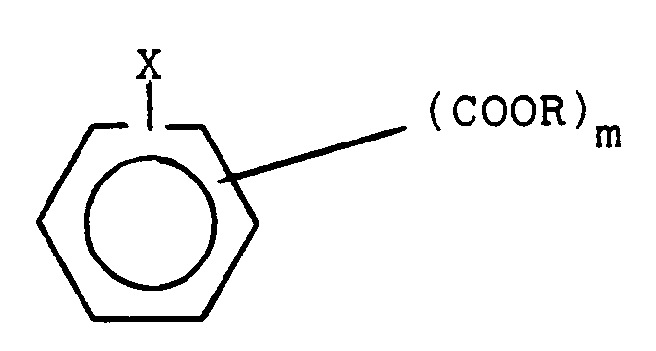
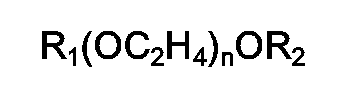
- the subject of the present invention is the application of a mixture of fluids comprising difluoromethoxy-1trifluoro-1,1,2chloro-2ethane and at least one solvent chosen from the group of aromatic esters of formula: in which X denotes a hydrogen atom or a methyl radical, m is equal to 1 or 2 and R represents an alkyl radical, linear or branched, containing from 1 to 8 carbon atoms, and / or polyoxyethlylene glycols ⁇ - ⁇ ′ -dialkylés, of formula: R1 (OC2H4) not OR2 in which R1 and R2 are independently linear or branched alkyl groups containing from 1 to 8 carbon atoms and n is an integer ranging from 1 to 4, to absorption thermal machines for producing heat and / or cold.
- X denotes a hydrogen atom or a methyl radical
- m is equal to 1 or 2
- R represents an alkyl radical, linear or branched, containing from 1 to 8 carbon
- the solvent chosen is methyl benzoate.
- the solvent chosen is diethylene glycoldimethyl ether or tetraethylene glycoldimethyl ether.
- the above fluid mixtures apply in particular according to this invention, to heat pumps in which the gaseous working fluid is successively subjected to condensation in heat exchange relation with a medium constituting a heat receiver, to a expansion of the condensed fluid, evaporation of the expanded fluid, in heat exchange relationship with a cold medium, and constituting a heat source, absorption in a solvent as defined above, an increase in the pressure of the solution rich obtained, heating the pressurized solution so as to vaporize the working fluid, recycling the gaseous working fluid resulting from the condensation, drawing off the resulting depleted solution, relieving its pressure and return to the absorber.
- a mixture of fluids comprising difluoromethoxy-1trifluoro-1,1,2chloro-2ethane and at least one solvent chosen from aromatic esters and / or ⁇ - ⁇ ′-dialkylated polyoxyethylene glycols is applied to thermal machines. absorption for the production of heat and / or cold.
- the aromatic esters in accordance with the present invention are in particular the liquid aromatic mono or diester corresponding to the general formula: in which X denotes a hydrogen atom or a methyl radical, m is equal to 1 or 2 and R represents an alkyl radical, linear or branched, containing from 1 to 8 carbon atoms.
- ⁇ - ⁇ ′-dialkylated polyoxyethylene glycols in accordance with the present invention correspond to the following general formula: R1- (OC2H4) not OR2 in which R1 and R indépendamment are independently linear or branched alkyl groups containing from 1 to 8 carbon atoms and n is an integer ranging from 1 to 4.
- the relative amounts of difluoromethoxy-1trifluoro-1,1,2chloro-2éthane and solvent are determined in a known manner according to the operating conditions of the absorption cycle.
- a percentage of 5 to 80% of working fluid is used in the working fluid and solvent mixture.
- a composition was formed by mixing 5 moles of difluoromethoxy-1trifluoro-1,1,2chloro-2ethane (enflurane), 3 g of methyl benzoate, and the stability of this composition was tested for 100 hours. at 180 ° C according to the following procedure: the mixture was introduced into a thick-walled PYREX tube containing a metallic test tube of 250 mg of ordinary steel, suitably cleaned. The tube was cooled to the temperature of liquid nitrogen, sealed under vacuum and brought to a temperature of 180 ° C for 100 hours. The tube was then again immersed in liquid nitrogen, connected to a vacuum manifold and opened using an appropriate device. The volatile products were recovered by purging at low temperature and analyzed by gas chromatography. The quantity of working fluid remaining in the liquid phase was determined by gas chromatography according to the method of internal calibration. The decomposition rate of the working fluid is 0.9% based on the average of two tests.
- Example 1 was repeated, replacing the methyl benzoate with diethylene glycoldimethyl ether. The percentage of decomposition of the working fluid does not then exceed 4.7%.
- Example 1 was repeated, replacing the methyl benzoate with tetraethylene glycoldimethyl ether.
- the percentage of decomposition of the working fluid does not exceed 4.9% according to the average of two tests.
- Example 2 The process described in Example 1 was repeated, replacing the methyl benzoate with N-methylpyrrolidone and using a 292 mg metal test tube. The decomposition percentage of the working fluid reached 63%.
- Example 2 The process described in Example 2 was repeated, replacing the difluoromethoxy-1trifluoro-1,1,2chloro-2éthane with methoxy-1-trifluoro-1,1,2chloro-2éthane (CH3-O-CF2-CHFCl). The percentage of decomposition of the working fluid reached 100%.
- the main transformation products identified by gas chromatography were dioxane and dimethyl ether.
- Example 3 The process described in Example 3 was repeated, replacing the difluoromethoxy-1trifluoro-1,1,2chloro2ethane with difluoromethoxy-1trifluoro-2,2,2chloro-1ethane (isoflurane).
- the percentage of decomposition of the working fluid reached 96%, the main transformation products identified by gas chromatography being dioxane, dimethyl ether and methyl chloride.
- Good solubility of the working fluid in the solvent results in a low flow rate of solute-solvent solution and therefore reduces the work of the circulation pump.
- good solubility is most often accompanied by a high heat of mixture which promotes the reduction of investments.
- Solubility can be characterized indirectly by the activity coefficient with infinite dilution ⁇ oo .
- XA concentration in liquid phase or solubility
- good solubility is characterized by ⁇ ⁇ 1.
- the procedure used for the measurements is as follows: the solvent studied is deposited, in known mass, on the column of the chromatograph so as to obtain an impregnation rate of the order of 15 to 20 g of solvent per 100 g of support.
- the solute studied is injected in very small quantities, 50 ⁇ l for gaseous solutes or 0.2 ⁇ l for liquid solutes, into the flow of helium-bearing gas (flow rate 30 cc / min).
- the measurement of the retention time is obtained by an integrator connected to the chromatograph and by a recorder which makes it possible to visualize the output and the shape of the peaks as well as to detect any anomaly: drift from the baseline, peaks too spread out ...
- the best solubility measured is that of the enflurane-methyl benzoate pair.
- the solvent deposited on the column of the chromatograph is diethylene glycoldimethyl ether CH3O (CH2CH2O) 2CH3 (E141).
- ⁇ oo for the enflurane-diethylene glycol dimethyl ether pair is therefore synonymous with good mutual solubility.
- a mixture of difluoromethoxy-1trifluoro-1,1,2chloro-2éthane and methyl benzoate is used in a heat pump.
Landscapes
- Chemical & Material Sciences (AREA)
- Engineering & Computer Science (AREA)
- Physics & Mathematics (AREA)
- Chemical Kinetics & Catalysis (AREA)
- Combustion & Propulsion (AREA)
- Thermal Sciences (AREA)
- Materials Engineering (AREA)
- Organic Chemistry (AREA)
- Sorption Type Refrigeration Machines (AREA)
- Organic Low-Molecular-Weight Compounds And Preparation Thereof (AREA)
- Manufacture Of Porous Articles, And Recovery And Treatment Of Waste Products (AREA)
- Extrusion Moulding Of Plastics Or The Like (AREA)
Claims (5)
aufweist, in welcher R₁ und R₂ unabhängig von den geradkettigen oder verzweigten, 1 bis 8 Kohlenstoffatome enthaltenden Alkylgruppen sind und n eine den Wert von 1 bis 4 annehmende Ganzzahl ist.
Applications Claiming Priority (2)
| Application Number | Priority Date | Filing Date | Title |
|---|---|---|---|
| FR8715101A FR2622593B1 (fr) | 1987-10-30 | 1987-10-30 | Application d'un melange de fluides a base d'ether chlorofluore et de solvants a des machines a absorption |
| FR8715101 | 1987-10-30 |
Publications (2)
| Publication Number | Publication Date |
|---|---|
| EP0314571A1 EP0314571A1 (de) | 1989-05-03 |
| EP0314571B1 true EP0314571B1 (de) | 1992-01-02 |
Family
ID=9356364
Family Applications (1)
| Application Number | Title | Priority Date | Filing Date |
|---|---|---|---|
| EP19880402698 Expired - Lifetime EP0314571B1 (de) | 1987-10-30 | 1988-10-26 | Verwendung eines Flüssigkeitsgemisches auf der Basis von Chlorfluoräther und Lösungsmitteln in Absorptionsmaschinen |
Country Status (5)
| Country | Link |
|---|---|
| EP (1) | EP0314571B1 (de) |
| JP (1) | JPH0786196B2 (de) |
| DE (1) | DE3867428D1 (de) |
| ES (1) | ES2029059T3 (de) |
| FR (1) | FR2622593B1 (de) |
Families Citing this family (1)
| Publication number | Priority date | Publication date | Assignee | Title |
|---|---|---|---|---|
| US4999127A (en) * | 1989-12-11 | 1991-03-12 | E. I. Du Pont De Nemours And Company | Azeotropic composition of 2-chloro-1,1,2-trifluoroethyl-2-difluoromethyl ether with trans-1,2-dichloroethylene and methnanol |
Family Cites Families (4)
| Publication number | Priority date | Publication date | Assignee | Title |
|---|---|---|---|---|
| DE3202377A1 (de) * | 1982-01-26 | 1983-07-28 | Hoechst Ag, 6230 Frankfurt | Arbeitsmedium fuer absorptionswaermepumpen |
| GB8321569D0 (en) * | 1983-08-10 | 1983-09-14 | Ici Plc | Heat pumps |
| DE3524737A1 (de) * | 1985-07-11 | 1987-01-15 | Univ Essen Angewandte Thermody | Stoffgemische fuer sorptionsprozesse |
| JPS63275967A (ja) * | 1987-05-07 | 1988-11-14 | Mitsubishi Electric Corp | 半導体測定装置 |
-
1987
- 1987-10-30 FR FR8715101A patent/FR2622593B1/fr not_active Expired - Lifetime
-
1988
- 1988-10-26 DE DE8888402698T patent/DE3867428D1/de not_active Expired - Lifetime
- 1988-10-26 ES ES88402698T patent/ES2029059T3/es not_active Expired - Lifetime
- 1988-10-26 EP EP19880402698 patent/EP0314571B1/de not_active Expired - Lifetime
- 1988-10-31 JP JP63275949A patent/JPH0786196B2/ja not_active Expired - Lifetime
Also Published As
| Publication number | Publication date |
|---|---|
| EP0314571A1 (de) | 1989-05-03 |
| FR2622593A1 (fr) | 1989-05-05 |
| DE3867428D1 (de) | 1992-02-13 |
| JPH01149885A (ja) | 1989-06-12 |
| ES2029059T3 (es) | 1992-07-16 |
| JPH0786196B2 (ja) | 1995-09-20 |
| FR2622593B1 (fr) | 1991-04-26 |
Similar Documents
| Publication | Publication Date | Title |
|---|---|---|
| EP2569388B1 (de) | Wärmeübertragungsflüssigkeiten und ihre verwendung in gegenläufigen wärmetauschern | |
| US4559154A (en) | Heat pumps | |
| KR100218061B1 (ko) | 트리플루오로메탄과 카본 디옥사이드 혹은 트리플루오로메탄,헥사플루오로에탄 및 카본디옥사이드로된 공비성 조성물 및 이를 이용한 냉각, 가열 및 소화방법 | |
| EP2258787A2 (de) | Absorptionszyklus mit einer ionischen Flüssigkeit als Arbeitsmittel | |
| EP3044278B1 (de) | Wärmeübertragungsflüssigkeiten mit difluormethan, pentafluorethan, tetrafluorpropen und optional propan | |
| WO2011141654A2 (fr) | Fluides de transfert de chaleur et leur utilisation dans des echangeurs de chaleur a contre-courant | |
| CA2749098A1 (fr) | Composition a base de 2,3,3,3-tetrafluoropropene | |
| FR2658508A1 (fr) | Melanges de dimethylether et de 1,1,1,2-tetrafluoroethane et leurs applications comme fluides frigorigenes, comme propulseurs d'aerosols ou comme agents d'expansion des mousses plastiques. | |
| EP0314571B1 (de) | Verwendung eines Flüssigkeitsgemisches auf der Basis von Chlorfluoräther und Lösungsmitteln in Absorptionsmaschinen | |
| EP0427604A1 (de) | Auf Fluoralkanen basierende azeotropische Mischung mit niedrigem Siedepunkt und ihre Verwendungen | |
| EP0064434B1 (de) | Verfahren zur Erzeugung von Kälte und/oder Wärme mittels eines Absorptionszyklus | |
| JPS6072979A (ja) | フルオロクロロ炭化水素組成物 | |
| FR2495293A1 (fr) | Perfectionnement au procede de production de froid mettant en oeuvre un cycle a demixtion | |
| US4990277A (en) | Compositions based on chlorofluorinated ether and solvent and their application in absorption apparatus | |
| EP0495543B1 (de) | Zusammensetzungen die 1,1,1,2-tetrafluoroethan enthalten und Verwendung von diesen Zusammensetzungen | |
| EP0167450B1 (de) | Verwendung von stabilen Mischungen von chlorfluorierten Kohlenwasserstoffen und Lösungsmitteln als Wärmeübertragungszusammensetzung für Absorptions-Wärmepumpen und Wärmeübertragungszusammensetzungen | |
| FR2622594A1 (fr) | Application d'un melange de fluides a base d'amines fluorees et de solvants a des machines thermiques a absorption | |
| EP0314551B1 (de) | Zusammensetzung auf Basis von Chlorfluoräther und Lösungsmittel | |
| EP2227511B1 (de) | Zusammensetzung mit perfluorbutylether | |
| CA2278654A1 (fr) | Systeme frigorifique a absorption et melange de travail pour ce systeme | |
| FR2560364A1 (fr) | Procede de production de froid et/ou de chaleur selon un cycle a absorption | |
| FR2575174A1 (fr) | Application de melanges stables de composes chlorofluores a titre de couples de fluides pour pompe a chaleur a absorption | |
| FR2622577A1 (fr) | Compositions a base d'amines fluorees et de solvants | |
| FR2988729A1 (fr) | Compositions de 2,4,4,4-tetrafluorobut-1-ene et de 1-methoxyheptafluoropropane |
Legal Events
| Date | Code | Title | Description |
|---|---|---|---|
| PUAI | Public reference made under article 153(3) epc to a published international application that has entered the european phase |
Free format text: ORIGINAL CODE: 0009012 |
|
| AK | Designated contracting states |
Kind code of ref document: A1 Designated state(s): BE DE ES GB IT NL SE |
|
| 17P | Request for examination filed |
Effective date: 19890725 |
|
| 17Q | First examination report despatched |
Effective date: 19900926 |
|
| GRAA | (expected) grant |
Free format text: ORIGINAL CODE: 0009210 |
|
| AK | Designated contracting states |
Kind code of ref document: B1 Designated state(s): BE DE ES GB IT NL SE |
|
| REF | Corresponds to: |
Ref document number: 3867428 Country of ref document: DE Date of ref document: 19920213 |
|
| ITF | It: translation for a ep patent filed | ||
| GBT | Gb: translation of ep patent filed (gb section 77(6)(a)/1977) | ||
| REG | Reference to a national code |
Ref country code: ES Ref legal event code: FG2A Ref document number: 2029059 Country of ref document: ES Kind code of ref document: T3 |
|
| PLBE | No opposition filed within time limit |
Free format text: ORIGINAL CODE: 0009261 |
|
| STAA | Information on the status of an ep patent application or granted ep patent |
Free format text: STATUS: NO OPPOSITION FILED WITHIN TIME LIMIT |
|
| 26N | No opposition filed | ||
| EAL | Se: european patent in force in sweden |
Ref document number: 88402698.0 |
|
| PGFP | Annual fee paid to national office [announced via postgrant information from national office to epo] |
Ref country code: SE Payment date: 19981028 Year of fee payment: 11 Ref country code: NL Payment date: 19981028 Year of fee payment: 11 |
|
| PGFP | Annual fee paid to national office [announced via postgrant information from national office to epo] |
Ref country code: ES Payment date: 19981029 Year of fee payment: 11 |
|
| PGFP | Annual fee paid to national office [announced via postgrant information from national office to epo] |
Ref country code: GB Payment date: 19981030 Year of fee payment: 11 |
|
| PGFP | Annual fee paid to national office [announced via postgrant information from national office to epo] |
Ref country code: DE Payment date: 19981103 Year of fee payment: 11 |
|
| PGFP | Annual fee paid to national office [announced via postgrant information from national office to epo] |
Ref country code: BE Payment date: 19981216 Year of fee payment: 11 |
|
| PG25 | Lapsed in a contracting state [announced via postgrant information from national office to epo] |
Ref country code: GB Free format text: LAPSE BECAUSE OF NON-PAYMENT OF DUE FEES Effective date: 19991026 |
|
| PG25 | Lapsed in a contracting state [announced via postgrant information from national office to epo] |
Ref country code: ES Free format text: LAPSE BECAUSE OF NON-PAYMENT OF DUE FEES Effective date: 19991027 |
|
| PG25 | Lapsed in a contracting state [announced via postgrant information from national office to epo] |
Ref country code: SE Free format text: THE PATENT HAS BEEN ANNULLED BY A DECISION OF A NATIONAL AUTHORITY Effective date: 19991030 |
|
| PG25 | Lapsed in a contracting state [announced via postgrant information from national office to epo] |
Ref country code: BE Free format text: LAPSE BECAUSE OF NON-PAYMENT OF DUE FEES Effective date: 19991031 |
|
| BERE | Be: lapsed |
Owner name: INSTITUT FRANCAIS DU PETROLE Effective date: 19991031 Owner name: GAZ DE FRANCE Effective date: 19991031 |
|
| PG25 | Lapsed in a contracting state [announced via postgrant information from national office to epo] |
Ref country code: NL Free format text: LAPSE BECAUSE OF NON-PAYMENT OF DUE FEES Effective date: 20000501 |
|
| GBPC | Gb: european patent ceased through non-payment of renewal fee |
Effective date: 19991026 |
|
| EUG | Se: european patent has lapsed |
Ref document number: 88402698.0 |
|
| NLV4 | Nl: lapsed or anulled due to non-payment of the annual fee |
Effective date: 20000501 |
|
| PG25 | Lapsed in a contracting state [announced via postgrant information from national office to epo] |
Ref country code: DE Free format text: LAPSE BECAUSE OF NON-PAYMENT OF DUE FEES Effective date: 20000801 |
|
| REG | Reference to a national code |
Ref country code: ES Ref legal event code: FD2A Effective date: 20001113 |
|
| PG25 | Lapsed in a contracting state [announced via postgrant information from national office to epo] |
Ref country code: IT Free format text: LAPSE BECAUSE OF NON-PAYMENT OF DUE FEES Effective date: 20051026 |