EP0316797A2 - Plantes avec des couleurs florales modifiées ainsi qu'une méthode pour leur préparation par génie génétique - Google Patents
Plantes avec des couleurs florales modifiées ainsi qu'une méthode pour leur préparation par génie génétique Download PDFInfo
- Publication number
- EP0316797A2 EP0316797A2 EP88118820A EP88118820A EP0316797A2 EP 0316797 A2 EP0316797 A2 EP 0316797A2 EP 88118820 A EP88118820 A EP 88118820A EP 88118820 A EP88118820 A EP 88118820A EP 0316797 A2 EP0316797 A2 EP 0316797A2
- Authority
- EP
- European Patent Office
- Prior art keywords
- plant
- dna sequence
- plants
- dihydrokaempferol
- vector
- Prior art date
- Legal status (The legal status is an assumption and is not a legal conclusion. Google has not performed a legal analysis and makes no representation as to the accuracy of the status listed.)
- Granted
Links
Images

Classifications
-
- C—CHEMISTRY; METALLURGY
- C12—BIOCHEMISTRY; BEER; SPIRITS; WINE; VINEGAR; MICROBIOLOGY; ENZYMOLOGY; MUTATION OR GENETIC ENGINEERING
- C12N—MICROORGANISMS OR ENZYMES; COMPOSITIONS THEREOF; PROPAGATING, PRESERVING, OR MAINTAINING MICROORGANISMS; MUTATION OR GENETIC ENGINEERING; CULTURE MEDIA
- C12N9/00—Enzymes; Proenzymes; Compositions thereof; Processes for preparing, activating, inhibiting, separating or purifying enzymes
- C12N9/0004—Oxidoreductases (1.)
-
- C—CHEMISTRY; METALLURGY
- C12—BIOCHEMISTRY; BEER; SPIRITS; WINE; VINEGAR; MICROBIOLOGY; ENZYMOLOGY; MUTATION OR GENETIC ENGINEERING
- C12N—MICROORGANISMS OR ENZYMES; COMPOSITIONS THEREOF; PROPAGATING, PRESERVING, OR MAINTAINING MICROORGANISMS; MUTATION OR GENETIC ENGINEERING; CULTURE MEDIA
- C12N15/00—Mutation or genetic engineering; DNA or RNA concerning genetic engineering, vectors, e.g. plasmids, or their isolation, preparation or purification; Use of hosts therefor
- C12N15/09—Recombinant DNA-technology
- C12N15/63—Introduction of foreign genetic material using vectors; Vectors; Use of hosts therefor; Regulation of expression
- C12N15/79—Vectors or expression systems specially adapted for eukaryotic hosts
- C12N15/82—Vectors or expression systems specially adapted for eukaryotic hosts for plant cells, e.g. plant artificial chromosomes (PACs)
- C12N15/8241—Phenotypically and genetically modified plants via recombinant DNA technology
- C12N15/8242—Phenotypically and genetically modified plants via recombinant DNA technology with non-agronomic quality (output) traits, e.g. for industrial processing; Value added, non-agronomic traits
- C12N15/8243—Phenotypically and genetically modified plants via recombinant DNA technology with non-agronomic quality (output) traits, e.g. for industrial processing; Value added, non-agronomic traits involving biosynthetic or metabolic pathways, i.e. metabolic engineering, e.g. nicotine, caffeine
- C12N15/825—Phenotypically and genetically modified plants via recombinant DNA technology with non-agronomic quality (output) traits, e.g. for industrial processing; Value added, non-agronomic traits involving biosynthetic or metabolic pathways, i.e. metabolic engineering, e.g. nicotine, caffeine involving pigment biosynthesis
-
- C—CHEMISTRY; METALLURGY
- C12—BIOCHEMISTRY; BEER; SPIRITS; WINE; VINEGAR; MICROBIOLOGY; ENZYMOLOGY; MUTATION OR GENETIC ENGINEERING
- C12N—MICROORGANISMS OR ENZYMES; COMPOSITIONS THEREOF; PROPAGATING, PRESERVING, OR MAINTAINING MICROORGANISMS; MUTATION OR GENETIC ENGINEERING; CULTURE MEDIA
- C12N9/00—Enzymes; Proenzymes; Compositions thereof; Processes for preparing, activating, inhibiting, separating or purifying enzymes
- C12N9/0004—Oxidoreductases (1.)
- C12N9/0006—Oxidoreductases (1.) acting on CH-OH groups as donors (1.1)
-
- C—CHEMISTRY; METALLURGY
- C12—BIOCHEMISTRY; BEER; SPIRITS; WINE; VINEGAR; MICROBIOLOGY; ENZYMOLOGY; MUTATION OR GENETIC ENGINEERING
- C12Y—ENZYMES
- C12Y101/00—Oxidoreductases acting on the CH-OH group of donors (1.1)
- C12Y101/01—Oxidoreductases acting on the CH-OH group of donors (1.1) with NAD+ or NADP+ as acceptor (1.1.1)
- C12Y101/01219—Dihydrokaempferol 4-reductase (1.1.1.219), i.e. dihydroflavonol-4-reductase
Definitions
- the invention relates to plants with modified flower color, which have a genetically engineered DNA sequence which codes for a protein with the enzymatic activity of a dihydroflavonol-4 reductase with extended substrate specificity for dihydrokaempferol. Furthermore, the invention relates to genetic engineering processes for the production of plants with modified flower color and a vector system which can be used in this process and which optionally has a selectable marker.
- the flower color of plants is caused by dyes synthesized by the plant. As is known, there is a great demand for plants with new flower colors. So far, this demand has been attempted to be met by crossing plants with new flower colors.
- the "classic" breeding of plants of this type was limited by the genetic compatibility limits of the individual plant species used for crossbreeding. For example, salmon-red petunias (Petunia hybrida) could not be bred with these methods because the geneti information for the key enzyme of the synthetic pathway of the corresponding dye does not occur in petunia species.
- Petunia hybrida from other plant species that have this genetic information, for example from corn (Zea mays) or snapdragons (Antirrhinum majus). Petunia hybrida and Zea mays and Antirrhinum majus are genetically incompatible.
- the prior art also believed that even if genes from monocotyledonous plants, such as Zea mays, could be introduced into dicotyledonous plants, such as Petunia hybrida, they would no longer be active. Because of these difficulties, the demand for plants with new flower colors has so far been met only to a limited extent.
- the object of the invention is therefore to provide plants with modified flower color by genetic engineering and to create a genetic engineering process which permits the production of such plants. Another object is to provide a vector which can be used in this method and which optionally has a selectable marker.
- the plants with modified flower color are constructed by introducing a DNA sequence into the plant by genetic engineering which codes for a protein with the enzymatic activity of a dihydroflavonol-4 reductase with extended substrate specificity for dihydrokaempferol (hereinafter briefly as DFR, in which Literature often referred to as DQR).
- DFR dihydroflavonol-4 reductase with extended substrate specificity for dihydrokaempferol
- DFR dihydroflavonol-4 reductase with extended substrate specificity for dihydrokaempferol
- the expression "protein with the enzymatic activity of a dihydroflavonol-4 reductase with extended substrate specificity for dihydrokaempferol” denotes a protein which corresponds to an enzyme which occurs in nature with the specificity mentioned, but also proteins which do not occur naturally and have the specified specificity . Examples are fusion proteins or proteins which contain only an enzymatically active portion of the naturally occurring enzyme.
- the newly introduced genetic information in the cells of the plant is under the control of a suitable promoter, then it is expressed.
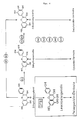
- the enzyme DFR is synthesized in the cells. If dihydrokaempferol is produced in the cells as an intermediate product of anthocyanbiosynthesis, this is reduced to leucopelargonidine by the synthesized enzyme DFR; see. Fig. 4.
- the other enzymes already present in the cells modify the leucopelargonidine to salmon-red anthocyanin dye-pelargonidine-3-glycosides.
- Donor plants from which the DFR gene can be isolated are known to the person skilled in the art.
- pelargonidine-producing plants such as Zea mays, Antirrhinum majus, Matthiola incana (Levkoje) or Callistephus chinensis (Aster).
- those skilled in the art are familiar with acceptor plants in which dihydrokaempferol is obtained in the anthocyanbiosynthetic pathway, but cannot be converted to leucopelargonidine in the absence of a dihydroflavonol-4 reductase with substrate specificity for dihydrokaempferol.
- the pelargonidine-producing plants Zea mays (monocotyl) or Antirrhinum majus are used as the DFR-DNA donor plant and Petunia hybrida (dicotyl) as the DQR-DNA acceptor plant.
- the enzyme DFR is encoded by the A1 gene.
- this enzyme converts dihydroquercetin into leucocyanidine and dihydrokaempferol into leucopelargonidine, which initiates the formation of cyanidine derivatives and pelargonidine derivatives.
- This dihydroflavonol-4 reductase from Zea mays has an extended substrate specificity for dihydrokaempferol.
- the DFR DNA from Zea mays enables genetically engineered variants of Petunia hybrida to be constructed which have a salmon-red flower color because they can synthesize the salmon-red anthocyanin dye pelargonidine-3-glycoside with the aid of the genetically engineered DFR DNA from Zea mays.
- Petunia hybrida Such variants of Petunia hybrida were previously unknown. This was based on the fact that the dihydroflavonol-4-reductase commonly found in petunias does react dihydromyricetin with relatively high efficiency and dihydroquercetin with lower efficiency, but cannot implement dihydrokaempferol; see. Fig. 4. This enzyme naturally occurring in Petunia hybrida therefore lacks the substrate specificity for dihydrokaempferol. Therefore, the anthocyanin dyes naturally occurring in petunias are only delphinidine derivatives (dark blue) or cyanidine derivatives (blue-red); see. Fig. 4. These derivatives include, for example, glycosides.
- a mutant of Petunia hybrida is used as the acceptor plant which has a genetic deficiency for the activity of the 3'- and 3 ', 5'-hydroxylases; see. the enzymes referred to in FIG. 4 as Ht1 or as Hf1 and Hf2. Because of this deficiency, dihydrokaempferol and kaempferol are accumulated in this plant, since these compounds are not converted to dihydroquercetin and dihydromyricetin in anthocyanbiosynthesis; see. Fig. 4. Thus, the plant lacks the anthocyanin dyes synthesized from these intermediates, namely cyanidine derivatives (blue-red) and delphinidine derivatives 3 (dark blue). Their flower color is therefore essentially white or pale pink.
- mutant RL01 is described by G. Stotz in Theor. Appl. Genet. 70 (1985), pp. 300-305.
- This mutant from the Petunia hybrida collection in Tübingen is a derivative of the R4 line, which was previously used for genetic and enzymatic studies of B-ring hydroxylation and flavonol formation. Since the mutant RL01 contains recessive alleles at the Ht1 and Hf1 loci, it has no flavonoid 3′-hydroxylase activity and only a low level of flavonoid 3 ′, 5′-hydroxylase activity.
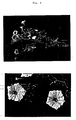
- the DFR gene is introduced according to the invention into the mutants of Petunia hybrida explained above, for example into the mutant RL01, then the flower color is modified to a salmon red, which often has the Petunia hybrid-typical flower markings; see. Fig. 2.
- the genetic engineering introduction of the DNA sequence encoding the DFR can be accomplished by conventional techniques, for example by microinjection (A. de la Pena, H, Lörz, & J. Schell, Nature 325 (1987), pages 274-276), Elektroporation (ME Fromm, LP Taylor & V. Walbot, Nature 319 (1986), pages 791-793), Transformation (FA Krens, L. Molendijk, GJ Wullems, RA Schilperoort, Nature 296 (1982), pages 72-74) Transfer of corresponding Ti plasmids (L. Marton, GJ Wullems, L.
- the DNA sequence is preferably introduced into protoplasts of the acceptor plant which have been synchronized in the M phase. This transformation technique is described by P. Meyer et al. in Mol. Gen. Genet. 201 (1985), pp. 513-528.
- the DNA sequence can be introduced into cells and tissue of the plant in addition to protoplasts.
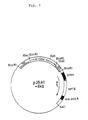
- the recombinant vector p35A1 is preferably used. Under the control of the 35S promoter from CaMV (cauliflower mosaic virus) contained in this vector, the A1 gene from Zea mays cloned in the form of the cDNA is constitutively expressed. Furthermore, in addition to the DFR gene, this vector simultaneously transfers a kanamycin resistance gene to the plant, so that plants transformed with the vector can easily be selected on the basis of their kanamycin resistance.
- the EcoRI restriction sites are first filled in in a 1320 bp EcoRI fragment of the complete cDNA clone of a type 2 A1 gene from Zea mays and XbaI linkers which reconstitute the EcoRI restriction sites are added.
- the XbaI fragment obtained is inserted into the only XbaI restriction site of the plasmid pCKan1. It is therefore in this plasmid between the 35S promoter and the termination sequence of CaMV (Cauliflower Mosaic Virus).
- the large EcoRI fragment of plasmid pCKan1 was originally derived from plasmid pLGV11, which carries a kanamycin resistance gene.
- the plant cells transformed with the plasmid pCKan1 can be selected on the basis of their kanamycin resistance.
- the plasmid pLGV11 corresponds to the plasmid pLGV1103 in which the SalI fragment Tn903 has been deleted (R. Hain et al., Plant Cell Rep. 2 (1983), pp. 244-247).
- the plasmid obtained in this construction is plasmid p35A1; see. Fig. 1. It was deposited with the German Collection of Microorganisms on October 14, 1987 under the accession number DSM 4275.
- Protoplasts of the Petunia hybrida mutant RL01 synchronized in the M phase are transformed with the plasmid p35A1 from Example 1 according to Meyer et al., Cited above.
- microcalli are grown and selected in a bead-type culture in V47 medium with osmolarity reduced to 100 mosm per week (RD Shilito et al., Plant Cell Rep. 2 (1983), pp. 244-247; H Binding, Z. Plantsphysiol. 74 (1974), pp. 327-356).
- Kanamycin-resistant microcalli are transferred to regeneration medium as soon as they have a diameter of 3-5 mm. They are three weeks on Re27 / 6 medium (MS medium) with 2 mg / l BAP (benzylaminopurine) and 2 mg / l IAA (indole acetic acid) (T. Murashige, Physiol. Plant. 15 (1962) p.
- Re17 / 3 medium MS medium with 1 mg / l BAP and 1 mg / l IAA.
- the shoots are rooted on MS medium without hormones. All media contain 50 mg / l kanamycin.
- 2% express the kanamycin resistance gene encoded by plasmid p35A1 and are therefore kanamycin resistant.
- Two plants are regenerated from each transformed callus. Of the first 15 flowering transformants, two show a salmon-red flower color in both regenerated plants; see. Fig. 2, right.
- the occurrence of the pelargonidine dye responsible for this salmon-red flower color correlates with the transcription of the A1 cDNA from Zea mays. This was transferred with the plasmid p35A1, in which it is under the control of the 35S promoter of the CaMV.
- the transcription is carried out by mRNA extraction from the leaves according to J. Logemann shown (Analytical Biochemistry 163 (1987), pp. 16-20).
- Hybond R -mAP (Amersham) is used according to the manufacturer's instructions.
- EcoRI-XbaI restriction fragment of the A1 cDNA as a probe molecule, the A1 mRNA isolated from the leaves is visualized in a Northern blot (AP Feinberg et al., Anal. Biochem. 132 (1983), p. 6- 13 and 137 (1983), 266-267); see. Fig. 3.
- the transformant RP235-15 which has a uniform salmon-red coloring of the flower and in which the transcription of the A1 gene could be clearly detected, is used for the flavonoid analysis. It is compared to the mutant RL01. The analysis is carried out according to standard methods JB Harborne "Comparative Biochemistry of the Flavonoids", Academic Press, London and New York (1967). Both mutant RL01 and transformant RP235-15 contain small amounts of cyanidin-3-glycoside, cyanidin-3-glycosylglycoside and delphinidin-3-glycoside. However, only in the transformant RP235-15 are pelargonidine-3-glycoside and pelargonidine-3-glycosylglycoside contained in large quantities.
- the transformant RP235-15 With the transformant RP235-15, the spectroscopic anthocyanin maximum is shifted from 528 nm to 512 nm compared to the mutant RL01. In addition, the transformant RP235-15 does not detect dihydrokaempferol at all and only traces of kaempferol. As already explained above, these substances are accumulated in the mutant RL01.
Landscapes
- Health & Medical Sciences (AREA)
- Life Sciences & Earth Sciences (AREA)
- Genetics & Genomics (AREA)
- Chemical & Material Sciences (AREA)
- Engineering & Computer Science (AREA)
- Organic Chemistry (AREA)
- Zoology (AREA)
- Wood Science & Technology (AREA)
- Bioinformatics & Cheminformatics (AREA)
- Biotechnology (AREA)
- General Engineering & Computer Science (AREA)
- General Health & Medical Sciences (AREA)
- Molecular Biology (AREA)
- Biochemistry (AREA)
- Biomedical Technology (AREA)
- Microbiology (AREA)
- Medicinal Chemistry (AREA)
- Nutrition Science (AREA)
- Cell Biology (AREA)
- Physics & Mathematics (AREA)
- Biophysics (AREA)
- Plant Pathology (AREA)
- Breeding Of Plants And Reproduction By Means Of Culturing (AREA)
- Micro-Organisms Or Cultivation Processes Thereof (AREA)
Applications Claiming Priority (2)
| Application Number | Priority Date | Filing Date | Title |
|---|---|---|---|
| DE3738657A DE3738657C1 (de) | 1987-11-13 | 1987-11-13 | Pflanzen mit modifizierter Bluetenfarbe und gentechnologische Verfahren zu ihrer Herstellung |
| DE3738657 | 1987-11-13 |
Publications (3)
| Publication Number | Publication Date |
|---|---|
| EP0316797A2 true EP0316797A2 (fr) | 1989-05-24 |
| EP0316797A3 EP0316797A3 (en) | 1990-01-31 |
| EP0316797B1 EP0316797B1 (fr) | 1993-10-20 |
Family
ID=6340474
Family Applications (1)
| Application Number | Title | Priority Date | Filing Date |
|---|---|---|---|
| EP88118820A Expired - Lifetime EP0316797B1 (fr) | 1987-11-13 | 1988-11-11 | Plantes avec des couleurs florales modifiées ainsi qu'une méthode pour leur préparation par génie génétique |
Country Status (7)
| Country | Link |
|---|---|
| US (1) | US5410096A (fr) |
| EP (1) | EP0316797B1 (fr) |
| JP (1) | JP2996663B2 (fr) |
| DD (1) | DD275882A5 (fr) |
| DE (2) | DE3738657C1 (fr) |
| ES (1) | ES2059472T3 (fr) |
| IL (1) | IL88307A (fr) |
Cited By (4)
| Publication number | Priority date | Publication date | Assignee | Title |
|---|---|---|---|---|
| WO1993001290A1 (fr) * | 1991-07-11 | 1993-01-21 | International Flower Developments Pty. Ltd. | Sequences genetiques codant les enzymes du mecanisme d'action des flavonoïdes et leurs utilisations |
| EP0873410A4 (fr) * | 1995-05-16 | 1999-07-28 | Int Flower Dev Pty Ltd | Plantes transgeniques presentant des couleurs florales modifiees et procedes permettant de les obtenir |
| EP1182257A1 (fr) * | 2000-08-14 | 2002-02-27 | Korea Kumho Petrochemical Co. Ltd. | Acides nucléiques codant pour une dihydroflavonol 4-réductase dont la spécificité est modifiée et leur utilisations |
| EP1442122A4 (fr) * | 2001-10-05 | 2007-02-14 | Agriculture Victoria Serv Pty | Manipulation de la biosynthese des flavonoides chez les plantes |
Families Citing this family (4)
| Publication number | Priority date | Publication date | Assignee | Title |
|---|---|---|---|---|
| AU699874B2 (en) * | 1995-05-16 | 1998-12-17 | International Flower Developments Pty Ltd | Transgenic plants exhibiting altered flower colour and methods for producing same |
| US6459017B1 (en) | 2000-06-29 | 2002-10-01 | The State Of Oregon Acting By And Through The State Board Of Higher Education On Behalf Of Oregon State University | Iris transformation method |
| US20040117871A1 (en) * | 2000-11-25 | 2004-06-17 | Peter Meyer | Plant growth regulation |
| KR102081982B1 (ko) * | 2018-11-16 | 2020-02-26 | 대한민국 | 하얀 꽃색 국화 판별용 마커 |
Family Cites Families (1)
| Publication number | Priority date | Publication date | Assignee | Title |
|---|---|---|---|---|
| US4771002A (en) * | 1984-02-24 | 1988-09-13 | Lubrizol Genetics, Inc. | Transcription in plants and bacteria |
-
1987
- 1987-11-13 DE DE3738657A patent/DE3738657C1/de not_active Expired
-
1988
- 1988-11-07 IL IL88307A patent/IL88307A/xx not_active IP Right Cessation
- 1988-11-11 EP EP88118820A patent/EP0316797B1/fr not_active Expired - Lifetime
- 1988-11-11 JP JP63286605A patent/JP2996663B2/ja not_active Expired - Fee Related
- 1988-11-11 DE DE88118820T patent/DE3885061D1/de not_active Expired - Lifetime
- 1988-11-11 ES ES88118820T patent/ES2059472T3/es not_active Expired - Lifetime
- 1988-11-11 DD DD32173188A patent/DD275882A5/de not_active IP Right Cessation
-
1990
- 1990-08-28 US US07/573,876 patent/US5410096A/en not_active Expired - Lifetime
Non-Patent Citations (3)
| Title |
|---|
| NATURE, Band 330, 17. Dezember 1987, Seiten 677-678; P. MEYER et al.: "A new petunia flower colour generated by transformation of a mutant with a maize gene" * |
| THE EMBO JOURNAL, Band 6, Nr. 2, 1987, Seiten 287-294, IRL Press Ltd, Oxford, GB; Z. SCHWARZ-SOMMER et al.: "Influence of transposable elements on the structure and function of the A1 gene of Zea mays" * |
| Z. PFLANZENPHYSIOL., Band 63, 1970, Seiten 31-43; D. HESS: "Versuche zur Transformation an höheren Pflanzen: genetische Charakterisierung einiger mutmasslich transformierter Pflanzen" * |
Cited By (10)
| Publication number | Priority date | Publication date | Assignee | Title |
|---|---|---|---|---|
| WO1993001290A1 (fr) * | 1991-07-11 | 1993-01-21 | International Flower Developments Pty. Ltd. | Sequences genetiques codant les enzymes du mecanisme d'action des flavonoïdes et leurs utilisations |
| CN1113960C (zh) * | 1991-07-11 | 2003-07-09 | 国际花卉开发有限公司 | 编码类黄酮途径酶的遗传序列及其应用 |
| EP0873410A4 (fr) * | 1995-05-16 | 1999-07-28 | Int Flower Dev Pty Ltd | Plantes transgeniques presentant des couleurs florales modifiees et procedes permettant de les obtenir |
| EP1182257A1 (fr) * | 2000-08-14 | 2002-02-27 | Korea Kumho Petrochemical Co. Ltd. | Acides nucléiques codant pour une dihydroflavonol 4-réductase dont la spécificité est modifiée et leur utilisations |
| KR100406727B1 (ko) * | 2000-08-14 | 2003-11-21 | 금호석유화학 주식회사 | 기질 특이성을 갖는 다이하이드로플라보놀 리덕테이즈를암호화하는 유전자 및 그의 이용방법 |
| AU784792B2 (en) * | 2000-08-14 | 2006-06-22 | Kumho Petrochemical Co., Ltd. | Genetic sequences encoding substrate-specific dihydroflavonol 4-reductase and uses therefor |
| EP1442122A4 (fr) * | 2001-10-05 | 2007-02-14 | Agriculture Victoria Serv Pty | Manipulation de la biosynthese des flavonoides chez les plantes |
| US7767416B2 (en) | 2001-10-05 | 2010-08-03 | Agriculture Victoria Services Pty Ltd | Manipulation of flavonoid biosynthesis in plants |
| US8569064B2 (en) | 2001-10-05 | 2013-10-29 | Agriculture Victoria Services Pty Ltd. | Manipulation of flavonoid biosynthesis in plants |
| US9523089B2 (en) | 2001-10-05 | 2016-12-20 | Agriculture Victoria Services Pty Ltd | Manipulation of flavonoid biosynthesis in plants |
Also Published As
| Publication number | Publication date |
|---|---|
| JPH022305A (ja) | 1990-01-08 |
| DE3885061D1 (de) | 1993-11-25 |
| IL88307A (en) | 1993-08-18 |
| EP0316797A3 (en) | 1990-01-31 |
| EP0316797B1 (fr) | 1993-10-20 |
| IL88307A0 (en) | 1989-06-30 |
| US5410096A (en) | 1995-04-25 |
| DE3738657C1 (de) | 1989-05-18 |
| DD275882A5 (de) | 1990-02-07 |
| JP2996663B2 (ja) | 2000-01-11 |
| ES2059472T3 (es) | 1994-11-16 |
Similar Documents
| Publication | Publication Date | Title |
|---|---|---|
| DE3751466T2 (de) | Anti-sense-Regulierung von Pflanzengenexpression. | |
| EP0270496B1 (fr) | Méthode pour la transformation de protoplastes végétaux | |
| DE3382838T2 (de) | Transgene dicotyledone Pflanzenzellen und Pflanzen | |
| DE69434972T2 (de) | Verfahren zur transformation von pflanzen und ein vektor dafür | |
| EP0164575B1 (fr) | Transformation du génotype de plantes | |
| EP0375092B1 (fr) | Régulation de transcription spécifique pour des tubercules de pomme de terre | |
| DE4420782C1 (de) | DNA-Sequenz, kodierend einen 2-Oxoglutarat/Malat-Translokator, Plasmide, Bakterien, Hefen und Pflanzen enthaltend diesen Transporter | |
| DE69130532T2 (de) | Binäres cryptocytotoxisches verfahren zur herstellung von hybrid-saatgut | |
| DE69634699T2 (de) | Methode zur regulation der ligninzusammensetzung in pflanzen | |
| DE69033667T2 (de) | Pflanzen mit modifizierten Blüten, Samen oder Embryos | |
| DE69735580T2 (de) | An aminosaeure angereicherte speicherproteine, insbesondere an lysin angereicherte mais-gamma-zeine, und diese exprimierende pflanzen | |
| Mauro et al. | The Plant OncogenerolDStimulates Flowering in Transgenic Tobacco Plants | |
| DE68925258T2 (de) | Transgene pflanze mit veränderter physiologie, morphologie und hormonstoffwechsel gewebekulturen dieser pflanze sowie verfahren zu ihrer herstellung | |
| DE69433424T2 (de) | Pflanzen mit modifizierter reaktion auf ethylen | |
| DE69332951T2 (de) | Gensequenzen kodierend für enzyme des flavonoid stoffwechselweges mit einer flavonoid 3'-hydroxylase aktivität une ihre anwendungen | |
| EP0316797B1 (fr) | Plantes avec des couleurs florales modifiées ainsi qu'une méthode pour leur préparation par génie génétique | |
| DE69721892T2 (de) | CPC-Gen zur Regulierung der Initiation von der Wurzelhaarbildung bei Arabidopsis (thaliana), und diese überexprimierende transgene (Arabidopsis) Pflanzen | |
| DE69326770T2 (de) | Für einen amnosäauretransporter kodierende dna-sequenzen, plasmide, bakterien,hefen, und pflanzen die einer transporter enthalten sowie ihre verwendung | |
| DE4337597A1 (de) | DNA-Sequenzen für Ammoniumtransporter, Plasmide, Bakterien, Hefen, Pflanzenzellen- und Pflanzen enthaltend den Transporter | |
| EP0787196A1 (fr) | Sequence d'adn et son utilisation | |
| EP0928338A1 (fr) | Procede de production de plantes a sterilite femelle | |
| DE4439748A1 (de) | Verfahren zur Veränderung des Blühverhaltens bei Pflanzen | |
| EP1240342B1 (fr) | Production de plantes transgeniques de l'espece des tagetes | |
| DE19531678C2 (de) | Verfahren zur Behinderung oder Verhinderung der Bildung von atmendem pflanzlichen Gewebe, insbesondere zur Erzeugung samenloser Pflanzen durch zusätzliche cystosolische Pyruvat, Phosphat Dikinase | |
| DE19857654A1 (de) | Beeinflussung des Blühverhaltens von Pflanzen durch Expression Saccharose-spaltender Proteine |
Legal Events
| Date | Code | Title | Description |
|---|---|---|---|
| PUAI | Public reference made under article 153(3) epc to a published international application that has entered the european phase |
Free format text: ORIGINAL CODE: 0009012 |
|
| AK | Designated contracting states |
Kind code of ref document: A2 Designated state(s): BE DE ES FR GB IT NL |
|
| PUAL | Search report despatched |
Free format text: ORIGINAL CODE: 0009013 |
|
| AK | Designated contracting states |
Kind code of ref document: A3 Designated state(s): BE DE ES FR GB IT NL |
|
| 17P | Request for examination filed |
Effective date: 19900725 |
|
| 17Q | First examination report despatched |
Effective date: 19911205 |
|
| GRAA | (expected) grant |
Free format text: ORIGINAL CODE: 0009210 |
|
| ITF | It: translation for a ep patent filed | ||
| AK | Designated contracting states |
Kind code of ref document: B1 Designated state(s): BE DE ES FR GB IT NL |
|
| REF | Corresponds to: |
Ref document number: 3885061 Country of ref document: DE Date of ref document: 19931125 |
|
| ET | Fr: translation filed | ||
| GBT | Gb: translation of ep patent filed (gb section 77(6)(a)/1977) |
Effective date: 19931202 |
|
| PLBE | No opposition filed within time limit |
Free format text: ORIGINAL CODE: 0009261 |
|
| STAA | Information on the status of an ep patent application or granted ep patent |
Free format text: STATUS: NO OPPOSITION FILED WITHIN TIME LIMIT |
|
| 26N | No opposition filed | ||
| REG | Reference to a national code |
Ref country code: ES Ref legal event code: FG2A Ref document number: 2059472 Country of ref document: ES Kind code of ref document: T3 |
|
| REG | Reference to a national code |
Ref country code: GB Ref legal event code: IF02 |
|
| PGFP | Annual fee paid to national office [announced via postgrant information from national office to epo] |
Ref country code: ES Payment date: 20071219 Year of fee payment: 20 Ref country code: NL Payment date: 20071023 Year of fee payment: 20 Ref country code: DE Payment date: 20071108 Year of fee payment: 20 |
|
| PGFP | Annual fee paid to national office [announced via postgrant information from national office to epo] |
Ref country code: IT Payment date: 20071126 Year of fee payment: 20 |
|
| PGFP | Annual fee paid to national office [announced via postgrant information from national office to epo] |
Ref country code: GB Payment date: 20071107 Year of fee payment: 20 Ref country code: FR Payment date: 20071108 Year of fee payment: 20 |
|
| PGFP | Annual fee paid to national office [announced via postgrant information from national office to epo] |
Ref country code: BE Payment date: 20071130 Year of fee payment: 20 |
|
| BE20 | Be: patent expired |
Owner name: *MAX-PLANCK-GESELLSCHAFT ZUR FORDERUNG DER WISSENS Effective date: 20081111 |
|
| REG | Reference to a national code |
Ref country code: GB Ref legal event code: PE20 Expiry date: 20081110 |
|
| NLV7 | Nl: ceased due to reaching the maximum lifetime of a patent |
Effective date: 20081111 |
|
| PG25 | Lapsed in a contracting state [announced via postgrant information from national office to epo] |
Ref country code: NL Free format text: LAPSE BECAUSE OF EXPIRATION OF PROTECTION Effective date: 20081111 |
|
| REG | Reference to a national code |
Ref country code: ES Ref legal event code: FD2A Effective date: 20081112 |
|
| PG25 | Lapsed in a contracting state [announced via postgrant information from national office to epo] |
Ref country code: ES Free format text: LAPSE BECAUSE OF EXPIRATION OF PROTECTION Effective date: 20081112 |
|
| PG25 | Lapsed in a contracting state [announced via postgrant information from national office to epo] |
Ref country code: GB Free format text: LAPSE BECAUSE OF EXPIRATION OF PROTECTION Effective date: 20081110 |