EP0325616B1 - Adjuvants de penetration pour l'administration transdermique d'agents systemiques - Google Patents
Adjuvants de penetration pour l'administration transdermique d'agents systemiques Download PDFInfo
- Publication number
- EP0325616B1 EP0325616B1 EP87907073A EP87907073A EP0325616B1 EP 0325616 B1 EP0325616 B1 EP 0325616B1 EP 87907073 A EP87907073 A EP 87907073A EP 87907073 A EP87907073 A EP 87907073A EP 0325616 B1 EP0325616 B1 EP 0325616B1
- Authority
- EP
- European Patent Office
- Prior art keywords
- transdermal delivery
- skin
- haloperidol
- drug
- penetration enhancers
- Prior art date
- Legal status (The legal status is an assumption and is not a legal conclusion. Google has not performed a legal analysis and makes no representation as to the accuracy of the status listed.)
- Expired - Lifetime
Links
Classifications
-
- A—HUMAN NECESSITIES
- A61—MEDICAL OR VETERINARY SCIENCE; HYGIENE
- A61K—PREPARATIONS FOR MEDICAL, DENTAL OR TOILETRY PURPOSES
- A61K31/00—Medicinal preparations containing organic active ingredients
- A61K31/33—Heterocyclic compounds
- A61K31/395—Heterocyclic compounds having nitrogen as a ring hetero atom, e.g. guanethidine or rifamycins
- A61K31/435—Heterocyclic compounds having nitrogen as a ring hetero atom, e.g. guanethidine or rifamycins having six-membered rings with one nitrogen as the only ring hetero atom
- A61K31/44—Non condensed pyridines; Hydrogenated derivatives thereof
- A61K31/445—Non condensed piperidines, e.g. piperocaine
-
- A—HUMAN NECESSITIES
- A61—MEDICAL OR VETERINARY SCIENCE; HYGIENE
- A61K—PREPARATIONS FOR MEDICAL, DENTAL OR TOILETRY PURPOSES
- A61K47/00—Medicinal preparations characterised by the non-active ingredients used, e.g. carriers or inert additives; Targeting or modifying agents chemically bound to the active ingredient
- A61K47/06—Organic compounds, e.g. natural or synthetic hydrocarbons, polyolefins, mineral oil, petrolatum or ozokerite
- A61K47/22—Heterocyclic compounds, e.g. ascorbic acid, tocopherol or pyrrolidones
-
- A—HUMAN NECESSITIES
- A61—MEDICAL OR VETERINARY SCIENCE; HYGIENE
- A61K—PREPARATIONS FOR MEDICAL, DENTAL OR TOILETRY PURPOSES
- A61K9/00—Medicinal preparations characterised by special physical form
- A61K9/0012—Galenical forms characterised by the site of application
- A61K9/0014—Skin, i.e. galenical aspects of topical compositions
Definitions
- the invention generally relates to an improved method of drug delivery. More particularly, the invention relates to the use of an improved membrane penetration enhancer in a medicament for enhancing the transdermal delivery of certain systemically active drugs to humans and animals.
- transdermal delivery permits close control over drug absorption. For example, it avoids factors that can cause unpredictable absorption from the gastrointestinal tract, including: changes in acidity, motility, and food content. It also avoids initial metabolism of the drug by the liver. Thus, controlled drug entry through skin can achieve a high degree of control over blood concentrations of drug.
- Transdermal delivery particularly benefits patients with chronic disease. Many such patients have difficulty following regimens requiring several doses daily of medications that repeatedly cause unpleasant symptoms. They find the same drugs much more acceptable when administered in transdermal systems that require application infrequently--in some cases, only once or twice weekly--and that reduce adverse effects.
- Transdermal delivery is feasible for drugs effective in amounts that can pass through the skin area and that are substantially free of localized irritating or allergic effects. While these limitations may exclude some agents, many others remain eligible for transdermal delivery. Moreover, their numbers will expand as pharmaceutical agents of greater potency are developed. Particularly suitable for transdermal delivery are potent drugs with only a narrow spread between their toxic and safe blood concentrations, those having gastrointestinal absorption problems, or those requiring frequent dosing in oral or injectable form.
- Transdermal therapy permits much wider use of natural substances such as hormones. Often the survival times of these substances in the body are so short that they would have to be taken many times daily in ordinary dosage forms. Continuous transdermal delivery provides a practical way of giving them, and one that can mimic the body's own patterns of secretion.
- controlled transdermal therapy appears feasible for many drugs used for a wide variety of ailments including, but not limited to, circulatory problems, hormone deficiency, respiratory ailments, and pain relief.
- Percutaneous administration can have the advantage of permitting continuous administration of drug to the circulation over a prolonged period of time to obtain a uniform delivery rate and blood level of drug. Commencement and termination of drug therapy are initiated by the application and removal of the dosing devices from the skin. Uncertainties of administration through the gastrointestinal tract and the inconvenience of administration by injection are eliminated. Since a high concentration of drug never enters the body, problems of pulse entry are overcome and metabolic half-life is not a factor of controlling importance.
- U.S. Patent Nos. 3,989,815; 3,989,816; 3,991,203; 4,122,170; 4,316,893; 4,415,563; 4,423,040; 4,424,210; and 4,444,762 generally describe a method for enhancing the topical (as contrasted to the systemic) administration of physiologically active agents by combining such an agent with an effective amount of a penetration enhancer and applying the combination topically to humans or animals, in the form of creams, lotions, gels.
- compositions which comprise a penetration enhancer as indicated in the present application together with certain active agents.
- EP-A 0 129 284 and US-A 4 405 616 describe the use of penetration enhancers for the topical delivery of systemic active agents.
- the pentration enhancer used differs from those of the present application in that in the structural formula the substituent x represents oxygen.
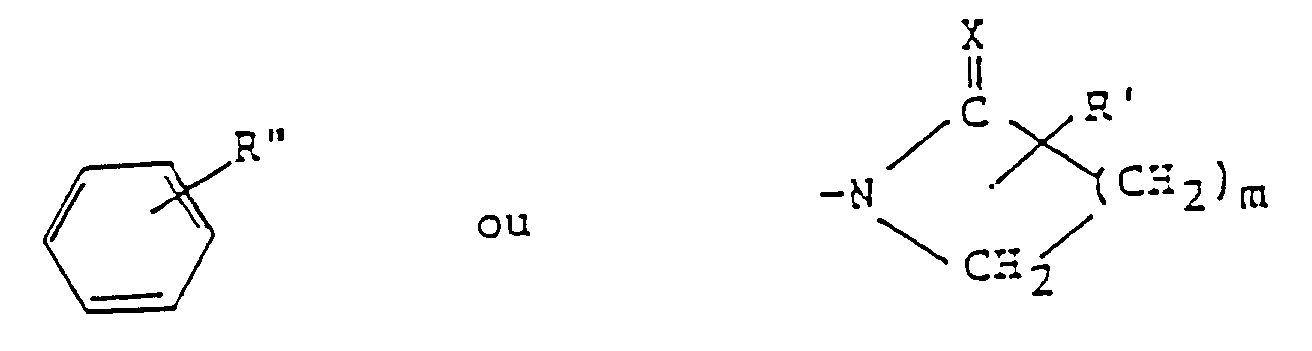
- the invention therefore provides the use of a compound selected from the group of compounds represented by the structural formula wherein X represents sulfur or two hydrogen atoms; R' is H or a lower alkyl group having 1-4 carbon atoms; m is 2-6; n is 0-18 and R is -CH3, wherein R'' is H or halogen for the manufacture of a medicament for enhancing the transdermal delivery of systemically active agents selected from the group consisting of haloperidol, isosorbide dinitrate, nitroglycerin, estradiol, clonidine, dichlorofenac and metaproterenol through the skin or other body membranes of humans and animals.
- systemically active agents selected from the group consisting of haloperidol, isosorbide dinitrate, nitroglycerin, estradiol, clonidine, dichlorofenac and metaproterenol through the skin or other body membranes of humans and animals.
- R is -CH3 and R' is H.
- R is -CH3
- R' is H
- m equals 4.
- n is 4-17, e.g. 11.
- Typical examples of compounds represented by the above structural formula include: 1-n-Dodecylazacycloheptane 1-n-Dodecylazacycloheptan-2-thione 1-n-Butylazacyclohexan-2-thione 1-n-Butylazacyclopentan-2-thione 1-n-Octylazacyclopentan-2-thione 1-n-Dodecylazacyclopentan-2-thione 1-n-Butylazacycloheptan-2-thione 1-n-Octylazacycloheptan-2-thione 1,1'-Hexamethylenediazacyclopentan-2-thione 1-n-Dodecylazacyclohexan-2-thione 1-n-Decylazacycloheptane 1-n-Hexadecylazacycloheptane 1-n-Octadecylazacycloheptane 1-n-Undecylazacycloheptane 1-n-Tetradecy
- Dosage forms for application to the skin or other membranes of humans and animals include creams, lotions, gels, ointments, suppositories, sprays, aerosols, buccal and sub-lingual tablets and any one of a varietary of transdermal devices for use in the continuous administration of systemically active drugs by absorption through the skin, oral mucosa or other membranes, see, for example, one or more of U.S. Patents Nos.
- Typical inert carriers which may be included in the foregoing dosage forms include conventional formulating materials, such as, for example, water, isopropyl alcohol, gaseous fluorocarbons, ethyl alcohol, polyvinyl pyrrolidone, propylene glycol, fragrances, gel-producing materials such as "Carbopol®”, stearyl alcohol, stearic acid, spermaceti, sorbitan monooleate, "Polysorbates®", “Tweens®”, sorbital, methylcellulose.
- conventional formulating materials such as, for example, water, isopropyl alcohol, gaseous fluorocarbons, ethyl alcohol, polyvinyl pyrrolidone, propylene glycol, fragrances, gel-producing materials such as "Carbopol®”, stearyl alcohol, stearic acid, spermaceti, sorbitan monooleate, "Polysorbates®”, “Tweens®”, sorbital,
- Systemically active agents are used in amounts calculated to achieve and maintain therapeutic blood levels in a human or animal over the period of time desired. These amounts vary with the potency of each systemically active substance, the amount required for the desired therapeutic or other effect, the rate of elimination or breakdown of the substance by the body once it has entered the bloodstream and the amount of penetration-enhancer in the formulation.
- a dosage near the lower end of the useful range of a particular agent is usually employed initially and the dosage increased or decreased as indicated from the observed response, as in the routine procedure of the physician.
- the amount of penetration enhancer which may be used in the invention varies from 1 to 100 percent although adequate enhancement of penetration is generally found to occur in the range of 1 to 10 percent by weight of the formulation to be delivered.
- the penetration-enhancer disclosed herein may be used in combination with the active agent or may be used separately as a pre-treatment of the skin or other body membrane through which the systemically-active agent is intended to be delivered.
- a composition, in the form of a gel, suitable for transdermal delivery of haloperidol, an antidyskinetic or antipsychotic drug is prepared by mixing the following components in the given concentrations.
- Component Weight % Haloperidol 1-5 Penetration enhancer 1-10 Carbopol® 934 P (Available from B.F. Goodrich) 0.5-2 Neutralizing Agent (NaOH) q.s. Tween®-20 (Available from Atlas Chemical, a Div. of I.C.I.) 1-10 Preservative (Sorbic Acid) q.s. Antioxidant (Ascorbic Acid) q.s. Chelating Agent (Disodium salt of ethylenediaminetetra acetic acid) q.s. Deionized Water q.s. to 100
- This composition is topically applied to the skin of a human subject and after the passage of a suitable period of time haloperidol is found in the bloodstream of said subject.
- Vitamin E When ascorbyl palmitate, Vitamin E, thioglycerol, thioglycolic acid, sodium formaldehyde sulfoxylate, BHA, BHT, propyl gallate or sodium metabisulfite are substituted for the antioxidant of the composition formulated in Example 1, the results are substantially similar in that a topical composition suitable for transdermally delivering haloperidol to the bloodstream is obtained.
- Example 1 The composition of Example 1 is prepared in the form of a sodium alginate gel by mixing the following components in the following given concentrations: Component Weight % Haloperidol 1-5 Penetration enhancer 1-10 Sodium Alginate 0.5-5 Calcium Salts q.s. Tween®-20 1-10 Preservative* q.s. Antioxidant** q.s. Chelating Agent*** q.s. Deionized Water to 100 *Suitable preservatives are those used in Example 3 as well as sorbic acid. **Suitable antioxidants are those used in Example 4 including ascorbic acid. ***The chelating agent is the disodium salt of ethylenediaminetetraacetic acid.
- This composition when applied topically is found to transdermally deliver haloperidol to the bloodstream of a subject.
- Example 1 is prepared in the form of a hydrophilic cream by mixing the following components.
- Solvent* 2-20 Tween®-20 1-5 Water q.s. to 100 *Suitable solvents are propylene glycol, glycerin, alcohols, for example, ethyl alcohol, isopropylalcohol, etc. and polyethylene glycols.
- the oil phase and the water phase is made up separately, and then agitated to form an emulsion.
- the active ingredient is other than haloperidol, depending on its lipophilicity, it will be distributed in the oil or water phase.
- This hydrophilic cream when applied topically to the skin of a human, is found to transdermally delivery haloperidol into the bloodstream.
- composition of the instant invention may also be delivered by use of a polymeric matrix.
- a solid polymer such as cellulose triacetate, polyvinyl acetate, terpolymers and copolymers of vinyl chloride and vinyl acetate, copolymers of polyvinyl alcohol and polyvinyl acetate, and silicon elastomers is imbibed with a liquid having the following components in the given concentrations.
- Component Weight % Polymer 5-40 Haloperidol q.s.
- Penetration enhancer 0.5-80
- Preservative*** q.s. Antioxidant**** q.s. *Solvents may be the solvents used in Example 6 above.
- the Surfactant may be Tween®-20, glycerolmonostearate or sodium laurylsulfate, etc.
- the preservative may be any of the preservatives used in Example 3 above.
- the antioxidants may be any of those used in Example 4 above.
- Examples 1 to 7 are repeated except that the following active ingredients in the given concentrations are substituted for haloperidol: Active Ingredient Weight % Isosorbide Dinitrate 5-15 Nitroglycerin 1-5 Estradiol 1-5 Clonidine 0.5-3 Propranolol 1-5 Nifedipine 1-5 Nicardipine 1-5 Dichlorofenac 5-15 Metaproterenol 1-5 Similar results are obtained in that the active ingredient is transdermally delivered to the bloodstream of an animal.
Landscapes
- Health & Medical Sciences (AREA)
- Chemical & Material Sciences (AREA)
- Public Health (AREA)
- General Health & Medical Sciences (AREA)
- Veterinary Medicine (AREA)
- Animal Behavior & Ethology (AREA)
- Medicinal Chemistry (AREA)
- Pharmacology & Pharmacy (AREA)
- Epidemiology (AREA)
- Life Sciences & Earth Sciences (AREA)
- Chemical Kinetics & Catalysis (AREA)
- General Chemical & Material Sciences (AREA)
- Engineering & Computer Science (AREA)
- Oil, Petroleum & Natural Gas (AREA)
- Dermatology (AREA)
- Medicinal Preparation (AREA)
- Other In-Based Heterocyclic Compounds (AREA)
- Hydrogenated Pyridines (AREA)
- Pharmaceuticals Containing Other Organic And Inorganic Compounds (AREA)
Abstract
Claims (7)
- Utilisation d'un composé choisi dans le groupe des composés représentés par la structure de formule

- Utilisation selon la revendication 1 dans laquelle R' est l'hydrogène, m est égal à 4, n équivaut de 4 à 17 et R est -CH₃.
- Utilisation selon la revendication 2 dans laquelle X est le soufre.
- Utilisation selon la revendication 2 dans laquelle X représente deux atomes d'hydrogène.
- Utilisation selon la revendication 3 dans laquelle n est égal à 11.
- Utilisation selon la revendication 4 dans laquelle n est égal à 11.
- Utilisation selon la revendication 1 dans laquelle l'administration est concourante.
Applications Claiming Priority (3)
| Application Number | Priority Date | Filing Date | Title |
|---|---|---|---|
| US91640286A | 1986-10-07 | 1986-10-07 | |
| US916402 | 1986-10-07 | ||
| PCT/US1987/002582 WO1988002626A1 (fr) | 1986-10-07 | 1987-10-07 | Adjuvants de penetration pour l'administration transdermique d'agents systemiques |
Publications (3)
| Publication Number | Publication Date |
|---|---|
| EP0325616A1 EP0325616A1 (fr) | 1989-08-02 |
| EP0325616A4 EP0325616A4 (fr) | 1989-12-12 |
| EP0325616B1 true EP0325616B1 (fr) | 1994-07-20 |
Family
ID=25437215
Family Applications (1)
| Application Number | Title | Priority Date | Filing Date |
|---|---|---|---|
| EP87907073A Expired - Lifetime EP0325616B1 (fr) | 1986-10-07 | 1987-10-07 | Adjuvants de penetration pour l'administration transdermique d'agents systemiques |
Country Status (7)
| Country | Link |
|---|---|
| EP (1) | EP0325616B1 (fr) |
| JP (1) | JPH0729940B2 (fr) |
| KR (1) | KR880701552A (fr) |
| AU (1) | AU609429B2 (fr) |
| CA (1) | CA1319613C (fr) |
| DE (1) | DE3750264T2 (fr) |
| WO (1) | WO1988002626A1 (fr) |
Cited By (1)
| Publication number | Priority date | Publication date | Assignee | Title |
|---|---|---|---|---|
| US20080311167A1 (en) * | 2007-06-12 | 2008-12-18 | Oronsky Bryan T | Topical Composition for Treating Pain |
Families Citing this family (2)
| Publication number | Priority date | Publication date | Assignee | Title |
|---|---|---|---|---|
| IT1223327B (it) * | 1987-10-28 | 1990-09-19 | Mediolanum Farmaceutici Srl | Composti eterociclici alifatici n sostituiti atti a facilitare il passaggio di sostanze attive attraverso le barrierefisiologiche |
| CA1334646C (fr) * | 1988-04-08 | 1995-03-07 | James Vanolden Peck | Produits stimulant la penetration transdermique |
Family Cites Families (32)
| Publication number | Priority date | Publication date | Assignee | Title |
|---|---|---|---|---|
| US3157641A (en) * | 1960-05-06 | 1964-11-17 | Dow Chemical Co | Preparation of nu, nu'-ethylidene bis (nu-heterocyclic) compounds |
| US3306910A (en) * | 1964-09-14 | 1967-02-28 | Phillips Petroleum Co | Production of thiolactam compounds |
| US3306911A (en) * | 1965-08-30 | 1967-02-28 | Phillips Petroleum Co | Method for preparing thiolactams |
| US3823152A (en) * | 1970-07-30 | 1974-07-09 | Fujisawa Pharmaceutical Co | 3-substituted-2-piperidinethiones and homologues thereof |
| CH573404A5 (fr) * | 1972-07-28 | 1976-03-15 | Inventa Ag | |
| US4525199A (en) * | 1981-05-04 | 1985-06-25 | Nelson Research & Development Co. | Method of improved pest control |
| BE843140A (fr) * | 1975-06-19 | 1976-10-18 | Aazacycloalcan-2-ones 1-substituees et compositions pharmaceutiques contenant ces composes a titre d'excipients | |
| US4405616A (en) * | 1975-06-19 | 1983-09-20 | Nelson Research & Development Company | Penetration enhancers for transdermal drug delivery of systemic agents |
| US3989815A (en) * | 1975-06-19 | 1976-11-02 | Nelson Research & Development Company | Novel N-bis-azacyclopentan-2-onyl alkanes |
| US3989816A (en) * | 1975-06-19 | 1976-11-02 | Nelson Research & Development Company | Vehicle composition containing 1-substituted azacycloheptan-2-ones |
| US3991203A (en) * | 1975-06-19 | 1976-11-09 | Nelson Research & Development Company | Vehicle composition containing 1-substituted azacyclopentan-2-ones |
| US4316893A (en) * | 1975-06-19 | 1982-02-23 | Nelson Research & Development Co. | Vehicle composition containing 1-substituted azacycloalkan-2-ones |
| US4562075A (en) * | 1982-05-20 | 1985-12-31 | Nelson Research & Development Co. | Penetration enhancers for transdermal drug delivery of systemic agents |
| DE2947649A1 (de) * | 1979-11-27 | 1981-08-06 | C.F. Spiess & Sohn GmbH & Co, 6719 Kleinkarlbach | Insektizide mittel |
| US4423040A (en) * | 1980-04-04 | 1983-12-27 | Nelson Research & Development Company | Vehicle composition containing 1-substituted azacyclohexan-2-ones |
| US4415563A (en) * | 1980-04-04 | 1983-11-15 | Nelson Research & Development Company | Vehicle composition containing 1-substituted azacyclononan-2-ones |
| US4424210A (en) * | 1980-04-04 | 1984-01-03 | Nelson Research & Development Company | Vehicle composition containing 1-substituted azacycloalkan-2-ones |
| US4444762A (en) * | 1980-04-04 | 1984-04-24 | Nelson Research & Development Company | Vehicle composition containing 1-substituted azacyclopentan-2-ones |
| US4311481A (en) * | 1981-01-23 | 1982-01-19 | Nelson Research & Development Company | Method for improved dyeing |
| US4310525A (en) * | 1981-01-23 | 1982-01-12 | Nelson Research & Development Company | Method of treatment of inflammation |
| FR2519549A1 (fr) * | 1982-01-08 | 1983-07-18 | Besins Jean | Medicaments a base de nitroglycerine pour le traitement de l'insuffisance coronarienne et de l'insuffisance cardiaque |
| US4552872A (en) * | 1983-06-21 | 1985-11-12 | The Procter & Gamble Company | Penetrating topical pharmaceutical compositions containing corticosteroids |
| US4557934A (en) * | 1983-06-21 | 1985-12-10 | The Procter & Gamble Company | Penetrating topical pharmaceutical compositions containing 1-dodecyl-azacycloheptan-2-one |
| US4537776A (en) * | 1983-06-21 | 1985-08-27 | The Procter & Gamble Company | Penetrating topical pharmaceutical compositions containing N-(2-hydroxyethyl) pyrrolidone |
| US4605670A (en) * | 1984-02-01 | 1986-08-12 | Nitto Electric Industrial Co., Ltd. | Method for percutaneously administering metoclopramide |
| US4637930A (en) * | 1984-02-08 | 1987-01-20 | Yamanouchi Pharmaceutical Co, Ltd. | Transdermal formulation of nicardipine hydrochloride |
| US4626539A (en) * | 1984-08-10 | 1986-12-02 | E. I. Dupont De Nemours And Company | Trandermal delivery of opioids |
| US4620949A (en) * | 1985-04-05 | 1986-11-04 | Texaco Inc. | Process for amidocarbonylation of cyclic amides |
| WO1987004706A1 (fr) * | 1986-01-31 | 1987-08-13 | Nelson Research And Development Company | Compositions comprenant des azacycloalkanes monosubstitues et leur utilisation |
| US4801586A (en) * | 1986-04-23 | 1989-01-31 | Nelson Research & Development Co. | Penetration enhancers for transdermal delivery of systemic agents |
| EP0268219A1 (fr) * | 1986-11-19 | 1988-05-25 | Whitby Research Incorporated | Agents augmentant la pénétration pour la délivrance transdermale de médicaments systémiques |
| DE3778833D1 (de) * | 1986-11-19 | 1992-06-11 | Whitby Research Inc | Penetrationsverbesserer fuer die transdermale verabreichung von systemisch wirksamen arzneimitteln. |
-
1987
- 1987-10-02 CA CA000548460A patent/CA1319613C/fr not_active Expired - Fee Related
- 1987-10-07 JP JP62506430A patent/JPH0729940B2/ja not_active Expired - Lifetime
- 1987-10-07 EP EP87907073A patent/EP0325616B1/fr not_active Expired - Lifetime
- 1987-10-07 DE DE3750264T patent/DE3750264T2/de not_active Expired - Fee Related
- 1987-10-07 AU AU81515/87A patent/AU609429B2/en not_active Ceased
- 1987-10-07 WO PCT/US1987/002582 patent/WO1988002626A1/fr not_active Ceased
-
1988
- 1988-06-04 KR KR1019880700635A patent/KR880701552A/ko not_active Ceased
Non-Patent Citations (4)
| Title |
|---|
| Chemical Abstract vol. 104, Abstract no. 28446q SHANNON ET AL.) "Influence of 1-dodecylazacycloheptan-2-one (azone).... 5 -O-valery-9- -D-arabinofuranosyladenine" (1985) * |
| Chemical Abstracts vol. 104, Abstract no. 10508b (HADGRAFT ET AL.) "Facilitated transport of sodium salicylate across an artificial lipid membrane by Azone" (1985) * |
| Chemical Abstracts vol. 105, Abstract no. 29927e RYATT ET AL. "Pharmacodynamic measurement of percutaneous penetration enhancement in vivo" (1986) * |
| CHEMICAL Abstracts,vol. 103, Abstract no. 27169u (WOTTON ET AL) "Vehicle effect on topical drug delivery. Effect of azone on the cutaneous permeation of metronidazole and propylene glycol" (1985) * |
Cited By (2)
| Publication number | Priority date | Publication date | Assignee | Title |
|---|---|---|---|---|
| US20080311167A1 (en) * | 2007-06-12 | 2008-12-18 | Oronsky Bryan T | Topical Composition for Treating Pain |
| US9511016B2 (en) * | 2007-06-12 | 2016-12-06 | Epicentrx, Inc. | Topical composition for treating pain |
Also Published As
| Publication number | Publication date |
|---|---|
| JPH02501303A (ja) | 1990-05-10 |
| CA1319613C (fr) | 1993-06-29 |
| EP0325616A4 (fr) | 1989-12-12 |
| JPH0729940B2 (ja) | 1995-04-05 |
| DE3750264D1 (de) | 1994-08-25 |
| KR880701552A (ko) | 1988-11-03 |
| EP0325616A1 (fr) | 1989-08-02 |
| AU609429B2 (en) | 1991-05-02 |
| WO1988002626A1 (fr) | 1988-04-21 |
| DE3750264T2 (de) | 1994-11-17 |
| AU8151587A (en) | 1988-05-06 |
Similar Documents
| Publication | Publication Date | Title |
|---|---|---|
| EP0325613B1 (fr) | Adjuvants de penetration pour l'administration transdermique d'agents systemiques | |
| EP0268220B1 (fr) | Agents améliorant la pénétration pour la délivrance transdermale de médicaments systémiques | |
| EP0268222B1 (fr) | Agents améliorant la pénétration pour la délivrance transdermale de médicaments systémiques | |
| US5118845A (en) | Penetration enhancer for transdermal delivery of systemic agents | |
| EP0095169B1 (fr) | Promoteurs de pénétration pour l'administration transdermale d'agents systémiques | |
| US4562075A (en) | Penetration enhancers for transdermal drug delivery of systemic agents | |
| US4886783A (en) | Penetration enhancers for transdermal delivery of systemic agents | |
| US5204339A (en) | Penetration enhancers for transdermal delivery of systemic agents | |
| US4879275A (en) | Penetration enhancers for transdermal delivery of systemic agent | |
| US4996199A (en) | Penetration enhancers for transdermal delivery of systemic agents | |
| US5118676A (en) | Penetration enhancers for transdermal delivery of systemic agents | |
| US5234959A (en) | Penetration enhancers for transdermal delivery of systemic agents | |
| US5118692A (en) | Penetration enhances for transdermal delivery of systemic agents | |
| US5142044A (en) | Penetration enhancers for transdermal delivery of systemic agents | |
| EP0268218B1 (fr) | Agents améliorant la pénétration pour la délivrance transdermale de médicaments systémiques | |
| US5270346A (en) | Penetration enhancers for transdermal delivery of systemic agents | |
| EP0325616B1 (fr) | Adjuvants de penetration pour l'administration transdermique d'agents systemiques | |
| AU603619B2 (en) | Penetration enhancers for transdermal delivery of systemic agents |
Legal Events
| Date | Code | Title | Description |
|---|---|---|---|
| PUAI | Public reference made under article 153(3) epc to a published international application that has entered the european phase |
Free format text: ORIGINAL CODE: 0009012 |
|
| 17P | Request for examination filed |
Effective date: 19890321 |
|
| AK | Designated contracting states |
Kind code of ref document: A1 Designated state(s): AT BE CH DE FR GB IT LI LU NL SE |
|
| A4 | Supplementary search report drawn up and despatched |
Effective date: 19891212 |
|
| RAP3 | Party data changed (applicant data changed or rights of an application transferred) |
Owner name: WHITBY RESEARCH INCORPORATED |
|
| 17Q | First examination report despatched |
Effective date: 19901015 |
|
| RAP1 | Party data changed (applicant data changed or rights of an application transferred) |
Owner name: WHITBY RESEARCH, INC. |
|
| GRAA | (expected) grant |
Free format text: ORIGINAL CODE: 0009210 |
|
| RBV | Designated contracting states (corrected) |
Designated state(s): DE FR GB IT |
|
| AK | Designated contracting states |
Kind code of ref document: B1 Designated state(s): DE FR GB IT |
|
| PG25 | Lapsed in a contracting state [announced via postgrant information from national office to epo] |
Ref country code: IT Free format text: LAPSE BECAUSE OF FAILURE TO SUBMIT A TRANSLATION OF THE DESCRIPTION OR TO PAY THE FEE WITHIN THE PRE;WARNING: LAPSES OF ITALIAN PATENTS WITH EFFECTIVE DATE BEFORE 2007 MAY HAVE OCCURRED AT ANY TIME BEFORE 2007. THE CORRECT EFFECTIVE DATE MAY BE DIFFERENT FROM THE ONE RECORDED.SCRIBED TIME-LIMIT Effective date: 19940720 |
|
| REF | Corresponds to: |
Ref document number: 3750264 Country of ref document: DE Date of ref document: 19940825 |
|
| PG25 | Lapsed in a contracting state [announced via postgrant information from national office to epo] |
Ref country code: GB Effective date: 19941020 |
|
| ET | Fr: translation filed | ||
| PLBE | No opposition filed within time limit |
Free format text: ORIGINAL CODE: 0009261 |
|
| STAA | Information on the status of an ep patent application or granted ep patent |
Free format text: STATUS: NO OPPOSITION FILED WITHIN TIME LIMIT |
|
| GBPC | Gb: european patent ceased through non-payment of renewal fee |
Effective date: 19941020 |
|
| PG25 | Lapsed in a contracting state [announced via postgrant information from national office to epo] |
Ref country code: FR Effective date: 19950630 |
|
| PG25 | Lapsed in a contracting state [announced via postgrant information from national office to epo] |
Ref country code: DE Effective date: 19950701 |
|
| 26N | No opposition filed | ||
| REG | Reference to a national code |
Ref country code: FR Ref legal event code: ST |