EP0352090A2 - Méthode de préparation du néphritogénoside - Google Patents
Méthode de préparation du néphritogénoside Download PDFInfo
- Publication number
- EP0352090A2 EP0352090A2 EP89307310A EP89307310A EP0352090A2 EP 0352090 A2 EP0352090 A2 EP 0352090A2 EP 89307310 A EP89307310 A EP 89307310A EP 89307310 A EP89307310 A EP 89307310A EP 0352090 A2 EP0352090 A2 EP 0352090A2
- Authority
- EP
- European Patent Office
- Prior art keywords
- nephritogenoside
- surface active
- active agent
- nonionic surface
- column
- Prior art date
- Legal status (The legal status is an assumption and is not a legal conclusion. Google has not performed a legal analysis and makes no representation as to the accuracy of the status listed.)
- Withdrawn
Links
Images

Classifications
-
- C—CHEMISTRY; METALLURGY
- C07—ORGANIC CHEMISTRY
- C07K—PEPTIDES
- C07K14/00—Peptides having more than 20 amino acids; Gastrins; Somatostatins; Melanotropins; Derivatives thereof
- C07K14/435—Peptides having more than 20 amino acids; Gastrins; Somatostatins; Melanotropins; Derivatives thereof from animals; from humans
- C07K14/46—Peptides having more than 20 amino acids; Gastrins; Somatostatins; Melanotropins; Derivatives thereof from animals; from humans from vertebrates
- C07K14/47—Peptides having more than 20 amino acids; Gastrins; Somatostatins; Melanotropins; Derivatives thereof from animals; from humans from vertebrates from mammals
Definitions
- the present invention relates to a method for preparation of nephritogenoside, a substance having an ability to induce glomerulonephritis in animals. More specifically, the invention relates to a method for effectively and readily preparing nephritogenoside from some organs of various animals including human being and especially from human placenta at low cost.
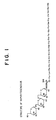
- Nephritogenoside is a glycopeptide having a structural formula shown in the attached Fig. 1.
- the glycopeptide has been isolated from rat kidney by the present applicant while he made investigations to purify an antigen of Masugi's glomerulonephritis.
- the glycopeptide has a specific ability that a single injection of the substance to a homologous or heterologous animal can induce glomerulonephritis in the animal without the aid of its immunological mechanism, and the induced glomerulonephritis will lead to contracted kidney without fail. This is the same progress as can be observed in human chronic glomerulonephritis.
- the substance can be extracted from tissues of normal animals (including healthy human being) and has a specificity that it induces glumerulonephritis in homologous animals.
- glycopeptide is expected, therefore, to perform a very important part in studying possible causes and therapeutic treatments of human glomerulonephritis. It also arrests much attention of medical and pharmaceutical fields to its wide applications and potential development of a therapeutic agent for human glomerulonephritis which may be obtained by making some modifications in the structure of nephritogenoside.
- nephritogenoside exists not only in rats but in other animals such as human being, dogs, rabbits, cattles and pigs and that it is widely distributed throughout the body including lung, heart, aorta and placenta rather than only in kidney. This fact can be explained by its presence in basement membrane of microvessels which exist in those organs in a large quantity.
- nephritogenoside can be prepared by using kidney excised from rat.
- renal cortex is first excised from rat kidney to collect glomeruli and thus collected glomeruli are sonicated to collect glomerular basement membrane (GBM).
- GBM glomerular basement membrane
- the GBM is digested with trypsin for a short time (3 hours) and centrifuged to take the supernatant liquid, which is then dialyzed and lyophilized.
- trypsin for example, trypsin, collagenase, and pronase
- different proteinases for example, trypsin, collagenase, and pronase
- the substance obtained is subjected to zone electrophoresis to collect only the first half of the glycopeptide peak exhibiting anthrone reaction.
- the collected substance is treated with trichloroacetic acid to take the supernatant liquid, which is dialyzed and separated through SEPHADEX G 200 or BIOGEL P 300 column chromatography.
- SEPHADEX G 200 or BIOGEL P 300 column chromatography Of the two sugar peaks obtained, void volume fractions are collected for dialysis, and components which remain in the dialysis membrane are desalted and condensed to be subjected to DEAE cellulose column chromatography for purification.
- the second previous method to prepare the glycopeptide through chemical synthesis has a complicated step to bond glucose which comprises the sugar moiety.
- glucose which comprises the sugar moiety.
- ⁇ -bonds besides desired ⁇ -bonds are formed.
- some organs of various animals including human being can be used as the starting material, and excised tissues containing many microvessels are treated with a nonionic surface active agent.
- a nonionic surface active agent e.g., a nonionic surface active agent
- undesired components which comprise the tissues together with desired active components (nephritogenoside) can be made soluble and removed.
- nephritogenoside desired active components
- tissues containing many microvessels are excised from various organs and treated with a nonionic surface active agent in an EDTA-containing physiological saline solution.
- precipitates are washed in a physiological saline solution and water in succession to remove the nonionic surface active agent, EDTA, and salt.
- the washed precipitates are digested with trypsin and centrifuged to take the supernatant liquid, which is then subjected to a chromatography treatment to separate nephritogenoside.
- human placenta is the starting material.
- the human placenta after amnion and the placenta marginal portion have been removed, consists of vascular trees called villi and spaces called intervillous spaces which surrounds the vascular trees.
- the villi consist of vessels ranging from microvessels to capillary vessels and are advantageous to collect tissues containing the microvessels in which nephritogenoside exists.
- human placenta delivered is put into 1 l of 0.9 % NaCl solution (pH 7.5) containing 20 mM EDTA and kept at a cold place.
- the same EDTA-containing NaCl solution is introduced into the placenta through the unbilical cord vena to remove blood thoroughly from the placenta. From thus treated placenta which appears pink, amnion and the placenta marginal portion are removed, and then the placenta is cut into pieces with scissors and put into a mixer (excluding large vessels).
- the mixed placenta is passed through a plastic sieve of midium mesh (5 mm) to discard those left on the sieve (including large vessels). Those passing through the sieve are passed further through a plastic sieve of smaller mesh (0.5 to 1 mm) to collect almost all the vascular trees left on it. At this stage, those vascular trees appear white because blood protein is removed.
- the collected vascular trees are put into the mixer together with a physiological saline solution and agitated at high speed to destroy the trees and collect microvessels (villi) floating on the solution (about 95 % of the destroyed trees are floating).
- the nonionic surface active agents applicable to this treatment include polyethylene glycol alkyl ether and polyethylene glycol alkylphenyl ether types, for example, Triton X 100 and Triton NE manufactured by Rhome & Haas.
- the dose of nonionic surface active agent is at least 0.002 cc, preferably 0.005 to 0.02 cc per 1 g (wet weight) of microvessels.
- the precipitates are suspended in distilled water and centrifuged at low speed to remove the EDTA.
- the supernatant liquid is decanted and the precipitates are lyophilized.
- the samples obtained from the above steps are digested with trypsin (for 3 hours).
- the digestion conditions are as follows: - Buffer: 0.1 M Tris HCl (ph 8.1) - 10 mM CaCl2 - Sample concentration: 25 mg/ml - Trypsin concentration: 1/30 (weight/weight) of the samples
- the samples are centrifuged in a refrigerated centrifuge at 7000 rpm (8900 G) for 30 min. to take the supernatant liquid.
- the separated precipitates are digested on the same conditions as described above (for 3 hours) and centrifuged to separate the supernatant liquid. This supernatant liquid is added to the previously obtained supernatant liquid, dialyzed and lyophilized.
- the lyophilized powder obtained from the trypsin digestion step is dissolved into a physiological saline solution containing a buffer and subjected to a BIOGEL A 1.5 m column (a trade name of Bio-Rad) for purification.
- the column chromatography conditions are as follows: - Buffer; 0.3 M NaCl - 50 mM Tris HCl (pH 7.6) - Elution rate: 9 to 10 sec./drop (200 drops/fraction)
- each fraction containing a certain amount of eluent is examined on its 280 mn absorbance as well as the nephritogenoside content through the ELISA method [Clin. exp. Immunol. 51 595-599 (1983)] in which anti-nephritogenoside (anti-NG) rat serum is used.
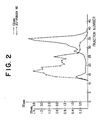
- a small 280 nm absorption peak appears at void volume fractions and the subsequent absorption curve is kept flat before a large absorption peak around the fraction No. 30.
- the nephritogenoside activity peaks examined through the ELISA method are gathered between the two 28 nm absorption peaks. Therefore, the fractions (No. 14 to 27) between those peaks are combined to collect nephritogenoside. If necessary, collected nephritogenoside is further purified with HPLC.
- the purification can be carried out by another method.
- the lyophilized powder obtained from the above step C is dissolved into a physiological saline solution containing a buffer and then poured into a DEAE-cellulose column for purification.
- each fraction containing a certain amount of eluent is examined on its 280 nm absorbance as well as the distribution of NG activity through the ELISA method in which anti-NG rat serum is used.
- the NG activity measured through the ELISA method is divided into two peaks. There is no peak of 280 nm absorbance at the first peak (fraction I), while there is a large peak of 280 nm absorbance at the second peak (fraction II).
- the fraction I is further poured into a BIOGEL A 1.5 m column on the same conditions as described above 1 to check the purity.
- Fig. 3B the nephritogenoside activity exists only at earlier fractions and the content of components exhibiting 280 nm absorbance is remarkably low, which shows it is purified to a considerable extent.
- the fraction II is poured into a BIOGEL A 1.5 m column similarly to the fraction I for further separation.
- the nephritogenoside activity shows a column chromatographic pattern similar to that of the above 1.
- the isolation process using the DEAE-cellulose column and the BIOGEL A 1.5 m column in succession can produce purer nephritogenoside than the direct isolation through the BIOGEL A 1.5 m column.
- tissues containing many microvessels are excised from some organs of various animals including human being.
- the excised tissues are not directly digested with trypsin but, before trypsin-digestion, treated with a nonionic surface active agent to remove undesired components of the tissues as much as possible in a form of supernatant liquid.
- the present method does not require collagenage, pronase, and other proteinase digestion steps to thoroughly digest the undesired components.
- the yield can be improved drastically and desired nephritogenoside can be prepared at low cost.
- the villus samples were suspended in 2 l of 10 mM EDTA solution containing 0.1 % Triton X 100 and agitated with a magnetic stirrer for 3 hours. Then the samples were stood still and slightly centrifuged to remove the supernatant liquid. Thus obtained pre cipitates were sonicated in 10 mM EDTA solution in a sonicator for 10 min. with several blocks of ice added to the solution to prevent any solution temperature rising. This operation was repeated three times to remove the Triton.
- the precipitates were put into a 4 l beaker and suspended in distilled water.
- the suspension was centrifuged at low speed and the supernatant liquid was decanted to remove the EDTA.
- the lyophilized product was about 10 g.
- the digested products were separated with a BIOGEL A 1.5 m column for purification as described in the above step D.I.
- the fractions No. 14 to 27 were combined to obtain nephritogenoside. [Yield: 583 mg].
- Nephritogenoside was obtained only in trace amounts. This is because most of villus components to be made soluble and removed through a Triton treatment were left unchanged and those components could not be digested completely through a short-period digestion with trypsin only. Therefore, undesired components must be digested thoroughly with other proteinases (for example, pronase and collagenase).
- Nephritogenoside was prepared from rat kidney.
- the renal cortex are tissues containing microvessels, glomeruli. 50 g of the obtained renal cortex was dispersed in 360 cc of 10 mM EDTA solution containing 0.1 % Triton X 100 and agitated with a magnetic stirrer for 2 hours. After it was stood still, the supernatant liquid was decanted. The precipitates obtained were sonicated in 10 mM EDTA solution with a sonicator for 10 min. with several blocks of ice added to the solution prevent any solution temperature rising. This operation was repeated three times to remove Triton X 100.
- precipitates were suspended in distilled water and centrifuged at low speed to separate the supernatant liquid for removal of EDTA.
- the precipitates were lyophilized.
- the lyophilized product was 690 mg.
- the 690 mg sample was digested for purification similarly to the Example 1.
- nephritogenoside could be obtained only in trace amounts as in the Comparison 1.
Landscapes
- Chemical & Material Sciences (AREA)
- Health & Medical Sciences (AREA)
- Life Sciences & Earth Sciences (AREA)
- Organic Chemistry (AREA)
- General Health & Medical Sciences (AREA)
- Molecular Biology (AREA)
- Biochemistry (AREA)
- Biophysics (AREA)
- Zoology (AREA)
- Genetics & Genomics (AREA)
- Medicinal Chemistry (AREA)
- Gastroenterology & Hepatology (AREA)
- Proteomics, Peptides & Aminoacids (AREA)
- Toxicology (AREA)
- Peptides Or Proteins (AREA)
- Medicines That Contain Protein Lipid Enzymes And Other Medicines (AREA)
- Medicines Containing Material From Animals Or Micro-Organisms (AREA)
- Preparation Of Compounds By Using Micro-Organisms (AREA)
- Saccharide Compounds (AREA)
Applications Claiming Priority (2)
| Application Number | Priority Date | Filing Date | Title |
|---|---|---|---|
| JP180378/88 | 1988-07-21 | ||
| JP18037888 | 1988-07-21 |
Publications (1)
| Publication Number | Publication Date |
|---|---|
| EP0352090A2 true EP0352090A2 (fr) | 1990-01-24 |
Family
ID=16082193
Family Applications (1)
| Application Number | Title | Priority Date | Filing Date |
|---|---|---|---|
| EP89307310A Withdrawn EP0352090A2 (fr) | 1988-07-21 | 1989-07-19 | Méthode de préparation du néphritogénoside |
Country Status (3)
| Country | Link |
|---|---|
| US (1) | US5004818A (fr) |
| EP (1) | EP0352090A2 (fr) |
| JP (1) | JPH02131498A (fr) |
Cited By (1)
| Publication number | Priority date | Publication date | Assignee | Title |
|---|---|---|---|---|
| WO2010041972A1 (fr) * | 2008-10-06 | 2010-04-15 | Shurdov Mikhail Arkadievich | Extrait peptidique de placenta et procédé de production correspondant |
Families Citing this family (1)
| Publication number | Priority date | Publication date | Assignee | Title |
|---|---|---|---|---|
| RU2136695C1 (ru) * | 1998-03-18 | 1999-09-10 | ЗАОПП "Эндо-Фарм-А" | Сывороточный гликопротеин, обладающий биологической активностью в сверхмалых дозах |
Family Cites Families (3)
| Publication number | Priority date | Publication date | Assignee | Title |
|---|---|---|---|---|
| JPS5646897A (en) * | 1979-09-26 | 1981-04-28 | Seiichi Shibata | Novel glycopeptide |
| JPS5911598B2 (ja) * | 1981-07-24 | 1984-03-16 | 理化学研究所 | 新規糖ペプチド及びその製造法 |
| JPS6026398B2 (ja) * | 1981-09-02 | 1985-06-24 | 理化学研究所 | 糖ペプチドの合成法 |
-
1989
- 1989-07-18 US US07/381,493 patent/US5004818A/en not_active Expired - Fee Related
- 1989-07-19 EP EP89307310A patent/EP0352090A2/fr not_active Withdrawn
- 1989-07-20 JP JP1186064A patent/JPH02131498A/ja active Pending
Cited By (1)
| Publication number | Priority date | Publication date | Assignee | Title |
|---|---|---|---|---|
| WO2010041972A1 (fr) * | 2008-10-06 | 2010-04-15 | Shurdov Mikhail Arkadievich | Extrait peptidique de placenta et procédé de production correspondant |
Also Published As
| Publication number | Publication date |
|---|---|
| US5004818A (en) | 1991-04-02 |
| JPH02131498A (ja) | 1990-05-21 |
Similar Documents
| Publication | Publication Date | Title |
|---|---|---|
| Menkin | Biology of inflammation: chemical mediators and cellular injury | |
| US3682881A (en) | Fractionation of plasma using glycine and polyethylene glycol | |
| US3931399A (en) | Process for isolating a fibrin-stabilizing factor | |
| JPH03170571A (ja) | コラーゲン組成物及び該コラーゲン組成物の製造方法 | |
| Sheela et al. | In vitro degradation of radiolabelled, intact basement membrane mediated by cellular plasminogen activator | |
| Smith et al. | Concanavalin A affinity molecular variants of α-fetoprotein in neonatal rat serum and in the serum of rats bearing hepatomas | |
| Sellers et al. | An electrophoretic study of urinary protein in the rat | |
| US5004818A (en) | Method for preparation of nephritogenoside | |
| NL8100243A (nl) | Werkwijze voor het verkrijgen van menselijk relaxinum. | |
| US4177262A (en) | Plasminogen compositions containing preactivated plasminogens with or without native plasminogens, process for making same, pharmaceutical compositions and control of blood clots | |
| Hashim et al. | Myelin lipophilin-induced demyelinating disease of the central nervous system | |
| EP0026561A2 (fr) | Composés néphritogènes contenant une moitié d'un sucre biologiquement actif, procédés pour leur préparation, et leurs applications | |
| US4220642A (en) | Vasoactive lung polypeptides | |
| EP0151463B1 (fr) | Protéine tissulaire PP19, procédé d'obtention et application | |
| US5231081A (en) | Use of hemocyanins and arylphorins to influence the immune system and for the treatment of tumors | |
| CA1336322C (fr) | Utilisation d'hemocyanines et d'arylphorines pour agir sur le systeme immunitaire et pour le traitement | |
| JPH05508397A (ja) | 免疫抑制生産物 | |
| US4113711A (en) | Vasoactive lung polypeptides | |
| US4394374A (en) | Thymus gland extracts | |
| JPS5857318A (ja) | 癌細胞障害性リンパ球の製造法 | |
| JPS60184020A (ja) | ヒト由来レクチン及びその採取法 | |
| EP0042560A2 (fr) | Procédé pour préparer et pour obtenir des préparations de leucotaxine contenant de l'anaphylatoxine et de la cocytotaxine et les protéines anaphylatoxine et cocytotaxine sous une forme moléculaire homogène et biologiquement active | |
| KR100261657B1 (ko) | 룸부로키나제의 제조방법 | |
| HU217175B (hu) | Új belhámvaszkuláris protein-1 (VAP-1), amely emberben a limfociták kötődését mediálja | |
| Geisow et al. | Plasma protein function: Progress and perspectives |
Legal Events
| Date | Code | Title | Description |
|---|---|---|---|
| PUAI | Public reference made under article 153(3) epc to a published international application that has entered the european phase |
Free format text: ORIGINAL CODE: 0009012 |
|
| AK | Designated contracting states |
Kind code of ref document: A2 Designated state(s): AT BE CH DE ES FR GB GR IT LI LU NL SE |
|
| STAA | Information on the status of an ep patent application or granted ep patent |
Free format text: STATUS: THE APPLICATION HAS BEEN WITHDRAWN |
|
| 18W | Application withdrawn |
Withdrawal date: 19900828 |
|
| R18W | Application withdrawn (corrected) |
Effective date: 19900828 |