EP0352632B1 - Verfahren und Vorrichtung zur Vorhersage der richtigen Durchführung der Übersetzungen von virtuellen in physikalische Adressen - Google Patents
Verfahren und Vorrichtung zur Vorhersage der richtigen Durchführung der Übersetzungen von virtuellen in physikalische Adressen Download PDFInfo
- Publication number
- EP0352632B1 EP0352632B1 EP89113323A EP89113323A EP0352632B1 EP 0352632 B1 EP0352632 B1 EP 0352632B1 EP 89113323 A EP89113323 A EP 89113323A EP 89113323 A EP89113323 A EP 89113323A EP 0352632 B1 EP0352632 B1 EP 0352632B1
- Authority
- EP
- European Patent Office
- Prior art keywords
- virtual addresses
- vector
- current
- virtual
- serially
- Prior art date
- Legal status (The legal status is an assumption and is not a legal conclusion. Google has not performed a legal analysis and makes no representation as to the accuracy of the status listed.)
- Expired - Lifetime
Links
Images

Classifications
-
- G—PHYSICS
- G06—COMPUTING OR CALCULATING; COUNTING
- G06F—ELECTRIC DIGITAL DATA PROCESSING
- G06F12/00—Accessing, addressing or allocating within memory systems or architectures
- G06F12/02—Addressing or allocation; Relocation
- G06F12/08—Addressing or allocation; Relocation in hierarchically structured memory systems, e.g. virtual memory systems
- G06F12/10—Address translation
-
- G—PHYSICS
- G06—COMPUTING OR CALCULATING; COUNTING
- G06F—ELECTRIC DIGITAL DATA PROCESSING
- G06F2212/00—Indexing scheme relating to accessing, addressing or allocation within memory systems or architectures
- G06F2212/65—Details of virtual memory and virtual address translation
- G06F2212/655—Same page detection
Definitions
- the invention is directed to a computer system and, more particularly, to a prediction logic device for improving the performance of multiple processors of the computer system, which multiple processors are coupled to one another in a synchronous, master-slave relationship.
- the computer system may include multiple processors coupled to one another in a synchronous, master-slave relationship and utilize an instruction pipeline to increase the speed of execution of the various instructions required by an application program.
- the computer system may further include a virtual address space and a physical memory to facilitate the construction of multiple application programs for processing by the computer system, as is well known.
- One advantageous computer system configuration comprises a scalar central processing unit coupled in a synchronous, master-slave relationship to a vector processor.
- a vector processor is designed to perform high speed execution of program loops on a vector, which may be defined as an array of data elements stored in the computer system's memory with a fixed increment or stride between successive data elements of the vector.
- a vector's stride is defined as the number of memory locations, typically in bytes, between the starting addresses of consecutive vector elements. For example, a contiguous vector that has longword elements (four contiguous bytes) has a stride of four and a contiguous vector that has quadword elements (eight contiguous bytes) has a stride of eight.
- Vectors most often represent rows or columns of matrices or tables, as for example, arrays of measured temperatures, pressures and other physical variables relating to the solution of a scientific problem.
- the vector processor operates through the execution of vector instructions constructed to directly perform computational tasks in vector or array form. Such vector instructions are far more efficient than conventional loop operations of a scalar processor.
- the scalar central processing unit fetches all instructions and, when it recognizes a vector instruction, issues the vector instruction to the vector processor for execution. If a vector instruction that depends upon the result of a previous vector instruction is issued and the previous vector instruction caused a memory management fault in the vector processor, it would be very difficult to restore the instruction pipeline and restart the instructions. Accordingly, the scalar pipeline is typically stalled until the vector processor indicates that there was no fault during the load/store operation relating to the previous vector instruction.
- a pipelined operation is to increase the speed of operation of the computer system through overlapped execution of instructions.
- the overlapped operation advantage of a pipeline is defeated during the time the scalar pipeline is stalled while the scalar central processing unit is awaiting a no fault indication from the vector processor.
- the time it takes a vector processor to assert a signal indicating that there is no fault greatly affects the overall speed of operation of the master-slave scalar and vector processors. More specifically, the earlier the vector processor can determine that no fault has occurred, the earlier the scalar central processing unit can resume vector instruction issue and refill the instruction execution pipeline.
- the term fault is defined as a memory management fault.
- the present invention contemplates a computer system having a virtual address space and a physical memory.
- a translation scheme is provided to translate a virtual address to a physical address such that data referenced by a virtual address and residing in the physical memory may be fetched by translating the virtual address into a corresponding physical address.
- All application programs to be processed by the computer system are constructed with reference to the virtual address space by use of virtual addresses which define the locations of instructions and data required by the program within the virtual address space.
- the computer system is provided with a mechanism to dynamically translate the virtual addresses generated by the program being executed into correct physical memory locations, each defined by a unique physical address.
- the scalar processor continues to reference data and instructions by virtual addresses and issues information relating to the virtual addresses for the data elements of the vector to the vector processor.
- a translation mechanism must be provided in the vector processor to continuously translate the virtual addresses of the data elements into corresponding physical addresses where the data elements may be found in the main physical memory.
- a page contains a predetermined number of basic addressable units.
- the basic addressable unit may comprise an 8-bit byte and a page may contain 512 bytes.
- the format for a virtual address to uniquely identify a basic addressable unit would be the virtual page number containing the addressable unit and the byte number of the addressable unit within the specified page.
- a page table is maintained in the physical memory to cross reference virtual addresses to physical addresses. As the computer system dynamically transfers data to and from auxiliary memory devices, it generates page frame numbers which define 512 byte pages of physical memory to be used on references to the virtual addresses.
- a page table entry is provided for each virtual page then residing in physical memory. The page frame number assigned to a particular virtual page at the time of a transfer of the related data from auxiliary memory to main memory is stored in the page table entry for that virtual page.
- a physical address corresponding to a particular virtual address can be obtained by fetching the page table entry for the virtual page containing that virtual address from physical memory and merging the byte number of the addressable unit of data with the page frame number contained in the page table entry.
- the vector processor maintains a translation buffer that is a special purpose cache of recently used page table entries. Most often, the translation buffer already contains the page table entries for the virtual addresses being used by a program and the processor need not access physical memory to obtain them.
- the translation buffer is in the translation mechanism which is coupled on a timing-critical data path between the vector processor and the physical memory system.
- the translation mechanism ascertains the page frame number for the virtual page number of the virtual address to be translated from the translation buffer and attaches the byte number of the virtual address to the page frame number listed in the translation buffer to provide the physical address.
- Memory management encompasses the operation of the translation mechanism and the loading of the translation buffer with page table entry information.
- a translation buffer hit is said to occur when the translation buffer contains the page table entry relating to a particular virtual address.
- a memory management fault is defined as a translation buffer hit wherein, e.g., a protection code does not permit the program being processed to access the physical page specified by the page table entry required to complete the translation.
- a translation buffer miss occurs when the translation buffer does not contain a virtual page number for the virtual address to be translated and, therefore, cannot provide the translation mechanism with the physical address information required to complete the virtual-address to physical-address translation. When a translation buffer miss occurs, the vector processor must service the miss by loading the required page table entry into the translation buffer.
- the vector processor suspends operation and the computer system takes an exception.
- the scalar processor is not to issue a subsequent vector instruction prior to the completion of a valid translation for each of the virtual addresses of the data elements of the vector for a previous vector instruction.
- a valid translation is defined as a translation buffer hit without a memory management fault.
- EP-A-0 146 943 discusses a device in which a register holds a trailing address, which is assigned to a memory unit for the trailing element, while a first access request signal is sent to a memory for a first data of a first data element number of leading through trailing elements.
- a difference calculator calculates a difference between the trailing address and a leading address which is assigned to a memory unit for the leading element of the second data.
- the first access request signal is sent to the memory
- another register holds a reference number that is equal to a memory unit cycle time during which each memory unit is rendered busy by each access request signal. After the access request signal disappears, the reference number is reduced by one per clock cycle.
- a comparator compares the difference with the reference number to produce an access enabling signal which enables delivery of the second access request signal to the memory when the reference number becomes less than or equal to the difference in consideration of the number of memory units accessed in each clock cycle.
- None of these references disclose a prediction logic device which determines a last virtual address, which compares each current virtual address to the calculated last virtual address, and which asserts an MMOK signal to the scalar processor when there is a match between the virtual page numbers of the last and current virtual addresses and the translation of the current virtual address is successful.
- the prediction logic device is operated to calculate the virtual address of the last element of the vector based upon the virtual address of the current element, i.e., the data element currently being processed for address translation, the stride and the residual vector length, i.e., the number of remaining data elements in the vector. If the virtual address for the last element, as calculated by the prediction logic device, has the same virtual page number as the virtual address for the current element and there has been a successful, valid translation of the current element's virtual address, it will be known that the virtual page number and corresponding physical address information for the last virtual address is present in the translation buffer and there will be no memory management fault.
- the prediction logic device compares each current virtual address to the calculated last virtual address and asserts an MMOK signal to the scalar processor when there is a match between the virtual page numbers of the last and current virtual addresses and the translation of the current virtual address is successful.
- This permits the scalar processor to continue operation as soon as it becomes known that the virtual address of a current element is on the same virtual page as the calculated virtual address of the last element. In many instances, it becomes known that a current virtual address is on the same page as the last virtual address prior to completion of all translations, thereby permitting an early resumption of scalar processor operation. Simulations of operation of the present invention indicate up to a 20% increase in the speed of operation of the scalar and vector processors when utilizing the prediction logic device of the present invention.
- the prediction logic device according to the invention is defined in claim 1, the computer system comprising the prediction logic device in claim 8. Further, the method of operating a prediction logic device according to the invention is defined in claim 9.
- the calculation of the virtual address of the last element is performed by a conservative approximation of the last virtual address implemented through shift-left hardware to increase calculation speed and simplify the hardware requirements for the prediction logic device, as will appear.
- the conservative approximation is such that if the current virtual address is on the same virtual page as the approximate last virtual address it will definitely be on the same page as tne actual last virtual address.
- the shift-left implementation feature of the invention provides fast and efficient hardware operation for the prediction logic device at an acceptable reduction in prediction accuracy.
- the prediction accuracy of the conservative approximation mode of the invention is increased by operating the prediction logic device to continuously calculate, by conservative approximation, the virtual address for the last data element of the vector by calculating an approximate last virtual address for each vector element based upon the virtual address of each current element, the stride and the remaining element count.
- a continuous approximate calculation operation by the prediction logic device will result in a convergence of the approximate last virtual address toward the actual last virtual address and improve prediction accuracy as the vector processor continues to translate the virtual addresses of the data elements of the vector.
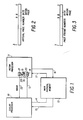
- the computer system includes a scalar processor 10 coupled to a vector processor 11 by a bus 12.
- the scalar processor 10 acts as a master processor operable to initiate and control the operation of the slave vector processor 11 by issuing all vector instructions and related data address information to the vector processor 11 via the bus 12.
- the scalar processor 10 operates as a central processing unit and executes the instructions of an application program.
- the scalar processor 10 fetches the instructions and data required by the application program from a main physical memory 13 by sending appropriate address information over an address bus 14 to the main physical memory 13 and receiving the related instructions and data from the main physical memory 13 over a bus system 15.
- the scalar processor 10 When the scalar processor 10 recognizes that a particular instruction is a vector instruction, the scalar processor 10 issues the vector instruction to the vector processor 11 over the bus 12 for speedy execution by the vector processor 11.
- the vector instruction includes base address, vector length, vector stride and other vector information to enable the scalar processor 10 to generate and issue to the vector processor 11 the virtual address information for the data elements of the vector to be processed in accordance with the issued vector instruction.
- the vector processor 11 includes a translation mechanism 15 to serially translate each of the virtual addresses (VA) of the data elements into corresponding physical addresses (PA).
- VA virtual addresses
- PA physical addresses
- Each of the physical addresses is transmitted over an address bus 16 to the main physical memory 13.
- the main physical memory 13 is enabled to locate and transmit the individual data elements of the vector over a data bus 17 back to the vector processor 11 for processing in accordance with the issued vector instruction.
- a cache memory is provided in the vector processor 11 to increase the speed of data fetches, as is well known. In any event, each virtual address issued to or generated by the vector processor 11 must be translated into a corresponding physical address.
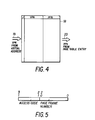
- a page comprises a fixed number of addressable units, e.g. 512 bytes. Pages are naturally aligned; that is, the address of the first byte of a page is a multiple of 512. Virtual addresses are 32 bits long, and are partitioned by the memory management logic as shown in Fig. 2.
- VA virtual address
- bits of a physical address function as follows:
- the translation mechanism 15 is coupled to the input of a translation buffer 18 by a bus 19.
- the translation mechanism 15 extracts the virtual page number (VPN) ⁇ 31:9> from the virtual address to be translated and sends the virtual page number over bus 19 to the translation buffer 18.
- the translation buffer maintains a listing of virtual page numbers (VPN's) and corresponding page frame numbers (PFN's).
- the translation buffer 18 will look up the virtual page number provided by the translation mechanism 15 over bus 19 and send the corresponding page frame number over a bus 20 to the translation mechanism 15.
- a translation buffer hit is defined as a successful completion of the above-described lookup operation.
- the translation operation is continued until each of the virtual addresses of the data elements of the vector is translated into a corresponding physical address such that the data elements may be fetched from the physical memory system.
- a translation buffer miss is said to occur when the translation buffer 18 is presented with a virtual page number for which it cannot provide a page frame number.
- the vector processor 11 must fetch the page table entry for that virtual page number from the main physical memory 13, as discussed above, and load the translation buffer 18 with the corresponding page frame number contained in the page table entry so that the translation mechanism 15 can proceed to complete the translation.
- Each translation buffer load operation takes a certain amount of time to complete and the scalar processor 10 must not pipeline subsequent vector instructions until all translation buffer misses of the current vector instruction are serviced by the vector processor 11. Accordingly, the scalar processor 10 will not load a next vector instruction into its instruction pipeline until it is certain that there will be no memory management faults or translation buffer misses, in connection with the processing of a current vector instruction.
- a prediction logic device 21 is provided in the vector processor 11 to predict the valid, fault free, all hit translation of the virtual addresses of all the data elements of a particular vector and to send an MMOK signal over a line 22 to the scalar processor 10 when the prediction logic device 21 predicts that there will be no memory management faults or translation buffer misses for the particular vector.
- the MMOK signal enables the scalar processor 10 to immediately continue operation without having to wait for the completion of the translation of all the virtual addresses related to any particular vector in those instances when the translation buffer 18 contains the necessary translation information for all of the data elements of the particular vector and the page table entries do not contain protection codes prohibiting access thereto by the program being processed. As illustrated in Fig.
- the prediction logic device 21 is coupled to the translation mechanism 15 by a bus system 23 such that virtual address information and the status of the translation operation, i.e., valid hit or miss, can be transmitted to the prediction logic device 21.
- the vector processor 11 also provides vector stride and vector length information to the prediction logic device 21 to enable the device 21 to predict valid translation operation, as will now be described.
- CurrentVirtADDR is the virtual address of a data element currently undergoing address translation.
- LastVirtADDR The value of LastVirtADDR is calculated once at the beginning of the vector load/store operation. Every element virtual address is compared to LastVirtADDR to determine if both reside in the same virtual page. Virtual addresses are used in the MMOK prediction logic because virtual pages are contiguous, while physical pages are not. This allows the MMOK prediction to proceed in parallel with virtual address translation. Pseudo-code describing this is as follow:
- the prediction logic device 21 is no longer calculating the exact last element virtual address. Rather, the prediction logic device 21 is now calculating an upper bound on the last element virtual address. The actual last element virtual address will always be less than or equal to this upper bound.
- Ease of logic design may dictate other log base2 approximations.
- a priority encoder almost performs the log base2 function.
- the table below shows the true log base2, the roundup approximation of log base2, and a priority encoder approximation of log.base2 for 0 through 16. Note that the roundup approximation is better than the priority encoder approximation. Both give values that are greater than or equal to the actual log base2 so that the last virtual address approximation is always greater than or equal to the actual last virtual address.
- log base 2 is used interchangeably with the phrase “log 2", and the two phrases should be understood as conveying the ordinary meaning of "log base 2”.
- LOG BASE2 APPROXIMATIONS operand B log base2 B roundup approx of log base 2 B priority encod implementation of log base2 B 0 0000000 - 0 0 1 0000001 0 0 1 2 0000010 1 1 2 3 0000011 1 ⁇ y ⁇ 2 2 2 4 0000100 2 2 3 5 0000101 2 ⁇ y ⁇ 3 3 3 6 0000110 2 ⁇ y ⁇ 3 3 3 3 7 0000111 2 ⁇ y ⁇ 3 3 3 8 0001000 3 3 4 9 0001001 3 ⁇ y ⁇ 4 4 4 10 0001010 3 ⁇ y ⁇ 4 4 4 11 0001011 3 ⁇ y ⁇ 4 4 4 12 0001100 3 ⁇ y ⁇ 4 4 4 13 0001101 3 ⁇ y ⁇ 4 4 4 14 0001110 3 ⁇ y ⁇ 4 4 4 15 0001111 3 ⁇ y ⁇ 4 4 16 0010000 4 5 etc. etc. etc.
- either (VLENGTH - 1) or VSTRIDE may be shifted left. In most instances, it requires less logic to implement the approximation of log base2 of (VLENGTH - 1) than log base2 of VSTRIDE. Accordingly, the preferred embodiment of the present invention approximates the log base2 of (VLENGTH - 1) to shift VSTRIDE to the left.
- a one-shot prediction refers to a single calculation of the virtual address of the last data element based upon the virtual address of the first data element.
- LastVirtADDR is 0x1100, but the actual last virtual address is 0x10d0.
- the inaccuracy of the approximation did not delay the assertion of MMOK.
- MMOK is asserted after the successful translation of a virtual address residing in the same virtual page as the predicted last virtual address. In this instance MMOK is asserted after the successful translation of element No. 16 permitting the scalar processor to resume instruction issue while data element Nos. 17-29 undergo address translation.
- Examples could be constructed using relatively large strides where the last element virtual address approximation could be off by an entire page.
- a vector load/store operation having a starting virtual address of 0x0f00, a vector length of 36, and a stride of 32 bytes.
- prediction inaccuracies inherent in the approximation calculation approach can be minimized by implementing the prediction logic device 21 to continuously calculate the virtual address for the last data element.
- LastVirtADDR CurrentVirtADDR + (remaining elements * VSTRIDE)
- Each element virtual address is compared to the last element virtual address calculated for that element virtual address. If both reside in the same page and the current virtual address has been successfully translated, then MMOK is asserted. Pseudo-code describing this is as follows:
- the following table shows the address generation and last address calculation for each element over the entire vector operation using the continuous algorithm with vector characteristics as in the first one shot algorithm example.
- MMOK returned at vector element 28.
- the continuous algorithm predicted far better than the One-shot algorithm and provides the system with a considerable reduction in scalar-vector communication and instruction issue latency.
- each page table entry is 32 bits long with the bits functioning, as follows:
- the translation mechanism will check the access code to verify that the application program being executed has access to the page table entry. If the program has access, the translation is completed. If not, a memory management fault is asserted and the vector processor stalls, so that the computer system can take an exception, as discussed above.
- page table entries are loaded into the translation buffer 18 in four contiguous page table entry segments, each segment containing four page table entries for virtual addresses for 2K bytes (512 bytes per page times four contiguous pages).
- the translation mechanism identifies the related page table entries of the 2K byte segment and compares the access code of the other three page table entries of the segment with the access code of the page table entry for the virtual page number of the virtual address which has been successfully translated. A successful comparison indicates that the translation mechanism 15 will be able to translate any of the virtual addresses for the 2K bytes relating to the four page table entries of the segment.
- VA ⁇ 31:11> define the 2K byte segment with VA ⁇ 10:9> indicating which one of the four page table entries corresponds to the particular 512K page for a virtual address.
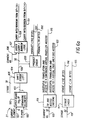
- FIG. 6a and b there is illustrated a block diagram for the prediction logic device 21 implemented to process a continuous algorithm and CurrentVirtADDR to LastVirtADDR comparison.
- the current element number and vector length (VLENGTH) are input over lines 101, 102, respectively to a device 100 for determining the remaining element count and the log2 of the remaining element count.
- the device 100 may comprise, for example, an adder to subtract the current element number from the VLENGTH to yield the remaining element count and a priority encoder to approximate the next higher log2 of the calculated remaining element count.
- a line 103 couples the device 100 to a shift stride left device 104 to input the log2 of the remaining element count to the shift stride left device 104.
- An input line 105 inputs the vector stride information to the shift stride left device 104 such that the shift stride left device 104 shifts the stride number to the left by the input log2 of the remaining element count.
- the result of the shift left operation is output on line 106 which is coupled to an input of each of an adder-carry/borrow logic device 107 and a product check device 200.
- a second input line 108 is also coupled to the adder-carry/borrow logic device 107 to input the virtual address of the current data element, CurrentVirtADDR.
- LastVirtADDR CurrentVirtADDR + (remaining elements * VSTRIDE).
- the left shifting of the vector stride (VSTRIDE) by log2 of the remaining element count executed by the shift stride left device 104 provides an approximation of the multiplication product (remaining element * VSTRIDE).
- the adder-carry/borrow logic device 107 thus adds the left shifted VSTRIDE on line 106 to the CurrentVirtADDR on line 108 to calculate a conservative approximation of the virtual address of the last data element, LastVirtADDR.
- Each virtual address comprises 32 bits wherein VA ⁇ 31:9> is the virtual page number and VA ⁇ 8:0> is the byte within the page.
- VA ⁇ 9> the virtual page number VA ⁇ 31:9> of the LastVirtADDR must be the same as the virtual page number VA ⁇ 31:9> of the CurrentVirtADDR when the product calculated by the shift left stride device 104 is represented in nine bits or less (i.e. the shift left stride is less than 512 bytes) which are added to VA ⁇ 8:0>.
- a carry into or borrow from VA ⁇ 9> signal is asserted on an output line 109 when the add operation causes a carry into or borrow from bit 9.
- the line 109 is coupled to an input of an inverter 110 such that the output line 111 of the inverter asserts a no carry into or borrow from bit 9 signal when the add operation does not cause a carry into or borrow from VA ⁇ 9>.
- the line 111 is coupled to an input of a 512 OK AND gate 113.
- the other inputs of the AND gate 113 are coupled to a Successful Translation and Access to 1 virtual page only line 123 and a stride shift left product ⁇ 512 byte line 201.
- the Successful Translation and Access to 1 virtual page only line 123 is coupled to one output of a TB and Access Check Device 119, which comprises the translation mechanism 15 and translation buffer 18 of Fig. 1.
- the current virtual address is input via a line 120 to the TB and Access Check Device 119 which asserts a signal on line 115 when there has been a successful translation of the current virtual address and the protection or access code comparison indicates that, for purposes of asserting an MMOK signal, only the page table entry for the current virtual address permits access to the physical page by the application program being executed by the computer system.
- the product check device 200 operates to check the shift left stride value and asserts a signal on line 201 when the shift left stride value is less than 512 bytes to indicate that the no carry into or borrow from VA ⁇ 9> signal on line 111 provides a certain signal regarding the virtual page identity between Current VirtADDR and Last VirtADDR.
- a 512 BYTE MMOK signal will be asserted on output line 124 of AND gate 113.
- the TB and Access Check Device 119 determines that there is a successful translation and that the access code comparison indicates that access is permitted to all four contiguous page table entries of the 2K byte segment, a signal is asserted on a Successful Translation and Access to 4 contiguous virtual pages line 115.
- the line 115 is coupled to an input of a 2KOK AND gate 114.
- the adder-carry/borrow logic device 107 also operates to assert a carry into or borrow from VA ⁇ 11> signal on an output line 151 when the add operation between the left shifted VSTRIDE and the CurrentVirtADDR causes a carry into or a borrow from VA ⁇ 11>.
- VA ⁇ 10:9> define the particular page table entry of the 2K byte segment relating to the virtual address, when there is neither a carry into or borrow from bit 11 during the add operation for LastVirtADDR, it becomes known for certain that the page table entry for the approximated LastVirtADDR is within the 2K byte segment when the product calculated by the shift left stride device 104 is represented in 12 bits or less (i.e.
- the line 151 is coupled to an inverter 152, the output 154 of which is coupled to the 2KOK AND gate 114.
- the output 154 provides a no carry to or borrow from bit 11 signal to the 2KOK AND gate 114 when the add operation does not cause either a carry to or borrow from bit 11.
- the product check device 200 asserts a signal on line 202 when the shift left stride value input on line 106 is less than 2K bytes.
- the line 202 is coupled to an input of the 2KOK AND gate 114. Similar to AND gate 113, if signals are asserted on each of lines 115, 154, and 202, a 2KOK signal will be asserted on output line 122 of the AND gate 114.
- Each of the output lines 122, 124 are coupled to respective inputs of an OR gate 210, the output of which comprises the MMOK line 22 (see also Fig.1).
- the TB and Access Check Device 119 will only assert a signal, if any, on one of the lines 115 and 123 at a time such that there will either be a 2KOK or 512 OK signal to the OR gate 210 at any one time.
- the 2KOK signal permits an even earlier assertion of an MMOK signal in those instances when the LastVirtADDR is not on the same page as CurrentVirtADDR but is within the 2K byte segment and full access to the segment is permitted.
- the vector processor 11 asserts a last element in vector signal on a line 250 when it has completed the translation of all of the virtual addresses for the data elements.
- the line 250 and the line 123 from the TB and Access Check Device 119 are each coupled to inputs of an AND gate 251, the output 252 of which is coupled to an input of the OR gate 210.
- the scalar processor 10 is alerted to a completion of the translation process at the successful completion of the translation of the virtual addresses for all the data elements in the event that an MMOK signal is not previously asserted via AND gates 113 and 114, as, e.g. when there is a memory management fault or translation buffer miss.
Landscapes
- Engineering & Computer Science (AREA)
- Theoretical Computer Science (AREA)
- Physics & Mathematics (AREA)
- General Engineering & Computer Science (AREA)
- General Physics & Mathematics (AREA)
- Memory System Of A Hierarchy Structure (AREA)
- Complex Calculations (AREA)
Claims (11)
- Vorhersagelogikvorrichtung (21) in einem Vektorprozessor (11), wobei der Vektorprozessor einen Übersetzungspufferspeicher (18) zum Übersetzen virtueller Adressen in physikalische Adressen enthält und in einer Master-Slave-Verbindung mit einem Skalarprozessor (10) arbeitet, wobei die Vorhersagelogikvorrichtung (21) folgendes aufweist:wobei die Vorhersagelogikvorrichtung (21) vorhersagt, ob während der Übersetzungen der virtuellen Adressen in physikalische Adressen im Übersetzungspufferspeicher (18) ein Speichermanagementfehler auftreten wird.eine Eingabevorrichtung (102, 105, 115, 118, 120, 123) zum Empfangen von Informationen bezüglich der Vektorlänge (102) und zur Vektorschrittweite (105, 118) eines bestimmten Vektors, zum seriellen Empfangen wenigstens eines Teils, beispielsweise der Bits 9-31, jeder einer Gruppe virtueller Adressen entsprechend einer geordneten Gruppe von Datenelementen des bestimmten Vektors, und weiterhin zum seriellen Empfangen von Informationen (115, 123) über Übersetzungspufferspeicher-Treffer und - Nichttreffer entsprechend den virtuellen Adressen der Gruppe virtueller Adressen, für die der Übersetzungspufferspeicher (18) eine Übersetzung in eine physikalische Adresse versucht hat, erzeugt durch und gesendet vom Übersetzungspufferspeicher (18);eine Berechnungsvorrichtung (100, 104), die mit der Eingabevorrichtung gekoppelt ist, wobei die Berechnungsvorrichtung (100, 104) virtuelle Adresseninformationen berechnet, die zu einem letzten Datenelement der geordneten Gruppe von Datenelementen gehören, und zwar basierend auf den zur Vektorlänge (102), zur Vektorschrittweite (105) und zu entweder einer ersten oder einer aktuellen der virtuellen Adresse (108) der Gruppe von seriell empfangenen virtuellen Adressen gehörenden Informationen;einen Komparator (107), der mit der Berechnungsvorrichtung (100, 104) gekoppelt ist, wobei der Komparator (107) der Reihe nach wenigstens einen Teils von jeder aktuellen der virtuellen Adressen der Gruppe von seriell empfangenen virtuellen Adressen mit den virtuellen Adresseninformationen bezüglich des letzten Datenelements (106) vergleicht; undeine MMOK-Signal-Ausgabevorrichtung (113, 114, 210), die mit dem Komparator (107) gekoppelt ist, wobei die MMOK-Signal-Ausgabevorrichtung (113, 114, 210) ein MMOK-Signal aktiviert, um eine Operation des Skalarprozessors (10) zuzulassen, wenn:(i) der Komparator (107) eine erste Übereinstimmung zwischen dem wenigstens einen Teil der aktuellen der virtuellen Adressen der Gruppe von seriell empfangenen virtuellen Adressen und der virtuellen Adresseninformationen bezüglich des letzten Datenelements (106) anzeigt; und(ii) die Informationen (115, 123) für einen Übersetzungspufferspeicher-Treffer und -Nichttreffer einen gültigen Übersetzungspufferspeicher-Treffer für die aktuelle der virtuellen Adressen der Gruppe virtueller Adressen anzeigt;
- Vorhersagelogikvorrichtung nach Anspruch 1, wobei die Berechnungsvorrichtung (100, 104) eine Vorrichtung (100) zum Bestimmen einer Approximation für eine obere Grenze der virtuellen Adresseninformationen bezüglich des letzten Datenelements enthält.
- Vorhersagelogikvorrichtung nach Anspruch 2, wobei die Vorrichtung so arbeitet, um den Logarithmus mit Basis 2 einer oberen Grenze entweder der Vektorlänge oder der Vektorschrittweite (103) zu bestimmen, um die andere der Vektorlänge oder der Vektorschrittweite um den Logarithmus mit Basis 2 für eine obere Grenze nach links zu verschieben und um die erste der virtuellen Adressen der Gruppe von seriell empfangenen virtuellen Adressen zu der nach links verschobenen anderen der Vektorlänge oder der Vektorschrittweite zu addieren, um die Approximation für eine obere Grenze der virtuellen Adresseninformation bezüglich des letzten Datenelements (106) zu berechnen.
- Vorhersagelogikvorrichtung nach Anspruch 1, wobei die Berechnungsvorrichtung (100, 104) eine erste Vorrichtung (100) zum Bestimmen, der Reihe nach, des Logarithmus mit Basis 2 für eine obere Grenze von entweder einer Zahl für ein übriges Element oder für die Vektorschrittweite für jedes Datenelement der geordneten Gruppe von Datenelementen enthält, und eine zweite Vorrichtung (104) zum Verschieben nach links der anderen von der Zahl für ein übriges Element oder für die Vektorschrittweite um den durch die erste Vorrichtung (100) bestimmten Logarithmus mit Basis 2 für eine obere Grenze für jedes Datenelement der geordneten Gruppe von Datenelementen, in Aufeinanderfolge zur ersten Vorrichtung.
- Vorhersagelogikvorrichtung nach Anspruch 4, wobei die Berechnungsvorrichtung (100, 104) einen Addierer enthält zum seriellen Addieren jeder aktuellen der virtuellen Adresse der Gruppe von seriell empfangenen virtuellen Adressen, in Aufeinanderfolge zur zweiten Vorrichtung, zu einer Ausgabe der zweiten Vorrichtung (104), um die virtuellen Adresseninformationen bezüglich des letzten Datenelements für jedes Datenelement der geordneten Gruppe von Datenelementen (106) entsprechend der aktuellen der virtuellen Adressen der Gruppe von seriell empfangenen virtuellen Adressen zu berechnen.
- Vorhersagelogikvorrichtung nach Anspruch 1, wobei:die Berechnungsvorrichtung (100, 104) eine erste Vorrichtung zum kontinuierlichen und seriellen Bestimmen einer Zahl für ein übriges Element für jedes der geordneten Gruppe von Datenelementen enthält, eine zweite Vorrichtung (100) zum Bestimmen des Logarithmus mit Basis 2 für eine obere Grenze für die Zahl für ein übriges Element für jedes der geordneten Gruppe von Datenelementen, und eine dritte Vorrichtung (104) zum Verschieben der Vektorschrittweite um den Logarithmus mit Basis 2 für eine obere Grenze für die Zahl für ein übriges Element für jedes der geordneten Gruppe von Datenelementen nach links; unddie Berechnungsvorrichtung (100, 104) weiterhin folgendes enthält: einen Addierer (107) zum Addieren, der Reihe nach, jeder der aktuellen der virtuellen Adressen der Gruppe von seriell empfangenen virtuellen Adressen zur Vektorschrittweite, die durch die dritte Vorrichtung (104) um den Logarithmus mit Basis 2 für die Zahl für das übrige Element für ein Datenelement der geordneten Gruppe von Datenelementen entsprechend der aktuellen der virtuellen Adressen nach links verschoben ist, um die virtuellen Adresseninformationen bezüglich des letzten Datenelements der geordneten Gruppe von Datenelementen (106) für jedes der geordneten Gruppe von Datenelementen kontinuierlich und seriell zu berechnen.
- Vorhersagelogikvorrichtung nach Anspruch 6, wobei:der Komparator eine Borgen/Übertrags-Logikvorrichtung (107) enthält, die bestimmt, ob es keinen Übertrag zu und kein Borgen von wenigstens einem zuvor ausgewählten Bit, beispielsweise eines der Bits 9 und 11, von jeder aktuellen der virtuellen Adressen der Gruppe von seriell empfangenen virtuellen Adressen gibt, wenn jede aktuelle der virtuellen Adressen zu der nach links verschobenen Vektorschrittweite addiert wird, um die erste Übereinstimmung zwischen dem wenigstens einen Teil der aktuellen der virtuellen Adressen der Gruppe von seriell empfangenen virtuellen Adressen und der virtuellen Adresseninformationen bezüglich des letzten Datenelements zu bestimmen, und um ein Kein-Übertrag-ln-oder-Borgen-Aus-Signal für jedes kein Übertragen zu und kein Borgen aus dem wenigstens einem zuvor ausgewählten Bit jeder aktuellen der virtuellen Adressen der Gruppe von seriell empfangenen virtuellen Adressen zu aktivieren;eine Produktprüfvorrichtung (200) mit der dritten Vorrichtung (104) gekoppelt ist, wobei die Produktprüfvorrichtung bestimmt, ob die durch die dritte Vorrichtung (104) nach links verschobene Vektorschrittweite für jede aktuelle der virtuellen Adressen der Gruppe von seriell empfangenen virtuellen Adressen kleiner als wenigstens ein zuvor ausgewählter Wert ist, und ein Ausgangssignal für wenigstens den einen zuvor ausgewählten Wert aktiviert, wenn die durch die dritte Vorrichtung (104) nach links verschobene Vektorschrittweite für jede aktuelle der virtuellen Adressen der Gruppe von seriell empfangenen virtuellen Adressen kleiner als der wenigstens eine zuvor ausgewählte Wert ist;wobei der Übersetzungspufferspeicher (18) die jeweils aktuelle der virtuellen Adressen der Gruppe von seriell empfangenen virtuellen Adressen seriell übersetzt und ein Zugriffsprüfsignal für jede gültige Übersetzung gemäß einer jeweiligen von wenigstens einer vorbestimmten Zugriffscodeprüfung für die Gruppe von seriell empfangenen virtuellen Adressen seriell aktiviert;die MMOK-Signal-Ausgabevorrichtung (113, 114, 210) wenigstens ein UND-Gatter (113, 114) aufweist, wobei jedes der vorausgewählten Bits einschließlich wenigstens das eine vorausgewählte Bit der jeweils aktuellen der virtuellen Adresse einem jeweiligen der vorausgewählten Werte einschließlich des einen vorausgewählten Wertes entspricht und auch wenigstens einer vorbestimmten Zugriffscodeprüfung entspricht, die aktivierten Signale für das wenigstens eine vorausgewählte Bit dem wenigstens einen zuvor ausgewählten Wert entspricht und der wenigstens einen vorbestimmten Zugriffscodeprüfung entspricht, wobei alle mit jeweiligen Eingängen jedes der UND-Gatter (113, 114) einschließlich des wenigstens einen UND-Gatters gekoppelt sind; undder Ausgang jedes des wenigstens einen UND-Gatters (113, 114) so arbeitet, um das MMOK-Signal zu aktivieren, wenn auf alle Eingangssignale zu einem jeweiligen der UND-Gatter (113, 114) einschließlich des wenigstens einen UND-Gatters gleichzeitig zugegriffen wird.
- Computersystem, das folgendes aufweist:einen Skalarprozessor (10);einen Vektorprozessor (11), der in einer Master-Slave-Beziehung mit dem Skalarprozessor (10) gekoppelt ist;wobei der Skalarprozessor (10) so arbeitet, um Vektorbefehle zum Vektorprozessor (11) auszugeben, wobei jeder der Vektorbefehle Information über einen Vektor einschließlich einer Vektorlänge, einer Vektorschrittweite und einer Gruppe von virtuellen Adressen entsprechend einer geordneten Gruppe von Datenelementen des Vektors enthält;einen Übersetzungspufferspeicher (18) zum darauffolgenden Übersetzen jeder der Gruppe von virtuellen Adressen in eine entsprechende physikalische Adresse; unddie Vorhersagelogikvorrichtung (21) gemäß Anspruch 1, die jeweils mit dem Skalarprozessor (10), dem Vektorprozessor (11) und dem Übersetzungspufferspeicher (18) gekoppelt ist, wobei die Eingabevorrichtung wenigstens einen Teil, beispielsweise Bits 9-31, von jeder der Gruppe von virtuellen Adressen entsprechend geordneten Gruppen von Datenelementen des bestimmten Vektors entweder aus dem Skalarprozessor (10) oder dem Vektorprozessor (11) seriell empfängt, und weiterhin Informationen (115, 118) über einen Übersetzungspufferspeicher-Treffer und -Nichttreffer entsprechend der Gruppe von virtuellen Adressen vom Übersetzungspufferspeicher (18) seriell empfängt, undwobei der MMOK-Signalausgang weiterhin mit dem Skalarprozessor (10) gekoppelt (22) ist.
- Verfahren zum Betreiben einer Vorhersagelogikvorrichtung (21) eines Vektorprozessors (11) in einer Master-Slave-Beziehung zu einem Skalarprozessor (10), wobei das Verfahren folgende Schritte aufweist:Betreiben des Skalarprozessors (10) zum Ausgeben eines ersten Vektorbefehls in bezug auf einen bestimmten Vektor zum Vektorprozessor (11);Empfangen, in einer Eingabevorrichtung (102, 105, 115, 118, 120, 123), der Vorhersagelogikvorrichtungsinformationen bezüglich der Vektorlänge (102) und der Vektorschrittweite (105, 108) eines bestimmten Vektors, wobei der Empfangsschritt ein serielles Empfangen wenigstens eines Teils, beispielsweise der Bits 9-31, jeder einer Gruppe von virtuellen Adressen entsprechend einer geordneten Gruppe von Datenelementen des bestimmten Vektors enthält;Berechnen von virtuellen Adresseninformationen bezüglich eines letzten Datenelements (106) der geordneten Gruppe von Datenelementen des bestimmten Vektors, basierend auf den zur Eingabevorrichtung gelieferten Informationen in Bezug auf die Vektorlänge (102), die Vektorschrittweite (105) und eine einer ersten und einer aktuellen der virtuellen Adressen (108) der Gruppe von seriell empfangenen virtuellen Adressen;darauffolgendes Übersetzen virtueller Adressen in physikalische Adressen;darauffolgendes Vergleichen (107) des wenigstens einen Teils jeder aktuellen der virtuellen Adresse der Gruppe von seriell empfangenen virtuellen Adressen mit den virtuellen Adresseninformationen bezüglich des letzten Datenelements (106);Erzeugen (119) von Informationen (115, 123) über einen Übersetzungspufferspeicher-Treffer und -Nichttreffer für jede der virtuellen Adressen (120);Aktivieren (219, 113, 114) eines MMOK-Signals (22, 122, 124) zum Skalarprozessor (10), wenn:(i) der Vergleichsschritt eine erste Übereinstimmung zwischen dem wenigstens einen Teil der aktuellen der virtuellen Adressen und der virtuellen Adresseninformationen bezüglich des letzten Datenelements (111, 154) anzeigt; und(ii) der Erzeugungsschritt Informationen (115, 123) über einen Übersetzungspufferspeicher-Treffer und -Nichttreffer liefert, die einen gültigen Übersetzungspufferspeicher-Treffer für die aktuelle der virtuellen Adressen der Gruppe von virtuellen Adressen anzeigt; undBetreiben des Skalarprozessors (10) auf die Aktivierung des MMOK-Signals (22) hin zum Weiterführen einer Befehlsausgabe.
- Verfahren nach Anspruch 9, wobei der Schritt zum Berechnen folgende Schritte aufweist:ein erstes Berechnen (100) eines Logarithmus mit Basis 2 für eine obere Grenze entweder einer Zahl für ein übriges Element oder einer Vektorschrittweite für ein aktuelles Datenelement der geordneten Gruppe von Datenelementen des bestimmten Vektors, wobei das aktuelle Datenelement der aktuellen der virtuellen Adressen der seriell empfangenen virtuellen Adressen entspricht;darauffolgendes Verschieben (104) der anderen der Zahl für das übrige Element oder der Vektorschrittweite für das aktuelle Datenelement der geordneten Gruppe von Datenelementen um den Logarithmus mit Basis 2 für eine obere Grenze für das aktuelle Datenelement der geordneten Gruppe von Datenelementen nach links; unddarauffolgendes Addieren (107) der aktuellen der virtuellen Adressen der Gruppe von seriell empfangenen virtuellen Adressen entsprechend dem aktuellen Datenelement, um die virtuellen Adresseninformationen bezüglich des letzten Datenelements für das aktuelle Datenelement der geordneten Gruppe von Datenelementen zu berechnen.
- Verfahren nach Anspruch 10, wobei der Schritt zum Vergleichen den Schritt zum Überwachen wenigstens eines zuvor ausgewählten Bits, beispielsweise entweder das Bit 9 oder das Bit 11, der aktuellen der virtuellen Adressen der Gruppe von seriell empfangenen virtuellen Adressen während des Addierschritts des Anspruchs 10 aufweist, um keinen Übertrag in und kein Borgen aus dem wenigstens einen zuvor ausgewählten Bit der aktuellen der virtuellen Adressen der Gruppe von seriell empfangenen virtuellen Adressen zu bestimmen.
Applications Claiming Priority (2)
| Application Number | Priority Date | Filing Date | Title |
|---|---|---|---|
| US07/224,443 US5179674A (en) | 1988-07-25 | 1988-07-25 | Method and apparatus for predicting valid performance of virtual-address to physical-address translations |
| US224443 | 1988-07-25 |
Publications (3)
| Publication Number | Publication Date |
|---|---|
| EP0352632A2 EP0352632A2 (de) | 1990-01-31 |
| EP0352632A3 EP0352632A3 (de) | 1990-10-24 |
| EP0352632B1 true EP0352632B1 (de) | 1998-01-07 |
Family
ID=22840705
Family Applications (1)
| Application Number | Title | Priority Date | Filing Date |
|---|---|---|---|
| EP89113323A Expired - Lifetime EP0352632B1 (de) | 1988-07-25 | 1989-07-20 | Verfahren und Vorrichtung zur Vorhersage der richtigen Durchführung der Übersetzungen von virtuellen in physikalische Adressen |
Country Status (6)
| Country | Link |
|---|---|
| US (2) | US5179674A (de) |
| EP (1) | EP0352632B1 (de) |
| JP (1) | JPH0240744A (de) |
| KR (1) | KR930002328B1 (de) |
| CA (1) | CA1313269C (de) |
| DE (1) | DE68928519T2 (de) |
Families Citing this family (31)
| Publication number | Priority date | Publication date | Assignee | Title |
|---|---|---|---|---|
| JP2503702B2 (ja) * | 1989-12-19 | 1996-06-05 | 日本電気株式会社 | アドレス変換装置 |
| CA2045789A1 (en) * | 1990-06-29 | 1991-12-30 | Richard Lee Sites | Granularity hint for translation buffer in high performance processor |
| US5530881A (en) * | 1991-06-06 | 1996-06-25 | Hitachi, Ltd. | Vector processing apparatus for processing different instruction set architectures corresponding to mingled-type programs and separate-type programs |
| US5333291A (en) * | 1991-06-14 | 1994-07-26 | International Business Machines Corporation | Stride enhancer for high speed memory accesses with line fetching mode and normal mode employing boundary crossing determination |
| US5437043A (en) * | 1991-11-20 | 1995-07-25 | Hitachi, Ltd. | Information processing apparatus having a register file used interchangeably both as scalar registers of register windows and as vector registers |
| US5392410A (en) * | 1992-04-30 | 1995-02-21 | International Business Machines Corporation | History table for prediction of virtual address translation for cache access |
| US5729723A (en) * | 1992-11-16 | 1998-03-17 | Hitachi, Ltd. | Data processing unit |
| JP2725546B2 (ja) * | 1992-12-07 | 1998-03-11 | 株式会社日立製作所 | デ−タ処理装置 |
| JP3304444B2 (ja) * | 1992-11-30 | 2002-07-22 | 富士通株式会社 | ベクトル処理装置 |
| US5606683A (en) * | 1994-01-28 | 1997-02-25 | Quantum Effect Design, Inc. | Structure and method for virtual-to-physical address translation in a translation lookaside buffer |
| US5890222A (en) * | 1995-01-04 | 1999-03-30 | International Business Machines Corporation | Method and system for addressing registers in a data processing unit in an indirect addressing mode |
| US5680338A (en) * | 1995-01-04 | 1997-10-21 | International Business Machines Corporation | Method and system for vector processing utilizing selected vector elements |
| US5887183A (en) * | 1995-01-04 | 1999-03-23 | International Business Machines Corporation | Method and system in a data processing system for loading and storing vectors in a plurality of modes |
| US5832533A (en) * | 1995-01-04 | 1998-11-03 | International Business Machines Corporation | Method and system for addressing registers in a data processing unit in an indexed addressing mode |
| US5752275A (en) * | 1995-03-31 | 1998-05-12 | Intel Corporation | Translation look-aside buffer including a single page size translation unit |
| US5918250A (en) * | 1995-05-05 | 1999-06-29 | Intel Corporation | Method and apparatus for preloading default address translation attributes |
| US5893930A (en) * | 1996-07-12 | 1999-04-13 | International Business Machines Corporation | Predictive translation of a data address utilizing sets of associative entries stored consecutively in a translation lookaside buffer |
| US5918251A (en) * | 1996-12-23 | 1999-06-29 | Intel Corporation | Method and apparatus for preloading different default address translation attributes |
| US6138225A (en) * | 1997-12-24 | 2000-10-24 | Intel Corporation | Address translation system having first and second translation look aside buffers |
| US6141745A (en) * | 1998-04-30 | 2000-10-31 | Advanced Micro Devices, Inc. | Functional bit identifying a prefix byte via a particular state regardless of type of instruction |
| US6175908B1 (en) | 1998-04-30 | 2001-01-16 | Advanced Micro Devices, Inc. | Variable byte-length instructions using state of function bit of second byte of plurality of instructions bytes as indicative of whether first byte is a prefix byte |
| US6189094B1 (en) * | 1998-05-27 | 2001-02-13 | Arm Limited | Recirculating register file |
| GB2339037B (en) * | 1998-07-03 | 2002-11-20 | Advanced Risc Mach Ltd | Memory address translation in a data processing system |
| US6266759B1 (en) * | 1998-12-14 | 2001-07-24 | Cray, Inc. | Register scoreboarding to support overlapped execution of vector memory reference instructions in a vector processor |
| US6513107B1 (en) | 1999-08-17 | 2003-01-28 | Nec Electronics, Inc. | Vector transfer system generating address error exception when vector to be transferred does not start and end on same memory page |
| US6813701B1 (en) * | 1999-08-17 | 2004-11-02 | Nec Electronics America, Inc. | Method and apparatus for transferring vector data between memory and a register file |
| US6665749B1 (en) * | 1999-08-17 | 2003-12-16 | Nec Electronics, Inc. | Bus protocol for efficiently transferring vector data |
| US6625720B1 (en) * | 1999-08-17 | 2003-09-23 | Nec Electronics, Inc. | System for posting vector synchronization instructions to vector instruction queue to separate vector instructions from different application programs |
| US9311094B2 (en) * | 2011-01-21 | 2016-04-12 | Apple Inc. | Predicting a pattern in addresses for a memory-accessing instruction when processing vector instructions |
| EP2757468A1 (de) * | 2013-01-22 | 2014-07-23 | Siemens Aktiengesellschaft | Vorrichtung und Verfahren zur Verwaltung eines Softwareentwicklungs- und -wartungssystems |
| CN108334291B (zh) * | 2018-03-07 | 2021-05-18 | 成都创信特电子技术有限公司 | 建立移动终端可信环境的方法 |
Family Cites Families (15)
| Publication number | Priority date | Publication date | Assignee | Title |
|---|---|---|---|---|
| CA1059639A (en) * | 1975-03-26 | 1979-07-31 | Garvin W. Patterson | Instruction look ahead having prefetch concurrency and pipe line features |
| US4541046A (en) * | 1981-03-25 | 1985-09-10 | Hitachi, Ltd. | Data processing system including scalar data processor and vector data processor |
| US4462074A (en) * | 1981-11-19 | 1984-07-24 | Codex Corporation | Do loop circuit |
| US4463422A (en) * | 1982-07-12 | 1984-07-31 | Csp, Inc. | Method of processing an iterative program loop |
| JPS60156151A (ja) * | 1983-12-23 | 1985-08-16 | Nec Corp | メモリアクセス制御装置 |
| FR2561429B1 (fr) * | 1984-03-13 | 1986-09-19 | Trt Telecom Radio Electr | Dispositif d'adressage pour fournir a une memoire des codes d'adresse |
| US4620275A (en) * | 1984-06-20 | 1986-10-28 | Wallach Steven J | Computer system |
| US4727483A (en) * | 1984-08-15 | 1988-02-23 | Tektronix, Inc. | Loop control system for digital processing apparatus |
| JPH0652511B2 (ja) * | 1984-12-14 | 1994-07-06 | 株式会社日立製作所 | 情報処理装置のアドレス変換方式 |
| JPH0656594B2 (ja) * | 1985-05-07 | 1994-07-27 | 株式会社日立製作所 | ベクトルプロセツサ |
| JPH0622035B2 (ja) * | 1985-11-13 | 1994-03-23 | 株式会社日立製作所 | ベクトル処理装置 |
| US4811215A (en) * | 1986-12-12 | 1989-03-07 | Intergraph Corporation | Instruction execution accelerator for a pipelined digital machine with virtual memory |
| JPS63180171A (ja) * | 1987-01-21 | 1988-07-25 | Fujitsu Ltd | 情報処理装置 |
| US4926317A (en) * | 1987-07-24 | 1990-05-15 | Convex Computer Corporation | Hierarchical memory system with logical cache, physical cache, and address translation unit for generating a sequence of physical addresses |
| US5179709A (en) * | 1989-01-13 | 1993-01-12 | International Business Machines Corporation | Look ahead bus transfer request |
-
1988
- 1988-07-25 US US07/224,443 patent/US5179674A/en not_active Expired - Lifetime
-
1989
- 1989-05-10 CA CA000599270A patent/CA1313269C/en not_active Expired - Fee Related
- 1989-05-15 JP JP1121298A patent/JPH0240744A/ja active Pending
- 1989-07-20 DE DE68928519T patent/DE68928519T2/de not_active Expired - Fee Related
- 1989-07-20 EP EP89113323A patent/EP0352632B1/de not_active Expired - Lifetime
- 1989-07-25 KR KR1019890010501A patent/KR930002328B1/ko not_active Expired - Fee Related
-
1992
- 1992-09-10 US US07/943,165 patent/US5319791A/en not_active Expired - Lifetime
Also Published As
| Publication number | Publication date |
|---|---|
| KR930002328B1 (ko) | 1993-03-29 |
| EP0352632A3 (de) | 1990-10-24 |
| DE68928519D1 (de) | 1998-02-12 |
| DE68928519T2 (de) | 1998-08-27 |
| US5319791A (en) | 1994-06-07 |
| US5179674A (en) | 1993-01-12 |
| EP0352632A2 (de) | 1990-01-31 |
| KR900002187A (ko) | 1990-02-28 |
| CA1313269C (en) | 1993-01-26 |
| JPH0240744A (ja) | 1990-02-09 |
Similar Documents
| Publication | Publication Date | Title |
|---|---|---|
| EP0352632B1 (de) | Verfahren und Vorrichtung zur Vorhersage der richtigen Durchführung der Übersetzungen von virtuellen in physikalische Adressen | |
| US4811215A (en) | Instruction execution accelerator for a pipelined digital machine with virtual memory | |
| US6067616A (en) | Branch prediction device with two levels of branch prediction cache | |
| EP0175091B1 (de) | Schnelles, zweistufiges, dynamisches Adressumsetzungsverfahren und dessen Geräte | |
| US4156906A (en) | Buffer store including control apparatus which facilitates the concurrent processing of a plurality of commands | |
| US4875160A (en) | Method for implementing synchronous pipeline exception recovery | |
| US5291586A (en) | Hardware implementation of complex data transfer instructions | |
| US4701844A (en) | Dual cache for independent prefetch and execution units | |
| EP0021399B1 (de) | Verfahren und Maschine für Mehrfachbefehlsausführung | |
| KR100308677B1 (ko) | 복수l1캐쉬라인의파이프라인형스누핑 | |
| US5511175A (en) | Method an apparatus for store-into-instruction-stream detection and maintaining branch prediction cache consistency | |
| US4648034A (en) | Busy signal interface between master and slave processors in a computer system | |
| US4179736A (en) | Microprogrammed computer control unit capable of efficiently executing a large repertoire of instructions for a high performance data processing unit | |
| US4161026A (en) | Hardware controlled transfers to microprogram control apparatus and return via microinstruction restart codes | |
| KR100308682B1 (ko) | 다중방향연관외부마이크로프로세서캐쉬 | |
| EP0394624B1 (de) | Mehrfachsequenzprozessorsystem | |
| EP0374419A2 (de) | Verfahren und Anordnung zur wirkungsvollen Errichtung von Schleifen in Hardware und Mikrokodierung | |
| JPS6323586B2 (de) | ||
| US5119484A (en) | Selections between alternate control word and current instruction generated control word for alu in respond to alu output and current instruction | |
| US5031096A (en) | Method and apparatus for compressing the execution time of an instruction stream executing in a pipelined processor | |
| US4149245A (en) | High speed store request processing control | |
| EP0196970B1 (de) | Pufferspeichersteuerungsanordnung | |
| US5276892A (en) | Destination control logic for arithmetic and logic unit for digital data processor | |
| US5970512A (en) | Translation shadow array adder-decoder circuit for selecting consecutive TLB entries | |
| GB2051436A (en) | Data processing system |
Legal Events
| Date | Code | Title | Description |
|---|---|---|---|
| PUAI | Public reference made under article 153(3) epc to a published international application that has entered the european phase |
Free format text: ORIGINAL CODE: 0009012 |
|
| 17P | Request for examination filed |
Effective date: 19890821 |
|
| AK | Designated contracting states |
Kind code of ref document: A2 Designated state(s): DE GB IT |
|
| PUAL | Search report despatched |
Free format text: ORIGINAL CODE: 0009013 |
|
| AK | Designated contracting states |
Kind code of ref document: A3 Designated state(s): DE GB IT |
|
| 17Q | First examination report despatched |
Effective date: 19931215 |
|
| GRAG | Despatch of communication of intention to grant |
Free format text: ORIGINAL CODE: EPIDOS AGRA |
|
| GRAG | Despatch of communication of intention to grant |
Free format text: ORIGINAL CODE: EPIDOS AGRA |
|
| GRAH | Despatch of communication of intention to grant a patent |
Free format text: ORIGINAL CODE: EPIDOS IGRA |
|
| GRAH | Despatch of communication of intention to grant a patent |
Free format text: ORIGINAL CODE: EPIDOS IGRA |
|
| GRAA | (expected) grant |
Free format text: ORIGINAL CODE: 0009210 |
|
| AK | Designated contracting states |
Kind code of ref document: B1 Designated state(s): DE GB IT |
|
| REF | Corresponds to: |
Ref document number: 68928519 Country of ref document: DE Date of ref document: 19980212 |
|
| ITF | It: translation for a ep patent filed | ||
| PLBE | No opposition filed within time limit |
Free format text: ORIGINAL CODE: 0009261 |
|
| STAA | Information on the status of an ep patent application or granted ep patent |
Free format text: STATUS: NO OPPOSITION FILED WITHIN TIME LIMIT |
|
| 26N | No opposition filed | ||
| PGFP | Annual fee paid to national office [announced via postgrant information from national office to epo] |
Ref country code: GB Payment date: 19991015 Year of fee payment: 11 |
|
| PGFP | Annual fee paid to national office [announced via postgrant information from national office to epo] |
Ref country code: DE Payment date: 19991022 Year of fee payment: 11 |
|
| REG | Reference to a national code |
Ref country code: GB Ref legal event code: 732E |
|
| PG25 | Lapsed in a contracting state [announced via postgrant information from national office to epo] |
Ref country code: GB Free format text: LAPSE BECAUSE OF NON-PAYMENT OF DUE FEES Effective date: 20000720 |
|
| GBPC | Gb: european patent ceased through non-payment of renewal fee |
Effective date: 20000720 |
|
| PG25 | Lapsed in a contracting state [announced via postgrant information from national office to epo] |
Ref country code: DE Free format text: LAPSE BECAUSE OF NON-PAYMENT OF DUE FEES Effective date: 20010501 |
|
| PGFP | Annual fee paid to national office [announced via postgrant information from national office to epo] |
Ref country code: IT Payment date: 20080728 Year of fee payment: 20 |