EP0352925B1 - Electrodes enzymatiques et leur fabrication - Google Patents
Electrodes enzymatiques et leur fabrication Download PDFInfo
- Publication number
- EP0352925B1 EP0352925B1 EP89306923A EP89306923A EP0352925B1 EP 0352925 B1 EP0352925 B1 EP 0352925B1 EP 89306923 A EP89306923 A EP 89306923A EP 89306923 A EP89306923 A EP 89306923A EP 0352925 B1 EP0352925 B1 EP 0352925B1
- Authority
- EP
- European Patent Office
- Prior art keywords
- enzyme
- platinum group
- group metal
- finely divided
- particles
- Prior art date
- Legal status (The legal status is an assumption and is not a legal conclusion. Google has not performed a legal analysis and makes no representation as to the accuracy of the status listed.)
- Expired - Lifetime
Links
- 102000004190 Enzymes Human genes 0.000 title claims description 180
- 108090000790 Enzymes Proteins 0.000 title claims description 180
- 238000004519 manufacturing process Methods 0.000 title claims description 12
- 229940088598 enzyme Drugs 0.000 claims description 179
- OKTJSMMVPCPJKN-UHFFFAOYSA-N Carbon Chemical compound [C] OKTJSMMVPCPJKN-UHFFFAOYSA-N 0.000 claims description 136
- BASFCYQUMIYNBI-UHFFFAOYSA-N platinum Chemical group [Pt] BASFCYQUMIYNBI-UHFFFAOYSA-N 0.000 claims description 97
- 239000002245 particle Substances 0.000 claims description 73
- 229910052799 carbon Inorganic materials 0.000 claims description 66
- 239000011230 binding agent Substances 0.000 claims description 60
- 229910052751 metal Inorganic materials 0.000 claims description 53
- 239000002184 metal Substances 0.000 claims description 53
- 239000010410 layer Substances 0.000 claims description 50
- 229910002804 graphite Inorganic materials 0.000 claims description 49
- 239000010439 graphite Substances 0.000 claims description 49
- 238000000034 method Methods 0.000 claims description 43
- 239000000758 substrate Substances 0.000 claims description 38
- 239000000725 suspension Substances 0.000 claims description 32
- 229910044991 metal oxide Inorganic materials 0.000 claims description 25
- 108010015776 Glucose oxidase Proteins 0.000 claims description 24
- 239000004366 Glucose oxidase Substances 0.000 claims description 23
- 229940116332 glucose oxidase Drugs 0.000 claims description 23
- 235000019420 glucose oxidase Nutrition 0.000 claims description 23
- 229930027945 nicotinamide-adenine dinucleotide Natural products 0.000 claims description 21
- 229910052697 platinum Inorganic materials 0.000 claims description 20
- -1 platinum group metal oxide Chemical class 0.000 claims description 19
- XJLXINKUBYWONI-DQQFMEOOSA-N [[(2r,3r,4r,5r)-5-(6-aminopurin-9-yl)-3-hydroxy-4-phosphonooxyoxolan-2-yl]methoxy-hydroxyphosphoryl] [(2s,3r,4s,5s)-5-(3-carbamoylpyridin-1-ium-1-yl)-3,4-dihydroxyoxolan-2-yl]methyl phosphate Chemical compound NC(=O)C1=CC=C[N+]([C@@H]2[C@H]([C@@H](O)[C@H](COP([O-])(=O)OP(O)(=O)OC[C@@H]3[C@H]([C@@H](OP(O)(O)=O)[C@@H](O3)N3C4=NC=NC(N)=C4N=C3)O)O2)O)=C1 XJLXINKUBYWONI-DQQFMEOOSA-N 0.000 claims description 18
- 239000000463 material Substances 0.000 claims description 17
- 150000004706 metal oxides Chemical class 0.000 claims description 14
- 239000000203 mixture Substances 0.000 claims description 14
- 230000001427 coherent effect Effects 0.000 claims description 13
- 239000002609 medium Substances 0.000 claims description 12
- BOPGDPNILDQYTO-NNYOXOHSSA-N nicotinamide-adenine dinucleotide Chemical compound C1=CCC(C(=O)N)=CN1[C@H]1[C@H](O)[C@H](O)[C@@H](COP(O)(=O)OP(O)(=O)OC[C@@H]2[C@H]([C@@H](O)[C@@H](O2)N2C3=NC=NC(N)=C3N=C2)O)O1 BOPGDPNILDQYTO-NNYOXOHSSA-N 0.000 claims description 11
- 108010010803 Gelatin Proteins 0.000 claims description 10
- 230000009849 deactivation Effects 0.000 claims description 10
- 229920000159 gelatin Polymers 0.000 claims description 10
- 239000008273 gelatin Substances 0.000 claims description 10
- 235000019322 gelatine Nutrition 0.000 claims description 10
- 235000011852 gelatine desserts Nutrition 0.000 claims description 10
- 239000006194 liquid suspension Substances 0.000 claims description 10
- 229920000663 Hydroxyethyl cellulose Polymers 0.000 claims description 9
- 238000000151 deposition Methods 0.000 claims description 9
- 239000004354 Hydroxyethyl cellulose Substances 0.000 claims description 8
- BAWFJGJZGIEFAR-NNYOXOHSSA-N NAD zwitterion Chemical compound NC(=O)C1=CC=C[N+]([C@H]2[C@@H]([C@H](O)[C@@H](COP([O-])(=O)OP(O)(=O)OC[C@@H]3[C@H]([C@@H](O)[C@@H](O3)N3C4=NC=NC(N)=C4N=C3)O)O2)O)=C1 BAWFJGJZGIEFAR-NNYOXOHSSA-N 0.000 claims description 8
- 238000001035 drying Methods 0.000 claims description 8
- 235000019447 hydroxyethyl cellulose Nutrition 0.000 claims description 8
- 230000000694 effects Effects 0.000 claims description 7
- 229910052703 rhodium Inorganic materials 0.000 claims description 7
- 239000010948 rhodium Substances 0.000 claims description 7
- MHOVAHRLVXNVSD-UHFFFAOYSA-N rhodium atom Chemical compound [Rh] MHOVAHRLVXNVSD-UHFFFAOYSA-N 0.000 claims description 7
- 238000007650 screen-printing Methods 0.000 claims description 7
- 239000010409 thin film Substances 0.000 claims description 6
- 108010089254 Cholesterol oxidase Proteins 0.000 claims description 5
- 108010073450 Lactate 2-monooxygenase Proteins 0.000 claims description 4
- 239000012736 aqueous medium Substances 0.000 claims description 3
- 239000010408 film Substances 0.000 claims description 3
- 239000008240 homogeneous mixture Substances 0.000 claims description 3
- 239000002344 surface layer Substances 0.000 claims description 3
- 239000003232 water-soluble binding agent Substances 0.000 claims description 2
- 239000002195 soluble material Substances 0.000 claims 2
- 230000004913 activation Effects 0.000 claims 1
- 230000008021 deposition Effects 0.000 claims 1
- 238000010348 incorporation Methods 0.000 claims 1
- 239000002923 metal particle Substances 0.000 claims 1
- WQZGKKKJIJFFOK-GASJEMHNSA-N Glucose Natural products OC[C@H]1OC(O)[C@H](O)[C@@H](O)[C@@H]1O WQZGKKKJIJFFOK-GASJEMHNSA-N 0.000 description 25
- 239000008103 glucose Substances 0.000 description 25
- 230000004044 response Effects 0.000 description 25
- 239000007772 electrode material Substances 0.000 description 17
- FAPWRFPIFSIZLT-UHFFFAOYSA-M Sodium chloride Chemical compound [Na+].[Cl-] FAPWRFPIFSIZLT-UHFFFAOYSA-M 0.000 description 10
- HVYWMOMLDIMFJA-DPAQBDIFSA-N cholesterol Chemical compound C1C=C2C[C@@H](O)CC[C@]2(C)[C@@H]2[C@@H]1[C@@H]1CC[C@H]([C@H](C)CCCC(C)C)[C@@]1(C)CC2 HVYWMOMLDIMFJA-DPAQBDIFSA-N 0.000 description 10
- JHIVVAPYMSGYDF-UHFFFAOYSA-N cyclohexanone Chemical compound O=C1CCCCC1 JHIVVAPYMSGYDF-UHFFFAOYSA-N 0.000 description 10
- 239000000243 solution Substances 0.000 description 10
- YMWUJEATGCHHMB-UHFFFAOYSA-N Dichloromethane Chemical compound ClCCl YMWUJEATGCHHMB-UHFFFAOYSA-N 0.000 description 9
- 229910021607 Silver chloride Inorganic materials 0.000 description 8
- 229920005989 resin Polymers 0.000 description 8
- 239000011347 resin Substances 0.000 description 8
- HKZLPVFGJNLROG-UHFFFAOYSA-M silver monochloride Chemical compound [Cl-].[Ag+] HKZLPVFGJNLROG-UHFFFAOYSA-M 0.000 description 8
- 229920001343 polytetrafluoroethylene Polymers 0.000 description 7
- 239000004810 polytetrafluoroethylene Substances 0.000 description 7
- NBVXSUQYWXRMNV-UHFFFAOYSA-N fluoromethane Chemical compound FC NBVXSUQYWXRMNV-UHFFFAOYSA-N 0.000 description 6
- 239000008363 phosphate buffer Substances 0.000 description 6
- 229910003446 platinum oxide Inorganic materials 0.000 description 6
- KCXVZYZYPLLWCC-UHFFFAOYSA-N EDTA Chemical compound OC(=O)CN(CC(O)=O)CCN(CC(O)=O)CC(O)=O KCXVZYZYPLLWCC-UHFFFAOYSA-N 0.000 description 5
- 108090000854 Oxidoreductases Proteins 0.000 description 5
- 102000004316 Oxidoreductases Human genes 0.000 description 5
- 235000012000 cholesterol Nutrition 0.000 description 5
- 239000004020 conductor Substances 0.000 description 5
- 239000012528 membrane Substances 0.000 description 5
- 239000011780 sodium chloride Substances 0.000 description 5
- JVTAAEKCZFNVCJ-UHFFFAOYSA-M Lactate Chemical compound CC(O)C([O-])=O JVTAAEKCZFNVCJ-UHFFFAOYSA-M 0.000 description 4
- KDLHZDBZIXYQEI-UHFFFAOYSA-N Palladium Chemical compound [Pd] KDLHZDBZIXYQEI-UHFFFAOYSA-N 0.000 description 4
- 238000006243 chemical reaction Methods 0.000 description 4
- 239000011248 coating agent Substances 0.000 description 4
- 238000000576 coating method Methods 0.000 description 4
- 238000009792 diffusion process Methods 0.000 description 4
- BNIILDVGGAEEIG-UHFFFAOYSA-L disodium hydrogen phosphate Chemical compound [Na+].[Na+].OP([O-])([O-])=O BNIILDVGGAEEIG-UHFFFAOYSA-L 0.000 description 4
- 229910000397 disodium phosphate Inorganic materials 0.000 description 4
- 235000019800 disodium phosphate Nutrition 0.000 description 4
- 239000007789 gas Substances 0.000 description 4
- 229910052741 iridium Inorganic materials 0.000 description 4
- GKOZUEZYRPOHIO-UHFFFAOYSA-N iridium atom Chemical compound [Ir] GKOZUEZYRPOHIO-UHFFFAOYSA-N 0.000 description 4
- 238000011068 loading method Methods 0.000 description 4
- 235000019799 monosodium phosphate Nutrition 0.000 description 4
- MUMZUERVLWJKNR-UHFFFAOYSA-N oxoplatinum Chemical compound [Pt]=O MUMZUERVLWJKNR-UHFFFAOYSA-N 0.000 description 4
- 230000008569 process Effects 0.000 description 4
- 239000000047 product Substances 0.000 description 4
- 239000000523 sample Substances 0.000 description 4
- AJPJDKMHJJGVTQ-UHFFFAOYSA-M sodium dihydrogen phosphate Chemical compound [Na+].OP(O)([O-])=O AJPJDKMHJJGVTQ-UHFFFAOYSA-M 0.000 description 4
- 229910000162 sodium phosphate Inorganic materials 0.000 description 4
- XLYOFNOQVPJJNP-UHFFFAOYSA-N water Substances O XLYOFNOQVPJJNP-UHFFFAOYSA-N 0.000 description 4
- 239000001856 Ethyl cellulose Substances 0.000 description 3
- ZZSNKZQZMQGXPY-UHFFFAOYSA-N Ethyl cellulose Chemical compound CCOCC1OC(OC)C(OCC)C(OCC)C1OC1C(O)C(O)C(OC)C(CO)O1 ZZSNKZQZMQGXPY-UHFFFAOYSA-N 0.000 description 3
- QVGXLLKOCUKJST-UHFFFAOYSA-N atomic oxygen Chemical compound [O] QVGXLLKOCUKJST-UHFFFAOYSA-N 0.000 description 3
- 239000003575 carbonaceous material Substances 0.000 description 3
- 229920002301 cellulose acetate Polymers 0.000 description 3
- 229920006217 cellulose acetate butyrate Polymers 0.000 description 3
- 229920001249 ethyl cellulose Polymers 0.000 description 3
- 235000019325 ethyl cellulose Nutrition 0.000 description 3
- 238000005259 measurement Methods 0.000 description 3
- 238000002844 melting Methods 0.000 description 3
- 230000008018 melting Effects 0.000 description 3
- 238000002156 mixing Methods 0.000 description 3
- HBEQXAKJSGXAIQ-UHFFFAOYSA-N oxopalladium Chemical compound [Pd]=O HBEQXAKJSGXAIQ-UHFFFAOYSA-N 0.000 description 3
- 229910052760 oxygen Inorganic materials 0.000 description 3
- 239000001301 oxygen Substances 0.000 description 3
- 229910003445 palladium oxide Inorganic materials 0.000 description 3
- 229920000515 polycarbonate Polymers 0.000 description 3
- 239000004417 polycarbonate Substances 0.000 description 3
- 239000000843 powder Substances 0.000 description 3
- 238000007639 printing Methods 0.000 description 3
- WOCIAKWEIIZHES-UHFFFAOYSA-N ruthenium(iv) oxide Chemical compound O=[Ru]=O WOCIAKWEIIZHES-UHFFFAOYSA-N 0.000 description 3
- 238000005245 sintering Methods 0.000 description 3
- 229920002498 Beta-glucan Polymers 0.000 description 2
- SXRSQZLOMIGNAQ-UHFFFAOYSA-N Glutaraldehyde Chemical compound O=CCCCC=O SXRSQZLOMIGNAQ-UHFFFAOYSA-N 0.000 description 2
- LEHOTFFKMJEONL-UHFFFAOYSA-N Uric Acid Chemical compound N1C(=O)NC(=O)C2=C1NC(=O)N2 LEHOTFFKMJEONL-UHFFFAOYSA-N 0.000 description 2
- TVWHNULVHGKJHS-UHFFFAOYSA-N Uric acid Natural products N1C(=O)NC(=O)C2NC(=O)NC21 TVWHNULVHGKJHS-UHFFFAOYSA-N 0.000 description 2
- 239000003153 chemical reaction reagent Substances 0.000 description 2
- 238000010276 construction Methods 0.000 description 2
- 238000004132 cross linking Methods 0.000 description 2
- 239000007770 graphite material Substances 0.000 description 2
- 238000010438 heat treatment Methods 0.000 description 2
- 230000002209 hydrophobic effect Effects 0.000 description 2
- 239000007788 liquid Substances 0.000 description 2
- 238000007567 mass-production technique Methods 0.000 description 2
- 238000012544 monitoring process Methods 0.000 description 2
- 229910052763 palladium Inorganic materials 0.000 description 2
- 239000002243 precursor Substances 0.000 description 2
- 239000000126 substance Substances 0.000 description 2
- 229920001059 synthetic polymer Polymers 0.000 description 2
- 229920003002 synthetic resin Polymers 0.000 description 2
- 239000000057 synthetic resin Substances 0.000 description 2
- 238000012360 testing method Methods 0.000 description 2
- 229940116269 uric acid Drugs 0.000 description 2
- FYGDTMLNYKFZSV-URKRLVJHSA-N (2s,3r,4s,5s,6r)-2-[(2r,4r,5r,6s)-4,5-dihydroxy-2-(hydroxymethyl)-6-[(2r,4r,5r,6s)-4,5,6-trihydroxy-2-(hydroxymethyl)oxan-3-yl]oxyoxan-3-yl]oxy-6-(hydroxymethyl)oxane-3,4,5-triol Chemical compound O[C@@H]1[C@@H](O)[C@H](O)[C@@H](CO)O[C@H]1OC1[C@@H](CO)O[C@@H](OC2[C@H](O[C@H](O)[C@H](O)[C@H]2O)CO)[C@H](O)[C@H]1O FYGDTMLNYKFZSV-URKRLVJHSA-N 0.000 description 1
- XOAAAPHKZDETSB-UHFFFAOYSA-N 1,2-difluoro-4,5-dinitrobenzene Chemical compound [O-][N+](=O)C1=CC(F)=C(F)C=C1[N+]([O-])=O XOAAAPHKZDETSB-UHFFFAOYSA-N 0.000 description 1
- 229920000858 Cyclodextrin Polymers 0.000 description 1
- 108700033069 EC 1.97.-.- Proteins 0.000 description 1
- 239000001116 FEMA 4028 Substances 0.000 description 1
- 108010015133 Galactose oxidase Proteins 0.000 description 1
- 108010008292 L-Amino Acid Oxidase Proteins 0.000 description 1
- 102000007070 L-amino-acid oxidase Human genes 0.000 description 1
- GUBGYTABKSRVRQ-QKKXKWKRSA-N Lactose Natural products OC[C@H]1O[C@@H](O[C@H]2[C@H](O)[C@@H](O)C(O)O[C@@H]2CO)[C@H](O)[C@@H](O)[C@H]1O GUBGYTABKSRVRQ-QKKXKWKRSA-N 0.000 description 1
- 229910019142 PO4 Inorganic materials 0.000 description 1
- 239000004372 Polyvinyl alcohol Substances 0.000 description 1
- 229920002472 Starch Polymers 0.000 description 1
- MKRNVBXERAPZOP-UHFFFAOYSA-N Starch acetate Chemical compound O1C(CO)C(OC)C(O)C(O)C1OCC1C(OC2C(C(O)C(OC)C(CO)O2)OC(C)=O)C(O)C(O)C(OC2C(OC(C)C(O)C2O)CO)O1 MKRNVBXERAPZOP-UHFFFAOYSA-N 0.000 description 1
- 229930006000 Sucrose Natural products 0.000 description 1
- CZMRCDWAGMRECN-UGDNZRGBSA-N Sucrose Chemical compound O[C@H]1[C@H](O)[C@@H](CO)O[C@@]1(CO)O[C@@H]1[C@H](O)[C@@H](O)[C@H](O)[C@@H](CO)O1 CZMRCDWAGMRECN-UGDNZRGBSA-N 0.000 description 1
- 229920004890 Triton X-100 Polymers 0.000 description 1
- 108010092464 Urate Oxidase Proteins 0.000 description 1
- 239000012491 analyte Substances 0.000 description 1
- 230000008901 benefit Effects 0.000 description 1
- WQZGKKKJIJFFOK-VFUOTHLCSA-N beta-D-glucose Chemical compound OC[C@H]1O[C@@H](O)[C@H](O)[C@@H](O)[C@@H]1O WQZGKKKJIJFFOK-VFUOTHLCSA-N 0.000 description 1
- 108010005774 beta-Galactosidase Proteins 0.000 description 1
- 102000005936 beta-Galactosidase Human genes 0.000 description 1
- 102000006995 beta-Glucosidase Human genes 0.000 description 1
- 108010047754 beta-Glucosidase Proteins 0.000 description 1
- WHGYBXFWUBPSRW-FOUAGVGXSA-N beta-cyclodextrin Chemical compound OC[C@H]([C@H]([C@@H]([C@H]1O)O)O[C@H]2O[C@@H]([C@@H](O[C@H]3O[C@H](CO)[C@H]([C@@H]([C@H]3O)O)O[C@H]3O[C@H](CO)[C@H]([C@@H]([C@H]3O)O)O[C@H]3O[C@H](CO)[C@H]([C@@H]([C@H]3O)O)O[C@H]3O[C@H](CO)[C@H]([C@@H]([C@H]3O)O)O3)[C@H](O)[C@H]2O)CO)O[C@@H]1O[C@H]1[C@H](O)[C@@H](O)[C@@H]3O[C@@H]1CO WHGYBXFWUBPSRW-FOUAGVGXSA-N 0.000 description 1
- 235000011175 beta-cyclodextrine Nutrition 0.000 description 1
- 229960004853 betadex Drugs 0.000 description 1
- 239000008280 blood Substances 0.000 description 1
- 210000004369 blood Anatomy 0.000 description 1
- 150000001718 carbodiimides Chemical class 0.000 description 1
- PFKFTWBEEFSNDU-UHFFFAOYSA-N carbonyldiimidazole Chemical compound C1=CN=CN1C(=O)N1C=CN=C1 PFKFTWBEEFSNDU-UHFFFAOYSA-N 0.000 description 1
- 239000003054 catalyst Substances 0.000 description 1
- 230000003197 catalytic effect Effects 0.000 description 1
- 239000011247 coating layer Substances 0.000 description 1
- MGNCLNQXLYJVJD-UHFFFAOYSA-N cyanuric chloride Chemical compound ClC1=NC(Cl)=NC(Cl)=N1 MGNCLNQXLYJVJD-UHFFFAOYSA-N 0.000 description 1
- 238000001514 detection method Methods 0.000 description 1
- 238000010790 dilution Methods 0.000 description 1
- 239000012895 dilution Substances 0.000 description 1
- 238000007606 doctor blade method Methods 0.000 description 1
- 238000006056 electrooxidation reaction Methods 0.000 description 1
- 230000007613 environmental effect Effects 0.000 description 1
- 238000000855 fermentation Methods 0.000 description 1
- 230000004151 fermentation Effects 0.000 description 1
- KTWOOEGAPBSYNW-UHFFFAOYSA-N ferrocene Chemical compound [Fe+2].C=1C=C[CH-]C=1.C=1C=C[CH-]C=1 KTWOOEGAPBSYNW-UHFFFAOYSA-N 0.000 description 1
- 239000000835 fiber Substances 0.000 description 1
- 239000012467 final product Substances 0.000 description 1
- 235000013305 food Nutrition 0.000 description 1
- 239000000446 fuel Substances 0.000 description 1
- PCHJSUWPFVWCPO-UHFFFAOYSA-N gold Chemical compound [Au] PCHJSUWPFVWCPO-UHFFFAOYSA-N 0.000 description 1
- 229910052737 gold Inorganic materials 0.000 description 1
- 239000010931 gold Substances 0.000 description 1
- XLYOFNOQVPJJNP-ZSJDYOACSA-N heavy water Substances [2H]O[2H] XLYOFNOQVPJJNP-ZSJDYOACSA-N 0.000 description 1
- 239000007970 homogeneous dispersion Substances 0.000 description 1
- 230000000984 immunochemical effect Effects 0.000 description 1
- 239000008101 lactose Substances 0.000 description 1
- 230000000873 masking effect Effects 0.000 description 1
- 238000010339 medical test Methods 0.000 description 1
- 238000000465 moulding Methods 0.000 description 1
- 239000003960 organic solvent Substances 0.000 description 1
- SJLOMQIUPFZJAN-UHFFFAOYSA-N oxorhodium Chemical compound [Rh]=O SJLOMQIUPFZJAN-UHFFFAOYSA-N 0.000 description 1
- 150000002978 peroxides Chemical class 0.000 description 1
- NBIIXXVUZAFLBC-UHFFFAOYSA-K phosphate Chemical compound [O-]P([O-])([O-])=O NBIIXXVUZAFLBC-UHFFFAOYSA-K 0.000 description 1
- 239000010452 phosphate Substances 0.000 description 1
- 210000002381 plasma Anatomy 0.000 description 1
- 229920002451 polyvinyl alcohol Polymers 0.000 description 1
- 235000019422 polyvinyl alcohol Nutrition 0.000 description 1
- 229920000036 polyvinylpyrrolidone Polymers 0.000 description 1
- 239000001267 polyvinylpyrrolidone Substances 0.000 description 1
- 235000013855 polyvinylpyrrolidone Nutrition 0.000 description 1
- 239000012429 reaction media Substances 0.000 description 1
- 238000006479 redox reaction Methods 0.000 description 1
- 230000027756 respiratory electron transport chain Effects 0.000 description 1
- 229910003450 rhodium oxide Inorganic materials 0.000 description 1
- 238000007761 roller coating Methods 0.000 description 1
- 229910001925 ruthenium oxide Inorganic materials 0.000 description 1
- 210000003296 saliva Anatomy 0.000 description 1
- 239000004576 sand Substances 0.000 description 1
- 230000035945 sensitivity Effects 0.000 description 1
- 210000002966 serum Anatomy 0.000 description 1
- 229910052709 silver Inorganic materials 0.000 description 1
- 239000004332 silver Substances 0.000 description 1
- 238000003892 spreading Methods 0.000 description 1
- 230000007480 spreading Effects 0.000 description 1
- 239000008107 starch Substances 0.000 description 1
- 235000019698 starch Nutrition 0.000 description 1
- 239000011550 stock solution Substances 0.000 description 1
- 239000005720 sucrose Substances 0.000 description 1
- 239000004094 surface-active agent Substances 0.000 description 1
- 210000004243 sweat Anatomy 0.000 description 1
- 210000001138 tear Anatomy 0.000 description 1
- 210000002700 urine Anatomy 0.000 description 1
- 238000001947 vapour-phase growth Methods 0.000 description 1
Images




Classifications
-
- B—PERFORMING OPERATIONS; TRANSPORTING
- B05—SPRAYING OR ATOMISING IN GENERAL; APPLYING FLUENT MATERIALS TO SURFACES, IN GENERAL
- B05D—PROCESSES FOR APPLYING FLUENT MATERIALS TO SURFACES, IN GENERAL
- B05D5/00—Processes for applying liquids or other fluent materials to surfaces to obtain special surface effects, finishes or structures
-
- C—CHEMISTRY; METALLURGY
- C12—BIOCHEMISTRY; BEER; SPIRITS; WINE; VINEGAR; MICROBIOLOGY; ENZYMOLOGY; MUTATION OR GENETIC ENGINEERING
- C12Q—MEASURING OR TESTING PROCESSES INVOLVING ENZYMES, NUCLEIC ACIDS OR MICROORGANISMS; COMPOSITIONS OR TEST PAPERS THEREFOR; PROCESSES OF PREPARING SUCH COMPOSITIONS; CONDITION-RESPONSIVE CONTROL IN MICROBIOLOGICAL OR ENZYMOLOGICAL PROCESSES
- C12Q1/00—Measuring or testing processes involving enzymes, nucleic acids or microorganisms; Compositions therefor; Processes of preparing such compositions
- C12Q1/001—Enzyme electrodes
- C12Q1/005—Enzyme electrodes involving specific analytes or enzymes
-
- Y—GENERAL TAGGING OF NEW TECHNOLOGICAL DEVELOPMENTS; GENERAL TAGGING OF CROSS-SECTIONAL TECHNOLOGIES SPANNING OVER SEVERAL SECTIONS OF THE IPC; TECHNICAL SUBJECTS COVERED BY FORMER USPC CROSS-REFERENCE ART COLLECTIONS [XRACs] AND DIGESTS
- Y02—TECHNOLOGIES OR APPLICATIONS FOR MITIGATION OR ADAPTATION AGAINST CLIMATE CHANGE
- Y02E—REDUCTION OF GREENHOUSE GAS [GHG] EMISSIONS, RELATED TO ENERGY GENERATION, TRANSMISSION OR DISTRIBUTION
- Y02E60/00—Enabling technologies; Technologies with a potential or indirect contribution to GHG emissions mitigation
- Y02E60/30—Hydrogen technology
- Y02E60/50—Fuel cells
-
- Y—GENERAL TAGGING OF NEW TECHNOLOGICAL DEVELOPMENTS; GENERAL TAGGING OF CROSS-SECTIONAL TECHNOLOGIES SPANNING OVER SEVERAL SECTIONS OF THE IPC; TECHNICAL SUBJECTS COVERED BY FORMER USPC CROSS-REFERENCE ART COLLECTIONS [XRACs] AND DIGESTS
- Y10—TECHNICAL SUBJECTS COVERED BY FORMER USPC
- Y10S—TECHNICAL SUBJECTS COVERED BY FORMER USPC CROSS-REFERENCE ART COLLECTIONS [XRACs] AND DIGESTS
- Y10S435/00—Chemistry: molecular biology and microbiology
- Y10S435/817—Enzyme or microbe electrode
Definitions
- This invention relates to enzyme electrodes and improvements in the manufacture thereof.
- the preferred substrate materials are resin-bonded platinised carbon paper electrodes comprising platinised carbon powder particles having colloidal platinum adsorbed on the surface of the particles and bonded onto a carbon paper substrate using a synthetic resin, preferably polytetrafluoroethylene, as the binder.
- the preferred enzyme electrodes are glucose oxidase electrodes comprising glucose oxidase adsorbed or immobilised onto the surface of the substrate.
- EP-A-0343203 corresponding to International Application No. PCT/GB88/00868 (International Publication No. WO89/03871) similar enzyme electrodes are disclosed but using the oxides, e.g. PtO, rather than an elemental platinum group metal preadsorbed onto the resin-bonded carbon or graphite particles.
- oxides e.g. PtO
- the preferred substrate materials for those enzyme electrodes are resin-bonded, platinised (or platinum oxide containing) carbon materials used hitherto as gas diffusion electrodes in fuel cells and available commercially from The Prototech Company, Newton Highlands, United States of America.
- Essentially such materials contain as the resin binder a relatively high melting point hydropbobic fluorocarbon resin, preferably polytetrafluoroethylene.
- such electrode materials are manufactured by depositing colloidal size particles of platinum or palladium, or other platinum group metal, onto finely divided particles of carbon or graphite, blending the platinised or palladised carbon or graphite particles with a fluorocarbon resin, preferably polytetrafluoroethylene, and moulding the mixture onto an electrically conductive support, preferably an electrically conductive carbon paper, or onto a filamentous carbon fibre web. Similar procedures apply to the oxide containing materials.
- the appropriate enzyme e.g. glucose oxidase, or mixture of enzymes
- the appropriate enzyme is immobilised or adsorbed onto the surface of a preformed web comprising a porous surface layer of resin-bonded platinised or palladised (those terms hereinafter being used in a generic sense to include the corresponding oxides as well as the elemental platinum group metals, unless the context requires otherwise) carbon or graphite particles, as described above.
- the immobilised enzyme may simply be adsorbed onto the surface of the porous layer of resin-bonded, platinised or palladised carbon particles, or it may be covalently coupled thereto, for example, using well established enzyme immobilisation techniques, such as, for example, covalent bonding with a carbodiimide or carbonyldiimidazole reagent, covalent bonding with 1,6-dinitro-3,4-difluorobenzene, or by cross-linking with glutaraldehyde.
- enzyme immobilisation techniques such as, for example, covalent bonding with a carbodiimide or carbonyldiimidazole reagent, covalent bonding with 1,6-dinitro-3,4-difluorobenzene, or by cross-linking with glutaraldehyde.
- the enzyme or enzyme mixture is immobilised or adsorbed onto a preformed electrically conductive substrate comprising a porous layer of resin bonded platinised or palladised carbon or graphite particles moulded onto an electrically conductive substrate by the application of heat and pressure.
- the corresponding oxides may be used, e.g. platinum or palladium oxide.
- polytetrafluoroethylene as the binder, and onto which is deposited by vapour phase deposition or electrolytically, a thin (less than 1 ⁇ m) film of platinum.
- the enzyme e.g. glucose oxidase is immobilised onto the platinised surface of the electrically conductive base, the invention allegedly overcoming the problems of immobilising an enzyme directly onto platinum; and Matsushita Electrical Industrial Co. Ltd. (Nakamura et al ) US Patent No. 4,392,933 in which is disclosed an immobilised enzyme electrode comprising an oxido-reductase enzyme, e.g. glucose oxidase, and a metal oxide, e.g.
- ruthenium oxide capable of entering into the redox reaction coupled to the enzyme, the enzyme and the metal oxide, the metal oxide itself either itself forming an electron collector and conductor, or being incorporated into an electron collector and conductor material, such as graphite.
- the reactive metal oxide e.g. RuO2 in powder form and graphite powder are press moulded into a powder compact or disc, and onto which the enzyme, e.g. glucose oxidase, is immobilised by cross-linking to the graphite surface, for example, with glutaraldehyde.
- the above methods of producing an enzyme electrode are all essentially two stage methods, and require premoulding of the graphite or carbon base often under conditions requiring sintering of the moulded compact to fuse the binder, which, as indicated, has hitherto been a high melting point hydrophobic synthetic resin, preferably a fluorocarbon resin such as polytetrafluoroethylene.
- enzyme electrodes of the type described in EP-A-0247850 which contain an enzyme requiring NAD, NADH, NADP or NADPH as a cofactor, and which also contain the cofactor as well as the enzyme, those enzyme electrodes being useful in the determination of the substrates of that enzyme via the reaction of that enzyme with the substrate in the presence of the cofactor supplied to the reaction medium by the electrode itself.
- those electrodes to be used in the determining of NADH or NADPH in solution in accordance with that invention and employing as the immobilised enzyme an enzyme requiring NAD, NADH, NADP or NADPH as a cofactor, and which also contain that cofactor along with that enzyme may a) utilise gelatin as a binder for those electrodes in place of polytetrafluoroethylene, and b) that such electrodes in general, but without specific reference to gelatin as the binder, may be made by a screen printing process.
- the present invention does not extend to the manufacture of enzyme electrodes by the process of this invention and wherein an enzyme is used that requires NAD, NADH, NADP or NADPH as a cofactor, that enzyme being immobilised onto a resin-bonded layer of carbon or graphite admixed with a platinum group metal or platinum group metal oxide, and wherein gelatin is used as the binder, those electrodes being usable for the purposes described in that previous application, namely the determination of NADH or NADPH in solution.
- the high temperature binder i.e. the high melting point fluoro-carbon or other hydrophobic resin, preferably polytetrafluoroethylene
- a low temperature preferably water-soluble or water-dispersible, i.e. a binder which can be activated at room temperature, and which does not require high temperature sintering.
- the screen printing technique in particular, enables the high volume production of a highly effective and highly sensitive enzyme electrode material.
- a method for the manufacture of enzyme electrodes comprising a substantially homogeneous mixture of a finely divided platinum group metal or oxide and one or more enzymes deposited as an electrically conductive layer upon the surface of an underlying support, the electrode being amperometrically responsive to the activity of the enzyme when the enzyme containing a layer of the electrode is in contact with the respective enzyme substrate, the method comprising forming a substantially uniform suspension comprising the finely divided platinum group metal or oxide and said enzyme(s) suspended in a liquid suspension medium, depositing that suspension on the surface of the support member, and drying the deposited suspension at a temperature below the deactivation temperature of the enzyme thereby to deposit the finely divided platinum group metal or oxide and said enzyme(s) as a substantially uniform, homogeneous coating layer on the surface of the support.
- an enzyme electrode comprising a substantially homogeneous mixture of a finely divided platinum group metal or oxide and one or more enzymes deposited as an electrically conductive surface layer on the surface of an underlying support member, said layer also containing a binder for the particles of finely divided platinum group metal or oxide and said enzyme(s), wherein said binder comprises a material effective to bind the finely divided platinum group metal or oxide particles and said enzyme(s) into a coherent, cohesive layer bonded to the support at a temperature not exceeding the deactivation temperature of the enzyme(s).
- the dried layer is impregnated with a second solution comprising the enzyme, and optionally the, or additional, binder, thereby to disperse the enzyme into the deposited finely divided platinum or platinum oxide containing, or other platinum group metal or oxide containing layer, followed by redrying of the final product.
- the corresponding oxides may be used such as platinum or palladium oxide.
- all references herein to a platinised or palladised material are to be taken as including a corresponding oxide containing material unless the context requires otherwise.
- enzyme electrodes can now be prepared consisting quite simply of an admixture of enzyme, or mixture of enzymes, and a finely divided platinum group metal, or corresponding metal oxide, deposited, with or without the aid of a binder, onto the surface of an electrically conductive carbon paper, or onto an electrically conductive carbon track.
- other electrically conductive substrates may be used.
- a variety of other printing or coating techniques besides screen printing may be used in applying the admixture of enzyme, finely divided platinum group metal or oxide, optionally adsorbed onto the surface of finely divided particles of carbon or graphite, and optionally containing an additional binder, to the surface of the electrically conductive support.
- the enzyme and finely divided platinum group metal or oxide containing mixtures may be printed onto the surface of the support by such known printing techniques as ink plotting or tampo printing.
- the enzyme electrodes may be prepared by initially depositing, e.g. by screen printing, onto the surface of an electrically conductive support a thin film of finely divided particles of a platinum group metal or metal oxide, optionally adsorbed onto the surface of finely divided carbon or graphite, and optionally in admixture with a low temperature binder, a binder capable of binding the particles into a coherent layer on the surface of the support without fusing or sintering of the binder, and subsequently impregnating that deposited layer with the enzyme or mixture of enzymes.
- the preferred finely divided carbon and graphite materials used in accordance with the preferred aspects of this invention are finely divided activated carbon and graphite particles having finely divided particles of an elemental platinum group metal, e.g. platinum, palladium, iridium or rhodium, and preferably platinum or rhodium, adsorbed on the surface of the carbon particles, or in admixture therewith, the corresponding oxides, e.g. platinum oxide, palladium oxide and rhodium oxide, may be used instead.
- platinum oxide, palladium oxide and rhodium oxide may be used instead.
- activated carbon and “activated” graphite refer to highly porous, high surface area carbon and graphite materials obtained, for example, by heat treatment of carbon or graphite powder in steam or CO2 to give a high surface area product generally referred to in the art as "activated carbon".
- the surface area of such activated materials may range from 10 m3/g upwards, and typically will be in the range 200 to 600 m3/g.
- Particle size is not critical, but carbon or graphite powders having a particle size in the range 3 to 150 nm are preferred, more preferably 3 to 50 nm.
- the amount of platinum group metal or oxide adsorbed onto the carbon powder will generally be sufficient to provide platinum group metal loadings in the range 0.1 to 20% by weight, based on the weight of carbon, preferably from 0.5 to 5%. These limits are, however, practical rather than critical; below about 0.1% the output signal falls to a level which in practical terms is too low to be measured, except by extra-sensitive measuring equipment. Above about 20%, the loading of platinum group metal becomes uneconomic, with little additional benefit in terms of increased response or sensitivity.
- the platinum group metal or oxide particles have a particle size in the range 1 nm to 20 ⁇ m and most preferably are of a colloidal size in the range 1 to 4 nm.
- any suitable low temperature binder i.e. capable of binding the platinised or palladised carbon or graphite powder/enzyme mixture at room temperature without heating to fuse the binder
- binder any suitable low temperature (i.e. capable of binding the platinised or palladised carbon or graphite powder/enzyme mixture at room temperature without heating to fuse the binder) binder
- Preferred are water-soluble or water-dispersible materials, and especially hydroxyethyl cellulose or gelatin, but other suitable binders include water-soluble and water-dispersible starch and cellulosic derivatives, e.g. starch acetate, cellulose acetate, cellulose acetate butyrate, and ethylcellulose, and other water-soluble synthetic and semi-synthetic polymers, e.g.
- polyvinylalcohol polyvinyl pyrrolidone.
- Amounts of binder used may range from 5 to 100% on a dry weight basis, based on the combined weight of enzyme and platinised or palladised carbon powder, preferably from 20 to 50%.
- an electron transfer mediator such as ferrocene can be incorporated, if desired, into the suspension used to form the electrode.
- the mixture of platinised or palladised carbon powder and enzyme is preferably suspended in water prior to the application thereof to the electrically conductive substrate, e.g. by screen printing, other suitable liquids including organic solvents, e.g. cyclohexanone or dichloromethane, may be used as the suspension medium.
- coating thickness may range from 5 to 500 ⁇ m.
- Enzyme loadings will vary widely depending upon the particular enzyme or enzyme mixture used. In the case of glucose oxidase, loadings of from 10 to 5000 ⁇ g/cm2 of electrode surface have been found satisfactory, with 100 to 2000 ⁇ g/cm2 preferred.
- the electrically conductive substrate a variety of different materials may be used, for example, a platinum or other electrically conductive metal strip, electrically conductive synthetic polymer film, but most preferably there is used as the substrate an electrically conductive carbon paper or carbon track, i.e. a line of carbon particles deposited on a non-conductive support, such as are commercially available in the art.
- the surface of the enzyme electrode will be physically protected by the application of a suitably porous, e.g. polycarbonate, membrane or screen which must, of course, be permeable by the enzyme substrate (glucose) which is to be determined.
- a suitably porous, e.g. polycarbonate, membrane or screen which must, of course, be permeable by the enzyme substrate (glucose) which is to be determined.
- Such membranes are somewhat disadvantageous in increasing the response time of the sensor, but nevertheless even with such a membrane the present sensors are capable of response times comparable with, and in many cases, substantially better than, conventional enzyme electrodes.
- the invention relates particularly to glucose oxidase electrodes, i.e. in which the immobilised enzyme is a glucose oxidase, but it will be apparent that other oxidoreductases can be used, although not always with equivalent effect. This is not necessarily due to any inherent ineffectiveness of the enzyme, but to other factors. For example, in the determination of uric acid using uricase, the uric acid substrate itself undergoes electrochemical oxidation at the base electrode, thus largely masking any effect from the enzyme.
- oxidoreductases include lactate oxidase, galactose oxidase, cholesterol oxidase and other peroxide producing enzymes as well as combinations of immobilised enzymes, including combinations of a non-oxidase and an oxidase, the first acting on a substrate of interest to produce an oxidisable substrate for the oxidase, the latter acting on the oxidisable product to produce a measurable current which is proportional to the concentration of the substrate of interest.
- beta-galactosidase and glucose oxidase for the quantitative determination of lactose
- beta-glucan depolymerising enzyme for the determination of beta-glucosidase
- sensor application include the use of enzymic or non-enzymic reagents or processes which interact with a primary substrate of interest in a precursor reaction, the resulting product including a substance which in turn acts as a substrate for an enzyme electrode according to this invention.
- precursor steps will be found in the field of immunochemical reactions, and methods of using such reactions in the construction of sensors utilizing enzyme electrodes according to the present invention will be apparent to those skilled in the art.
- the primary application of the electrodes according to the invention will be as biosensors for the detection and/or quantitative measurement of an oxidisable substrate, especially glucose, in a sample, especially a clinical sample such as blood, serum, plasma, urine, sweat, tears and saliva.
- bio- and other sensors incorporating an enzyme electrode material according to the present invention may comprise other structural elements, electrical leads, electrically non-conductive (insulating) supports or probes, etc., such elements in the construction are conventional and need not be described in detail.
- Electrical contact with the electrode material may be made in many ways, for example, by mounting the electrode material in face to face contact with an electrically conductive contact or terminal, e.g. of platinum or other suitable conductor.
- the current output of the enzyme electrodes of this invention in the presence of a sample containing enzyme substrate, will be measured at a fixed potential in accordance with procedures already well established in the art. Generally speaking, current outputs will be measured at a fixed potential in the range 200 to 600 mV with reference to a silver/silver chloride reference electrode. Two examples of suitable two and three electrode cells for use in making such measurements are illustrated and described in detail in International Patent Publication No. WO 87/07295 to which reference has already been made.
- a glucose oxidase electrode was prepared by suspending 200 mg of platinised carbon powder containing approximately 10% by weight of platinum, and obtainable from The Prototech Company, Newton Highlands, Massachusetts (Vulcan XC-72 carbon powder, nominal particle size 30 nm having colloidal platinum, particle size range 1.5 to 2.5 nm adsorbed thereon) in 400 ⁇ l phosphate buffer (NaH2PO4, 2 mmol/L; Na2HPO4, 16 mmol/L; NaCl, 100 mmol/L; K2H2(EDTA)2H2O, 1 mmol/L : pH 7.4). To the suspension were then added 40 mg glucose oxidase. The suspension was stirred and allowed to sand for one hour at room temperature.
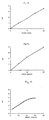
- Example 1 was repeated but using finely divided platinised graphite (5% Pt) obtained from Johnson Matthey Chemicals, Royston, United Kingdom, and supplied by them as a "process catalyst" CH15959/01, in place of the platinised Vulcan XC-72. An essentially similar linear electrode response is obtained, see Figure 2.
- Example 2 was repeated, i.e. using the finely divided platinised graphite (5% Pt) obtained from Johnson Matthey to form the enzyme/Pt graphite suspension. In this case, however, a 20% w/v solution of gelatin in water cooled to 37°C was added to the suspension at a volume ratio of 2:1.
- the resultant electrode obtained by spreading the gelatin-containing paste onto the Toray backing paper gave, after drying at room temperature, a more robust product but again showing a substantially linear response to glucose, see Figure 3.
- aqueous paste was prepared from 45 mg platinised carbon powder (Vulcan XC-72, - containing 10% by weight adsorbed colloidal platinum; The Prototech Company, Massachusetts), 5 mg glucose oxidase suspended in 100 mg of a 10% solution of hydroxyethyl cellulose in 0.1 M KCl.
- the paste was coated by hand on prewetted carbon paper (Toray backing paper) and allowed to dry.
- 1.5 mm discs were cut from the dried electrode material and tested for their response to glucose in a 2-electrode cell as described and at a potential of 400 mV versus Ag/AgCl.
- the current output was measured at various glucose concentrations, and the results are presented in Figure 4.
- the response is essentially linear over a glucose concentration range of from 0 to 30 mmol/L.
- Example 4 The procedure of Example 4 was repeated, but with platinised carbon powder (Vulcan XC-72) containing 1% and 0.2% platinum respectively. Current outputs of the electrode materials were measured under the same conditions and the results are presented in Figures 5 and 6.
- Figure 5 shows a similar linear response to glucose concentrations over the whole range of 0 to 30 mmol/L.
- the reduced amount of platinum (0.2%) shows a substantial degree of linearity, but over a reduced concentration range of 0 to 20mmol/L.
- Example 4 was repeated but using 0.5 mg of glucose oxidase.
- the current output from the electrode material measured under the same conditions is shown in Figure 7. Linearity is obtained over glucose concentrations of from 0 to 20 mmol/L.
- Example 4 was repeated but using 45 mg of carbon powder (Vulcan XC-72) containing 10% by weight colloidal platinum oxide adsorbed thereon in place of platinum metal.
- a paste was prepared by mixing 5 mg platinum black, 400 mg activated carbon powder (Vulcan XC-72), 5 mg glucose oxidase in 100 mg hydroxyethyl cellulose (10%) in 0.1 M KCl.
- the paste was smeared by hand onto Toray backing paper and allowed to dry.
- 1.5 mm discs were cut from the dried electrode material and tested for their response to glucose under the same conditions as before.
- the electrode shows a linear response to glucose over the whole concentration range of 0 to 30 mmol/L.
- Example 4 was repeated but using 5 mg lactate oxidase EC 1.1.3.2 in place of the glucose oxidase.
- the current output varies substantially linearly with lactate concentration over lactate concentrations ranging from 0 to 20 mmol/L.
- a carbon-less enzyme electrode was prepared by suspending 5 mg platinum black, 5 mg glucose oxidase in 100 mg of 10% hydroxyethyl cellulose in 0 1.M KCl.
- the suspension was smeared by hand onto Toray backing paper and dried.
- Example 4 Following the same general procedure as Example 4, but using activated carbon particles (Vulcan XC-72) having adsorbed thereon 1% by weight (based on the weight of the carbon) of, respectively, finely divided colloidal particles of iridium and rhodium, in place of the platinised carbon powder, and using a phosphate buffer (see Example 1 for details of the suspension medium) in place of 0.1 M KCl, glucose oxidase electrodes were prepared consisting of a homogeneous layer of rhodium or iridium-containing graphite particles and glucose oxidase bonded with hydroxyethylcellulose onto a carbon paper backing layer.
- activated carbon particles Vulcan XC-72
- a phosphate buffer see Example 1 for details of the suspension medium
- the paste electrode When dry the paste electrode was cut into 1.5 mm discs and tested for response to cholesterol in a two-electrode cell at a potential of +340 mV versus Ag/AgCl, the paste electrode being protected by a 0.05 ⁇ polycarbonate (Nucleopore) membrane.
- standard cholesterol solutions were prepared from 6 mM cholesterol stock solution in 22% water soluble ⁇ -cyclodextrin (Molecusol) in phosphate buffer (phosphate 1 mmol/L; NaCl 100 mmol/L; EDTA 1 mmol/L, pH 7.4) at dilution rates to give standard concentrations 0.5, 1, 2, 4 and 6 mmol/L.
- the current output in ⁇ A is shown in Figure 14, and shows an essential linear response to cholesterol concentrations in the range 0 to 6 mmol/L.
- Enzyme electrodes according to the invention were prepared using non-aqueous systems as follows.
- Paste suspensions were prepared using 10 mg quantities of glucose oxidase and 40 mg quantities of platinised graphite powder (5% Pt) in non-aqueous binder systems as follows:
- the pastes were spread onto electrically conductive carbon (Toray) backing paper and left to dry at room temperature.
- electrically conductive carbon Toray
Landscapes
- Chemical & Material Sciences (AREA)
- Organic Chemistry (AREA)
- Life Sciences & Earth Sciences (AREA)
- Health & Medical Sciences (AREA)
- Wood Science & Technology (AREA)
- Proteomics, Peptides & Aminoacids (AREA)
- Zoology (AREA)
- Engineering & Computer Science (AREA)
- Immunology (AREA)
- General Engineering & Computer Science (AREA)
- Microbiology (AREA)
- Molecular Biology (AREA)
- Analytical Chemistry (AREA)
- Biotechnology (AREA)
- Physics & Mathematics (AREA)
- Biochemistry (AREA)
- Bioinformatics & Cheminformatics (AREA)
- Biophysics (AREA)
- General Health & Medical Sciences (AREA)
- Genetics & Genomics (AREA)
- Inert Electrodes (AREA)
- Measuring Or Testing Involving Enzymes Or Micro-Organisms (AREA)
- Immobilizing And Processing Of Enzymes And Microorganisms (AREA)
- Apparatus Associated With Microorganisms And Enzymes (AREA)
- Preparation Of Compounds By Using Micro-Organisms (AREA)
Claims (29)
- Un procédé de fabrication des électrodes à enzyme du type comprenant une couche cohérente, poreuse, conductrice de l'électricité, de particules de carbone ou de graphite finement divisées ayant des particules finement divisées d'un métal du groupe du platine ou d'un oxyde de métal du groupe du platine dispersées uniformément dans toute la couche, l'électrode ayant une ou plusieurs enzymes immobilisées dessus et en contact avec lesdites particules de carbone ou de graphite finement divisées et avec lesdites particules finement divisées de métal du groupe du platine ou d'oxyde de métal du groupe du platine, ladite électrode donnant une réponse ampérométrique à l'activité de l'enzyme ou des enzymes immobilisées lors'qu'elle est en contact avec un substrat pour cette enzyme, caractérisé par les étapes suivantes:a) formation d'une suspension substantiellement uniforme contenant lesdites particules de carbone ou de graphite finement divisées, lesdites particules finement divisées d'un métal du groupe du platine ou d'un oxyde de métal du groupe du platine, et un liant en suspension dans un milieu liquide de suspension;b) dépôt de cette suspension sous la forme d'un film mince à la surface d'un élément de support sous-jacent;c) séchage de la suspension déposée pour déposer lesdites particules de carbone ou de graphite, et ledit métal ou l'oxyde de métal du groupe du platine sous la forme d'un mélange substantiellement uniforme sur la surface dudit élément de support et liés ensemble en une couche conductrice de l'électricité, poreuse, substantiellement homogène, cohérente sur la surface de l'élément de support par ledit liant; etd) incorporation de ladite enzyme ou desdites enzymes dans ladite couche, à la condition que, lorsque ladite enzyme est une enzyme réquérant, comme cofacteur, le NAD, NADH, NADP ou NADPH, cette électrode donnant une réponse ampérométrique à l'activité de cette enzyme en présence d'un substrat pour cette enzyme et en présence du cofacteur, le liant contenu dans le milieu liquide de suspension utilisé dans l'étape (a) est autre que la gélatine.
- Un procédé selon la revendication 1, la condition requise ne s'appliquant pas, caractérisé en ce que la ou lesdites enzymes sont incorporées dans la couche conductrice d'électricité, porcuse, substantiellement homogène, cohérente, par addition de la ou des enzymes à ladite suspension contenant lesdites particules de carbone ou de graphite, ledit métal ou oxyde de métal du groupe du platine finement divisé et ledit liant, ce liant étant un matériau autre que l'enzyme elle-même et étant un matériau efficace pour lier lesdites particules en une couche cohérente à une température inférieure à la température de désactivation de l'enzyme, en suspension dans ledit milieu liquide de suspension, pour déposer simultanément sur la surface dudit élément de support un mélange uniforme contenant la ou les enzymes, lesdites particules de carbone ou de graphite, ledit métal ou oxyde de métal du groupe du platine finement divisé et ledit liant, la couche déposée étant ensuite séchée à une température inférieure à la température de désactivation de l'enzyme ou des enzymes déposées.
- Un procédé selon la revendication 1, la condition requise s'appliquant, caractérisé en ce que la ou les enzymes sont incorporées dans ladite couche conductrice de l'électricité, poreuse, substantiellement homogène, cohérente par imprégnation de cette couche, après leur dépôt sur la surface de l'élément de support, par la ou lesdites enzymes contenues dans un milieu de suspension liquide et reséchage de ladite couche à une température inférieure à la température de désactivation de la ou des enzymes pour déposer la ou lesdites enzymes dans cette couche.
- Un procédé selon la revendication 1, ladite condition requise ne s'appliquant pas, caractérisé en ce que dans la couche déposée de particules de carbone ou de graphite et de particules finement divisées de métal ou d'oxyde de métal du groupe du platine, la ou les enzymes elles-mêmes agissent comme liant pour ces particules, la ou les enzymes, dans ce cas, étant incorporées dans ladite suspension en tant que ledit liant, et la couche de particules de carbone ou de graphite, le métal ou l'oxyde de métal du groupe du platine finement divisé et la ou lesdites enzymes étant séchés après dépôt sur la surface de l'élément de support sous-jacent, à une température inférieure à la température de désactivation de la ou des enzymes.
- Un procédé selon l'une quelconque des revendications 1 à 4, ladite condition requise s'appliquant ou ne s'appliquant pas selon le cas, caractérisé en ce que les particules finement divisées de métal du groupe du platine ou de l'oxyde de métal du groupe du platine sont préalablement adsorbées, d'une manière connue, sur la surface des particules de carbone ou de graphite avant leur incorporation dans ladite suspension.
- Un procédé selon la revendication 5, caractérisé en ce que les particules de carbone ou de graphite finement divisées ont une taille de particules dans l'intervalle de 3 à 15 nm et les particules de métal ou d'oxyde de métal du groupe du platine ont une taille de particules dans l'intervalle de 1 à 4 nm.
- Un procédé de fabrication d'une électrode à enzyme constituée essentiellement d'une couche conductrice d'électricité mince de particules finement divisées d'un métal du groupe du platine ou d'un oxyde de métal du groupe du platine liées à la surface d'un élément de support sous-jacent et comprenant une ou plusieurs enzymes immobilisées dans ou sur ladite couche, ladite électrode donnant une réponse ampérométrique à l'activité de la ou des enzymes lorsque l'électrode est en contact avec le substrat enzymatique approprié, caractérisé en ce que ledit procédé comprend:a) la formation d'une suspension de métal du groupe du platine ou d'oxyde de métal du groupe du platine finement divisé dans un milieu liquide de suspension contenant un liant pour lesdites particules ledit liant étant un matériau efficace pour lier lesdites particules en une couche poreuse, cohérente sur la surface de l'élément de support sous-jacent à une température inférieure à la température de désactivation de l'enzyme;b) le dépôt de ladite suspension sous la forme d'un film mince sur la surface d'un élément de support sous-jacent;c) le séchage de la suspension déposée pour déposer sur la surface de l'élément de support une couche cohérente conductrice de l'électricité, poreuse, mince consistuée de particules de métal ou d'oxyde de métal du groupe du platine et dudit liant; etd) l'incorporation de l'enzyme ou des enzymes dans cette couche.
- Un procédé selon la revendication 7, caractérisé en ce que l'enzyme ou les enzymes sont initialement incorporées dans ladite suspension en même temps que le métal du groupe du platine ou l'oxyde de métal du groupe du platine finement divisé et éventuellement, un liant additionnel pour les particules finement divisées de métal ou d'oxyde de métal du groupe du platine, ledit liant additionnel étant un matériau efficace pour lier lesdites particules en une couche cohérente à une température inférieure à la température de désactivation de l'enzyme, et où le film déposé contenant le métal ou l'oxyde de métal du groupe du platine finement divisé, la ou les enzymes et, s'il est présent, le liant éventuel, est séché à une température inférieure à la température de désactivation de l'enzyme afin de former sur la surface de l'élément de support une couche de particules finement divisées de métal ou d'oxyde de métal du groupe du platine contenant la ou les enzymes et liées ensemble par le liant et/ou l'enzyme elle-même.
- Un procédé selon l'une quelconque des revendications 1 à 6, caractérisé en ce que la milieu liquide de suspension est un milieu aqueux, et le liant est un matériau soluble dans l'eau ou dispersible dans l'eau et est autre que l'enzyme elle-même, ce liant étant autre que la gélatine lorsque, conformément à la condition requise mentionnée dans la revendication 1, cette suspension est une suspension contenant des particules finement divisées de carbone ou de graphite, et l'enzyme est celle qui requiert du NAD, NADH, NAD ou NADPH comme cofacteur.
- Un procédé selon la revendication 7 ou 8, caractérisé en ce que le milieu liquide de suspension est un milieu aqueux et le liant est un matériau soluble dans l'eau ou dispersible dans l'eau et est autre que l'enzyme elle-même.
- Un procédé selon la revendication 9 ou 10, caractérisé en ce que le liant soluble dans l'eau est l'hydroxyéthylcellulose.
- Un procédé selon l'une quelconque des revendications 1 à 11, caractérisé en ce que la suspension est appliquée à la surface de l'élément de support sous-jacent par impression sérigraphique.
- Un procédé selon l'une quelconque des revendications 1 à 12, caractérisé en ce que la couche de support sous-jacente est elle-même conductrice de l'électricité.
- Un procédé selon la revendication 13, caractérisé en ce que la couche de support sous-jacente est une feuille de papier carbone ou une piste de carbone conducteur de l'électricité.
- Un procédé selon l'une quelconque des revendications 1 à 14, caractérisé en ce que l'enzyme utilisée est la glucose oxydase, une cholestérol oxydase ou la lactate oxydase.
- Un procédé selon l'une quelconque des revendications 1 à 15, caractérisé en ce que lesdites particules de métal du groupe du platine finement divisées sont des particules finement divisées de platine élémentaire.
- Une électrode à enzyme comprenant un mélange substantiellement homogène d'un métal du groupe du platine ou d'un oxyde de métal du groupe du platine finement divisé et d'une ou de plusieurs enzymes déposées en une couche de surface conductrice de l'électricité sur la surface d'un élément de support sous-jacent, ladite couche contenant également un liant pour les particules de métal du groupe du platine ou d'oxyde de métal du groupe du platine finement divisées et la ou lesdites enzymes et éventuellement les particules finement divisées de carbone ou de graphite, où ledit liant comprend un matériau efficace pour lier lesdites particules finement divisées du métal ou de l'oxyde de métal du groupe du platine et la ou lesdites enzymes en une couche cohérente, cohésive liée au support à une température ne dépassant pas la température de désactivation de la ou des enzymes, à la condition que lorsque ladite enzyme ou l'une desdites enzymes est une enzyme nécessitant du NAD, NADH, NADP ou NADPH comme cofacteur, et lorsque l'enzyme est contenue dans une couche cohérente contenant des particules finement divisées de carbone ou de graphite, le liant est autre que la gélatine.
- Une électrode à enzyme selon la revendication 17, selon laquelle le liant est soluble dans l'eau ou dispersible dans l'eau, ce liant étant autre que la gélatine, lorsque, conformément à la condition requise, l'enzyme est celle qui requiert du NAD, NADH, NADP ou NADPH comme cofacteur.
- Une électrode à enzyme selon la revendication 18, selon laquelle le liant est l'hydroxyéthylcellulose.
- Une électrode à enzyme selon la revendication 17, selon laquelle l'enzyme elle-même agit comme liant.
- Une électrode à enzyme selon l'une quelconque des revendications 17 à 20, selon laquelle la couche contenant l'enzyme contient également lesdites particules de carbone ou de graphite finement divisées.
- Une électrode à enzyme selon la revendication 21, selon laquelle lesdites particules finement divisées de métal ou d'oxyde de métal du groupe du platine sont préalablement adsorbées sur la surface des particules de carbone ou de graphite.
- Une électrode à enzyme selon la revendication 22, selon laquelle les particules de carbone ou de graphite ont une taille de particules d'un intervalle de 3 à 150 nm et les particules de métal ou d'oxyde de métal du groupe du platine pré-adsorbé ont une taille dans l'intervalle de 1 à 4 nm.
- Une électrode à enzyme selon l'une quelconque des revendications 17 à 23, selon laquelle la couche contenant l'enzyme est imprimée sur la surface de l'élément de support sous-jacent.
- Une électrode à enzyme selon la revendication 24, selon laquelle la couche contenant l'enzyme est imprimée par sérigraphie sur la surface de l'élément de support.
- Une électrode à enzyme selon l'une quelconque des revendications 17 à 25, selon laquelle l'élément de support sous-jacent est lui-même conducteur de l'électricité.
- Une électrode à enzyme selon la revendication 26, selon laquelle l'élément de support comprend une feuille de papier carbone ou une piste de carbone conducteur dc l'électricité.
- Une électrode à enzyme selon l'une quelconque des revendications 17 à 27, selon laquelle la couche contenant l'enzyme contient comme composant métallique du groupe du platine du platine ou du rhodium finement divisé.
- Une électrode à enzyme selon l'une quelconque des revendications 17 à 28, selon laquelle la couche contenant l'enzyme contient comme ladite enzyme la glucose oxydase, la lactate oxydase ou la cholestérol oxydase.
Applications Claiming Priority (2)
| Application Number | Priority Date | Filing Date | Title |
|---|---|---|---|
| GB888817997A GB8817997D0 (en) | 1988-07-28 | 1988-07-28 | Enzyme electrodes & improvements in manufacture thereof |
| GB8817997 | 1988-07-28 |
Publications (3)
| Publication Number | Publication Date |
|---|---|
| EP0352925A2 EP0352925A2 (fr) | 1990-01-31 |
| EP0352925A3 EP0352925A3 (en) | 1990-04-18 |
| EP0352925B1 true EP0352925B1 (fr) | 1994-12-28 |
Family
ID=10641263
Family Applications (1)
| Application Number | Title | Priority Date | Filing Date |
|---|---|---|---|
| EP89306923A Expired - Lifetime EP0352925B1 (fr) | 1988-07-28 | 1989-07-07 | Electrodes enzymatiques et leur fabrication |
Country Status (16)
| Country | Link |
|---|---|
| US (1) | US5160418A (fr) |
| EP (1) | EP0352925B1 (fr) |
| JP (1) | JP3056221B2 (fr) |
| KR (1) | KR0128159B1 (fr) |
| AU (1) | AU621913B2 (fr) |
| CA (1) | CA1311522C (fr) |
| DE (1) | DE68920223T2 (fr) |
| DK (1) | DK171603B1 (fr) |
| FI (1) | FI96517C (fr) |
| GB (2) | GB8817997D0 (fr) |
| HU (1) | HU209704B (fr) |
| IE (1) | IE60578B1 (fr) |
| IL (1) | IL90983A (fr) |
| MX (1) | MX170142B (fr) |
| NO (1) | NO300144B1 (fr) |
| RU (1) | RU1836428C (fr) |
Cited By (1)
| Publication number | Priority date | Publication date | Assignee | Title |
|---|---|---|---|---|
| US7402616B2 (en) | 2004-09-30 | 2008-07-22 | Lifescan, Inc. | Fusible conductive ink for use in manufacturing microfluidic analytical systems |
Families Citing this family (123)
| Publication number | Priority date | Publication date | Assignee | Title |
|---|---|---|---|---|
| DE4027728A1 (de) * | 1990-08-31 | 1992-03-05 | Bayer Ag | Immobilisierung von organischen makromolekuelen oder biopolymeren in einer polymermembran |
| TW279133B (fr) * | 1990-12-13 | 1996-06-21 | Elan Med Tech | |
| US5468366A (en) * | 1992-01-15 | 1995-11-21 | Andcare, Inc. | Colloidal-gold electrosensor measuring device |
| US5217594A (en) * | 1992-01-15 | 1993-06-08 | Enzyme Technology Research Group, Inc. | Convenient determination of trace lead in whole blood and other fluids |
| US5227042A (en) * | 1992-05-15 | 1993-07-13 | The United States Of America As Represented By The United States Department Of Energy | Catalyzed enzyme electrodes |
| DE4427363A1 (de) * | 1993-08-03 | 1995-03-09 | A & D Co Ltd | Chemischer Einmalsensor |
| US5643721A (en) * | 1994-02-09 | 1997-07-01 | Abbott Laboratories | Bioreagent immobilization medium |
| US5494562A (en) * | 1994-06-27 | 1996-02-27 | Ciba Corning Diagnostics Corp. | Electrochemical sensors |
| IE72524B1 (en) * | 1994-11-04 | 1997-04-23 | Elan Med Tech | Analyte-controlled liquid delivery device and analyte monitor |
| US5696314A (en) * | 1996-07-12 | 1997-12-09 | Chiron Diagnostics Corporation | Multilayer enzyme electrode membranes and methods of making same |
| US6001067A (en) | 1997-03-04 | 1999-12-14 | Shults; Mark C. | Device and method for determining analyte levels |
| US9155496B2 (en) | 1997-03-04 | 2015-10-13 | Dexcom, Inc. | Low oxygen in vivo analyte sensor |
| US8527026B2 (en) | 1997-03-04 | 2013-09-03 | Dexcom, Inc. | Device and method for determining analyte levels |
| US7192450B2 (en) | 2003-05-21 | 2007-03-20 | Dexcom, Inc. | Porous membranes for use with implantable devices |
| US6862465B2 (en) | 1997-03-04 | 2005-03-01 | Dexcom, Inc. | Device and method for determining analyte levels |
| US7899511B2 (en) | 2004-07-13 | 2011-03-01 | Dexcom, Inc. | Low oxygen in vivo analyte sensor |
| EP0990151A2 (fr) | 1997-06-16 | 2000-04-05 | ELAN CORPORATION, Plc | Procedes d'etalonnage et de test d'un capteur servant a mesurer un analyte in vivo et dispositifs utilises dans ces procedes |
| US6764581B1 (en) * | 1997-09-05 | 2004-07-20 | Abbott Laboratories | Electrode with thin working layer |
| WO1999022227A2 (fr) * | 1997-10-29 | 1999-05-06 | Yizhu Guo | Applications electroanalytique avec tensioactif pour composites de graphite sol-gel a serigraphie |
| US6134461A (en) | 1998-03-04 | 2000-10-17 | E. Heller & Company | Electrochemical analyte |
| US6587705B1 (en) | 1998-03-13 | 2003-07-01 | Lynn Kim | Biosensor, iontophoretic sampling system, and methods of use thereof |
| US8688188B2 (en) | 1998-04-30 | 2014-04-01 | Abbott Diabetes Care Inc. | Analyte monitoring device and methods of use |
| US8465425B2 (en) | 1998-04-30 | 2013-06-18 | Abbott Diabetes Care Inc. | Analyte monitoring device and methods of use |
| US8974386B2 (en) | 1998-04-30 | 2015-03-10 | Abbott Diabetes Care Inc. | Analyte monitoring device and methods of use |
| US9066695B2 (en) | 1998-04-30 | 2015-06-30 | Abbott Diabetes Care Inc. | Analyte monitoring device and methods of use |
| US6175752B1 (en) | 1998-04-30 | 2001-01-16 | Therasense, Inc. | Analyte monitoring device and methods of use |
| US8346337B2 (en) | 1998-04-30 | 2013-01-01 | Abbott Diabetes Care Inc. | Analyte monitoring device and methods of use |
| US8480580B2 (en) | 1998-04-30 | 2013-07-09 | Abbott Diabetes Care Inc. | Analyte monitoring device and methods of use |
| US6949816B2 (en) | 2003-04-21 | 2005-09-27 | Motorola, Inc. | Semiconductor component having first surface area for electrically coupling to a semiconductor chip and second surface area for electrically coupling to a substrate, and method of manufacturing same |
| US6086942A (en) * | 1998-05-27 | 2000-07-11 | International Brachytherapy S.A. | Fluid-jet deposition of radioactive material for brachytherapy devices |
| US6042751A (en) * | 1998-09-17 | 2000-03-28 | E. I. Du Pont De Nemours And Company | Thick film conductor composition for use in biosensors |
| US6599408B1 (en) | 1998-09-17 | 2003-07-29 | E. I. Du Pont De Nemours And Company | Thick film conductor composition for use in biosensors |
| US6582583B1 (en) | 1998-11-30 | 2003-06-24 | The United States Of America As Represented By The Department Of Health And Human Services | Amperometric biomimetic enzyme sensors based on modified cyclodextrin as electrocatalysts |
| ES2167258B2 (es) * | 2000-07-28 | 2003-03-01 | Univ Madrid Complutense | Biosensor amperometrico composito para la determinacion de colesterol en alimentos. |
| US6560471B1 (en) | 2001-01-02 | 2003-05-06 | Therasense, Inc. | Analyte monitoring device and methods of use |
| US6627058B1 (en) | 2001-01-17 | 2003-09-30 | E. I. Du Pont De Nemours And Company | Thick film conductor composition for use in biosensors |
| US6491803B1 (en) * | 2001-05-18 | 2002-12-10 | Apex Biotechnology Corporation | Test strip and biosensor incorporating with nanometer metal particles |
| US6702857B2 (en) | 2001-07-27 | 2004-03-09 | Dexcom, Inc. | Membrane for use with implantable devices |
| US20030032874A1 (en) | 2001-07-27 | 2003-02-13 | Dexcom, Inc. | Sensor head for use with implantable devices |
| US6997343B2 (en) * | 2001-11-14 | 2006-02-14 | Hypoguard Limited | Sensor dispensing device |
| US20030111357A1 (en) * | 2001-12-13 | 2003-06-19 | Black Murdo M. | Test meter calibration |
| US6986963B2 (en) * | 2001-12-14 | 2006-01-17 | Ut-Battelle Llc | Metallization of bacterial cellulose for electrical and electronic device manufacture |
| US8010174B2 (en) | 2003-08-22 | 2011-08-30 | Dexcom, Inc. | Systems and methods for replacing signal artifacts in a glucose sensor data stream |
| US8260393B2 (en) | 2003-07-25 | 2012-09-04 | Dexcom, Inc. | Systems and methods for replacing signal data artifacts in a glucose sensor data stream |
| US7828728B2 (en) | 2003-07-25 | 2010-11-09 | Dexcom, Inc. | Analyte sensor |
| US10022078B2 (en) | 2004-07-13 | 2018-07-17 | Dexcom, Inc. | Analyte sensor |
| US9247901B2 (en) | 2003-08-22 | 2016-02-02 | Dexcom, Inc. | Systems and methods for replacing signal artifacts in a glucose sensor data stream |
| US9282925B2 (en) | 2002-02-12 | 2016-03-15 | Dexcom, Inc. | Systems and methods for replacing signal artifacts in a glucose sensor data stream |
| US20030169426A1 (en) * | 2002-03-08 | 2003-09-11 | Peterson Timothy A. | Test member orientation |
| CN1467496A (zh) * | 2002-06-03 | 2004-01-14 | 松下电器产业株式会社 | 生物传感器 |
| US7250095B2 (en) * | 2002-07-11 | 2007-07-31 | Hypoguard Limited | Enzyme electrodes and method of manufacture |
| US7264139B2 (en) * | 2003-01-14 | 2007-09-04 | Hypoguard Limited | Sensor dispensing device |
| US7134999B2 (en) | 2003-04-04 | 2006-11-14 | Dexcom, Inc. | Optimized sensor geometry for an implantable glucose sensor |
| US8423113B2 (en) | 2003-07-25 | 2013-04-16 | Dexcom, Inc. | Systems and methods for processing sensor data |
| EP1648298A4 (fr) | 2003-07-25 | 2010-01-13 | Dexcom Inc | Systemes a membrane accroissant la disponibilite en oxygene pour des dispositifs implantables |
| US8761856B2 (en) | 2003-08-01 | 2014-06-24 | Dexcom, Inc. | System and methods for processing analyte sensor data |
| US8886273B2 (en) | 2003-08-01 | 2014-11-11 | Dexcom, Inc. | Analyte sensor |
| US20190357827A1 (en) | 2003-08-01 | 2019-11-28 | Dexcom, Inc. | Analyte sensor |
| US8369919B2 (en) | 2003-08-01 | 2013-02-05 | Dexcom, Inc. | Systems and methods for processing sensor data |
| US20080119703A1 (en) | 2006-10-04 | 2008-05-22 | Mark Brister | Analyte sensor |
| US20100168543A1 (en) | 2003-08-01 | 2010-07-01 | Dexcom, Inc. | System and methods for processing analyte sensor data |
| US6931327B2 (en) | 2003-08-01 | 2005-08-16 | Dexcom, Inc. | System and methods for processing analyte sensor data |
| US7933639B2 (en) | 2003-08-01 | 2011-04-26 | Dexcom, Inc. | System and methods for processing analyte sensor data |
| US7774145B2 (en) | 2003-08-01 | 2010-08-10 | Dexcom, Inc. | Transcutaneous analyte sensor |
| US7591801B2 (en) | 2004-02-26 | 2009-09-22 | Dexcom, Inc. | Integrated delivery device for continuous glucose sensor |
| US20140121989A1 (en) | 2003-08-22 | 2014-05-01 | Dexcom, Inc. | Systems and methods for processing analyte sensor data |
| US8233959B2 (en) | 2003-08-22 | 2012-07-31 | Dexcom, Inc. | Systems and methods for processing analyte sensor data |
| US7920906B2 (en) | 2005-03-10 | 2011-04-05 | Dexcom, Inc. | System and methods for processing analyte sensor data for sensor calibration |
| US9247900B2 (en) | 2004-07-13 | 2016-02-02 | Dexcom, Inc. | Analyte sensor |
| US8615282B2 (en) | 2004-07-13 | 2013-12-24 | Dexcom, Inc. | Analyte sensor |
| WO2005051170A2 (fr) | 2003-11-19 | 2005-06-09 | Dexcom, Inc. | Recepteur integre pour capteur d'analyte en continu |
| US11633133B2 (en) | 2003-12-05 | 2023-04-25 | Dexcom, Inc. | Dual electrode system for a continuous analyte sensor |
| DE602004029092D1 (de) | 2003-12-05 | 2010-10-21 | Dexcom Inc | Kalibrationsmethoden für einen kontinuierlich arbeitenden analytsensor |
| US8423114B2 (en) | 2006-10-04 | 2013-04-16 | Dexcom, Inc. | Dual electrode system for a continuous analyte sensor |
| US8287453B2 (en) | 2003-12-05 | 2012-10-16 | Dexcom, Inc. | Analyte sensor |
| US8364231B2 (en) | 2006-10-04 | 2013-01-29 | Dexcom, Inc. | Analyte sensor |
| EP2316331B1 (fr) | 2003-12-09 | 2016-06-29 | Dexcom, Inc. | Traitement de signal pour capteur d'analyte continu |
| GB0400394D0 (en) * | 2004-01-09 | 2004-02-11 | Hypoguard Ltd | Biosensor and method of manufacture |
| US20050150762A1 (en) * | 2004-01-09 | 2005-07-14 | Butters Colin W. | Biosensor and method of manufacture |
| US8808228B2 (en) | 2004-02-26 | 2014-08-19 | Dexcom, Inc. | Integrated medicament delivery device for use with continuous analyte sensor |
| US8277713B2 (en) | 2004-05-03 | 2012-10-02 | Dexcom, Inc. | Implantable analyte sensor |
| US8792955B2 (en) | 2004-05-03 | 2014-07-29 | Dexcom, Inc. | Transcutaneous analyte sensor |
| US8565848B2 (en) | 2004-07-13 | 2013-10-22 | Dexcom, Inc. | Transcutaneous analyte sensor |
| US7946984B2 (en) | 2004-07-13 | 2011-05-24 | Dexcom, Inc. | Transcutaneous analyte sensor |
| US7783333B2 (en) | 2004-07-13 | 2010-08-24 | Dexcom, Inc. | Transcutaneous medical device with variable stiffness |
| US7905833B2 (en) | 2004-07-13 | 2011-03-15 | Dexcom, Inc. | Transcutaneous analyte sensor |
| US8133178B2 (en) | 2006-02-22 | 2012-03-13 | Dexcom, Inc. | Analyte sensor |
| US8744546B2 (en) | 2005-05-05 | 2014-06-03 | Dexcom, Inc. | Cellulosic-based resistance domain for an analyte sensor |
| US7588670B2 (en) | 2005-04-12 | 2009-09-15 | Lifescan Scotland Limited | Enzymatic electrochemical-based sensor |
| AU2006201333A1 (en) * | 2005-04-12 | 2006-11-02 | Lifescan Scotland Limited | Water-miscible conductive ink for use in enzymatic electrochemical-based sensors |
| US7465380B2 (en) | 2005-04-12 | 2008-12-16 | Lifescan Scotland, Ltd. | Water-miscible conductive ink for use in enzymatic electrochemical-based sensors |
| US8060174B2 (en) | 2005-04-15 | 2011-11-15 | Dexcom, Inc. | Analyte sensing biointerface |
| US7687186B2 (en) * | 2005-09-30 | 2010-03-30 | Canon Kabushiki Kaisha | Enzyme electrode, and sensor and biofuel cell using the same |
| WO2007055100A1 (fr) * | 2005-11-08 | 2007-05-18 | Ultizyme International Ltd. | Electrode enzymatique |
| US9757061B2 (en) | 2006-01-17 | 2017-09-12 | Dexcom, Inc. | Low oxygen in vivo analyte sensor |
| JP2009540889A (ja) * | 2006-06-19 | 2009-11-26 | エフ ホフマン−ラ ロッシュ アクチェン ゲゼルシャフト | 電流測定センサおよびその製造方法 |
| US9700252B2 (en) | 2006-06-19 | 2017-07-11 | Roche Diabetes Care, Inc. | Amperometric sensor and method for its manufacturing |
| WO2008007719A1 (fr) * | 2006-07-12 | 2008-01-17 | Arkray, Inc. | Électrode à enzyme |
| US7831287B2 (en) | 2006-10-04 | 2010-11-09 | Dexcom, Inc. | Dual electrode system for a continuous analyte sensor |
| TW200912308A (en) * | 2007-05-21 | 2009-03-16 | Delta Electronics Inc | Biosensor and composition thereof |
| US8562558B2 (en) | 2007-06-08 | 2013-10-22 | Dexcom, Inc. | Integrated medicament delivery device for use with continuous analyte sensor |
| EP2017350A1 (fr) | 2007-07-19 | 2009-01-21 | F. Hoffmann-La Roche AG | Capteur électrochimique doté d'une enzyme liée de manière covalente |
| JP4883796B2 (ja) * | 2007-07-23 | 2012-02-22 | キヤノン株式会社 | 電気化学測定方法 |
| CN101802597B (zh) * | 2007-09-18 | 2013-08-21 | 究极酵素国际股份有限公司 | 酶电极 |
| EP4159114B1 (fr) | 2007-10-09 | 2024-04-10 | DexCom, Inc. | Système d'administration d'insuline intégré avec un capteur de glucose en continu |
| US8417312B2 (en) | 2007-10-25 | 2013-04-09 | Dexcom, Inc. | Systems and methods for processing sensor data |
| US11730407B2 (en) | 2008-03-28 | 2023-08-22 | Dexcom, Inc. | Polymer membranes for continuous analyte sensors |
| US8583204B2 (en) | 2008-03-28 | 2013-11-12 | Dexcom, Inc. | Polymer membranes for continuous analyte sensors |
| US8682408B2 (en) | 2008-03-28 | 2014-03-25 | Dexcom, Inc. | Polymer membranes for continuous analyte sensors |
| US8560039B2 (en) | 2008-09-19 | 2013-10-15 | Dexcom, Inc. | Particle-containing membrane and particulate electrode for analyte sensors |
| EP2410910A4 (fr) | 2009-03-27 | 2014-10-15 | Dexcom Inc | Procédés et systèmes favorisant la gestion du glucose |
| US20120265036A1 (en) | 2011-04-15 | 2012-10-18 | Dexcom, Inc. | Advanced analyte sensor calibration and error detection |
| WO2014002998A1 (fr) | 2012-06-25 | 2014-01-03 | 合同会社バイオエンジニアリング研究所 | Électrode enzymatique |
| JP6186630B2 (ja) * | 2012-06-25 | 2017-08-30 | 合同会社バイオエンジニアリング研究所 | 酵素電極 |
| CN106572819A (zh) | 2014-03-12 | 2017-04-19 | 血糖测试仪股份有限公司 | 电化学传感系统 |
| WO2016127105A1 (fr) * | 2015-02-05 | 2016-08-11 | The Regents Of The University Of California | Capteurs électrochimiques renouvelables à usages multiples basés sur le dessin direct d'encres enzymatiques |
| US11331022B2 (en) | 2017-10-24 | 2022-05-17 | Dexcom, Inc. | Pre-connected analyte sensors |
| CN111246797B (zh) | 2017-10-24 | 2025-09-09 | 德克斯康公司 | 预连接分析物传感器 |
| US11109784B2 (en) * | 2018-04-09 | 2021-09-07 | California Institute Of Technology | Metal-enzyme sandwich layers |
| KR20200001076U (ko) | 2019-12-26 | 2020-05-26 | 진재곤 | 회전식 석쇠 구이기 |
| JP7472609B2 (ja) * | 2020-04-02 | 2024-04-23 | artience株式会社 | 酵素センサー用電極及び酵素センサー |
| CN112251069A (zh) * | 2020-10-29 | 2021-01-22 | 郑州百瑞动物药业有限公司 | 一种基于水性丝网印刷技术的酶电极用酶油墨及其制备方法 |
| KR102661260B1 (ko) * | 2021-08-27 | 2024-04-29 | 고려대학교 산학협력단 | 전자전달 능력이 향상된 효소기반 전극, 그 제조방법 및 그 응용 |
Family Cites Families (11)
| Publication number | Priority date | Publication date | Assignee | Title |
|---|---|---|---|---|
| US4044193A (en) * | 1971-06-16 | 1977-08-23 | Prototech Company | Finely particulated colloidal platinum compound and sol for producing the same, and method of preparation of fuel cell electrodes and the like employing the same |
| US4166143A (en) * | 1977-01-24 | 1979-08-28 | Prototech Company | Control of the interaction of novel platinum-on-carbon electrocatalysts with fluorinated hydrocarbon resins in the preparation of fuel cell electrodes |
| US4229490A (en) * | 1978-09-01 | 1980-10-21 | Texas Instruments Incorporated | Novel method for catalyst application to a substrate for fuel cell electrodes |
| JPS584982B2 (ja) * | 1978-10-31 | 1983-01-28 | 松下電器産業株式会社 | 酵素電極 |
| US4293396A (en) * | 1979-09-27 | 1981-10-06 | Prototech Company | Thin carbon-cloth-based electrocatalytic gas diffusion electrodes, and electrochemical cells comprising the same |
| JPS56163447A (en) * | 1980-05-22 | 1981-12-16 | Matsushita Electric Ind Co Ltd | Enzyme electrode |
| US4478696A (en) * | 1982-07-21 | 1984-10-23 | Prototech Company | Ionizable reducing and oxidizing gaseous supply means and process for catalytic barriers and electrodes |
| GB8612861D0 (en) * | 1986-05-27 | 1986-07-02 | Cambridge Life Sciences | Immobilised enzyme biosensors |
| GB8710472D0 (en) * | 1987-05-01 | 1987-06-03 | Cambridge Life Sciences | Amperometric method |
| GB8724446D0 (en) * | 1987-10-19 | 1987-11-25 | Cambridge Life Sciences | Immobilised enzyme electrodes |
| ATE131292T1 (de) * | 1988-02-04 | 1995-12-15 | Magellan Corp Australia | Shuntregelvorrichtung. |
-
1988
- 1988-07-28 GB GB888817997A patent/GB8817997D0/en active Pending
-
1989
- 1989-07-07 GB GB8915605A patent/GB2221300B/en not_active Expired - Lifetime
- 1989-07-07 EP EP89306923A patent/EP0352925B1/fr not_active Expired - Lifetime
- 1989-07-07 DE DE68920223T patent/DE68920223T2/de not_active Expired - Lifetime
- 1989-07-14 IL IL9098389A patent/IL90983A/en unknown
- 1989-07-17 CA CA000605817A patent/CA1311522C/fr not_active Expired - Lifetime
- 1989-07-18 US US07/381,580 patent/US5160418A/en not_active Expired - Lifetime
- 1989-07-18 AU AU38216/89A patent/AU621913B2/en not_active Expired
- 1989-07-24 FI FI893542A patent/FI96517C/fi active IP Right Grant
- 1989-07-24 NO NO893019A patent/NO300144B1/no not_active IP Right Cessation
- 1989-07-27 HU HU893822A patent/HU209704B/hu unknown
- 1989-07-27 DK DK371489A patent/DK171603B1/da not_active IP Right Cessation
- 1989-07-27 RU SU894614801A patent/RU1836428C/ru active
- 1989-07-27 IE IE245189A patent/IE60578B1/en not_active IP Right Cessation
- 1989-07-28 KR KR1019890010694A patent/KR0128159B1/ko not_active Expired - Lifetime
- 1989-07-28 MX MX016979A patent/MX170142B/es unknown
- 1989-07-28 JP JP1194433A patent/JP3056221B2/ja not_active Expired - Lifetime
Non-Patent Citations (1)
| Title |
|---|
| CHEMICAL ABSTRACTS, vol 108, 1988, Columbus, OH (US); IKARIYAMA et al., no. 34240a# * |
Cited By (1)
| Publication number | Priority date | Publication date | Assignee | Title |
|---|---|---|---|---|
| US7402616B2 (en) | 2004-09-30 | 2008-07-22 | Lifescan, Inc. | Fusible conductive ink for use in manufacturing microfluidic analytical systems |
Also Published As
| Publication number | Publication date |
|---|---|
| AU3821689A (en) | 1990-02-01 |
| NO893019D0 (no) | 1989-07-24 |
| FI96517C (fi) | 1996-07-10 |
| GB2221300B (en) | 1991-12-18 |
| US5160418A (en) | 1992-11-03 |
| DE68920223T2 (de) | 1995-07-13 |
| KR910002519A (ko) | 1991-02-25 |
| AU621913B2 (en) | 1992-03-26 |
| HUT51326A (en) | 1990-04-28 |
| NO300144B1 (no) | 1997-04-14 |
| RU1836428C (ru) | 1993-08-23 |
| IE60578B1 (en) | 1994-07-27 |
| IL90983A0 (en) | 1990-02-09 |
| IE892451L (en) | 1990-01-28 |
| FI893542A0 (fi) | 1989-07-24 |
| GB8915605D0 (en) | 1989-08-23 |
| EP0352925A3 (en) | 1990-04-18 |
| FI893542L (fi) | 1990-01-29 |
| DK371489D0 (da) | 1989-07-27 |
| CA1311522C (fr) | 1992-12-15 |
| JPH0299849A (ja) | 1990-04-11 |
| FI96517B (fi) | 1996-03-29 |
| IL90983A (en) | 1994-01-25 |
| KR0128159B1 (ko) | 1998-04-01 |
| NO893019L (no) | 1990-01-29 |
| DE68920223D1 (de) | 1995-02-09 |
| EP0352925A2 (fr) | 1990-01-31 |
| GB8817997D0 (en) | 1988-09-01 |
| DK371489A (da) | 1990-01-29 |
| HU209704B (en) | 1994-10-28 |
| GB2221300A (en) | 1990-01-31 |
| JP3056221B2 (ja) | 2000-06-26 |
| DK171603B1 (da) | 1997-02-17 |
| MX170142B (es) | 1993-08-09 |
Similar Documents
| Publication | Publication Date | Title |
|---|---|---|
| US5160418A (en) | Enzyme electrodes and improvements in the manufacture thereof | |
| EP0505494B1 (fr) | Reactif a mediateur redox et capteur biologique | |
| US4970145A (en) | Immobilized enzyme electrodes | |
| EP0343203B1 (fr) | Electrodes a enzyme immobilisee et procede de reduction de la sensibilite a l'alcool | |
| US5508171A (en) | Assay method with enzyme electrode system | |
| CA2167822C (fr) | Biocapteur potentiometrique et methode d'utilisation connexe | |
| US5122456A (en) | Amperometric method for the quantitative determination of 1,4-dihydronicotinamide adenine dinucleotide (nadh) in solution | |
| EP2192402B1 (fr) | Electrode a enzyme | |
| EP0415124B1 (fr) | Electrode enzymatique | |
| JPH0783872A (ja) | バイオセンサおよびその製造方法 |
Legal Events
| Date | Code | Title | Description |
|---|---|---|---|
| PUAI | Public reference made under article 153(3) epc to a published international application that has entered the european phase |
Free format text: ORIGINAL CODE: 0009012 |
|
| AK | Designated contracting states |
Kind code of ref document: A2 Designated state(s): BE DE ES FR GB GR IT LU NL SE |
|
| PUAL | Search report despatched |
Free format text: ORIGINAL CODE: 0009013 |
|
| AK | Designated contracting states |
Kind code of ref document: A3 Designated state(s): BE DE ES FR GB GR IT LU NL SE |
|
| 17P | Request for examination filed |
Effective date: 19900929 |
|
| D17Q | First examination report despatched (deleted) | ||
| RBV | Designated contracting states (corrected) |
Designated state(s): BE DE ES FR GR IT LU NL SE |
|
| GRAA | (expected) grant |
Free format text: ORIGINAL CODE: 0009210 |
|
| AK | Designated contracting states |
Kind code of ref document: B1 Designated state(s): BE DE ES FR GR IT LU NL SE |
|
| PG25 | Lapsed in a contracting state [announced via postgrant information from national office to epo] |
Ref country code: ES Free format text: THE PATENT HAS BEEN ANNULLED BY A DECISION OF A NATIONAL AUTHORITY Effective date: 19941228 Ref country code: GR Free format text: LAPSE BECAUSE OF FAILURE TO SUBMIT A TRANSLATION OF THE DESCRIPTION OR TO PAY THE FEE WITHIN THE PRESCRIBED TIME-LIMIT Effective date: 19941228 |
|
| REF | Corresponds to: |
Ref document number: 68920223 Country of ref document: DE Date of ref document: 19950209 |
|
| ITF | It: translation for a ep patent filed | ||
| ET | Fr: translation filed | ||
| PLBE | No opposition filed within time limit |
Free format text: ORIGINAL CODE: 0009261 |
|
| STAA | Information on the status of an ep patent application or granted ep patent |
Free format text: STATUS: NO OPPOSITION FILED WITHIN TIME LIMIT |
|
| 26N | No opposition filed | ||
| PGFP | Annual fee paid to national office [announced via postgrant information from national office to epo] |
Ref country code: IT Payment date: 20080620 Year of fee payment: 20 |
|
| PGFP | Annual fee paid to national office [announced via postgrant information from national office to epo] |
Ref country code: SE Payment date: 20080618 Year of fee payment: 20 Ref country code: LU Payment date: 20080728 Year of fee payment: 20 Ref country code: DE Payment date: 20080623 Year of fee payment: 20 |
|
| PGFP | Annual fee paid to national office [announced via postgrant information from national office to epo] |
Ref country code: NL Payment date: 20080619 Year of fee payment: 20 Ref country code: FR Payment date: 20080613 Year of fee payment: 20 |
|
| PGFP | Annual fee paid to national office [announced via postgrant information from national office to epo] |
Ref country code: BE Payment date: 20080709 Year of fee payment: 20 |
|
| NLV7 | Nl: ceased due to reaching the maximum lifetime of a patent |
Effective date: 20090707 |
|
| EUG | Se: european patent has lapsed | ||
| PG25 | Lapsed in a contracting state [announced via postgrant information from national office to epo] |
Ref country code: NL Free format text: LAPSE BECAUSE OF EXPIRATION OF PROTECTION Effective date: 20090707 |