EP0353908A2 - DNS-Konstruktionen und enthaltende Pflanzen - Google Patents
DNS-Konstruktionen und enthaltende Pflanzen Download PDFInfo
- Publication number
- EP0353908A2 EP0353908A2 EP89307342A EP89307342A EP0353908A2 EP 0353908 A2 EP0353908 A2 EP 0353908A2 EP 89307342 A EP89307342 A EP 89307342A EP 89307342 A EP89307342 A EP 89307342A EP 0353908 A2 EP0353908 A2 EP 0353908A2
- Authority
- EP
- European Patent Office
- Prior art keywords
- promoter
- cab
- plant
- gene
- dna
- Prior art date
- Legal status (The legal status is an assumption and is not a legal conclusion. Google has not performed a legal analysis and makes no representation as to the accuracy of the status listed.)
- Granted
Links
Images

Classifications
-
- C—CHEMISTRY; METALLURGY
- C12—BIOCHEMISTRY; BEER; SPIRITS; WINE; VINEGAR; MICROBIOLOGY; ENZYMOLOGY; MUTATION OR GENETIC ENGINEERING
- C12N—MICROORGANISMS OR ENZYMES; COMPOSITIONS THEREOF; PROPAGATING, PRESERVING, OR MAINTAINING MICROORGANISMS; MUTATION OR GENETIC ENGINEERING; CULTURE MEDIA
- C12N15/00—Mutation or genetic engineering; DNA or RNA concerning genetic engineering, vectors, e.g. plasmids, or their isolation, preparation or purification; Use of hosts therefor
- C12N15/09—Recombinant DNA-technology
- C12N15/63—Introduction of foreign genetic material using vectors; Vectors; Use of hosts therefor; Regulation of expression
- C12N15/79—Vectors or expression systems specially adapted for eukaryotic hosts
- C12N15/82—Vectors or expression systems specially adapted for eukaryotic hosts for plant cells, e.g. plant artificial chromosomes (PACs)
- C12N15/8241—Phenotypically and genetically modified plants via recombinant DNA technology
- C12N15/8261—Phenotypically and genetically modified plants via recombinant DNA technology with agronomic (input) traits, e.g. crop yield
- C12N15/8271—Phenotypically and genetically modified plants via recombinant DNA technology with agronomic (input) traits, e.g. crop yield for stress resistance, e.g. heavy metal resistance
- C12N15/8279—Phenotypically and genetically modified plants via recombinant DNA technology with agronomic (input) traits, e.g. crop yield for stress resistance, e.g. heavy metal resistance for biotic stress resistance, pathogen resistance, disease resistance
- C12N15/8286—Phenotypically and genetically modified plants via recombinant DNA technology with agronomic (input) traits, e.g. crop yield for stress resistance, e.g. heavy metal resistance for biotic stress resistance, pathogen resistance, disease resistance for insect resistance
-
- C—CHEMISTRY; METALLURGY
- C07—ORGANIC CHEMISTRY
- C07K—PEPTIDES
- C07K14/00—Peptides having more than 20 amino acids; Gastrins; Somatostatins; Melanotropins; Derivatives thereof
- C07K14/195—Peptides having more than 20 amino acids; Gastrins; Somatostatins; Melanotropins; Derivatives thereof from bacteria
- C07K14/32—Peptides having more than 20 amino acids; Gastrins; Somatostatins; Melanotropins; Derivatives thereof from bacteria from Bacillus (G)
- C07K14/325—Bacillus thuringiensis crystal peptides, i.e. delta-endotoxins
-
- C—CHEMISTRY; METALLURGY
- C07—ORGANIC CHEMISTRY
- C07K—PEPTIDES
- C07K14/00—Peptides having more than 20 amino acids; Gastrins; Somatostatins; Melanotropins; Derivatives thereof
- C07K14/415—Peptides having more than 20 amino acids; Gastrins; Somatostatins; Melanotropins; Derivatives thereof from plants
-
- Y—GENERAL TAGGING OF NEW TECHNOLOGICAL DEVELOPMENTS; GENERAL TAGGING OF CROSS-SECTIONAL TECHNOLOGIES SPANNING OVER SEVERAL SECTIONS OF THE IPC; TECHNICAL SUBJECTS COVERED BY FORMER USPC CROSS-REFERENCE ART COLLECTIONS [XRACs] AND DIGESTS
- Y02—TECHNOLOGIES OR APPLICATIONS FOR MITIGATION OR ADAPTATION AGAINST CLIMATE CHANGE
- Y02A—TECHNOLOGIES FOR ADAPTATION TO CLIMATE CHANGE
- Y02A40/00—Adaptation technologies in agriculture, forestry, livestock or agroalimentary production
- Y02A40/10—Adaptation technologies in agriculture, forestry, livestock or agroalimentary production in agriculture
- Y02A40/146—Genetically Modified [GMO] plants, e.g. transgenic plants
Definitions
- the present invention relates to DNA constructs and to plants incorporating them.
- Manipulation of crop plants for improved productivity requires the expression of foreign or endogenous genes in plant tissues.
- Constitutive expression of genes may be required in many situations. However, the restriction to particular tissue types may also be needed. For example, toxin genes are best not expressed in the endosperm of cereal plants, as these are the parts of the plants used for feed.
- the present invention relates to a green-tissue-specific expression cassette for the expression of exogenous genes in plants.
- CAB chlorophyll a/b binding protein
- the maize CAB gene as a useful source for the isolation of green-tissue specific promoters, which, we expect, will allow a high level of expression of foreign proteins, particularly in maize.
- CAB mRNAs and genes have been cloned from a number of sources, including wheat (mRNA and genes) (6), pea (mRNA and genes) (7), cucumber (mRNA) (8), corn (mRNA) (4), tomato (mRNA and genes) (9) and tobacco (10). It has been demonstrated that the promoters of the wheat CAB gene whAB 1.6 (11) and the pea CAB gene AB 80 (12) are capable of expressing a bacterial marker gene in transgenic tobacco. Within the promoter fragment of 1.8 kb (whAB 1.6) a shorter sequence of 268 basepairs has been delineated which allows the light regulated expression of the bacterial marker gene (12). The same sequence has been demonstrated in the pea gene (13). Within this sequence is also found an element which "silences" the expression of this promoter in roots (13).
- CAB gene from corn ( Zea mays ) so that the promoter of this gene can be used to express exogenous genes in corn and other plants: such as wheat and barley, and dicots such as tobacco, tomato, potato and sugar-beet.
- the maize CAB promoter is capable of expressing a wide variety of exogenous genes: including in particular the ⁇ -endotoxin gene from B. thuringiensis in transgenic plants, leading to protection of these plants from insect attack.
- the present invention provides a DNA construct comprising the promoter from a chlorophyll a/b binding (CAB) protein gene derived from the plant Zea mays , said promoter being operatively linked to DNA coding for RNA exogenous to Zea mays , whereby the construct expresses the exogenous RNA only under control of the promoter.
- CAB chlorophyll a/b binding
- the invention further provides vectors containing such DNA constructs: such vectors may for example be bacteriophages or plasmids.
- the invention further provides plant genomes having stably incorporated therein recombinant DNA comprising the promoter from a chlorophyll a/b binding protein gene derived from the plant Zea mays , operatively linked to DNA coding for RNA exogenous to Zea mays , whereby the RNA is expressed only under control of the promoter.
- the exogenous RNA produced by plants according to our invention may code for a functional protein, eg. an exogenous protein, for example an insecticidal protein such the ⁇ -endotoxin of Bacillus thuringiensis .
- a functional protein eg. an exogenous protein, for example an insecticidal protein such the ⁇ -endotoxin of Bacillus thuringiensis .
- it may have some other function in the plant cell.
- it may be anti-sense RNA, that is RNA which is complementary (in base-pairing and sequence orientation) to RNA naturally produced by the plant cell.
- antisense RNA is found to inhibit selectively the translation of the naturally-occurring RNA into protein.
- the invention provides a means, not only of promoting the formation of foreign proteins in green plant tissue, but also of reducing or inhibiting the formation of proteins naturally present.
- green plant tissue examples include enzymes which confer protection against attack by external agents, including herbicides, fungi and insects.
- green tissue may be made resistant to herbicides such as glyphosate by incorporation of a resistant AroA gene, or to herbicides such as imidazoline and sulphonamide herbicides by incorporating a resistant acetolactate synthase (ALS) gene.
- herbicides such as glyphosate by incorporation of a resistant AroA gene
- herbicides such as imidazoline and sulphonamide herbicides by incorporating a resistant acetolactate synthase (ALS) gene.
- ALS acetolactate synthase
- proteins in green plant tissue that render such tissue resistant to attack by insects.
- proteins for this purpose are thionins, chitinases, protease inhibitors and the ⁇ -endotoxin of Bacillus thuringiensis .
- Examples of naturally present proteins where formation may be reduced or restricted are numerous.
- Examples of plants into which the constructs of our invention may be incorporated include both monocots and dicots.
- Total DNA was extracted from whole plants of greenhouse grown maize line BE10 (proprietary homozygous maize line ex Holdens). The method of Murray and Thompson (14) was used for the extraction of DNA. DNA was purified and partially restricted with restriction enzyme Sau3A as described by Maniatis et al (15). DNA fragments of approximately 20 kb were isolated from sucrose gradients, and cloned into the phage vector EMBL3, which had been cut with BamHI. The genomic library was plated onto K803 bacterial cells under standard conditions (Maniatis et al).
- the genomic library (105 plaques) was screened using synthetic oligonucleotides corresponding to the published wheat CAB gene sequence (positions amino acid 56-63 and 202-207 of the mature CAB protein), and the cucumber CAB cDNA (8).
- Hybridisation conditions for oligonulceotides were: 2XSSC, 42°C, with washes in 2XSSC at 42°C.
- Cucumber CAB cDNA was hybridised under the following conditions: 2XSSC, 65°C.
- 2XSSC 65°C.
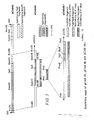
- gCAB 48 A map of this clone is shown in Figure 1 in which also shows subclones generated for further analysis.
- pCAB48 is the plasmid obtained by cloning the 13 kb EcoRI fragment of gCAB48 into the publicly available plasmid pBR322.
- pCAB48.1 is the plasmid obtained by cloning the 2.8 kb PstI fragment of gCAB48 into the publicly available plasmid pUC19.
- DNA was prepared from gCAB 48, and the hybridising Pst1 fragment of 2.8 kb subcloned into M13 for sequence analysis. This was carried out by the method of Sanger et al (16). The complete sequence of this gene and its 5′ and 3′ flanking regions contained on the PstI fragment was determined.
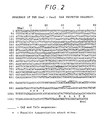
- Figure 2 shows the base sequence of the XbaI/NcoI BAB promoter fragment.
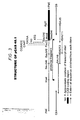
- Figure 3 shows the schematic representation of the CAB gene encoded in pCAB48.1. This gene encodes a complete CAB gene of 264 amino acids including a leader sequence of 32 amino acids required for targeting to the chloroplast membranes. It also contains 5′ upstream sequences of 1.9 kb sufficient for the green-tissue specific expression required.
- EXAMPLE 2 Use of the CAB promoter to drive green tissue specific expression of a foreign gene in transgenic plants.
- the 2.8 kb PstI fragment from 1.3 above containing the complete CAB gene was subcloned into the common cloning vector pUC19 to yield vector pCAB 48.1.
- the CAB promoter can be conveniently isolated from this plasmid on a XbaI-NcoI fragment.
- This piece of DNA contains 1.0 kb of 5′ upstream region (promoter), 60 bases of the 5′ untranslated region of the CAB mRNA, and 18 bases coding for amino acids of the pre-CAB polypeptide sequence. This promoter fragment is useful for the construction of translational fusions.
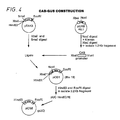
- the translational fusion of the CAB promoter to the bacterial ⁇ -glucuronidase (GUS) gene was accomplished by cutting pCAB 48.1 with NcoI and filling in the ends under standard conditions using DNA polymerase Klenow fragment A. Then the plasmid was cut with XbaI. The 1.2 kb promoter fragment was isolated after separation on agarose gel electrophoresis, and purified by phenol extraction and ethanol precipitation. The fragment was then cloned into pTAK3 (17), cut with XhoI and SmaI. This procedure yielded plasmid pCG1, a binary plant transformation vector.
- the CAB-GUS expression cassette was easily transferred to publicly available plasmid pUC18 by restriction with HindIII and EcoRI as shown in Figure 4. The resulting plasmid was named pCG2.
- the CAB promoter can be used to drive the expression of an insecticidal gene such as the ⁇ -endotoxin gene from B. thuringiensis (B.t.). This is exemplified here by the fusion of the gene isolated from strain HD73 (obtainable from the US Department of Agriculture). However, any other B. thuringiensis gene may be used instead.
- An intermediary vector pOL1 was constructed by cloning a synthetic oligonucleotide of the structure shown in Figure 5 into pUC18. The truncated B.t. gene from pJRD2 (see below) was cloned into this vector. This is shown in Figure 6.
- Plasmid pJRD2 was constructed by excising the N-terminal portion of the ⁇ -endotoxin gene on a Dra1 fragment of 2.2 kb, and cloning this fragment behind the CaMV35S promoter in plasmid pJR1 (20). Plasmids including this fragment have been shown to confer insecticidal properties on bacterial strains and plants derived from them.
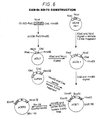
- pOL1 was then digested with XbaI and NcoI and the 1.1 kb XbaI/NcoI promoter fragment from pCAB48.1 cloned into it. This gave the plasmid pCOL1. From this was generated the plasmid pCBT1 by digesting with ClaI and Hind III, and cloning in the 2.2 kb fragment isolated from pJRD2 by partial digestion with Hind III and ClaI. From pCBT1 was subsequently prepared pCBT2, by isolating the 3.6 kb CAB-Bt-nos fragment following digestion with Hind III and EcoRI (partial) and cloning into Bin 19.
- CAB promoter may be required to drive the expression of a foreign gene in a transcriptional fusion.
- the promoter fragment can be isolated on a XbaI-Sau3A fragment after Xba1 and partial Sau3A restriction.
- the Sau3A sites are located 12 and 7 bases from the methionine start codon.
- the CAB promoter fragment can be cloned into the GUS expression vectors pTAK1/3 (17) by insertion into the XbaI-BamH1 sites found in the polylinker region of these vectors.
- the CAB promoter isolated on an XbaI-Sau3A fragment is cloned into pUC19 cut with BamH1 and Xba1. This yields pTCAB1.
- the B.t. gene is excised from pJRD2 by cutting it with HindIII and partially cutting it with ClaI.
- the resulting 2.4 kb fragment containing the B.t. gene and the nos terminator is made blunt-ended using Klenow polymerase fragment A.
- This fragment is cloned into pTCAB1 cut with SmaI to yield pTCBT1.
- This transcriptional fusion is a direct DNA transformation vector.
- pTCBT1 is cut with EcoRI and HindIII. The resulting fragment is cloned into Bin 19.
- the vector pCG1 described in 2.2 above ( Figure 4), based on the binary plant transformation vector Bin19, was transferred to Agrobacteria by triparental mating. A culture of these bacteria is then used to transfer pCG1 DNA to tobacco plants using standard protocols (18). Transformed plants were generated after selection on kanamycin-containing media (using the method described in EPA 270248). Plants transformed with the GUS expression module were assayed for GUS activity at room temperature using standard protocols.
- Results are shown in Table 3.1 below. They indicate that the maize CAB gene promoter drives expression of foreign genes in transgenic plants.
- a first bioassay was carried out on 24 plants using six Heliothis larvae for infestation of each plant. The results are shown in Table 3.2 below and show that transformant plants appear to be damaged to a lesser extent than control plants of similar size. In plants Nos. 21 and 31, for example, damage is only 33% of that of the control.
- Tobacco leaf mesophyll protoplasts were prepared following published methods (19), and used in PEG-mediated DNA uptake experiments with the plasmid pCG2 from Example 2.2.
- Expression of CAB-promoter driven bacterial marker gene (GUS) was measured using standard methods. The results indicate that the maize CAB promoter drives the expression of the GUS gene very effectively in this system (Table 3.3).
- DNA is isolated from transformed plants produced in Example 3 and the presence of the transferred gene constructs demonstrated Southern hybridisation.
- Plasmids and constructs referred to in the present specification were deposited in Escherichia coli , strain TG2 hosts, at the National Collections of Industrial and Marine Bacteria (NCIMB) Torry Research Station, PO Box 31, 135 Abbey Road, Aberdeen AB9 8DG, Scotland under the following references and on the dates stated: Plasmid Example or Experiment NCIMB No. Date pCAB48.1 2.1 40036 22 July 1988 pCG2 2.2 40037 22 July 1988 pCBT1 2.6 40038 22 July 1988 pTAK1 2.5 12353 11 Nov. 1986 pTAK3 2.5 12355 11 Nov. 1986
Landscapes
- Health & Medical Sciences (AREA)
- Chemical & Material Sciences (AREA)
- Life Sciences & Earth Sciences (AREA)
- Genetics & Genomics (AREA)
- Organic Chemistry (AREA)
- Molecular Biology (AREA)
- Biophysics (AREA)
- General Health & Medical Sciences (AREA)
- Biochemistry (AREA)
- Engineering & Computer Science (AREA)
- Wood Science & Technology (AREA)
- Biotechnology (AREA)
- General Engineering & Computer Science (AREA)
- Proteomics, Peptides & Aminoacids (AREA)
- Bioinformatics & Cheminformatics (AREA)
- Medicinal Chemistry (AREA)
- Biomedical Technology (AREA)
- Zoology (AREA)
- Gastroenterology & Hepatology (AREA)
- Insects & Arthropods (AREA)
- Botany (AREA)
- Cell Biology (AREA)
- Crystallography & Structural Chemistry (AREA)
- Physics & Mathematics (AREA)
- Microbiology (AREA)
- Plant Pathology (AREA)
- Pest Control & Pesticides (AREA)
- Breeding Of Plants And Reproduction By Means Of Culturing (AREA)
- Fertilizers (AREA)
- Micro-Organisms Or Cultivation Processes Thereof (AREA)
- Agricultural Chemicals And Associated Chemicals (AREA)
- Preparation Of Compounds By Using Micro-Organisms (AREA)
- Revetment (AREA)
- Cultivation Of Plants (AREA)
Applications Claiming Priority (2)
| Application Number | Priority Date | Filing Date | Title |
|---|---|---|---|
| GB8818706 | 1988-08-05 | ||
| GB888818706A GB8818706D0 (en) | 1988-08-05 | 1988-08-05 | Dna constructs & plants incorporating them |
Publications (3)
| Publication Number | Publication Date |
|---|---|
| EP0353908A2 true EP0353908A2 (de) | 1990-02-07 |
| EP0353908A3 EP0353908A3 (en) | 1990-08-01 |
| EP0353908B1 EP0353908B1 (de) | 1995-05-17 |
Family
ID=10641705
Family Applications (1)
| Application Number | Title | Priority Date | Filing Date |
|---|---|---|---|
| EP89307342A Expired - Lifetime EP0353908B1 (de) | 1988-08-05 | 1989-07-19 | DNS-Konstruktionen und enthaltende Pflanzen |
Country Status (7)
| Country | Link |
|---|---|
| EP (1) | EP0353908B1 (de) |
| JP (1) | JPH0286783A (de) |
| AT (1) | ATE122717T1 (de) |
| AU (1) | AU617499B2 (de) |
| DE (1) | DE68922669T2 (de) |
| GB (1) | GB8818706D0 (de) |
| NZ (1) | NZ230206A (de) |
Cited By (17)
| Publication number | Priority date | Publication date | Assignee | Title |
|---|---|---|---|---|
| WO1993007278A1 (en) * | 1991-10-04 | 1993-04-15 | Ciba-Geigy Ag | Synthetic dna sequence having enhanced insecticidal activity in maize |
| US5554798A (en) * | 1990-01-22 | 1996-09-10 | Dekalb Genetics Corporation | Fertile glyphosate-resistant transgenic corn plants |
| US5780709A (en) * | 1993-08-25 | 1998-07-14 | Dekalb Genetics Corporation | Transgenic maize with increased mannitol content |
| US5874265A (en) * | 1990-04-17 | 1999-02-23 | Dekalb Genetics Corporation | Methods and compositions for the production of stably transformed fertile monocot plants and cells thereof |
| US5990390A (en) * | 1990-01-22 | 1999-11-23 | Dekalb Genetics Corporation | Methods and compositions for the production of stably transformed, fertile monocot plants and cells thereof |
| WO1999043797A3 (en) * | 1998-02-26 | 2000-02-24 | Pioneer Hi Bred Int | Constitutive maize promoters |
| US6040497A (en) * | 1997-04-03 | 2000-03-21 | Dekalb Genetics Corporation | Glyphosate resistant maize lines |
| US6121521A (en) * | 1998-04-01 | 2000-09-19 | Novartis Ag | Chimeric insecticidal protein and DNA coding therefor |
| US6399861B1 (en) | 1990-04-17 | 2002-06-04 | Dekalb Genetics Corp. | Methods and compositions for the production of stably transformed, fertile monocot plants and cells thereof |
| US6403865B1 (en) | 1990-08-24 | 2002-06-11 | Syngenta Investment Corp. | Method of producing transgenic maize using direct transformation of commercially important genotypes |
| US6762344B1 (en) | 1997-04-03 | 2004-07-13 | Dekalb Genetics Corporation | Method of plant breeding |
| EP1462522A3 (de) * | 1998-02-26 | 2004-10-06 | Pioneer Hi-Bred International, Inc. | Mais met-1 Promoter |
| US6803499B1 (en) | 1989-08-09 | 2004-10-12 | Dekalb Genetics Corporation | Methods and compositions for the production of stably transformed, fertile monocot plants and cells thereof |
| US6946587B1 (en) | 1990-01-22 | 2005-09-20 | Dekalb Genetics Corporation | Method for preparing fertile transgenic corn plants |
| WO2015112846A1 (en) * | 2014-01-23 | 2015-07-30 | Dow Agrosciences Llc | Zea mays regulatory elements and uses thereof |
| US9139838B2 (en) | 2011-07-01 | 2015-09-22 | Monsanto Technology Llc | Methods and compositions for selective regulation of protein expression |
| US9192112B2 (en) | 2005-10-13 | 2015-11-24 | Monsanto Technology Llc | Methods for producing hybrid seed |
Families Citing this family (6)
| Publication number | Priority date | Publication date | Assignee | Title |
|---|---|---|---|---|
| US6329574B1 (en) | 1990-01-22 | 2001-12-11 | Dekalb Genetics Corporation | High lysine fertile transgenic corn plants |
| WO1991010725A1 (en) | 1990-01-22 | 1991-07-25 | Dekalb Plant Genetics | Fertile transgenic corn plants |
| US6395966B1 (en) | 1990-08-09 | 2002-05-28 | Dekalb Genetics Corp. | Fertile transgenic maize plants containing a gene encoding the pat protein |
| US6118047A (en) | 1993-08-25 | 2000-09-12 | Dekalb Genetic Corporation | Anthranilate synthase gene and method of use thereof for conferring tryptophan overproduction |
| US6326527B1 (en) | 1993-08-25 | 2001-12-04 | Dekalb Genetics Corporation | Method for altering the nutritional content of plant seed |
| BR102014025574A2 (pt) * | 2013-10-15 | 2015-09-29 | Dow Agrosciences Llc | elementos regulatórios de zea mays e usos dos mesmos |
Family Cites Families (3)
| Publication number | Priority date | Publication date | Assignee | Title |
|---|---|---|---|---|
| BR8600161A (pt) * | 1985-01-18 | 1986-09-23 | Plant Genetic Systems Nv | Gene quimerico,vetores de plasmidio hibrido,intermediario,processo para controlar insetos em agricultura ou horticultura,composicao inseticida,processo para transformar celulas de plantas para expressar uma toxina de polipeptideo produzida por bacillus thuringiensis,planta,semente de planta,cultura de celulas e plasmidio |
| NZ219472A (en) * | 1986-03-28 | 1990-08-28 | Calgene Inc | Regulation of phenotype in plant cells using dsdna constructs |
| MA20977A1 (fr) * | 1986-05-19 | 1987-12-31 | Ciba Geigy Ag | Plantes tolerant les herbicides contenant le gene de gluthathione S-Transferase |
-
1988
- 1988-08-05 GB GB888818706A patent/GB8818706D0/en active Pending
-
1989
- 1989-07-19 EP EP89307342A patent/EP0353908B1/de not_active Expired - Lifetime
- 1989-07-19 AT AT89307342T patent/ATE122717T1/de not_active IP Right Cessation
- 1989-07-19 DE DE68922669T patent/DE68922669T2/de not_active Expired - Fee Related
- 1989-08-02 AU AU39183/89A patent/AU617499B2/en not_active Ceased
- 1989-08-04 NZ NZ230206A patent/NZ230206A/en unknown
- 1989-08-05 JP JP1202301A patent/JPH0286783A/ja active Pending
Cited By (38)
| Publication number | Priority date | Publication date | Assignee | Title |
|---|---|---|---|---|
| US6803499B1 (en) | 1989-08-09 | 2004-10-12 | Dekalb Genetics Corporation | Methods and compositions for the production of stably transformed, fertile monocot plants and cells thereof |
| US5990390A (en) * | 1990-01-22 | 1999-11-23 | Dekalb Genetics Corporation | Methods and compositions for the production of stably transformed, fertile monocot plants and cells thereof |
| US5554798A (en) * | 1990-01-22 | 1996-09-10 | Dekalb Genetics Corporation | Fertile glyphosate-resistant transgenic corn plants |
| US6946587B1 (en) | 1990-01-22 | 2005-09-20 | Dekalb Genetics Corporation | Method for preparing fertile transgenic corn plants |
| US6777589B1 (en) | 1990-01-22 | 2004-08-17 | Dekalb Genetics Corporation | Methods and compositions for the production of stably transformed, fertile monocot plants and cells thereof |
| US6399861B1 (en) | 1990-04-17 | 2002-06-04 | Dekalb Genetics Corp. | Methods and compositions for the production of stably transformed, fertile monocot plants and cells thereof |
| US7705215B1 (en) | 1990-04-17 | 2010-04-27 | Dekalb Genetics Corporation | Methods and compositions for the production of stably transformed, fertile monocot plants and cells thereof |
| US5969213A (en) * | 1990-04-17 | 1999-10-19 | Dekalb Genetics Corporation | Methods and compositions for the production of stably transformed fertile monocot plants and cells thereof |
| US5874265A (en) * | 1990-04-17 | 1999-02-23 | Dekalb Genetics Corporation | Methods and compositions for the production of stably transformed fertile monocot plants and cells thereof |
| US5919675A (en) * | 1990-04-17 | 1999-07-06 | Dekalb Genetics Corporation | Methods and compositions for the production of stably transformed, fertile monocot plants and cells thereof |
| US6403865B1 (en) | 1990-08-24 | 2002-06-11 | Syngenta Investment Corp. | Method of producing transgenic maize using direct transformation of commercially important genotypes |
| US5625136A (en) * | 1991-10-04 | 1997-04-29 | Ciba-Geigy Corporation | Synthetic DNA sequence having enhanced insecticidal activity in maize |
| US6051760A (en) * | 1991-10-04 | 2000-04-18 | Novartis Finance Corporation | Synthetic DNA sequence having enhanced insecticidal activity in maize |
| US6075185A (en) * | 1991-10-04 | 2000-06-13 | Novartis Finance Corporation | Synthetic DNA sequence having enhanced insecticidal activity in maize |
| US5859336A (en) * | 1991-10-04 | 1999-01-12 | Novartis Corporation | Synthetic DNA sequence having enhanced activity in maize |
| US6121014A (en) * | 1991-10-04 | 2000-09-19 | Novartis Finance Corporation | Method for producing a plant-optimized nucleic acid coding sequence |
| US6320100B1 (en) | 1991-10-04 | 2001-11-20 | Syngenta Investments, Inc. | Synthetic DNA sequences having enhanced insecticidal activity in maize |
| WO1993007278A1 (en) * | 1991-10-04 | 1993-04-15 | Ciba-Geigy Ag | Synthetic dna sequence having enhanced insecticidal activity in maize |
| US6018104A (en) * | 1991-10-04 | 2000-01-25 | Novartis Finance Corporation | Nucleic acid promoter fragment isolated from a plant tryptophan synthase alpha subunit (trpA) gene |
| EP1209237A3 (de) * | 1991-10-04 | 2002-07-31 | Syngenta Participations AG | Synthetische DNA-Sequenz mit verstärkter isektizider Aktivität in Mais |
| US6720488B2 (en) | 1991-10-04 | 2004-04-13 | Syngenta Investment Corporation | Transgenic maize seed and method for controlling insect pests |
| US5780709A (en) * | 1993-08-25 | 1998-07-14 | Dekalb Genetics Corporation | Transgenic maize with increased mannitol content |
| US6040497A (en) * | 1997-04-03 | 2000-03-21 | Dekalb Genetics Corporation | Glyphosate resistant maize lines |
| US6762344B1 (en) | 1997-04-03 | 2004-07-13 | Dekalb Genetics Corporation | Method of plant breeding |
| US7314970B2 (en) | 1997-04-03 | 2008-01-01 | Monanto Technology, Llc | Method for plant breeding |
| EP1462522A3 (de) * | 1998-02-26 | 2004-10-06 | Pioneer Hi-Bred International, Inc. | Mais met-1 Promoter |
| EP1464707A1 (de) * | 1998-02-26 | 2004-10-06 | Pioneer Hi-Bred International, Inc. | Mais alpha-tubulin 3-18 Promoter |
| US6177611B1 (en) | 1998-02-26 | 2001-01-23 | Pioneer Hi-Bred International, Inc. | Maize promoters |
| WO1999043797A3 (en) * | 1998-02-26 | 2000-02-24 | Pioneer Hi Bred Int | Constitutive maize promoters |
| US6121521A (en) * | 1998-04-01 | 2000-09-19 | Novartis Ag | Chimeric insecticidal protein and DNA coding therefor |
| US9192112B2 (en) | 2005-10-13 | 2015-11-24 | Monsanto Technology Llc | Methods for producing hybrid seed |
| US10876126B2 (en) | 2005-10-13 | 2020-12-29 | Monsanto Technology Llc | Methods for producing hybrid seed |
| US9139838B2 (en) | 2011-07-01 | 2015-09-22 | Monsanto Technology Llc | Methods and compositions for selective regulation of protein expression |
| US9816106B2 (en) | 2011-07-01 | 2017-11-14 | Monsanto Technology Llc | Methods and compositions for selective regulation of protein expression |
| US10689667B2 (en) | 2011-07-01 | 2020-06-23 | Monsanto Technology Llc | Methods and compositions for selective regulation of protein expression |
| US11560574B2 (en) | 2011-07-01 | 2023-01-24 | Monsanto Technology Llc | Methods and compositions for selective regulation of protein expression |
| WO2015112846A1 (en) * | 2014-01-23 | 2015-07-30 | Dow Agrosciences Llc | Zea mays regulatory elements and uses thereof |
| AU2015209181B2 (en) * | 2014-01-23 | 2018-01-18 | Dow Agrosciences Llc | Zea mays regulatory elements and uses thereof |
Also Published As
| Publication number | Publication date |
|---|---|
| NZ230206A (en) | 1991-06-25 |
| DE68922669T2 (de) | 1995-10-05 |
| DE68922669D1 (de) | 1995-06-22 |
| JPH0286783A (ja) | 1990-03-27 |
| ATE122717T1 (de) | 1995-06-15 |
| EP0353908A3 (en) | 1990-08-01 |
| AU3918389A (en) | 1990-02-08 |
| EP0353908B1 (de) | 1995-05-17 |
| GB8818706D0 (en) | 1988-09-07 |
| AU617499B2 (en) | 1991-11-28 |
Similar Documents
| Publication | Publication Date | Title |
|---|---|---|
| EP0353908B1 (de) | DNS-Konstruktionen und enthaltende Pflanzen | |
| US5567862A (en) | Synthetic insecticidal crystal protein gene | |
| US6015891A (en) | Synthetic insecticidal crystal protein gene having a modified frequency of codon usage | |
| US5882668A (en) | Maize protein for insect control | |
| US5567600A (en) | Synthetic insecticidal crystal protein gene | |
| EP0354687B1 (de) | Überexpression von Phytochrom in transgenen Pflanzen | |
| EP0455665B1 (de) | Herstellung von hybridem saatgut | |
| CA2108000C (en) | Enhanced gene expression in plants using an hsp70 intron sequence | |
| CA1341172C (en) | Synthetic insecticidal crystal protein gene | |
| EP0637339B1 (de) | Dna-konstruktionen und diese enthaltende pflanzen | |
| EP0651813B1 (de) | Brassica regulatorische sequenz für wurzelspezifische oder wurzelreichliche gen expression | |
| EP0142924B1 (de) | Insektresistente Pflanzen | |
| US5633440A (en) | P119 promoters and their uses | |
| EP0359617A2 (de) | Stress-tolerante Pflanzen | |
| CA2166405A1 (en) | Transgenic plants containing multiple disease resistance genes | |
| CA2078229A1 (en) | Plant promoter | |
| GB2197653A (en) | Gene fusion comprising beta -glucuronidase | |
| EP0270248B1 (de) | Für den Fremdproteintransport zur pflanzlichen Zellwand verwendbare DNS | |
| WO1993006711A1 (en) | Tomato acid invertase gene | |
| US5374540A (en) | Chitinase-producing bacteria and plants | |
| US5850018A (en) | Expression control sequence for general and effective expression of genes in plants | |
| AU5434499A (en) | Polynucleotide sequences | |
| EP0494215A1 (de) | Lichtaktivierbarer pflanzenpromoter | |
| CN100424177C (zh) | 融合杀虫基因cryci及其应用 | |
| AU705682C (en) | An expression control sequence for general and effective expression of genes in plants |
Legal Events
| Date | Code | Title | Description |
|---|---|---|---|
| PUAI | Public reference made under article 153(3) epc to a published international application that has entered the european phase |
Free format text: ORIGINAL CODE: 0009012 |
|
| AK | Designated contracting states |
Kind code of ref document: A2 Designated state(s): AT BE CH DE ES FR GB GR IT LI LU NL SE |
|
| PUAL | Search report despatched |
Free format text: ORIGINAL CODE: 0009013 |
|
| AK | Designated contracting states |
Kind code of ref document: A3 Designated state(s): AT BE CH DE ES FR GB GR IT LI LU NL SE |
|
| 17P | Request for examination filed |
Effective date: 19901126 |
|
| 17Q | First examination report despatched |
Effective date: 19930304 |
|
| RAP1 | Party data changed (applicant data changed or rights of an application transferred) |
Owner name: ZENECA LIMITED |
|
| GRAA | (expected) grant |
Free format text: ORIGINAL CODE: 0009210 |
|
| AK | Designated contracting states |
Kind code of ref document: B1 Designated state(s): AT BE CH DE ES FR GB GR IT LI LU NL SE |
|
| PG25 | Lapsed in a contracting state [announced via postgrant information from national office to epo] |
Ref country code: ES Free format text: THE PATENT HAS BEEN ANNULLED BY A DECISION OF A NATIONAL AUTHORITY Effective date: 19950517 Ref country code: AT Effective date: 19950517 Ref country code: CH Effective date: 19950517 Ref country code: LI Effective date: 19950517 Ref country code: NL Free format text: LAPSE BECAUSE OF NON-PAYMENT OF DUE FEES Effective date: 19950517 Ref country code: GR Free format text: LAPSE BECAUSE OF FAILURE TO SUBMIT A TRANSLATION OF THE DESCRIPTION OR TO PAY THE FEE WITHIN THE PRESCRIBED TIME-LIMIT Effective date: 19950517 |
|
| REF | Corresponds to: |
Ref document number: 122717 Country of ref document: AT Date of ref document: 19950615 Kind code of ref document: T |
|
| REF | Corresponds to: |
Ref document number: 68922669 Country of ref document: DE Date of ref document: 19950622 |
|
| ITF | It: translation for a ep patent filed | ||
| PG25 | Lapsed in a contracting state [announced via postgrant information from national office to epo] |
Ref country code: LU Free format text: LAPSE BECAUSE OF NON-PAYMENT OF DUE FEES Effective date: 19950731 |
|
| ET | Fr: translation filed | ||
| PG25 | Lapsed in a contracting state [announced via postgrant information from national office to epo] |
Ref country code: SE Effective date: 19950817 |
|
| REG | Reference to a national code |
Ref country code: CH Ref legal event code: PL |
|
| NLV1 | Nl: lapsed or annulled due to failure to fulfill the requirements of art. 29p and 29m of the patents act | ||
| PLBE | No opposition filed within time limit |
Free format text: ORIGINAL CODE: 0009261 |
|
| STAA | Information on the status of an ep patent application or granted ep patent |
Free format text: STATUS: NO OPPOSITION FILED WITHIN TIME LIMIT |
|
| 26N | No opposition filed | ||
| REG | Reference to a national code |
Ref country code: GB Ref legal event code: IF02 |
|
| REG | Reference to a national code |
Ref country code: FR Ref legal event code: CD Ref country code: FR Ref legal event code: CA |
|
| PGFP | Annual fee paid to national office [announced via postgrant information from national office to epo] |
Ref country code: DE Payment date: 20060713 Year of fee payment: 18 |
|
| PGFP | Annual fee paid to national office [announced via postgrant information from national office to epo] |
Ref country code: FR Payment date: 20060719 Year of fee payment: 18 Ref country code: GB Payment date: 20060719 Year of fee payment: 18 |
|
| PGFP | Annual fee paid to national office [announced via postgrant information from national office to epo] |
Ref country code: IT Payment date: 20060731 Year of fee payment: 18 |
|
| PGFP | Annual fee paid to national office [announced via postgrant information from national office to epo] |
Ref country code: BE Payment date: 20060912 Year of fee payment: 18 |
|
| BERE | Be: lapsed |
Owner name: *SYNGENTA LTD Effective date: 20070731 |
|
| GBPC | Gb: european patent ceased through non-payment of renewal fee |
Effective date: 20070719 |
|
| PG25 | Lapsed in a contracting state [announced via postgrant information from national office to epo] |
Ref country code: DE Free format text: LAPSE BECAUSE OF NON-PAYMENT OF DUE FEES Effective date: 20080201 |
|
| PG25 | Lapsed in a contracting state [announced via postgrant information from national office to epo] |
Ref country code: GB Free format text: LAPSE BECAUSE OF NON-PAYMENT OF DUE FEES Effective date: 20070719 |
|
| REG | Reference to a national code |
Ref country code: FR Ref legal event code: ST Effective date: 20080331 |
|
| PG25 | Lapsed in a contracting state [announced via postgrant information from national office to epo] |
Ref country code: BE Free format text: LAPSE BECAUSE OF NON-PAYMENT OF DUE FEES Effective date: 20070731 |
|
| PG25 | Lapsed in a contracting state [announced via postgrant information from national office to epo] |
Ref country code: FR Free format text: LAPSE BECAUSE OF NON-PAYMENT OF DUE FEES Effective date: 20070731 |
|
| PG25 | Lapsed in a contracting state [announced via postgrant information from national office to epo] |
Ref country code: IT Free format text: LAPSE BECAUSE OF NON-PAYMENT OF DUE FEES Effective date: 20070719 |