EP0354491A2 - Micro-organismes nématocides, leur isolation et leur utilisation comme bio-nématicides - Google Patents
Micro-organismes nématocides, leur isolation et leur utilisation comme bio-nématicides Download PDFInfo
- Publication number
- EP0354491A2 EP0354491A2 EP89114460A EP89114460A EP0354491A2 EP 0354491 A2 EP0354491 A2 EP 0354491A2 EP 89114460 A EP89114460 A EP 89114460A EP 89114460 A EP89114460 A EP 89114460A EP 0354491 A2 EP0354491 A2 EP 0354491A2
- Authority
- EP
- European Patent Office
- Prior art keywords
- chitin
- soil
- microorganisms
- nematicidal
- collagen
- Prior art date
- Legal status (The legal status is an assumption and is not a legal conclusion. Google has not performed a legal analysis and makes no representation as to the accuracy of the status listed.)
- Withdrawn
Links
Images



Classifications
-
- A—HUMAN NECESSITIES
- A01—AGRICULTURE; FORESTRY; ANIMAL HUSBANDRY; HUNTING; TRAPPING; FISHING
- A01N—PRESERVATION OF BODIES OF HUMANS OR ANIMALS OR PLANTS OR PARTS THEREOF; BIOCIDES, e.g. AS DISINFECTANTS, AS PESTICIDES OR AS HERBICIDES; PEST REPELLANTS OR ATTRACTANTS; PLANT GROWTH REGULATORS
- A01N63/00—Biocides, pest repellants or attractants, or plant growth regulators containing microorganisms, viruses, microbial fungi, animals or substances produced by, or obtained from, microorganisms, viruses, microbial fungi or animals, e.g. enzymes or fermentates
- A01N63/20—Bacteria; Substances produced thereby or obtained therefrom
- A01N63/27—Pseudomonas
-
- C—CHEMISTRY; METALLURGY
- C12—BIOCHEMISTRY; BEER; SPIRITS; WINE; VINEGAR; MICROBIOLOGY; ENZYMOLOGY; MUTATION OR GENETIC ENGINEERING
- C12N—MICROORGANISMS OR ENZYMES; COMPOSITIONS THEREOF; PROPAGATING, PRESERVING, OR MAINTAINING MICROORGANISMS; MUTATION OR GENETIC ENGINEERING; CULTURE MEDIA
- C12N1/00—Microorganisms; Compositions thereof; Processes of propagating, maintaining or preserving microorganisms or compositions thereof; Processes of preparing or isolating a composition containing a microorganism; Culture media therefor
- C12N1/14—Fungi; Culture media therefor
- C12N1/145—Fungi isolates
-
- C—CHEMISTRY; METALLURGY
- C12—BIOCHEMISTRY; BEER; SPIRITS; WINE; VINEGAR; MICROBIOLOGY; ENZYMOLOGY; MUTATION OR GENETIC ENGINEERING
- C12N—MICROORGANISMS OR ENZYMES; COMPOSITIONS THEREOF; PROPAGATING, PRESERVING, OR MAINTAINING MICROORGANISMS; MUTATION OR GENETIC ENGINEERING; CULTURE MEDIA
- C12N1/00—Microorganisms; Compositions thereof; Processes of propagating, maintaining or preserving microorganisms or compositions thereof; Processes of preparing or isolating a composition containing a microorganism; Culture media therefor
- C12N1/20—Bacteria; Culture media therefor
- C12N1/205—Bacterial isolates
-
- C—CHEMISTRY; METALLURGY
- C12—BIOCHEMISTRY; BEER; SPIRITS; WINE; VINEGAR; MICROBIOLOGY; ENZYMOLOGY; MUTATION OR GENETIC ENGINEERING
- C12R—INDEXING SCHEME ASSOCIATED WITH SUBCLASSES C12C - C12Q, RELATING TO MICROORGANISMS
- C12R2001/00—Microorganisms ; Processes using microorganisms
- C12R2001/01—Bacteria or Actinomycetales ; using bacteria or Actinomycetales
-
- C—CHEMISTRY; METALLURGY
- C12—BIOCHEMISTRY; BEER; SPIRITS; WINE; VINEGAR; MICROBIOLOGY; ENZYMOLOGY; MUTATION OR GENETIC ENGINEERING
- C12R—INDEXING SCHEME ASSOCIATED WITH SUBCLASSES C12C - C12Q, RELATING TO MICROORGANISMS
- C12R2001/00—Microorganisms ; Processes using microorganisms
- C12R2001/01—Bacteria or Actinomycetales ; using bacteria or Actinomycetales
- C12R2001/38—Pseudomonas
-
- C—CHEMISTRY; METALLURGY
- C12—BIOCHEMISTRY; BEER; SPIRITS; WINE; VINEGAR; MICROBIOLOGY; ENZYMOLOGY; MUTATION OR GENETIC ENGINEERING
- C12R—INDEXING SCHEME ASSOCIATED WITH SUBCLASSES C12C - C12Q, RELATING TO MICROORGANISMS
- C12R2001/00—Microorganisms ; Processes using microorganisms
- C12R2001/645—Fungi ; Processes using fungi
-
- Y—GENERAL TAGGING OF NEW TECHNOLOGICAL DEVELOPMENTS; GENERAL TAGGING OF CROSS-SECTIONAL TECHNOLOGIES SPANNING OVER SEVERAL SECTIONS OF THE IPC; TECHNICAL SUBJECTS COVERED BY FORMER USPC CROSS-REFERENCE ART COLLECTIONS [XRACs] AND DIGESTS
- Y10—TECHNICAL SUBJECTS COVERED BY FORMER USPC
- Y10S—TECHNICAL SUBJECTS COVERED BY FORMER USPC CROSS-REFERENCE ART COLLECTIONS [XRACs] AND DIGESTS
- Y10S435/00—Chemistry: molecular biology and microbiology
- Y10S435/8215—Microorganisms
- Y10S435/822—Microorganisms using bacteria or actinomycetales
- Y10S435/874—Pseudomonas
Definitions
- the present invention is in the field of biological control of pests and more specifically concerns the use of microorganisms isolated from a chitin or collagen enriched soil as bionematicides.
- nematode eating bacteria for controlling nematodes infestation such as root-knot nematodes, root lesion nematodes and cyst nematodes, has been disclosed in J-A1-58-024508.
- a solution containing nematode-eating bacteria is impregnated into porous materials such as vermiculite, pearlite, zeolite or peat moss, and the so impregnated porous material is added to the plants environment.
- microorganisms isolated from chitin or collagen enriched soil were found to be very effective in controlling soil nematodes probably by destroying their egg-shells or egg sacs. It has, moreover, been surprisingly found, in accordance with the invention, that a growth medium in which said microorganisms were raised and from which they were recovered, a supernatant, a homogenate, or an extract thereof, as well as solid products obtainable from such supernatant, homogenate or extract can also be effective in controlling soil nematodes.
- Such supernatants, homogenate extracts and solid products will be referred to hereinafter collectively as "residual medium” and "residual media”.
- the invention further provides a method of preparing a pure culture of nematicidal microorganism, comprising artificially enriching soil with chitin or collagen, allowing the microorganisms to proliferate in such soil, admixing a microorganism bearing soil sample with either chitin or collagen (depending on the type of soil enrichment) to produce a growth mixture with the chitin or collagen as essentially the sole carbon source, incubating said growth mixture to induce microorganismal growth, subjecting the so obtained microorganismal culture to purification procedures known per se.
- Also provided by the present invention are nematicidal methods and composition utilizing the abovementioned three microorganismal strains.
- the so obtained pure cultures are grown and conserved in media comprising chitin or collagen as a carbon source, but other carbon sources such as glucose may also be present.
- the pure cultures may be stored for long periods of time by freezing or freeze drying.
- Pure cultures according to the present invention may be mutated in a controlled manner by subjecting them to the action of various mutagens, such as radioactive substances, chemical mutagens, and irradiation by ⁇ - or X-rays, in order to obtain a new mutant strain with improved nematicidal capability or other improved properties such as improved viability, susceptibility to storage, high growth rate and the like.
- mutagens such as radioactive substances, chemical mutagens, and irradiation by ⁇ - or X-rays
- the term "pure cultures of nematicidal microorganisms" used herein applies to both a parent strain of nematicidal microorganisms as first obtained in pure culture form and a nematicidally active mutant thereof.
- nematicidal microorganisms are required in order to prepare agricultural composition comprising these.
- Such large quantities are best obtained by a fermentation process that comprises inoculating a sample of a microorganismal culture of the kind specified, preferably in pure culture form, into a fermentation tank containing a fermentation medium which includes chitin and/or collagen as the case may be and other nutrients.
- the fermentation is carried on until a sufficient concentration of the microorganism is achieved, e.g. about 1010 cells/ml in the case of bacteria and about 107 cells/ml in the case of fungi.
- a sufficient concentration of the microorganism e.g. about 1010 cells/ml in the case of bacteria and about 107 cells/ml in the case of fungi.
- the so obtained fermentation broth may be employed as is, as a liquid nematicidal composition of nematicidal microorganisms for use in plant protection.
- the liquid composition may be prepared by transferring the microorganisms to another medium compatible with both the microorganisms and the soil environment.
- Dry formulations of nematicidal microorganisms are prepared, for example, by impregnating the so-obtained fermentation broth into a porous solid carrier which is then dried.
- a porous solid carrier which is then dried.
- care must be taken that the microorganisms remain viable even after a prolonged storage or after long periods of time in the ground and this may be achieved by various appropriate additives.
- the said carrier used should preferably be poor in nutrients so as to avoid growth of other types of microorganisms thereon.
- a dry composition of the nematicidal microorganism is generally prepared by contacting particles of the solid carrier with a liquid suspension of the microorganisms for a sufficient time for the particles to become impregnated with the microorganismal suspension. Thereafter the carrier is separated from the liquid and dried. Optionally various additives such as adherents may be added prior to drying the impregnated carrier.
- a dry composition of nematicidal microorganisms according to the invention may be supplied to soil by conventional methods.
- the composition may be spread in a field (the whole area or parts thereof) by means of a sowing machine or by apparatus conventionally used for spreading of dry fertilizer.
- the dry composition may also be included in pot soil mixtures.
- a medium in which nematicidal microorganisms were grown and from which they were recovered also possess nematicidal activity. Accordingly, such a medium may be used as is as a nematicidal composition, or may be processed in a manner known per se, into aqueous or dry products with nematicidal activity. As mentioned above, such residual media are effective nematicidal agents and are applied in a similar manner as the bacteria proper.
- Liquid compositions of nematicidal microorganisms and/or residual media may also be used to impregnate seeds or plant roots prior to seeding or planting, respectively.
- the enriched soil may either be in an open plot or within an enclosure such as a hot house, various kinds of containers, pots and the like.
- One suitable source of chitin for that purpose are various chitin rich waste products such as those obtained from ground crustacean shells and the like.
- One suitable source of collagen may, for example be the kind which is used in the meat industry. Where the chitin or collagen source is spread on the soil, a suitable amount thereof is about 15-20g/m2. Where, on the other hand, the chitin or collagen source is admixed with soil, e.g. for use as a pot mixture, a suitable amount is about 0.01-0.05% by weight (w/w).
- chitinolytic bacteria Once the chitinolytic bacteria have proliferated in the chitin enriched soil, samples of this soil are collected and inoculated into a selection medium comprising chitin as the sole carbon source. For this purpose it is necessary to use pure chitin so as to avoid growth of non-chitinolytic bacteria.
- a suitable pure source of chitin is, for example, colloidal chitin such as that manufactured by Sigma, MO., U.S.A., and which may also be prepared by methods known per se.
- a sample of the medium is transferred to another selection medium having essentially the same compositions for an additional selection stage.
- the selection medium is an agar medium
- single colonies of bacteria may be suspended in a liquid solution and after a sufficient dilution seeded on agar.
- the selection stages may be repeated several times until a pure culture is obtained.
- Pure cultures of chitinolytic bacteria obtained according to the invention may be conserved in a culturing vessel containing a medium which provides at least the minimal requirements for the bacteria's survival and growth.
- This medium may in principle be any bacterial growth medium known in the art but in order to suppress growth of contanimating microorganisms it is preferable to utilize a growth medium comprising chitin as the major carbon source.
- This medium may thus be similar to the selection medium, but the chitin source need not necessarily be pure.
- samples of the culture should be transferred once in a while into a new medium, e.g. once every two weeks.
- Fungal cultures in accordance with the invention may be conserved for a time in media which are suitable for fungal growth and proliferation.
- An example of such a medium is an agar substrate which comprises a carbon source such as wheat-bran extract and possibly also chitin or collagen, as the case may be.
- Conidial suspensions on the other hand, may be stored for longer period, i.e. up to about 12 months in 4°C.
- the chitinolytic bacteria may be grown in a liquid colloidal chitin medium until a logarithmic growth phase is reached.
- the bacterial suspension is then centrifuged, e.g. at 12000 g for 10 min.
- the bacterial pellet which is obtained after removal of the supernatant is suspended with 10% skimmed-milk powder, and the suspension is mixed thoroughly, e.g. by a vortex.
- the so-mixed suspension is frozen in dry ice-acetone and then lyophilized.
- Thawing or rehydrating the bacteria is performed by methods known per se.
- the fermentation medium will generally comprise a carbon source and other ingredients needed for the microorganismal growth and proliferation. However, in order to avoid growth of contaminating non-nematicidal microorganisms it is preferable to use as a carbon source, at least as the major one, either chitin or collagen, depending on the specific microorganism. In the following the fermentation will be described with respect to chitinolytic bacteria.
- the fermentation medium for obtaining large quantities of chitinolytic bacteria will preferably include chitin as a carbon source e.g. a chitin rich waste product such as crude ground crustacean shells (hereinafter "crude chitin"), and may also include additional carbon sources such as glucose.
- a carbon source e.g. a chitin rich waste product such as crude ground crustacean shells (hereinafter "crude chitin"
- additional carbon sources such as glucose
- the fermentation medium also includes buffering salts, yeast extract, glucose and a nitrogen source such as KNO3.
- the optimal pH for fermentation was found to be about 6.5-7.5.
- the optimal concentration of yeast extract was found to be between about 0.1% to about 0.4% (w/v). The preferred concentration thereof being about 0.3%.
- KNO3 When KNO3 is used as a nitrogen source, its optimal concentration in such a medium was found to be from about 0.05% to about 0.2%, with about 0.1% being preferred.
- Glucose although not an essential constituent, was found to have a positive effect on the growth of the bacteria.
- the optimal concentration range of glucose was found to be about 0.1% to 0.4%, about 0.2% being preferred.
- crude chitin When crude chitin is used as a chitin source, its preferred concentration range is from about 0.1% to 0.4%, about 0.2% being preferred.
- the growth of these bacteria was found to be sensitive to the buffering salt's concentration, which should thus be kept below about 0.01M, the preferred concentration being about 0.008M.
- final cell counts may reach 1010 cells/ml.
- a suitable collagen source is for example that which is used in the meat industry.
- Semi-solid fermentations may be carried out on a number of carriers as specified above.
- the final number of fungi cells which can be harvested after such fermentation is higher than that achieved with liquid fermentation, although the fermentation time, which depends on the carrier type, is usually longer.
- 50ml pots were filled with a natural sandy soil mixed with 0.2% (w/w) Clandosan.
- the pots were incubated for up to 45 days in a temperature controlled greenhouse (27-29 o C), the soil being kept moistened throughout the whole incubation period.
- Four pots were removed daily and 20g soil samples from each pot were stored at 5 o C until subjecting them to processes for the isolation of chitinolytic bacteria.
- a suitable medium for growing the 20M and 2F culture has the following composition: 0.2% crude chitin, 0.2% glucose, 0.1% KNO3, 0.1%(NH4)SO4, 0.03% MgSO4 ⁇ 7H2O, 0.1% KH2PO4, 0.15% K2HPO4 and 0.05% yeast extract.
- a mutant strain of 20M has been isolated which shows resistance to rifampiicin, which resistance is apparent in the strains ability to grow unhindered in the presence of 200 ⁇ g/ml of this antibiotic. Otherwise, it's properties are identical to those of 20M.
- the so-incubated medium of the starter fermentation was transferred to a 200 l batch fermentor containing a further amount of 200 l of the medium of Example 1 and the mixture was incubated for a further 20-24 hrs. After incubation, the cells were counted and in each case the yield was about 1010 cells/ml
- Fermentation of 2F was carried out in a similar manner as 20M and about the same cell yield was obtained.
- a sample of 20M culture was grown on plates containing an agar substrate, which agar contained colloidal chitin, and further constituents as in Example 2 (except for crude chitin and glucose). After about 24 hrs the bacterial cells were counted and the cell yield was found to be 1010 cells/ml.
- the chitinolytic activity of the cells was apparent by a halo around bacterial colonies.
- 2F was grown on agar in the same manner as 20M and a similar chitinolytic activity was observed.
- C comprising sulphates
- S colloidal chitin
- CL crude chitin
- S-CT buffer S + ground chitin
- S-CT + G buffer S + ground chitin + glucose
- S-COLO buffer S + colloidal chitin
- S-COLO+G buffer S + colloidal chitin + glucose
- S-CL buffer S + crude chitin
- S-CL+G buffer S + crude chitin + glucose
- C-CT buffer C + ground chitin
- C-CT+G buffer C + ground chitin + glucose
- C-COLO buffer C + colloidal chitin
- C-COLO+G buffer C + colloidal chitin + glucose.
- CT When a purer source of chitin is needed, the use of CT is preferred, since in addition to giving rise to better growth, it is also a cheaper source of chitin than COLO, whose preparation is laborious and time consuming.
- the optimal amount of yeast extract required might vary with different carbon sources added to the medium.
- yeast extract positively affects growth, but its supplementation to high levels may affect the pH and therefore should be kept within limits.
- glucose enhances growth only when there is no excessively high amount of a nitrogen source in the medium (see below).
- the various supplements were well balanced, e.g. by supplying simultaneously more crude chitin and glucose while maintaining the two in balance, better growth would be achieved. The following experiments were performed in order to test whether changing the ratios between different supplements could improve growth rate.
- the maximal density of the cells was similar for all the tests with the exception of the medium containing 0.4% of each crude chitin and glucose, in which the maximum cell density was significantly higher. Growth rates were also higher in this latter medium.
- the preferred medium in accordance with the present invention would be the S mineral medium with supplemented 0.1 gm/l KNO3, 0.3% yeast extract, 0.2-0.4% crude chitin as chitin source and 0.2% glucose.
- the strain 20M belongs to the genus Pseudomonas .
- the species of the strain was not yet identified and it may be a new one.
- Tomato seedlings were planted into pots or styrofoam coneshape cups which contained soil innoculated with nematodes (500 eggs of M. Javanica per pot and 100 eggs per cup). Before planting the soil received also one of the following treatments:
- the plants from the styrofoam cups were harvested 7 days after planting and the plants in the pots were harvested 35 days after planting.
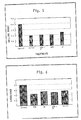
- the amount of larvae per root of the plant in the styrofoam cups and the Galling index (GI) in the pots were determined and the results are presented in Figs. 5 and 6.
- chitin by itself was effective in controlling the nematode infection, presumably by initiating proliferation of chitinolytic microorganisms present in the soil.
- the strain 30CE of the species CunninghamellaElegans (Mucorales) was isolated from a sandy soil amended with collagen and purified in a Martin-Rose Bengal medium.
- Samples of 10 g of the soil were suspended in 90 ml sterile water in 250 ml flasks, which were then shaken for 30 minutes. Decimal dilutions of the suspensions were then prepared and a sample of each dilution was then spread on an agar substrate prepared with a salt medium containing 0.1% collagen, contained in a culturing plate.
- the plates were incubated for some time until substantial growth of fungal cells occurred and thereafter samples were transferred to a new agar substrate, and the incubation-transfer cycle was repeated several times until a homogeneous culture was opted.
- the optimal pH was found to be about 6.5 - 7 and the optimal temperature was found to be about 30°C.
- a suitable medium for the fermentation of 30CE comprises about 20% potato broth and about 0.1% collagen.
- GI Galling Index
Landscapes
- Life Sciences & Earth Sciences (AREA)
- Health & Medical Sciences (AREA)
- Engineering & Computer Science (AREA)
- Zoology (AREA)
- Chemical & Material Sciences (AREA)
- Wood Science & Technology (AREA)
- Biotechnology (AREA)
- Genetics & Genomics (AREA)
- Bioinformatics & Cheminformatics (AREA)
- Organic Chemistry (AREA)
- General Health & Medical Sciences (AREA)
- Microbiology (AREA)
- Virology (AREA)
- Biochemistry (AREA)
- Medicinal Chemistry (AREA)
- Biomedical Technology (AREA)
- Tropical Medicine & Parasitology (AREA)
- General Engineering & Computer Science (AREA)
- Agronomy & Crop Science (AREA)
- Botany (AREA)
- Mycology (AREA)
- Pest Control & Pesticides (AREA)
- Plant Pathology (AREA)
- Dentistry (AREA)
- Environmental Sciences (AREA)
- Agricultural Chemicals And Associated Chemicals (AREA)
- Micro-Organisms Or Cultivation Processes Thereof (AREA)
Applications Claiming Priority (4)
| Application Number | Priority Date | Filing Date | Title |
|---|---|---|---|
| IL87388 | 1988-08-09 | ||
| IL87388A IL87388A (en) | 1988-08-09 | 1988-08-09 | Method and composition for combating soil nematodes comprising chitinolytic bacteria of the species pseudomonas chitinolytica |
| IL90260A IL90260A0 (en) | 1989-05-11 | 1989-05-11 | Nematicidal microorganisms,their isolation and their use as bio-nematicides |
| IL90260 | 1989-05-11 |
Publications (2)
| Publication Number | Publication Date |
|---|---|
| EP0354491A2 true EP0354491A2 (fr) | 1990-02-14 |
| EP0354491A3 EP0354491A3 (fr) | 1990-08-22 |
Family
ID=26321835
Family Applications (1)
| Application Number | Title | Priority Date | Filing Date |
|---|---|---|---|
| EP89114460A Withdrawn EP0354491A3 (fr) | 1988-08-09 | 1989-08-04 | Micro-organismes nématocides, leur isolation et leur utilisation comme bio-nématicides |
Country Status (6)
| Country | Link |
|---|---|
| US (1) | US5089263A (fr) |
| EP (1) | EP0354491A3 (fr) |
| JP (1) | JPH078769B2 (fr) |
| AU (2) | AU3914989A (fr) |
| CA (1) | CA1335433C (fr) |
| NZ (1) | NZ230159A (fr) |
Cited By (6)
| Publication number | Priority date | Publication date | Assignee | Title |
|---|---|---|---|---|
| WO2000051435A1 (fr) * | 1999-03-01 | 2000-09-08 | Auburn University | Compositions et procedes biologiques destines a favoriser la croissance et le bon etat phytosanitaire de plantes, et a produire des plantes resistant aux maladies |
| WO2001052655A3 (fr) * | 2000-01-21 | 2002-03-28 | Entomos L L C | Substances et procedes relatifs a une technique de lutte biologique contre des agents pathogenes terricoles |
| US6399060B1 (en) | 1997-06-24 | 2002-06-04 | Abr, Llc | Composition having nematicidal activity |
| DE10139624C1 (de) * | 2001-08-14 | 2003-04-03 | Siemens Ag | Elektrisches Schaltgerät für Mittel- oder Hochspannung |
| EP1003833A4 (fr) * | 1997-08-26 | 2005-11-09 | Diversa Corp | Surfaces avec revetement permettant l'enrichissement selectif en populations microbiennes |
| WO2008012400A1 (fr) * | 2006-07-25 | 2008-01-31 | Institut De Recherche Pour Le Developpement (I.R.D.) | Utilisation d'inocula fongiques pour l'amelioration de la production maraichere |
Families Citing this family (11)
| Publication number | Priority date | Publication date | Assignee | Title |
|---|---|---|---|---|
| US5248500A (en) * | 1990-12-21 | 1993-09-28 | Del Monte Corporation | Slow-release biodegradable granules of pasteuria penetrans |
| TW201791B (fr) * | 1991-03-19 | 1993-03-11 | Becton Dickinson Co | |
| JPH07206619A (ja) * | 1994-01-26 | 1995-08-08 | Nematetsuku:Kk | 植物寄生性線虫防除用製剤及び防除方法 |
| IL113394A0 (en) * | 1995-04-17 | 1995-07-31 | Ecogen Israel Partnership | Bacteria having nematocidal activity and their agricultural use |
| US6319497B1 (en) | 1997-04-23 | 2001-11-20 | Virginia Tech Intellectual Properties, Inc. | Non-obligate predatory bacterium burkholderia casidaeand uses thereof |
| US6569632B1 (en) | 2000-10-19 | 2003-05-27 | University Of Florida | Monoclonal antibody probe for detection of adhesins associated with mature endospores of pasteuria SPP |
| US7341862B2 (en) * | 2001-04-16 | 2008-03-11 | Montana State University | Application of Muscodor albus to control harmful microbes in human and animal wastes |
| AR075492A1 (es) | 2008-12-19 | 2011-04-06 | Pasteuria Bioscience Inc | Materiales y metodos para controlar nematodos con esporas de pasteuria en cobertura de semillas |
| AR075165A1 (es) * | 2009-01-26 | 2011-03-16 | Pasteuria Bioscience Inc | Cepa de pasteuria |
| CN114599227B (zh) * | 2019-09-06 | 2023-12-08 | 死海和阿拉瓦科学中心 | 吸引线虫的细菌及其使用方法 |
| CN120442447A (zh) * | 2025-04-12 | 2025-08-08 | 云南大学 | 一种华西短波单胞菌发酵培养基及其在防治植物根结线虫中的应用 |
Family Cites Families (9)
| Publication number | Priority date | Publication date | Assignee | Title |
|---|---|---|---|---|
| JPS5824508A (ja) * | 1981-08-05 | 1983-02-14 | Tomoe Kagaku Kogyo Kk | 線虫捕食菌入り線虫防除剤の製造方法 |
| US4536207A (en) * | 1983-07-26 | 1985-08-20 | Igi Biotechnology, Inc. | Nematocidally active chitin-protein complex |
| WO1985001878A1 (fr) * | 1983-10-26 | 1985-05-09 | The Regents Of The University Of California | Protection des plantes a l'aide de rhizobacteries |
| US4751081A (en) * | 1984-03-26 | 1988-06-14 | Advanced Genetic Sciences, Inc. | Chitinase-producing bacteria |
| AU4569285A (en) * | 1984-08-02 | 1986-02-06 | Monsanto Company | Nematode control by recombinant microorganisms |
| CA1278434C (fr) * | 1985-04-25 | 1991-01-02 | Alan Paau | Inoculants bacteriens agricoles |
| ZA867244B (en) * | 1985-10-01 | 1987-05-27 | Univ Florida | Nematicidal compositions and method |
| DE3639504A1 (de) * | 1986-11-20 | 1988-06-01 | Bayer Ag | Schaedlingsbekaempfungs- und pflanzenbehandlungsmittel |
| NO176278C (no) * | 1988-08-24 | 1995-03-08 | Allied Colloids Ltd | Fremgangsmåte for fremstilling av en partikkelformig blanding av aktiv bestanddel i et polymert materiale |
-
1989
- 1989-08-01 AU AU39149/89A patent/AU3914989A/en not_active Withdrawn
- 1989-08-01 NZ NZ230159A patent/NZ230159A/en unknown
- 1989-08-04 US US07/389,380 patent/US5089263A/en not_active Expired - Fee Related
- 1989-08-04 EP EP89114460A patent/EP0354491A3/fr not_active Withdrawn
- 1989-08-07 AU AU39352/89A patent/AU619330B2/en not_active Ceased
- 1989-08-08 CA CA000607721A patent/CA1335433C/fr not_active Expired - Fee Related
- 1989-08-09 JP JP1207777A patent/JPH078769B2/ja not_active Expired - Lifetime
Cited By (10)
| Publication number | Priority date | Publication date | Assignee | Title |
|---|---|---|---|---|
| US6399060B1 (en) | 1997-06-24 | 2002-06-04 | Abr, Llc | Composition having nematicidal activity |
| US6517851B1 (en) * | 1997-06-24 | 2003-02-11 | Abr, Llc | Reducing nematode infestation with fungi treated oil having nematicidal activity |
| EP1003833A4 (fr) * | 1997-08-26 | 2005-11-09 | Diversa Corp | Surfaces avec revetement permettant l'enrichissement selectif en populations microbiennes |
| WO2000051435A1 (fr) * | 1999-03-01 | 2000-09-08 | Auburn University | Compositions et procedes biologiques destines a favoriser la croissance et le bon etat phytosanitaire de plantes, et a produire des plantes resistant aux maladies |
| WO2001052655A3 (fr) * | 2000-01-21 | 2002-03-28 | Entomos L L C | Substances et procedes relatifs a une technique de lutte biologique contre des agents pathogenes terricoles |
| DE10139624C1 (de) * | 2001-08-14 | 2003-04-03 | Siemens Ag | Elektrisches Schaltgerät für Mittel- oder Hochspannung |
| WO2008012400A1 (fr) * | 2006-07-25 | 2008-01-31 | Institut De Recherche Pour Le Developpement (I.R.D.) | Utilisation d'inocula fongiques pour l'amelioration de la production maraichere |
| FR2904190A1 (fr) * | 2006-07-25 | 2008-02-01 | Inst Rech Pour Le Dev I R D Et | Utilisation d'inocula fongiques pour l'amelioration de la production maraichere |
| CN101516200B (zh) * | 2006-07-25 | 2012-11-28 | 发育研究院 | 真菌接种物用于改善蔬菜生产的用途 |
| AP2634A (en) * | 2006-07-25 | 2013-04-05 | Inst Rech Developpement Ird | Use of fungal inocula for improving market gardening production |
Also Published As
| Publication number | Publication date |
|---|---|
| AU3935289A (en) | 1990-02-15 |
| US5089263A (en) | 1992-02-18 |
| JPH02131415A (ja) | 1990-05-21 |
| CA1335433C (fr) | 1995-05-02 |
| AU619330B2 (en) | 1992-01-23 |
| JPH078769B2 (ja) | 1995-02-01 |
| NZ230159A (en) | 1992-08-26 |
| EP0354491A3 (fr) | 1990-08-22 |
| AU3914989A (en) | 1990-02-15 |
Similar Documents
| Publication | Publication Date | Title |
|---|---|---|
| KR101039176B1 (ko) | 연작 담배의 풋마름병을 예방하고 제거하기 위한 길항세균 및 그것의 미생물 유기질 비료 | |
| US5968503A (en) | Use of streptomyces bacteria to control plant pathogens and degrade turf thatch | |
| EP0354491A2 (fr) | Micro-organismes nématocides, leur isolation et leur utilisation comme bio-nématicides | |
| US5527526A (en) | Use of streptomyces bacteria to control plant pathogens | |
| HU220582B1 (hu) | Készítmény és eljárás növénybetegségek elleni védelemhez | |
| EP0401560B1 (fr) | Composition antibactérienne, anti-nématode et/ou activateur des cellules végétales, et microorganismes pour leur production | |
| CA2218299C (fr) | Bacteries ayant une action nematicide et leur utilisation pour l'agriculture | |
| KR101419964B1 (ko) | 식물 잔류물을 분해·감용하는 신규 바실루스 균주 | |
| AU772687B2 (en) | Soil conditioner and soil-ameliorating method | |
| Vraný et al. | Growth and yield of potato plants inoculated with rhizosphere bacteria | |
| CN118064296A (zh) | 一种抑制平菇细菌性病害的复合菌剂 | |
| DE68927340T2 (de) | Biologischer impfstoff, wirksam gegen aphanomyces | |
| EP0353689A2 (fr) | Procédé pour lutter contre les maladies foliaires causées par des champignons pathogènes avec des bactéries fongicides et cultures pures de bactéries fongicides | |
| EP3868867A1 (fr) | Agent de décomposition de résidus végétaux utilisant une culture liquide de souche de bacillus pumilus ks-c4 | |
| KR102733305B1 (ko) | 살조 활성을 갖는 신규 스트렙토마이세스 속 jc201-67 균주 | |
| KR102733309B1 (ko) | 살조 활성을 갖는 신규 스트렙토마이세스 속 jc203-03 균주 | |
| KR0183518B1 (ko) | 식물생장 촉진성 조성물 및 이를 포함하는 미생물제제 | |
| JP2007153873A (ja) | 土壌病害防除剤 | |
| KR910004948B1 (ko) | 신균주 바실러스 ds-1과 셀루로모나스 ds-2 및 이를 이용한 가축분뇨처리용 발효미생물균제 | |
| Eklund et al. | Establishment and disappearance of introduced pseudomonads in the rhizoplane of peat grown cucumber plants | |
| KR20260061655A (ko) | 농약 분해 미생물 배양용 배지 조성물 | |
| KR20170133883A (ko) | 신규 광합성 세균 및 이를 이용한 식물생장촉진 방법 | |
| JPH10316519A (ja) | 植物病害防除剤 | |
| MXPA97007970A (es) | Bacterias que tienen actividad nematicida y su uso agricola | |
| MXPA97007514A (en) | Use of bacteria streptomyces to control pathogens in plants and degradate the straw of ces |
Legal Events
| Date | Code | Title | Description |
|---|---|---|---|
| PUAI | Public reference made under article 153(3) epc to a published international application that has entered the european phase |
Free format text: ORIGINAL CODE: 0009012 |
|
| AK | Designated contracting states |
Kind code of ref document: A2 Designated state(s): AT BE CH DE ES FR GB GR IT LI LU NL SE |
|
| PUAL | Search report despatched |
Free format text: ORIGINAL CODE: 0009013 |
|
| AK | Designated contracting states |
Kind code of ref document: A3 Designated state(s): AT BE CH DE ES FR GB GR IT LI LU NL SE |
|
| 17P | Request for examination filed |
Effective date: 19901211 |
|
| 17Q | First examination report despatched |
Effective date: 19920529 |
|
| STAA | Information on the status of an ep patent application or granted ep patent |
Free format text: STATUS: THE APPLICATION IS DEEMED TO BE WITHDRAWN |
|
| 18D | Application deemed to be withdrawn |
Effective date: 19950624 |