EP0357370A2 - Appareil de traduction de langue assisté par ordinateur - Google Patents
Appareil de traduction de langue assisté par ordinateur Download PDFInfo
- Publication number
- EP0357370A2 EP0357370A2 EP89308718A EP89308718A EP0357370A2 EP 0357370 A2 EP0357370 A2 EP 0357370A2 EP 89308718 A EP89308718 A EP 89308718A EP 89308718 A EP89308718 A EP 89308718A EP 0357370 A2 EP0357370 A2 EP 0357370A2
- Authority
- EP
- European Patent Office
- Prior art keywords
- character data
- sentence
- storage unit
- language
- syntactic structure
- Prior art date
- Legal status (The legal status is an assumption and is not a legal conclusion. Google has not performed a legal analysis and makes no representation as to the accuracy of the status listed.)
- Granted
Links
Images


Classifications
-
- G—PHYSICS
- G06—COMPUTING OR CALCULATING; COUNTING
- G06F—ELECTRIC DIGITAL DATA PROCESSING
- G06F40/00—Handling natural language data
- G06F40/20—Natural language analysis
- G06F40/268—Morphological analysis
-
- G—PHYSICS
- G06—COMPUTING OR CALCULATING; COUNTING
- G06F—ELECTRIC DIGITAL DATA PROCESSING
- G06F40/00—Handling natural language data
- G06F40/20—Natural language analysis
- G06F40/205—Parsing
- G06F40/211—Syntactic parsing, e.g. based on context-free grammar [CFG] or unification grammars
-
- G—PHYSICS
- G06—COMPUTING OR CALCULATING; COUNTING
- G06F—ELECTRIC DIGITAL DATA PROCESSING
- G06F40/00—Handling natural language data
- G06F40/40—Processing or translation of natural language
- G06F40/42—Data-driven translation
- G06F40/47—Machine-assisted translation, e.g. using translation memory
-
- G—PHYSICS
- G06—COMPUTING OR CALCULATING; COUNTING
- G06F—ELECTRIC DIGITAL DATA PROCESSING
- G06F40/00—Handling natural language data
- G06F40/40—Processing or translation of natural language
- G06F40/55—Rule-based translation
-
- G—PHYSICS
- G06—COMPUTING OR CALCULATING; COUNTING
- G06F—ELECTRIC DIGITAL DATA PROCESSING
- G06F40/00—Handling natural language data
- G06F40/40—Processing or translation of natural language
- G06F40/58—Use of machine translation, e.g. for multi-lingual retrieval, for server-side translation for client devices or for real-time translation
Definitions
- the present invention relates to a computer assisted language translating machine and, more particular strictlyly, to the translating machine capable of accomplishing a real-time translation of an original text received from a communication appliance such as, for example, a telex machine.
- an operator of the translating machine has to manually input a message, received by the communication appliance and representing the original text, through a keyboard arrangement into the translating machine.
- the translating machine can be connected with the communication appliance so that the translating machine can receive the transmitted message directly from the communication appliance and, in such case, the transmitted message has to be temporarily stored in a system storage file.
- the operator has to undergo a time-consuming manipulation to call the message from the storage file and then to enter it in a translation module in the translating machine.
- the present invention has been developed with a view to substantially solving the above described disadvantages and has for its essential object to provide an improved computer assisted language translating machine capable of accomplishing a real-time translation of a message in a source language, received from a communication appliance, into a translated version in a target language.
- a computer assisted language translating machine which comprises a morpheme analyzer for separating a source language sentence, transmitted from a communication appliance, into morphemes to provide information including parts of speech of the morphemes with the use of at least a fixed main dictionary; a syntax analyzer for analyzing the syntax of a string of the morphemes, which have been separated by the morpheme analyzer, with the use of a dictionary and grammatical rules; a converter for converting a syntactic structure of the input sentence, analyzed by the syntax analyzer, into a syntactic structure of the target language; and a sentence generator for generating a translated sentence according to the syntactic structure of the target language converted by the converter.
- the computer assisted language translating machine also comprises a first storage unit for storing character data forming the source language sentence; a character data writing means for sequentially writing the character data in the order in which the character data are inputted from the communication appliance; a character data reading means for reading the character data from the first storage unit in the order, in which the character data are sequentially stored in the first storage unit, after a predetermined time subsequent to the writing of the character data into the first storage unit; a second storage unit for storing the character data read out by the character data reading means from the first storage unit; a discriminating means for determining whether or not the character data read out by the character data reading means represents the end of one sentence; and a translation starting means operable, when the discriminating means indicates that the character data read out represents the end of one sentence, to initiate a translation with respect to the character data representative of such one sentence and stored in the second storage unit.
- the character data representing the sentence received from the communication appliance when the character data representing the sentence received from the communication appliance is inputted, the character data are sequentially written into the first storage unit in the order in which the character data have been inputted. Subsequently, after the passage of the predetermined time subsequent to the writing of the character data into the first storage unit performed by the character writing means, the character data written in the first storage unit are read out by the character data reading means in the order, in which they have been written, for the storage into the second storage means. At this time, the discriminating means determines whether or not the character data read out by the character data reading means represent the end of one sentence. Should the discriminating means determine that the character data representative of the end of one sentence have been read out, the translation starting means initiates the translation with respect to the character data representative of such one sentence and stored in the second storage means.
- the source language sentence is input onlyted in the morpheme analyzer
- the source language sentence is separated into a strings of morphemes to provide information including the parts of speech.
- the syntactic structure of the morpheme strings is then analyzed by the syntax analyzer with the use of the dictionary and the grammatical rules and is subsequently converted by the converter into a syntactic structure of the target language.
- the syntactic structure of the target language is utilized by the sentence generator for generating a translated sentence according to such syntactic structure of the target language.
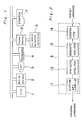
- FIG. 1 a block diagram of a computer assisted language translating machine according to the present invention is shown.
- the translating machine comprises a main CPU (central processing unit) 1, a main memory 2, a CRT 3 (cathode ray tube) 3, a keyboard 4, a translation module 5, a memory device 6 storing dictionaries, grammatical rules and tree structure conversion rules for translation, and a printer for providing a visible output representative of a result of translation performed by the computer assisted language translating machine.
- the translation module 5 When a source language text is inputted to the translation module 5, the translation module 5 translates and outputs a target language counterpart. Specifically, the source language text entered from keyboard 4 is transferred to the translation module 5 under the control of the main CPU 1.
- the translation module 5 makes use of grammatical rules and tree structure conversion rules stored in the memory 6 to translate the inputted source language text into the target language counterpart as will be described later.
- the result of this translation is outputted to the printer to provide a translated version of the source language text.
- the translated version may also be displayed on the CRT 3.
- Fig. 2 illustrate a specific structure of the translation module 5 used in the practice of the preferred embodiment of the present invention.
- the morpheme analyzer 11 makes use of the dictionary stored in the memory 6 to separate the source language sentence into a strings of morphemes (word string) to provide information including the parts of speech of each of words forming the source language sentence, information on the grammar and translations of each word and also to analyze tense, person and number.
- the syntactic structure of the morpheme strings is then analyzed by the syntax analyzer 12 which makes use of the grammatical rules and the dictionary to determine a syntax analysis tree structure determinative of the relationship between the individual words forming the sentence.
- the converter 13 makes use of the tree structure conversion rules stored in the memory 6 to convert the structure of the syntax analysis tree for the source language sentence to the structure of the target language sentence.
- the sentence generator 14 applies the Japanese postpositional article and auxiliary verbs appropriate to the Japanese translation, the resultant translation being outputted from the translation module 5 to the printer 7.
- Fig. 3 illustrates the structure of a buffer A for the storage of character date comprising the source language text transmitted from the communication appliance such as, for example a telex machine.
- the buffer A is adapted to store character data representative of each character at a location specified by a writing pointer which is incremented at the time of writing the character data.
- a writing pointer which is incremented at the time of writing the character data.
- Fig. 4 illustrates a flowchart showing the sequence of operation for storing character data
- Fig. 5 illustrates a flowchart showing the sequence of reading and translating data inputted from a communication appliance.
- step S1 the writing pointer indicating the location in the buffer A at which the character data is to be stored is zeroed for initializing the character data storage buffer A.
- step S2 the character data are transmitted from the communication appliance such as the telex machine, a decision is made to determine if one character data so inputted represents character data indicative of a RETURN data (line-begin command). If a result of decision at step S2 indicates that the character data represents the RETURN data, the program flow proceeds to step S5, but if it does not, the program flow proceeds to step S3.
- step S3 the character data so inputted is written in the buffer A at the location specified by the writing pointer and, thereafter, the writing pointer is incremented at step S4.
- step S5 a decision is made to determine if the character storage process should be continued. Where it should be continued, the program flow proceeds to step S6, but if it should not, the character data storage process is terminated.
- step S6 a decision is made to determine if the writing pointer is greater than MAX (indicative of the last location for the storage of the character data in the buffer A). In the event that the writing pointer is greater than Max, it means that the buffer A is full of the character data and, therefore, the program flow return to step S1 to reset the writing pointer to zero. On the other hand, if the writing pointer is not greater than Max, the program flow returns to step S2 to continue the character data storage process for the next succeeding character data.
- MAX indication of the last location for the storage of the character data in the buffer A
- step S11 the reading pointer is set to zero, followed by step S12 at which the character data corresponding to one character is read out from the location of the buffer A specified by the reading pointer.
- step S13 a decision is made to determine if the character data corresponding to one character read from the buffer A represents a character data indicative of a period (.). Should it represents the period, the program flow proceeds to step S17, but should it not represent the period, the program flow proceeds to step S14.
- step S14 the character data corresponding to one character read out at step S12 is stored in a buffer B, not shown, for the storage of a source language from which translation should be made. Then, at step S15, a decision is made to determine if the reading pointer is equal to MAX. If it is equal to MAX, the program flow return to step S11, but if it is not, the program flow proceeds to step S16.
- step S16 the reading pointer is incremented, followed by step S12.
- step S17 the character data representative of the period read out is stored in the buffer B. Then, at step S18, a decision is made to determine if the reading pointer is equal to MAX. If it is equal to MAX, the program flow proceeds to step S20.
- step S19 the reading pointer is set to zero, followed by step S21.
- step S20 the reading pointer is incremented, followed by step S21.
- step S21 the character data corresponding to one character is read out from the location of the buffer A specified by the reading pointer, followed by step S22 at which the character data so read out is examined as to whether or not it represents a space. If it represents the space, the program flow proceeds to step S24, but if it does not, the program flow proceeds to step S23.
- step S23 the character date corresponding to one character read out in the manner as hereinabove described is stored in the buffer B and, thereafter, step S27 takes place.
- the character data corresponding to one sentence referred to above are inputted to the translation module 5 under the control of the main CPU 1 for the translation thereof into the target language.
- the resultant translation given at step S24 is outputted to the printer 7 to provide a printed output of the resultant translation of one sentence, thereby completing one cycle of translation process.
- step S27 a decision is made to determine if the reading pointer is equal to MAX. If it is equal to MAX, the program flow return to step S11 to set the reading pointer to zero, but if it is not, the program flow proceeds to step S28 at which the reading pointer is incremented and the program flow subsequently return to step S12 to read the character data corresponding to the next succeeding one sentence out from the location of the buffer A specified by the reading pointer.
- the character data representative of the sentence in the source language is inputted from the communication appliance such as the telex machine
- the character data are temporarily stored in the buffer A thereby to avoid any possible leak of portion of the character data transmitted direct from the communication appliance.
- the input of the character data from the communication appliance provides a cue with which the reading process for reading the character data stored in the buffer A is automatically started after the predetermined time. Then, the end of one message is automatically recognized and a translation program stored in the translation module is started to execute the translation without requiring the intervention of the operator.
- the character data representing the sentence received from the communication appliance when the character data representing the sentence received from the communication appliance is inputted, the character data are sequentially written into the first storage unit. The character data written in the first storage unit are subsequently read out by the character data reading means.
- the discriminating means determines whether or not the character data read out by the character data reading means represent the end of one sentence and, in the event that the discriminating means determine that the character data representative of the end of one sentence have been read out, the translation starting means initiates the translation with respect to the character data representative of such one sentence and stored in the second storage means. Accordingly, when the character data of the source language sentence received from the communication appliance is inputted, a translation thereof into the target language is automatically executed sentence to sentence.
Landscapes
- Engineering & Computer Science (AREA)
- Theoretical Computer Science (AREA)
- Health & Medical Sciences (AREA)
- Artificial Intelligence (AREA)
- Audiology, Speech & Language Pathology (AREA)
- Computational Linguistics (AREA)
- General Health & Medical Sciences (AREA)
- Physics & Mathematics (AREA)
- General Engineering & Computer Science (AREA)
- General Physics & Mathematics (AREA)
- Machine Translation (AREA)
Applications Claiming Priority (2)
| Application Number | Priority Date | Filing Date | Title |
|---|---|---|---|
| JP220715/88 | 1988-09-02 | ||
| JP63220715A JPH0268662A (ja) | 1988-09-02 | 1988-09-02 | 機械翻訳装置 |
Publications (3)
| Publication Number | Publication Date |
|---|---|
| EP0357370A2 true EP0357370A2 (fr) | 1990-03-07 |
| EP0357370A3 EP0357370A3 (fr) | 1991-11-21 |
| EP0357370B1 EP0357370B1 (fr) | 1997-02-19 |
Family
ID=16755377
Family Applications (1)
| Application Number | Title | Priority Date | Filing Date |
|---|---|---|---|
| EP89308718A Expired - Lifetime EP0357370B1 (fr) | 1988-09-02 | 1989-08-29 | Appareil de traduction de langue assisté par ordinateur |
Country Status (4)
| Country | Link |
|---|---|
| US (1) | US5001633A (fr) |
| EP (1) | EP0357370B1 (fr) |
| JP (1) | JPH0268662A (fr) |
| DE (1) | DE68927779T2 (fr) |
Cited By (6)
| Publication number | Priority date | Publication date | Assignee | Title |
|---|---|---|---|---|
| US5323310A (en) * | 1991-02-14 | 1994-06-21 | The British And Foreign Bible Society | Analyzing textual documents |
| CN1097794C (zh) * | 1998-01-14 | 2003-01-01 | 英业达股份有限公司 | 实时辅助系统及方法 |
| US7123694B1 (en) | 1997-09-19 | 2006-10-17 | Siemens Aktiengesellschaft | Method and system for automatically translating messages in a communication system |
| US8706477B1 (en) | 2008-04-25 | 2014-04-22 | Softwin Srl Romania | Systems and methods for lexical correspondence linguistic knowledge base creation comprising dependency trees with procedural nodes denoting execute code |
| US8762130B1 (en) | 2009-06-17 | 2014-06-24 | Softwin Srl Romania | Systems and methods for natural language processing including morphological analysis, lemmatizing, spell checking and grammar checking |
| US8762131B1 (en) | 2009-06-17 | 2014-06-24 | Softwin Srl Romania | Systems and methods for managing a complex lexicon comprising multiword expressions and multiword inflection templates |
Families Citing this family (11)
| Publication number | Priority date | Publication date | Assignee | Title |
|---|---|---|---|---|
| JP2815714B2 (ja) * | 1991-01-11 | 1998-10-27 | シャープ株式会社 | 翻訳装置 |
| JP3220560B2 (ja) * | 1992-05-26 | 2001-10-22 | シャープ株式会社 | 機械翻訳装置 |
| JP3066274B2 (ja) * | 1995-01-12 | 2000-07-17 | シャープ株式会社 | 機械翻訳装置 |
| JPH09259126A (ja) * | 1996-03-21 | 1997-10-03 | Sharp Corp | データ処理装置 |
| US5884248A (en) * | 1996-04-10 | 1999-03-16 | Casio Computer Co., Ltd. | Build message communication system utilizing data tables containing message defining data and corresponding codes |
| JP3557605B2 (ja) * | 2001-09-19 | 2004-08-25 | インターナショナル・ビジネス・マシーンズ・コーポレーション | 文切り方法及びこれを用いた文切り処理装置、機械翻訳装置並びにプログラム |
| GB0204246D0 (en) * | 2002-02-22 | 2002-04-10 | Mitel Knowledge Corp | System and method for message language translation |
| US8296125B2 (en) * | 2008-10-17 | 2012-10-23 | International Business Machines Corporation | Translating source locale input string to target locale output string |
| JP2012190314A (ja) * | 2011-03-11 | 2012-10-04 | Fuji Xerox Co Ltd | 画像処理装置およびプログラム |
| US10614168B2 (en) * | 2015-03-05 | 2020-04-07 | National University Corporation NARA Institute of Science and Technology | Syntax evaluation apparatus, translation apparatus, syntax evaluation method, and syntax evaluation program |
| US9837069B2 (en) | 2015-12-22 | 2017-12-05 | Intel Corporation | Technologies for end-of-sentence detection using syntactic coherence |
Family Cites Families (5)
| Publication number | Priority date | Publication date | Assignee | Title |
|---|---|---|---|---|
| US4706212A (en) * | 1971-08-31 | 1987-11-10 | Toma Peter P | Method using a programmed digital computer system for translation between natural languages |
| JPS61168077A (ja) * | 1985-01-21 | 1986-07-29 | Nec Corp | 機械翻訳装置 |
| JPS61217871A (ja) * | 1985-03-25 | 1986-09-27 | Toshiba Corp | 翻訳処理装置 |
| JPS61223977A (ja) * | 1985-03-29 | 1986-10-04 | Toshiba Corp | 翻訳処理装置 |
| NL8702359A (nl) * | 1986-10-03 | 1988-05-02 | Ricoh Kk | Taal analyse inrichting. |
-
1988
- 1988-09-02 JP JP63220715A patent/JPH0268662A/ja active Pending
-
1989
- 1989-08-23 US US07/397,188 patent/US5001633A/en not_active Expired - Lifetime
- 1989-08-29 EP EP89308718A patent/EP0357370B1/fr not_active Expired - Lifetime
- 1989-08-29 DE DE68927779T patent/DE68927779T2/de not_active Expired - Fee Related
Cited By (6)
| Publication number | Priority date | Publication date | Assignee | Title |
|---|---|---|---|---|
| US5323310A (en) * | 1991-02-14 | 1994-06-21 | The British And Foreign Bible Society | Analyzing textual documents |
| US7123694B1 (en) | 1997-09-19 | 2006-10-17 | Siemens Aktiengesellschaft | Method and system for automatically translating messages in a communication system |
| CN1097794C (zh) * | 1998-01-14 | 2003-01-01 | 英业达股份有限公司 | 实时辅助系统及方法 |
| US8706477B1 (en) | 2008-04-25 | 2014-04-22 | Softwin Srl Romania | Systems and methods for lexical correspondence linguistic knowledge base creation comprising dependency trees with procedural nodes denoting execute code |
| US8762130B1 (en) | 2009-06-17 | 2014-06-24 | Softwin Srl Romania | Systems and methods for natural language processing including morphological analysis, lemmatizing, spell checking and grammar checking |
| US8762131B1 (en) | 2009-06-17 | 2014-06-24 | Softwin Srl Romania | Systems and methods for managing a complex lexicon comprising multiword expressions and multiword inflection templates |
Also Published As
| Publication number | Publication date |
|---|---|
| EP0357370B1 (fr) | 1997-02-19 |
| JPH0268662A (ja) | 1990-03-08 |
| DE68927779D1 (de) | 1997-03-27 |
| EP0357370A3 (fr) | 1991-11-21 |
| US5001633A (en) | 1991-03-19 |
| DE68927779T2 (de) | 1997-08-14 |
Similar Documents
| Publication | Publication Date | Title |
|---|---|---|
| US5005127A (en) | System including means to translate only selected portions of an input sentence and means to translate selected portions according to distinct rules | |
| EP0399533B1 (fr) | Système et méthode de traduction par machine | |
| EP0357370B1 (fr) | Appareil de traduction de langue assisté par ordinateur | |
| US4814987A (en) | Translation system | |
| GB2234614A (en) | Machine translation apparatus | |
| US4833611A (en) | Machine translation system | |
| US4953088A (en) | Sentence translator with processing stage indicator | |
| EP0403057B1 (fr) | Méthode et appareil pour traduire des phrases comportant une proposition adverbiale | |
| EP0398513B1 (fr) | Méthode et appareil de traduction d'une phrase comportant un mot composé formé par hyphénation | |
| JP2815714B2 (ja) | 翻訳装置 | |
| US4931936A (en) | Language translation system with means to distinguish between phrases and sentence and number discrminating means | |
| EP0357344B1 (fr) | Machine de traduction assistée par ordinateur | |
| US4860206A (en) | Translation system allowing user designation of postpositional words | |
| JPH0332106B2 (fr) | ||
| JPS6190269A (ja) | 翻訳方式 | |
| JP2715419B2 (ja) | 翻訳装置 | |
| JP2719453B2 (ja) | 機械翻訳装置 | |
| JPH0715691B2 (ja) | 自動翻訳装置 | |
| GB2211641A (en) | Language translation machine | |
| JPH05151256A (ja) | 機械翻訳方法および機械翻訳装置 | |
| GB2199432A (en) | Translation machine | |
| JPS6180358A (ja) | 翻訳装置 | |
| JP3255294B2 (ja) | 機械翻訳装置 | |
| JP2752025B2 (ja) | 機械翻訳装置 | |
| JPH01112368A (ja) | 機械翻訳装置 |
Legal Events
| Date | Code | Title | Description |
|---|---|---|---|
| PUAI | Public reference made under article 153(3) epc to a published international application that has entered the european phase |
Free format text: ORIGINAL CODE: 0009012 |
|
| AK | Designated contracting states |
Kind code of ref document: A2 Designated state(s): DE GB |
|
| 17P | Request for examination filed |
Effective date: 19901214 |
|
| PUAL | Search report despatched |
Free format text: ORIGINAL CODE: 0009013 |
|
| AK | Designated contracting states |
Kind code of ref document: A3 Designated state(s): DE GB |
|
| 17Q | First examination report despatched |
Effective date: 19940324 |
|
| GRAG | Despatch of communication of intention to grant |
Free format text: ORIGINAL CODE: EPIDOS AGRA |
|
| GRAH | Despatch of communication of intention to grant a patent |
Free format text: ORIGINAL CODE: EPIDOS IGRA |
|
| GRAH | Despatch of communication of intention to grant a patent |
Free format text: ORIGINAL CODE: EPIDOS IGRA |
|
| GRAA | (expected) grant |
Free format text: ORIGINAL CODE: 0009210 |
|
| AK | Designated contracting states |
Kind code of ref document: B1 Designated state(s): DE GB |
|
| REF | Corresponds to: |
Ref document number: 68927779 Country of ref document: DE Date of ref document: 19970327 |
|
| PLBE | No opposition filed within time limit |
Free format text: ORIGINAL CODE: 0009261 |
|
| STAA | Information on the status of an ep patent application or granted ep patent |
Free format text: STATUS: NO OPPOSITION FILED WITHIN TIME LIMIT |
|
| 26N | No opposition filed | ||
| PGFP | Annual fee paid to national office [announced via postgrant information from national office to epo] |
Ref country code: DE Payment date: 20010820 Year of fee payment: 13 |
|
| PGFP | Annual fee paid to national office [announced via postgrant information from national office to epo] |
Ref country code: GB Payment date: 20010830 Year of fee payment: 13 |
|
| REG | Reference to a national code |
Ref country code: GB Ref legal event code: IF02 |
|
| PG25 | Lapsed in a contracting state [announced via postgrant information from national office to epo] |
Ref country code: GB Free format text: LAPSE BECAUSE OF NON-PAYMENT OF DUE FEES Effective date: 20020829 |
|
| PG25 | Lapsed in a contracting state [announced via postgrant information from national office to epo] |
Ref country code: DE Free format text: LAPSE BECAUSE OF NON-PAYMENT OF DUE FEES Effective date: 20030301 |
|
| GBPC | Gb: european patent ceased through non-payment of renewal fee |
Effective date: 20020829 |